A Small Ritual: Florence + the Machine: Reading 2026
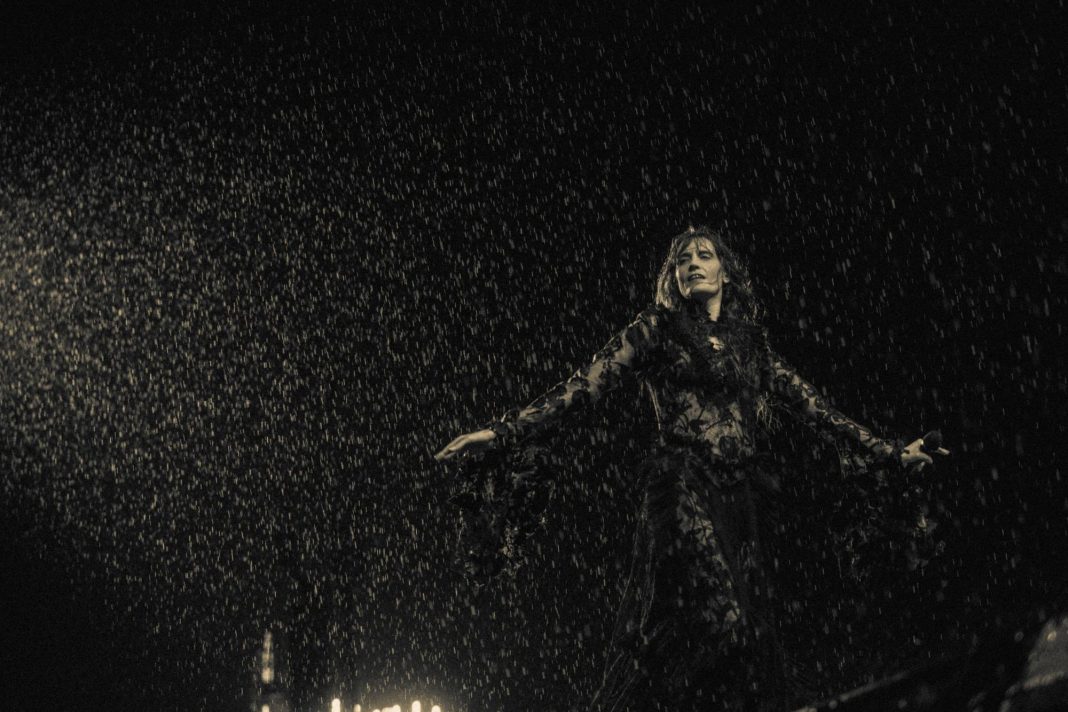
Florence Welch opens her Reading headline set with ‘Everybody Scream’ just as the sky begins to turn against her. Grey clouds gather above the main stage and, before long, the rain starts hammering down. If anybody was going to summon a storm on the final night of Reading Festival, it was probably Florence.
The weather only makes the opening feel more appropriate. ‘Everybody Scream’ is already full of bodies, nature, ritual and surrender, and here Welch is performing it beneath a darkening sky to thousands of people gradually accepting that staying dry is no longer an option. More strikingly, plenty of those standing in front of her were not even born when Florence + the Machine released ‘Lungs’ in 2009. Seventeen years later, those songs have found another generation.
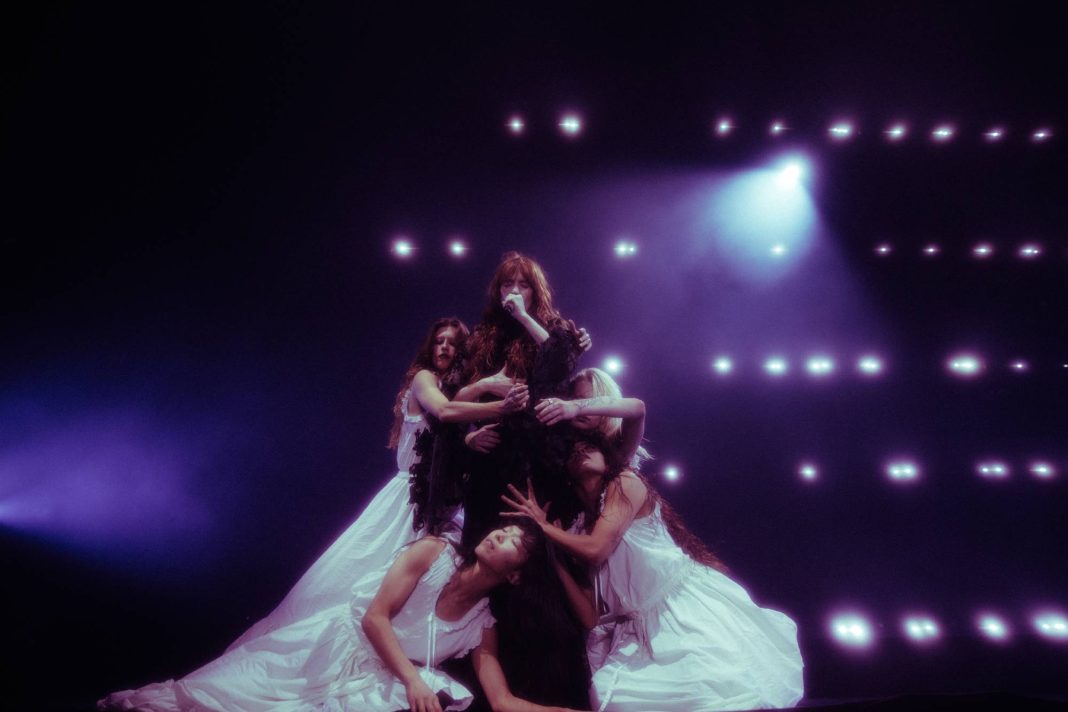
‘Shake It Out’ proves it almost immediately. Welch conducts one of the first enormous singalongs of the night, throwing her arms into the air while the rain falls around her. Sunday evening fatigue disappears remarkably quickly. Three days of mud, queues, lost friends and bad sleep suddenly matter much less.
Florence has always demanded that kind of commitment from a crowd. She runs, spins and throws herself across the stage, expecting everybody watching to give something back. Standing politely and appreciating the songs is not really the point, and Reading understands its responsibilities.
A run through ‘Spectrum’, ‘Rabbit Heart (Raise It Up)’ and ‘You’ve Got the Love’ would be enough to carry most headline performances on its own. ‘Spectrum’ fills the field with movement before Welch turns ‘Rabbit Heart’ into the first proper ritual of the evening, asking the audience to make an offering to mark the changing season.
That offering is themselves. Welch tells people to climb onto their friends’ shoulders, and thousands obey. Bodies begin appearing above the crowd across the field while the rain continues to fall, creating one of the weekend’s most memorable images. It sounds faintly ridiculous on paper. Standing there, it makes complete sense.
That is the trick with Florence. She can ask an enormous festival crowd to take part in something that should feel theatrical or overly earnest, then commit to it so completely that everybody else follows.
‘You’ve Got the Love’ would usually feel like a finale, but placing it in the middle of the set works beautifully. The crowd finds another gear and takes over the chorus, a song Florence first made her own more than fifteen years ago now being screamed back by teenagers who discovered it long after its original release.
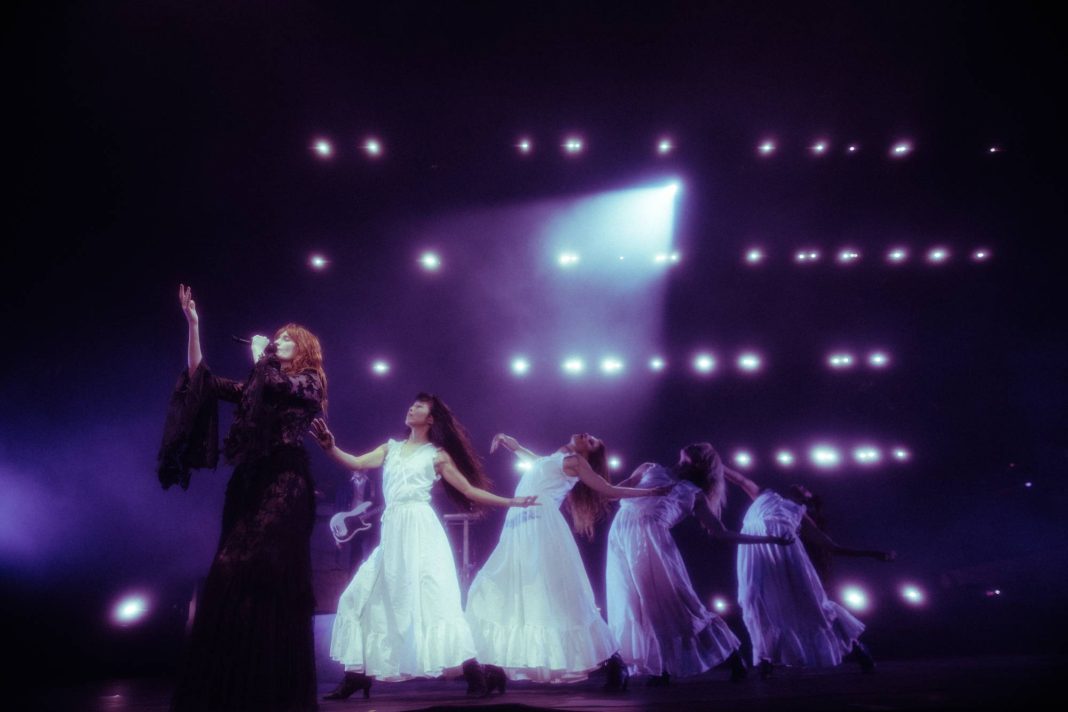
The generational shift becomes impossible to ignore. Florence + the Machine are no longer simply playing to people who grew up with ‘Lungs’ and ‘Ceremonials’. Plenty of them are still here, but around them are younger fans who have inherited ‘Dog Days Are Over’, ‘Shake It Out’ and ‘You’ve Got the Love’ as festival songs in their own right.
‘Howl’ briefly darkens everything again, its cinematic sweep slowing the set without draining any tension from it. ‘What Kind of Man’ then pushes the guitars back towards the front and sends the crowd upwards again.
IDLES guitarist Mark Bowen joins Welch for ‘One of the Greats’, the song the pair wrote together and recorded in a single take. It is already one of the strongest songs on ‘Everybody Scream’: funny, grand and heartfelt without stopping to separate those qualities from one another. Bowen makes it even rougher live, his guitar cutting against the grandeur surrounding Welch rather than simply decorating it.
The collaboration also says something about where Florence + the Machine are now. ‘Everybody Scream’ does not attempt to recreate ‘Lungs’, nor does it need to. Welch’s voice remains unmistakable, but the musicians and sounds around her continue to change. Bowen fits because he brings something recognisably his own rather than disappearing into somebody else’s backing band.
The night carries another significance too. This is the final performance of the ‘Everybody Scream’ tour, which began with UK and European arena dates in February before travelling across North America and returning to Europe for the summer festival season. Months on the road finish here, on the final night of Reading.
For Welch, another circle closes. She tells the crowd that Reading was “the first festival I ever wanted to go to”, remembering how her dad brought her when she was fourteen. Now she is standing on its biggest stage, closing the weekend. “This is my childhood dream,” she tells them. “So thank you so much.”
The symmetry does not need embellishing. A fourteen-year-old Florence Welch once stood somewhere inside Reading, watching other people perform. Years later, thousands have come here specifically to watch her.
Across the weekend, Reading has produced some huge performances. Geese staked their claim as The Strokes for a new generation of indie kids; Fontaines D.C. reached the top of the bill while honouring Trevor Dietz; Dave showed again why he has become one of his generation’s great storytellers; and Charli XCX proved that ‘Brat’ was only one phase of a career built on refusing to stand still. Even Jamie T managed to invite himself back for 33 minutes and 10 seconds of indie celebration.
Florence, though, gives the best performance of the weekend. Across fourteen songs, she moves through every era of her career without making the set feel like a tour through old photographs. The ‘Everybody Scream’ songs belong naturally beside records people have spent more than a decade singing, while the older material never feels preserved for those who happened to be there first.
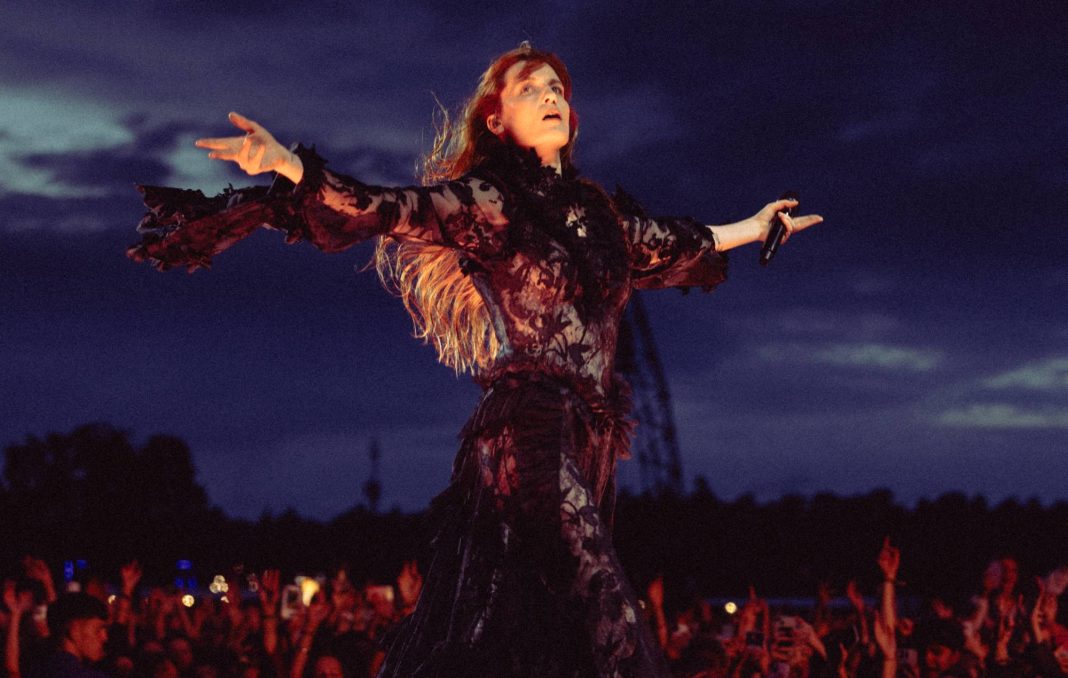
‘Sympathy Magic’ provides one of the evening’s gentler moments. Towards the end, Welch makes her way down to the front rows and reaches across the barrier, sharing hugs, handshakes and brief embraces with the people pressed against it. For somebody capable of making a festival performance feel almost mythological, Florence is equally good at suddenly collapsing the distance between herself and the audience.
Then comes ‘Dog Days Are Over’, with the rain now tearing down and nobody particularly interested in escaping it. Welch asks the crowd to join her in “a small ritual” and tells “every single person at this festival” to put their phones away.
“Filming this song will stop you from experiencing this song,” she tells them. “And is that not why you came?”
Remarkably, thousands listen. Screens disappear across the field and hands that have spent much of the weekend holding phones above heads are suddenly empty. When the song reaches its final chorus, the audience jumps together, arms in the air and rain pouring down.
Getting thousands of teenagers to voluntarily put their phones away may be Florence Welch’s most impressive achievement of the evening. Parents and teachers searching for the secret should take note: apparently all you need is Florence Welch and a massive song from 2009.
The joke only works because the moment itself is so good. ‘Dog Days Are Over’ is being sung by a crowd containing plenty of people who cannot remember 2009 because they were either toddlers or not yet born. The song has long since escaped the era that produced it.
The phone request also brings together everything Welch has been asking of Reading all night. Sing. Climb onto somebody’s shoulders. Offer yourself up. Stop filming. Jump. Give the song your full attention for a few minutes. Written down, the rituals sound absurdly simple. In the field, they work.
‘Free’ closes both the set and the ‘Everybody Scream’ tour with much of the audience still remarkably phoneless. After three days spent checking schedules, filming performances, finding friends and navigating the festival, thousands simply watch Florence Welch finish.
Seventeen years after ‘Lungs’, her songs have found people who were not there the first time. The latest record has given her another version of Florence + the Machine to inhabit, while the oldest songs still sound capable of filling a field. The festival a fourteen-year-old Florence once asked her dad to take her to is now hers to close.
She came to Reading as a fan.
This time, Reading came for Florence.