Self-Fulfilling Prophecy: Dave: Reading 2026
Seven years ago, Dave picked a teenager called Alex out of the crowd at Glastonbury and accidentally created one of those festival moments that immediately escaped the performance itself. Alex knew every word of ‘Thiago Silva’, Dave could barely believe what was happening, and footage of the pair followed both of them around for years afterwards.
A lot has happened since. ‘Psychodrama’ and ‘We’re All Alone in This Together’ made Dave one of the defining British rappers of his generation; ‘Sprinter’ with Central Cee became enormous far beyond Britain, and the boy who first played Reading’s 1Xtra tent in 2017 had already reached the top of the festival bill by 2022. Four years later, his return to headline Reading feels different. This is no longer somebody proving he belongs on a stage this size. Dave already knows that. The more interesting question is what somebody who has spent so much of his career writing about ambition does once most of those ambitions have actually come true.
‘The Boy Who Played the Harp’, released in 2025 after four years without a full studio album, wrestled with exactly that problem. Its title refers to the biblical David, the young shepherd who played the harp for King Saul before eventually becoming king himself. Dave used the parallel to think about his own name, faith, purpose and the strange consequences of getting the life he once wanted. Money, fame, anxiety, guilt and responsibility sat alongside one another without much attempt to separate them. Success did not provide the conclusion; it simply gave him different things to worry about.
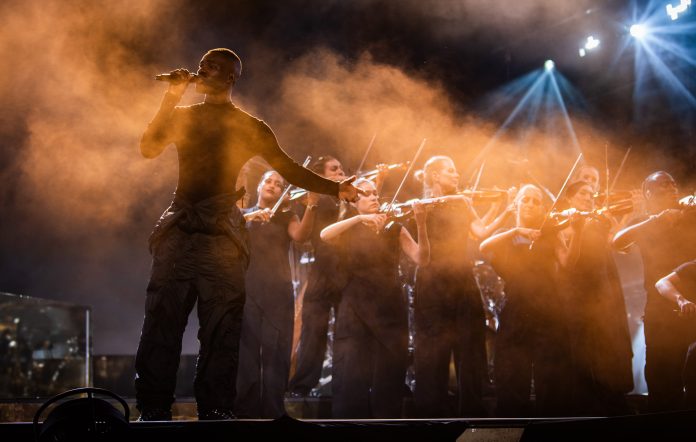
At Reading on Saturday night, most of the worrying can wait. Dave arrives in a black boiler suit and immediately behaves like somebody determined to enjoy himself. ‘Verdansk’, ‘Clash’ and ‘Location’ make for a ridiculous opening run, yellow smoke filling the stage while flames fire upwards and the crowd supplies almost as many words as the man holding the microphone. Even from behind the second barrier, the heat from the pyro reaches you.
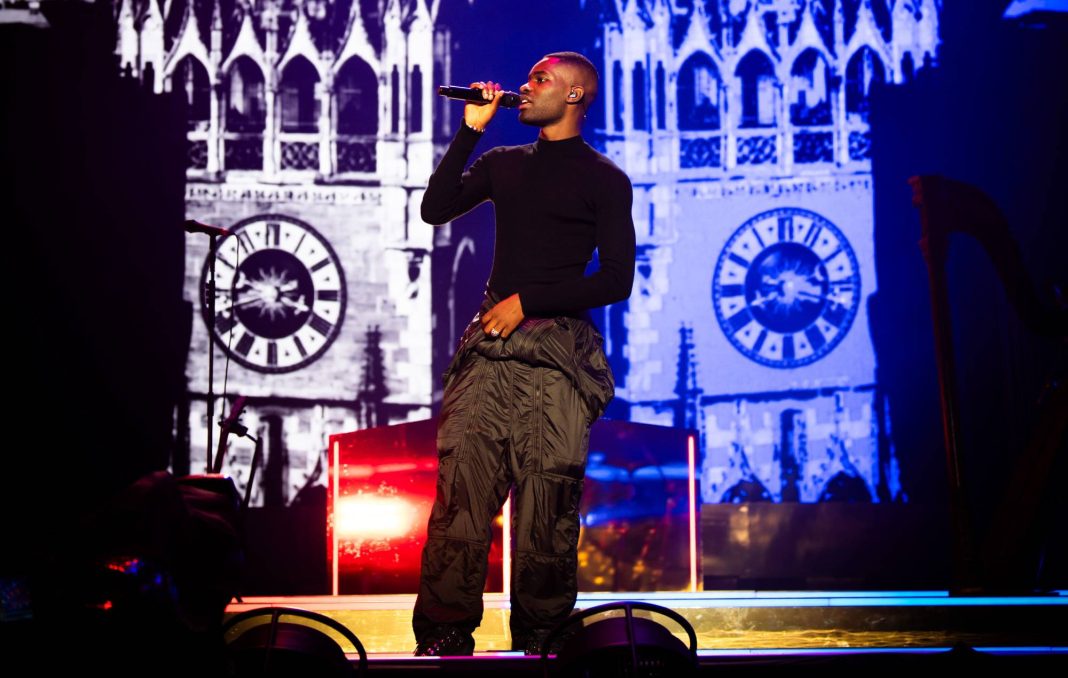
For all the scale surrounding him, Dave occasionally looks slightly overwhelmed by it. He smiles at the crowd stretching backwards through Reading, briefly allowing himself to look like the person receiving the noise rather than the person responsible for creating it. Then another beat starts and he goes straight back to work.
‘Screwface Capital’, ‘Professor X’ and ‘Funky Friday’ underline how much history Dave has already accumulated despite still being only twenty-eight. ‘Screwface Capital’ carries the suspicion and tension of somebody looking at success without completely trusting it, while ‘Professor X’ loosens everything up before ‘Funky Friday’ lands with the familiarity of an old festival standard.
Dave was barely twenty when ‘Funky Friday’ became his first number one. There are people in this field who were still children when ‘Wanna Know’ first appeared and are now old enough to spend an entire weekend at Reading shouting every word back at him. His career has moved quickly enough that nostalgia is beginning to form around songs that do not actually feel very old. He has somehow become established and young at exactly the same time.
James Blake provides the first major change in temperature when he appears for ‘Both Sides of a Smile’. Their voices have always suited one another: Blake leaves empty space while Dave fills it with detail. In a set surrounded by smoke, fire and thousands of people shouting lyrics, the song briefly gives the field somewhere quieter to go.
It does not stay quiet for long.
For much of the evening, the crowd has been trying to summon one song themselves. Between tracks, the familiar melody of The White Stripes’ ‘Seven Nation Army’ begins moving across the field with “Ohhh, Thiago Silva” sung over the top. Eventually Dave’s guitarist gives in and launches into the riff.
Reading erupts.
Dave barely needs to introduce ‘Thiago Silva’. The song he and AJ Tracey released in 2016 has long since escaped the circumstances in which it was made. Glastonbury turned it into festival folklore, but British crowds have spent the seven years since proving that the moment did not belong exclusively to Alex. This time, tens of thousands of people attempt his job simultaneously.
The remarkable thing is how much of the song they know. Not simply the refrain or the famous lines. Whole passages disappear from Dave’s microphone and come roaring back from the field. A track named after a Brazilian footballer playing for Paris Saint-Germain when it was released has somehow become part of the standard language of British festivals.
‘Wanna Know’ and ‘No Words’ pull the set further backwards, but Dave does not perform them like museum pieces from an earlier career. They simply sit beside everything else. The teenager who wrote some of these songs and the man now headlining Reading remain recognisably the same person, even if almost everything around him has changed.
Kano’s appearance adds another layer to that history. The pair attack ‘3 P’s Freestyle’ before ‘Chapter 16’ changes the atmosphere completely. There is little need for spectacle when two writers this good are standing beside one another. There is also something satisfying about watching Kano share this particular stage with Dave. British rap spent years being treated as though mainstream festival acceptance required some kind of special explanation. By 2026, Kano can walk onto Reading’s main stage during a Dave headline set and nobody needs to stop and discuss what it represents. The crowd simply knows the song.
‘Trojan Horse’ follows before Dave reaches the track that gives his latest album its name. When ‘The Boy Who Played the Harp’ begins, much of the noise drops away. After the yellow smoke, flames, huge singles and surprise guests, Dave suddenly stands inside a far more restrained arrangement, joined by strings as the set turns back towards the questions that dominated the record.
There is something almost too perfect about the image. A rapper named David makes an album about the biblical boy who played the harp before becoming king, then brings that song to a festival where he started in the 1Xtra tent and now stands above the main stage looking at a crowd that seems to stretch for miles. If Dave had written that progression into one of his songs ten years ago, it might have sounded too neat.
The comparison only works because ‘The Boy Who Played the Harp’ does not treat reaching the destination as uncomplicated. The album repeatedly asks what success actually does to the person who wanted it. Does talent create responsibility? Does money change the way you understand morality? How much of yourself can disappear while everybody else insists that you are winning? Reading supplies the other half of that argument. Whatever fame has cost Dave, the ambition itself was never imaginary. There are tens of thousands of people standing in front of him proving that.
Then Central Cee appears and the existential crisis is temporarily cancelled.
‘Sprinter’ remains absurdly effective. Central Cee’s entrance produces one of the biggest reactions of the night before the pair slip into the easy back-and-forth that made the song such an enormous hit. Where much of ‘The Boy Who Played the Harp’ questioned what success had done to Dave, ‘Sprinter’ allows him to enjoy some of it.
The field becomes a mess of raised phones, people on shoulders and entire sections bouncing at once. It is one of those festival moments where looking away from the stage becomes almost as interesting as looking towards it. The reaction keeps travelling backwards, long after you think you have reached the edge of it.
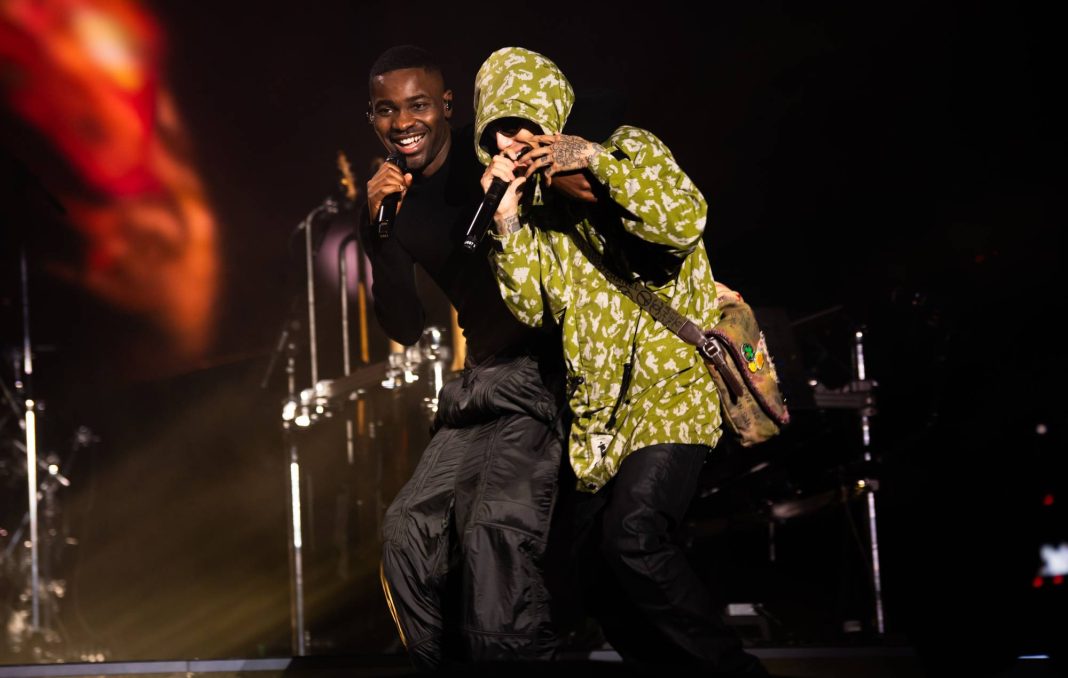
That joy matters because Dave’s music can become so densely written and morally serious that discussion around him occasionally makes seeing him live sound like attending a lecture with better bass. Reading gets plenty of the writing — James Blake, Kano and ‘The Boy Who Played the Harp’ make sure of that — but it also gets somebody who understands that a Saturday night festival headline set is allowed to be ridiculous.
‘Starlight’ pushes that mood towards the finish before ‘Raindance’ closes the night. By then, Dave has moved through almost a decade of music without turning the show into a history lesson: early songs, number-one singles, the introspection of his latest album and guests representing completely different parts of British music.
At one point, he remembers where he first appeared at Reading. In 2017, it was the 1Xtra tent. Nine years later he is looking across an audience that stage could never have contained, telling them he does not take any of it for granted. That history makes
‘The Boy Who Played the Harp’ feel like more than an album title.
Dave was barely out of his teens when British music began treating him as somebody destined for this sort of career. He then spent years writing about ambition with enough specificity that success sometimes appeared in the songs before it had happened. The rooms grew, the numbers became stranger and America eventually started paying attention, but the questions followed him there. Reading does not answer all of them, but it does prove one thing.
The boy played the harp.
Then he became the headliner.