Over There, There's Friends of Mine: How Arctic Monkeys Defined Two Generations
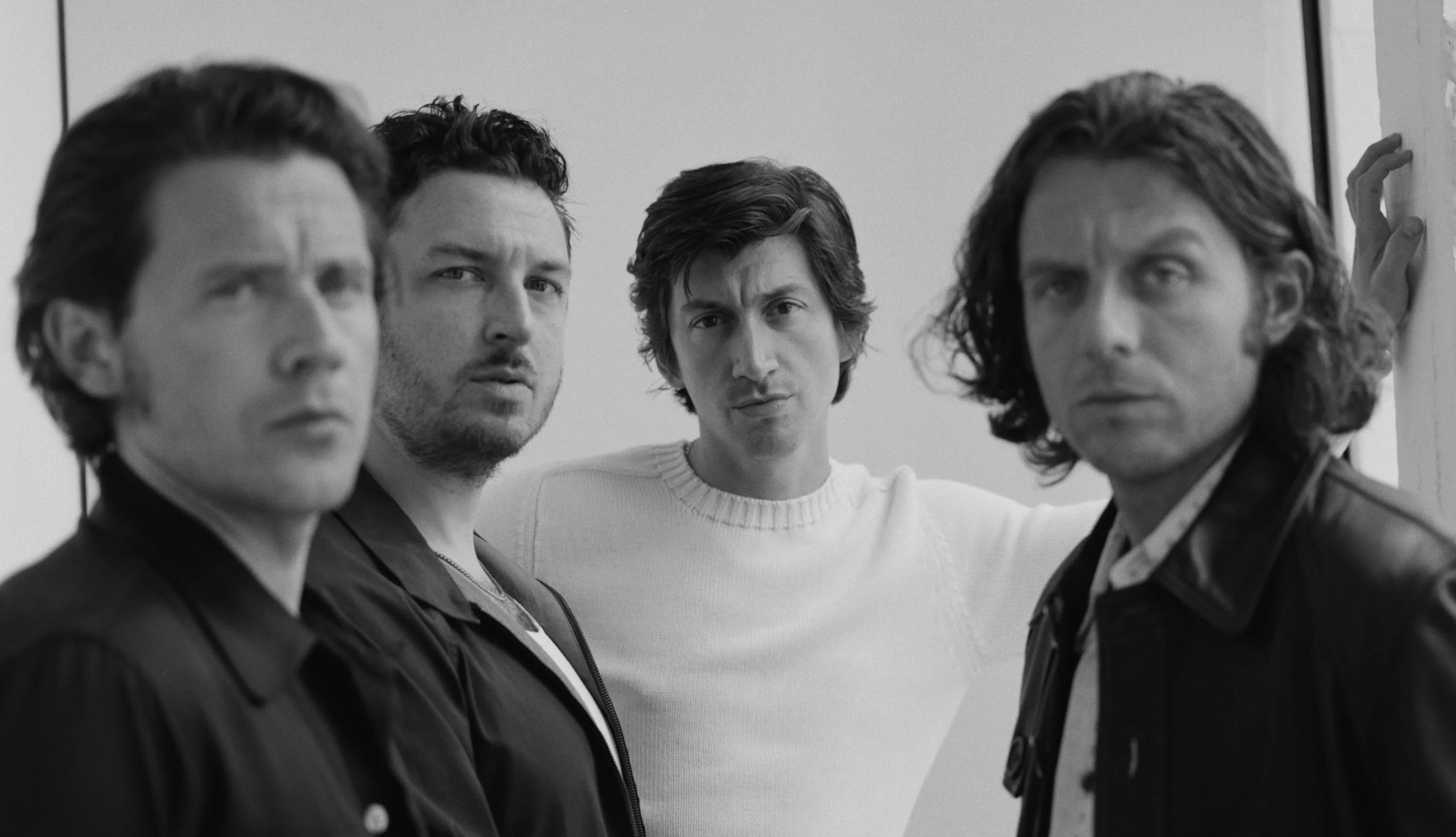
There are two ways to remember the arrival of Arctic Monkeys. The first is to have been there: swapping early recordings, watching the queues grow around Sheffield, hearing 'I Bet You Look Good on the Dancefloor' crash into number one and seeing four young men become the biggest new band in Britain almost before they had worked out what being famous involved.
The second is to arrive later. I belong much more firmly to that group. I was six when 'Whatever People Say I Am, That's What I'm Not' was released, so I did not experience the first rush around Arctic Monkeys as it happened. By the time I was old enough to properly find bands for myself, there were already four albums waiting for me and the story of MySpace, copied CDs and tiny Sheffield venues already felt like British guitar folklore.
'AM' arrived when I was thirteen. For the first time, Arctic Monkeys did not feel like a band I had inherited from people slightly older than me. They were happening now. 'Do I Wanna Know?' was everywhere; Alex Turner suddenly looked like he had walked out of another decade, and a band I associated with Sheffield indie clubs had become one of the biggest rock groups in the world.
I think that gap between those two moments is what makes their career so interesting. They caught one generation in 2006 and another in 2013 without pretending the intervening years had never happened. In fact, most of the best things about Arctic Monkeys came from refusing to stay where people expected them to. The Sheffield teenagers, the desert-rock band, the romantics of 'Suck It and See', the leather-jacketed 'AM' era, the moon hotel and the strings of 'The Car' are all recognisably the same four musicians, even when they barely sound like it. More than twenty years later, people are still finding their own way in.
Across seven albums and more than twenty years of Arctic Monkeys history, almost every version of the band has eventually led listeners towards another one.
'Fake Tales of San Francisco': 2002 to 2006
Arctic Monkeys formed in Sheffield in 2002 around Alex Turner, Jamie Cook, Matt Helders and Andy Nicholson. They were friends before anybody outside South Yorkshire had any reason to know their names, learning their instruments, rehearsing and gradually collecting songs.
Their first gig came at The Grapes in Sheffield in June 2003. Early originals such as 'Ravey Ravey Ravey Club' and 'Curtains Closed' became part of the recordings eventually known as 'Beneath the Boardwalk', but the mythology around those demos sometimes makes the whole thing sound more calculated than it was.
The music travelled because people liked it. Fans copied CDs, passed songs around and uploaded tracks. Pages appeared online. One person told another person, and that person told somebody else. The internet sped everything up, but there was no grand digital masterplan behind it.
By 2005, the noise around them had become impossible to ignore. Domino signed them, 'I Bet You Look Good on the Dancefloor' went straight to number one in October and 'When the Sun Goes Down' did the same in January 2006. Then came 'Whatever People Say I Am, That's What I'm Not'.
The numbers were ridiculous. It became the fastest-selling debut album in British history at the time, but nearly twenty years later the statistics feel less interesting than the fact the record still sounds so vivid. It is not often a debut album gives you two number-one singles and still leaves you wondering whether either would make your top three songs on it.
What Turner had was an eye for all the things people usually considered too ordinary to write about. Club queues, bouncers, taxis, arguments, terrible flirting, somebody becoming unbearable after a few drinks. He could take a phrase you had heard a hundred times and suddenly make it feel worth noticing.
'I Bet You Look Good on the Dancefloor' captured the rush of being young and thinking the night in front of you might be the most important thing that has ever happened. Helders seems to spend the entire song trying to outrun everybody else. 'When the Sun Goes Down' is far darker. The setting is still recognisable, but Turner is looking at something people would rather ignore. It begins almost casually before the band crashes in underneath him, and the contrast makes the whole thing nastier.
Even then, those singles only tell part of the story. 'Mardy Bum' is just two people annoying each other. That sounds reductive, but it is part of the song's charm. Turner understands the small resentments that build up inside an ordinary relationship and the nostalgia for the version of it that used to feel easier.
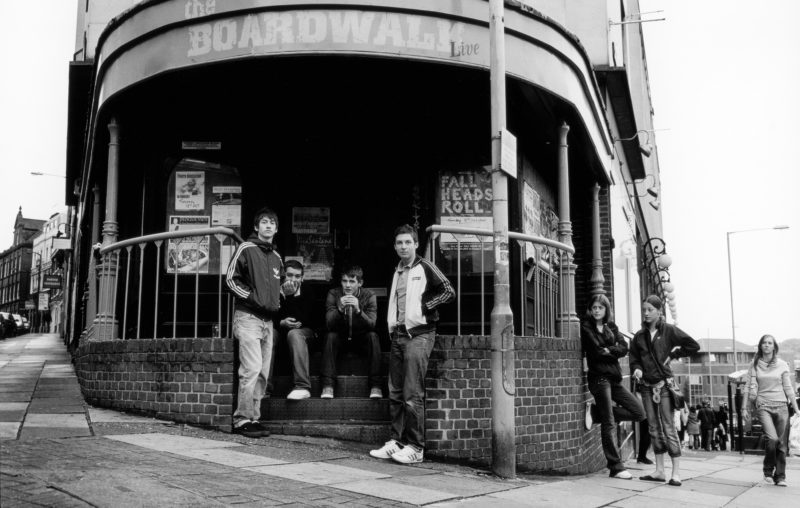
'From the Ritz to the Rubble' turns an argument with a doorman into something that feels enormous when you are nineteen. 'Red Light Indicates Doors Are Secured' finds a song in the taxi journey afterwards. 'Riot Van' looks back at bravado with enough distance to know how stupid some of it was.
Then there is 'Fake Tales of San Francisco'. The title is funny, but the point underneath it stayed with Arctic Monkeys long after the song disappeared from their sets. Turner had no patience for northern bands pretending they came from somewhere more glamorous. Arctic Monkeys never needed to disguise Sheffield. The accent stayed, the places stayed and the people stayed. Rather than limiting them, those details gave listeners something real to hold on to.
The debut closes with 'A Certain Romance', and I still think it is one of the most remarkable endings to any British debut album. Turner has spent most of the previous forty minutes watching the people around him: what they wear, how they behave, what they listen to and how they treat each other. There is plenty of mockery in there, but by the end he catches himself. He knows these people. They are his friends.
"Over there, there's friends of mine" does more for me than any grand statement about youth or class ever could. Turner can see the violence, narrow-mindedness and ridiculousness around him, but he also knows that standing outside it and sneering does not make him superior.
That mixture of irritation and affection is probably why 'A Certain Romance' has lasted so well. It understands what it is like to love a place you are desperate to escape from and people who occasionally drive you mad.
The whole album works like that. Sheffield is everywhere, but you did not have to come from Sheffield to recognise it. Every town had a terrible club. Every friendship group had somebody who changed after three pints. Every teenager had stood somewhere pretending to be much more confident than they actually felt. The local detail opened the record up rather than closing it off.
'This House Is a Circus': 2007
The strangest thing about 'Favourite Worst Nightmare' is how quickly it arrived. Fifteen months after the debut, Arctic Monkeys were already changing. The obvious sequel would have been more stories about Sheffield nights out delivered at ridiculous speed. There is still plenty of that nervous energy on 'Favourite Worst Nightmare', but Turner no longer sounds quite as interested in standing in the corner taking notes.
'Brianstorm' is a much sharper opening than anything on the debut. Helders is ridiculous on it. The band sound tighter, heavier and slightly more aggressive, as though the previous year has removed any hesitation from them. 'Teddy Picker' turns some of that aggression towards the industry that had spent twelve months trying to explain their success. There is something quite funny about Arctic Monkeys becoming a phenomenon and almost immediately becoming suspicious of the process that creates phenomena.
What I like most about the album, though, is the sadness creeping in around the edges. 'Fluorescent Adolescent' is one of their brightest melodies and one of Turner's most melancholy songs. He was barely into his twenties and was already writing about the point where youth starts feeling like something that happened to somebody else.
'Do Me a Favour' goes somewhere equally uncomfortable. There is no romantic mythology around the end of the relationship, just the point where two people know something has finished and neither has found a graceful way of dealing with it. 'Only Ones Who Know' is quieter still, almost shockingly so after the pace of the early band.
Then there is '505'. It is difficult to hear it now without everything that happened later getting in the way. For younger Arctic Monkeys fans, '505' can feel as central to the band as 'Dancefloor' or 'Do I Wanna Know?'. In 2007, it was the strange slow-burner at the end of the second album. The way it grew years later says a lot about the band's relationship with younger listeners. Songs stopped belonging solely to the year they were released.
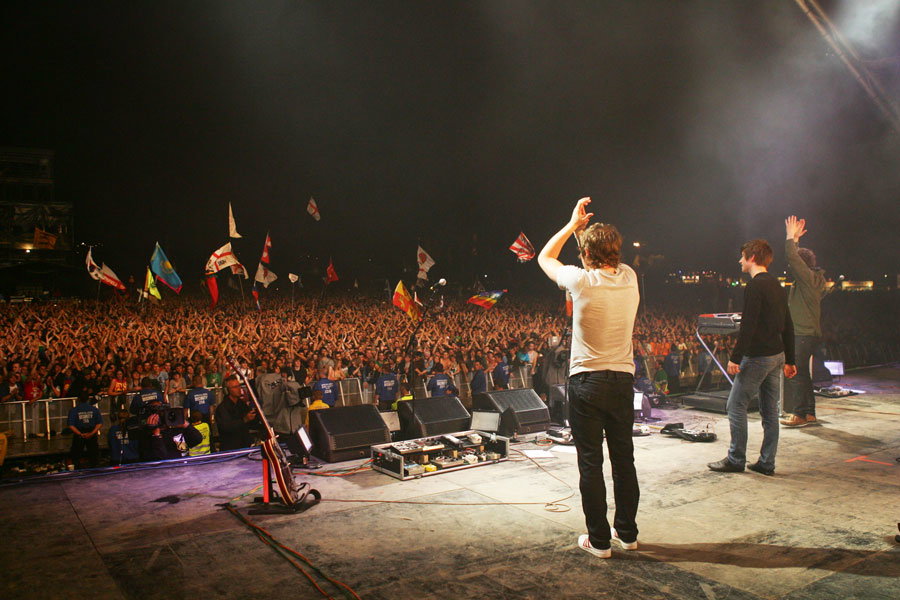
At the same time, the venues around Arctic Monkeys were becoming enormous. They headlined Glastonbury for the first time in 2007 and played two nights at Old Trafford Cricket Ground. The pubs, taxi queues and doormen Turner had written about were suddenly being sung back to him by tens of thousands of people.
A lot of bands would have protected the thing that got them there. Arctic Monkeys were already becoming less interested in it. 'Favourite Worst Nightmare' still has the violence and speed of the debut, but Turner is looking backwards in 'Fluorescent Adolescent', writing directly about heartbreak in 'Do Me a Favour' and sounding far more exposed by the time he reaches '505'. The world was getting bigger around them, and the songs were becoming more inward.
'Through the Secret Door': 2008 to 2010
Then they went to the desert. It is hard to imagine now how strange 'Humbug' sounded in 2009 if you knew Arctic Monkeys through the first two records. They had built a reputation on speed, sharp detail and songs that got to the point before you had time to think. 'Humbug' seemed happy to make you wait.
Working partly at Rancho de la Luna with Josh Homme changed the mood completely. James Ford remained involved too, but this was clearly a band interested in disturbing its own habits. Helders began using space differently. O'Malley's bass became heavier. Cook's guitar stopped existing purely to push songs forwards. Turner, meanwhile, seemed much less interested in explaining himself.
'Crying Lightning' was the first sign of how different things had become. The song does not rush anywhere. It stalks. The bass sounds grimy, Cook's guitar circles around it and Turner somehow makes strawberry laces and gobstoppers sound threatening. The woman in the song feels impossible to pin down, and Turner seems as fascinated by that as he is frustrated by it.
It is a big change from the early records. Turner used to describe somebody and make you feel as though you understood them within a verse. On 'Humbug', people become harder to read. The record gets called dark so often that some of its beauty can be overlooked, and 'Secret Door' is probably my favourite example.
There is something almost weightless about it. Turner is drawn towards somebody who seems capable of disappearing from the spectacle around her, which feels particularly interesting given what Arctic Monkeys had just spent three years living through. Their lives had become festival stages, magazine covers and people constantly waiting for the next thing. 'Secret Door' is fascinated by somebody who seems able to step away from all of that.
The song does the same musically. It never crashes into life. It opens gradually, the guitars shimmer and the ending seems to drift somewhere else entirely. The title fits the record better than almost anything else on it. Arctic Monkeys had found a side door out of the version of themselves everybody expected.
'Pretty Visitors' makes sure things never become too dreamy. Helders attacks it, the organ sounds slightly unhinged and Turner's lyrics have moved a long way from the photographic realism of the debut.
Then there is 'Cornerstone'. It remains my favourite Arctic Monkeys song, and I still think it might be the finest piece of writing Turner has ever produced.
What I love is how gentle it sounds compared with the story being told. The melody almost floats along while the narrator wanders from place to place, repeatedly seeing women who remind him of somebody he cannot get over. At first it is funny, but the repetition starts to hurt. The Battleship, The Rusty Hook, The Parrot's Beak and The Cornerstone give the song its own little geography. Whether those places are real matters less than how real Turner makes them feel.
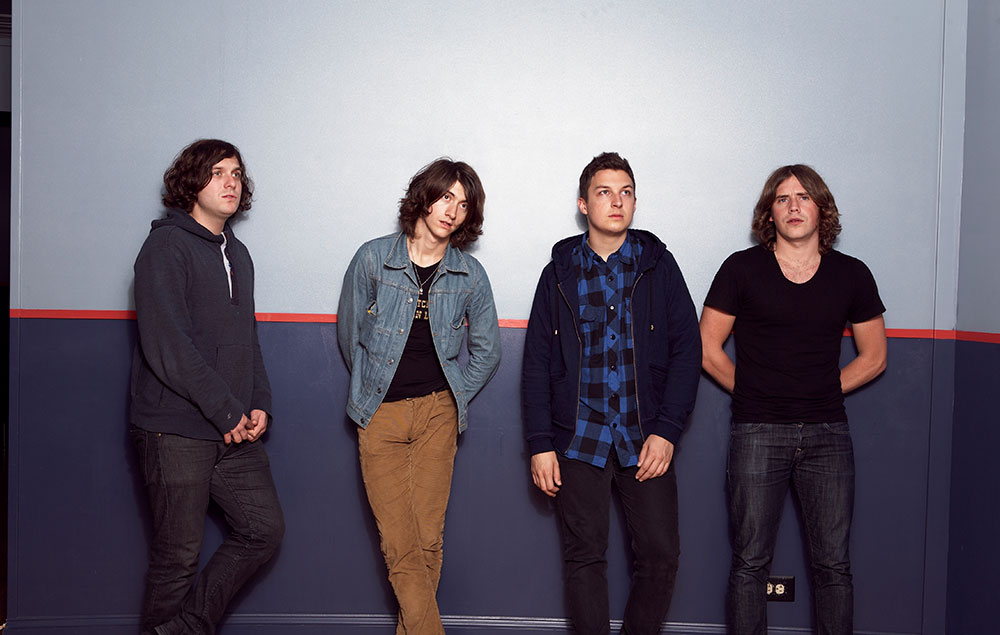
There have been all sorts of interpretations around the song, including the connection fans have made between The Cornerstone and a Sheffield counselling service. I have never felt the need to settle on one explanation. If the woman has died, the narrator is seeing somebody who cannot come back. If she has simply left, he is still trying to fill the gap with strangers. Neither version is particularly happy.
The final encounter only makes things stranger, and Turner wisely refuses to tidy it up for us. He had become a much more confident writer by this point, confident enough not to explain every feeling and confident enough to let something remain slightly uncomfortable.
'Cornerstone' still has pubs, awkwardness, attraction and bad decisions. In that sense, it is not completely removed from the debut. The difference is what Turner does with those things. By 2009, ordinary details were no longer just punchlines or social observations. They could carry grief, obsession and loneliness too.
The end of 'Humbug' goes somewhere darker again. 'Fire and the Thud' and 'Dance Little Liar' both carry a sense of something tightening around Turner, before 'The Jeweller's Hands' seems to swallow the album whole.
It is a strange closer. The song begins with a kind of sinister elegance and gets more hypnotic as it continues. Nothing resolves neatly. The instruments keep circling until it feels as though 'Humbug' is fading into its own atmosphere rather than simply ending.
Listening back now, parts of Turner's later writing no longer feel quite so sudden. The theatrical delivery, patience and interest in atmosphere that became central to 'Tranquility Base Hotel & Casino' were already appearing here.
'Humbug' was once the difficult third album. Now it sounds like the moment Arctic Monkeys realised there did not have to be a correct Arctic Monkeys sound.
'That's Where You're Wrong': 2011 to 2012
I have always found it strange when 'Suck It and See' is treated as the album between 'Humbug' and 'AM', almost as though its main job was getting the band from one important record to another. It is my favourite Arctic Monkeys album.
After the darkness of 'Humbug', there is a looseness to it that still feels refreshing. The heavy side has not disappeared. 'Don't Sit Down 'Cause I've Moved Your Chair' sounds enormous and 'Library Pictures' briefly sends everything flying off again, but the record is not defined by that.
The melodies are warmer and Turner sounds increasingly comfortable with the fact that he has become a romantic songwriter. 'She's Thunderstorms' is a long way from the young man writing about somebody getting turned away from a club. 'Black Treacle' has an ease about it that the previous record rarely allowed, and 'Reckless Serenade' is so understated it almost feels as though Turner is trying not to disturb it.
'Love Is a Laserquest' is the song I return to most when thinking about how much his writing had changed. Turner was twenty-five and already imagining the point where youth, relationships and old versions of yourself become things you look back on.
There is something strangely old about it, not musically but emotionally. He sounds like somebody already aware that the things currently defining his life will one day become memories. The title track is even more direct. Turner allows himself to write a love song without immediately taking the piss out of himself for doing it. Then 'That's Where You're Wrong' closes the album.

For me, it is one of the most underrated songs Arctic Monkeys have made. The bass keeps everything moving while the guitars shimmer around it, and there is a hazy warmth to the whole thing that fits the Los Angeles setting of the record. It feels expansive without becoming bombastic.
The thing I like most is Turner's tone. He is trying to reassure somebody rather than analyse them. The sharpness that defined his earliest songs has softened, and there is something generous in the way he writes about insecurity and time. The whole album feels like Arctic Monkeys discovering that getting older did not necessarily mean becoming more serious, darker or heavier. Sometimes it could mean opening the windows.
That is the version of the band I hear in 'Suck It and See'. It has the strangeness they learned during 'Humbug', the melodies that had always been there and a Turner who is no longer afraid of sounding sentimental for a few seconds.
Their Don Valley Bowl shows in Sheffield came during this period too, which creates a lovely contrast. They were playing one of the biggest hometown shows of their lives while touring some of their most intimate material. Two years later, the intimacy would become stadium-sized.
'Mad Sounds': 2013 to 2014
By the time 'AM' arrived, Arctic Monkeys had already had a career most bands would have been delighted with. Four number-one albums, Glastonbury, Old Trafford, Don Valley Bowl and a catalogue that had already changed several times. So I do not really think of 'AM' as the record that made Arctic Monkeys successful. They were already far beyond that point. What changed in 2013 was the size of the world around them.
'Do I Wanna Know?' sounded confident in a way the early band never did. The old songs often felt like they were trying to reach the end before somebody switched the lights on. Here, the riff arrives and simply sits there. Nobody is rushing. Helders' beat gives it the space to move and Turner takes an old subject, wondering whether somebody wants you as much as you want them, and somehow turns that insecurity into something enormous.
That confidence had not appeared overnight. You can hear pieces of 'AM' scattered throughout the previous records. 'Humbug' had taught them how much could happen in the spaces between notes. 'Suck It and See' had made Turner far more comfortable writing about attraction and vulnerability without hiding everything behind a joke. Helders had become as interested in groove as speed, while Cook had learned that a guitar did not need to fill every second to dominate a song.
'R U Mine?' is far more aggressive than 'Do I Wanna Know?', but even there the rhythm has changed. Hip-hop had clearly entered the band's bloodstream. Black Sabbath, glam, soul and the records they had grown up with were being thrown together with all the different versions of Arctic Monkeys that already existed. The result was still unmistakably a rock record, but it did not move like most British rock records around it.
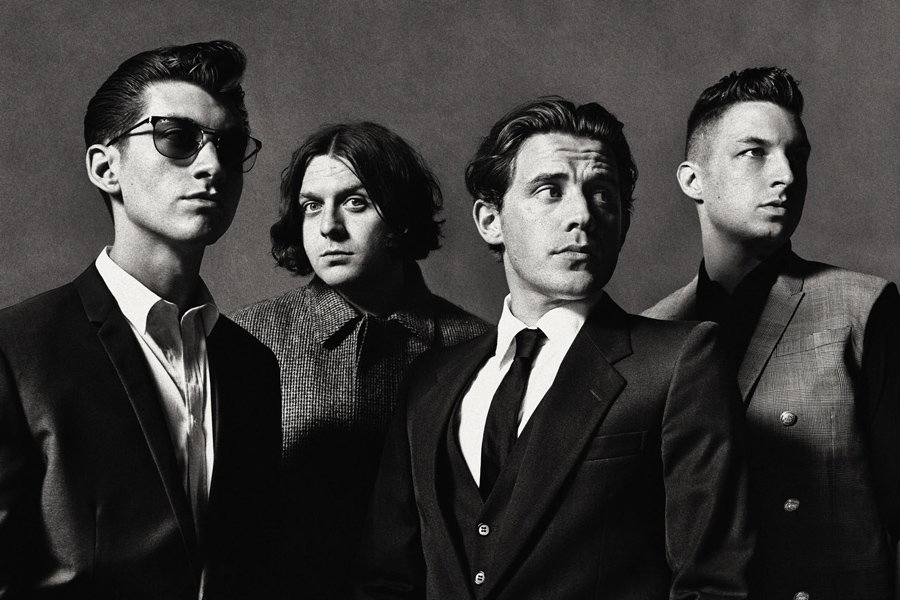
'Arabella' is probably where all of those ideas meet most obviously. There is something huge and almost ridiculous about the guitars, but Turner is now writing in a language that would have been unimaginable on the debut, mixing attraction with cosmic imagery and making the whole thing sound completely natural. The distance travelled from Sheffield nightclub queues is enormous, yet he is still basically writing about wanting somebody.
Beneath the new image and much bigger sound, Turner had not abandoned the subjects that had always interested him. Desire, embarrassment, jealousy, late-night decisions and the inability to properly communicate with somebody are everywhere.
'No. 1 Party Anthem' brings that connection with the early records closest to the surface. The title sounds as though the band are about to produce another massive chorus, but Turner instead takes us back into a room full of people trying to look more confident than they feel. It could almost be a setting from 'Whatever People Say I Am, That's What I'm Not', except Turner is no longer observing everybody from the edge of the room. This time he sounds just as uncertain as the people he once wrote about.
I find that change in perspective more interesting than the haircut, leather jacket or microphone technique that came to define the era visually. The young Turner often appeared to understand everybody around him instantly. By 'AM', he sounds much less certain of himself. He can still produce a brilliant line, but he is increasingly the person making the bad decision rather than simply documenting it.
That vulnerability is easy to miss because the record looked so confident from the outside. 'Why'd You Only Call Me When You're High?' became one of its biggest songs, but there is nothing particularly glamorous about the person inside it. It is another late-night mess, somebody reaching for their phone when they probably know they should leave it alone. Ten years earlier Turner might have watched that person stumbling through the night and written a song about them. Now he is much closer to being them.
'Fireside' is even more wounded, built around the frustration of discovering that distance does not automatically remove somebody from your thoughts. Then there is 'Mad Sounds', which is partly why I prefer using it as the title for this period. It gets nowhere near as much attention as the obvious singles, but it represents the side of 'AM' that disappears when the record is reduced to riffs, swagger and black leather.
It is soft, simple and warm. There is nothing desperate about the arrangement and no attempt to make every moment sound enormous. Placed among some of the biggest songs Arctic Monkeys had written, it gives the record room to breathe. 'I Wanna Be Yours' does something similar at the other end, closing their biggest album with Turner adapting John Cooper Clarke rather than searching for another stadium-sized guitar moment.
There is something fitting about that. Arctic Monkeys had travelled from Sheffield to California and become an international rock band, yet their biggest record still finished with the words of a Salford poet and images drawn from ordinary objects. The band had changed beyond recognition in places without completely severing the things that had made them distinctive in the first place.
Then there was everything happening outside the record.
I was thirteen when 'AM' came out, and that is probably always going to shape how I hear it. For people slightly older than me, Arctic Monkeys were attached to the excitement of 2005 and 2006: copied demos, MySpace, 'Dancefloor', the debut and a band appearing out of Sheffield before the industry had quite worked out what was happening. I knew that story, but I had not lived through it.
'AM' was different. I did not discover that era afterwards through old performances and other people's memories. I was watching it happen. 'Do I Wanna Know?' seemed to be everywhere. Arctic Monkeys were on festival stages, television, magazine covers and in conversations with people who had shown very little interest in their previous records. The band had somehow become both enormous and newly fashionable twelve years after first picking up instruments together.
For people around my age, this was our Arctic Monkeys moment. That did not mean we only cared about 'AM'. If anything, the record made the rest of their catalogue more exciting because it gave you somewhere to start. Once you were in, you went backwards. '505', 'Cornerstone', 'Mardy Bum', 'Fluorescent Adolescent', 'A Certain Romance'. Albums released when I was a child suddenly became part of my own musical life.
Streaming accelerated that process until the dates almost stopped mattering. '505' is the clearest example. It began as the final track on 'Favourite Worst Nightmare' in 2007 and eventually grew into one of the defining Arctic Monkeys songs for an audience who had no memory of that album being released. For somebody discovering the band later through TikTok, Spotify or YouTube, there was no reason to think of it as an old song at all. It sat beside 'Do I Wanna Know?' waiting to be found.
That has happened across the catalogue. Arctic Monkeys are now one of those bands where two people standing next to each other at a concert can have completely different ideas about when the story began. One might have bought the debut on release. Another might have entered through 'AM'. Somebody younger might have started with '505' years later and then worked in both directions.

The live shows reflected that change. When Arctic Monkeys returned to headline Glastonbury in 2013, six years after their first Pyramid headline set, they carried themselves completely differently. In 2007, everything had happened so quickly that they could still look like four young men processing the size of the place around them. In 2013, there was far more control.
Turner attracted most of the attention, understandably. The hair had changed, the clothes had changed and his whole approach to being a frontman had become more theatrical. But the transformation was not his alone. The whole band had learned how to use a stage that size. They no longer needed to attack every silence or push every song as hard as possible. The restraint they had developed across 'Humbug' and 'Suck It and See' could now work in front of tens of thousands of people.
Finsbury Park in 2014 took that scale even further. By then it felt as though Arctic Monkeys were no longer simply a huge British band who happened to travel well. 'AM' had crossed borders in a way none of their previous records quite had, particularly in America, and songs that had begun with Turner writing about uncertainty in the middle of the night were filling enormous venues around the world.

There is an irony in that. The album that made Arctic Monkeys look more self-assured than ever is full of people who are anything but. They call when they should not, wonder whether somebody feels the same way, watch people across crowded rooms and struggle to get over relationships that have already finished.
The swagger was real, but so was the insecurity underneath it. I think that combination helped 'AM' travel as far as it did. The surface was immediate: the riffs, drums, image and choruses worked almost instantly. Spend longer with it and a much more uncertain record appears underneath.
It also explains why 'AM' never felt like a complete break with the Arctic Monkeys who came before it. The sound had changed again, but Turner was still worrying about people, relationships and all the stupid things we do when we want somebody to want us back.
The difference was that millions more people were listening.
Then, just as they became the biggest band in the world, they did the most Arctic Monkeys thing they could. Stop.
'The Ultracheese': 2015 to 2021
If Arctic Monkeys had followed 'AM' with another album full of dark riffs, late-night desire and songs built for enormous crowds, nobody would have complained. By 2014, they were a band in huge demand with a sound that worked everywhere from arenas and football stadiums to festival fields, and it would have been very easy to settle into it. Instead, they stopped. Turner returned to The Last Shadow Puppets with Miles Kane, Helders played with Iggy Pop and Arctic Monkeys disappeared for several years.
In the meantime, 'AM' only seemed to grow. New listeners continued arriving, '505' found an audience far beyond the people who had bought 'Favourite Worst Nightmare', and the expectations around whatever came next became increasingly unrealistic. Five years is a long time when the last version anybody remembers of you was probably the biggest you have ever been. When they eventually returned, Turner was sitting behind a piano.
I still love the sheer awkwardness of 'Tranquility Base Hotel & Casino' as a follow-up to 'AM'. It feels almost wilfully designed to avoid giving people what they had spent five years imagining. There is no attempt to recreate 'Do I Wanna Know?' and no obvious replacement for the riffs that had taken them around the world. Instead, Turner starts 'Star Treatment' by admitting he wanted to be one of The Strokes and then spends the next forty minutes sounding nothing like the teenager they once inspired.
The whole environment had changed. Sheffield streets and late-night bars had been replaced by a hotel and casino on the moon. Turner now sounded like a slightly faded lounge singer surrounded by old keyboards, futuristic technology, advertising and people increasingly unable to communicate with one another. The guitars were still there, but they were no longer expected to explain what an Arctic Monkeys song was.
For an album that developed a reputation for being difficult, there is a lot of humour in it. Turner seems perfectly aware of how ridiculous the whole thing can sound. 'Four Out of Five' turns a review of a fictional lunar taqueria into one of the biggest choruses on the album, while elsewhere he wanders through technology, politics, entertainment and consumerism as though he has been left alone after closing time and decided to talk to whoever is still listening.
I think some of that humour was lost in the reaction to the album. 'Tranquility Base Hotel & Casino' was discussed as though Turner had disappeared completely inside a concept, when much of the fun comes from the fact he knows the concept is absurd. The language had become denser and his delivery more theatrical, but the old eye for ridiculous human behaviour had not gone anywhere.
The concerns underneath it were not entirely new either. Turner had always written about people trying to impress one another, people behaving differently because somebody was watching and people struggling to say what they actually meant. On the debut, that happened outside nightclubs. On 'Tranquility Base Hotel & Casino', the same insecurities had followed humanity all the way to the moon.
Turner was also starting look back at earlier versions of himself. By this point, the person who wrote 'A Certain Romance' had become another character he could look back at from a distance. Fame, nostalgia and the strange experience of having earlier versions of yourself permanently available to everybody else hang over the record without Turner ever needing to write a straightforward song about being famous.
Then 'The Ultracheese' arrives and much of the scenery falls away. It is one of my favourite things about the album. After all the moon bases, technology and strange characters, Turner ends up looking at old photographs and thinking about friendships. Suddenly the distance between the teenager on the first record and the man making this one feels much smaller.
There is something slightly uncomfortable about the nostalgia in it. He is affectionate about the past without pretending he can simply return to it, which feels much more interesting than making a song about how great everything used to be. I always end up connecting 'The Ultracheese' back to 'A Certain Romance'. They sound nothing alike, but both eventually come down to the people around Turner and what happens to those relationships as life changes. The first is written by somebody still inside that world; the second comes from somebody looking back across years of distance.
I have never really seen 'Tranquility Base Hotel & Casino' as Arctic Monkeys turning their backs on everything they used to be. It sounds radically different, but Turner's obsessions are still recognisable underneath it: friendship, memory, performance, embarrassment and trying to work out who you are when the person you used to be is still visible somewhere in the background.
The album divided people, inevitably. For anybody who had arrived through 'AM', it must have felt like an especially strange introduction to what Arctic Monkeys did next, and even listeners who had followed every change since 2006 were being asked to adjust again. I liked that they were still capable of making people argue.
By 2018, Arctic Monkeys could have easily spent the next decade touring the first five albums and headlining festivals on reputation alone. The songs were already there, the festival headline slots would have kept coming, and an audience existed for them to play the first five records forever. Instead, they made the Moon album, and after that there was no sensible way to predict Arctic Monkeys anymore.
'Body Paint': 2022 to 2023
By the time 'There'd Better Be a Mirrorball' arrived in 2022, I do not think anybody could seriously have expected Arctic Monkeys to pretend the previous album had never happened. The strings, patience and cinematic quality remained, but 'The Car' felt less enclosed than 'Tranquility Base Hotel & Casino'. The band seemed closer to the surface again.
'Mirrorball' was a beautifully strange comeback single. Arctic Monkeys had spent years away, yet rather than announce themselves with something huge, Turner returned sounding like somebody trying to remain composed while a relationship slipped away. The strings do a lot of the emotional work, but the song never collapses into melodrama.
There is an elegance to 'The Car' that I understand can frustrate people who want Arctic Monkeys to sound dangerous again. Everything is controlled. Turner rarely seems interested in raising his voice, and even Helders often sounds as though he is deliberately refusing the obvious drum part. Listening to Helders across their career is almost a way of listening to the band grow up. The drummer battering his way through 'The View from the Afternoon' and 'Brianstorm' could still do that in his sleep, but by 'Sculptures of Anything Goes' he can make a song feel threatening by doing far less.
That track is one of the places where 'The Car' feels darkest. It has the weight people kept asking the band to rediscover, just without delivering it through the same guitar sounds they used fifteen years earlier. Then there is 'Body Paint', which starts almost delicately on the album, Turner sitting among piano and strings before the band gradually begins pushing through the arrangement.
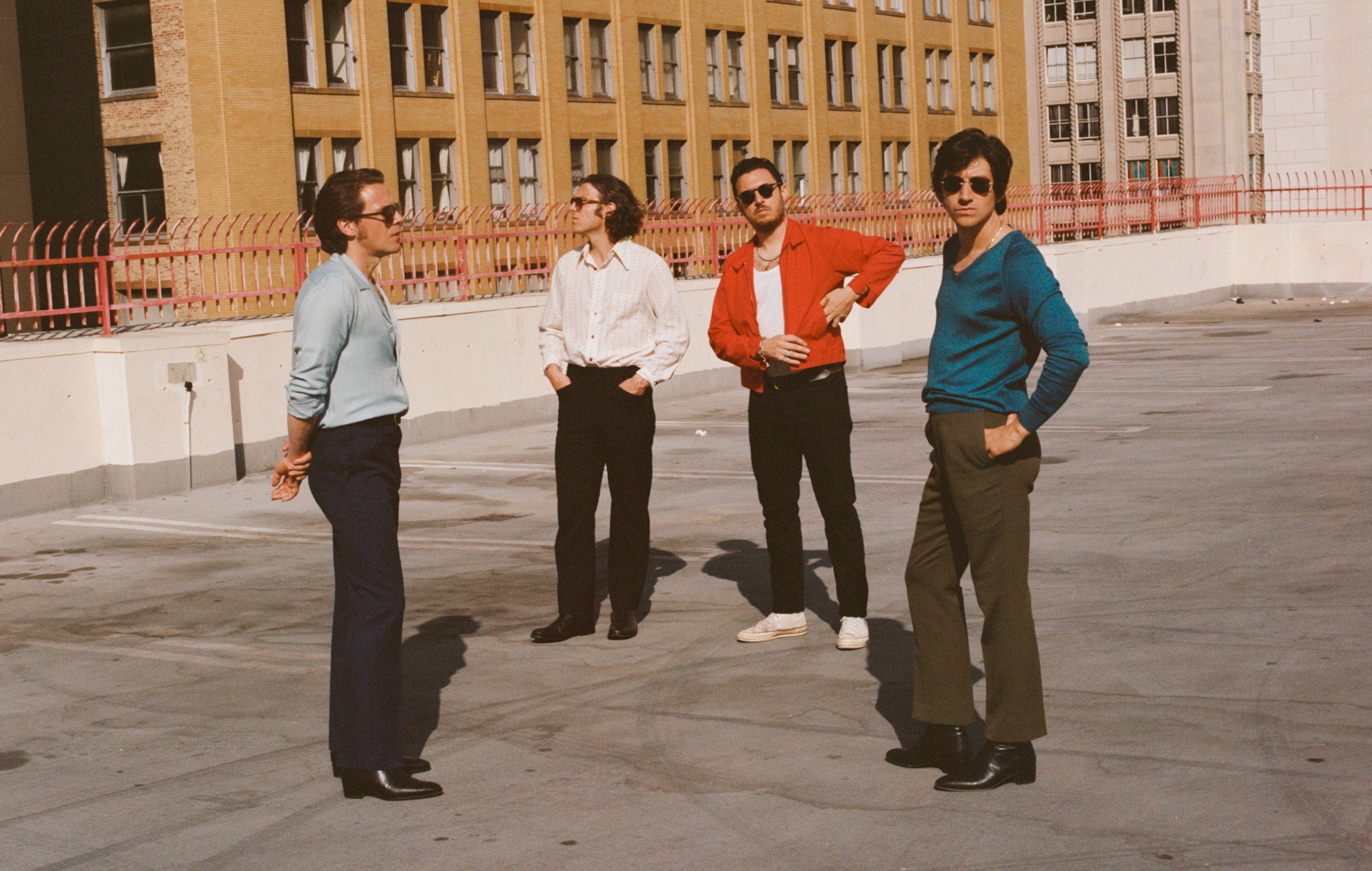
It already feels bigger than much of the record, but the live version took on a life of its own during 2023. They started stretching the ending until what had been a controlled studio recording became an excuse for Cook, O'Malley, Helders and Turner to let the song keep growing. The guitars became louder, Helders began hitting harder and the final section could turn into several minutes of the sort of noise some listeners had spent years insisting Arctic Monkeys no longer wanted to make.
The funny thing is that they had never really stopped being capable of that. They had simply stopped needing it all the time. 'Body Paint' captures the later Arctic Monkeys better than almost anything else because everything is there at once: the strings, Turner's newer style of writing, the slower pacing and, underneath it all, the same group who could once rip through 'Brianstorm' at frightening speed. Nothing had really been thrown away. They had just accumulated more ways of making music.
'Big Ideas' almost feels like a song about the impossible position they had reached by then. Every Arctic Monkeys record arrives with somebody waiting for them to become a particular previous version of themselves again. Some want the Sheffield band, some want 'Humbug', a huge number want 'AM', and others now prefer the stranger records. There is no way of satisfying all of those people, so at some point you stop trying.
The 2023 stadium shows made that history visible in the crowd. Someone who had bought the debut on release could be standing beside somebody who found them through 'AM', who in turn could be standing beside a teenager whose first real connection with the band came through the second life of '505'. They all knew the songs, just not necessarily for the same reasons.
That is a strange position for a band that once seemed so tied to a particular time and place. Arctic Monkeys began as almost the perfect document of being young in Sheffield in the middle of the 2000s, yet by 2023 the audience had stopped belonging to any single moment.
Their third Glastonbury headline appearance made the contrast even clearer. The 2007 band had reached the Pyramid Stage at a speed that still seems ridiculous. In 2013, they returned during the height of 'AM', Turner swaggering across a stage he now looked completely comfortable owning. By 2023, they were carrying nearly twenty years of music behind them.
'Brianstorm', 'Cornerstone', 'Do I Wanna Know?', 'There'd Better Be a Mirrorball' and 'Body Paint' could all exist in the same set without feeling as though Arctic Monkeys had to explain how they fitted together. After spending so much of their career escaping other people's idea of what the band should be, all those different versions could finally exist at once.
'Opening Night': 2023 to 2026
After 'The Car' tour ended, Arctic Monkeys disappeared again. By now, that silence has become almost as familiar as the records themselves. The band goes away, rumours start circulating and people begin inspecting tiny scraps of information for evidence of what Turner, Cook, Helders and O'Malley might be doing.The approaching twentieth anniversary of 'Whatever People Say I Am, That's What I'm Not' made the speculation particularly tempting. There was an obvious nostalgic route available.
They could have celebrated the debut, returned to Sheffield or built an entire tour around the album that started everything. Instead, when new Arctic Monkeys music finally arrived, it was attached to War Child.
The original 'HELP' album in 1995 captured a particular moment in British music, bringing together artists including Oasis, Blur, Radiohead, The Stone Roses and Paul Weller. Three decades later, 'HELP(2)' brought another group of musicians into the same idea, including Pulp, Damon Albarn, Fontaines D.C., Olivia Rodrigo, Wet Leg, The Last Dinner Party and Young Fathers.
I wrote more about the wider project in A Generation United: Inside the Landmark 'HELP(2)' Compilation for War Child. Arctic Monkeys were given the opening track, and somebody had a sense of humour because they called it 'Opening Night'. The title immediately created expectations that probably had very little to do with the song itself.
Was this the start of album eight? Was the band properly back? Would there be another tour? There might be answers to those questions eventually, but I do not think 'Opening Night' needs them.
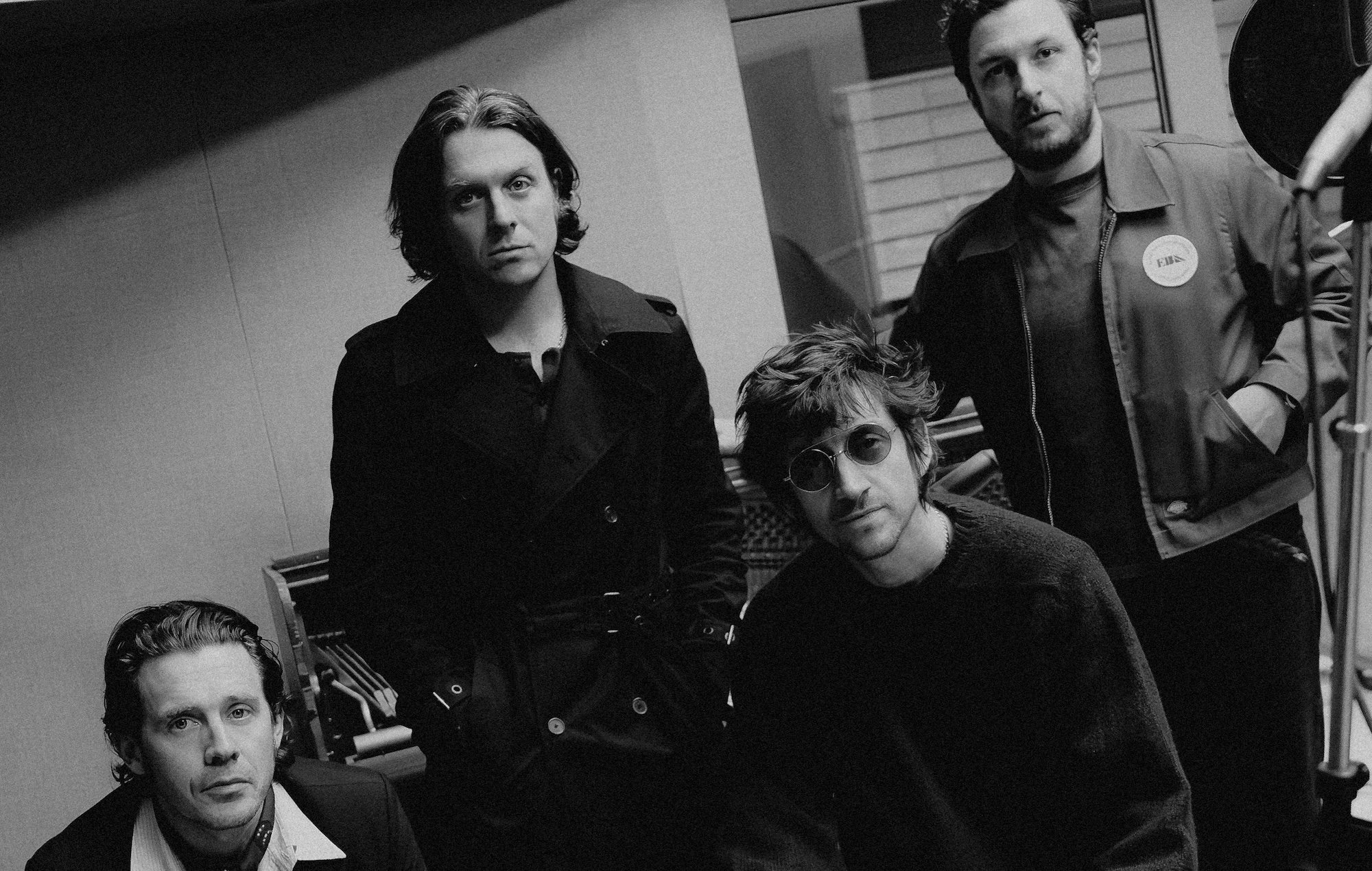
What interested me more was how naturally the different versions of Arctic Monkeys seemed to sit beside one another. The strings and cinematic sweep of the previous records remain, but Cook's guitar has more darkness around it and Helders gives the song a pulse that feels less stately than parts of 'The Car'. It does not sound like 'AM', but it does not sound frightened of guitars either. It keeps the orchestration of the later records without feeling trapped inside it.
I went into the song in much more detail in my 'Opening Night' review, but hearing the four of them together again was interesting precisely because it did not immediately explain what came next. Arctic Monkeys have rarely been particularly helpful in that regard.'
'Crying Lightning' did not tell you 'Suck It and See' was coming. 'Suck It and See' did not quite prepare you for the scale of 'AM', and nothing about 'AM' suggested Turner would return behind a piano singing about a moon hotel. Trying to predict album eight from 'Opening Night' feels like volunteering to be wrong.
The song is also a fitting way for Arctic Monkeys to reappear because it was not entirely about them. Their first new recording after another long silence arrived as part of a collaborative charity record rather than an enormous comeback campaign. For a band whose earliest songs travelled because people shared them with one another, there is something quite nice about that.
How Arctic Monkeys Defined Two Generations
When I started thinking about Arctic Monkeys as a band who defined two generations, the division seemed obvious. The first had 2006. Mine had 2013. One remembers the demos, MySpace, 'Dancefloor' going to number one and the shock of four young men from Sheffield becoming enormous almost immediately. The other remembers 'Do I Wanna Know?', 'R U Mine?' and an Arctic Monkeys who looked and sounded completely different arriving at exactly the right age.
Those groups were never as separate as that makes them sound. The people who were there in 2006 did not suddenly disappear when the guitars became heavier or Turner grew his hair, and plenty followed the band through every change. People like me who properly arrived through 'AM' did not only want 'AM' either. That record opened up everything behind it.
I found '505', then 'Cornerstone', 'Mardy Bum', 'A Certain Romance' and the albums surrounding them. 'Humbug', which had been released when I was nine, eventually became one of the records I associate most strongly with the band. 'Suck It and See', which I had largely missed in real time, became my favourite. The chronology did not really matter.
Streaming has pushed that even further. Someone finding Arctic Monkeys now can encounter the entire history at once. They do not have to understand that '505' was once a relatively understated album closer or that 'Cornerstone' came from the record people spent 2009 arguing about. They hear a song, and if they love it, they find another one. It creates strange second lives. '505' became far bigger than it had been when it first appeared. 'I Wanna Be Yours' travelled well beyond the original 'AM' era. Songs that were never designed to introduce Arctic Monkeys to anybody have ended up doing exactly that years later.
The idea of a generation owning a song starts to break down once that happens. Somebody discovering '505' at sixteen today can attach just as much of their life to it as somebody who heard it on 'Favourite Worst Nightmare' in 2007. The memories will be completely different, but the record does not know that.
Arctic Monkeys have also avoided becoming trapped inside nostalgia for the period that produced them. The debut can still evoke 2006 without the band having to behave as though it is still 2006. 'Humbug' can be rediscovered without the arguments that originally followed it, while 'AM' can remain a gateway even though Arctic Monkeys themselves moved somewhere completely different afterwards.
At some point, even the description of two generations starts feeling inadequate. The first audience has grown older. Mine has too. Another group has arrived behind us who may have discovered all seven albums in a matter of weeks rather than waiting seventeen years for them. Eventually, they all end up in the same crowd.
Arctic Monkeys did not spend twenty years trying to preserve the moment people first fell in love with them. They kept moving, and people kept finding their own way through what they left behind. Some arrived in 2005, some arrived in 2013 and others are arriving now.
More than twenty years after four friends started playing together in Sheffield, there are still friends of ours over there.