Song Stories: The 1975: Love It If We Made It
The 1975 ventured into new territory with their 2018 album, ‘A Brief Inquiry Into Online Relationships’, tapping into the anxieties, contradictions and information overload of a generation increasingly living its life online.
‘Love It If We Made It’ is arguably the album’s defining moment.
With its pulsating rhythm, relentless lyrics and strangely hopeful chorus, the song takes the language of headlines, social media, politics and tragedy and compresses it into four breathless minutes. It remains one of The 1975’s greatest achievements: a song rooted firmly in 2018 that somehow feels increasingly relevant with every passing year.
The album explored modern relationships, addiction, isolation and digital culture throughout, themes that would reach their most personal conclusion on ‘I Always Wanna Die (Sometimes)’. ‘Love It If We Made It’, however, looks outwards.
Rather than examining one relationship or one person's state of mind, Matty Healy attempts to process the world happening around him.
What does ‘Love It If We Made It’ mean?
At its heart, ‘Love It If We Made It’ is about trying to retain hope in a world that repeatedly gives you reasons to lose it.
The song arrived during a period of intense political and social division, but Healy does not approach it like a conventional protest song. There is no manifesto and no neat solution to the problems he describes.
Instead, the verses arrive like a newsfeed.
Racism, police brutality, drug use, the refugee crisis, misinformation, political rhetoric and internet culture collide with one another, often with barely enough time for the listener to process one reference before the next arrives.
That is the point.
Healy’s lyrics recreate the experience of consuming modern life through a screen: tragedy followed by celebrity, politics followed by memes, outrage replaced by another outrage before the previous one has even been understood.
Against all of that sits one remarkably simple line:
“I’d love it if we made it.”
It is not a promise that everything will be fine. In fact, the uncertainty is what gives the line its power.
The song does not say that we will make it. It simply hopes that we do.
Amid all the anger, fear and exhaustion contained in the verses, that refrain becomes the tiny piece of optimism holding everything together.
It is less a victory cry than a plea.
Writing a song from the headlines
What makes ‘Love It If We Made It’ so effective is that much of its language came directly from the culture surrounding The 1975 at the time.
Healy began collecting newspapers following the release of ‘I Like It When You Sleep, for You Are So Beautiful yet So Unaware of It’, gathering headlines, phrases and fragments of language that reflected the increasingly surreal news cycle.
Rather than inventing a fictional dystopia, he barely needed to exaggerate.
The world was already supplying the material.
That gives the song its stream-of-consciousness quality. One subject crashes into another because that is increasingly how information reaches us. Events with vastly different contexts and consequences are flattened onto the same screen, competing for the same few seconds of attention.
One of the song’s most affecting references concerns Lil Peep, who died in November 2017 aged 21. Elsewhere, the lyrics draw on language associated with racism, policing, migration and prominent public figures of the period.
The individual references matter, but the way they are arranged matters even more.
‘Love It If We Made It’ is not simply describing information overload.
The song is structured like information overload.
It is an approach that sits naturally within The 1975’s wider fascination with modern communication, technology and the internet. That relationship between the band and the culture surrounding them runs throughout their career, something I explore in more detail in ‘Go Down, Soft Sound’, my long-form look at The 1975.
The sound of information overload
For all the darkness in its lyrics, ‘Love It If We Made It’ sounds enormous.
George Daniel and Matty Healy produced the track together, building it around pounding drums, pulsing synthesisers and a vocal performance that barely gives the listener room to breathe.
One of its most important musical reference points was The Blue Nile’s ‘The Downtown Lights’.
The 1975 had become fascinated by the atmosphere of The Blue Nile’s 1989 album ‘Hats’, but rather than simply recreate its nocturnal melancholy, they pushed the idea somewhere harder and more mechanical. Healy later described wanting ‘Love It If We Made It’ to feel industrial and machine-like.
You can hear that throughout the recording.
The rhythm drives relentlessly forward while Healy delivers the verses almost as if he is fighting against the track itself. There is urgency in the performance, but the production remains unmistakably pop.
That contradiction is crucial.
The 1975 have always been fascinated by what happens when difficult subjects are placed inside gleaming pop music. They grew up absorbing MTV, alternative rock, R&B, electronic music and some of the biggest pop records ever made, and have never treated accessibility and seriousness as opposites.
‘Love It If We Made It’ might contain some of their bleakest writing, but it is also an extraordinary piece of pop music.
That ability to move between sincerity, irony, experimentation and outright spectacle is part of what makes the band's catalogue so distinctive. Unsurprisingly, ‘Love It If We Made It’ also has a place among my 10 best songs by The 1975.
A video that refuses to let you look away
The song’s official video extends the idea even further.
Its montage connects directly with many of the references contained in the lyrics. Grenfell Tower, the refugee crisis, Lil Peep, racism, policing and political figures appear alongside pop culture, celebrity imagery and brightly coloured footage of the band themselves.
There is even a visual reference to Michael Jackson.
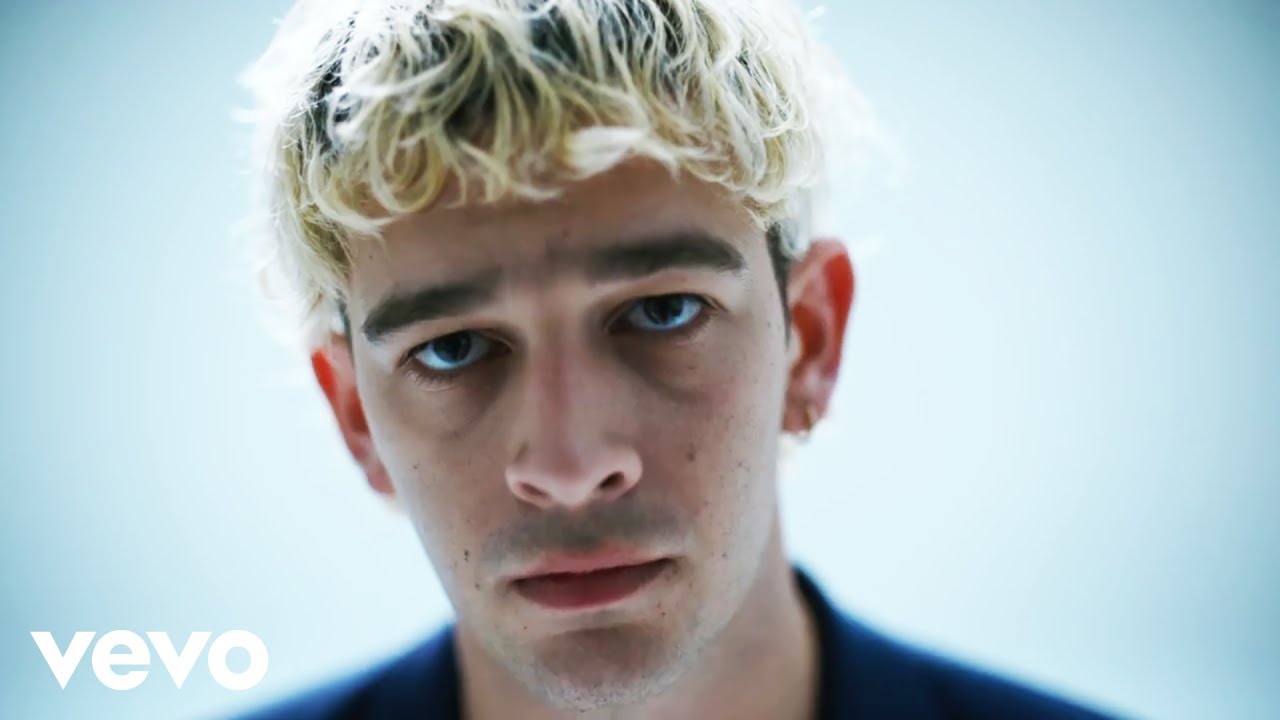
The bright neon colours make everything feel strangely artificial. Horrific images are presented through the same saturated visual language as entertainment, recreating the unsettling way serious events can become just another piece of content on a screen.
The effect is deliberately exhausting.
One image disappears before it can fully register and another immediately replaces it.
Watching it feels remarkably similar to scrolling through social media: tragedy, anger, entertainment and distraction all arriving through exactly the same rectangle.
The video does not allow those contradictions to sit comfortably. Instead, it turns the sensory overload already present in the song into something visual.
It also highlights one of the song’s most uncomfortable observations. Modern media does not necessarily give us enough time to process tragedy before presenting the next thing demanding our attention.
Eventually, there is a danger that everything simply becomes content.
A song that escaped 2018
There was always a danger that ‘Love It If We Made It’ would become trapped in the year it was released.
Its lyrics contain specific people, events and phrases that unmistakably belong to the late 2010s. Yet the song has not really dated. If anything, its broader argument has become easier to understand.
The particular headlines have changed, but political division, misinformation, racism, war, addiction and the overwhelming nature of online life have not disappeared. Neither has the feeling of opening a phone and immediately being confronted by more of the world than any one person could realistically process.
That is why ‘Love It If We Made It’ ultimately works as more than a catalogue of references. It captured a way of living.
Its importance within The 1975’s catalogue was obvious again when The 1975 headlined Glastonbury in 2025. Seven years after the song was released, it sounded less like a historical snapshot and more like one of the band's clearest statements. It also says something about The 1975’s place in the wider story of British music.
Few bands of their generation have been quite so willing to allow pop music, politics, internet culture, romance, addiction, humour and anxiety to occupy the same space. They became one of the defining British bands of the 2010s before carrying that influence into the following decade, a period covered more broadly in my history of British music in the 2020s.
That ambition does not always produce something tidy.
‘Love It If We Made It’ is not supposed to be tidy.
It is overwhelming because the world it describes is overwhelming. It is angry because there is plenty to be angry about. Yet it refuses to allow cynicism to have the final word.
That remains the crucial part of the song. After the headlines, the arguments, the images and the noise, The 1975 leave us with something remarkably simple.
They do not tell us everything will be alright. They just hope it will be. And sometimes hope is no more certain than that.