Go Down, Soft Sound
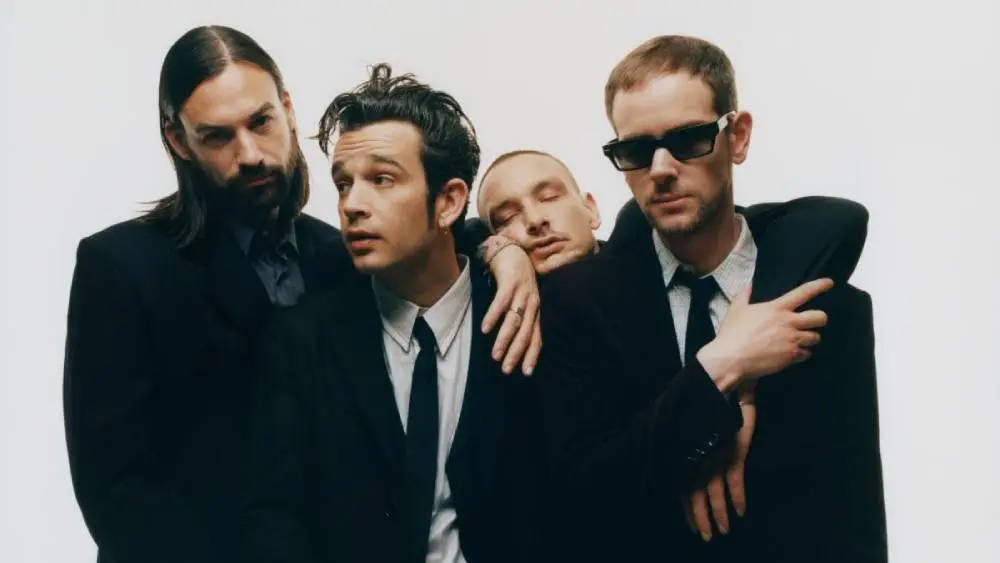
So, I've done a few of these big posts now, and I thought it was time to do another one. About Matty Healy, Adam Hann, Ross MacDonald and George Daniel. The 1975.
This is How It Starts- Early Days and Debut Album
The 1975 formed in Wilmslow, Cheshire, in 2002. The lineup has remained unchanged since the beginning: Adam Hann (lead guitar), Ross MacDonald (bass), George Daniel (drums and production), and Matty Healy (lead vocals, guitar, and primary songwriter). The band’s name was famously inspired by a copy of Jack Kerouac’s 'On the Road' that Healy found, which contained a page of manic scribbles dated "1 June, The 1975."
The members met as teenagers at school and began their journey performing together in various iterations. Originally, Healy played drums while Hann and MacDonald played guitar and bass. When their original singer dropped out, Healy stepped up to the mic while briefly continuing to drum, a role he eventually relinquished when he met George Daniel. Healy has since described meeting Daniel as a life-changing event that completed the band’s puzzle. As a quartet, they spent their early days playing punk and emo covers in school halls and Healy’s home before finding their own voice as songwriters.
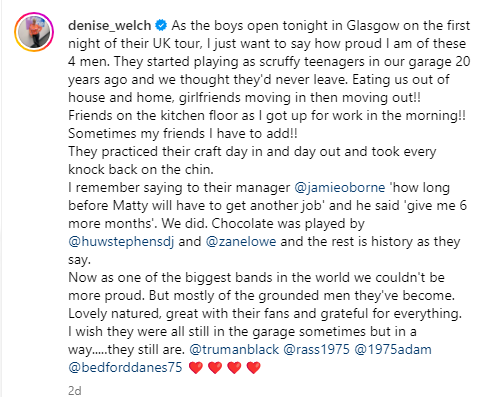
Growing up with parents in the spotlight, actors Tim Healy and Denise Welch, Matty found a support system that understood the industry. His parents were, and remain, the band’s fiercest advocates; Denise frequently shares her pride for the group with her followers on social media.
Determined to stay together, Hann, MacDonald, and Daniel moved to Manchester for university, while Healy briefly attended music school in the city. To fund their dreams, all four worked together at a local Chinese restaurant, pooling their wages to pay for recording sessions and petrol for gigs. They were inseparable, fueled by a desperate, collective ambition to make the band work.
By 2010, the band had met manager Jamie Oborne. Despite their talent, they remained unsigned for years because labels struggled to market their "genre-hopping" sound. Taking a gamble, Oborne set up his own independent label, 'Dirty Hit', and signed the band for a symbolic twenty pounds. With a label finally behind them, the momentum began to shift.
Before tackling a full-length record, the band released four EPs to build their identity. The first, 'Facedown', earned them their first national airplay when 'The City' hit the BBC Radio 1 airwaves. Legendary DJ Zane Lowe became an early champion, propelling the lead singles from their subsequent EPs. This buzz led to a relentless touring schedule, seeing the band traverse the UK and Ireland in early 2013 before heading to the US in 2014.
The hype was further cemented by high-profile support slots. They opened for Muse at the Emirates Stadium, toured with The Neighbourhood in the US, and shared the stage with The Rolling Stones at Hyde Park in July 2013. By the time the 'Sex' EP premiered on Radio 1, the anticipation had reached a fever pitch.
On 2nd September 2013, the band released their self-titled debut album, 'The 1975'. It was an immediate commercial triumph, debuting at Number One on the UK Albums Chart. While critics were initially divided, some sceptical of the hype and others confused by the band’s refusal to stick to one genre, the record’s versatility became its greatest strength. It was a sonic kaleidoscope of electropop, emo, funk, and 80s power-pop.
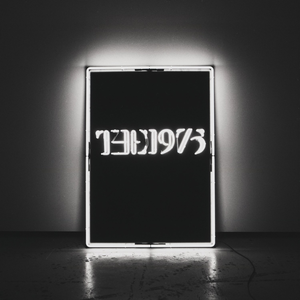
Healy described the style as "pretty experimental," noting that it moved from "glitchy R&B to big 80s powerpop to mid-90s soul." The 16-track odyssey remains a definitive pop record, featuring fan favourites like the driving 'The City', the punk-tinged 'Sex', and the shimmering 'Heart Out'.
Matty Healy always said the first three 1975 albums would tell a story: his own, from teen dreamer living in an affluent hinterland of Manchester (2013’s self-titled debut) to the dizzying heights of global celebrity and the subsequent fallout. This first record served as the foundational world-building for that narrative. It wasn't just a collection of songs; it was a curated aesthetic of black-and-white photography, leather jackets, and the suburban boredom of the Northwest.
'The 1975' is a big, bombastic, and deeply ambitious debut. Despite its polished production, the lyrics stayed grounded in the messy realities of youth: growing up, navigating relationships, and the highs and lows of drinking and drugs. It was both cool and tragic, the perfect opening chapter for a band that would become one of the most significant acts of the century.
By framing the debut as the start of a trilogy, the band invited fans to grow up alongside them. While the album touched on the universal "sex, drugs, and rock 'n' roll" tropes, it did so through a uniquely hyper-literate lens. Songs like 'Chocolate' and 'Girls' masked heavy themes with infectious, Nile Rodgers-inspired guitar hooks, a trick that would become a hallmark of their career. It was the sound of a band finally stepping out of the garage and into the spotlight, perfectly capturing the transition from the Cheshire boys to the icons they would become.
Love Me- I Like It When You Sleep
Following the success of their debut, which saw the band grace the Coachella stage and headline the Royal Albert Hall in 2014, the group prepared to record their sophomore effort in the summer of 2015. However, before a single note was heard, they staged one of the most effective resets in modern pop history.
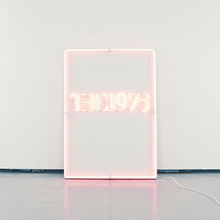
On 1 June 2015, the band’s social media accounts abruptly vanished, sparking frantic breakup rumours fueled by a cryptic comic strip shared by Healy and manager Jamie Oborne. When the accounts reappeared 24 hours later, the stark black-and-white aesthetic was gone, replaced by a vibrant, neon-lit palette of white and light pink. It wasn't just a publicity stunt; it was a visual manifesto for a new era.
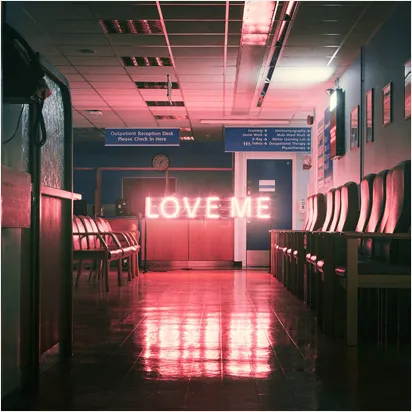
In October, they announced their second album: 'I Like It When You Sleep, for You Are So Beautiful yet So Unaware of It'. The lead single, 'Love Me', signalled a radical sonic shift. While they retained producer Mike Crossey, the emo-inflected indie of their debut was traded for high-gloss, 80s-inspired maximalism. If the first record had "nods" to the 80s, 'Love Me' lived there entirely, featuring staccato vocals, funky cowbells, and a jagged guitar solo. Lyrically, it was a biting critique of narcissism and celebrity culture, a "commentary on the commentators" as the band navigated their own rising fame.
The singles that followed showcased the album's staggering breadth:
UGH!': A twitchy, R&B-infused track influenced by INXS and Peter Gabriel. Lyrically, it found Healy at his most candid, detailing the conflicting pull of cocaine addiction, the desire to quit clashing with the desperate need to keep the high going.
'The Sound': A house-pop masterpiece originally offered to One Direction. When they passed, The 1975 turned it into a four-on-the-floor disco anthem, complete with syncopated synths and a triumphant electric guitar solo.
'Somebody Else' & 'A Change of Heart': These atmospheric tracks explored the anatomy of a breakup from two different angles. Written in the back of a Los Angeles cab, 'Somebody Else' captured the specific, ugly jealousy of seeing an ex move on. Meanwhile, 'A Change of Heart' tackled the slow process of falling out of love. It detailed the cold end of a romance by focusing on the theme of technology, highlighting how digital disconnect and the "screen" can amplify the distance between two people.
The album was met with universal acclaim, even winning over previously hostile publications. NME, once a vocal sceptic, called it "essential," praising its wit and staggering ambition. Despite its 17-track runtime, the record never felt bloated; instead, it felt like an eclectic diary. From the grief-stricken 'Nana', a tender tribute to Healy’s grandmother, to the cinematic, drug-hazed vignettes of 'Paris', the album explored addiction, technology, and social media with brutal honesty.
The record also featured 'She’s American', a track that harkened back to the rhythmic, guitar-driven pop of their debut but with a more sophisticated, funk-fueled polish. Lyrically, it poked fun at the cultural friction of a British rock star navigating an American romance, blending clever social observation with infectious, shimmering hooks. In sharp contrast, 'The Ballad of Me and My Brain' offered a frantic, self-analytical look into Healy’s psyche. It is a desperate, gospel-inflected search for his own sanity, with Healy’s raw, soaring vocals dramatising the experience of losing one's mind in the dizzying vacuum of fame.
The record also found room for lush, ambient instrumentals and gospel-tinged moments like 'If I Believe You', which questioned faith and religion with a soulful vulnerability. By refusing to edit themselves down, the band created a sprawling portrait of modern life that felt both chaotic and meticulously crafted. It was no longer just about the "vibe" of being in a band; it was about the technical mastery of their craft and the courage to be completely transparent with their audience.
Healy’s lyrical style during this era set him apart from the "tortured rock star" cliché. Historically, rock stars have tended to depict their drug problems in hysterically grandiose terms, "what tongueless ghost of sin crept through my curtains?" as Noel Gallagher famously put it. In contrast, Healy remained refreshingly mundane and realistic.
As he bluntly observed in 'UGH!': "You look shit, and you smell a bit." It was this blend of high-concept art and "ugly" realism that defined the second part of the trilogy, bridging the gap between a stylised pop persona and the messy reality of addiction.
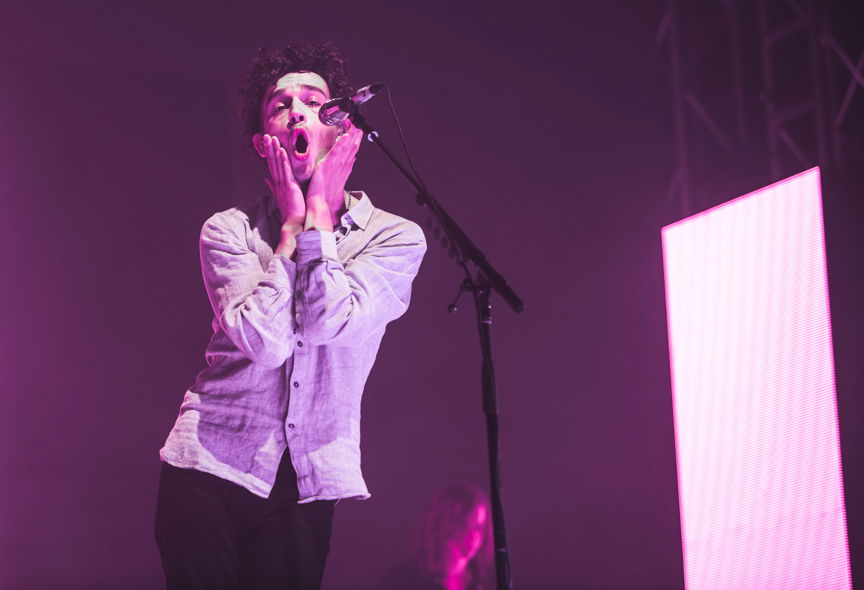
The promotional cycle was a global marathon. Starting in Liverpool in November 2015, the band toured through Asia, Oceania, Europe, and North America, performing at nine major festivals including Reading and Leeds. The era finally concluded on 14 July 2017 with a headline slot at Latitude Festival. This performance was a victory lap for a band that had spent two years redefining what a modern pop group could look and sound like.
As they walked off stage amidst the pink glow of the stage lights, Healy left the crowd with a prophetic parting shot: it was the end of an era, but the start of a new one titled 'Music for Cars'. This title, a nod to their 2013 EP, signalled that the band was looking back to their roots while preparing to embark on their most ambitious and critically acclaimed chapter yet.
Music for Cars- A Brief Inquiry into Online Relationships.
The path to the band’s third album was fraught with personal stakes. Production was initially delayed as Matty Healy sought treatment at a rehabilitation clinic in Barbados for his heroin addiction. While the frontman focused on recovery, the first signs of new music emerged in November 2016, when George Daniel shared a video of Healy at a keyboard with the cryptic caption "2018."
In April 2018, the era officially began with a masterclass in enigmatic marketing. Posters titled 'Music for Cars' appeared across London and Manchester, utilising "détournement", the art of hijacking existing advertisements, to display the Dirty Hit catalogue number DH00327. The band’s website was stripped back to a countdown clock, hiding a secret zip file that led fans to a digital conversation between a 'human' and a 'machine.' This scavenger hunt eventually revealed the album’s true title: 'A Brief Inquiry into Online Relationships'.
The lead single, 'Give Yourself a Try', arrived on 31 May 2018. Built around a piercing, aggressive guitar riff inspired by Joy Division’s 'Disorder', a nod to both bands’ Macclesfield roots, the track was a stark departure from the polished 80s synth-pop of their previous record. It was darker, more self-deprecating, and fiercely honest about millennial health and social anxiety.
Following up such a musically jarring and conceptually bold comeback would always be a challenge, yet they met it by releasing what is arguably the most important song of their career: 'Love It If We Made It'.
Where 'Give Yourself a Try' was an internal monologue, 'Love It If We Made It' was an external exorcism. Inspired by the rhythmic pulse of The Blue Nile’s 'The Downtown Lights' and the social urgency of Prince’s 'Sign o’ the Times', the track is a relentless, four-minute newsreel of 21st-century trauma. Healy took two years' worth of actual tabloid headlines and direct quotes, shouting them over a soaring, disco-inflected rock beat.
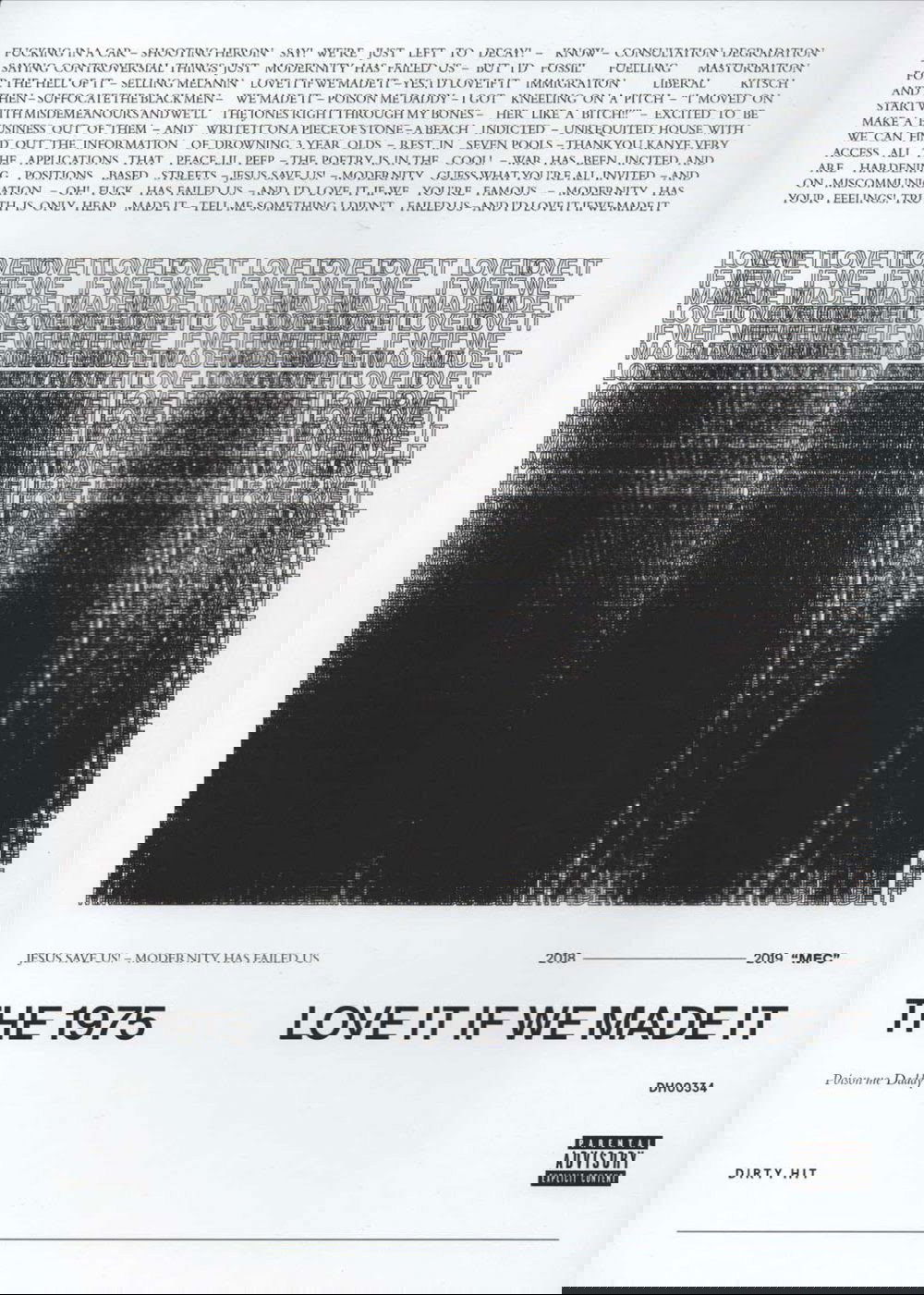
The lyrics serve as a brutal archive of the era: the tragic image of "drowning three-year-olds" (referencing Syrian refugee Alan Kurdi), the passing of "Lil Peep," and the systemic racism found in "selling melanin" and the "suffocating of black men." The song reaches a fever pitch as it verbatim quotes the leader of the free world, juxtaposing Donald Trump’s "I moved on her like a bitch" with the bizarre "Thank you, Kanye, very cool!" It’s a sensory overload of police brutality, fossil-fueling, and disinformation, anchored by the desperate mantra: "Modernity has failed us."
This was more than a pop song; it was a cultural timestamp. As NME and other critics noted, by turning the "scrolling through a newsfeed" experience into a stadium anthem, the band managed to capture the sensory overload of the information age. Despite the bleakness of the verses, the chorus. "And I’d love it if we made it", remains a glimmer of genuine optimism. It transformed the record from a personal diary of addiction into an outward-facing masterpiece, setting a benchmark that few contemporary acts could hope to reach.
The subsequent singles showcased the band’s refusal to be pinned down:
'TooTimeTooTimeTooTime': A tropical house-infused electropop track that explored the casual nature of digital communication.
'Sincerity Is Scary': A lush, neo-soul and jazz-influenced ballad that utilised a hip-hop beat to critique our modern fear of being genuine.
'It's Not Living (If It's Not with You)': A 1980s-inspired indie-pop masterpiece. While it sounds like a classic love song with its jangly funk guitars and sparkling synths, it is actually a brutal metaphor for addiction, drawing parallels between heartbreak and the cycle of heroin use.
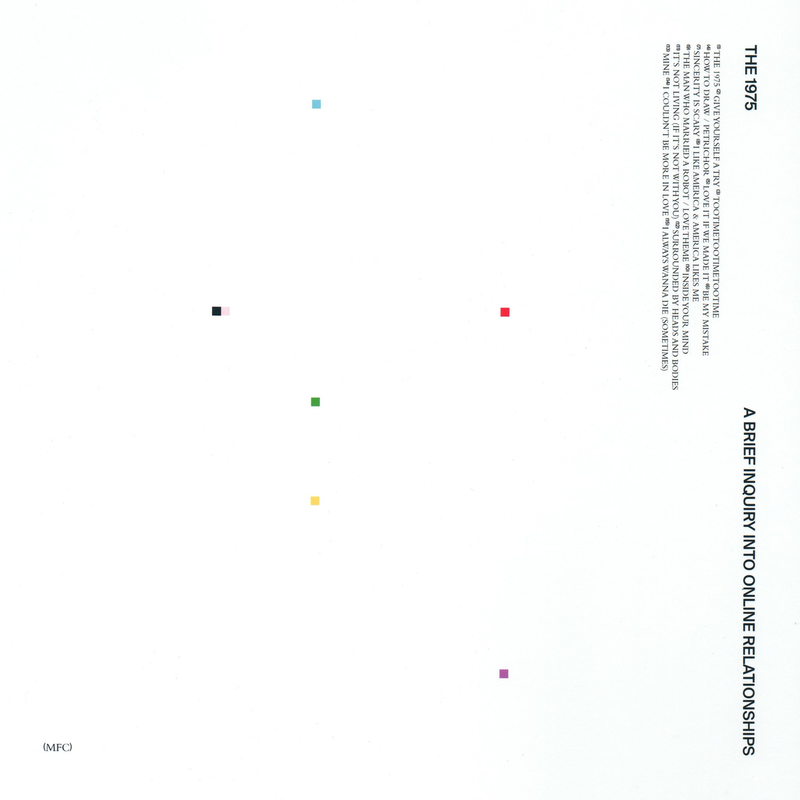
The band’s ambition for this record was lofty; they aimed to create a defining cultural statement on par with Radiohead’s 'OK Computer' or The Smiths’ 'The Queen Is Dead'. Critics overwhelmingly agreed that they succeeded.
The album is a dystopian yet deeply human concept record that explores how the internet has reshaped our existence. It features everything from 'The Man Who Married a Robot', a chilling, modern-day fable about isolation narrated by the synthetic voice of SIRI, to the frantic, glitchy trap-pop of 'I Like America & America Likes Me', where a heavily autotuned Healy grapples with gun violence and his own mortality.
The record’s emotional weight is further anchored by tracks like 'Inside Your Mind', a haunting, cinematic ballad that delves into the voyeuristic and often dark desire to truly know a partner's private thoughts. This vulnerability carries over into 'I Couldn’t Be More in Love', a soul-drenched power ballad that Healy famously recorded the day before entering rehab. His vocal performance is raw and strained, serving as a desperate plea to his fans and his craft, questioning what happens to his identity if the music ever stops.
However, the album's most staggering moment is its finale, 'I Always Wanna Die (Sometimes)'. It is a masterpiece of dynamic shifts, blending the soaring Britpop grandiosity of Oasis 'Champagne Supernova' and The Verve’s 'Bittersweet Symphony' with the experimental, atmospheric edges of Radiohead. Despite its provocative and jarring title, the song is not a celebration of nihilism; rather, it is a quintessential "The 1975" paradox, a widescreen, stadium-sized anthem about the overwhelming nature of existing in the modern world.
The track functions as a communal catharsis, using a lush orchestral arrangement and an 11th-hour key change to elevate a private, dark thought into a shared moment of survival. It’s an essential closing chapter that perfectly encapsulates the millennial experience: the feeling of being completely "done" with the world, while simultaneously finding the beauty and the humour required to keep going.
'A Brief Inquiry into Online Relationships' forced a total "U-turn" from the critics who had previously dismissed the band. It won British Album of the Year at the 2019 Brit Awards and was shortlisted for the Mercury Prize. This success propelled them to the top of the festival circuit, headlining Radio 1’s Big Weekend and Reading and Leeds in 2019, cementing their status as Britain’s most important band.
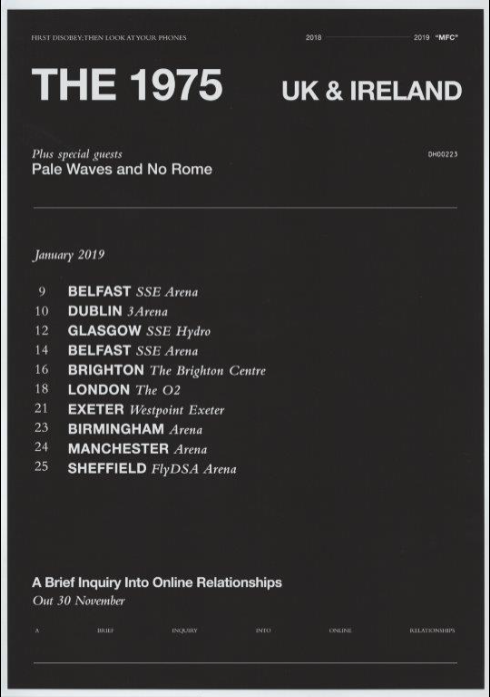
The world tour, which featured support from label mates No Rome, Pale Waves, The Japanese House, and Beabadoobee, was intended to be a 24-month global odyssey. However, after beginning in late 2018, the era was cut short on 3 March 2020 by the onset of the COVID-19 pandemic. While the tour ended prematurely, the album’s legacy was already secure: a masterpiece that captured the frantic, beautiful, and terrifying experience of living life online.
Music for Cars 2- Notes on a Conditional Form
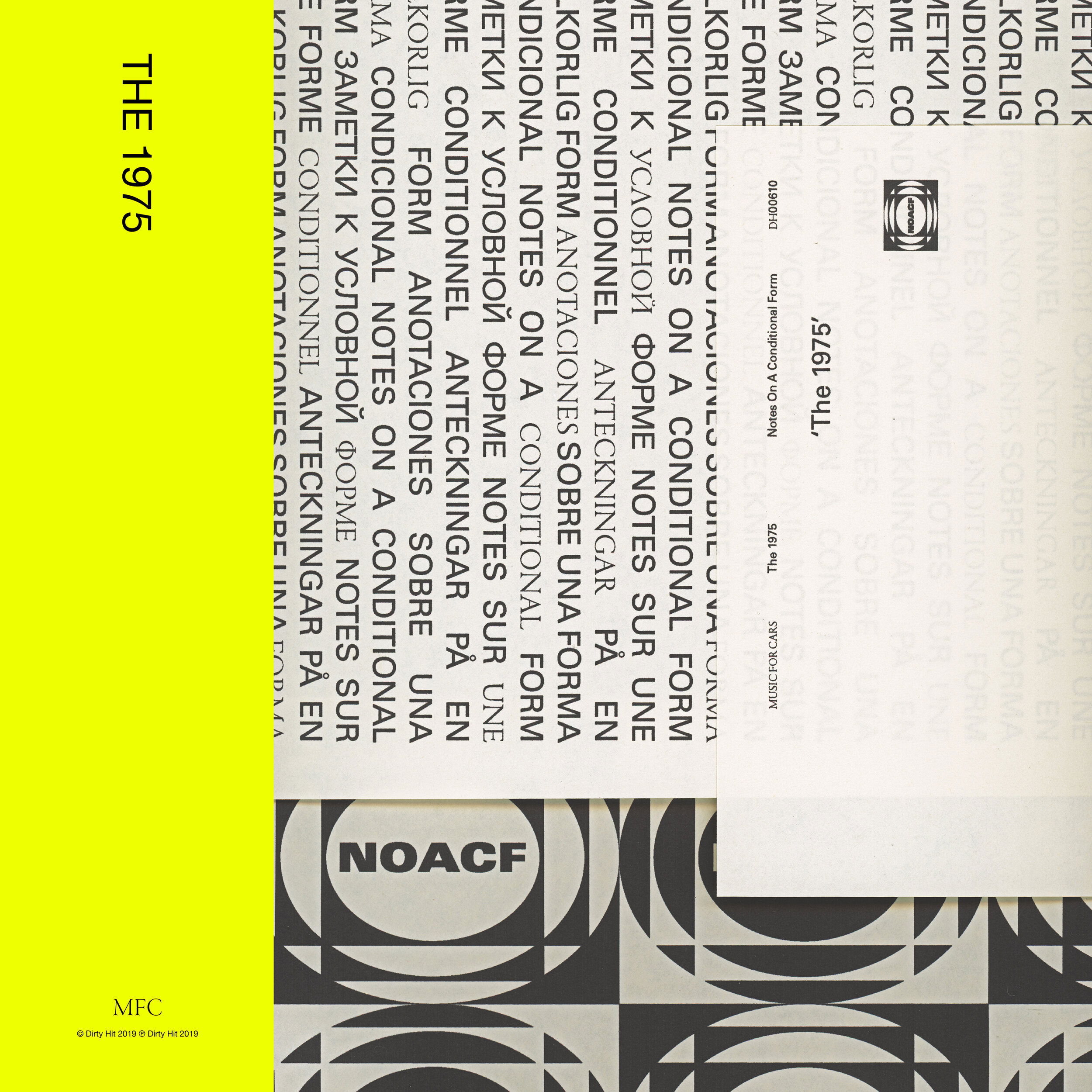
While the band’s third album was originally titled 'Music for Cars', they eventually opted for 'A Brief Inquiry into Online Relationships'. Instead, 'Music for Cars' became the name of an expansive two-album cycle, encompassing both 'A Brief Inquiry' and its ambitious successor, 'Notes on a Conditional Form'. Released in May 2020, 'Notes' picked up where its predecessor left off, acting as a sprawling, 22-track "digital scrapbook" of the band’s psyche.
The road to the album was paved with seven singles that saw the band relentlessly genre-hopping. 'People' presented the group at their most visceral, a two-and-a-half-minute post-punk assault of pulsating drums and screamo vocals. It was The 1975’s take on punk rock, serving as an urgent, rattling call to arms regarding the state of the world. In stark contrast, 'Me & You Together Song' offered a blast of late-90s and early-00s nostalgia. Drawing comparisons to the breezy pop-rock of Hanson, it is arguably the band’s first straightforward love song, though delivered with Healy’s signature wit and humorous lyrical detours.
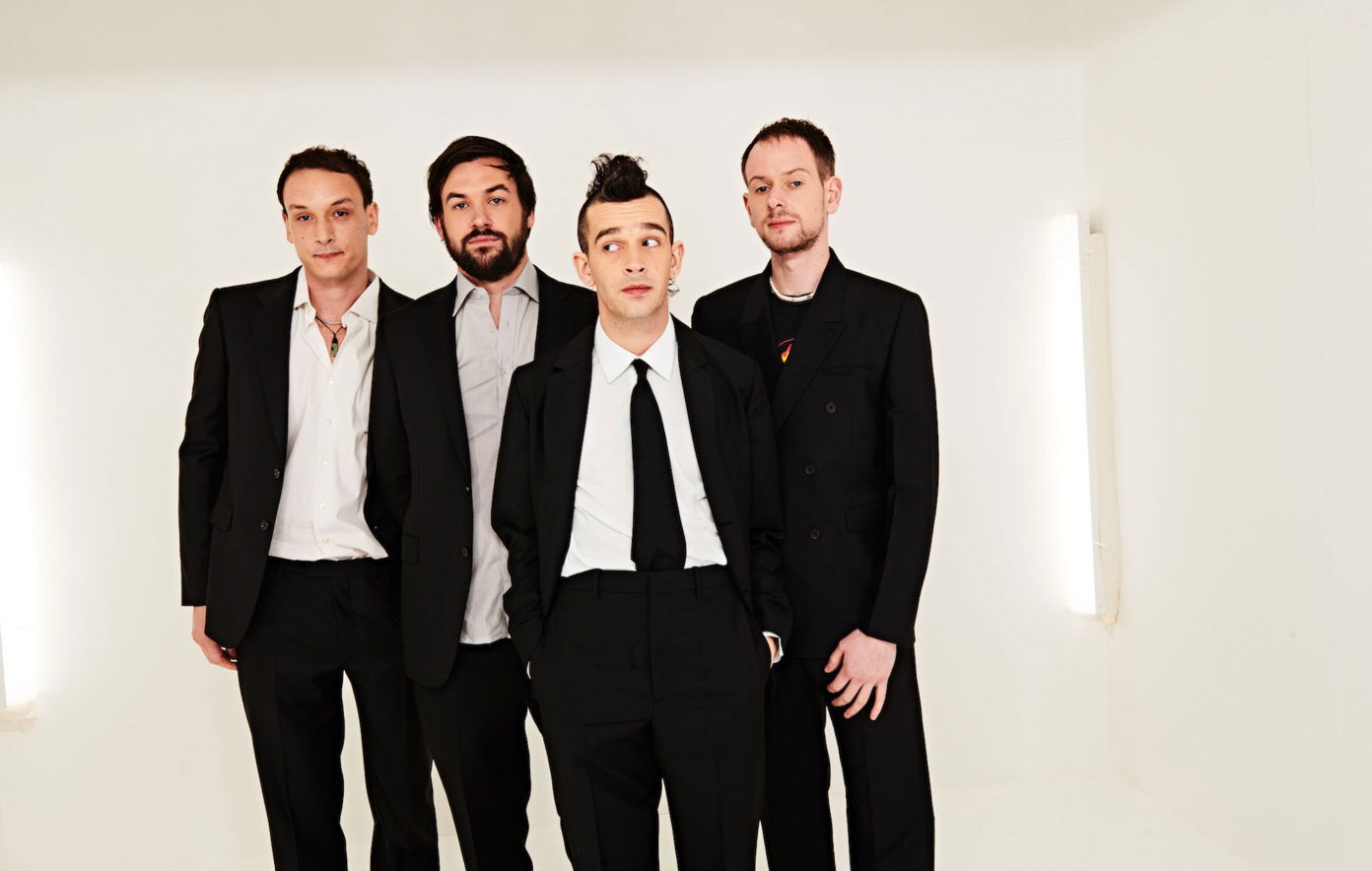
The band further expanded their palette with 'The Birthday Party' and 'Jesus Christ 2005 God Bless America', stripped-back acoustic affairs that showcased a vulnerability rarely seen in their earlier, more polished work. 'The Birthday Party' is a sprawling, folk-tinged meditation on the mundane and the awkwardness of social interaction in sobriety. With its country-inflected banjos and conversational lyrics, it feels like a peek into Healy’s internal monologue during a night out, choosing domestic quiet over the chaos of the scene.
In 'Jesus Christ 2005 God Bless America', the band moved into hauntingly beautiful indie-folk territory. A duet with Phoebe Bridgers, the song is a delicate exploration of faith, repressed yearning, and the search for divinity in the everyday. Bridgers’ ethereal vocals perfectly complement Healy’s, creating a hushed, sacred atmosphere that felt like another vital string to their bow.
However, the record’s commercial crown jewel was 'If You’re Too Shy (Let Me Know)'. Featuring backing vocals from FKA Twigs, the track returned to the shimmering 80s palette of Duran Duran and Tears for Fears. Lyrically, it revisited the theme of online intimacy and cybersex, wrapped in a soundscape that felt like a tribute to a John Hughes coming-of-age film.
Perhaps the most touching moment of the era arrived with the final single, 'Guys'. A platonic love letter from Matty to his bandmates, the song serves as a moment of pure clarity, tracing their journey from school friends in Cheshire to global icons. It remains one of their most emotive tracks, proving that the band’s strongest bond isn’t fame, but their lifelong brotherhood.
The lyrics find Healy at his most vulnerable and domestic, admitting to "wetting my eyes" in a rented apartment as he realises, "You're the love of my life." He abandons all rock-star posturing to reminisce about the "golden times" when they all shared one apartment, sentimentalising everything from "the first time we went to Japan" to the simple, profound act of starting a band. With the soaring refrain, "the moment that you took my hand was the best thing that ever happened," Healy transforms the track into a definitive statement of gratitude.
The music video further drove this home, acting as a nostalgic montage of home movies and behind-the-scenes footage that spanned nearly two decades. It showed the four members growing up together in real-time, from awkward rehearsals in bedrooms to the world’s biggest stages. By centring the end of the 'Music for Cars' cycle on this relationship, the band reminded their audience that, beneath the high-concept aesthetics and global headlines, they are still just the same four friends who met at school in 2002.
As a body of work, 'Notes on a Conditional Form' is a defiant rejection of the "traditional" album structure. For the first time, the band’s self-titled opening track deviated from its usual lyrics, instead featuring a spoken-word call to action by climate activist Greta Thunberg. From there, the record dives into uncharted territory, such as the UK Garage-inflected 'Bagsy Not in Net', a sound entirely new to the band’s repertoire.
The album also provided a poignant full-circle moment with 'Don’t Worry', a duet between Matty and his father, Tim Healy. Performing a song Tim wrote in the 1990s, the first song Matty ever remembers hearing, the track anchors the album’s experimentalism in a deep sense of family history.
'Notes on a Conditional Form' is an all-encompassing record that captures a band at their most fearless. It is the moment Matty Healy took a sledgehammer to his own ego, tearing down the walls of the "pop star" persona to reveal something more fragmented and honest. It is a piece of historical music that successfully brought the second act of the band to a close, leaving the door open for whatever transformation would come next.
Part of the Band-Being Funny in A Foreign Language.
After the 'Notes' tour was cut short by the pandemic, the band retreated into a period of quiet collaboration, working with artists like Charli XCX and Beabadoobee. Fans were left wondering where the group could go after the chaotic, 22-track odyssey of their previous record. The answer began to emerge on 1 June 2022, exactly seven years to the day since their famous "pink" reset.
The band signalled the start of a new chapter with a simple but evocative announcement that felt like a warm embrace to their long-term following. The post read: "Your new album. Your new era. Your old friends." It was a mission statement that promised a return to the core identity of the band. By referring to themselves as "your old friends," they stripped away the high-concept artifice of previous years, suggesting that 'Being Funny in a Foreign Language' would be a more personal and grounded affair.
This era proved to be a record of clarity. It opens with a new version of 'The 1975', an LCD Soundsystem-indebted track that serves as a frantic status update on the world. The first taste of this new era, however, was 'Part of the Band', a mid-paced folk song that swapped the band’s usual neon synths for intricate, percussive strings.
It features some of Healy’s most sincere yet hilarious lyrics to date, acting more like a stream-of-consciousness journal than a traditional pop song. By addressing his flaws and past controversies with lines about "being ironically woke", "a post coke average skinny bloke", who calls his "ego, imagination", Healy effectively reset the narrative, removing his creative shackles through blunt honesty.
This introspection was balanced by 'Happiness', a "Springsteen-meets-soul" anthem that immediately became a fan favourite. A masterclass in 80s-inspired pop, the track captures the feeling of a band finally having fun again. With its danceable beat and a chorus that stands as one of the best they have ever written, it channels the smooth grooves of Hall & Oates while maintaining that specific, jittery 1975 energy.
The emotional heart of the record, however, is 'About You'. A spiritual successor to 'Robbers' from their debut, this shoegaze-infused epic has quickly become a live staple. It is a massive, cinematic wall of sound, layered with shimmering guitars and a haunting saxophone solo that evokes a sense of deep, yearning nostalgia.
The track is notable for its ethereal bridge featuring vocals from Carly Holt (wife of lead guitarist Adam Hann), which adds a ghostly, dream-like dimension to the song. It feels less like a standard track and more like a sweeping, panoramic memory, a "grandiose epic" that proves the band can still produce the kind of heart-stopping balladry that defined their early years.
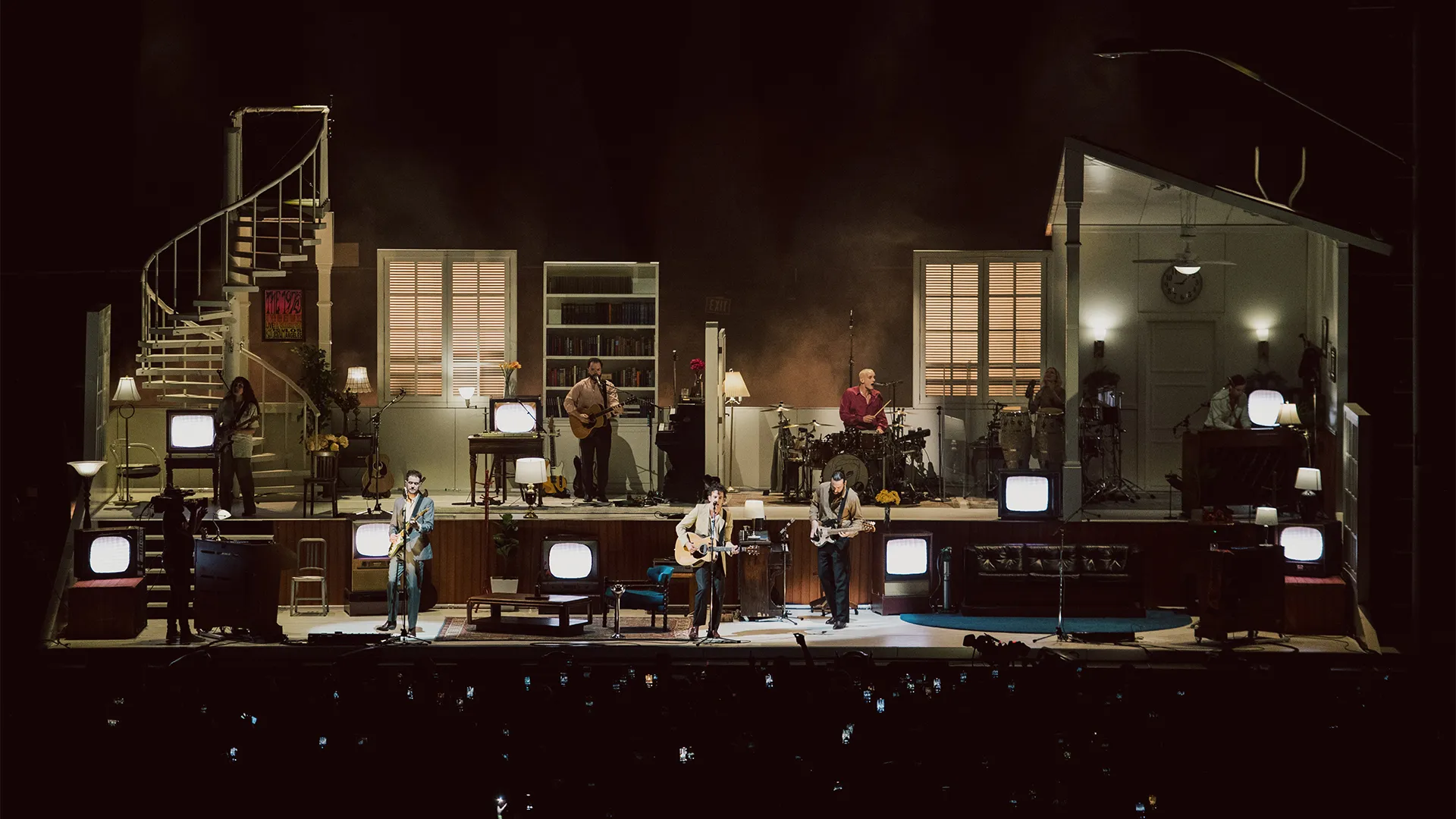
To promote the record, the band launched 'The 1975 At Their Very Best', a tour that redefined the arena experience. Designed by Tobias Rylander, the set was modelled after a multi-levelled suburban home, complete with antique furniture, old televisions, and a spiral staircase. The show was a daring piece of performance art, split into two halves: the first was a surreal stage play about a "rock star in crisis," and the second, titled 'At Their Very Best', a traditional, high-energy hits set.
The first half saw Healy fully inhabit a character, moving through the house while engaging in behaviour that blurred the lines between reality and scripted theatre. It was "part performance art, part stage play, part Charlie Kaufman movie," featuring moments that became instant viral sensations, from Healy eating raw meat on stage to doing push-ups in front of screens displaying images of political figures and cultural chaos. It was a visceral exploration of masculinity and the toll of public life.
The tour’s success was so immense that it evolved into the 'Still At Their Very Best' run, which leaned even further into the surreal. This iteration featured "Matty’s Nightmare", a segment where Healy emerged onto a B-stage to confront a naked wax replica of himself. Whether he was caressing the figure, crawling through a television screen, or performing an intimate acoustic version of 'Be My Mistake' alone in the dark, the show was a testament to the band’s desire to do something radically different from their peers.
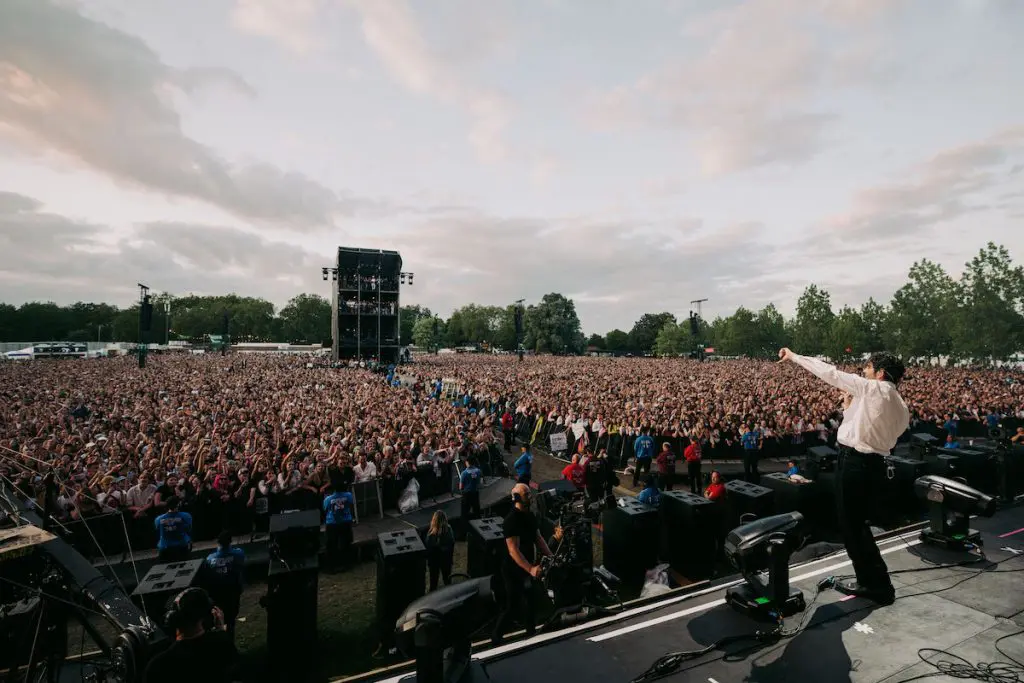
This era propelled them to their largest crowds yet, including legendary sold-out nights at Madison Square Garden, which was recorded for a live album, and a massive homecoming at London’s Finsbury Park. By the time they reached the end of this run, the tour hadn't just promoted an album; it had solidified The 1975 as a band capable of turning an arena into a high-concept art gallery without losing the heart-pumping energy of a rock concert.
On Friday, 27 June 2025, nine years after their last visit to Worthy Farm, The 1975 ascended to the Pyramid Stage for their only live show of the year. The nerves were high; George Daniel later admitted to the BBC that he was physically ill before going on, but the performance that followed was a historic triumph. Rumours had swirled for months about the production, with leaked figures suggesting the staging cost four times their appearance fee. However, when the lights went up, the high-concept suburban house was gone. In its place was a visual bombardment of screens and the return of the moving treadmill from their 2018 tour, allowing Healy to glide across the stage like a man possessed.
Matty Healy arrived not as a polished pop idol, but with the grit of a classic frontman: boot-cut jeans, a leather jacket, a roll-up, and a pint of Guinness, complete with a pre-split "G." He moved between bravado and uncomfortable truth, at one point muttering a hushed, "Oh Jesus," as the lights revealed the true scale of the quarter-of-a-million-strong crowd.
The setlist was a defiant rebuttal to critics who claimed "all their songs sound the same." Opening with the confident, funky stride of 'Happiness', the band proved they weren't just there to make up the numbers. They jumped from the "hip-shaking, headline-making" energy of 'If You’re Too Shy (Let Me Know)' to the punk-rock violence of 'People' and the shimmering, long-lost pop brilliance of 'Love Me' and 'She’s American'. During 'Chocolate', the screens filled with playful, nonsensical phonetic gibberish. "Oh, mah hez smell like chocolate", while 'Part of the Band' showcased Healy’s most literate and hilarious lyrics flashing across the screens in real-time.
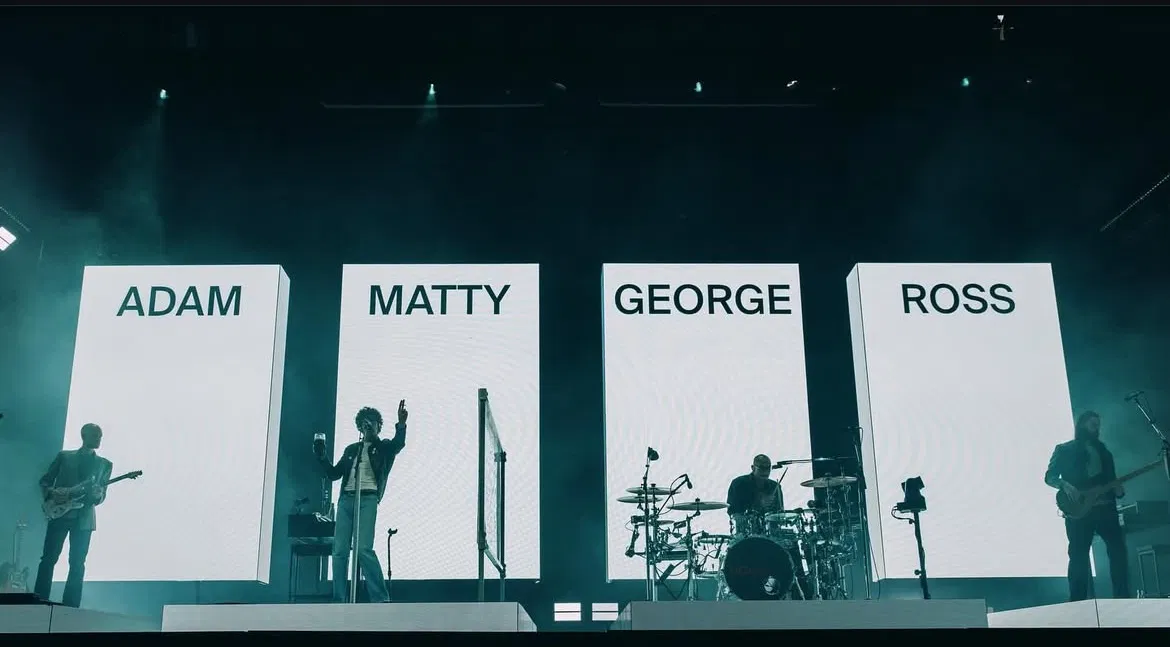
In a moment of classic Healy irony, he declared to the field, "I am the greatest songwriter of my generation... a poet." It was a line the armchair critics were quick to misunderstand, but for the fans, it perfectly summed up his brand of self-aware arrogance. Despite his vow to keep the show politics-free, the band delivered a searing performance of 'Love It If We Made It'. As one of the sharpest critiques of the post-modern world, it echoed across the fields of Somerset just minutes after he’d promised a "simple" show.
The heavy hitters were littered throughout: 'Robbers' provided one of the biggest sing-alongs in the festival's history, and the devastating, Britpop-meets-Radiohead banger 'I Always Wanna Die (Sometimes)' was a staggering highlight. As the set reached its climax, the "party atmosphere" took over with 'The Sound', where Healy commanded the massive crowd, "young and old", to jump in unison. It was a crowning moment of collective joy, a gleaming '80s pop banger that saw the entire site lose itself.
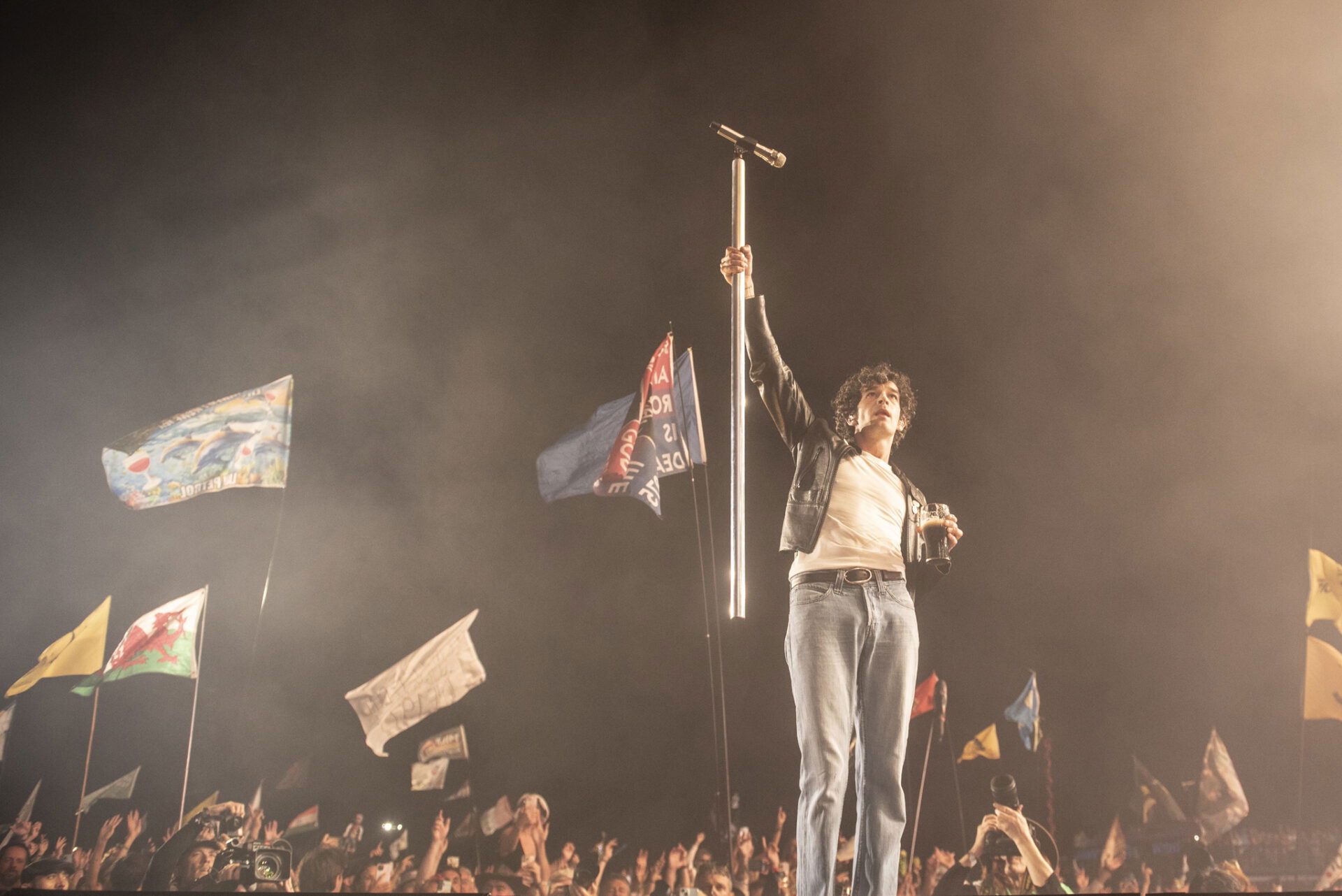
But true to form, they didn't end on a high-energy hit. Instead, they closed with the sweeping, epic balladry of 'About You'. Before the song kicked in, Healy made his final address: “We’re The 1975 from the internet, we love you guys. This song’s 'About You'.” It was a heart-stopping confession delivered with heavy emotion. He left the crowd with a poignant parting message: "It’s cool to be mysterious, but it’s cooler to be honest. We’re not going anywhere. Everything will be alright."
As the final shoegaze swirl lingered and the band quietly departed, a single word remained on the screens: DOGS. It was the same word that had been emblazoned on George Daniel’s kick drum all evening. Enigmatic, playful, and unmistakably The 1975, it was the perfect ending to a headline set that proved, beyond any doubt, that the school friends from Cheshire had become the most important band of their century.
Legacy
It is no secret that The 1975 and Matty Healy are "Marmite" figures; you either love them or loathe them, with very little room for a middle ground. However, if the history of the band proves anything, it is that opinions are subject to change. NME famously crowned them the "Worst Band of the Year" in 2014, only to perform a complete about-face and name them "Band of the Decade" in 2020.
Whatever your personal stance, it is impossible to deny their impact. They have emerged as one of the most vital musical voices of the 21st century, a band that is never afraid to look forward while simultaneously honouring the sounds of the past. From the frantic emergence of the internet and the complexities of social media to political volatility, the climate crisis, addiction, grief, and the messy realities of love and lust, they have acted as the ultimate commentators on the modern experience.
Through five sprawling, ambitious albums, they have poured everything into their craft and their live performances. It is a compelling argument that they are now Britain’s most important modern band, consistently sitting at the jagged edge of popular culture. While they haven't always been in the spotlight for the right reasons, they remain a "band of brothers", four friends who took on the world and won, entirely on their own terms. As Pitchfork aptly described them, they are a group of friends who "ascended from scrappy emo rockers to global superstars."
Now, sitting atop the perch as one of the world’s premier acts, it is clear that The 1975 were right all along. They didn't just survive the decade; they defined it.
Thank you for reading x