Oh Well, Whatever, Nevermind- The 90s Part 1
With that title, you might expect me to transport you across the pond to Seattle to talk about Grunge and don't worry, we'll get there. But first, let's stay in England and journey somewhere far less glamorous than the Pacific Northwest. Widnes, the 27th of May, 1990.
The Stone Roses played Spike Island in May 1990, a show that would come to define the end of the Madchester era and the spirit of the early 90s. Riding high on the success of their self-titled debut album and the single 'One Love', the band drew 30,000 fans to a chemical plant on the banks of the River Mersey. This unlikely venue symbolised their intent to break boundaries and embrace the era’s rave counterculture.
Spike Island was more than a concert; it was a cultural touchstone, the moment when indie rock and rave fully collided. The atmosphere was closer to a sprawling open-air festival than a traditional gig. Fans arrived from all over the country, many making a pilgrimage by train, coach, or hitchhiking, determined to be part of what was billed as a generational event. A patchwork of tribes united by music, youth, and a sense of limitless possibility. As the sun set amid looming industrial machinery and open fields, a haze of anticipation, and more than a little chemical enhancement, hung over the gathering, making strangers into companions.
The imperfections of the day, from muddy sound to makeshift facilities, only added to the legend. The Stone Roses’ setlist ran through their anthems and deep cuts, each song feeding the crowd’s collective euphoria as dusk turned to night. The opening chords of 'I Wanna Be Adored' sent a shiver through the crowd, and the band’s shimmering, psychedelic sound washed over the island, carried by the shared energy of tens of thousands. People danced, sang, and lost themselves not just in the music, but in the exhilaration of the moment, a sea of bucket hats, baggy jeans, and swirling colour beneath the open sky.
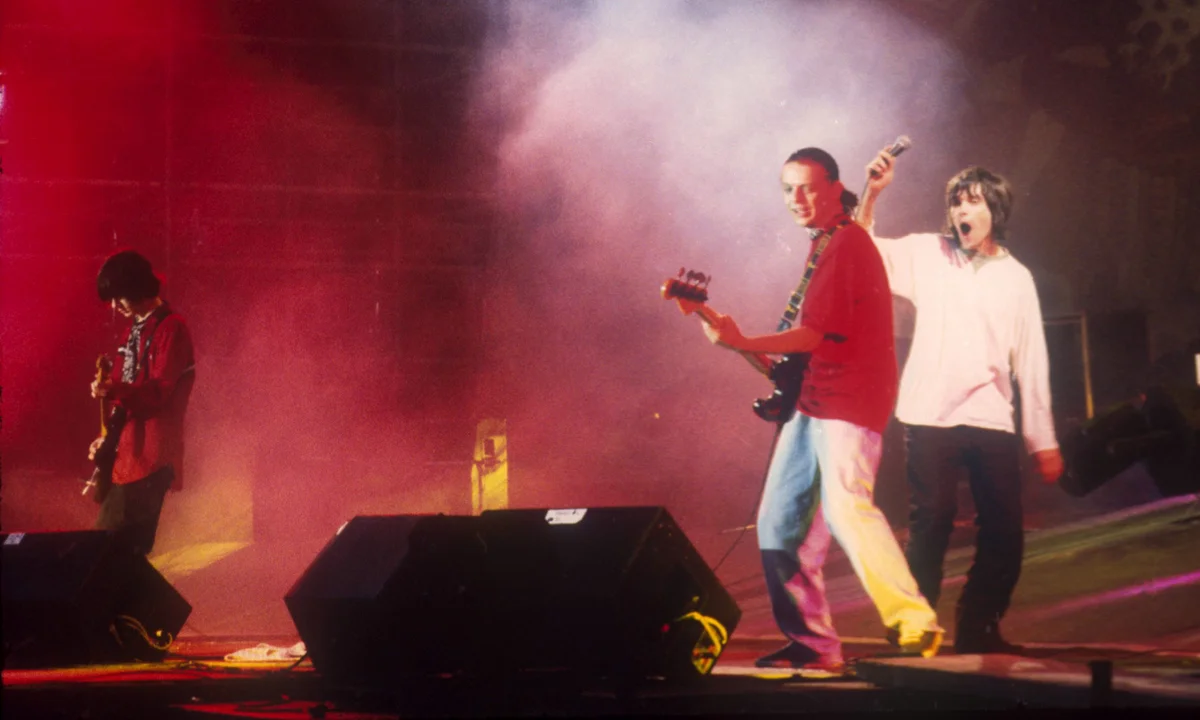
For those in attendance, Spike Island was less about flawless performance and more about being at the heart of something historic. It became a symbol of unity for indie kids, ravers, goths, and all who felt on the cusp of a new era. This was where rock met rave, where a euphoric group hug played out on an island between Manchester and Liverpool, before the scene splintered and the wider musical landscape shifted to new horizons.
The Stone Roses themselves were a band with audacious self-belief, bridging the gap between 60s psychedelia and the acid house scene. They were the vanguard of a new sound, style, and, in ecstasy, a new drug, arriving at the close of the Thatcher era. For a brief moment, as Ian Brown made bold pronouncements about killing the Queen and being bigger than The Beatles, both seemed not entirely impossible. But as history shows, that promise was fleeting, and Spike Island stands as the era’s last great collective celebration.
In Liverpool, one band would go on to help define a movement despite releasing only one album. The La's self-titled debut, released in October 1990, would be seen as a blueprint for Britpop, drawing on influences ranging from The Beatles to Burt Bacharach, crafting a stunning collection of melodic guitar pop.
It had a raw, timeless quality that felt both nostalgic and fresh. The band's minimalist approach, jangling guitars, understated rhythms, and Lee Mavers’ yearning vocals stood in stark contrast to the lush, overproduced sound dominating much of the era. However, the album’s release was clouded by internal turmoil and creative clashes with producers, leading reclusive frontman Lee Mavers to famously disown the finished product, claiming it didn’t reflect his original vision.
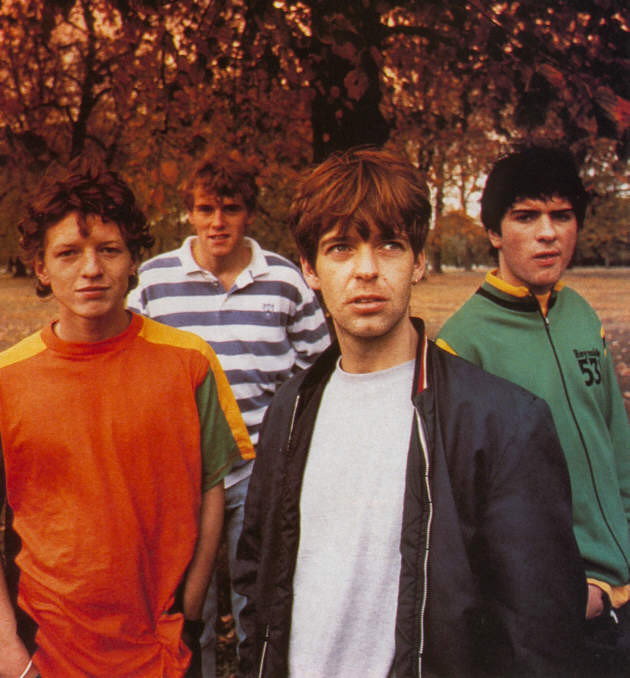
Despite this, The La’s remains a cult classic. Songs like 'Looking Glass' captured a sense of wide-eyed wonder and yearning, unfolding with a hypnotic, almost spiritual build that made it a standout album closer. 'Timeless Melody' showcased Mavers' knack for crafting instantly memorable pop hooks, with its breezy melody and lyrics about the elusive nature of inspiration. 'Way Out', the album’s energetic opener, set the tone with its brisk rhythm and raw energy, demonstrating the band’s minimalist but impactful approach.
Of course, the shimmering 'There She Goes' became an enduring anthem, simple, perfect, and impossibly catchy. There was a purity and directness to The La’s songwriting, stripped of artifice, their melodies and lyrics cut straight to the heart. 'There She Goes' in particular became almost mythological, its infectious hook sparking endless debates about its meaning and cementing its place in pop history. The La’s influence would echo throughout the Britpop movement and beyond, often cited as a prototype for the jangly, emotionally resonant guitar pop that followed. The track’s delicate balance of melancholy and hope helped it transcend its era, finding new generations of fans through films, commercials, and covers by numerous artists.
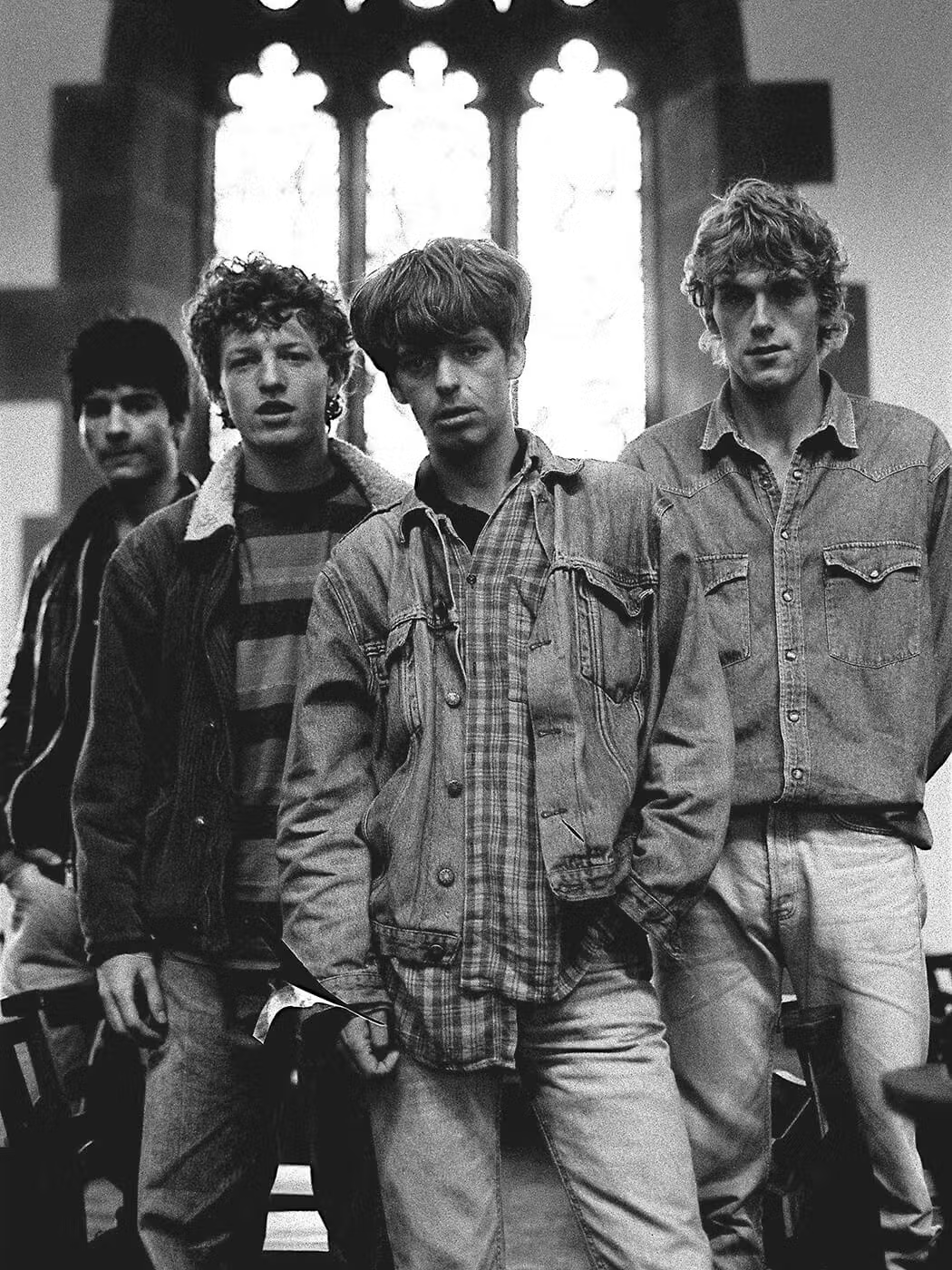
The most fascinating and frustrating aspect of The La’s legacy is that some of their finest work never saw an official release. To hear it, fans have had to hunt down grainy live recordings, studio outtakes, or bootlegs. These rough, unfinished tracks only deepen the mystique around the band, hinting at the brilliance that might have been had Mavers ever completed the definitive version of the album he heard in his head. This sense of lost potential has become a core part of the band’s mythology, inspiring a near-obsessive following among collectors and music historians.
The ongoing debate over the “lost” La’s album, combined with Mavers’s notorious perfectionism and reclusiveness, has turned the band into a symbol of both creative genius and artistic frustration, a legend of British rock whose potential remains tantalisingly out of reach. Yet, the scarcity of their output only seems to make what does exist all the more precious, ensuring The La’s place as one of the most enigmatic and revered acts in modern music history.
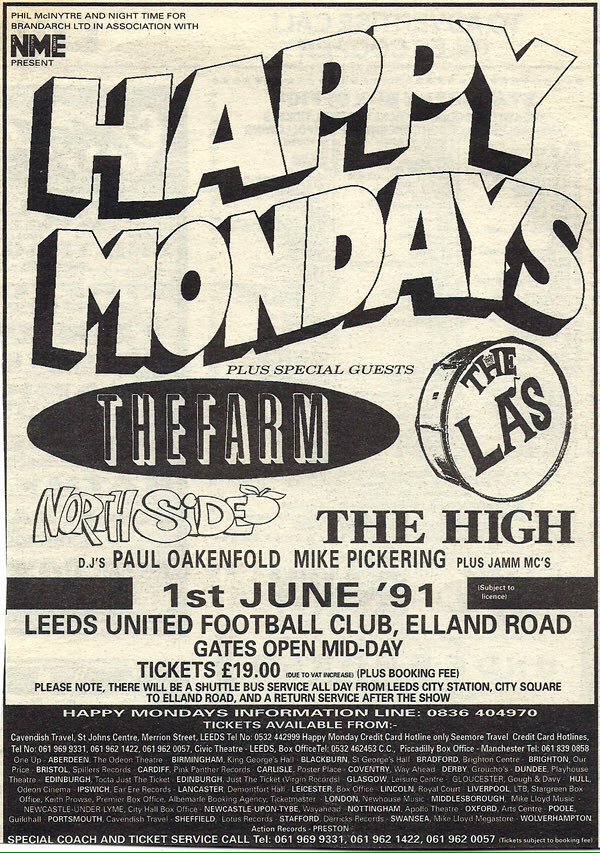
The Happy Mondays delivered one of the era’s most iconic performances at Elland Road in 1991, a chaotic, sun-drenched all-dayer that saw them headline a bill alongside The La’s and other local heroes. The event drew tens of thousands to Leeds United’s football ground, turning the stadium into a hedonistic carnival of baggy fashion, swirling dancers, and rampant party spirit. Shaun Ryder and Bez, at their unpredictable best, led the Mondays through a set that was equal parts shambolic and euphoric, with the crowd embracing every moment like a giant, communal rave. The Elland Road gig has since become legendary, not just for the music, but for the sheer atmosphere and sense of Madchester unity, marking one of the last great moments before the scene’s excesses caught up with it.
To match the scale of the venue, the billing was carefully curated to showcase the absolute finest in contemporary British alternative music. Serving as the main support, Liverpool’s The La’s brought a stark contrast to the Mondays' dance-heavy grooves with their timeless, guitar-driven jangle-pop. Led by the enigmatic Lee Mavers, their pitch-perfect rendition of 'There She Goes' provided a blissful, melodic soundtrack to the afternoon heat, perfectly capturing the indie-pop sensibilities of the era. Joining them were The Farm, a fellow Merseyside outfit riding a massive wave of success off their smash album 'Spartacus'. Their inclusion turned the stadium into a massive, arms-around-shoulders singalong, especially when the opening chords of their massive unity anthems 'Groovy Train' and 'All Together Now' echoed across the football pitch.
Adding a heavy dose of international credibility and foundational groove to the lineup were Stereo MC’s, whose infectious blend of alternative hip-hop and electronic dance beats kept the stadium bowl moving between the guitar acts. The bill was rounded out by Northside, one of Factory Records’ newest and brightest hopes. Known for their melodic baggy singles like 'Shall We Take a Trip' and 'My Rising Star', they provided the quintessential, organ-swirling Manchester soundtrack that set the tone for the entire afternoon. Together, this diverse line-up of pioneers, hit-makers, and local heroes ensured that the Elland Road all-dayer stood as the definitive summit of the early-1990s rock-and-rave crossover
The Happy Mondays were riding high off the success of their album 'Pills 'n' Thrills and Bellyaches', which included anthems like ‘God's Cop’, ’Loose Fit’ and their cover of ‘Step On’ and became the soundtrack for a generation of clubbers and indie fans alike. This definitive 1990 release solidified their position at the absolute forefront of British popular culture. The record brilliantly captured the euphoric, sun-drenched spirit of the second summer of love, trading the murky, psychedelic edges of their previous work for an unashamedly bright pop aesthetic. By seamlessly weaving elements of classic funk, hip-hop breakbeats, and driving house piano chords into their traditional rock instrumentation, the band created a crossover blueprint that completely dissolved the long-standing tribal boundaries between guitar music and the dancefloor.
At the heart of this chart-dominating era was a sleek, studio transformation orchestrated by the visionary production duo of Paul Oakenfold and Steve Osborne. Recognizing the commercial potential of the group's raw street groove, the producers polished the rhythm section into an unstoppable, danceable juggernaut. On tracks like ‘Loose Fit’, the production emphasized a deep, dub-heavy bassline and slinky guitar riffs, paired with an infectious call to arms for the baggy fashion movement. Meanwhile, ‘God's Cop’ showcased Shaun Ryder at his lyrical finest, delivering a sharp, satirical commentary on Manchester's real-life conservative Chief Constable, James Anderton, wrapped inside a driving, speaker-tearing rave rhythm.
The crowning achievement of the album, however, was their transformational reimagining of John Kongos’ 1971 track, 'He's Gonna Step On You Again'. Re-titled simply as ‘Step On’, the track became a global phenomenon, propelled by Rowetta Idah’s powerful, soaring backing vocals and Ryder's immortal, ad-libbed instructions to "call the cops" and "twistin' my melon, man". The single rocketed to number five on the UK charts and became a defining cultural artifact of the era. Backed by the hypnotic, maraca-shaking stage presence of Bez and the tight, funk-infused basslines of Paul Ryder, the band performed the track on 'Top of the Pops' to a rapturous national audience. This moment effectively turned a group of notorious Salford misfits into the undisputed kings of a nationwide musical revolution.
Meanwhile, a new wave of indie-dance crossovers emerged, capturing the spirit of experimentation and optimism that defined the era. Saint Etienne’s dreamy cover of Neil Young’s 'Only Love Can Break Your Heart' stood out as an early classic, melding wistful lyrics with lush, electronic production; it became an anthem for the open-hearted and dancefloor-bound alike.
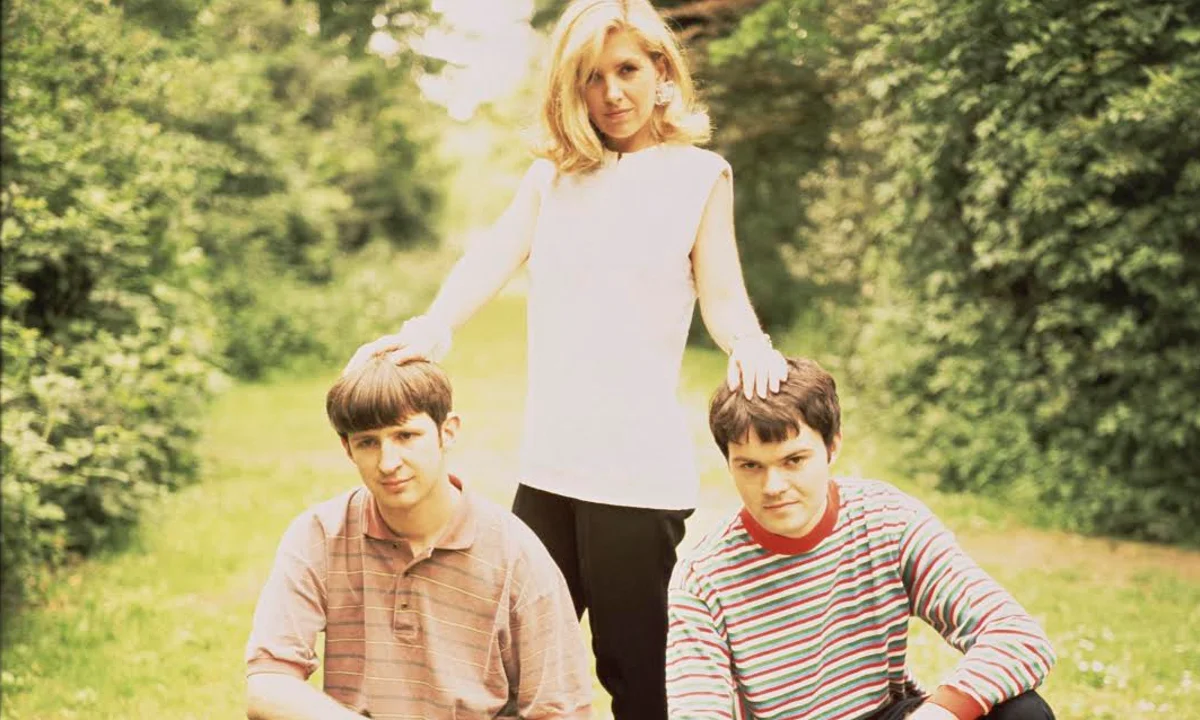
This period also saw club culture and electronic music start to break through to the mainstream, with acts like The Prodigy and Orbital bringing ambient house and techno to wider audiences. At the same time, the crossover between indie and dance gave rise to a new kind of musical freedom. Bands and producers collaborated, genres blurred, and the boundaries between rock, pop, and electronic music became more porous. The era was defined by a sense of discovery and open-mindedness, setting the stage for the eclecticism that would shape the rest of the decade.
Amid this shifting musical landscape, Blur were one of the few indie guitar bands trying to find their voice. Their debut album 'Leisure' (1991) may not have made a seismic impact on release, but it introduced their knack for sharp, infectious singles and set the stage for their future reinvention. The record is characterised by its fusion of baggy, Madchester-inspired grooves and shimmering pop melodies.
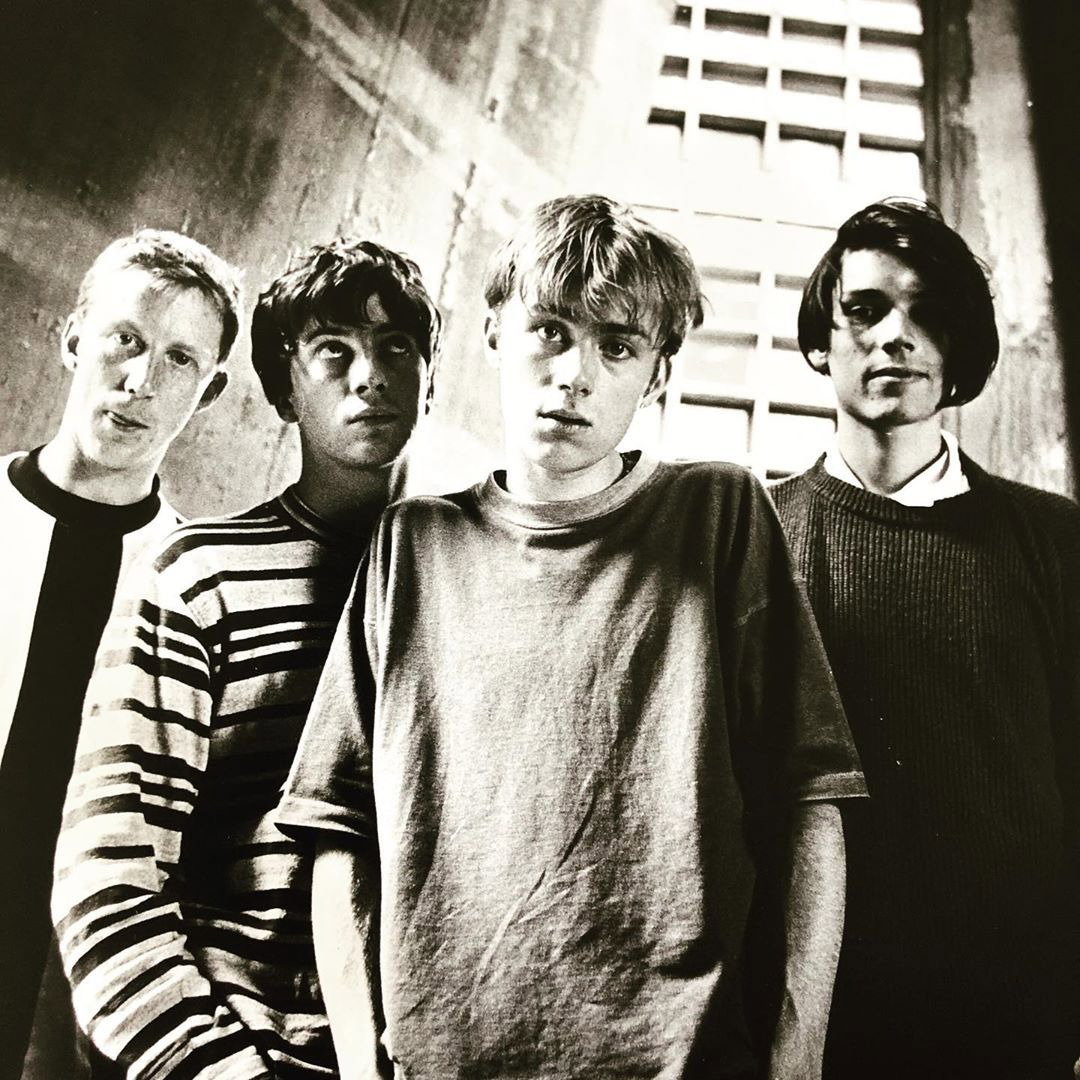
'There’s No Other Way' became a minor chart hit and a defining single for Blur’s early sound, capturing the era's danceable, psychedelic feel. 'She’s So High' showcased the band’s dreamy, melodic sensibilities, while 'Bang' and album track 'Sing' offered glimpses of their willingness to experiment with moodier textures and subtle electronic elements. Though 'Leisure' received mixed reviews at the time, its blend of dance rhythms, jangly guitars, and youthful energy hinted at the creative evolution that would soon make Blur one of the decade’s most important bands.
Other songs that captured this transitional moment included Primal Scream’s genre-defying 'Loaded' and Electronic’s 'Getting Away With It'.
Electronic was a supergroup formed by New Order’s Bernard Sumner and The Smiths’ Johnny Marr, later joined by Pet Shop Boys’ Neil Tennant and Chris Lowe. The project was born out of a shared ambition to explore new sonic territory beyond the confines of their original bands. Their single 'Getting Away With It' fused synth-pop with indie guitar sensibilities, creating a sophisticated and melancholic dance track that exemplified the era’s spirit of collaboration and genre-blending.
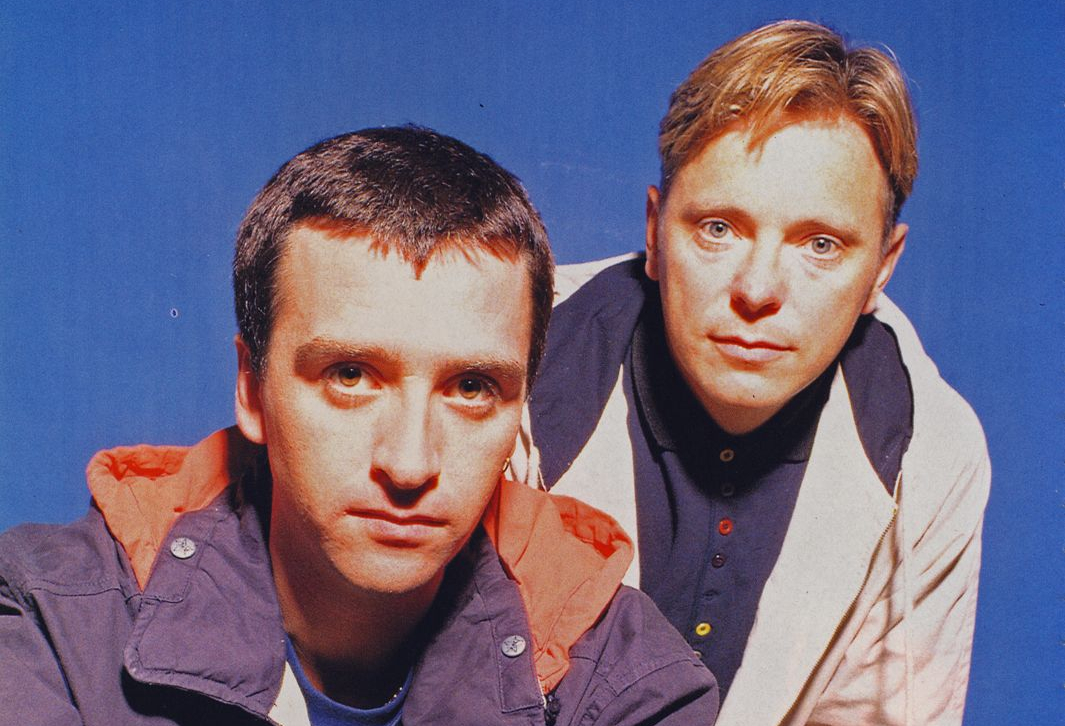
Electronic’s self-titled debut album, released in 1991, showcased even greater range. Tracks like 'Get the Message' and 'Feel Every Beat' blended lush electronic production with sharp songwriting, while the album’s shifting moods drew from house, pop, and rock influences. The record’s atmospheric grooves and melodic sensibilities made it a favourite in clubs and among critics alike. Electronic’s work bridged the gap between the 80s new wave and the emerging 90s dance-rock scene, leaving a lasting imprint on the decade’s sound and paving the way for future collaborations between indie and electronic artists.
Meanwhile, Primal Scream’s 'Loaded' was just a taste of what was to come on their landmark album 'Screamadelica'. Released in 1991, 'Screamadelica' was a revolutionary record that fused rock, house, gospel, and psychedelia, breaking down musical barriers and defining the era’s acid house-influenced optimism. Produced in part by Andrew Weatherall and The Orb, the album embraced the dancefloor as much as the rock stage, with swirling soundscapes, gospel choirs, and hypnotic beats.
'Screamadelica' was more than just a collection of songs; it felt like a journey through the ecstatic highs and blissed-out comedowns of the UK’s rave culture. Tracks like 'Movin’ On Up', with its gospel exuberance, and the communal anthem 'Come Together' radiated hope and inclusivity, while 'Higher Than The Sun' and 'Slip Inside This House' plunged into psychedelic euphoria. The album’s sequencing, psychedelic artwork, and use of samples and studio effects made for a seamless, immersive experience that captured the era's open-minded experimentation.
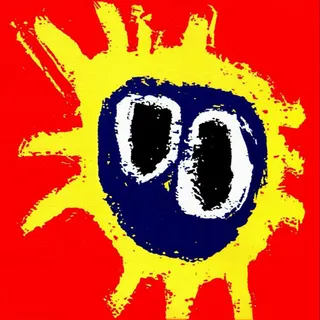
'Loaded' itself became an anthem for a generation eager to unite and transcend boundaries, mixing Stones swagger with dancefloor hedonism. 'Screamadelica' won the first-ever Mercury Prize and influenced countless artists, laying the groundwork for the Britpop and electronic crossovers that would define the decade. Its legacy endures as a blueprint for musical openness, freedom, and cultural fusion in 90s Britain, and it’s still celebrated as one of the greatest British albums of all time.
These tracks, along with the Madchester holdouts, hinted at the vibrant and eclectic soundscape that would soon take hold. Another vital force in reshaping the early 90s sound was Massive Attack, the Bristol collective whose 1991 debut album 'Blue Lines' pioneered the trip-hop genre. Merging elements of hip-hop, soul, dub, and electronica, Massive Attack’s atmospheric tracks like 'Unfinished Sympathy' and 'Safe From Harm' created a mood-driven, cinematic sound that stood apart from both the rave and indie scenes. Their influence stretched far beyond Bristol, inspiring a new direction in British music and laying the groundwork for artists like Portishead and Tricky, as well as the downtempo and chillout movements that followed.
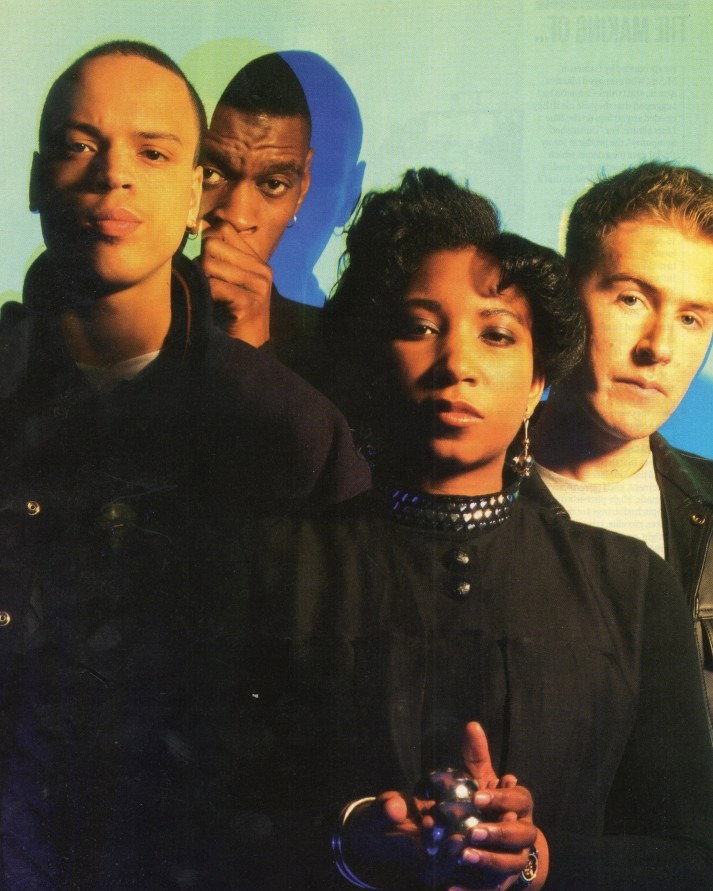
Massive Attack’s influence stretched far beyond Bristol, inspiring a new direction in British music and laying the groundwork for artists like Portishead and Tricky, as well as the downtempo and chillout movements that followed. 'Blue Lines' is often credited with not just launching trip-hop but also with redefining what was possible in UK music, blending genres and cultures in a way that felt genuinely innovative and laid-back yet intensely passionate. The group’s later albums, like 'Protection' and 'Mezzanine', would continue to push musical boundaries and cement their legacy as pioneers of modern British sound.
Behind the scenes, the fate of some of the UK’s most influential independent record labels was also shifting. Factory Records, which had championed Joy Division, New Order, and Happy Mondays, collapsed in 1992, symbolising the end of an era in Manchester and indie music at large.
Creation Records, led by Alan McGee, continued to shape the alternative landscape, releasing genre-defining albums by My Bloody Valentine and Primal Scream. At the same time, Food Records helped launch Blur and other key acts. These labels were essential in nurturing groundbreaking talent and shaping the music and culture of the early 90s, even as the industry was on the cusp of dramatic change.
Meanwhile, The KLF, the anarchic duo of Bill Drummond and Jimmy Cauty, were making headlines of their own. Known as much for their conceptual stunts as for their music, The KLF became one of the most innovative and unpredictable acts of the era. Their music, such as the chart-topping singles '3 a.m. Eternal' and 'Justified & Ancient,' fused house, techno, and pop in a way that captured the wild spirit of the rave scene. Yet it was their provocative performance art and boundary-pushing antics that truly set them apart.
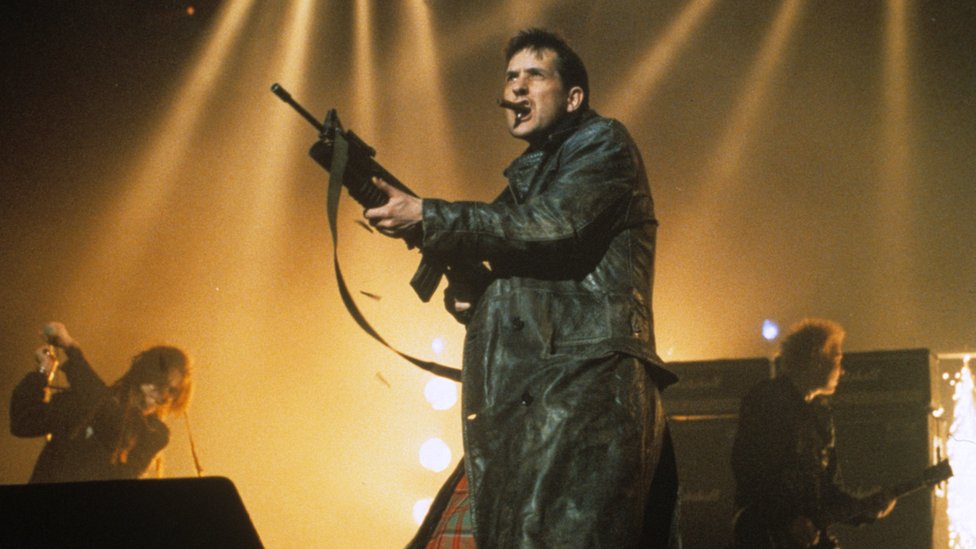
In 1994, The KLF shocked the world when they burned a million pounds in cash on the Scottish island of Jura and deleted their entire back catalogue, effectively erasing themselves from music history. Their chaotic energy had already been on show at the 1992 Brit Awards, where they fired machine-gun blanks into the audience and dumped a dead sheep at the afterparty, a final act before their self-imposed exile.
The KLF’s short but explosive run challenged what it meant to be a pop act in the 90s, blurring the lines between music, protest, and performance art while leaving a legacy that was as controversial as it was influential.
The early 90s were, however, defined by one movement. A movement that grew out of Seattle. Before we get to that, though.
In 1991, the world would lose one of the most energetic, enigmatic, unique frontmen and songwriters ever. Freddie Mercury. His passing shocked not only music fans but also the nation as a whole. The rock legend had only told the world 24 hours before that he had AIDS. Although there had been rumours for years, Mercury had always denied them. Most famously, in October 1986, two months after what would be the final Queen performance. British newspapers, The News of the World and The Sun, reported that Mercury had his blood tested for HIV/AIDS at a Harley Street clinic, but he was quoted as saying he was "perfectly fit and healthy"
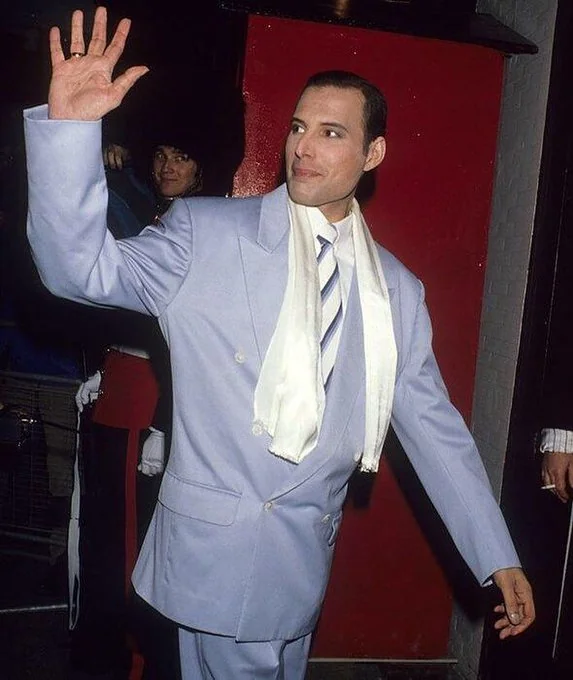
On the 22nd of November 1991, Mercury called Queen's manager Jim Beach to his Kensington home to prepare a public statement, which was released the following day. The statement read.
"Following the enormous conjecture in the press over the last two weeks, I wish to confirm that I have tested HIV positive and have AIDS. I felt it was correct to keep this information private to date to protect the privacy of those around me. However, the time has come now for my friends and fans around the world to know the truth. I hope that everyone will join with me, my doctors and all those worldwide in the fight against this terrible disease. My privacy has always been very important to me, and I am known for my reluctance to give interviews. Please understand this policy will continue."
On the evening of the 24th of November 1991, about 24 hours after issuing the statement, Mercury died at the age of 45 at his home in Kensington.
Queen, along with their management, came together to organise a tribute concert for Freddie, both to celebrate his life and legacy and to raise money for AIDS research and to spread awareness of the disease. At the 1992 BRIT Awards ceremony, May and Taylor announced plans for the concert. When tickets finally went on sale, all 72,000 tickets sold out in just three hours, even though no performers were announced apart from the remaining members of Queen.
The Freddie Mercury Tribute Concert for AIDS Awareness took place on the 20th of April 1992 at Wembley Stadium and was broadcast live to over one billion viewers in more than 70 countries. The event was an unprecedented gathering of rock royalty, with some of the world’s biggest artists coming together to honour Mercury’s memory and raise awareness for AIDS, a cause that, at the time, was still heavily stigmatised. The show was split into two halves: the first featuring bands who had been influenced by Queen, and the second with Queen’s surviving members joined by an array of guest vocalists.
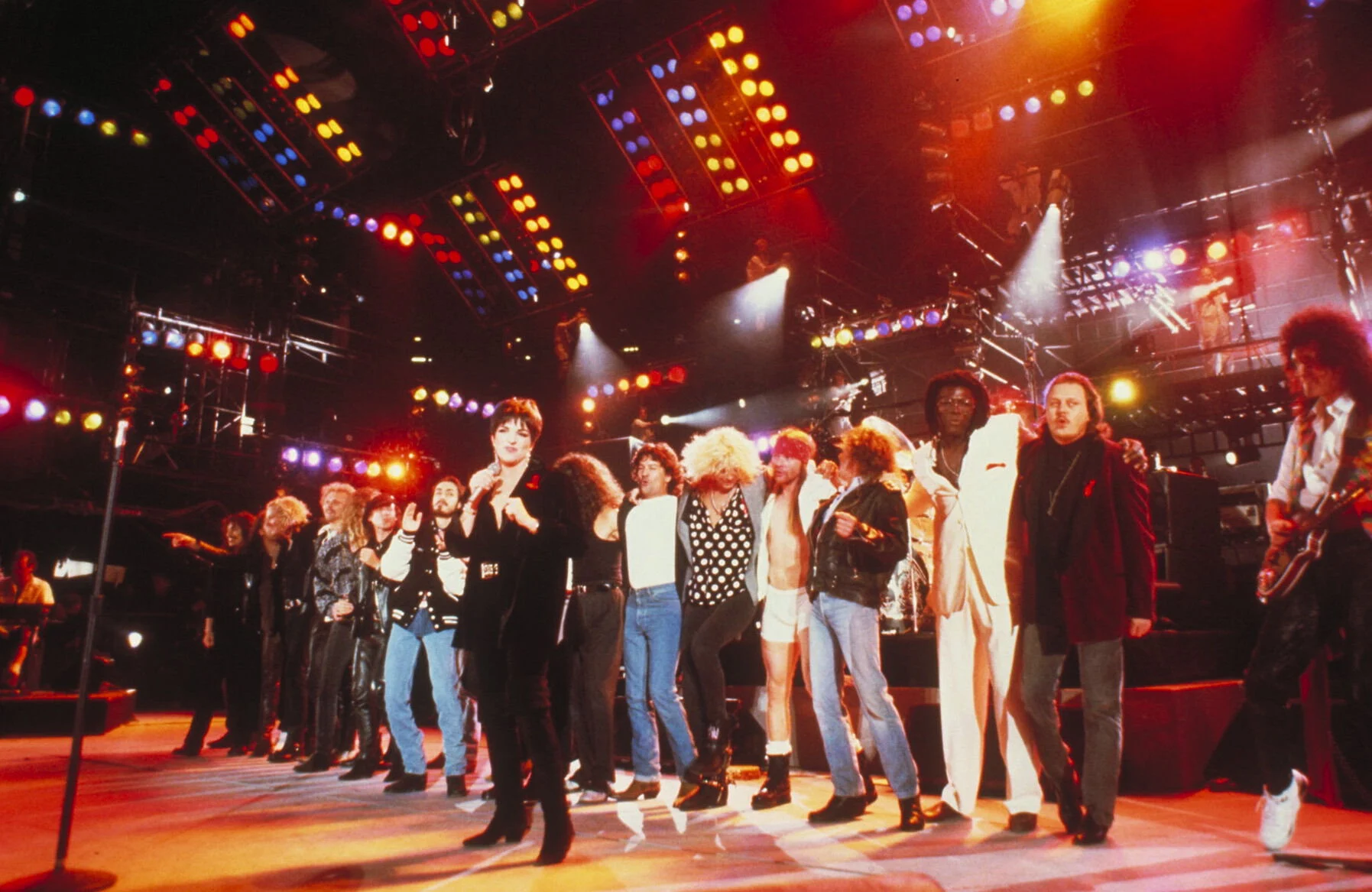
The band managed to draft in more than a few friends for the concert. David Bowie, George Michael, Seal, Roger Daltrey, Annie Lennox, Lisa Stansfield, Mott the Hoople, Guns N' Roses, Black Sabbath, and Elton John all took to the stage that day. Highlights included George Michael’s powerful rendition of ‘Somebody to Love,’ Annie Lennox and David Bowie’s duet on ‘Under Pressure,’ and Elton John and Axl Rose performing ‘Bohemian Rhapsody.’ The concert not only celebrated Mercury’s extraordinary life and music, but also brought global attention to the fight against AIDS, raising millions for research and support.
Mercury was more than a rock star; he was an inspirational figure, celebrated for his extraordinary talent, charisma, and his role in breaking down barriers as an openly gay man in the public eye. His legacy would resonate for decades to come.
Meanwhile, across the Atlantic, the early 90s saw the rise of Grunge, a movement that reshaped alternative rock and youth culture. Leading the charge was Nirvana, Kurt Cobain, Krist Novoselic, and Dave Grohl, who exploded onto the global stage after their 1989 debut with 'Bleach'.
Bleach' introduced Nirvana’s raw, abrasive sound to the underground, with tracks like 'About a Girl' and 'Negative Creep' revealing both Cobain's knack for melody and the band’s punk and hardcore influences. The album, recorded on a shoestring budget, gained a cult following and hinted at the songwriting depth that would soon propel them to superstardom. Its gritty production and cathartic energy made it a touchstone for the burgeoning Seattle scene, and in hindsight, it stands as an essential document of Grunge’s formative years.
Their 1991 album, 'Nevermind', was nothing short of a cultural earthquake. Released with little initial fanfare, the album’s explosive single 'Smells Like Teen Spirit' quickly became an anthem for disaffected youth and propelled Nirvana and the Seattle grunge scene into the global spotlight. With its unforgettable riff, cathartic chorus, and Cobain’s anguished vocals, 'Smells Like Teen Spirit' encapsulated the mood of a generation disillusioned by the commercial excess and superficiality of late 80s rock. Almost overnight, Nirvana went from underground cult heroes to the unlikely spokespeople of Generation X.
But 'Nevermind' is far more than its lead single. The album is a masterclass in balancing raw energy and melodic sensibility. Tracks like 'In Bloom', 'Come As You Are', and 'Lithium' blend distorted guitars and heavy rhythms with pop-inspired hooks and introspective lyrics, creating songs that are both instantly accessible and deeply personal. The softer, haunting moments of 'Polly' and 'Something in the Way' reveal a vulnerability at the core of the band’s sound, while the driving force of 'Breed' and 'Territorial Pissings' channels the spirit of punk rock.
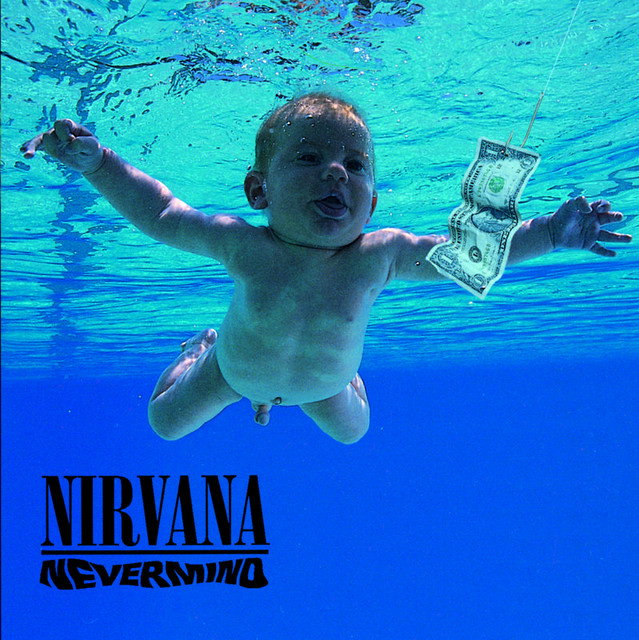
Produced by Butch Vig, 'Nevermind’s sound was a perfect blend of polished production and gritty authenticity, clean enough for radio, but never losing the raw emotion that made Nirvana so compelling. The album’s sequencing takes listeners on a journey through rage, melancholy, irony, and hope, reflecting the contradictions and complexities of early 90s youth culture.
'Nevermind’s impact was immediate and transformational. Within months, it knocked Michael Jackson’s 'Dangerous' from the top of the charts, signalling a dramatic shift in the popular music landscape. Alternative rock became mainstream almost overnight, and the music industry scrambled to find the “next Nirvana.” The album’s massive success helped break down the barriers between underground music and the mainstream, giving rise to a wave of alternative and Grunge acts Pearl Jam, Soundgarden, Alice in Chains, and many others, who found new audiences in 'Nevermind’s wake.
Beyond its musical influence, 'Nevermind' became a cultural touchstone. The iconic cover, featuring a baby swimming toward a dollar bill, became one of the most recognisable images of the decade, symbolising both innocence and the corrupting influence of money and fame. The album’s themes of alienation, frustration, and searching for meaning resonated with millions around the world, making it the unofficial soundtrack for a generation or three.
More than thirty years later, 'Nevermind' is still celebrated as one of the greatest and most influential albums of all time. Its songs continue to inspire new generations of musicians and fans, and its legacy can be heard across genres, from rock and punk to pop and indie. For many, 'Nevermind' didn’t just change the sound of the 90s; it changed what it meant to be an artist, a fan, and a part of popular culture.
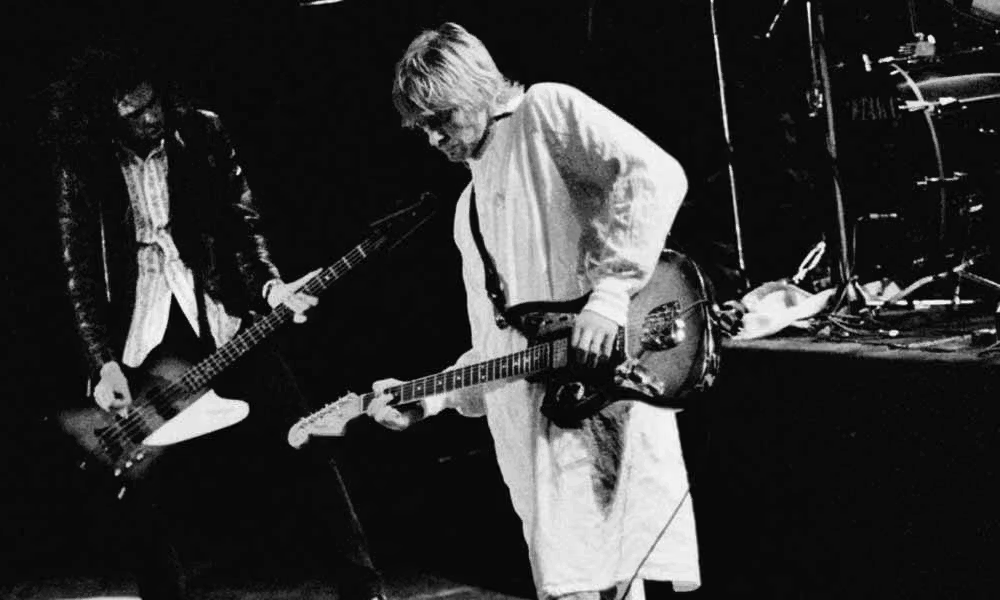
Nirvana quickly became the biggest band in the world. Their headlining set at Reading Festival in August 1992 has since become the stuff of legend. Arriving on stage in a wheelchair and hospital gown, Cobain mocked rumours about his health before leading the band through a blistering, cathartic set that silenced any doubts about their power. The performance captured Nirvana at their peak, raw, unpredictable, and utterly compelling, cementing their status as icons of the era and marking one of the most memorable moments in festival history.
The following year, they released their final album, 'In Utero'. In April 1994, Kurt Cobain committed suicide; his death sent shockwaves through the music world and far beyond. At just 27 years old, Cobain’s suicide marked not only the end of Nirvana but also the abrupt close of a chapter in alternative music and youth culture. Fans and musicians alike mourned the loss of a figure who had given voice to their sense of alienation, vulnerability, and rage, and whose songwriting offered rare honesty and catharsis.
Cobain’s struggles with depression, chronic pain, and addiction had been well documented, and his discomfort with fame was palpable in interviews and lyrics. Despite the adulation he received, he never seemed at ease in the spotlight, often expressing ambivalence about Nirvana’s mainstream success and the pressures that came with it. His death sparked a global conversation about mental health, addiction, and the darker side of celebrity, laying bare the cost of relentless scrutiny and personal turmoil.
Cobain’s legacy is one of enduring artistic honesty and emotional vulnerability. He became, for many, a symbol of both immense creative potential and the fragility that often comes with it.
In November 1994, Nirvana released their first live album, 'MTV Unplugged in New York'. It was part of the cable television series MTV Unplugged and features a mostly acoustic performance, a stark contrast to the band's usual electrified chaos. The set was recorded at Sony Music Studios in Hell's Kitchen, Manhattan, on the 18th of November, 1993, in front of a small invited audience. The atmosphere was intimate and subdued, with the band surrounded by candles and lilies, evoking the feel of a private wake as much as a concert.
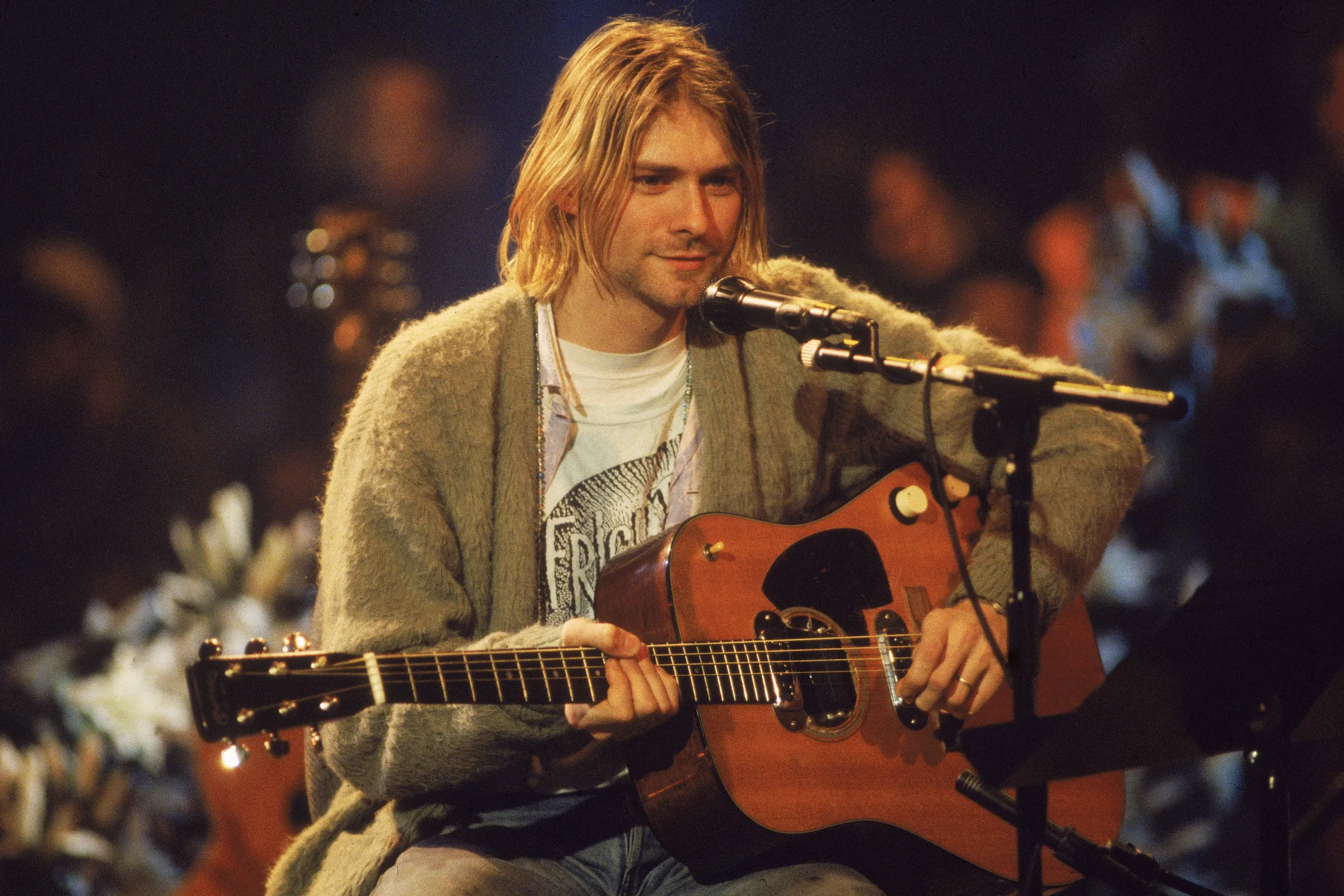
The show originally aired on the 16th of December, 1993, but after Cobain's death, MTV played the performance on heavy rotation, and its raw, vulnerable energy struck a powerful chord with fans and newcomers alike. Songs were stripped back to their emotional core, revealing a new dimension to Nirvana's music that many had never heard before. The decision to release the performance as an album was made to meet the overwhelming demand for Nirvana material in the aftermath of Cobain's passing, cementing its place as a cultural touchstone of the era.
Nirvana filmed the entire performance of 14 songs in a single take, a testament to the band’s focus and cohesion despite the emotional weight of the occasion. The setlist was carefully curated, including one song from their debut 'Bleach', four from their breakthrough second album 'Nevermind', three from their recently released 'In Utero', and a remarkable six covers. Among these covers was a haunting rendition of 'The Man Who Sold the World' by David Bowie, which took on a life of its own and introduced a new generation to the glam rock classic. The band also paid tribute to their influences and peers with songs by Lead Belly and The Vaselines, weaving a tapestry of alternative music history into their own performance.
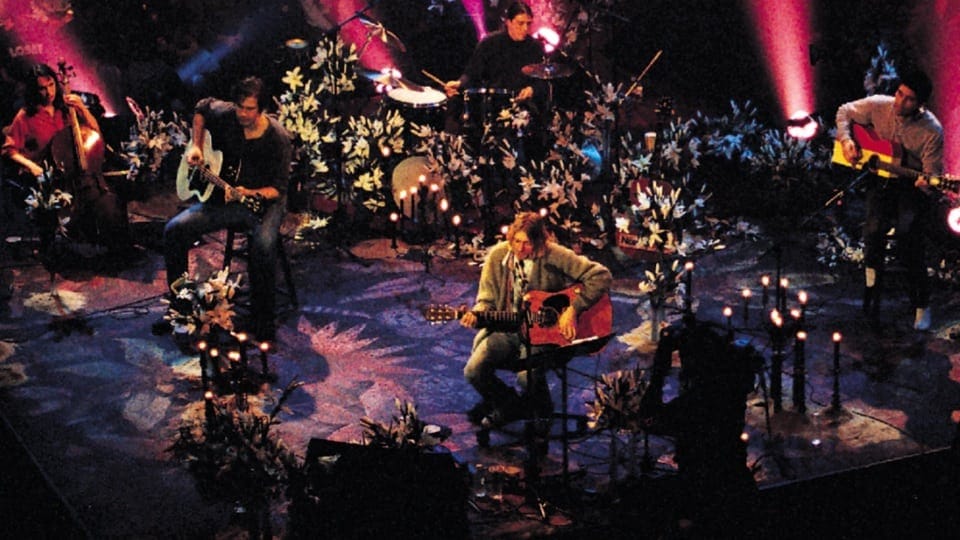
The album, released posthumously after Cobain's death, became more than just a live recording; it was Nirvana's swan song and showcased the enduring power of those songs. Stripped of distortion and fury, the performance revealed the band’s melodic sensitivity and emotional vulnerability. For many, MTV Unplugged in New York remains not only essential listening for Nirvana fans, but also one of the most influential and moving albums of the 1990s.
While Madchester and American Grunge dominated much of the 1990s, no discussion of the era’s musical innovation would be complete without acknowledging U2’s trajectory from the late 1980s into the new decade. Their 1987 album 'The Joshua Tree' had been a critical and commercial triumph, celebrated for its cinematic Americana and anthemic sound. However, its 1988 follow-up, 'Rattle and Hum', received a far more mixed response, some listeners found its blend of homage and self-mythologising overblown, while others admired its ambition. The contrasting reactions to these two records set the stage for a bold reinvention.
at reinvention came with U2’s groundbreaking 1991 album, 'Achtung Baby', recorded in part at Berlin’s Hansa Studios, a location steeped in musical history, where David Bowie had crafted his seminal Berlin Trilogy. The band arrived in a newly unified Berlin just as the wall was coming down, seeking inspiration from the city’s experimental spirit and charged atmosphere.
David Bowie's boundary-pushing work and the creative energy of the Berlin scene loomed large over the sessions, while U2 also absorbed the pulse of contemporary British music, taking cues from the Manchester scene, especially the Happy Mondays’ fusion of dance rhythms and guitar-driven rock, which helped push the band toward a more groove-oriented, electronically tinged sound.
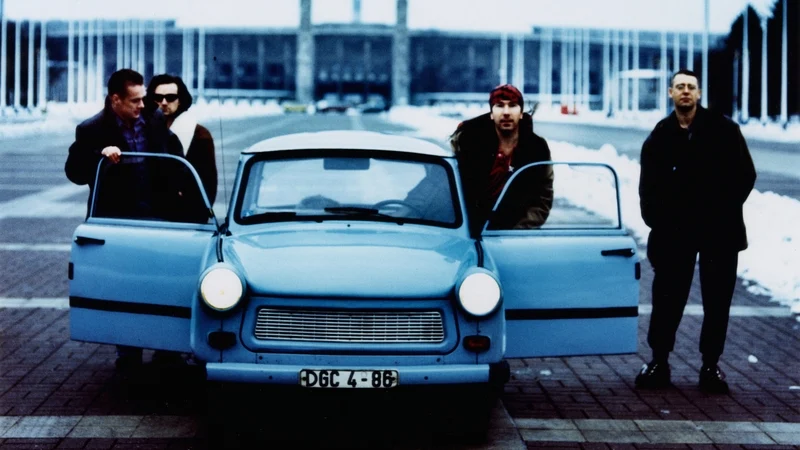
'Achtung Baby' marked a dramatic shift from the earnest anthems of U2’s 1980s output. The album is dense with texture, distortion, and a sense of fractured hope. Songs like 'One' became immediate classics, a soaring, bittersweet ballad of reconciliation that remains one of the band’s most enduring and emotional statements. 'Mysterious Ways' introduced slinky, danceable rhythms and a gospel-tinged chorus, while 'Even Better Than the Real Thing' delivered swaggering riffs and a sly, postmodern edge. Other standouts, including 'The Fly' and 'Until the End of the World', showcased U2’s new embrace of irony, electronic beats, and industrial influences.
'Achtung Baby' was both a critical and commercial triumph, debuting at the top of charts worldwide and hailed as one of U2’s finest artistic achievements. The album’s blend of alternative rock, dance grooves, and European experimentalism not only revitalised the band’s career but also captured the restless, searching spirit of the early 1990s. Its legacy continues to inspire artists across genres, standing as a testament to the power of reinvention and the creative possibilities that emerge when musical worlds collide.
Amid the dance-driven landscape of the late 1980s and early 1990s, a new and distinctly British sound was quietly taking shape: shoegaze. Named for the performers’ tendency to stare down at their effects pedals during live shows, shoegaze focused on lush, immersive soundscapes built from swirling guitars, ethereal vocals, and layers of distortion and delay. The result was a dense, enveloping sound that prioritised mood and texture over traditional song structures. Bands such as Cocteau Twins, My Bloody Valentine, Slowdive, and Ride became pioneers of this approach, crafting music that felt both deeply personal and sonically expansive.
Cocteau Twins emerged in the early 1980s as one of the most sonically distinctive and influential bands to precede the shoegaze movement. Their albums 'Treasure' (1984) and 'Heaven or Las Vegas' (1990) introduced a dreamlike fusion of voice and instrumentation that blurred the line between the two. Elizabeth Fraser’s soaring, often wordless vocals became emotional instruments in themselves, while Robin Guthrie’s shimmering guitar textures built lush, atmospheric worlds that would later define the shoegaze aesthetic. Although typically categorised as dream pop or ethereal wave, Cocteau Twins’ focus on texture, mood, and abstraction resonated deeply with the next generation of British musicians.
Their influence extended far beyond their contemporaries, shaping the sonic language of artists such as Slowdive, Lush, and The Sundays. Through innovative use of reverb, delay, and unconventional vocal phrasing, Cocteau Twins helped pave the way for the introspective, atmospheric soundscapes that would define much of 1990s alternative music.
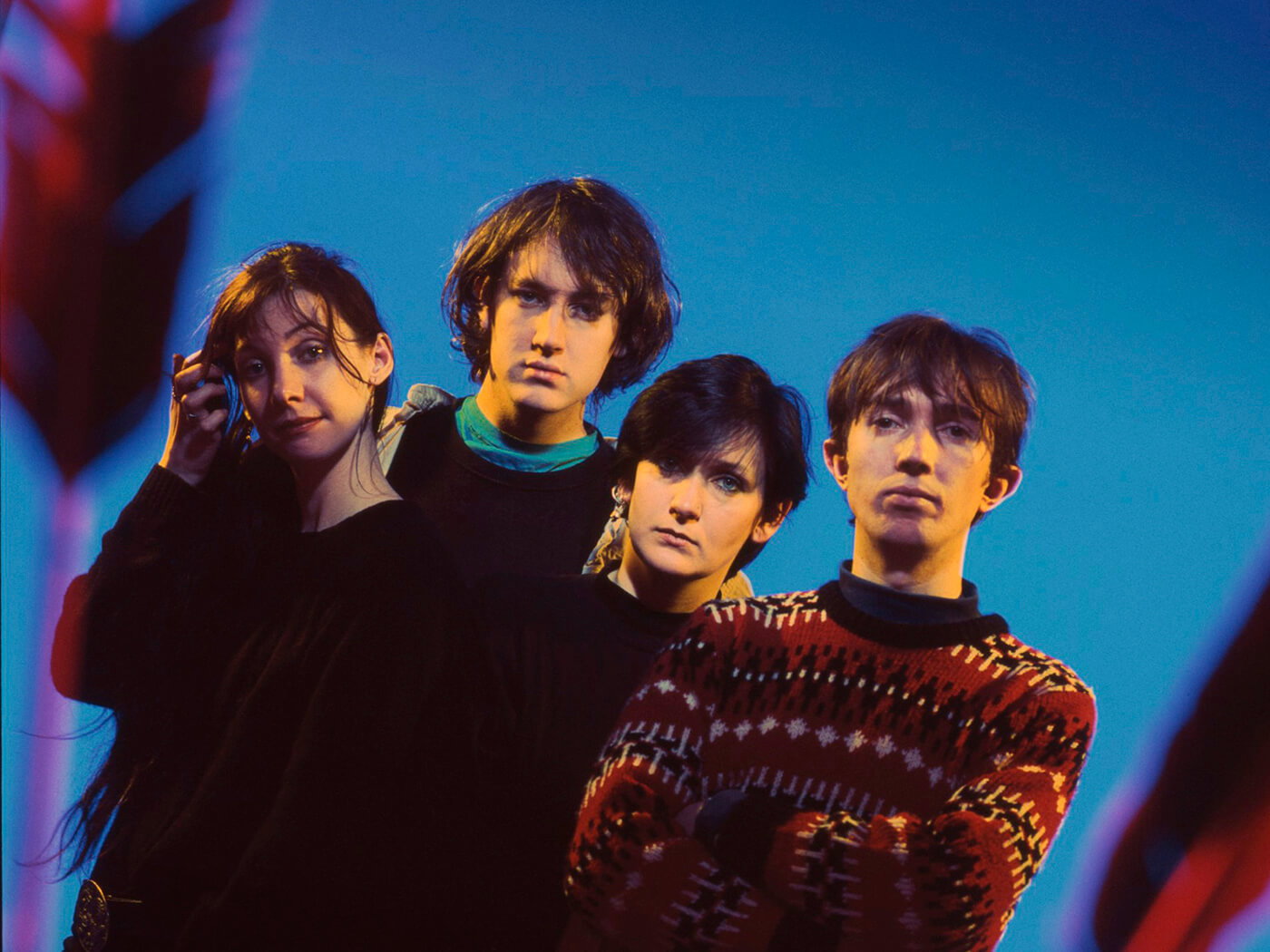
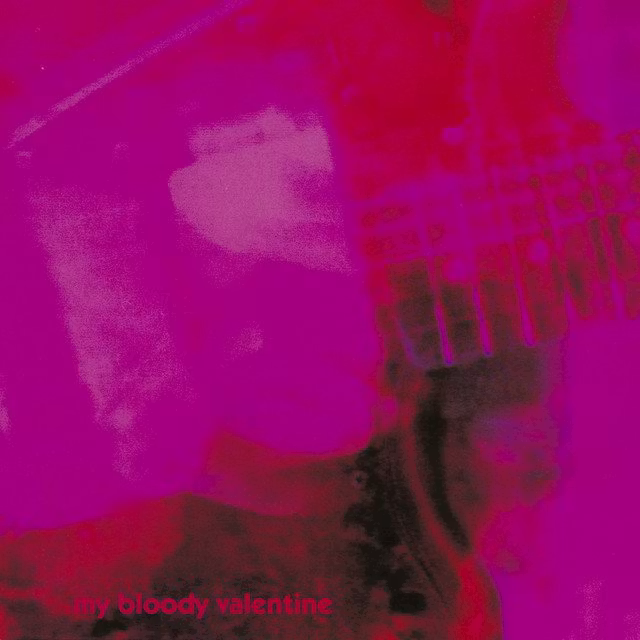
My Bloody Valentine’s 1991 album 'Loveless' is often regarded as the defining shoegaze record, a groundbreaking exploration of noise, melody, and emotion. With its dense walls of distortion, pitch-bending guitars, and whispered vocals, the album created a sound that was chaotic yet profoundly beautiful. Kevin Shields, the band’s frontman and principal sonic architect, spent years refining its tone, employing unorthodox recording methods such as tremolo-arm manipulation and extensive layering to achieve its signature dreamlike texture. The meticulous process, which reportedly involved dozens of studios and a near-mythic budget, became legendary in its own right.
The sonic innovations of 'Loveless' went far beyond standard rock production. Shields experimented with guitar tunings, reversed samples, and unconventional recording setups to create the swirling, immersive atmosphere that defines the album. The vocals, often buried deep in the mix, act as another instrument rather than a focal point, adding to the record’s foggy, otherworldly feel. Tracks like 'Only Shallow,' 'To Here Knows When,' and 'Sometimes' wash over the listener in waves, blurring the line between noise and melody. The result is an album simultaneously abrasive and comforting, evoking feelings of nostalgia, longing, and dreamlike introspection.
Although 'Loveless' was not an immediate commercial success, it gradually achieved cult status, its influence rippling across genres. Its fusion of noise and melody inspired generations of artists in alternative rock, ambient, electronic, and even metal scenes. Radiohead, Tame Impala, and Lush have all cited it as a major influence, and its production style continues to echo in the work of modern acts exploring texture and atmosphere. More than three decades later, 'Loveless' remains a touchstone for musicians and critics alike, a record that redefined what a guitar could sound like and what recorded emotion could feel like.
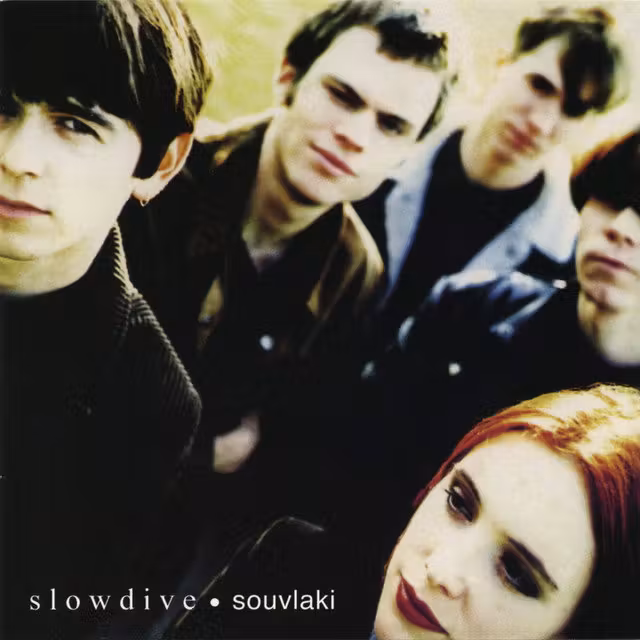
Slowdive offered a more emotional sound. Emerging from Reading in the early 1990s as one of the most evocative and influential bands of the shoegaze movement. Fronted by Neil Halstead and Rachel Goswell, Slowdive distinguished themselves with a lush, immersive, and emotionally charged sound. Their early EPs and debut album, 'Just for a Day' (1991), established their signature blend of swirling guitars, ethereal vocals, and shimmering textures, music that seemed to blur the line between waking and dreaming.
It was their second album, 'Souvlaki' (1993), that truly cemented Slowdive’s reputation as genre-defining artists. Working with legendary producer Brian Eno on several tracks, the band infused their sound with ambient atmospheres, introspective lyrics, and a sense of yearning that resonated deeply with listeners. Songs like 'Alison', 'When the Sun Hits', and 'Machine Gun' showcased Slowdive’s ability to craft melodies that were both expansive and intimate, enveloping the listener in waves of sound.
Despite critical acclaim, Slowdive struggled commercially during the peak of Britpop, as the era’s more extroverted trends overshadowed their introspective style. Their third album, 'Pygmalion' (1995), pushed even further into minimalism and ambient territory, and though it was initially misunderstood, it has since been reappraised as a visionary work.
Slowdive’s influence only grew in the years after their initial split. Their music became a touchstone for later generations of dream pop, post-rock, and indie artists, admired for its emotional depth and textural innovation. The band’s 2014 reunion and subsequent self-titled album in 2017 were met with widespread acclaim, confirming Slowdive’s place as enduring icons of atmospheric and emotionally resonant music. Today, their legacy is felt not just in the shoegaze revival, but in any music that seeks to evoke feeling and atmosphere through layers of sound.
Ride, formed in Oxford in 1988, helped bring shoegaze into the public eye through their fusion of melody and distortion. Their debut album, 'Nowhere' (1990), is often cited as one of the genre’s quintessential releases, combining chiming guitars, surging feedback, and youthful energy. Songs such as 'Vapour Trail' and 'Dreams Burn Down' captured both the introspection and anthemic power that characterised early shoegaze. While My Bloody Valentine leaned toward abstraction and Slowdive toward ambience, Ride occupied a middle ground balancing pop hooks with waves of sound that felt both euphoric and melancholic. Their follow-up, 'Going Blank Again' (1992), expanded this vision with brighter, more expansive songwriting that hinted at the Britpop movement to come.
While shoegaze blossomed in the early 90s, another band was making waves with a similarly atmospheric yet distinct approach: The Verve. Hailing from Wigan, The Verve’s early sound was defined by sprawling, psychedelic jams and a sense of cosmic exploration.
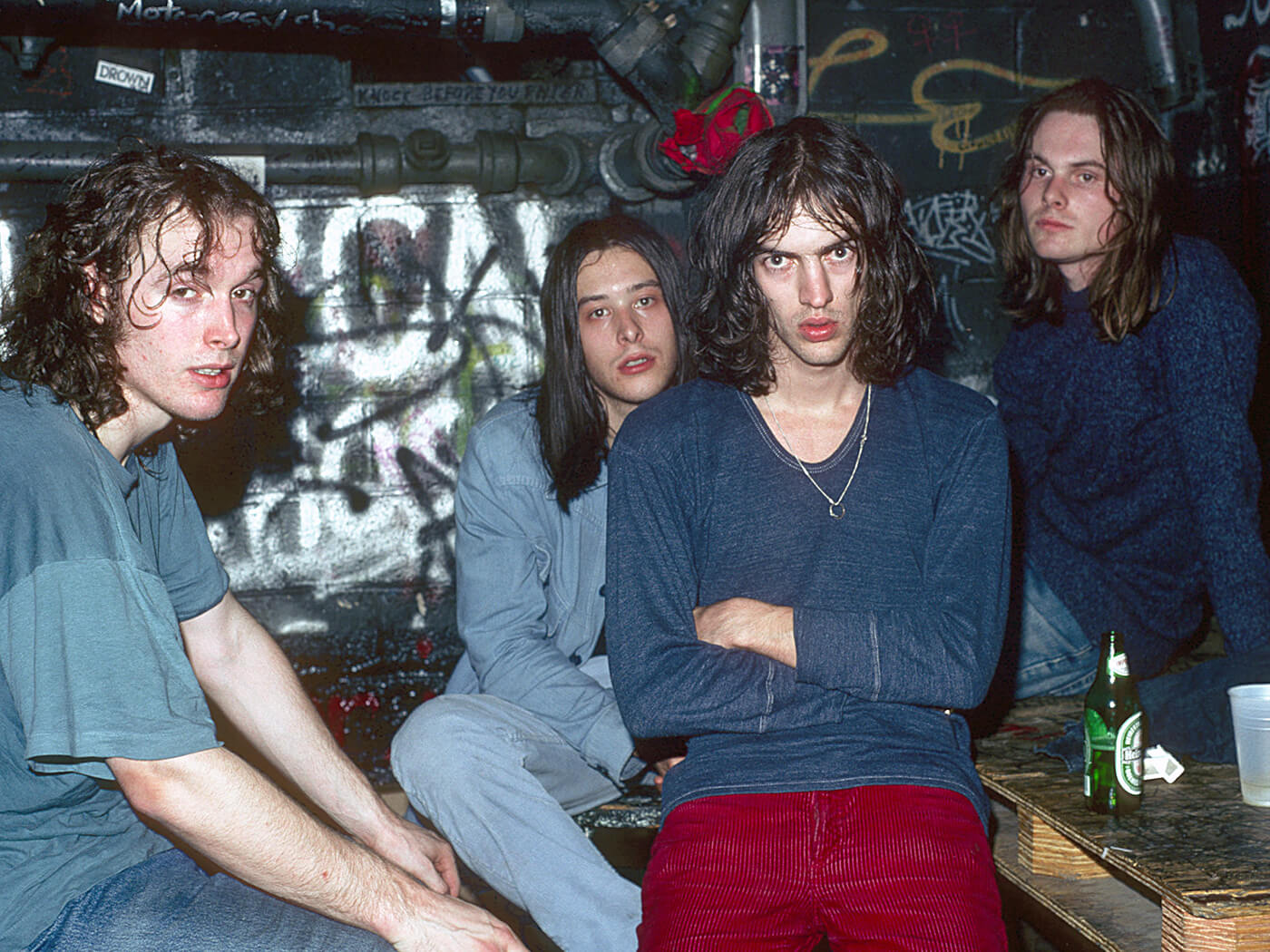
Their song 'Gravity Grave' became an underground favourite, swirling with reverb-drenched guitars and Richard Ashcroft’s hypnotic vocals. Just as essential was their blistering early single 'Slide Away,' a track that captured the band’s raw, euphoric power, now regarded as a defining anthem of the era. The Verve’s debut album, 'A Storm in Heaven' (1993), pushed the boundaries of British psychedelic rock, incorporating lush instrumentals, improvisational passages, and a dreamy intensity that set them apart from both their Madchester and Britpop contemporaries.
Soon, everything was about to change. The British music scene was poised for a massive shake-up.