I’m A Blackstar. The 10s Part 2
January 2016 marked the departure of one of the most versatile and timeless musical icons, David Bowie. His passing at the age of 69 was a profound loss, not just for the music industry but for the entire planet. We bid farewell to our 'Starman'. Bowie was a rare breed of artist who defied the constraints of time and genre. His music was not bound by any era, and just when it seemed like he might fade into the background, he would always return with something fresh and exciting, a testament to his timeless and versatile influence.
David Bowie’s influence on the 20th and 21st centuries cannot be overstated. From psychedelic folk rock to glam rock, from plastic soul to avant-garde experimentation and electronic minimalism, Bowie’s relentless innovation and reinvention became a defining creative force in modern music. His impact extended far beyond music, though, shaping fashion, performance art, film, gender identity, and even political discourse.
Throughout his career, Bowie demonstrated a rare ability to merge high art with pop accessibility. No matter how challenging or unconventional the style he explored, his songs remained emotionally resonant and strikingly melodic, inspiring generations of musicians and reshaping the cultural DNA of rock music along the way. His shape-shifting nature, which he often attributed to restlessness and boredom, established the modern archetype of the pop star as an ever-evolving cultural mirror: chameleonic, enigmatic, seductively alien, and constantly testing the limits of personal freedom and expression.
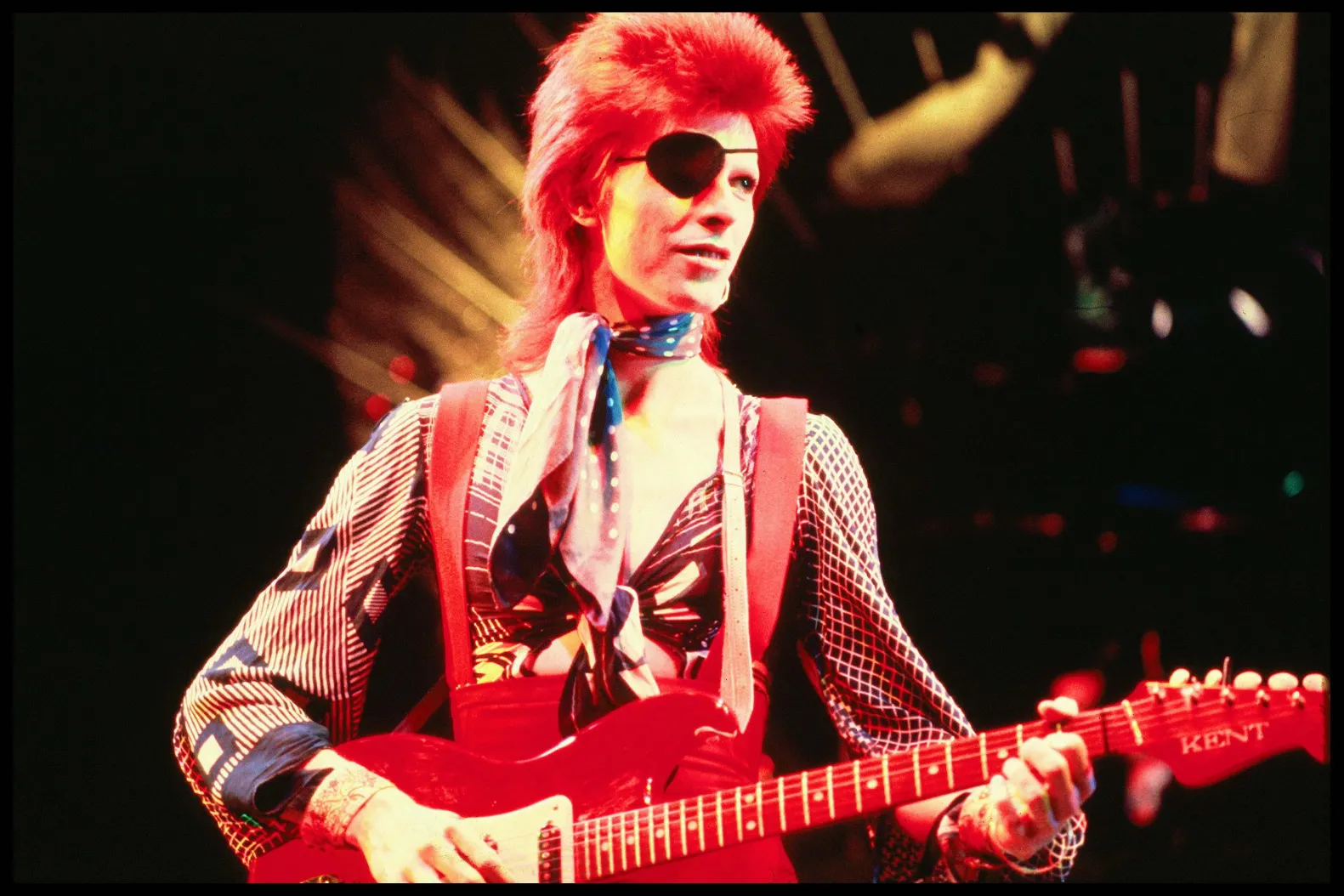
He created some of the most iconic songs and albums of the 1960s, ’70s, and ’80s, from the theatrical brilliance of ‘The Rise and Fall of Ziggy Stardust and the Spiders from Mars’ to the experimental innovation of ‘Low’ and ‘Heroes’. His Berlin Trilogy not only redefined electronic rock but also became symbolically linked to the eventual fall of the Berlin Wall, with ‘Heroes’ serving as an anthem of unity and resilience.
Beyond music, Bowie was a visionary who foresaw the digital age’s creative and social potential. As one of the earliest major artists to embrace the internet, he launched BowieNet in the late 1990s, a pioneering online community that prefigured social media and digital fan interaction. Even in his final work, ‘Blackstar’, released just days before his death, Bowie continued to innovate. Bowie continued to innovate, turning his farewell into a profound artistic statement that bridged music, mortality, and myth.
Before his death, Bowie released two of his most powerful works. In 2013, he stunned the world by releasing 'Where Are We Now?', his first new material in a decade, on his 66th birthday, without warning. The haunting, reflective single became the lead track from 'The Next Day' and offered a glimpse into Bowie's state of mind after years out of the spotlight. Critics and fans alike praised its sombre beauty and introspective lyrics, hailing it as a poignant return for an artist who had reshaped music so many times before. The song topped iTunes charts globally and reached number six in the UK, Bowie's biggest hit since 'Absolute Beginners' in 1986.
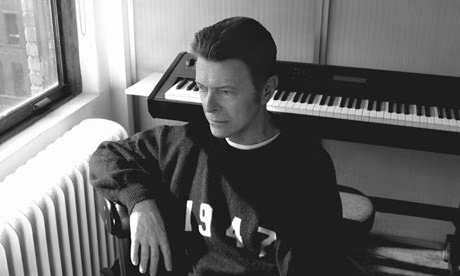
Lyrically, 'Where Are We Now?' is Bowie at his most vulnerable and contemplative, looking back on his Berlin years with a gentle melancholy. The song's sparse, ghostly production and Bowie's fragile yet dignified vocals evoke the ambience of 'Low' and 'Heroes', as if he is quietly revisiting old haunts. Through references to Berlin landmarks such as the Dschungel nightclub, KaDeWe, Potsdamer Platz, and Bösebrücke, Bowie maps both the city and his own memories, drawing parallels between a divided city and his evolving identity. The refrain "Where are we now?" lingers as a universal question of time, change, and belonging, echoing the uncertainty of both personal and collective history.
The unexpected release of the song only deepened the Bowie mystique. Rather than indulging in nostalgia, 'Where Are We Now?' became a career-defining moment, a meditation on memory, time, and transformation, both for Bowie and for Berlin itself. It stands as a highlight in his later catalogue, a testament to his ability to merge the personal with the universal, and to continually surprise his audience.
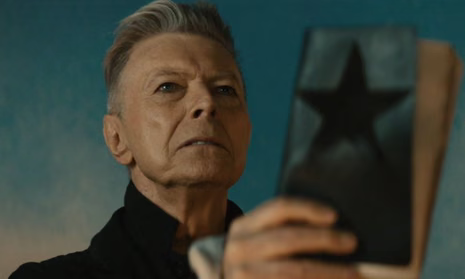
His final gift, 'Blackstar', released just two days before his death, was much more than a farewell; it was a bold, enigmatic work that redefined what a parting statement could be. The album is steeped in jazz-influenced experimentation, cryptic lyricism, and an otherworldly sense of drama. Tracks like 'Lazarus' and the title song are haunted by themes of mortality, transformation, and cosmic mystery, with Bowie adopting the persona of a spectral outsider one last time.
The album’s unsettling beauty is heightened by its daring arrangements and the sense that Bowie was fully aware of his own mortality, turning his final days into a work of art. Critics hailed 'Blackstar' as one of his greatest achievements: a record that pushed boundaries even in its final moments, blending avant-garde jazz, art rock, and electronic textures into something utterly unique. It’s a lasting testament to Bowie’s fearlessness and his refusal to stand still, even when facing the unknown.
The world feels a little less vibrant without this great man. We are forever grateful for the music, David. His legacy will continue to inspire, and your music will always be a part of us. He will forever be remembered as one of the greatest to ever do it.
Another musical icon would come to pass in April of 2016. Prince passed away at the age of 57, leaving behind a legacy that could never be confined to a single genre or era. Over his four-decade career, Prince was a relentless innovator, constantly pushing boundaries and reinventing his sound. He fused funk, rock, pop, R&B, soul, and even jazz with effortless creativity, crafting a catalogue that was as unpredictable as it was influential.
Prince’s output was staggering, both in quality and quantity. He released dozens of studio albums, frequently dropping material at a pace few could match, and his infamous “vault” is rumoured to hold hundreds, if not thousands, of unreleased tracks. His stagecraft was legendary: flamboyantly charismatic yet fiercely disciplined, Prince mesmerised audiences with marathon performances that showcased his virtuosity on guitar, piano, and just about any instrument he picked up.
He was also a master of reinvention, from the raw Minneapolis funk of his early days to the psychedelic rock of ‘Around the World in a Day,’ the sultry R&B of ‘Sign o’ the Times,’ and the sleek pop perfection of ‘Diamonds and Pearls.’ Few artists could match his ability to shapeshift, sometimes from album to album, sometimes within a single song. His embrace of alter egos (most famously, the unpronounceable Love Symbol) and fearless approach to gender and sexuality made him a cultural trailblazer long before such conversations were mainstream.
Even after his passing, Prince’s influence has only grown. Artists across genres, from Beyoncé and Kendrick Lamar to St. Vincent and Haim, openly cite him as a guiding light. His battles for artistic control, his uncompromising vision, and his commitment to musical freedom have set a template that countless artists strive to follow. The world lost a true original in 2016, but Prince’s spirit remains in every artist who dares to do things their own way.
Beyond his virtuosity as a musician and songwriter, Prince was an electrifying live performer whose stage presence was legendary. He wrote and produced not only his own classics, like the era-defining ‘Purple Rain’, the provocative ‘Sign o’ the Times’, and the infectious ‘1999’, but also hits for other artists, shaping the sound of modern pop and R&B behind the scenes. His fearless approach to sexuality, gender, and artistry broke taboos and inspired generations of musicians to follow their own path, no matter the risk
Prince was also a staunch defender of artists’ rights, famously battling record labels for creative control and ownership of his music. As Elton John once said, “Prince was the greatest performer I have ever seen, and a true genius.” His death marked the loss of an artist whose impact on music, culture, and the very definition of freedom in art will never be replicated.
Two of the very best had come to pass, and sadly, they weren’t the only musical deaths that year.
On 13th February 2016, the world lost River Reeves, Tomas Lowe, Kris Leonard, and Jack Dakin of Viola Beach, along with their manager Craig Tarry. The band was on their first European tour, filled with the kind of hope and excitement only a young band on the rise can have, ready to take on the world. Everything I’ve ever heard about these five lads paints a clear picture: they were full of warmth, drive, and a deep, genuine love for music. Friends, families, fellow musicians, promoters, and radio DJs all echoed the same sentiment: they were kind-hearted, hardworking, and had an enormous future ahead of them.
Though Viola Beach are no longer with us, their legacy lives on through the music they left behind. The story of Viola Beach is one of both heartbreaking loss and remarkable resilience. Their self-titled debut album, released posthumously in July 2016, features nine sparkling tracks that showcase not just the promise and joy the band carried with them, but also the deep sense of camaraderie and hope that defined their journey.
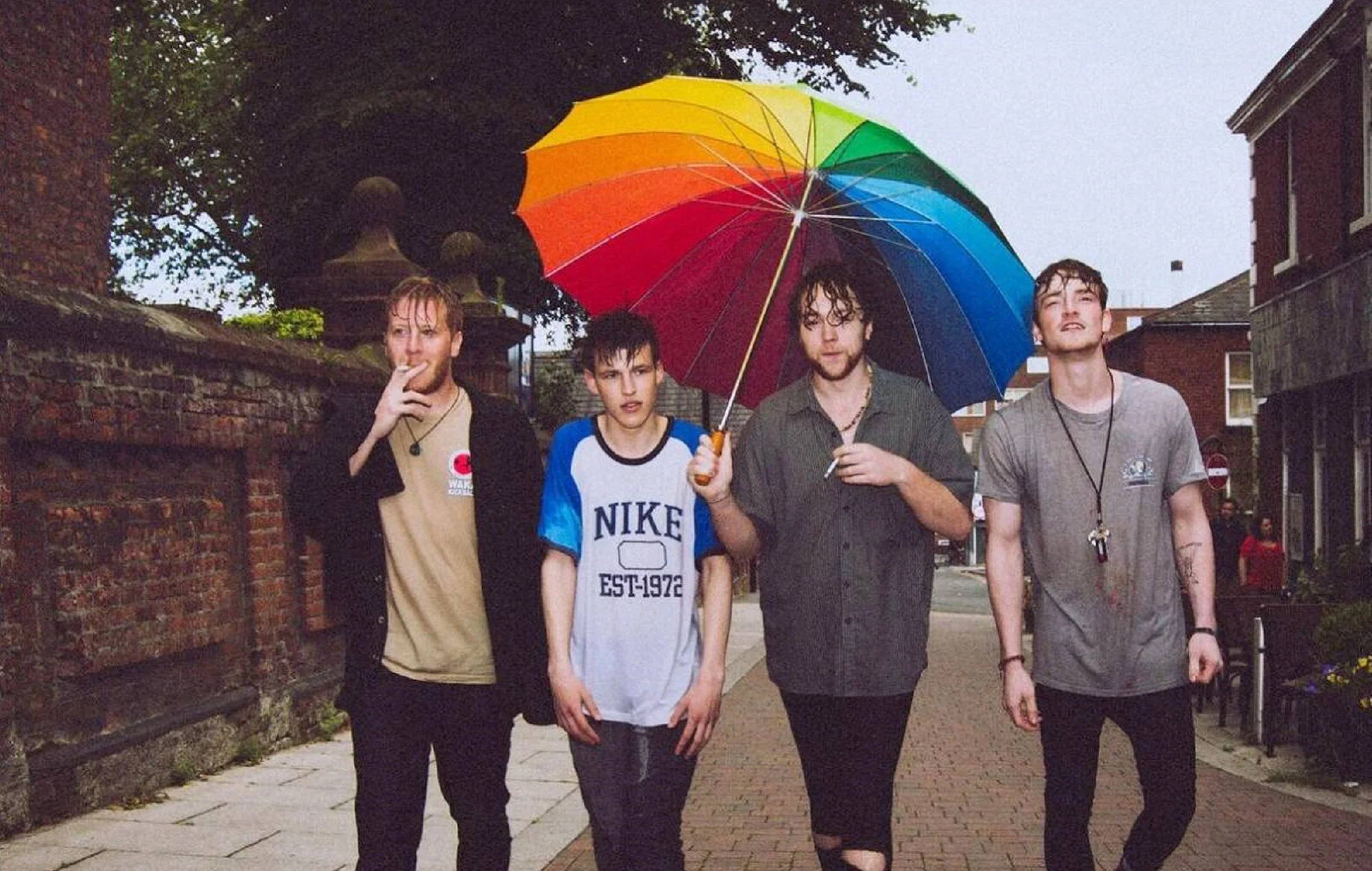
Musically, it is a vibrant collection of indie-pop, brimming with jangly guitar riffs, sun-drenched melodies, and lyrics that blend wit, charm, and emotion. Songs like ‘Swings & Waterslides’ and ‘Boys That Sing’ captured the imagination of a generation and quickly became beloved anthems. In the years since, these tracks have been covered by fans and established artists alike at festivals and tribute shows, serving as a powerful reminder of the band’s enduring spirit.
The band’s memory has also inspired charitable work and tributes from within the music community and beyond, with numerous gigs and events held in their honour to raise money and awareness for young musicians. One of the most moving examples was the Viola Beach charity gig in their hometown of Warrington. The show brought together a lineup of some of the British music scene’s biggest names, The Coral, Courteeners, Blossoms, The Kooks, and more, who all performed in celebration of the band’s spirit and to support future generations of musicians. Between sets, Viola Beach’s own live recordings played, making sure their music remained the heartbeat of the night. It was a night of unity, remembrance, and hope, capturing the sense of loss but also the enduring love that the band inspired.
In the band's hometown of Warrington at the Neighbourhood Weekender festival, the new bands stage is named the Viola Beach stage, a tribute to a great band, a nod to the next generation. Viola Beach’s story stands as a celebration of youth, friendship, and the unbreakable power of music to connect people, even in the face of tragedy.
An album would be released posthumously, and chart straight at Number One. A bittersweet but fitting tribute to the band’s talent. It became a vital document of who the band were and what they might have become. The old maxim says you have a lifetime to write a debut, but these four young men were denied that time. The album, a "posthumous patchwork" of recordings, is tempered by the knowledge that they were only just getting started.
The songs hint at the promise the band held. The opener, ‘Swings & Waterslides’, is a punchy, infectious indie-pop anthem, driven by jangly guitars and a chorus that begs to be shouted back at a festival crowd. It’s the sound of summer, youth, and possibility; no wonder it became an immediate fan favourite and a lasting tribute at gigs and tributes. ‘Boys That Sing’ is perhaps the band’s defining track: its euphoric melody and heartfelt lyrics celebrate the pure joy of music and friendship, elevated to an anthem of remembrance following the tragedy.
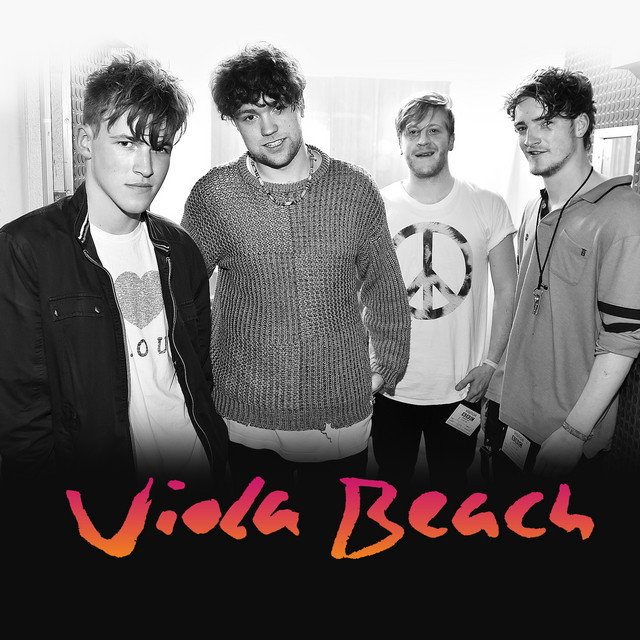
The album isn’t just high-octane indie. Tracks like ‘Call You Up’ introduce a winsome, late-night vulnerability, hinting at songwriting depth and emotional maturity beyond their years. It’s a gentle, introspective moment that stands out amid the energy, showing that Viola Beach were capable of more than just festival anthems. ‘Go Outside’ and ‘Drunk’ add to the record’s emotional palette; ‘Go Outside’ is all shimmering optimism, urging listeners to embrace life beyond their comfort zones, while ‘Drunk’ captures the bittersweet nostalgia of nights out and the fleeting moments of being young and reckless.
Viola Beach's story is marred by one tragedy, but this album showed that the 'Boys that Sing' were on for big things.
In 2016, The Stone Roses returned, and this was a little different to the previous reunion three years earlier. This time, the band released new music for the first time in over two decades, an event that sent shockwaves through the indie world. The first single, 'All For One', landed in May: a euphoric, chant-driven anthem with a galloping rhythm and a simple, communal chorus that felt tailor-made for stadium singalongs. While divisive among some older fans due to its straightforwardness, it was unmistakably brash, bold, and full of attitude.
A month later, they followed it up with 'Beautiful Thing', a far more sprawling, psychedelic track built on John Squire’s wah-soaked guitar and a hypnotic groove. The song echoed the band's experimental side, reminiscent of the acid-house-influenced jams from their debut and 'Second Coming' eras, but filtered through a modern lens. Both songs divided opinion, but their very existence was a reminder of the band’s ability to spark conversation and headline attention decades after their prime.
That summer, the band embarked on a string of high-profile shows that proved their enduring popularity and deep connection with their audience. Standout performances included headlining sets at T in the Park in Scotland, Madison Square Garden in New York, and marquee shows at Manchester’s Etihad Stadium. The Manchester gigs, in particular, were symbolic of a triumphant homecoming that cemented their legacy in the city’s musical history.
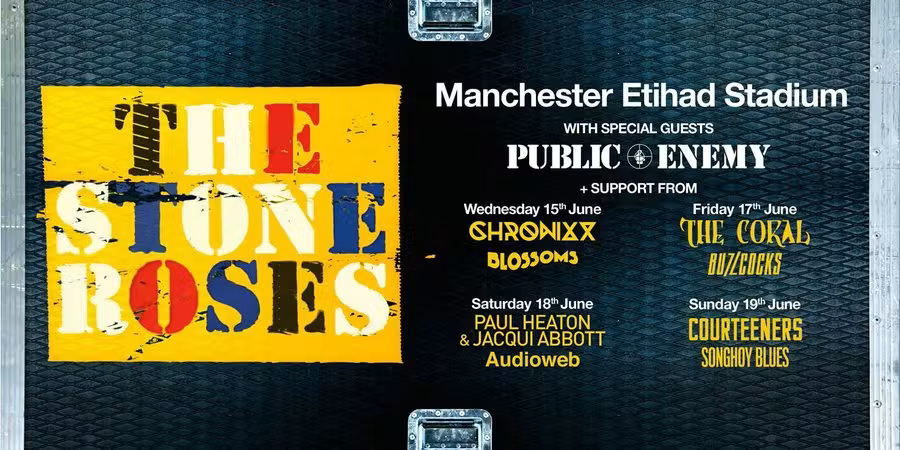
Support for the Etihad gigs saw Manchester legends Buzzcocks, indie upstarts Blossoms, The Coral, Courteeners, and even hip-hop pioneers Public Enemy take to the stage. These shows were enormous, communal celebrations, with fans from all generations coming together to witness a truly historic homecoming. The Stone Roses weren’t just playing their greatest hits; they were reaffirming their status as legends and showing they could still command the biggest stages in the world.
The band continued the tour into 2017; however, speculation was mounting that this latest chapter in The Stone Roses' story might be their last. They played huge shows at Wembley Stadium, Dublin's Marlay Park and Glasgow's Hampden Park. It was some of the band's biggest concerts to date.
Fans were treated to euphoric renditions of classics like 'I Wanna Be Adored', 'Waterfall', 'She Bangs the Drums', and 'This Is the One', as well as the anthemic 'Made of Stone' and the crowd-rousing 'Fool's Gold'. The band also included their new singles 'All For One' and 'Beautiful Thing', seamlessly blending the past and present. Each night ended with the emotional singalong of 'I Am the Resurrection', uniting generations of fans in a final, communal moment. In typical Stone Roses fashion, it all came to a rather abrupt end, leaving the future of the band shrouded in mystery once again.
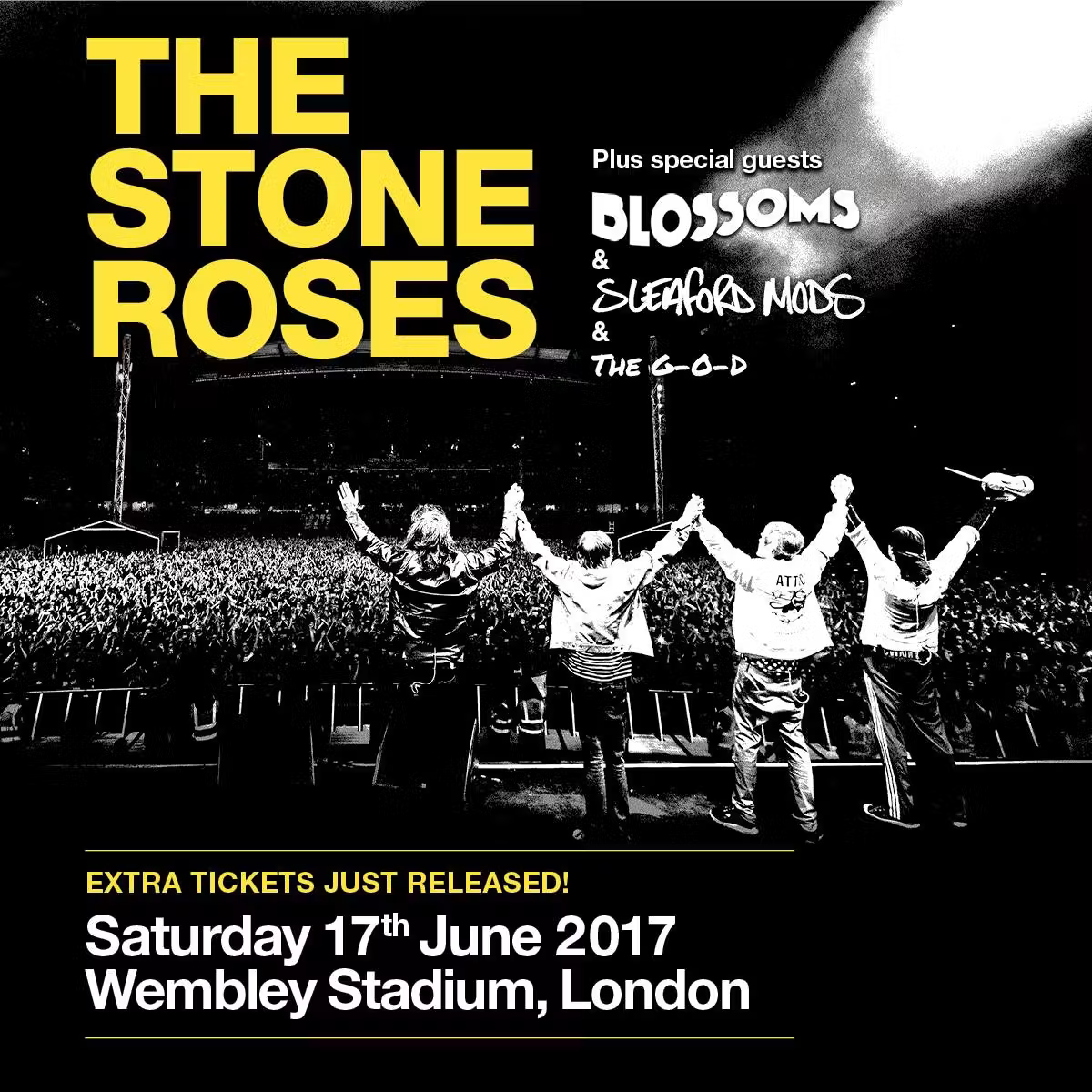
At the band's gig at Hampden Park, Ian Brown, the lead vocalist, uttered these now-famous words. “Don’t be sad it’s over, be happy that it happened”. This was seen as a poignant moment, hinting at a possible end to the band's journey.
Despite the fans' speculations about the band's future, no official statement has been made. The Stone Roses, known for their resilience, have not performed together since Saturday, 24th June 2017.
In 2016, The Last Shadow Puppets made a triumphant return with their long-awaited second album, ‘Everything You’ve Come to Expect’, arriving eight years after their acclaimed debut, ‘The Age of the Understatement’. Despite the individual successes of Arctic Monkeys and Miles Kane, the duo’s chemistry remained unmistakable, and their reunion felt as natural as ever; it was a reminder that this partnership was never a mere side project, but something with its own creative gravity.
‘The Age of the Understatement’, released in 2008, marked a bold and unexpected debut from Alex Turner and Miles Kane, two frontmen stepping aside from their own bands to explore something more cinematic, ambitious, and stylised. Drawing inspiration from 1960s orchestral pop, the album paid homage to Scott Walker, David Axelrod, and John Barry’s Bond soundtracks, enveloping listeners in sweeping strings and dark romanticism. Despite its retro influences, the record felt remarkably fresh, thanks to the duo’s youthful energy and sharp songwriting.
From the galloping opener and title track, the album established a lush, cinematic mood, with sweeping strings, tremolo guitars, and a brooding sense of romance. Standout tracks like ‘Standing Next to Me’ and ‘My Mistakes Were Made for You’ balanced old-school charm and sharp lyricism; Turner’s poetic voice was already in full bloom, while Kane’s guitar work brought swagger and edge. The result was a record that stood apart from anything in British indie at the time.
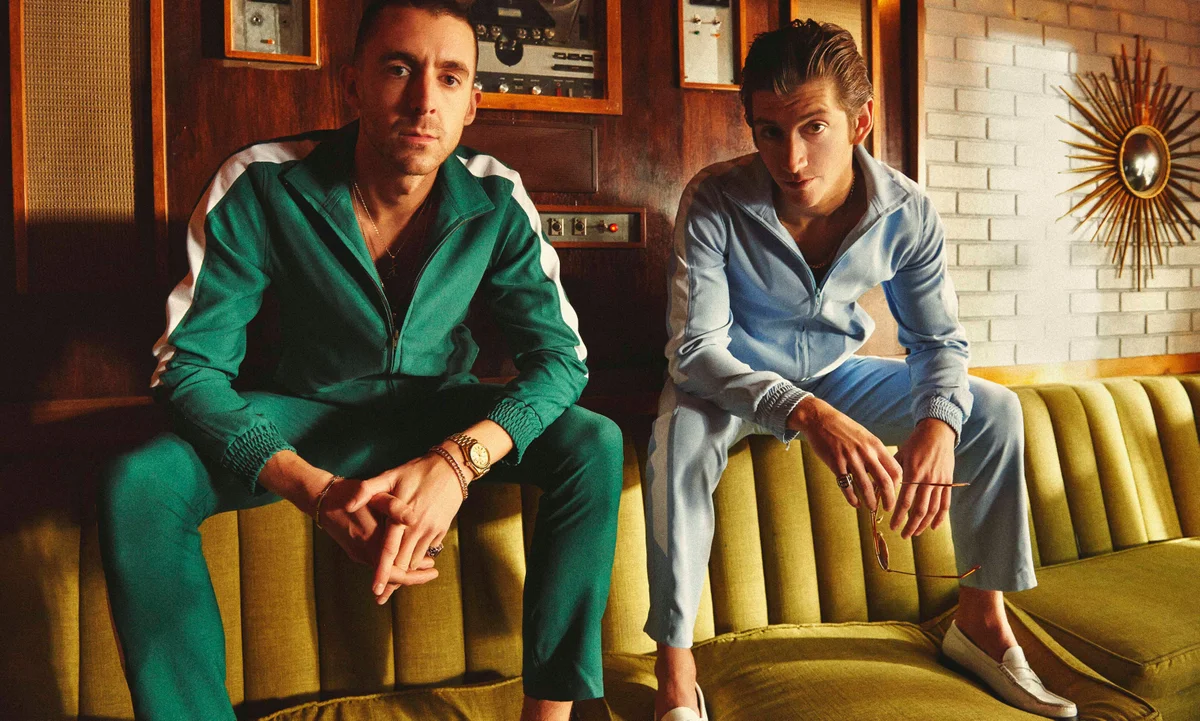
‘Everything You’ve Come to Expect’ found Turner and Kane embracing their influences with even greater confidence. The album was a swaggering, sometimes surreal affair, awash with lush orchestration, sleazy lyricism, and a warped sense of humour. Tracks like ‘Bad Habits’ erupted with raw, unfiltered energy, while the title track and ‘Sweet Dreams, TN’ showcased Turner’s ever-more-theatrical lyricism and vivid imagination. This was a record that didn’t play it safe; instead, it delighted in excess and unpredictability.
If their debut was urgent and disciplined, ‘Everything You’ve Come to Expect’ was looser, wilder, and undeniably sexier—drenched in a kind of vintage Californian decadence. Songs like ‘Aviation’ and ‘Miracle Aligner’ dripped with style and intrigue, blending eerie strings, cryptic lyrics, and seductive melodies. Turner, now fully embracing his crooning, lounge-lizard persona, delivered every line with theatrical flair, while Kane brought a brash rock’n’roll bite that kept things grounded. The interplay between them was more dynamic than ever, allowing each to push the other creatively.
The Last Shadow Puppets didn’t just dazzle in the studio; their 2016 comeback included a string of riotous, theatrical live shows. With a full string section and a band amplifying their sound, Turner and Kane fully inhabited their alter-egos on stage—Turner channelling a swaggering, Sinatra-meets-vaudeville showman, Kane radiating wiry, rock’n’roll energy as the perfect foil. Their setlists spanned both albums and included inspired covers, Jacques Dutronc’s ‘Les Cactus’, The Beatles’ ‘I Want You (She’s So Heavy)’ and David Bowie's 'Moonage Daydream', making every show feel unpredictable and immersive. The sense of playful excess was irresistible, and their chemistry only seemed to grow stronger in the live setting.
Capping off this era was ‘The Dream Synopsis’ EP, released in December 2016. This brief but essential release featured re-recorded versions of album tracks, alongside inspired covers like Leonard Cohen’s ‘Is This What You Wanted’ and Glaxo Babies’ ‘This Is Your Life’. The EP was further proof of the duo’s skill at reimagining their own material and paying homage to the music that shaped them, cementing their legacy as both master stylists and adventurous songwriters.
The Last Shadow Puppets have always thrived on unpredictability; no one ever knows quite when, or if, they’ll return. But their second act proved this was far more than a fleeting side project. Instead, it became a creative playground for two of the UK’s most magnetic musicians; a space for Turner and Kane to indulge their shared obsessions with ’60s pop, cinematic spectacle, and high drama, all while never losing sight of melody or style. Their 2016 reunion stands as one of the most thrilling and artistically successful comebacks of the decade, leaving fans longing for whatever unpredictable move comes next.
2017 would see British bands release some highly anticipated second albums. Wolf Alice delivered the masterpiece ‘Visions of a Life’, an album that many felt not only matched but far surpassed their debut, ‘My Love is Cool’. Here was a band operating at the height of their powers, with Ellie Rowsell emerging as one of the decade’s most distinctive and daring songwriters. Critics and fans alike embraced the record, showering it with Album of the Year nominations and ultimately seeing it crowned with the Mercury Prize, a testament to its artistic ambition and cultural impact.
Wolf Alice’s Mercury Prize win was a triumph for alternative rock, reaffirming that ambitious, guitar-driven records could still cut through the noise in the streaming era. Their victory speech was charged with emotion, as the band spoke of their journey from tiny London venues to the national stage, and dedicated the award to young people making music in their bedrooms. The win catapulted Wolf Alice onto bigger festival stages, brought their music to a wider audience, and inspired a generation of up-and-coming bands to embrace risk, diversity, and authenticity in their own songwriting. ‘Visions of a Life’ instantly became a touchstone for late-2010s British rock, a record that proved adventurous, emotionally raw music could still be celebrated at the highest level.
‘Visions of a Life’ is a wild, unpredictable ride, each track peeling back another layer of the band’s ever-expanding sound. The opener, ‘Heavenward’, sets a cinematic, shoegaze-infused scene: swirling reverb, cavernous guitars, and Rowsell’s haunting delivery create a wall of sound that feels both nostalgic and forward-thinking. Then ‘Yuk Foo’ explodes, a furious, cathartic outburst of punk rage, with Rowsell unleashing her frustrations in a raw, unfiltered scream that instantly became one of the album’s defining moments. ‘Formidable Cool’ arrives with a slinky, noirish energy, all prowling basslines and icy attitude, hinting at the band’s knack for reinvention.
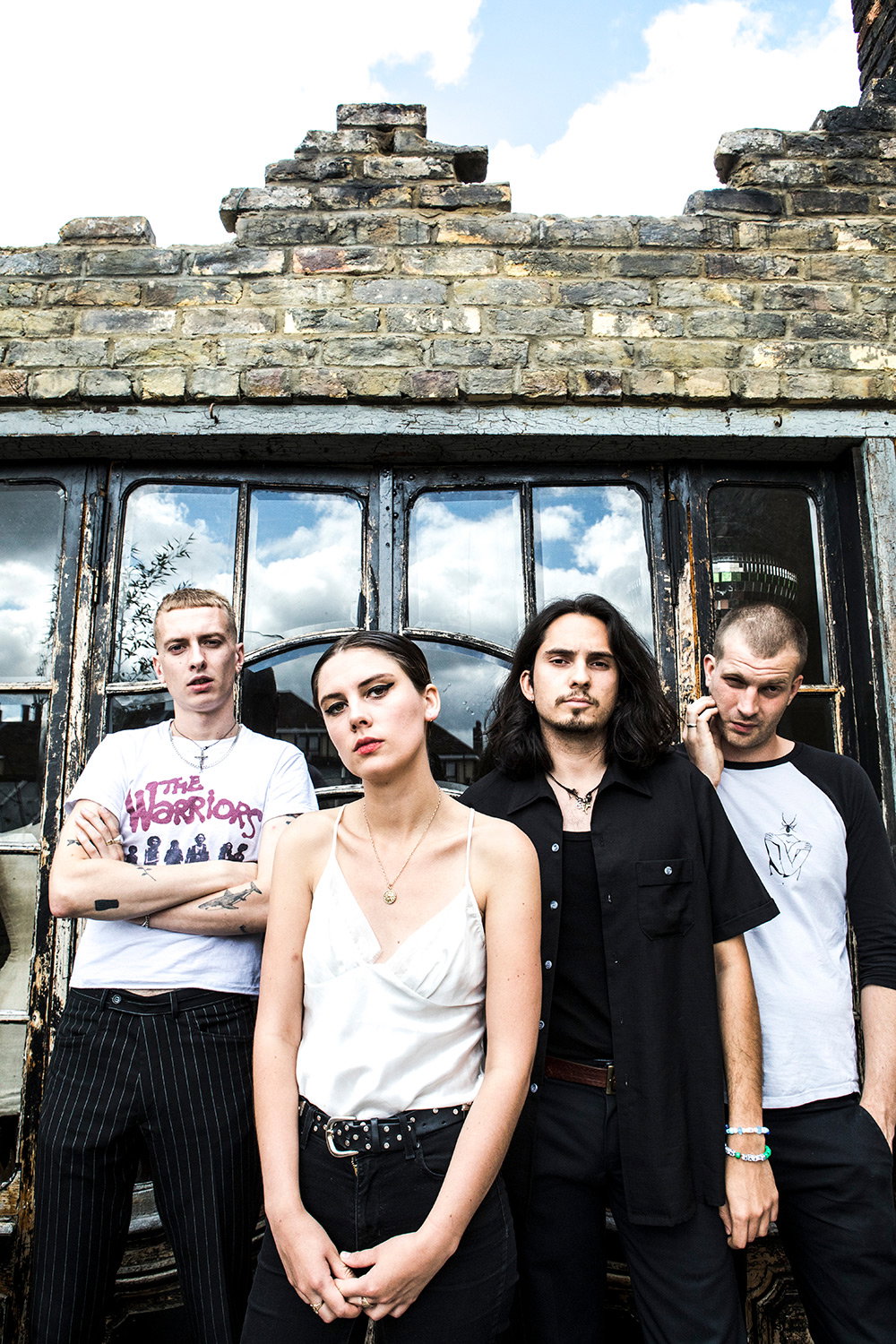
Space & Time’ surges with restless momentum, its propulsive guitars and urgent vocals capturing the uncertainty and exhilaration of youth on the edge of change. But it’s ‘Don’t Delete the Kisses’ that truly captured the public imagination: a shimmering, synth-laced anthem of longing and vulnerability. Rowsell’s spoken-word verses and dreamy chorus tapped into a generation’s anxieties about love and connection in the digital age, turning private confessions into a communal singalong.
The album’s title track, ‘Visions of a Life’, closes the record in epic fashion. Nearly eight minutes long and shifting through multiple moods, from heavy, Sabbath-esque riffs to jazzy breakdowns and back again, it’s a fearless, shape-shifting finale that sums up everything bold and unpredictable about Wolf Alice. Rather than providing closure, it leaves the listener suspended between chaos and catharsis, as if the band is defiantly refusing to be boxed in.
What makes ‘Visions of a Life’ so vital is its refusal to settle: it is loud and abrasive one moment, fragile and intimate the next. Tracks like ‘Planet Hunter’, ‘St. Purple & Green’, and ‘Beautifully Unconventional’ further showcase the band’s breadth, moving from atmospheric beauty to glam-pop swagger with ease. This spirit of adventure, emotional honesty, and creative bravery is what set Wolf Alice apart, cementing their place not just as leaders of the UK rock scene, but as one of the most inventive, fearless, and emotionally resonant bands of the decade.
Royal Blood would also release their second album, ‘How Did We Get So Dark?’, a more polished and mature record than their debut, yet one that still retained the raw power and ferocity that made them a standout rock act. ‘How Did We Get So Dark?’ doubled down on their signature formula: rumbling bass riffs, thunderous drums, and Mike Kerr’s bluesy vocals, but with a sharper sense of melody and even more swagger. The title track, ‘How Did We Get So Dark?’, immediately immerses listeners in the band’s distinctive mix of heaviness and groove. Singles like ‘Lights Out’ and ‘I Only Lie When I Love You’ are masterclasses in riff-driven rock, each boasting infectious choruses and relentless energy, tailor-made for festival stages and late-night drives alike.
‘She’s Creeping’ and ‘Hole in Your Heart’ show Royal Blood experimenting with funkier rhythms and more intricate arrangements, while ‘Sleep’ adds a touch of vulnerability to their otherwise hard-edged sound. Throughout, Ben Thatcher’s drumming remains a force of nature, propelling every track with precision and power. Lyrically, the album explores themes of temptation, regret, and emotional distance, with Kerr’s lyrics often delivered with a sly sense of irony.
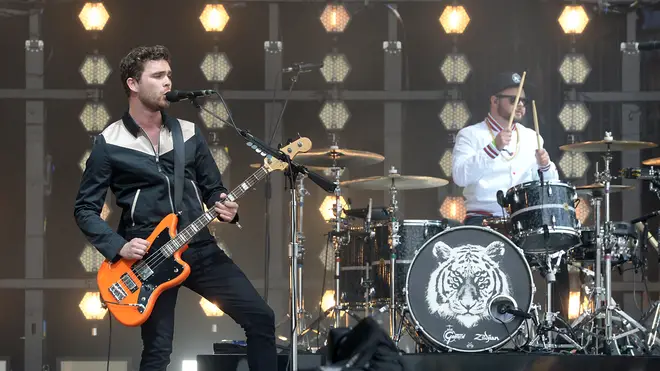
The album’s success saw the band make an almost unprecedented leap from sweaty club shows to headlining arena tours in just a few short years. Their sound was thunderous and stripped-down, driven by just bass and drums, and translated shockingly well to massive venues, where the sheer volume and energy of their live show captivated huge crowds. They landed a prime spot on the Pyramid Stage at Glastonbury and hit the road with rock royalty, supporting the Foo Fighters on stadium dates around the world.
Their rise felt refreshing and old-school at the same time: no gimmicks, no frills, just two musicians making an ungodly amount of noise. ‘How Did We Get So Dark?’ proved they weren’t just riding a wave; they were at the forefront of modern rock music. Royal Blood had quickly become one of the UK’s biggest bands.
Circa Waves also unveiled their second album, ‘Different Creatures’, a significantly darker and more introspective record than their debut. In my view, it is one of the most underappreciated albums of the decade. With ‘Different Creatures’, the band took a bold creative leap; gone were the breezy, festival-ready anthems of ‘Young Chasers’, replaced by fuzzier guitars, sharper riffs, and a newfound sense of urgency. The opener, ‘Wake Up’, sets the tone with thunderous drums and gritty distortion, immediately signalling this isn’t the same Circa Waves fans met two years prior.
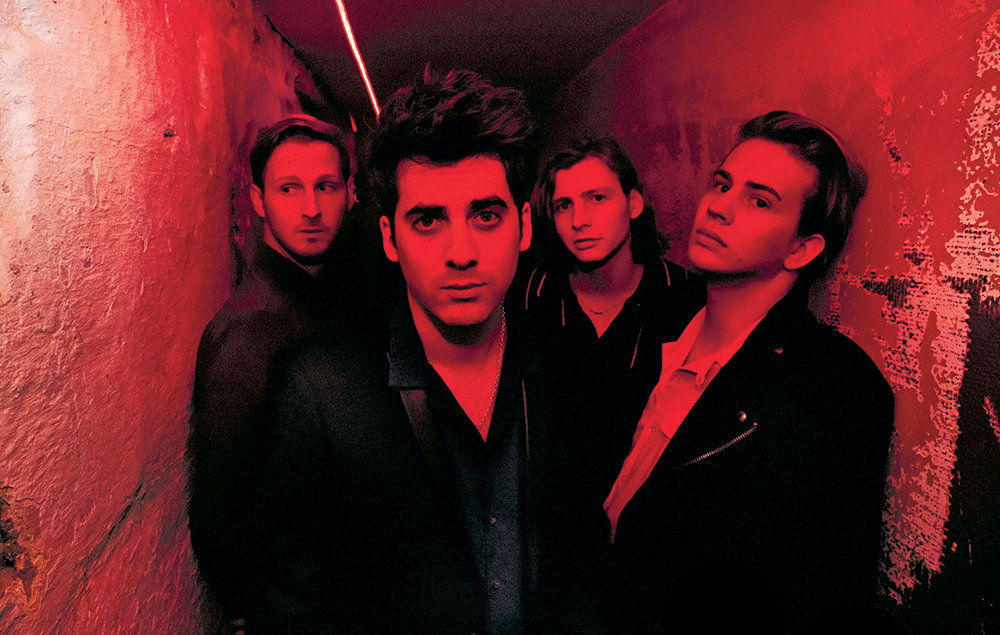
Throughout ‘Different Creatures’, Circa Waves carved out a sound that was heavier, moodier, and more ambitious than anything they had done before. The album pulses with a restless energy and a lyrical depth that explores themes of anxiety, change, and alienation. ‘Fire That Burns’ is a soaring, anthemic highlight, its huge chorus made for arenas, while the title track, ‘Different Creatures’, embodies the band’s willingness to confront their own evolution head-on. ‘Stuck’ and ‘Out On My Own’ add layers of introspection, wrestling with self-doubt and isolation, but never losing the melodic instinct that made the band so appealing in the first place.
As the album progresses, the emotional stakes get higher. ‘A Night on the Broken Tiles’ is raw and confessional, painting a vivid picture of late-night vulnerability, and the poignant ‘Old Friends’ tugs at the heartstrings with its reflection on growing apart. It closes the record in cathartic fashion, balancing emotional honesty with a widescreen, cinematic sound. The band’s willingness to draw influence from the likes of ‘AM’-era Arctic Monkeys and Queens of the Stone Age is evident in the album’s heft and swagger, but Circa Waves always make it their own.
This courageous progression showed that Circa Waves were unafraid to challenge expectations and grow, maturing into a band that could deliver both anthems and depth. ‘Different Creatures’ stands as a testament to their ambition and artistic growth, an album that rewards repeat listens and remains one of the most underrated records of its era.
In 2017, Kasabian released one of their career highlights with 'For Crying Out Loud.' This album, bursting with swagger and summer festival energy, saw the band refining their knack for writing infectious, stadium-sized anthems. Standout singles like 'You’re in Love with a Psycho,' 'Ill Ray (The King),' and 'Bless This Acid House' combined tongue-in-cheek humour with huge, singalong choruses, instantly earning their place as crowd favourites.
But 'For Crying Out Loud' is much more than its singles. Tracks like 'Twentyfourseven,' 'Comeback Kid,' and 'Are You Looking for Action?' showcase the band’s playful experimentation with funk, disco, and synths, layering their signature guitar riffs with driving grooves and dancefloor rhythms. The record is unashamedly bold, at times brash, but always delivered with a knowing wink and a sense of fun that’s uniquely Kasabian. Lyrically, the album finds Serge Pizzorno embracing a mix of surreal humour, optimism, and social commentary, often flipping between tongue-in-cheek bravado and genuine sentiment. Songs like 'Wasted' and 'Good Fight' add a touch of introspection to the otherwise euphoric tracklist, showing a more vulnerable side to the band.
The production throughout is polished, energetic, and designed for massive crowds, with big hooks and driving beats front and centre. 'For Crying Out Loud' became a staple of their live shows, with its tracks seamlessly slipping into setlists alongside older classics. It’s an album that captures Kasabian at their most confident and crowd-pleasing, still at the top of their game, and for many, their last truly great record.
Before this, the band would celebrate one of the best summers in their history by headlining the Summer Solstice concert at Leicester’s Victoria Park in June 2014. This massive homecoming show saw Kasabian perform to a crowd of over 35,000 fans, cementing their status as local heroes and one of the country’s premier live acts. The Summer Solstice gig was more than just a concert; it was a citywide celebration, blending euphoric festival energy with the pride of a band who never forgot their roots. The setlist was packed with fan favourites, and the atmosphere was electric from start to finish, with the event later immortalised in a live album and concert film.
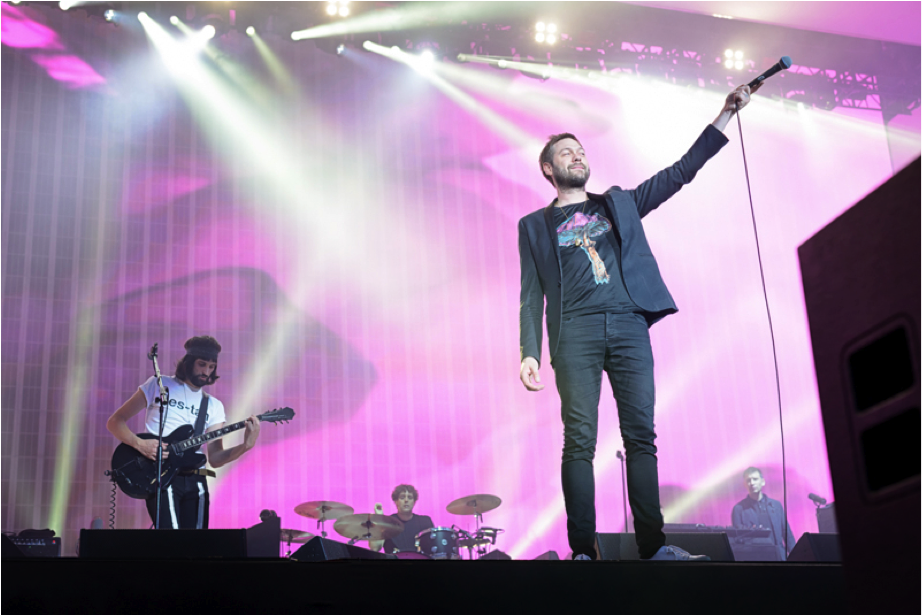
In 2016, they would celebrate one of the best summers by playing two sold-out nights at the King Power Stadium. They played at the King Power Stadium, home of their beloved Leicester City, to celebrate the Foxes' famous Premier League win. Kasabian were used to playing the big stages now, having headlined Glastonbury two years previously, following the success of the album '48:13'. This saw the band embrace a more chaotic, unpredictable, and totally committed approach to pushing their boundaries. Tracks like 'Eez-eh' divided fans with its tongue-in-cheek lyrics and electro-pop vibe, but others like 'Bumblebeee' and 'Stevie' still packed the kind of punch Kasabian were known for.
The King Power shows were a celebration not only of the band but also of the city of Leicester, a town where, in that year, the 'Underdog' won. This 'Underdog' victory refers to Leicester City Football Club's unexpected triumph in the Premier League, a feat achieved at odds of 5000-1. Kasabian, being from Leicester, wanted to celebrate this historic event, which was a testament to the city's spirit and resilience.
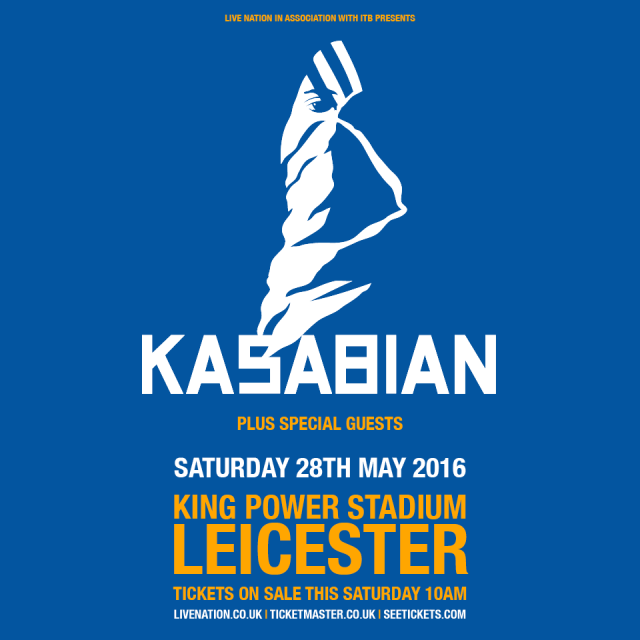
As well as performing a plethora of well-known anthems, there was also time for a couple of deep cuts to make it back into the setlist. ‘Doberman’ from 2006’s ‘Empire’ got a brief outing as an acoustic ballad, and towards the end of the set, ‘Stuntman’ was lapped up by the King Power faithful.
A look to the future with a then-new track, 'Put Your Life on It', getting its first run-out. Noel Fielding returned in his iconic role as 'Vlad the Impaler', a character known for his flamboyant and theatrical persona, adding a unique element to the show. Of course, no Kasabian celebration would be complete without a raucous rendition of 'L.S.F. (Lost Souls Forever)'. The song, a defining indie anthem of resilience, brought the crowd together in one of those euphoric, arms-aloft moments that have become synonymous with Kasabian’s live shows. Its lyrics, "we’ve come a long long way together/through the hard times and the good", summed up the feeling of the football club and the city.
'Fire’ was a fitting finale; the 2009 anthem was chosen by Leicester City manager Claudio Ranieri for his team to walk out to all season, and the band got to play it for real in the stadium of the Premier League Champions. That's what dreams are made of, the perfect ending to the Leicester City fairytale.
In 2017, The Killers unveiled ‘Wonderful Wonderful,’ a testament to their versatility. The album featured well-received tracks like ‘The Man’, a playful, funky anthem exuding self-aware bravado, and ‘Run for Cover’, an urgent, synth-driven rocker that quickly became a fan favourite for its propulsive energy and classic Killers hooks. Both songs were hailed as some of the year’s best indie tracks, showing the band’s knack for catchy, arena-ready singles.
However, it was 'Tyson vs Douglas' that truly stood out for me. This hidden gem in the band’s discography is inspired by the legendary 1990 boxing match where underdog Buster Douglas shocked the world by defeating the seemingly invincible Mike Tyson.
You might assume, given Brandon Flowers’ well-documented love of one-horse towns, dustland fairytales and American dreamers – that ‘Tyson vs Douglas’ would be written from the underdog’s perspective, punching up, but in fact it’s the opposite. The song uses the fight as a metaphor for vulnerability, defeat, and the fleeting nature of invincibility, both in the ring and in life. Brandon Flowers channels the awe and disbelief of witnessing a hero’s fall, crafting lyrics that are both personal and universal. The track’s gritty storytelling and raw emotion showcase a side of The Killers that is less polished but deeply compelling, blending narrative depth with atmospheric instrumentation.
In the five years since their last album, Flowers has had to deal with chronic writer’s block (see the meditative ‘Have All The Songs Been Written?’), the decision of two of his bandmates to, in effect, retire from touring, and his wife Tana’s ongoing struggles with PTSD.
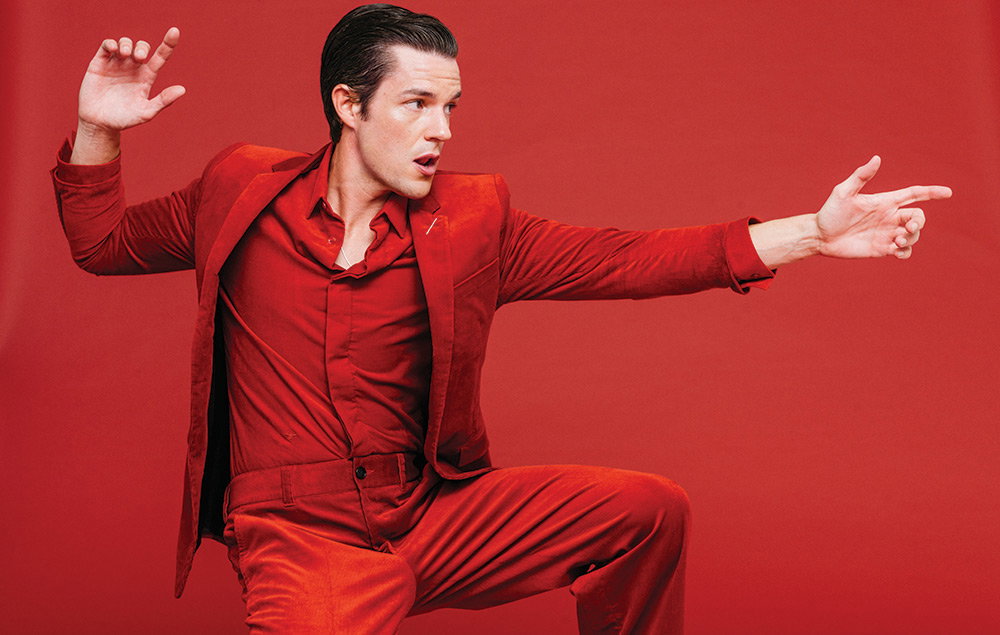
'Wonderful Wonderful' marked a triumphant return to form for The Killers. The album was a testament to their ability to evolve while staying true to their roots. It delivered anthemic tracks and a darker, more introspective tone that ran through parts of the record. This balance of bombast and intimacy allowed The Killers to reconnect with their core sound while venturing into new emotional territory. It was a reassuring reminder to fans of why The Killers remain one of the most compelling bands in modern rock.
Gerry Cinnamon would release his debut album ‘Erratic Cinematic’ in 2017, a raw and heartfelt collection of songs that captured the gritty essence of working-class life in Glasgow. The album earned him a small yet devoted following, with tracks like ‘Sometimes’ and ‘Belter’ quickly becoming anthems among his fans. ‘Erratic Cinematic’ was built on little more than Gerry’s voice, an acoustic guitar, and a harmonica, but what it lacked in polish it made up for in honesty and relatability. Songs like ‘Diamonds in the Mud’ and ‘Keysies’ painted vivid vignettes of Glasgow life, full of humour, nostalgia, and a bittersweet sense of hope. His DIY approach, self-releasing his music, playing grassroots venues, and building his reputation entirely on word of mouth, made him a champion for those who felt overlooked by the mainstream music industry. Initially, the album didn’t make a significant impact beyond his local scene, but things changed dramatically in 2018.
Cinnamon’s refusal to conform to industry expectations became a hallmark of his appeal. He played by his own rules, often shunning record label advances in favour of creative freedom and direct connection with his fans. His gigs quickly became legendary for their raucous, communal atmosphere, with crowds singing every word as if the songs were folk standards passed down through generations. He became the first unsigned artist to ever sell out a show at Glasgow's legendary Barrowlands, and then he did it again, three more times.
After a standout appearance at TRNSMT Festival, where Gerry played a 45-minute set to a massive crowd that the BBC later broadcast, he won over not only the audience but also many fellow musicians. His authentic storytelling and commanding stage presence marked him as a rising star.
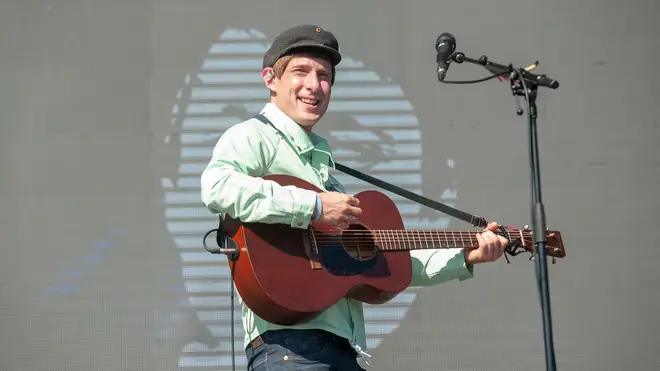
Soon after, Courteeners invited him to join their tour, further expanding his reach, while Liam Gallagher himself publicly praised Gerry’s music, helping to cement his growing reputation. Gerry Cinnamon had arrived as a voice for everyday people, delivering relatable, no-nonsense songs that resonated far beyond Glasgow. His lyrics, reflecting the experiences of the common man, were striking a chord with listeners worldwide. The world was starting to take notice, and it was clear this was just the beginning of his journey.
Speaking of Liam Gallagher. Three years after the disbandment of Beady Eye, he made a triumphant comeback with a solo album, ‘As You Were’. This album was not just a commercial success, but also an artistic triumph. It topped the charts, achieved Platinum status, and most importantly, it reminded the world why Liam Gallagher was and still is one of British music’s most compelling leads.
Unlike Beady Eye, which had struggled to find its unique sound, ‘As You Were’ struck a perfect balance between nostalgia and reinvention. Liam Gallagher, in collaboration with top-tier songwriters like Greg Kurstin and Andrew Wyatt, crafted a record that played to his strengths without sounding like a mere echo of the past. The result was a confident, swaggering collection of modern rock songs that still bore Liam Gallagher's unmistakable mark.
The album took a surprising turn, spanning a wide emotional and sonic range, from the stomping glam rock of ‘Greedy Soul’, a song powered by snarling riffs and Liam’s trademark sneer, to the aching, Lennon-esque ballad ‘For What It’s Worth’, which saw Liam at his most reflective and vulnerable. ‘For What It’s Worth’ quickly resonated as an anthem of apology and self-examination, with Liam’s vocal delivery evoking both regret and resilience. The lead single, ‘Wall of Glass’, exploded with attitude and immediacy, built on a swaggering blues-rock riff and a chorus tailor-made for festival fields. It instantly earned its place in Liam’s live setlists, becoming his first true solo anthem and a declaration that he was back at his best.
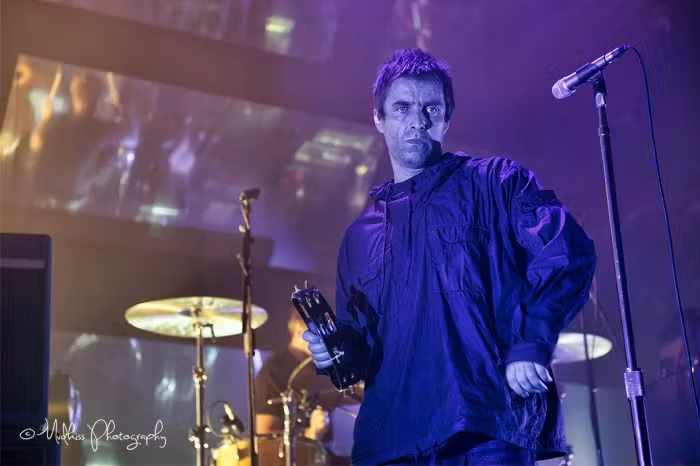
Elsewhere, tracks like ‘I’ve All I Need’ delivered uplifting melodies and a sense of gratitude, offering a rare glimpse of warmth and optimism from the famously brash frontman. ‘Universal Gleam’ shimmered with a psychedelic glow, pairing dreamy textures with lyrics about hope and rebirth, while the driving ‘Greedy Soul’ and the gritty stomp of ‘Bold’ kept the album’s energy surging. Songs like ‘Chinatown’ showed a softer, more introspective side, hinting at the depth and versatility beneath the bravado, while ‘Paper Crown’ revealed vulnerability beneath the swagger. The album’s sequencing balanced the punchy rockers with introspective moments, showcasing a fully rounded Liam Gallagher, one who embraces his past yet firmly writes his own chapter.
‘As You Were’ wasn’t just a successful solo debut. It was a statement. Liam Gallagher didn’t just survive the post-Oasis wilderness; he roared back into relevance. The fans came back in droves, the arenas sold out, and critics, once sceptical, were forced to take notice. It was the start of a remarkable second act in a career that many had counted out. Liam would head back to arenas, a new generation of Oasis fans had embraced the younger Gallagher brother, and he would deliver and then some. His solo shows became huge affairs, packed to the hilt with Oasis songs performed by the band's voice. With 'As You Were', though, he was just getting started.
Noel Gallagher also released an album in 2017: ‘Who Built the Moon?’, a bold, technicolour reinvention that marked the most radical departure of his career to date. This album was not just a change; it was a seismic shift. Gone was the image of the stoic songwriter hunched over an acoustic guitar; in his place stood a reinvented artist, embracing psychedelic flourishes, electronic textures, and vibrant, left-field production choices.
Produced by David Holmes, ‘Who Built the Moon?’ took listeners on a whirlwind journey through glam, psych-pop, krautrock, and dance. It was a sonic risk, brash, surreal, and at times bewildering, which earned it a divisive reception. Some fans were thrilled by the transformation; others, steeped in Oasis nostalgia, weren’t quite sure what to make of it. But whether loved or loathed, it was impossible to ignore, sparking heated debate.
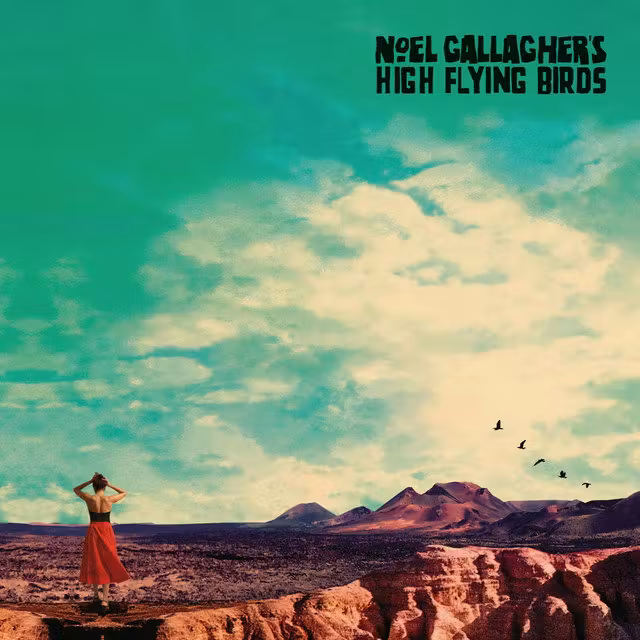
For all the experimentation, the album still delivered moments of pop brilliance. The title track, ‘Who Built the Moon?’, stands out as a psychedelic, kaleidoscopic journey; its hypnotic grooves and swirling, layered effects encapsulate the album’s adventurous spirit and sense of cosmic curiosity. The track feels like a fever dream, with Noel pushing his songwriting into new psychedelic territory, drawing on everything from Pink Floyd to Tame Impala, and even a touch of 60s French pop. It’s a bold centrepiece that signals just how far Noel was willing to go in reinventing his sound.
‘It’s a Beautiful World’ adds another layer to the record’s palette, shimmering with synths and built on a motorik, almost krautrock rhythm. The French spoken-word interlude, delivered by Charlotte Marionneau, injects an otherworldly, continental flair, while the melody itself is full of subtle hope and defiance in the face of uncertainty. It’s a song that manages to sound both futuristic and nostalgic, capturing a rare feeling of optimism amid chaos- Noel’s message, perhaps, that even in a fractured world, beauty can still break through.
Holy Mountain’ is a euphoric, horn-driven romp that channels glam-era Bowie and T. Rex, filtered through The Rubettes' pure, joyous nonsense in the best way possible. Its infectious chorus, stomping beat, and over-the-top brass arrangement make it an instant crowd-pleaser, a song that doesn’t take itself too seriously, inviting everyone along for the ride. It’s Noel at his most playful, unafraid to embrace pop excess and let the hooks do the heavy lifting.
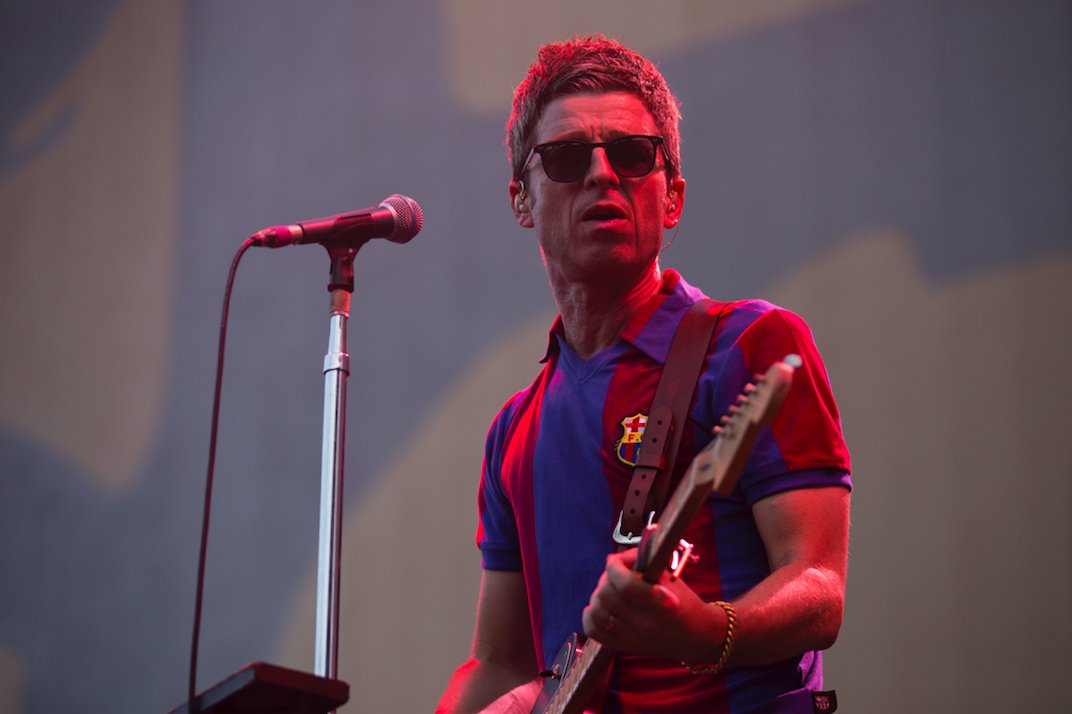
Elsewhere, ‘She Taught Me How to Fly’ shimmers with an irresistible post-punk groove, like Blondie jamming with New Order. The track’s soaring chorus and shimmering guitar lines give it a sense of weightlessness, while Noel’s vocals are at their most dreamy and melodic. ‘Keep On Reaching’ and ‘If Love Is the Law’ add further depth, with soulful backing vocals, cinematic sweep, and a sense of grandeur and hope that runs throughout the album. These songs, each in their own way, show Noel’s willingness to blend genres, experiment with textures, and embrace new sonic territories without losing sight of what makes his songwriting so enduring: hooks, heart, and a dash of swagger.
The record was Noel throwing caution to the wind, proving he wasn’t interested in resting on the laurels of his past. While ‘Chasing Yesterday’ had been a logical step forward, ‘Who Built the Moon?’ was a leap into the unknown. And although it confused some longtime fans, it showed that Noel still had creative fire and the guts to challenge expectations. In hindsight, it may well stand as one of the most daring and underappreciated chapters in his post-Oasis career.
Following the release of ‘Who Built the Moon?’, Noel Gallagher continued his adventurous streak with a trio of bold and eclectic EPs: ‘Black Star Dancing’, ‘This Is the Place’, and ‘Blue Moon Rising’. These records saw Noel diving headfirst into experimental territory, fully embracing disco grooves, synth-led arrangements, and cosmic textures that stood in stark contrast to the Britpop sound he once helped define. Tracks like ‘Black Star Dancing’ fused Bowie-esque funk with dancefloor swagger, while ‘This Is the Place’ felt like a love letter to Manchester’s iconic club culture full of baggy beats, swirling effects, and post-rave psychedelia. ‘Blue Moon Rising’ offered perhaps the sleekest, most nocturnal cut of them all, moody, pulsing, and perfectly suited for late-night escapism.
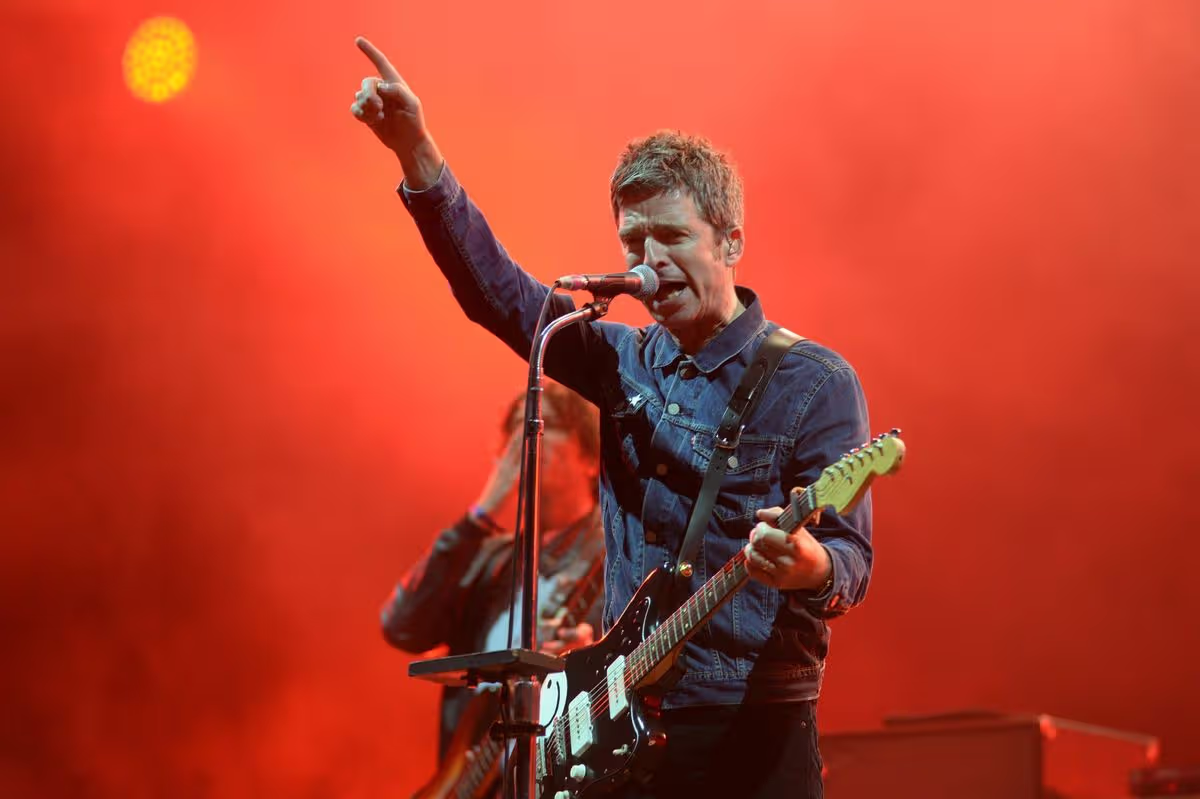
These EPs felt like Noel stretching his creative legs with real freedom and confidence, untethered from the expectations of full album cycles or the weight of legacy. Across ‘Black Star Dancing’, ‘This Is the Place’, and ‘Blue Moon Rising’, he delved into a dazzling array of influences, from disco and glam to synth-pop and Madchester grooves, proving he was unafraid to move beyond the confines of classic Britpop.
Yet amid the experimentation, there were moments of deep reflection. Tracks like ‘Sail On’ and ‘A Dream Is All I Need to Get By’ offered stripped-back beauty that echoed the melodic, melancholic charm of his earlier songwriting, showing that Noel could still tug at the heartstrings when the mood called for it. The ballads stood in contrast to the EPs’ more flamboyant moments, adding emotional weight and a sense of continuity with his past.
And then there was ‘Come On Outside’, a long-lost Oasis track finally given its due. With its soaring chorus and lyrical bite, it served as a nostalgic but potent reminder of what made Noel a songwriting force in the first place. The song’s release was a gift to longtime fans, bridging the gap between his roots and where he was at the time.
In May 2017, the musical world and Britain were shaken to its core. On the 22nd May 2017, a suicide bomber walked into the foyer of the Manchester Arena at the end of an Ariana Grande concert and detonated a device. The attack claimed the lives of 22 innocent people, many of them children and teenagers, and left hundreds more injured, physically and emotionally. It was the deadliest terror attack in Britain in over a decade, and its impact reverberated far beyond Manchester, touching the hearts of people across the country and the world.
The attack was not just a senseless act of violence, but a direct assault on the very spirit of youth, joy, and communal celebration. Concerts, especially those like Ariana Grande’s, are spaces where young people gather to experience freedom, happiness, and belonging, a sanctuary from the outside world. The brutality of targeting such an event sent shockwaves through communities everywhere, shattering the sense of safety that so many associated with music and live events.
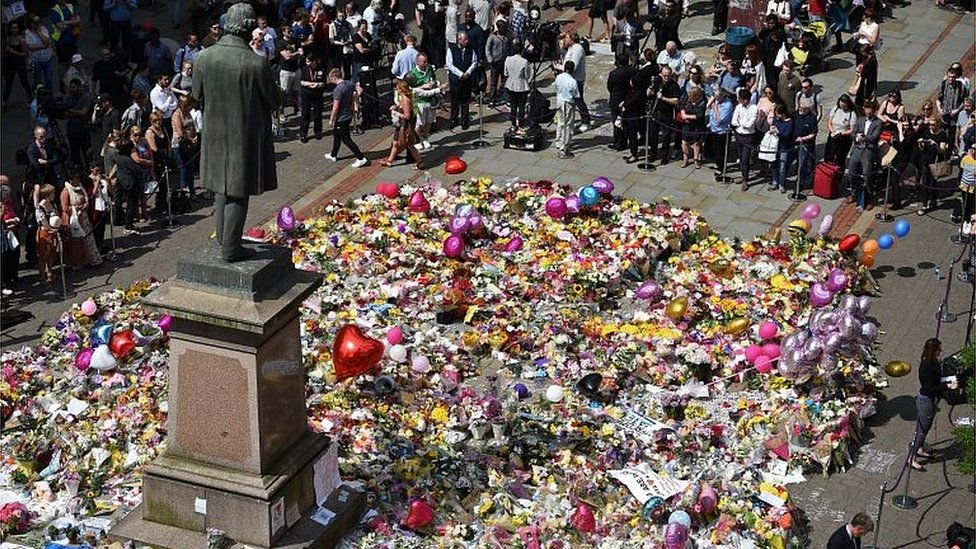
In the days that followed, the grief and sorrow were overwhelming, but so too was the outpouring of solidarity and love. People from all walks of life, families, friends, neighbours, and strangers, came together to mourn, to remember, and to support one another. Politicians, religious leaders, and members of the royal family visited Manchester to express their condolences and stand with the city in its darkest hour. But perhaps most powerfully, it was music that became the rallying point for collective healing. The city of Manchester, along with the rest of the world, rallied together around one thing: music. Vigils and gatherings were filled with songs, both sombre and uplifting, as people found comfort and resilience through singing together. In the face of unspeakable tragedy, music once again proved its power to unite, console, and inspire hope.
Watch this powerful moment here- mourners gathered in Manchester, singing 'Don’t Look Back in Anger' by Oasis, a song that became a symbol of hope, love, and defiance.
In the days that followed the attack, the One Love Manchester concert was organised, a significant event that saw Ariana Grande unite artists at Old Trafford Cricket Ground in Manchester on June 4, 2017. With the help of Simon Moran, Melvin Benn and Scooter Braun, Ariana managed to get an all-star bill which included Justin Bieber, the Black Eyed Peas, Coldplay, Miley Cyrus, Mac Miller, Marcus Mumford, Niall Horan, Little Mix, Katy Perry, Take That, Imogen Heap, Victoria Monét, Pharrell Williams, Robbie Williams and Liam Gallagher. This event was a powerful symbol of resilience and unity in the face of tragedy.
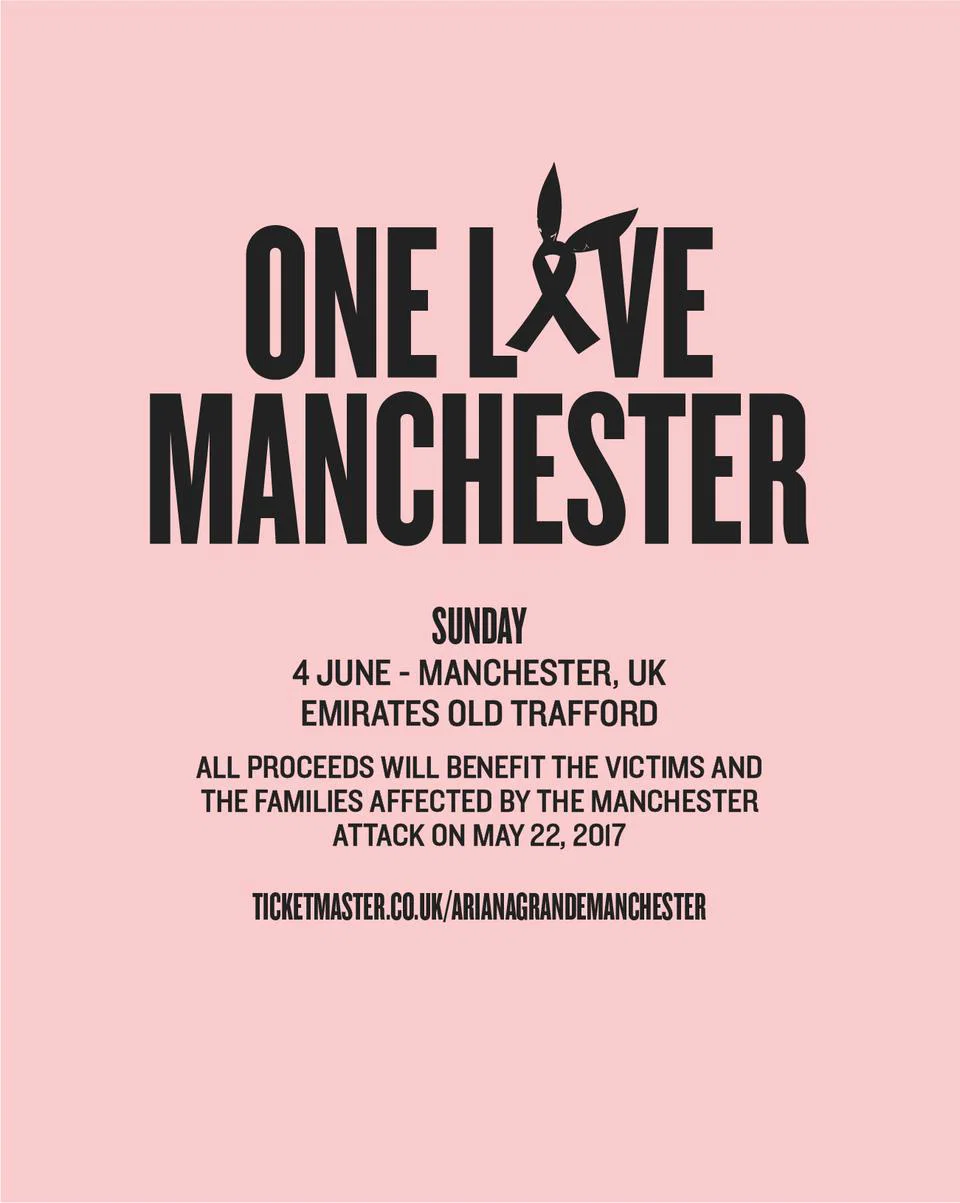
The concert was not only a star-studded musical event, but also an extraordinary display of compassion and collective healing. Each artist brought their own message of hope, courage, and solidarity. Ariana Grande’s emotional return to the stage, just days after the attack, was met with overwhelming support, and her heartfelt performances of songs like 'One Last Time' and 'Somewhere Over the Rainbow' became anthems of comfort for a grieving city. Liam Gallagher’s appearance was especially poignant, bridging Manchester’s iconic musical past with the present moment of collective mourning and strength. Throughout the show, messages of love, peace, and defiance echoed from the stage, reminding everyone that music could be a force for togetherness and healing, even in the darkest of times.
The event was also remarkable for the way it brought together people of all backgrounds: concertgoers, families of victims, survivors, emergency workers, and fans around the world. Security was tight, but the mood inside Old Trafford was one of unity, not fear. The concert became a safe space for those affected to gather, share tears, find comfort, and, crucially, reclaim joy and hope through music.
During the concert, the British Red Cross received a staggering £2.35 million in donations for the We Love Manchester Emergency Fund. By the next day, the British Red Cross announced it had received more than £10 million since the attack. These funds have already made a significant difference in the lives of those affected. Grande also donated all proceeds to the fund from a re-release of her single 'One Last Time' and a live audio version of 'Somewhere Over the Rainbow' that she performed during the concert.
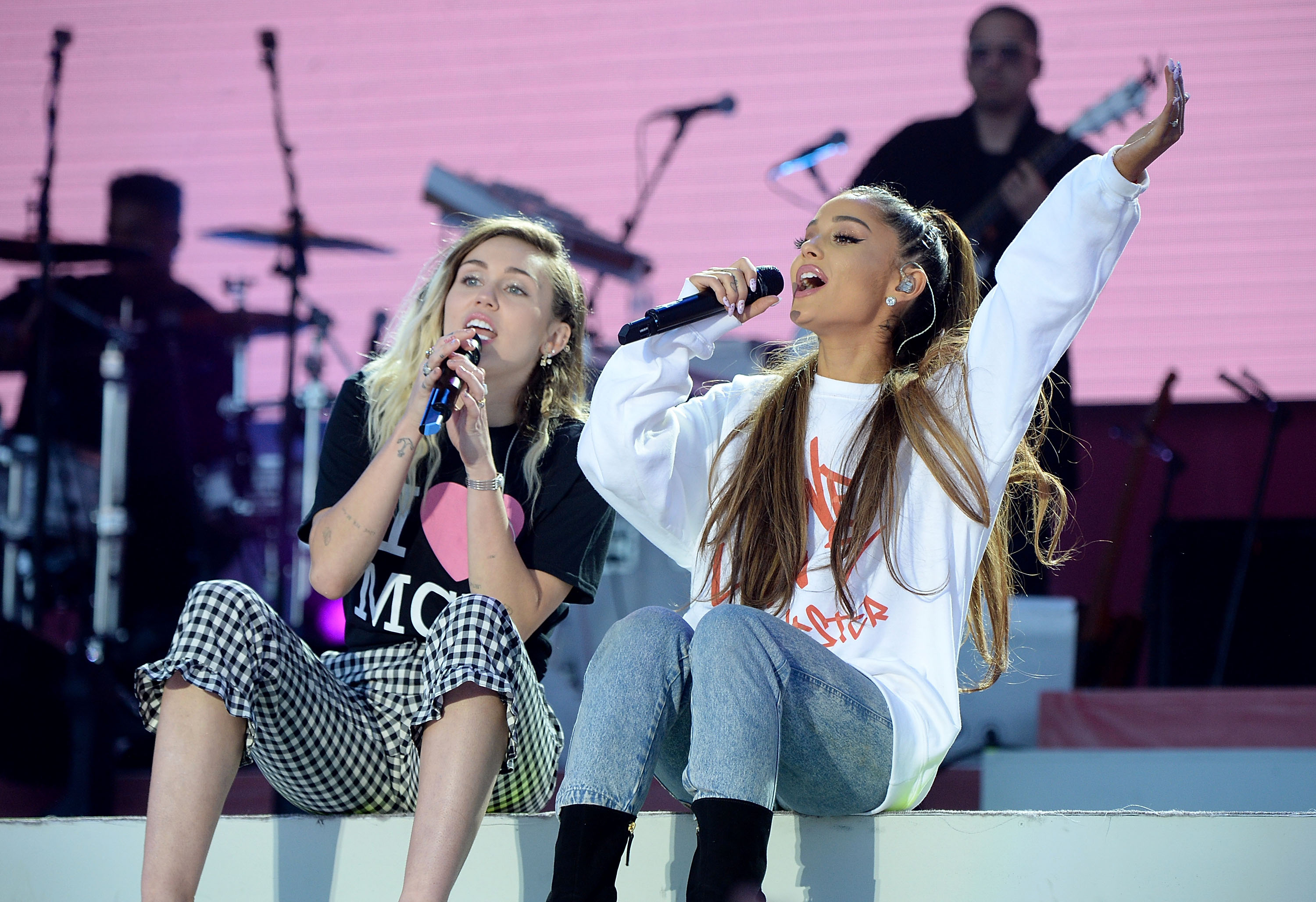
The concert, a global event, was attended by 55,000 people and broadcast on TV and Radio stations across the UK, including on the BBC. It was also broadcast in 38 countries worldwide, showcasing the widespread support and solidarity for Manchester. The images of the night- crowds singing together, artists embracing, and messages of hope beamed across the world- became lasting symbols of Manchester’s spirit and the power of music to unite people, even in the wake of tragedy.
The We Are Manchester concert featured an all-star Manchester bill and marked a new beginning for the arena. The emotional night began with Greater Manchester Mayor Andy Burnham reading the names of the 22 victims, a moment of profound reflection and solidarity. He was followed by poet Tony Walsh, known as Longfella, who delivered his moving piece ‘This Is The Place’, a poem that had become a rallying cry for the city in the weeks after the attack. Instead of a traditional minute’s silence, Walsh led the crowd in a powerful ‘one minute noise’, filling the arena with applause and cheers to honour the victims and demonstrate Manchester’s defiant spirit.
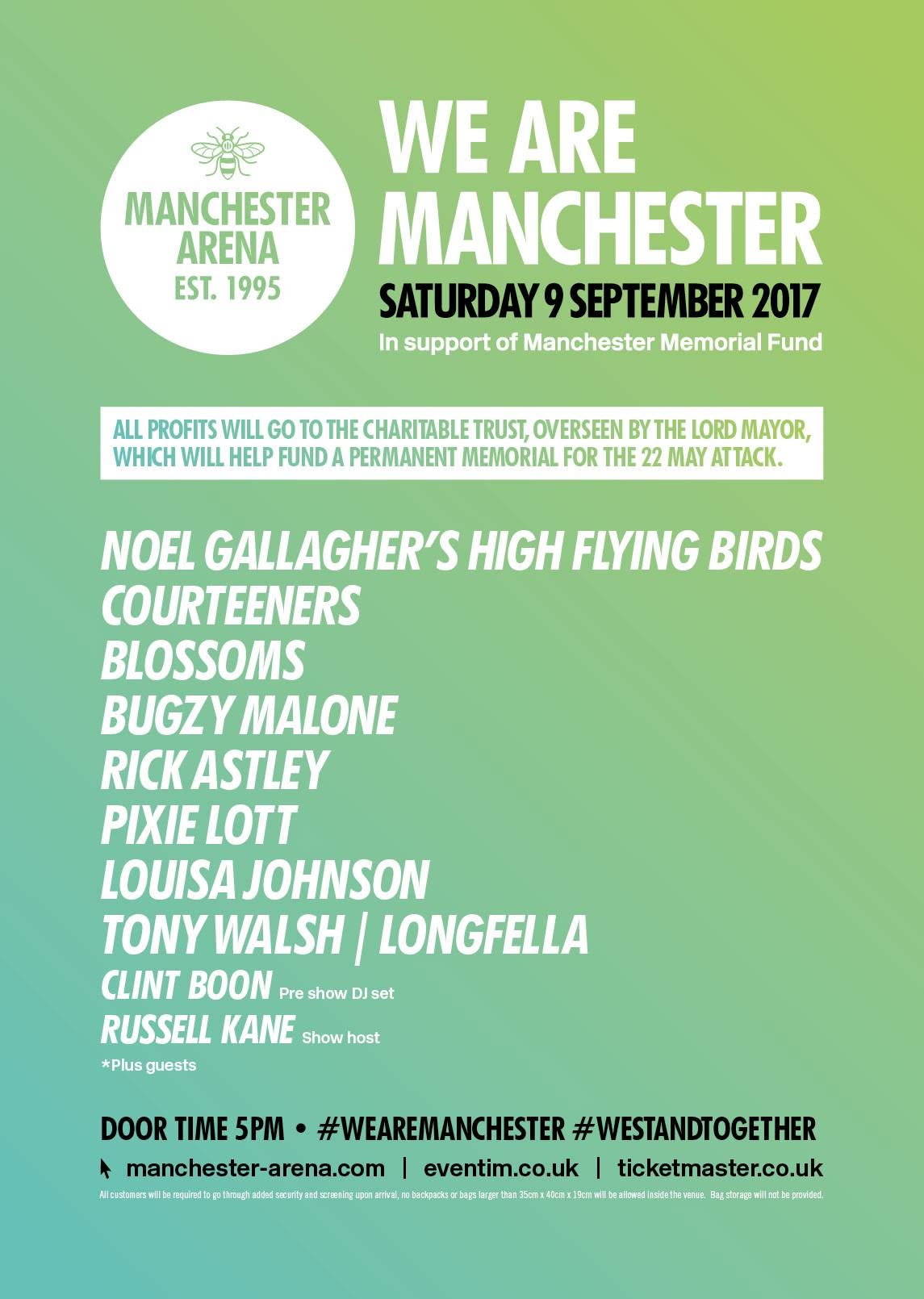
The Stockport-native band Blossoms opened with ‘At Most A Kiss’, setting an uplifting tone before being joined by James Skelly of The Coral for a special performance of ‘Dreaming of You’. Manchester favourites The Courteeners were met with rapturous applause, and frontman Liam Fray called Manchester “the centre of the universe,” before launching into a set that included the beloved anthem ‘The Opener’, their love letter to the city. ‘Not Nineteen Forever’ drew one of the loudest reactions of the night, cementing its status as a generational hymn, while the band paid tribute to fellow Mancunians James by weaving a snippet of ‘Tomorrow’ into ‘What Took You So Long?’
A last-minute addition to the lineup, comedian Peter Kay, spoke movingly about his close relationship with the venue from his days working as a steward in the ‘90s, telling the crowd, “We must not let the terrorists win.”
Finally, Noel Gallagher’s High Flying Birds took to the stage, introduced by Kay as “Mr Manchester himself, all the way from London.” Noel delivered a rousing set blending his solo material with cherished Oasis classics, culminating in an emotional rendition of ‘Don’t Look Back In Anger’, a song that had become an anthem of hope and defiance in the aftermath of the attack. As the crowd sang together, Noel remarked, “If anyone here ever doubted that Manchester is the greatest city in England… there was a minute’s silence and one girl broke the silence and started to sing, and it’s amazing how everyone rallied around that song that I’m about to sing.”
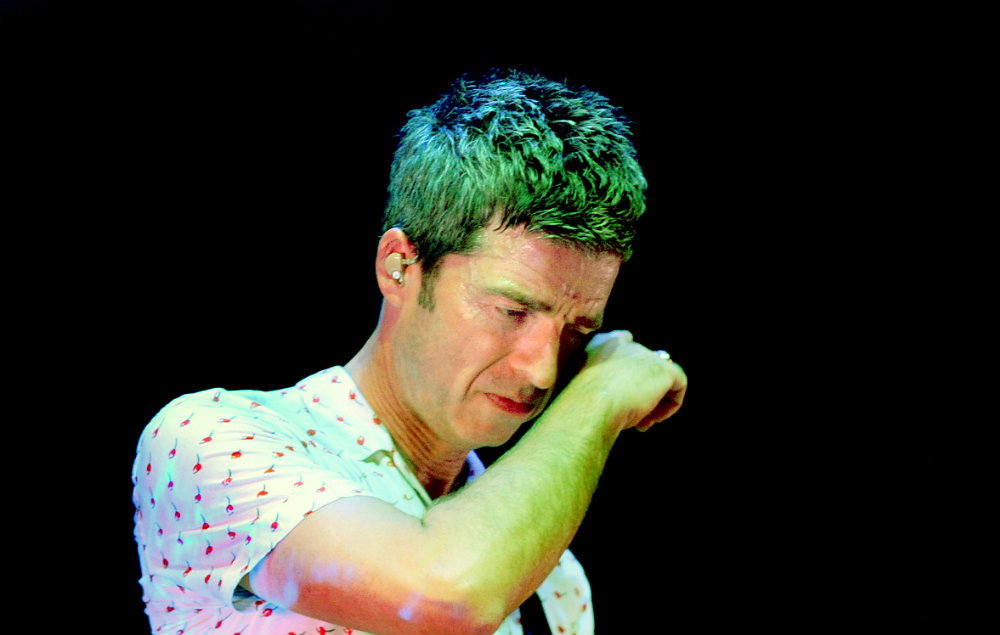
I was at this gig, and it was far more than a concert; it was Manchester, and its people partake in a communal act of remembrance, resistance, and renewal. With every performance and every voice raised in song, the We Are Manchester event proved that music, community, and love can overcome even the darkest of tragedies. It was a moment that reaffirmed Manchester’s identity as a city defined by resilience, unity, and the unbreakable power of live music.
In times of profound grief and loss, it was music that gave people strength. It provided a space for defiance against the hatred that caused the pain. Music, in its purest form, was and always will be a profound source of healing, offering comfort and soothing the soul. It showed the world just how vital music is in moments of crisis, and it will forever remain a beacon of light in the darkest of times.
2018 was quite the year for guitar music. It saw a debut album from Tom Grennan and The 1975 released what many critics called this generation's ‘OK Computer’, according to NME. Arctic Monkeys, on the other hand, would release an album that divided their fan base in half.
Blossoms released the brilliant 'Cool Like You', proving they were far more than a fleeting success; they were a band built to last. This album marked a significant shift in their sound, embracing shimmering synths and heavy 80s influences while still holding on to their gift for crafting effortlessly catchy indie pop. Every track could've been a single, with standouts like 'I Can't Stand It', 'There's a Reason Why (I Never Returned Your Calls)', and 'How Long Will This Last' leading the charge. Even deeper cuts like 'Lying Again' and 'Stranger Still' showcased just how confident and consistent the band had become in their songwriting.
The album kicks off with 'There's a Reason Why (I Never Returned Your Calls)', a bright, punchy opener driven by infectious synths and a soaring chorus. It's danceable, melodramatic, and tailor-made for the live stage. The kind of song that practically demands to be screamed back in a packed venue. From the first note, it made one thing clear: Blossoms weren't afraid to go full pop, and that boldness defines the record.
'I Can't Stand It' sits at the emotional core of the album. Written in the aftermath of heartbreak, it blends vulnerability with grandeur, a song steeped in sadness but dressed in a vast, irresistible hook. Frontman Tom Ogden has a rare talent for turning pain into something cinematic, and this track is a perfect example of heartbreak turned into art.
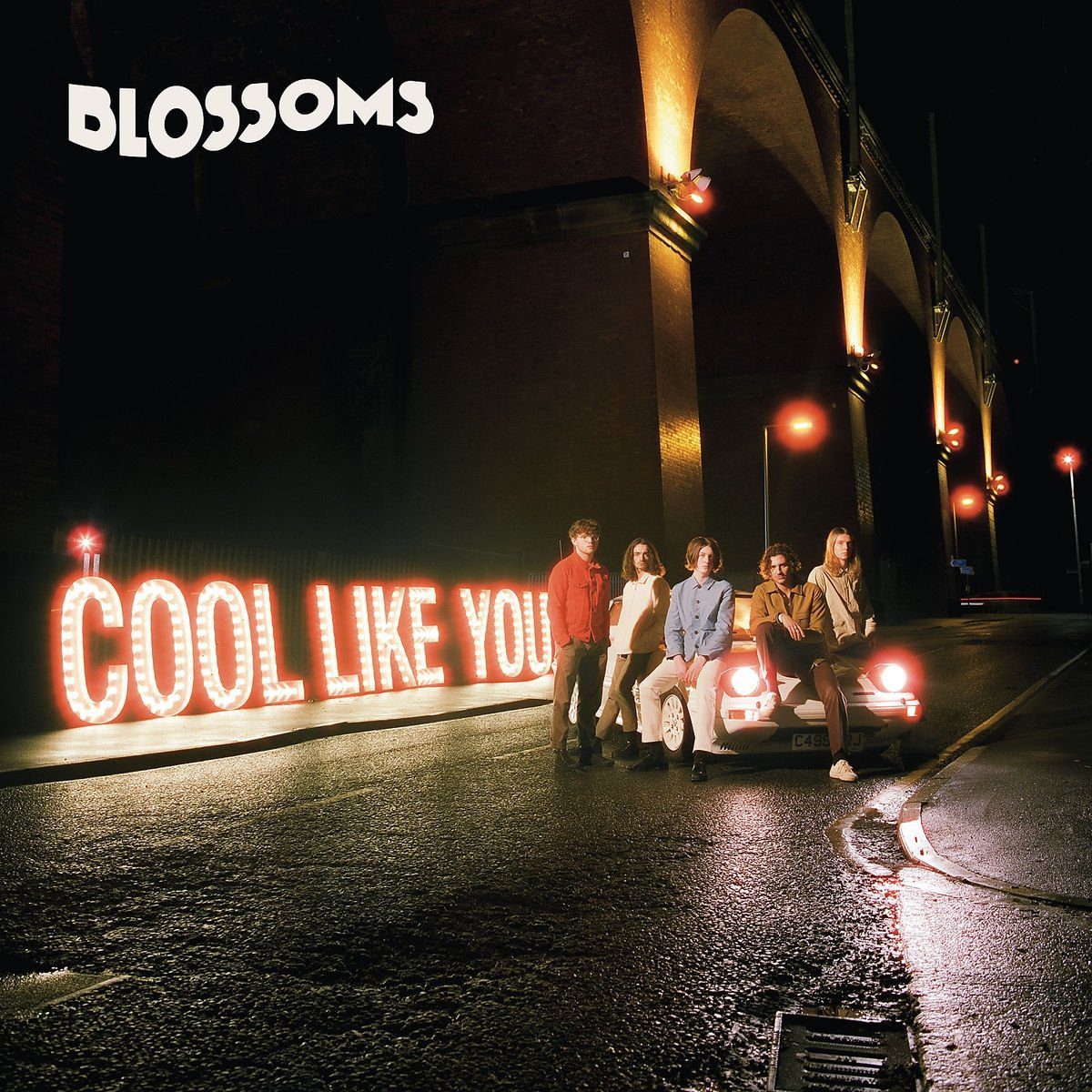
Some critics saw the album's polish and pop sensibility as a departure, but that misses the point entirely. 'Cool Like You' wasn't a compromise; it was a celebration of melody, synths, and perfectly structured pop songs. This was Blossoms' evolution, not abandonment of their roots.
Though often overlooked in their catalogue, 'Cool Like You' proved to be a significant turning point for Blossoms. It gave them the momentum to play on bigger stages, sell out headline tours, and even command crowds at football stadiums.
In June 2019, Blossoms played a massive, sold-out show at Stockport's Edgeley Park to celebrate the album, a true homecoming for the band. Describing the show as our era-defining moment of the early years. We're going into the third record, so this is signing off the first two albums with a huge party in your back garden."
The night was bursting with colour and energy, as the band stepped out on stage in eye-catching, multi-coloured suits that perfectly matched the vibrant, synth-heavy sound of 'Cool Like You'. It was a bold, fun fashion choice that set the tone for the evening and reflected the band's playful yet polished new identity.
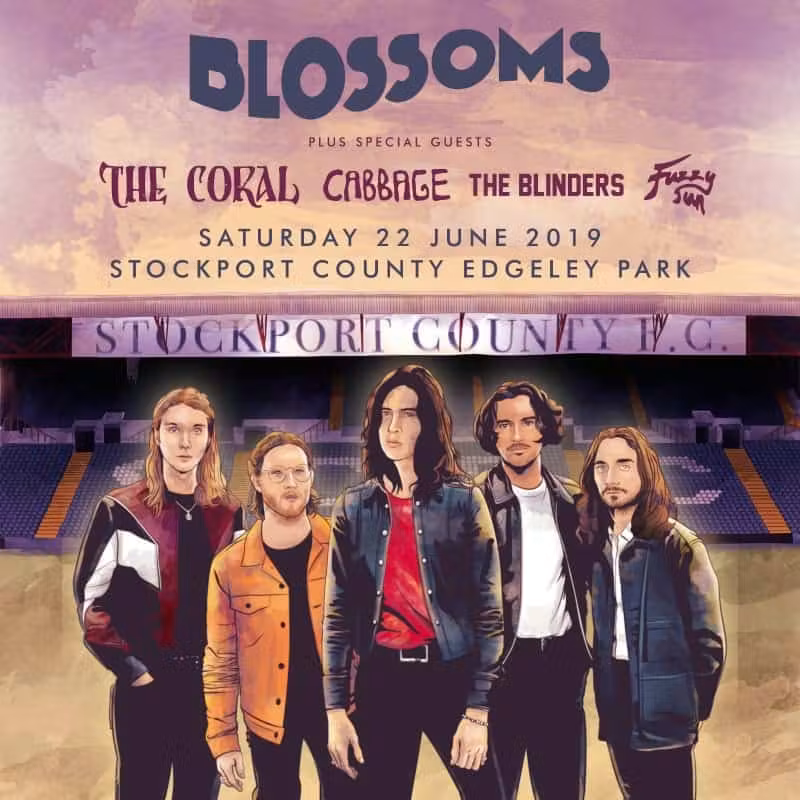
The gig also featured support from some excellent local acts, adding to the sense of community and making it feel like a real celebration of the North's music scene. The crowd was buzzing with anticipation as fans, many of whom had followed Blossoms from their earliest days, packed the stadium to witness this landmark moment. The homecoming vibe was unmistakable: a band returning to their roots on their own terms, now fully confident and commanding.
Blossoms’ set that night was a captivating blend of catchy indie-pop and heartfelt emotion. They opened with a powerful rendition of ‘At Most a Kiss’, immediately setting an upbeat, infectious tone that captivated the crowd from the first note. As they transitioned into fan favourites like ‘I Can’t Stand It’ and ‘Cool Like You’, the emotional connection only deepened, with everyone singing along to the shimmering synths and irresistible hooks.
Midway through the set, they slowed things down beautifully with tracks like ‘Honey Sweet’ and ‘Stranger Still’, showcasing their ability to craft introspective and poignant moments amid the anthems. The nods to their influences came with covers like ‘Between the Eyes’ fused with New Order’s ‘Blue Monday’ and the tender Oasis tribute in ‘You’re Gorgeous’, combined with ‘Half the World Away’ moments that felt like a heartfelt conversation between the band and their fans. The biggest surprise of the night was a debut David Bowie cover, 'Let's Dance', a one-off that’s never resurfaced in their setlists since.
As the night built to a crescendo, songs like ‘There’s a Reason Why (I Never Returned Your Calls)’ and the triumphant closer ‘Charlemagne’ had the crowd fully immersed, singing back every word with unbridled passion. The setlist was a perfect balance of new material and beloved tracks, reflecting Blossoms’ growth while keeping the connection with their audience firmly intact.
While we’re on the subject of big gigs, it’s worth mentioning Courteeners at Heaton Park, which also took place in 2019. The band had been flying under the radar for years, but their fan base adored them. In their hometown of Manchester, they were regarded as one of the city’s great bands. The Heaton Park show was a landmark moment, with 50,000 tickets sold for the second time in two years. They had achieved the same feat two years earlier when they performed at Lancashire County Cricket Club, a venue usually reserved for the likes of Arctic Monkeys, Oasis, and Radiohead.
The scale of the Heaton Park gig was a testament to the enduring connection between the Courteeners and their fans, and to the band’s steady rise from indie outsiders to stadium-filling heroes. The anticipation for the show was immense, with local radio and social media buzzing for months in advance. The event itself felt like a homecoming and a coronation all at once: Manchester’s own gathering in a sea of bucket hats, flares, and unfiltered euphoria. The setlist reflected the band’s evolution, with new material sitting comfortably alongside indie classics, while the crowd provided a deafening, communal choir for every chorus. Support acts, including Manchester legends James and up-and-coming bands like DMA’s and Pale Waves, turned the night into a celebration of the region’s musical legacy and future.
Beyond the music, the atmosphere at Heaton Park captured the spirit of Manchester, resilient, communal, and fiercely proud of its own. The sense of unity was palpable, as generations of fans stood shoulder to shoulder to witness a band that had grown up alongside them. For the Courteeners, it was both a validation of their journey and a springboard to even greater heights, solidifying their place in the city’s ever-evolving musical mythology. The night also featured support from Manchester legends James, along with the rising stars DMA’s and Pale Waves, who perfectly warmed up the crowd and set the tone for what was to come. The energy was palpable from the very first act, building up to the Courteeners taking the stage.
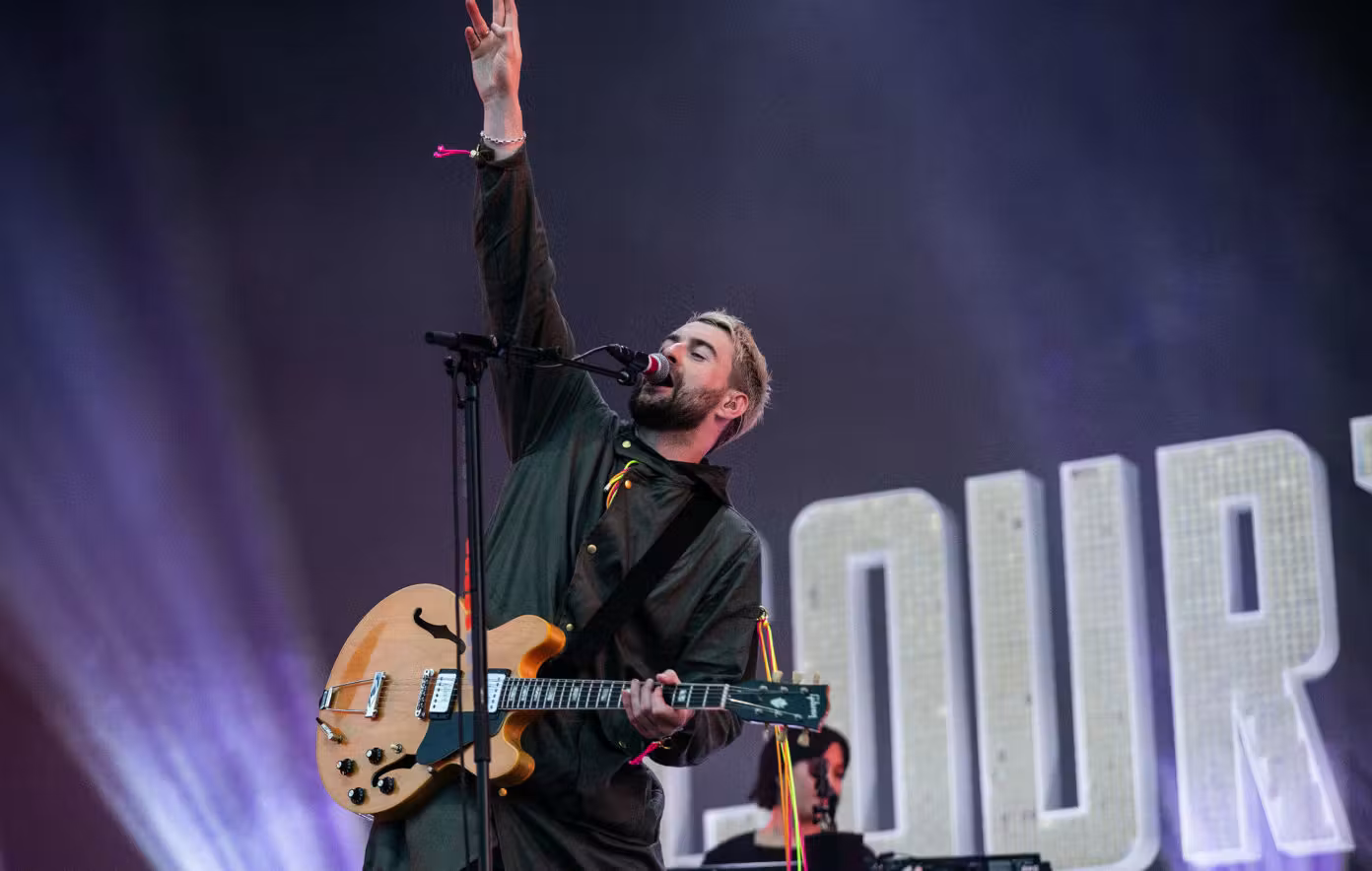
Courteeners' setlist at Heaton Park was a masterclass in both nostalgia and energy, perfectly balancing fan favourites with some deeper cuts. They opened with the anthemic ‘Are You in Love With a Notion?’ and followed up with ‘Acrylic’ and the emotional ‘No One Will Ever Replace Us’. Tracks like ‘Summer’ and ‘Take Over the World’ kept the momentum soaring, while ‘Better Man’ and ‘Bide Your Time’ showcased the band’s songwriting depth.
Midway through, songs like ‘Van der Graaff’, ‘Lose Control’, and ‘Small Bones’ fired up the crowd, building towards a powerful finish. The band closed with iconic tracks including ‘Here Come the Young Men’, where Liam’s heartfelt words resonated deeply, followed by the anthemic ‘Not Nineteen Forever’ and the singalong crowd-pleaser ‘What Took You So Long?’.
This setlist perfectly encapsulated the Courteeners’ journey, blending their biggest hits with newer material, giving fans a complete, unforgettable experience that celebrated their rise as one of Manchester’s defining bands.
This gig was proof of how far the Courteeners had come. They'd become one of the UK’s biggest bands, and they had done it on their own terms, without the need for mainstream hype. Their success was built on a loyal following and a strong connection with their fans, and Heaton Park was a celebration of that journey. It was an unforgettable moment for both the band and their devoted crowd.
Heaton Park was where Courteeners had a party. They'd played Old Trafford Cricket Ground in May 2017, in the wake of the Manchester Arena Attack. This was no ordinary gig; it was a statement of defiance, resilience, and hope. Taking place just five days after tragedy struck the city, the decision to go ahead with the sold-out 50,000-capacity show was fraught with emotion and significance.
The band were not just performing; they were leading a city in healing. Fans arrived draped in Manchester Bee emblems and St. Jude flags, united by the unspoken understanding that their presence was an act of solidarity. The lineup was a celebration of Manchester’s past, present, and future: The Charlatans brought decades of indie heritage; Cabbage delivered raw, post-punk energy; Blossoms, fresh from their debut, hinted at the city’s next generation of headliners. The support acts reflected Manchester’s musical conveyor belt, one that never stops creating.
The gig’s date itself was historic: May 27th, exactly 27 years after The Stone Roses’ Spike Island. Liam Fray paid tribute by weaving a snippet of ‘Standing Here’ into his acoustic set, acknowledging the band’s roots and the symbolic passing of the torch.
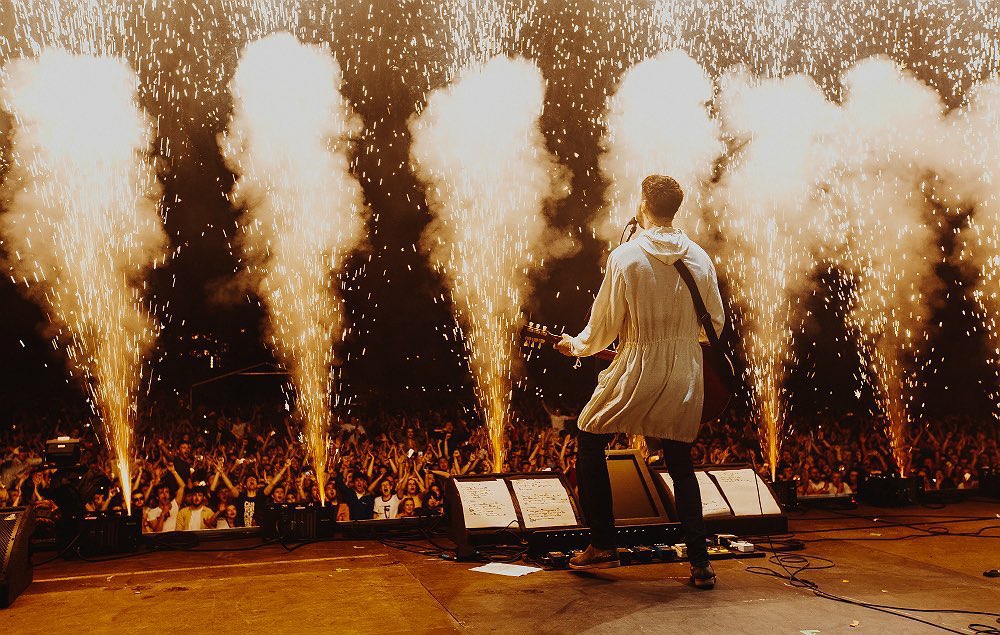
There was an unmistakable sense that the show was about more than music. It was a communal act of remembrance for the 22 lives lost, a chance to reclaim joy from tragedy, and a reminder that Manchester would never let fear dictate its identity. When the Courteeners played ‘Don’t Look Back in Anger’, 50,000 voices joined in a cathartic, emotional chorus, a modern-day hymn for a city determined to sing again. The Old Trafford gig became a watershed moment for both the band and Manchester’s cultural spirit, proving that music can unite, heal, and inspire even in the face of unimaginable loss.
The Vaccines released ‘Combat Sports’ in 2018, a much heavier album than their previous efforts and a real return to form. A short, snappy indie record with some killer singles, it saw the band reinvent themselves while keeping their energetic, catchy style intact. The standout track, ‘I Can’t Quit’, became a fan favourite and showed the band at their best, bold, confident, and unapologetically loud. Elsewhere, ‘Out On The Street’ brought a frantic, urgent energy, with its punchy guitars and anthemic chorus making it a perfect live staple. ‘Take It Easy’ added a melodic, almost wistful dimension to the record, its breezy hooks and laid-back groove providing a welcome change of pace. ‘
Your Love Is My Favourite Band’ stood out as one of the quirkiest moments, pairing clever wordplay with infectious pop sensibility, a tongue-in-cheek highlight that became a cult favourite among fans. Despite suffering from some internal issues that resulted in a lineup change (most notably the departure of drummer Pete Robertson), ‘Combat Sports’ emerged stronger for it. The album marked a turning point for the band and is easily some of their best work to date. A hidden gem of the year.
What made ‘Combat Sports’ land so well was the context of what came before. After the massive success of their debut, The Vaccines released ‘Come of Age’ in 2012, a darker, more mature album that reached No.1 in the UK and showcased their willingness to evolve beyond the fast-paced indie anthems they were known for. Then came ‘English Graffiti’ in 2015, an ambitious, stylistically experimental record that leaned into synths, production effects, and a more modern, Americanised sound. While ‘English Graffiti’ had its moments (‘Dream Lover’ and ‘Minimal Affection’ stood out), it divided fans and critics alike, leaving the band in a bit of an identity crisis.
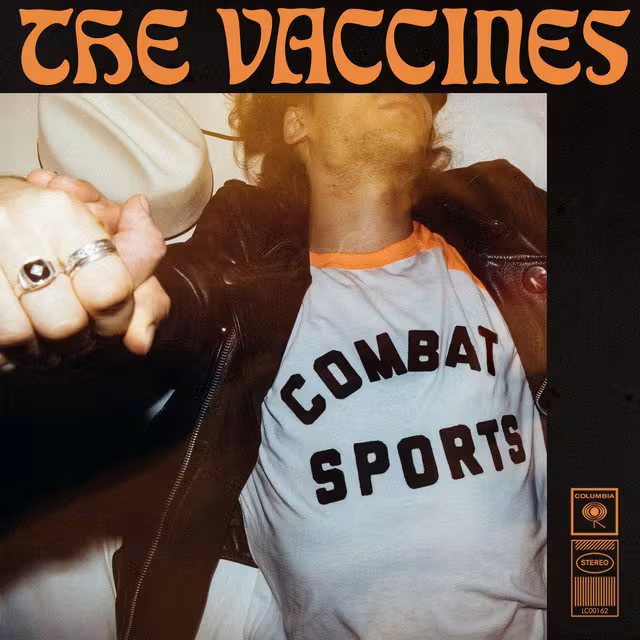
What made ‘Combat Sports’ so refreshing was the band's journey. It felt like The Vaccines had rediscovered who they were, taking the raw energy of their early days and combining it with the experience and grit they’d picked up over the years. The hooks were back, the guitars were front and centre, and there was a real edge to the songwriting that had perhaps dulled during their more polished phase. It wasn’t just a comeback; it was a band proving they still had something to say, and the fire to back it up.
Tom Grennan's 'Lightning Matches' is a testament to his versatility, and one of the standout British debut albums of 2018. The record is packed with anthemic, emotionally charged tracks that showcase Grennan’s raw vocals and honest songwriting. ‘Found What I’ve Been Looking For’ is a punchy, soulful anthem that became a breakout hit, driven by its infectious chorus and Grennan’s powerful delivery.
The title track, ‘Lightning Matches’, is a rousing call to arms with a soaring hook, while ‘Barbed Wire’ stands out for its gritty confessional lyrics and swaggering indie energy. ‘Royal Highness’ brings a playful, upbeat groove, and ‘Aboard’ offers a more stripped-back, introspective moment, revealing Grennan’s ability to shift seamlessly between bravado and vulnerability.
Beyond the critical acclaim, 'Lightning Matches' also connected deeply with fans through its relatable themes and genuine delivery. Grennan’s lyrics tackle heartbreak, hope, and resilience, striking a chord across a broad audience and cementing his reputation as a relatable, down-to-earth artist. The album’s blend of indie, soul, and pop sensibility gave it cross-genre appeal, making Grennan a fixture on both mainstream and alternative radio. With tracks like ‘Barbed Wire’, ‘Royal Highness’, ‘Aboard’, and the title track, he demonstrated an ability to craft both festival-ready anthems and more reflective, heartfelt moments.
DMA’s released their second album, ‘For Now’, in 2018, cementing their reputation as modern torchbearers of Britpop and indie rock. The album bursts out of the gate with the title track ‘For Now’, a euphoric, anthemic opener that became a live favourite, perfectly capturing DMA’s gift for singalong hooks and emotive choruses. ‘Dawning’ is another highlight, blending jangly guitars and soaring melodies with a bittersweet sense of longing. ‘Tape Deck Sick’ channels the swagger and rawness of 90s indie, while ‘In the Air’ is a lush, atmospheric ballad that showcases Tommy O’Dell’s plaintive vocals and the band’s ability to craft genuine emotional resonance.
‘Emily Whyte’ is a shimmering moment of melancholy, while ‘Do I Need You Now?’ and ‘Time & Money’ round out the record with infectious energy and clever, reflective lyricism. Each of these tracks demonstrates DMA’s knack for balancing nostalgic influences with modern production, pushing their sound forward while keeping their emotional core intact. With ‘For Now’, DMA’s moved beyond mere homage, delivering an album that was both a love letter to Britpop and a declaration of their own unique identity.
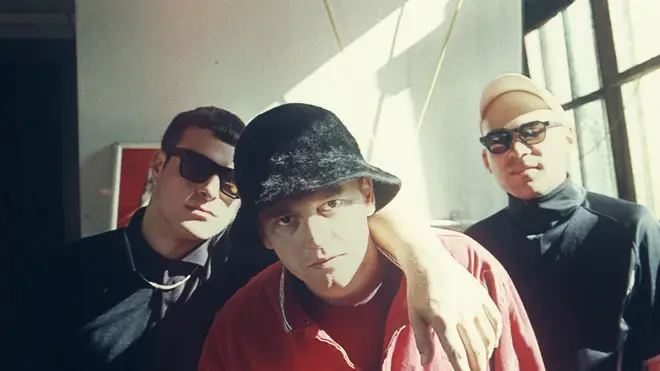
The album, 'For Now', not only hinted at a subtle evolution but also deepened the band's connection with their fans. With touches of shoegaze, dream-pop, and tighter, more electronic-influenced production, the album set the stage for the more experimental direction they'd fully embrace on later records. Lyrically, the album was introspective, exploring themes of change, uncertainty, and longing, yet it was delivered with an emotional intensity that resonated deeply with fans, making them feel integral to the band's journey.
The album was not just a musical success, but also a testament to the band's journey. Critically, 'For Now' was well-received, further solidifying DMA’s as one of Australia’s most successful musical exports of the decade. Their rise in the UK was particularly meteoric, leading to bigger stages, larger crowds, and an increasing reputation as a formidable live act. This journey from a small band to a global success story is sure to inspire many aspiring musicians.
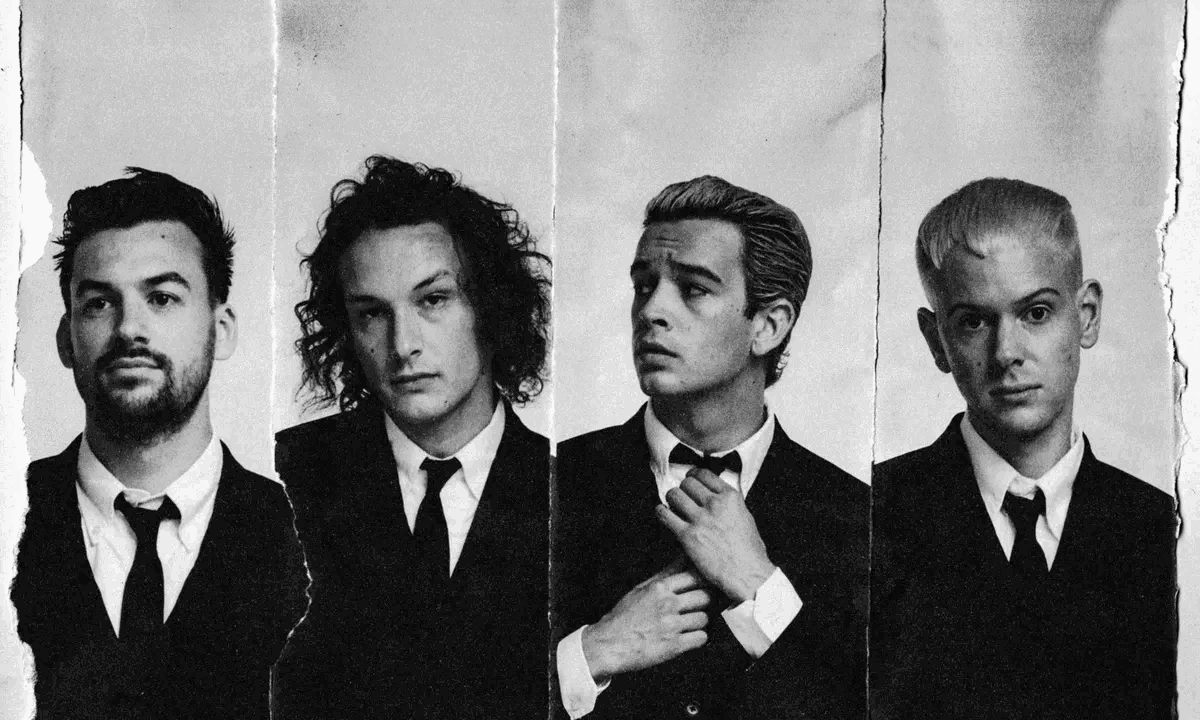
In the latter part of the year, The 1975 released ‘A Brief Inquiry into Online Relationships’ in 2018, marking a turning point for the band; it was more than just an album; it was a cultural statement. The NME described the record as "the millennial answer to 'OK Computer'."
The band fully leaned into their ambition, pairing heartfelt vulnerability with genre-hopping experimentation, all while maintaining their pop sensibilities.
One of the most powerful moments on the record comes with ‘Love It If We Made It’, a furious, stream-of-consciousness track that channels societal chaos through bold, unfiltered lyrics. With references to Trump, Kanye, the refugee crisis, and Black Lives Matter, it captures the overwhelming noise of the modern world while somehow clinging to hope. Matty Healy delivers each line with desperation and conviction, and the track’s cathartic chorus, "Modernity has failed us", feels like both a cry for help and a call to arms.
It stands and points, aghast, at real-world horrors that have somehow been normalised, most jarringly “a beach of drowning three-year-olds” and the words of the President Of The United States of America, repeated verbatim, “I moved on her like a bitch“, casting no particular opinion and asking the listener to draw conclusions instead. It’s one of the band’s finest achievements.
Give Yourself a Try’ opens the album with frenetic energy, pairing a spiky, distorted guitar riff heavily inspired by Joy Division’s ‘Disorder’ with raw reflections on self-worth, ageing, and therapy. It’s a bold nod to post-punk’s emotional starkness, reimagined through The 1975’s glossy, hyper-modern lens. Healy’s lyrics are anxious, funny, and cutting. The song captures the confusion and self-awareness of your late twenties in a way few others do. It sets the tone for an album that is deeply personal yet socially observant, finding the overlap between internal struggles and the broader cultural moment. It’s Healy at his most direct, questioning, and ultimately human.
‘It’s Not Living (If It’s Not With You)’ shimmers with pure, infectious joy on the surface, channelling bright 80s pop with its glittering synths and upbeat melodies. Yet beneath this radiant exterior, the song delivers a raw and deeply personal exploration of heroin addiction. Matty Healy’s genius lies in his ability to wrap such heavy subject matter in bright, euphoric sounds, creating a striking and poignant contrast. The track’s ‘Pretty in Pink’-style, power-pop energy turns what could be a despairing confession into something oddly uplifting. Healy sings about heroin as if it were a great lost love: “All I do is sit and think about you / If I knew what you’d do / Collapse my veins wearing beautiful shoes / It’s not living if it’s not with you.” It’s funny, clever, refreshingly honest, and serves as a perfect example of The 1975’s knack for blending vulnerability with pop brilliance.
Elsewhere on the album, ‘I Like America & America Likes Me’ stands out as a frantic, Kanye West-inspired Auto-Tuned stream of consciousness, capturing the anxiety, urgency, and digital overload of modern life. The song’s fractured production and rapid-fire lyrics reflect the chaos of a generation grappling with fear, uncertainty, and the constant barrage of information, with Healy’s repeated pleas for safety and connection echoing the social climate of the late 2010s.
Elsewhere on the album, ‘I Like America & America Likes Me’ stands out as a frantic, Kanye West-inspired Auto-Tuned stream of consciousness, capturing the anxiety, urgency, and digital overload of modern life. The song’s fractured production and rapid-fire lyrics reflect the chaos of a generation grappling with fear, uncertainty, and the constant barrage of information, with Healy’s repeated pleas for safety and connection echoing the social climate of the late 2010s.
‘I Couldn’t Be More in Love’ slows the pace, offering a lush, 80s-inspired ballad that channels the emotional honesty and vulnerability at the heart of the album. Featuring gospel-tinged backing vocals and classic power-pop keys, it’s a soaring, heartfelt ode to devotion and longing that reveals a softer side of the band amid the record’s more frenetic moments. ‘Inside Your Mind’ is another highlight: a haunting, cinematic track that blends eerie synths and hypnotic melodies with lyrics exploring obsession, insecurity, and the desire to truly know another person. The song’s sense of unease and romantic yearning adds a darker, more introspective layer to the album’s sonic palette.
‘I Always Wanna Die (Sometimes)’ closes the album with cinematic grandeur. This sweeping, Britpop-inspired ballad evokes the melancholic majesty of Oasis’s ‘Champagne Supernova’ or Radiohead’s ‘No Surprises’. Complete with strings and a towering chorus, it’s a stirring reflection on depression. However, it also carries a message of resilience, ending the record on a note of fragile hope that the audience can hold on to.
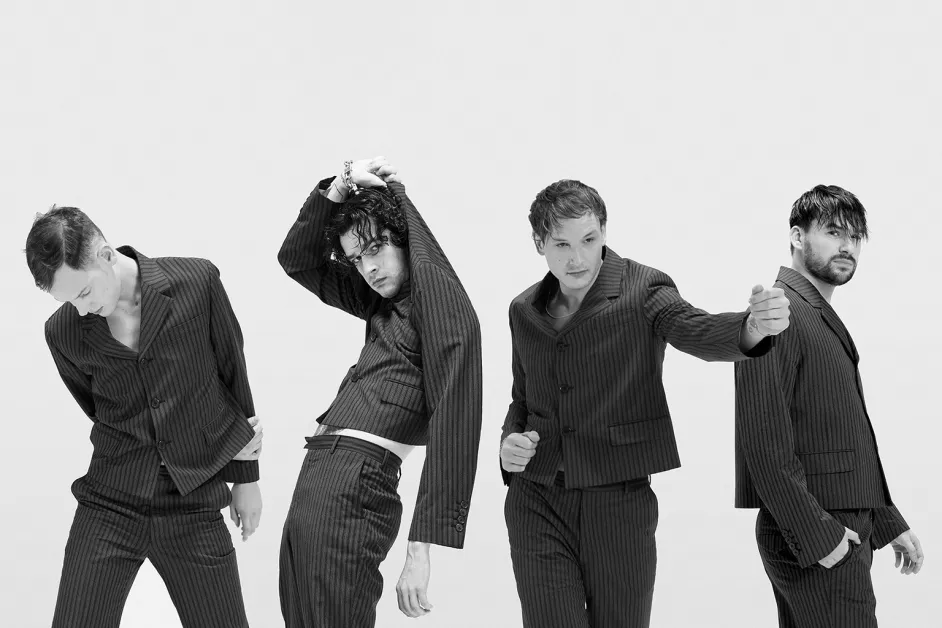
Meanwhile, ‘TOOTIMETOOTIMETOOTIME’ brings a refreshing levity and irresistible charm. Its bouncing tropical beat, Auto-Tuned vocals, and tongue-in-cheek lyrics tackle digital-age romance and miscommunication with a playful wink. Light, playful, and endlessly catchy, it showed The 1975’s knack for blending pop accessibility with clever songwriting, one of many reasons 'A Brief Inquiry into Online Relationships' became a defining album of its era.
Each of these songs contributes to the album’s broader message: how we navigate love, loss, addiction, and identity in a world increasingly mediated by screens. ‘A Brief Inquiry into Online Relationships’, a critically acclaimed album that explored the complexities of modern relationships in the digital age, proved that The 1975 weren’t just another indie-pop band; they were shaping the conversation, blurring the lines between pop, politics, and personal pain.
Arctic Monkeys released 'Tranquillity Base Hotel & Casino', a polarising album that marked a striking departure from their previous work. Five years after the massive success of 'AM', fans were eagerly anticipating what Alex Turner and his bandmates would deliver next. What they received, however, was an album that left many confused and, for some, disappointed.
Gone were the punchy riffs and festival-ready anthems; in their place was a lush, lounge-inspired, concept-driven record set in a fictional lunar hotel for retired rock stars. The album’s sound was quieter, jazzier, and steeped in cinematic references, with Turner’s piano-driven songwriting and cryptic storytelling taking centre stage.
There’s a noticeable lack of workable choruses; several of the songs feature a leisurely pace that’s a far cry from most of the Monkeys’ material, and most of the 40-minute record is occupied by Turner’s crooning. From the opening drawl of “I just wanted to be one of the Strokes/now look at the mess you made me make”, it’s evident that he’s not just the architect of this lavish establishment – he’s the concierge, towel boy, bartender and everything in between
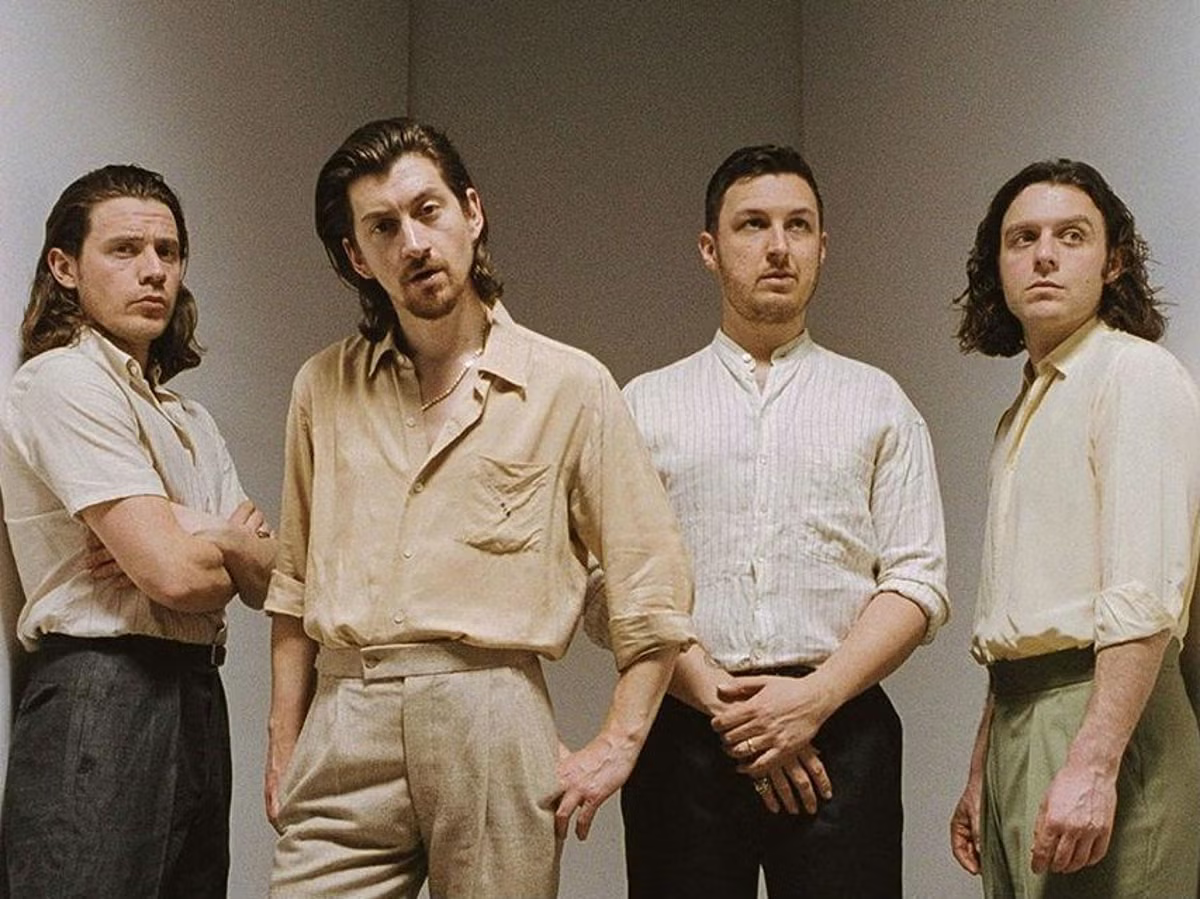
‘Star Treatment’ opens the album with dreamy, jazz-tinged introspection, as Alex Turner riffs on stardom, nostalgia, and the band’s own mythology. ‘Four Out of Five’ stands out not only as the flagship single but also as the album’s most immediately catchy moment, its surreal lyrics about a lunar taqueria (“Information-action ratio”) pairing absurdist humour with a genuinely infectious chorus. ‘One Point Perspective’ is all woozy keyboards, tight grooves, and existential musings on distraction and legacy, while ‘Golden Trunks’ injects flashes of the band’s rockier, more muscular past with a brooding riff and cryptic imagery. ‘The Ultracheese’ closes the record in bittersweet, late-night melancholy; it stands as one of the band's finest collective achievements to date, and it even makes a little subtle nod to 'A Certain Romance'.
Meanwhile, ‘Science Fiction’ and ‘Batphone’ evoke the haunted, noirish atmospheres of ‘Humbug’, layering moody synths and off-kilter rhythms with Turner’s most self-aware and surreal lyricism yet. Collectively, these tracks reveal just how far the band had travelled from their indie beginnings, embracing lounge, jazz, and cinematic influences while never losing their knack for inventive storytelling and atmosphere.
The album’s experimental nature divided the fanbase, but it rewarded deep listening; Turner’s lyrics delved into religion, (“emergency battery pack just in time for my weekly chat with God on videocall), technology (“my virtual reality mask is stuck on ‘Parliament Brawl’) and politics (“the leader of the free world reminds you of a wrestler wearing tight golden trunks”). There are zingers on here too, and some of the best quips come when things get a bit silly, from Blade Runner references to illusions of “Jesus in the day spa” and self-deprecating moments of being “full of shite”
At TRNSMT 2018, the Monkeys brought these new songs to a massive festival crowd, confidently blending them with their back catalogue and winning over both sceptics and longtime fans. Meanwhile, their Royal Albert Hall show was a masterclass in reinvention, with Turner gliding between piano and guitar and the band reshaping older hits to fit the Tranquillity Base aesthetic. These gigs confirmed that, even as the band changed course, they remained one of Britain’s most magnetic live acts, committed to challenging themselves and their audience with every new chapter.
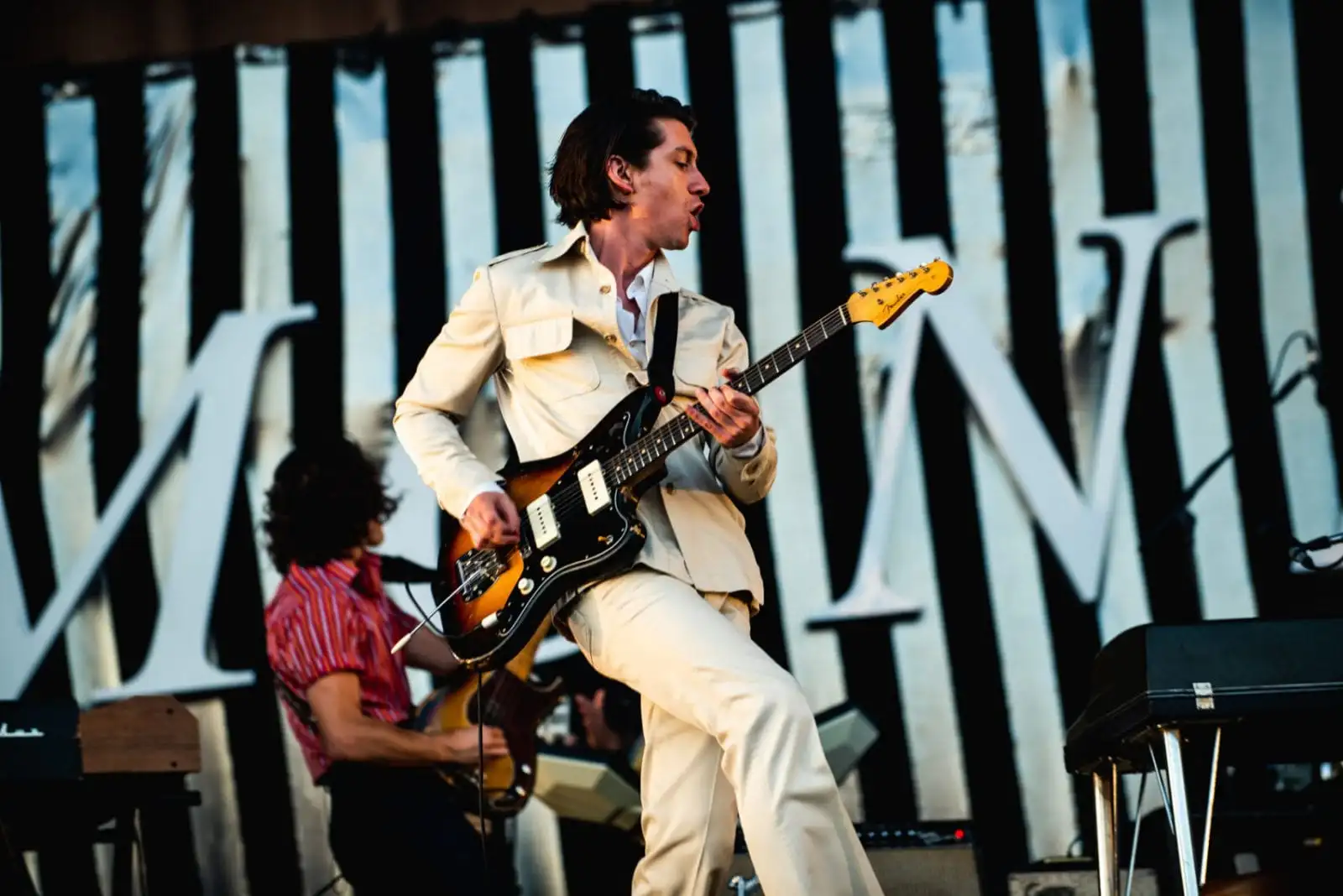
For many fans, the album was a shock to the system. Expecting something more familiar, they were confronted with a sound that was quieter, more introspective, and at times, even alienating. The once-raucous Sheffield rockers had transformed into a band uninterested in meeting their fanbase's expectations. The bold, unconventional direction of 'Tranquillity Base Hotel & Casino' revealed that Arctic Monkeys were no longer the indie darlings of the mid-2000s, nor the same band that had stormed the charts with AM just a few years earlier. It was clear that they were evolving not only musically but conceptually, and the album's experimental nature divided their once-fiercely loyal following.
Ultimately, the album proved that Arctic Monkeys were no longer interested in pleasing their audience with familiar sounds or commercial expectations. Instead, the album marked a definitive turning point, as the band carved out a unique, genre-defying path. By choosing to follow their creative instincts rather than conforming to fan expectations, they reaffirmed their status as one of the most innovative and unpredictable acts in modern music. Whether or not the album found universal acclaim, it was clear that Arctic Monkeys had moved beyond the realm of indie rock icons, evolving into a band whose vision was driven solely by their own artistic desires.
There’s more to say about 'Tranquillity Base Hotel & Casino' and its lasting impact. The album’s cinematic world-building set a new benchmark for concept records in the indie era, with Turner crafting not just a collection of songs, but an immersive universe. The record’s lounge-lizard aesthetic, faded glamour, and offbeat humour inspired a wave of artists to take bigger creative risks, and its cryptic lyricism became the subject of endless fan theories and think pieces. The album also proved to be remarkably prescient, capturing the unease of a world on the brink of the 2020s, preoccupied with technology, nostalgia, and the disconnect between public persona and private self. Over time, 'Tranquillity Base Hotel & Casino' gained a cult following, with many fans and critics coming to view it as a misunderstood classic that marked the start of a bold new era for the Arctic Monkeys. Its influence is still being felt in alternative music today, as more bands seek to blend narrative
In 2018, 'Beautiful People Will Ruin Your Life' showcased a more atmospheric, almost psychedelic tone for The Wombats, with a tighter focus on songwriting and emotional depth. Tracks like 'Lemon to a Knife Fight' and 'Turn' blended lush instrumentation with introspective lyrics, marking a subtle shift in the band's sound while still delivering the hooks fans had come to love. The album struck a balance between melancholy and melody, embracing a dreamier sonic palette that felt like a natural progression for a band now well into their second decade.
'Lemon to a Knife Fight': Serving as the album's lead single, this track perfectly encapsulates the record's thematic tension; it uses a driving, urgent bassline and jagged guitar riffs to mirror the feeling of entering a psychological battle you are destined to lose. The song was inspired by a real-world argument between frontman Matthew Murphy and his wife, capturing the realisation of being utterly outmatched in a dispute.
Turn': Widely considered one of the emotional high points of the record, this track trades raw frantic energy for a glowing, synth-heavy soundscape; its romantic lyricism is simultaneously chaotic and deeply sweet, famously juxtaposing the beauty of a partner with images of a world in evolutionary meltdown. It has one of my favourite ever indie lyrics in to you could give an aspirin, the headache of its life." It's genius.
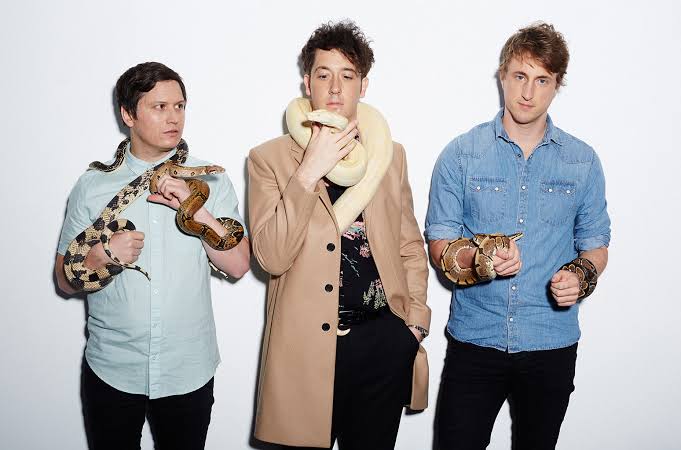
'Cheetah Tongue': Opening the album with a burst of psychedelic energy, this track dives headfirst into themes of maturity and the anxiety of ageing; it utilises a vibrant, danceable groove contrasted against lyrics about the exhaustion of trying to keep up appearances and talking your way out of trouble.'Lethal Combination': A deeper cut on the album that leans heavily into the record's dreamy, melancholic atmosphere; it offers a slower, more introspective tempo that explores the intoxicating yet dangerous nature of certain relationships, using lush, layered instrumentation to create a hazy, nocturnal vibe.
Before we bring the decade to an end, I need to talk about Harry Styles, a British artist whose solo career has become one of the most fascinating and successful stories in modern pop music.
Styles first entered the public consciousness 12 years ago on the British TV show X Factor, where he, along with his bandmates Louis, Niall, Zayn, and Liam, became part of One Direction. After their meteoric rise as the world’s biggest boy band, the group went on hiatus in 2016, allowing its members to pursue solo projects. Of them all, Harry Styles has emerged as the true breakout star. With a string of number-one albums and chart-topping singles, his solo journey has been both bold and unpredictable.
If you’re looking for a parallel, Styles’ career most closely mirrors that of George Michael, another former boyband member who transitioned into a solo icon with a fearless, genre-defying approach. Like Michael, Styles embraced reinvention, charisma, and authenticity, taking creative risks that set him apart from his peers.
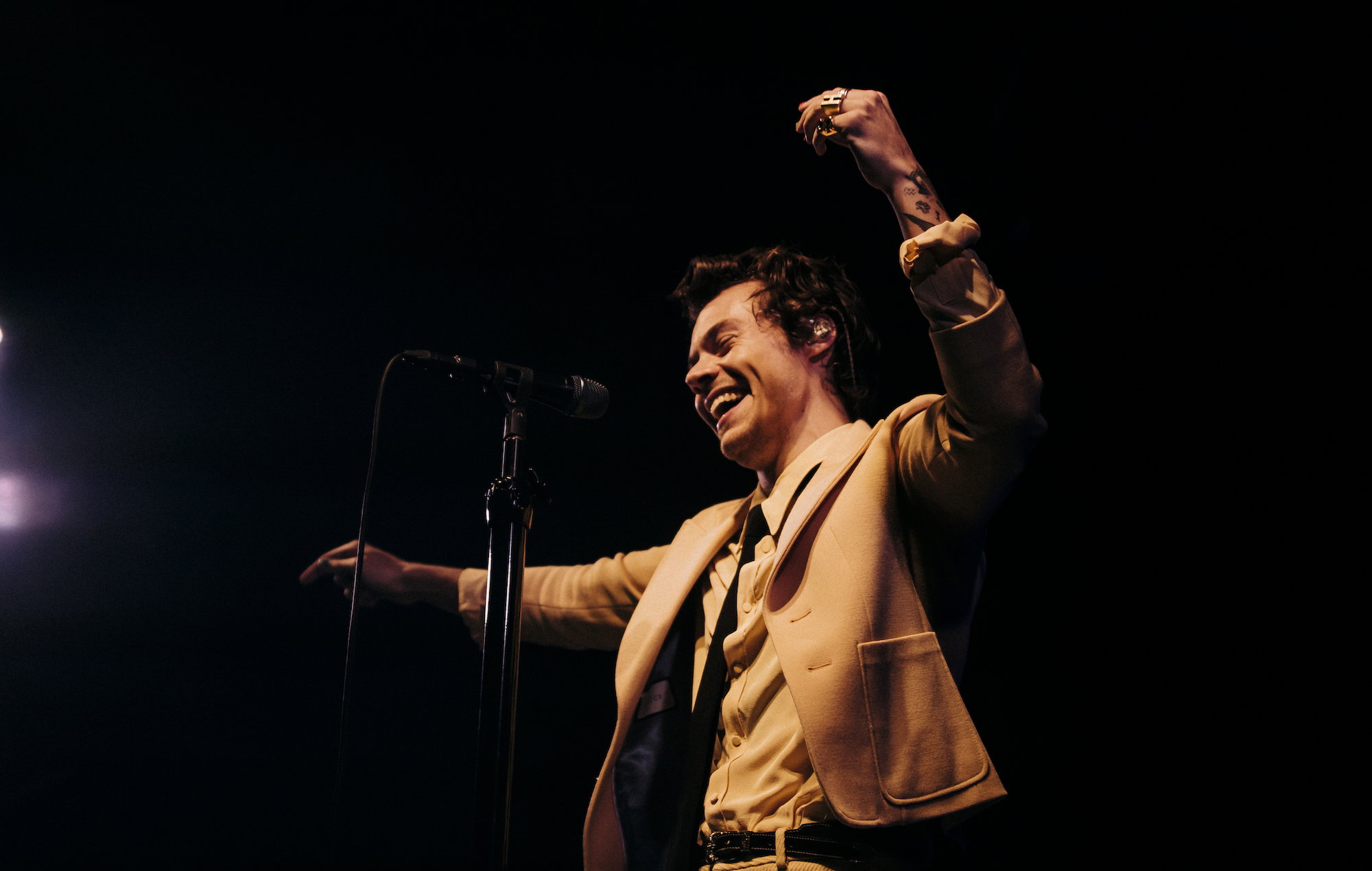
His self-titled debut album ‘Harry Styles’ (2017) introduced a classic rock-inspired sound, drawing on influences from Bowie to Fleetwood Mac. The record’s opener, ‘Meet Me in the Hallway’, set the stage with a dreamy, melancholic atmosphere, while ‘Sign of the Times’, an epic, soaring ballad, instantly established him as more than just a pop idol, tackling themes of change, hope, and resilience. ‘Kiwi’ injected the album with swaggering, glam-rock energy and raw attitude, quickly becoming a fan favourite for its raucous, electrifying delivery. ‘Two Ghosts’ showcased his softer, introspective side, reflecting on heartbreak with gentle slide guitar and understated vocals. ‘Carolina’ stood out for its playful groove and character-driven storytelling, while ‘Only Angel’ burst with exuberant hooks, gospel-tinged backing vocals, and a sense of pure, infectious joy. Each track demonstrated a different facet of Styles’ artistry, proving he could move between vulnerability and bravado with ease. The album was a statement of intent, signalling a desire to be taken seriously as a songwriter and artist, and laying the groundwork for the bold creative leaps that would follow.
His second album ‘Fine Line’ (2019) took things further, blending psychedelia, pop, and folk into a kaleidoscopic, emotionally rich experience. ‘Adore You’ and ‘Watermelon Sugar’ became massive hits, the latter earning him a Grammy and soundtracking an entire summer. ‘Golden’ opened the album with breezy optimism and infectious energy, quickly becoming a fan favourite and a staple of his live shows. Songs like ‘Falling’ and ‘Cherry’ revealed a vulnerability and emotional honesty rarely seen in modern pop, capturing heartbreak and longing with raw candour. ‘Lights Up’ marked a creative turning point, pairing soulful vocals with shimmering production, while the title track ‘Fine Line’ closed the album on an epic, cathartic note—its swelling instrumentation and lyrical refrain (“We’ll be alright”) offering hope and resolution. The record’s mix of introspection and exuberance won critical acclaim and cemented Styles as a versatile, boundary-pushing solo act, with the title track standing as one of his most ambitious and emotionally resonant songs to date.
With just two albums, Harry Styles staked his claim as one of the decade’s most charismatic and inventive pop stars, an artist in the mould of George Michael, unafraid to evolve, challenge expectations, and carve his own path.
2019! I had forgotten about you. It was a fantastic year for music. Tame Impala was back after four years away, Stereophonics would release another classic, Liam's second solo album, not one but two Foals albums, Fontaines D.C. would release arguably the debut album of the decade and a certain Mr Sam Fender would rear his head.
Let's talk about Catfish & the Bottlemen. In 2019, they dropped ‘The Balance’, their third and, for now, final album, a record that would mark a significant chapter in their story. ‘Longshot’ opened the campaign with a bang, its soaring chorus and instantly memorable riff capturing the anthemic spirit that had become the band’s trademark. ‘Fluctuate’ followed suit, balancing catchy hooks with tales of late-night indecision and emotional turbulence. Both singles quickly became setlist staples, their shout-along choruses echoing at festivals across the summer.
The album also delivered deeper cuts like ‘Conversation’, a track that mixed relentless energy with Van McCann’s trademark confessional lyricism, and ‘2all’ kept the adrenaline pumping, both tracks brimming with heartfelt lyrics and enough energy to light up arenas. However, the rest of the album blended into one; Catfish's approach of staying in the box led to mixed results and, at times, indie-by-numbers guitar tracks. When they are good, they can be really good, but at times it all becomes a bit predictable.
Their anthemic, no-frills indie rock catapulted them to the top of festival lineups. They headlined TRNSMT, Reading & Leeds, and NBHD Weekender, a testament to their growing influence and the power of ‘The Balance’. The band’s ability to translate their studio sound to electrifying live performances made them one of the most sought-after acts of the festival season, with crowds drawn to the cathartic energy and communal spirit of their gigs.
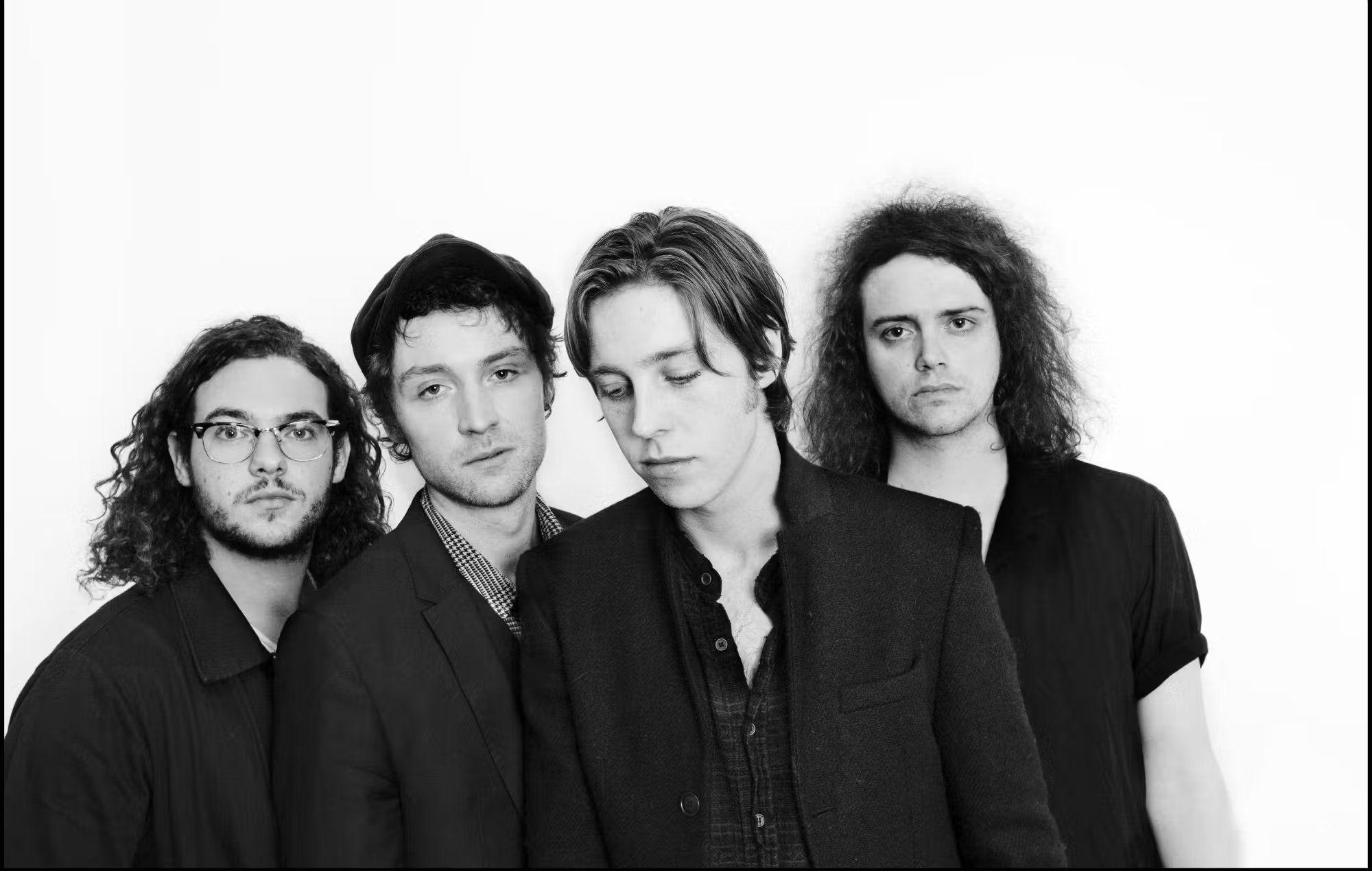
This era marked the end of the band's most iconic lineup and ushered in a period of relative chaos. Missed tour shows, awful headline slots, and virtual radio silence. For a band that had quickly risen from sweaty club gigs to arena and festival headliners, it felt like an abrupt kick. Catfish for a time had the world in their hands; it's just a shame they couldn't keep hold of it, or even hold it together.
Stereophonics would strip things back on their 11th album, 'Kind', slowing down the pace and letting Kelly Jones' storytelling do the heavy lifting. Moving away from the anthemic rock of previous releases, the album leaned heavily into acoustic instrumentation, raw vocals, and lyrical vulnerability. It was a bold change in direction for a band so often associated with arena-ready choruses and swaggering riffs, but it paid off. 'Kind' was well received by both fans and critics. It gave us some of the band's most cherished modern songs, including 'Fly Like an Eagle', 'Make Friends with the Morning', and 'Hungover for You', all of which have become fan favourites and regulars in their live sets.
What made 'Kind' stand out was its sincerity. The stripped-back production gave Kelly's voice and lyrics space to truly shine, and the songs felt confessional, honest, and deeply human. It reflected a more mature band, one willing to slow things down and embrace imperfection. There was no need for gloss or bombast here; 'Kind' was about emotion, reflection, and a sense of grounding. Tracks like 'Bust This Town' and 'Stitches' added to the album's introspective depth, capturing the quiet struggles and redemptive moments that come with age, growth, and life outside the spotlight.
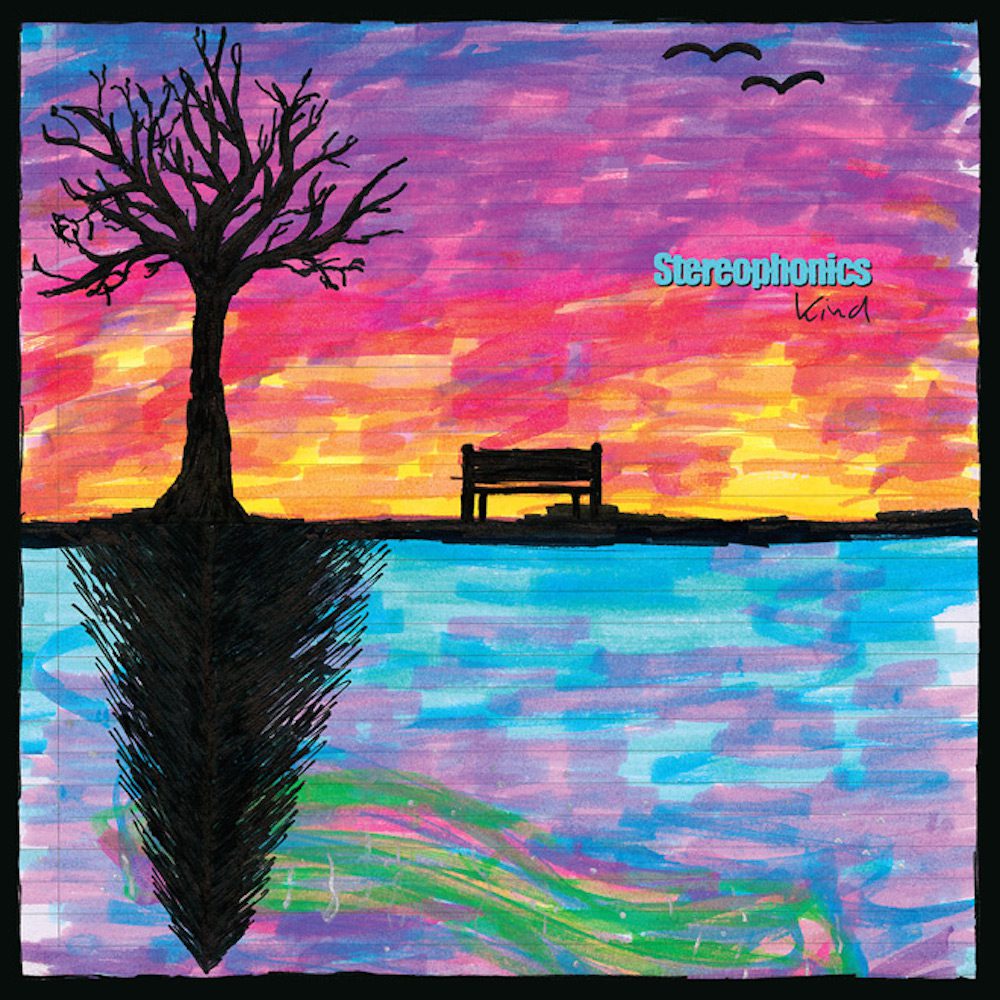
It was fascinating to see the band take this more vulnerable approach, and it truly worked. In many ways, 'Kind' became a career highlight not because it was the loudest or the boldest, but because it was perhaps the most human. It reminded longtime fans of the heart and soul that have always been at the core of Stereophonics' music.
Liam Gallagher would pick up right where he left off with 'Why Me? Why Not?', his second solo album, was released in 2019. Building on the winning formula that made ‘As You Were’ such a triumphant comeback, Liam once again leaned into classic rock influences, anthemic choruses, and sharp songwriting, and it paid off, exciting fans and critics alike about his continued musical journey.
This time around, there was a deeper emotional core running through the record. Tracks like ‘Once’ revealed a side of Liam that fans had rarely seen: nostalgic, honest, and even a little vulnerable. With lines like “You only get to do it once,” it felt like he was coming to terms with his past: the rise, the fall, and everything in between. This personal growth and introspection made 'Once' one of his most beloved solo tracks for a reason, resonating with fans on a deeper level.
Similarly, ‘One of Us’ felt like a letter to his brother Noel, a yearning for reconciliation wrapped in a stomping, sing-along groove. It wasn’t just a musical highlight; it stirred something emotional, hinting at regrets and unfinished business between two of the most iconic siblings in British music. The emotional depth of 'One of Us' is sure to move and make the audience reflect on the complexities of human relationships.
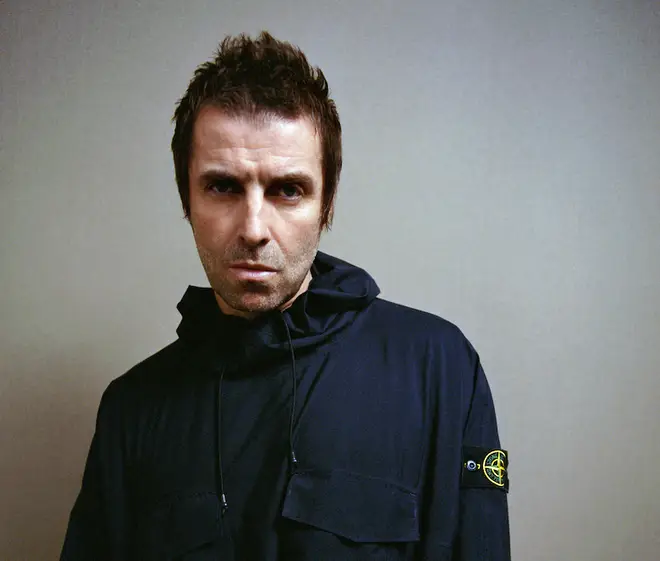
Elsewhere on the album, Liam Gallagher delivers two of his most heartfelt tracks to date. ‘The River’ is a call to arms, full of swagger and urgency, its gritty guitars and rallying lyrics inviting listeners to face adversity head-on. The song’s raw energy and rebellious spirit make it a highlight, capturing Liam’s ability to blend classic rock attitude with timely social commentary.
‘Now That I Found You’ stands out as one of the most tender moments in Liam’s solo catalogue. Written for his daughter Molly, the song is a celebration of newfound connection and forgiveness, with lyrics reflecting both vulnerability and joy. Its uplifting chorus and melodic warmth reveal a softer side to Gallagher, marking a personal turning point and resonating deeply with fans who followed his family story.
‘Why Me? Why Not?' proved that Liam’s return to music wasn’t a fluke. It solidified his place not just as a Britpop icon but as a relevant, compelling solo artist in his own right. With two major albums under his belt and massive solo shows to match, he’d stepped out from the shadows of the Oasis legacy.
Tame Impala made a surprise return with ‘Patience’, their first new single in four years. Few expected Kevin Parker to go full Barry White, but on ‘Patience’ he delivered a lush, disco-tinged groove, underpinned by 70s strings and a sauntering, percussive beat reminiscent of Love Unlimited Orchestra. The track sashayed through heartbreak and uncertainty, putting a playful, dancefloor-ready spin on Tame Impala’s psychedelic pop. “Did I count the days wrong? Did we just go back, all the way to step one?” Parker crooned, cleverly nodding to ‘Lonerism’s ‘Feels Like We Only Go Backwards’ and capturing the sense of emotional stasis and longing.
But ‘Patience’ was more than just a love song—it was also a meditation on the surreal pressures of Tame Impala’s meteoric rise. Over the four-year gap since ‘Currents’, Parker had worked with global pop giants like Lady Gaga, Mark Ronson, and Kendrick Lamar, while Rihanna had covered ‘New Person, Same Old Mistakes’.
As Tame Impala geared up to headline some of the world’s biggest festivals, ‘Patience’ acknowledged both the personal and professional transitions: “Just growing up in stages, living life in phases, another season changes and still my days are shapeless.” Released with little warning, the song’s opening line, "Has it really been that long? Did I count the days wrong?", became a self-aware joke for fans, marking both the end of the wait and the start of a new era for one of modern music’s most visionary acts. Fans knew album number four was on the way.
When it comes to groups, Foals definitely took the crown in 2019. That year, they achieved something rare: they released not just one, but two career-defining records, ‘Everything Not Saved Will Be Lost – Part 1’ and ‘Part 2’. These companion albums represented the band’s most ambitious and accomplished work to date, released just six months apart: Part 1 in March, and Part 2 in October.
The dual-album concept wasn’t just a gimmick; it was a creative necessity. The material Foals had crafted during the sessions was too expansive, too diverse, and too emotionally weighty to fit on a single LP. Together, the two records reflect a world teetering on the edge politically, environmentally, and emotionally. It’s a theme Foals captured with cinematic clarity.
Part 1 feels like the slow-burning realisation that everything is falling apart, but it’s also alive with musical invention. ‘On the Luna’ stands out for its rubbery bassline and jagged guitar stabs, delivering a jittery, anxious energy that mirrors the surreal, chaotic state of the world. The lyrics play with imagery of confusion and overload, capturing the tension between hope and anxiety. ‘In Degrees’ is an absolute highlight, a euphoric, dancefloor-ready anthem with shimmering synths, propulsive percussion, and a groove that channels Talking Heads and early Foals in equal measure. Its infectious chorus disguises lyrics about drifting apart and losing touch, making it both an indie disco favourite and a clever meditation on fractured connections.
‘Exits’ opens the album with cinematic ambition, all swirling synths and ominous groove, setting a tone of unease and uncertainty. The sprawling arrangement, powerful hooks, and cryptic lyrics make it a quintessential Foals track, establishing the album’s apocalyptic mood from the outset. Elsewhere, ‘Syrups’ sinks into a hazy, nocturnal atmosphere, its woozy guitars and layered textures conjuring a sense of late-night disillusionment. The album ends with ‘I’m Done With the World (And It’s Done With Me)’, a haunting, piano-led closer that embodies resignation and reflection, perfectly capturing the exhausted melancholy of the times.
If Part 1 is the realisation of collapse, Part 2 is the fightback. It’s more aggressive, muscular, and unrelenting—an album designed for stadiums, revolutions, and cathartic release. ‘The Runner’ is a propulsive, driving anthem about perseverance in the face of adversity, built around one of Yannis Philippakis’ most memorable riffs and an instantly singable chorus. ‘Black Bull’ explodes with ferocity, all snarling guitars and primal energy, channelling the band’s heaviest instincts and delivering a mosh-pit-ready highlight. ‘Like Lightning’ brings swagger and groove, blending bluesy riffs with stomping rhythms and a shout-along hook; it’s Foals at their most playful and infectious.
‘Dreaming Of’ is a refreshing change of pace, infusing bright synths and shimmering textures into the band’s palette for an almost psychedelic, uplifting moment. ‘Neptune’ is the album’s epic, 10-minute closer, ebbing and flowing through spacious verses, soaring crescendos, and apocalyptic imagery. It encapsulates the album’s sense of both doom and transcendence, offering a cathartic release after the record’s relentless momentum. ‘10,000 Feet’ and ‘Into the Surf’ stand out for their atmospheric depth, balancing weight with fragility and highlighting the band’s ability to create both tension and beauty. On Part 2, Foals proved they could pivot from brute force to ethereal introspection without missing a beat, cementing this era as their boldest and most complete artistic statement yet.
For Foals, it was the ultimate triumph. They captured the chaos of modern life without sounding overindulgent or detached. Instead, they drew us in, made us dance, made us think, and made us feel. The Everything Not Saved era didn’t just showcase a band at the peak of its powers; it showed a band still growing, still challenging itself, and still speaking to the present moment in ways few others could.
2019 also saw the emergence of a unique band from Ireland: Fontaines D.C. Their debut album, ‘Dogrel’, was aptly described by NME as “a debut album that offers both a storyteller’s narrative voice and a snarling new vision of youthful disillusionment.” It’s a true punk masterpiece, blending raw, urgent energy with poetic lyricism and a deep sense of place. Imagine punk meets The Pogues, and you’re halfway there.
Grian Chatten’s thick Dublin accent cuts through every track with clarity and intent, lending authenticity to their tales of city life, working-class struggles, and existential angst. It's the most unique-sounding debut in years; you need to look back to Arctic Monkeys' 'Whatever People Say I Am That's What I Am Not' to make comparisons. Their unique blend of punk and storytelling is sure to intrigue and captivate any music enthusiast.
Tracks like ‘Big’, ‘Too Real’, and ‘Boys in the Better Land’ crackled with intensity, short, sharp bursts of defiance that recalled post-punk greats like The Fall or Joy Division, but with a distinctly Irish identity. ‘Boys in the Better Land’ in particular became a breakout anthem, its rapid-fire vocals, chugging rhythm, and tongue-in-cheek lyrics about Dublin’s scene making it an instant festival favourite and one of the defining indie tracks of the decade. ‘Liberty Belle’ provided another highlight, pairing rollicking guitars with Grian Chatten’s deadpan delivery, an ode to youthful nights out and the city’s chaotic charm.
Meanwhile, songs like ‘Television Screens’ and ‘Roy’s Tune’ revealed a more introspective, almost literary side. ‘Television Screens’ stands out for its slower, more contemplative pace, painting a vivid portrait of alienation and the numbing effects of modern life. ‘Roy’s Tune’ is delicate and bittersweet, with its wistful melodies and lyrics about lost love and the passage of time drawing comparisons to the storytelling of James Joyce as much as punk frontmen. ‘The Lotts’ continued this pattern, offering a melancholic snapshot of city life and the tension between hope and resignation.
The album closes with ‘Dublin City Sky’, which plays like a modern-day Pogues drinking song, full of yearning, camaraderie, and local colour. With its traditional folk undertones and singalong chorus, it offers a poignant, nostalgic finale that feels both deeply personal and universally relatable. The result was a debut that felt both familiar and entirely new, politically conscious, emotionally charged, and brimming with conviction.
Fontaines D.C. quickly established themselves as one of the most exciting bands of the year, and ‘Dogrel’ marked only the beginning of their ascent. It was more than just a promising debut. It was the sound of a band carving out their place in modern music with guts, heart, and unmistakable purpose.
What truly set them apart was their refusal to dilute their identity. Every lyric, every accent, every clang of guitar rang out with authenticity. They weren’t interested in trend-hopping or chasing radio play; they were building their own world, rooted in Dublin’s streets, shaped by poetry, post-punk, and political unease. The album felt urgent, like a dispatch from a disillusioned generation with no interest in playing nice.
And it paid off. ‘Dogrel’ was shortlisted for the Mercury Prize and ended up on countless album-of-the-year lists, proving that substance still matters in an era of polish and algorithms. It set the stage for their following chapters, where they’d go on to evolve their sound without losing the fire that made their debut so vital. ‘Dogrel’ wasn’t just the start of something; it was a statement of intent.
Sam Fender, the Geordie Springsteen, would release his debut album ‘Hypersonic Missiles’ in 2019, a powerful, passionate record that captured the anger, hope, and heartbreak of Britain’s forgotten towns. It was the sound of a young man staring down the contradictions of modern life, and it instantly established Sam as one of the most vital voices in contemporary British rock. The emotional depth of this album is a testament to Fender's ability to connect with his audience on a profound level.
But before the breakthrough, Fender honed his craft with a series of earlier tracks that built his grassroots following. Songs like ‘Spice’ and ‘Friday Fighting’ showcased his knack for gritty, street-level storytelling and a raw, energetic delivery that felt both urgent and authentic. ‘Poundshop Kardashians’ took aim at celebrity culture with biting wit and a jangly, infectious riff, already hinting at the social commentary that would define his later work.
‘Hypersonic Missiles’ is a rallying cry, but it’s also a confession. Fender emerged not just as a songwriter with sharp observational skills, but as someone unafraid to lay bare his own vulnerabilities. The record gave a voice to the silenced and the ignored: the working class, the disenfranchised, the lost. Its themes ranged from social inequality and toxic masculinity to suicide, economic stagnation, and the suffocating weight of expectation in post-industrial Britain. Fender's courage in addressing these issues head-on is truly inspiring.
Tracks like ‘Leave Fast’ resonate deeply with many listeners, capturing the tug-of-war between hometown pride and the yearning to break free. With poignant lyrics like "An old man told me to leave fast or stay forever," The song encapsulates the bittersweet love for one's roots and the compelling desire to explore beyond.
'Dead Boys’ emerged as a cultural milestone, sparking crucial conversations about men’s mental health, male suicide, and emotional suppression. It wasn’t just a song; it was a seismic cultural event. Its quiet, haunting, and devastating melody echoed a truth that many had felt, but few had dared to voice.
The title track opens the album with bombast and sarcasm, mocking the media's obsession with chaos while calling out the complacency of the powerful. Elsewhere, ‘The Borders’, arguably one of the album’s most emotionally raw moments, explores fractured male friendship and the legacy of childhood trauma, giving the record an intimate and deeply human core. What makes ‘Hypersonic Missiles’ so important is that it feels lived-in. These are not abstract ideas or borrowed sentiments. They are experiences, stitched into the DNA of every line Fender sings. He gave a voice to a generation that often feels unheard, and in doing so, revived the political power of rock music.
So that brings us to the end of the 2010s. Quite the decade. A decade in which the world changed a lot, and unfortunately, not always for the better. For me, it was also the decade I became a teenager and witnessed these changes firsthand. Amidst the turmoil and transformation, a narrative often pushed by critics emerged: that guitar music was dead.
But here's the truth: that narrative couldn’t have been further from reality. Guitar music didn't die; it evolved, adapted, and thrived in new and unexpected ways. We saw bands like Tame Impala, Wolf Alice, The 1975, and Fontaines DC redefine what guitar-driven music could sound like. From the psychedelic undertones of Tame Impala's 'Currents' to the post-punk energy of Fontaines DC’s 'Dogrel', guitar music remained vital, innovative, and alive in the 2010s.
The decade also gave rise to solo artists like Sam Fender, Liam Gallagher, and Harry Styles, all of whom embraced guitars while pushing boundaries. The sound of guitars may have changed, but it was very much alive, whether it was blended with pop, psychedelia, electronic elements, or indie rock. The critics might have predicted the death of guitar music, but the artists proved them wrong. Guitar music may have evolved, but it never left us. And in that evolution, it found new ways to connect, to provoke, and to inspire. Fittingly so for a decade that saw the world change in ways we never expected. Guitar music is alive, and it's here to stay.