Did You See the Stylish Kids in the Riot? The 00s Part 1
2000 not only marked the start of a new decade, but also the beginning of a new century and a new millennium. The world was changing, with the internet now a significant part of life. However, no one could comprehend just how much it would reshape everything, especially in music.
The emergence of file-sharing platforms like Napster and Limewire transformed the way people discovered and consumed songs, breaking down barriers that had long separated fans from artists. Suddenly, anyone with an internet connection could access a vast universe of music, diving into back catalogues or stumbling upon obscure new acts.
The arrival of iTunes in 2003 made purchasing digital music both easy and legal, helping to usher in a new era where physical CDs began to lose their dominance. For the first time, fans could curate personal libraries and playlists that reflected their own unique tastes, rather than being limited to whatever was stocked in their local record shop.
This technological shift didn’t just change listening habits; it completely upended the music industry’s power structure. Bands and solo artists could now build followings without relying on major labels or radio airplay. Word-of-mouth recommendations, message boards, and music blogs grew into powerful tastemakers, as did early social platforms like MySpace. The underground and DIY scenes thrived, with fans forming tight-knit communities around local venues, fanzines, and independent promoters. The sense of unpredictability and possibility was electrifying; one viral song could launch a career overnight, and the energy of discovery felt democratic in a way it never had before.
The early 2000s music scene was thus defined by this rapid technological change, but it was also shaped by the social and political climate of the time. The post-9/11 atmosphere cast a long shadow, and the UK’s involvement in the Iraq War brought widespread protest and debate. The era of the Blair and Brown governments was marked by both optimism and controversy, and these tensions found their way into the lyrics and attitudes of many artists. Some acts turned inward, searching for hope and meaning in a world that felt unstable; others used their platforms to voice dissent and capture the everyday anxieties of a society in flux. The sense of uncertainty and shifting identity was mirrored in the bold experimentation and raw honesty of the music itself.
Musically, the era was a melting pot. Genre boundaries blurred as indie, rock, hip-hop, electronica, and pop collided in unpredictable ways. Meanwhile, the live music scene was thriving. Festivals like Glastonbury and Reading/Leeds exploded in popularity, becoming pilgrimage sites for a new generation of fans. Fashion and subculture were closely intertwined with the music: skinny jeans, military jackets, and the so-called “indie sleaze” aesthetic became badges of identity.
As the decade progressed, the legacy of these years became clear: the early 2000s were a time of reinvention and reckoning, a moment when technology, politics, and creativity collided. The era’s music was urgent, unpredictable, and endlessly inventive.
It would be quite the decade for Britain, in both good and bad ways. Music, too, would go through many changes; bands would emerge in ways previously unimaginable, the children of Britpop would begin to release albums, and Britain would have a few competitors for "band of the decade."
Let's start at the beginning. But before diving into the new wave of bands and sounds, it's worth pausing to acknowledge the passing of a true legend: George Harrison. In November 2001, the world mourned the loss of the "quiet Beatle." Harrison was more than just the lead guitarist for The Beatles; his songwriting, spiritual outlook, and understated style left an indelible mark on popular music. Classics like 'Taxman,' 'Here Comes the Sun,' 'While My Guitar Gently Weeps,' and 'Something' showcased his melodic genius and emotional depth, while his interest in Indian music and culture opened new creative avenues for the band and Western pop as a whole.
After The Beatles, Harrison embarked on a successful solo career, releasing acclaimed albums such as 'All Things Must Pass' and organising the landmark Concert for Bangladesh, the first major benefit concert of its kind. His solo work produced several timeless songs, including 'My Sweet Lord', 'All Things Must Pass,' 'Give Me Love (Give Me Peace on Earth),' 'What Is Life,' and 'Got My Mind Set on You,' each showcasing his gift for melody, introspection, and spiritual longing.
Harrison was also celebrated for his wry humour and love of film; he played a key role in the creation of the Monty Python classic 'Life of Brian' by stepping in as executive producer when the project was on the verge of collapse, famously mortgaging his house to fund the film simply because, as he put it, he wanted to see it.
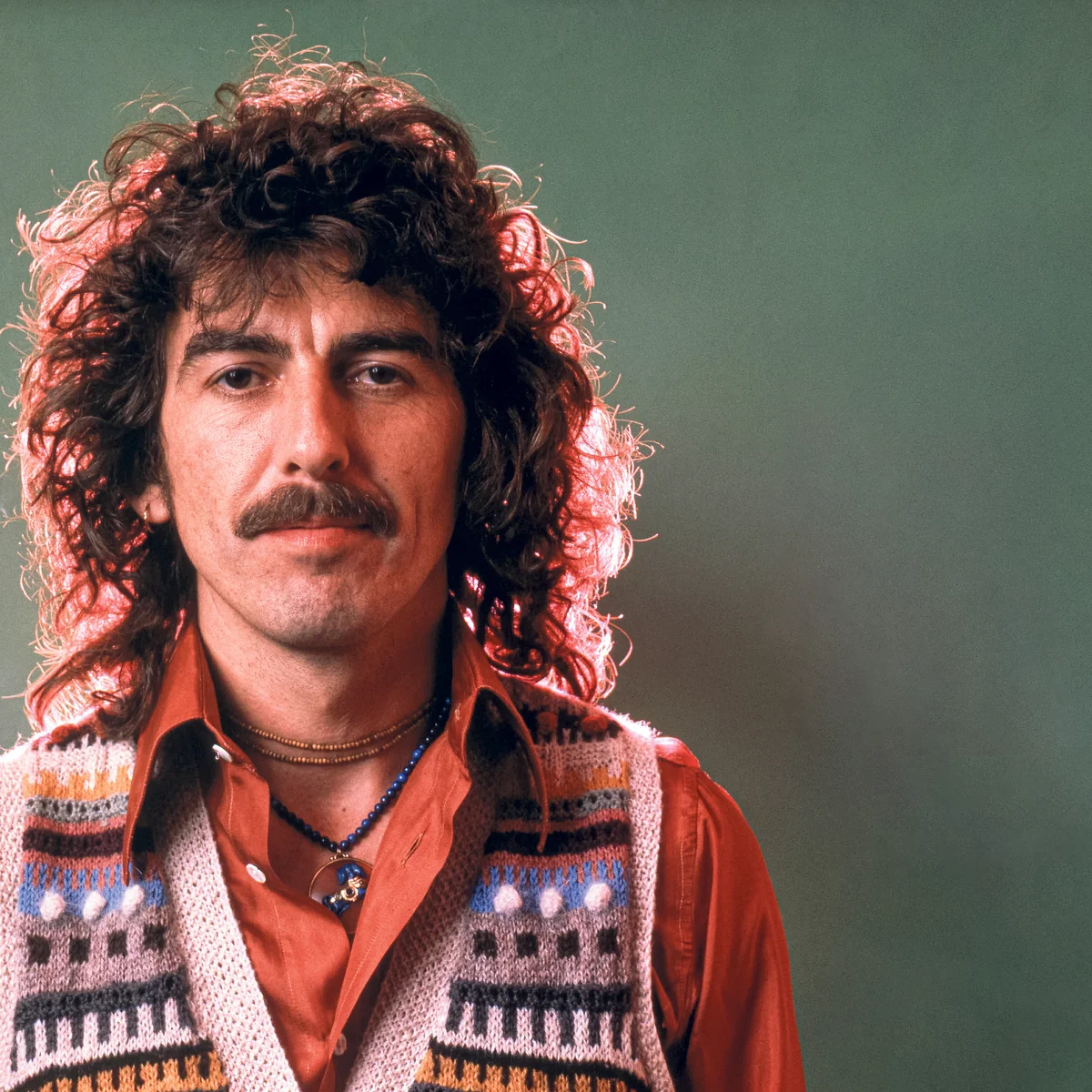
In later years, Harrison joined the Travelling Wilburys, achieving further success and demonstrating his enduring relevance with tracks like 'Handle With Care'. Despite his gentle public persona, his life was not without turmoil; in 1999, he survived a brutal attack in his own home, suffering multiple stab wounds but recovering with characteristic resilience.
In later years, Harrison joined the Travelling Wilburys, achieving further success and demonstrating his enduring relevance with tracks like "Handle With Care." Despite his gentle public persona, his life was not without turmoil; in 1999, he survived a brutal attack in his own home, suffering multiple stab wounds but recovering with characteristic resilience.
A lot has been said about George Harrison by various people, many a lot more qualified than me, so I'll leave you with a simple statement. George Harrison was the coolest member of the greatest band ever.
In July 2000, a new British band would release their debut album. 'Parachutes' would be the first of four albums from Coldplay in this decade. The album took the atmospheric melancholy of Travis's 'The Man Who' and developed it further, while adding their own sense of intimacy and emotional vulnerability.
'Parachutes' is filled with understated yet powerful songs, each contributing to the album's quiet confidence and timeless appeal. The opener, 'Don't Panic', immediately sets the tone with its gentle optimism and memorable refrain: "We live in a beautiful world." 'Shiver', one of the earliest singles, stands out with its urgent guitars and Chris Martin’s heartfelt, pleading vocals, channelling both insecurity and longing. Then there’s 'Spies', which hints at the band’s fascination with paranoia and escapism, its haunting melody and cryptic lyrics lending the album a sense of intrigue.
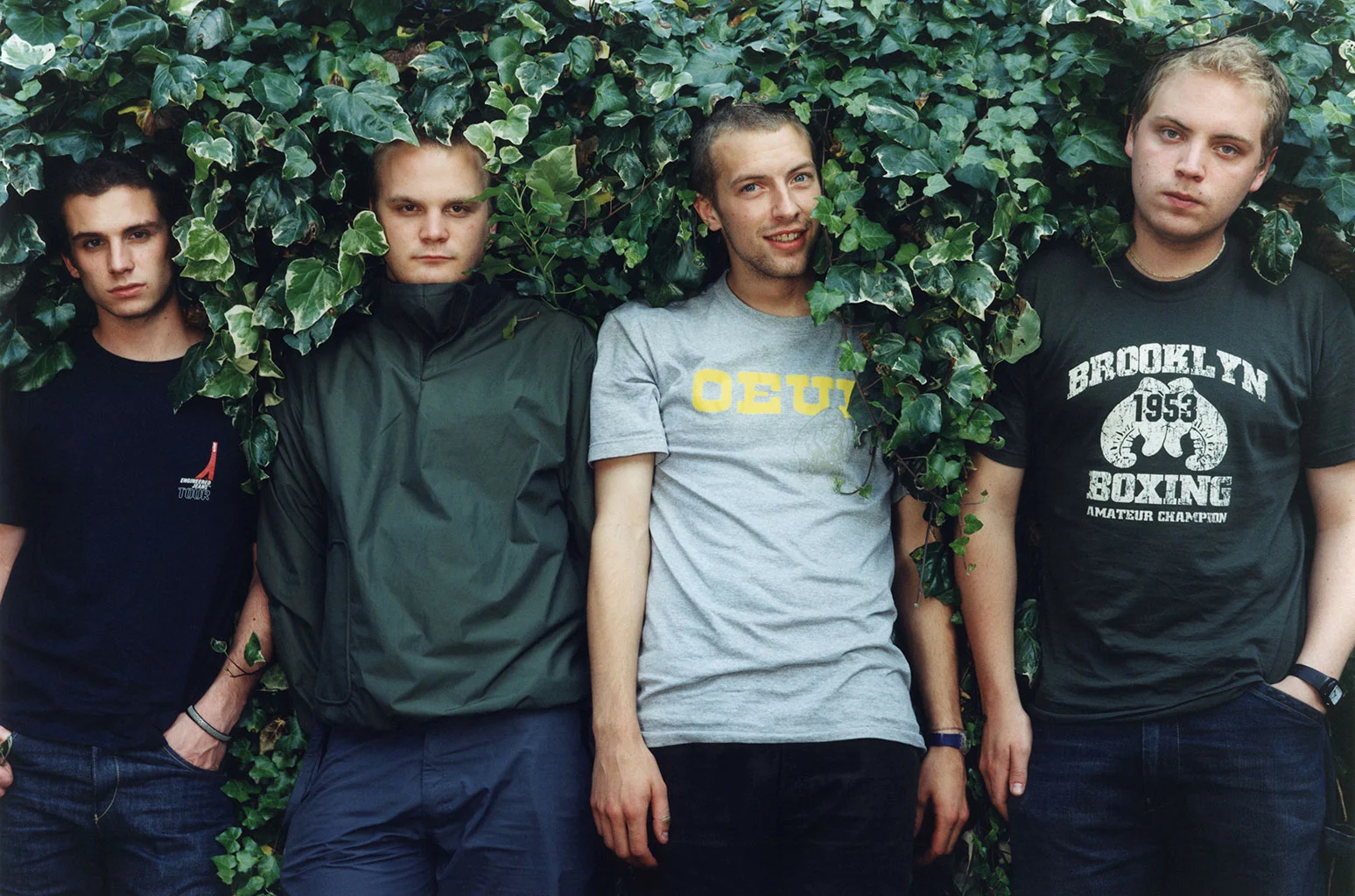
Of course, 'Yellow' became Coldplay's breakthrough hit, an anthem built on a simple but unforgettable guitar riff and a declaration of devotion that resonated with listeners worldwide. Its glowing, earnest simplicity made it a defining song of the era and catapulted the band to international fame. 'Sparks' offers a softer, jazz-tinged moment of introspection, while 'Everything's Not Lost' closes the album on a note of hope and communal uplift, encouraging perseverance even in the face of uncertainty.
The album was met with acclaim from both fans and critics, going on to become one of the cornerstone records of the 'Post-Britpop' genre. 'Parachutes' is not only an excellent debut, but a record that gave us some of Coldplay’s most enduring and beloved songs, tracks that helped define the sound of the early 2000s and set the stage for the band’s meteoric rise.
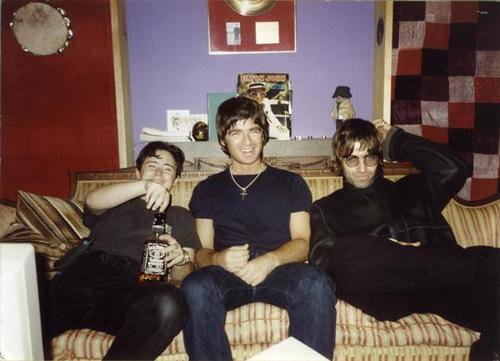
Oasis would also release a record in 2000, 'Standing on the Shoulder of Giants', their fourth album. It was the last album to feature founding members Paul "Guigsy" McGuigan and Paul "Bonehead" Arthurs. The album marked a transitional period for the band, both personally and musically. Noel Gallagher wrote most of the songs while coming off cocaine, which brought a rawer, more introspective edge to some tracks.
The opening track, 'Fuckin' in the Bushes', immediately set a confrontational and experimental tone for the record. Built around a raucous sample from Murray Lerner’s 1970 Isle of Wight Festival documentary, Message to Love, its heavy, looping beats, samples, and wordless bravado became an unlikely live anthem for Oasis. The track was often used to open their gigs in the 2000s, perfectly capturing the band's swagger as they entered a new era.
Musically, the album saw Oasis experimenting more with electronic textures, loops, and layered production than on their previous work, moving slightly away from the anthemic Britpop guitar sound that had defined the 90s. 'Go Let It Out' stands as perhaps the closest Oasis ever got to truly channelling The Beatles; psychedelic flourishes, sitar-like guitar lines, and a buoyant groove made it a standout single and a UK Number One hit.
'Gas Panic!' demonstrated a darker, almost cinematic side of the band, with its brooding atmosphere, swelling strings, and introspective lyrics that explore fear, mortality, and the fragility of human relationships. It’s a sprawling track that shows Noel Gallagher pushing beyond the standard rock song structure, creating something both haunting and deeply emotional. Equally noteworthy is the criminally underrated 'Roll It Over', a track that balances a hypnotic, mid-tempo groove with melodic hooks that remind fans why Oasis were capable of crafting such infectious tunes even in a more experimental setting.
However, the album also had its weaker moments, with songs like 'I Can See a Liar' and 'Put Yer Money Where Yer Mouth Is' not ageing as gracefully, lacking the depth and emotional resonance of the stronger tracks. Overall, these highs and lows made 'Standing on the Shoulder of Giants' an uneven snapshot of Oasis at a crossroads, but its best songs proved the band's willingness to evolve and experiment, even as they grappled with internal changes and the pressures of a new decade.
Blur frontman Damon Albarn had a very different plan for the 2000s. He formed Gorillaz, an English virtual band, in 1998 with his friend Jamie Hewlett. This was something that had never been done before, and it saw Damon depart from Britpop sounds, instead embracing influences from hip-hop, world music, and punk. Before their debut album, Gorillaz released 'Ghost Train', their first-ever song, on the 'Tomorrow Comes Today' EP in 2000, hinting at the experimental path they would follow.
It was a genre-bending mix that would become one of the most successful musical projects of the decade. 'Clint Eastwood' was the band’s first major single, reaching Number 5 in the UK charts, and quickly became a defining anthem of the era. What had initially started as a joke quickly became something much bigger. Gorillaz would go on to have a string of hits throughout the 00s, with their self-titled debut album in 2001 marking the start of it all.
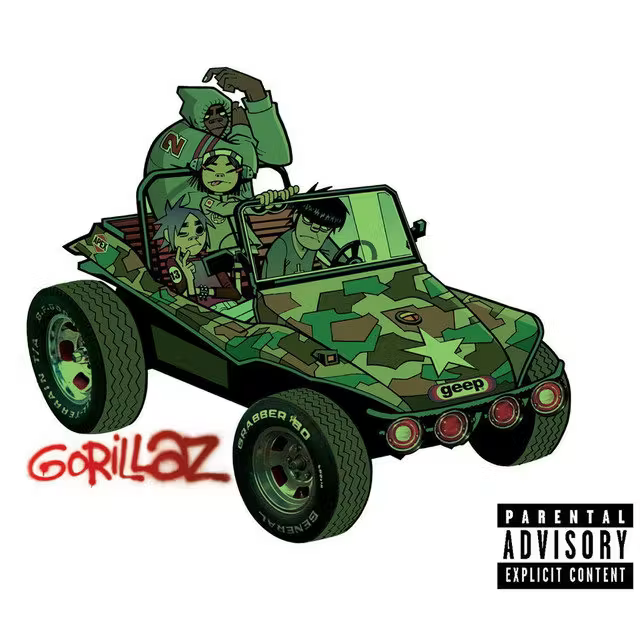
The album was a bold experiment in sound and concept, blending electronic beats, dub, hip-hop, and alternative rock with Albarn’s melodic sensibilities. Standout tracks like 'Tomorrow Comes Today', 'Clint Eastwood', and '19-2000' each captured a different facet of the band's genre-blurring style, combining moody introspection, infectious hooks, and cartoonish energy. Collaborations with artists like Del the Funky Homosapien added a fresh, genre-crossing edge. The album’s visual component was equally revolutionary, with the animated band members serving as a narrative and artistic vehicle, giving the project a unique identity that set it apart from anything else on the charts at the time.
Critics met the record with widespread acclaim, praising its innovative approach and the seamless blending of genres. Many highlighted Albarn’s songwriting and the album’s adventurous production as evidence that pop music could still be bold and experimental. Some reviewers noted that while the virtual band concept was unconventional, it perfectly complemented the music, creating an immersive experience that was both playful and thought-provoking. Commercially, it performed well too, cementing Gorillaz as a serious artistic force rather than just a novelty act.
Gorillaz’s impact extended far beyond the music itself. The band’s animated personas. 2D, Murdoc, Noodle, and Russel became pop culture icons, and the groundbreaking music videos, particularly for tracks like 'Clint Eastwood' and '19-2000,' introduced a new visual language to the charts. Their blend of satire, dystopian storytelling, and genre-mashing production paved the way for future multimedia projects in pop and alternative music.
American bands had some success in the early part of the decade, just as they had at the end of the 90s. Korn, Queens of the Stone Age, and Linkin Park all released albums that made an impact on the UK charts, with varying degrees of success. Linkin Park's debut album would age remarkably well. In contrast, the others, in my opinion, didn’t stand the test of time as firmly. This period of guitar music is awful; the world needed a new band or scene to drag guitar music away from the gimmicks.
On July 30th, 2001, The Strokes changed the world with the release of their debut album, ‘Is This It’. Read any account of alternative music from that time and, before that date, you’ll find despair, nu-metal and bland, uninspiring indie. With just one 36-minute record, the five New Yorkers upended everything and gave the world something to be excited about again. They sparked a whole new wave of bands you’d stake your colours to the mast for in the years following: The Libertines, Arctic Monkeys and more, and became the group to beat.
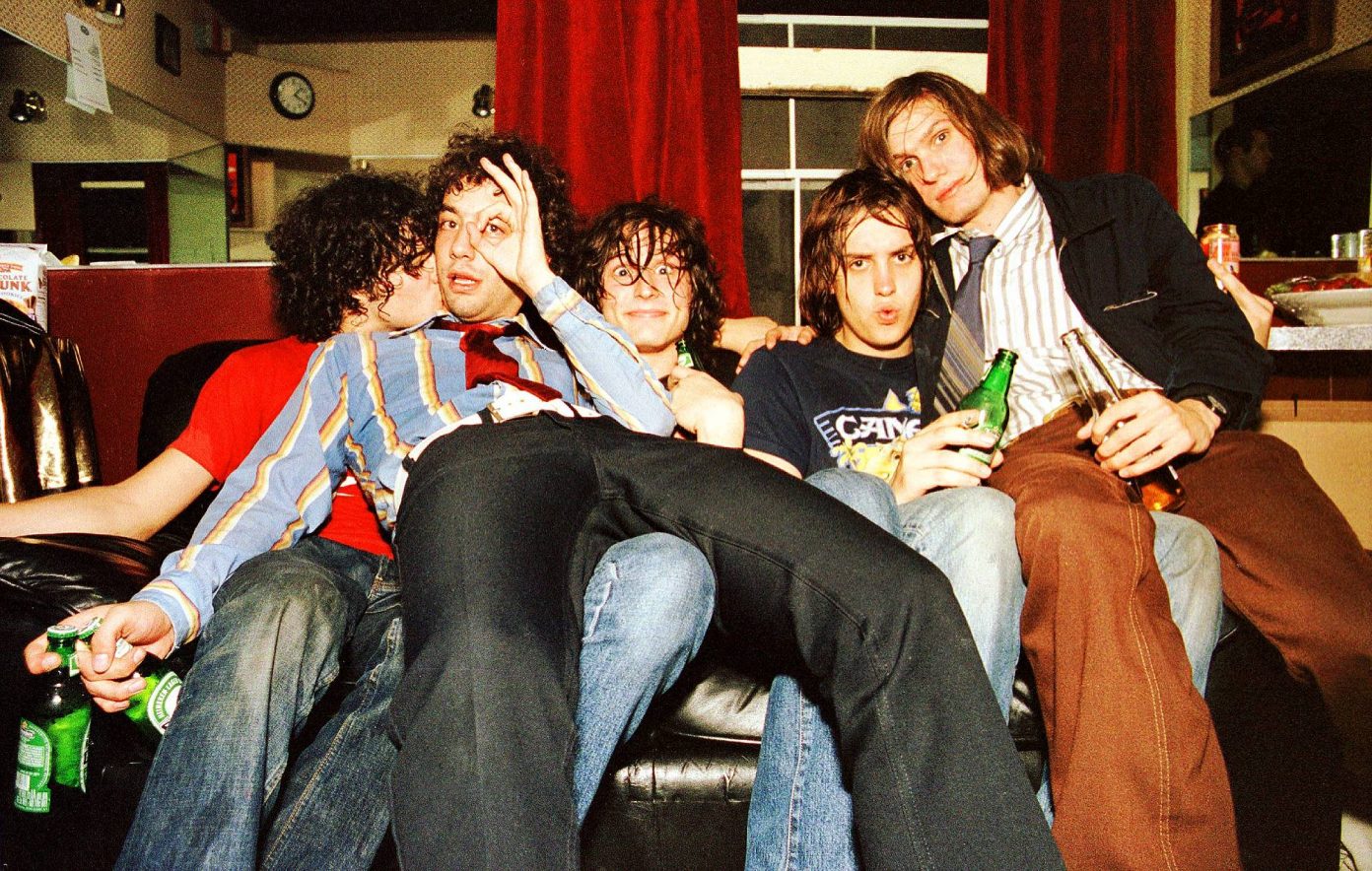
‘Is This It’ is packed with songs that quickly became modern classics, each helping to define a new era for guitar music. The title track opens the album with a laid-back groove and Julian Casablancas’ world-weary vocals, setting the tone for the band’s cool detachment and effortless swagger. 'The Modern Age' and 'Last Nite' are both urgent and infectious, combining sharp riffs with undeniable hooks; 'Last Nite' in particular became an anthem for a generation, its instantly recognisable guitar line and singalong chorus making it one of the defining singles of the decade.
'Someday' delivers bittersweet nostalgia, pairing a sunny melody with lyrics about lost youth and fleeting connections, while 'Hard to Explain' is a masterclass in tight, rhythmic interplay and cryptic storytelling. 'New York City Cops' channels the band’s punk energy and irreverence, and 'Take It or Leave It' closes the album in a burst of frenetic energy. Each track is lean, direct, and bursting with attitude, proof that simplicity and restraint could be just as powerful as the maximalism that dominated the late ‘90s.
With ‘Is This It’, The Strokes didn’t just revive guitar music. They redefined what it could be, inspiring a global wave of new bands and cementing their place as icons of the early 2000s.
Culturally, The Strokes didn’t just influence the sound of the decade—they changed the look and attitude of indie rock. Their thrift-store-chic skinny jeans and insouciant charisma were endlessly imitated. Bands like The Libertines, Arctic Monkeys, and Interpol all took cues from The Strokes’ approach, both musically and aesthetically. The album’s success also opened the floodgates for a resurgence of guitar bands across the US and UK, setting the stage for a new era of indie dominance.
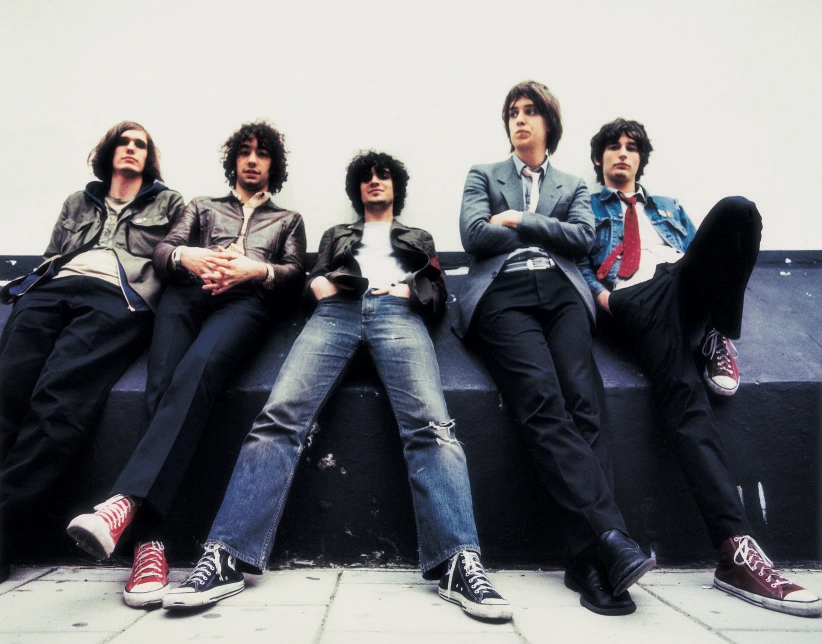
The Strokes' impact was felt quickly, with the emergence of new bands, The White Stripes and Yeah Yeah Yeahs leading the charge. The White Stripes, fronted by Jack and Meg White, were perhaps the most iconic of these. Their minimalist setup, just guitar, drums, and raw vocals, set them apart from overproduced contemporaries and brought garage rock back to its roots. Their 2003 hit 'Seven Nation Army' became a global anthem, its instantly recognisable bass line still chanted at stadiums today and inspiring generations of musicians.
'Fell in Love with a Girl' was a burst of garage-pop energy, clocking in at under two minutes, with a frenetic pace and a groundbreaking Lego-animation video that captured their playful spirit. 'The Hardest Button to Button' showcased Jack White’s inventive guitar work and the duo’s minimalist chemistry, with its iconic drum visual sequence immortalised by director Michel Gondry. Across their albums, The White Stripes blended blues, punk, and folk influences, and tracks like 'Dead Leaves and the Dirty Ground' and 'Hotel Yorba' further showed their knack for combining gritty authenticity with pop sensibility. Their sound was both retro and radical, and their influence was felt across the decade.
Yeah Yeah Yeahs, led by Karen O’s magnetic stage presence and the inventive guitar of Nick Zinner, brought an art-punk sensibility to the scene. Their breakout track 'Maps' fused vulnerability with raw power, becoming an enduring indie classic thanks to its emotional delivery, Karen O’s trembling vocals, and the song’s unconventional structure. 'Maps' was a love song that felt both intimate and explosive, its refrain of “They don’t love you like I love you” carrying a universality that resonated with fans and critics alike. The track’s music video, featuring a tearful Karen O, became iconic, capturing the raw emotion that set the band apart.
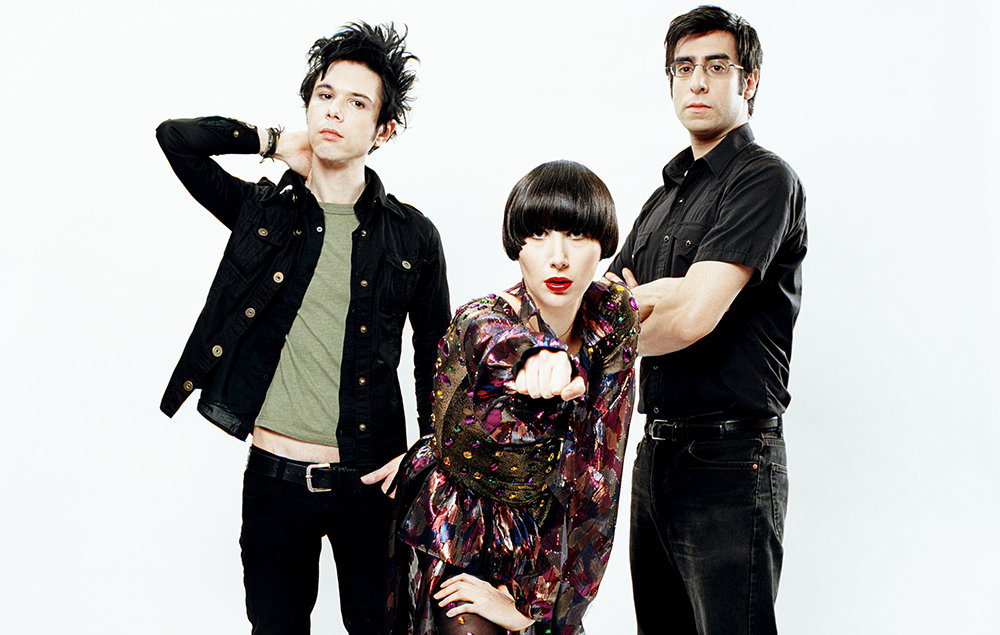
Later, 'Heads Will Roll' saw the band embrace dance-punk influences, resulting in a track that filled both indie clubs and festival fields with its infectious energy. Songs like 'Y Control' and 'Zero' further demonstrated their ability to balance art-rock edge with pop immediacy, solidifying Yeah Yeah Yeahs as one of the most innovative bands of the 2000s.
Kings of Leon would also be influenced by The Strokes, even earning the nickname 'The Southern Strokes'. They took The Strokes' approach to making music, tight, catchy riffs and raw, energetic performances, and added a heavier, darker, and more menacing tone to their songs. 'California Waiting' from their debut album 'Youth & Young Manhood' serves as a prime example, blending Southern grit with urgent, edgy guitar lines and Caleb Followill’s distinctive, soulful vocals. The album as a whole captures a raw, youthful energy that felt both familiar and refreshingly different from the Nu Metal and Pop Punk that was dominating the early 2000s.
What truly set Kings of Leon apart, however, was their ability to fuse classic Southern rock influences, think Lynyrd Skynyrd and The Allman Brothers, with the lean urgency of garage rock. The family dynamic of the band (three brothers and a cousin) gave their early work a sense of wild camaraderie and volatility, with songs that felt lived-in and authentic, yet unpredictable. Tracks like 'Molly’s Chambers' and 'Red Morning Light' bristled with swagger and attitude, while 'Wasted Time' and 'Trani' hinted at the band’s capacity for slow-burning, blues-inflected storytelling. Their image- long hair, moustaches, and a devil-may-care attitude- helped them stand out from their peers, giving the sense of a band that could have emerged from a different era, but with a distinctly modern edge.
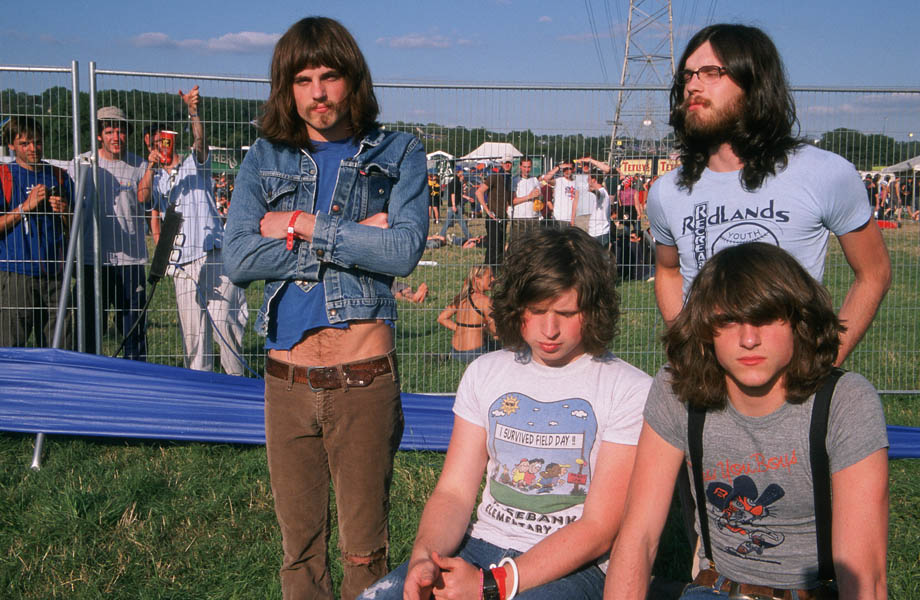
Kings of Leon quickly earned a reputation as a must-see live act, with sweaty, chaotic, and electrifying performances. Their explosive shows, equal parts Southern revival and indie party, helped them build a devoted following on both sides of the Atlantic, and they were embraced by the UK scene even before achieving mainstream success in the US. The critical buzz around 'Youth & Young Manhood' was matched by word-of-mouth excitement, and the band’s blend of raucous energy, memorable hooks, and unvarnished honesty ensured they stood out in a crowded field.
Their follow-up, 'Aha Shake Heartbreak', built on this foundation while exploring more dynamic song structures and anthemic choruses, with tracks like 'The Bucket' and 'Four Kicks' showcasing the band’s ability to balance aggression with melody. Both albums would go on to become two of the most essential rock releases of the decade, defining Kings of Leon’s early sound and establishing them as a band capable of shaping the era’s rock landscape.
These 'Kings of the Rodeo' would play a massive part in 00s rock music throughout the decade, making an impact on both sides of the pond.
Guitar music in America had changed. Nu Metal, Pop Punk and Grunge were old news. The Strokes had sparked a new movement, reinventing guitar music just when it needed it.
Meanwhile, in England.
The Libertines entered the fray in 2002, and just like The Strokes had in 2001, they caused quite the scene. 'What a Waster' was the band’s first single and would break the Top 40 with ease. NME called them "The best new band in Britain," and the hype began. The chemistry between Pete Doherty and Carl Barat is what made The Libertines brilliant. It was a fractured friendship that was always on the edge of spilling over, but that was part of the appeal.
The band would release 'Up the Bracket' in 2002, propelling them to stratospheric heights. The songs were brilliant pieces of music, and in The Libertines' story, it’s sometimes easy to forget that. Yes, it was chaos, but songs like 'Time For Heroes', 'I Get Along', 'Boys in the Band', 'Up the Bracket' and 'The Good Old Days' are some of the best songs by a British band ever.
'Time for Heroes' for example was inspied by Pete's trip to the 2001 May Day riots, (“did you see the stylish kids in the riot? Shovelled up like muck and set the night on fire”), the devilishly simple pop-punk of ‘Time For Heroes’ is quintessential Libs, with lyrics about patriotism (“there’s fewer more distressing sights than that of an Englishman in a baseball cap”), romance (“you know I cherish you my love”), real-life violence (“wombles bleed, truncheons and shields”), togetherness when faced with the dastardly deeds of the people who run this country (“and we’ll die in the class we were born, but that’s a class of our own my love”), and a reference to a favourite literary character (“and Bill Bones, Bill Bones knows what I mean”) all perfectly slurred by the most elegantly wasted poet in the land.
The record's title track was taken from Tony Hancock and refers to a punch in the throat. The “two shadow men on the Vallance Road” that Pete sings about are, of course, the Kray twins. And this song, of course, is the perfect mix of London history, literary references, Doherty storytelling, romanticising of violent crime and the barely containable punk energy of the Libertines.
'The Good Old Days' quite simply has one of the most profound lyrics by a British band ever, If you’ve lost your faith in love and music, the end won’t be long."
'Up the Bracket' was a raw, ragged, and utterly electrifying debut, produced by The Clash’s Mick Jones, whose influence helped the band capture a sense of urgency and danger that few records of the era could match. The album’s sound was scrappy and immediate; guitars clashed, and vocals tumbled over each other, but beneath the chaos was a tight, poetic vision.
The lyrics, steeped in romanticism, London mythology, and a longing for escape, felt both timeless and deeply of their moment. Tracks like 'Vertigo' and the title track bristled with punk energy, while 'Death on the Stairs' and 'Tell the King' showcased Barat and Doherty’s knack for bittersweet, storytelling songwriting.
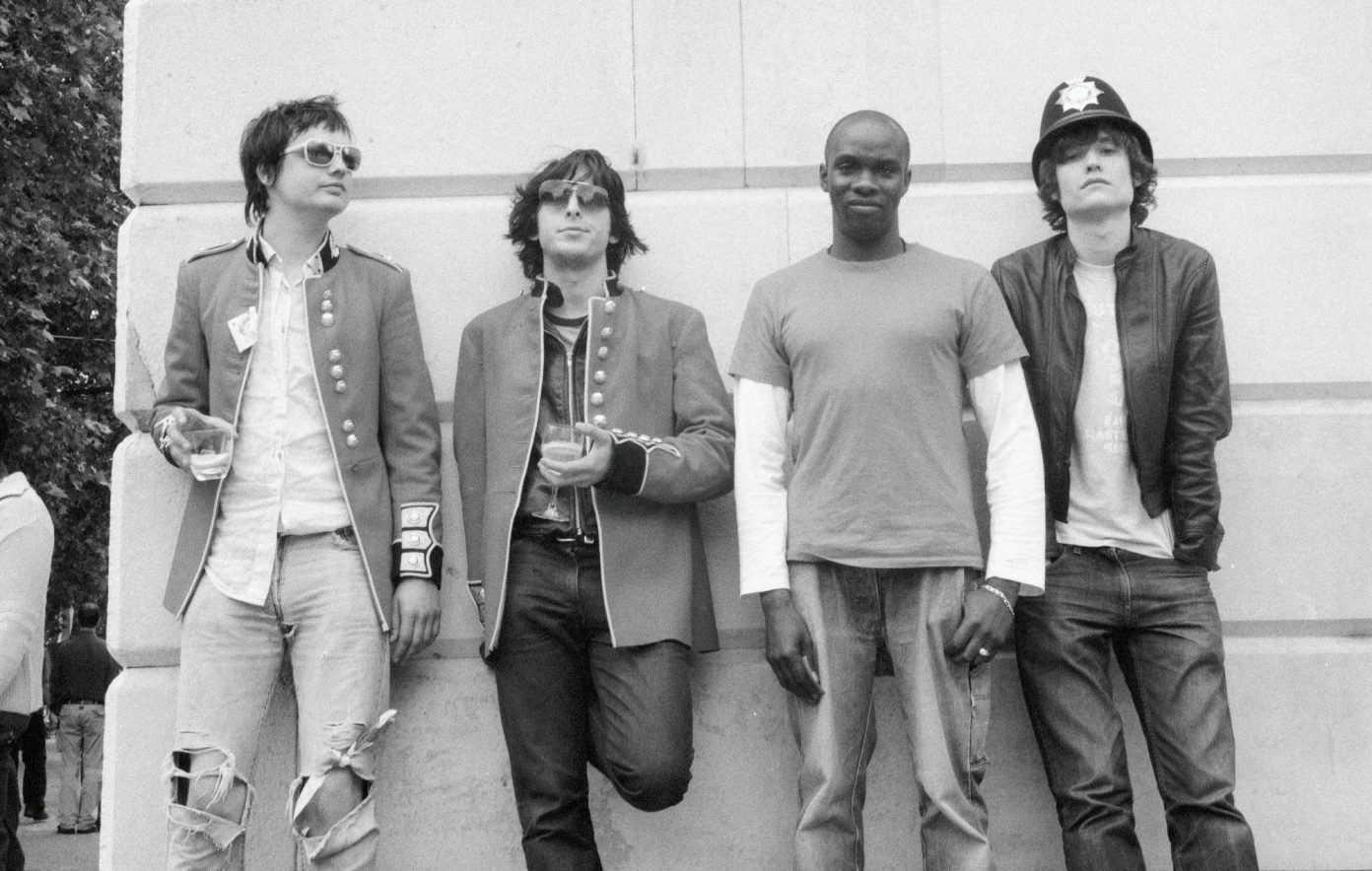
What set 'Up the Bracket' apart was its ability to channel all the volatility of the band’s relationships, friendship, rivalry, and self-destruction into music that felt alive and urgent. The record became an anthem for a generation of disaffected youth, capturing the feeling of being young, lost, and yearning for meaning in post-millennial Britain. It was always a circus with the band, though chaos seemed to find them. Doherty’s drug use had significantly increased (he was using both crack cocaine and heroin by this time), which led to his relationship with the rest of the band deteriorating.
'Don’t Look Back Into the Sun' was recorded in 2003 and released as a standalone single, earning widespread critical acclaim and quickly becoming The Libertines’ most beloved and enduring track. Its jangling guitars, anthemic chorus, and bittersweet lyrics captured everything exhilarating and heartbreaking about the band at their peak. The timing of the release was especially poignant: it came just before Pete Doherty was imprisoned for breaking into Carl Barat’s flat, a dramatic episode that underscored the volatility and tragedy at the heart of the band’s story. The single now stands as both a triumphant testament to their talent and a symbol of what was nearly lost, a reminder of how close The Libertines came to greatness before chaos and addiction pulled them apart.
The band would release another album in 2004, 'The Libertines', a self-titled record that captured the group at their most raw, fractured, and compelling. If 'Up the Bracket' was the sound of youthful anarchy, their second album was its bruised and battered aftermath, a portrait of a band teetering on the edge, torn apart by addiction, mistrust, and fame. The recording sessions were notoriously chaotic: Pete Doherty’s spiralling drug use and growing unreliability led to cancelled shows, tabloid headlines, and bitter fallouts with Carl Barat and the rest of the band. Producers struggled to keep the sessions on track, and at times, it seemed unlikely the album would be finished at all.
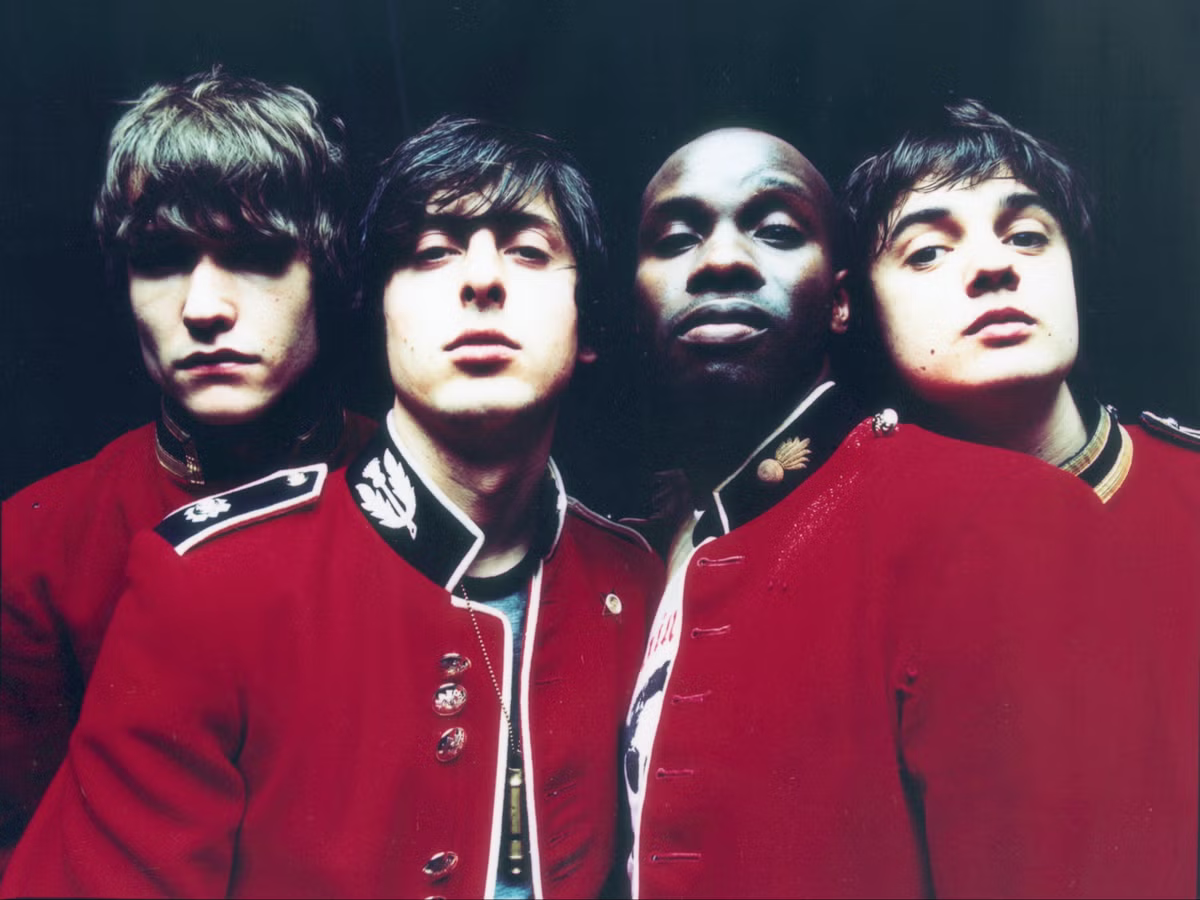
Yet from this turmoil came some of The Libertines’ most enduring and affecting songs. The lead single, 'Can’t Stand Me Now', is both a confessional and a confrontation, its lyrics a back-and-forth between Barat and Doherty that lays bare the pain and codependency of their friendship. The sense of heartbreak and defiance is palpable, making the track an instant classic. Elsewhere, songs like 'What Katie Did', 'Music When the Lights Go Out', and 'What Became of the Likely Lads' demonstrate the band’s unparalleled ability to mix ragged poetry, nostalgia, and vulnerability into something deeply resonant. The album’s sound is less frenetic than its predecessor, but more introspective and wounded, with moments of beauty cutting through the haze of dysfunction.
When the record debuted at number one on the UK Albums Chart, it felt like both a triumph and a farewell. The end of the original lineup was all but inevitable, but 'The Libertines' cemented the band’s legacy as one of the most influential and iconic British groups of the decade, a band whose music was inseparable from their tumultuous story, and whose greatest art often emerged from their darkest moments.
Whilst The Libertines had been causing chaos, Coldplay released 'A Rush of Blood to the Head', a pivotal album that marked a significant evolution from their debut, 'Parachutes.' Expanding their sound with grander arrangements and deeper emotional resonance, the album positioned Coldplay as a band with far-reaching ambition.
A Rush of Blood to the Head' is a record bursting with ambition and inventiveness, and it delivered some of the most iconic tracks of the decade. 'Clocks', with its hypnotic, cascading piano riff and urgent rhythm section, remains one of Coldplay’s defining songs, an anthem that manages to be both uplifting and melancholic. The track’s cyclical energy, insistent beat, and soaring chorus have made it a staple of both radio and live shows, instantly recognisable and emotionally resonant.
'God Put a Smile Upon Your Face' saw the band introduce a darker, more muscular edge to their sound. Its gritty guitar lines and cryptic lyrics elevated Coldplay’s style, revealing a newfound swagger and confidence. The song’s propulsive energy and unconventional structure helped it stand out as one of the album’s boldest moments, a signal that Coldplay were willing to experiment with mood and texture.
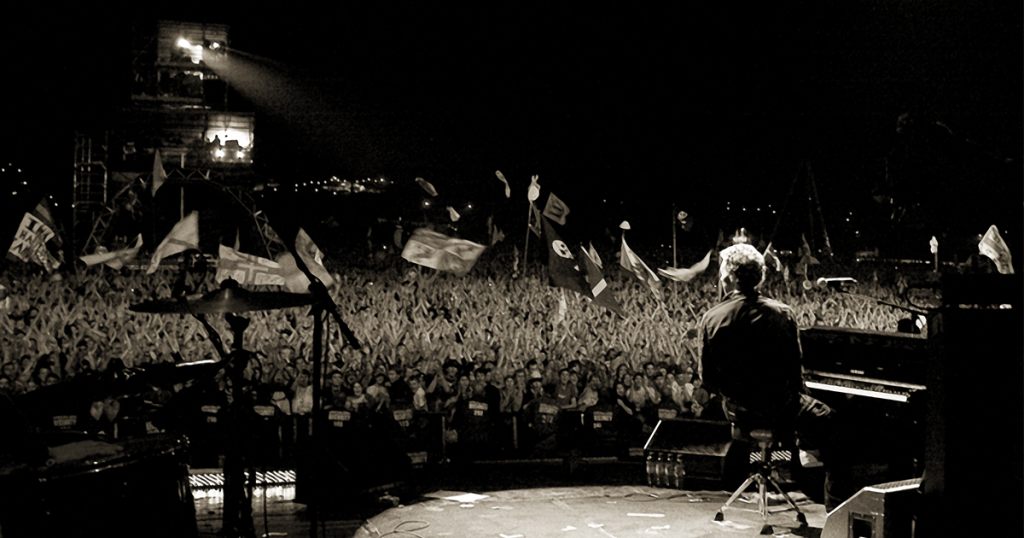
'The Scientist' became a modern ballad for the ages, its plaintive piano and Chris Martin’s haunting vocals perfectly capturing regret, longing, and the search for redemption. The song’s simple, elegant melody and heartfelt lyrics are paired with one of the most iconic music videos of the 2000s, filmed in reverse to mirror the aching desire to turn back time. It remains a touchstone for heartbreak anthems and showcases the band’s ability to connect on a universal level.
'Warning Sign' and 'Daylight' further showcased the band’s evolving range. 'Warning Sign' is a bittersweet meditation on missed chances and lost connections, with a gentle build and subtle instrumentation carrying a weight of vulnerability that became a Coldplay hallmark. 'Daylight', on the other hand, is an atmospheric, slow-burning track that pushes the band into new sonic territory, its swirling textures and insistent groove foreshadowing the more experimental direction Coldplay would later pursue.
Taken together, these tracks demonstrate not only Coldplay’s knack for crafting unforgettable songs but also their willingness to expand their palette and emotional reach. With 'A Rush of Blood to the Head', they created a record that was both cinematic and intimately personal, setting the standard for ambitious British rock in the new millennium.
Across the album, Coldplay drew inspiration from the experimental brilliance of Radiohead and the sweeping anthems of Blur, moving well beyond the gentler stylings of Travis that had shaped their debut. The result was a much more expansive and cinematic listen, balancing intricate musicianship with Chris Martin’s introspective lyrics and establishing the band as masters of both the epic and the intimate.
The album was a critical and commercial triumph, earning widespread acclaim and several awards, including the Grammy for Best Alternative Music Album. It launched Coldplay into the global spotlight, solidifying their status as one of the most important bands of the early 2000s. With 'A Rush of Blood to the Head', they gained the momentum needed to take on their first Glastonbury headline slot in 2002
They would headline for the first time, alongside the band I will mention next.
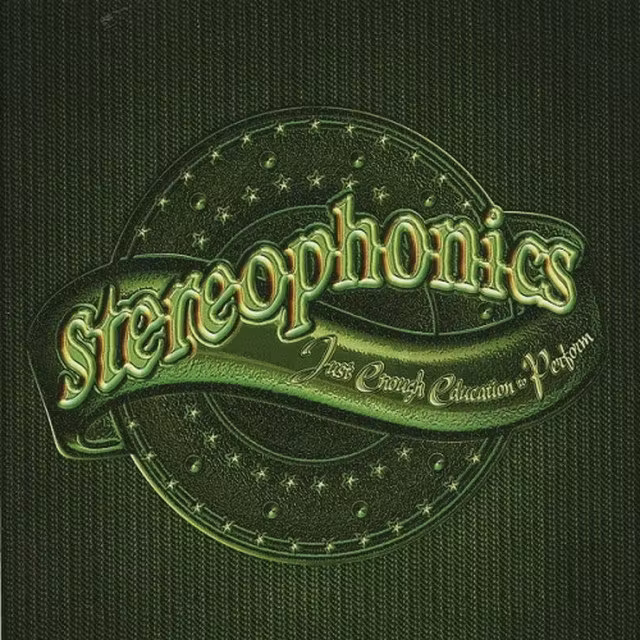
Stereophonics released 'Just Enough Education to Perform' in 2001, marking a subtle but significant reinvention of their sound. Coming off the back of the gritty, guitar-driven energy that defined their late ’90s output, this album introduced a more reflective, mature tone. It moved away from the heavier rock of their earlier records, leaning into acoustic textures and more intimate songwriting, and showcasing a band that wasn’t afraid to evolve.
The album became a defining moment for Stereophonics, both creatively and commercially. Tracks like 'Have a Nice Day' and 'Handbags & Gladrags' became ubiquitous, the former an upbeat, sarcastic take on commercial culture, and the latter a soulful Mike D'Abo cover that revealed a more tender, melancholic side of the band. 'Have a Nice Day' in particular captured the disillusionment with superficiality while remaining instantly catchy. 'Handbags & Gladrags' allowed Kelly Jones’ gravelly voice to shine in a way that brought the song a new emotional weight.
'Mr Writer' was a pointed swipe at the media, simmering with frustration and cynicism as it addressed the band’s contentious relationship with the press. The track’s moody, bluesy arrangement and memorable chorus made it a standout moment on the album. 'Step on My Old Size Nines' leaned into a rootsy, folky charm, its fingerpicked guitar and reflective lyrics offering a gentle, nostalgic respite from the bigger anthems. 'Vegas Two Times' opened the album with swagger, built on gritty riffs and a driving rhythm, showcasing the band’s ability to blend classic rock influences with modern sensibilities. 'Everyday I Think of Money' revealed a more sophisticated songwriting approach, delving into themes of materialism and anxiety with intricate arrangements and a sense of restless energy. Other highlights include 'Caravan Holiday', which evokes a bittersweet longing for escape, and 'Watch Them Fly Sundays', a contemplative track that explores the passage of time and the pull of home.
Lyrically, frontman Kelly Jones took a step forward as a songwriter. The tracks on 'Just Enough Education to Perform' were introspective, observational, and often emotionally raw, eschewing some of the pub-rock swagger of previous records for a more nuanced approach. Thematically, Jones was expressing himself in different ways; the Kitchen Sink drama of the first two records was replaced by a more emotional and almost autobiographical style of songwriting.
Commercially, the album was a juggernaut. It became the Stereophonics’ best-selling release, staying in the UK charts for over 100 weeks and propelling them to headliner status at major festivals. It also cemented their place as one of Britain’s most dependable rock acts, capable of delivering both hits and heartfelt songwriting.
But it wasn't just in the studio where Stereophonics made their mark at this time—their live presence was formidable. Off the back of 'Just Enough Education to Perform', the band headlined some of the UK’s most iconic venues and festivals. Their 2001 slot at V Festival confirmed their new status as festival headliners, while their show at Slane Castle in Ireland saw them play to over 80,000 fans, cementing their reputation as one of the biggest live acts of the era. They made history with a huge homecoming gig at Cardiff’s Millennium Stadium in July 2001, performing to a sell-out crowd of 60,000 in what became a landmark moment for Welsh music. Later that same summer, they performed at Donington Park, a legendary venue known for hosting some of the biggest names in rock, which further proved their ability to command massive audiences.
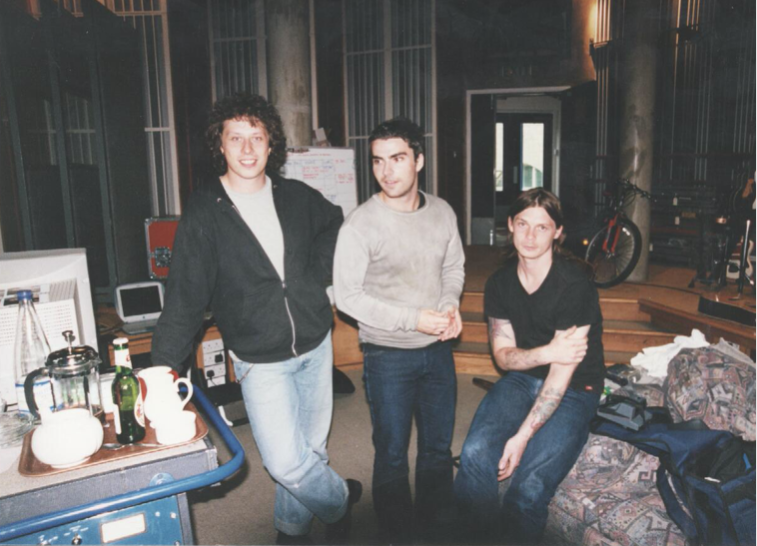
Perhaps most significantly, Stereophonics joined the ranks of true British rock royalty by headlining Glastonbury Festival for the first time in 2002. Sharing the top billing with Coldplay, their set at Worthy Farm solidified their status as one of the era’s most important and enduring live acts.
Another band worth highlighting from this period is Liverpool’s The Coral, one of the most underappreciated acts of the 2000s. Emerging at the height of the garage rock revival, The Coral offered a distinctly British twist on the era’s guitar resurgence. What set The Coral apart was their refusal to be boxed into a single genre or sound, a trait that continues to define their timeless appeal. Instead, they built a diverse catalogue of brilliant songs that defied easy categorisation, drawing on everything from 60s psychedelia and Merseybeat to folk, reggae, and even sea shanties.
Their early sound stood in sharp contrast to the prevailing trends of the time. While many contemporaries looked to New York or Detroit for inspiration, The Coral leaned into the strange, surreal, and distinctly coastal weirdness of their native Wirral and Liverpool. Their music felt like an escape into a parallel universe of haunted fairgrounds and windswept harbours, with lyrics that balanced whimsy and melancholy. The band’s youthful energy was matched by a rare musical sophistication, with each member contributing to the rich, layered arrangements that became their hallmark.
This album could only have come from six lads rooted in this corner of the world. Liverpool has spent over forty years acting like a principality, an island unto itself, with its own rules, sensibilities, and creative spirit. The city that produced the greatest band ever, and has continued to have a rich musical history, all with unique songwriters and songs. Whilst England danced to Duran Duran, Liverpool learnt to dance and sing to 'The Killing Moon' and 'Seven Seas', whilst Manchester produced The Stone Roses, Happy Mondays, The Smiths and the world-conquering Oasis, Liverpool had Shack, who were riddled with misfortune and addiction; ironically, their biggest hit was called 'Comedy' and their biggest album was named 'HMS Fable'. The sea is there again. Even the commercially successful bands, i.e., Frankie Goes to Hollywood, did it by getting banned by the BBC; Liverpool always does its own thing.
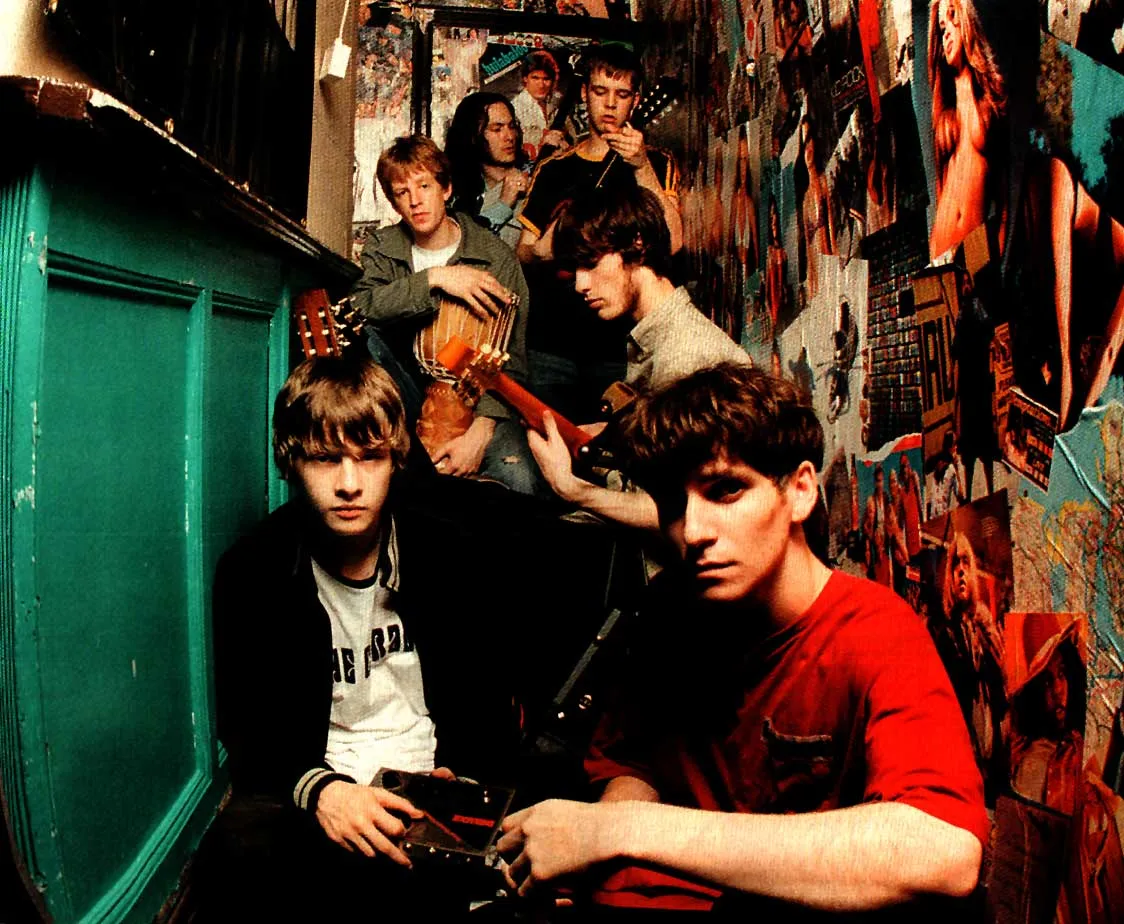
'Spanish Main' blends the energy of The Specials with the melodic sensibility of Shack. It's frenetic yet deceptively simple, culminating in the anthemic chorus: "We'll set sail again, we're heading for the Spanish Main." It's a moment Oasis would envy. In another world, this would be a perfect album closer rather than the opener.
On 'Calendars and Clocks', the band drew from their love of cinema soundtracks. The result feels as if Ennio Morricone composed a sea shanty, blending spaghetti western drama with nautical storytelling. In each case, The Coral wove these influences thoughtfully into the fabric of their music, crafting songs that felt both familiar and entirely their own.
'Shadows Fall' feels like the theme to a Spaghetti Western, with its four-part harmonies and harmonica layered over reggae influences. Power and James Skelly penned the lyrics under a beachside shelter in Hoylake, their hometown. The track is a genre-bending triumph, fusing ragtime, Egyptian reggae, and barbershop harmonies, possibly a first on record. 'Goodbye' perfectly captures the band's talent for blending infectious melodies with psychedelic textures, serving as an ideal introduction to their eclectic sound. Its sing-along chorus and swirling guitars evoke a sense of youthful adventure and longing, setting the stage for the album’s blend of nostalgia and innovation. The song is instantly recognisable by its spoken-word countdown, "Ten, nine, eight, seven...", during the intro and bridge, which lends a tense, cinematic edge. A dramatic shift in tempo propels the track from a steady, driving verse into a wild, fast-paced instrumental breakdown, propelled by frantic organ riffs and crashing cymbals.
On an album full of so much, 'Dreaming of You' is an ode to simplicity; it's simply a great pop song. There's no mad twist or a drop that hits you from nowhere. Ian Skelly said of the song, "It was born out of a love of American doo wop and Mersey Beat."
Remarkably, when The Coral released their self-titled debut album in 2002, they were barely out of their teens. James Skelly, the band’s frontman and primary songwriter, was just 18, a testament to their precocious talent. The album was met with critical acclaim, earning a Mercury Prize nomination and producing a string of singles that became synonymous with the era. At a time when the British music press was searching for the next big thing, The Coral’s blend of youthful exuberance and old-soul songwriting made them a breath of fresh air. This early recognition marked the beginning of a career that would see the band remain ever-present throughout the decade and beyond.
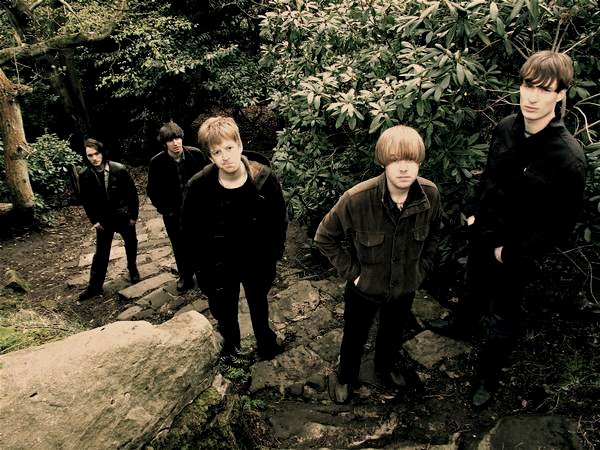
After their self-titled debut album in 2002, which earned them a Mercury Prize nomination, The Coral quickly followed up with 'Magic and Medicine' in 2003. Where the debut was wild and kaleidoscopic, 'Magic and Medicine' was moodier and more focused, drawing inspiration from classic songwriters like Ray Davies and Arthur Lee. The album traded some of the debut’s raw eccentricity for a lush, sepia-toned warmth; it felt like a band settling into its own skin. 'Don't Think You're the First' set the tone with swirling organs and cryptic lyrics, while 'Pass It On' delivered bittersweet melody and communal harmonies, arguably their greatest singalong moment. 'Secret Kiss' and 'Liezah' showed a gentle, almost pastoral side, while 'Bill McCai' told a quietly devastating story of everyday tragedy.
The album’s production was richer, the songwriting tighter, and the band’s influences more deeply woven into the fabric of each song. It was an accomplished step forward, cementing The Coral as more than just psychedelic revivalists; they were now classic British songwriters in their own right.
In 2005, The Coral released 'The Invisible Invasion', produced by Geoff Barrow of Portishead. The album found the band exploring darker, more atmospheric territory, with Barrow’s production lending a subtle, haunting edge. Songs like 'In the Morning' balanced jangling pop with a surreal, dreamlike quality, while 'Something Inside of Me' and 'A Warning to the Curious' delved into psychedelic paranoia and ghostly storytelling. The record’s soundscape was more stripped-back and eerie compared to earlier work, with spectral organs, echoing guitars, and a sense of nocturnal mystery running throughout. 'The Invisible Invasion' revealed a band unafraid of reinvention, using restraint and space to create tension and mood, and earning praise for its maturity and the band’s continued evolution.
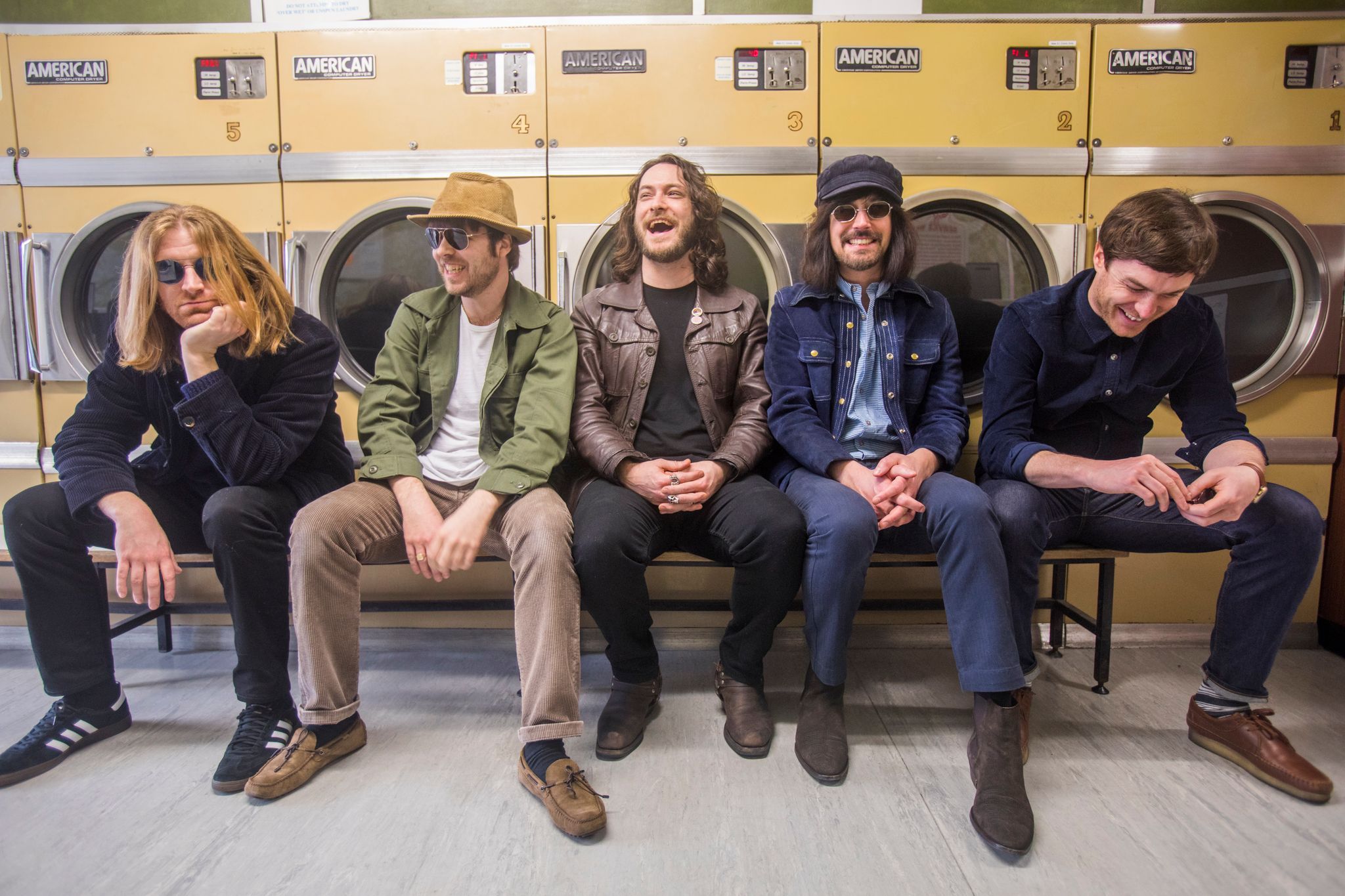
The Coral have continued into the 2010s and 2020s, constantly reinventing themselves while preserving the core of their sound. Despite losing Bill Ryder-Jones in 2008, the band pressed on, never losing their sense of adventure or melodic gift. 2010’s 'Butterfly House' marked a return to lush, sun-dappled psychedelia, with shimmering harmonies and intricate arrangements; tracks like 'More Than a Lover' and '1000 Years' demonstrated the band’s increasing songwriting confidence and ability to craft timeless melodies. 'Distance Inbetween' (2016) saw them embracing a heavier, darker, and more groove-driven sound, with fuzz-laden guitars and hypnotic rhythms, proving their willingness to push into new territory.
In 2021, The Coral released 'Coral Island', an ambitious double album and concept piece. The record conjures up the faded glamour and bittersweet nostalgia of a fictional British seaside town, complete with spoken-word interludes by the Skelly brothers’ grandfather. Songs like 'Lover Undiscovered' and 'Faceless Angel' blend storytelling, melody, and atmosphere in a way only The Coral can, while the project as a whole stands as a testament to their restlessness and creativity.
The band followed this with the twin releases of 'Sea of Mirrors' and 'Holy Joe's Coral Island Medicine Show' in 2023, further expanding their universe. These albums doubled down on cinematic storytelling, lush arrangements, and a spirit of invention that has kept The Coral both vital and unpredictable for over two decades. In an era when many of their peers faded away, The Coral remain one of Britain's most enduring and imaginative indie rock bands.
The arrival of The Streets in 2002 marked a seismic shift in British music. Mike Skinner’s debut album, 'Original Pirate Material', famously recorded in a cupboard in his London bedroom, fused UK garage, house, hip-hop, and indie into a street-level, genre-bending masterpiece. Skinner’s conversational delivery and unvarnished honesty painted vivid portraits of everyday life, narrating late-night escapades, urban decay, and fleeting moments of hope with wit and authenticity.
'Weak Become Heroes' stands as one of the emotional centrepieces of 'Original Pirate Material'—a nostalgic, bittersweet ode to the UK rave scene and the unlikely sense of community found on the dancefloor. Skinner’s lyrics paint a vivid picture of those nights: turning left up grey city streets, fast food wrappers underfoot, anticipation building as the music’s piano loops rise. He captures the thrill of strangers becoming friends, the fleeting unity of a crowd, and the heady blur of connection, pride, and melancholy as the night unfolds. The track’s detailed vignettes, encounters with characters like European Bob, hands raised to the sky, eyes rolling back as the beat drops, evoke the magic and euphoria of club culture, while the refrain “we all smile, we all sing, the weak become heroes, then the stars align” becomes an anthem for a lost generation.
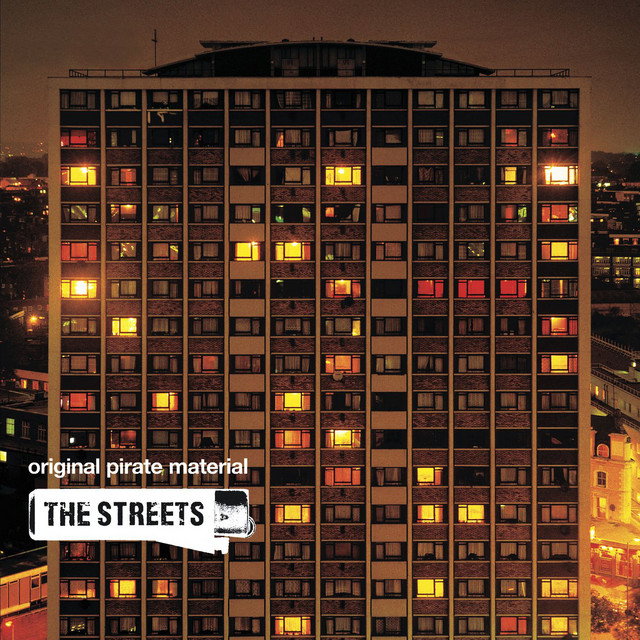
Skinner’s spoken-word verses flow seamlessly into the chorus, each observation feeling lived-in and true. In the song’s final verses, he dedicates the track to the pioneers of the scene: Johnny Walker, Paul Oakenfold, Nicky Holloway, Danny Rampling, and pointedly flips the bird to the government and the Criminal Justice Bill, cementing the song’s status as more than just nostalgia: it’s a tribute, a protest, and a celebration of a time and place that meant everything to those who lived it.
'Turn the Page' sets the tone for the entire record, opening with a cinematic string sample and Skinner’s declaration: “Stand by me, my apprentice.” It’s both manifesto and mission statement, part social commentary, part personal diary. The track’s relentless beat and stark, observational lyrics establish the world of the album: gritty, ordinary, and brimming with possibility. Here, Skinner positions himself as a narrator for a generation, giving voice to the overlooked and everyday in a way that felt entirely fresh and unmistakably British.
If 'Original Pirate Material' established The Streets as a new voice for British youth, it was 2004’s 'A Grand Don’t Come for Free' that proved just how inventive and ambitious Mike Skinner could be. The album is a true concept record, telling the story of a young man’s chaotic summer as he loses (and tries to recover) a thousand pounds, navigates love, heartbreak, and friendship, and finds meaning in the everyday.
Tracks like 'Fit But You Know It', 'Dry Your Eyes', and 'Blinded by the Lights' became instant classics, blending humour, vulnerability, and storytelling into a narrative arc that was as relatable as it was compelling. The album’s blend of humour, heartbreak, and authentic detail made it not just a critical and commercial success, but a landmark in UK music, a record that showed garage and rap could be vehicles for profound, uniquely British storytelling.
It would be impossible to talk about the early 2000s in British music without mentioning one of the most audacious and chaotic live events the country has ever witnessed: Fatboy Slim’s Big Beach Boutique II on Brighton Beach in July 2002.
In a nation famous for iconic gigs- think The Rolling Stones at Hyde Park, Queen at Wembley, or Oasis at Knebworth. Fatboy Slim’s DJ set stands apart as a cultural phenomenon that defied expectations and nearly broke the system.
Organisers anticipated a crowd of 50,000. Instead, an estimated 250,000 people descended onto Brighton’s pebbles for a free, open-air rave. The city’s infrastructure buckled under the weight: roads gridlocked for miles, emergency services overwhelmed, and the beach itself transformed into a heaving, dust-choked sea of bodies.
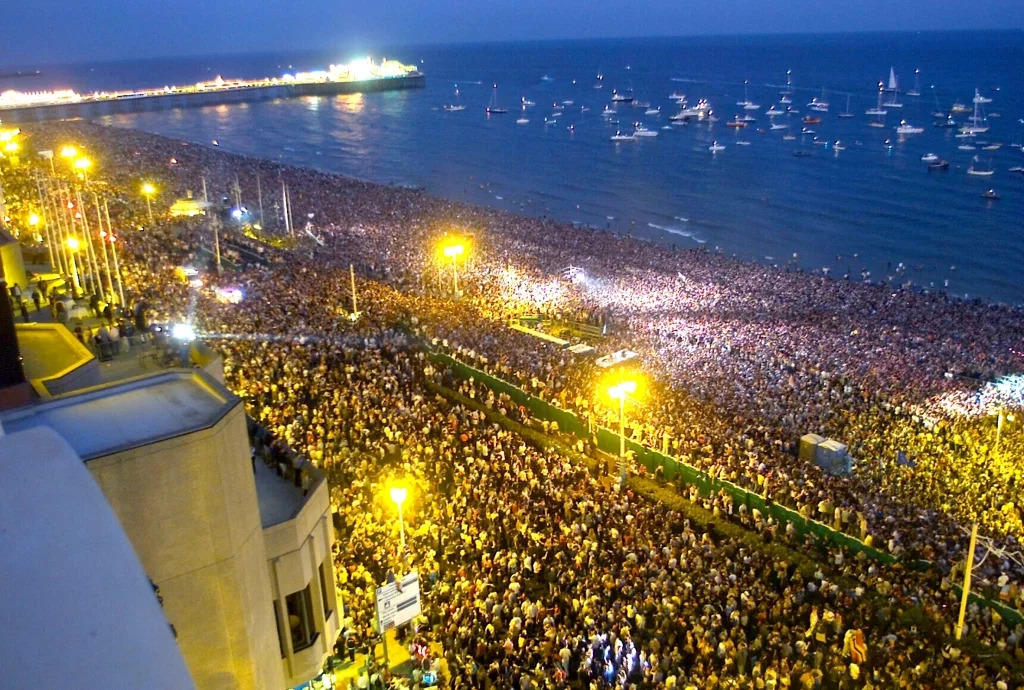
The event teetered on the edge of disaster, security teams abandoned their posts, ambulances became stranded, and as the tide rolled in, ravers were forced into the freezing English Channel, saved only by the boats anchored offshore.
The chaos continued long after the final track, 'Pure Shores', faded out.
Thousands headed to Brighton railway station for the 11:03 pm last train to London, but the power to the tracks had to be cut when people began falling from the platforms; some, in their desperation, even began walking along the tracks. With hotels full, thousands were left stranded, sleeping on a beach that now smelled strongly of urine and was covered in broken glass.
Emergency services were crippled. Some punters clung to ambulances to escape the crush, while other vehicles became hopelessly stranded in the mass of bodies. Paramedics were unable to reach audience members in need, and with the streets jammed, casualties had to be evacuated from the beach by lifeboats. A coastguard helicopter hovered over the shoreline throughout the evening, rescuing scores of unconscious people from the sea. The psychological toll was so high that half of the police officers who attended required trauma counselling.
Yet, somehow, catastrophe was narrowly avoided, largely thanks to the euphoric, peaceful crowd. However, the night was not without deep tragedies. A man in his 40s died on the beach after suffering a heart attack, and 26-year-old nurse Karen Manders lost her life due to head injuries following a fall from the railings onto the Lower Promenade. In the 'Right Here, Right Now' documentary, Cook reveals that Karen’s death has haunted him ever since. He reached out to her mother to offer his condolences, only to be told that her daughter had called earlier that night to say she was having the best night of her life.
The worries the authorities feared once the crowd reached the size it did never materialised due to the "loved-up" nature of the dance crowd. In the documentary about the 2022 event, a member of the security team that day said, “If that had been an Oasis gig, we would have been fucked.”
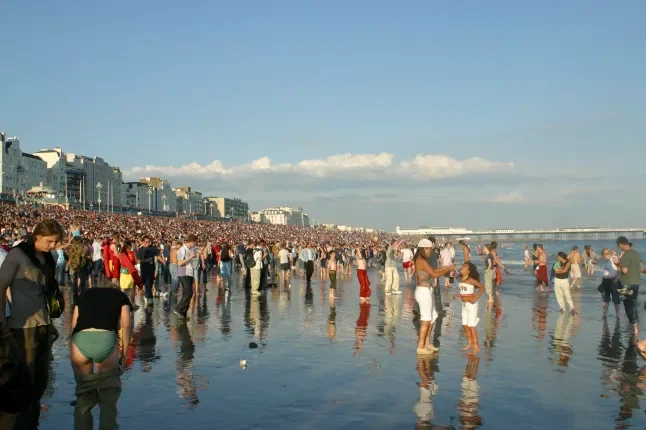
The aftermath was equally legendary: the city stank of urine for weeks, 160 tonnes of rubbish were cleared at a cost of £300,000, and Fatboy Slim himself fled Brighton on Paul McCartney’s advice, fearing public backlash, only to be met with gratitude from locals for giving them one hell of a party.
The legacy of Big Beach Boutique II is profound. It changed British event law forever, prompting the 2003 Licensing Act and marking the end of the era of unticketed mega-gatherings. In retrospect, it stands as the ultimate snapshot of pre-social media madness: a generation united by music, risk, and a sense of reckless adventure that can never be repeated.
It was a good time for British music, but it was about to get a whole lot better. Several bands were waiting in the wings, all of which wanted to take on the world.
And take on the world, they would.
The world in which these bands would emerge was a changing one. The post-9/11 atmosphere cast a long shadow over the decade, with heightened security, anxiety, and uncertainty becoming part of daily life. The UK’s involvement in the Iraq War in 2003 sparked widespread protest and debate, with 1.5 million heading to London on FeFebruary 15th003 to make their feelings known. They didn't stop Britain's involvement, but they would influence both the mood of the nation and the lyrical content of various artists.
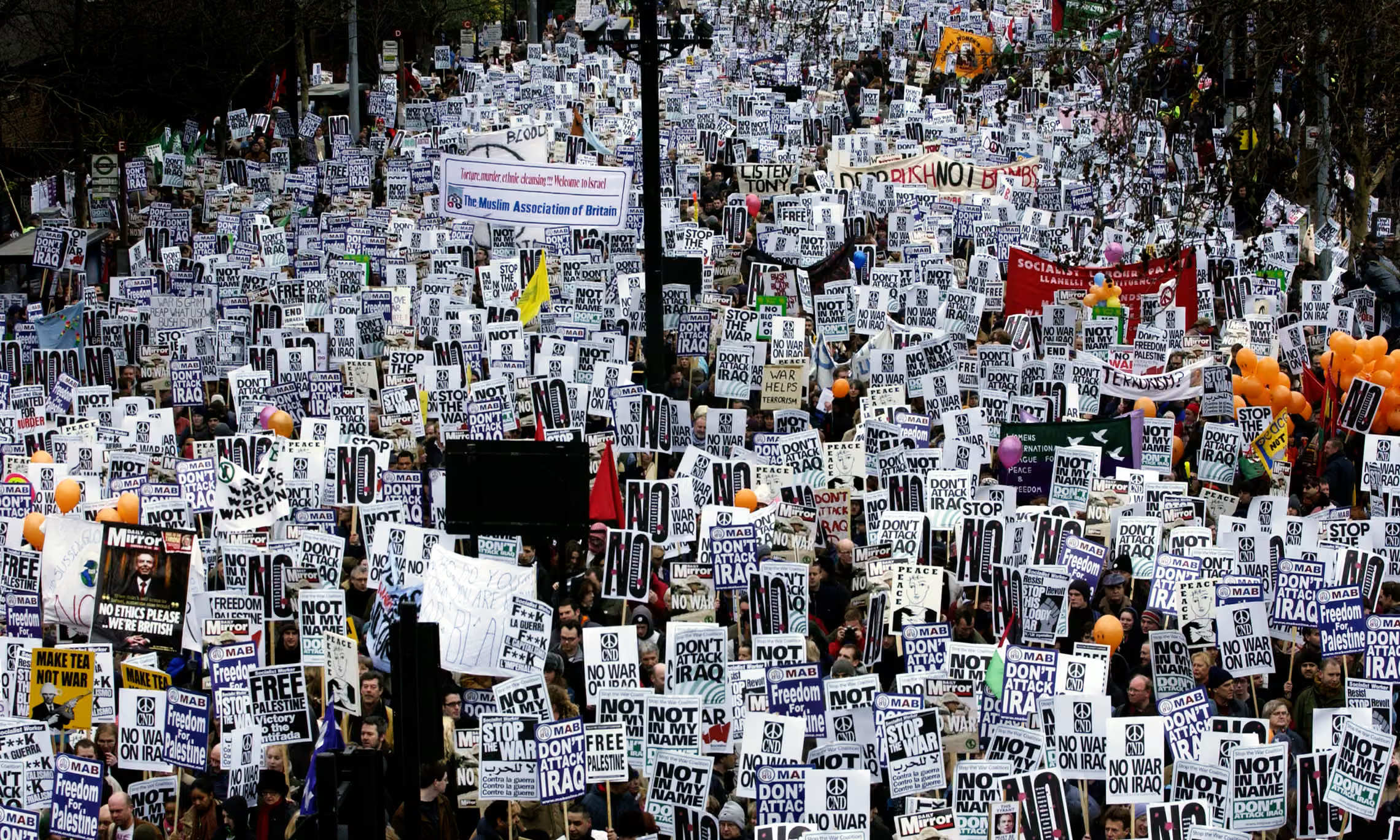
Travis would release 'The Beautiful Occupation' in December 2003 in direct response to the Iraq War, drawing inspiration from the anti-war marches. Written by Fran Healy, this indie-rock track uses a cheerful melody to deliver a biting critique of foreign policy and the media's handling of conflict. The lyrics, featuring lines like "You don't need an invitation to drop in upon a nation," express deep frustration with the "beautiful occupation." This protest song, which reflects the early-2000s anti-war sentiment, was also included on a charity album for War Child.
Bloc Party would also heavily mention the Iraq War on their debut 'Silent Alarm', more on them later, though.
Meanwhile, the Labour government, first under Tony Blair and later Gordon Brown, presided over a period of optimism, controversy, and cultural change. This was an era marked by both the promise of “Cool Britannia” and the realities of war, surveillance, the internet and shifting social values. The start of the new century and millennium brought with it some of the biggest changes to society ever.
2004 was the year I started primary school. It would also be the start for two major British bands, Kasabian and Franz Ferdinand. Arcade Fire would release one of the classic albums of the decade. Oh, and 'Mr. Brightside' would come out.
Before that though. In the early 2000s, Busted burst onto the UK music scene with a blend of pop-punk energy, cheeky lyrics, and catchy guitar hooks that appealed to a new generation of fans. Their debut self-titled album, 'Busted', released in 2002, featured infectious hits like 'What I Go to School For', 'Year 3000', and 'You Said No', all of which stormed the UK charts and helped redefine the sound of British teen pop. Their follow-up album, 'A Present for Everyone', delivered even more success with tracks like 'Crashed the Wedding' and 'Air Hostess', solidifying their status as one of the UK's most beloved boy bands of the era. Though their run was relatively short-lived before their 2005 breakup, their influence on the British pop landscape was undeniable. Busted brought guitar-driven pop back to the charts at a time dominated by polished vocal groups, and their blend of humour, hooks, and youthful swagger helped pave the way for a new era of pop-rock bands.
McFly emerged in the wake of Busted's success, but quickly carved out a strong identity of their own. Their 2004 debut album Room on the 3rd Floor debuted at Number One on the UK Albums Chart, making them the youngest band since The Beatles to achieve that feat. The album featured hits like '5 Colours in Her Hair', 'Obviously', and the title track, which blended catchy pop melodies with a sunny, surf-rock twist. McFly's success continued with albums like 'Wonderland' and 'Motion in the Ocean', spawning chart-toppers such as 'All About You', 'I'll Be OK', and 'Star Girl'. Their cheeky charm, tight musicianship, and crossover appeal made them a staple on UK radio and television, earning them a loyal fan base that has endured well beyond their teen-pop beginnings.

Franz Ferdinand’s self-titled debut album exploded onto the scene in 2004 and quickly became a touchstone for the entire indie rock revival. While its impact is often overshadowed by some of its contemporaries, this record is anything but overlooked by those who know its true value. Every one of its 11 tracks feels like a carefully crafted statement; there’s no filler, only sharp, inventive songwriting and relentless energy.
What set 'Franz Ferdinand' apart was its ability to blend art-school cool with pure pop immediacy. The band’s angular guitars, propulsive basslines, and taut, danceable rhythms drew on the legacy of post-punk but transformed it into something leaner, sexier, and more fun. The production is crisp and dynamic, giving each instrument room to breathe, and the interplay between Alex Kapranos’ arch vocal delivery and the band’s tight musicianship is magnetic.
'Take Me Out' became the defining anthem of the era, with its instantly recognisable stuttering guitar intro and the way it transforms from jagged rock to swaggering disco stomp. It’s a song built for indie dancefloors, but also one packed with wit and tension. 'Dark of the Matinée' sparkles with theatricality and sly humour, while 'Michael' stands out as a bold, openly homoerotic celebration of nightlife and desire, brimming with infectious hooks and an irresistible groove.
What makes the album such a compelling listen is the variety and strength of the deeper cuts. 'Darts of Pleasure' is all attitude and European allure, its German-language outro adding a sense of cosmopolitan cool. 'Come on Home' and 'This Fire' both channel drama and urgency, the latter becoming a live favourite with its rallying cry of “This fire is out of control, we’re gonna burn this city, burn this city.” Even songs like 'Cheating on You', 'Jacqueline', and '40'' manage to carve out their own distinctive personalities, whether through lyrical bite, shifting tempos, or razor-sharp interplay.
Franz Ferdinand’s debut wasn’t just a collection of hits; it was a mission statement. The album’s sense of confidence, style, and restless inventiveness left a lasting imprint on British music and beyond. It was an album that made guitar music feel vital and stylish again, bridging art-rock ambition with pop accessibility in a way that was both fresh and unmistakably their own. Over two decades later, it remains one of the most fully realised and replayable debuts of the 2000s, a testament to a band at the height of their creative powers.
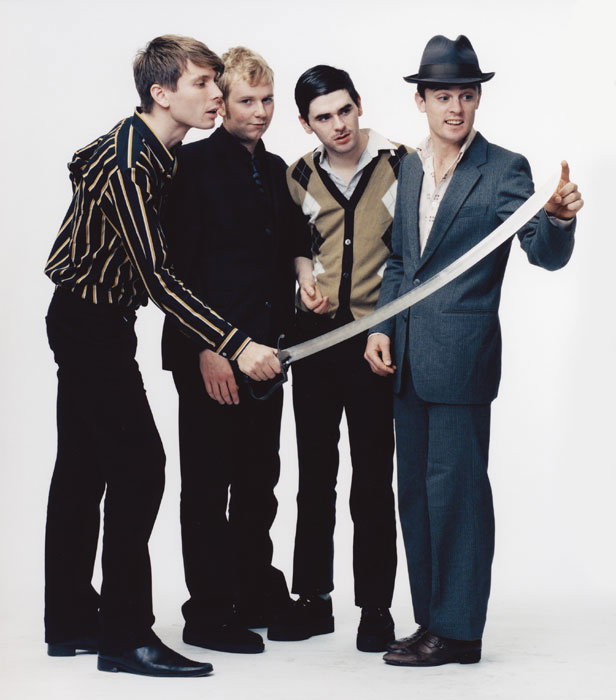
After the massive success of their debut, Franz Ferdinand faced the daunting task of following up on an instant classic, and they rose to the challenge. Their second album, 'You Could Have It So Much Better', released in 2005, showed they weren’t content to repeat the formula. It was louder, more direct, and more emotionally charged. Tracks like 'Do You Want To', 'Walk Away', and 'The Fallen' retained the band’s sharp wit and rhythmic drive but introduced a broader palette, more romanticism, more drama, and more bite. The album debuted at Number One in the UK and proved that Franz Ferdinand weren’t a one-album wonder.
By the time they released 'Tonight: Franz Ferdinand' in 2009, the band had shifted direction again. Drenched in synths and influenced by dub and dancehall, the record embraced a darker, late-night aesthetic. Songs like 'Ulysses' and 'No You Girls' were still danceable. However, there was a woozy, restless energy underneath that showed the band was still evolving creatively. Though not as universally praised as their earlier work, it highlighted their willingness to take risks and explore new sonic territory.
Over the next decade, the band’s momentum slowed slightly, but they remained creatively active. 2013’s 'Right Thoughts, Right Words, Right Action' saw them returning to a more guitar-driven sound with a playful, self-aware edge. In 2018, they released 'Always Ascending', which leaned further into polished synth-pop, once again reinventing their sound with mixed but intriguing results. That same year also marked a lineup change, with founding guitarist Nick McCarthy leaving.
In 2004, Kasabian burst onto the scene with their self-titled debut album, bringing together swaggering rock riffs, electronic synths, and a rave-inspired sensibility. Their sound was an audacious blend: drawing attitude from The Libertines and Oasis, experimenting like The Chemical Brothers, and channelling the bravado of Primal Scream and Stone Roses. 'Club Foot' became an instant anthem, its menacing bassline, pounding beat, and politically charged swagger making it a staple at indie clubs, football stadiums, and protest marches alike.
The album was packed with tracks that felt built for big nights out and festival fields. 'L.S.F. (Lost Souls Forever)' stood out with its hypnotic groove and singalong chorus, quickly becoming one of the decade’s defining festival anthems. 'Processed Beats' and 'Reason Is Treason' showcased the band’s knack for merging psychedelic textures with dancefloor-ready energy, while 'Cutt Off' and 'Butcher Blues' hinted at their love of experimental production and darker, cinematic moods. Even deeper cuts like 'Running Battle' and 'U Boat' revealed a band unafraid of pushing boundaries, blending brooding electronics with the raw immediacy of rock and roll.
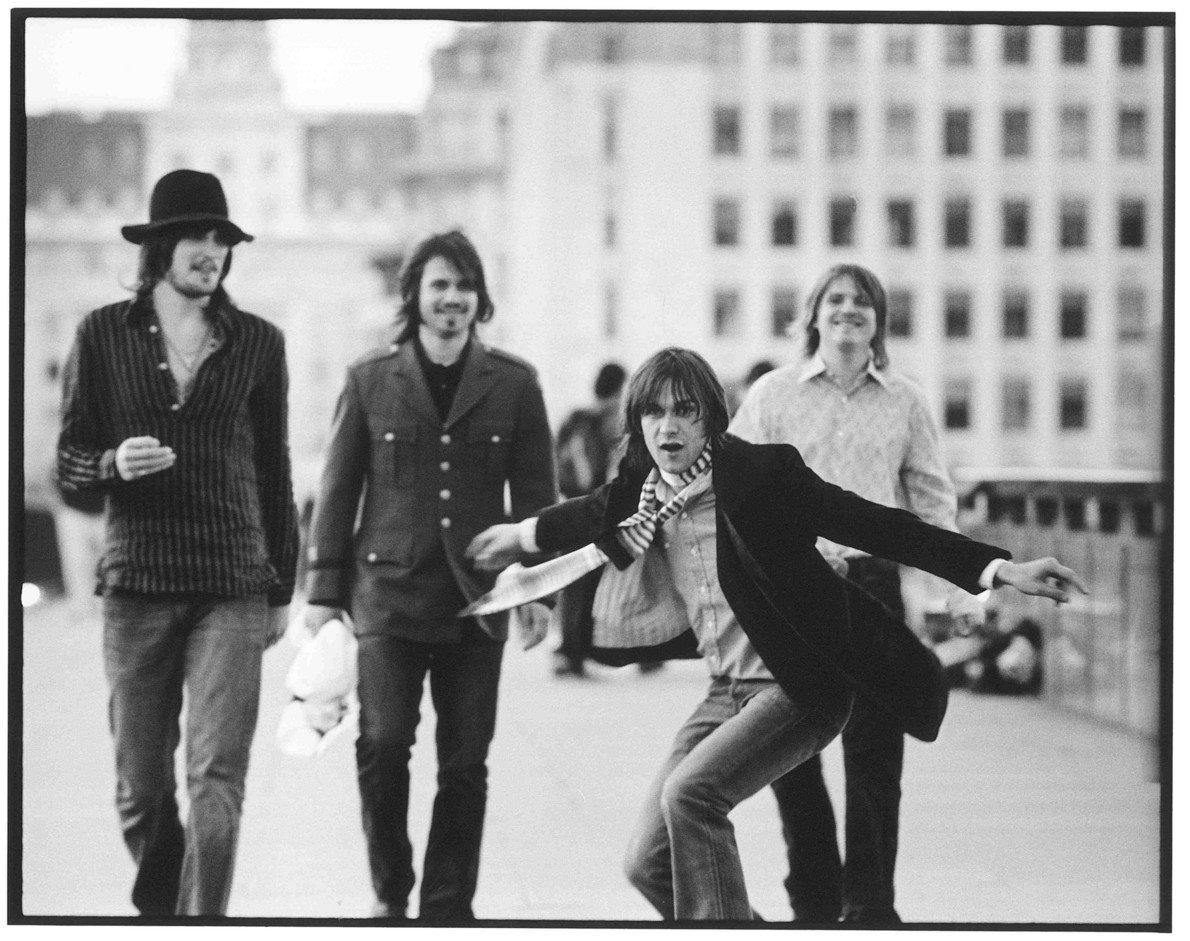
Kasabian’s debut didn’t just announce a new band; it signalled a shift in the British music landscape. Their mix of psychedelia, electronics, and lad-rock energy set them apart from their peers and won them a fiercely loyal following, while their brash, communal live shows quickly became legendary. The album was nominated for the Mercury Prize and laid the foundation for a career defined by reinvention and ambition.
Their second album, 'Empire', built on that momentum, showcasing a band unafraid to expand their sound and ambition. The title track, with its rallying cry of “Empire!”, became a defining anthem: grandiose, rebellious, and impossible to ignore, pairing glam swagger with biting social commentary. The album saw Kasabian sharpen their songwriting and develop a more cinematic, widescreen approach. Tracks like 'Shoot the Runner' brought in stomping, T. Rex-inspired riffs and call-and-response vocals, while 'Me Plus One' injected psychedelic flourishes and a sense of playful experimentation. 'Empire' also featured the haunting ballad 'British Legion' and the swirling, psychedelic 'Sun Rise Light Flies', revealing a band willing to mix aggression with introspection. This bold step forward not only solidified their place as festival mainstays, but also established Kasabian as one of the most innovative bands of their generation.
2009’s 'West Ryder Pauper Lunatic Asylum' marked a creative and commercial peak for Kasabian. Widely regarded as their most ambitious and critically acclaimed work, the album was a wild, cinematic journey through a world of psychedelic rock, electronic textures, and surreal storytelling. The band fully embraced their experimental side, with producer Dan the Automator helping them craft a sound that was both retro and futuristic.
'Where Did All the Love Go?' channelled apocalyptic anxiety through swirling strings and pounding drums, while 'Underdog' exploded with swagger, its propulsive riff becoming an instant live favourite. The sprawling 'Fire' became one of their biggest hits, moving from spaghetti-western tension to a euphoric, dance-rock chorus. Other highlights included the hypnotic 'Vlad the Impaler', the trippy 'Secret Alphabets', and the cinematic closer 'Happiness'. The album’s boldness and unpredictability earned it a Mercury Prize nomination and elevated Kasabian from indie heroes to one of the biggest bands in Britain.
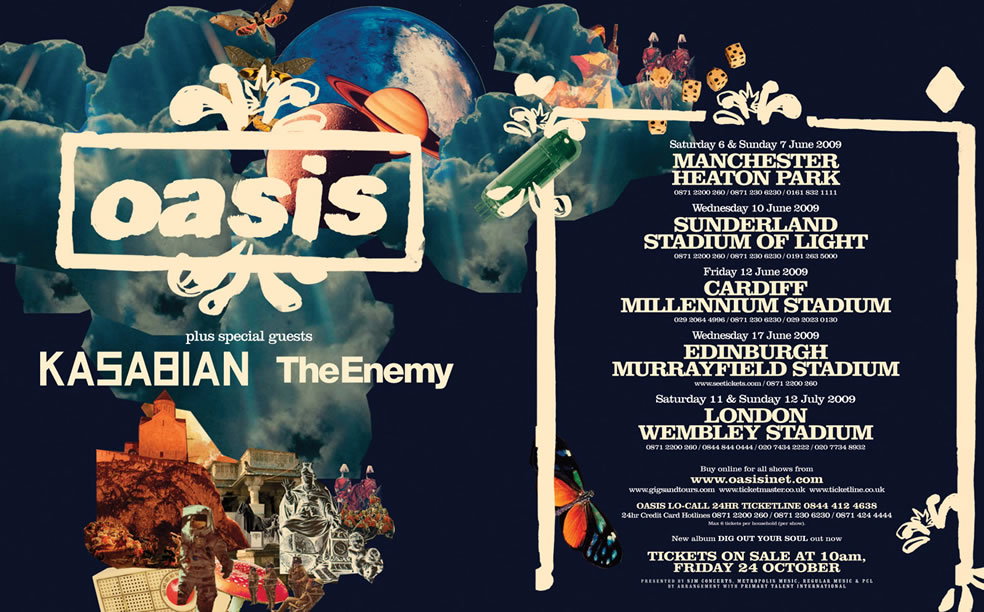
That same year, Kasabian were chosen to support Oasis on what would turn out to be the Gallagher brothers’ final tour together. Playing huge venues alongside their idols felt like a passing of the torch, with Kasabian embodying much of the same swagger, ambition, and working-class appeal that made Oasis a phenomenon. The band thrived in the stadium environment, winning over massive crowds with their commanding stage presence and relentless energy. Supporting Oasis wasn't just a career milestone; it was a symbolic moment that confirmed Kasabian’s arrival at the top tier of British rock.
Across the pond, Arcade Fire’s debut album 'Funeral' was a seismic moment in 21st-century indie rock. Named in response to several band members losing close family during its creation, the album was anything but bleak; instead, it brimmed with catharsis, communal energy, and emotional urgency. Songs like 'Wake Up', 'Rebellion (Lies)', 'Neighbourhood #1 (Tunnels)', and 'Crown of Love' offered a sweeping, orchestral take on rock music that felt both deeply personal and spiritually universal. The band’s fusion of baroque instrumentation, soaring choruses, and raw, often trembling vocals stood in stark contrast to the post-punk and garage rock revival dominating indie at the time.
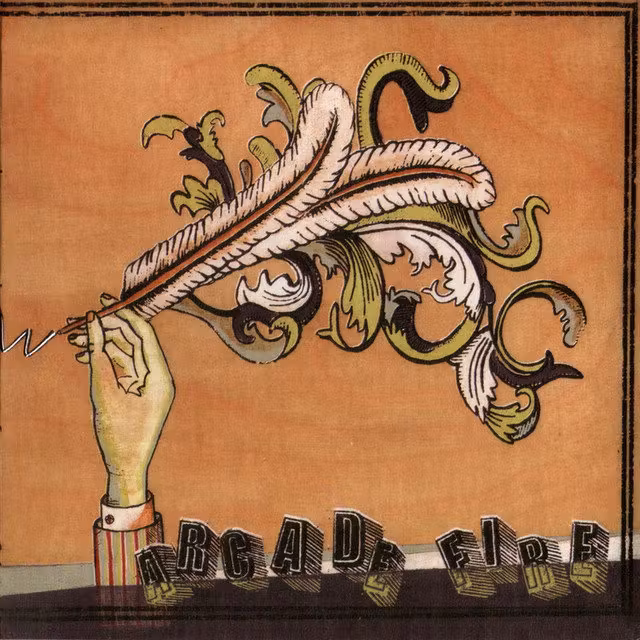
Funeral' arrived with relatively little fanfare but quickly gained a passionate following, thanks in large part to critical acclaim and electrifying live performances. It resonated with a generation hungry for something more sincere and emotionally textured, becoming a touchstone for the new wave of indie that followed. The album’s influence is still felt today in the sounds of bands that strive to marry grandeur with vulnerability. Widely considered one of the greatest debut albums of all time, 'Funeral' is a landmark release that helped redefine what indie rock could be.
The Killers would also release their debut album 'Hot Fuss' in 2004, a record that would not only define the mid-2000s indie rock revival but also launch the Las Vegas band onto the global stage. Taking their name from a fictional band featured in the music video for New Order’s 'Crystal', The Killers immediately positioned themselves within a lineage of stylish, synth-tinged post-punk and new wave. That influence coursed through 'Hot Fuss', which combined shimmering synths, angular guitar riffs, and Brandon Flowers’ theatrical vocal delivery to create a sound that was at once nostalgic and undeniably fresh.
The album was packed with instant classics. 'Mr. Brightside', a tale of jealousy and heartbreak delivered with relentless urgency, became a generational anthem and, remarkably, has never left the UK Top 100 since its release. 'Somebody Told Me' mixed dancefloor rhythms with cryptic lyrics and brash confidence, while 'All These Things That I've Done' added gospel-tinged grandeur with its unforgettable “I’ve got soul, but I’m not a soldier” refrain.
Even the deeper cuts, like 'Jenny Was a Friend of Mine', a dark, pulsing opener with a narrative edge, and 'Andy, You’re a Star', with its moody, cinematic storytelling, showed a band with a flair for drama and a distinct aesthetic that blended the glitz of their Las Vegas roots with the grit of British indie. 'On Top' delivered shimmering synths and a soaring chorus, capturing the rush of nightlife and the sense of striving for something more, while 'Believe Me Natalie' stood out with its brass flourishes and bittersweet lyrics about fleeting romance and the last days of disco.
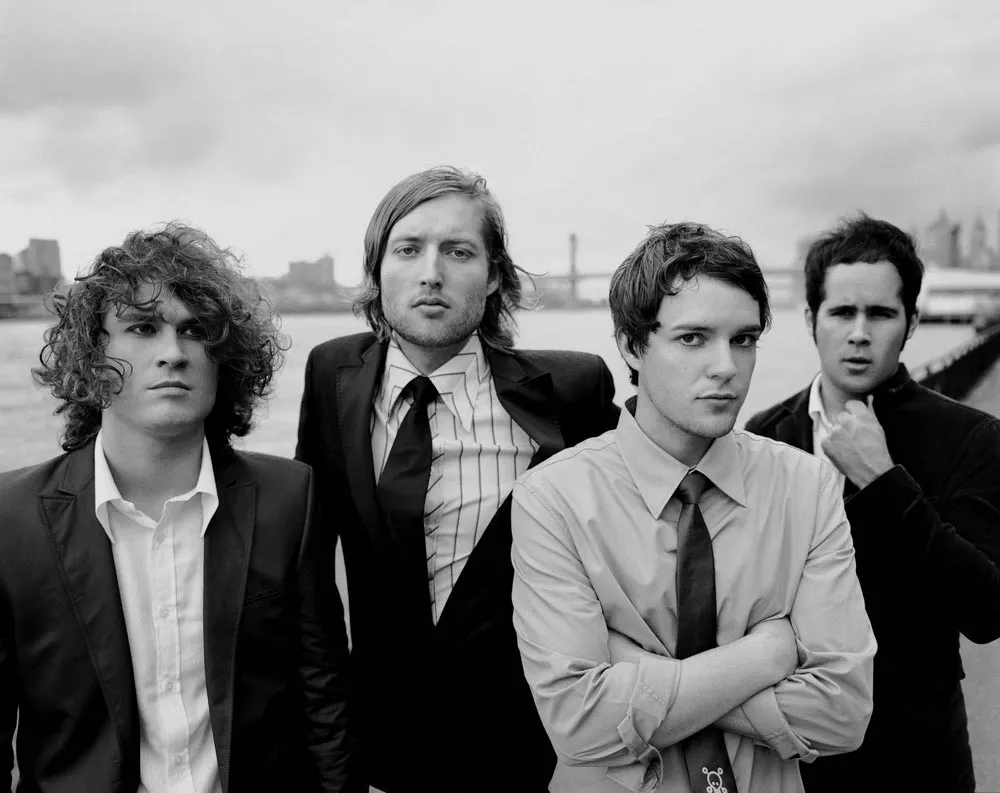
'Hot Fuss' was a critical and commercial triumph, earning Grammy nominations and multi-platinum status, while helping to reignite interest in guitar-driven rock on both sides of the Atlantic. The album’s polished yet emotionally raw sound captured a moment in time, balancing heartache, glamour, and youthful desperation in a way that resonated with a global audience. It marked the beginning of one of the most enduring careers in 21st-century rock, and for many, it remains The Killers’ definitive statement.
Gorillaz returned in 2005, continuing their experimental streak with 'Demon Days', an album that not only solidified their cult status but elevated them to mainstream icons. 'Demon Days' is a dark, dystopian concept record that reflects the anxieties of a world at war, with the Iraq conflict and post-9/11 paranoia looming in the background. The album's track 'Dirty Harry' stands out as a direct critique of the Iraq War, pairing a children’s choir and Bootie Brown’s incisive verses to create a song that is both catchy and politically charged. Its lyrics confront the futility and confusion of modern conflict, making it one of the sharpest protest songs of the decade.
'Feel Good Inc' became the album’s signature hit, blending infectious basslines, hypnotic beats, and De La Soul’s guest verses to create a song that is both a party anthem and a commentary on empty consumerism and isolation. Its sinister, swirling energy and unforgettable laugh made it a global smash, defining the band’s appeal as both cartoonish fun and pointed social critique. 'DARE', featuring Shaun Ryder, injected the album with manic energy, combining pulsing synths, dancefloor rhythms, and Ryder’s surreal vocal performance. The track became an instant classic, topping the UK charts and helping Gorillaz cross into the mainstream. No longer just Albarn's side project, they would become one of the most important pop groups of the noughties.
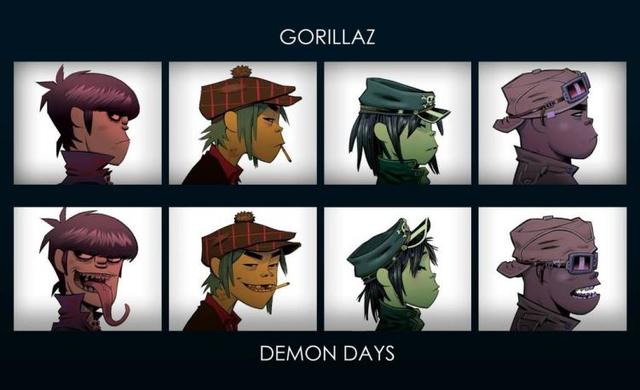
Other highlights include 'Don't Get Lost in Heaven', a dreamy, gospel-tinged track that finds hope and ambiguity in equal measure as the album draws to a close. Along with its partner, the title track 'Demon Days', it gives the record a bittersweet, redemptive ending after all the darkness and chaos.
Produced by Danger Mouse, 'Demon Days' pushed the boundaries of what a virtual band could achieve, blending hip-hop, dub, alt-rock, and electronic elements into a cinematic journey. Tracks like 'Kids with Guns' and 'El Mañana' further showcased Damon Albarn’s songwriting depth and the group’s ability to shift seamlessly between moods and sounds. 'Demon Days' confirmed Gorillaz as not just a novelty project but a serious musical force, capable of crafting some of the most inventive and resonant pop of the 21st century.
Kaiser Chiefs followed in 2005 with their debut album 'Employment', another excellent British indie record and one of the defining releases of the mid-2000s guitar revival. Produced by Stephen Street, who had previously worked with Blur and The Smiths. The album blended punky energy with catchy, Britpop-inspired melodies and a distinctly northern sense of humour. While they didn’t have the experimental edge of Kasabian or the same number of standout tracks as Franz Ferdinand, songs like 'I Predict a Riot' and 'Oh My God' became instant anthems, capturing the chaos, charm, and mundanity of British youth culture with remarkable accuracy.
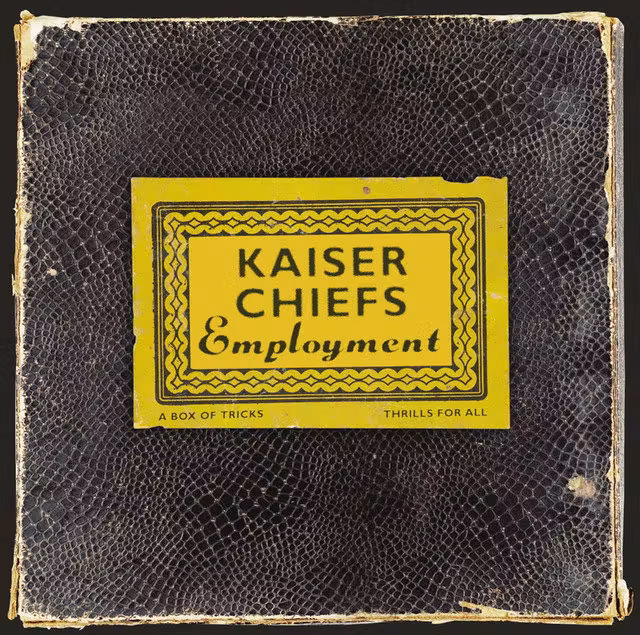
But 'Employment' was more than just a two-hit album. Tracks like 'Everyday I Love You Less and Less', 'Modern Way' and 'Na Na Na Na Naa' helped establish the band’s identity: sardonic, accessible, and irresistibly catchy. The lyrics were sharp and observational, with Ricky Wilson’s charismatic delivery bringing a theatrical flair to even the most mundane topics. The album was rooted in the sounds of British pop history, nodding to The Jam, Madness, and Blur, while still feeling fresh and immediate. It was one of those rare records that managed to be both fun and culturally resonant, landing Mercury Prize and Brit Award nominations, and becoming one of the best-selling UK albums of the year. In short, 'Employment' wasn’t just a strong debut; it was a cultural moment.
Bloc Party’s debut album, 'Silent Alarm', arrived in 2005 like a lightning bolt, urgent, uncompromising, and razor-sharp. The record was a defining moment for British indie, fusing post-punk revival energy with a lyrical and emotional depth that set it apart from its peers. Most other bands of that era wanted to be Oasis, or The Strokes. Bloc Party had no interest in that; they wanted to be Bloc Party. This album proves that; nothing else from that time sounds anything like 'Silent Alarm'.
'Like Eating Glass' kicks the album off with relentless drums, jagged guitars, and Kele Okereke’s urgent vocals, setting a tone of anxiety and dislocation. The repeated lyric "It's so cold in this house" captures a feeling of emotional distance, while the song’s breakneck pace thrusts the listener into the album’s restless world.
'Helicopter' follows, a frenetic post-punk anthem that balances personal and political critique; its iconic riff and lines like "Just like his dad... The same mistakes" were widely interpreted as a jab at US President George W. Bush, but Okereke has said the song also explores themes of identity and media saturation. Its frantic energy and critique of Western complacency made it an era-defining anti-establishment anthem.
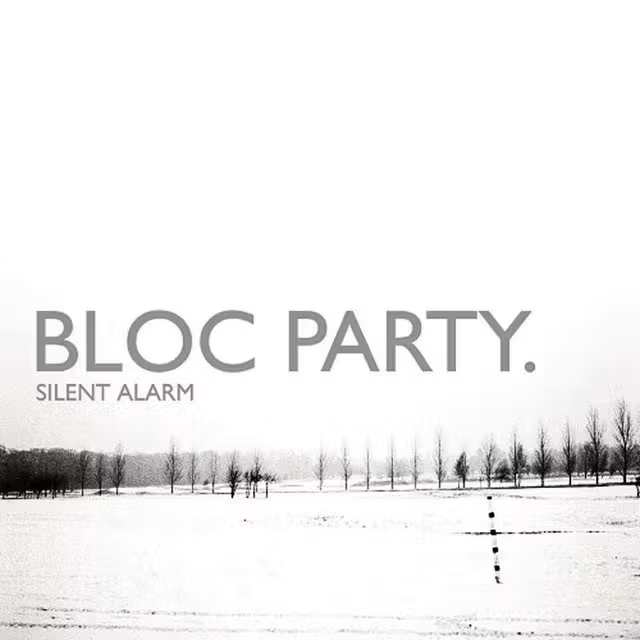
'Banquet' is one of the album’s most recognisable singles, all interlocking guitar hooks and dance-punk swagger. The track’s cryptic lyrics, "A heart of stone, a smoking gun", and infectious energy made it an indie club staple. This, alongside 'Helicopter', is people's gateway into the band. Price of Gasoline' stands out as an unfiltered critique of oil imperialism and war, with Okereke opening from the perspective of an ordinary citizen trying to ignore global realities. The marching rhythm and chorus, "We're gonna win this!", explicitly tie rising fuel costs and consumerism to frontline devastation and corporate warfare.
'Blue Light' provides a gentler, more melancholic moment, its shimmering guitars and the lyric "You'll find a way..." offering a brief respite and hope. 'She’s Hearing Voices' takes things into darker, more paranoid territory, blending twitchy rhythms and unsettling imagery to evoke the anxiety and isolation of modern life. These contrasts are at the heart of 'Silent Alarm': the tension between vulnerability and aggression, between connection and alienation.
'This Modern Love' is a slow-burning highlight, a shimmering, emotionally raw meditation on longing, confusion, and the complications of relationships. Its soaring outro and the lyric "If that's the way it is, then that's the way it is" have made it a cult favourite and the album’s emotional core.
Throughout, Paul Epworth’s production gives every instrument space and clarity, allowing the album’s icy atmospherics and visceral impact to shine. 'Silent Alarm' was more than a collection of singles; it was a statement of intent, capturing the turmoil and possibility of mid-2000s Britain. Its marriage of cerebral, socially conscious lyricism with cathartic sound ensured it stands as one of the most essential British debuts ever recorded, a jagged, beautiful snapshot of a generation trying to find its pulse.
As the NME put it so perfectly back in 2005: "Bloc Party are to be believed in because they are a band for the whites, the blacks, the straights, the hip-hop kids, the freaks, the geeks... Back in 2002, Pete’n’Carl said it was ‘Time For Heroes’. Well, now it’s the anti-heroes’ time." Two decades later, the 'Silent Alarm' is still ringing.
Stereophonics would release their fifth studio album, 'Language. Sex. Violence. Other.', a record that marked a crucial turning point in the band’s career. After the mixed reception of their previous two albums, this release saw the Welsh rockers sharpen their sound and rediscover their edge. While still rooted in the band's trademark blend of gritty rock and melodic hooks, the album introduced a more modern, punchier aesthetic, with tighter arrangements, cleaner production, and a darker overall tone. It was their most commercially successful album in years, fuelled mainly by the breakout single 'Dakota'.
'Dakota', with its shimmering guitars, soaring chorus, and driving rhythm, became the band’s first and to date, only UK Number One single. Written during a tour with David Bowie, the song was heavily inspired by advice Bowie had given to frontman Kelly Jones: to focus less on over-complication and more on emotional clarity and simplicity in songwriting. The result was a sleek, anthemic track that captured the band’s evolution perfectly and remains one of their signature songs. Its wide appeal helped introduce Stereophonics to a broader, even international, audience, and it quickly became a staple of indie and alt-rock playlists across the 2000s.
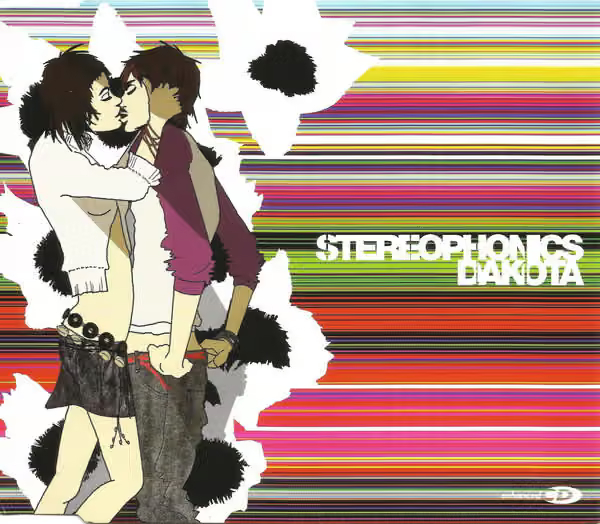
Beyond 'Dakota', the album offered several other standout moments. Tracks like 'Superman' and 'Devil' explored darker lyrical themes and showcased a more experimental, brooding atmosphere, with layered production and a cinematic flair. Meanwhile, 'Doorman' and 'Brother' delivered gritty riffs and a raw energy reminiscent of their early work, proving the band could still hit hard when needed. Jones’ vocals were more dynamic than ever, ranging from introspective murmur to full-throated roar.
Critics welcomed 'Language. Sex. Violence. Other' as a return to form, praising its urgency and cohesion. The album debuted at Number One on the UK Albums Chart. It helped re-establish Stereophonics as one of the UK’s most reliable rock acts. It was a statement of intent, proof that the band could evolve with the times without sacrificing the core of what made them great in the first place.
The biggest British band of the decade well, they were still yet to be heard.