Because We Need Each Other- 20s Part 3
On the 4th July 2025, Oasis rolled into Cardiff for the first night of their reunion tour, with the world's press and music fans alike watching them. Many of them, including myself, despite having a ticket for one of the Manchester shows later in the tour, thought it was all too good to be true.
It was the first time the brothers had shared a stage together since the V Festival in 2009. "THIS IS NOT A DRILL" are the first words Oasis fans are greeted with in Cardiff. After 16 years apart, very public spats and even the odd vegetable-based jibe, the tension was palpable.
'Fuckin the Bushes' blares out over the PA, and fans are told “, The guns have fallen silent. The stars have aligned. The great wait is over.” This really is happening. Ever since that night in Paris, where Noel called it quits, the idea of seeing the brothers again on stage seemed like a long-lost memory or a distant fantasy. In an NME review of the gig, they even went to the extreme of saying: "Digging up and reanimating John Lennon and George Harrison seemed a more likely reunion".
The idea of the tour being nothing more than a cash grab, an opportunity to pay for Noel Gallagher's forthcoming device, was still ringing around. Yet when the brothers Gallagher walked on stage arm in arm, even the biggest naysayers shut up.
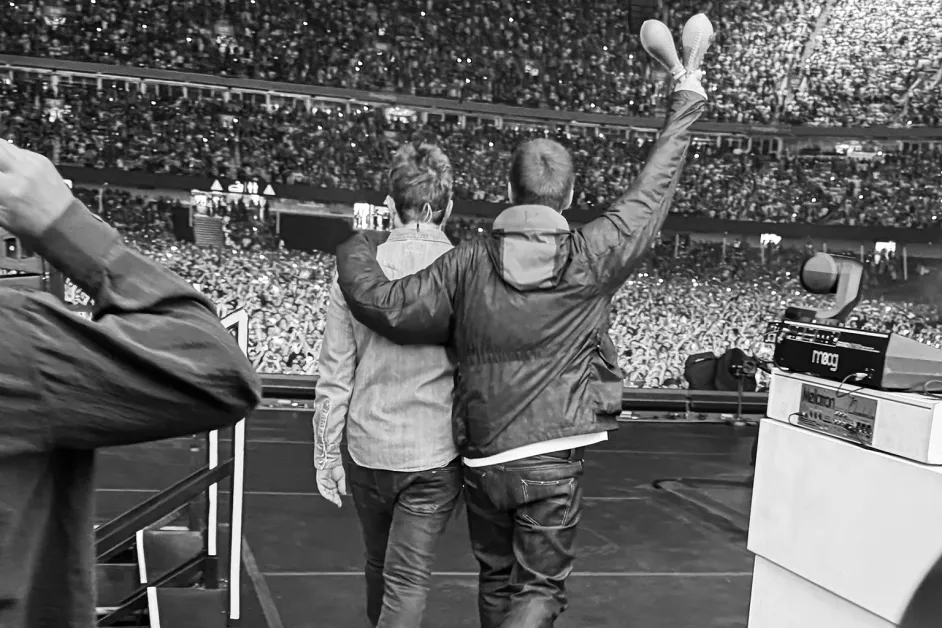
With a semi-new lineup, Joey Waronker on drums, Andy Bell on bass, and Gem Archer and Bonehead sharing guitar duties. Oasis knew exactly what they needed to do.
Across a 23-song setlist, they played just one post-2000 track: ‘Little by Little,’ sung by Noel. With no new album to promote and no obligation to play anything recent, the songs they chose were timeless. These weren’t just tracks; they’ve become woven into everyday life: echoing from football terraces, spinning at wedding discos, soundtracking quiet funerals, and ringing out in the final moments of all-nighters.
They kicked off with ‘Hello’ and charged straight into ‘Acquiesce’.
“Because we need each other, we believe in one another,” Noel sang back to Liam, and it had been far too long. The sibling friction that defined their split was replaced by a professional, monolithic wall of sound. Standing side by side, they let the music do the talking, needing no empty stage banter to prove their point.
The momentum never dipped: ‘Morning Glory,’ ‘Some Might Say,’ ‘Bring It On Down,’ ‘Cigarettes & Alcohol,’ ‘Fade Away,’ ‘Supersonic’ all delivered at pace, hit after hit. Liam prowled the edge of the stage with his classic wild-eyed, hands-behind-back swagger, singing with a ferocity and vocal clarity we haven’t heard from him in over twenty years. Next to them, Bonehead anchored the rhythm section, providing the vital, steady glue that made Oasis feel exactly like Oasis again.
This is exactly what we needed. The band sounded sharp, the songs still immense, and watching the footage back, it’s clear: they wanted to be there. Noel had his moment too, delivering three absolute classics: ‘Talk Tonight,’ ‘Half the World Away,’ and ‘Little by Little,’ each landing with as much weight as the night’s other high points, even without Liam’s signature rock’n’roll sledgehammer of a voice. Hearing tens of thousands of people drown out Noel's own microphone during 'Half the World Away' was a stark reminder of just how deep these B-sides run in the British subconscious.
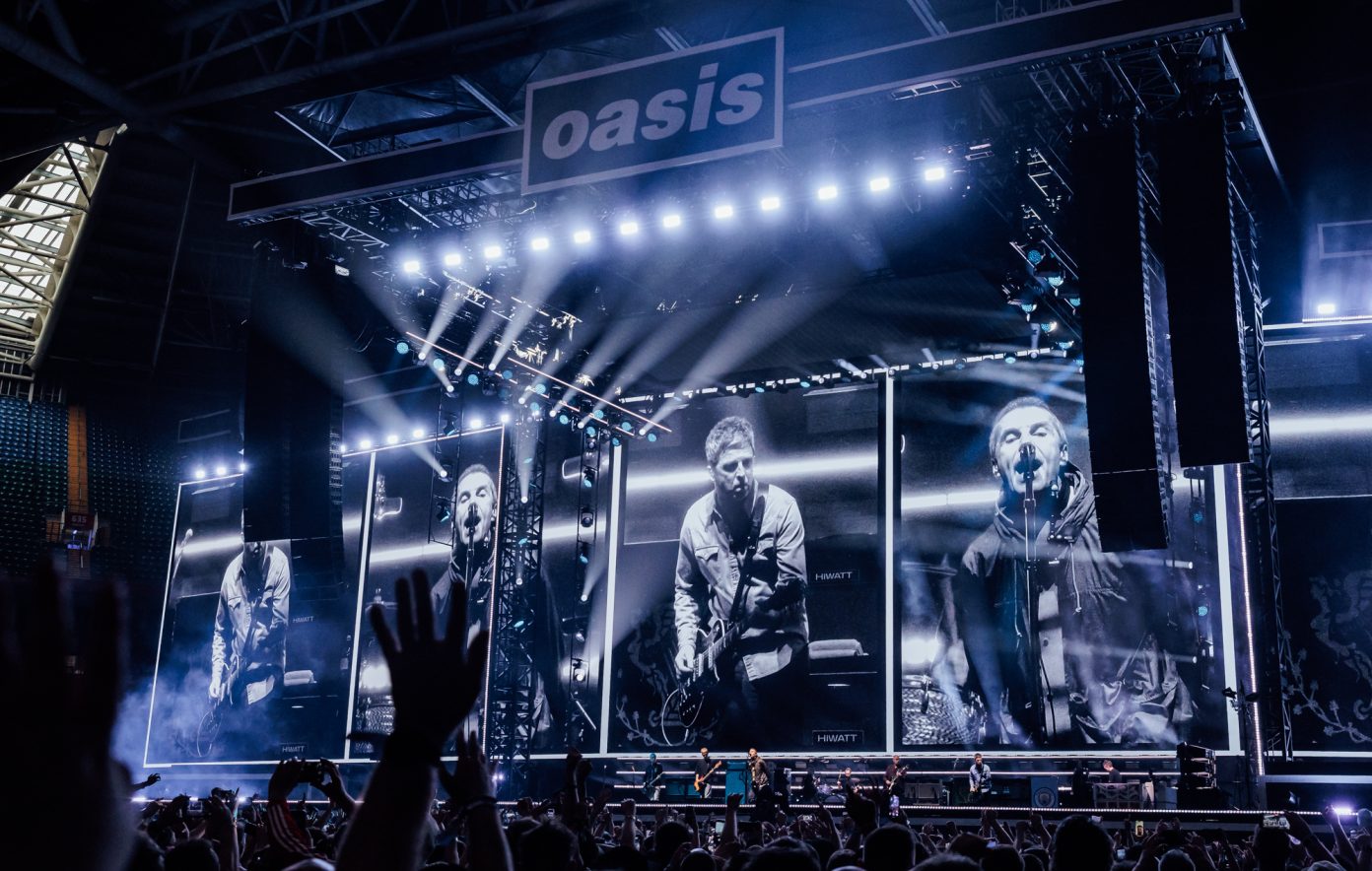
From there, it was a historic closing run: a thunderous ‘Slide Away’ that saw an unexpectedly emotional Noel blinking back tears as the crowd bellowed every lyric back at him. This raw, human moment shifted into the massive, soaring crowd-singalong of the orchestral refrain during ‘Whatever’. Earlier in the set, a high-octane performance of 'Rock 'n' Roll Star' had already set the gold standard, backed by grainy, nostalgic images of the band's early days on the giant screens. These tracks, along with a sublime rendition of 'Cast No Shadow' where both brothers shared vocal duties effortlessly, still resonate powerfully. Many of them were written by a young, disillusioned Noel Gallagher in Manchester, giving voice to the frustrations of a working-class generation under Tory rule. Sound familiar?
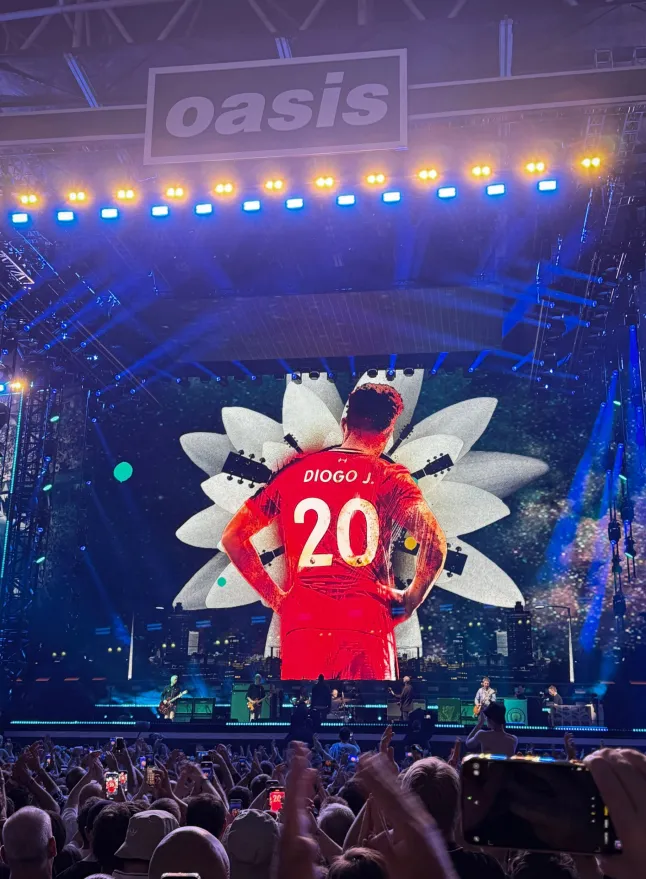
Live Forever’ became the night’s most emotional moment. The band paid tribute to Diogo Jota, who tragically passed away in a car accident alongside his brother André earlier this week. As the song ended, Jota’s shirt appeared on the screen, a moving, heartfelt gesture that felt like the band’s most significant moment in years. The stadium became a sea of raised glasses and tearful embraces, as the audience collectively took over Noel's guitar solo, singing the melody back to the stage in a spine-tingling moment of pure catharsis. It was a beautiful tribute to a brilliant footballer and, as countless tributes have made clear in the days since, a much-loved husband, father, brother, and son.
The band knew exactly who they were playing to. Noel dedicated fan-favourite 'The Masterplan' to “all the people in their twenties who’ve never seen us before and have kept this shit going for 20 years”. They understood the weight of the moment and just how much these songs have transcended time.
The show closed with the holy trinity of songs that are now part of life’s soundtrack: 'Wonderwall', Noel’s defiant anthem 'Don’t Look Back in Anger', and the swirling, glorious epic 'Champagne Supernova'. By the time the final chords of 'Champagne Supernova' rang out against a backdrop of feedback and roaring applause, the brothers shared a brief, meaningful nod before leaving the stage. They’re back, and they’re the best they’ve been since the late ‘90s.
For those who were there at the start, and for those seeing them for the first time, this was Oasis at their very best. Sure, you could have caught most of these songs across both brothers’ solo tours over the past decade, but hearing them together again, side by side, is what makes these shows special. It’s what makes them matter.
And right now, as a nation, we need this. The Gallagher brothers stepped up.
As NME put it perfectly in their review: "Lord knows we needed a taste of that halcyon ‘90s hope and abandon in 2025, especially for the raving and craving Gen-Zers. The world is a rotting shitty bin-fire and tomorrow never knows, but tonight, you’re a rock’n’roll star."
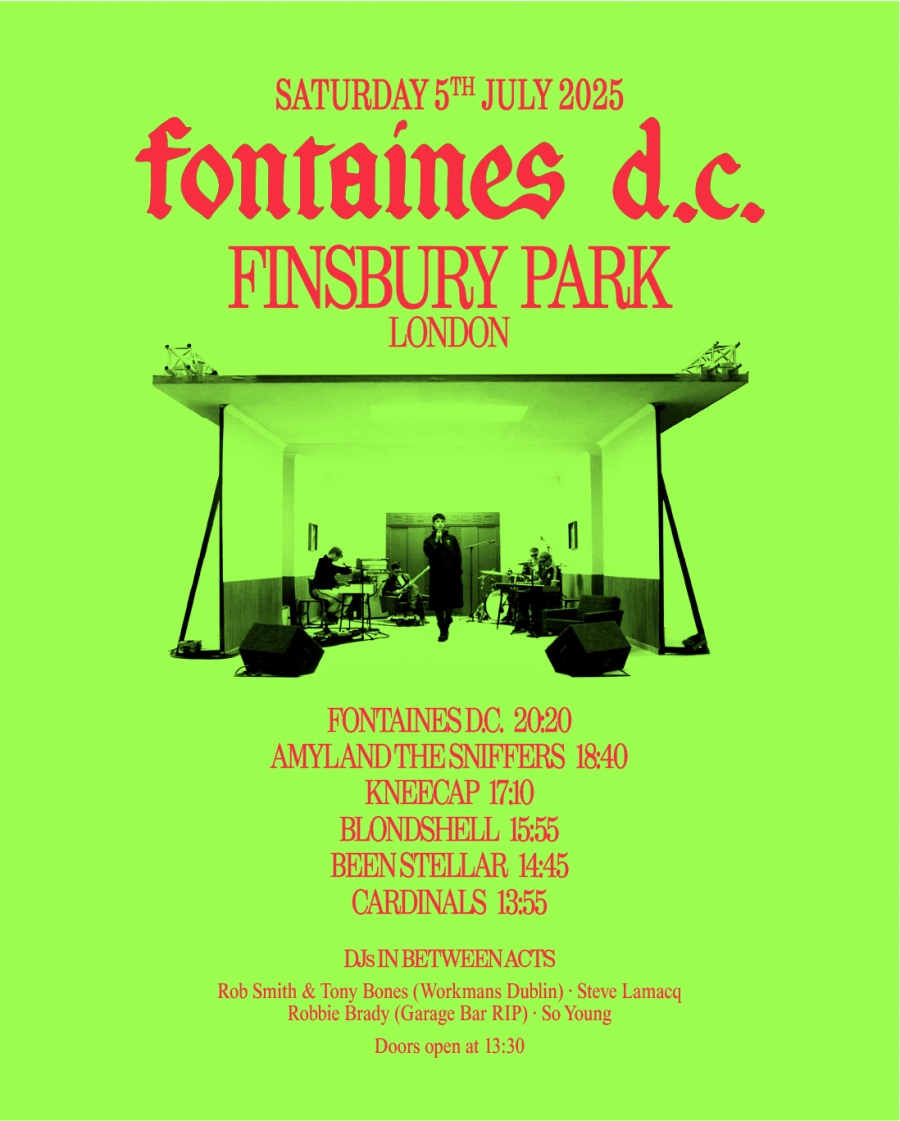
In the same weekend, Fontaines D.C. took to the stage in London's Finsbury Park to play their biggest show to date. With some stellar support coming in the form of Amyl and the Sniffers, Kneecap, Been Stellar, and Cardinals. Opening the day under a grey London sky, Cork’s Cardinals set a cinematic, neo-folk mood with their brooding, accordion-infused indie rock, capturing early attention with an eerie intensity. Following them, NYC’s Been Stellar shook the early arrivals to their core, unleashing a ferocious wall of shoegaze guitar noise and jagged melodies that perfectly channelled the grit of the city they call home.
Fontaines D.C., Amyl and the Sniffers, and Kneecap have all been outspoken about the situation in Palestine. Kneecap, of course, have made front-page headlines. At their most recent show, Fontaines D.C. invited a pro-Palestine activist group on stage to lead chants in both English and Arabic and to speak out against media censorship surrounding the conflict. Meanwhile, Amyl and the Sniffers used their high-profile Glastonbury slot to condemn both Israel's actions and the media’s coverage of what is happening in Gaza.
The event did not turn into a political rally, though. It was a celebration of great music that also made sure that the message about what is going on in Palestine was still delivered.
Kneecap delivered a stellar set, bringing Fontaines frontman Grian Chatten on stage to join them for vocals on the song 'Better Way to Live'. The West Belfast trio turned Finsbury Park into an absolute cauldron of energy, whipping up massive mosh pits with their satirical, bilingual hip-hop. Bounding across the stage in their signature balaclavas and tracksuits, Mo Chara, Móglaí Bap, and DJ Próvaí brought their raw, anti-establishment spirit to London without diluting a single drop of it.
The field became a chaotic sea of flying pints and spinning circles as the group expertly blended heavy Irish traditional instrumentation with booming rave beats, keeping the 45,000-strong crowd bouncing to every word. They threw out sharp chants against Keir Starmer and the political establishment, pairing their fierce Irish-republican political commentary with a brilliant, dark humour. They completely captivated the crowd with unmatched punk-rap showmanship, proving exactly why they have become one of the most vital and boundary-pushing live acts in music today.
Following them, Amyl and the Sniffers blew the roof off the afternoon. Frontwoman Amy Taylor was a whirlwind of pure, unfiltered punk energy, stalking the stage in her signature, high-octane fashion and snarling through a relentless stream of hits like 'Guided by Angels'. She fiercely connected with the crowd, speaking passionately about how music provides a necessary anchor and a sense of shared humanity in a world that feels increasingly confusing.
Fontaines D.C. have a special connection to the Finsbury Park area. Their first London gig took place just a few hundred yards away, in the Finsbury pub, a fittingly named venue. Those early days are long behind them now. Fontaines are destined for stages like this: bigger, bolder, and unapologetically forward-moving. They refuse to stand still, always evolving, always reaching for the next thing. They last played this park in 2022, supporting Sam Fender. This time, it was their name at the top of the bill, welcoming a massive crowd of 45,000 fans.
Now four albums in, Fontaines D.C. have built an eclectic catalogue and, on this night, they came to play the very best of it. As the sun finally dipped, the park transformed into the glaring, cyberpunk world of Romance. The stage setup was pure Lynchian theatre, opening with an eerie mashup of Eraserhead’s 'In Heaven' and a ghostly, stripped-back intro to 'Starburster'. Bathed in flashes of neon pink, green, and blue, the band immediately dragged the audience into a surreal, dystopian trench.
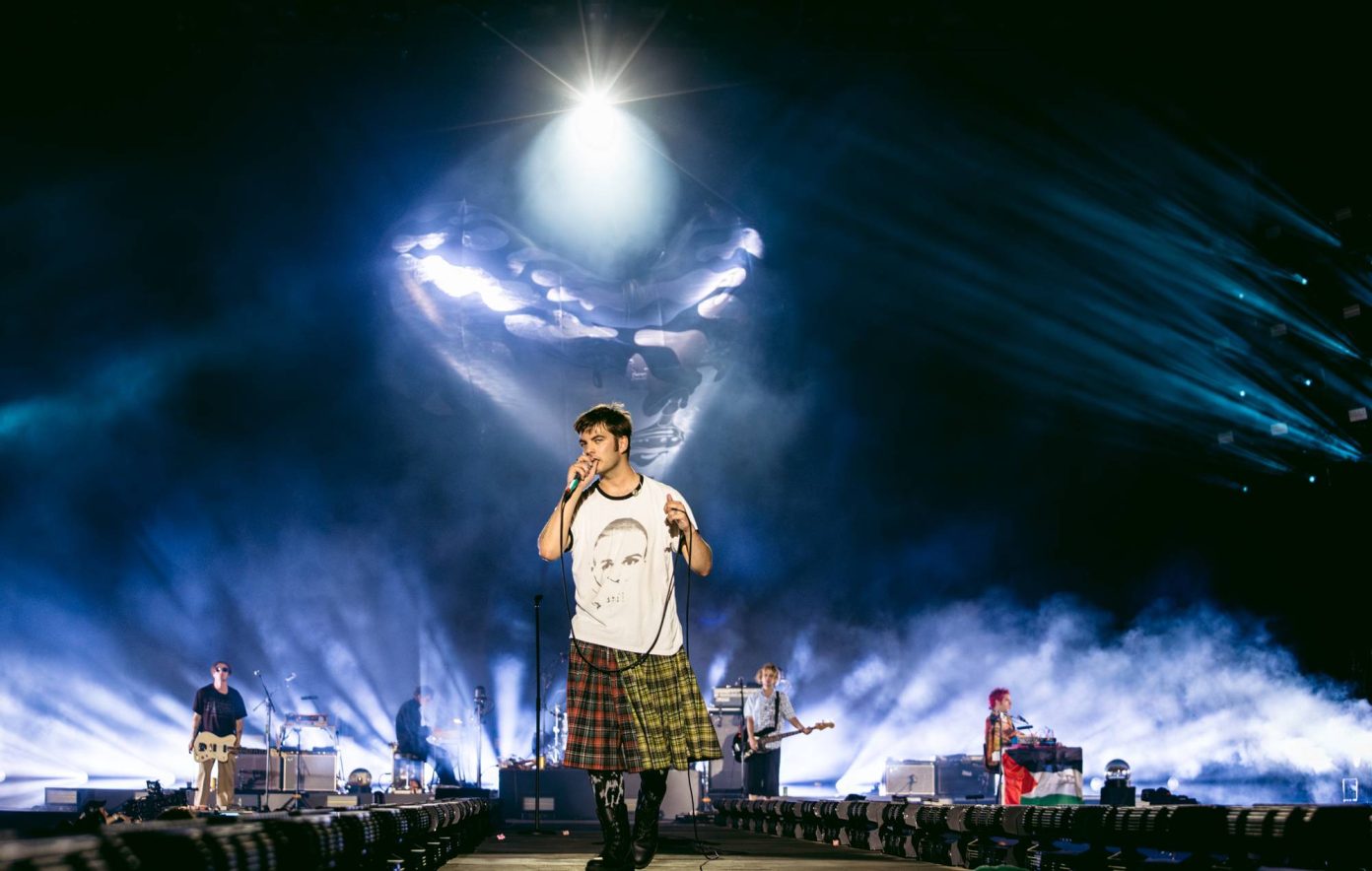
They open with 'Here's the Thing' and quickly roll into 'Jackie Down the Line'; there’s no time wasted. 'Boys in the Better Land', the track that made many fans fall in love with Fontaines D.C., lands just three songs in, sending a massive surge through the crowd as thousands of voices echoed the opening bassline and ignited flares across the park.
The set is peppered with classics; 'Hurricane Laughter' finds its place, its relentless, hypnotic rhythm building a tense, chaotic energy across the park, and 'Liberty Belle' returns to close out the main set. Throughout the night, Grian Chatten held the massive audience in the palm of his hand, prowling the stage with an anxious, twitching theatricality, his intense vocal delivery piercing through the heavy wall of noise. New tracks 'Before I Forget' and 'It's Amazing to be Young' are given their moment, holding their own among the fan favourites.
‘Favourite’, beautifully dedicated to Grian’s fiancée, is a highlight, a burst of light against dark skies. It remains, in my opinion, the best thing they’ve ever done. The melodic, jangling guitars felt warm and triumphant, offering a beautiful moment of pure optimism that united the entire park and counterbalanced the darker, heavier corners of their setlist.
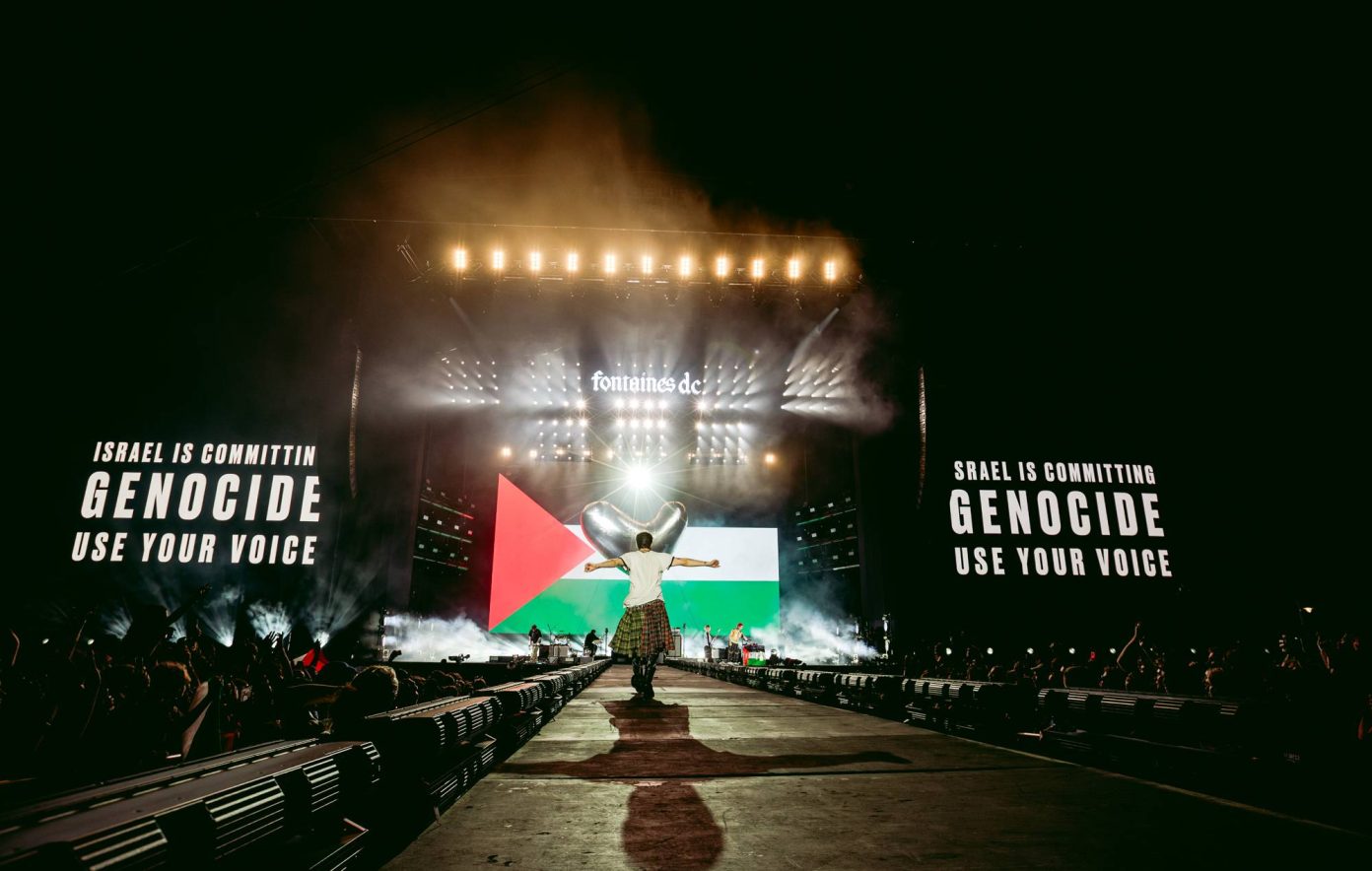
The encore leans heavily on 'Romance', with the title track, 'In the Modern World', and 'Starburster' all cutting. They also deliver their love letter to home, 'I Love You', each one a spectacular moment from a band operating at the absolute peak of their powers.
The “selling genocide” line from ‘I Love You’ lands a sledgehammer blow when the giant screens declare “Israel is committing genocide, use your voice” to rapturous support. It was a staggering, unflinching moment that completely unified the 45,000-strong crowd, matching the studio version's furious political urgency with a massive, stadium-sized resonance.
During the final payout of 'Starburster', Chatten’s sharp, breathless gasps felt intense, backed by a blinding, disorienting strobe show that brought the night to a stunning climax.
Headlining Finsbury Park has led to epic folklore gigs by the likes of Pulp, Oasis, New Order and Arctic Monkeys. They more than deserve to be listed among them. They are the most important band of this decade. The most remarkable thing? They just keep getting better.
Ozzy Osbourne and Black Sabbath would perform a final show at Villa Park on July 5th 2025. Just a stone's throw from where the band formed and where all the members grew up.
'Back to the Beginning' was a celebration of heavy metal, and a farewell to the frontman and the band who created the genre. Fans travelled from all over the world in the hope of experiencing the atmosphere around the stadium and in the city of Birmingham. For those 40,000 who had tickets, it was set to be one of the most ambitious live shows they'd ever seen. The legendary Villa Park stadium in Aston became the epicentre of the rock universe for a staggering 10-hour marathon. Billed as "metal's Live Aid", the historic charity event brought together a jaw-dropping who's-who of metal and rock. It featured some of the biggest bands in the world, including Metallica and Guns N' Roses, alongside two separate supergroups which featured a rotating line-up of musicians. From Blink 182’s Travis Barker, Megadeth's Dave Ellefson, Red Hot Chilli Peppers' Chad Smith, Aerosmith’s Steven Tyler, Ronnie Wood of the Rolling Stones and many more. The stadium was treated to an absolute masterclass in rock history as these rock titans collided on stage. One of the afternoon's most jaw-dropping spectacles saw Travis Barker and Chad Smith engage in a thunderous, high-octane drum-off alongside Tool's Danny Carey, trading blistering rhythms over classic Sabbath riffs while Rage Against the Machine's Tom Morello shredded alongside them.
The day's most surprising and deeply emotional pivot came courtesy of British alt-rocker Yungblud. Leading a special iteration of the supergroup that included Sleep Token’s enigmatic drummer II, Extreme’s guitar virtuoso Nuno Bettencourt, and longtime Ozzy collaborator Adam Wakeman, Yungblud delivered a stunning, theatrical cover of 'Changes'. Stepping into the heavy emotional weight of the track, originally recorded by Sabbath in 1972 and famously re-imagined as a chart-topping duet by Ozzy and Kelly Osbourne in 2003. Yungblud poured raw, gothic passion into every note. The performance completely captivated the stadium, offering a beautiful, melodic pause that bridged the gap between heavy metal's founding generation and its modern torchbearers before the heavier, distorted chaos resumed.
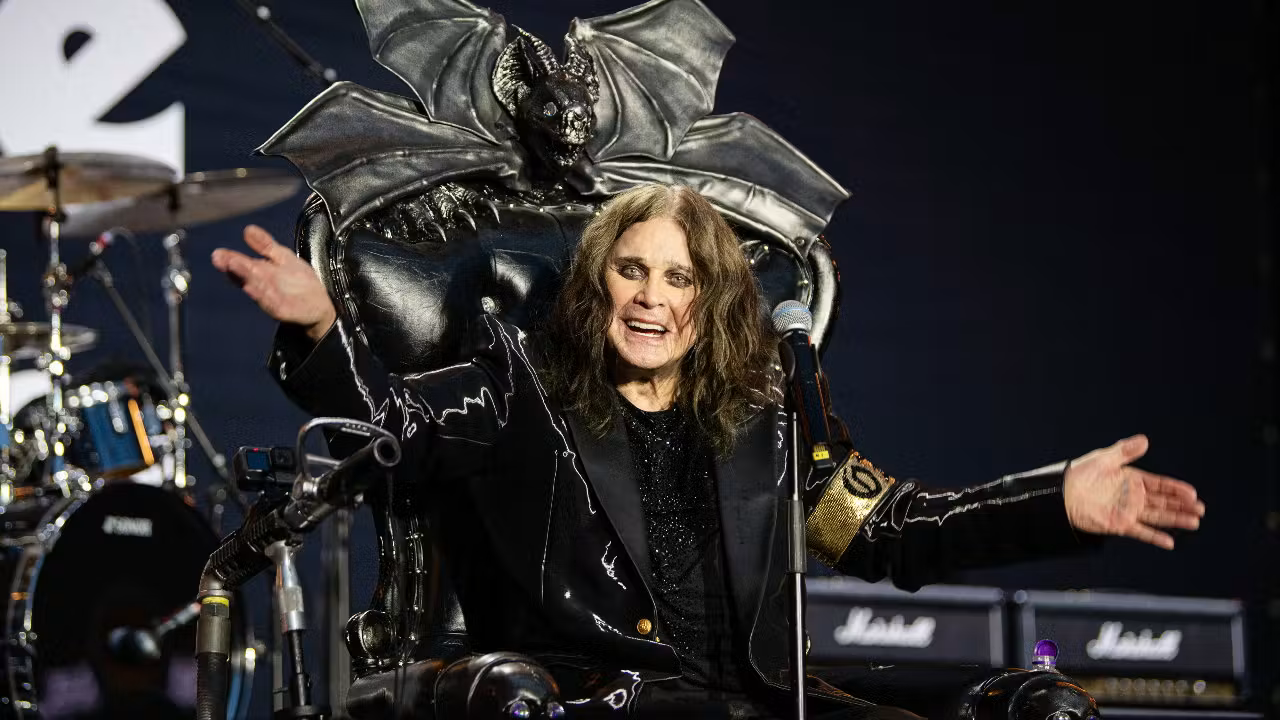
Ozzy and Black Sabbath took to the stage to bring the show to a close. After a short video was played by the sister of Ozzy’s former legendary guitarist, the late, great Randy Rhodes, and a brief introduction, out rose Ozzy on a black armchair detailed with skulls. The greetings were kept to a minimum as the band started the 1980 Blizzard of Oz track ‘I Don't Know’. For many, seeing Ozzy was a reminder of the show's purpose: to raise money for local charities and Cure Parkinson's. He was unable to stand but looked comfortable and content, despite appearing to reach forward as if attempting to stand, and used a throat spray between songs. The prince of darkness sang remarkably in tune, and although his voice was not as strong as it once was, the crowd was gladly able to help out.
A sombre rendition of 'Mama, I’m Coming Home' rang out as lighters and phone torches were held aloft. He closed his solo set with the infamous 'Crazy Train', while encouraging the crowd to “Get those f*cking hands up” multiple times.
Despite it being 9 hours after the show had started, the long-awaited Black Sabbath finally took to the stage, in their hometown for one final time. Although there have been previous Black Sabbath farewell tours, none have seemed as definite as this one. This was also the only farewell show to feature fan favourite drummer Bill Ward, who rolled back the years, sitting shirtless on his drum stool just behind Ozzy’s chair, which had returned to the stage.
As an air-raid siren rang out around Villa Park and the red stage lighting was beamed into a darkening sky, it was Bill’s hi-hat that introduced 'War Pigs' to the elation of everyone in and around the stadium and those watching at home. Despite featuring only 4 songs, the setlist featured the perfect selection of songs that hadn’t yet been covered by any other bands, each song giving each of the 4 members a chance to demonstrate their innovation in their craft and show why they’ve inspired millions to learn an instrument and, at the very least, appreciate music.
Before the day, everyone knew there was only one closer suitable to a show of epic proportions, and that, of course, was 'Paranoid'. The audience, although weary from standing for beyond an average workday, gave it everything for this last moment, the final farewell.
It was elation; there were tears, people were hugging, singing, moshing, throwing horns and fists and everything they could towards the sky, each of them feeling the privilege of being part of something so legendary.
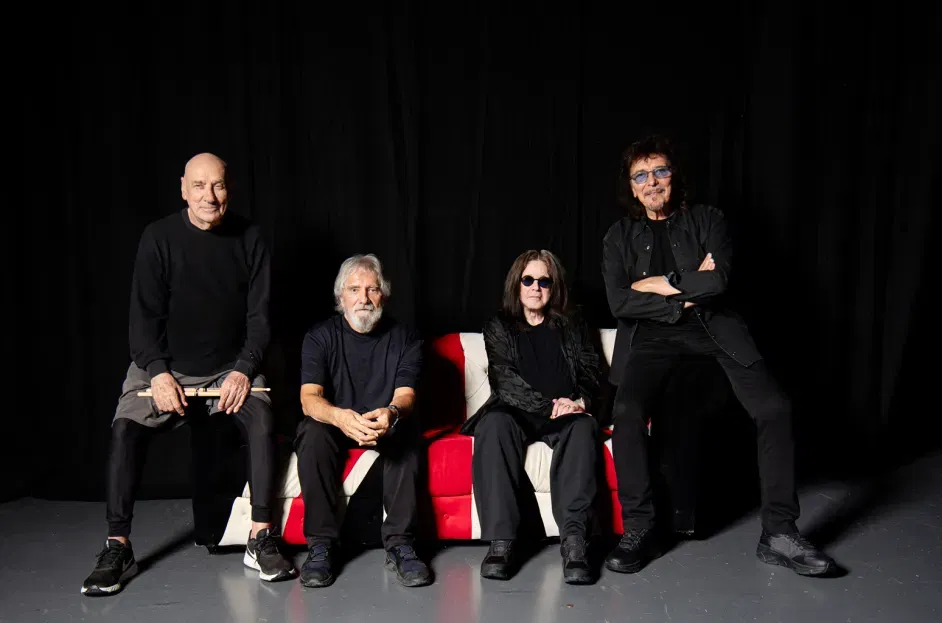
As fireworks lit up the sky around Aston, it was a moment to try and take in everything that had just happened. 68 songs between 14 bands and a slew of other musicians, it had been a true and proper celebration of Black Sabbath. As many of the musicians said on stage, it’s a night that was all about Ozzy; he’s been the mascot of heavy metal and an inspiration to all metalheads to be themselves, serving as a guiding light to a subculture of people who often feel alienated. For over half a century, the Prince of Darkness has shown generations of misfits that their quirks, their darkness, and their loud music belonged somewhere, and the overwhelming wave of gratitude inside the stadium was palpable.
More than just a tribute to one of Britain's best frontmen and the inventors of metal, the show did a lot of good. All proceeds from the show would be split equally between three charities: Cure Parkinson’s, Birmingham Children’s Hospital and Acorns Children’s Hospice. With the event raising an astronomical multi-million-pound sum, the legacy of this hometown farewell will stretch far beyond the historic walls of Villa Park, directly funding vital research and supporting local families in their deepest times of need.
A concert for good, a moment for the city, and a moment for all of those who in some way feel connected to the man and the band to pay tribute. As the smoke from the pyrotechnics cleared and the final echoes of 'Paranoid' rang out over Birmingham, forty thousand fans walked out into the night knowing they had witnessed the end of an era. Black Sabbath didn't just invent heavy metal in this city; they gave it a permanent home. They started it all, and on that night, they finished it flawlessly.
On July 22nd 2025, Ozzy Osbourne passed away alongside his family members. In a statement released by his family, it says, "It is with more sadness than mere words can convey that we have to report that our beloved Ozzy Osbourne has passed away this morning. He was with his family and surrounded by love. We ask everyone to respect our family's privacy at this time."
Without Ozzy, metal as we know it wouldn’t exist. He was the first to introduce feral, doom-inducing screams, as perfectly executed on the 1970 song ‘Black Sabbath’. You can hear his enduring influence in the work of many of the bands and musicians dominating music today. A three-time Grammy Award winner with over 100 million records sold, Ozzy quickly became the blueprint for all things metal, and over the years, artists working in heavier genres have commended him for turning the wheel with Sabbath.
Born John Michael Osbourne on December 3, 1948, Ozzy grew up with five siblings in a cramped, two-bedroom house in Aston, Birmingham. Despite the odds- including his lifelong struggles with dyslexia and a severe stutter, alongside the systemic disadvantages faced by the mid-century British working class- he would go on to create a lasting legacy spanning nearly 60 years.
In 1968, Ozzy and a group of local friends—Tony Iommi (guitar), Geezer Butler (bass), and Bill Ward (drums)—formed the very first heavy metal band. For a short period, they called themselves Earth, but after a promoter confused them with another touring group, they changed their name to Black Sabbath, a moniker they gleaned from Mario Bava’s 1963 horror anthology film. Rather than chasing the peaceful, flower-power psychedelia of the late '60s, they leaned into the grim reality of their industrial hometown. Driven by Tony Iommi's thunderous, down-tuned guitar riffs, a technique he famously developed to make playing easier after a factory accident severed his fingertips, the band conjured an entirely new, earth-shaking sonic landscape.
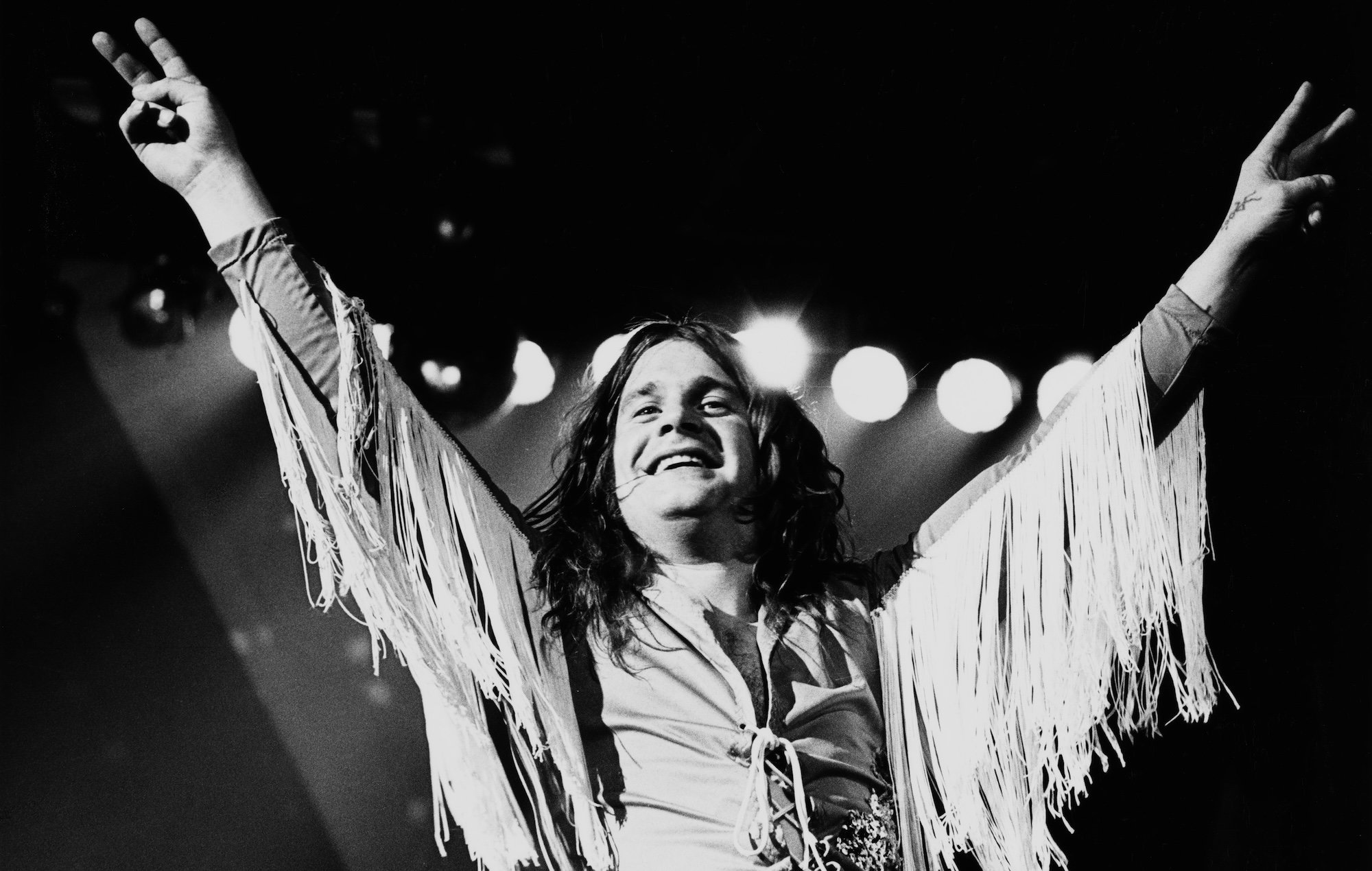
In early 1970, they released their debut single, a haunting cover of Crow's ‘Evil Woman’. However, it was their self-titled debut album, ‘Black Sabbath’, released fittingly on Friday the 13th of February, that shook the musical world to its core. Recorded in a singular, frantic 12-hour session, the record served as an unapologetic voice for the underdogs of the world. From the ominous rain and tolling church bells of the opening track to Geezer Butler’s aggressive, distorted basslines on tracks like ‘N.I.B.’ and Bill Ward’s jazz-inflected, heavy drumbeats, ‘Black Sabbath’ embraced a terrifying darkness never heard before. They radically shifted the boundaries of popular music by addressing real-world horrors like political corruption, the psychological scars of war, and suicide directly within their lyrics. Later that same year, they released their masterpiece sophomore album, ‘Paranoid’, spearheaded by the furious anti-war anthem ‘War Pigs’, a track that catapulted them into global stardom and united people from all walks of life under its defiant message.
As the 1970s progressed, the band continuously expanded their sonic palette on subsequent masterpieces. They delivered the crushing, groove-laden ‘Children of the Grave’ on 1971's ‘Master of Reality’, a track that became a definitive anthem for counter-culture youth. By 1973, they pushed into more complex, progressive territories with the soaring title track of ‘Sabbath Bloody Sabbath’, juxtaposing ultra-heavy riffs with delicate acoustic arrangements. They even proved their capacity for deep vulnerability, stripping away the distortion for the melancholic, piano-led ballad ‘Changes’ on ‘Vol. 4’. Even as internal tensions mounted later in the decade, they could still deliver anthems of hard-fought resilience like 1978's ‘A Hard Road’ from ‘Never Say Die!’, proving that their musical evolution never truly halted
As one of the biggest rock stars of his time, Ozzy was always clear on just how much he loved the party lifestyle, with drink and hard drugs serving as regular fixtures in his daily life. The escalating substance abuse eventually left Ozzy heavily incoherent, and it all quickly caught up with him in 1979 when he was officially dismissed from Sabbath. But instead of that dismissal marking the permanent decline of his career, he instead shifted focus to what would become an extraordinarily successful solo venture.
He dropped his explosive debut solo album, ‘Blizzard of Ozz’, in 1980, and would go on to release 13 more studio albums. In the same way that Sabbath shaped a long-lasting blueprint, Ozzy’s solo material only heightened the public’s love for him. Backed by the breathtaking guitar virtuosity of the late Randy Rhoads, he experimented with niche sounds on hits like ‘Crazy Train’ and later collaborated with an incredibly eclectic crop of acts, including Elton John.
He became a towering father figure for the generations of alternative artists following in his footsteps. In the late ’90s, Ozzy personally invited Korn to support him alongside the Deftones for their first major arena tour. Slipknot famously embarked on their breakout national tour during the 1999 iteration of Ozzfest, the massive travelling festival organised by his wife and longtime manager, Sharon Osbourne. It quickly became the ultimate sacred space for heavy metal bands and fans to unite, shaping up to be an annual who’s who of soon-to-be trailblazers in the extreme music scene. One of the earliest Ozzfests in 1997 also saw Ozzy reunite with Black Sabbath, and from then on, his star power skyrocketed. By the early 2000s, Ozzy had become a massive household name across the globe—not just because of his musical genius, but as a pop-culture icon starring in MTV's pioneering reality TV show, ‘The Osbournes '
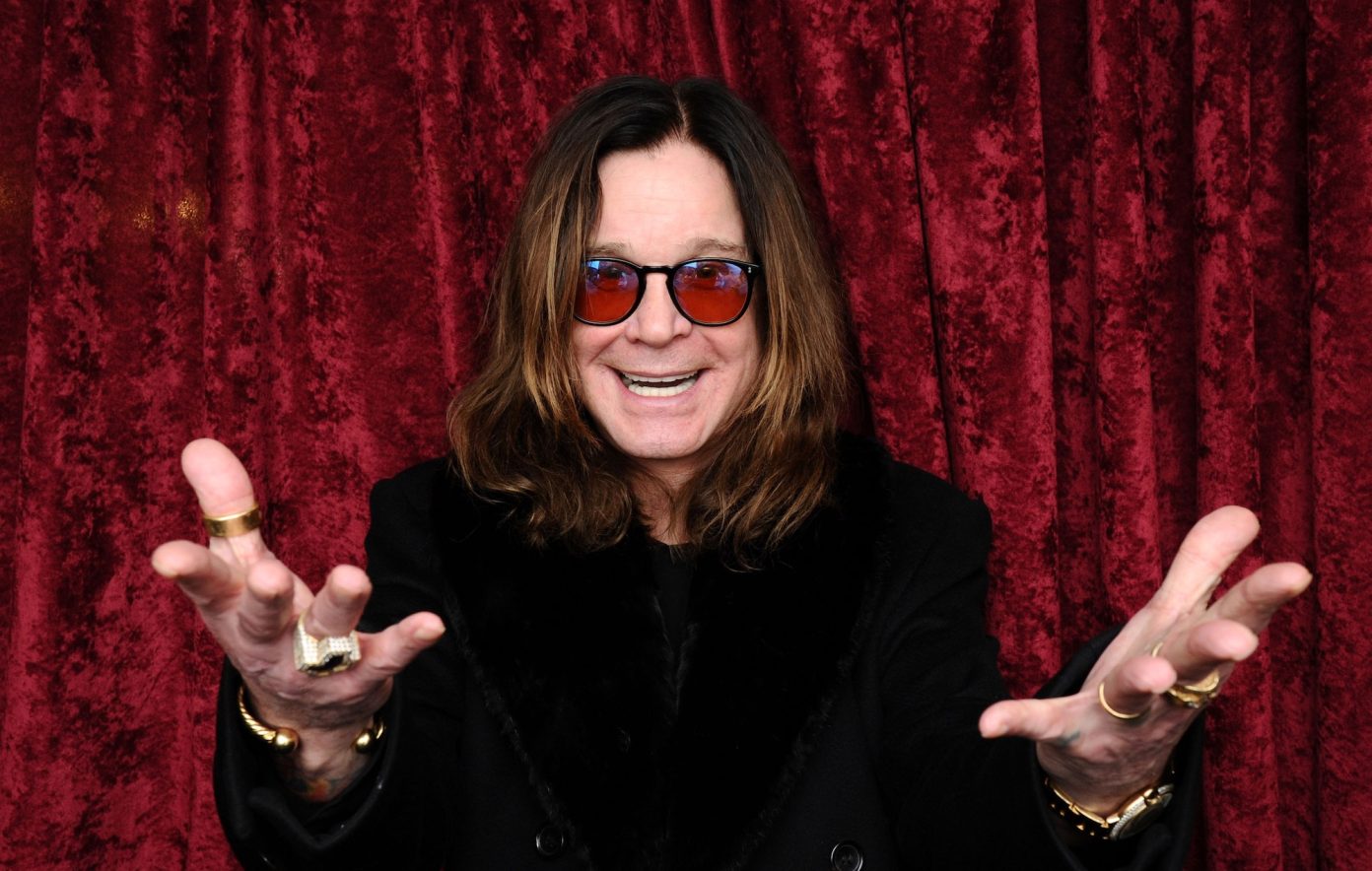
Dying just weeks after his monumental hometown farewell show at Villa Park, Ozzy’s final gig was the ultimate testament to the singer’s lifelong resilience and deep, unshakeable love for his fans and the art of performing. Following that historic show, Ozzy shared a deeply heartfelt note on Instagram: “This was my final performance. I have to say goodbye to the stage I’ve loved all my life."
“I didn’t keep a dime from this show. Every dollar went to Parkinson’s research to help others like me. I owe everything to my wife. When I was lost in the dark, she never left my side. She held my hand until I found my way back to the spotlight. To my fans, thank you. Your cheers and your love gave me the strength to keep coming back even when it hurt more each time. Rock and roll will never die.” He was right; the Prince of Darkness may no longer be with us, but Ozzy Osbourne's magnificent legacy, his chaotic spirit, and his monumental impact on music history will live on forever.
Following their shows in Cardiff, Oasis played five sold-out nights at Manchester's Heaton Park. Over 400,000 people saw them perform, along with tens of thousands who watched and listened to the shows from outside the perimeter fence, on a hill aptly named Gallagher Hill.
The shows in Cardiff may have kicked things off, but it was in Manchester where the band truly raised the bar. A return to home soil was always destined to be special. Though the setlist remained unchanged, the nerves were gone, and the band hit the stage each night with confidence and nothing left to prove. The Manchester crowd undoubtedly played a huge role in that. From the moment the gates opened, the city was alive with a fierce, generational pride, culminating in a deafening wall of sound that greeted the brothers the second they stepped into the spotlight. Looking out over a sea of flares, bucket hats, and families singing side-by-side, it felt less like a standard stadium concert and more like a massive, triumphant victory lap for Manchester guitar music.
I was there for the final night, and both Noel and Liam addressed the crowd separately, each expressing how proud they were. Noel took a quiet moment before delivering his acoustic set to look out at the hometown audience, visibly moved by the scale of the reception, while Liam kept the energy at a boiling point, matching the crowd's chaotic intensity blow for blow. Liam offered his thanks early in the set, saying,
“It’s been amazing being here the last fucking ten days. You’ve actually blown whatever brain cells I had left; they’re well and truly gone.”
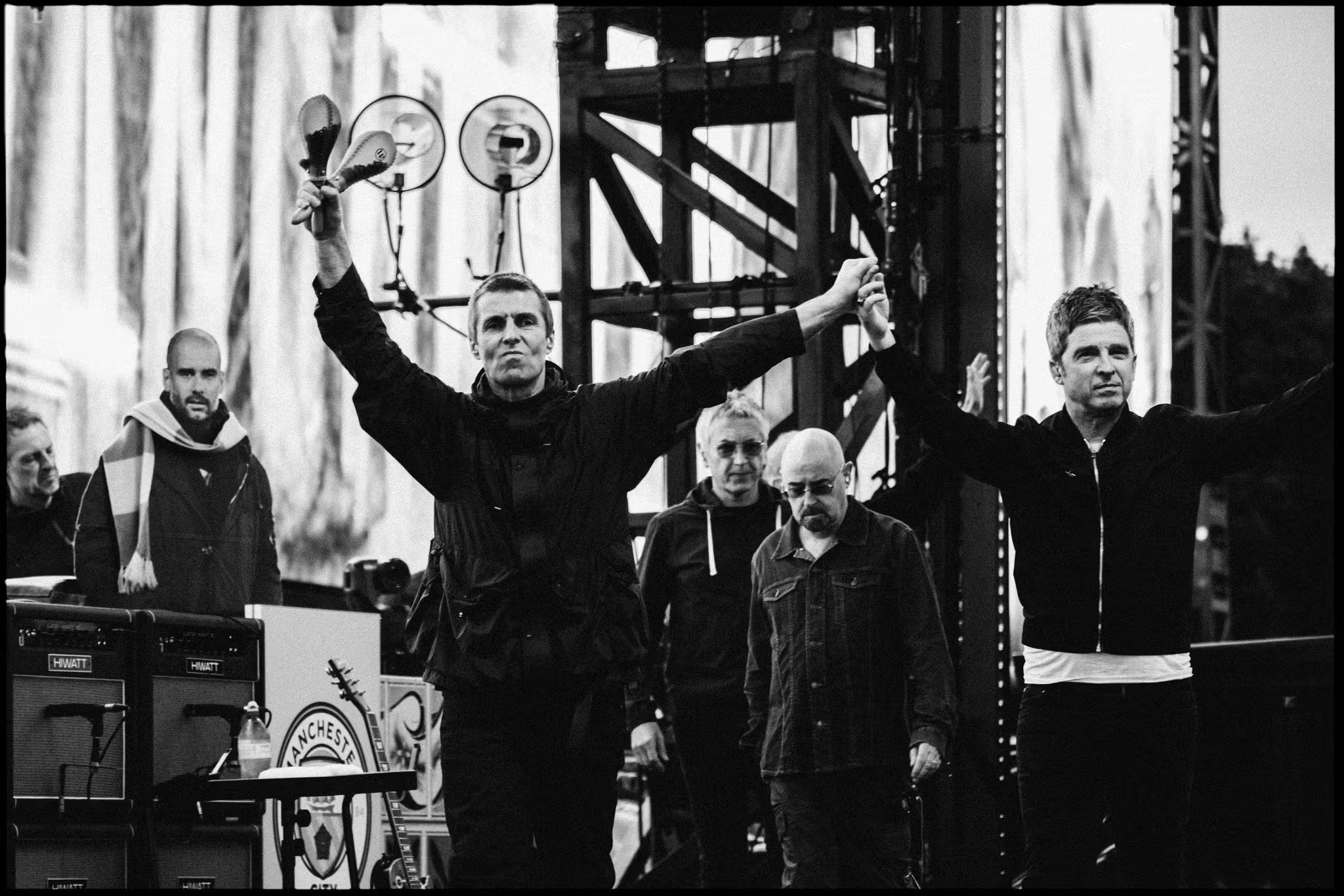
Noel addressed the crowd just before launching into 'Don't Look Back in Anger':
“For the last ten days, the eyes of the world have been on this city of Manchester, and I just want to say to all Mancunians, you’ve done yourself fucking proud. We’ve got people coming in from all over the world; what I can say from staying in the city is you’ve still fucking got it, Manchester.”
All five nights were exceptional, but they were always going to be. Oasis performing live again for the first time in sixteen years was already a culturally significant event. Add to that a run of hometown gigs, the atmosphere on Gallagher Hill, and the countless events happening across the city, and the whole thing felt like a perfect storm. Heaton Park didn't just host a concert; it completely consumed Manchester. The entire city transformed into a vibrant sea of bucket hats and pure nostalgia.
The true beating heart of the weekend’s folklore, however, belonged to the thousands of ticketless fans who gathered on the grassy slope just outside the perimeter fence, quickly christened 'Gallagher Hill'. Even after the local council hastily erected a secondary steel barrier to block the distant view of the stage screens, the crowd refused to scatter. Instead, they brought deckchairs, set off red flares, and generated a staggering atmosphere of their own, singing every lyric back through the trees. The band beautifully immortalised this dedication during the penultimate show when Liam looked out and dedicated a raucous performance of 'Bring It On Down' to "the folk on the hill". By the final night, the band even arranged for free, limited-edition 'Gallagher Hill' T-shirts to be handed out to the crowds on the mound, cementing a legendary moment of mutual respect between a band and the hometown community that never stopped believing in them.
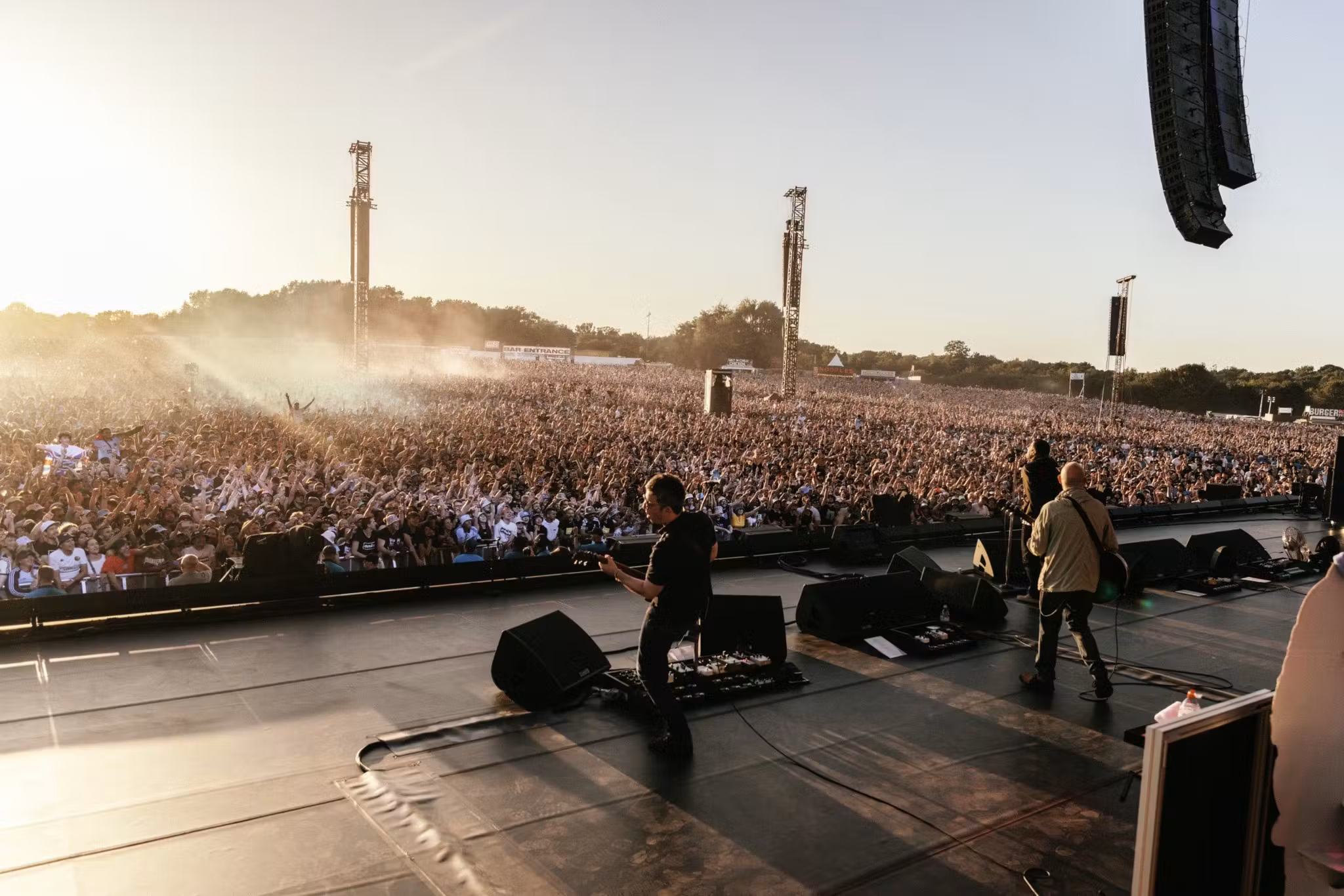
The brothers, along with the rest of the band, were in top form, delivering all the classics alongside deeper album cuts and B-sides, reminding everyone just how great they were, and still are. Only a band as incomprehensibly popular as Oasis could return after two decades away, compile a setlist, and still leave out five No.1 singles.
This version of Oasis is arguably the best we’ve seen since the 1990s.
Being in the crowd for that final Manchester show was surreal. Seeing Liam and Noel share the stage again was one thing, but turning to look at the crowd was just as powerful. The demographic was all over the place: people of all ages and backgrounds, young and old, teenagers, twenty-somethings, mums, dads, aunties, uncles, grandparents. It wasn’t just a gig; it was a genuine celebration of the music and what it means to people. You could see tearful embraces between original 90s indie heads and teenagers who weren't even alive when the band split in Paris, all bound together by the same exact words. It was a living, breathing testament to songs that have successfully bypassed the generation gap to become a permanent fixture of British folklore.
No disrespect to Cardiff, London, Edinburgh, or Dublin, but these Manchester shows mattered. They were always going to be the heart of the tour, and they’ll likely be remembered as the standout nights. Even though none of the band members lives in the city anymore, Manchester is still home. Its people are still their people. Their departure all those years ago was a celebration of how far they'd come. They became the biggest band in the world, and in 2025, they returned, still holding that crown. Of course, the concept was perfect. Like Noel’s beloved Beatles and The Jam, it was about going out on top, leaving the legacy untarnished, never risking the slow fade of diminishing returns. But now, the story has taken an unexpected turn.
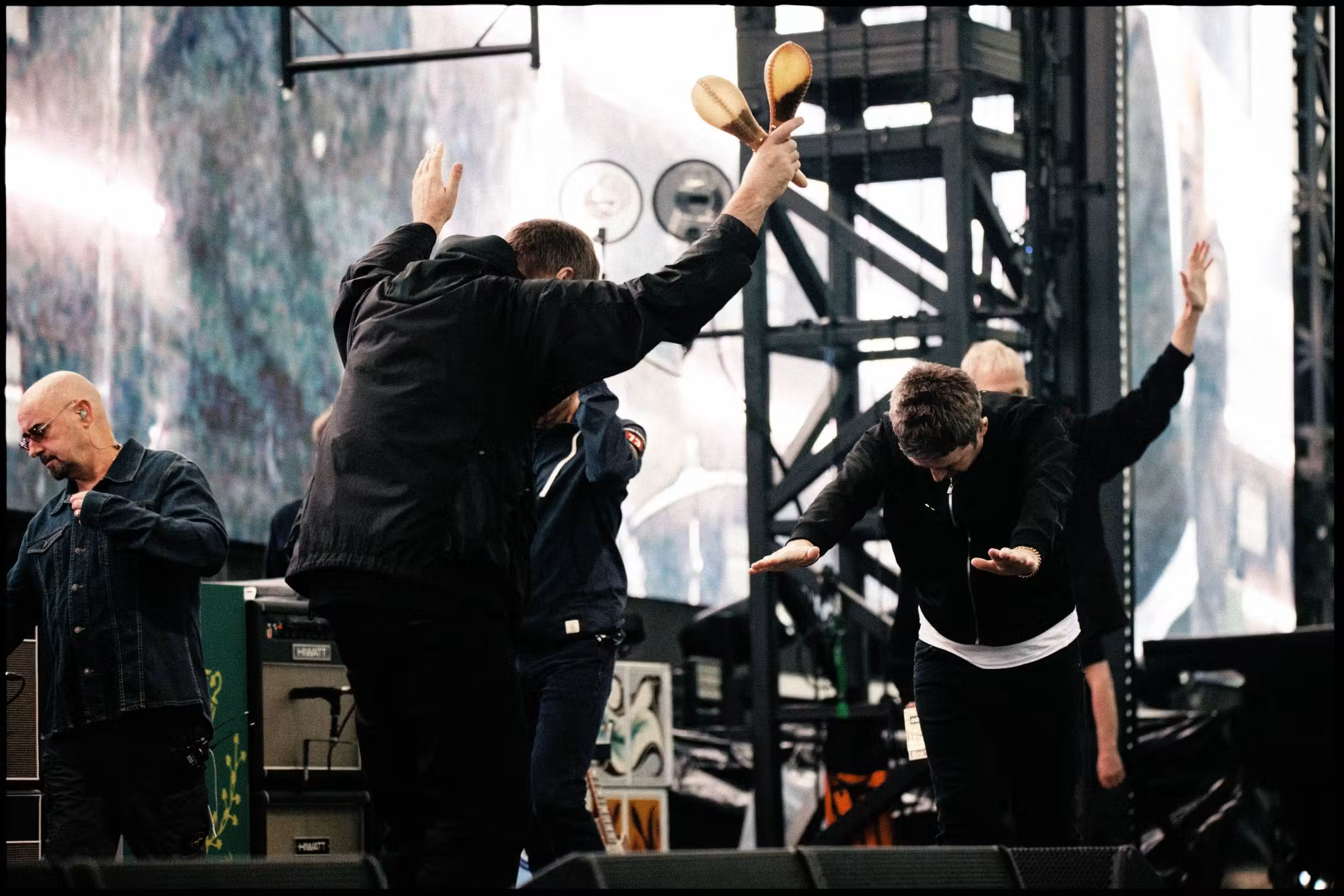
By coming back, Oasis have somehow become the biggest band in the world again. They've achieved what The Beatles never did, reforming and, in doing so, writing a new chapter that somehow makes the myth even bigger. They didn't just step back into the spotlight; they fundamentally reshaped the modern cultural landscape, dominating the airwaves and stadium box offices globally as if they never left.
Oasis knew how important these shows would be. It wasn’t just a homecoming; it was a moment to prove themselves once again to the city that first believed in them back in the early ’90s. The same city that gave us Joy Division, New Order, The Smiths, and The Stone Roses before giving us the Gallagher brothers. Standing in Heaton Park, you could feel the weight of that unparalleled musical lineage pressing down on the field, with Oasis serving as the loud, defiant apex of Manchester's working-class creative spirit.
Manchester received a lot of love throughout the run. The brothers’ beloved Manchester City were honoured during 'Cigarettes & Alcohol', with players Rodri, Jack Grealish, and Phil Foden, as well as manager Pep Guardiola, all receiving dedications. 'Fade Away' was dedicated to the people of Manchester, and 'Half the World Away' to the beloved sitcom The Royle Family. These nods weren't just cheap applause lines; they were genuine, affectionate anchors to the specific local culture that shaped the brothers long before global fame took hold.
Like many younger Oasis fans, I never thought I'd hear these songs performed live by both brothers. I was very lucky to get to go, for those of you who want a full review of my experience at the gig. Click here.
In August 2025, Catfish & the Bottlemen made a very understated step up into football stadiums.
Their historic August 2025 headline performances at Cardiff’s Principality Stadium and London’s Tottenham Hotspur Stadium were the ultimate "under-the-radar" triumph. Bypassing standard heavy press cycles, radio junkets, and television appearances, frontman Van McCann led a completely restructured touring lineup that operated like a clinical, well-oiled machine. Backed by towering stadium-sized screens displaying sharp, high-contrast monochrome visuals, the new band configuration tore through a definitive, career-spanning setlist, leaving no room for downtime. Following the explosive opening chords of ‘Longshot’, the band weaponised an immediate barrage of anthems, transitioning seamlessly into ‘Kathleen’, ‘Soundcheck’, and the frantic energy of ‘Pacifier’ and ‘Twice’.
Bolstered by massive opening sets from indie heavyweights like DMA'S, Travis, and James, the events felt like a full-scale festival curation. From those early frenetic numbers to the sprawling, ten-minute jam finale of ‘Tyrants’, the massive scale of the shows offered undeniable vindication for a band frequently written off by industry tastemakers. It proved definitively that while the media elite looked away, the band’s grassroots fanbase had only grown larger and more starved for their return
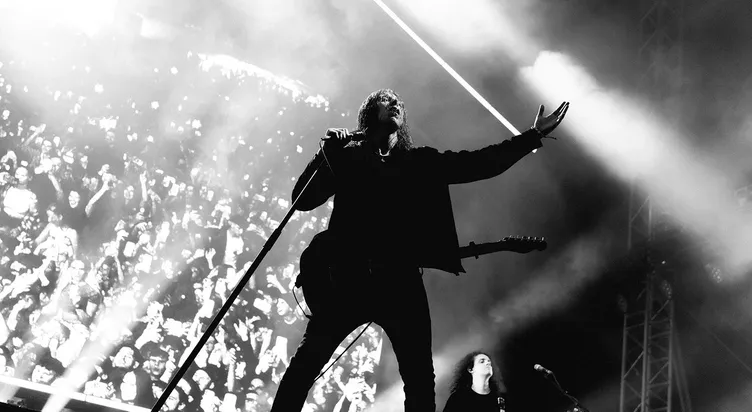
Yet, despite 60,000-strong crowds belting every word of ‘7’ and ‘Cocoon’ with an intensity that shook the stadium floors, a strange, uncertain fog still hung over the group. McCann remained a phantom outside the harsh glare of the stage lights, retaining his signature mystique by giving zero interviews and keeping a total media blackout. On stage, he let the audience do the heavy lifting, pacing like a caged animal as massive stadium singalongs erupted for mid-set heavy hitters like ‘Fallout’, ‘Homesick’, and the driving rhythm of ‘Rango’. The physical layout of the massive production was quite minimal, and it kept McCann anchored to his microphone stand, emphasising a literal and figurative distance from the sea of fans. Nowhere was this isolation starker than during the mid-show slowdown. Bathed in a single, stark spotlight, McCann delivered a rare, solo performance of the fan-favourite ‘Heathrow’ before diving into his traditional acoustic rendition of ‘Hourglass’.
Stripped of the band's wall of sound, it felt less like a public celebration of a stadium milestone and more like a private, insular moment of personal survival. It left the crowd wondering if they were witnessing a glorious rebirth or a beautifully staged farewell.
The atmosphere carried an uncomfortable echo of their September 2021 headline set at the Neighbourhood Weekender. That fateful performance marked a stark, painful fracture for the band, the final bow of the "classic" lineup amidst a flurry of sudden resignations and rumours of internal breakdown.
Most curiously, despite the 2024 comeback single ‘Showtime’ being explicitly released to herald this new era, the song was completely absent from the 2025 stadium setlists. Catfish and the Bottlemen stand as the ultimate modern music paradox: a band capable of effortlessly filling the nation’s largest sporting arenas while simultaneously appearing to teeter on the edge of another total disappearance. As the stadium lights faded at Tottenham, the prevailing question wasn't how good the gig was, but rather: Is this a grand new beginning, or a final, massive goodbye? In typical fashion, they left audiences with unforgettable nights, but absolutely no answers.
The Last Dinner Party returned with their first new music since 2024. The first single from their forthcoming second album, 'From The Pyre'.
'This Is The Killer Speaking' sees the London band push their songwriting and explore different avenues. The track leans heavily into a cinematic, modern Western murder-mystery aesthetic, trading out some of their previous orchestral baroque-pop for jaunty, country-tinged guitar structures and sharp wordplay. It serves as a striking evolution for a band that only recently dominated the airwaves with their award-winning debut, proving they have no intention of repeating themselves.
Following this lead track, the band continuously teased the record’s sonic diversity with three subsequent singles: the sultry, introspective slow-burn of ‘The Scythe’, the Sparks-inspired pop-rock romp ‘Second Best’ (penned by guitarist Emily Roberts), and the sweeping, dramatic fourth single, ‘Count the Ways’. Together, these tracks established the album's theatrical and shapeshifting framework.
Describing the album, the band said: “This record is a collection of stories, and the concept of album-as-mythos binds them,” the band explained. “‘The Pyre’ itself is an allegorical place in which these tales originate, a place of violence and destruction but also regeneration, passion and light. “The songs are character-driven but still deeply personal, a commonplace life event pushed to pathological extremes. Being ghosted becomes a Western dance with a killer, and heartbreak laughs into the face of the apocalypse.” The band structured the entire tracklist around the concept of a travelling medieval mystery play, casting themselves as the fluid theatrical players bringing these vivid worlds to life
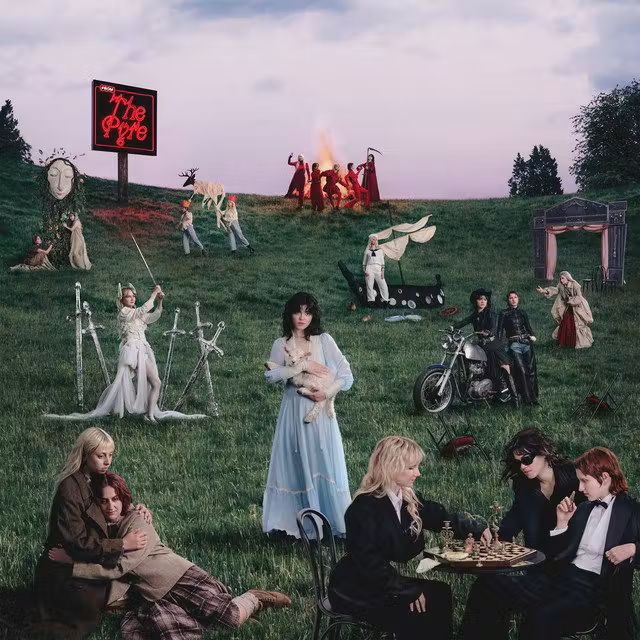
They continued: “Lyrics invoke rifles, scythes, sailors, saints, cowboys, floods, Mother Earth, Joan of Arc, and blazing infernos. We found this kind of evocative imagery to be the most honest and truthful way to discuss the way our experiences felt, giving each the emotional weight it deserves.
“This record feels a little darker, more raw and more earthy; it takes place looking out at a sublime landscape rather than seated at an opulent table. It also feels metatextual and cheeky in places, like a knowing look reflected at ourselves.” With production from Markus Dravs and mixing by Alan Moulder, the sonic environment matches this new, dirt-under-the-fingernails atmosphere. Dravs coaxes out a primal, thunderous rhythm section, pushing Georgia South’s distorted basslines right to the front of the mix while layering Emily Roberts’ guitars with a jagged, classic-rock bite. Rather than relying on the pristine synth pads of their debut, Aurora Nishevci weaves in haunting, organic textures using live flutes, mandolins, and detuned upright pianos. The resulting collection of tracks feels distinctly more witchy, grounded, and intensely unhinged, effectively setting the stage for an immersive sophomore era. Abigail Morris leans into this visceral production by delivering her most uninhibited vocal tracks yet, shifting effortlessly from hushed, menacing whispers into roaring, theatrical belt-outs that sound like they were recorded at the mouth of a cave, cementing a bold new sonic blueprint that feels completely unbound by expectations.
The complete 10-track layout acts as a cohesive sibling to their debut. The journey begins with ‘Agnus Dei’, a whimsical, larger-than-life opener where Abigail Morris’s operatic vocals evaluate the complex realities of relationships under the glaring lens of sudden fame. This shifts seamlessly into the album's earlier singles; ‘Count the Ways’ effortlessly combines jagged, punching guitar riffs with elegant, sweeping strings, while the Emily Roberts-penned ‘Second Best’ flutters with a slick, theatrical pop-rock energy inspired by the eccentric melodies of Sparks.
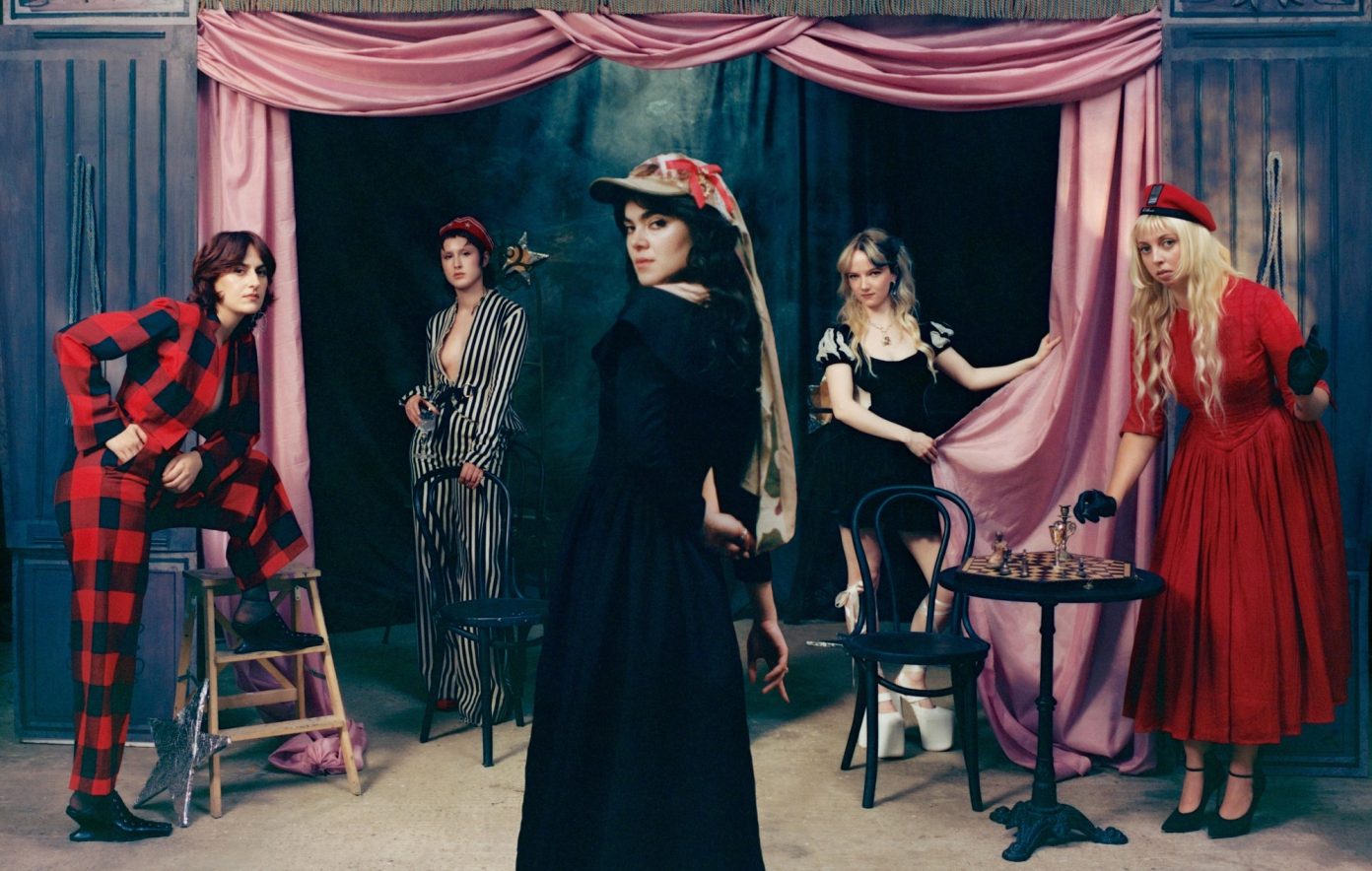
The middle run of the record pushes their sonic experimentation into entirely unpredictable territories. ‘Rifle’, led vocally by Lizzie Mayland, deceives the listener at first with the quiet, expansive glimmers of a piano ballad before crashing down with a relentless, intense wall of heavy guitar riffs. This is followed by the ethereal folk elements of ‘Woman Is a Tree’, which begins with a haunting, divine layer of acapella vocals and screams before locking into a rhythmic web of acoustic guitar strumming, sounding like a pagan hymn pulled straight from the earth.
The record's emotional gravity pulls even tighter in its final acts. Aurora Nishevci delivers a fiery, uninhibited performance on ‘I Hold Your Anger’, leading into the majestic, cinematic sweeping arrangements of ‘Sail Away '. Everything then anchors around the album's staggering centrepiece, ‘The Scythe’. A meditation on mortality following the passing of Morris’s father, the track shifts with brutal serenity from a vulnerable, stripped-back breakup song into one of the most affecting, devastating choruses the band has ever composed. The curtain finally falls on ‘Inferno’, an eerie, slow-burning finale where Morris trades vocal harmonies with the rest of the band, drawing comparisons to Jesus Christ and Joan of Arc amidst a backdrop of swirling embers. It's a great record.
The K's and The Royston Club both released second albums, navigating the notoriously difficult sophomore slump with completely different creative strategies. 'Pretty on the Internet', the second album from The K's, hit the top spot. Released just a year after their stellar debut, 'I Wonder If the World Knows?', the band pick up virtually where they left off. They refuse to let up momentum, proving that their relentless work ethic has paid off immensely by solidifying their place at the forefront of the modern British indie scene.
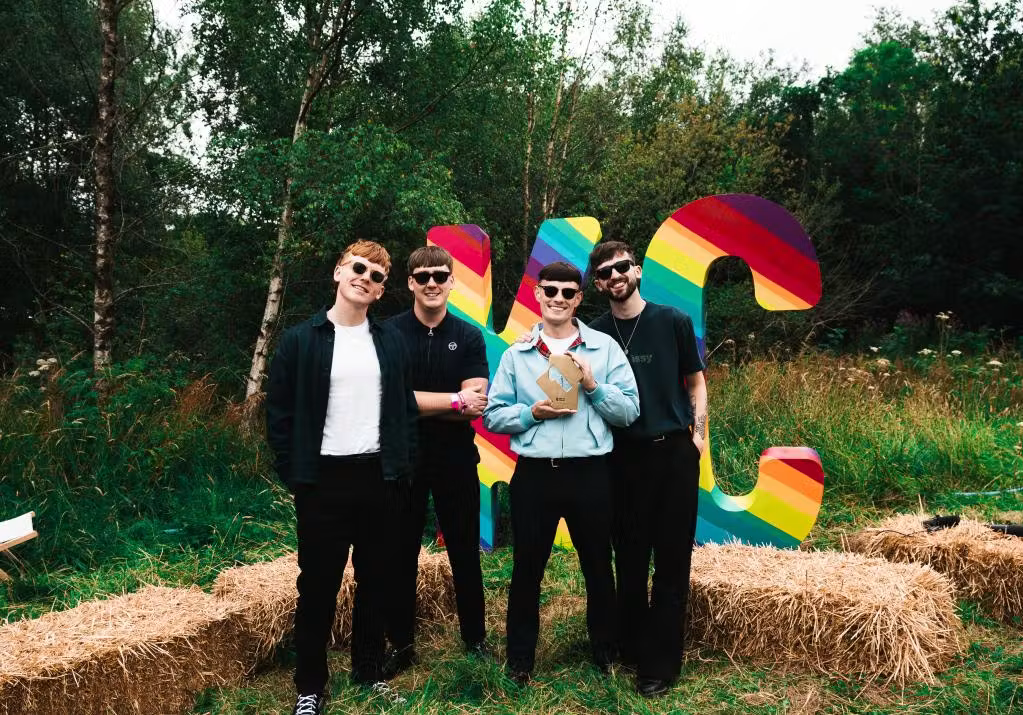
It's a record full of indie bangers and vibrant riffs that definitely contrast with many of the album's lyrical themes. Underneath the bright, festival-ready melodies lies a raw honesty that deals with the anxieties, pressures, and realities of modern youth. The album feels really well-produced; Jim Lowe is in the hot seat, and he has worked with some huge bands in his career, most notably Stereophonics on their hit track 'Dakota'. Lowe brings that same stadium-sized punch to this record, capturing the band's ferocious live energy while giving the instruments plenty of room to breathe. When the record is good, it's really good. 'Helen Oh I' acts as this record's ballad, just as 'Hoping Maybe' did on the debut, offering a beautifully stripped-back moment of vulnerability. 'Me and Your Sister' has a massive chorus tailor-made for packed-out tents, and 'The Bends (Here We Go Again)' is an absolute indie staple, driven by a pounding drumbeat and infectious guitar hooks that are impossible to shake.
However, in the second half of the record, the tracks begin to blend into one, and it feels a little rushed. The rapid-fire turnaround between albums means that some of the deeper cuts lack the distinct identity found in the first half, falling into familiar chord progressions and tempos. Songs that would usually thrive on a live stage start to bleed together when listened to in sequence, relying slightly too heavily on the same high-velocity formula and predictable vocal delivery.
It's still a very good album, though, and The K's have navigated the difficulties that often come with a second album. They manage to pull the record back from the brink of monotony by anchoring the final moments with a surge of genuine emotion, proving that they are far more than just a one-trick festival band. They have delivered a triumphant, chart-topping sophomore effort that keeps their crown firmly intact, proving that their rapid-fire chemistry can outrun the sophomore slump and set them up perfectly for the massive venues that await them.
The Royston Club have excelled with their second record; the band's debut, 'Shaking Hips and Crashing Cars', was a real statement of intent and contained some of the best guitar anthems of recent memory. The second effort, 'Songs for the Spine,' is a shift up in songwriting and maturity. From the opener 'Shivers', which is the darker answer to the debut album's closing track, the band are begging instead of asking for it. It's comfortably one of the best songs of this year, a statement I echo for two more tracks on this record.
This darker, more expansive landscape continues seamlessly into 'The Patch Where Nothing Grows', which pairs a blazing guitar solo and roaring drum patterns with soul-baring lyrics that instantly resonate as a new fan anthem. The band then leans into glad-but-sad disco nostalgia on the shimmering 'Crowbar', before plunging into 'Glued to the Bed', a bittersweet breakup track exploring how grief and heartbreak can distort your entire being.
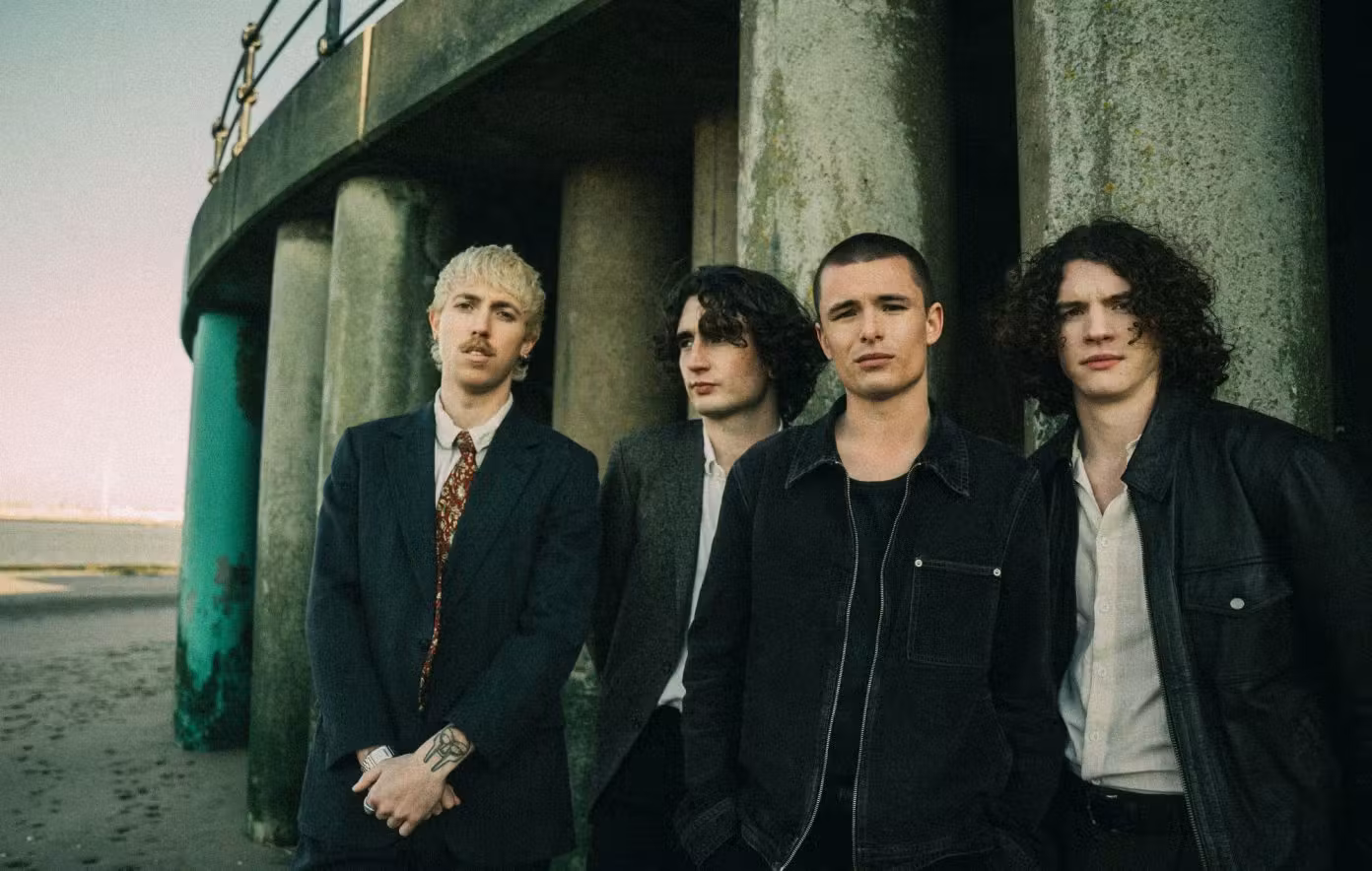
'Cariad', the album's third single, is majestic and a show of the scale of the band's ambition. This introspective song marks the first shift in the record, trading the punchy riffs and drums from the first two tracks for a more ballad-like moment. It's about a lost love, ‘Cariad’ being a Welsh term of endearment. “All of these pictures of you and I / Plastered on the hallways of my mind,” Tom sings. It’s a softer, more vulnerable shade to the band: “I’m not a lucky man / But, darling, you had me fooled.
'30/20' is an indie banger carried by a riff that dips in and out, cutting through the lyrics and then letting the chorus glide. This one will be a live staple for years. The final stretch of the album highlights the band's spectacular growth. 'Spinning' keeps the momentum high, infused with heartfelt lyrics over a driving rhythm. It flows beautifully into the intricate, guitar-driven layers of 'Through the Cracks', before arriving at 'Curses & Spit'. Originally known to fans as 'Joe', this deeply moving track serves as lead guitarist Ben Matthias' emotional dedication to his brother, confronting personal guilt with a raw, acoustic vulnerability that leaves you completely floored.
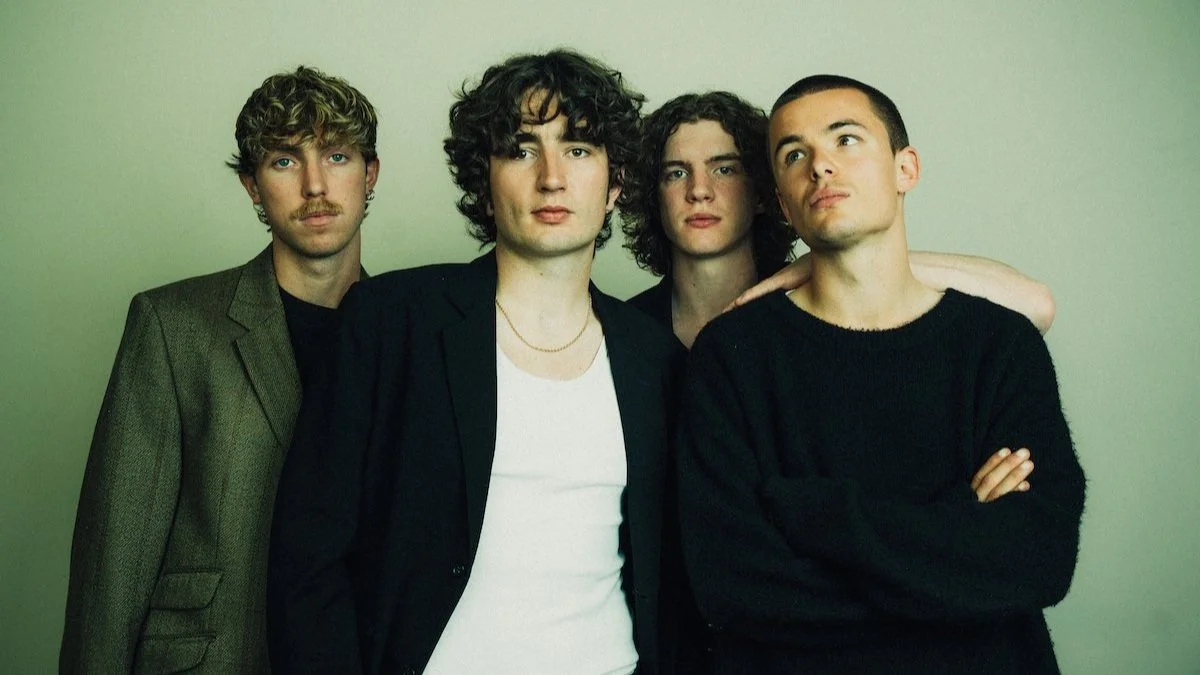
'The Ballad of Glen Campbell' is an emotional masterpiece, reflective and poetic. It builds up, comes down; it's packed with passion, pain and joy, for six minutes. Starting with a delicate, stripped-back vulnerability, the track beautifully captures the raw weight of grief before building into a colossal, sweeping instrumental climax. The guitars swirl and collide in a magnificent wall of sound that feels both devastating and deeply triumphant, leaving the listener completely breathless as the final chords ring out. This record is nothing short of a triumph, anthemic, powerful and emotional. Full of musical excellence and brilliant songwriting. It's quite simply one of the best albums of 2025.
In the last few years, we've had Sam Fender, Fontaines D.C., Blossoms, Wolf Alice and Wunderhorse emerge out of the shadows to become the torchbearers for guitar music. I think it's The Royston Club's turn.
After a run of three excellent singles, Wolf Alice released 'The Clearing'. The feeling around this record is that the band are comfortable within themselves, and their music is a theme that runs through the record. Settled is the word I'd use to describe Wolf Alice now. A band who have navigated through the madness of three albums, Brit Awards, winning a Mercury Prize, sell-out tours and most importantly, the madness of life that happens in your twenties
Embracing everything they have done on their musical journey, and moving forward into a new chapter in an assured and accomplished way. With more nuance and a slower tempo. The band that blew us away with 'Play the Greatest Hits', 'Yuk Foo', 'Smile' and 'Fluffy' have turned their guitars and drums down, but the songs on 'The Clearing' still leave a lasting impression. Joff Oddie’s guitars are no longer screaming through walls of jagged distortion; instead, they stretch out into lush, shimmering ambient soundscapes and intricate acoustic fingerpicking, perfectly mirrored by Theo Ellis’s remarkably warm, melodic basslines.
‘Thorns,’ the opening track of the album, plays like a companion piece to ‘Blue Weekend’s ‘The Last Man on the Earth,’ echoing it in both sound and theme. While the 2021 track reflected on society’s narcissism and the protagonist’s fixation with finding themselves in the culture they consume, this time, Ellie Rowsell turns the gaze inward. “Did it help to take the thorn out / Telling the whole world you’d been hurt,” she pointedly asks.
This introspective energy shifts beautifully into the rest of the album's tracklist, anchored early on by the breathtaking brilliance of ‘Bloom Baby Bloom’. The track is a sprawling masterpiece that sees the band bolder and more brilliant than ever. Supremely confident and expressive, so electrifying it’ll give you goosebumps: it has it all.
A commanding statement by a band not holding back. We’ve heard Wolf Alice go full-pelt into rock bangers before, but ‘Bloom Baby Bloom’ takes a different tack compared to the sludgy ‘Visions Of A Life’ or the brittle, breakneck punk of ‘Play The Greatest Hits’. Here, they pull from the ’70s palette of russet and harvest gold-hued sounds – warm and rich, even when Ellie Rowsell is giving us her raspiest yell over the top. It’s splashy and full of little flourishes: Joff Oddie’s twiddling guitar solo, a brief drum splatter from Joel Amey, Theo Ellis’ bassline that pierces through the pre-chorus.
Rowsell, meanwhile, has never sounded more incredible, pushing her vocals to their most beautiful one moment, then contorting them and twisting them the next. Each syllable is packed with emotion and expression; nothing wasted, every utterance taking you deeper into the heart of the song. When she sings “Fucking baby, baby man” in the first verse, she sings “Fuck” as if through an enormous exasperated sigh before slipping straight back into a tremulous falsetto. Later, when she first tells us she’s “so sick and tired of trying to play it hard”, she expertly makes all-consuming frustration sound divine.
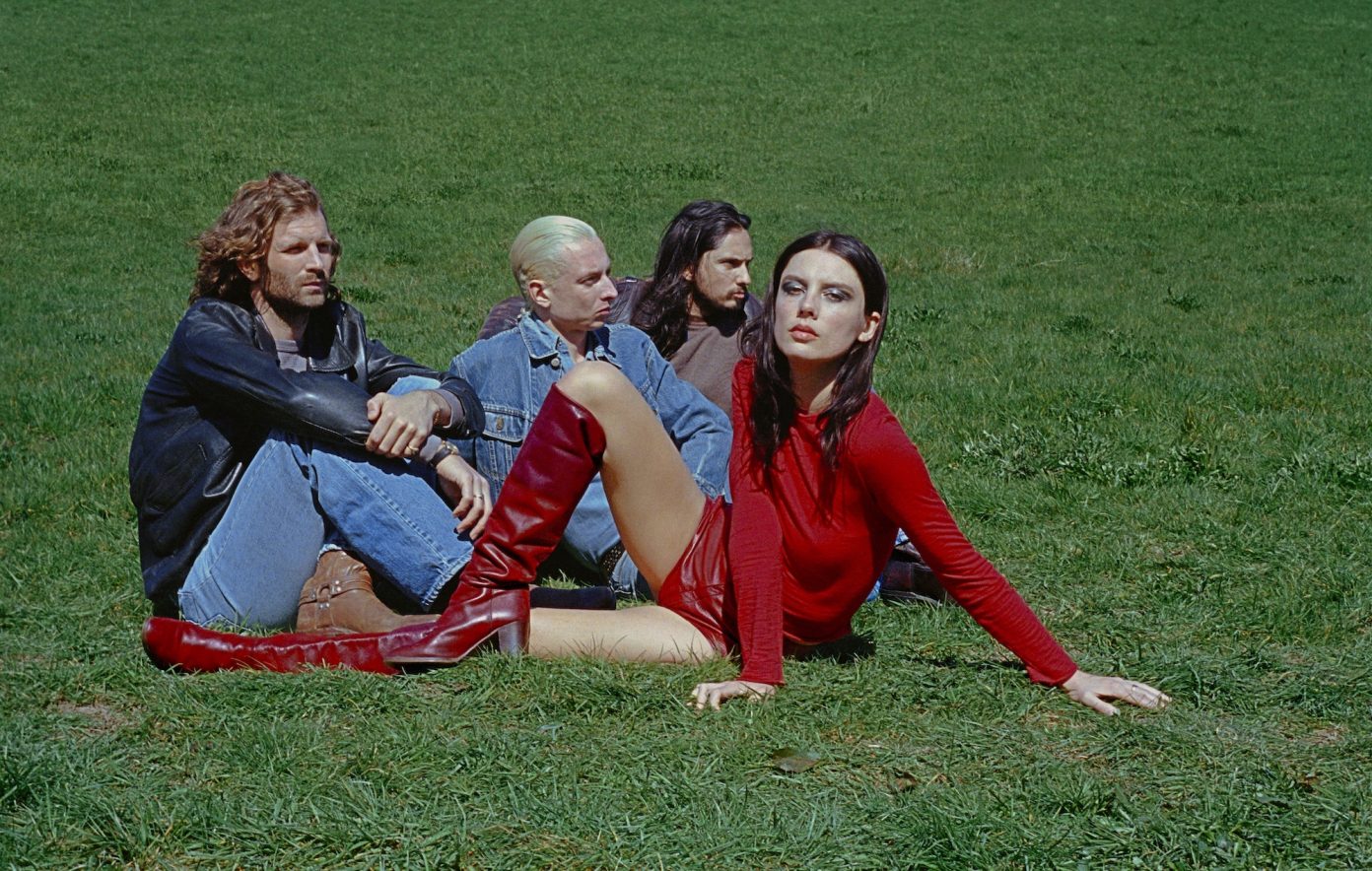
It's a song that speaks about coming into your own, rising up through chaos and adversity and coming out the other side completely sure of yourself and your place in the world. But I bloom, baby bloom / Watch me, and you’ll see just what I’m worth,” Rowsell declares, serenely self-assured. “Yes, I bloom, baby bloom / Every flower needs to neighbour with the dirt.” After three albums of building and expanding their world, and experiencing the ups and downs of the music industry, Wolf Alice stake their claim as one of their generation's most important acts.
The album flows smoothly through the gorgeous acoustic minimalism of ‘Leaning Against The Wall’ and into late-night atmospheric pieces like ‘Play It Out’, ‘Safe in the World’, and the short, magnetic ‘Midnight Song’, ensuring the record maintains its intimate, cohesive spell.
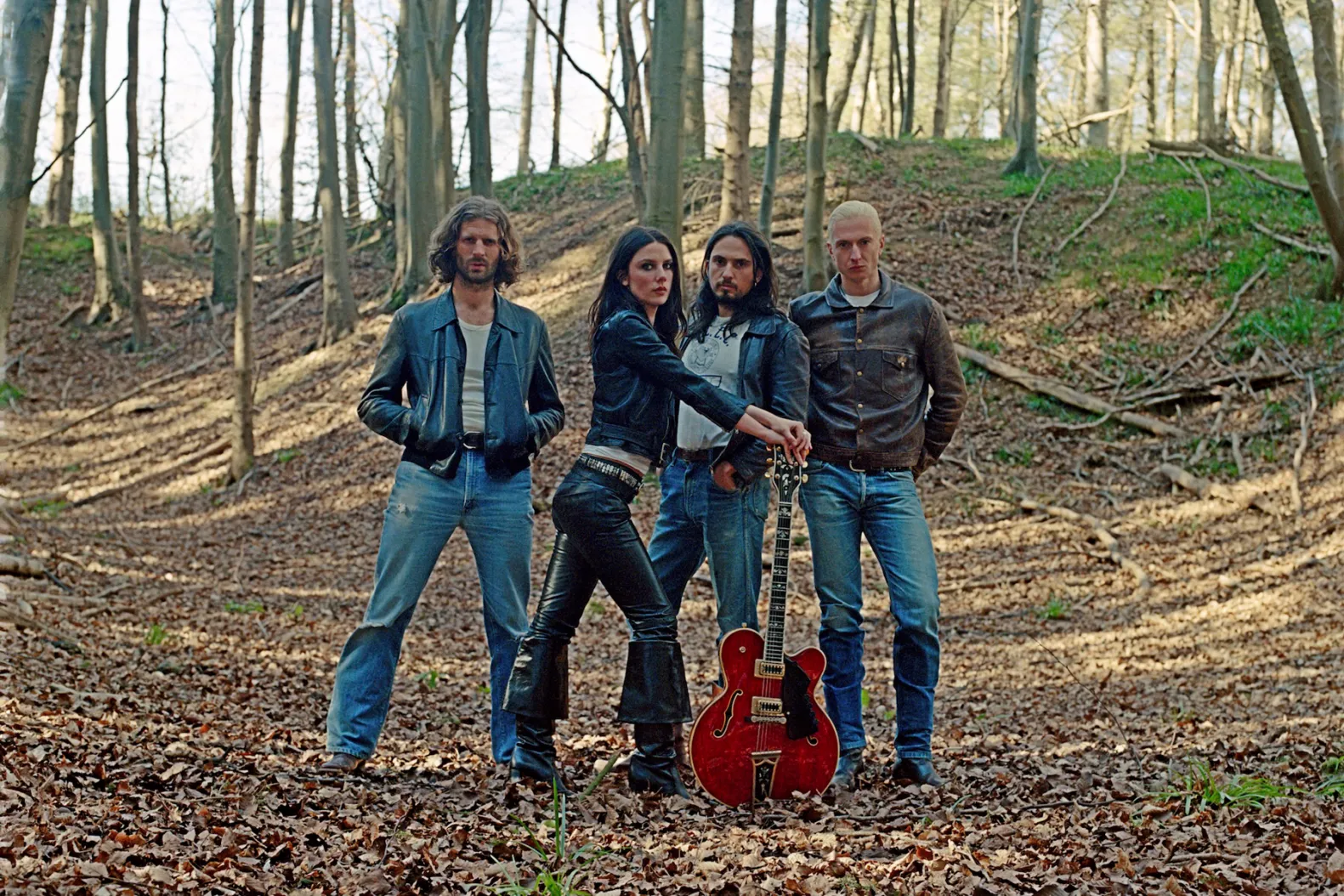
'Bread Butter Sugar Tea' has the hallmarks of a live classic, and will definitely be getting an airing on the band's winter tour. A song about embracing flaws, it doesn't gloss over them; it's instead about acceptance. (“Don’t want a dish without salt / Bread without butter / If it’s bad for me, good, I feel bad suits me better.”
'Passenger Seat' shuffles with an Americana, meets Haim-like feel. With subtle hints to the band's earlier song 'Leaving You'. 'Just Two Girls' shines with a folk-like delivery but also an almost disco-inspired backing track. Imagine Joni Mitchell meets the Bee Gees. It really works.
One of the album's best moments comes in the form of the penultimate track, 'White Horses', where drummer Joel Amey takes lead vocals for the first time since ‘My Love Is Cool’’s ‘Swallowtail’. A heartfelt reflection of heritage, identity and family. It has crisp, rustic instrumentation and one of the album's biggest choruses. It's a song that has been on heavy rotation since its release. A confident and celebratory affair, when the questioning quiets down, and he chooses to be content with his family and who he is. Amey’s voice carries a beautiful, weathered maturity that pairs perfectly with the song's driving, folk-rock rhythm, providing a triumphant, emotional peak right before the album takes its final, quiet breath.
'The Sofa' brings the album to a close. The Ellie Rowsell-penned piano ballad grapples with unrealised dreams and accepting life’s quieter moments: “Didn’t make it out to California / Where I thought I might clean the slate / Feels a little like I’m stuck in Seven Sisters / North London, oh England / And maybe that’s ok.”
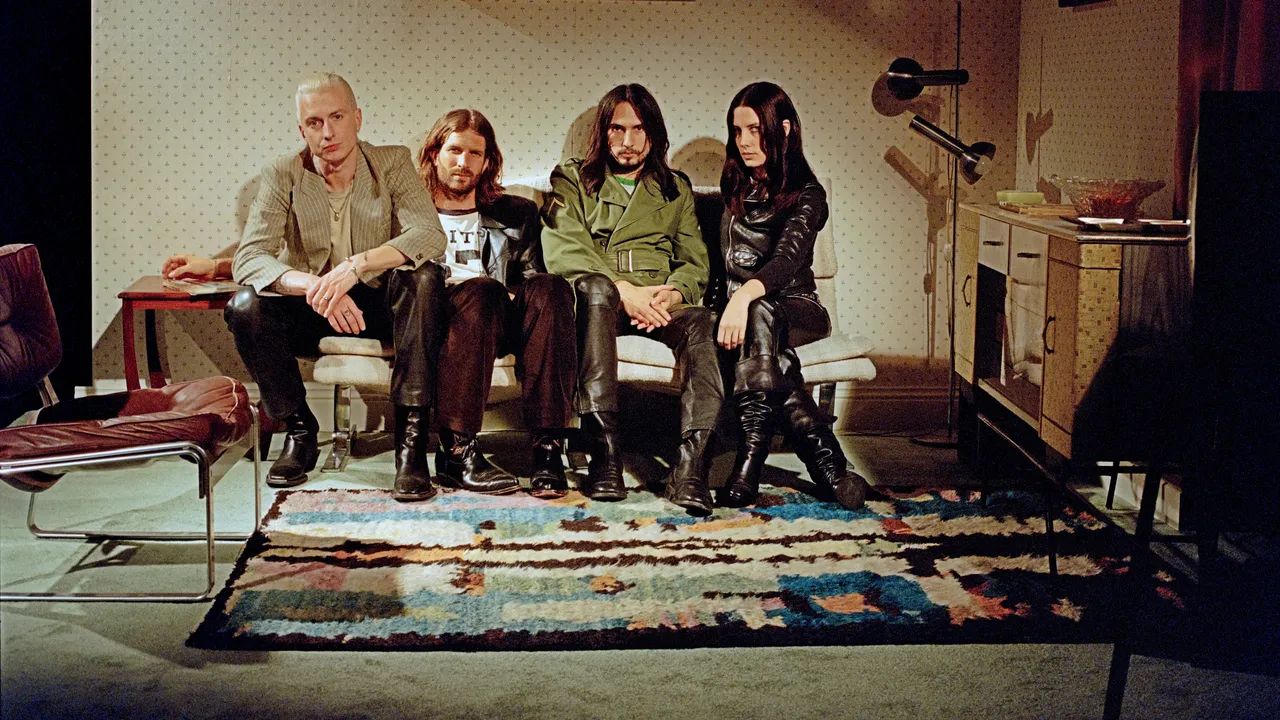
Discussing the song, Rowsell said it was about “not trying so hard to figure everything out”, as well as reflecting on ageing and attempting to get to grips with “things that have or haven’t happened in your life”. “It’s also about trying to get to grips with the polarising aspects of one’s life when you’re in a band,” she added. “You’ve just played a huge tour – and you come home, and you have your dinner on the sofa. For me, it’s summed up in how I treat TV. I used to never watch the same thing twice because I thought I had so much to discover! And now I’m like, it’s okay if I just want to rewatch Peep Show for the thirteenth time.”
It's the perfect metaphor for the album, and for where Wolf Alice find themselves. The dust has settled, and they know who they are, flaws and all. 2025 was the band's biggest year yet. Their first on a major label, and as an arena act. Wolf Alice are one of the decade's most important bands, never afraid to evolve and change. With an arsenal of songs that are diverse yet never dip in quality.
After one of the performances of the weekend at Glastonbury, The Maccabees headed into London, to a dust-filled Victoria Park for All Points East, with a lineup of friends old and new.
A lineup that featured noughties indie heroes The Cribs, The Futureheads, and Bombay Bicycle Club, alongside the next generation of UK indie, Divorce, brought their country-tinged sounds to a rapturous crowd in the same tent that Black Country, New Road continued their fascinating evolution later in the day. The field at Victoria Park felt less like a standard festival and more like a massive indie carnival, beautifully bridging the gap between nostalgic singalongs and cutting-edge experimentation. Westside Cowboy will, by rights, be remembered as indie legends in future decades too, alongside the rabble-rousing Man/Woman/Chainsaw, who both provide exciting examples of the future amongst the rose-tinted looks into the past.
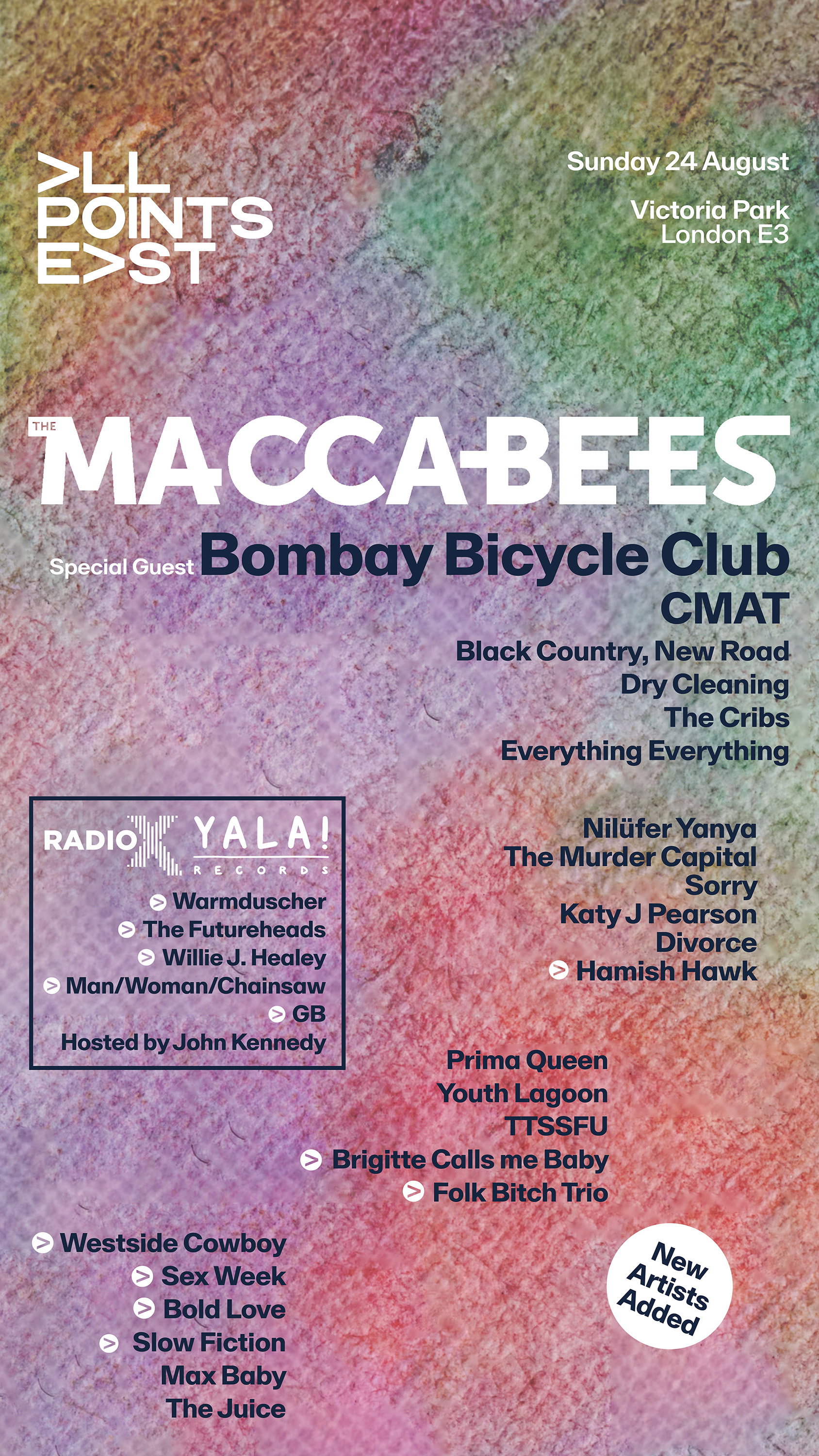
The Radio X and YALA! Records stage, hosted by the legendary John Kennedy, became an absolute pressure cooker of sweat and adrenaline, particularly when Warmduscher closed out the tent with their signature brand of chaotic, dirty funk-punk. Meanwhile, over on the main East Stage, Irish sensation CMAT completely dominated her late-afternoon slot, delivering a theatrical, high-voltage masterclass that cemented her status as the absolute star of the festival circuit. Whether it was the jagged post-punk poetry of Dry Cleaning, the math-rock nostalgia of Everything Everything, or the fierce, blistering rock-and-roll delivery from The Cribs, complete with their iconic, howling crowd interactions, the day was a beautiful testament to the enduring, shapeshifting power of alternative guitar music.
The Maccabees' breakup in 2017 was different to other band breakups; there was no fallout and no legal cases. In fact, it was quite the opposite; they'd done the near-impossible, calling it quits whilst at the peak of their powers. After the release of 2015's 'Marks to Prove It', the band hit the top of the charts, went on a sold-out tour, and then went their separate ways.
It wasn't over, though. The Maccabees themselves thought there was unfinished business. Felix White said before the show's announcement.
“In the intervening years, we’ve been to All Points East a lot, separately. It’s become a bit of a landmark festival for us, always checking who’s on the line-up. I’d go and have a great time throughout the day, but there was always this pinch of regret watching headliners that we could’ve done it ourselves one day too. I thought that moment had passed, and it was something I was prepared to come to terms with that I was always going to miss. I think we’re all kind of shocked and excited that we get to do it together again.”
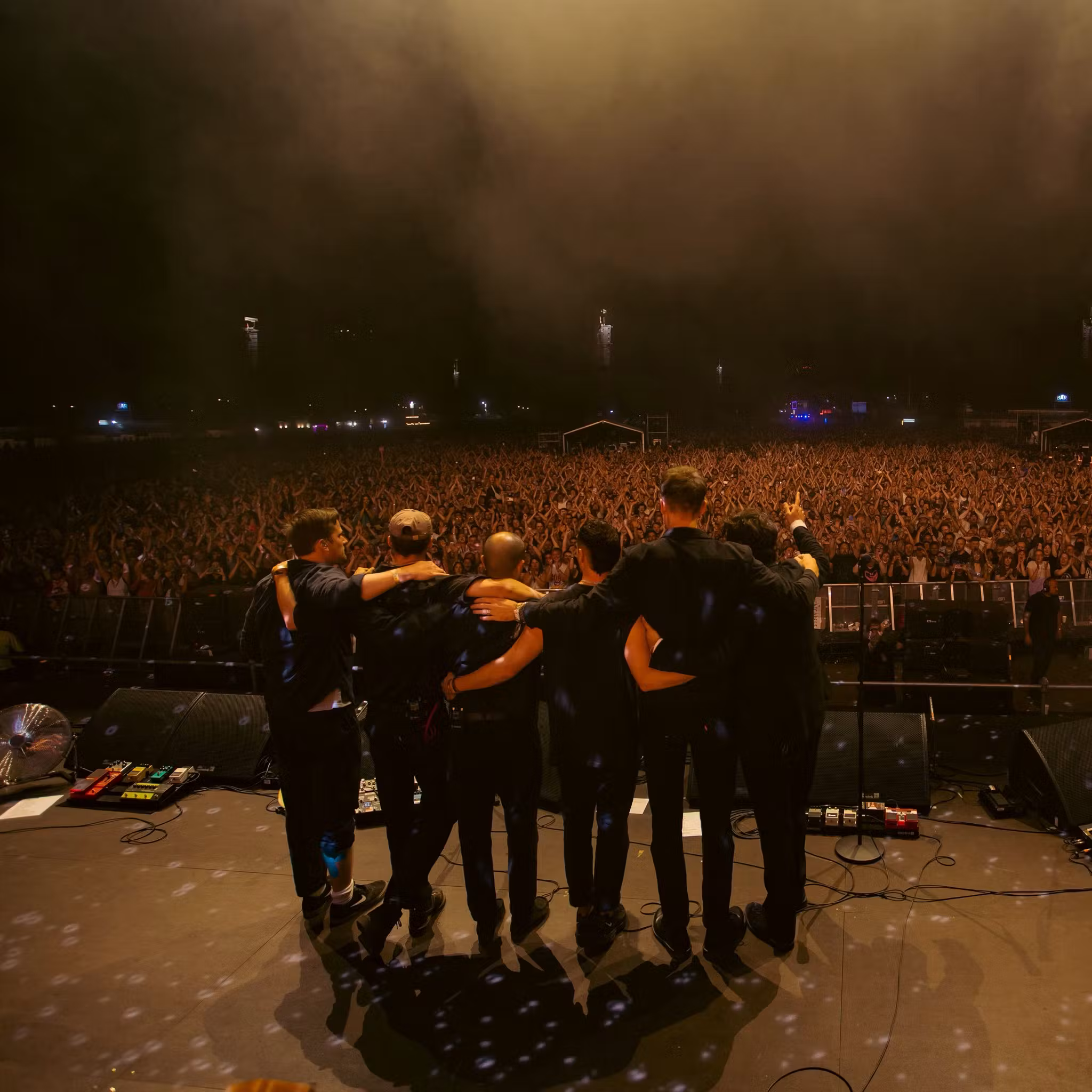
All eras of The Maccabees' catalogue were lovingly revisited. Early cuts like ‘Latchmere’, ‘Lego’, and ‘X-Ray’ instantly transported the crowd back to 2007, bursting with the same earnestness and frenetic energy that defined their debut. Frontman Orlando Weeks paused to warmly thank the 50,000-strong crowd for coming before rifling through the driving rhythms of ‘Kamakura’ and ‘Wall of Arms’. Predictably, it was a soaring rendition of ‘First Love’ that triggered one of the biggest collective eruptions of the night.
The weather across the weekend had turned Victoria Park into a literal dust bowl, with weeks of dry heat and thousands of stomping feet sending up massive, blinding plumes of earth that hung heavily over the main stage. For blocks around, an orange-red haze coated the crowds, forcing many festival-goers to wrap bandanas and face masks around their mouths just to breathe.'
'Love You Better' was interrupted by the dust, but fans didn't let it ruin the moment; whilst the band cut out, a 50,000-strong army of backing vocalists rose up to the occasion. They sang the melody through the parched air in a moment of pure, unified magic that defied the elements.
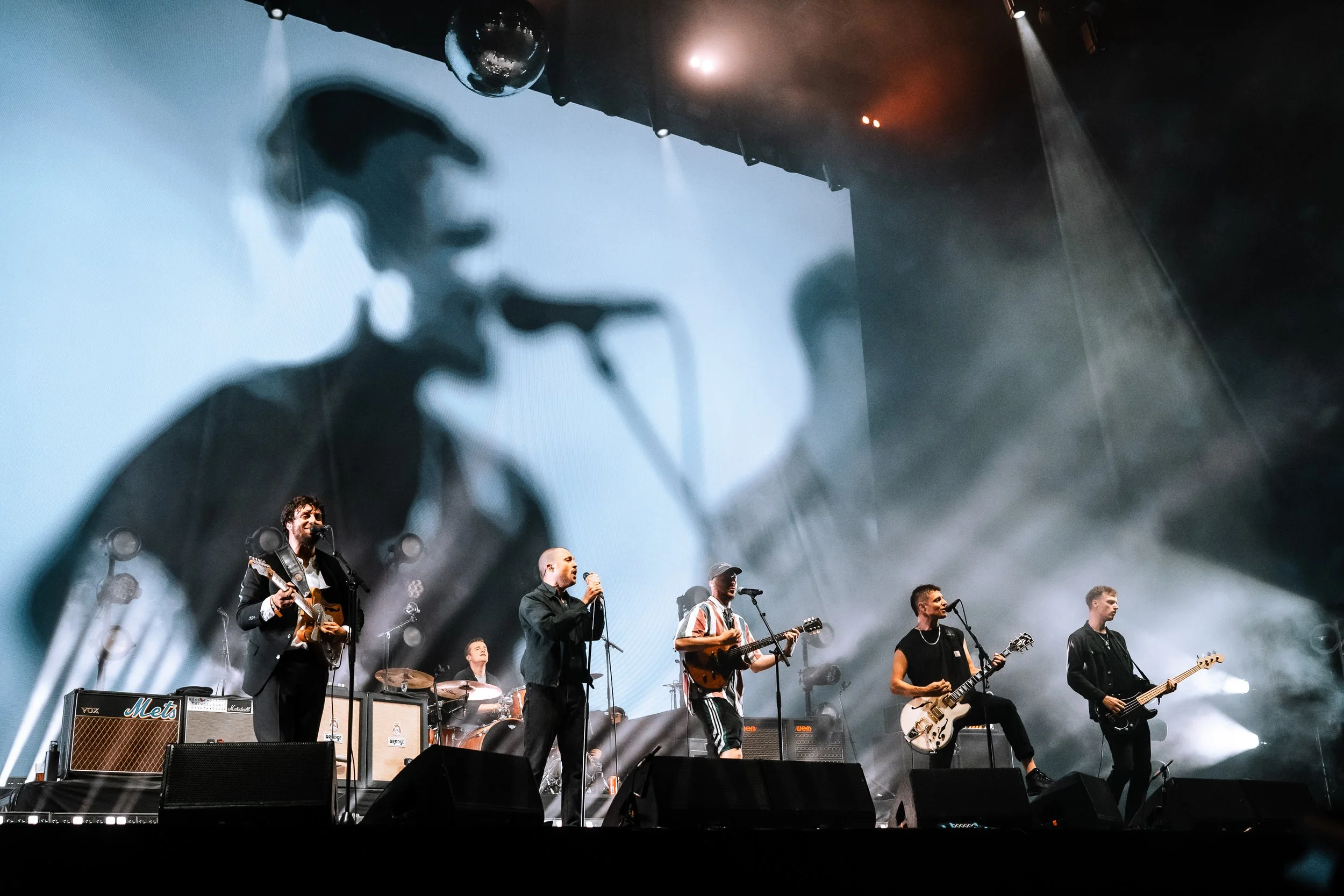
Not shy about bringing out special guests: Glastonbury got Florence Welch; All Points East got Jamie T. He joined the band on stage for 2015's 'Marks to Prove It' and his own songs 'Sticks n Stones'. The moment the South London icon sauntered out from the wings, the festival field completely erupted. Trading vocals with Orlando Weeks, Jamie brought a chaotic, raw edge to the lightning-fast rhythms of ‘Marks to Prove It,’ before Felix White’s unmistakable guitar work slammed directly into the opening chords of ‘Sticks n Stones.’ Watching the entire park jump in unison while dust swirled under the stage lights was a massive highlight. There's something quite beautiful about seeing the survivors of the indie scene on stage together, sharing the mic and celebrating the enduring longevity of a golden era of British guitar music.
‘Something Like Happiness’ brings the main set to a close, and the band returns for an encore of ‘Toothpaste Kisses’, a song which has soundtracked many an indie romance, the criminally underrated ‘Grew Up at Midnight’, and of course, fan favourite ‘Pelican’. The transition from the fragile, whistled intimacy of ‘Toothpaste Kisses’ into the massive, driving euphoria of ‘Pelican’ was masterful. As the final, towering chorus of ‘Pelican’ slammed into the field, a final explosion of red flares pierced through the choking dust, and thousands of fans lifted each other onto their shoulders for one last, breathless singalong.
That was that; the band left the stage, leaving the thousands in attendance wondering. What's next?
On the festival circuit, the August Bank Holiday weekend sees thousands of music fans descend on Richfield Avenue in Reading and Bramham Park in Leeds. The lineup this year wasn't one I was enamoured by, with only a couple of acts sticking out for me.
One of the acts I was intrigued to see before a young Reading & Leeds crowd was Bloc Party. The band had been billed as the festival's first icon set. 20 years since they headlined the NME/BBC Radio 1 Stage off the back of their exceptional debut ‘Silent Alarm’.
The band attracted a huge crowd on the main stage and showcased their multi-generational appeal, with the majority of the audience likely not even born when the London band first broke through with 2005’s ‘Silent Alarm’.
Bloc Party played a set that focused heavily on their debut and the 2007 album 'A Weekend in the City', but they still found time for recent songs, including 'Traps' from the band's most recent album. The rhythm section locked into a precise, dance-punk frenzy on the newer tracks, seamlessly bridging the gap between their foundational angular guitar work and their tighter, modern live setup. Frontman Kele Okereke, notoriously known during the band's mid-2000s era for a somewhat reserved, intense stage presence, seemed to be genuinely having the absolute time of his life on stage.
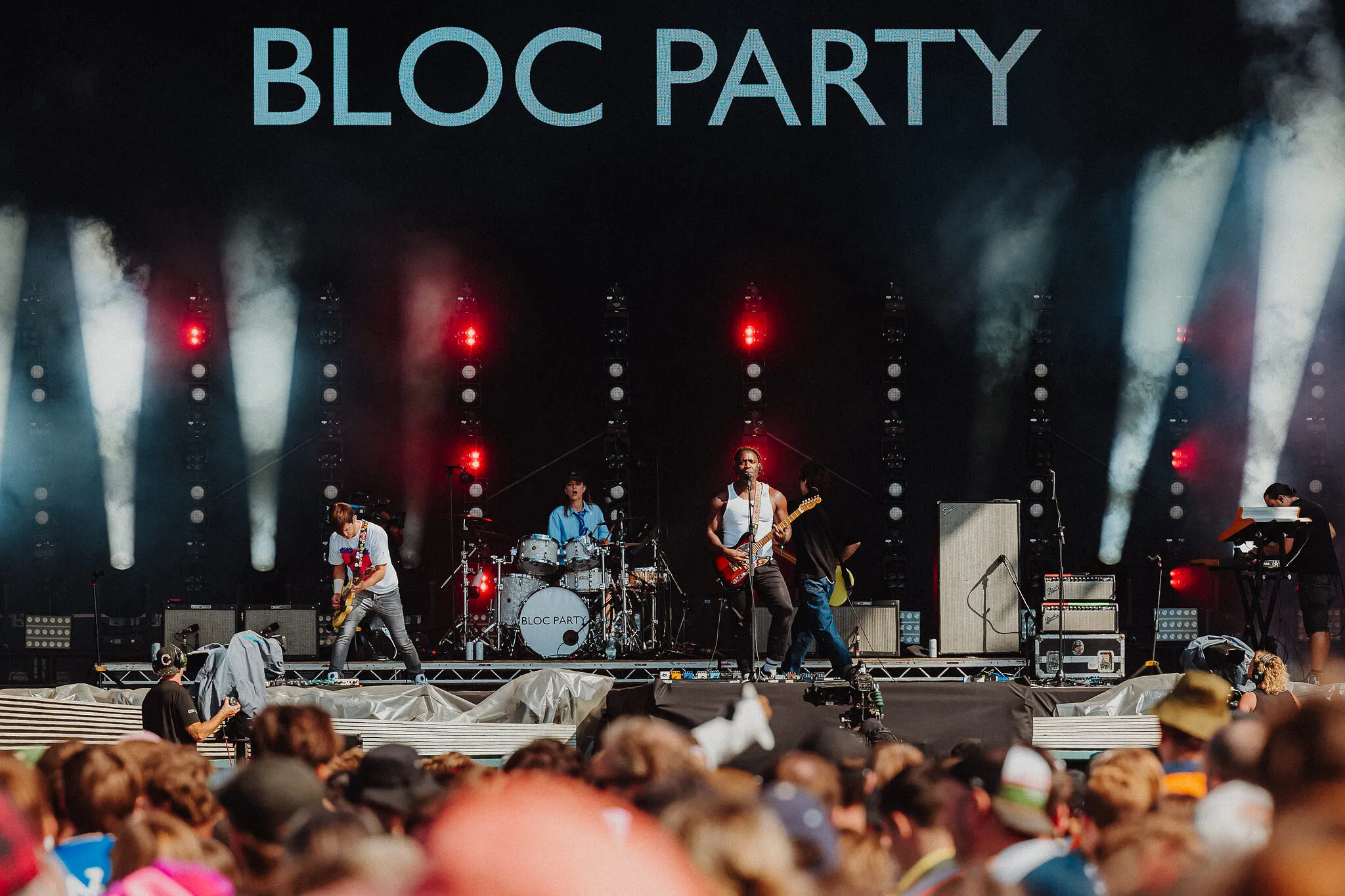
Even the most casual fan would have been impressed: 'Helicopter', 'Banquet', 'Like Eating Glass', 'So Here We Are', 'Mercury', 'Song for Clay (Disappear Here)' were all played under the sun. In the penultimate song of the set, 'This Modern Love', frontman Kele Okereke shouted out “anyone who got their results,” prompting another big cheer, and said: “I remember coming to Reading after I got my exam results and it was a wild time, so look out for each other.” The massive crowd warmly reciprocated the care, locking arms and hoisting friends onto shoulders while chanting the song's closing refrain back toward the stage in an overwhelmingly positive moment of shared memory.
The new ‘icons’ slot looks set to be a regular feature of the festival, in the vein of Glastonbury’s famous ‘Legends’ performance.
Another band I was intrigued to see was The Kooks, another indie group from the 2000s. It's safe to say they took a different approach to Bloc Party. Rumours of a guest joining the band on stage had been floating around for a few hours before the band's set. What happened next may take the award for the most mental thing to happen at a British festival.
The band were joined on stage by Rebel Wilson, and they performed a cover of the 1995 song 'Gangsta's Paradise'. Yes, you read that right!
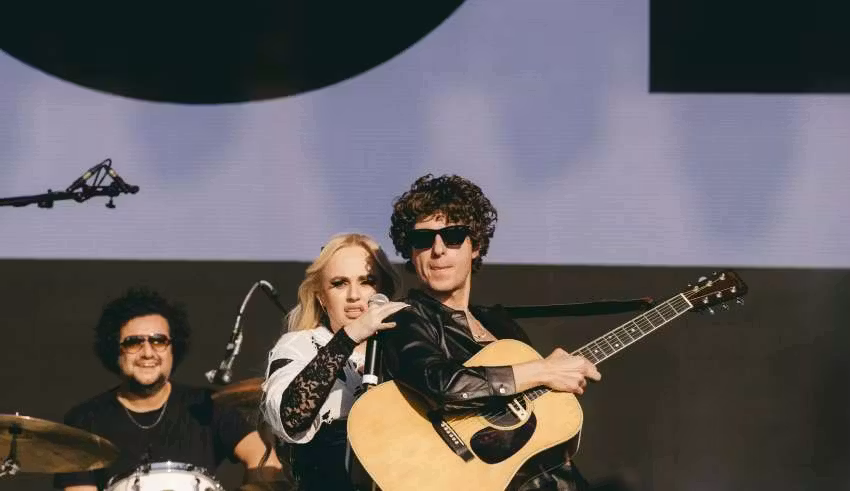
Fans went berserk as Wilson took to the stage. Approaching the microphone to rapturous screams, she joked to the audience, “What’s up, Reading? Seeing as I’m out here, I thought I should sing a classic Kooks song… so I don’t know about you guys, but I was thinking about Gangsta’s Paradise…“. The band members looked at each other in faux confusion before firing up an uncanny rendition of the Coolio hit, with Rebel rapping every verse seamlessly and Pritchard joining in for the choruses, belting out the track’s hook, “Livin’ in a Gangsta’s Paradise“.
The band played a collection of tracks from their 2006 debut 'Inside In / Inside Out', including 'Naive', 'Ooh La', and 'She Moves in Her Own Way'. Despite many of the crowd not being born when the album was released, all of the songs were lapped up by the thousands in attendance. From the second the opening acoustic chords of 'Seaside' drifted across the field, a massive wave of nostalgia hit the crowd, prompting thousands of teenagers to scramble onto friends' shoulders. Luke Pritchard's distinct, boyish vocals sounded as sharp and magnetic as they did two decades ago, effortlessly commanding a field that transformed into one massive, collective singalong.
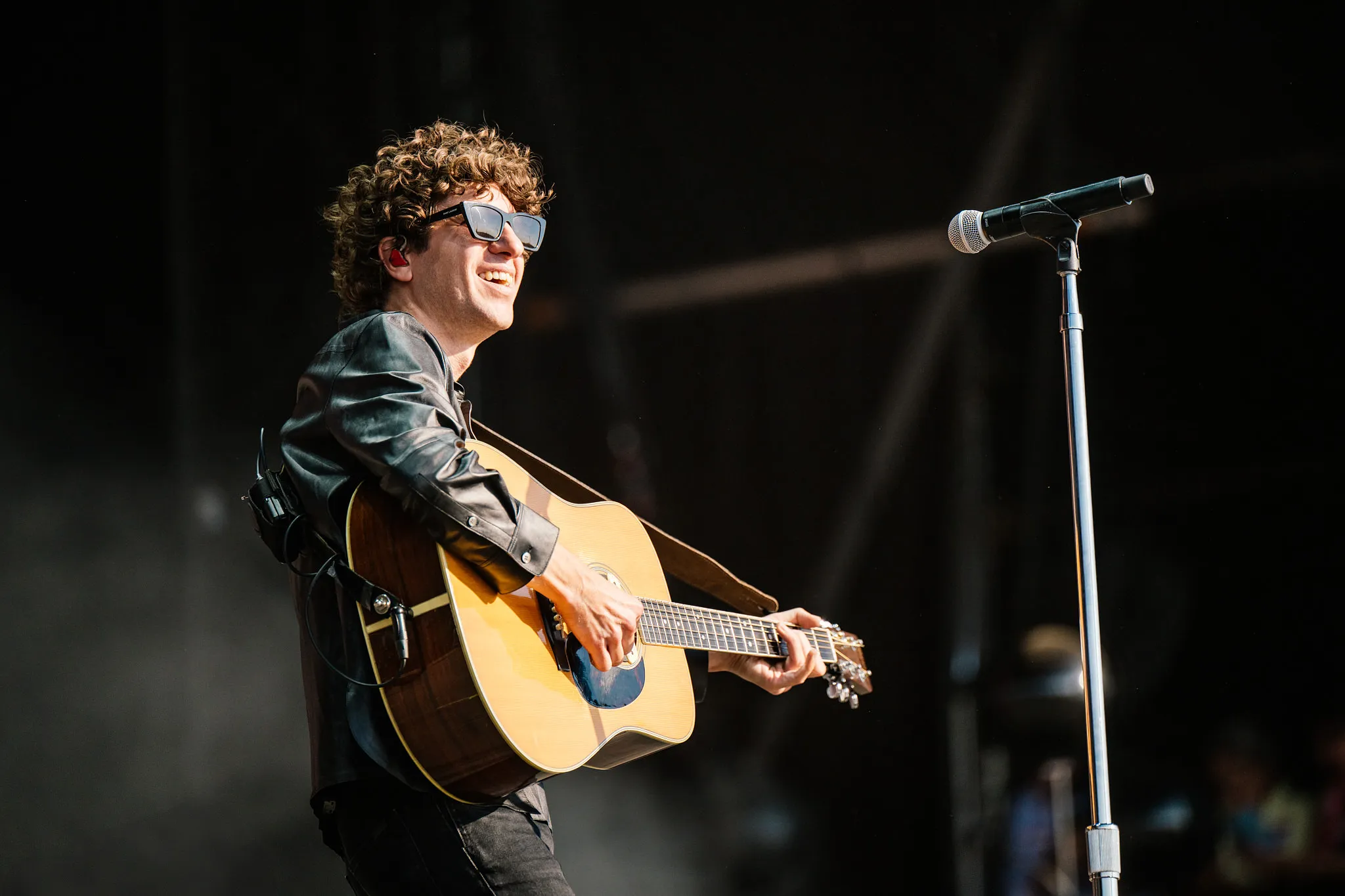
Alongside classics from the debut album, The Kooks played some more recent cuts, including 'Bad Habit' and 'Sweet Emotion'. These tracks injected a slick, funk-infused groove into the afternoon heat, proving that the band's knack for infectious, foot-tapping hooks hasn't faded with time. The newer material held its own remarkably well, keeping the energy levels at an absolute premium before the set peaked with an explosive, triumphant rendition of 'Naive'. Another good showing for the 2000s at Reading and Leeds, reaffirming that this golden era of indie-pop still holds a massive, unbreakable grip over the festival's younger generation
However, it wasn't just heritage acts at the festival. Wunderhorse took to the Chevron Stage, this year reserved for hip-hop, grime and dance and went off like a rocket. In 2024, the band drew the biggest crowd ever seen in the BBC Introducing Tent. A bigger stage was necessary for this performance. Stepping onto a stage custom-built with a massive overhead mesh LED canopy designed for electronic dance acts, the band looked wonderfully unbothered by the genre clash.
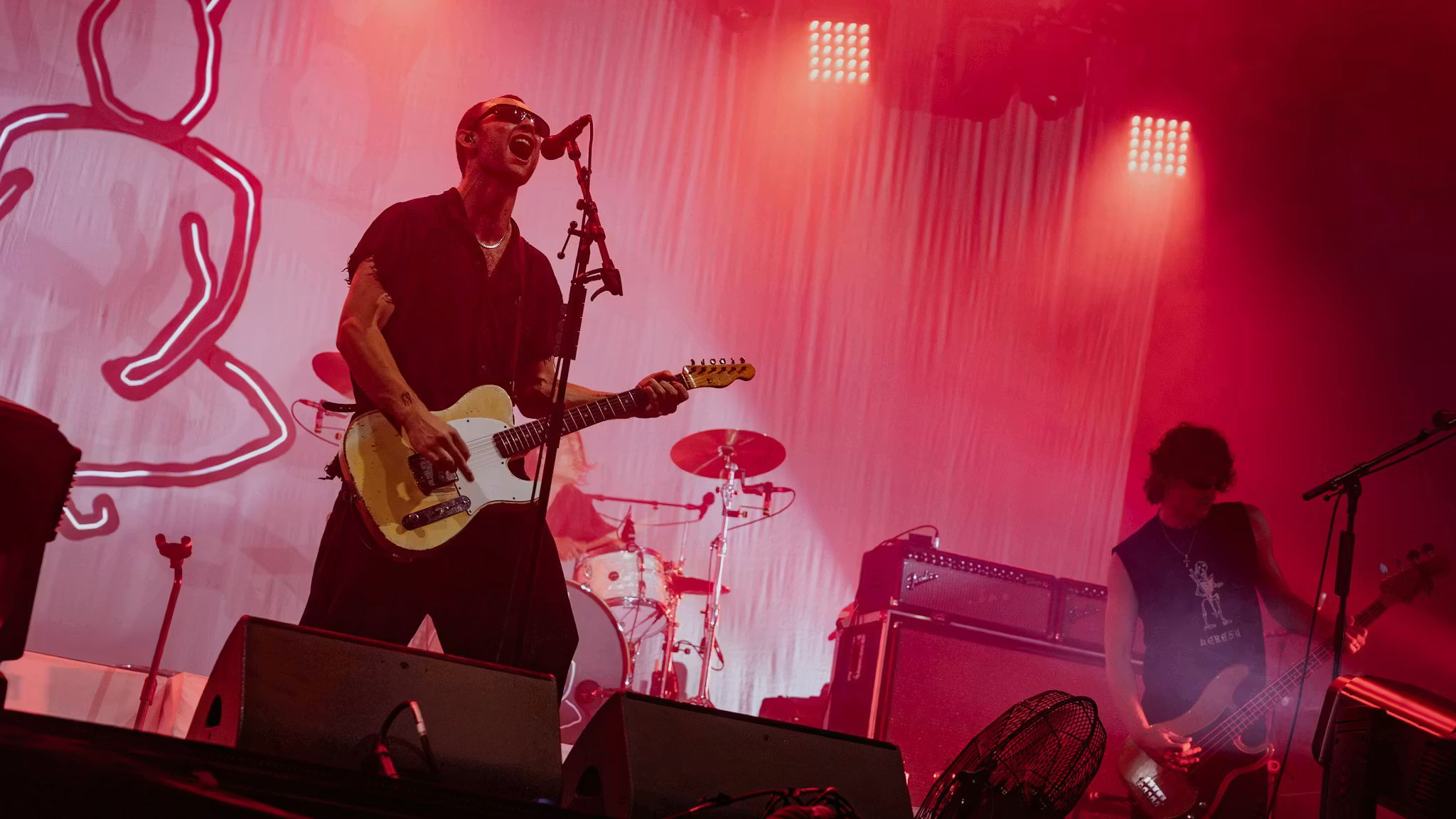
I was looking forward to this one; the band's set at Glastonbury was one for the ages, but the rest of the summer had been a mad one for Jacob Slater and band: cancelled shows, broken equipment and chaos on stage. Thankfully, they let the songs do the talking. 10 songs in total. Opening with 'Midas' and closing with 'Rain'. Featuring the best songs from both 'Cub' and 'Midas', from the punk-tinged Americana of 'Leader Of The Pack' to the emotional catharsis of 'Arizona'.
Slater performed with an erratic, volatile intensity, pacing the stage and burying his face into the microphone as his raw, gravelly vocals cut straight through the afternoon air. The sprawling field beneath the Chevron canopy quickly became a sea of chaotic mosh pits and flying pints, particularly when the driving basslines of ‘Silver’ kicked in. By the time the heavy, feedback-drenched final chords of ‘Rain’ rang out, it was abundantly clear that Wunderhorse didn't just survive the summer's turbulence; they harnessed it to cement themselves as the most vital, unmissable live band in the country right now. However, a rest and regroup are needed before album number three.
The Royston Club were given a slot on the main stage. Following the release of their second album, the brilliant 'Songs For The Spine'.
Opening the set with the brilliantly catchy 'The Patch Where Nothing Grows', the lead single from 'Songs For The Spine'. In an eight-song setlist, the band's second record gets five songs. 'Glued to the Bed' will be getting many more festival outings; it's already a ready-made festival anthem.
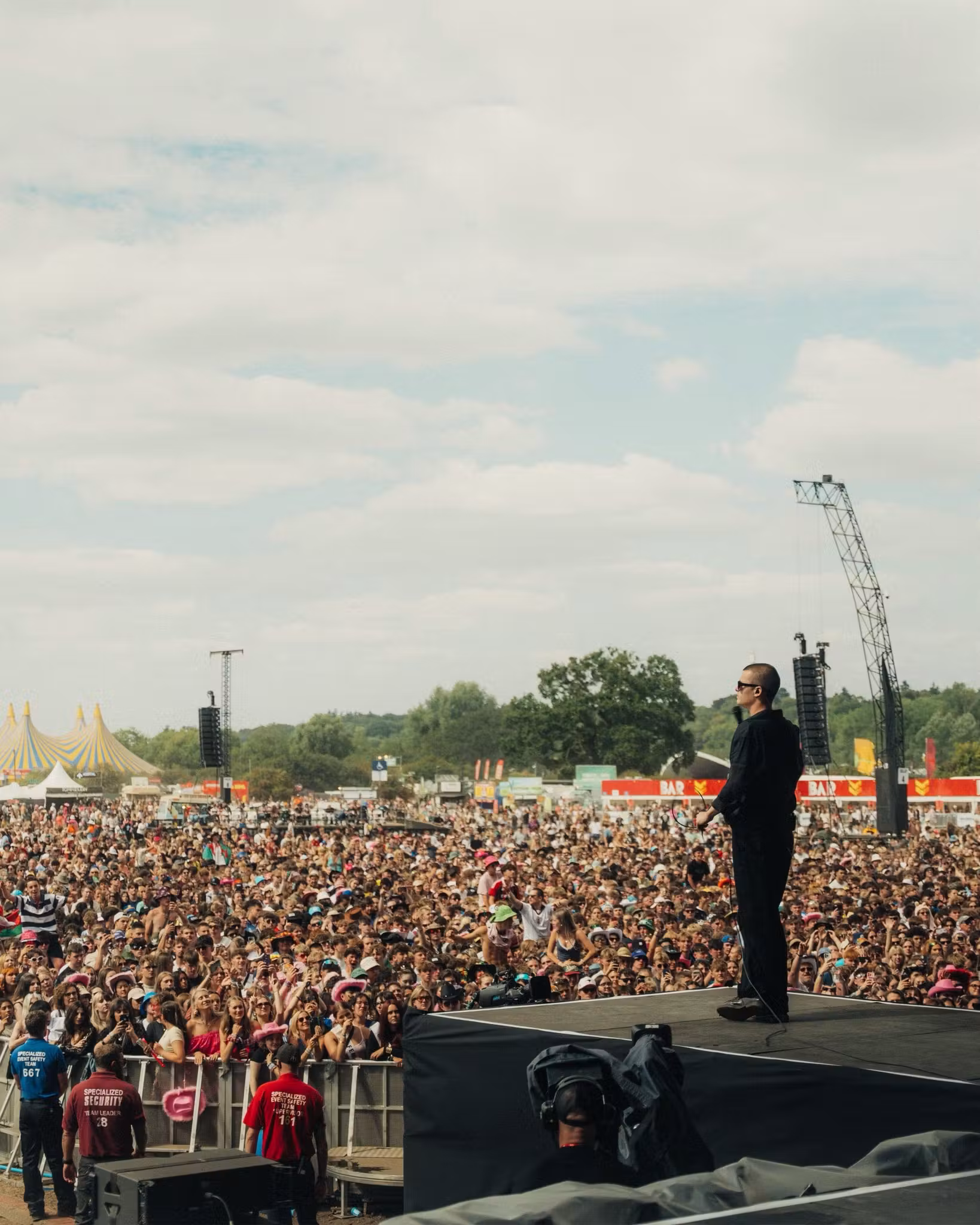
52' from the band's debut album 'Shaking Hips and Crashing Cars' is already a classic and received a rapturous response from the young crowd. 'Cariad' concludes the set and reveals a new side of The Royston Club, more melancholic and melodic. Think acoustic Arctic Monkeys, even acoustic Oasis; this may be the best thing the band have ever done, and it will be in the set for a long time.
The Royston Club have become one of this generation's most important bands, and it's only a matter of time before the wider music world stands up and takes notice.
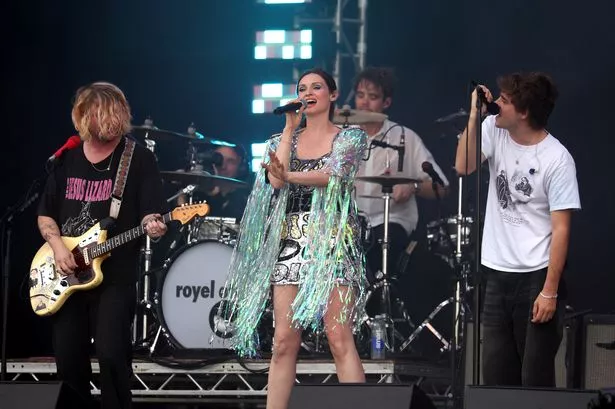
It was a festival full of guest moments; Royel Otis had their own. Sophie Ellis-Bextor popped up on stage to play 'Murder on the Dancefloor' with the boys. For around three minutes, the set was transformed into a full-on, impromptu disco inferno. What could’ve been another buzzy indie slot suddenly became one of Reading’s most joyous crossover moments – proof that escapist pop anthems never really die; they just wait for the right stage to make us lose our minds all over again.
It was Sophie Ellis-Bextor's first time at the festival since 1998, and she pointed that out to the young crowd. “It’s good to be back, it’s been a few years. I don’t think any of you were born when I was last here… you’re looking good though.”
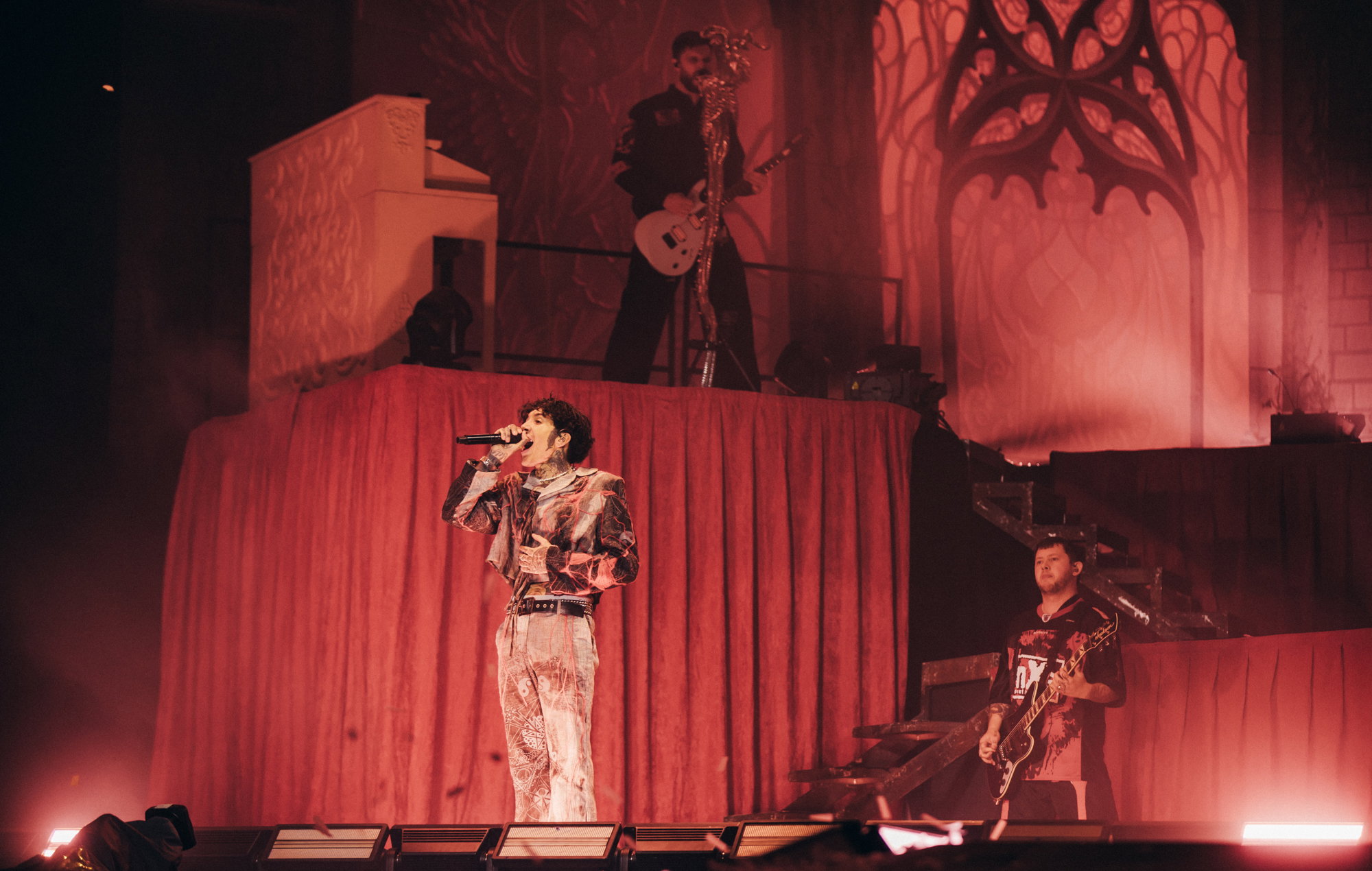
Bring Me The Horizon headlined the festival for the second time, after their show in 2023, which saw them share the bill with Arctic Monkeys. The band have become the biggest metal band on the planet, alongside labelmates Sleep Token. It marks a stark change from the first time the band played the festival, where they were met with a barrage of bottles. This time, they throw a petrol bomb and prove that they are more than capable of headlining the biggest stages.
From the opening 'DArkSide' through to 'Throne', every song feels like a finale. Complete with pyro, branding, iconography, and cult lore. This is the band's defining moment. The pacing of the set is relentless, keeping the massive field locked into a state of continuous movement. Heavier cuts like the razor-sharp riffage of 'MANTRA' and the stadium-sized anthem 'Happy Song' hit with staggering force, while the bleak, industrial soundscapes of 'Teardrops' and the unhinged chaos of 'AmEN!' push the visual production into dark, post-apocalyptic territory.
“Can I see a real fucking moshpit?” pleads the frontman in his thick Yorkshire drawl. “The ones you were doing for Limp Bizkit were fucking wank.” Cheeky, but it’s heartening to see Sykes and his old schoolmates at their most comfortable and confident. The band uses this mid-set surge of adrenaline to double down on their heaviest material, unleashing a ferocious live rendition of 'Kool-Aid' and the iconic, breakout anthem 'Shadow Moses', which instantly sends a massive shockwave of flying bodies through the centre of the crowd.
The band even have time for a cover, the Liam Gallagher-approved cover of 'Wonderwall', but in what would have been most bands' set highlight, it's just another moment for Bring Me the Horizon. ‘I Will Follow You’ (a ‘Wonderwall’ of their own), The Prodigy-meets-metal nightmare rave of ‘Kingslayer’, the pure bop of ‘Lost’ and mass crowd anticipation of ‘Can You Feel My Heart’. There’s no Ed Sheeran this time, just a very special guest in the form of superstar fan Lily being brought up from the crowd for a riotous rendition of ‘Antivist’
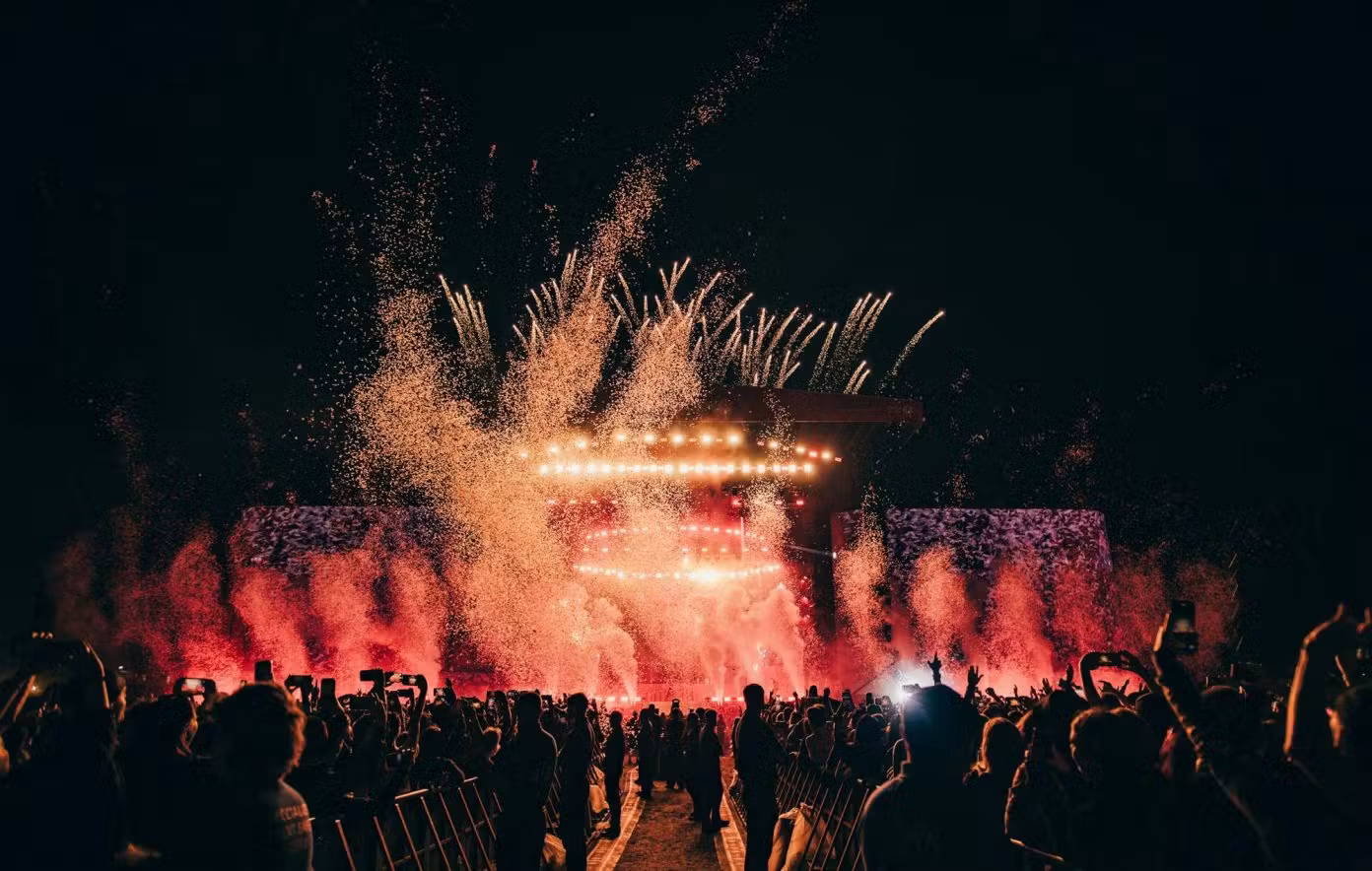
Taking to the crowd to shoot selfies for the almighty ‘Drown’ before they wave Palestine flags from the stage for the closing ‘Throne’, the transformation is complete. As the heavy, electronic hooks and thunderous drums of ‘Throne’ build to an absolute crescendo, the entire arena grounds seem to shake, with forty thousand voices matching Oli Sykes note for note under a sky filled with smoke and towering pillars of fire. It is an incredibly bold, defiant closing statement that balances pure showmanship with an unflinching real-world message, showing a band fully aware of the massive platform they now command. Those scrappy, skinny-jean metal kids from Yorkshire have become one of the biggest bands in Britain, and on this night, they didn't just headline a festival; they permanently rewrote the rules of what a modern British rock band can achieve on the grandest stage.
I want to talk about one of the other headliners. Not Hozier, and definitely not Travis Scott, but Chappell Roan. Someone who has had a dizzying year, becoming one of the world's biggest pop stars.
Her stage at Reading resembles a castle, which looks as if it has just been pulled from Beauty & the Beast. The big screens show a dark fairytale animation as dramatic orchestral music prepares the humongous audience for the pop star of the moment to appear, and when she does, she does so in black and deep purple lace – part Prince, part Maleficent.
There's no doubt that Roan can perform to huge crowds; she has made it clear that she will be topping festival bills for a very long time.
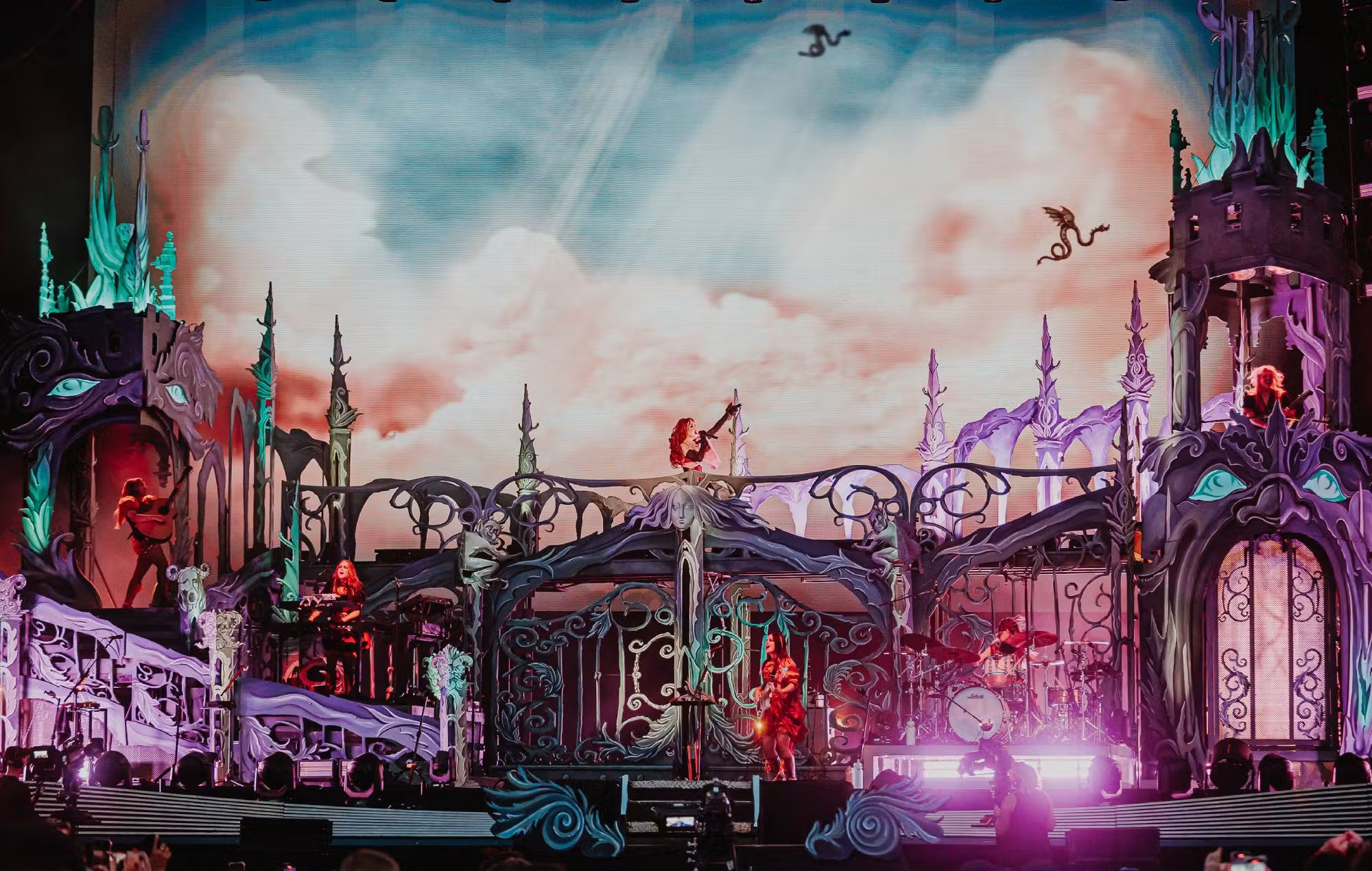
She’s only one EP, one album and a handful of singles deep right now, but her setlist is already an embarrassment of riches when it comes to crowd-pleasing pop epics. Stepping out in a jaw-dropping, custom camp costume that looked part pageant queen and part gothic horror story, she immediately transformed the massive field into her own personal, neon-soaked theatre production.
Throughout the performance, there’s a feeling of camaraderie and community in the crowd. Strangers become new friends; the ‘Hot To Go!’ dance unites everyone in clumsily trying to remember the moves and in the right order, and before ‘Red Wine Supernova’, everyone raises pink cowboy hats and pink bandanas aloft. It feels like tens of thousands of like-minded people who’ve all got the same memo and have been brought together with the same intentions. What makes the show truly staggering, though, is the sheer vocal powerhouse behind the spectacle; her flawless, operatic yodels and dramatic belt-outs cut straight through the open air, proving that beneath the glitter and the tongue-in-cheek humour lies one of the most remarkable live voices in modern music.
“Thank you for loving me and standing with me. I’m truly so grateful.” After she wraps things up with a euphoric trifecta of ‘Good Luck, Babe!’, ‘My Kink Is Karma’, and ‘Pink Pony Club’, she struts down the runway to get closer to the crowd, waving and blowing kisses to them, a big grin on her face. She might be getting used to seeing scenes like the one before her now, but the impact has not been lost on her yet. As a sea of pink glitter and confetti erupted over the audience during the final chords of ‘Pink Pony Club’, it felt less like a standard festival set and more like a historical pop coronation.
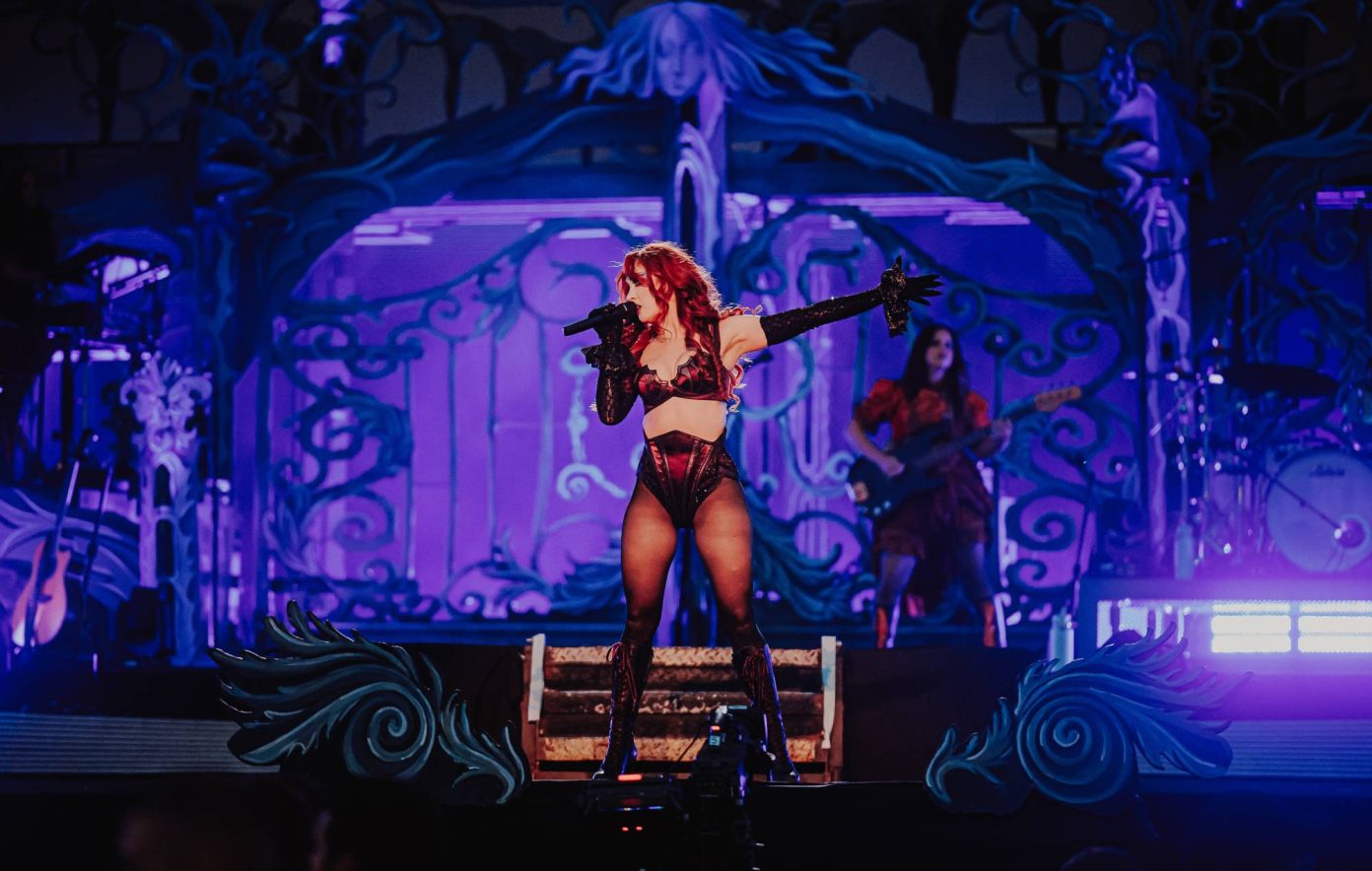
As a performance, it was exceptional. Similar to Olivia Rodrigo's Glastonbury show earlier in the year, she will have earned a lot of new fans with that performance. The sheer density of the crowd stretching back to the very horizon was a clear indicator that she had easily pulled the largest audience of the entire weekend. It was a flawless, career-defining masterclass in pop showmanship that permanently cemented her status as a generational icon, completely redefining the boundaries of the modern musical landscape.
The Beatles announced four films are in the works. With members getting biopics to share how they helped change music forever. The project marks the first time Apple Corps Ltd and The Beatles - Sir Paul McCartney, Sir Ringo Starr, and the families of John Lennon and George Harrison - have granted full life story and music rights for a scripted film.
Coming from each band member's point of view, the four theatrical feature films will intersect to tell "the astonishing story of the greatest band in history."
The four biopics, focusing on each member of the Fab Four, will be released in cinemas in April 2028 – with Paul Mescal playing Paul McCartney, Harris Dickinson playing John Lennon, Barry Keoghan playing Ringo Starr, and Joseph Quinn playing George Harrison.
British filmmaker Sam Mendes, known for the Oscar-winning American Beauty, as well as 1917 and the James Bond film Skyfall, conceived the "daring" idea and will direct all four films.
"I'm honoured to be telling the story of the greatest rock band of all time, and excited to challenge the notion of what constitutes a trip to the movies," Mendes said in a statement.
Red Rum Club released album number five, 'Buck'. Released just over eighteen months after their brilliant fourth album 'Western Approaches', it picks up where they've left off and then some. Riding the momentum from the last record, a sell-out tour and some massive festival slots, including Glastonbury and Reading & Leeds. It's a record full of confidence, from the opening track of 'Crush, TX' which sees frontman Fran Doran exclaim, "Give the people what they want," a classic Red Rum indie banger.
First single ‘American Nights & English Mornings’ harks back to their earlier sound, a captivating look into the difficulties of long-distance relationships, which is sure to go down when performed live. Upon its release, I was hooked. This band have a knack for creating groove-tinged earworms, and this one is one of their best.
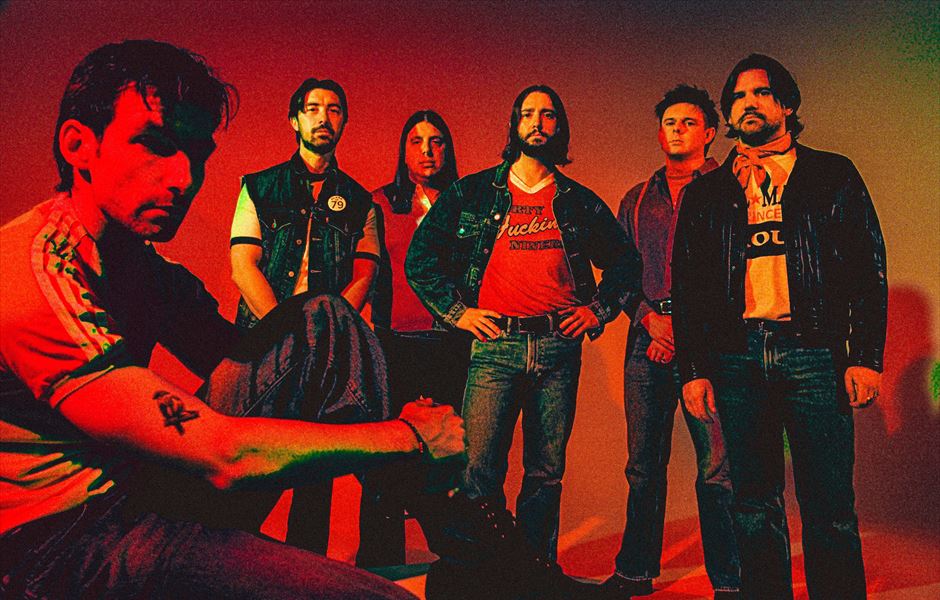
Fan favourite 'Vanilla' has been reworked for the album, with a slightly bolder sound than the original mix; Doran's vocals, in particular, feel much more prominent.
The variety of songs and themes on this record is nothing short of exceptional. With a run time of just 31 minutes, it doesn't hang around, but you don't feel shortchanged. 'Animal', for example, feels like the next stage of Red Rum Club, the stage that sees them head into bigger rooms. Dare I say it, this is an arena-ready anthem. 'Wish I Was Here' sees the Scousers head into mariachi territories, with pop-tinged vocal stylings. It is daring to pivot from their usual sound, but a sense of confidence bleeds through the track, making it impossible to ignore.
Gorillaz announced their return. First with the announcement of an album, 'The Mountain', which would be released in 2026, and then a new single, 'The Happy Dictator' featuring Sparks. 'The Mountain' is the band's first work since 2023's 'Cracker Island' and marks the first release on the band's own label, KONG.
Described as an “expansive sonic landscape” produced by Gorillaz, James Ford, Samuel Egglenton and Remi Kabaka Jr., plus Argentine producer Bizarrap, The Mountain follows the story of what happens when the animated band of Murdoc Niccals, Russel Hobbs, 2D and Noodle relocate to Mumbai with the help of four fake passports.
Whilst the animated band embark on a fictional journey, Damon Albarn and Jamie Hewlett say that the album – recorded in locations such as London, Devon and various places in India – was particularly informed by their joint travels to the “gloriously technicolour” country, but also the personal loss they both experienced during that time.
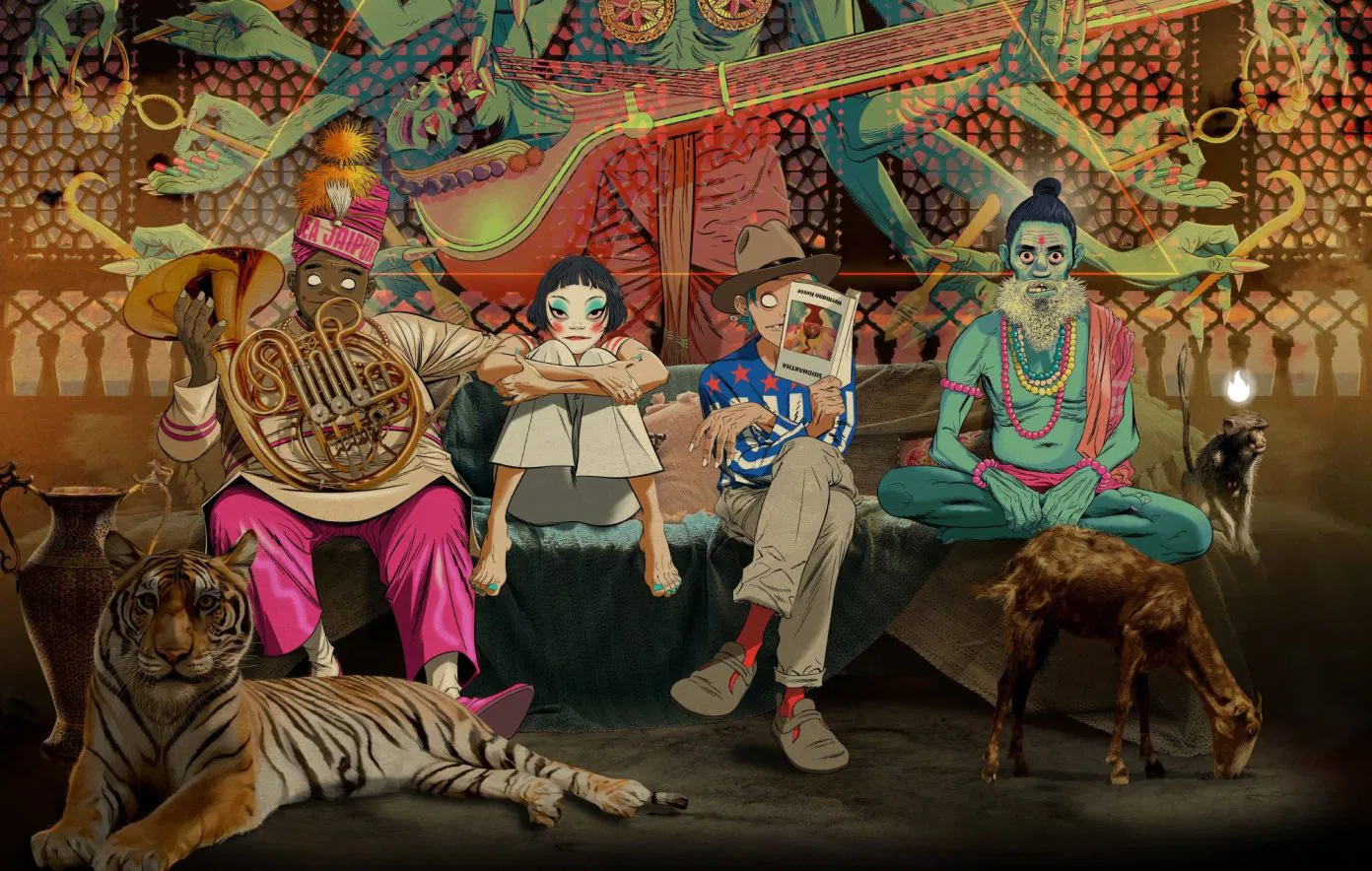
As ever with Gorillaz, collaboration is front and centre on 'The Mountain' and the tracklist features an extraordinary list of artists – with performances in five languages – from the likes of IDLES, Paul Simonon, Jalen Ngonda and Johnny Marr, to Ajay Prasanna, Omar Souleyman and Anoushka Shankar. The latter is the daughter of sitar virtuoso Ravi Shankar.
Elsewhere on the album, the multi-generational nature of Gorillaz is also addressed. It was “important to include all the people who died that we’ve known,” explains Albarn. As such, voices of departed collaborators from previous sessions have been woven into the narrative, including Bobby Womack, David Jolicoeur, Dennis Hopper, Mark E Smith, Proof and Tony Allen. “I wanted to bring them into the conversation so that the record carries everybody and the whole history of the band,” he continues. It’s almost like they’re “talking from the other side,” Hewlett adds.
Tame Impala announced in October 2025 that they would be heading back to the UK & Europe in 2026. Dates would kick off in Portugal on April 4, and continue throughout Spain, France, Italy, Switzerland, Germany, Sweden and more across the remainder of April and May. After a slot in Belgium on May 5, Parker will head over to the UK for five shows.
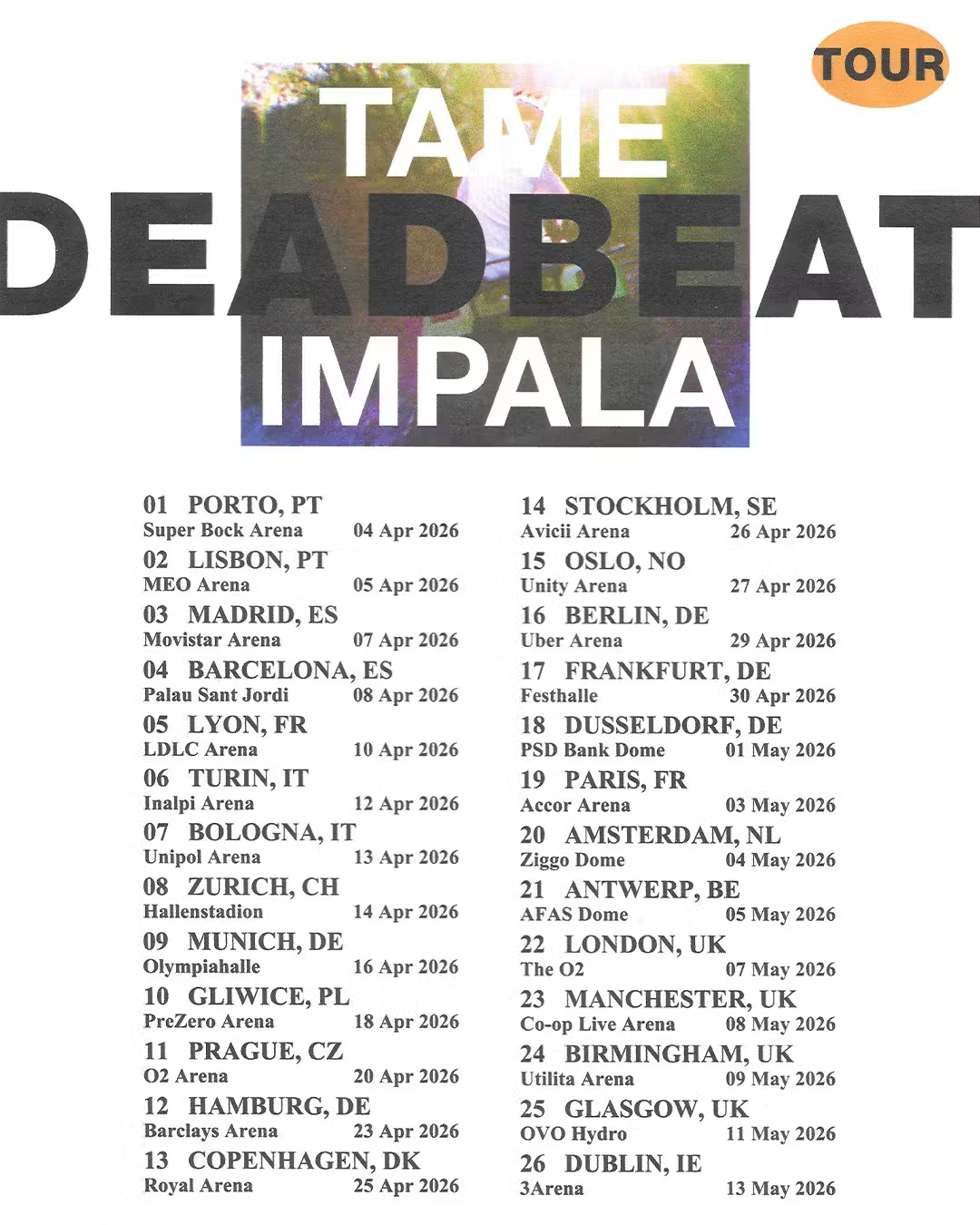
These included a night at The O2 in London on May 7, followed by shows in Manchester, Birmingham and Glasgow. Dates wrap up with a slot at the 3Arena in Dublin on May 13.
Oasis returned to Wembley on September 27th for the first of two final gigs at the London venue. Liam Gallagher added fuel to the fire, suggesting Oasis could play more dates. Rumours of more dates had been flying around all summer, and Liam added to the speculation at the end of 'Champagne Supernova' in London on the 27th. He thanked Oasis fans for “keeping the faith” and said, “See you next year.”
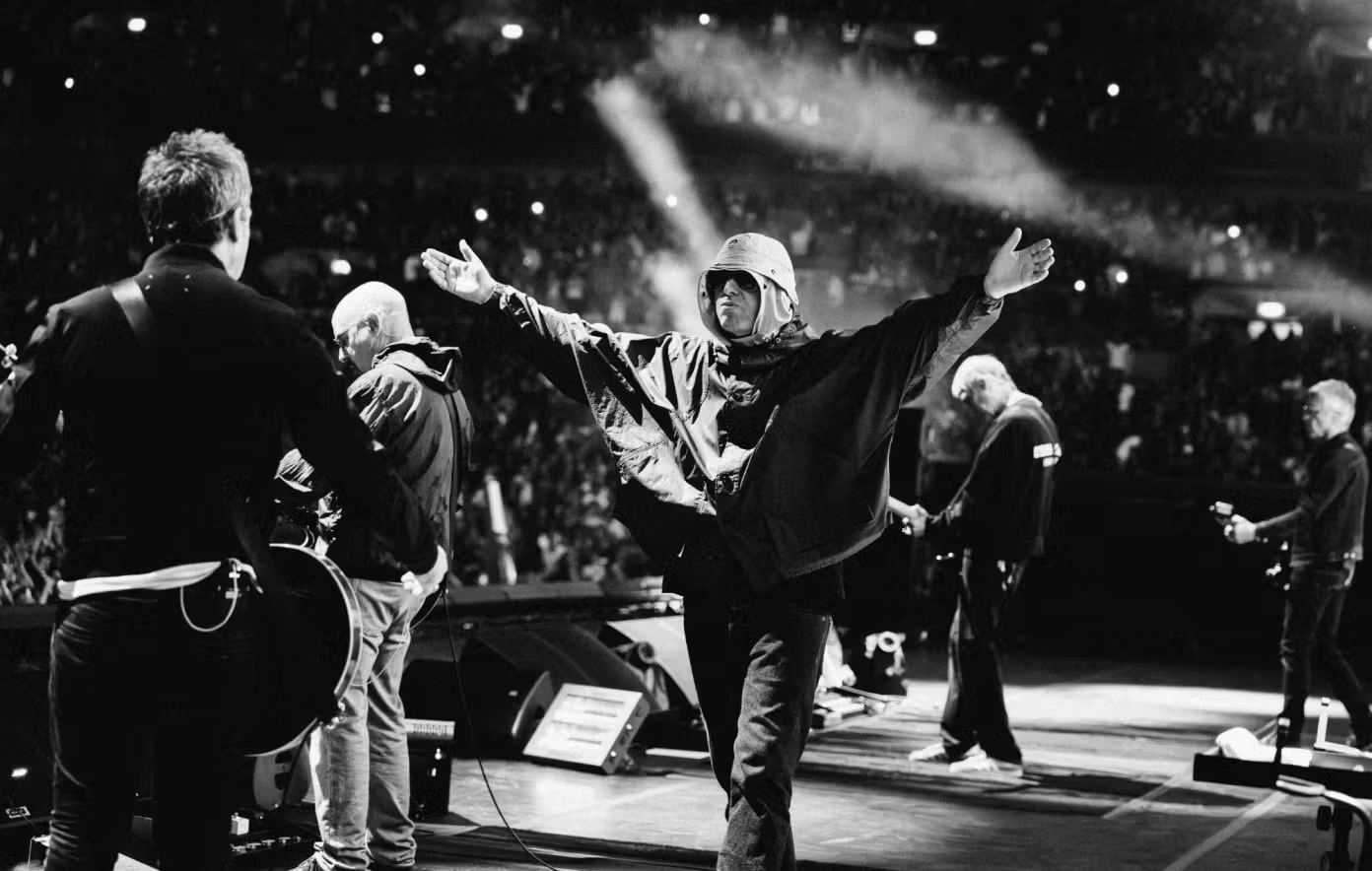
Away from the live rumours, more details have been revealed about the forthcoming documentary. Once the tour was well underway, Peaky Blinders director Steven Knight was announced as a producer on the reunion tour film, which is being directed by Dylan Southern and Will Lovelace, known for the LCD Soundsystem documentary Shut Up And Play The Hits.
Footage of Noel and Liam Gallagher’s landmark first meeting after years of fighting is said to feature in the upcoming film charting the Oasis reunion. For the documentary, Knight’s crew were allowed access to the meetings and rehearsal rooms that preceded the historic comeback, and sources have now claimed that Oasis fans will be “spellbound” by watching the brothers work through their feud.
Geese have been a band on people's radar for a while now, and I'm definitely late to the party. Since the arrival of their 2021 debut 'Projector', the band have steadily become one of the most respected of their generation. They’ve built a fierce reputation for experimental indie bangers that nod to their influences, New York heroes like The Strokes and The Velvet Underground, alongside the swagger of The Rolling Stones, yet the music Geese make sounds unmistakably like Geese.
Their rise has largely been fuelled by word of mouth, but it was a recent detour into the mainstream that truly ignited their 2025. During a session for BBC Radio 1, the band performed a frantic, high-energy cover of 'You Get What You Give' by New Radicals. The clip went supernova online, eventually catching the eye of New Radicals frontman Gregg Alexander, who publicly praised the band for capturing the song's "original, chaotic spirit." The cover took on a life of its own as a digital anthem, notably going viral across social media as the unofficial soundtrack to the election of Zohran Mamdani as the new Mayor of New York, a fittingly bold moment for a band so deeply rooted in the city's soil.
'Getting Killed' finds the band on the brink of superstardom. Frontman Cameron Winter’s solo record, 'Heavy Metal', carved out space for his magnetic presence, and here he reunites with Geese to double down on experimentation and ambition. The result is a record brimming with ideas, confidence, and spectacle. Geese aren’t reinventing the wheel for novelty’s sake, and there’s a comforting familiarity running through the album. Still, something larger looms within the songs themselves. At times, it surfaces through Winter’s vocal delivery, which can feel like that of a wandering yet captivating preacher, sermonising to an attentive congregation.
Elsewhere, it emerges in his vivid lyrical imagery, particularly on 'Taxes', where he laments, "I should burn in hell / But I don’t deserve this," before issuing the warning: "If you want me to pay my taxes / You better come over with a crucifix / You’re gonna have to nail me down." Ahead of the album’s release, Geese told Rolling Stone that during one recording session, they became so fixated on choosing a handclap sample that they forgot "to make the song." Given how much is packed into 'Getting Killed', it’s easy to imagine the five-piece getting lost in the details. Yet despite its sharp turns and meticulous construction, the album never feels cluttered. Instead, it captures a band fully embracing their exhilaratingly free-spirited identity, not so much trying to justify the fervent praise surrounding them, but boldly insisting upon it.
An overwhelming amount is happening across the record. From the shrieked, metal-like scream of "there’s a bomb in my car" on the opening track 'Trinidad', to the surreal and sardonic '100 Horses', where Winter deadpans, "All people must smile in times of war." On 'Taxes', syncopated percussion and a chiming guitar topline feel as though they could have been lifted from a Stone Roses record. 'Getting Killed' is brilliant and manic, performed by a band who know exactly how good they are. As the album closes with the declaration 'Long Island City Here I Come', it’s clear Geese have already travelled much further. They’ve propelled themselves onto album-of-the-year lists and into record collections everywhere. I hadn’t even heard of them twelve months ago, and now I've proclaimed them to be the next big thing to far too many people!
Tame Impala released 'Deadbeat' in October, which saw Kevin Parker take a detour to the dancefloor while still keeping the downbeat nature that has flowed through his previous four records. It's full of melancholia, self-loathing, and disjunction. This record is full of some of the most unsettling lyrics of Parker's career. Confused, painfully honest, and it leaves the listener wondering if the man who made it is ok.
Parker has had quite the 15 years. With his debut album, he took elements of the great psychedelia of the 1960s and made something unique. Critics quickly saw him as the saviour of modern guitar music. The follow-up 'Lonerism' saw Parker turn The Beatles' most trippy moment, 'Tomorrow Never Knows', into a floaty ode to a solitary life. He bathed listeners in the warm psychedelic sounds of loneliness.
'Currents' took what Parker had done before, ripped up the rule book, and dragged millions along for the ride. He'd not made a great rock album; he'd made one of the best albums of the 2010s. Parker wasn't interested in sticking to a script. This album had more in common with 'Thriller' and 'Saturday Night Fever' than 'Revolver', 'Forever Changes' or 'The Piper at the Gates of Dawn'.
He'd made the jump into the world of pop. 'The Slow Rush' would see Parker continue that journey. Before that record, he'd step into the studio to collaborate with ikes of Lady Gaga, Kanye West, and The Weeknd. The lysergic grooves of ‘The Slow Rush’, though less immediate than anything off ‘Currents’, were energised by these collaborations, along with the heartbeat of ’90s house music. In the same period, he got married, bought the seaside shack where he recorded ‘Innerspeaker’, won a Grammy, and worked on a full album with Dua Lipa.
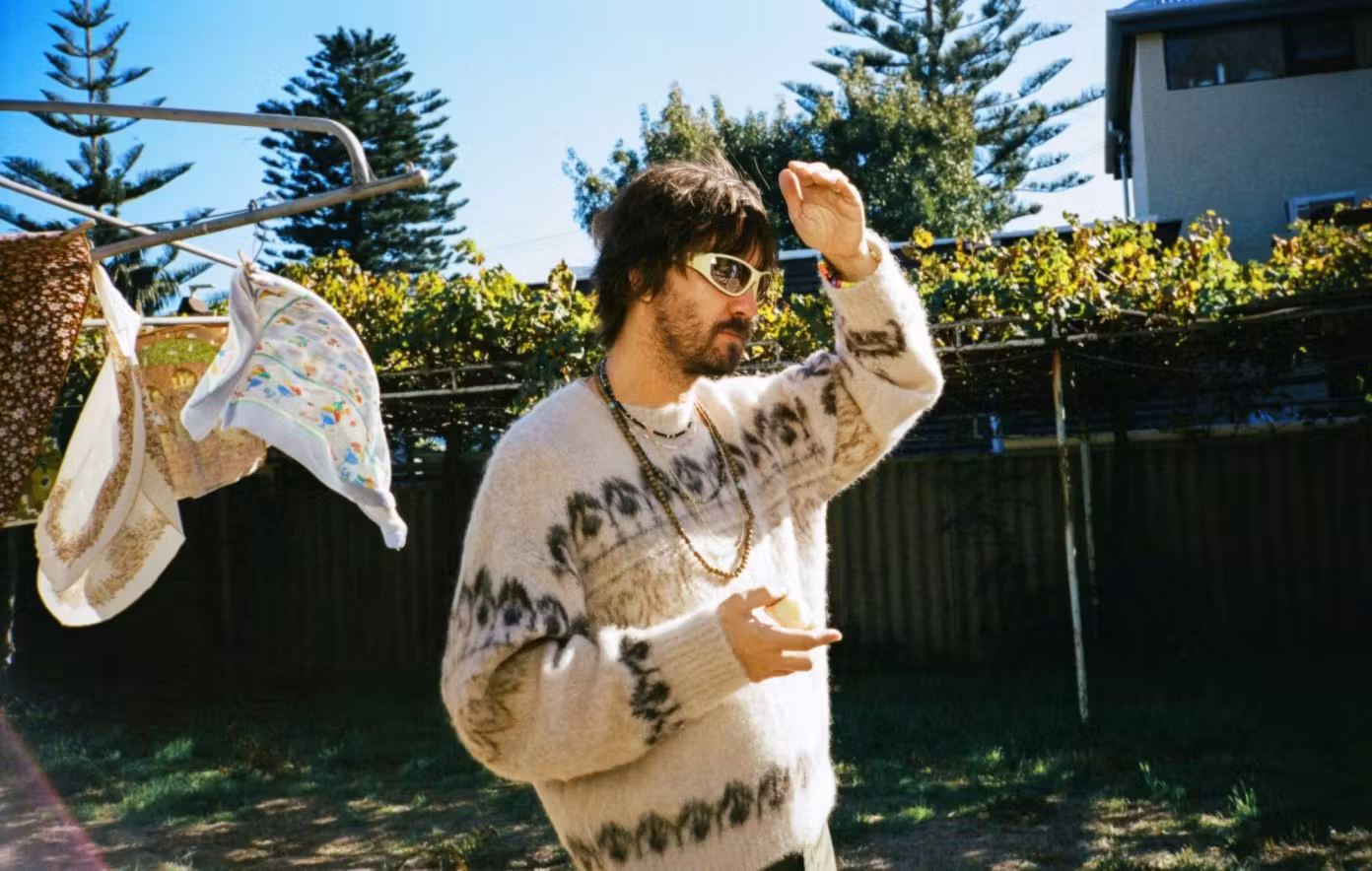
Parker had addressed his insecurities and himself on previous records. 'Lonerism' in particular spelt out his introverted nature and low self-esteem, in a velvet syrup of psychedelic pop. 'Deadbeat', though, is a whole different thing entirely. It's Parker fully embracing his insecurities as a part of his DNA and human makeup. Trading his meticulously layered multi-instrumental studio perfectionism for the direct, hypnotic pull of house and dance-pop, he strips away the protective coating of heavy psychedelic delay to let his vulnerabilities stand completely exposed.
The more success that I have, the more I feel like I’m living a lie. It’s a sham,” he offered to GQ, later adding that naming the album “felt so warm and comforting for the world to know that’s how I see myself." This era is heavily inspired by the DIY grit of Western Australia’s underground electronic scenes and outdoor bush doofs, subverting expectations by using functional club rhythms to score an internal mid-life crisis.
In the dramatic disco of ‘Dracula’, inspired by Quincy Jones’ work on ‘Thriller’, Parker likens himself to a shut-in who finds solace in darkness: “I run back to the dark, now I’m Mr Charisma, fucking Pablo Escobar”. By its fourth track, ‘Loser’, the album’s second single, his insecurities are hammered home to the listener. Wailing "I'm a loser, babe" over an Anatolian psych guitar loop, the self-deprecation is laid on thick.
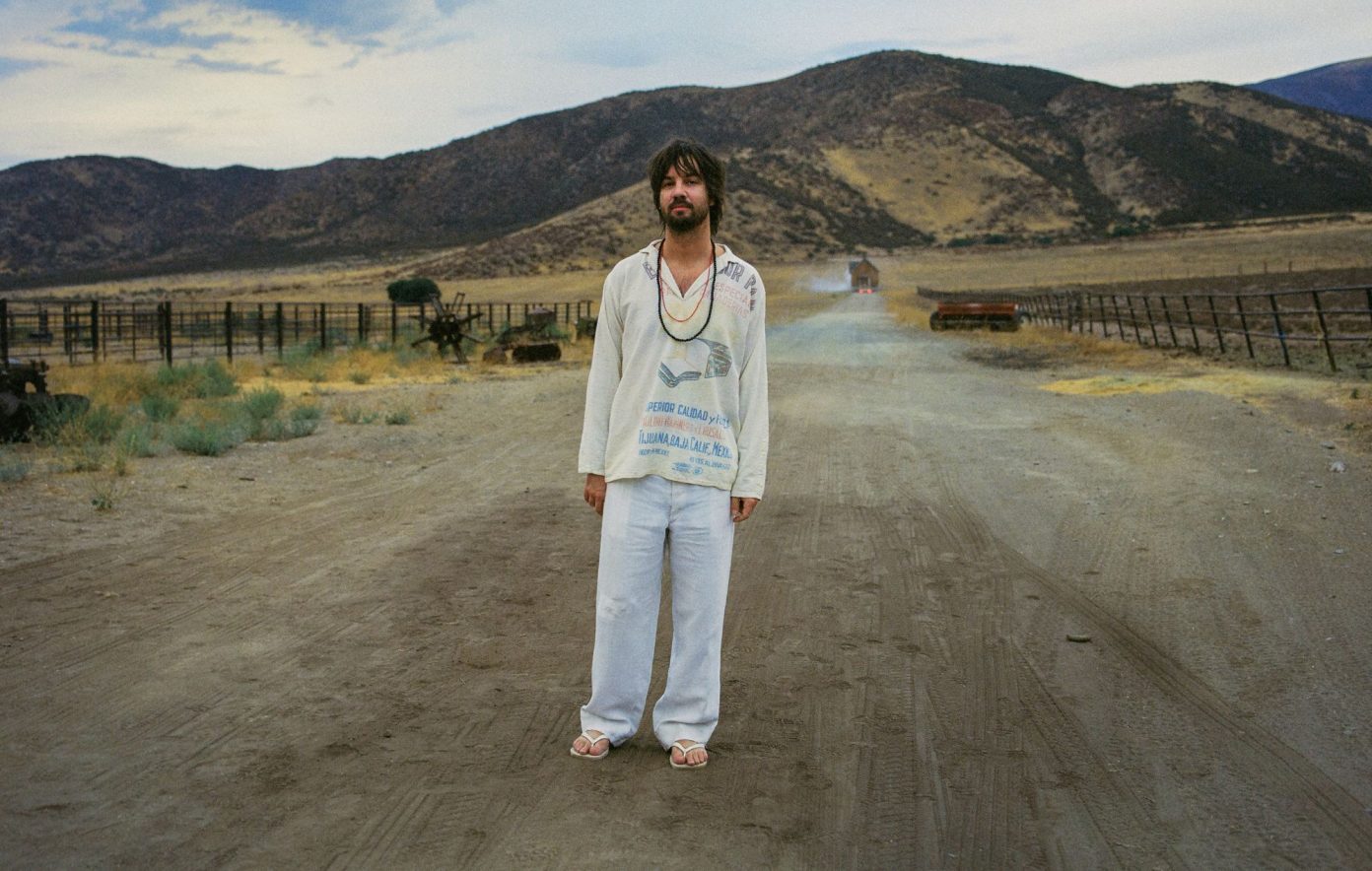
There are some great moments on this record, but they just happen less than they do on Parker's previous records. In my opinion, this is the weakest Tame Impala to date. It has songs that don't go anywhere, where the dance-inspired backing tracks drown out what he's trying to say. 'Ethereal Connection' is the biggest example of this. It feels forced, like he's tried to create a song for a Berlin nightclub rather than for a Tame Impala record.
In stark contrast to those missteps, the album's lead single, ‘End of Summer’, is one of the standout tracks that absolutely does not suffer. It serves as a masterclass in balance, beautifully preserving the foundational elements of the old Tame Impala and seamlessly combining them with this bold new style. The track overlays his signature hazy, melancholic vocal melodies and lush, sun-faded synthesiser textures across a driving, mid-tempo French-house groove. Instead of letting the electronic backing drown out his voice, the production perfectly harmonises the two worlds. It delivers a rich, satisfying sonic depth that proves Kevin Parker can still create mind-bending, nostalgic pop magic when he lets his true psychedelic identity steer the club rhythms.
‘Piece of Heaven’; this is one of the best things Parker has ever recorded, not just one of 'Deadbeat's' finest moments. An ethereal, ambient-house track that feels like a spiritual successor to ‘Posthumous Forgiveness.’ It’s a moment of weightless reflection amidst the heavy beats, capturing a rare sense of peace. The bright, celestial synths expand the room beautifully, proving that when he strikes the right balance between synthetic textures and genuine human emotion, the results are nothing short of breathtaking.
When this record is good, it's really good, compared with his previous work; it has a few more blips.
The 2025 Mercury Prize was won by Sam Fender for his album ‘People Watching’. He beat the likes of Fontaines D.C., Wolf Alice, Pulp and CMAT to the prize. In a historic move for the music industry, the ceremony took place outside of London for the very first time in its 34-year history, moving to Newcastle's Utilita Arena. The shift to the North East made the night a dream homecoming victory for North Shields-born Fender, who accepted the trophy amidst a deafening roar of "Toon, Toon" from his local crowd.
The judging panel said of Fender: “This year proved that the album remains the format of choice for artists to best present a body of work. That, however, made our job as judges of the 2025 Mercury Prize for Album of the Year…more challenging than ever.
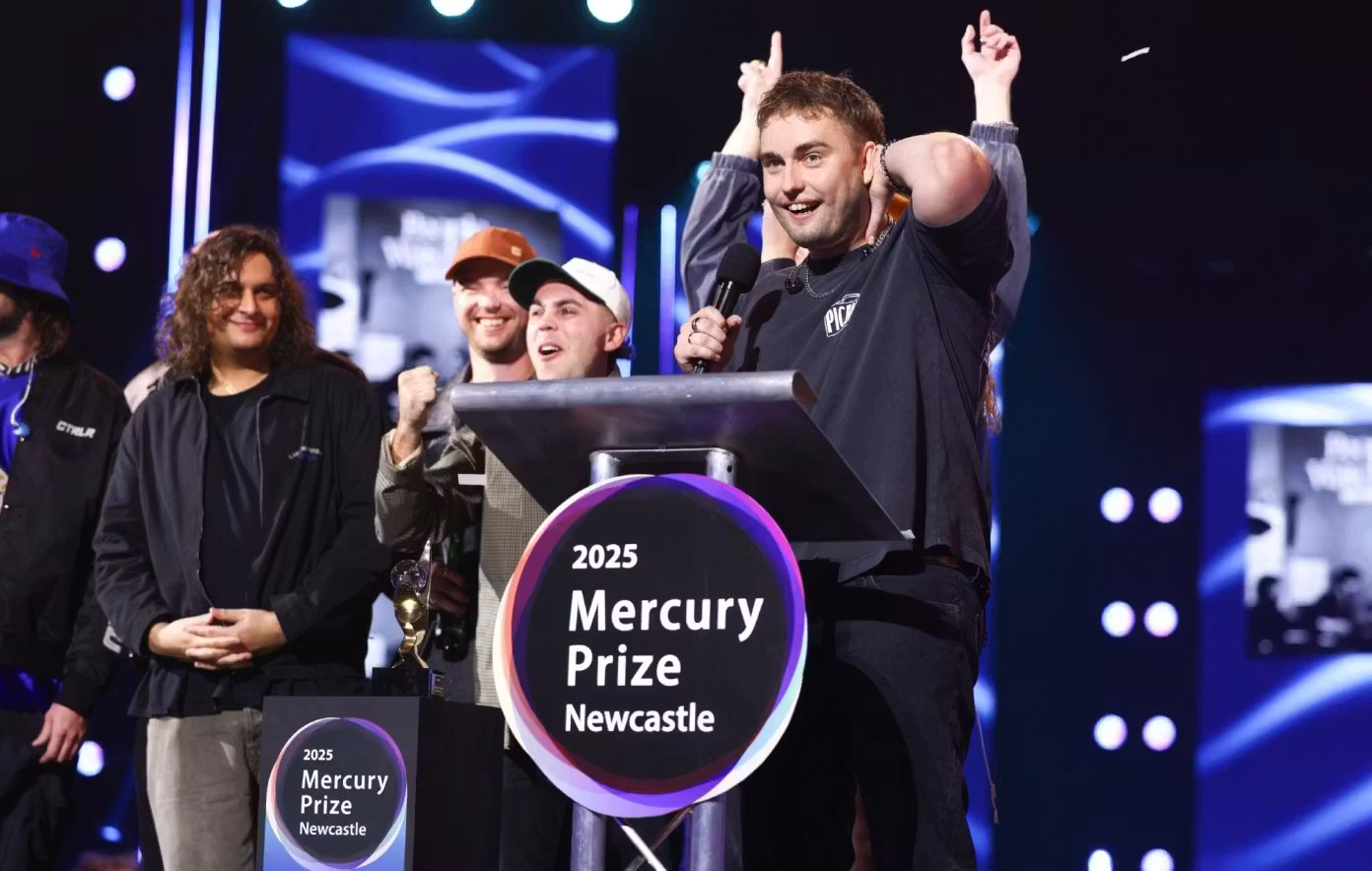
“All 12 records on the shortlist worked so well on their own terms, ranging from ancient ballads to futuristic electronics. After much discussion, however, we all decided on one album that stood out for its cohesion, character and ambition. It felt like a classic album, which will take pride of place in record collections for years to come. ‘People Watching’ by Sam Fender is both melody-rich and expansive, marrying heartland rock with the realities of everyday life and the importance of community.
“These are thoughtful songs with broad appeal, as cinematic as they are intimate, making ‘People Watching’ a worthy winner of the 2025 Mercury Prize for Album of the Year.
Accepting the award, Fender led the audience in a chant of “Toon Toon”. He said, “We didn’t expect this at all…I can’t think!” He then went on to thank some of his “very good friends among the nominees tonight”, including CMAT and Fontaines DC, adding that he was in “great company.” He also dedicated the award to the late Annie Orwin, who inspired ‘People Watching’.
Following the ceremony, Fender proved his deep dedication to the independent music scene by donating the entirety of his £25,000 cash winnings to the Music Venue Trust. Explaining that he wouldn't be where he is today without the grassroots venues he played across the North East starting out, the chart-topping singer chose to hand over the cheque to help protect struggling independent concert halls across the country.
Following the Mercury Prize win, Sam shared the soothing single 'Talk To You', which features Elton John on the piano.
“‘Talk To You’ was written during the ‘People Watching’ sessions at British Grove,” said Fender via a press release. “It’s a song about the end of a long relationship – about the regret, the mistakes and the lessons that come with it. It’s that feeling of losing your best friend and coming to terms with that.”
He continued: “I was playing around with the riff and thought what I need is a really good pianist, and then hmmm, I wonder who I can call? And of course, who better than Elton John?”
John added, “Sam was writing and recording in a studio in West London and called to say he’d written a song with a piano riff that he thought would sound great with me playing it. I couldn’t resist, and it was so much fun playing it for him.
“I truly love Sam. He’s been a friend for many, many years, and it’s incredible to see him grow into being a truly world-class artist.”
The song was the first new music from the deluxe version of ‘People Watching’, released on 5th December 2025. The record features eight extra tracks, including the four tracks that appeared on his Record Store Day vinyl EP ‘Me And The Dog’. Along with the Elton John collaboration, the album also includes two more previously unheard tracks – ‘Fortuna’s Wheel’ and ‘The Treadmill’. The extra recordings also feature the song ‘Rein Me In’ with Olivia Dean.
Ocean Colour Scene would announce a tour to mark 30 years since the release of ‘Moseley Shoals’.
Released at the height of the Britpop era, ‘Moseley Shoals’ propelled Ocean Colour Scene to mainstream success upon its 1996 release, spawning massive hit singles such as ‘The Riverboat Song’, ‘You’ve Got It Bad’, ‘The Day We Caught The Train’, and ‘The Circle’. Blending soulful vocals with blues-infused guitar work and mod-inspired energy, the album cemented the band’s place alongside contemporaries like Oasis and Blur, becoming one of the defining records of mid-1990s British rock.
To mark the 30th anniversary of the album, they’re set to play career-spanning sets in Glasgow, Manchester, Cardiff, London and Birmingham.
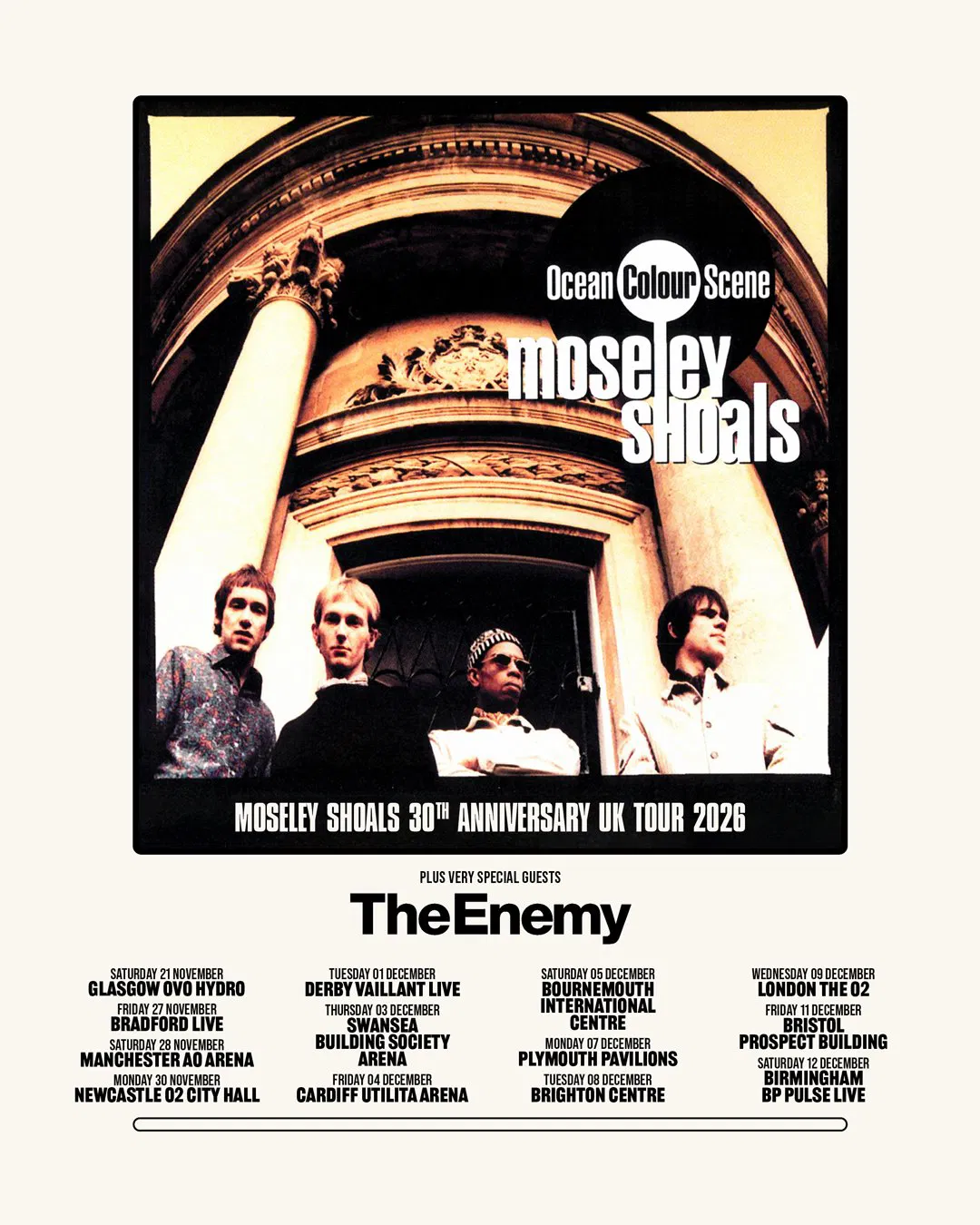
On all dates, they’ll be supported by The Enemy, whose lead singer, Tom Clarke, said the first song he learned to play on his first guitar was ‘The Day We Caught The Train’, with Fowler’s signature on the headstock.
“In twenty years of touring with other artists, I’ve never asked for another musician’s signature,” he said. “That’s the only one I needed. Every time we share a stage with them, it’s a childhood dream come true. They’re still the greatest band I’ve seen live, and they’ve got more hit songs than most bands have had hot dinners. So yeah, I’m looking forward to supporting OCS at some of the biggest rooms in the UK. It’ll be amazing to play songs from the new record we’re currently recording, as well as all the old favourites.
The Clause released their debut album 'Victim of a Casual Thing' eight years after their debut single 'Sixteen'.
The band's debut record has been described as "the soundtrack of four mates growing up together." It is a nifty little sentence that perfectly sums up this body of work. The album is a roaring cocktail of self-confidence, youthful chaos, heartbreak, broken dreams, and late-night hedonism. This record represents a bold statement of identity and intent, proving definitively that the Birmingham four-piece can craft arena-ready anthems, lovestruck bangers, and tracks destined to soundtrack a new generation of indie kids. The Clause are not here to make up the numbers; they are here to take over. It has been a long time coming. The band first broke through with their debut single ‘Sixteen’ back in August 2017, and the arduous journey since then has taken them through muddy festival fields, high-profile support slots with the likes of James, The Snuts, DMA’s, and The K’s, the crushing blow of being dropped by a record label, and ultimately, building a fiercely loyal, ever-growing fan base.
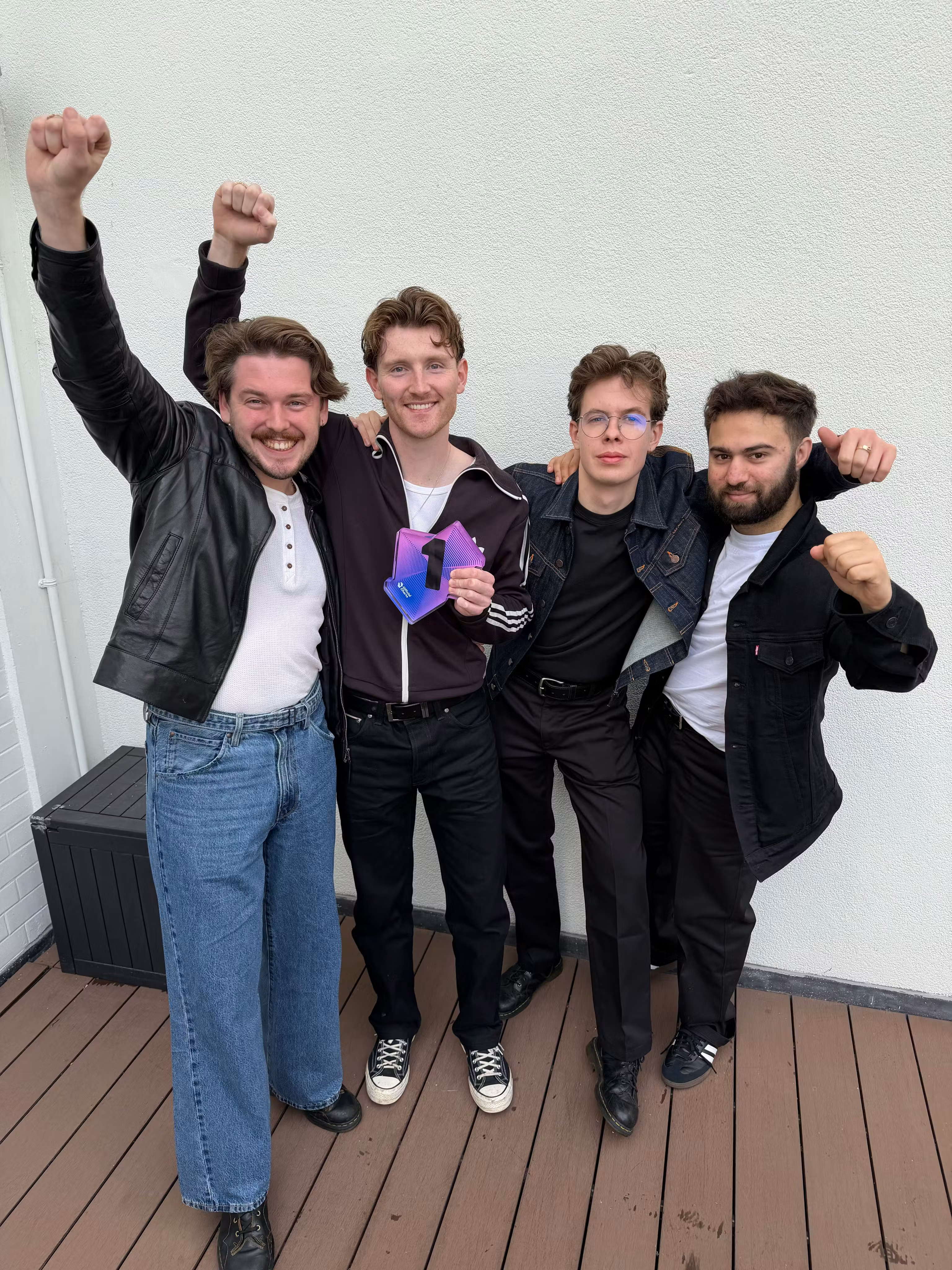
The record kicks the door down with pure ambition via its lead single, 'Nothing’s As It Seems'. Capturing the band in a magnetic push-and-pull between self-pity and bravado, it is deliberately melodramatic and boasts one of the biggest choruses released this year. Lyrically, it stands as one of the band’s most underrated gems, packing a real bite with vintage, smartly cynical lines like “Don’t waste your time wishing you were somewhere, nothing matters when you’re six foot under.” This ambition flows seamlessly into 'Tell Me What You Want', easily the band's most musically advanced track. Here, the rhythm section dips onto the dancefloor with a sleek, funk-infused beat that nods to The Killers and Foals, before obliterating any indie-pop safety by breaking down into heavy, distorted Royal Blood vibes.
Long-time fans will also celebrate 'Element', a massive sonic reworking of their 2019 staple 'In My Element'. This album version feels heavily beefed up, showcasing the band operating at full throttle. The Clause could be ten albums into their career, and this track will still demand a permanent spot on the setlist.
The middle stretch of the album masterfully balances restless energy with deeper introspection. 'White Lifelines' thrives on jagged riffs and urgent call-and-response vocals, sounding like a meticulously controlled, long-lost treasure from Arctic Monkeys' Favourite Worst Nightmare. The pace then expertly shifts into the nostalgic second single, 'Elisha', which spins a tale of young romance starting "behind a Wetherspoons in Leeds." The song intentionally loops back to the band's roots, with frontman Pearce singing with bittersweet hindsight, “my discography is full of false starts” and “clinging onto memories of sweet sixteen.”
This vulnerability layout peaks with 'Exception', a spectacular, atmospheric oasis that softens the album's relentless pace. In a track where the band cynically claim love is for fools, the explosive chorus of “my only exception is you” cuts straight through the noise. It is already a fan-favourite on social media as a future first-dance song, and it is incredibly easy to see why.
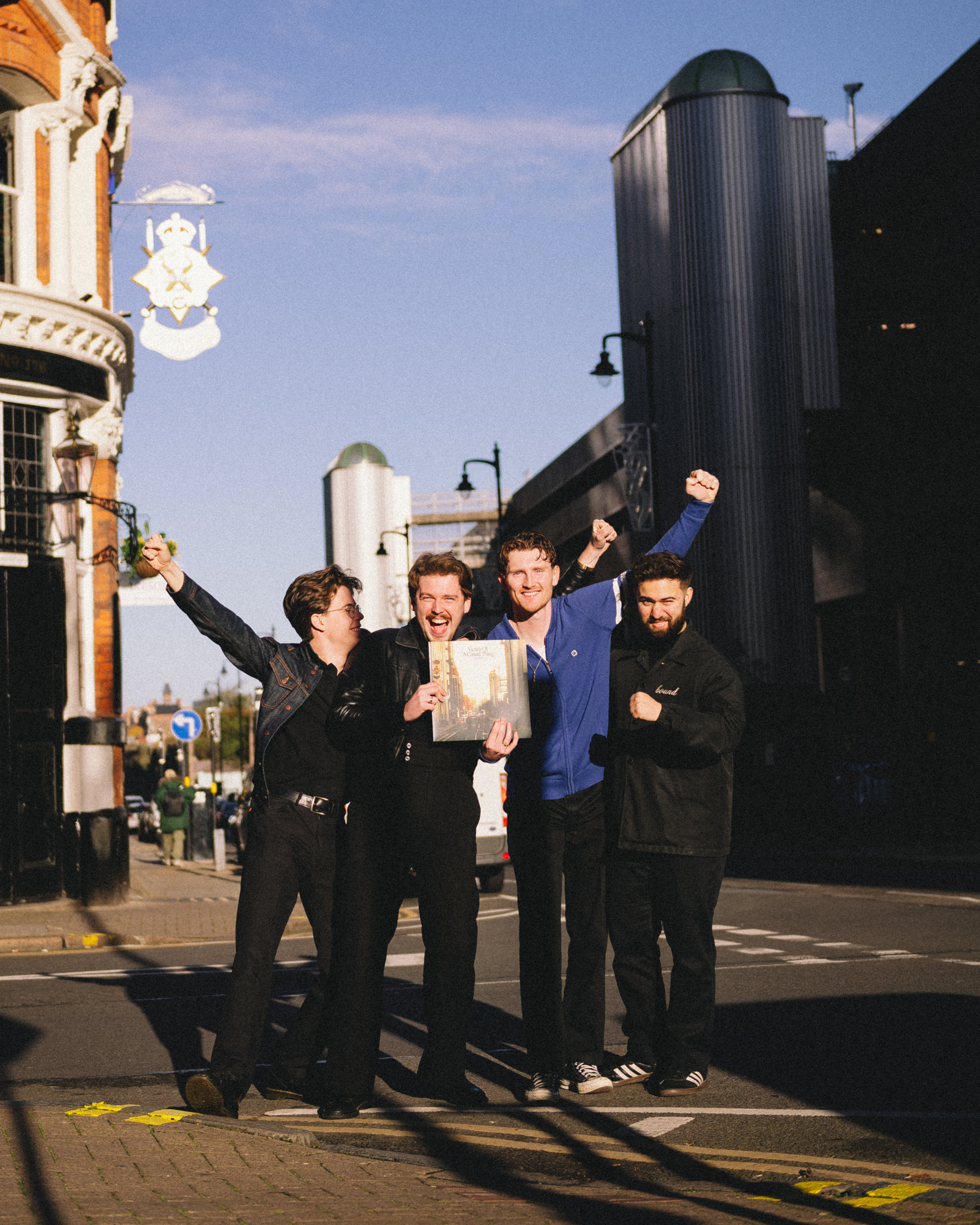
The true heartbeat of the record lies in its unapologetic exploration of modern youth. 'Weekend Millionaire' perfectly bottles up youthful excess, delusion, and turbulent relationships. It is a love letter to payday Fridays and cheap, flat pints, culminating in the ultimate lifestyle mission statement: “if life's fucked up, do not despair, just live your life as a Weekend Millionaire.” It is not only a standout album moment but also one of the greatest songs to emerge from the Birmingham music scene in the last five years. This theme pulls straight into 'I Don’t Care', a heavy-hitting track that acts as a loud mantra for those who refuse to grow up, brilliantly juxtaposing the advice of your bender-encouraging mates against the worries of your parents.
The album then takes a moodier turn with 'Fever Dream', which delivers the culturally vital line, “none of it will ever make sense to me”, capturing the collective existential dread of today's youth navigating a broken world. This high-octane hedonism finds a welcome contrast in 'Pink Moon', a tender, hazy ballad drawing beautiful elements from Noel Gallagher’s signature brand of melancholy, reminiscent of their brilliant 2023 track 'Gabrielle'.
Just when it seems 'Weekend Millionaire' cannot be topped, the album delivers its final, spectacular rallying cry with 'Don’t Blink'. The closing track features the absolute best lyricism on the album, painting vivid pictures of secondary school peers shifting gear to make ends meet, and acoustic singer-songwriters filling local bars. It is a poignant, brilliant curtain call about attempting to transition into adulthood while the gravity of your youth constantly drags you back in.
For an album that sees a band grappling so fiercely with youth, identity, their turbulent past, and an unwritten future, this debut record is a triumphant milestone. It proves that The Clause possess the rare ability to write massive, era-defining music while staying entirely true to the square mile they came from. The takeover has officially begun.
I know it's not guitar music, but I want to give a little nod to 'The Boy Who Played the Harp, ' the latest record by Dave. A commanding record that sees Dave open himself up more than ever. Throughout the album, Dave explores the biblical power of his namesake, King David from the Book of Samuel, who played the harp to soothe troubled spirits. This record's purpose isn't to lift spirits, though; it's to capture a snapshot in time that speaks to his generation.
The album is more muted than the previous releases, but it suits the themes that it tackles. 'Fairchild' with Nicole Blakk is a spoken word track that gives a voice to women silenced by rape culture and femicide, sharing the bleak reality of those left unheard. Dave provides a nuanced male perspective: disgusted by red-pilled counterparts yet questioning his own complicity: “All know a victim, don’t know a perpetrator / Am I one of them? The men of the past.”
‘Chapter 16’ is a crowning moment, too. In the biblical story referenced throughout the album, King David is chosen by God through the prophet Samuel, and on this record, Kano takes on a role similar to the latter. Over a debonair instrumental, the two generations of UK rap sit across a dinner table trading fears like old friends – one wrestling with legacy, the other with longevity.
Kano even anoints Dave as “the rap messiah” while sharing his observations on UK rap’s evolution, making the track a spiritual handover in which the old guard blesses the new generation.
It's an exceptional record that launches the listener into cinematic vignettes that paint vivid scenes with the rawest words. I think it's his best record to date.
Florence & the Machine returned with album number six, a record that sees her embrace horror and magic to embrace hope. Weeks ahead of the album’s release, Welch revealed to the Guardian that the catalyst for writing had been an ectopic pregnancy that had threatened her life while she was on tour. She underwent emergency surgery and only 10 days later, in spite of the mental trauma and physical toll of miscarriage, resumed performing, adamant not to cancel the two final shows.
The album dwells on mortality, often resembling both an homage and a prayer to generations of women who came before and will come after. It’s an album that aches and pulses with a sense of urgency – catharsis, perhaps too plain a word to define the frenzy that runs through it.
Florence discusses a lot on this record, but the album's central theme is the volatile push-and-pull dynamic of fame. In the melancholy depths of 'Music for Men', she looks past the blinding stage lights to dissect life off-stage, noting ruefully that “there’s not much applause” when the arena empties. It’s a complex relationship with celebrity that Welch is uniquely well-placed to examine. Seventeen years on from the release of her debut single, ‘Kiss with a Fist’, she could reasonably claim to be the most consistently successful British alt-rock artist of her era, with the possible exception of Arctic Monkeys. At least in terms of her footprint on modern pop, she completely dwarfs Alex Turner. She has been sampled by Kendrick Lamar and Drake, tapped as a primary collaborator by Taylor Swift and Lady Gaga, hailed as a foundational inspiration by Beyoncé, and her distinct artistic DNA is clearly audible in the rising generation of indie luminaries like Ethel Cain, Chappell Roan, and The Last Dinner Party.
It is from this towering position of influence that Welch can look back at the equivocal critical response to her early work with a healthy degree of "I-knew-I-was-right" relish. On the spiky 'One of the Greats', she directly blames her early lukewarm reviews on institutional sexism. Responding to your critics in song is notoriously fraught business; there is always an immediate danger of coming up with something so fiercely indignant that it makes the listener wonder if the journalists might have actually had a point. However, 'One of the Greats' pulls it off with a smart, sharp-witted humour that feels particularly effective. A certain high-minded seriousness about her wilfully over-the-top theatricality was always among the primary criticisms laid at Welch’s door, but here she disarms it completely, singing: “I’ll be up there with the men and the 10 other women in the hundred greatest records of all time / It must be nice to be a man and make boring music just because you can
This visceral exploration of identity bleeds through the entire tracklist, striking an exquisite balance between raw, cathartic noise and quiet introspection. The staggering, punchy title track 'Everybody Scream' acts as the record’s primitive beating heart, utilising driving drumlines and howling vocal acrobatics to process physical and emotional limits. This visceral chaos bleeds into the pulsating synths of 'Chaos in the Streets', before seamlessly giving way to the haunting, folklore-infused undercurrents of 'Witch Dance' and 'Kraken'. Yet, the band masterfully ensures the sensory overload never overwhelms the listener, intentionally puncturing the high-energy anthems with delicate, breathless moments of respite like 'Whispers in the Wind' and the profoundly intimate 'Quiet Hour'.
There is no easy, radio-friendly hit to be found here, nor a predictably euphoric finale designed for cheap festival field sing-alongs. Instead, the album chooses to depart on a beautifully small, tranquil exhale. The elegant album closer ‘And Love’ serves as her final, maternal embrace to the audience, fluttering away in a gorgeous haze of classic Florence & The Machine harp and distant, comforting murmurs of “peace is coming.” It is a profound, beautifully paced record that successfully captures all of the elements of classic Florence & The Machine, masterfully linking her signature lyrical weight to an evolved, expansive musical sound. Ultimately, it is a stellar reminder of her irreplaceable status in the modern musical landscape; it is always a wonderful thing to have Florence back.
Florence was also announced as one of six headliners for Reading & Leeds 2026. She would be topping the bill alongside Dave, Raye, Fontaines D.C., Charli XCX and Chase & Status.
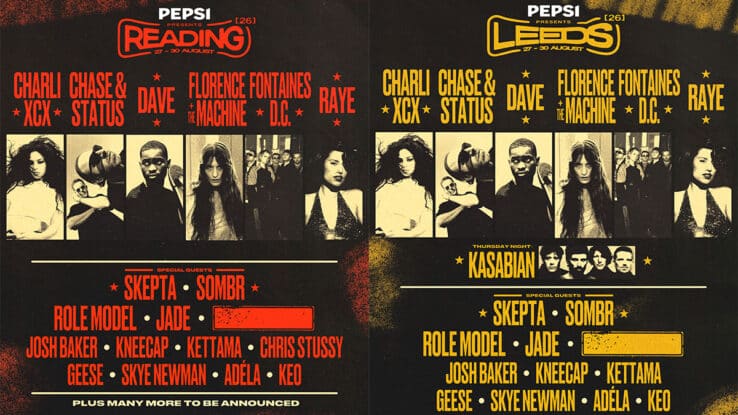
The music world lost a true icon on 20th November 2025; Gary 'Mani' Mountfield passed away. The news was broken by his family.
Best known for his role in the seminal Manchester band The Stone Roses. His bassline is the first thing you hear on the bands debut record, gliding across the cosmic plain of 'I Wanna Be Adored' and on the albums last track 'I Am the Resurrection' he gives a nod to arguably the most iconic band ever, by playing 'Taxman' backwards before shifting into loose limbed funk, working around the chiming guitar of John Squire, the pulsating drums of Ian 'Reni' Wren, and the statement of intent vocals from Ian Brown.
He'd help defy a scene, cause his hometown to get a new name- Manchester became Madchester, and his basslines led indie kids to the dancefloor. Growing up with Northern Soul and Funk gave The Roses their groove; alongside Reni, they formed arguably the greatest rhythm section in a British band ever.
When Mani joined, it almost changed overnight,” Ian Brown said. “It became a totally different groove…Straight away, everything just fell into place.” Both weighty and melodic, Mani’s bewitching basslines became the bedrock and, often, the driving force of The Stone Roses’ breakthrough tracks ‘Elephant Stone’, ‘Made Of Stone’, ‘She Bangs The Drums’ and 'I Wanna Be Adored'. He would become the main reason guitar bands would become obsessed with making kids dance.
Following the debut album’s Top Five success came The Stone Roses’ cultural coronation: the so-called “baggy Woodstock” at Spike Island in 1990. Spike Island itself was a reclaimed chemical waste site in Widnes. To outsiders, it may have seemed an odd, even reckless choice. But within the context of Britain’s burgeoning rave culture, it made perfect sense. This wasn’t just a concert; it was a celebration of music, of a culture, of a moment suspended in time. It hinted at the end of Tory rule, heralded the rise of rave culture, and gave those now-iconic songs an almost mythic platform.
Thirty thousand fans descended on the windswept banks of the Mersey Estuary that windswept bank holiday weekend, each paying £14 for the chance to witness what had been hyped as the gig of a lifetime. The setlist overflowed with fan favourites, and the air crackled with anticipation. For some, the experience was transcendent, an almost spiritual convergence of sound, youth, and rebellion. For others, the open-air acoustics and swirling wind dulled the impact.
But the details hardly mattered. Spike Island was never about flawless sound or technical precision; it was about what the event meant. It was the merging of worlds: indie and acid house, guitars and turntables. A euphoric stance against the fading grip of Thatcherism.
Following Spike Island, the band would become entangled in legal wrangles with the label Silvertone, which kept them from releasing any new material for several years after the 1990 ‘One Love’ single.
It was Mani’s dense, funky bass which provided the major through-line to their second album Second Coming in 1994: a record otherwise dominated by Squire’s more blues-rock tendencies. While John Squire's towering, Zeppelin-esque guitar architecture pushed the band into a much harder, classic-rock edge, Mani and drummer Reni anchored the songs in pure, infectious groove.
This rhythmic alchemy is instantly obvious on the album's majestic entrance hall, 'Breaking into Heaven'. The eleven-and-a-half-minute epic opens with an extended, atmospheric build before Mani’s bass locks into a supreme, tribal groove that completely owns the track. Even when the band shifts gears toward more traditional, melodic pop, the rhythm section keeps the music entirely unshakeable. On 'Ten Storey Love Song', Squire weaves gorgeous, shimmering guitar harmonies, but it is the fluid, driving foundation underneath that transforms it into a definitive, soaring anthem.
The record masterfully balances this high-energy swagger with moments of spacious, hypnotic depth. The dreamlike arrangements of 'How Do You Sleep' slow the album's pulse, creating a comforting, rolling rhythm designed to send listeners into a state of happy slumber. Yet, when the band wants to completely unleash their power, they deliver the record's crowning jewel, 'Love Spreads'. Anchored by a gritty, Hendrix-inspired slide-guitar riff and a deep, funk-infused bassline, the lead single stands as the ultimate synthesis of Madchester groove and heavy blues rock.
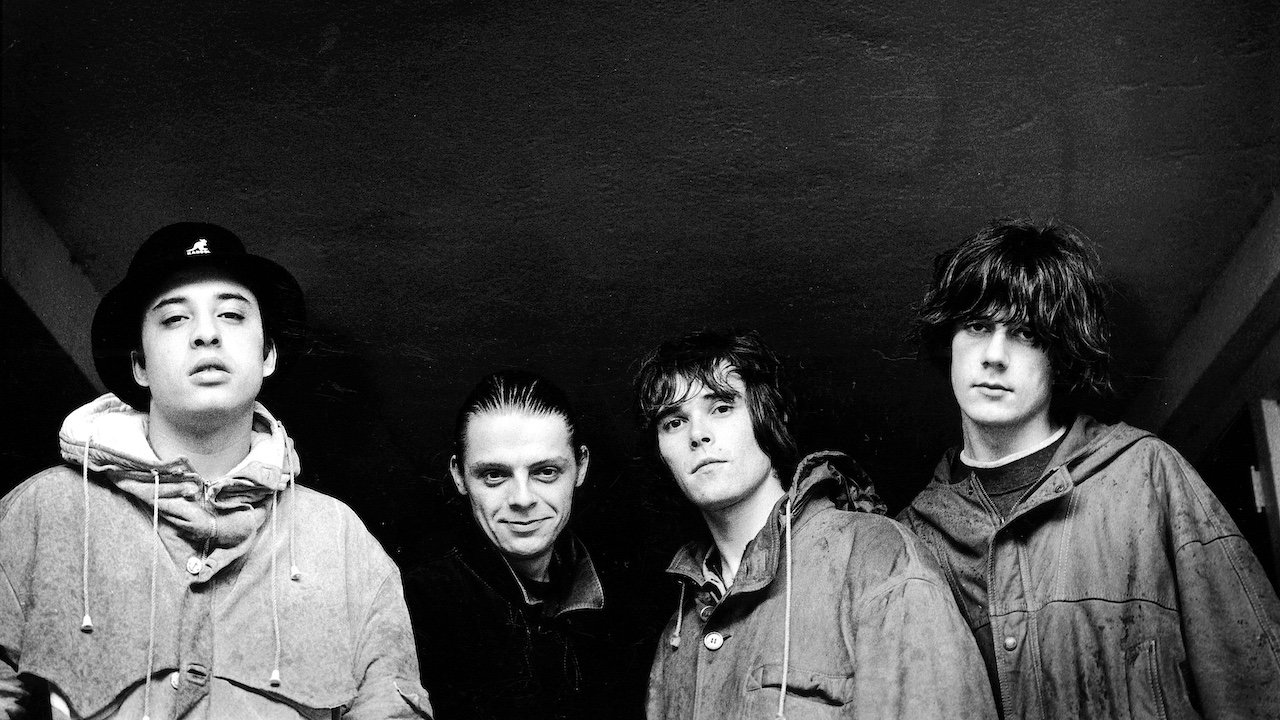
In the fallout which followed, culminating in a notoriously poorly-received headline set at Reading Festival in 1996, Mounfield was Brown’s only permanent ally in the band as Squire and drummer Alan “Reni” Wren departed.
After leaving The Roses following the band's split in 1996, he'd go on to join Primal Scream, one of just three bands he’d claim to be willing to join (the others being The Jesus & Mary Chain and Oasis), becoming the core of the band's highly acclaimed and influential future rock rejuvenation with 1997’s ‘Vanishing Point’ and 2000’s ‘XTRMNTR’. Mounfield’s upbeat attitude and musical energy have been credited with reviving the band, amid talk of splitting after the disheartening and drug-heavy experience of ‘Give Out But Don't Give Up’.
Across 15 years and five albums with Primal Scream, Mani acted as Bobby Gillespie's right-hand man and even found time for stints with bass-player supergroup Freebass alongside New Order’s Peter Hook, The Smiths’ Andy Rourke, and Haven’s Gary Briggs, tours with Ocean Colour Scene, and guest appearances at Ian Brown solo shows.
In 2011, he reunited with The Stone Roses, playing huge festival shows and stadiums. Continuing to do this until the band's breakup in 2017. The reported reason for the reunion had been Mani, who met up with Brown and Squire at his mother’s funeral in 2011. He commented that the event was “the cloud that gave us the silver lining” to patch up their differences.
Musician deaths have hit me before; Ozzy Osbourne, for example, was a cultural phenomenon, and I remember having a feeling of sadness at sixteen when I found out Bowie had passed.
This one felt different, though. The Stone Roses are one of the most important discoveries in my life; those songs mean the world to me. The band's debut album remains a cornerstone of my record collection. As Clash Magazine put it, the album remains “an overwhelming statement of working-class pride.” It wasn’t music for the elite or the critics; it was for the dreamers, the ravers, the disillusioned youth looking for meaning and escape. The impact that the band had on me cannot be understated without The Stone Roses. I'm not writing this post; Beyond the Grooves does not exist.
2025 seemed to be the year when bands reunited. Pulp released new music, and Oasis made headlines across the globe by reforming for their colossal Live '25 tour. Radiohead's resurrection, by contrast, was a lot more understated but arguably far more profound. After seven years of mystery, silence, and solo side-quests, ranging from film scores to The Smile, Thom, Jonny, Colin, Ed, and Phil finally stepped back into the light for a run of residency shows that completely redefined what a legacy act can be. Eschewing the traditional, predictable stadium "hits" tour, the band opted to perform in the round, completely encased in a spectacular, circular box of semi-transparent screens that rose and fell like a digital lung, visually reflecting the claustrophobia and breathing room of their music.
The November residency at The O2 arena was a masterclass in tension and release, prompting the Evening Standard to hail it as "their most gleeful, hit-packed set in memory." Opening with a weightless, TikTok-rejuvenated version of ‘Let Down’, the band proved instantly that they haven't just aged; they’ve become entirely telepathic as musicians. The setlists were an absolute fever dream for die-hards, meticulously whittling down 30 years of genre-shifting music into a 25-song nightly ritual that felt simultaneously like a greatest hits package and a cutting-edge avant-garde performance. Watching Ed O’Brien take the atmospheric lead on a transcendent ‘Weird Fishes/Arpeggi’ or Thom Yorke jigging maniacally across the stage to the industrial, brass-heavy funk of ‘The National Anthem’ served as a potent reminder: they might be grey-bearded sea dogs now, but their unique ability to channel modern cultural anxiety into a state of communal ecstasy remains entirely unmatched.
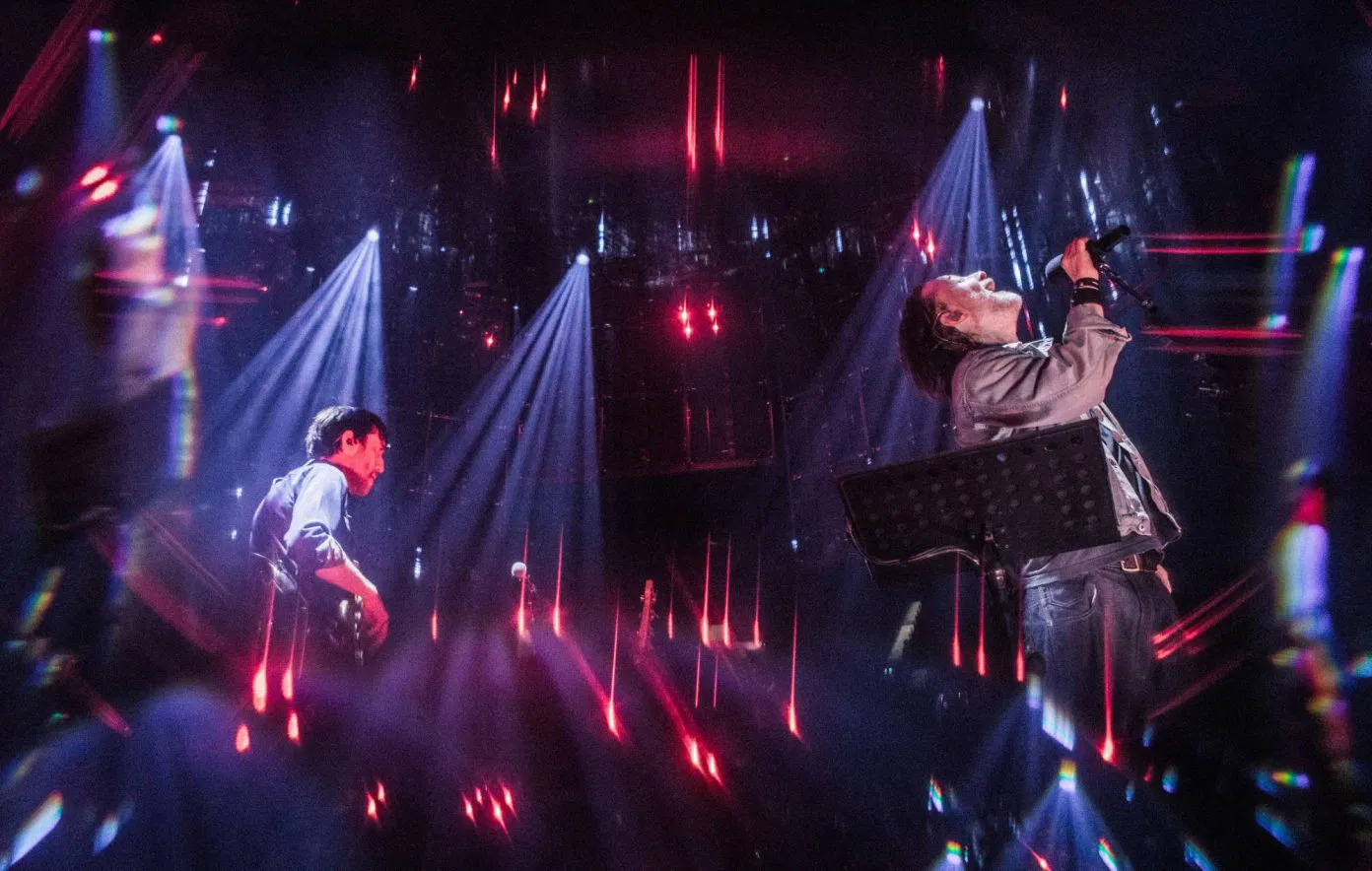
The main sets were expertly anchored by a brilliant rotation of heavyweights, ensuring no two nights felt identical. A rare, soaring rendition of ‘Fake Plastic Trees’ blew the roof off the arena, reminding everyone of the raw emotional power they possess when they choose to embrace their 90s guitar roots. ‘Climbing Up The Walls’ made a haunting tour debut that saw Thom’s vocals pushed to their absolute distorted, agonising limit against a wall of static noise.
Meanwhile, mid-tempo staples like ‘No Surprises’, ‘Paranoid Android’, and ‘Karma Police’ provided the kind of massive, spine-tingling arena sing-alongs that once felt entirely impossible for a band this experimental. In the end, they didn't need a new album to prove they are still one of the most important bands in the world; they just needed to be in the same room again.
After one of their biggest years to date, Wolf Alice rounded it out with some arena shows, including two sold-out nights at the O2 in London. Now, four albums in, Wolf Alice have never been more ready for arenas.
They are a band that has embraced reinvention throughout their fifteen-year career and offers so much on stage. Ellie Rowsell is one of the greatest frontwomen ever. Her voice croons and snarls within minutes of each other. The band are exceptional at perfectly slotting songs from the band's latest effort, 'The Clearing,' into the set alongside the classics.
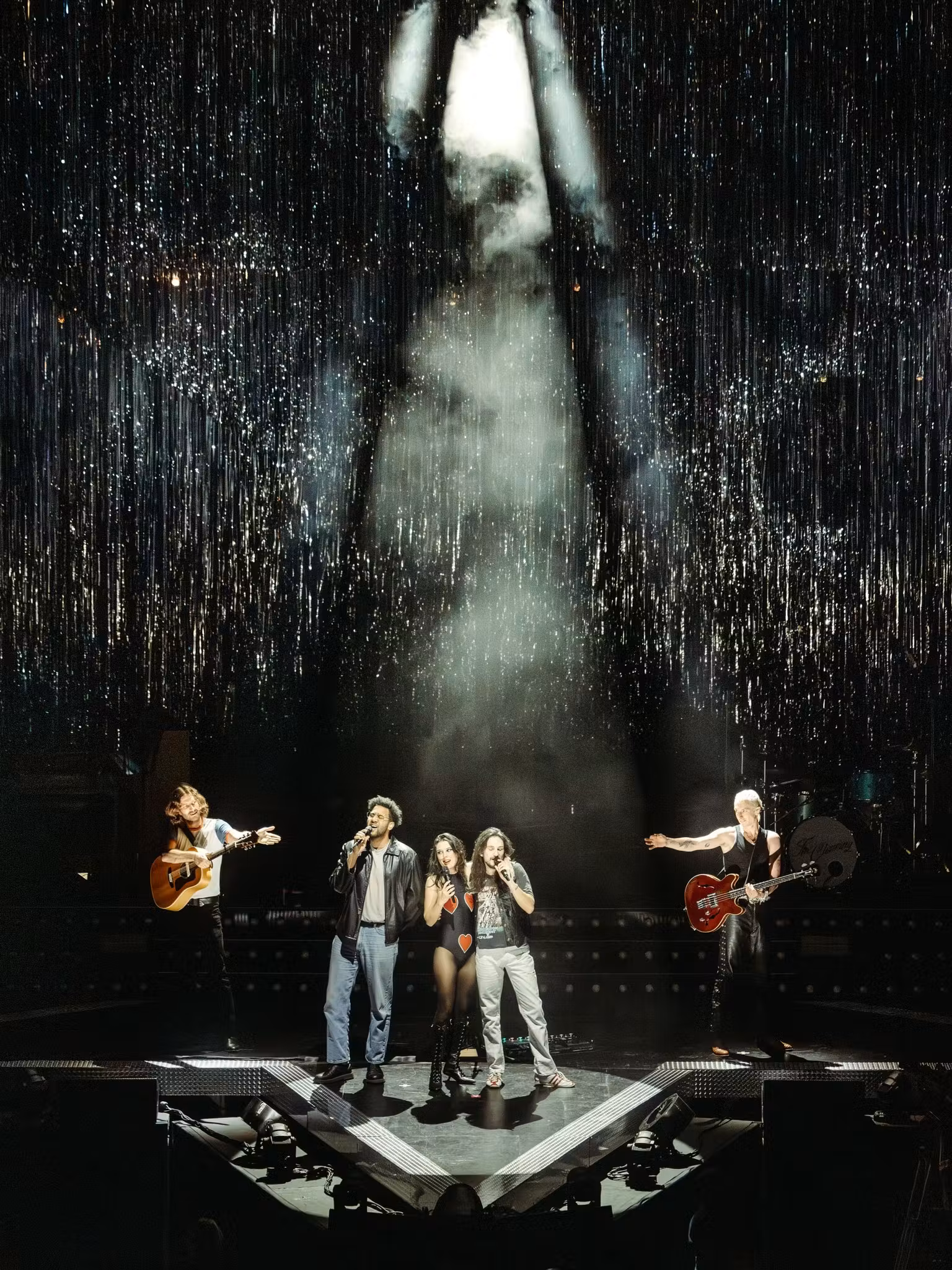
These shows act like an Eras tour for the band, from the indie-loved-up romance of 'Bros' through to the bass-driven groove of 'Formidable Cool' and the snarling punk aggression of 'Smile'. The selection of songs here puts the band alongside former labelmates The 1975 and Arctic Monkeys for sheer genre variety. Fans get so much: folk, 90s shoegaze, 70s glam, punk, indie bangers. The show felt balanced, despite nearly all of the new record being played; the band found time for the old bangers 'You're a Germ' featured just before 'Safe From Heartbreak', with an encore of 'The Last Man on the Earth' and quite possibly the greatest indie love song ever, 'Don't Delete the Kisses'.
In a decade, Wolf Alice has achieved so much; these arena shows feel less like a trial run and more like a victory lap. The band know it too. Ellie Rowsell's stage presence has evolved, and her vocal ability is ridiculous; she does not falter at all. Hitting the high notes on 'Bloom Baby Bloom' and the primal screams on 'Yuk Foo', it's spectacular to watch. It would be unfair to single Ellie out, though; each of the band plays their part, drummer Joel Amey showcased not only his drumming skills but also took the lead on 'White Horses', the unbelievably heartfelt reflection on heritage and identity.
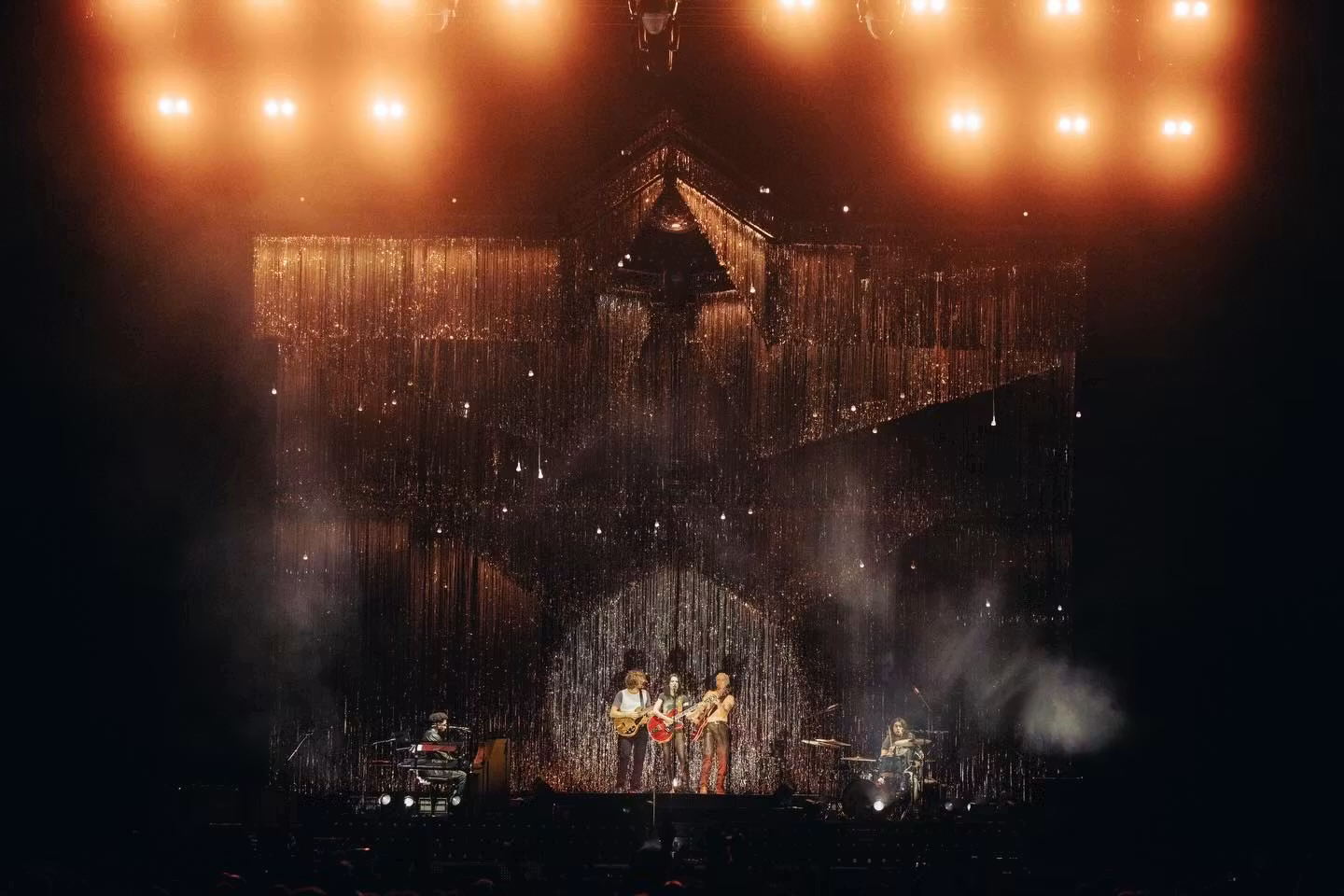
Theo Ellis holds things down with his bass playing and also acts as the band's unofficial cheerleader, reminding the crowd how much this means to them and encouraging mass sing-alongs, mosh pits, and swaying arms. Joff Odie is criminally underrated as a guitar player; he keeps things moving with his playing, perfectly complementing Rowsell when needed and, at other times, completely commanding the stage.
Wolf Alice are in a rich vein of form now, and long may it continue.
In November 2025, The Beatles released Anthology 2025. Thirty years after the original 1995 release, the classic 90s documentary series 'Anthology' will be remastered by Peter Jackson and set for release in November. Alongside digitally enhanced versions of the original eight episodes, there was also a brand-new ninth episode, written and directed by Oliver Murray, created from previously unseen behind-the-scenes footage of Paul McCartney, George Harrison and Ringo Starr coming together around the release of the original series.
The series, which was first broadcast by ITV in 1995, was hailed as the definitive documentary on the Beatles thanks to the way it reunited the surviving three Beatles with their producer George Martin, former press officer Derek Taylor and one-time road manager Neil Aspinall to tell the tale of their career in their own words. Its release was accompanied by the single, 'Free As a Bird', the first new piece of music put out by the Scouse quartet since their disbanding. In 1996, the band would release a further piece of new music, with 'Real Love'.
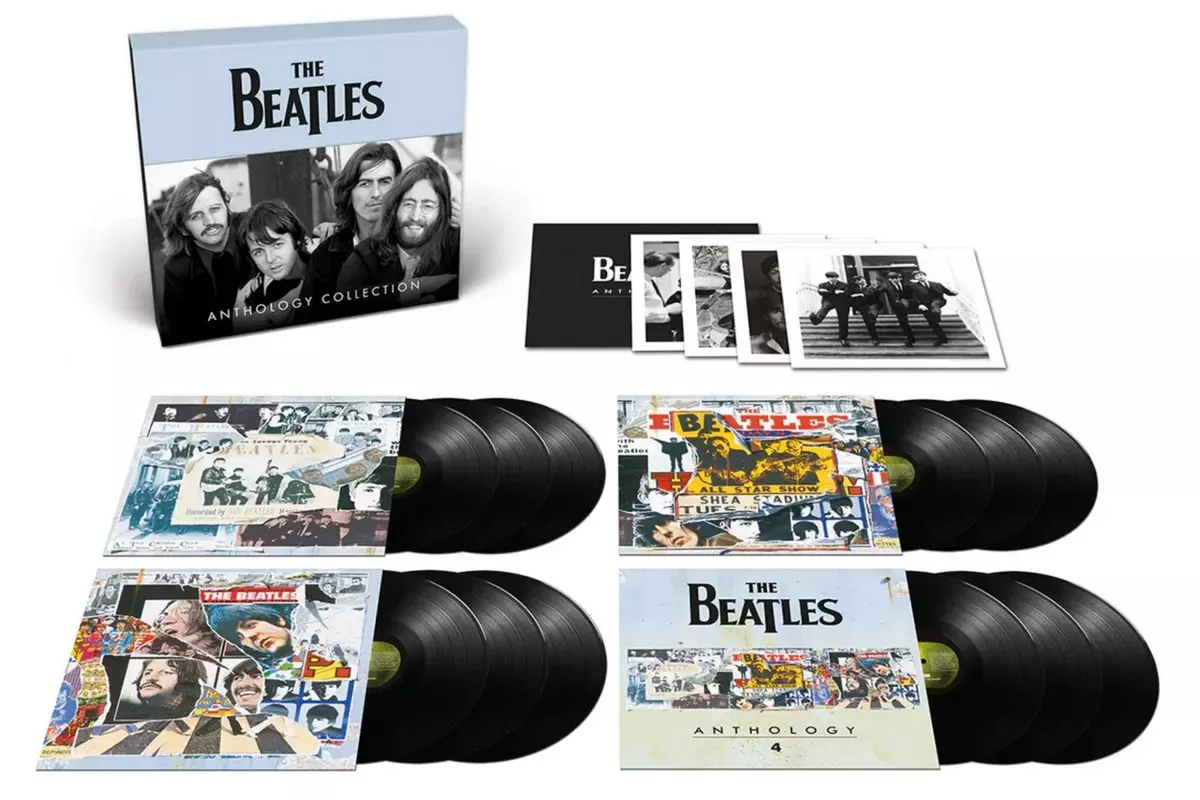
The Beatles Anthology reminds us that, despite their near-mythical status, John Lennon, Paul McCartney, George Harrison, and Ringo Starr were remarkably ordinary people who achieved something extraordinary. Across the documentary, their humour, friendships, rivalries, and vulnerabilities make them feel human rather than untouchable icons.
The series captures genuine moments of warmth and tension. Old wounds remain visible, whether in Harrison's frustrations with Apple Corps or McCartney's lingering competitiveness with Lennon. Yet the affection between them is unmistakable. As Lennon put it, “Nothing will ever break the love we had for each other.”
'Anthology' also illustrates the sheer scale of Beatlemania. From Liverpool clubs to sold-out stadiums around the world, The Beatles became the first truly global superstars. Their influence extended beyond music, shaping fashion, youth culture, and the counterculture movement of the 1960s.
As artists, they constantly reinvented themselves. After retiring from touring in 1966, they transformed the recording studio into an instrument, creating groundbreaking albums such as Rubber Soul, Revolver, Sgt. Pepper's Lonely Hearts Club Band, and Abbey Road. Songs like 'Tomorrow Never Knows', 'A Day in the Life', and 'Strawberry Fields Forever' redefined what popular music could be, introducing innovations such as tape loops, varispeed recording, backwards audio, automatic double-tracking, and early synthesiser use.
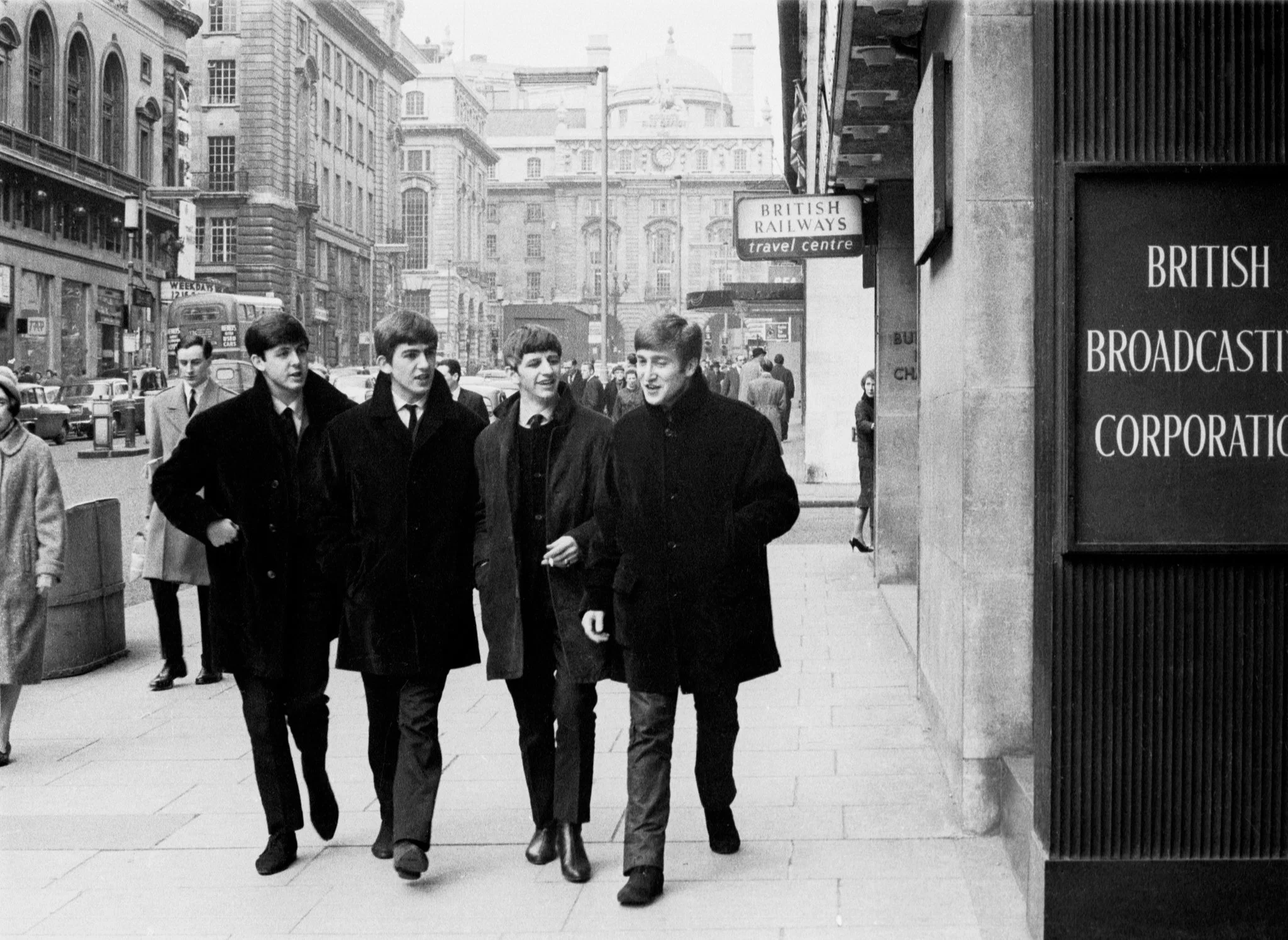
The Beatles' story is not just about four musicians. Three additional figures were crucial:
Brian Epstein transformed them from a Liverpool club band into international stars, managing their image and career. His death in 1967 marked the beginning of the band's decline.
Neil Aspinall, their road manager, confidant, and later head of Apple Corps, became the custodian of the Beatles' legacy and was instrumental in creating Anthology.
George Martin, often called the "Fifth Beatle," translated the band's ambitious ideas into reality. His arrangements, production techniques, and musical expertise shaped much of their greatest work. Without Martin, songs such as 'Yesterday', 'Eleanor Rigby', 'Penny Lane', and 'Strawberry Fields Forever' would not exist in the form we know today.
The Beatles' success was not accidental. Their gruelling early years, particularly in Hamburg, where they played marathon sets night after night, transformed them into exceptional musicians and performers. Those experiences forged the work ethic and songwriting partnership that would fuel their rise.
The Beatles' history is also defined by loss. Stuart Sutcliffe, the band's original bassist, died aged 21. Brian Epstein's death left the group without its guiding manager. Most devastatingly, John Lennon was murdered in 1980, denying both the band and the world the possibility of a full reconciliation and reunion. Anthology's 1995 reunion project, featuring the surviving Beatles recording around Lennon's demos, is moving precisely because it highlights the absence of the fourth voice that once completed the group.
Although 'Let It Be' was released last, 'Abbey Road' was the final album The Beatles recorded together. Following the difficult 'Get Back' sessions, the band reunited with George Martin and produced what many consider their masterpiece. Harrison emerged as an equal songwriting force with 'Something' and 'Here Comes the Sun', while Lennon and McCartney delivered some of their finest late-period work.
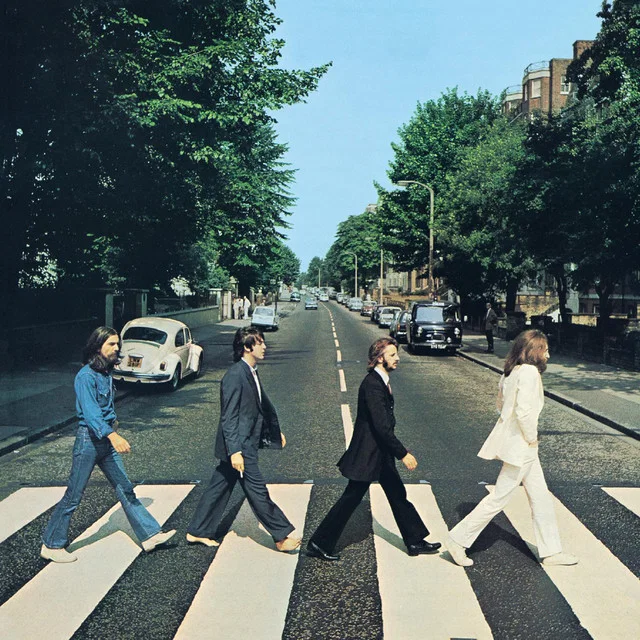
The album closes with the immortal line:
"And in the end, the love you take is equal to the love you make."
It serves as a fitting farewell for a band whose influence continues to shape modern music and culture.
The Beatles Anthology is more than a documentary. It is the story of four friends from Liverpool who changed the world through talent, ambition, creativity, and timing. Their achievements transformed music forever, and the documentary succeeds because it allows them to tell that story in their own words. It reveals not just the greatest band in history, but the people behind it.
In January 2026, Chilli Jesson, the former bassist and occasional vocalist of 'Palma Violets', was once the effortlessly cool mouthpiece for a group that the NME famously crowned "the best new band in Britain." But behind the youthful bangers and artfully dishevelled hair, Jesson’s adolescence was tumultuous. At 14, he lost his father to drug addiction, a grief that, almost 20 years later, the musician finally addresses with his new venture, 'Dead Dads Club'.
You’d be forgiven for thinking a project with such a title would be relentlessly gloomy, but the work is a surprisingly life-affirming listen. Granted, one shouldn't be entirely fooled; the album is rooted in profound loss and the chaos that followed, so there is plenty of darkness and soul-searching on display. Yet, much of the hedonism that defined his formative band has here been transformed into something altogether more cathartic and inspiring.
The record sees Jesson embracing a vast sonic palette: the garage-rock urgency of 'Is This It', Bowie’s 70s experimentation, the sharp, percussive instrumentation of 'Arctic Monkeys', 'Parachutes' era 'Coldplay', and the grit of 'Fontaines D.C.' (whom Jesson has been touring with for several years). Sonically, the album refuses to sit still, shifting from the indie swagger of 'Volatile Child' to the ominous electronica of 'Humming Wires', via the tender, scrappy 'Running Out Of Gas', and into the 60s surf-pop of 'Junkyard Radiator'.
The fingerprints of collaborator Carlos O’Connell are felt throughout, with a musicality that echoes the breadth and expanse of 'Fontaines D.C.', albeit through a more lo-fi lens. The production strikes a delicate balance between the raw and the refined.
By the time the heady chorus of the closing track, 'Need You So Bad', takes flight, it is imbued with a genuine sense of healing and closure. It’s an album that doesn’t just ask for your attention; it earns it with uncompromising honesty. By the time the final notes fade, you realise that while the 'Dead Dads Club' was born from a place of absence, the music itself is incredibly present.
Jesson has steered himself firmly back on course. No one ever wants to join the 'Dead Dads Club', but if you find yourself there, at least you have a brilliant soundtrack.
The first big piece of news for 2026 came in the form of an Instagram announcement. British charity War Child has sparked massive online buzz after teasing a potential new star-studded record. Rumours are flying that Arctic Monkeys are involved, alongside heavyweights like Fontaines D.C., Damon Albarn, Graham Coxon, Young Fathers, Wolf Alice, Foals, Pulp and English Teacher.
War Child, an organisation dedicated to protecting and supporting children in conflict zones, has a legendary history of musical collaborations. It all began in 1995 with the iconic album 'Help', which famously united Britpop rivals Oasis and Blur on a single tracklist. That record, featuring the likes of Radiohead and Portishead, raised over £1.25 million and set the stage for future releases like 'Hope' and 'War Child Presents Heroes'.
On January 7th, a new Instagram account, @WarChildRecords, was created. The first post revealed that “there is a group of artists who are working on something important in support of War Child.
It wouldn't take long for details about this project to emerge. James Ford was quickly named as the producer, having worked with many of the artists that the Instagram account began to follow. He then shared the announcement.
After the rumours, War Child Records announced 'HELP (2)', a follow-up to the 1995 'Help' album.
Produced and stewarded by James Ford, the record was captured during an intensive, high-energy week at Abbey Road Studios in November 2025. The process was a deliberate homage to the 'Instant Karma' philosophy of John Lennon, who famously believed the best records were "recorded on Monday, cut on Tuesday, pressed on Wednesday, packaged on Thursday, distributed on Friday, and in the shops on Saturday."
It is a breakneck pace that mirrors the urgency of the cause. In 1995, the original ‘Help’ made history by being recorded on Monday, September 4th, and hitting shelves just five days later on Saturday, the 9th. For ‘HELP(2)’, the music industry has once again mobilised with that same frantic, vital energy to ensure these songs reach the public while the need is most dire.
It is a breakneck pace that mirrors the urgency of the cause. In 1995, the original ‘Help’ made history by being recorded on Monday, September 4th, and hitting shelves just five days later on Saturday, the 9th. For ‘HELP(2)’, the music industry has once again mobilised with that same frantic, vital energy to ensure these songs reach the public while the need is most dire.
The tracklist is a testament to the album’s ability to unite the pop world with indie-rock royalty.
Anchoring this massive project is the lead single, ‘Opening Night’, the first new material from Arctic Monkeys in four years. By stepping out of their hiatus to lead such an urgent collection, the band sets a sophisticated tone for a record that refuses to look away from the global crisis.
Sonically, ‘Opening Night’ is a fascinating synthesis of the band’s evolution. It certainly doesn’t share the polished, leather-jacket swagger of ‘AM’. Instead, it opens with wiry, robotic percussion and fingerpicked, clean guitar, low-key and intimate.
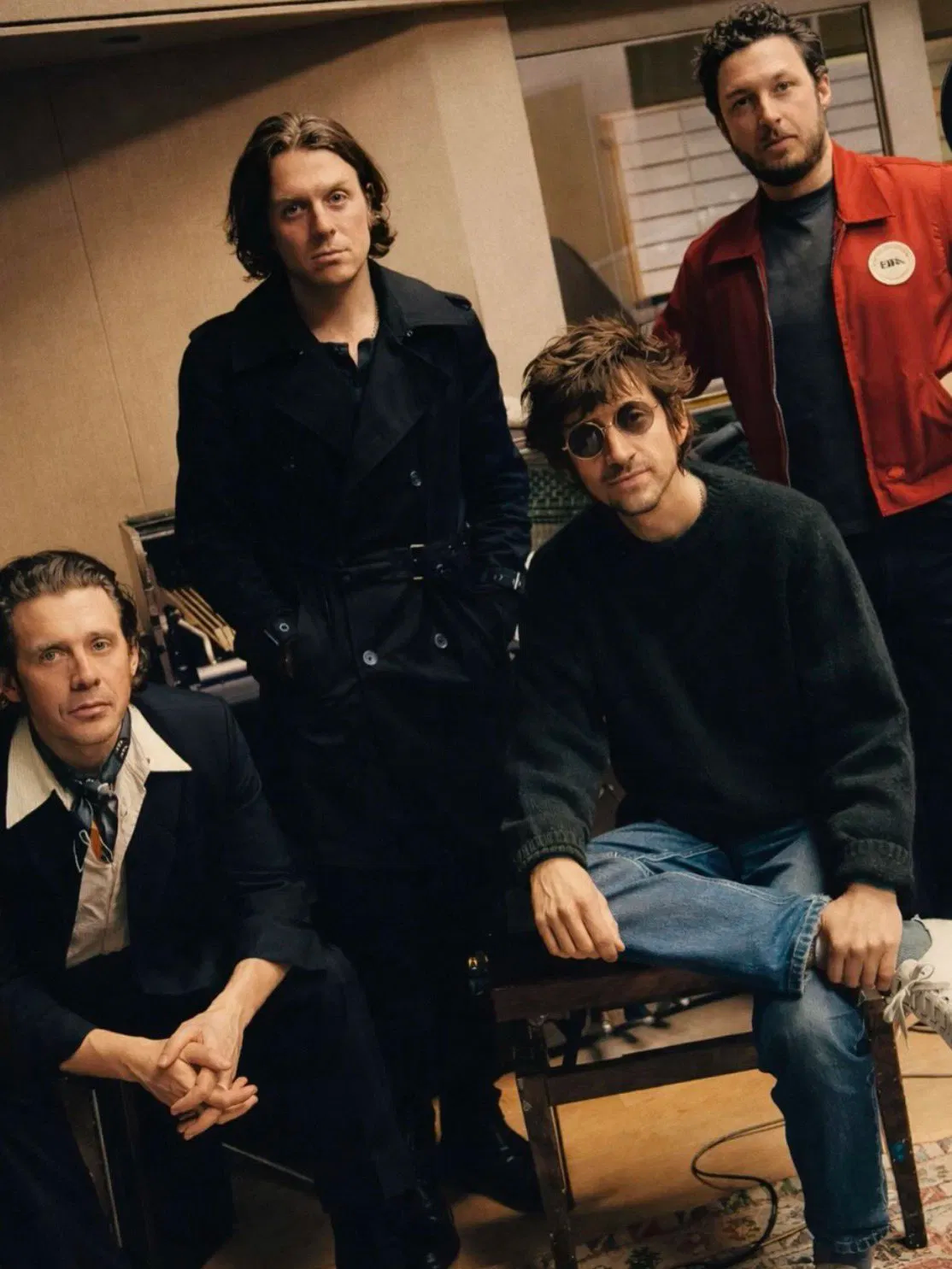
As the track unfolds over its four-minute runtime, it harks back to the lush, cinematic orchestration of ‘The Car’, with sweeping strings that lend a sense of grand drama. Yet, beneath that elegance lies a grit we haven't seen in years. There are flashes of murky, sinister guitar work that feel pulled straight from the ‘Humbug’ era, providing a dark counterpoint to the orchestral swells.
The sheer scale of the talent involved is best captured by the official billing itself. From the heavyweights of the '90s to the defining voices of the 2020s, the full lineup represents a rare moment of total industry alignment.
This sprawling 23-track collection serves as a definitive map of modern alternative music. While each artist brings their own distinct signature, the project remains a cohesive statement of solidarity, moving from stripped-back acoustic covers to high-octane studio collaborations, and of course, a few new songs.
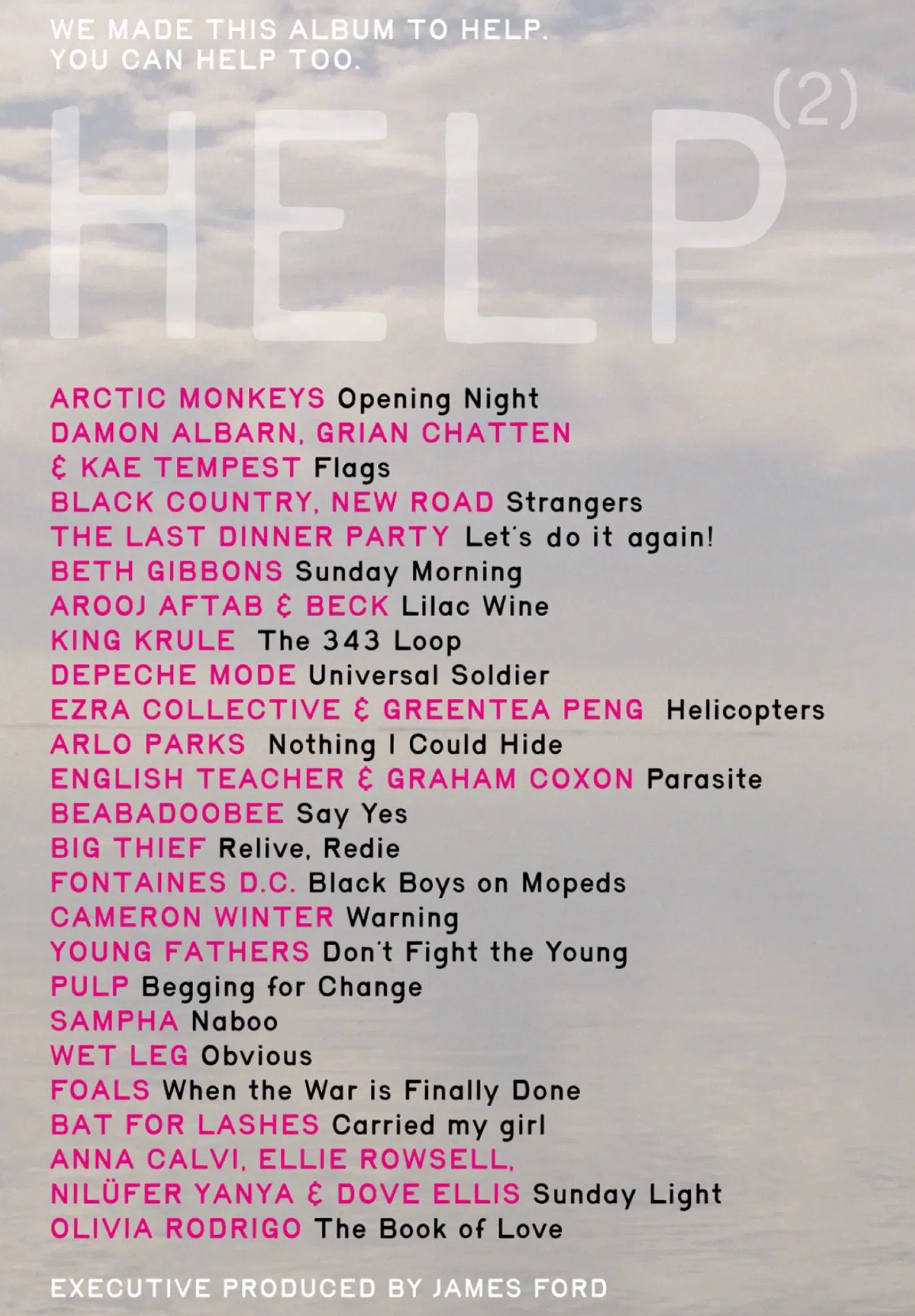
The project’s impact extends far beyond the audio, thanks to a haunting visual identity overseen by Academy Award-winning filmmaker Jonathan Glazer (The Zone of Interest). Acting as Creative Director for the filming and art direction of ‘HELP(2)’,
Glazer partnered with acclaimed composer and collaborator Mica Levi to execute a concept that is as simple as it is profound: “By Children, For Children.”In a move that stripped away the traditional artifice of music videos, Glazer’s team handed cameras directly to children, inviting them into the studios to film artists such as Arctic Monkeys and Damon Albarn without restriction.
HELP(2)’ is more than just a snapshot of the current musical landscape; it is a vital intervention. By reviving the breakneck urgency of the 1995 original and centring the voices and lenses of children caught in the crossfire, War Child has created something that transcends the typical charity compilation.
The necessity of this project is underscored by a sobering reality. In a statement regarding the record's importance, the charity noted that when the original ‘HELP’ was released, roughly 10% of the world’s children were affected by conflict. Today, that figure has nearly doubled to 1 in 5, representing 520 million children worldwide, the highest level since the Second World War.
“With conflicts escalating and funding cuts hitting hard, War Child’s work has never been more urgent,” the charity continued. “The need for these artists to carry forward the original album’s spirit of collective action could not be more vital.
Rich Clarke, Head of Music at War Child UK, added: “‘HELP(2)’ is more than an album. It’s a powerful example of what can happen when the music industry comes together around a shared purpose. We are immensely grateful to all the artists and teams who have donated their voices, talent, and time. We hope this record not only raises vital funds but also awareness of the urgent need to turn compassion into action.”
After the release of four singles, including 'Opening Night', the first new music from Arctic Monkeys in four years, and 'Begging for Change', which is Pulp at their most punchy since 'Different Class'. The 'HELP(2) record was released.
HELP(2)' isn't merely a charity compilation; it is a definitive atmospheric map of where music sits in 2026. Every artist involved has been remarkably generous with their craft, ensuring this isn't a collection of lesser B-sides or rushed, gimmicky singles. Instead, the record balances vital original efforts with a series of exceptional, deeply considered covers. The record flows and reflects the current British and Irish scenes, alongside some great American names.”
One of the most arresting moments comes from Depeche Mode, who drape a signature dystopian energy over Buffy Sainte-Marie’s 1960s classic, 'Universal Soldier'. A scathing deconstruction of conflict, the track feels chillingly contemporary in their hands. By emphasising the lyrics
"He’s the one who gives his body as a weapon of the war, / And without him, all this killing can't go on"
The band turns a folk lament into a haunting industrial march. It is a standout moment of self-reflection for the listener, forcing a confrontation with the "universal" responsibility of war.
The album secures a massive coup with Olivia Rodrigo’s rendition of 'The Book of Love' (originally by The Magnetic Fields). Securing one of the world’s biggest pop stars is a triumph for War Child; her presence bridges the gap to a younger audience, the very generation the charity works to protect.
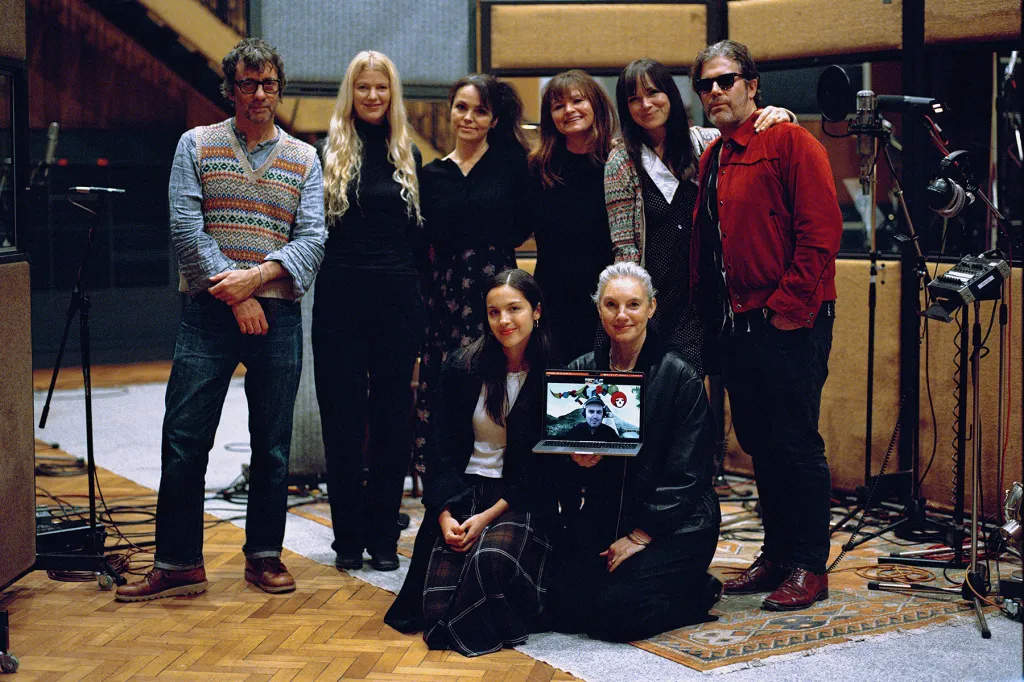
This isn't a glossy pop production, however. It is a beautifully stripped-back version that features British indie royalty Graham Coxon on guitar.
James Ford pulls off a master stroke, ending the album with this track. It's a record that covers a lot of dark themes: displacement, war, identity, the innocence of youth, politics, race and the need for change. Bringing the record with a statement of love, music and being young.
"The book of love has music in it/ In fact, that's where music comes from/ Some of it is just transcendental/ Some of it is just really dumb"
“The book of love is long and boring/ And written very long ago/ It's full of flowers and heart-shaped boxes/ And things we're all too young to know.”
The result is one of the album’s most tender highlights, proving that Rodrigo’s vocal depth can more than hold its own alongside Britpop and indie legends.
The record also pays a poignant tribute to its predecessor. Fontaines D.C. cover 'Black Boys on Mopeds' by the late, great Sinéad O’Connor, who famously performed on the original 1995 'Help' album.
Their choice of 'Black Boys on Mopeds' is devastatingly precise. Grian Chatten’s vocal, usually a post-punk snarl, is here a wounded, gravelly whisper, held aloft by a mournful string arrangement that bleeds into the mix. In the current global climate, where the right to protest and the weight of state power are once again under the microscope, the lyrics feel chillingly prophetic:
"These are dangerous days / To say what you feel is to dig your own grave / Remember what I told you: / If you were of the world they would love you."
The band leans into the song’s inherent Dublin geography, making the imagery of the "young mother down at Smithfield" at 5 am feel visceral and immediate. When Chatten delivers the line about the babies whose first word was "please," the production drops away, leaving the listener in a stark, uncomfortable silence.
It is a masterclass in tension and release, culminating in the song’s famous, stinging indictment of the British establishment:
"England's not the mythical land of Madame George and roses / It's the home of police who kill black boys on mopeds."
Tragically, the political bite of Sinéad’s 1990 original hasn’t dulled with age; if anything, Fontaines D.C. prove that it has only sharpened. It is an exceptional, heavy piece of music from a band that currently seems incapable of a single creative misstep.
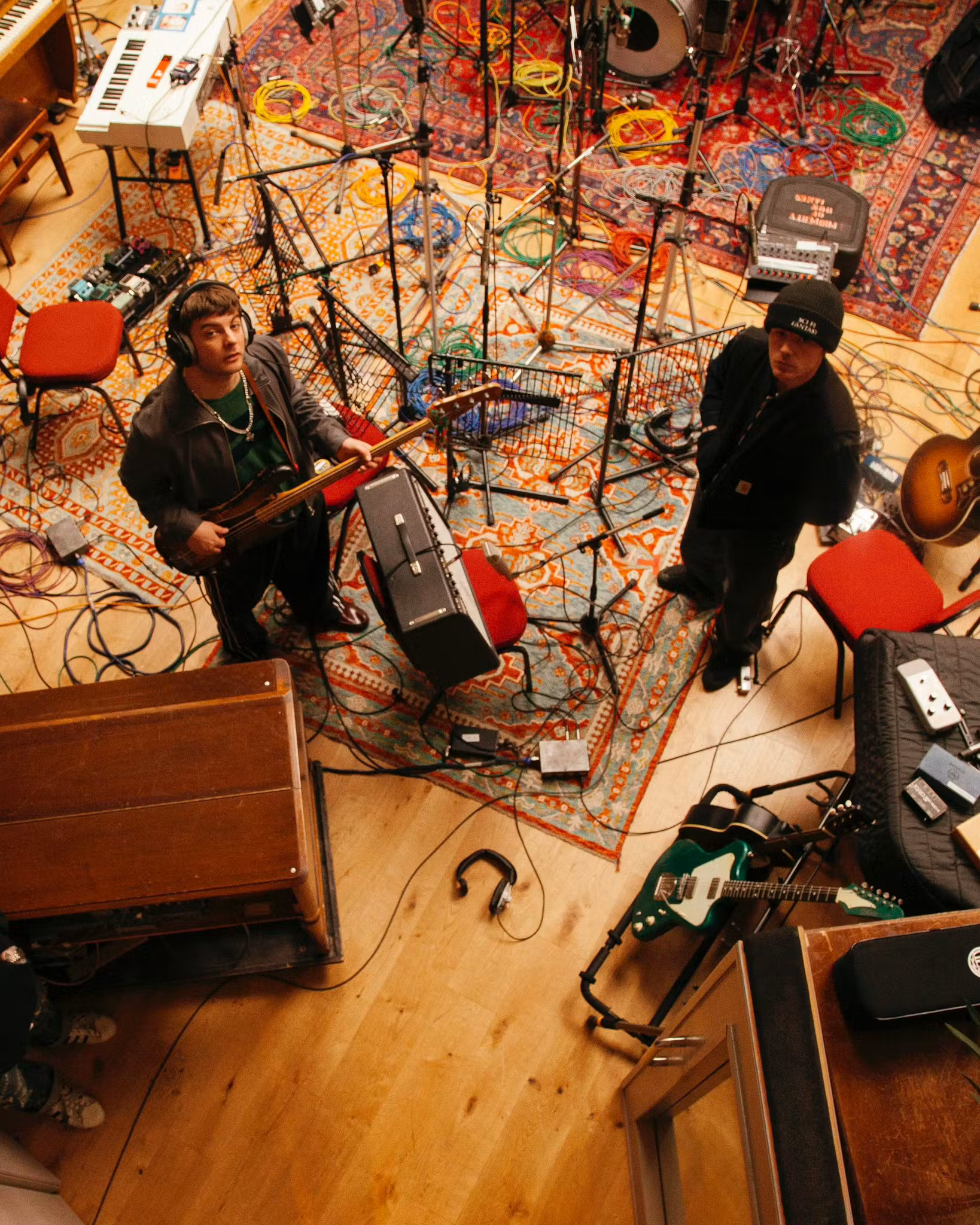
The original compositions on 'HELP(2)' are just as vital as the covers, serving as a pulse check for the state of alternative music in 2026. These aren't throwaway tracks; they are deeply considered pieces of music.
In a fascinating bit of musical archaeology, Pulp revived 'Begging for Change', a track originally conceived during the sessions for their album 'More'. Jarvis Cocker famously struggled to finish the lyrics at the time, but the Abbey Road sessions provided the spark he needed.
The song opens with Cocker delivering a submissive, almost mechanical vocal: "We are being strip-mined by the powers that be / We are being strip-mined by the new bourgeoisie."
The track then explodes from a distorted guitar intro into a raucous, upbeat anthem. Accompanied by a "boisterous" children’s choir, Cocker chants
"B-E-G-G-I-N-G / Begging for Change!"
while listing everything he wants to fix in himself and the world. It’s raw, urgent, and exactly the kind of unapologetic spirit the record requires.
One of the album’s most ambitious moments is 'Flags', a sprawling collaboration featuring Damon Albarn, Grian Chatten (Fontaines D.C.), and the poet Kae Tempest. The track is anchored by a piano melody that feels both celebratory and heartbreaking.
The production credits are a "who’s who" of modern music royalty:
- Vocals: Damon Albarn, Grian Chatten, Kae Tempest
- Guitars: Johnny Marr, Adrian Utley (Portishead)
- Rhythm: Seye Adelekan (Gorillaz), Femi Koleoso (Ezra Collective)
- Instrumentation: Dave Okumu
- The Choir: A 43-piece children's choir joined by Jarvis Cocker, Carl Barât, and Declan McKenna
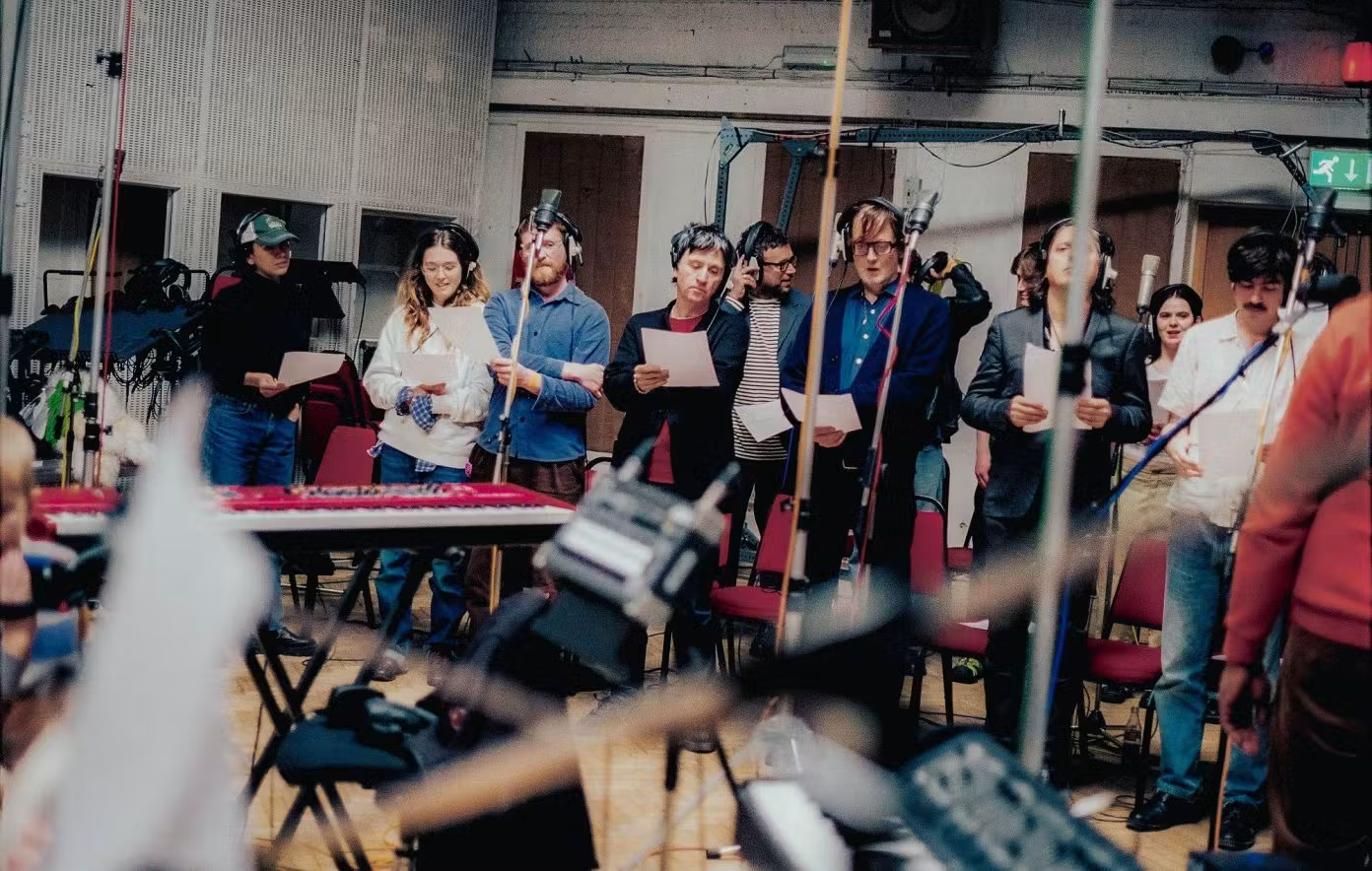
Foals pivot away from their "moshpit" anthems with 'When the War Is Finally Done', returning to the expansive, atmospheric textures of 'Spanish Sahara'. The track is a haunting exploration of the long-term psychic toll of conflict, heavy, slow-burning, and arguably some of the most mature songwriting we’ve seen from the band this decade. The production leans into minimalism, swapping jagged guitar riffs for a shimmering, synth-led pulse that feels both cavernous and intimate. Yannis Philippakis delivers a vocal performance stripped of its usual bravado, opting instead for a fragile falsetto that mirrors the track’s lyrical exhaustion.
Philippakis shared that the track was written in 2019 while he was reading "Trench Poets" like Wilfred Owen and Rupert Brooke, and this influence is evident in the song's grim, pastoral imagery. By channelling these poets, the lyrics bypass modern political commentary to tap into a timeless, visceral exhaustion. Sung from the perspective of the afterlife, the track follows a young soldier who was expected to "endure the unendurable," watching the world tentatively return to normalcy from above once the shelling stops.
The "ghostly" perspective of the lyrics transforms the song into a plea for a peace the narrator will never actually inhabit. Lines like "Won’t you wake me up when the trains finally run?" highlight the jarring contrast between a world returning to its mundane routines and the permanent silence of those lost to the "bitter sun." This physicality of trauma, referenced through "blemished lungs," evokes the historical horror of gas warfare while doubling as a metaphor for the breath stolen by modern weaponry. Ultimately, the recurring imagery of "black horses through the sky" lends the track a mythic, apocalyptic quality, moving the narrative from a specific battlefield to a universal realm of grief. This narrative weight builds toward a devastating sonic crescendo.
Rather than exploding into a typical indie-rock climax, the track releases its tension through a sweeping, orchestral wall of sound where Jack Bevan’s percussion feels like a distant, rhythmic heartbeat rather than a call to arms. Jimmy Smith’s textures layer over the rhythm section like a dense morning fog, burying the ghost of the soldier back into the soil. By refusing to offer a triumphant resolution, 'When the War Is Finally Done' cements itself as a masterful exercise in restraint, proving that Foals are at their most powerful when they swap the fury of the crowd for the quiet devastation of history
Young Fathers offered up 'Don't Fight the Young', which, as the record's thematic heart, is true to form for Young Fathers: wild and unpredictable, a driving piece of alternative pop handpicked from a selection of songs the band wrote and offered to the project.
The track’s raw energy was perhaps best captured during the recording sessions at Abbey Road. Interestingly, when the band played the track in the studio, the children tasked with documenting the sessions immediately began singing and dancing. This spontaneous reaction underscores the song's primitive, infectious power. In this rare instance, a "protest song" bridges the gap between high-art studio production and the uninhibited joy of the youth.
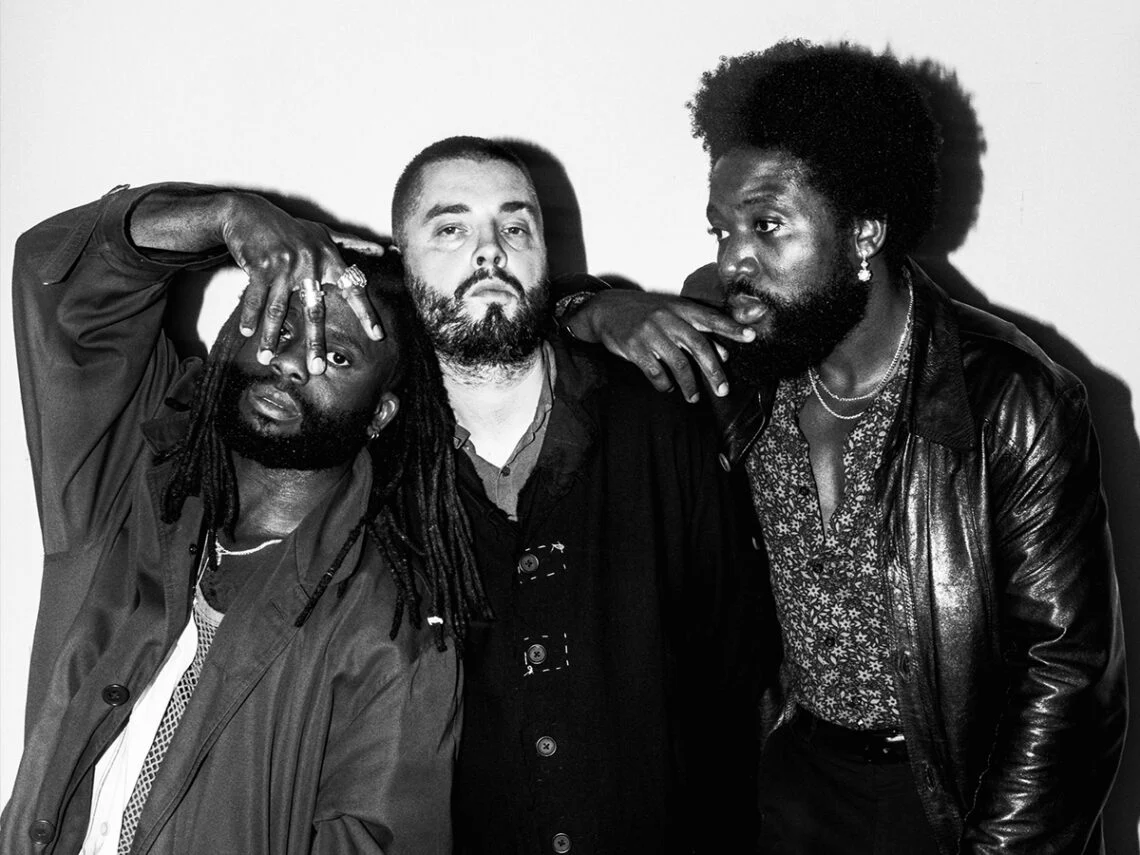
Lyrically, the song swaps complex metaphor for a straightforward moral imperative. By repeatedly hammering home the mantra 'You don’t fight the young', the band moves past artistic nuance into a visceral plea for protection. However, beneath the driving hook lies a deeper philosophical layer; the refrain "’Cause the years see what the days miss" serves as a poignant reminder that while conflict is often measured in daily headlines, its true impact is a slow, generational erosion. Ultimately, by stating "It’s not just a young thing / We all for something," Young Fathers expand the scope of the track, framing the protection of the vulnerable as a collective, universal calling.
Wet Leg finally unveils 'Obvious', a song that nearly made their debut record. It’s a beautiful, stripped-back effort that shows a vulnerable side to a band who told us on their last record to 'Catch These Fists'. Rhian Teasdale’s vocals are front and centre here, shedding the deadpan, satirical armour of their chart-topping hits for something genuinely tender and raw. Accompanied by little more than a softly strummed acoustic guitar and a faint, spectral swell of strings, the track proves the duo can command a room through quiet intimacy just as easily as they do with viral indie-rock anthems.
Meanwhile, Black Country, New Road offers a fascinating glimpse into where they might head next with 'Strangers'. The track is a "folky, weird" standout that pays homage to Fleetwood Mac, grounding the compilation in a nostalgic yet experimental atmosphere. Rather than relying on their signature sprawling, post-rock crescendos, the 2026 track leans into a pastoral warmth, using a gorgeous blend of accordion, mandolin, and intertwined group vocals that evoke the feeling of a late-night campfire jam session. It highlights the collective's unmatched ability to reinvent itself, finding power in communal, acoustic storytelling.
Adding to the album’s rich texture, Ezra Collective and Greentea Peng team up for 'Helicopters'. The track is a soulful, polyrhythmic meditation that marries the quintet’s soaring jazz arrangements with Peng’s hazy, dub-inflected vocals. Produced by the jazz collective itself and mixed by David Wrench, the track shifts away from the frantic energy of their typical live sets, opting instead for a subtle, reggae-inspired groove. An unhurried, low-slung bassline anchors the piece, allowing room for a warm brass melody to slowly unfurl like a prayer.
Lyrically, Greentea Peng tackles the heavy anxiety of state surveillance and systemic oppression, singing directly to the skies: "Helicopters, you're circling the wrong guys / There's no trouble here, we're just trying to live in peace"
Cameron Winter of Geese takes a sharp turn with 'Warning'. It’s a dark, atmospheric track reminiscent of Laurie Anderson’s New York art-rock, rounding out a collection of songs that feel as experimental as they are purposeful. Moving away from the hyperactive, post-punk frenetics of his main band, Winter embraces a chamber-pop minimalism built entirely around a collaboration with cellist Amy Langley and producer James Ford. The song leans into generalised anxiety, driven by jagged, staccato strings struck with increasing force and fervour behind Winter's contrasting, low-warbling tone.
The stream-of-consciousness lyrics read less like a standard indie melody and more like a grim omen, directly confronting the cold culpability of war. Winter sets an unsettling scene with lines like, "Good morning, this is your warning / You're going to appear before a stranger... for some are not pulled into moving cars, some are not dragged down Fifth Avenue by the hairs in their ears". The lyrics paint a dual narrative: it can be interpreted either as a vulnerable citizen standing trial before a corrupt organization, or a tense conversation with a government official before a tribunal. Serving as a dramatic climax on the compilation, Winter's abstract delivery manifests the exact confusion, fear, and upheaval of caught-in-the-crossfire innocence—ensuring the record maintains an uncompromising edge of artistic defiance
Bat for Lashes' contribution, 'Carried My Girl', is the record's most gut-wrenching moment, stripping away any metaphor to focus on the raw, human cost of displacement. The song paints a harrowing picture of a mother’s journey through impossible conditions, with Natasha Khan’s ethereal vocals grounding a narrative of profound grief and public indifference:
"I carried my girl across the desert / Yet not one person noticed her dead / I carried my girl to the ocean / Yet not one person lifted their head."
It is a stark, uncomfortable listen that demands the listener's full attention. The refrain
"All our babies / They're all our babes"
Acts as the emotional spine of the album, reinforcing the idea that the children caught in these conflicts belong to all of us. It’s a haunting reminder of why this record exists in the first place.
True to the chaotic, lightning-in-a-bottle spirit of their 1995 contribution, Oasis once again opted for a raw live recording over a sterile studio session. While the original 'Help' saw them deliver a reworked, acoustic-leaning 'Fade Away', 'HELP(2)' captures the band at the absolute zenith of their 2025 reunion.
This blistering live version of 'Acquiesce', recorded during their historic Wembley show on September 28th, 2025, feels like a victory lap for both the band and the charity. Choosing a track centred so purely on the Gallagher brothers' vocal interplay is no accident; in the context of a record built on unity and collective action, the iconic refrain of "Because we need each other / We believe in one another" resonates with a newfound, heavy-hearted maturity.
The recording captures the roar of 90,000 people, a sonic testament to the scale of the cause. It provides a necessary jolt of adrenaline to the album’s tracklist, serving as a reminder that even after three decades of friction, some bonds, much like the mission of War Child, are unbreakable. It’s loud, it’s defiant, and it is quintessentially Oasis.
'HELP(2)' arrives at a moment when the world feels increasingly fractured. With the U.S launching missiles on Iran, the current situation in Gaza, Ukraine and Sudan, seeing these bands and artists share the spotlight, not to compete, but to collaborate for a singular cause, is remarkably heartwarming.
This record is more than just a sequel; it is a renewal of a promise made in 1995. In an era often defined by digital silos and fleeting trends, the sheer scale of artistic unity on display here is a rarity. From the archival grit of Arctic Monkeys’ 'Opening Night' to the devastating, raw honesty of Bat for Lashes' 'Carried My Girl', 'HELP(2)' serves as a vital reminder that while the music industry has transformed beyond recognition, the human cost of conflict remains tragically constant.
By weaving together the voices of Britpop legends and the vanguard of modern indie, James Ford has curated a sonic time capsule that refuses to look away. It’s a record that demands we confront what's happening now in the world. Ultimately, 'HELP(2)' proves that music still possesses the unique power to transcend politics and provide a voice for those silenced by violence. As we bridge the thirty-year gap between the legacy of the original 'Help' and the precarious future of the children this record supports, one truth remains unshakeable: what was a vital plea in 1995 has become a global emergency in 2026. No child should ever be part of war.
On January 15th, after a couple of days of cryptic posters appearing in major cities worldwide, Harry Styles officially confirmed his return with a new studio album titled ‘Kiss All The Time. Disco Occasionally’.
The rollout began with a series of minimalist adverts featuring the phrase "We Belong Together," which were spotted by fans in locations ranging from London and Paris to New York and Sydney. The teaser campaign shifted gears when Styles sent a lo-fi voice note to fans via WhatsApp, featuring a brief snippet of him singing the phrase over a muted melody.
Following these teasers, Harry Styles announced his fourth studio album. The project marked Styles’ first release in four years, following the monumental success of ‘Harry’s House’. That album, which featured global hits like ‘As It Was’, ‘Late Night Talking’, and ‘Music For A Sushi Restaurant’, earned him Album of the Year at both the Grammys and Brit Awards. To date, ‘As It Was’ remains his most successful solo venture, surpassing 4.2 billion streams on Spotify.
Kiss All The Time. Disco Occasionally’ also represents a new chapter for Styles following the tragic passing of his former One Direction bandmate, Liam Payne, in October 2024. Reflecting on their time together in a statement last year, Styles noted that it was an "honour" to perform alongside Payne, whose "greatest joy was making other people happy."
Following the announcement of his fourth studio album, 'Kiss All The Time. Disco Occasionally'. Harry Styles has announced his return to the stage, announcing a massive global comeback tour that will see the superstar perform exclusive multi-night residencies in seven major cities.
The ‘Together, Together’ tour is designed as a series of homecoming celebrations rather than a traditional travelling circuit.
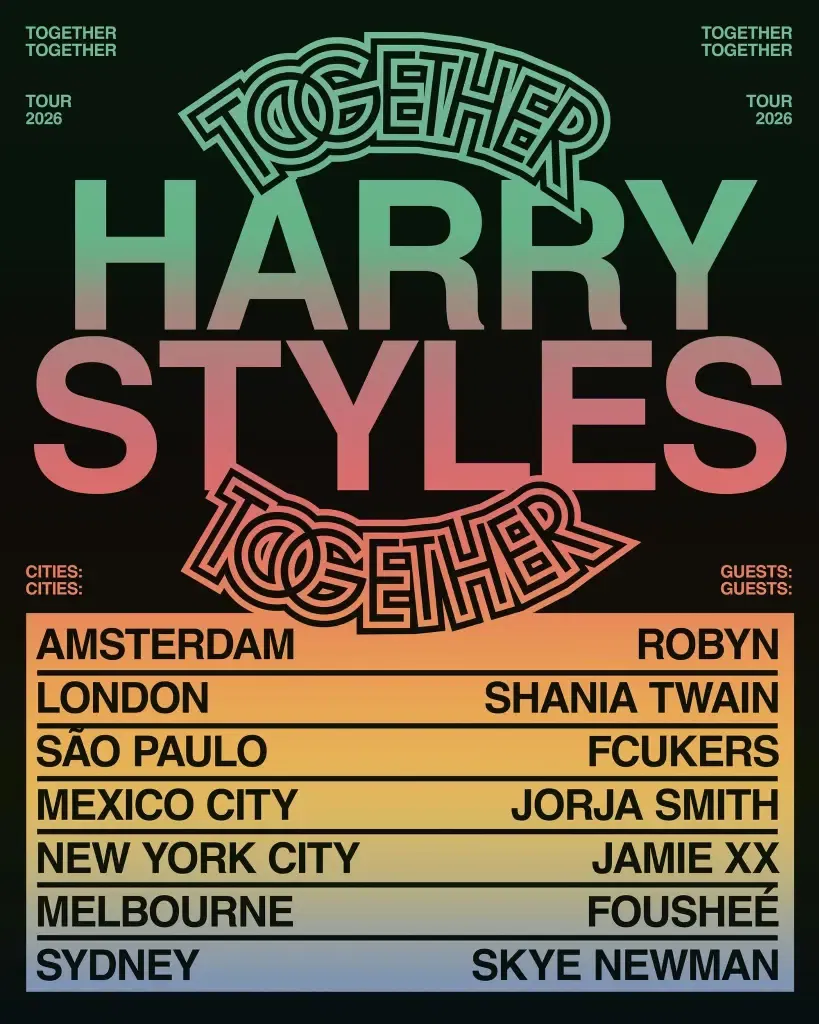
Styles has curated a diverse and high-profile lineup of "special guests" to join him across various legs, including:
- Pop icons: Robyn and Shania Twain
- Electronic pioneers: Jamie xx and Fcukers
- Soul and R&B standouts: Jorja Smith, Fousheé, and Skye Newman
While ‘Love On Tour’ saw Styles championing the indie-rock sensibilities of acts like Wolf Alice, Wet Leg, and Inhaler, the ‘Together, Together’ lineup signals a pivot toward the dance-floor energy of the new record. Styles has curated a list of special guests that reflects the eclectic, "disco-infused" DNA of ‘Kiss All The Time. Disco Occasionally’
Continuing his commitment to philanthropy, Styles has integrated a charitable component into every ticket sale. £1 from every Wembley ticket will be donated to LIVE Trust, an organisation dedicated to protecting grassroots music venues in the UK. Furthermore, the entire tour has partnered with Choose Love, the humanitarian aid organisation Styles has championed for the last decade.
Alongside the tour announcement, the first single of the new era has arrived, signalling a seismic shift in direction. 'Aperture' marks a bold departure from the warm, mid-century textures of 'Harry's House', arriving instead as a sprawling, five-minute alternative-pop odyssey.
What starts as a skeletal, LCD Soundsystem-lite throb, reminiscent of the jittery rhythmic tension found in James Murphy’s finest work, soon accumulates dense, flickering layers. There isn't a softly stroked acoustic guitar in sight. Instead, electronic textures bleed in from the track's edges, evoking the experimental glitch-pop of 'Notes on a Conditional Form'-era The 1975. In particular, the track shares a sonic DNA with 'Bagsy Not in Net'
The influence of Styles’ recent listening habits is evident throughout the production. You can hear:
- Charli XCX: In the aggressive, metallic sheen of the synths.
- Radiohead: In the claustrophobic, anxious percussion of the opening verses.
- Tame Impala: Specifically, the sun-drenched, psychedelic yearning of 'End of Summer', which seems to inform the track's hazy, nostalgic glow.
However, any fears of Styles drifting too far into the avant-garde are extinguished as the song blossoms. A sunlit pre-chorus gives way to what is arguably one of the biggest, most undeniable choruses of his career, a towering, communal chant of "We belong together." It is a quintessential Styles call for unity, designed to be shouted back by eighty thousand people in a stadium.
Talking about the forthcoming album on Radio 2, Styles noted that he used his downtime to go out clubbing more, to be in a crowd rather than just playing to one. At times, 'Aperture' carries a Berlin aesthetic; the lyrics paint a picture of peak-time euphoria where people are elevating, others are "going on clean," and the strobe lights turn every stranger into a best friend.
But there is a grounded, endearing vulnerability beneath the pulsating beat. By the song’s excellent bridge, as house-inflected piano chords begin to swell, Styles suddenly sounds strikingly small. "I wanna know what safe is," he sings, his voice cracking slightly over the electronic production, "I don’t know these spaces." It’s a reminder that even in the middle of a career-defining banger, Harry Styles is still searching for a place to land.
With this announcement, it is becoming increasingly clear that Harry Styles has ascended to a level of stardom shared by only a handful of icons in music history; he is, quite simply, the biggest artist in the world right now. His ability to command 30 nights at Madison Square Garden while simultaneously dominating the global charts speaks to a cultural gravity that few can replicate.
Yet, for a fanbase that has waited years for this return, these 50 shows feel less like a finite schedule and more like the opening movement of a massive new chapter.
His album was released in March 2026, a more dance-inspired effort than his previous three releases. The record follows significant shifts in Harry’s public persona.
Around the era of 'Harry's House', it felt as if a day barely went by without a post, article, or interview. In the years since, you are far more likely to see a fan-captured snippet of Harry out for a stroll or a headline about his latest marathon time.
Styles describes this record as "the audio representation of a long diary entry," but if so, it’s a diary written in code. The lyrics are cryptic enough to mean whatever the listener wants them to mean, a litany of sweet nothings.
We get voguish catchphrases like "DJs don’t dance no more" and "Respect your mother!" alongside lines that feel intentionally elusive: "The message is wet / It sounds inviting, but you don’t believe it."
It’s a mixed bag, but the highs are undeniable. The lead single, 'Aperture', is a clearly LCD Soundsystem-inspired dancefloor banger, built on a relentless, driving beat and cowbell-heavy percussion that demands a strobe light. It sets a high bar for the rest of the record, proving that Harry can pivot to "indie-sleaze" revivalism without losing his pop sensibilities. Meanwhile, 'Pop' is genuinely in consideration for one of the best things he’s ever released. It’s an exercise in shimmering maximalism, pulsating with energy and featuring a hook that stays buried in your head for days.
'Carla's Song' serves as a melodic anchor for the record, featuring a brilliant, cheeky nod to Simon & Garfunkel’s 'Bridge Over Troubled Water'. The lyrics, "There is a bridge that leads to troubled waters / If you know, then you know / If you don't, then you don't / That's heavenly", flip a classic folk sentiment into something modern, aloof, and distinctly Styles. It’s easily one of the most effective moments on the album, standing tall alongside the dreamy 'Taste Back', which features ethereal backing vocals from Wolf Alice’s Ellie Rowsell.
While the album reaches some incredible heights, there are a few moments where the momentum of the "dance-inspired effort" begins to stall:
'Paint By Numbers': This track feels like a leftover from a different era entirely. It is awkwardly tacked on to the record, lacking the shimmering production that defines the rest of the project. Its placement is particularly jarring; sandwiched between two absolute bangers, it serves as a speed bump that disrupts the album's flow.
Ready, Steady, Go!'This song is a victim of its own ambition. It tries to be too many different things at once, blending funk basslines with distorted synth pads, and ends up losing its identity in the process. By the time it reaches the chorus, the production becomes a jarring mess. The vocals are strangely muted in the mix, and a spoken-word segment in the bridge feels forced rather than edgy.
'Dance No More': This has already become a standout for many fans, but for me, it feels a bit derivative. While it captures the album's rhythmic energy, it doesn't reach the soaring heights or the emotional resonance of 'Aperture', 'Pop', or 'Carla's Song'. It stays in one gear for a little too long, and compared to the lyrical wit found elsewhere on 'Kiss All the Time. Disco Occasionally', the "DJs don’t dance no more" refrain feels slightly thin.
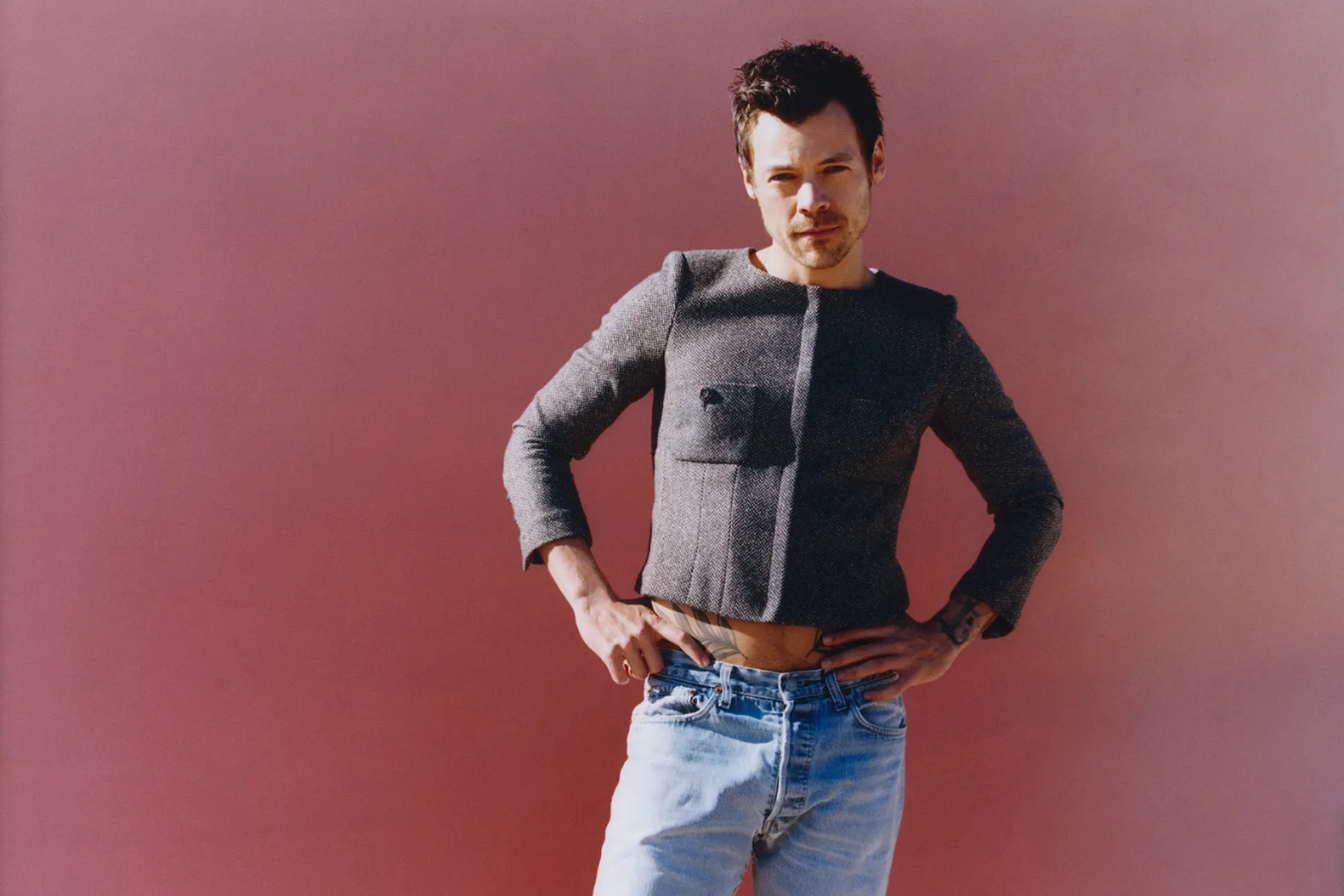
When this record is good, it’s really good. I can see why 'Aperture' debuted at Number One, and 'Pop' will likely be a setlist staple for years. Personally, though, I’m not as gripped as I was by his previous work. Lyrically, this feels like his weakest effort.
Trying to extract meaning from these songs can be an exercise in futility. In 'Pop', are the lines about being a "squeaky clean fantasy" a reflection on his One Direction years? You’re left baffled by the next verse: "Katie’s waiting to be your game-day saviour / First time tasting it / It’s nice to mix two flavours together / Mmmm."
Ultimately, Styles seems fully aware of the public’s obsession with unpicking his private life and has responded by giving us nothing to hold onto. Not that he’ll care; with 11.5 million ticket applications for his New York residency and 12 nights booked at Wembley, Harry’s "diary" is already a global bestseller.
To celebrate the release of 'Kiss All the Time. Disco Occasionally', Harry Styles took to the stage at Manchester’s Co-Op Live, the UK’s largest indoor arena, for a high-stakes 'One Night Only' warm-up. The mission was clear from the outset. Addressing a sea of expectant faces, Styles issued a singular mandate: “You have one simple job, and that is to have as much fun as you possibly can.”
The evening carried a distinct, old-school intimacy despite the arena setting. Because the performance was being filmed for a Netflix special, fans were strictly prohibited from using their own devices. Phones were secured in opaque, recyclable bags, effectively silencing the digital noise. In a charmingly nostalgic move, ticketholders were handed free disposable cameras upon entry. This allowed the crowd to document "special moments" without the distraction of a screen, resulting in a room lit by the sporadic, warm pops of chemical flashes rather than the cold glow of LEDs.
The setlist was a journey of two halves: the new record played in its entirety, followed by a victory lap of his greatest hits.
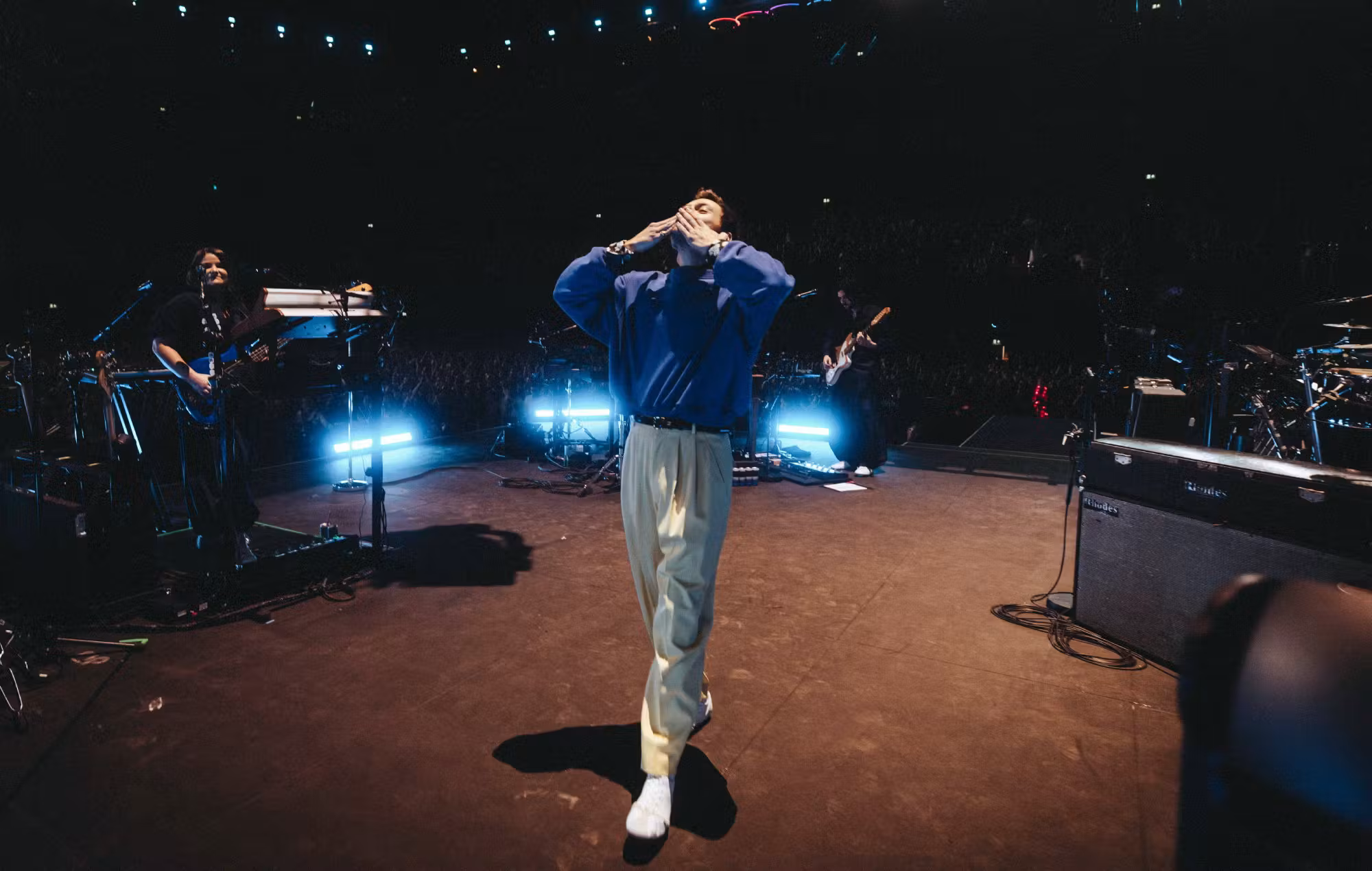
The show at the Co-Op Live set Harry on his way for the biggest summer of his life. After a ten-night run in Amsterdam at the Johan Cruijff ArenA, he set his sights on Wembley, playing a record-breaking twelve shows, surpassing the venue's previous single-year record set by Coldplay (10 nights) and Taylor Swift (8 nights).
Quite simply, Harry Styles is the biggest pop star on the planet at the moment. As crazy as this may seem, playing Wembley is normal to him. Having first performed there with his former band One Direction back in 2014, he returned for a solo residency in 2023 as part of his Love On Tour, and with this record-breaking run, Harry will perform to almost a million people.
This area of London is a special one for Harry; his mum and sister signed him up for X Factor auditions and drove him to Wembley Arena 16 years ago, and started this whole journey off. It's a real full-circle moment.
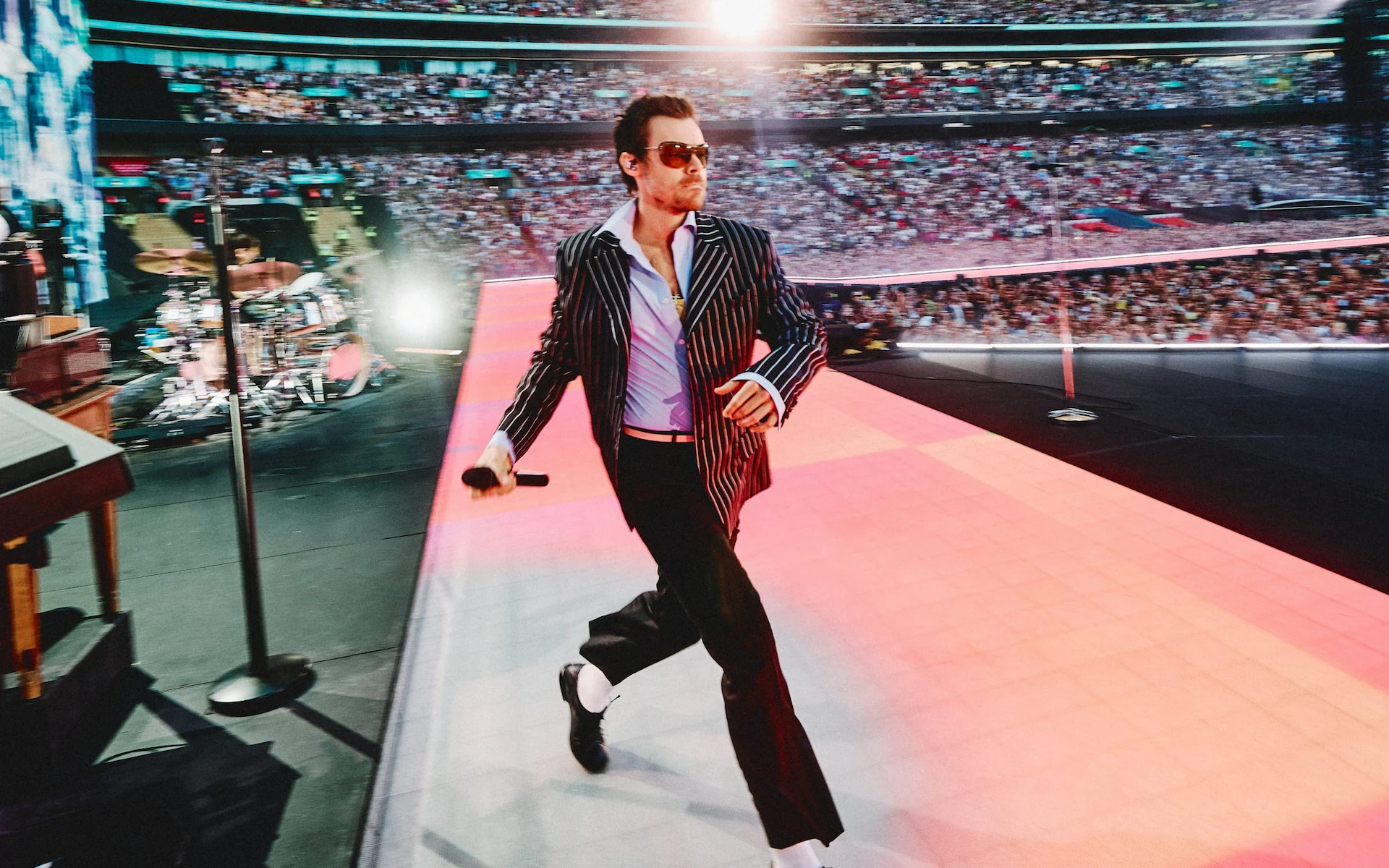
From the moment the show starts, Harry has the crowd in the palm of his hand; all 90,000 are having the time of their lives. Starting with the fittingly titled ‘Are You Listening Yet?’, a sea of pink feather boas, sequins, cowboy hats and handmade signs bounces together. Addressing the stadium for the first time, Styles explains: “Our job is to entertain you – your job is to have as much fun as you possibly can,” and the audience duly obliges.
The strength in the show is the discography; he can afford to play five huge hits within the first half an hour, including a guitar-led 'Golden' and a massive sing-along 'Adore You'. Rare for an artist from boy band beginnings, there is real diversity to Styles’ setlist: seconds after interpolating Underworld’s hedonistic classic ‘Born Slippy’ into ‘Taste Back’, elsewhere, a conga-igniting ‘Treat People With Kindness’ paired with elements of Talking Heads’ ‘This Must Be the Place’ and Paul Simon’s ‘You Can Call Me Al’ makes Styles’ influences clear.
One Direction classics 'Night Changes' and 'History' are given a new lease of life with string arrangements.
Throughout the night, Styles proves that he can do it all: perfect pop songs (‘American Girls’, ‘Pop’), euphoric rave bangers (a strobe-heavy ‘Aperture’ as the sky darkens) and even a rock epic (‘Sign of the Times’ is paired with a spectacular firework display). There’s still one last smash to unleash, however. ‘As It Was’ sends everyone home full of joy, as Styles completes one final, well-earned victory lap of the stadium, capping off a faultless return to Wembley.
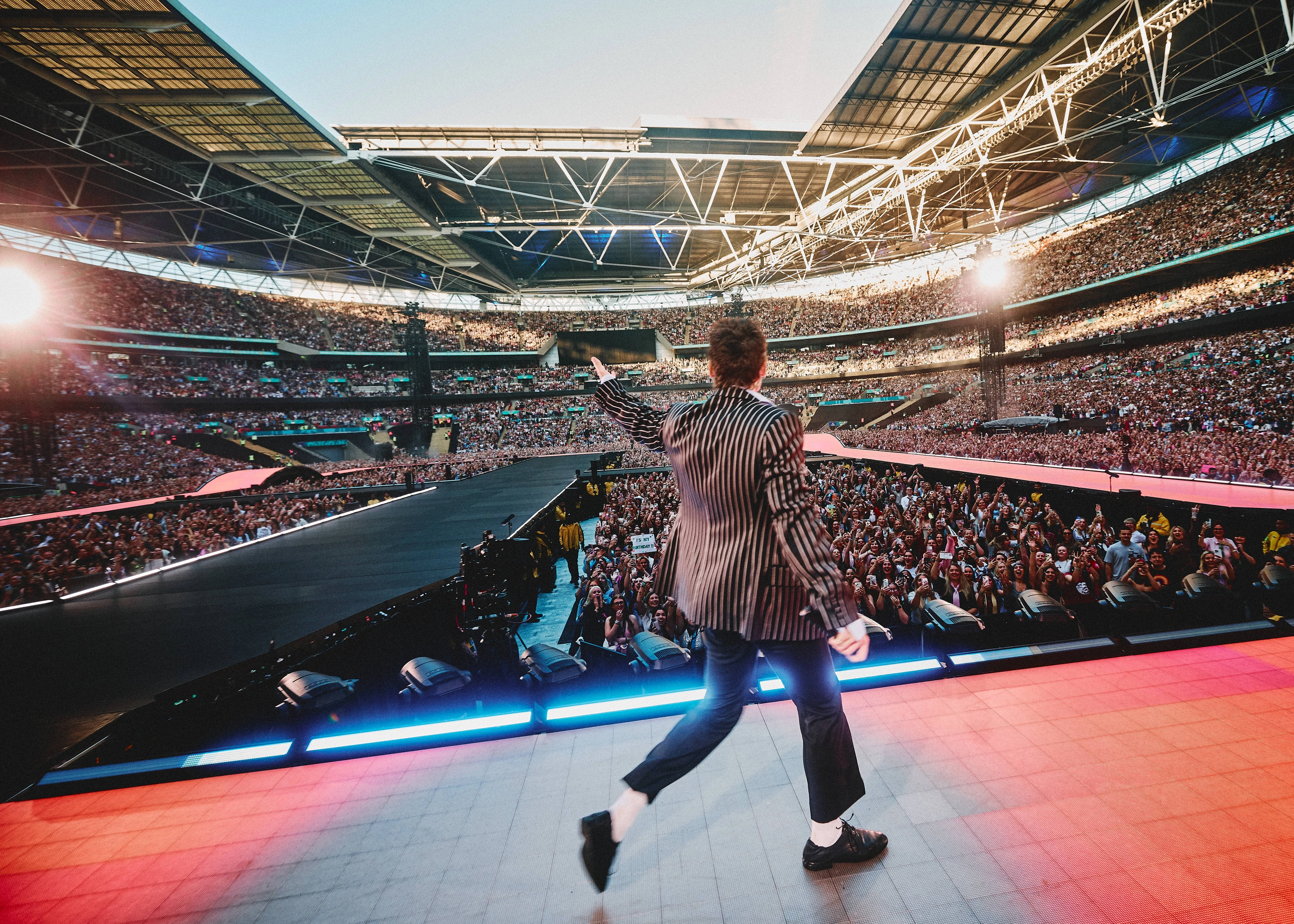
Harry is having fun with the shows too, taking time to read fans' signs that vary from a lady telling Harry she's getting divorced, which leads to the tongue-in-cheek reply "if he's not making you happy, chuck him in the bin," through to Ella asking him what his favourite type of egg is (fried btw). My favourite though is what's your favourite part of a roast dinner, "Yorkshire puddings drowned in gravy."
Alongside answering these hard-hitting pieces of journalism, every night during his lap of honour during 'As It Was', which sees Styles complete laps of his stage. He times himself every night, trying to set a personal best. It's unsurprising he's making such light work of marathons.
Harry Styles is in a league of his own; you can't compare those who have completed his journey before. The journey from boy band to solo artist is a difficult one, and there's been success for George Michael and Robbie Williams, but what Harry has done, is doing and will continue to do, has already eclipsed the pair of them, with the latest record, which he's done on his own terms. Whatever he does next, we will all be watching and listening.
Now let's take a step back. Sam Fender hit the top of the charts with his collaboration with Olivia Dean, 'Rein Me In', beating a record in the process. Since its release in June 2025, the single has spent 35 consecutive weeks in the Top 40, reaching Number One today (February 20). This eclipses the previous record of 19 weeks set by Ed Sheeran’s ‘Thinking Out Loud’ back in 2014.
The achievement marks a career-high for Fender, surpassing the Number Three peak of his 2021 anthem ‘Seventeen Going Under’.
Reflecting on the track's marathon journey to the summit, Fender told BBC Radio 1: "I guess it's the internet; it travelled online, and people came to it later. It’s wonderful, really, because it’s the music doing the talking."
The track is a reimagined duet of a standout from Fender’s Mercury Prize-winning third album, ‘People Watching’. By adding a new verse written from a female perspective, the song transformed into a poignant lyrical dialogue. Fender noted the new version was "all the better" for the Grammy winner’s input, stating, "Olivia made the song her own, and it took on a life of its own after we did it together."
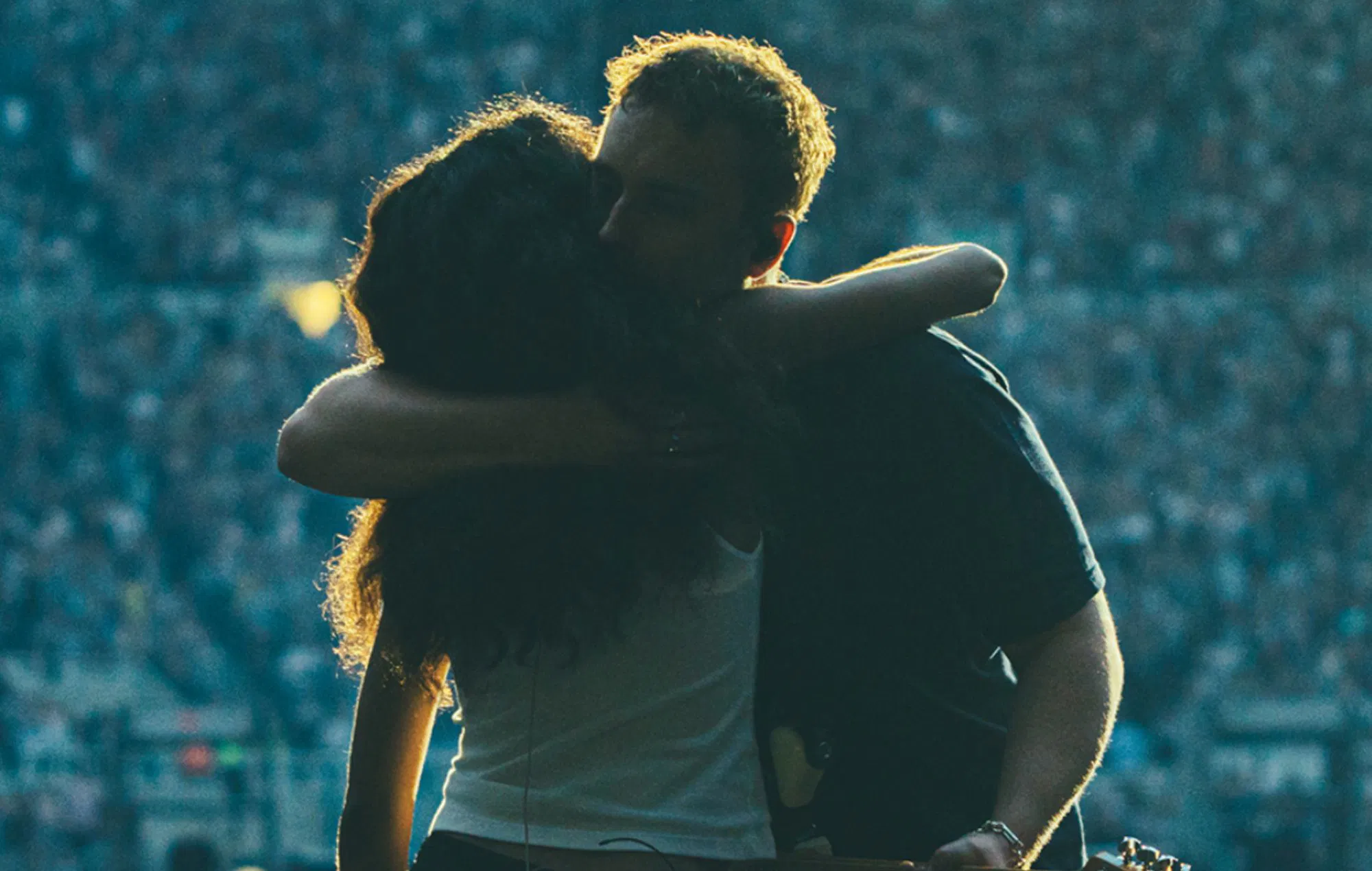
The success of ‘Rein Me In’ feels like a significant "moment" for the UK music scene. For years, the Singles Chart has been largely dominated by formulaic, high-gloss pop and viral samples engineered by committee. While we’ve seen brilliant, uncompromising artists like Dave break through to the top, the "guitar act" has often felt like an endangered species at Number One.
In fact, it is a rare feat for a track rooted in indie-rock sensibilities to reach the summit. While solo artists with guitars have seen success, Ed Sheeran and Lewis Capaldi, the band-driven sound, built on raw emotion and live instrumentation, has struggled to compete with the streaming-optimised pop machine. The last significant guitar act from Britain I can remember topping the charts is the Arctic Monkeys with 'I Bet You Look Good on the Dancefloor' (2005) and 'When the Sun Goes Down' (2006).
The 2026 Brit Awards marked a historic shift as the ceremony moved outside of London for the first time in its 46-year history, with Manchester’s Co-op Live playing host. The night was a balancing act between honouring the "first era of pop" and crowning a new generation of icons.
Olivia Dean emerged as the evening's undisputed queen, sweeping four categories, including Artist of the Year and Album of the Year for 'The Art of Loving'. Meanwhile, Sam Fender solidified his status as a generational voice, winning for Alternative/Rock and sharing Song of the Year with Dean for their chart-topping collaboration 'Rein Me In'.
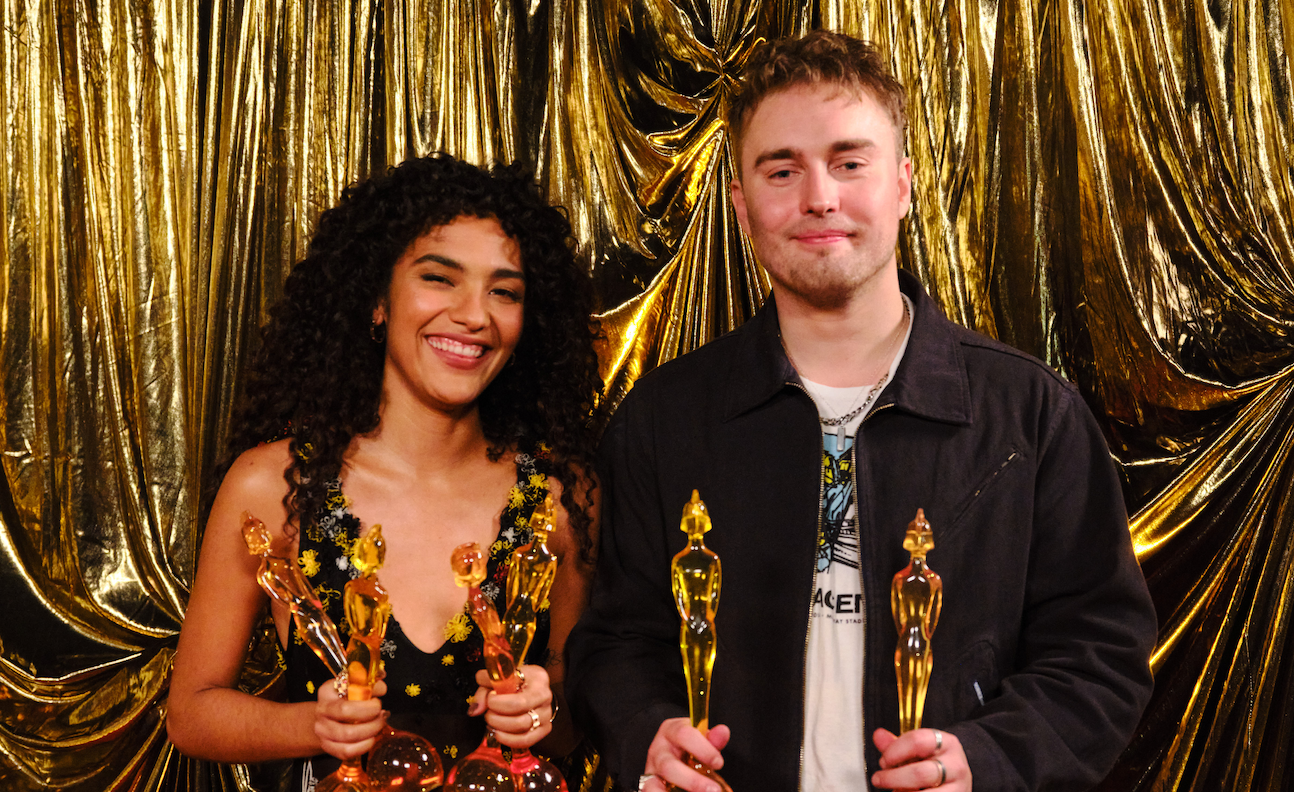
Olivia Dean’s historic chart double firmly established her as one of the UK's most powerful neo-soul voices. Her meteoric rise spans two acclaimed studio albums, a string of viral hits, and record-breaking chart success.
Her journey to the top began with a loyal grassroots following built through early, self-assured projects like 'OK Love You Bye' (2019) and 'What Am I Gonna Do on Sundays?' (2020). She officially broke into the mainstream with her Mercury Prize-nominated debut album, 'Messy' (2023), which debuted at number four on the UK Albums Chart. The record blended breezy pop sensibilities with vulnerable neo-soul, exploring the beautiful chaos of young adulthood through beloved live staples like 'Dive' and 'The Hardest Part'. It also featured 'Carmen', a deeply personal, acoustic-leaning tribute to her grandmother and the Windrush generation, capturing her family’s move from Guyana to the UK.
Her sophomore record, 'The Art of Loving' (2025), catapulted her to superstar status by debuting straight at number one on the UK Albums Chart. Produced alongside Zach Nahome, the album serves as a rich, timeless exploration of romantic, platonic, and self-love. The record yielded the massive breakout single 'Man I Need', which soared to number one on the UK Official Singles Chart and crossed over globally to peak at number two on the Billboard Hot 100. Backed by other hits like 'Nice to Each Other' and 'So Easy (To Fall in Love)', Dean made history as the first British female solo artist to have four singles simultaneously in the UK top ten.
Beyond her solo success, Dean's versatility shines through her high-profile collaborations and commanding stage presence. Her massive duet with Sam Fender, 'Rein Me In', achieved incredible longevity on the charts, hitting number one in early 2026 after a historic 35-week climb. Renowned for her natural, captivating live energy, she has also captured her onstage magic on celebrated live releases, including 'Live At Eventim Apollo' and a special Record Store Day vinyl release, 'Live At The BBC'.
She's one of the most talented British musicians in years.
Nostalgia and tributes played a heavy role throughout the evening. Noel Gallagher was named Songwriter of the Year, a nod to his storied career and the massive success of Oasis'Live 25 reunion tour.
His award was presented to him by Primal Scream's Bobby Gillepse and was preceded by a video link from Pep Guardiola.
As he took to the stage, Noel said, "Yes, Manchester. I’m gonna start by saying I’ve gotta thank my brother and Bonehead, Guigsy, Tony McCarroll, Alan White, Gem and Andy – they brought those songs to life. Without them, I’d just be a singer-songwriter, and no one gives a shit about singer-songwriters.”
“But more importantly, I’d like to thank you, the people, who have kept those songs alive for the last 35 years. Without you, you’ve given us the most extraordinary life, and thank you very much for that.”
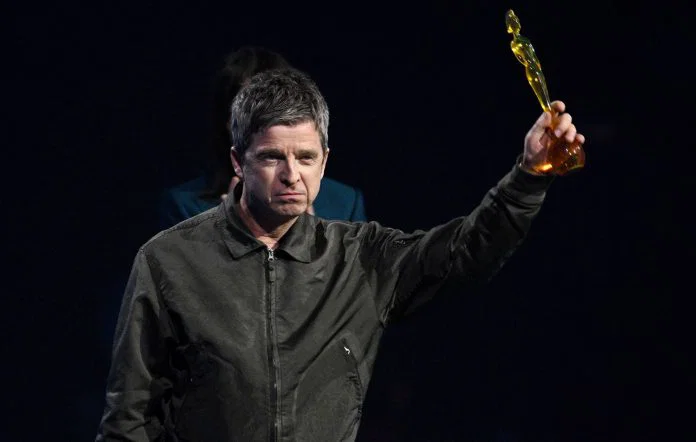
In a touching homecoming moment, the late Mani of The Stone Roses received a dedicated tribute introduced by Tim Burgess, while the night concluded with a posthumous Lifetime Achievement Award for Ozzy Osbourne. The "Prince of Darkness" was celebrated with a high-octane performance of 'No More Tears' by a supergroup featuring Zakk Wylde and Robbie Williams.
One of the night’s most unexpected moments came from the Brooklyn band Geese, who pulled off a major upset by winning the International Group award. Their drummer, Max Bassin, delivered the most controversial and concise punk speech of the evening, shouting: “What up the Brits! I just want to say, free Palestine, fuck ICE, RIP Mani, let’s go, Geese.” The speech was censored by ITV, causing viewers at home to miss both his political statement and his tribute to Manchester legend Mani.
Beyond the trophies, the 2026 ceremony was defined by a palpable sense of political urgency. Artists like CMAT and Wolf Alice (who won Group of the Year) used their platform to highlight the "existential threat" facing grassroots music venues and the rise of the far-right.
Rowsell said: “We’d like to also thank all of the pubs and clubs and grassroots venues across the country where we quite literally learned to play our instruments and write our songs. Thank you for opening your doors to us, and thank you to those who continue the fight to keep them open.”
“It’s worth mentioning that despite the billions of pounds the live sector contributes to our economy, last year 30 independent venues closed down, 6,000 jobs were lost, and over half the small venues reported making no profit at all.”
She continued: “It shouldn’t be a battle to survive for bands and artists; we shouldn’t be reliant on favours or anyone's funding schemes in order to do things at a level we feel proud of. It shouldn’t feel like a golden ticket but a viable career decision for anyone from any background.”
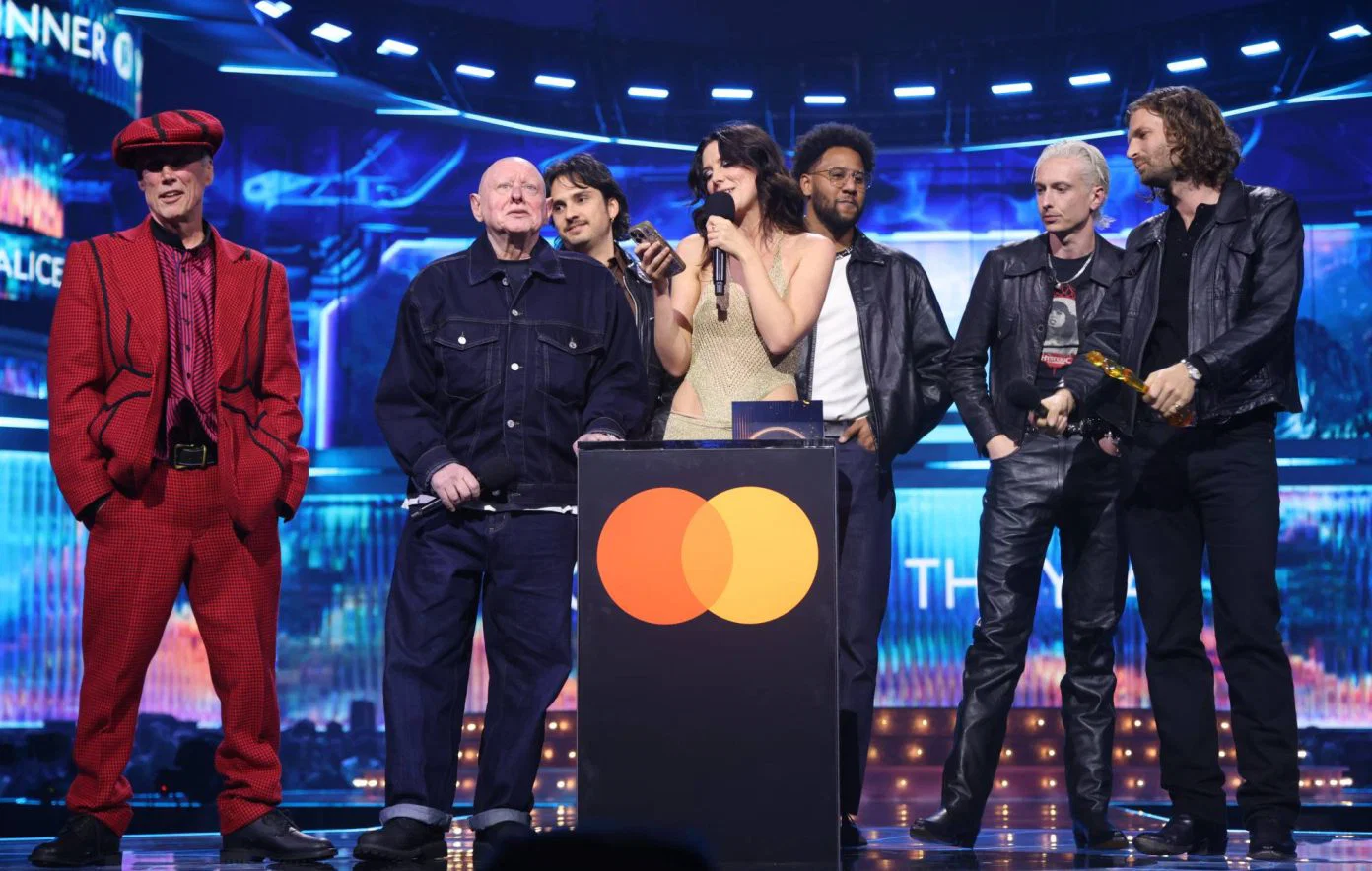
“Because you only have to look around us today and see how proud we are of Britain’s musical contribution and how important it is to nurture and protect the UK’s amazing music scene,” she concluded.
Meanwhile, CMAT rejected the notion that creative spaces should remain neutral. “I’m not a fan of anyone arguing that art isn’t a political place,” she stated. “Everything is politics. You don't get to make art in a fascist state, and fascism is showing its ugly head in Ireland, the UK, and America.”
From Dave’s victory in the hip-hop category for his vulnerable third album 'The Boy Who Played the Harp' to Harry Styles’ Bowie-esque performance of 'Aperture', the night signalled a shift toward a more vocal, stylistically adventurous era of British music that isn't afraid to fight for its future.
You can read more about the Brits 2026 here.
Wolf Alice announced the biggest show of their career, a massive homecoming show at London’s Finsbury Park.
The band will return to the capital on Sunday, July 5th, in support of their Mercury-shortlisted and BRIT-nominated latest album, last year’s 'The Clearing'. The performance serves as a victory lap for an era that has seen them cemented as one of the most vital acts in British guitar music.
Support for the show comes from The Last Dinner Party, Lykke Li, Rachel Chinouriri, Keo and Florence Road.
Wolf Alice follow in the footsteps of Arctic Monkeys, New Order, Oasis, Pulp, Liam Gallagher, Sam Fender, Fontaines D.C. and more in topping the bill at Finsbury Park in their home of north London.
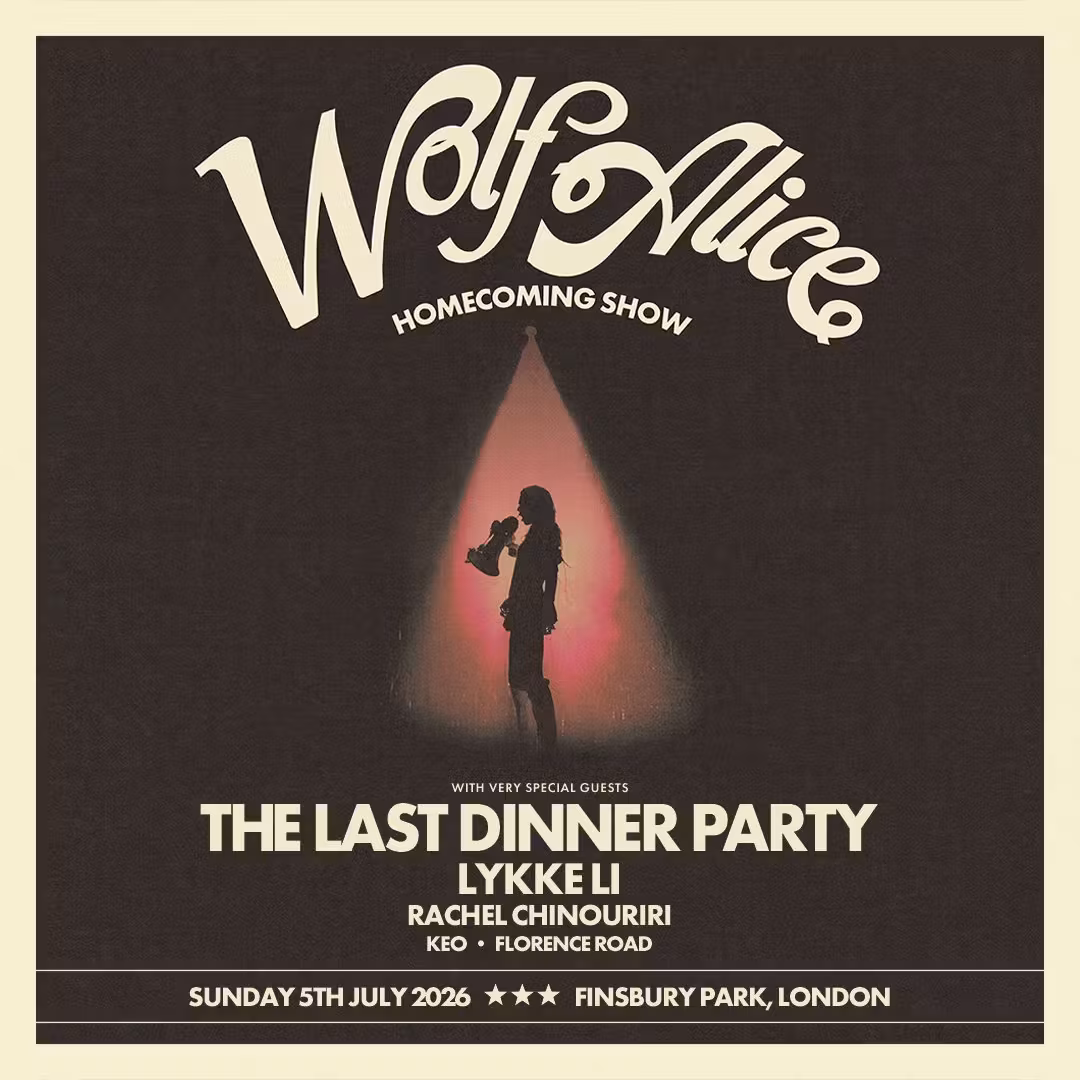
The big gig follows Wolf Alice’s 2025 UK and Ireland arena tour, which wrapped up last month after a successful run of dates across Europe and North America.
Beyond the band’s collective triumphs, frontwoman Ellie Rowsell has become a pivotal figure in the year's biggest humanitarian and pop projects. She is a core contributor to the star-studded 'Help(2)' charity album for War Child. Most notably, Rowsell’s ethereal vocals are a centrepiece of Harry Styles’ massive comeback single, 'Aperture'. The track, a sprawling, five-minute "alternative-pop odyssey", signals a bold departure for Styles, leaning into a "neon-lit intersection of dancefloor euphoria and late-night introspection."
February 2026 marked ten years since the world lost Viola Beach.
The history of rock ’n’ roll is littered with untimely deaths, but few have seemed so monstrously unfair as those of Viola Beach and their manager, Craig Tarry. The young band’s nascent career was cruelly cut short when their car crashed into a canal on the journey back from a Swedish music festival in the early hours of Saturday, February 13th 2016.
The band never lived to see the full magnitude of their impact, but the world made sure their voices were heard. Following a massive fan campaign supported by icons like Liam Gallagher, Kasabian, Paloma Faith and The Stone Roses, the single 'Swings & Waterslides' soared to the top of the iTunes chart. The song eventually reached Number 11 on the official charts, with all proceeds going to the band and their manager's families.
Determined to keep their memory alive on the road, Blossoms vowed to play a recorded version of Viola Beach’s live set at every venue where the boys were originally due to support them.
When their self-titled debut album, ‘Viola Beach’, was posthumously released in July 2016, it reached Number 1. As the NME noted at the time, the album became a vital document of who the band were. While the old maxim says you have a lifetime to write a debut, these four young men were denied that time. The album, a "posthumous patchwork" of recordings, is tempered by the knowledge that they were only just getting started.
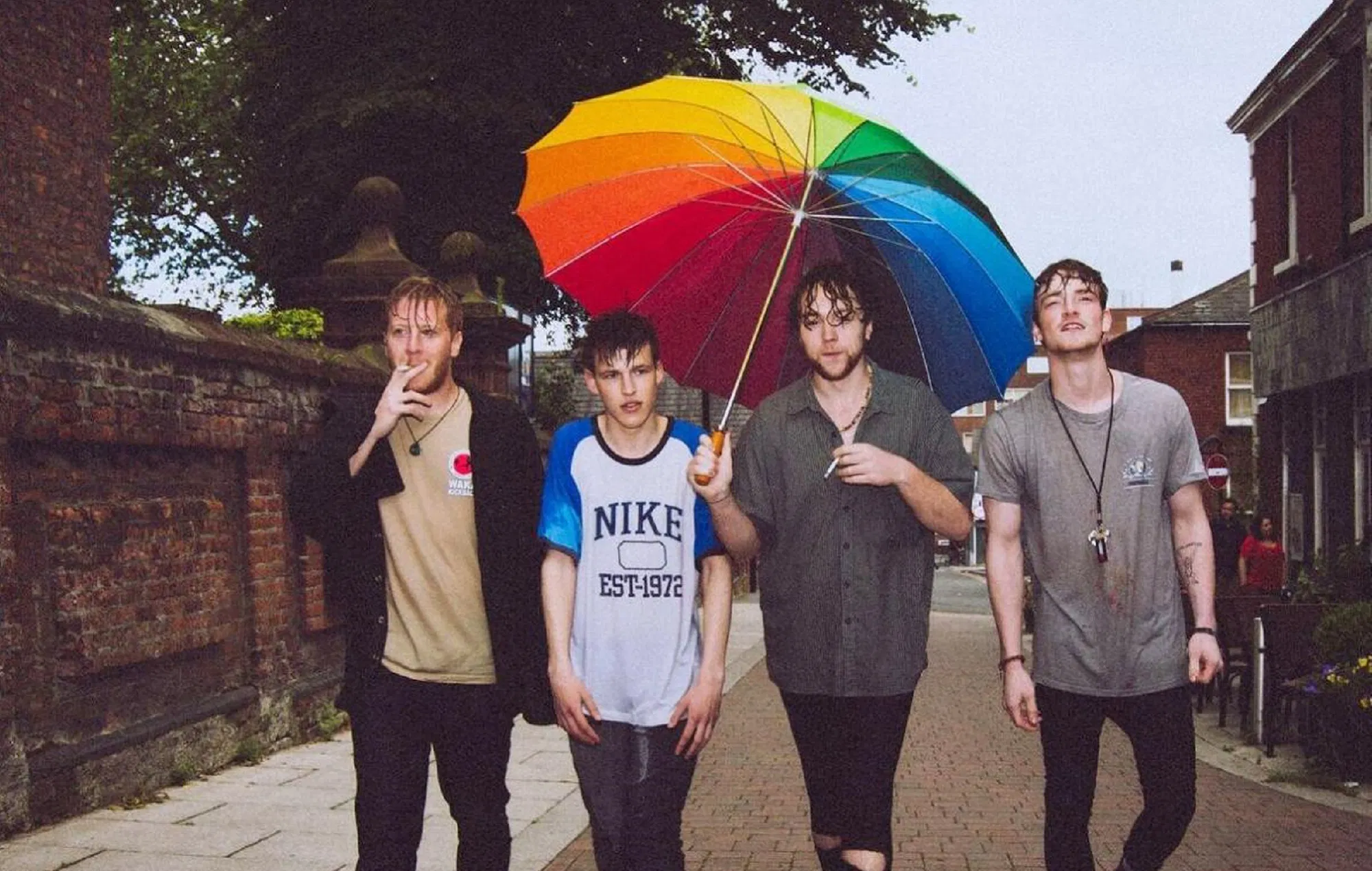
It is a collection that balances high-energy indie anthems with tracks like 'Call You Up', a winsome, late-night lament that hints at hidden depths and a burgeoning songwriting maturity, all tragically cut short.
Viola Beach’s name may be synonymous with a tragedy that happened ten years ago today, but through their music, they remain frozen in a state of eternal, youthful exuberance. They are, and will always be, the boys that sing.
Since the release of 'Getting Killed' in late 2025, Geese have been the band to watch. Proclaimed by many as the voice of their generation, with 'Getting Killed' widely cited as the 2025 album of the year, the pressure was on. On their UK tour in early 2026, the band didn't just repay that faith; they doubled down on it. With sold-out shows in London, Manchester, and Edinburgh, they have become an impossible-to-ignore force of nature.
At the Hammersmith Apollo on March 25th, frontman Cameron Winter looked out at the crowd and uttered five simple words: "I see myself in you." Perhaps that is why Geese feel so vital; standing before a room full of 20-somethings, they clearly understand exactly who their audience is. Alongside Fontaines D.C., they are simply the most important band in the world right now: the kind of act you tell the grandkids about. For those in attendance, these shows were "I was there" moments, the kind that linger forever.
Geese are no overnight sensation. They built initial buzz with their 2021 debut, 'Projector', before the "jazzy cowboy psychedelia" of '3D Country' signalled a massive potential waiting to be unleashed. Few could have predicted how that would blossom: first through Winter’s 2024 Lou Reed-inspired sleeper hit, 'Heavy Metal', and then the critical eclipse of last year’s 'Getting Killed'. It created the perfect storm; it transformed Geese into the great new hope for guitar music.
Arriving on a stage bare of everything except a large Palestinian flag, the Brooklyn heroes were greeted by an almighty roar for a simple "hello": from that moment on, London belonged to them. From the simmering opener 'Husbands' to the runaway-train energy of 'Getting Killed' and the swaggering rock ’n’ roll of 'Crusades', Geese delivered like a classic indie jukebox.
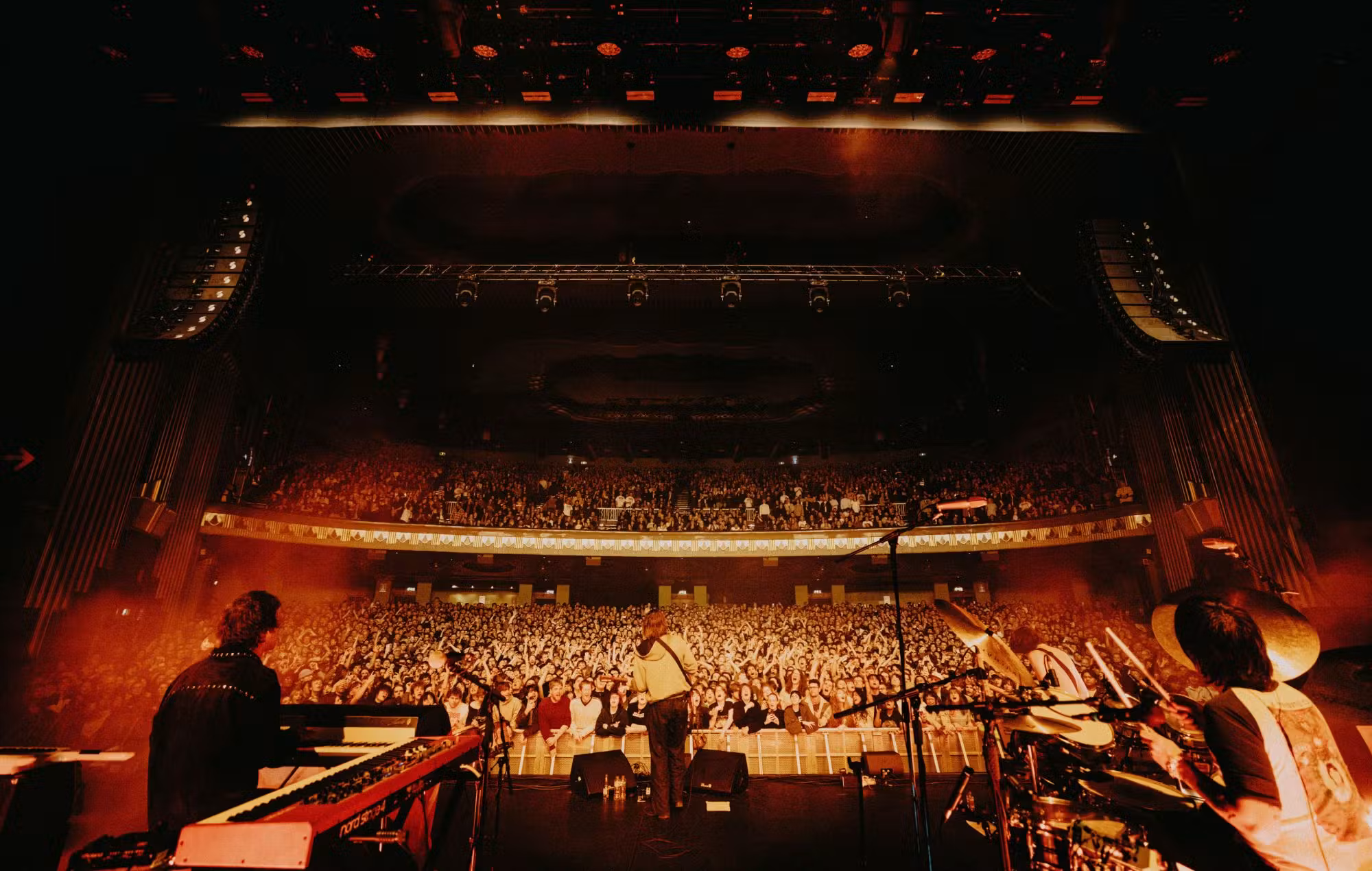
As the room swelled to the dreamy 'Half Real' and erupted into circle pits for the paranoid '2122', the crowd howled back every jagged riff and surreal lyric of 'Cobra', 'Taxes', and '100 Horses'. When the audience echoed the zeitgeist-heavy line, "there is only dance music in times of war" during 'Au Pays du Cocaine', it was clear these were no casual fans: Winter poured everything into every syllable, backed by a band of unquestionable chops and sheer musicality.
Throughout the tour, the band has been interpolating snippets of local legends into '2122': Primal Scream in Glasgow, The Stone Roses in Manchester, and even Chumbawamba in Leeds. Tonight, they threw an obscure curveball: 'Come Down Easy' by Spacemen 3. A predictable Blur or Clash chorus was never on the cards; this was about a band cementing their own unique place in the canon.
"I’m going to the moon," Winter repeated on the new track and set-closer 'Apollo'. Written "especially for the UK," Winter described it as the "train of thought of a small woodland animal looking at the stars." It was a charming introduction to a pumping krautrock rabble-rouser that eventually overheated into a wild art-rock meltdown: "I’m going to the moon, and you’re buying the ticket, motherfucker."
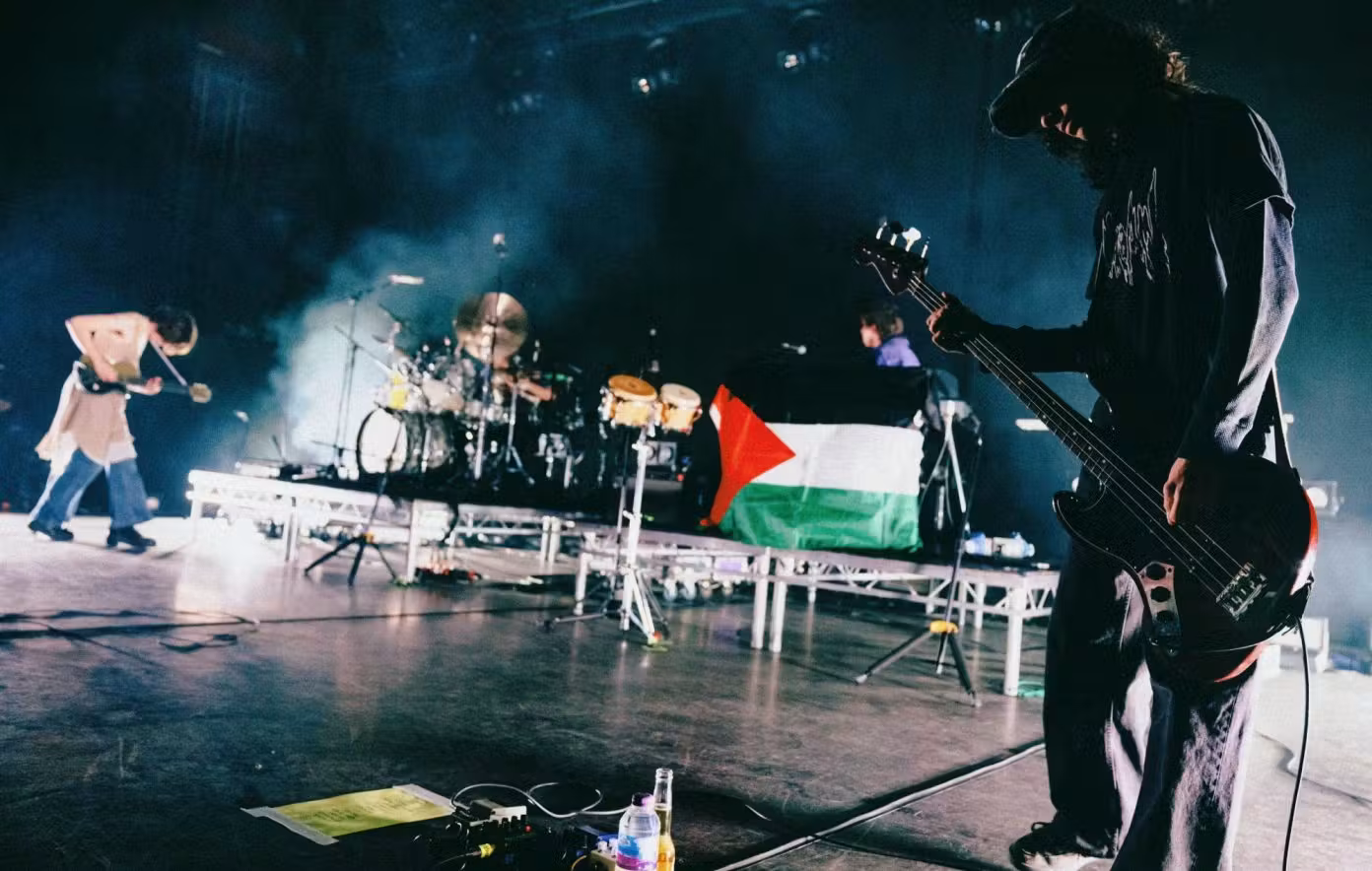
Returning for an encore of "something with a little more depth," they launched into the screeching noise-rock absurdity of 'Trinidad'. As the crowd screamed back "THERE’S A BOMB IN MY CAR," Geese fulfilled the hype in spades. While Winter’s solo work revealed him as a spiritual successor to Tom Waits or Nick Cave, these shows felt like the hallowed moments when Nirvana or The Strokes truly came into their own: ultimately, it is between Geese and Fontaines D.C. to define this decade. Catch them now, if only for the pure joy of saying "I was there."
Arenas lie in wait for Geese. If they continue this showmanship and songwriting, if you blink, you'll miss them as an arena band. Where Geese go next will be defined by them and them only.
As Geese were making a name for themselves, DMA's headed back to the UK in a celebratory mood. The Australian trio brought the 2016 record completely to life for British audiences, performing the album in its entirety alongside a selection of career-spanning fan favourites and tracks never before played live. Reflecting on the milestone, the band shared that the UK has always felt like a second home, noting that 'Hills End' was where their overseas story truly began. Coming back to celebrate it felt like a fitting thank-you to the fans who have supported them from day one.
The sheer demand for tickets turned the tour into a massive celebratory victory lap across the country. The itinerary kicked off with explosive, sold-out nights at Manchester’s O2 Victoria Warehouse, where the industrial space was transformed by packed crowds and deafening singalongs. From there, the band packed out historic venues including London’s O2 Brixton Academy, NX Newcastle, O2 Academy Bristol, and O2 Academy Leeds. To cope with the unprecedented ticket rush, extra shows were added in London, Manchester, and Glasgow, alongside a string of highly anticipated May dates at Nottingham's Rock City and Norwich's Nick Rayns LCR.
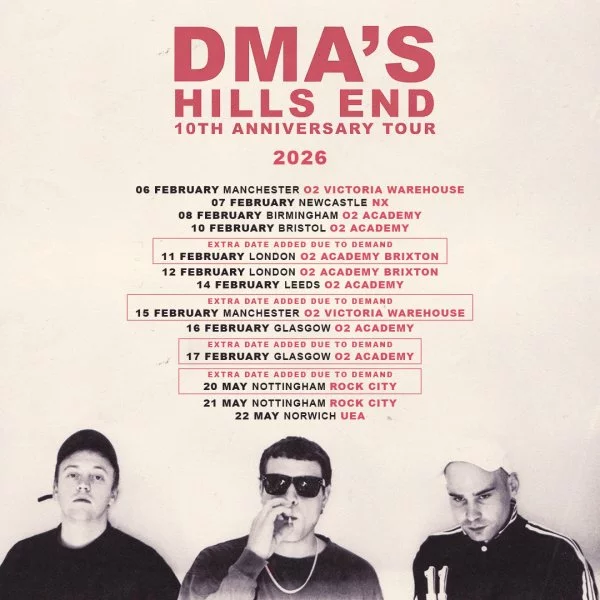
On stage, the dynamic setlist perfectly captured the dual identity that defines the band: energetic, stadium-ready swagger mixed with bruised, melodic romanticism. The live performance followed the exact emotional arc of the record, moving effortlessly from the restless, pulsing intensity of ‘Too Soon’ to the atmospheric, nostalgic tones of 'Melbourne' and 'Blown Away'. Hearing the melancholic beauty of 'Step Up the Morphine' and 'So We Know' live reminded audiences of the band's reflective depth, while an encore packed with newer anthems like 'Silver' kept the energy moving.
A decade later, these shows proved that 'Hills End' has not aged; it has simply gathered deeper meaning for its listeners. The absolute highlights of the night came during the album's twin pillars: the collective, arm-in-arm swaying during a hauntingly beautiful crowd singalong of ‘Delete’, and the chaotic, euphoric release of the arena-sized anthem ‘Lay Down’. By balancing raw, 90s-drenched indie grit with massive, unforgettable hooks, DMA's gave their UK faithful a triumphant run of shows that cemented the album's legacy as one of the finest debuts of the 2010s
The difficult second album is not easy for any artist. One can only imagine it doesn't get any easier when the British Government declare you a terrorist and an enemy of the state. How would Kneecap sail through this? The past 18 months have seen the band play their biggest shows to date, be vilified by the Prime Minister and be accused of committing terrorism offences by catching a flag.
Making an album in those circumstances could have broken the band; they also had a brilliant debut to follow. 2024's 'Fine Art' was full of drunken, drug-filled madness, a concept album based around "the snug of a dimly-lit, shit, run-down pub". Yet that record also saw the band embrace their past, and the past of their home 'Parful' quotes the 90s documentary 'Dancing On Narrow Ground', which tells the story of how dance music helped bridge the divide between Catholics and Protestants in 1990s Belfast. The whole record was brilliant, funny, potent and completely original.
While 'Fine Art' revelled in the chaos and raw energy of party culture, with riotous beats and sardonic lyricism, 'Fenian' marks an evolution. On the new album, the musical palette broadens. There are richer electronic textures, deeper forays into trip-hop and atmospheric production, and an even more fearless approach to blending Irish language and international styles.
Thematically, too, Kneecap move from the local antics and tongue-in-cheek social commentary of their debut to tackling global issues and personal struggles with greater poignancy and complexity. This growth makes 'Fenian' not just a reaction to external pressures, but a showcase of the band pushing their artistry to new heights.
Yet the controversy that arose after Mo Chara was alleged to have displayed a Hezbollah flag on stage at a London gig in November 2024 overshadowed 'Fine Art'. He was later charged with terror offences, which he denied. Kneecap said they have never supported Hezbollah and "condemn all attacks on civilians, always", and the case was ultimately thrown out of court. In the interim, there were cancelled gigs and tours, a ban from entering Canada and Hungary (decisions Kneecap strongly opposed), and calls from both Keir Starmer and Kemi Badenoch for Kneecap's 2025 Glastonbury set to be dropped. Badenoch had already quarrelled with them over their lurid republicanism when she was business secretary, trying to cancel a grant they'd been given – and Kneecap won in that case, too.
In a social media statement, the band said.
"They tried to stop us by branding Kneecap 'terrorists', with cancellations, with statements from the Prime Minister himself.
We had all the motivation we needed…this isn't a swift reaction, but a considered response to those who tried to silence us. And failed.
Inspired by, and proudly named 'Fenian', who were warriors in Irish folklore, and later a derogatory term for the Irish.
Now we're using it to name everyone speaking truth to power. After 800 years of colonisation, they thought the Irish language would die; it didn't.
Thanks to Muintir na Gaeltachta and all the Gaels who refused to let their culture and language be destroyed. And KNEECAP is much the same…we haven't gone away. The Paddies are back."
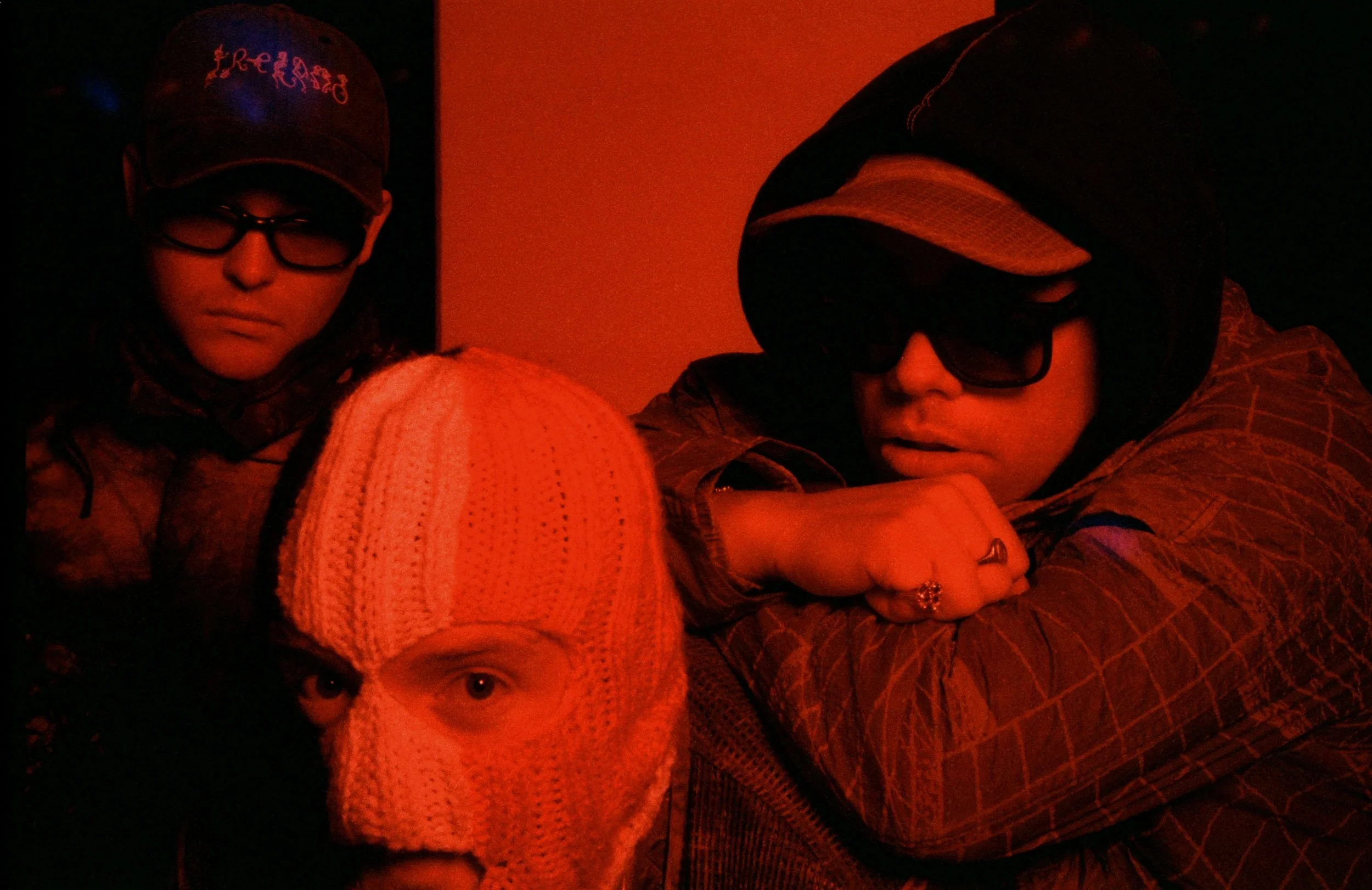
When their backs are against the wall, Kneecap often prevail, and prevail they have on 'Fenian'.
On lead single, the industrial banger 'Liars Tale', they tear down "Netanyahu's bitch and genocide armer", Prime Minister Keir Starmer, asking why they are "doing the politicians' jobs that they're trying to avoid". They plant the focus back on Gaza with the album's real triumph, 'Palestine': a collab with Ramallah-based rapper Fawzi, delivered with a heartfelt and direct candour that "we won't stop until everyone is free".
'Carnival' is a real album highlight, tackling "double standards of the highest degree" of Mo Chara being rolled out in court and the band becoming a distraction ("every day in the news, me and Kneecap are not the story, a genocide is happening"). Lyrically, 'Carnival' is one of the best things the band has written; the chorus is huge.
"There's a carnival coming to a town near you
Kneecap vs the Crown, so come here, you!
Step up!
And view their new attraction, circus of distractions
Away from their actions is where they will steer you"
It's heavily inspired by Massive Attack, which sees the band in a reflective mood, talking about the attempts that the Government made to prosecute Mo Chara, as well as using Kneecap to distract from their involvement in Israel's genocide of Gaza.
It opens with the voice of an English judge calling Mo Chara to the stand. The judge pronouncing Mo Chara's name incorrectly is a nice and necessary dig at the Brits' dismissal of the Irish Language, while the sound of protestors chanting "Free Mo Chara, free, free Mo Chara" between verses adds to the intensity of the track.
'Smugglers & Scholars' is the band talking about what Ireland is perceived as by the rest of the world, and what it's actually like. In an NME interview, Mo Chara said, "It's this idea that Americans have of Ireland that it's all poetry and clovers, and the line is that it's actually raincoats and police Land Rovers. That's the idea that we had of Ireland growing up in an urban setting."
It sheds a poignant light on the Troubles and the unity of the Irish people during those times, coming together to fight for a better future: "Now all the boys in black at the shops / with petrol bombs and their favourite rocks…Seo Fenian gluaiseacht (this is a Fenian movement)."
'Occupied Six' gives us a proper history lesson on the Troubles, though. There are two common themes here: violence and the trauma it leaves behind.
"Petrol bombs in the dark of night
Ra songs and car bombs and bars alight"
"International laws they were abusing
MI5-death squads collusion
But at least the Irish football team
Wasn't always losing!
Midday shootings, midnight looting
Paramilitary recruitment
Another soldier not charged
Apparently evidence was not conclusive"
‘An Ra' might be my favourite track on the record; despite its title, it's not what you think. It's a blistering piece of satire that aims at the Ríocht Aontaithe (United Kingdom). Kneecap don't hold back, firing punches left, right and centre at the Brits, focusing on their history of colonialism, far-right leadership and toxic capitalism: "fish & chips / TV license / UKIP / mental health crisis / good shit / high rent prices." It's a fierce, almost venomous, diss-track disguised as a pure bop.
Mo Chara said in an interview with the NME, "If you translate the UK into Irish, it's 'RA', which looks like the 'RA', so it's a play on words for the IRA. We're expecting people who don't speak Irish to become outraged, thinking it's a song about the IRA, when we can actually explain to them that it's actually a love letter for the United Kingdom. We thought you'd like that!"
They also lean further into their use of the Irish language, starting with an ethereal opener, 'Éire go Deo' (' Ireland Forever'), where they sound like a trip-hop Enya. Throughout, it is almost chant-like. It's a rallying cry for the Irish language, its importance, and the need to keep it alive, which is, among many others, one of Kneecap's primary goals.
It's a deeply personal album, too. The DnB rush of 'Headcase' warns of the perfect storm of booze, addiction, pressure and no opportunities back home; the trip-hop and early Gorillaz sigh of 'Cocaine Hill' dreamily drifts through Mo Chara's drug-fuelled insomnia, and the '90s rap bounce of 'Cold At The Top' asks what you're really left with when the bag is done.
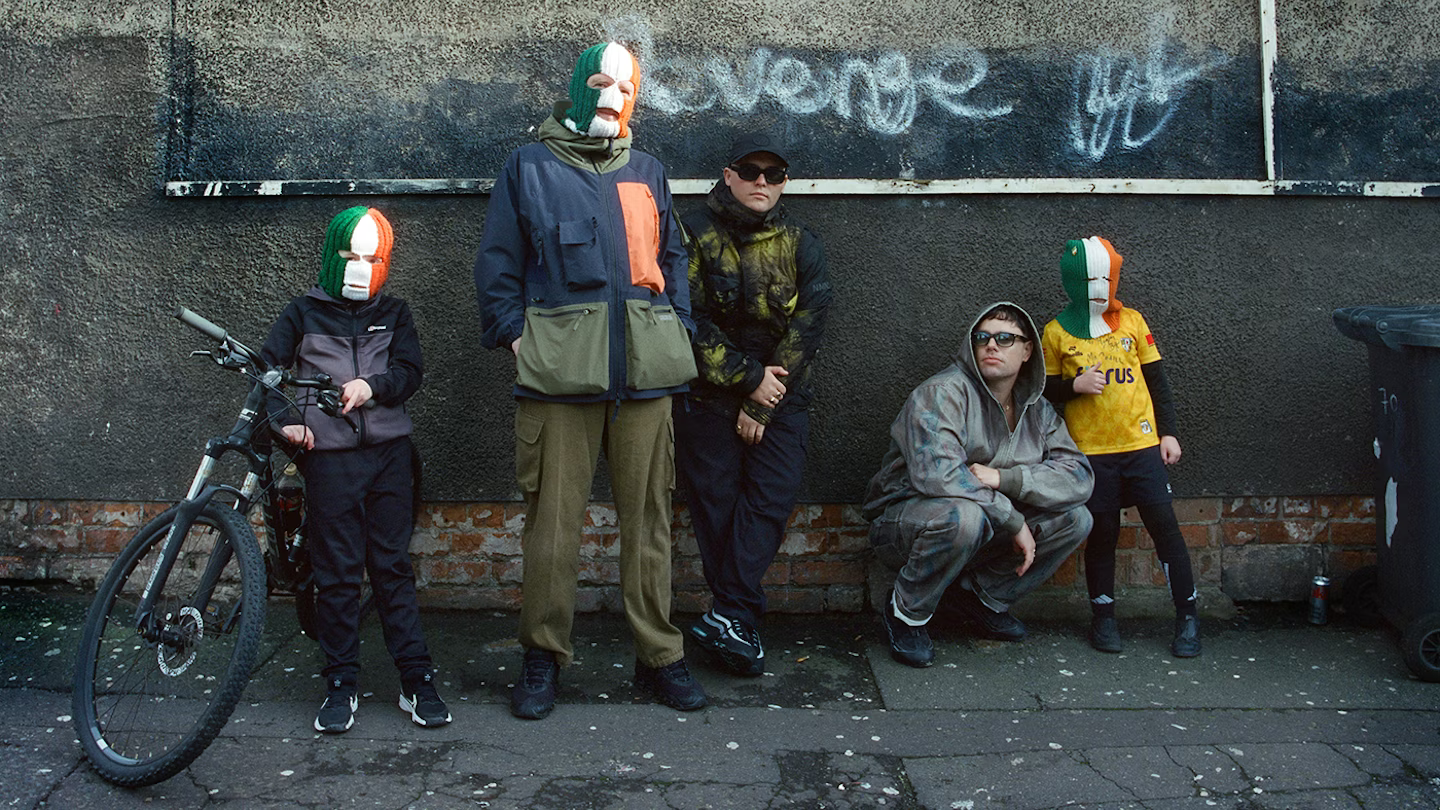
Ending the record is the Kae Tempest-assisted 'Irish Goodbye', a devastating reflection on depression and courage. Written about Móglaí Bap's mother's depression and her taking her own life, it's a heartfelt moment on an album full of scathing attacks, and it leaves fans with a heartfelt question. "How come it's always the best of us that can't bear to be?"
The sound on this record is a step up from the Toddla T-produced 'Fine Art'; Dan Carey is in the producer's chair this time, and with a CV that contains Fontaines D.C., Black Midi, Squid, Black Country New Road and Wet Leg, he was the perfect producer to take Kneecap to new sonic heights. There's Massive Attack, Prodigy-style rave, Young Fathers synths, atmospheric elements of Burial-style nocturnal dubstep, and even nods to early Gorillaz.
Quite simply, 'Fenian' is a triumph; Kneecap aren't going away anytime soon.
Courteeners mark 20 years with their first comprehensive ‘best of’ album, 'God Bless The Band', featuring the brand-new single ‘The Luckiest Man Alive’ and a major autumn 2026 UK arena tour. Arriving via Ignition Music on Friday, August 28, the release arrived as a monumental milestone, dropping just before their massive sold-out homecoming celebration in front of 25,000 fans at Manchester’s Wythenshawe Park.
Taking its title from a poignant lyric in their signature anthem ‘Not Nineteen Forever’, ‘God Bless The Band’ showcases a meticulously curated run of the indie veterans’ definitive cuts, bridging the gap between their iconic 2008 debut ‘St Jude’ and 2024’s acclaimed ‘Pink Cactus Café’. Frontman Liam Fray described the collection not just as a retrospective, but as a love letter to the band's famously dedicated fanbase, who have propelled the outfit to consistent chart success over two decades.
To give the anniversary release a contemporary edge, Fray returned to the studio with longtime collaborator James Skelly of The Coral to produce ‘The Luckiest Man Alive’ alongside a second exclusive new track, ‘Plus One Forever’. The career-spanning standard album packs 20 of the band's biggest festival mainstays, including ‘Cavorting’, ‘What Took You So Long?’, ‘Are You In Love With A Notion?’, and ‘The 17th’. For collectors, super deluxe formats expand the tracklist to include 11 bonus tracks featuring rare, stripped-back acoustic sessions and legendary live recordings from their performances at Glastonbury.
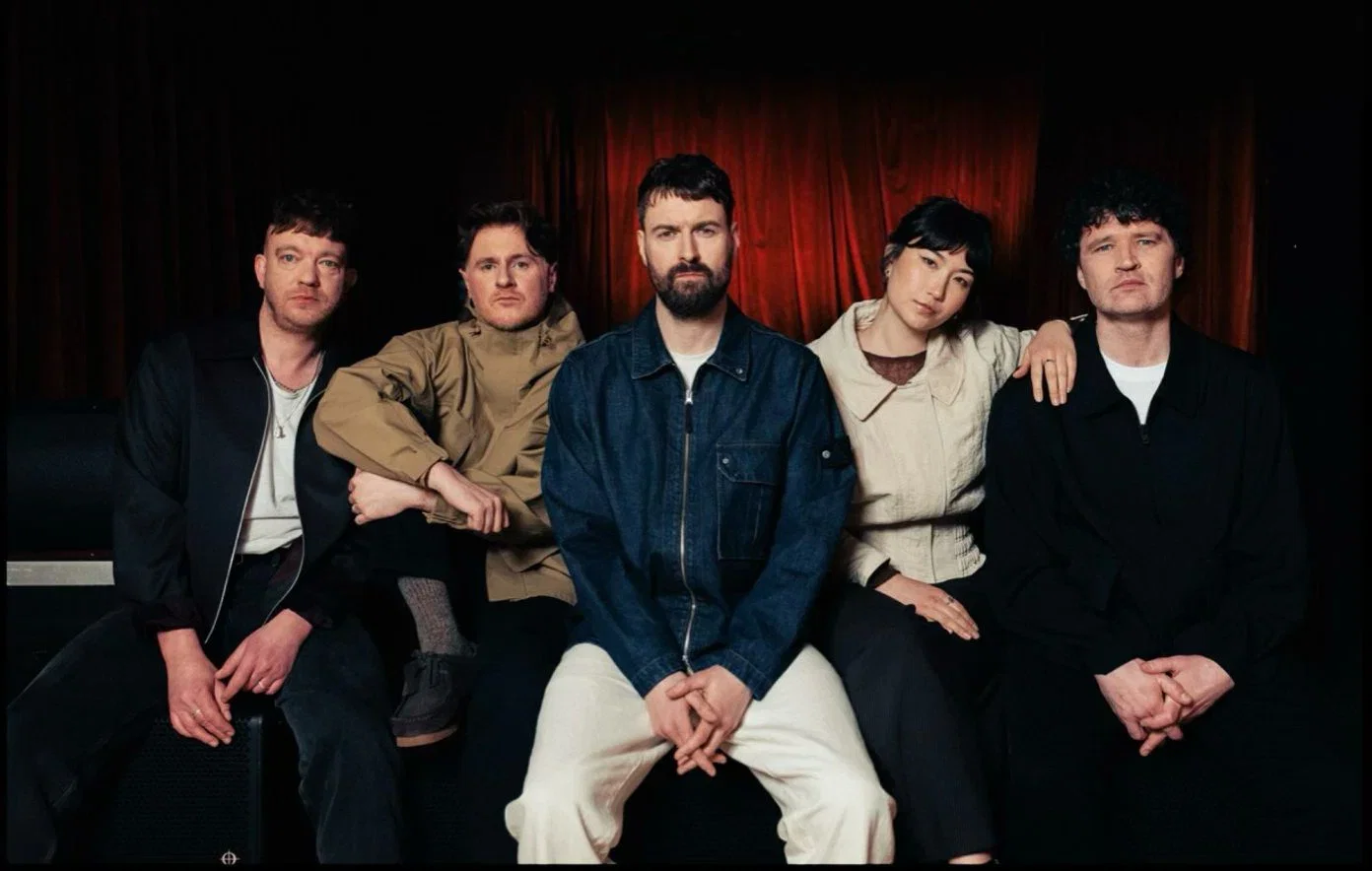
Upon the announcement of the album, Liam Fray said this:
“In October, it’s 20 years since our first gig, so with a couple of new songs fresh from the studio, the timing just seemed right for a best of,” said Fray. “If we mean half as much to people as they have done to us over the years, then we’ve not done too bad. We look forward to seeing you down the front. God Bless The Fans x”
The celebrations will culminate in November 2026 when the band hits the road for a high-octane UK arena tour, bringing their electric live energy to major venues like London’s Alexandra Palace, Glasgow’s OVO Hydro, Cardiff's Utilita Arena, and Leeds’ First Direct Arena. Cementing the tour as an essential indie event, Courteeners have enlisted Wigan indie-rockers The Lathums as their main support act, ensuring a generation-spanning celebration of guitar music
The Strokes closed out their set at the second weekend of Coachella, with a video protesting America's involvement on the International stage, including their current policy in both Iran and Gaza. The response from the crowd was immediate: a wave of applause erupted as the images played across the screens, while some fans held up peace signs and phones, trying to capture the moment. There was a noticeable energy shift in the audience, with many listeners clearly engaged by the band's bold visual statement. It was hard not to be moved; deliberately confrontational, but entirely necessary.
Frontman Julian Casablancas adopted a political tone during the Coachella set. The songwriter has long been vocal about his left-wing beliefs and closely supported Zohran Mandani’s successful run for New York mayor last year.
In reference to Justin Bieber's headline set the week before, where Bieber opened a laptop and took to YouTube to watch some content, he said, “I was tempted to show up here with a laptop tonight and show you guys some of those Iranian Lego videos. Have you seen them? Really good. They’ve got more truth than your local newspapers. But they were wiped out. Whether by YouTube or by the government, it doesn’t matter. They erased that shit. But it’s the land of the free, isn’t it?”
The band's set ended with 'Oblivius', a deep cut from their 2016 EP 'Future Present Past', performed live only once before, a decade ago. It was accompanied by a video montage featuring Omar Torrijos, Jacobo Árbenz and Jaime Roldós Aguilera, leaders described on screen as having been allegedly overthrown by the CIA. An image of Martin Luther King Jr. also appeared, alongside the on-screen statement “US Govt found guilty of his murder in civil trial.”
The montage closed with footage of American-backed violence in the Middle East, ending on the destruction of the final university in Gaza. The screen faded to black, and the band walked off stage without so much as a goodbye.
The closing moment followed an already politically engaged appearance from the band during weekend one.
Frontman Julian Casablancas used the earlier performance on April 11 to address issues, including proposed military draft registration in the United States, which will see men aged 18-25 be automatically eligible for the military draft, as opposed to the current model, which is self-registration.
“You guys excited about the draft? Oh, wait, not the NFL draft,” before adding, “In six months, I think everyone who's eligible for the military has to register. You guys excited?”
“Well, I hope to lead one of the Coachella units, the sexiest unit in our proud military, I’m sure,” he added. “What in the 2026 is going on.”
Paul McCartney released his first album in six years, with one clear aim. To tell the story before the story. He has delved into his past a lot in recent years, crossing the T's and dotting the I's on all areas of his life. Revisiting the long-lost footage recorded for 'Let It Be' in the mini-series 'Get Back', completing the one song left unfinished during the mid-90s reunion of the surviving Beatles, re-working the brilliant 'Anthology' for a whole new generation, and then a documentary about his post-life Beatles project Wings in 'Man on the Run'.
There's a sense that this autobiographical trip down memory lane marks the closing chapter in McCartney's career. Yet McCartney's stock hasn't been this high since the Beatles' mid-60s heyday. There was a time when this album would have been received about as well as a Glass Onion.
Press copies of ‘The Boys Of Dungeon Lane’, his first album in six years, were accompanied by a statement promising “a collection of rare and revealing glimpses into memories never before shared”. Fans never tire of hearing pop’s twinkly-eyed granddad spin the same old yarns, so who wouldn’t love a magical mystery tour down memory lane?
The album is a moving affair that features a little help from his friends, including Ringo. It harkens back to his childhood and his working-class roots in the Liverpool suburb of Speke, where the titular road can be found. And while it’s tethered to the past, what’s most impressive about ‘Dungeon Lane’ is how fresh it sounds, as he zigzags from tender acoustic balladry (lead single ‘Days We Left Behind’) to swaggering arena rock (‘Come Inside’) to swooning orchestral pop (‘Momma Gets By’).
Elsewhere, against all odds, given that this album arrives some 63 years after the Beatles’ debut ‘Please Please Me’, Macca actually makes history on ‘The Boys Of Dungeon Lane’. Remarkably, the jaunty ‘Home To Us’ is his first-ever duet with Ringo Starr, who assists him in celebrating their rough-and-tumble hometown. Sonically, the song makes nods to Oasis, in particular 'She's Electric'; how's that for a full circle moment? Macca ripping off Noel, that's not in the script.
Best described as a disjointed pub piano singalong on which both artists sound as though they’re a few pints down. It’s just fun and silly, like many of the earliest Beatles songs. Across the record, there’s a playfulness, as though he’s remembered exactly why it is that he got into all of this in the first place.
'Down South' tells a story about when he and George Harrison went hitchhiking together, a story that Harrison had told in passing before he passed. Now, twenty-five years later, we get McCartney's side. It was a good way to get to know you before we learned ‘Twist and Shout’,” he sings.
It's not all nods to pre-Beatles fame, though. 'Mountain Top' was written about a girl tripping on magic mushrooms at Glastonbury, set to a kind of 21st-century update of the oft-maligned subgenre record collectors call toytown psychedelia. “Pumpkin pies in the skies also try to hypnotise,” sings Macca over a harpsichord backing, his vocal put through an effect that approximates the tremolo sound of a Leslie speaker, a technique he and his mates pioneered on 'Tomorrow Never Knows'.
Despite the nods back to the 60s with techniques used on 'Lady Madonna', 'A Day in the Life' and 'Tomorrow Never Knows', McCartney's voice tells the listener that the album is from 2026, and not 1966. His voice is thinner than on previous records; it’s curiously effective here, a constant reminder that these are songs written by an octogenarian, that the events they’re describing happened a very long time ago.
‘Days We Left Behind’, though, is the album’s real tear-jerker, as Paul nods to the “secret code” he shared with John Lennon but will never reveal. We met at Forthlin Road / And wrote a secret code / To never be spoken / I stand by what I said / The promise that I made / Will never be broken,” he offers. Hearing McCartney pay tribute to his late, great mate will always be moving, but here, with McCartney still going strong at 83, it’s hard not to get a bit dewy-eyed as you picture an alternative reality where Lennon might have been around to return the sentiment.
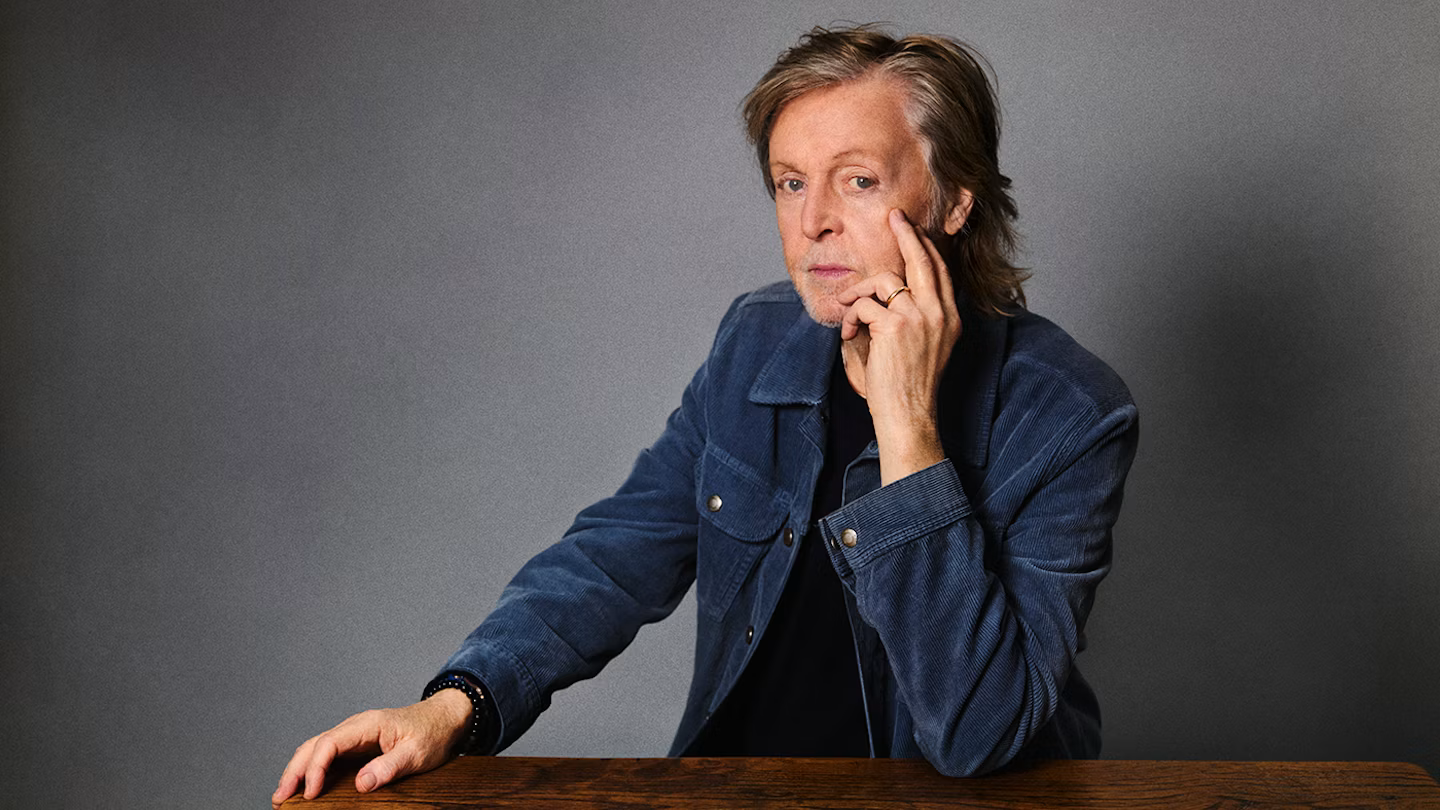
Still, despite the absence of any real bombshells, it’s a pleasure to accompany McCartney as he gets back to where he once belonged. In looking back at his past, McCartney has delivered an album of intimate recollections that reminds us of just how much he has shaped the musical fabric of the world and continues to do so now.
The Beatles announced that they would be opening the doors to Saville Row to the public. Although the address does not sound familiar, the street is known as the heart of British tailoring. Number 3 Savile Row is one of the most iconic and important buildings in British music. The former home of the Beatles’ record label Apple Corps, and the location of the band’s final public performance when they took to its rooftop in 1969.
Across seven floors, The Beatles at 3 Savile Row will showcase items from the Apple Corps archives and host temporary exhibitions and a shop. The biggest attractions, however, will be a recreation of the studio where the band recorded their last album, 'Let It Be', and access to the rooftop where that poignant final concert was performed.
Paul McCartney, who recently revisited the Georgian mansion house, said: “There are so many special memories within the walls, not to mention the rooftop. The team have put together some really impressive plans, and I’m excited for people to see them when they’re ready.” His bandmate Ringo Starr described it as “like coming home”.
The Beatles founded Apple Corps in the late 60s to gain control of their own financial affairs and with the intention of backing other artistic and business ventures, ranging from music and film to retail and electronics. When the band split in 1970, it found new purpose as the guardian of their legacy, stewarded by their former road manager, Neil Aspinall, until shortly before his death in 2008.
Apple Corps left Savile Row in 1976, and today the company’s chief executive is Tom Greene, who is overseeing the ambitious return. “Every single day, fans are taking pictures of the outside of 3 Savile Row – but next year they can go in,” he said. Regarding the rooftop, he confided: “Even the railings remain the same from that famous day in 1969.”
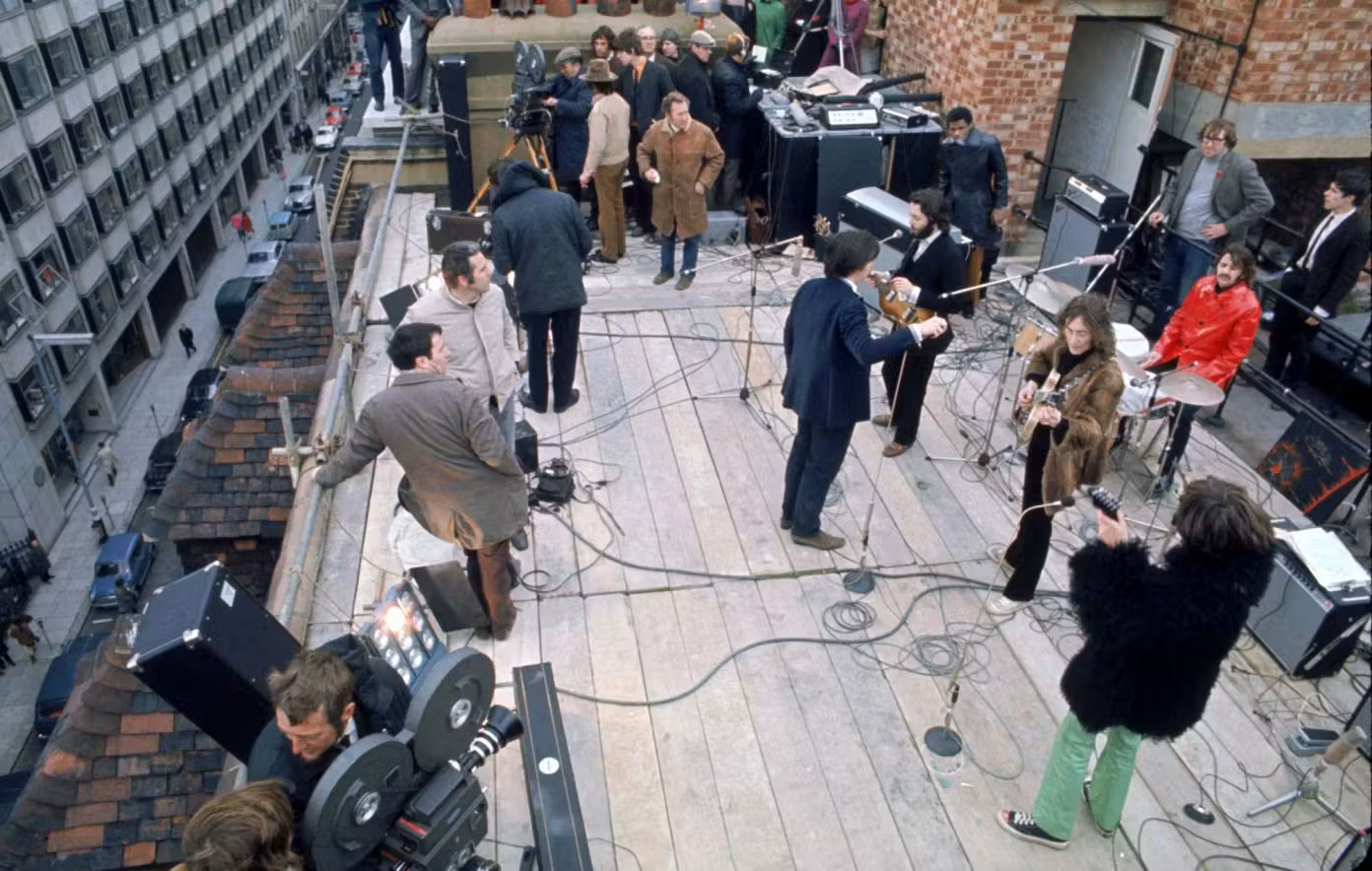
That open-air performance featured five new Beatles songs, performed across nine takes: 'Get Back', 'Don’t Let Me Down', 'I’ve Got a Feeling', 'One After 909' and 'Dig a Pony', plus a rendition of 'God Save the Queen' The unadvertised gig was filmed for Michael Lindsay-Hogg’s 1970 documentary about the making of 'Let it Be', and attracted an astonished crowd of passersby – plus the police. Two officers entered the building, climbed to the roof and switched off the band’s amps, though the band still managed to perform one last take of Get Back.
Two of Britain's brightest new guitar bands announced their debuts. Following the release of their brilliant EP 'So Much Country 'Till We Get There' in January 2026, which featured 'Don't Throw Rocks' and 'The Wahs', Westside Cowboy have announced their debut album 'It Goes On'.
2026 has already been a busy one for the band, having recently finished a tour with Geese. Last year, they won the Glastonbury Emerging Talent competition, virtually on the strength of their debut single, 'I've Never Met Anyone I Thought I Could Really Love (Until I Met You)'. A debut album was always the next logical step.
Alongside the album announcement, Westside Cowboy have released new music, 'Kick Stones (The Boys)', the first preview of this new era of Westside Cowboy. "We loved the way it felt to play, but we thought we couldn’t record it like that or people would think we wanted to be a stadium rock band,” bassist and vocalist Aoife Anson O’Connell explains of the track. This led them to use a live recording of The Velvet Underground's "What Goes On" as a reference point for inspiration, of which drummer Paddy Murphy says, “We always thought, if we can pull this off, it could be really fun. Taking this mad, '70s rock thing but then having it played by a bunch of scrawny kids.”
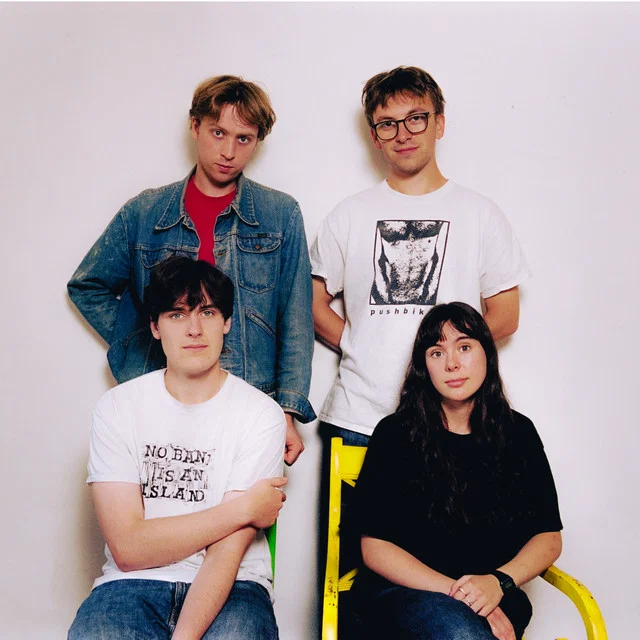
'It Goes On' was recorded at Greenmount Studios in Leeds with producer Loren Humphrey, who is credited for his work with Geese, Cameron Winter, Wunderhorse, and more. Discussing the inspiration behind the album, the band share: “Put simply, we wanted to make an album for our younger selves, one that reminds us of all the bodies of work that made us fall in love with music.
"We wanted the music to be instant, concise, and honest to us as people today. There will be plenty of time in the future for the sprawling triple album with horns and string sections, but for now, it’s young music made by some young(ish) people. We want to make songs that are lean and imperfect. We’re really proud of it, and we hope that you enjoy it.”
After what feels like a lifetime since the release of the 'Siren' EP in June 2025, Keo have finally announced their debut album, 'Put A Smile On For Me'. In the months since the release of the EP, Keo have become one of the most formidable live bands in the UK. Having supported Wunderhorse and Fontaines D.C. alongside their own sell-out tours and festival appearances, the London band have built up quite the following.
Therefore, it wasn't a surprise when the band announced their debut album. In fact, many of the band's most loyal fans were surprised that it had taken them this long to announce something.
The album is set for release on September 25th 2026, with the summer set to be a busy one for the band, with a packed-out festival season and some big support slots with Wunderhorse and Wolf Alice. Can we expect an album headline tour in the winter?
Swim Deep released 'Hum', their fifth album, that showcases the band's resilience and gives us some of their best and most beautiful work to date. Emerging out of the B-Town scene in the early 2010's alongside Peace, JAWS, and Superfood, they put Britain's second city on the map.
The band have zigged and zagged through different shades of alternative music, taking in everything from the dreamy indie-pop of 2013 debut ‘Where The Heaven Are We’ and the synth-led psych wigout of follow-up ‘Mothers’, to third album ‘Emerald Classics’ '90s dance-pop-leaning sounds. Another left turn landed in 2024, with ‘There’s A Big Star Outside’ – rich, warm, introspective alt-rock that twinkled and swelled.
'Hum' picks up exactly where 'There’s A Big Star Outside' left off. An unlikely next step for Swim Deep, who usually go bouncing into a new sonic frontier with each record.
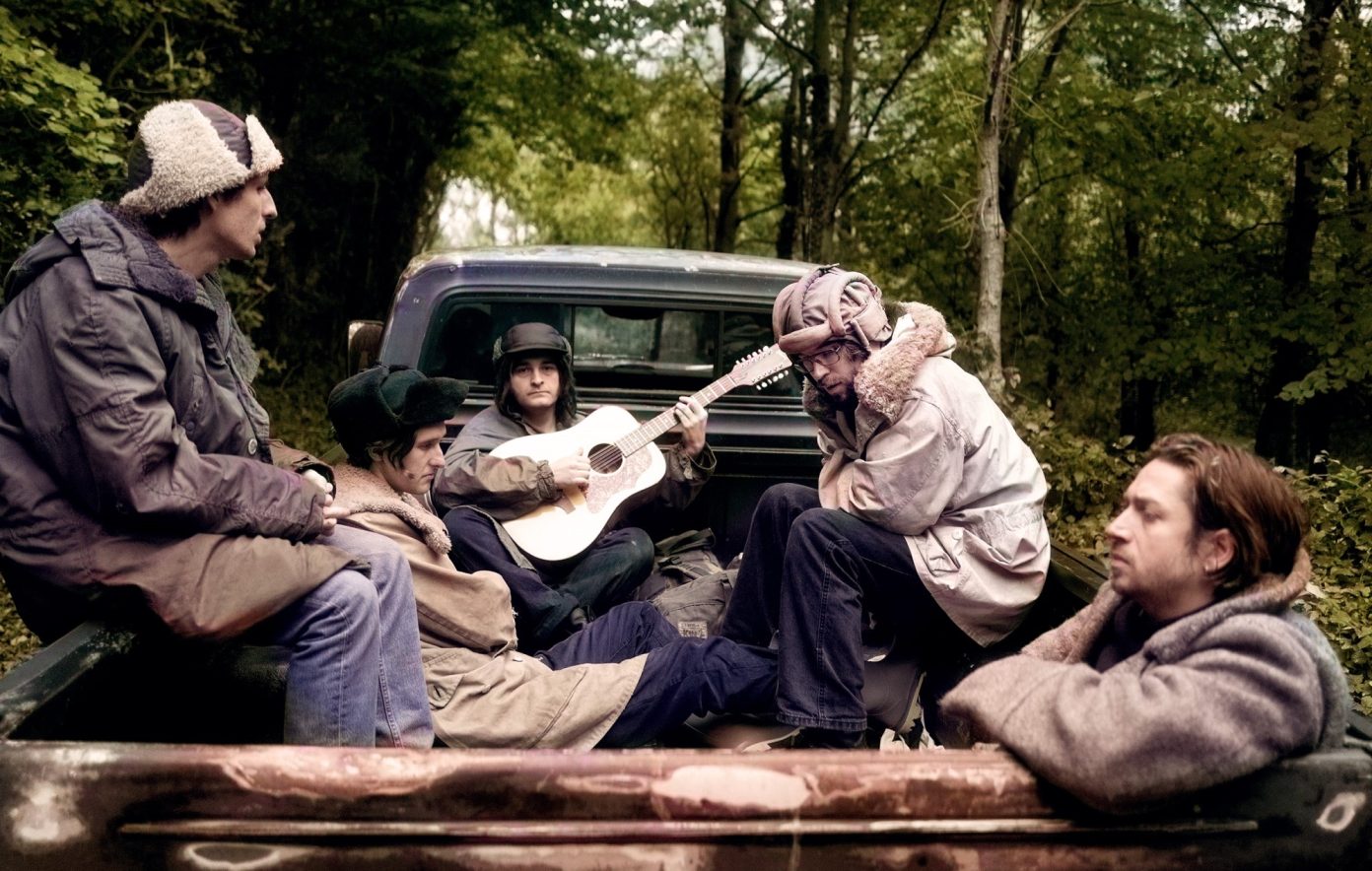
Lyrically, too, ‘Hum’ is a continuation of its predecessor, picking up where that record left off in the personal stories from Williams’ life. Where we last heard him preparing for impending fatherhood, he marvels at the existence of his daughter on ‘You, Me & Mary’, telling her in one beautiful, awe-stricken moment, “I won’t ever get used to you, my baby, my friend”. That sense of family, what it means to guide a child through life, the bonds we build with those we choose to go through life with, the loss of the generations before us drive this album forward; it's some of the band's most personal songwriting yet.
‘Mud’ shimmers and shudders into life every time its grungy, anthemic chorus hits. Swim Deep have always had an ability to evoke a feeling of deep nostalgia, but here, it’s impossible to escape. Woozy guitars and an outro built seemingly perfectly for a festival set; if you close your eyes and pretend enough, we’re back in 2013 for a split second.
On Pieces Of You’, Williams contends with mortality, asking a recently departed family member what lies on the other side. “Do you walk into a place where time and space take a break from it all?” It's an exceptional song and one of my songs of the year. It also sees the band full of self-awareness asking “How’s it go in Heaven? / How’s it go up there?” If that’s not in reference to debut album ‘Where The Heaven Are We', then I'll eat my bucket hat.
In the lead-up to ‘Hum’’s release, Williams has referenced the idea that, when Swim Deep first formed back in 2011, they didn’t think they’d make it to a fifth album. As a band that haven’t always got the recognition they should have, and whilst their B-Town peers have fallen by the wayside, or gone through a cosmic reinvention of their own. Swim Deep have continued to make brilliant music.
It's a great record, made by a band that didn't stop, kept going, and honoured their talents.
Keeping things in Birmingham, Overpass dropped their debut album 'Elsewhere, Always', and it is a massive collection of arena-ready bangers. The record blends huge melodies with compelling, razor-sharp songwriting. The band truly mastered their craft on the road while touring alongside acts like Inhaler and Wunderhorse.
There is an undeniable swagger to these tracks. Overpass knows exactly who they are, completely unbothered by self-doubt or embarrassment. Having formed in Birmingham right before lockdown shut down venues nationwide, they have spent the last few years building their sound gig by gig. After mapping out their musical direction with two early EPs, 'Elsewhere, Always' arrives to fully colour in the picture. You get ten entirely new tracks, no old singles smuggled in as filler, and no chasing current playlist trends. It relies purely on massive choruses and the confidence that they will deliver. Which they absolutely do
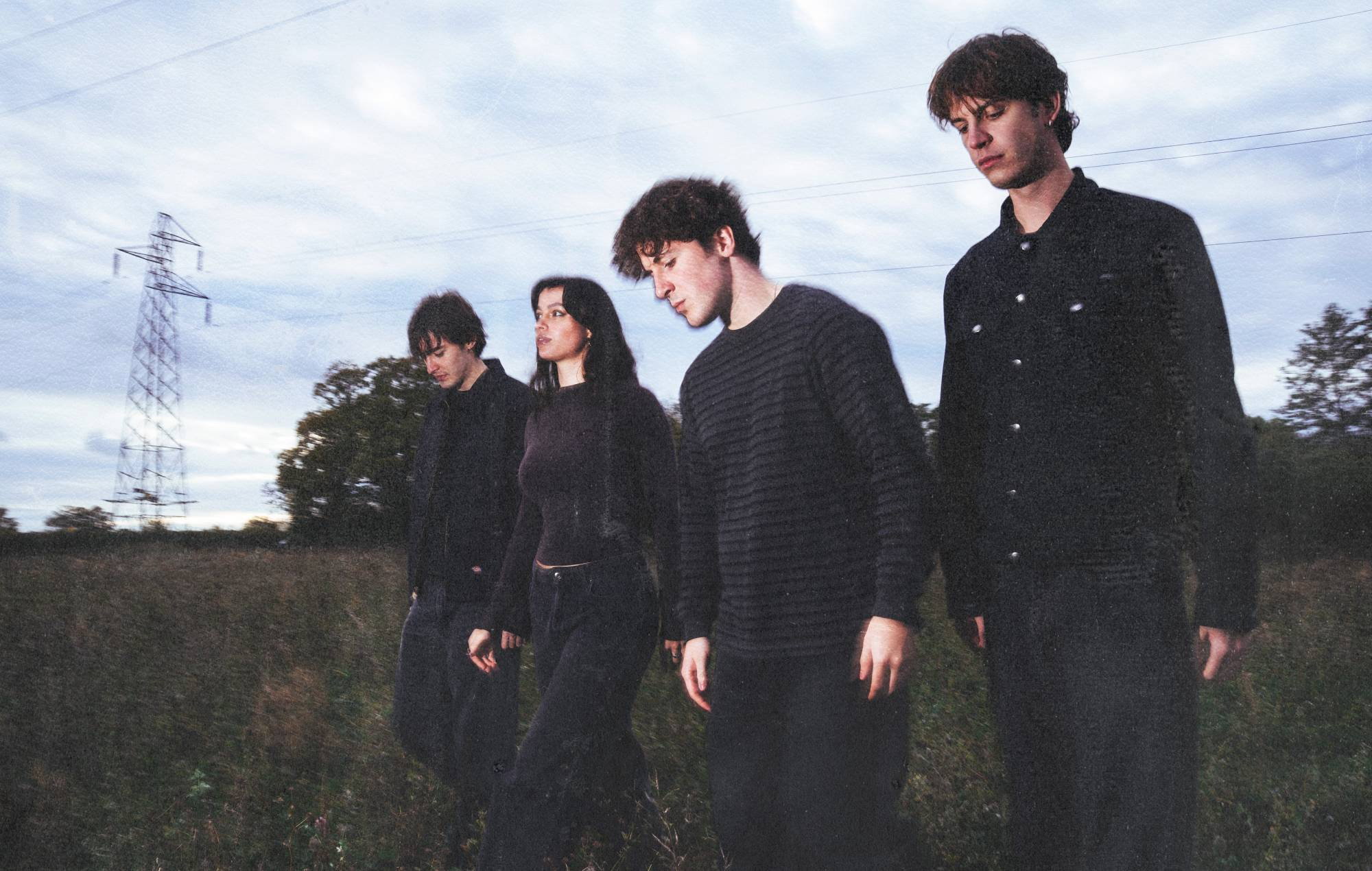
'Union Station' acts as a blistering starting gun, refusing to let up for a single second. There is zero wasted space; the rhythm section doesn’t blink, and the guitars buzz and snarl. Max Newbold's falsetto paints an all-too-familiar canvas, capturing that specific stretch of your early twenties when the structured safety of further education ends, and everyone else suddenly seems to have an instructional manual for life. It is not only one of the album's finest moments, but also one of the best indie singles of the year.
'Sandman' carries forward this theme of youth and coming-of-age, trading the urgency of the opener for a heavier, more atmospheric weight before dissolving into dreamy, shoegaze-inspired textures. Exploring anxieties, insomnia, and coping mechanisms, the pre-chorus strikes a chord: “Someone’s knockin’ on my bedroom door / Those voices screamin’ through the wall / I’d let them in if I could dream.” It leaves a deeply emotive mark that will undoubtedly echo with listeners.
Lyrically, 'Is This Real?' tackles the heavy weight of modern masculinity and societal expectations, driven by poignant lines like “I can feel the weight of the world on my shoulders / Do my best, but I’m not a soldier” and “Manning up isn’t letting go.” Yet, despite the heavy subject matter, it remains a purely anthemic highlight. Armed with a massive chorus, it is destined to be chanted across packed festival fields for years to come.
The record maintains this thematic momentum while expanding its sonic palette across other vital tracks. 'Fall In Love' delivers a pleasant, mid-tempo groove that fits seamlessly into the album's coming-of-age narrative, while 'Forever, You' acts as a bright, foot-tapping romance anthem driven by infectious guitar hooks. Later, 'I Will' arrives as a driving, highly melodic addition that perfectly sustains the record's signature energetic pacing.
'Spinning' reportedly almost missed the tracklist entirely, which would have robbed the record of its heaviest, most cathartic release. Musically, it is an absolute titan, relying on a moody, shoegaze-style foundation defined by a brilliant back-and-forth between driving drum patterns and a tightly locked bass-and-guitar combination. The tension peaks spectacularly during the bridge, providing an ideal backdrop for the lyrics. Centred around conflicting emotions, life goals that feel out of reach, and general instability, Newbold sings of trying to persevere through the chaos: “Nothing seems to stick anymore / I try to make some sense of it all.” It lays bare the foundations of the band's expanding live capabilities and stands out as a peak on the record.
Elsewhere, the band confidently breaks their own formula. 'Bonnie & Clyde Pt. 2' features Newbold alone with an acoustic guitar, left exactly as a raw demo because nothing the full band tried could match its intimacy. Meanwhile, 'Get Up!', penned during a late-summer heatwave, leans brilliantly into dance music territory. Closer 'Heaven' gently floats where everything before it aggressively drives, offering a strong hint that Overpass has plenty of gears left to show us, and not all of them require going faster or being louder.
Recorded in Liverpool with producer Rich Turvey while the four-piece lived on top of each other for weeks, the album radiates the genuine warmth of a band that would be making music regardless of who was watching. There is a nostalgic glow to these songs, a sense of something half-remembered from a legendary summer that hasn't actually happened yet, but free of any borrowed identity. This is music custom-built for sweaty rooms full of people losing their minds, written by a band that clearly itches to get back on stage the second they step off it. Critics love to claim that guitar music no longer produces genuine festival headliners capable of raising a rabble at will. Nobody seems to have told Overpass, and on the strength of 'Elsewhere, Always', it’s probably best that nobody does. They’d only be wasting their breath anyway.
Blossoms announced their sixth album, 'Songs From the Wedding Cake', will be released in October via ODD SK / Distiller Records.
The lead single, 'Joke About Divorce', was released in April, and it's classic Blossoms: a spritely indie pop banger that shares some similarities with 'Your Girlfriend'. Ogden sings: “I guess this argument’s not the place for a joke about divorce / My intention’s just a playful thing to make you laugh of course”.
“During every argument, no matter how big or small, there’s always that moment where humour could completely disarm you both and diffuse the whole thing,” said Ogden of the track’s inspiration.
“On this occasion, I thought joking about divorce would do exactly that… I just got the timing completely wrong. Instead, it made things worse, and that moment ended up immortalised in a three-and-a-half-minute pop song.”
Second single 'Meet Me in Love' is one of the catchiest things that the band have ever written, and features backing vocals from Declan McKenna.
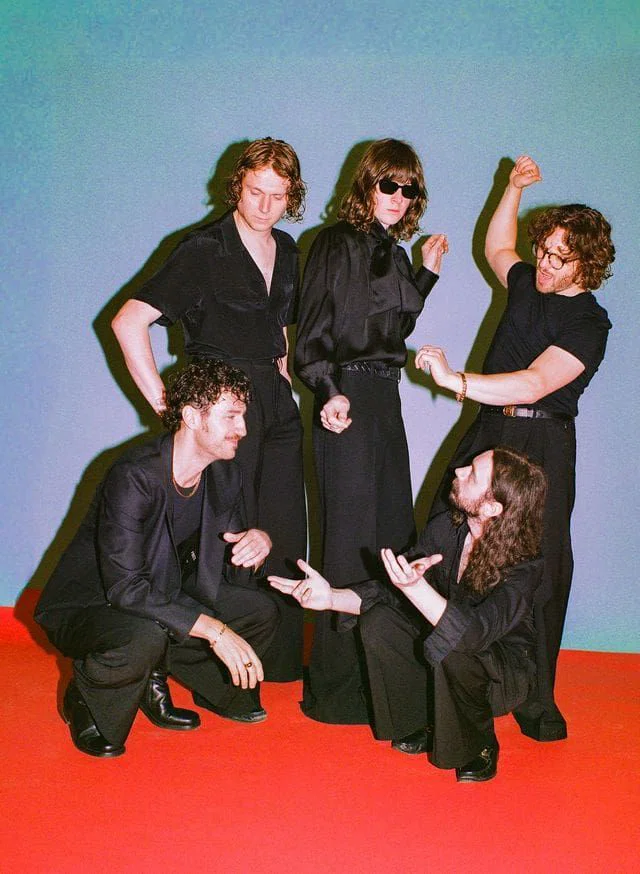
Talking about the song, Tom says:
"‘Meet Me In Love’ was written on a songwriting trip to the Lake District with Natalie Findlay and Jules Apollinaire. As often happens, it was the last day and we’d pretty much accepted that there probably weren’t any more songs left to write. We started messing around with a simple two-chord disco groove and, within a couple of hours, the whole thing seemed to fall into place."
"It’s one of those songs that felt exciting from the moment it arrived. I remember driving home from the Lakes listening to the demo on repeat for most of the journey. We later finished the recording with Shawn Lee at Tilehouse Studios, tracking live to tape, but a lot of what made us fall in love with the song in the first place came from that original demo, so plenty of those parts survived onto the final record."
On social media Blossoms called the record “an absolute joy” to make on social media, adding: “Written and recorded over the last year, it’s a collection of songs about what might seem like ordinary moments, viewed through an extraordinary lens… joking about divorce, hire cars, crying at the Kardashians, Wikipedia rabbit holes, trips to The Range, falling asleep in a taxi, your arm going numb because someone’s asleep on it, the 192, being an additional driver on your wife’s insurance and losing her 20 years’ no-claims bonus (ffs), dancing in the kitchen to Grease, crying at videos of dogs on Instagram, picking up parquet flooring, saying the wrong thing, growing older together… you get the idea.”
The album title takes its name from a Stockport nickname for the town’s iconic Victorian town hall - where Tom got married. It’s an apt frame for a record built around one guiding idea: taking the ordinary moments of life and putting them through an extraordinary lens. The result is Blossoms at their most expansive and most personal; an irresistible cocktail of 80s-flecked funk, heart-on-your-sleeve anthems and dance-floor indie bangers that feels, ten years on from their Mercury Prize-nominated debut, like the record they’ve been building towards.
Additionally, Blossoms have announced their biggest ever headline tour, where they’re set to play at a number of arenas across the UK in November. The Royston Club will join them as support on all dates.
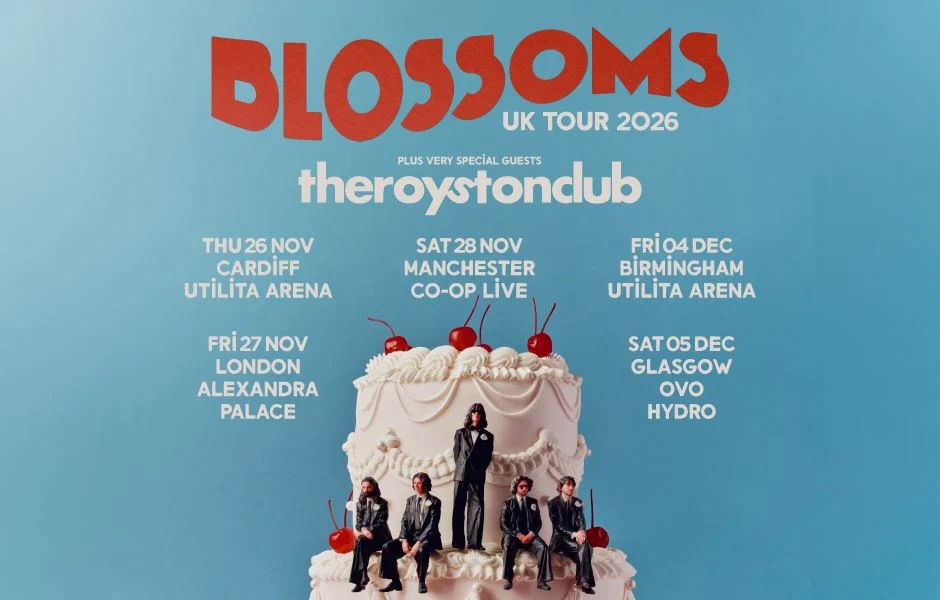
Blossoms playing in arenas is long overdue. I'm so happy that, a decade into their career, they've started to realise their worth. They are one of the best bands Britain has at the minute, and after proving they can sell tickets with the Wythenshawe Park show in 2024, Edgeley Park in 2019 and Manchester Arena in 2021, I'm surprised it's taken them this long.
Getting The Royston Club in as support as well is a real coup; they are one of the most exciting bands in Britain at the minute, with two brilliant albums, and a trajectory that is not too dissimilar to Wunderhorse. Catch them on this tour, because they won't be supporting for much longer. Arenas to lie in wait for them. Just ask Richard Ashcroft fans.
It has been 25 years since four animated misfits first flickered onto our screens, signalling a seismic shift in pop culture. What was dismissed in 2001 as a "jokey" one-off project from "the guy from Blur" has evolved into one of the most creative, enduring, and genre-defying pillars of 21st-century music. With a list of over 100 guest artists across nine studio albums, Gorillaz remain the only entity on earth capable of linking Carly Simon to Shaun Ryder, or Skepta to Lou Reed. It is a project so culturally vast that it even provided the neutral ground for Damon Albarn and Noel Gallagher to finally bury the Britpop hatchet.
However, this restless urge to collaborate has occasionally made Gorillaz records difficult to navigate; without a compass, the albums can feel like sprawling, disconnected playlists. The project is always at its most potent when anchored by a singular, obsessive vision. While 2005’s 'Demon Days' captured the midnight paranoia of a post-9/11 world, and 2010’s 'Plastic Beach' tackled the ecological rot of the late Anthropocene, their latest offering, 'The Mountain', turns the lens inward.
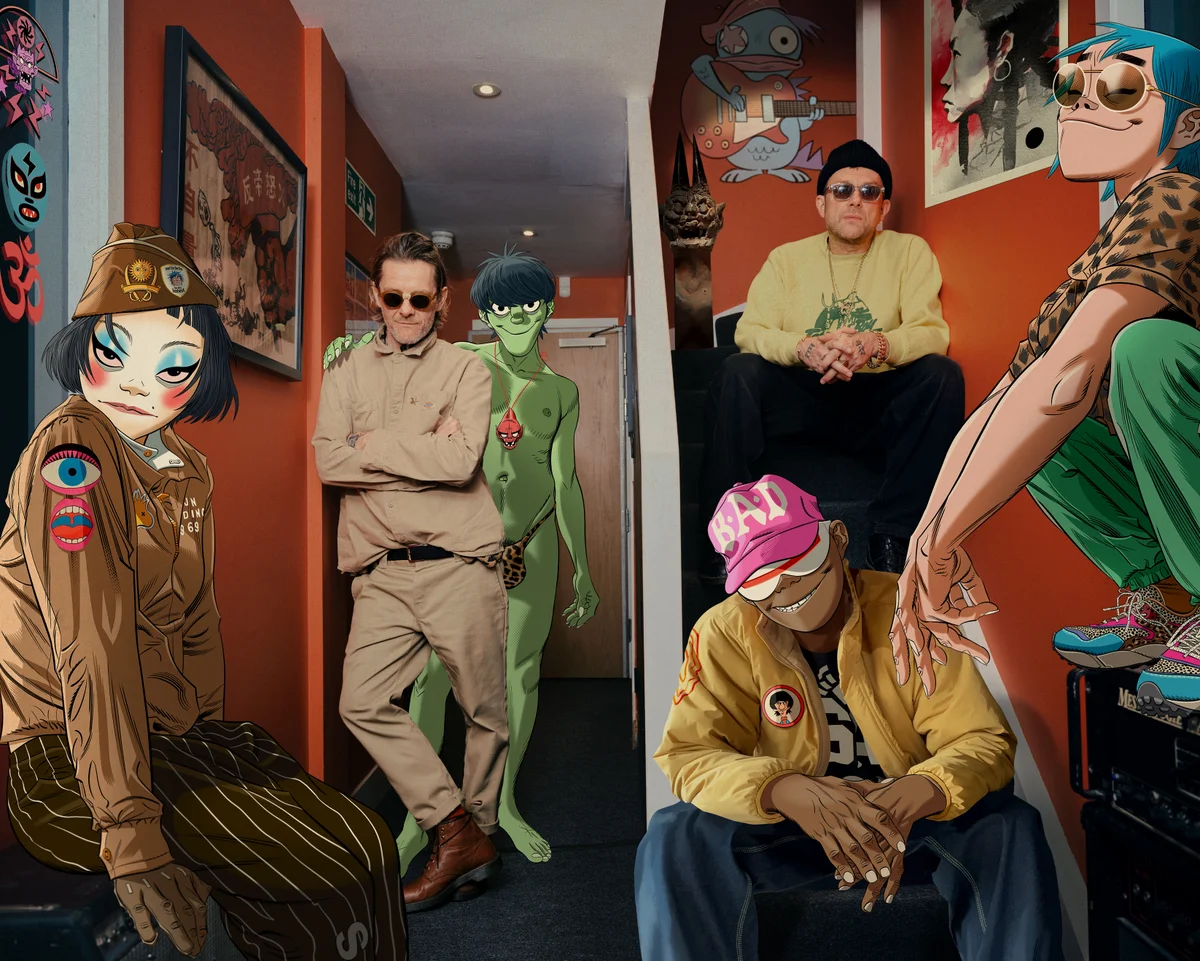
The album's DNA was formed in the heavy summer of 2024. Following the death of his father, Keith Albarn, Damon Albarn travelled to Varanasi, the holy Indian city where the Ganges flows and Hindus cremate their dead to ensure a smooth transition into the next life. In a staggering stroke of cosmic coincidence, Jamie Hewlett’s father passed just ten days later. Hewlett was already in Rajasthan with his mother-in-law, who then suffered a fatal stroke from which she never recovered. Out of this shared crucible of grief emerged an album inspired by the Indian concept of death: not as a hard stop, but as a "Bardo", a transitional state between worlds. 'The Mountain' is a panoramic, world-building affair; it is the band’s richest and most cohesive work since 'Plastic Beach'.
The lore of the record follows the cartoon band: 2D, Murdoc, Noodle, and Russel, sneaking into India on fake passports to escape a digital curse, a narrative mirrored by the record's sonic palette. The influence of the subcontinent is everywhere, featuring legendary playback singer Asha Bhosle, space-disco diva Asha Puthli, and the virtuoso sitar of Anoushka Shankar. The instrumentation is exquisite: a sitar buzzes in a frantic, psychedelic duet with Johnny Marr’s signature trebly guitar on 'The Plastic Guru', while the title track opens with the breathy, transcendent melody of a bansuri flute that seems to float above the Himalayas.
Perhaps the most haunting element of 'The Mountain' is how it recruits a choir from beyond the grave. Albarn has excavated unreleased recordings of late collaborators, weaving the voices of Dennis Hopper, Bobby Womack, Mark E. Smith, Tony Allen, and De La Soul’s Trugoy the Dove into the mix. This isn't digital necromancy for the sake of nostalgia; it is an exploration of how art outlives the vessel. Death here isn't eerie; it’s an active, vibrant participant. There is a defiant power in hearing the late Proof (of D12) burst out of 'The Manifesto' with a verse recorded 25 years ago: “No one can convince the invincible to be sensible.” Similarly, The Fall’s Mark E. Smith brings his trademark surrealist snarl to the ravey horror of 'Delirium', sounding more commanding than ever as he warns the “shrunken china chief head dealer” that the spirits are “coming home a sinner.” These "Voices From Elsewhere" turn the album into a sonic testament to the permanence of the soul, punctuated by Albarn’s melancholic delivery on 'Orange County': “I’m not your enemy, your atoms gone, you stand alone, and everything you gave to someone you love, that’s the hardest thing.”
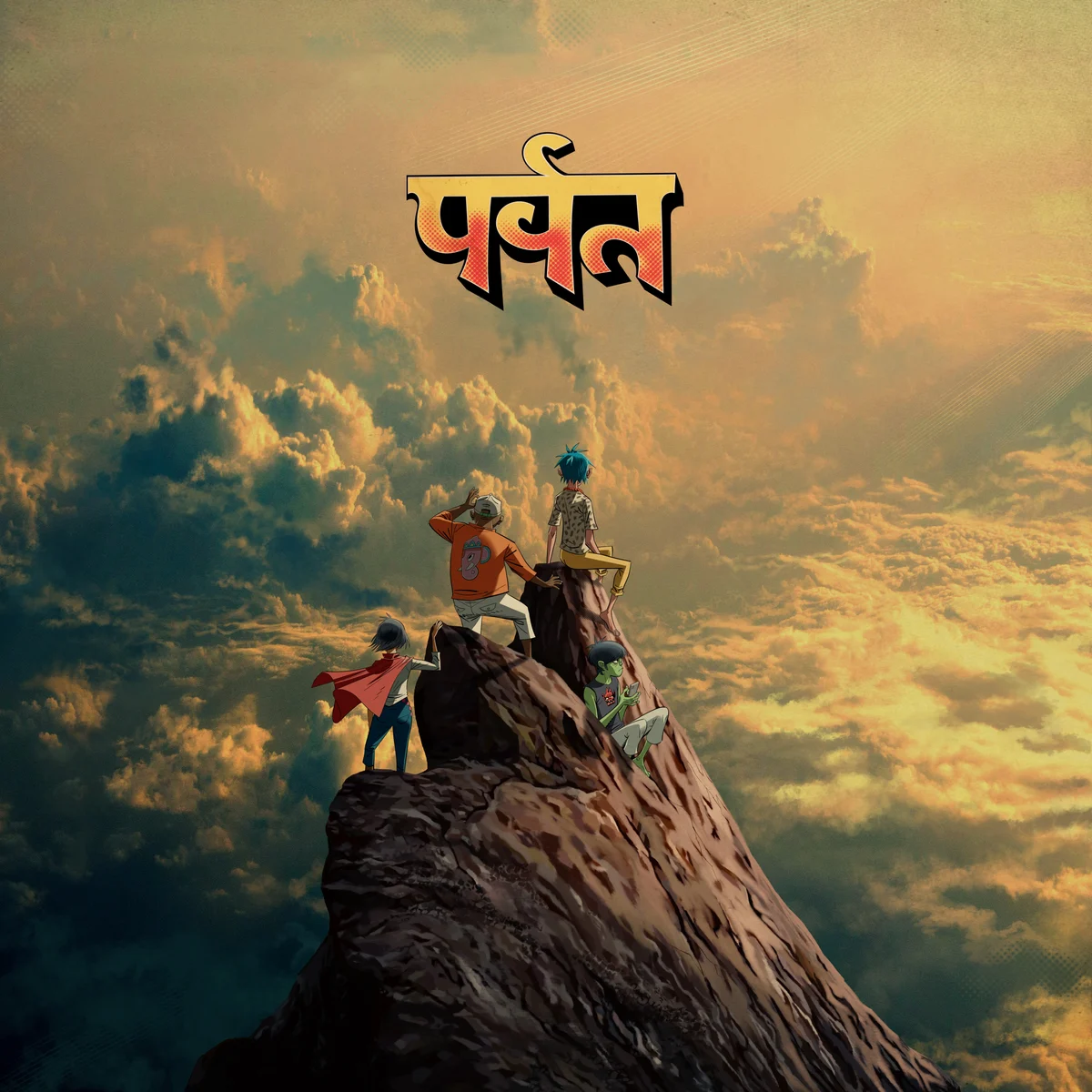
Albarn has always thrived in that wistful, descending melodic lane he occupied so effectively on Blur’s 'The Ballad of Darren'. That DNA is present here on the gorgeous 'The Empty Dream Machine', while 'Casablanca', a track that sees Johnny Marr and Paul Simonon effectively uniting The Smiths and The Clash, is so quintessentially evocative that it could easily have sat on that last Blur record. It feels like a sophisticated, dub-heavy evolution of Albarn’s best songwriting, blending English pining with a nomadic, global groove.
But the record refuses to linger in the shadows. Following the widescreen Indian soundscapes of the opener, 'The Moon Cave' dips into sleek, rubbery funk, while the Sparks-assisted 'The Happy Dictator' provides a joyous slice of 80s synth-pop. It is a masterclass in art-pop irony, pairing Russell Mael’s operatic, staccato delivery with a neon-lit bounce that feels like a forgotten New Wave classic. It’s a playful jab at the tyrants and despots who present themselves as eternal, a song that manages to be both a scathing critique and the most danceable moment on the record. It's Gorillaz at their most flamboyant, proving that even a song about authoritarianism can be a shimmering, floor-filling delight.
That subversive energy carries into the guest spots, where even IDLES’ Joe Talbot reveals a new, vulnerable gear on the woozy, Jerry Dammers-inspired ska of 'The God of Lying'. Trading his trademark post-punk roar for a reflective, "Ghost Town" lilt, Talbot interrogates the complacency of modern life with startling clarity: “Are you happy with your housing? / Are you climbing up the walls? / Are you deafened by the headlines, or does your head not hear at all?”
'The Mountain' achieves a miraculous feat. While Albarn has often waded through grief, from the pulsing melancholy of 'Andromeda' and the elegiac 'The Nearer the Fountain, More Pure the Stream Flows' to Blur's 'The Ballad' and 'The Narcissist', those previous explorations felt like funeral rites. This record, despite its heavy thematic weight, refuses to be sombre. Instead, its 15 tracks form a vibrant tapestry of major-key sing-alongs, sitar-soaked bangers, and whimsical waltzes.
The journey all culminates in the haunting final track, 'The Sad God', where Albarn reflects on humanity’s folly with the devastating line, “I gave you atoms, you built a bomb.” Yet even as it acknowledges the darker side of the human condition, the album chooses to smile anyway. It is an ecstatic exploration of rebirth and the profound resilience of the spirit. Quite simply, this is the band’s best work in 15 years. It stands as an exceptional, towering career highlight that proves even at the summit of their career, Gorillaz are still finding new ways to climb.
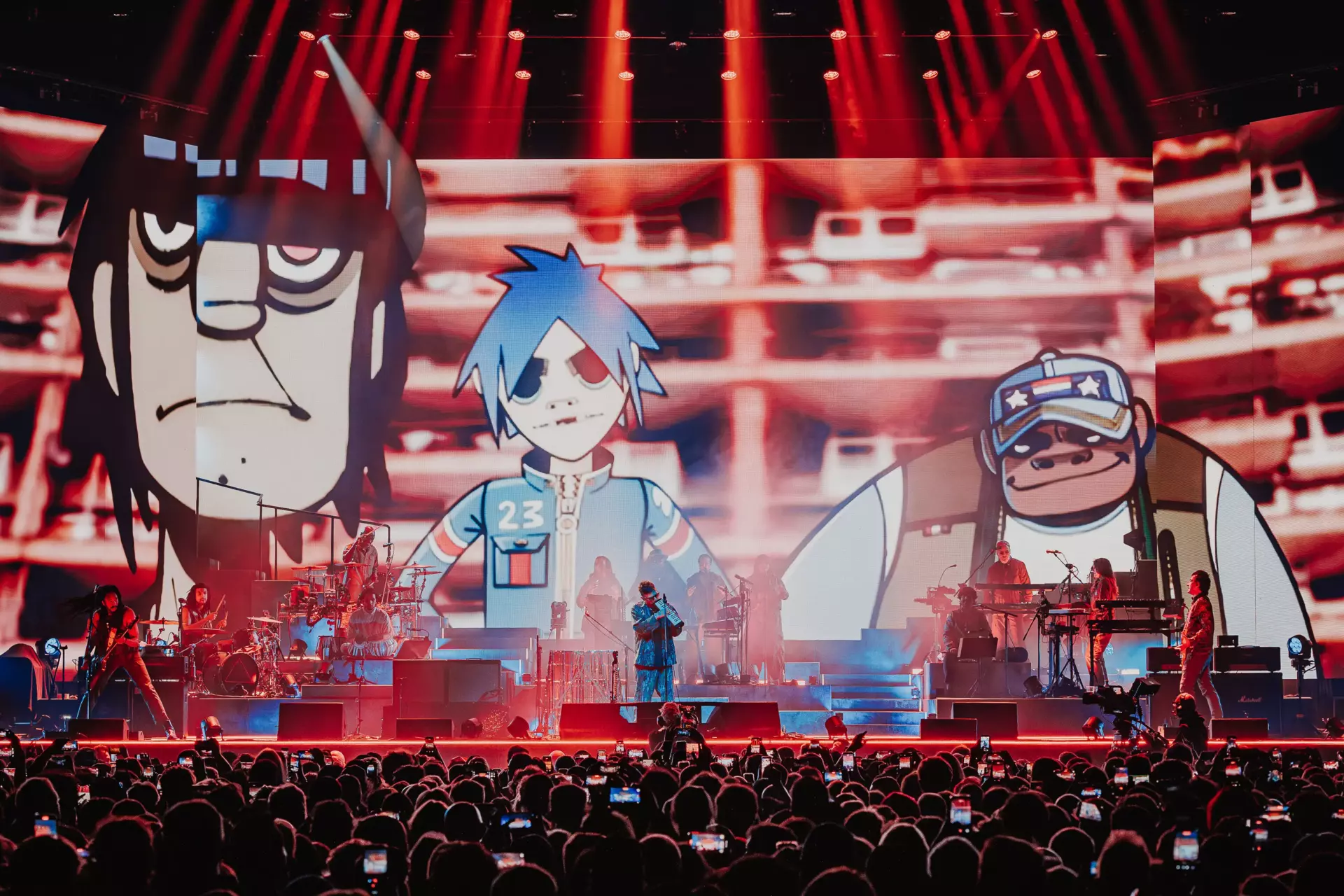
Gorillaz would take 'The Mountain' out on the road, playing in arenas across the UK & Ireland; critics and fans would describe the shows as the band's best of their career. The crowds were treated to massive screens projecting Hewlett’s iconic animated avatars. The visuals deeply explored the heavy, cinematic themes of grief, death, and the afterlife present in the new record, and in true Gorillaz fashion, the band would welcome a number of collaborators to share the stage. Joe Talbot of IDLES, Yasiin Bey (formerly Mos Def), Kara Jackson and Bootie Brown would all share the stage with Gorillaz.
Alongside the arena shows, Gorillaz would take to the stage at the Tottenham Hotspur Stadium in June 2026 for the biggest show of their career and the band's first-ever stadium show. The show would be a staggering hi-tech mini-festival from the magpie mind of Damon Albarn, which seemed to feature everyone in his phone book. I want to be his mate; he literally knows everyone.
Damon Albarn has never come across a genre of music that he doesn’t want to turn inside out to see how it works. In recent years, he has turned Gorillaz from the mildly gimmicky virtual band he co-conceived with graphic artist Jamie Hewlett into a sprawling expression of his own musical curiosity and rampant eclecticism.
“You ready for some silliness?” the frontman asked, kicking off the headline set after support slots from Trueno and Sparks. The stacked 30-song setlist began with Anoushka Shankar joining for ‘The Mountain’ title track – having featured on the album recording – and Sparks returning to the stage for ‘The Happy Dictator’.
Tracks from Gorillaz’s earlier discography followed, with 2018’s ‘Tranz’, 2001’s ‘Tomorrow Comes Today’ and ‘19/2000’, and 2010’s ‘Rhinestone Eyes’ coming in thick and fast, before being followed by more songs from the latest album.
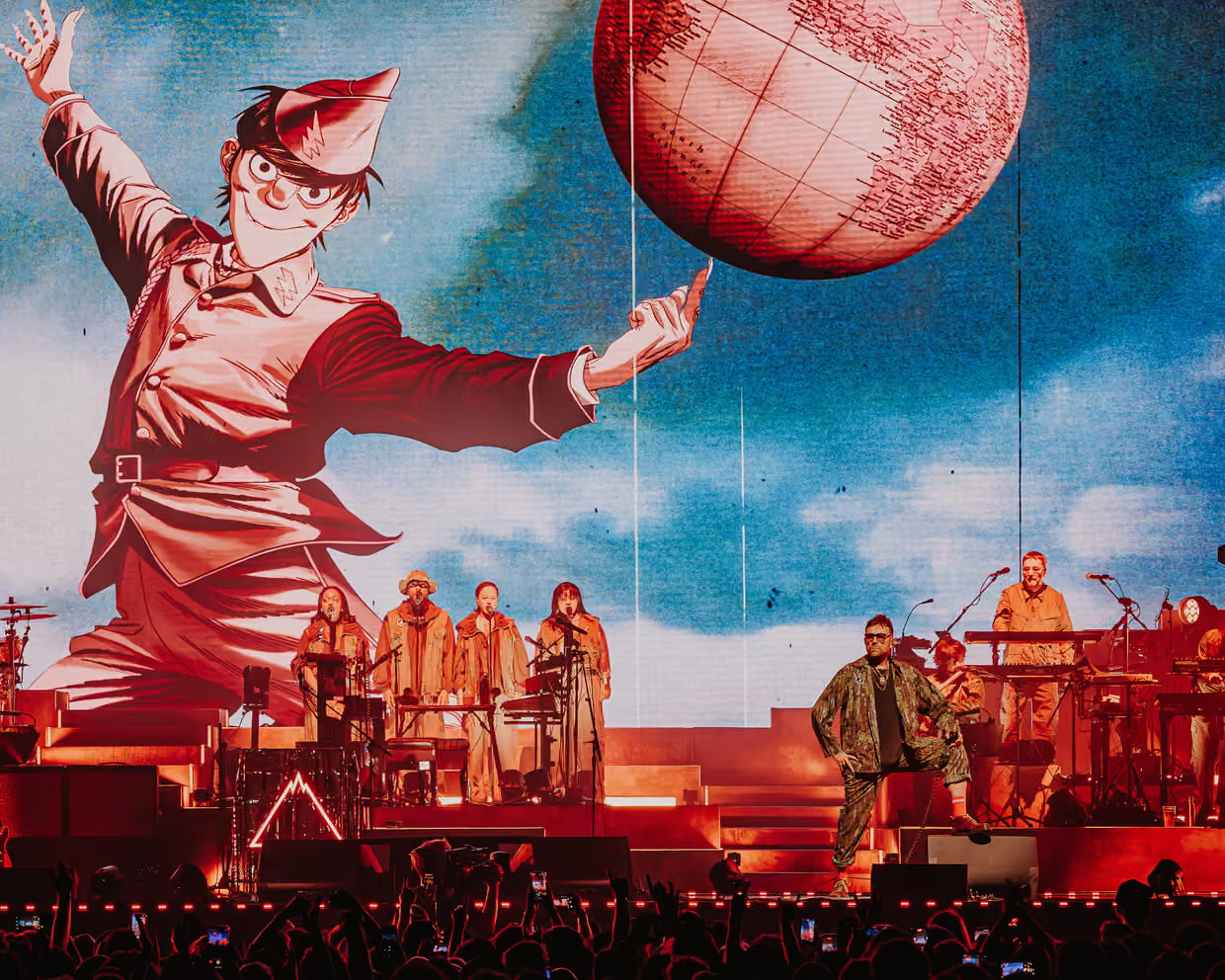
Popcaan took to the stage for a lively rendition of ‘Saturnz Barz’, before Black Thought, Asha Puthli and Anoushka Shankar joined Albarn for ‘The Moon Cave’, and both The Smiths' solo legend Johnny Marr and The Clash’s Paul Simonon came out for ‘Casablanca’. Marr and Simonon came out again later in the night for ‘Plastic Beach’.
More special guests joined later on too, with Yasiin Bey (formerly Mos Def) joining for both ‘Stylo’ and ‘Damascus’ alongside Omar Souleyman, Little Simz taking to the stage for ‘Garage Palace’, and Kano, Bashy and Lao performing ‘White Flag’.
Mortality and loss are major themes of 'The Mountain', and on 'Delirium', the guttural bark of the late Mark E Smith bounces around a stadium full of both greying first-generation Blur fans and their excited kids. Both generations get off on effervescent Malian singer Fatoumata Diawara’s keening harmonies and gorgeous traditional attire.
There’s a strong rap presence, from the urgent Yasiin Bey (trading rhymes with Syrian icon Omar Souleyman) to Bootie Brown appearing on the verge of self-combustion and Little Simz spitting words like bullets. When the focus shifts back to India, singer Zanai Bhosle fills the shoes of her grandmother, Asha, who recently passed away.
The most intense moment of the evening, undoubtedly, came from Happy Mondays and Black Grape icon Shaun Ryder and Roses Gabor, who helped close out the show with huge hit ‘DARE’, the band's only UK Number One single, marking a tour debut for the song.
“Thank you so much for attending this mass gathering of multi-cultural, multi-generational music; we appreciate you,” Albarn told the crowd, also quipping that “the logistics are ridiculous for this band” when he embraced Ryder just before he left the stage.
'Feel Good Inc' featuring Posdnuos from De La Soul becomes what it was always destined to be, a stadium anthem. The night ends as Gorillaz began, 25 years ago, with the sly, loping melodies of their debut single, 'Clint Eastwood'.
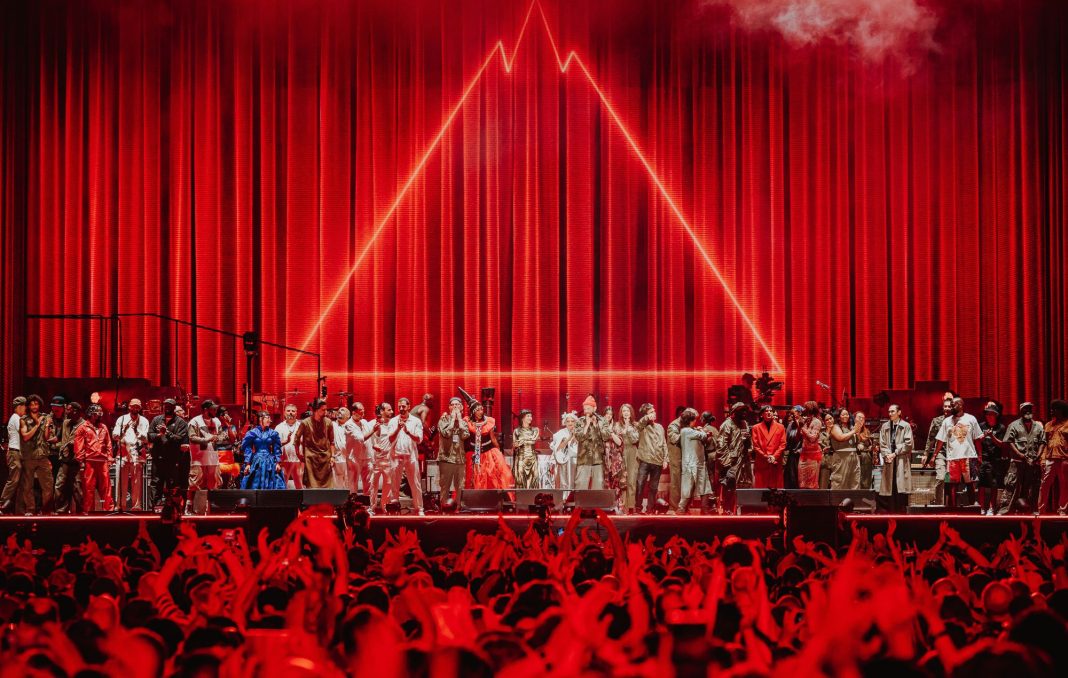
Introducing his guests all back to the stage after the final track ‘Clint Eastwood’, Albarn shared his gratitude to fans for showing up for one of the most memorable shows of Gorillaz’s career, and closed things out by saying: “We love you because we are you”.
It was a glorious evening and a triumph for the band. You can be sure of one thing: as soon as he got backstage, Damon Albarn will have been planning what he will do next.
Someone check what Graham Coxon, Alex James, and Dave Rowntree are doing?
After delivering one of the best Glastonbury performances in recent memory, Olivia Rodrigo has returned with her third album, a brilliant, introspective gut-punch exploring the complexities of adult relationships. The record features a stunning creative contribution from the Godfather of Goth himself, Robert Smith of The Cure, who has recently become one of Rodrigo's close friends and mentors.
'You Seem Pretty Sad For A Girl So In Love' takes everything Rodrigo mastered on her first two beloved albums, 'Sour' and 'Guts', the very projects that transformed her from a bedroom songwriter into a global superstar, and significantly ups the ante. While she was crafting this record, her own real-life relationship came to an abrupt end. Out of that emotional fallout, she began to meticulously detail the dizzying highs and devastating lows of modern romance. The resulting album is layered, cinematic, and bursting with sonic ambition, yet it remains remarkably nuanced. It is definitive proof that Rodrigo stands as one of this generation's finest pop stars.
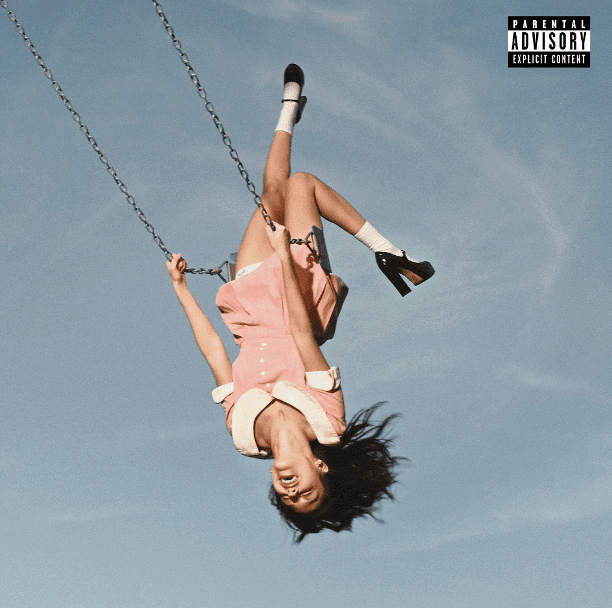
Side A (officially designated as the 'Girl So In Love' side) captures the peak heights of romance, where Rodrigo gleefully basks in the warm rays of a new relationship. You can practically picture her skipping through a sunlit meadow during the meandering musical breakdown of 'Stupid Song', while the rich, soaring chorus on 'Drop Dead' feels as opulent and ebullient as the name-checked Palace of Versailles. That grand, cinematic quality also extends to the album's more stripped-back moments. On 'Honeybee', Rodrigo pairs her eerily intimate vocals with a warm, fuzzy piano melody, passionately belting out the line: “I hope I never see what your face looks like going.” Ah, young love...
However, that sweet naïvety quickly sours as jealousy and co-dependency rear their ugly heads. Rodrigo becomes braindead and listless without her lover on the excellent, New Order-inspired ode 'Maggots For Brains'. Later, she fiercely fights to prove she is the ultimate girlfriend, paired with the best boyfriend ever, on the tongue-in-cheek 'U + Me = <3'. On 'My Way', a deliciously bitchy, high-energy pop-rock anthem that serves as the closest sonic sibling to 'Guts', Rodrigo sharply fends off a rival who cannot keep her eyes off her man, snapping: “Let me be direct, just stop! You’re being fucking weird…”
Robert Smith famously reappears in this darker territory, duetting with Rodrigo on the haunting 'What’s Wrong With Me?'. His perennially racked, emotional voice blends remarkably well with her sharp pop delivery. Yet, Smith's presence is felt everywhere across the project. It echoes from the clever lyrical reference to 'Just Like Heaven' in the album opener 'Drop Dead', to a track literally titled 'The Cure'. While Rodrigo has playfully insisted the latter title is unrelated to the band, the typeface used in the song’s music video looks remarkably like their iconic late-1980s logo. Ultimately, tracks like 'Maggots For Brains' and 'U + Me = <3', with their flanged basslines and breezy acoustic guitars, stand as deeply affectionate, expertly crafted homages to Smith and company in full-blown pop mode.
Ultimately, 'You Seem Pretty Sad For A Girl So In Love' represents a massive leap forward, solidifying Olivia Rodrigo's transition from a teenage phenom into a mature, boundary-pushing artist. By masterfully blending the raw emotional honesty of her early work with sophisticated post-punk and goth-pop influences, she has crafted a record that feels both deeply personal and universally resonant. It is a thrilling, bittersweet triumph that proves she is not just riding the waves of pop stardom but actively reshaping its future.
In this blog post written just over a year ago, I proclaimed Wolf Alice as Britain's best band. I wrote that just after the band had played a sunset show on the Other Stage at Glastonbury. Just over a year later, the band took to the stage in their biggest headline show to date, in front of 45,000 people in North London's Finsbury Park. Shows in this North London venue have proven to be huge catalysts in recent years; Sam Fender's performance in 2022 propelled him further up festival bills and into football stadiums. His lead support that day, Fontaines D.C., would have their own moment in the North London sunshine in 2025, which in turn propelled them into arenas and festival headline slots.
For Wolf Alice, the magnitude of what this show represented was deeply intertwined with the journey that brought them here. It was the culmination of years of hard work, relentless touring, starting in the grassroots venues that are now fewer and farther between and building a following one gig at a time. Four albums in and now signed to a major label, they are starting to reap the rewards. Wolf Alice’s story and songwriting has always been underpinned by a profound sense of place. Finsbury Park and North London are home. Frontwoman Ellie Rowsell and bassist Theo Ellis grew up just a short distance away, while the venues where Rowsell and guitarist Joff Oddie played their very first gigs sit just a stone’s throw from the park.
While some might expect the band to play it cool and ignore the geographical connection, geography has always been a core narrative in Wolf Alice's songwriting. On 'The Sofa', Rowsell sings of her roots: "Feels a little like I'm stuck in Seven Sisters / North London, oh, England, and maybe that's okay." While previous records found them yearning for the Hollywood Hills or drinking liquid rose on 'The Beach', it feels fitting that this evolved version of Wolf Alice has returned home. Having explored the world both literally and sonically, they now know exactly where their heart lies. A palpable sense of pride washes over Rowsell as she surveys the crowd, as if something magical. “I hope you have the best day ever!” she beams, her face completely lit up with joy.
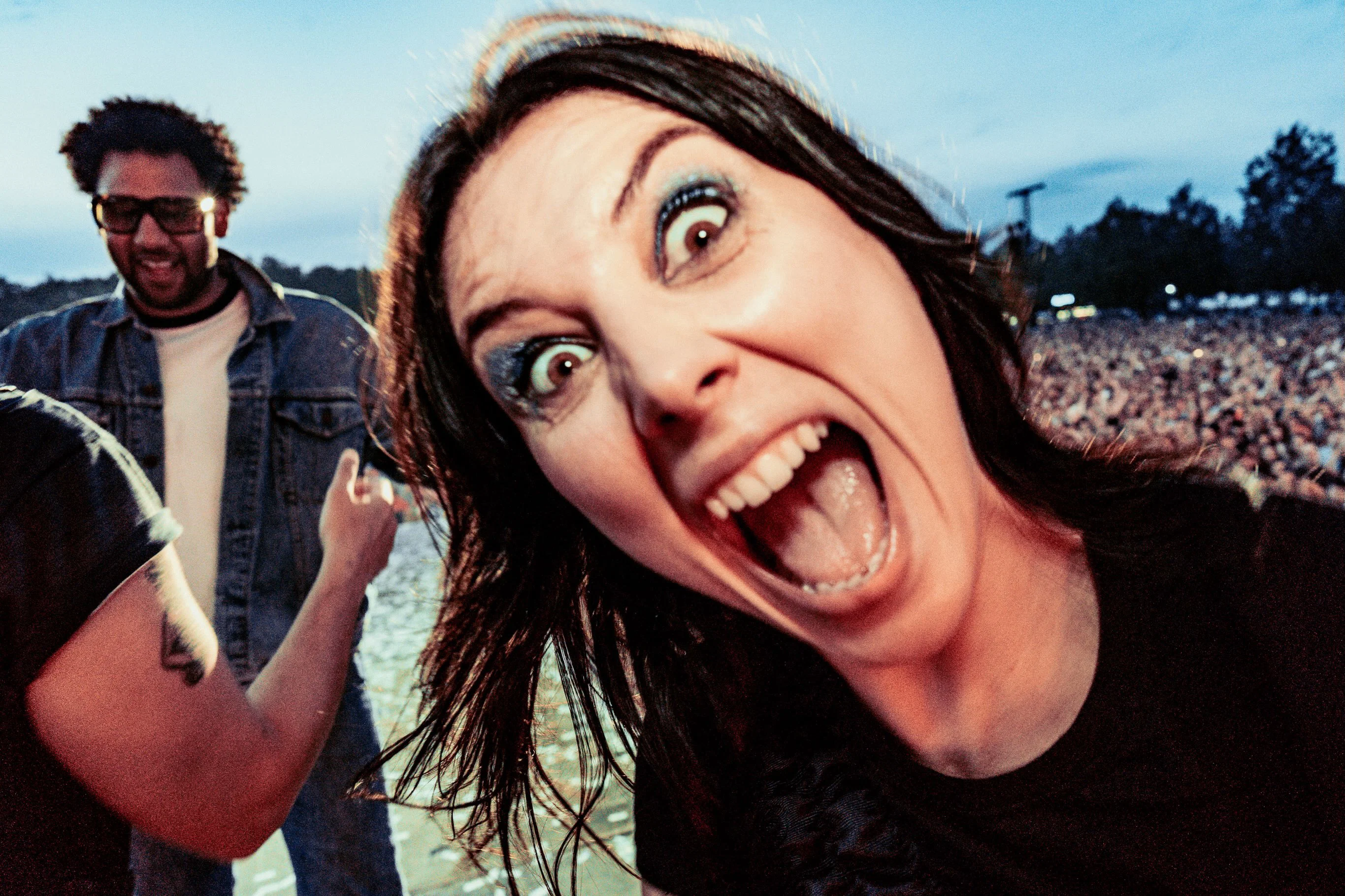
You can also sense that they can’t quite believe they’re here. Bassist Theo Ellis looks out across the crowd. “Finsbury Park, you have no idea how much this means to us. I grew up just over there,” he points into the middle distance. “The weekend is still young; they’ve kept the pubs open as late as possible for us,” he jokes.
Given the setlist, it was almost impossible for the crowd not to have the time of their lives. Following a vibrant performance of 'Bloom Baby Bloom', which was punctuated by early bursts of white confetti, the band struck a flawless balance between their latest album, 'The Clearing', and their back catalogue. Theo Ellis held the groove together with a pulsing, steady bassline that anchored the newer tracks seamlessly alongside older fan favourites. A few surprises kept the crowd on their toes: 'Lisbon', the sweet, springy track from 'My Love Is Cool', arrived early in the set, while Rowsell delivered a gorgeously stripped-back rendition of their 2013 B-side 'White Leather'. Perched atop a column nestled in the star-shaped cutout at the back of the stage, her raw, unfiltered vocals floated over a hushed, captivated park, proving that the band can captivate just as easily with a whisper as they do with a roar.
The performance put the sheer variety of their discography on full display. 'White Horses', driven by drummer Joel Amey, truly came into its own live, transforming the park into a shifting sea of bouncing bodies. The live version weaponised its relentless, krautrock-infused synth loop, building a hypnotic wall of sound alongside Joff Oddie’s biting, textured guitar riffs.
Later, 'Bros' proved to be an indie ode to the power of friendship and childhood innocence, a deeply emotional milestone for both the band and the thousands of adoring fans singing along. The track is woven with beautiful nods to youth in North London, notably the line "Ooh, jump that 43", a reference to the local bus route cutting through Highgate and Islington. It perfectly captures the rebellious, free-spirited energy of adolescent adventure, a feeling hammered home by the bridge's feral call: "Are you wild like me? Raised by wolves and other beasts". As vintage tour diary footage flashed across the giant screens, superimposed over live shots of the band, audience members climbed onto shoulders to share a massive, cathartic release. It felt like a collective celebration of how far they’ve come, wrapping the field in a shared sense of nostalgia and triumph.
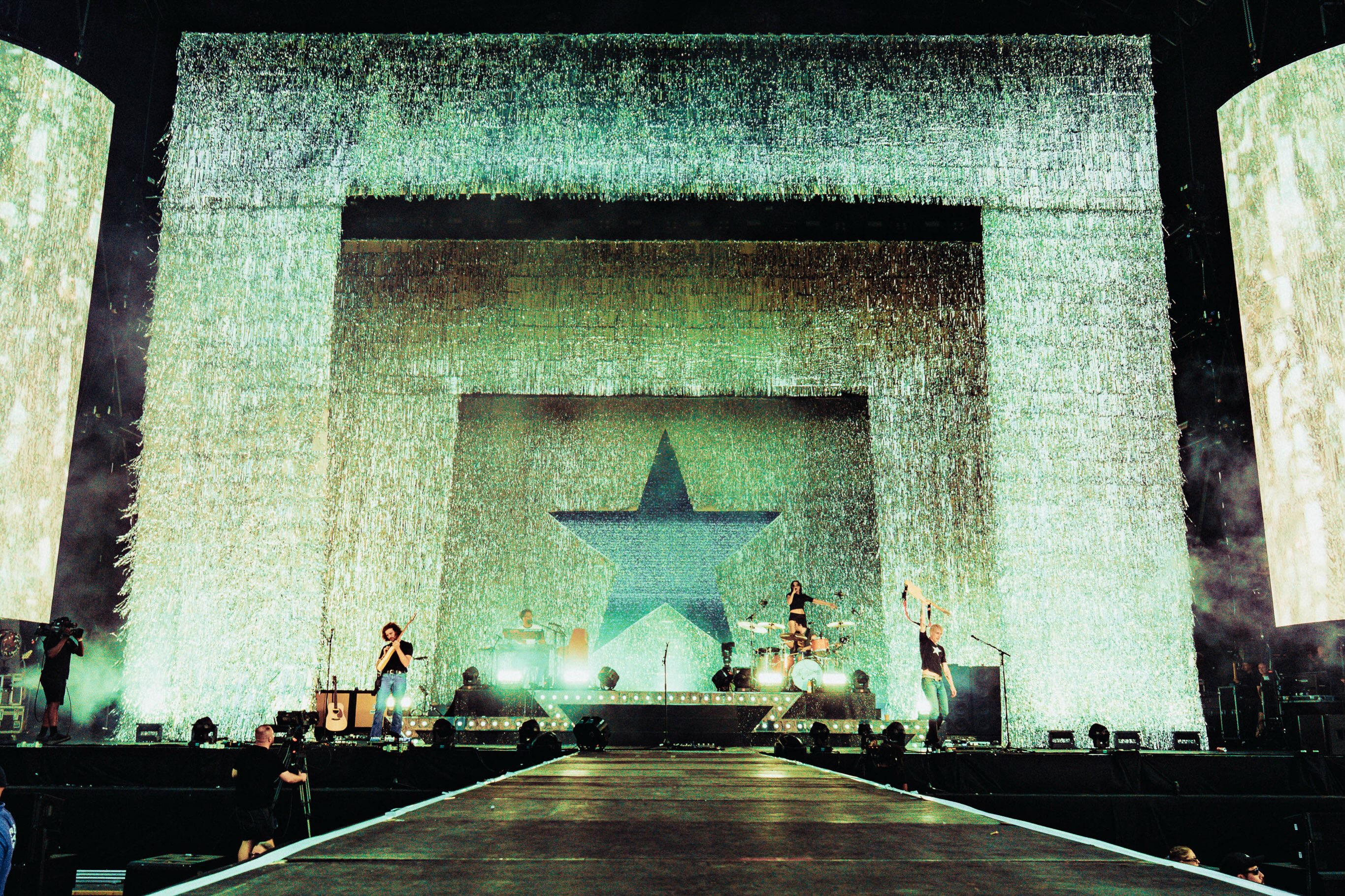
When the intro to ‘The Sofa’ finally arrives, it sparks a massive hometown singalong that feels entirely predestined. As the closing track of The Clearing, the song deeply contemplates the push-and-pull between leaving home and finding peace exactly where you are. That thematic tension resolves into pure magic live. The crowd delivers an explosive, roaring bellow of the line, “Feels a little like I’m stuck in Seven Sisters, North London”, a surreal moment of literal and musical synergy given that the 45,000-strong crowd is standing right on Seven Sisters Road itself.
Initially drifting out across the park as a serene, piano-led ballad, the track builds steadily, sweeping the audience up in its bittersweet wave of self-acceptance. The collective euphoria peaks just as the song reaches its lush, emotional crescendo. Moments later, Rowsell disappears from the stage, only to reappear having swapped her exquisite white two-piece for an identical one in black. Clutching a Gibson Flying V guitar, she is ready to rock, using the quiet resolution of 'The Sofa' as the perfect launchpad to blow the roof off the venue.
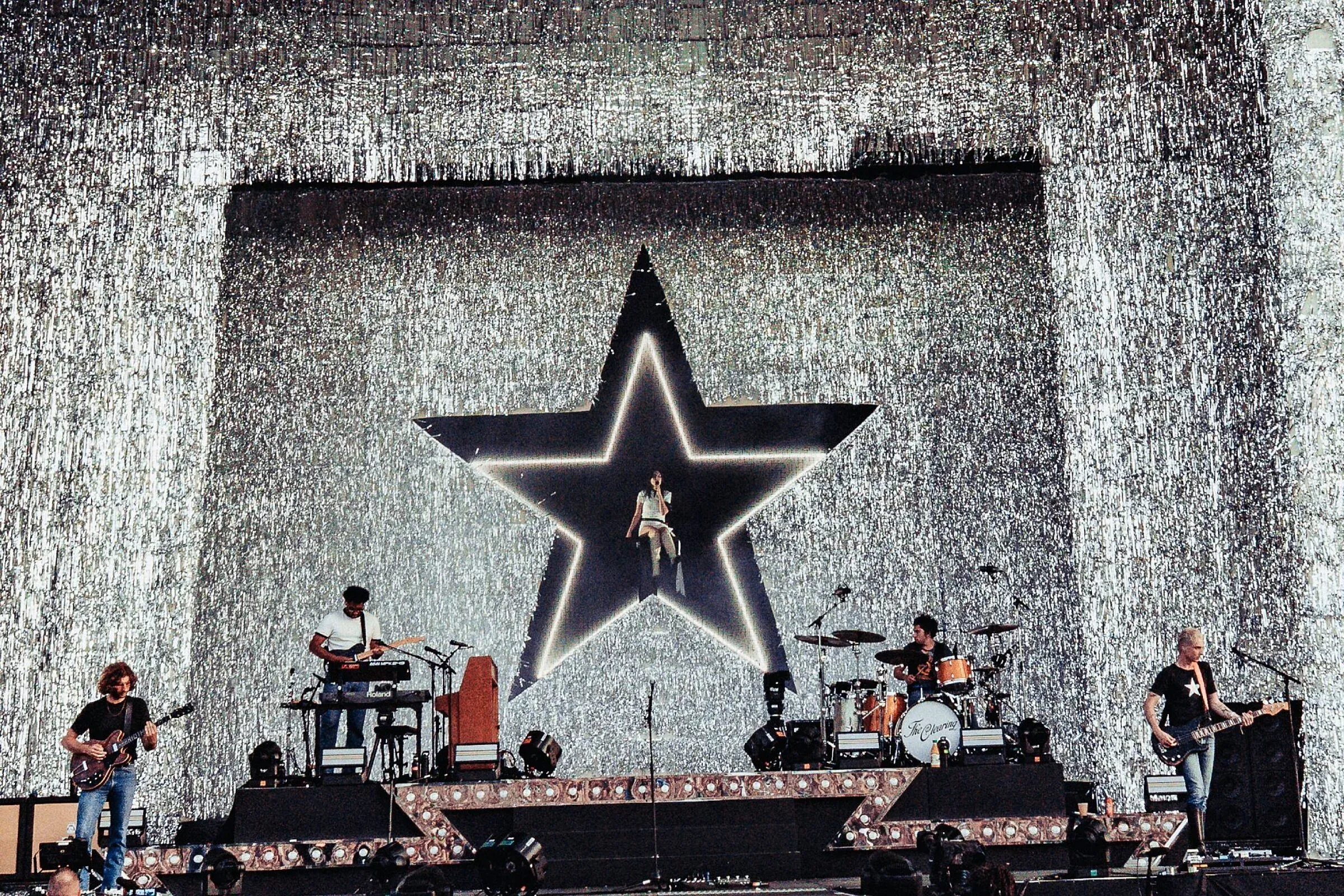
A roaring run of 'Yuk Foo', 'Play The Greatest Hits', and 'Smile' unleashed the punkier, visceral edge of their sound, with calls from bassist Theo Ellis to "open up the pit". Before the sludgy, shifting weight of 'Visions Of A Life' captured the sheer complexity of the band's creative mind. This track represents Wolf Alice at their absolute best, fluidly moving through moods from heavy, Sabbath-esque riffs to jazzy breakdowns and back again. It served as a fearless, shape-shifting finale that encapsulated everything bold and unpredictable about the group.
Unlike many groups of their size, they haven’t got here with a rinse-and-repeat formula. And it’s masterful hearing them mesh it all together.
'Don't Delete the Kisses' had been the band's set closer virtually since its release, but for Finsbury Park, it was moved forward to open the encore. Fans climb onto their friends' shoulders and scream the words back to the band on stage. A song that perfectly captures that warm fuzzy rush of falling in love with Rowsell singing “When I see you, the whole world reduces to just that room.” Wolf Alice’s best songs have always captured those feelings: of being here, of home and the life and friendships that happen around these streets. But they’re also about wanting to go further.
As a gigantic disco ball descends above the stage, Rowsell shares some words of encouragement with the crowd: “If you’ve got a crush, you should probably tell them. If you want to start a band, you should probably start one.”
During the encore, the band unleashed their biggest surprise of all.
At Glastonbury the previous year, they had caught everyone off guard on the Other Stage by beautifully sliding into a cover of Fleetwood Mac's 'Dreams'. Rather than treating it as a standard standalone cover, they cleverly hooked the 1977 classic onto the end of 'How Can I Make It OK?', smoothly transitioning into the iconic track just as the evening sun was setting over a massive, sunbaked crowd. It was a faithful, dreamy, confident nod to their musical lineage that showcased the sheer emotional richness of Rowsell's vocals.
At Finsbury Park, they chose to up the ante entirely. Instead of sunset pop bliss, they tore into a roaring 90s alt-rock monolith, Nirvana's 'Smells Like Teen Spirit'. It was a genuine shock to the system that paid off beautifully. Tackling such an iconic and notoriously difficult anthem is a massive risk, but the band executed it with absolute precision. Rowsell tore through the opening verse and chorus with fierce, raw energy, prompting an immediate explosion of pogoing in the moshpit.
The band finish things off with the blistering 'Giant Peach', one of their earliest singles, and another fitting ode to the place where you grew up. The track's jagged, explosive riffs tear through the venue, sparking a final wave of collective euphoria in the crowd. It is a masterclass in controlled chaos, proving that even as they conquer larger stages, Wolf Alice haven’t lost an ounce of their raw, visceral bite that made fans fall in love with them over a decade ago.
Wolf Alice have been brilliant since the beginning, but over the years, they have evolved into one of the absolute best around. They navigate the spaces between delicate shoegaze, dream-pop intimacy, and heavy rock with an effortless, chameleonic grace. During ‘Leaning Against The Wall’, Ellie Rowsell nods to a partner's romantic gesture, singing, “You put my name up in lights”. In these final minutes, Wolf Alice’s own name is spelt out in bulbs through the silver fringe framing the stage
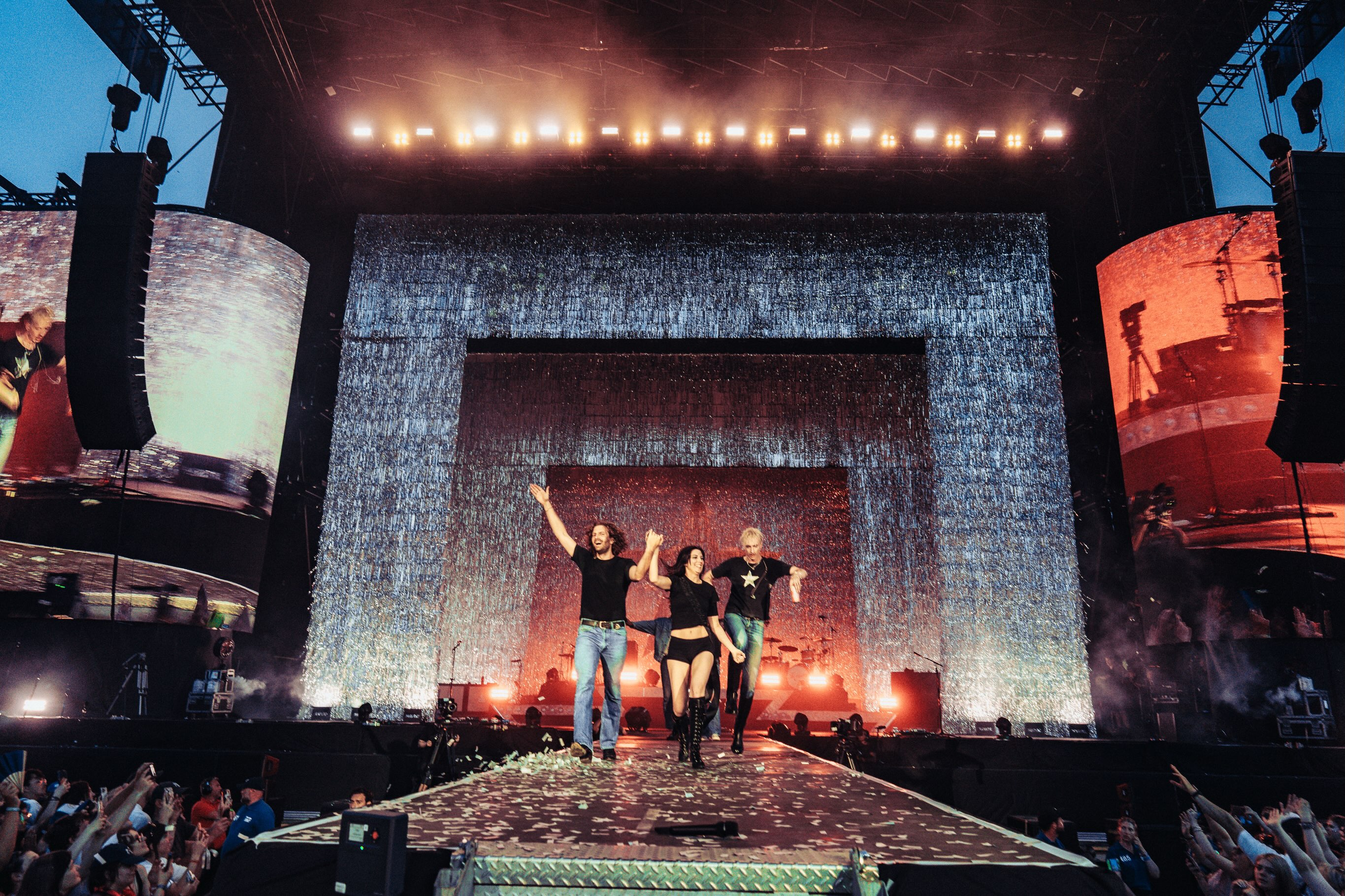
It feels like a glowing testament to the years of hard work that led them here. This show was two things at once: a triumphant hometown celebration and a band setting the stage for their future, a future where they reign as the best band in Britain. There is a sense of earned majesty in how they command the room now, a far cry from the sweaty pub backrooms of their youth, yet entirely connected to that same hungry spirit. That Glastonbury headline slot no longer feels like a mere possibility; it's long overdue.
Blossoms announced their sixth album, ‘Songs From the Wedding Cake’, almost exactly ten years after their self-titled debut reached Number One. Its title comes from an old Stockport nickname for the town hall where Tom Ogden was married, while the songs turn ordinary married life into pop music: jokes about divorce, visits to The Range, the 192 bus, insurance disasters, falling asleep in taxis and dancing around the kitchen.
The first single, ‘Joke About Divorce’, began with an argument and Ogden’s mistaken belief that humour might make things better. It did not, but the bad timing became a bright, sprightly Blossoms song with the same lightly absurd domestic detail that had once allowed ‘Your Girlfriend’ to build an entire romantic crisis around somebody living next door.
‘Meet Me In Love’ emerged from a songwriting trip to the Lake District, where Ogden, Natalie Findlay and Jules Apollinaire found a simple two-chord disco groove on their final day. Declan McKenna supplied backing vocals, while its video placed Maya Jama inside the increasingly colourful world surrounding the album. Beneath the shimmer was the more mature perspective shaping the record: this was a band writing about love after the first rush had passed and ordinary life had begun.
McKenna returned as a co-writer and credited guest on the third single, ‘Additional Driver’. Its starting point was a minor collision Ogden had while collecting his wife, Katie, outside Manchester’s O2 Apollo. People attending a show across the road saw police cars and assumed something far more dramatic had happened. Ogden took the story into a writing trip with McKenna in Anglesey, where it became a five-minute, disco-flecked song about being trusted with somebody else’s car and then making a complete mess of it.
Few bands would look at a car-insurance mishap and hear the beginnings of a pop song, but ‘Additional Driver’ captures the idea at the centre of ‘Songs From the Wedding Cake’. Most relationships are built through small accidents, private jokes, domestic frustrations and the decision to continue loving somebody after they have done something deeply inconvenient.
The nights out and romantic confusion of Blossoms’ earliest records had gradually made room for marriage, routines and growing older beside somebody. Their music had not stopped being colourful; it had found new things to illuminate. An album about arguments, taxis, no-claims bonuses and trips to The Range could still contain some of their most expansive pop music.
The announcement arrived alongside their biggest UK headline tour, including a hometown show at Manchester’s Co-op Live, with The Royston Club supporting throughout. Blossoms had already proved themselves capable of filling enormous outdoor spaces at Edgeley Park and Wythenshawe Park, but a full arena tour still felt like overdue recognition for one of Britain’s most dependable bands.
At the other end of the process, Westside Cowboy released their debut album, ‘It Goes On’, on 21 August. The Manchester four-piece had formed only three years earlier, won Glastonbury’s Emerging Talent Competition in 2025 and followed it with two EPs, ‘This Better Be Something Great’ and ‘So Much Country ’Till We Get There’. They toured with Geese, signed to Island and reached their first album while the excitement around them was still gathering speed.
‘It Goes On’ contained eleven songs in just over 35 minutes. Recorded at Greenmount Studios in Leeds with producer Loren Humphrey, it retained the looseness of four musicians playing together. Mistakes, breaths, fingers moving against strings and voices pushing slightly beyond their cleanest range were allowed to remain. The record sounded lived in without pretending the band had spent years becoming something they had only recently discovered.
Westside Cowboy had jokingly described their music as “Britainicana”, but ‘It Goes On’ stretched beyond that label. The fuzzy momentum of ‘Kick Stones (The Boys)’ and the jumping guitars inside ‘Paperchains’ drew from American indie rock without disguising the fact that these were young musicians from Manchester. ‘Dobro’ and ‘Big Wheels’ introduced more space, while ‘Pin Up Boys’ allowed the voices and guitars to strain towards something angrier.
The brightness of the playing often concealed considerable anxiety. ‘Worried Age’ captured a generation paralysed by the scale of the world’s problems, sitting behind a steering wheel without knowing where to go. ‘Coyote’ carried guilt about the environment and the fear of becoming complicit through inaction. Quieter songs such as ‘Patchwork’ and ‘Take My Leaving As I Love You’ stripped away the rush until every hesitant voice and stray note felt exposed.
That tension prevented the album from becoming another carefree collection of jangling guitars. Westside Cowboy sounded thrilled to be making a record while remaining uncertain about the world waiting outside the studio. ‘It Goes On’ captured four young people learning what their band could hold: friendship, humour, fear, noise, tenderness and the alarming realisation that the future had already begun.
Keo were approaching their first album from a different direction. ‘Put A Smile On For Me’ was scheduled for release on 25 September, following the ‘Siren’ EP and a year in which the London four-piece had supported Wunderhorse, Fontaines D.C. and Wolf Alice, sold out headline shows and become one of the most physically formidable young bands in the country.
Frontman Finn Keogh and guitarist Jimmy Lanwern self-produced the eleven-song record during an intense ten-day session. That compressed process suited a band whose appeal depended on immediacy. Guitar bleed, sudden changes in volume and the sound of musicians reacting to one another gave the songs the same volatility they possessed onstage.
‘That’s Me’ placed guilt and self-reflection inside one of their heaviest songs. Keogh examined the damage caused by secrets, toxic behaviour and the temptation to keep an uncomfortable part of yourself hidden. The album title offered a similarly uneasy instruction. Two people could smile at one another, agree that everything was fine and avoid looking too closely at what sat beneath the performance.
'Pistol’ began with the image of dead stars whose light remains visible long after they have disappeared. Keo turned that delayed arrival into something loud and physical, allowing the song to feel immediate even while its central image reached across enormous distances. Elsewhere, ‘Thorn’ had already become a live favourite before the album was announced, while songs including ‘Fly’, ‘Black Dress’, ‘Blue Song’ and ‘Spent On You’ had been tested in rooms that grew larger each time the band returned.
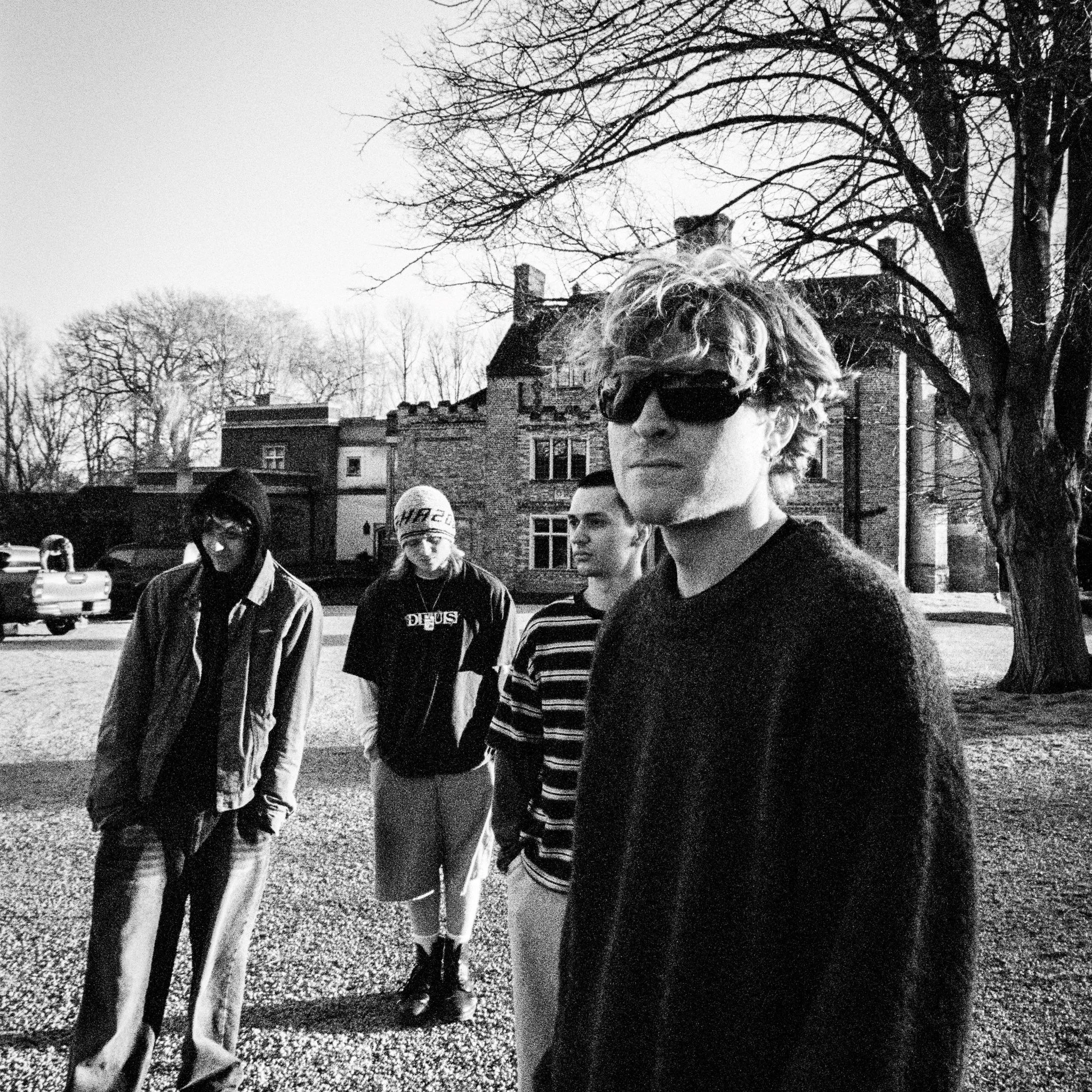
Many of the songs already belonged partly to the audience before studio versions existed. ‘Put A Smile On For Me’ was not introducing Keo from nothing; it was attempting to capture the band people had discovered through packed, increasingly chaotic shows. Their autumn headline tour sold more than 9,000 tickets on its first day, leading towards a Brixton Academy show in March 2027.
On the same day that Keo’s debut was scheduled to arrive, Gurriers would release their second album, ‘Nobody’s Coming To Save You’. If debut records preserve a band’s first rush of ideas, second albums ask whether those ideas can survive expectations, touring and the knowledge that people are now listening.
Gurriers’ 2024 debut, ‘Come and See’, introduced five musicians capable of turning political anxiety, social disconnection and the pressures of modern life into abrasive, physical music. ‘Erasure’ continued that momentum in 2025, but the title track of ‘Nobody’s Coming To Save You’ sounded bigger, sharper and even less interested in offering comfort.
The title initially appeared hopeless. Nobody was coming, institutions could not be trusted and waiting for somebody else to act had become another form of surrender. Gurriers intended it as a call to action. Change would remain impossible if everybody stood around expecting somebody else to begin it.
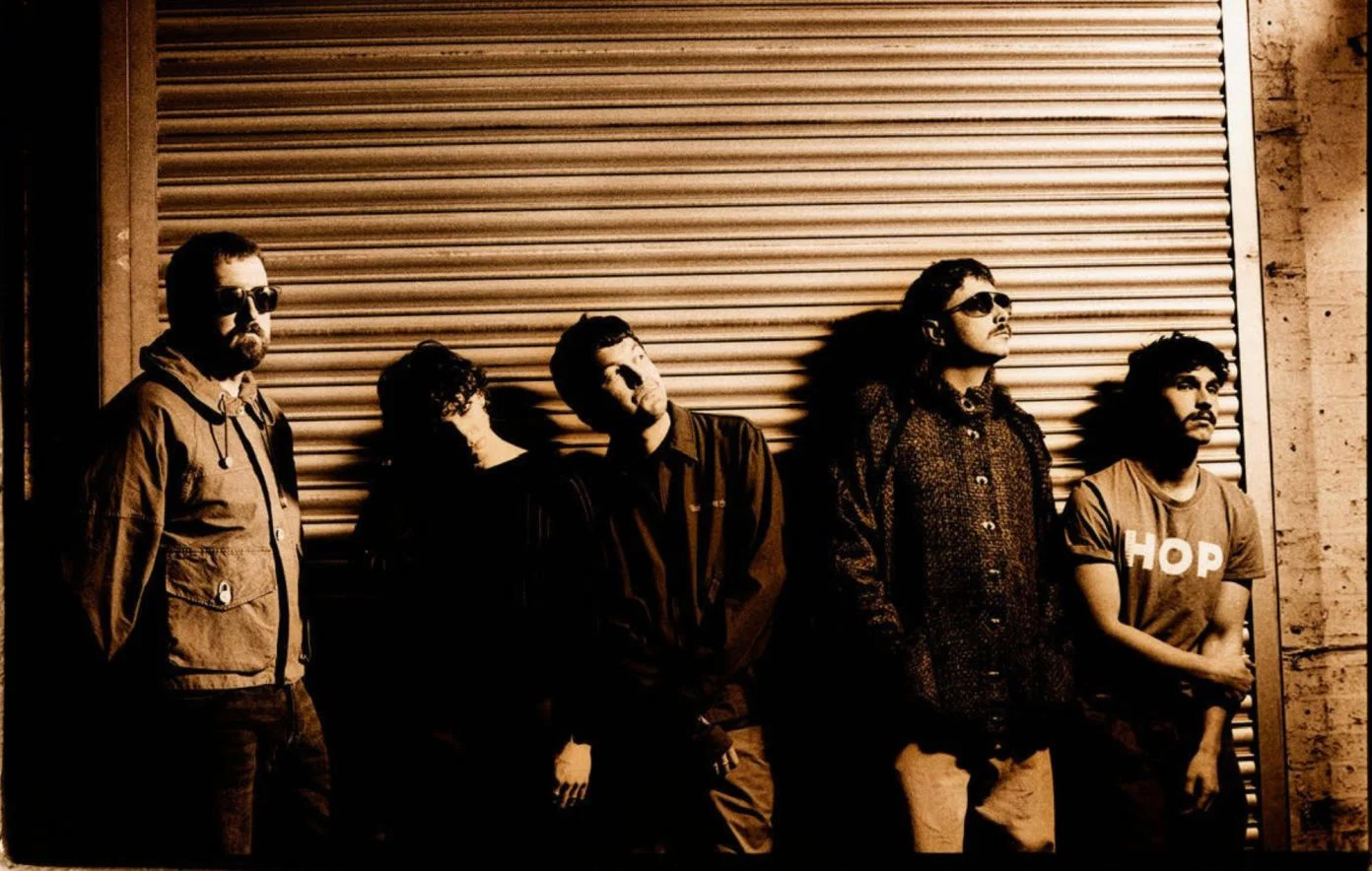
That position also answered criticism of the political subjects in their songwriting. “We’re a band, we’re not a political party,” they argued, but refusing the formal responsibilities of politics did not require them to ignore the world around them. ‘Party Lines’, written while the war in Sudan escalated, examined the hypocrisy of governments offering aid while continuing to profit from conflict. The guitars and rhythm turned that disgust into dance-punk momentum without allowing the movement to soften the accusation.
‘Nobody’s Coming To Save You’ was recorded between Attica Studios in Donegal and Holy Mountain Studios in London. Mark Bowen of IDLES and Loren Humphrey produced it, with John Congleton mixing. Those names made sense around Gurriers: Bowen understood how political anger could be made physical, Humphrey had already captured the live chemistry of Geese and Westside Cowboy, and Congleton’s work had repeatedly found clarity inside enormous amounts of noise.
The album placed Gurriers inside the extraordinary generation of Irish musicians that had emerged during the decade, but they did not need to resemble Fontaines D.C., Kneecap or anybody else to belong there. Their songs were more confrontational than romantic, built to make bodies move while forcing the people inside those bodies to consider what they were moving through.
Sam Fender and Olivia Dean made UK chart history with ‘Rein Me In’. The duet spent 19 non-consecutive weeks at Number One, passing the record Frankie Laine’s ‘I Believe’ had held since 1953. It had taken 35 weeks to reach the top and was displaced four times, only to keep climbing back.
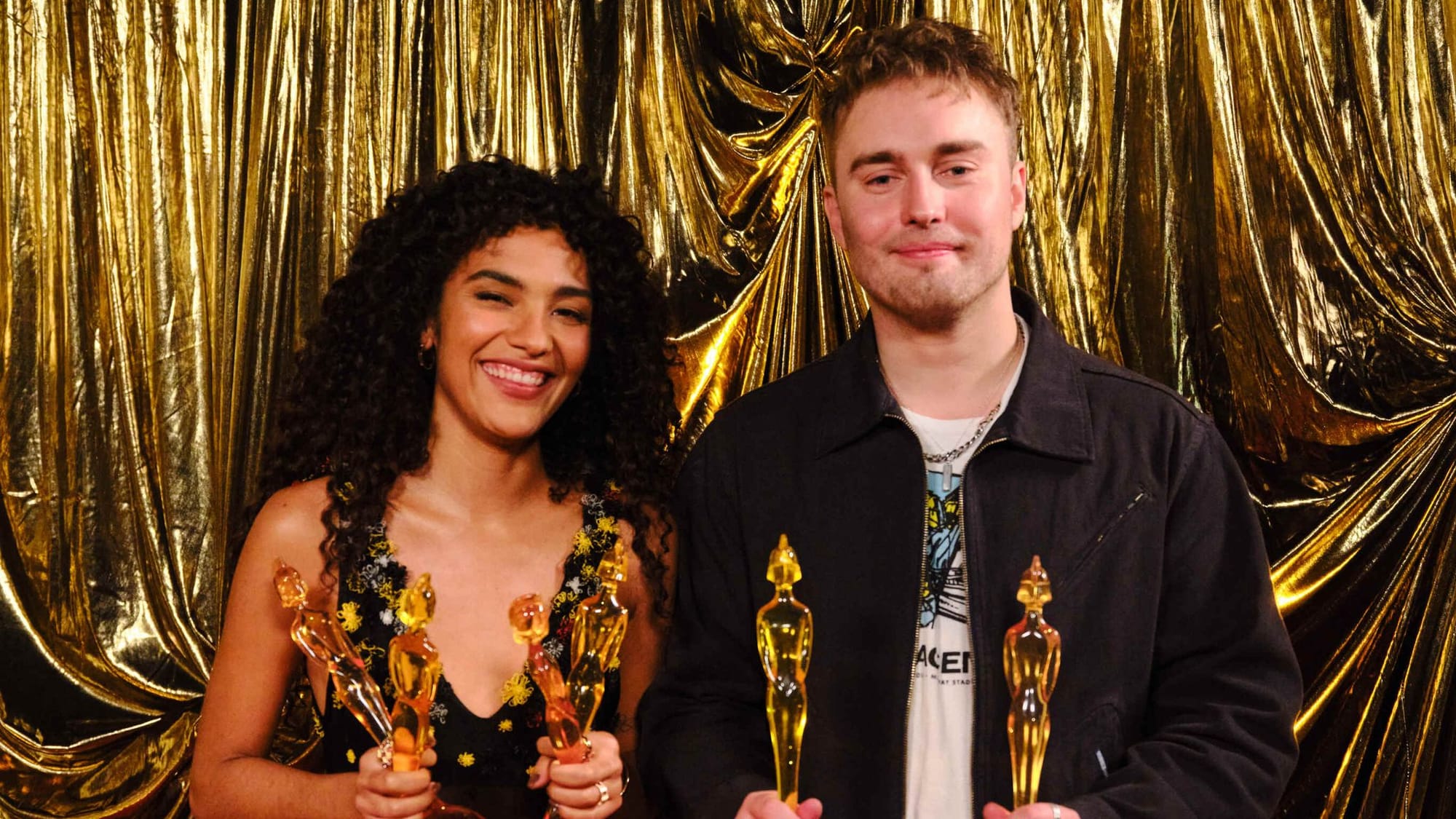
The song did not sound like an obvious record-breaker. It was built from acoustic guitar, gentle piano and the natural warmth between two distinctive voices. When it first appeared in 2025, the collaboration could have been viewed as a stadium artist introducing a rising singer to his enormous audience. Dean’s subsequent success transformed that relationship.
‘The Art of Loving’ carried her into the centre of British popular culture until ‘Rein Me In’ no longer sounded like an established star lending somebody a platform. It sounded like two of the country’s defining artists meeting at exactly the right moment.
Fontaines D.C. were preparing for something different. On 18 August, they released ‘Marianne’ and announced their fifth album, ‘Dopamine Chamber’. Produced by James Ford, the record was scheduled to arrive in October, only two years after ‘Romance’ had transformed the band’s scale and widened the possibilities of what their music could contain.
‘Marianne’ did not attempt to recreate the breathless panic of ‘Starburster’. Strings, synths and Grian Chatten’s exhausted invitation to disappear gave it the atmosphere of a dark lullaby or the opening scene of a film whose ending had not yet been revealed. Fontaines were preparing for arenas, but the growing size of the rooms had not encouraged them to make safer or more straightforward music. They sounded stranger just as more people began listening.
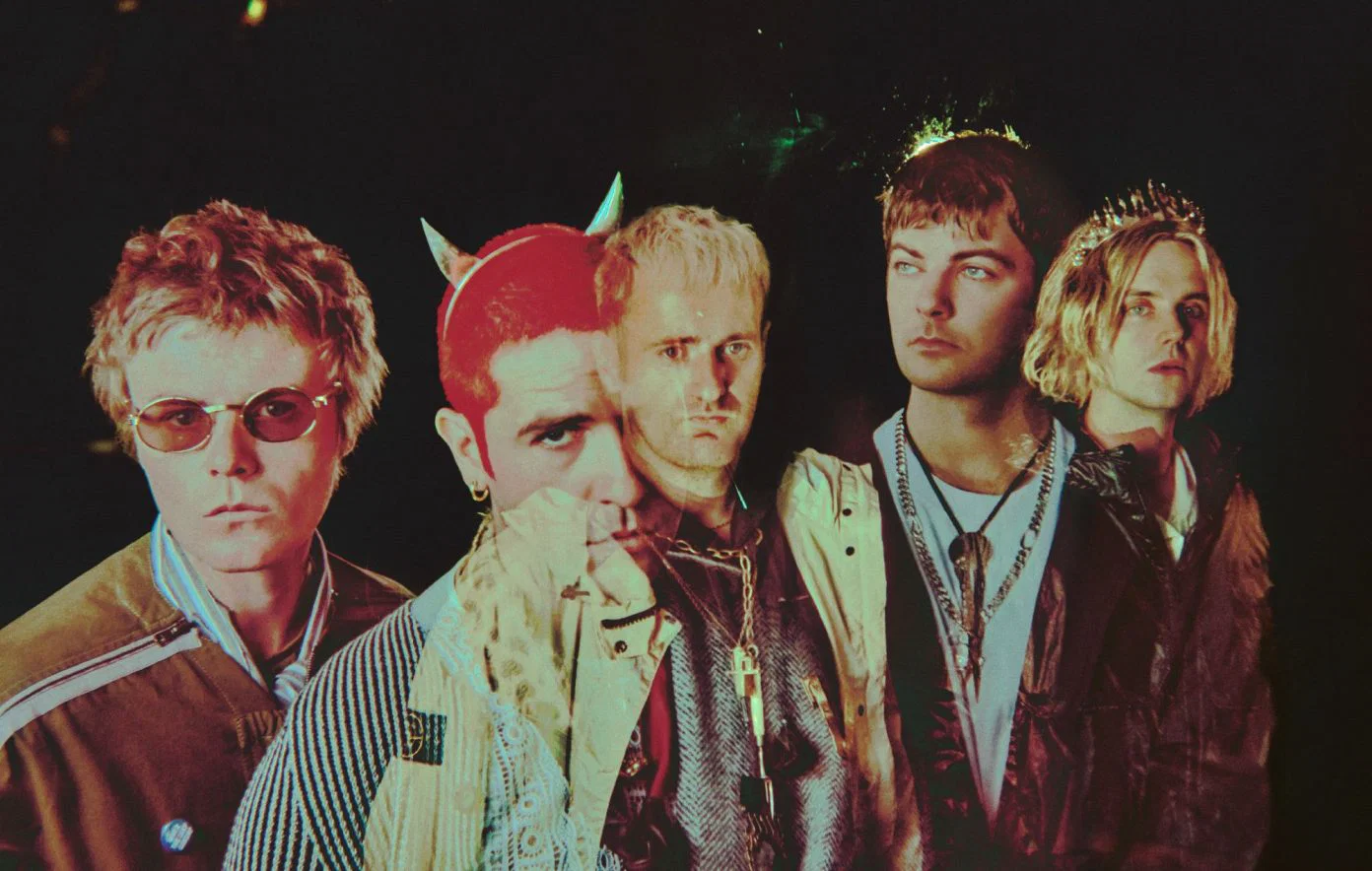
Jamie T also announced his sixth album, ‘Ghosts (100 Days of Morning)’. Its songs returned to ideas he had kept at a distance and examined growing older, leaving youth behind and trying to recover parts of himself that had almost disappeared. Hugo White of The Maccabees appeared on two tracks, Damon Albarn collaborated on ‘Cocktail’, and Jamie recorded a cover of The Jam’s ‘Ghosts’.
Lead single ‘3310’ still possessed his familiar scruffy urgency, even while the album around it appeared preoccupied with time passing. A few days later, the song’s title would become the basis of one of Reading Festival’s most ridiculous pieces of self-booking.
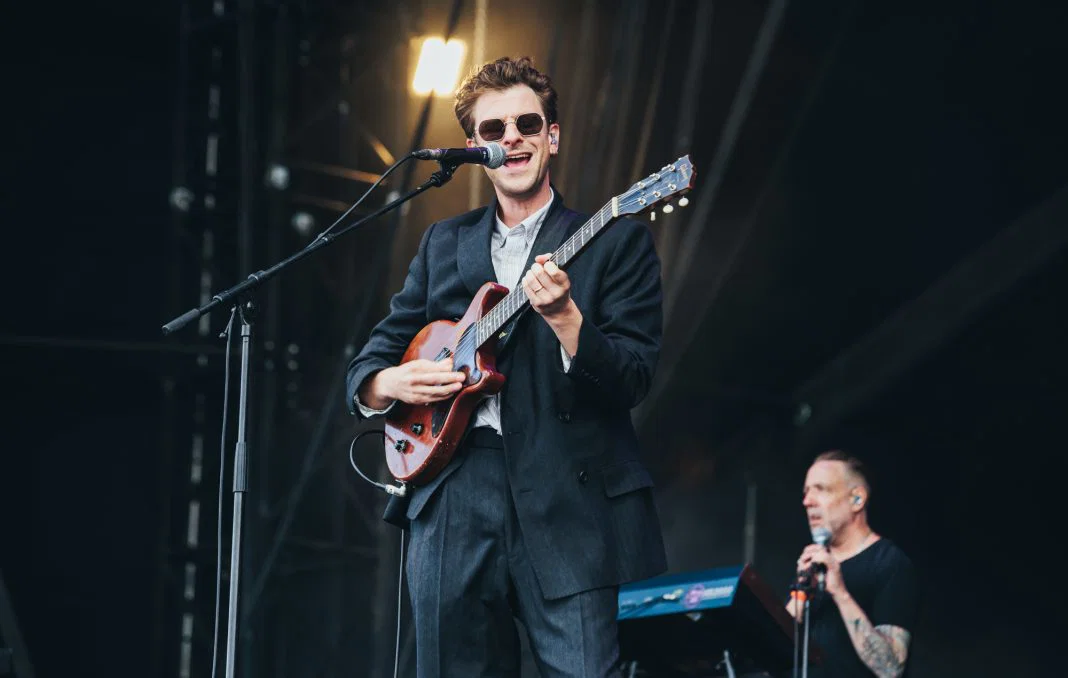
Reading & Leeds had spent years being asked what kind of festival it wanted to be. Was it still a rock festival, a home for rap and dance music, a pop event or a post-GCSE rite of passage for teenagers discovering their first favourite artist? Was it somewhere for young people, or a place for those in their thirties to return and watch bands they had discovered twenty years earlier?
Trying to answer any of those questions felt increasingly pointless by the end of the 2026 festival. Kasabian became the first band to headline Leeds on a Thursday night. Charli XCX moved between ‘Brat’, distorted guitars and David Cronenberg. Dave brought James Blake, Kano and Central Cee onto the same stage. Fontaines D.C. honoured the man who had helped them escape Dublin clubs, while Kneecap declared an Irish takeover before turning The Gallery into something between a rave, political rally and deeply unruly lock-in.
The festival itself had changed shape. The Grid became the new home of the main stage, while The Gallery, The Ballroom, The Warehouse and The Canopy gave different parts of the arena their own identities. The Ballroom came with chandeliers that occasionally appeared far too elegant for the pits opening beneath them. The Warehouse acknowledged how central dance music had become to the modern Reading & Leeds audience.
Leeds went further by effectively becoming a four-day festival. Arkayla and The Lathums opened the new Thursday before Kasabian became the first act in the festival’s history to headline Bramham Park that night. “This is history,” Serge Pizzorno told the crowd, and for once the usual frontman hyperbole was literally correct.
Kasabian were an obvious band to trust with the experiment. They had already headlined the festival in 2012 and 2017, and songs including ‘Club Foot’, ‘Underdog’, ‘Fire’ and ‘L.S.F. (Lost Souls Forever)’ had spent years proving how little encouragement they needed to become enormous festival chants. With ‘Act III’ arriving only days later, they also had something new to bring with them.
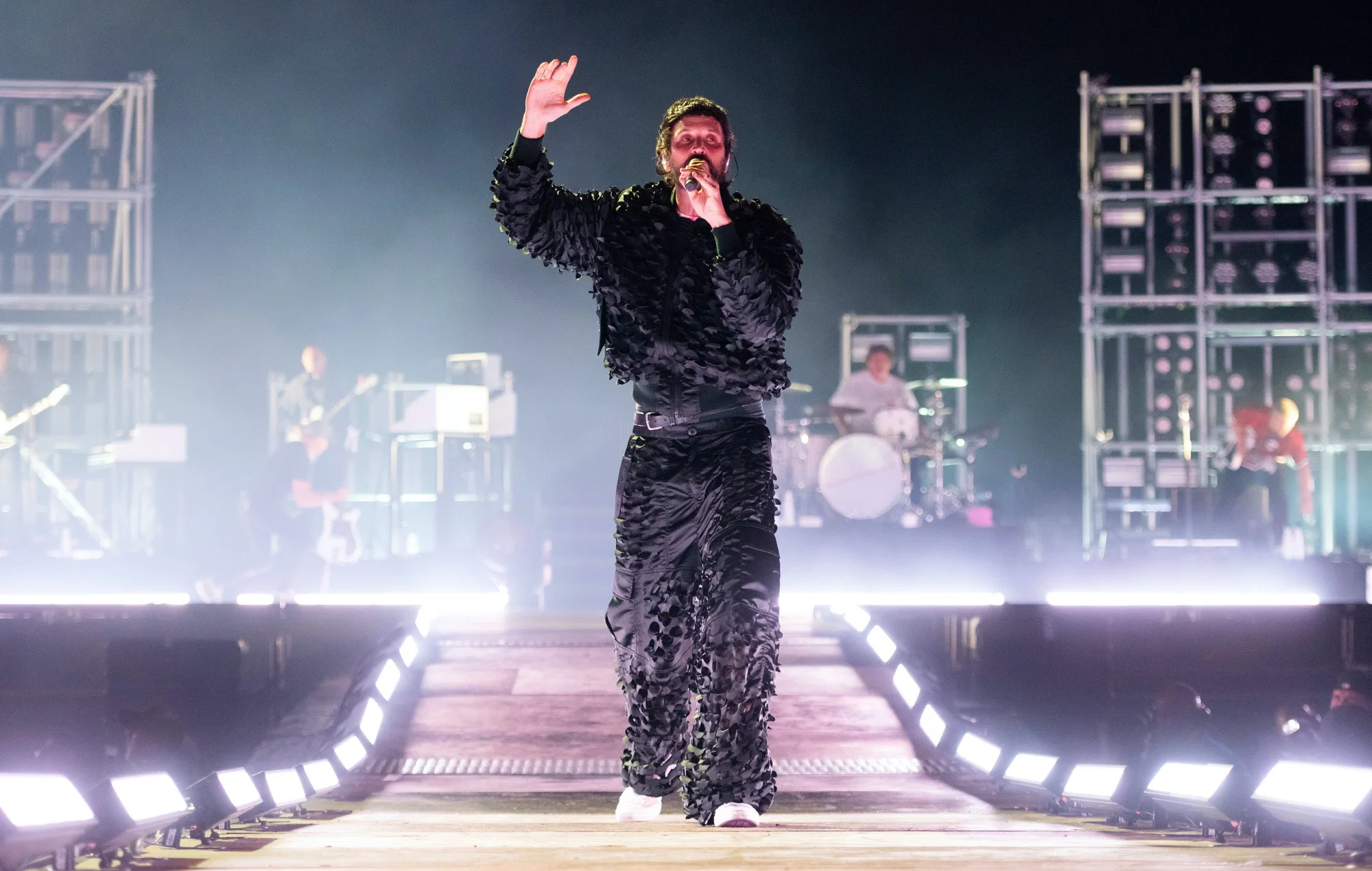
Leeds had added an entire night and asked one of Britain’s most reliable festival bands whether anybody would turn up. They did. Pizzorno moved across The Grid with the confidence of somebody who understood exactly what the songs could do to a large field, while Kasabian christened the festival’s new era by relying on the instincts that had carried them through the old one.
Friday at Reading began with Jamie T’s successful attempt to place himself on the bill. He had spent the days before the festival publicly asking for a slot and specifying that he required precisely 33 minutes and 10 seconds. Somebody eventually decided that sounded reasonable.
The timing was a joke built around ‘3310’, but it gave Reading one of the weekend’s most charming opening sets. “We got on the bill then,” Jamie smiled before moving through ‘Hippodrome’, ‘The Old Style Raiders’, ‘Salvador’ and the song responsible for the whole stunt.
The early crowd took longer to arrive emotionally than Jamie had physically. ‘If You Got the Money’ changed that. Teenagers began shouting back a song from an album released in 2007, and plenty of them had probably not been born when ‘Panic Prevention’ appeared. By ‘Sticks ’n’ Stones’ and ‘Zombie’, the novelty had developed into a proper festival performance. “Ready for a little dance?” Jamie had asked. Eventually, Reading was.
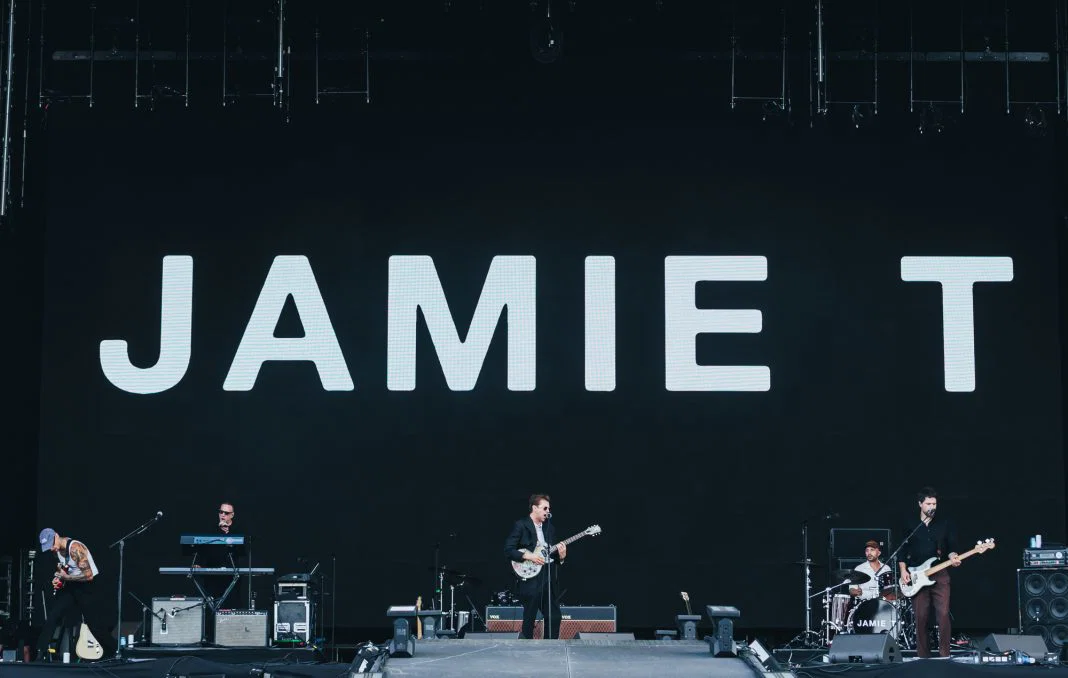
Royal Blood’s appearance later that afternoon was only marginally more secret. The Brighton duo had announced their Gallery performance several days earlier, so almost nobody entered the tent unaware of who was about to appear. By the time ‘Out of the Black’ began, the room was packed.
Ben Thatcher soon left his drum kit to greet the front rows before returning to help start one of the weekend’s first serious pits. ‘Come On Over’, ‘Boilermaker’, ‘Lights Out’, ‘Trouble’s Coming’ and ‘Little Monster’ delivered the blunt physical impact Royal Blood songs had been bringing to festivals for more than a decade.
The more useful reactions arrived during ‘Ten Over Ten’ and ‘Swallow the Bomb’, both taken from ‘Dead Company’. Royal Blood already had enough old material to carry festival sets for years. What mattered was that nobody treated the new songs as a toilet break before ‘Figure It Out’ returned to close the performance.
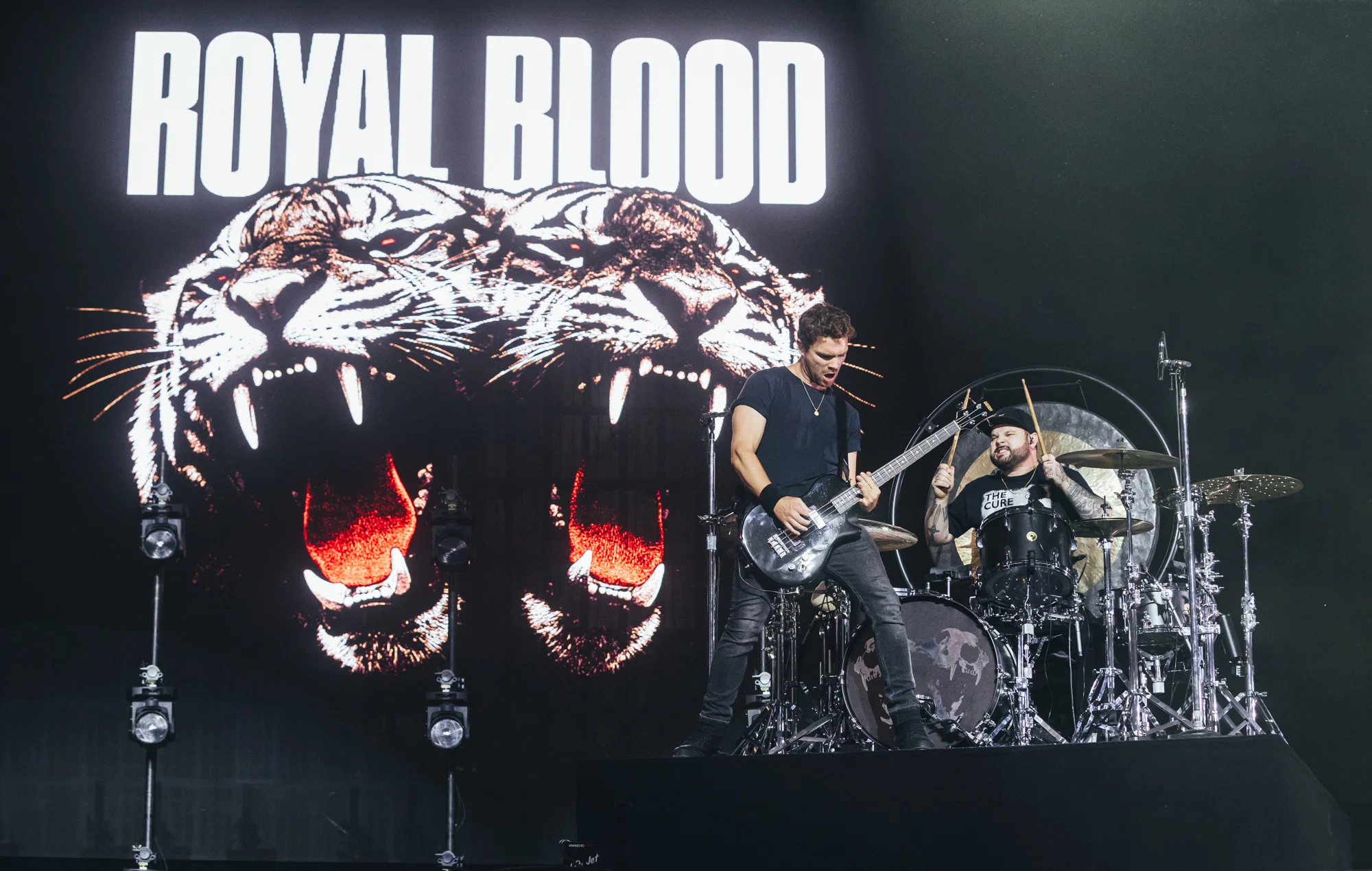
Leeds received its own piece of indie theatre when Blossoms appeared as special guests for their first Reading & Leeds performance since 2021. Ten years after their debut reached Number One, they occupied an interesting position. They were no longer the young band climbing the bill, but neither had they reached the point where people attended only to hear the first album again.
‘Gary’ opened the set alongside the eight-foot fibreglass gorilla who had followed the band through their fifth record. At Leeds, however, it was his retirement party. Joe Donovan wore a ‘Goodbye Gary’ T-shirt, confirming that one of the more ridiculous pieces of British indie stage production was finally being put away.
All three early songs from ‘Songs From the Wedding Cake’ appeared. ‘Joke About Divorce’, ‘Meet Me In Love’ and ‘Additional Driver’ were given valuable space beside newer favourites ‘Nightclub’, ‘Perfect Me’ and ‘I Like Your Look’. ‘Getaway’, ‘I Can’t Stand It’, ‘The Keeper’, ‘Honey Sweet’ and ‘Your Girlfriend’ then demonstrated how much festival material Blossoms had accumulated.
The opening of ‘There’s a Reason Why (I Never Returned Your Calls)’ was enough to get the field singing before ‘Charlemagne’ returned them to the single that had helped establish the band a decade earlier. The new material did not feel awkward beside it. Blossoms could introduce songs from an album that had not yet been released and finish with one that had followed them through most of their career without the set becoming divided between past and present.
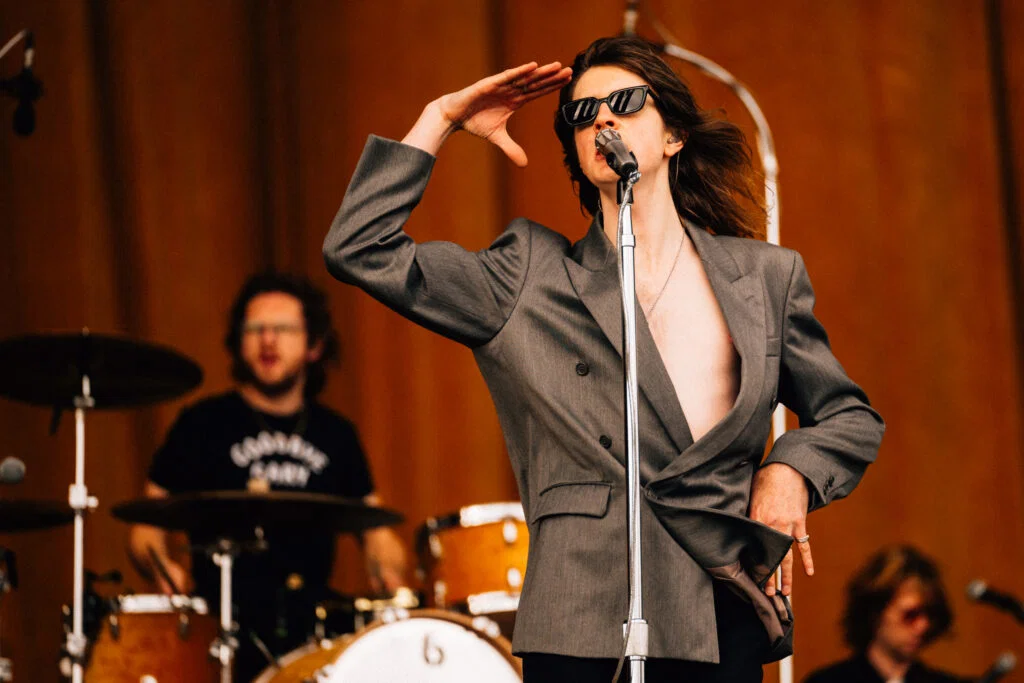
It is easy to overlook a band once their rise stops feeling new. Blossoms had already moved through small festival stages, Number One records, increasingly large tours, arenas and huge outdoor shows. Their achievement now was continuing without becoming their own tribute act. Gary received his farewell, ‘Charlemagne’ produced another enormous singalong and Blossoms carried on.
A few stages away, Westside Cowboy were experiencing Leeds Festival for the first time. They walked into The Ballroom to Kaiser Chiefs’ ‘I Predict a Riot’, either knowingly provocative in West Yorkshire or simply impossible to resist. A bucket hat flew above the crowd while the chandeliers shook over ‘It Goes On’, ‘I’ve Never Met Anyone…’ and ‘In the Morning’.
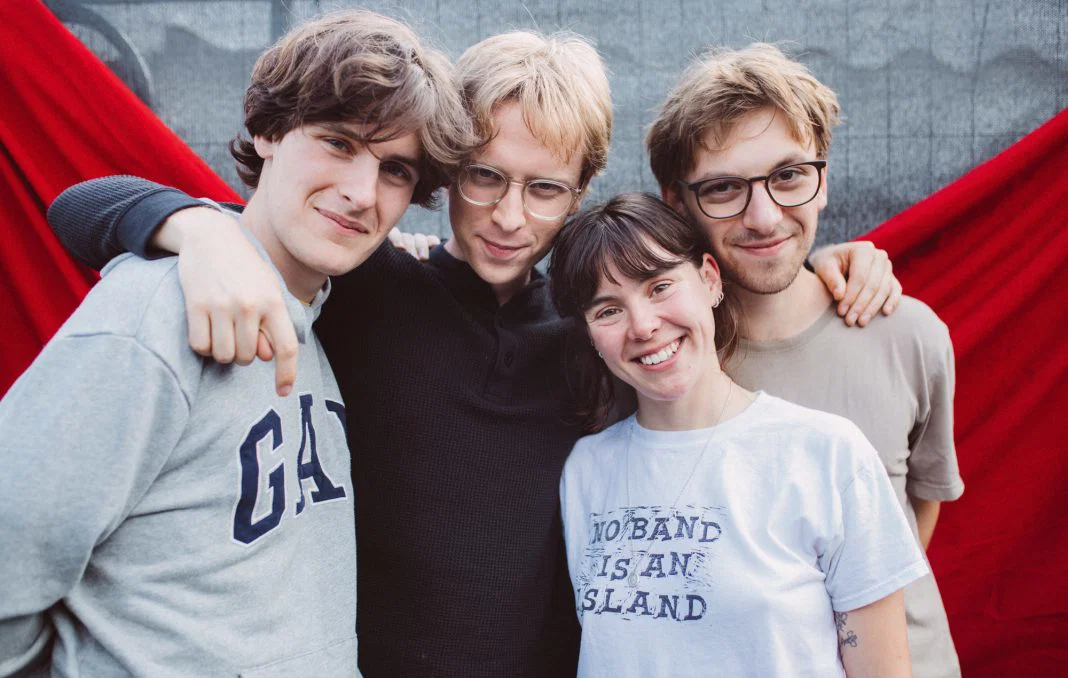
The looseness preserved on their debut made even more sense when the songs returned to the conditions that had shaped them. Voices overlapped, guitars gathered speed and the crowd already looked too large for the room. ‘It Goes On’ had been released only days earlier, but the audience did not behave as if they were still trying to work out what Westside Cowboy might become.
Keo reached The Grid before ‘Put A Smile On For Me’ had been released. The distance between an intense ten-day recording session and one of the festival’s largest stages had disappeared remarkably quickly. Songs initially built for crowded clubs were suddenly being projected across an open field.
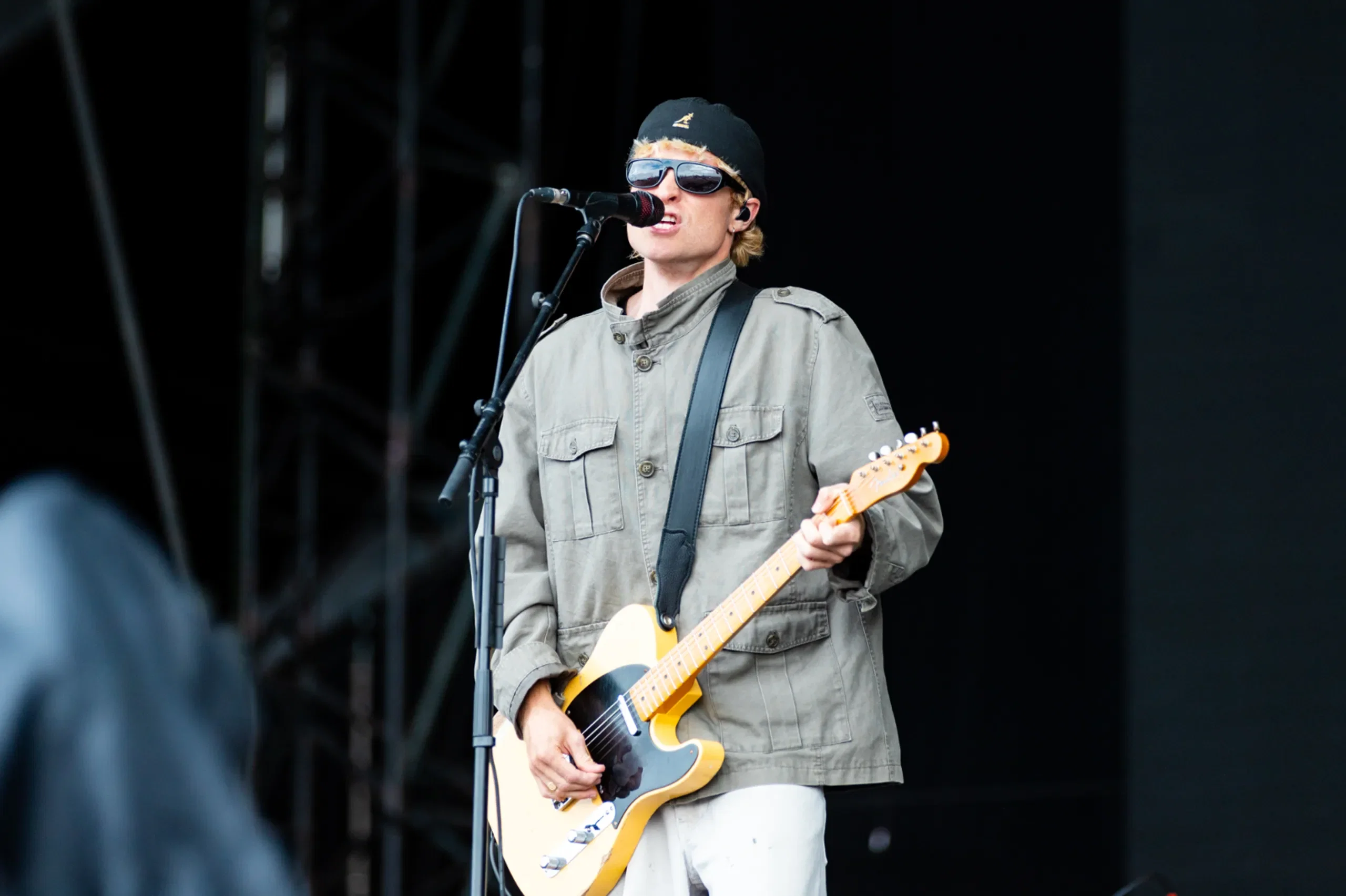
The performance did not feel like a band politely introducing itself. Months of support slots, festival appearances and increasingly frantic headline shows had already taught Keo how to make a large audience move. Their place on The Grid was another test of whether the immediacy of their live reputation could survive a change in scale. It did.
Neither band needed to be presented as proof that guitar music had returned from the dead.
Reading & Leeds had been through enough supposed deaths and revivals for that argument to mean very little. Westside Cowboy and Keo were young bands being placed in front of larger crowds and given an opportunity to see what happened.
Blossoms had once occupied that position. A decade later, they were on The Grid saying goodbye to an eight-foot gorilla.
Declan McKenna knew exactly what could happen after one of those early festival opportunities. His Grid set reached across nearly a decade of records, opening with ‘Mulholland’s Dinner and Wine’ before moving through ‘You Better Believe!!!’, ‘Humongous’, ‘The Key to Life on Earth’, ‘Beautiful Faces’ and ‘Nothing Works’. ‘Brazil’ remained immediately recognisable before ‘British Bombs’ brought the set to a close.
The most interesting thing about seeing McKenna on The Grid was remembering where his career had begun. In 2014, aged fifteen, he uploaded ‘Brazil’ to BBC Introducing in Beds, Herts and Bucks. The platform supported him as the song travelled further, and in 2017 he was named BBC Music Introducing Artist of the Year.
That route mattered in 2026 because Reading & Leeds no longer had a BBC Introducing Stage.
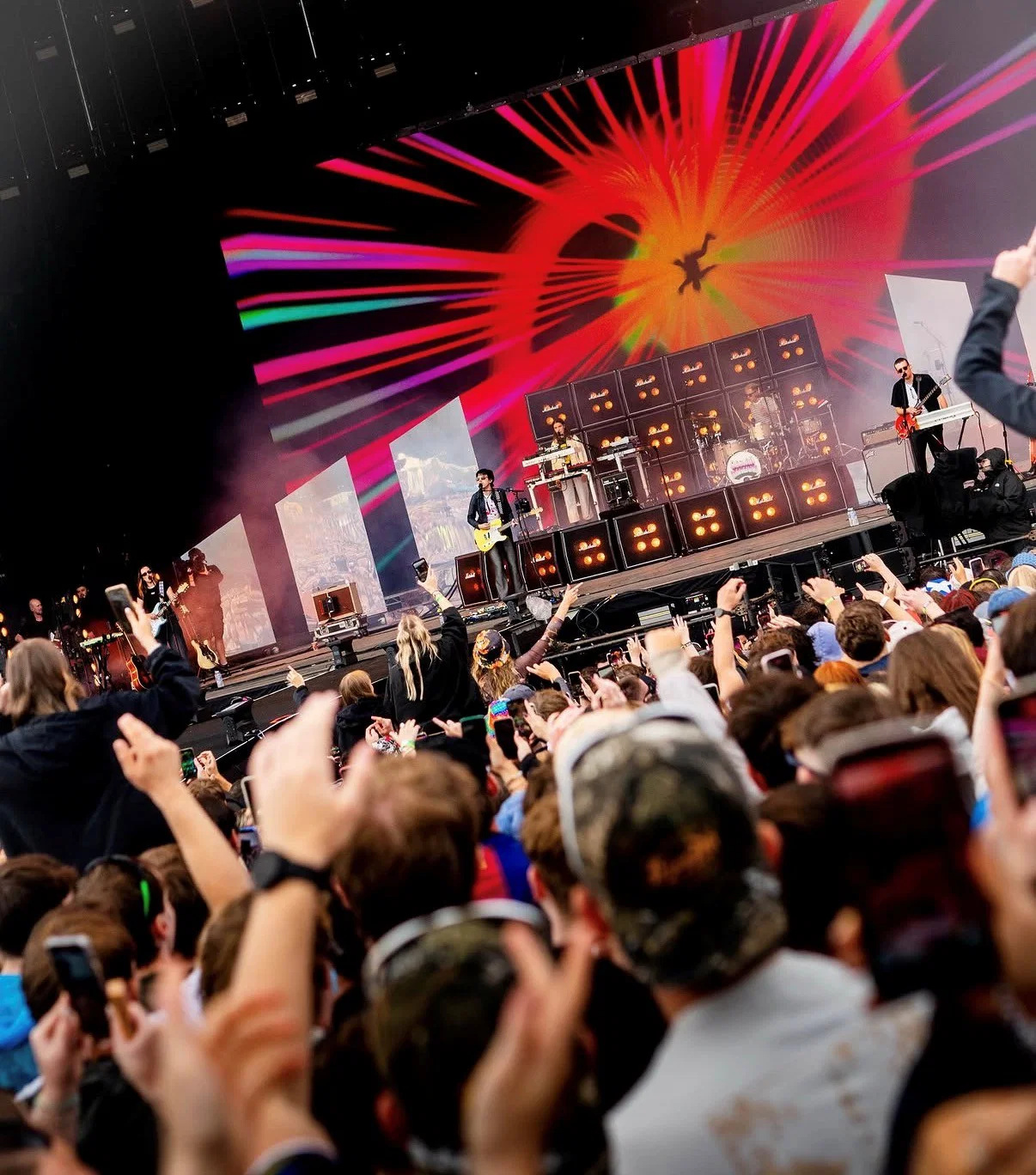
For almost two decades, it had provided one of the festival’s clearest routes for unsigned and emerging musicians. Artists including Ed Sheeran, Charli XCX, The 1975 and Sam Fender had received support from the wider Introducing network before reaching the largest stages. Festival Republic replaced it with The Canopy, arguing that removing the requirement for artists to arrive through the BBC would allow bookings from a wider pool.
The first Canopy lineup complicated that argument. Violet Grohl, daughter of Dave Grohl, appeared there. So did Cruz Beckham, son of David and Victoria Beckham. People I’ve Met were led by Moses Martin, son of Chris Martin and Gwyneth Paltrow, while Villanelle were fronted by Gene Gallagher, son of Liam Gallagher and Nicole Appleton.
None of those artists deserved to be dismissed purely because of their surnames. Gene Gallagher still had to make Villanelle worth watching. Violet Grohl still had to write songs people cared about, and famous parents could not force an audience to respond.
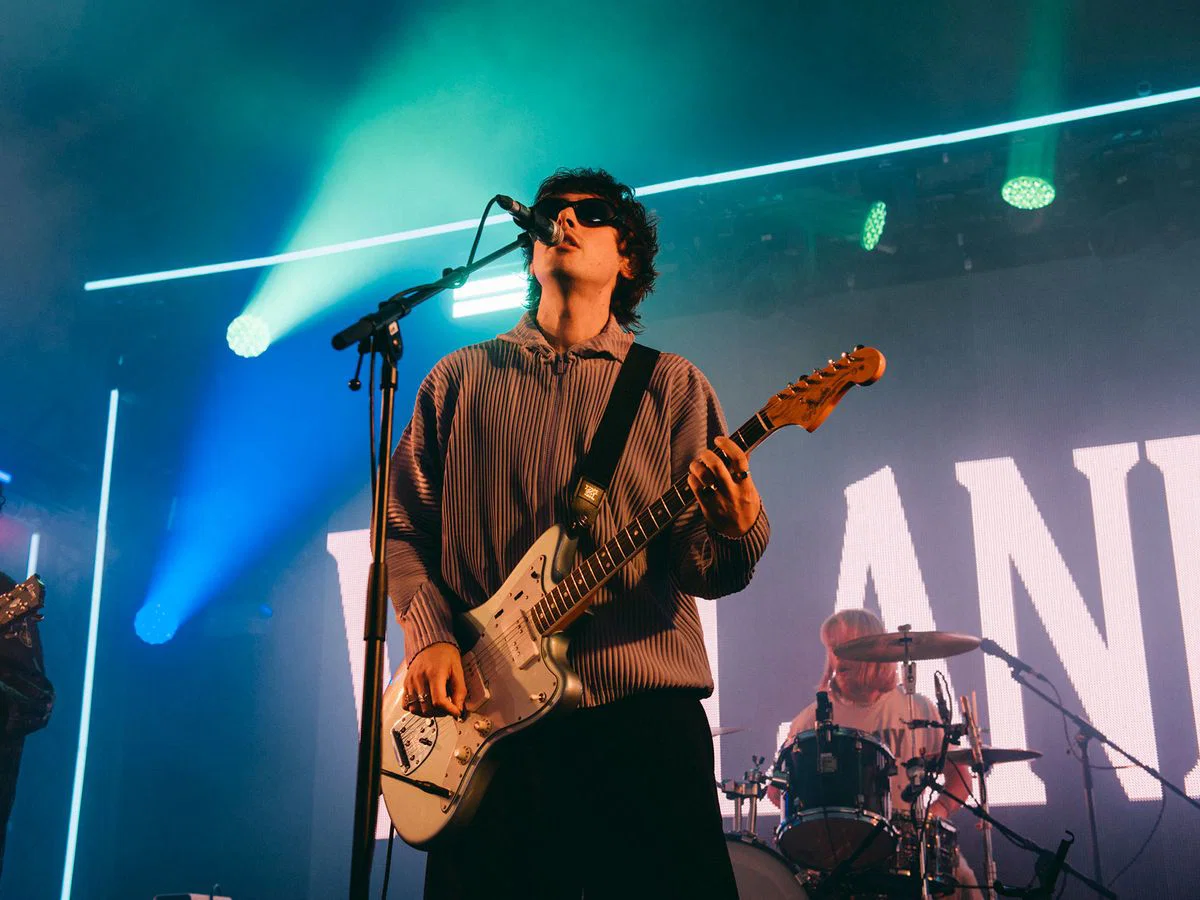
Talent and privilege could exist together. The uncomfortable question concerned access. A fifteen-year-old Declan McKenna had been able to upload ‘Brazil’ without a famous surname or an established route into the industry. Removing a recognised grassroots platform and replacing it with a stage whose first lineup contained so many artists already connected to fame inevitably raised questions about who could still get through the door.
Geese demonstrated what could happen once an audience made its decision very quickly. Since ‘Getting Killed’ arrived towards the end of 2025, the New Yorkers had been enthusiastically adopted by British indie audiences. The Strokes comparison made more sense culturally than musically: another strange New York guitar band had crossed the Atlantic and discovered that teenagers here had decided to claim them.
Reading provided suitable conditions for the relationship to become official. Rain hammered against The Gallery, mud swallowed trainers and the roof eventually began leaking badly enough to create its own metre-by-metre shower inside the audience. “Don’t drink the tent water,” Cameron Winter advised before spending the rest of the set looking somewhere between a Britpop revivalist and a priest who had misplaced his congregation.
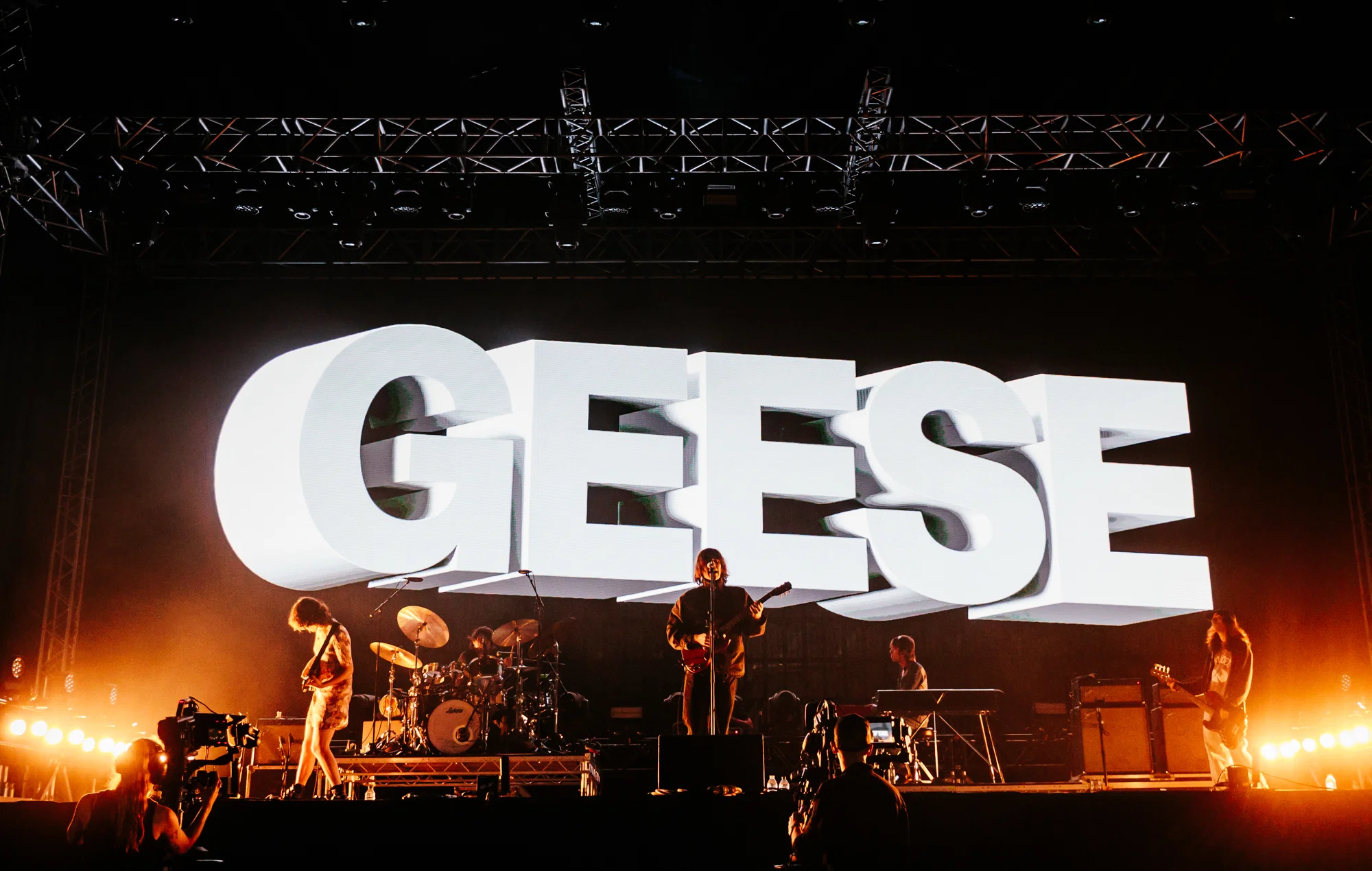
‘Husbands’, ‘100 Horses’, ‘Trinidad’, ‘Getting Killed’, ‘Au Pays du Cocaine’ and ‘Taxes’ became increasingly physical. ‘2122’ unexpectedly slipped into an instrumental passage from Slowdive’s ‘When the Sun Hits’, while ‘Taxes’ eventually found a loose, rolling groove of its own. Geese’s awkward structures made far more sense when people could move inside them.
The most important thing was the crowd. These were not curious festival-goers arriving to inspect a critically approved American band they had read about online. They knew the songs. Pits opened, teenagers climbed onto shoulders and Winter’s deeply peculiar voice came back at him from thousands of people.
The next time Geese return to Reading & Leeds, The Gallery may struggle to contain them.
Fontaines D.C. already knew what happened after that. Their first Reading headline set should have been an uncomplicated celebration of how far they had travelled. ‘Boys in the Better Land’, once written by a young Dublin band obsessed with somewhere beyond the life immediately around them, was now opening a show at the top of one of Britain’s largest festivals.
Technical and logistical problems immediately complicated the occasion. Fontaines arrived around half an hour late and lost ‘Big’, ‘Hurricane Laughter’ and the intended debut of ‘Happy For You’ from the set. Reading still received an excellent performance. It did not receive a better one because three songs were missing.
The more painful absence could not be solved by extending the curfew. Trevor Dietz had booked Fontaines when they were students, became their manager and eventually something much closer to family. Before his death in June, he had even convinced them not to leave ‘Marianne’ off ‘Dopamine Chamber’.
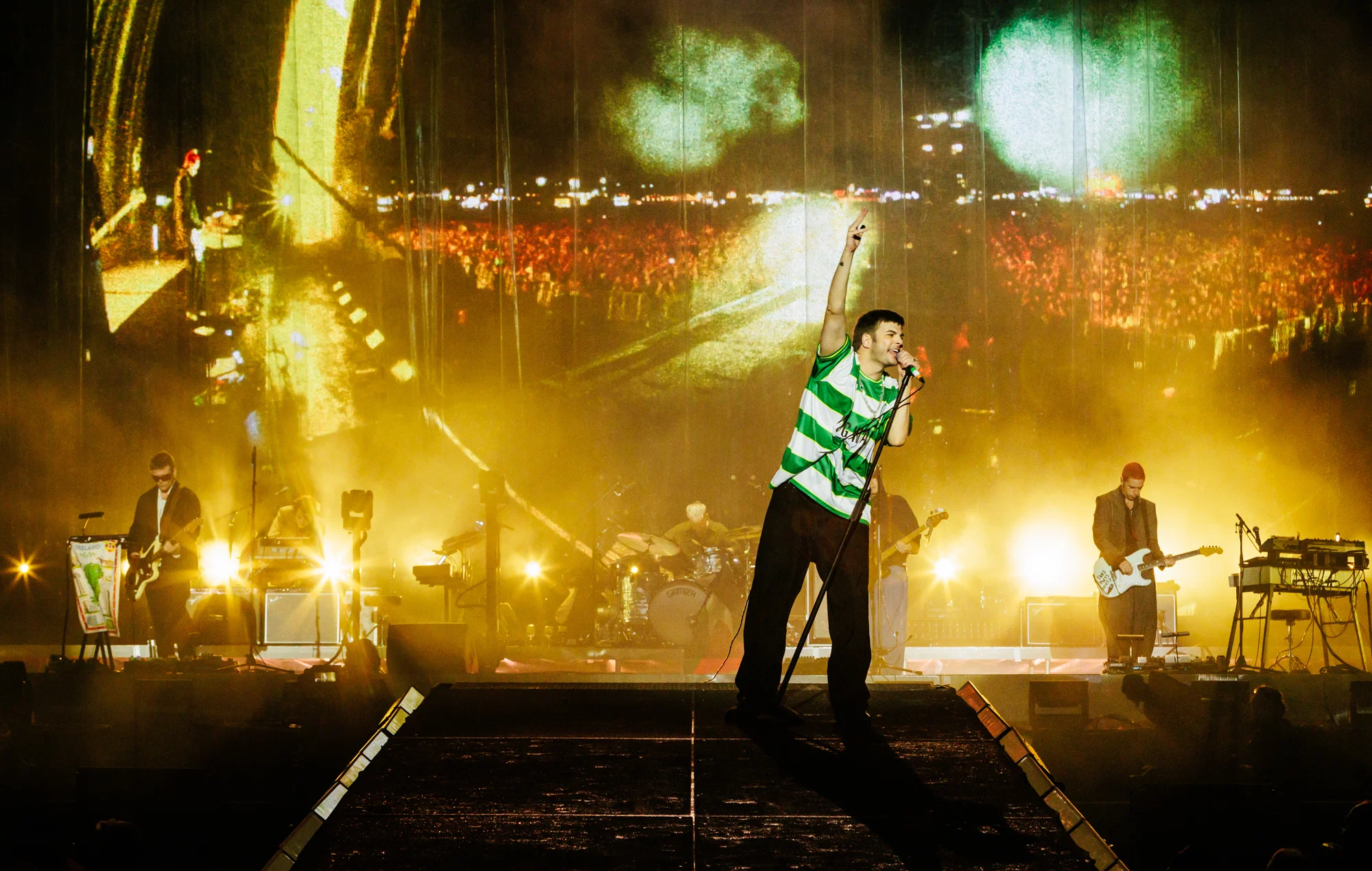
His presence remained everywhere. Chatten’s knuckles carried Trev’s name and one of the guitars onstage read ‘Trev Forever’. ‘Favourite’, already a song about friendship, memory and years disappearing more quickly than expected, suddenly had somebody specific inside it. “Love you Trev,” Chatten said.
'Jackie Down the Line’, ‘Here’s the Thing’, ‘Roman Holiday’ and ‘In the Modern World’ showed the different versions of Fontaines that had reached the stage, while ‘I Love You’ retained its fury inside a performance already carrying considerable emotional weight. ‘Starburster’ closed the shortened set in a burst of panic and noise.
Leeds received the complete version the following evening. ‘Big’ and ‘Hurricane Laughter’ returned, while ‘Happy For You’ finally received its debut. The slow-burning new song found Chatten repeatedly attempting to convince himself that he was pleased for somebody after the end of a relationship. It offered another early glimpse of ‘Dopamine Chamber’, quieter than much of the set but no less uneasy.
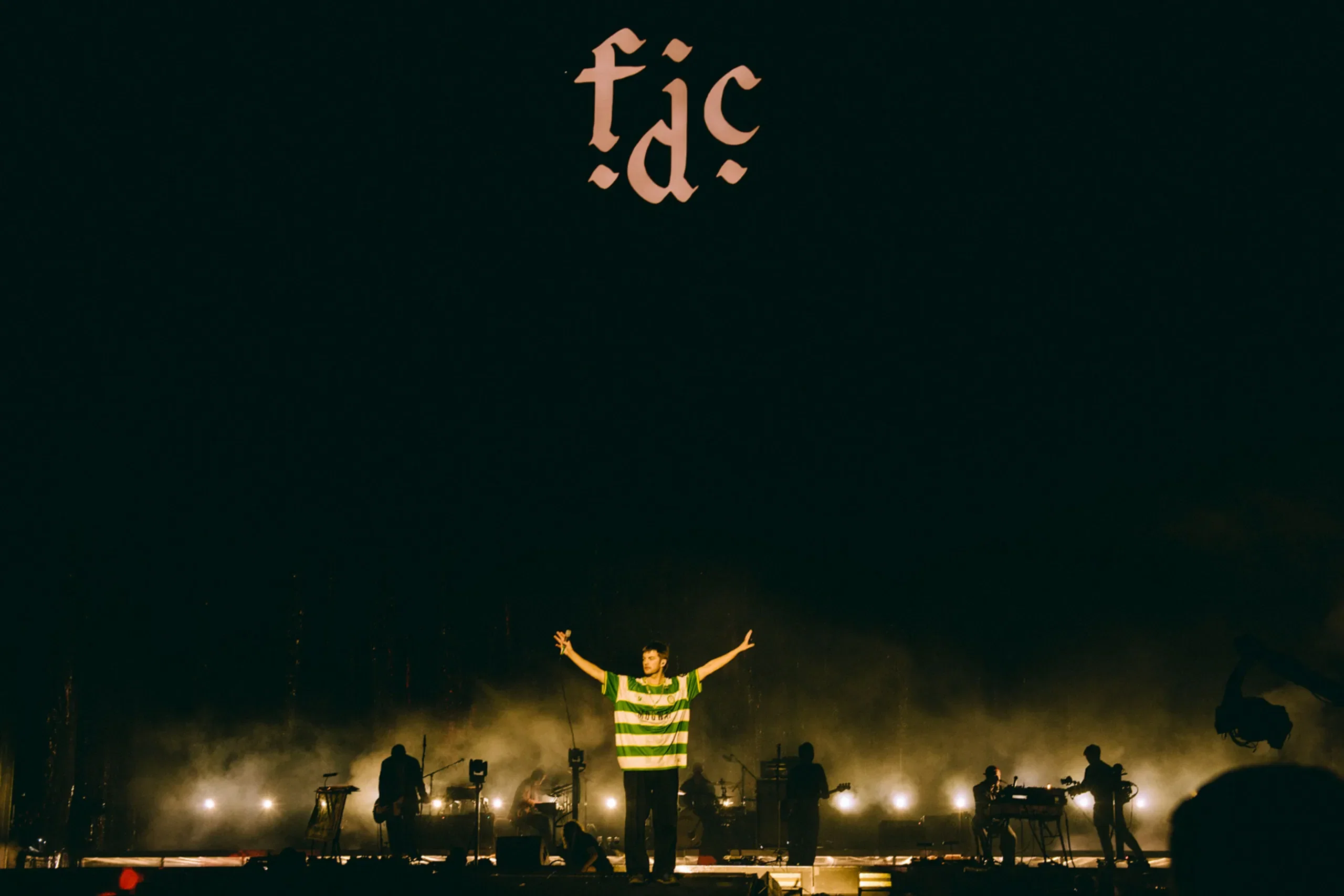
Charli XCX spent her own Reading headline performance resisting the idea that success should trap her inside one version of herself. ‘Brat’ had finally made her a megastar, so naturally she spent 2026 refusing to make it again. Her ‘Wuthering Heights’ soundtrack moved into darker cinematic territory before ‘Music, Fashion, Film’ brought distorted guitars further forward without abandoning the electronic instincts beneath them.
Reading received all of those Charlis. ‘Club Classics’, ‘365’ and ‘360’ showed that ‘Brat’ remained enormous, while ‘Sympathy Is a Knife’ sounded made for a stage that size. During ‘Von Dutch’, Charli once again went for the BBC camera in a callback to Glastonbury 2025, while ‘Guess’ produced one of the performance’s largest reactions.
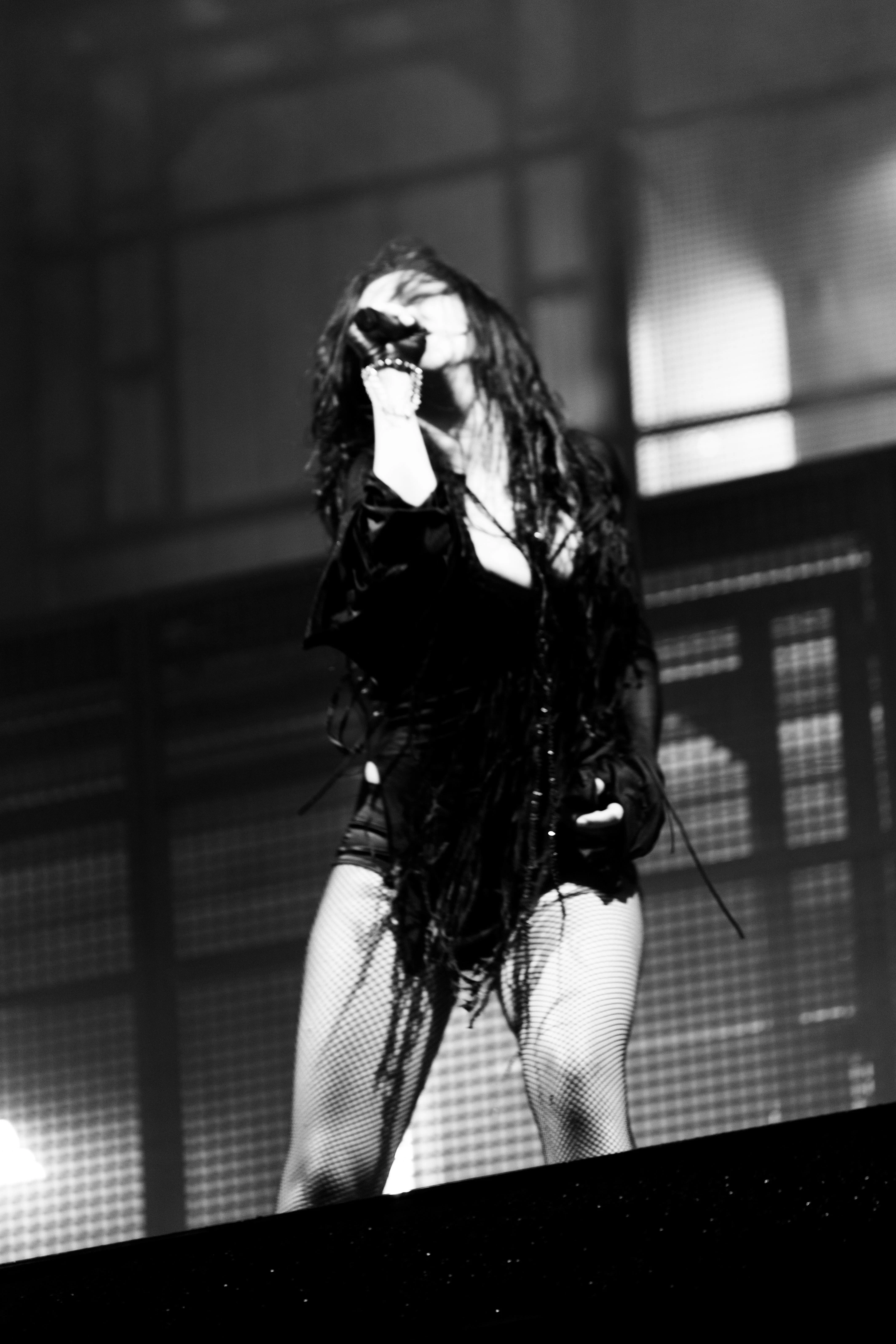
There was room for ‘Track 10’ too, reaching back to ‘Pop 2’ and receiving the sort of roar that showed it had long since escaped deep-cut status. The stronger indication of Charli’s future came from ‘If You Take Away the Music Then What Has She Got?’, where Elastica-like guitars sat over a dance beat while the question in the title appeared to be directed towards the audience.
‘No One Lasts Forever’ closed the performance with David Cronenberg’s recorded voice contemplating art, death and permanence. ‘Brat’ had carried Charli to the top of Reading. Once she arrived, she showed no interest in allowing it to keep her there forever.
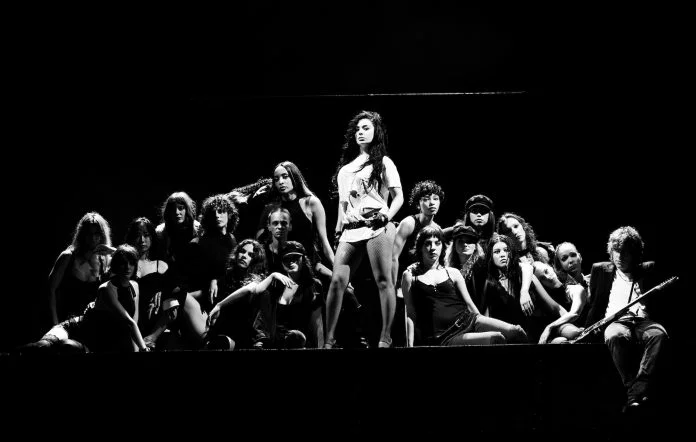
Saturday brought another artist dealing with what happened when ambition became reality. Dave first played Reading’s 1Xtra tent in 2017. He had already become a headliner by 2022, but his return arrived after ‘The Boy Who Played the Harp’, a record preoccupied with success, purpose and whether achieving the life you imagined could answer the questions that drove you towards it.
For most of the set, the worrying could wait. ‘Verdansk’, ‘Clash’, ‘Location’, ‘Screwface Capital’, ‘Professor X’ and ‘Funky Friday’ left little room to breathe before James Blake appeared for ‘Both Sides of a Smile’. Kano later joined Dave for ‘3 P’s Freestyle’ and ‘Chapter 16’, while Central Cee’s arrival during ‘Sprinter’ produced one of the loudest reactions of the weekend.
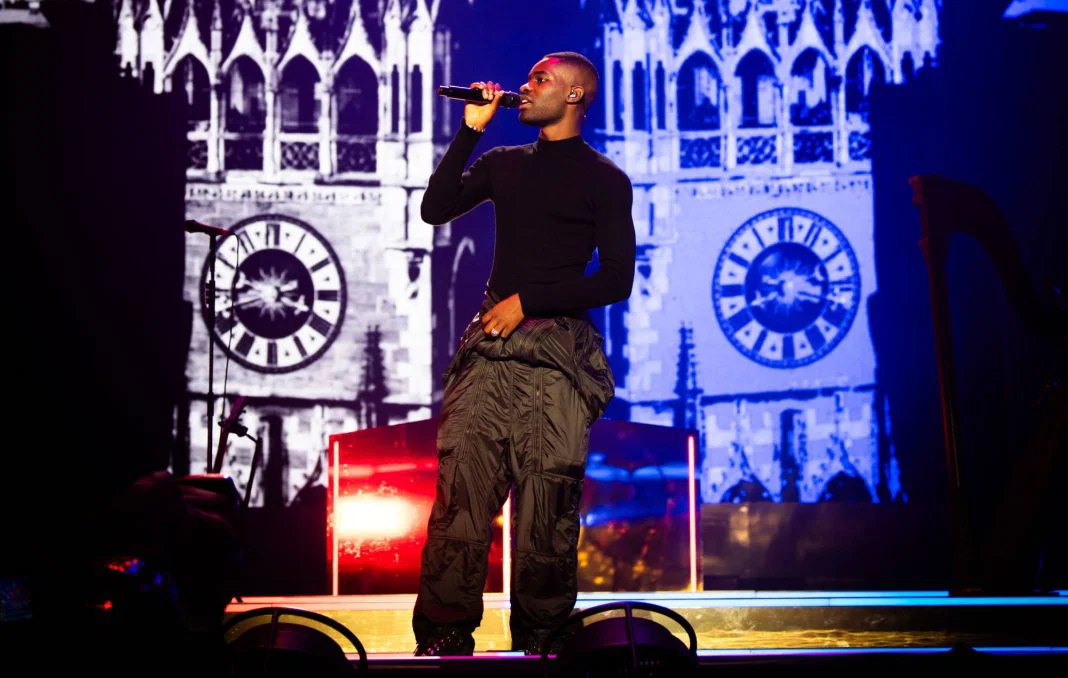
‘Thiago Silva’ did not need a guest. Seven years after a teenager called Alex had been pulled from the Glastonbury crowd and accidentally became part of festival history, Reading supplied tens of thousands of replacements. Whole passages disappeared from Dave’s microphone and returned from the field.
The latest album made the progression almost suspiciously neat. The biblical David had been a young musician before becoming king. Dave had spent his teenage years imagining what his talent might bring him before eventually standing at the top of Reading Festival. The self-fulfilling prophecy had arrived.
Kneecap made the Irish presence across the weekend considerably less subtle. They walked into The Gallery to Fontaines D.C.’s ‘Favourite’, greeted with the kind of roar ‘Wonderwall’ receives at a wedding, before ‘Smugglers & Scholars’, ‘Sick in the Head’ and ‘Cold at the Top’ pushed the tent towards something between a gig and a rave.
Grian Chatten’s recorded appearance during ‘Better Way to Live’ created another eruption, while ‘Sayonara’, ‘Get Your Brits Out’ and ‘Guilty Conscience’ sent pits opening across the second half. By the time ‘Fenian’, ‘H.O.O.D.’ and ‘The Recap’ provided the closing rush, Mo Chara hardly needed to explain what was happening:
“This is the Irish fucking takeover.”
Politics remained tangled through the chaos. Mo Chara spoke about using their platform for people who had been silenced, led chants in support of Palestine and aimed another at Andy Burnham over his comments on Irish reunification. Elsewhere, Kneecap thanked Britain for everything from fish and chips and HP Sauce to UKIP and Bloody Sunday before songs about drugs and Irish history sent the audience back into another pit.
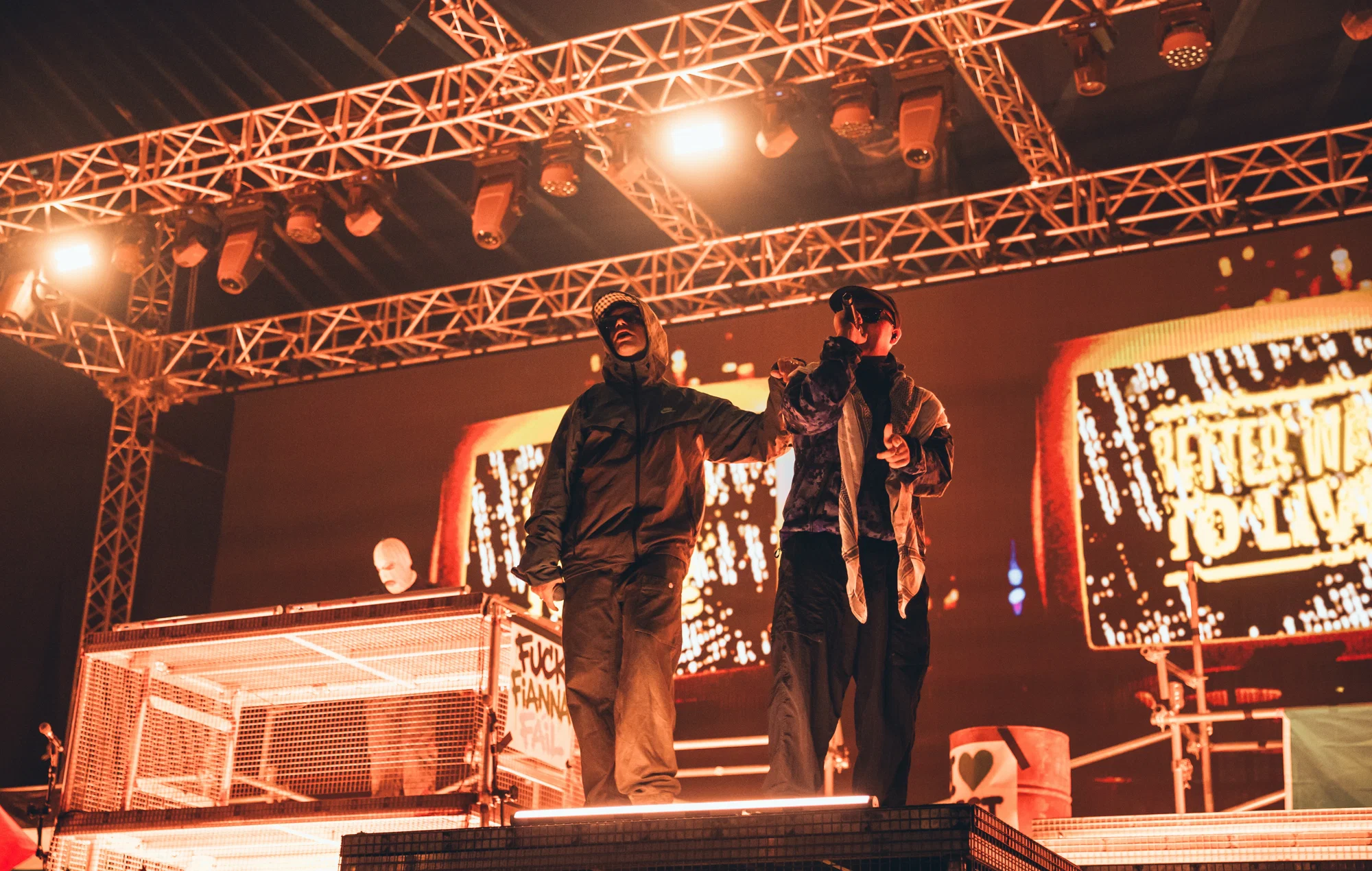
It was difficult to argue with Mo Chara’s description, although the interesting part was how little the takeover’s participants needed to sound alike. Fontaines had reached The Grid through guitars, poetry and records that had gradually grown into something widescreen. Kneecap arrived speaking Irish and English over hip-hop, rave and trance. Gurriers were preparing a record of abrasive dance-punk and political frustration elsewhere. A successful musical generation did not require a uniform.
By Sunday, Reading had been rained on often enough for the mud to feel like part of its permanent infrastructure. Florence Welch responded by delivering, for me, the best performance of the weekend.
Opening with ‘Everybody Scream’ as the clouds darkened, Florence appeared almost designed for the conditions. Rain added to songs already obsessed with bodies, ritual, nature and surrender. Then the older material began finding some of the youngest people in the field.
‘Shake It Out’ became an enormous singalong before ‘Spectrum’, ‘Rabbit Heart (Raise It Up)’ and ‘You’ve Got the Love’ provided a run most performers would have saved until the end. During ‘Rabbit Heart’, Welch asked the audience to mark the changing season by climbing onto one another’s shoulders. Thousands obeyed, leaving bodies raised above the crowd while the rain continued falling.
Mark Bowen of IDLES joined her for ‘One of the Greats’, bringing a rougher guitar edge into the grandeur, while ‘Sympathy Magic’ eventually saw Florence descend towards the barrier to hug, touch and hold hands with the people at the front.
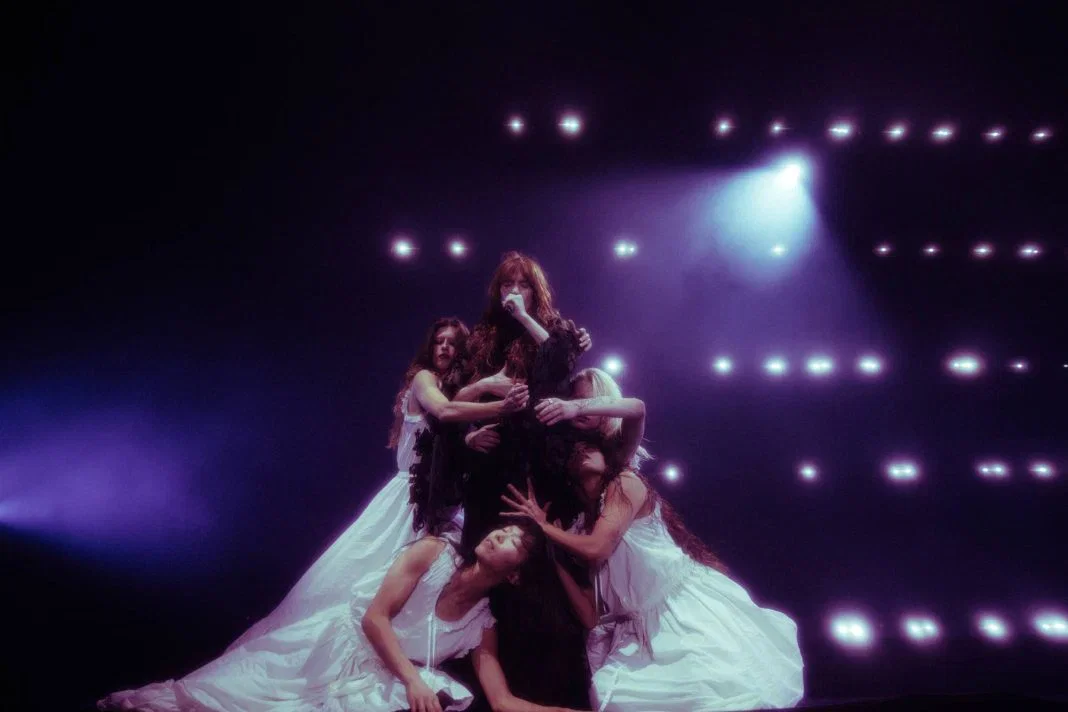
There was another piece of symmetry behind the performance. It was the final show of the ‘Everybody Scream’ tour, and Reading was the first festival Florence had ever wanted to attend. Her dad eventually brought her when she was fourteen. “This is my childhood dream,” she told a crowd that now contained thousands of teenagers at roughly the same age.
The best trick arrived during ‘Dog Days Are Over’. Welch asked everybody to put their phones away, arguing that filming the song would prevent them from properly experiencing it.
Remarkably, they listened. Screens disappeared across the field and, when the final chorus arrived, thousands jumped through the rain with nothing attached to their raised hands. A song released in 2009 was being screamed by teenagers who had either been toddlers or had not yet been born when ‘Lungs’ appeared.
Jamie T had experienced the same generational handover earlier in the weekend from the opposite end of the musical spectrum. Declan McKenna represented another stage of it. Dave could look out from The Grid towards a festival where he had once occupied the 1Xtra tent. Fontaines could turn ‘Boys in the Better Land’ from ambition into autobiography. Florence could return to the festival she had first visited at fourteen and close it seventeen years after her debut.
Reading & Leeds remained a place where songs could outlive the generation that first heard them and artists could physically move through the poster as their audiences grew. The responsibility was ensuring that the next generation could still get through the door.
Removing BBC Introducing therefore mattered as much as redesigning the stages. Reading & Leeds could celebrate McKenna on The Grid, give Keo one of its largest stages, watch Westside Cowboy and Geese outgrow their rooms and claim it remained committed to new music. The real test was whether an unknown fifteen-year-old uploading the equivalent of ‘Brazil’ still had a route to the festival that did not begin with the right surname, manager or industry connection.
The movement was already extending into 2027. Tame Impala announced a UK and European arena tour with Wet Leg, including shows at Manchester’s Co-op Live and two nights at The O2. Kevin Parker and his band will perform in the round, surrounded by the audience, screens and lasers, while a conspicuous gap in the schedule will inevitably produce speculation about another Glastonbury appearance.
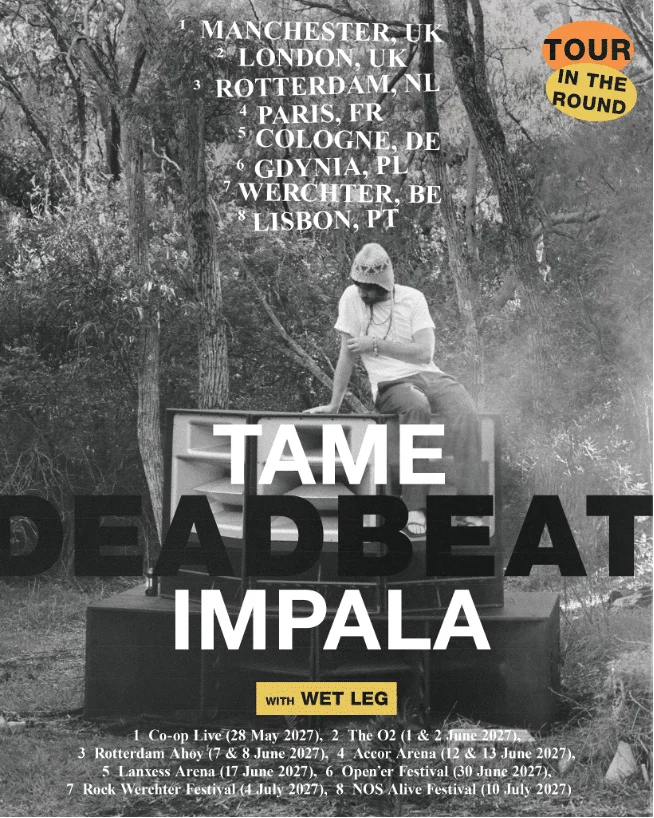
The pairing made sense beyond the size of the venues. Tame Impala had spent the previous decade dissolving boundaries between psychedelic rock, electronic music and pop. Wet Leg emerged into a musical landscape that no longer required them to choose between those worlds. They will enter the arenas as special guests, but their own rise suggests they may not occupy that position for long.
Reading & Leeds proved to be only one part of an extraordinary few weeks for Fontaines D.C.
They had already announced the biggest indoor tour of their career, beginning in Lisbon on October 21 before travelling across Europe and reaching Britain in November. The UK run takes in Liverpool’s M&S Bank Arena, Manchester’s AO Arena, Glasgow’s OVO Hydro, Leeds’ First Direct Arena and Birmingham’s Utilita Arena before finishing at London’s O2 on November 27. The entire UK leg sold out when tickets went on sale.
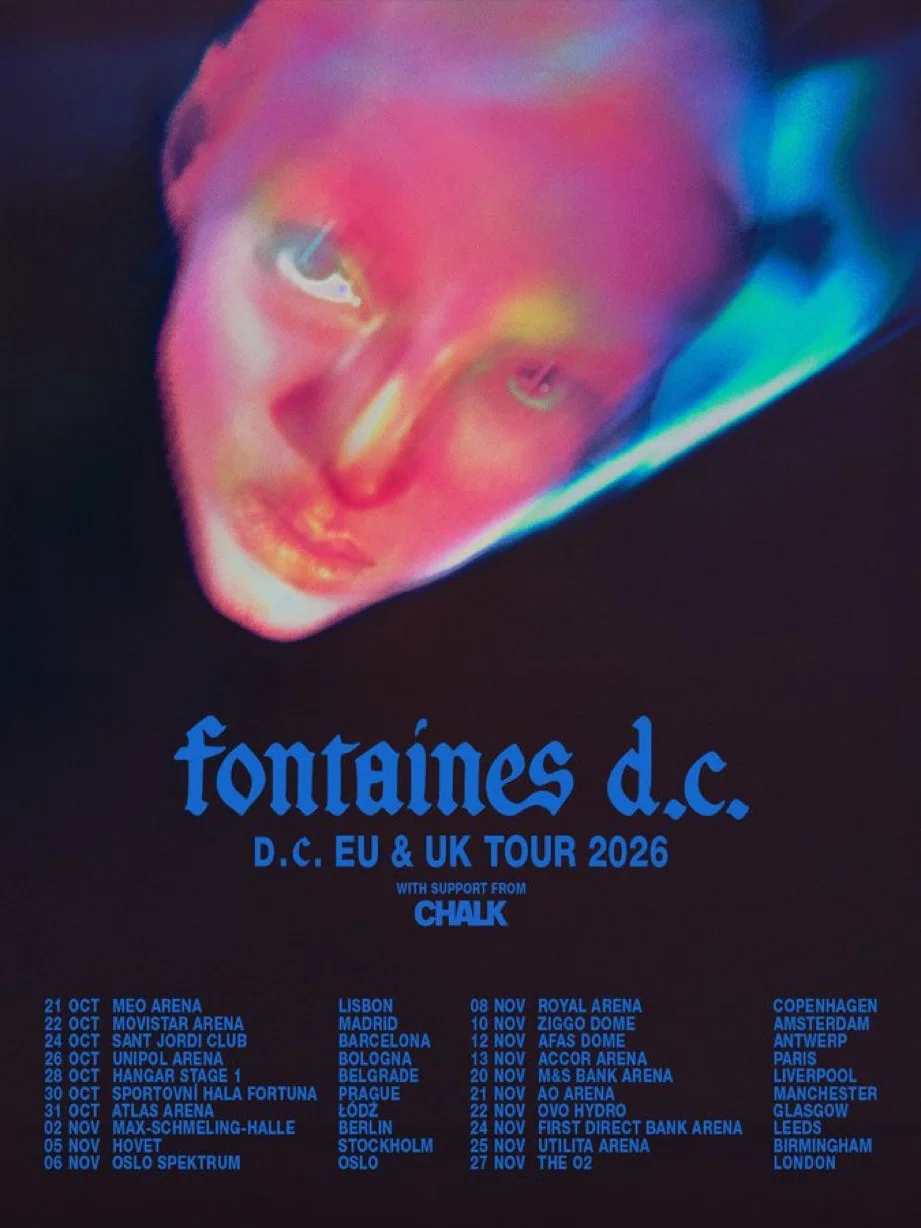
Then came Reading & Leeds. Within hours of leaving Bramham Park, Fontaines returned to Ireland to headline Electric Picnic on August 30. As their set ended, the words “Slane 2027” appeared across the screens, turning another festival headline appearance into the teaser for something even bigger. The following morning, they confirmed a headline show at Slane Castle for June 26, 2027, with Hayley Williams, Damien Dempsey and Madra Salach supporting. It will make Fontaines only the third Irish act to headline the venue after Thin Lizzy in 1981 and U2 in 2001.
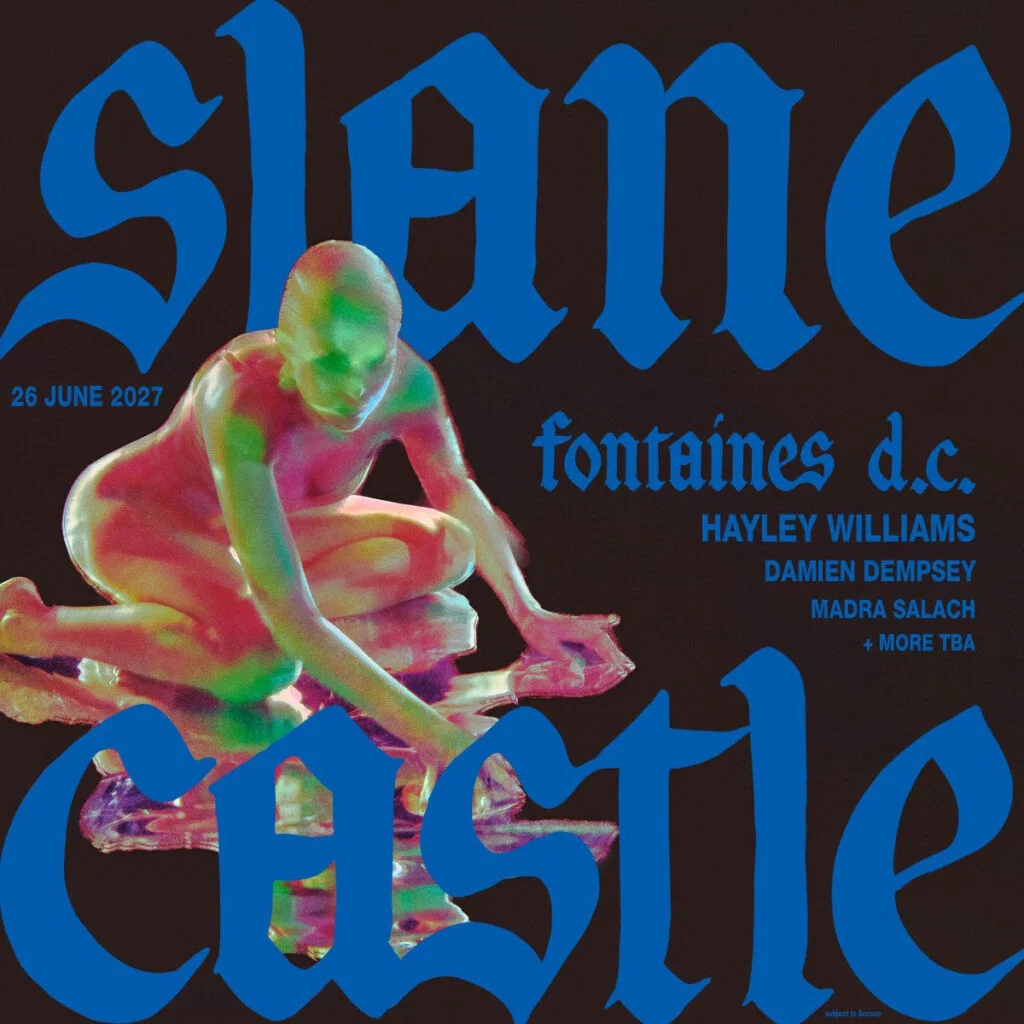
Demand immediately pushed the occasion further. A second Slane concert was added for June 27, making Fontaines the first Irish act to headline the venue on consecutive nights. Hayley Williams, Damien Dempsey and Madra Salach will return for the second show too.
Even that was not the end of the announcements.
Days later, Fontaines confirmed their biggest UK headline shows for summer 2027. After the two Slane nights, they will play Cardiff’s Blackweir Fields on June 29, Newcastle’s St James’ Park on July 1, Manchester’s Heaton Park on July 3, Glasgow Green on July 6 and London Stadium on July 9. Little Simz and Viagra Boys will support at all five shows.
All of it surrounds ‘Dopamine Chamber’, their fifth album, due on October 16 through XL Recordings. In the space of little more than a year, Fontaines will have moved from 45,000 people at Finsbury Park to headlining Reading & Leeds, selling out an arena tour, playing two nights at Slane Castle and taking on football stadiums and enormous outdoor fields across Britain.
Reading had looked like another summit.
Almost immediately, Fontaines announced what came after it.
And in The End, The Love You Take is Equal To the Love You Make.
Here’s where we wrap things up. At least for now. Thank you all so much for reading. This series has been one of the most fulfilling projects I’ve worked on for Beyond the Grooves. It’s something I’ve wanted to do for ages, and to see it so warmly received truly means the world.
A few special shout-outs to Archie, Dylan, Em, Grace, Hattie, Jasmine, Joe, Katie, Luke, Lauren, Liam, Noah, Sean, and Zoe. Thank you for being there for me in so many ways. You’re all absolute heroes. To everyone who’s liked, shared, and read these posts, thank you. Your support has been invaluable, and I appreciate every bit of it. Here’s to hoping that the rest of 2026 brings even more exciting moments to add to this story.
Jack x