War Child: HELP(2)
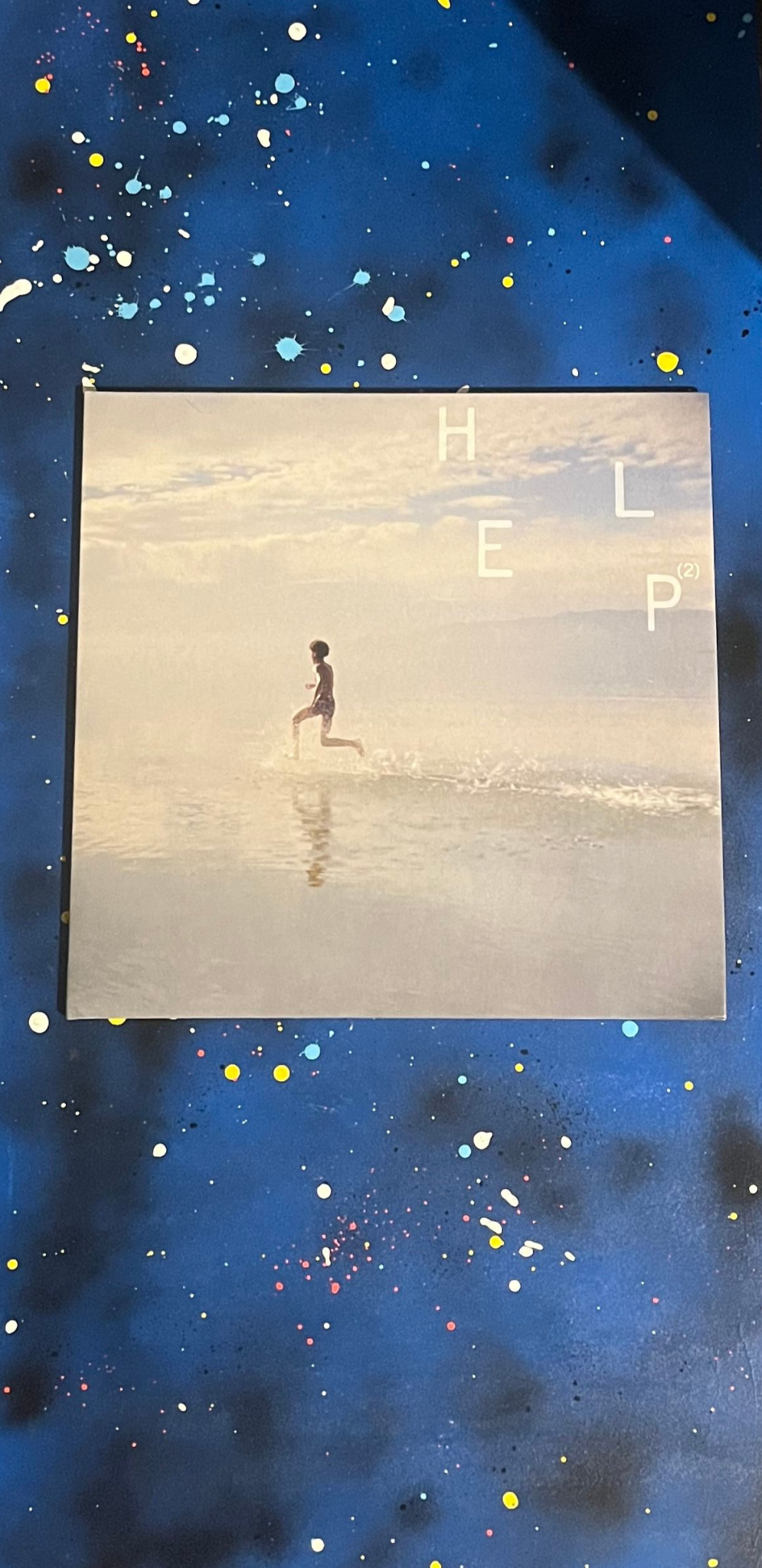
When 'HELP(2)' was announced in January, the anticipation was palpable. The tracklisting alone is a heavyweight affair, boasting new material from Arctic Monkeys, Pulp, Damon Albarn, Foals, Fontaines D.C., Olivia Rodrigo, Wet Leg, and English Teacher. The hype only intensified in March with the bombshell news that Oasis would also feature on the record.
The project is inspired by the legendary 1995 'Help' album, a cultural milestone for the charity War Child. That original Brian Eno-led compilation featured titans like Oasis, Blur, Radiohead, and Massive Attack, ultimately raising over £1.25 million and selling more than 700,000 copies.
Now, producer James Ford has taken the lead for this long-awaited sequel. Leveraging a formidable "phone book" built from his work with Gorillaz, Florence + The Machine, and Pet Shop Boys, Ford assembled a roster that promised an album for the ages. The momentum was perfectly set by four stellar singles, including 'Opening Night', the first new music from Arctic Monkeys in four years, and 'Begging for Change', which is Pulp at their most punchy since 'Different Class'.
The creation of 'HELP(2)' was as much a personal battle as a professional one. Recorded primarily during a single week at Abbey Road Studios in November 2025, the project moved forward while Ford was mid-treatment for leukaemia.
“War Child approached me about doing a follow-up to 'Help' before I got sick at the end of 2024,” Ford told NME. “The 30-year anniversary was looming. I’ve always been a fan of theirs, and the first record was a real cultural moment. I was excited to help, but then my health took a turn for the worse.”
Despite the setback, War Child refused to move on without him. “I thought they might have gone somewhere else, but they waited for me to go through the whole of my treatment.”
After resuming the project last summer, Ford teamed up with Transgressive Records boss Toby L. Acting as creative project leader, Toby L managed day-to-day operations at Abbey Road and assisted with A&R decisions. Together, they "called in every favour possible," successfully expanding the album's reach to US artists like Olivia Rodrigo and Geese frontman Cameron Winter.
“What ended up on the album were the people who could turn around a song in the limited time we had,” Ford explained. “The result is a record that flows and reflects the current British and Irish scenes, alongside some great American names.”
'HELP(2)' isn't merely a charity compilation; it is a definitive atmospheric map of where music sits in 2026. Every artist involved has been remarkably generous with their craft, ensuring this isn't a collection of "naff" B-sides or rushed, gimmicky singles. Instead, the record balances vital original efforts with a series of exceptional, deeply considered covers.
One of the most arresting moments comes from Depeche Mode, who drape a signature dystopian energy over Buffy Sainte-Marie’s 1960s classic, 'Universal Soldier'. A scathing deconstruction of conflict, the track feels chillingly contemporary in their hands. By emphasising the lyrics
"He’s the one who gives his body as a weapon of the war, / And without him, all this killing can't go on"
The band turns a folk lament into a haunting industrial march. It is a standout moment of self-reflection for the listener, forcing a confrontation with the "universal" responsibility of war.
The album secures a massive coup with Olivia Rodrigo’s rendition of 'The Book of Love' (originally by The Magnetic Fields). Securing one of the world’s biggest pop stars is a triumph for War Child; her presence bridges the gap to a younger audience, the very generation the charity works to protect.
This isn't a glossy pop production, however. It is a beautifully stripped-back version that features British indie royalty Graham Coxon on guitar.
James Ford pulls off a master stroke, ending the album with this track. It's a record that covers a lot of dark themes, displacement, war, identity, the innocence of youth, politics, race and the need for a change, bringing the record with a statement of love, music and being young.
"The book of love has music in it/ In fact, that's where music comes from/ Some of it is just transcendental/ Some of it is just really dumb"
"The book of love is long and boring/ And written very long ago/ It's full of flowers and heart-shaped boxes/ And things we're all too young to know"
The result is one of the album’s most tender highlights, proving that Rodrigo’s vocal depth can more than hold its own alongside Britpop and indie legends.
This isn't a glossy pop production, however. It is a beautifully stripped-back version that features British indie royalty Graham Coxon on guitar. The result is one of the album’s most tender highlights, proving that Rodrigo’s vocal depth can more than hold its own alongside Britpop and indie legends.
The record also pays a poignant tribute to its predecessor. Fontaines D.C. cover 'Black Boys on Mopeds' by the late, great Sinéad O’Connor, who famously performed on the original 1995 'Help' album.
Their choice of 'Black Boys on Mopeds' is devastatingly precise. Grian Chatten’s vocal, usually a post-punk snarl, is here a wounded, gravelly whisper, held aloft by a mournful string arrangement that bleeds into the mix. In the current global climate, where the right to protest and the weight of state power are once again under the microscope, the lyrics feel chillingly prophetic:
"These are dangerous days / To say what you feel is to dig your own grave / Remember what I told you: / If you were of the world they would love you."
The band leans into the song’s inherent Dublin geography, making the imagery of the "young mother down at Smithfield" at 5 am feel visceral and immediate. When Chatten delivers the line about the babies whose first word was "please," the production drops away, leaving the listener in a stark, uncomfortable silence.
It is a masterclass in tension and release, culminating in the song’s famous, stinging indictment of the British establishment:
"England's not the mythical land of Madame George and roses / It's the home of police who kill black boys on mopeds."
Tragically, the political bite of Sinéad’s 1990 original hasn’t dulled with age; if anything, Fontaines D.C. prove that it has only sharpened. It is an exceptional, heavy piece of music from a band that currently seems incapable of a single creative misstep.
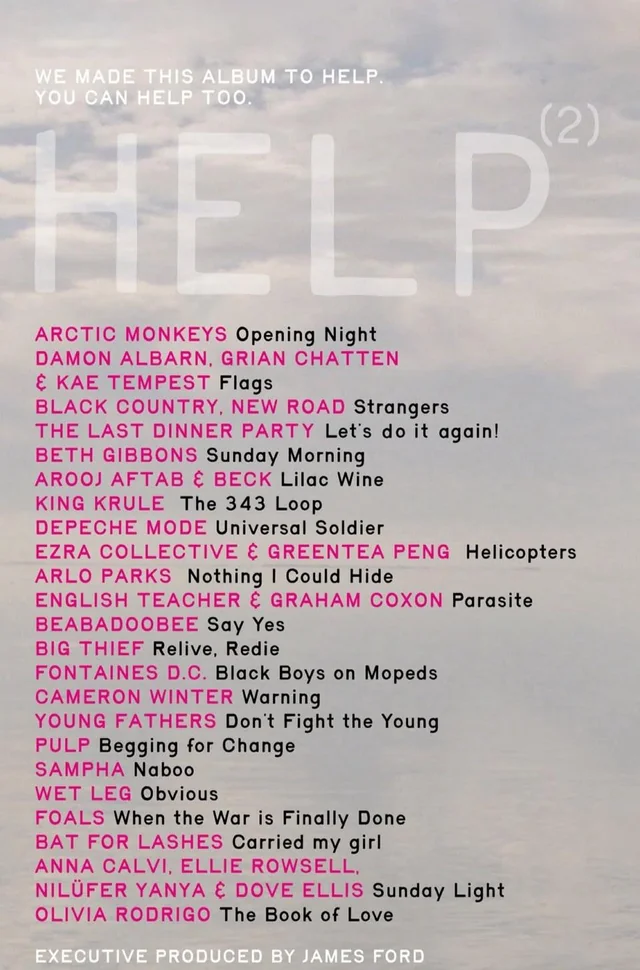
The original compositions on 'HELP(2)' are just as vital as the covers, serving as a pulse-check for the state of alternative music in 2026. These aren't throwaway tracks; they are deeply considered pieces of music.
Foals pivot away from their "moshpit" anthems with 'When the War Is Finally Done'. Returning to the expansive, atmospheric textures of 'Spanish Sahara', the track is a haunting exploration of the long-term psychic toll of conflict. It’s heavy, slow-burning, and arguably some of the most mature songwriting we’ve seen from the band this decade.
In a fascinating bit of musical archaeology, Pulp revived 'Begging for Change', a track originally conceived during the sessions for their album 'More'. Jarvis Cocker famously struggled to finish the lyrics at the time, but the Abbey Road sessions provided the spark he needed.
The song opens with Cocker delivering a submissive, almost mechanical vocal:
"We are being strip-mined by the powers that be / We are being strip-mined by the new bourgeoisie."
The track then explodes from a distorted guitar intro into a raucous, upbeat anthem. Accompanied by a "boisterous" children’s choir, Cocker chants
"B-E-G-G-I-N-G / Begging for Change!"
while listing everything he wants to fix in himself and the world. It’s raw, urgent, and exactly the kind of unapologetic spirit the record requires.
One of the album’s most ambitious moments is 'Flags', a sprawling collaboration featuring Damon Albarn, Grian Chatten (Fontaines D.C.), and the poet Kae Tempest. The track is anchored by a piano melody that manages to feel both celebratory and heartbreaking.
The production credits are a "who’s who" of modern music royalty:
- Vocals: Damon Albarn, Grian Chatten, Kae Tempest
- Guitars: Johnny Marr, Adrian Utley (Portishead)
- Rhythm: Seye Adelekan (Gorillaz), Femi Koleoso (Ezra Collective)
- Instrumentation: Dave Okumu
- The Choir: A 43-piece children's choir joined by Jarvis Cocker, Carl Barât, and Declan McKenna
Arctic Monkeys contribute 'Opening Night', a song that bridges the gap between their stylistic eras. Originally a demo from the 2013 'AM' sessions, it was finally completed with James Ford’s help and a brand-new middle eight.
While it retains some of that era’s DNA, it avoids the leather-jacket swagger. Instead, it pairs Matt Helders' robotic percussion with the lush, cinematic orchestration of 'The Car'. Beneath the strings, however, lies a 'Humbug'-style grit, specifically in Jamie Cook’s murky, sinister guitar work.
Acting as the thematic heart of the record, Young Fathers deliver 'Don't Fight the Young'. True to form, it is wild and unpredictable. Interestingly, when the band played the track at Abbey Road, the children in the studio, who were tasked with documenting the sessions, immediately began singing and dancing. It’s a powerful, rhythmic stake in the ground that gives a literal voice to the generation War Child serves.
Wet Leg: The duo finally unveils 'Obvious', a song that nearly made their debut record. It’s a beautiful, stripped-back effort that shows a vulnerable side to a band who told us on their last record to 'Catch These Fists'.
Black Country, New Road: Their track 'Strangers' is a "folky, weird" standout that tips its hat to Fleetwood Mac, offering a fascinating glimpse into where the band might head next. Cameron Winter: The Geese frontman takes a sharp turn with 'Warning', a dark, atmospheric track reminiscent of Laurie Anderson’s New York art-rock.
Bat for Lashes contribution 'Carried My Gir;' is the record's most gut-wrenching moment, stripping away any metaphor to focus on the raw, human cost of displacement.
The song paints a harrowing picture of a mother’s journey through impossible conditions, with Natasha Khan’s ethereal vocals grounding a narrative of profound grief and public indifference:
"I carried my girl across the desert / Yet not one person noticed her dead / I carried my girl to the ocean / Yet not one person lifted their head."
It is a stark, uncomfortable listen that demands the listener's full attention. The refrain
"All our babies / They're all our babes"
Acts as the emotional spine of the album, reinforcing the idea that the children caught in these conflicts belong to all of us. It’s a haunting reminder of why this record exists in the first place.
True to their 1995 contribution, Oasis opted for a high-energy live recording rather than a studio track. While the original 'Help' featured a reworked 'Fade Away', this iteration gives us a blistering live version of 'Acquiesce', recorded during their triumphant Wembley show on September 28th, 2025.
HELP(2)' arrives at a moment when the world feels increasingly fractured. With the U.S launching missiles on Iran, the current situations in Gaza, Ukraine and Sudan, seeing these bands and artists share the spotlight, not to compete, but to collaborate for a singular cause, is remarkably heartwarming.
This record is more than just a sequel; it is a renewal of a promise made in 1995. In an era often defined by digital silos and fleeting trends, the sheer scale of artistic unity on display here is a rarity. From the archival grit of Arctic Monkeys’ 'Opening Night' to the devastating, raw honesty of Bat for Lashes 'Carried My Girl', 'HELP(2)' serves as a vital reminder that while the music industry has transformed beyond recognition, the human cost of conflict remains tragically constant.
By weaving together the voices of Britpop legends and the vanguard of modern indie, James Ford has curated a sonic time capsule that refuses to look away. It’s a record that demands we confront the whats happening now in the world. Ultimately, 'HELP(2)' proves that music still possesses the unique power to transcend politics and provide a voice for those silenced by violence. As we bridge the thirty-year gap between the legacy of the original 'Help' and the precarious future of the children this record supports, one truth remains unshakeable: what was a vital plea in 1995 has become a global emergency in 2026. No child should ever be part of war.