Gorillaz: The Mountain
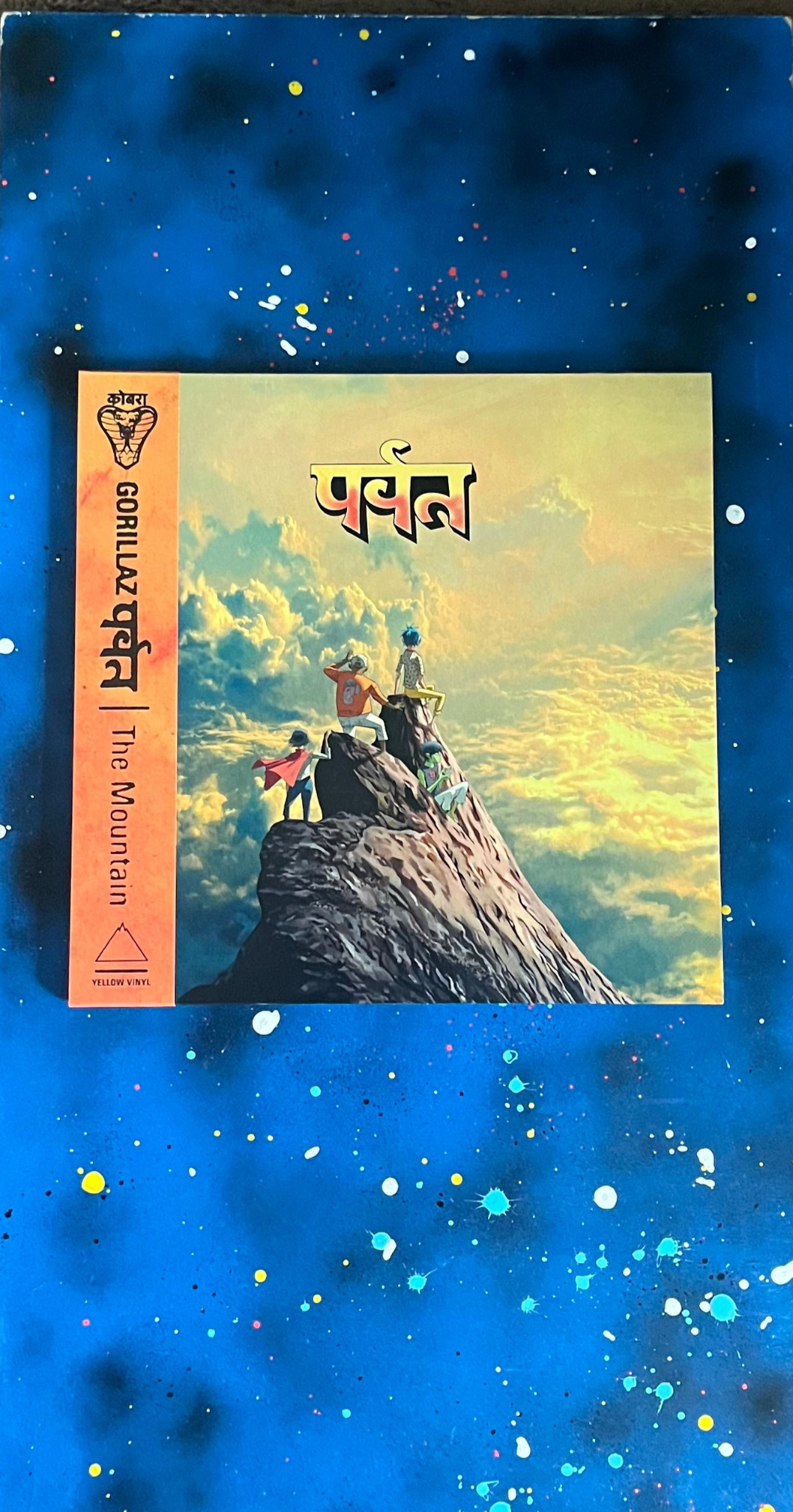
It has been 25 years since four animated misfits first flickered onto our screens, signalling a seismic shift in pop culture. What was dismissed in 2001 as a "jokey" one-off project from "the guy from Blur" has evolved into one of the most creative, enduring, and genre-defying pillars of 21st-century music. With a list of over 100 guest artists, Gorillaz remain the only entity on earth capable of linking Carly Simon to Shaun Ryder, or Skepta to Lou Reed. It is a project so culturally vast that it even provided the neutral ground for Damon Albarn and Noel Gallagher to finally bury the Britpop hatchet.
However, this restless urge to collaborate has occasionally made Gorillaz records a difficult navigation; without a compass, the albums can feel like sprawling, disconnected playlists. The project is always at its most potent when anchored by a singular, obsessive vision. While 2005’s 'Demon Days' captured the midnight paranoia of a post-9/11 world, and 2010’s 'Plastic Beach' tackled the ecological rot of the late Anthropocene, their latest offering, 'The Mountain', turns the lens inward.
The album's DNA was formed in the heavy summer of 2024. Following the death of his father, Keith Albarn travelled to Varanasi, the holy Indian city where the Ganges flows and Hindus cremate their dead to ensure a smooth transition into the next life. In a staggering stroke of cosmic coincidence, Hewlett’s father passed just ten days later. Hewlett was already in Rajasthan with his mother-in-law, who then suffered a fatal stroke from which she never recovered.
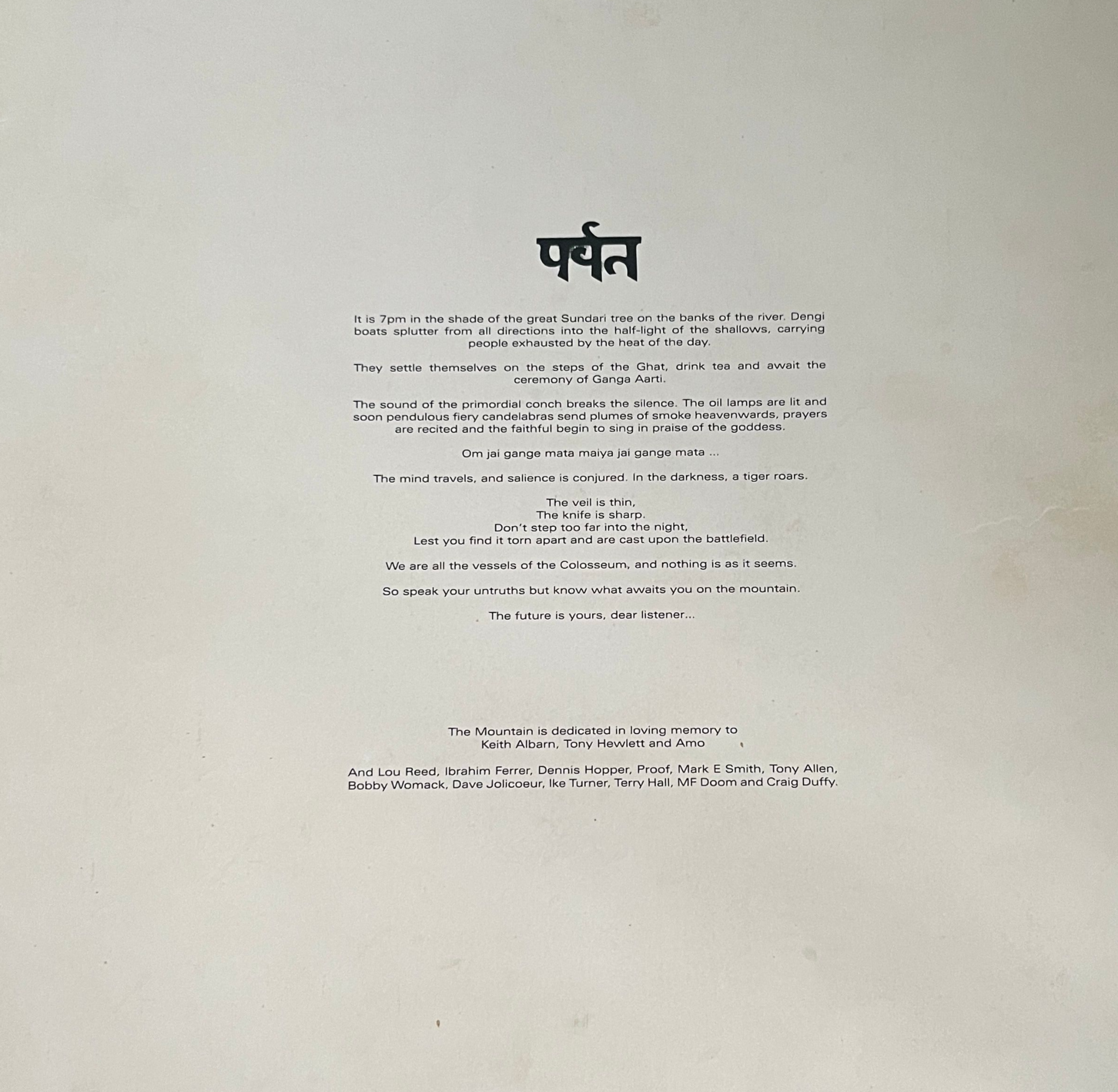
Out of this shared crucible of grief emerged an album inspired by the Indian concept of death: not as a hard stop, but as a "Bardo", a transitional state between worlds. 'The Mountain' is a panoramic, world-building affair; it is the band’s richest and most cohesive work since 'Plastic Beach'.
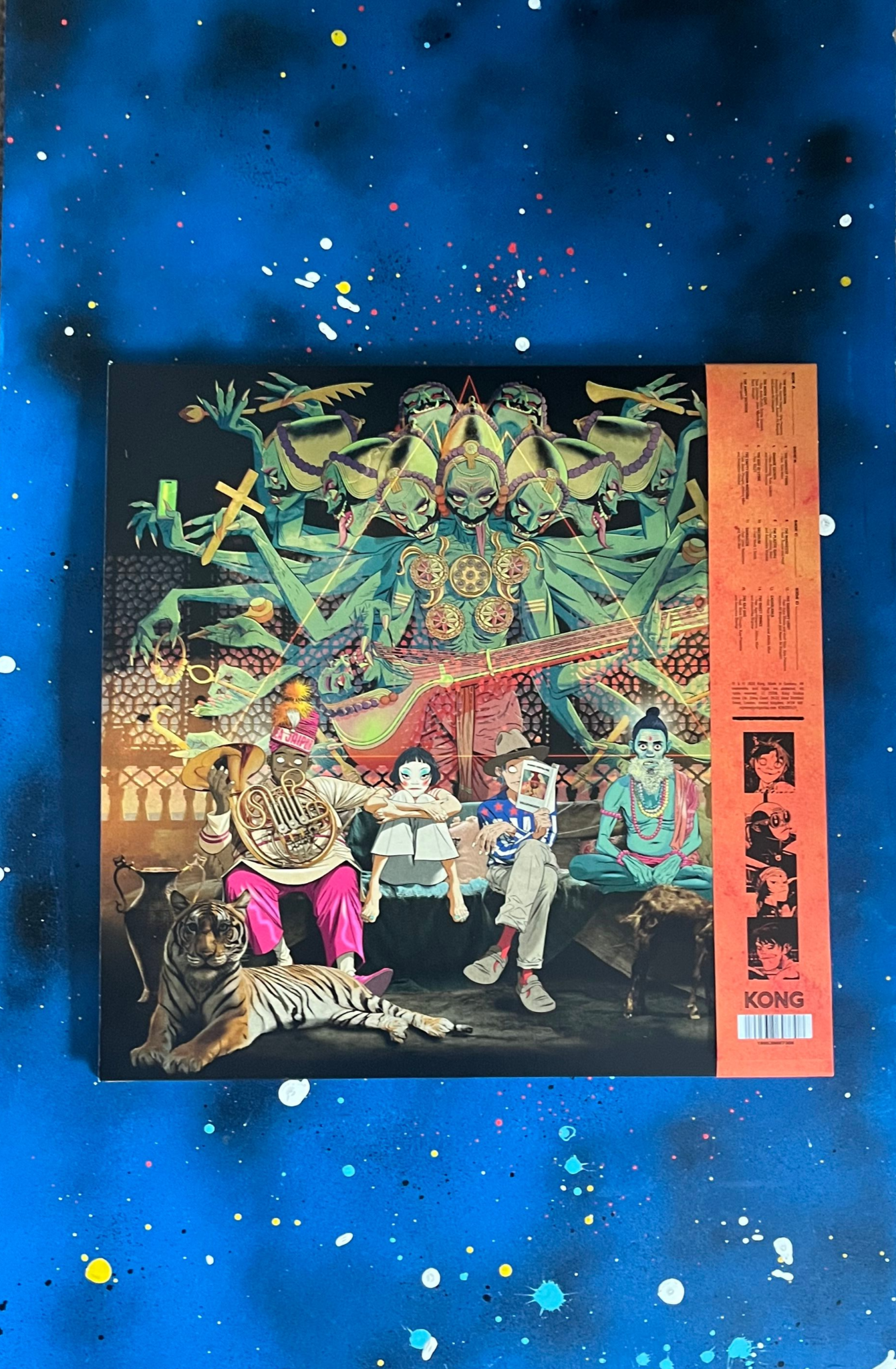
The lore of the record follows the cartoon band, 2D, Murdoc, Noodle, and Russel, sneaking into India on fake passports to escape a digital curse, a narrative mirrored by the record's sonic palette. The influence of the subcontinent is everywhere, featuring legendary playback singer Asha Bhosle, space-disco diva Asha Puthli, and the virtuoso sitar of Anoushka Shankar, the daughter of Ravi Shankar.
The instrumentation is exquisite: a sitar buzzes in a frantic, psychedelic duet with Johnny Marr’s signature trebly guitar on 'The Plastic Guru', while the title track opens with the breathy, transcendent melody of a bansuri flute that seems to float above the Himalayas.
Perhaps the most haunting element of 'The Mountain' is how it recruits a choir from beyond the grave. Albarn has excavated unreleased recordings of late collaborators, weaving the voices of Dennis Hopper, Bobby Womack, Mark E. Smith, Tony Allen, and De La Soul’s Trugoy the Dove into the mix. This isn't digital necromancy for the sake of nostalgia; it is an exploration of how art outlives the vessel.
Death here isn't eerie; it’s an active, vibrant participant. There is a defiant power in hearing the late Proof (of D12) burst out of 'The Manifesto' with a verse recorded 25 years ago: “No one can convince the invincible to be sensible.” Similarly, The Fall’s Mark E. Smith brings his trademark surrealist snarl to the ravey horror of 'Delirium', sounding more commanding than ever as he warns the “shrunken china chief head dealer” that the spirits are “coming home a sinner.” These "Voices From Elsewhere" turn the album into a sonic testament to the permanence of the soul. As Albarn sings on 'Orange County':
“I’m not your enemy, your atoms gone, you stand alone, and everything you gave to someone you love, that’s the hardest thing.”
Albarn has always thrived in that wistful, descending melodic lane he occupied so effectively on Blur’s 'The Ballad of Darren'. That DNA is present here on the gorgeous 'The Empty Dream Machine', while 'Casablanca', a track that sees Johnny Marr and Paul Simonon effectively uniting The Smiths and The Clash, is so quintessentially evocative it could have easily sat on that last Blur record. It feels like a sophisticated, dub-heavy evolution of Albarn’s best songwriting, blending English pining with a nomadic, global groove.
But the record refuses to linger in the shadows. Following the widescreen Indian soundscapes of the opener, 'The Moon Cave' dips into sleek, rubbery funk, while the Sparks-assisted 'The Happy Dictator' provides a joyous slice of 80s synth-pop. It is a masterclass in art-pop irony, pairing Russell Mael’s operatic, staccato delivery with a neon-lit bounce that feels like a forgotten New Wave classic. It’s a playful jab at the tyrants and despots who present themselves as eternal, a song that manages to be both a scathing critique and the most danceable moment on the record. It's Gorillaz at their most flamboyant, proving that even a song about authoritarianism can be a shimmering, floor-filling delight.
That subversive energy carries into the guest spots, where even IDLES’ Joe Talbot reveals a new, vulnerable gear on the woozy, Jerry Dammers-inspired ska of 'The God of Lying'. Trading his trademark post-punk roar for a reflective, "Ghost Town" lilt, Talbot interrogates the complacency of modern life with startling clarity:
“Are you happy with your housing? / Are you climbing up the walls? / Are you deafened by the headlines, or does your head not hear at all?”
'The Mountain' achieves a miraculous feat. While Albarn has often waded through grief, from the pulsing melancholy of 'Andromeda' and the elegiac 'The Nearer the Fountain, More Pure the Stream Flows' to Blur's 'The Ballad' and 'The Narcissist', those previous explorations felt like funeral rites. This record, despite its heavy thematic weight, refuses to be sombre.
Instead, its 15 tracks form a vibrant tapestry of major-key sing-alongs, sitar-soaked bangers, and whimsical waltzes. It acknowledges the darker side of the human condition, the "atoms building bombs", yet chooses to smile anyway. It is an ecstatic exploration of rebirth and the profound resilience of the spirit.
Quite simply, this is the band’s best work in 15 years. An exceptional record that proves even at the summit of their career, Gorillaz are still finding new ways to climb.