Johnny Marr: The Age of Everything
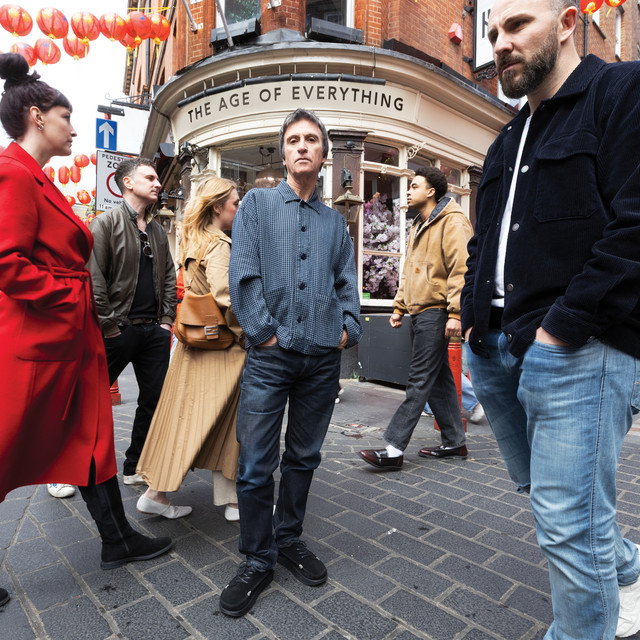
It would have been easy for Johnny Marr to spend 2026 looking backwards. Weeks before the release of ‘The Age of Everything’, 111 lots from his extraordinary guitar collection went under the hammer at Christie’s for more than £3.6 million. Instruments connected to The Smiths, Electronic, The The, Modest Mouse, The Cribs, Noel Gallagher and decades of collaboration passed into new hands, temporarily turning Marr’s career into something that could be catalogued, displayed and sold. The auction itself told the story of just how far those guitars had travelled.
Almost immediately afterwards, Marr released ten new songs. That feels much more like him. His past is impossible to separate from the person he is now, and there is no reason it should be, but nostalgia has never seemed enough to occupy him for long. Since putting his own name at the front of ‘The Messenger’ in 2013, his solo career has gradually stopped feeling like another branch on an enormous musical family tree and developed an identity of its own.
‘The Age of Everything’, his fifth solo album, arrives with Marr entirely comfortable inside that identity. He has called it his “most cathartic” record, with the title coming to him early in the process and gradually becoming impossible to escape. It captures the feeling of living in a culture defined by information, technology and countless things competing for our attention at once, although Marr does not see that entirely as a negative. Overwhelm exists alongside possibility. Having access to everything can be exhausting, but it can also give us more places to look, more ideas to discover and more ways to create.
The way the album was made reflects that sense of movement. Marr wrote the material in London, road-tested much of it with his band on the American East Coast and then returned home to Manchester to record it. Eight of the ten songs had already been played live before the album was completed, allowing Marr, Iwan Gronow, Jack Mitchell and James Doviak to discover how they moved in front of an audience before committing them to the record.
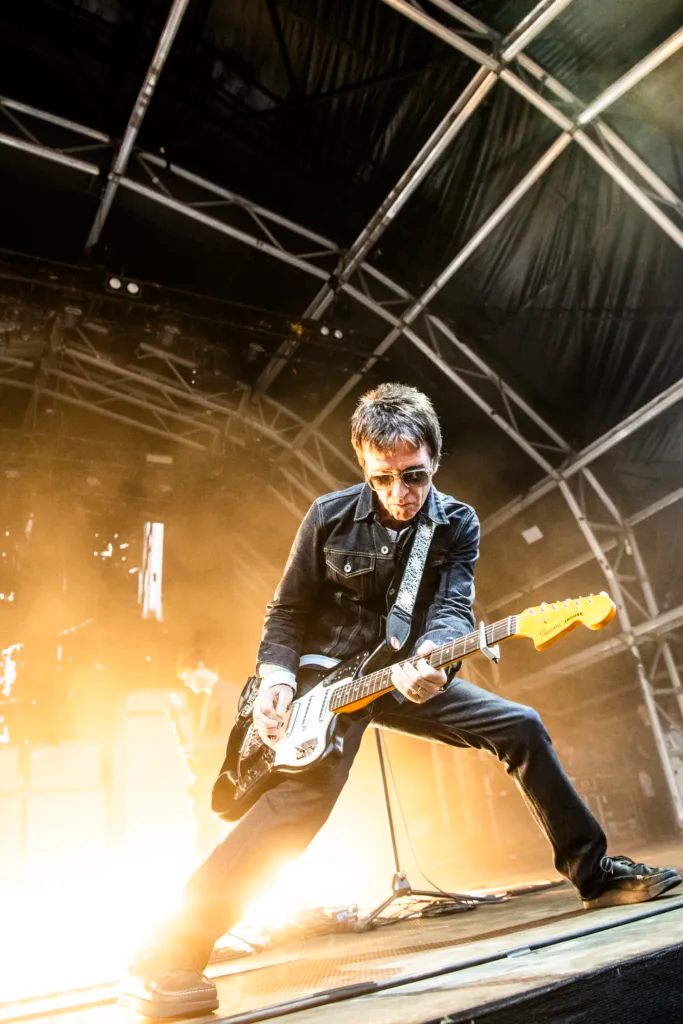
There was no great attempt to reinvent Johnny Marr in the process. After the retrospective period around ‘Spirit Power’ and the projects that accompanied it, Marr wanted to concentrate on the sound he and his band had spent more than a decade building. There is enough depth in that catalogue now to pick ten Johnny Marr solo songs without relying on anything he recorded with The Smiths, and ‘The Age of Everything’ sounds like the work of somebody who no longer needs to establish what a Johnny Marr solo album should be.
‘Spin’ establishes that confidence immediately. Marr has spent much of his life producing guitar sounds that other musicians subsequently tried to imitate, and there is still something thrilling about hearing that bright, chiming attack coming directly from him. Yet the track is driven as much by momentum as technique. Gronow’s bass pushes underneath it, Mitchell keeps everything moving, and Marr uses the guitar to propel the song rather than simply reminding everybody what he can do with one.
There is a restlessness to ‘Spin’ that makes it an effective introduction to the album’s wider ideas. The song feels as though it is constantly being dragged forward, mirroring the sensation of modern life moving faster than anybody can comfortably process. Marr does not respond by slowing everything down. He meets that feeling with movement, allowing the guitars and rhythm section to keep pushing even as the world he is describing threatens to become overwhelming.
That urgency runs throughout ‘The Age of Everything’. Marr has spoken about wanting his solo music to retain some of the excitement of a debut album, and road-testing these songs appears to have sharpened that instinct. The choruses are bigger, the band sounds increasingly settled, and even the darker moments rarely sink beneath the weight of their subject matter.
‘Beyond The Rain’ takes that energy somewhere broader. There is an immediacy to its chorus that makes it feel designed for the larger rooms Marr now regularly plays, but it never descends into anonymous arena rock. His guitars continue to move around the edges, adding rhythm, melody and atmosphere rather than arriving as enormous blocks of sound.
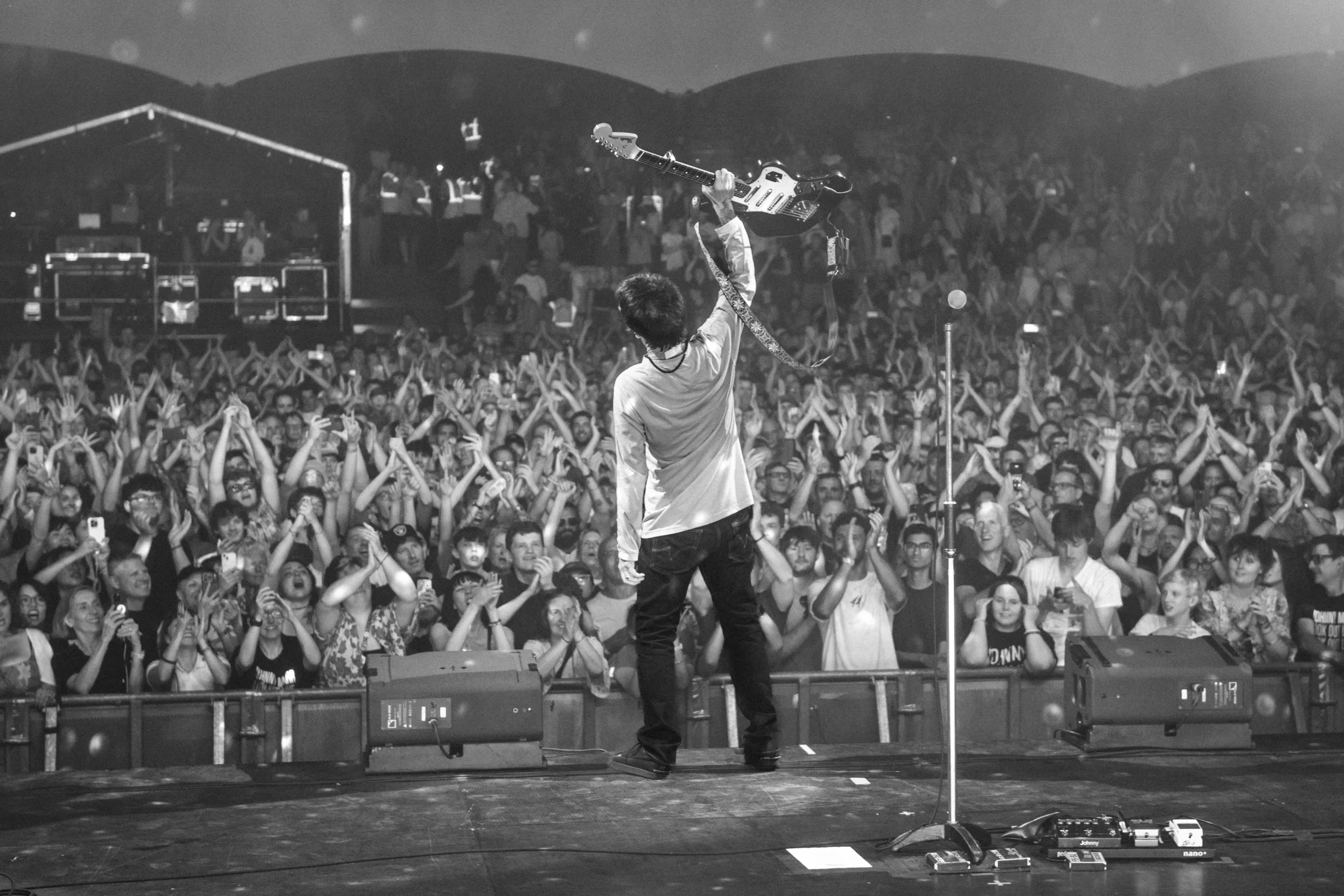
There is something hopeful inside the song too. ‘The Age of Everything’ might emerge from a feeling of cultural overload, but Marr rarely sounds defeated by the world he is describing. Even the idea of moving beyond the rain suggests looking through whatever is happening now towards something better on the other side. That mixture of unease and possibility becomes one of the record’s defining qualities.
For me, ‘It’s Time’ is where ‘The Age of Everything’ really clicks into place. It is one of the album’s two clear standouts and perhaps the song that best explains what Marr means when he describes this as his most cathartic record. The music is exuberant, almost celebratory, but underneath it sits frustration with the culture around him and the contradictions involved in living inside it.
Technology, greed, environmental anxiety and an increasingly fractured view of the world all feed into the song. What prevents ‘It’s Time’ from becoming a lecture is that Marr does not position himself safely outside any of it. We enjoy the convenience technology provides while complaining about what it has done to our attention and relationships; we recognise the consequences of excess while continuing to participate in it. Marr is caught inside the same contradictions as everybody else.
The song’s greatest strength is that none of those concerns drag the music down. Its wordless chant developed while Marr was playing the track live and quickly became something audiences could join in with, turning unease into communal release. ‘It’s Time’ addresses some of the album’s biggest ideas while remaining one of its most uplifting moments.
That is where Marr’s interpretation of the title becomes particularly interesting. ‘The Age of Everything’ could easily have been another pessimistic description of a culture drowning in phones, information and noise. Marr recognises that danger but also sees the opposite possibility. If everything is available, ideas and opportunities can exist everywhere too. His instinct is not to retreat from the modern world but to work out how to live inside it.
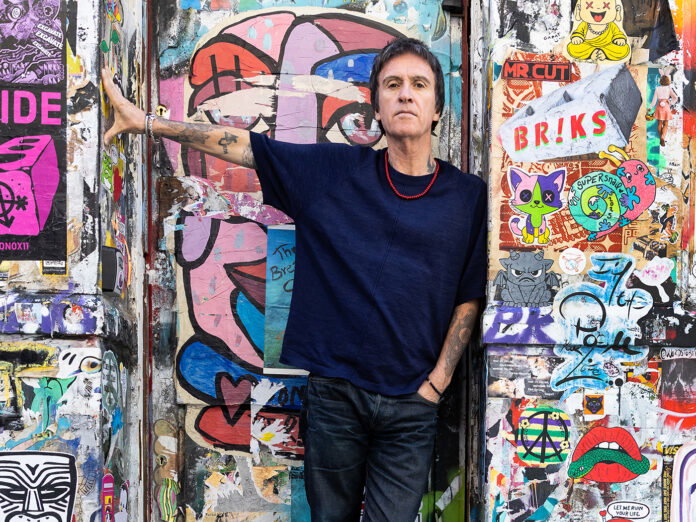
‘How Come’ gives the record room to breathe after that rush. Marr’s guitar remains immediately identifiable, but there is more space around it and a wistfulness that has gradually become an important part of his solo work. One of the quieter developments across these five albums has been his growth as a singer. On ‘The Messenger’, the voice could sometimes feel like a means of carrying songs whose real identity sat inside the guitar parts; here, Marr sounds completely comfortable with what his voice can bring to them.
‘Ophelia’ restores some of the swagger. Gronow’s bass pushes prominently through the arrangement, reinforcing how much Marr’s current music depends on the band around him. Mitchell and Doviak are equally important. After years of playing together, they understand how much space Marr needs and, just as importantly, when the song does not need any more from him.
There is a difference between a Johnny Marr guitar part and a Johnny Marr guitar showcase, and ‘The Age of Everything’ generally understands it. The guitars are everywhere, naturally, but they rarely stop a song to demand admiration. Marr has always been at his most interesting when the instrument is doing several jobs simultaneously, carrying rhythm, creating atmosphere and adding another melody around the vocal.
‘That Feeling’ pushes those textures somewhere stranger. Marr and Doviak play with the vocals and the space surrounding them, showing that experimentation at this stage does not require Marr to abandon the solo sound he has spent more than a decade establishing. Sometimes the change happens at the edges: a keyboard part, an electronic texture or a guitar that briefly emerges from behind the song before disappearing again.
The clearest change of pace comes with ‘In And Out Of Love’. Its waltz-like movement gives the album one of its more exposed moments and takes Marr towards direct romantic territory he has rarely explored under his own name. Considering how many famous songs about heartbreak were once carried by his guitar, it is striking how little his solo catalogue has depended on the subject.
That gives ‘In And Out Of Love’ an appealing vulnerability. Marr no longer sounds as though he needs to prove that he can front his own records, and the performance benefits from that security. He does not push his voice beyond what the song requires, allowing its restraint to become part of the emotion rather than trying to manufacture a grand vocal moment.
‘Just Once More’ unsettles things again. Bass and guitar appear to pull against each other before the arrangement gradually opens up, eventually giving Marr room for one of the album’s more striking guitar passages. By this point, the benefit of developing so much of the material onstage is obvious. These songs do not sound like studio constructions waiting to be translated for live performance; they already understand how to move.
That darker edge continues into ‘Fire With Fire’. There is a Cure-like quality to the guitars, and Marr has readily acknowledged Robert Smith as part of his musical DNA. At this point in his career, there seems little reason to disguise those connections. The Cure, Electronic, post-punk and the various forms of guitar and electronic music Marr has absorbed across more than four decades have all become part of the same vocabulary.
‘Fire With Fire’ also fits Marr’s description of ‘The Age of Everything’ as cathartic. He has spoken about only fully recognising after completing the record how much frustration had worked its way into the music. There is more anger underneath these songs than the brightness of some of their choruses initially suggests, but Marr rarely allows that anger to harden into hopelessness.
Then comes ‘All In A Life’, my other standout on the record and, for me, the perfect way to finish it. Where ‘It’s Time’ looks outwards towards technology, greed and the wider state of the world, ‘All In A Life’ brings those ideas back down to the people living through them. Marr wrote much of the album while people-watching in London, observing strangers and wondering about the lives, worries and circumstances hidden behind the faces passing him every day.
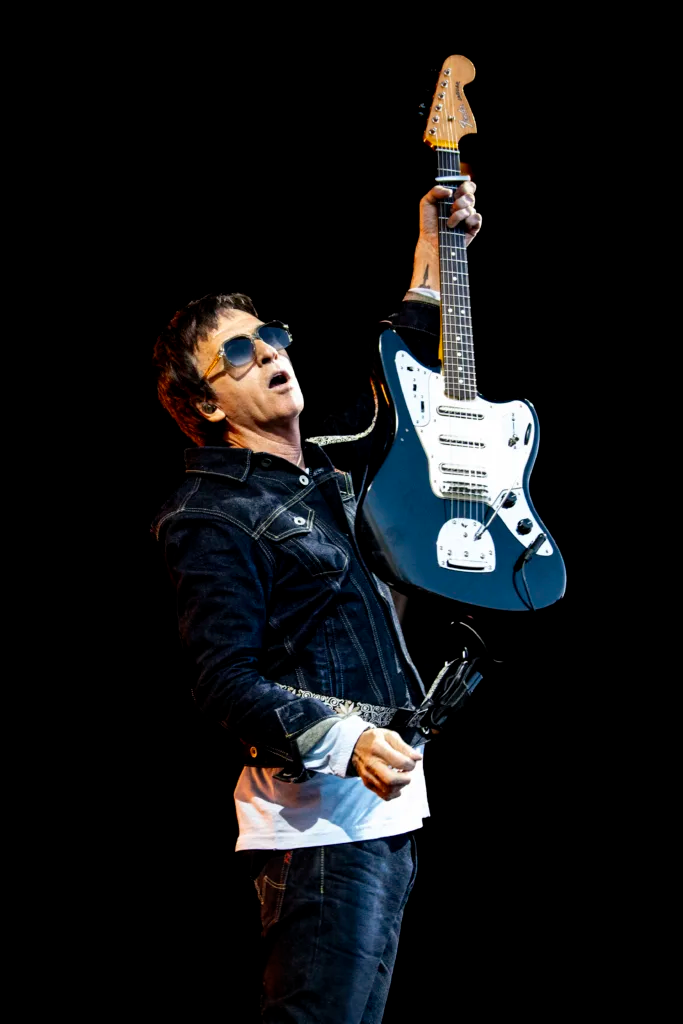
That observational instinct gives ‘All In A Life’ a darker, more atmospheric weight. Electronics, echoing guitars and heavy drums create a colder sound than much of what comes before, but it suits a song built around the strange isolation of moving through a crowded city. You can be surrounded by hundreds of people and still know almost nothing about any of them.
It is a particularly effective ending to ‘The Age of Everything’. The album begins with the feeling that the modern world is moving faster than anybody can comfortably process, but its final song narrows that enormous idea to individual experience. We might live in a culture where everybody is supposedly connected, and information is constantly available, yet the person standing beside us can still be carrying an entire life we know nothing about.
For me, that makes ‘It’s Time’ and ‘All In A Life’ the record’s two essential songs. They approach its central idea from opposite directions. ‘It’s Time’ looks at the systems, attitudes and contradictions shaping modern life and responds with defiance, while ‘All In A Life’ looks at the people living inside those systems and becomes much more reflective. One feels built for thousands of people shouting its chorus back towards a stage; the other feels better suited to the journey home afterwards.
Between them, Marr prevents ‘The Age of Everything’ from becoming a vague statement about phones and information overload. The album is really concerned with perception: what we notice, what we ignore, how technology alters our relationship with the world and how difficult it remains to understand what somebody else might be experiencing.
There are moments where the record is less adventurous than Marr’s wider career might lead you to expect. This is somebody who moved from The Smiths to Electronic, joined Modest Mouse and The Cribs, entered Hans Zimmer’s film-score world and has continued appearing on records by musicians from completely different generations. Compared with some of those turns, his fifth solo album is not another dramatic reinvention, but it never really sets out to be one.
‘The Age of Everything’ is more interested in refinement. Marr has found a solo language over the previous decade and now sounds confident enough to explore its limits without feeling obliged to tear everything down between records. ‘Spin’ provides the urgency, ‘Beyond The Rain’ expands the scale and ‘It’s Time’ gives the album its clearest statement of purpose, before the middle of the record moves towards more personal and atmospheric territory and ‘All In A Life’ brings its largest ideas back to individual experience.
The timing of the album makes that confidence even more interesting. Only weeks before it appeared, Marr had watched instruments from virtually every part of his career pass across the auction floor at Christie’s. The sale turned decades of British music history into 111 individual lots, including guitars connected to The Smiths, Electronic, The The and musicians Marr encountered along the way. His 1982 Rickenbacker alone carries enough history for somebody else’s entire career. It travelled through The Smiths' years, was later lent to Noel Gallagher and eventually appeared on the cover of ‘Supersonic’. Marr and Gallagher’s paths have continued to cross throughout the decades, with Marr subsequently appearing across Noel Gallagher’s High Flying Birds records.
For another artist, putting so much history under the hammer might have felt like a full stop. Marr followed it almost immediately with another album, which feels entirely in keeping with the way he has approached the rest of his career.
There is plenty of his past inside ‘The Age of Everything’, because separating Johnny Marr from the sounds he has spent more than forty years creating would be pointless. Manchester, Electronic, The Cure, The Smiths and his previous solo records occasionally flicker through these songs, but none feels like somewhere he wants to retreat.
That is ultimately the biggest strength of Marr and the record. He does not pretend his history is irrelevant, nor does he allow it to become the only interesting thing about him. At its best, particularly on ‘It’s Time’ and ‘All In A Life’, ‘The Age of Everything’ finds a musician with an extraordinary amount behind him still completely engaged with what is happening now. Marr called it his most cathartic record, and you can hear why. There is frustration here, but also possibility; anxiety, but rarely defeat. The title acknowledges the exhausting feeling that everything is happening at once, while the music keeps searching for something worth holding onto inside it.
For somebody whose past has become valuable enough to sell for millions, Johnny Marr still sounds far more interested in what comes next.