The Gallagher Ledger: A Journey Through the Songbook of Noel Gallagher
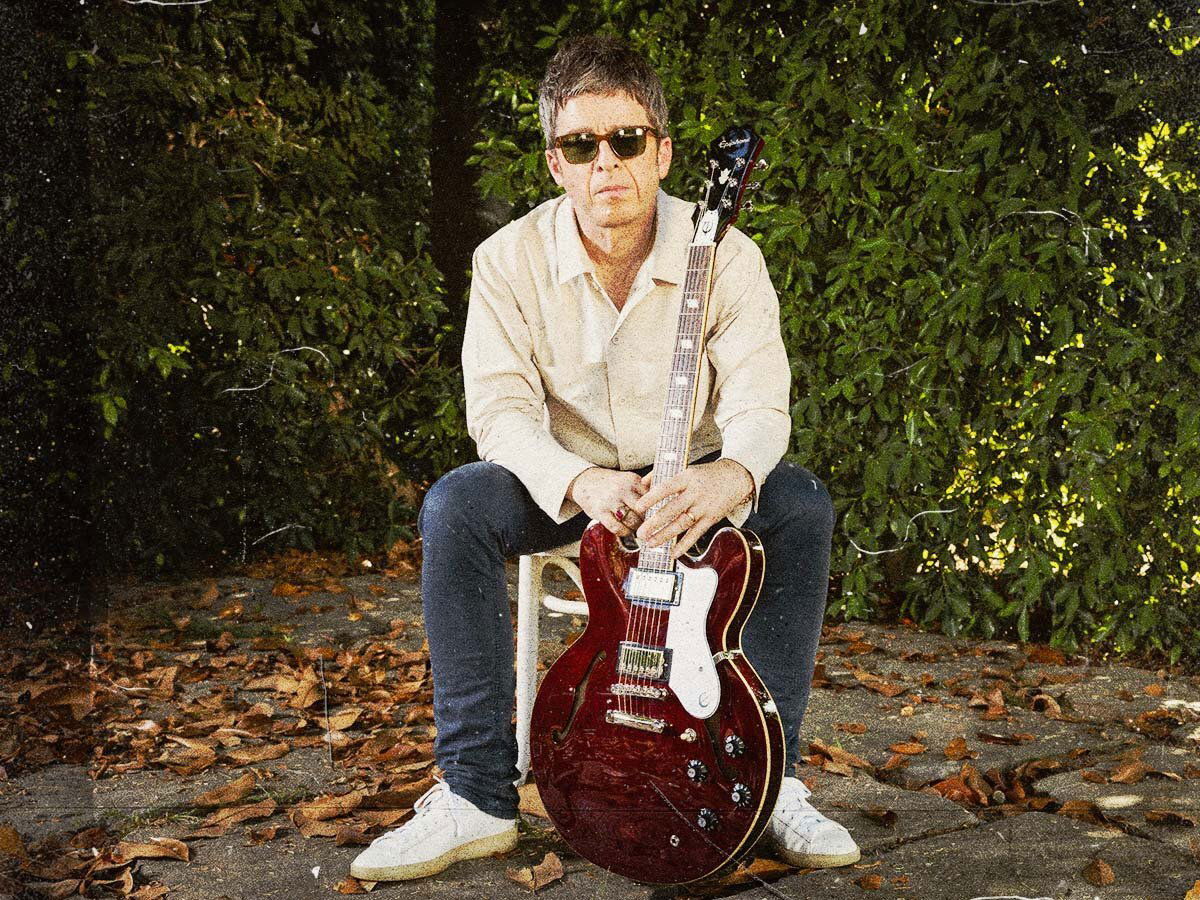
From the moment the opening chords of 'Rock ‘n’ Roll Star' rattled the airwaves in 1994 to his current standing as the elder statesman of British songcraft, Noel Gallagher has soundtracked the lives of multiple generations. He is the rare songwriter whose work has shifted from the bedroom posters of teenagers to the shared heritage of a nation. Whether he was leading the charge of Britpop with a Union Jack-adorned Gibson or exploring the kaleidoscopic, outer reaches of psychedelic pop with The High Flying Birds, his output has remained a masterclass in melody and "universal truth."
Noel’s career is a tale of two halves: the era-defining anthems of Oasis, where he captured the lightning of 90s optimism in a bottle, and his solo journey, where he has traded the "wall of noise" for sophisticated arrangements, French horns, and even the occasional pair of scissors. Yet, beneath the tabloid headlines, the legendary feuds, and the swagger, the heart of his appeal has never changed. As he famously put it in the 2016 documentary 'Supersonic': “Can we talk about the songs?”
Because ultimately, that is what remains. Long after the "Cool Britannia" parties ended and the stadiums fell silent, it is the songs, the B-sides that became anthems and the ballads that became hymns.
The Oasis Years: Anthems for a Generation
Supersonic
Oasis's debut single was the ultimate statement of intent. After several frustrated attempts at recording other tracks at The Pink Museum in Liverpool, Noel famously wrote 'Supersonic' in the time it took the rest of the band to eat a takeaway. It was the world's first taste of the Gallagher swagger, raw, loud, and undeniably confident.
What started as a studio jam evolved into a skyscraper of melodic distortion; with its nonsensical lyrics about "yellow submarines" and "sniffing in a tissue," it captured a carefree, invincible spirit that defined the era. It remains the quintessential 'Rock ‘n’ Roll Star' calling card, anchored by that iconic, dragging drum beat and a guitar solo that somehow sounds both lazy and predatory. It wasn't just a debut; it was a flag planted firmly in the ground of British rock history.
Live Forever
The third single brought a much-needed sense of hope to the mid-90s, acting as a spiritual antidote to the "morbid" grunge sound bleeding over from Seattle. While Kurt Cobain was singing 'I Hate Myself and Want to Die', Noel penned an uplifting masterpiece about aspiration, immortality, and the simple beauty of being alive. It was a conscious decision to move toward the light, inspired by the melodic optimism of The Beatles and the grit of working-class Manchester.
The song's power lies in its universal "we": it wasn't just Noel or Liam singing; it was a collective roar for a generation that was tired of being told they had no future. It remains a firm fan favourite and, for many, the greatest British song ever written, the precise moment Oasis shifted from a buzzy indie band to a sprawling, untouchable national movement. When Liam sneers the line "Maybe I just want to fly," he wasn't just singing a lyric; he was issuing a manifesto for the decade to come.
Slide Away
A sprawling, six-minute epic hidden toward the end of 'Definitely Maybe', 'Slide Away' captures a rare, desperate romanticism that the band would spend years trying to recapture. Recorded at the legendary Sawmills Studio in Cornwall, the track features a towering wall of interlocking guitars that somehow feels incredibly intimate and vulnerable. It is widely considered by many hardcore fans to be the greatest Oasis song ever recorded, often surpassing the more famous singles in "best-of" polls due to its raw, unpolished power.
The performance is arguably Liam Gallagher’s finest hour; his vocals range from a tender, almost melodic croon to a gravelly, soul-baring roar that reaches a fever pitch during the bridge. Yet, the true spirit of the track lies in Noel’s songwriting; he wrote it on a guitar borrowed from Johnny Marr, and you can hear that Manchester lineage in every chord.
Despite never being released as a proper single in the UK, it has become a permanent cornerstone of the band's legacy. It is a song about the heavy, all-consuming ache of young love, representing the true emotional peak of their debut era.
Talk Tonight
Originally a B-side to 'Some Might Say', this is a perfect piece of acoustic melancholy. It was born from a "lost" few days in San Francisco in 1994, after Noel famously walked out on the band following a disastrous, methamphetamine-fueled set at the Whisky a Go Go. Fuelled by frustration and a sense of impending failure, Noel checked out of the tour and headed for the airport, only to be talked "off the ledge" by a girl he had met at a show.
She took him in, and during those few days of anonymity and reflection, he penned this intimate, vulnerable glimpse into the man behind the wall of noise. The song's charm lies in its raw simplicity, the sound of a rattling tambourine and the squeak of fingers on acoustic strings. It proved that Noel didn't need a Marshall stack, a rowdy band, or the Gallagher bravado to command an audience; sometimes, all he needed was a six-string and a story about a girl who "saved his life" without even knowing it.
Half the World Away
Another legendary B-side (this time to 'Whatever'), this track found a second life as the beloved theme tune to 'The Royle Family'. It is a poignant ode to escapism, the universal, restless desire to leave your small town behind for a place that "may or may not exist." It has become the quintessential Sunday-night-in-the-suburbs anthem, capturing the quiet desperation and hope of ordinary life with a gentle, melodic touch.
Musically, the song is a departure from the band’s usual distorted roar, instead leaning into a sophisticated, Bacharach-inspired shuffle that Noel recorded at The Pink Museum in Liverpool. While 'Definitely Maybe' was about the loud, boisterous act of leaving, 'Half the World Away' is about the quiet, internal realisation that you’ve already outgrown your surroundings. It remains one of the most covered and cherished songs in the Gallagher songbook.
The Masterplan
In terms of pure lyricism, this is arguably Noel’s finest hour. Originally tucked away as a B-side to 'Wonderwall', it is a soaring, orchestral meditation on life, fate, and the optimism of moving forward. It remains a testament to the fact that Noel’s "throwaway" tracks were often better than most bands' entire careers; in fact, Noel has since admitted that it was a "mistake" to hide a song of this magnitude on the back of a CD single rather than saving it for the third album.
The track is defined by its majestic, sweeping horn section and a guitar solo that carries a weight of profound realisation. It captures a specific type of working-class philosophy, the idea that while we may not have control over the universe, we are all part of a larger, invisible design. Its enduring legacy was cemented during the Live 25 tour, where Noel took a moment to acknowledge the new generation of fans who have inherited the Oasis songbook. He dedicated the song to them by saying, “This song is for all the people in their twenties who have never seen us before and kept this going for 20 years.” It was a passing of the torch, proving that the masterplan is still unfolding for a whole new audience.
Don’t Look Back in Anger
If 'The Masterplan' is his best poetry, this is his best song, period. While 'Some Might Say' was technically their first chart-topper, many fans argue that 'Don’t Look Back in Anger' felt like their first true Number One, the moment they shifted from a rock band to an unstoppable cultural phenomenon. From the very first chord, the song is a love letter to Noel’s idols; the iconic piano intro is a direct nod to John Lennon’s 'Imagine', playing the same notes to signal a change in tone for the band. This Lennon influence carries into the lyrics, with Noel famously lifting a line from a home demo tape of the late Beatle for the second verse:
“So I’ll start a revolution from my bed / ' Cos you said the brains I had went to my head.”
The identity of the mysterious "Sally" has been the subject of fan theories for decades. During a Q&A session, a fan once asked Noel directly if she was a reference to 'Sally Cinnamon' by The Stone Roses, a song Noel has long credited with being the reason he picked up a guitar in the first place. While he acknowledged the melodic debt to his Manchester heroes, Noel has often maintained that "Sally" was simply a name that fit the meter of the chorus, eventually claiming he has no idea who she is.
Beyond the technicalities, the song has moved into the realm of British folklore. Following the Manchester Arena tragedy, it became a global anthem of defiance and remembrance, proving that music can heal where words fail. Whether it's being belted out on football terraces, at weddings, or in packed pubs across the globe, it has become a universal hymn. Because Noel left her identity open, "Sally" now belongs to the millions of fans who sing her name every night.
The Experimental Middle & The End of an Era
Setting Sun
Noel’s first collaboration with The Chemical Brothers was a psychedelic hand grenade that detonated right at the peak of his fame. A 90s reimagining of The Beatles’ 'Tomorrow Never Knows' blueprint, it swapped traditional acoustic strumming for a crushing wall of electronic noise and distorted breakbeats. For a man known as the king of the sing-along chorus, this was a radical departure that proved his musical curiosity extended far beyond the confines of a standard rock band.
Despite its abrasive, industrial texture, the track rocketed to Number One, proving that the British public was willing to follow Noel into much darker, more experimental territory. It remains a fascinating snapshot of the mid-90s "Big Beat" era, where the boundaries between the indie disco and the rave were starting to blur. It wasn't just a side project; it was a signal that Noel was starting to look toward the horizon for a new kind of sound.
Gas Panic
Written during a gruelling period of sobriety and chronic insomnia, 'Gas Panic!' is the dark, pulsing heart of 'Standing on the Shoulder of Giants'. It is a stark departure from the sunny optimism of the early years, replaced by a haunting, claustrophobic atmosphere that mirrors the panic attacks and night terrors Noel was facing at the time. The lyrics about a shadowy figure watching over him in the dead of night remain some of the most raw and honest he has ever penned.
Musically, the song is a heavy, slow-burning masterpiece. With its swirling backwards guitars and a menacing flute intro, it feels like a fever dream set to music. It’s a standout track that many fans feel deserves more recognition, as it captured a vulnerable, transitional moment for the band.
In the stadium setting, it provided a moment of brooding intensity, proving that Oasis could be just as effective in the shadows as they were in the spotlight.
Go Let It Out
The lead single from 2000’s 'Standing on the Shoulder of Giants' served as a bold declaration that Oasis were entering a new, more psychedelic decade. Following the departure of founding members Bonehead and Guigsy, the track features Noel taking over bass duties, creating a looping, groovy foundation that was a far cry from the "wall of noise" on 'Be Here Now'. With its Mellotron flourishes and whistled melody, the song felt like a modern transmission from a different era. It was also the first outing of the new look Oasis.
Noel has famously praised the track's songwriting and production, once remarking that it was the closest Oasis ever came to sounding like The Beatles. It wasn't just an imitation of the Fab Four, but rather an evolution of their 'Revolver'-era experimentation. The lyrics, urging the listener to "Go let it out, go let it in", captured a sense of spiritual release, proving that even as the band's lineup shifted, Noel’s ability to write a towering, world-class lead single remained untouched.
Little by Little
This track is a "criminally underrated" composition that features one of Noel’s most brilliant aphorisms: “True perfection has to be imperfect.” While the studio version is a grand, sweeping acoustic ballad that fits perfectly into the early 2000s indie landscape, the song has found a powerful second wind in recent years. Noel’s decision to rearrange the track for his live sets, swapping the acoustic guitar for a more driving, electric sound, has transformed it into a modern anthem.
The song explores the idea of incremental progress and the small, daily battles we all face, making it one of his most relatable pieces of writing. It captures that quintessential "Noel Gallagher" trick of making a deeply personal sentiment feel like a universal truth. Whether it's the choir-like backing vocals or the soaring chorus, 'Little By Little' remains a testament to his ability to write songs that grow and evolve alongside his audience.
Stop Crying Your Heart Out
A return to the classic Oasis "big ballad" form, this song arrived just when the world needed it most. Written by a more mature Noel, it explores the idea that hope can, and will, conquer despair if you just hold on long enough. At the time of its release, many critics saw it as a massive return to form for the band, earning well-deserved comparisons to the emotional weight of 'Slide Away' and the anthemic power of 'Don't Look Back in Anger'.
The track became an unofficial anthem for the nation during the 2002 World Cup, cementing its place as a song that belongs to the public rather than just the band. It’s a masterclass in tension and release, building from a simple piano melody into a cinematic crescendo. It remains one of the most enduring hits of the band's later years, a song that provides comfort and catharsis in equal measure.
Lyla
By 2005, eleven years into the journey, Noel delivered this "rock stomper" for the 'Don't Believe the Truth' sessions. It was a shot of pure, unadulterated energy that reminded the world why Oasis were the kings of the stadium. Following a period where the band’s democratic approach to songwriting had led to more eclectic (and sometimes less anthemic) records, Noel explicitly set out to write a "lead single" that could move an audience of 70,000 people. He succeeded; it became an instant live staple and another Number One hit, fueled by a garage-rock grit that felt both fresh and revitalised.
Noel famously described Lyla as the "younger sister" of Sally from 'Don't Look Back in Anger', suggesting a shared lineage of mysterious, symbolic women in his songwriting. While Sally was about looking back, Lyla was a frantic call to the present, anchored by a repetitive, hypnotic hook and a driving drum beat that made it the highlight of the mid-2000s tour. It proved that even a decade in, the band could still trigger a global frenzy with a single riff. More than just a chart-topper, 'Lyla' captured the sound of a band enjoying being a band again, reclaiming their throne at the summit of British guitar music.
The song’s longevity is perhaps best seen in how it bridged the gap between the original fans and the new "Generation Oasis." Even after the band's split, the track remained a gargantuan moment in Noel’s solo sets, often played with an even heavier, more aggressive edge. It serves as a reminder that Noel’s "sing-along" formula wasn't just a 90s fluke; he could still tap into that primal, communal energy whenever he chose. By the time the final chorus kicks in, 'Lyla' isn't just a song, it’s a celebration of the enduring power of a loud guitar and a simple, undeniable hook
Falling Down
As a final statement, 'Falling Down' is incredibly strong, representing a deep dive into the more adventurous, psychedelic territory Noel had been hinting at for years. While early Oasis was built on a foundation of "three chords and the truth," this track is a woozy, multi-layered trip, leaning heavily on a circular drum loop and a mournful, swirling melody that feels more inspired by 'Tomorrow Never Knows' than anything from the Britpop era. It showed a band that was still evolving, pushing past their rock 'n' roll comfort zone into a space defined by echoes, drones, and a sense of drifting existential dread.
The song’s cultural reach was further cemented by a series of high-profile remixes, most notably a monumental rethink by The Chemical Brothers, which stripped the track back to its hypnotic essence. Lyrically, it captures the feeling of the world collapsing around you, a poignant irony, as the band themselves would "fall down" in Paris just a year later in 2009. It remains a hauntingly beautiful, psychedelic exit for the biggest band of their generation, proving that even as the internal relationships were reaching a breaking point, the creative fire was still burning bright.
The Solo Flight: High Flying Birds
If I Had a Gun
Noel’s second solo single was the moment the world realised he didn't need the Oasis name to write a classic. A beautiful, stripped-back love song written for his then-wife, Sara, it was an intimate declaration that stood in stark contrast to the stadium-filling roars of his past. With its heartfelt lyrics and simple, effective acoustic melody, it signalled to the fans that he was back and his solo career was built on a solid foundation of pure songcraft.
The track quickly became a mainstay in his solo sets, often eliciting the same kind of mass sing-alongs as his 90s hits. It proved that his ability to tap into universal emotions, love, longing, and devotion, remained completely intact. It wasn't just a single; it was a flag planted in the ground, announcing that Noel Gallagher’s High Flying Birds were here to stay, trading the "wall of sound" for something more personal and poignant.
AKA... What a Life!
If there was any doubt that Noel wasn't ready to have a successful solo career, 'AKA... What a Life!' put those fears to bed. This was no half-hearted experiment; it was a track inspired by the house music Noel had immersed himself in during the second "Summer of Love." Specifically, he aimed to capture the ecstatic, piano-driven energy of Rhythim Is Rhythim’s classic 'Strings of Life', blending that legendary club spirit with his own gift for a soaring, anthemic melody. It is arguably his most successful solo floor-filler, taking the classic Gallagher sensibility and strapping it to a relentless, driving "motorik" beat that felt entirely fresh.
The song’s power lies in its defiant optimism and its refusal to be pinned down by the expectations of the Oasis crowd. It became a massive radio hit and an essential part of his live sets, proving that Noel could navigate the world of dance-rock without losing his identity. For many, this was the track that truly separated The High Flying Birds from the ghost of Oasis, showing a songwriter who was finally comfortable embracing the groove and acknowledging his roots in the Manchester club scene at The Haçienda.
Its success signalled a new era of freedom for Noel, where the four-on-the-floor rhythm became just another tool in his arsenal. By channelling the spirit of 'Strings of Life', he created something that felt both nostalgic for the warehouse parties of his youth and perfectly poised for the modern stage. It remains a high-water mark of his solo career, a song that managed to crossover into the mainstream in a way few indie-rockers ever achieve. Whether it’s appearing in high-profile ad campaigns or being belted out by thousands in a field, the track serves as a reminder that the "Chief" is at his best when he’s moving forward, even if he’s using the heartbeat of his past to get there.
Riverman
The opening track of 'Chasing Yesterday' is a masterclass in mood and atmosphere, signalling a shift toward a more expansive, psychedelic sound. While Noel has always been a student of the 60s, this track saw him venturing into the "cosmic" territory of Pink Floyd. The song’s DNA is heavily infused with the sprawling, melancholic textures of 'Shine On You Crazy Diamond', trading the stomping bravado of his earlier work for a sophisticated, jazz-inflected arrangement. It even features a haunting saxophone solo, a bold, progressive move that would have been unthinkable during the Oasis years.
The track’s strength lies in its patience and its refusal to rush toward a typical "big" chorus. Instead, it builds steadily, layered with acoustic guitar.
Noel has often cited it as one of his favourite pieces of his own work, and it’s easy to see why; it represents a songwriter who is no longer afraid to let a song breathe and drift into more experimental waters.
In a live setting, 'Riverman' serves as a hypnotic centrepiece, proving that Noel could command an audience with subtlety just as easily as he could with volume. It was the moment fans realised that his solo journey wasn't just about recreating the past, but about exploring the same high-fidelity horizons as the classic rock greats. It remains a sophisticated, fan-favourite highlight of his second solo chapter, blending Mancunian grit with a touch of Floyd-esque grandiosity.
Ballad of the Mighty I
Featuring fellow Manchester icon Johnny Marr, this track was more groove-based than anything Noel had ever attempted with his former band. It was a sophisticated, disco-inflected nod toward the more experimental, rhythmic direction he would soon explore in depth. Marr’s signature "trebly" guitar work weaves perfectly through the track, adding a layer of Mancunian magic to an already stellar, high-gloss arrangement.
Noel famously remarked on Marr’s incredible work ethic during the session, noting how the former Smiths guitarist arrived with no preconceived ideas and simply "played what he felt," resulting in a telepathic musical connection between two of the city's favourite sons.
The song represented a breakthrough for Noel as a solo artist, showing he was finally comfortable stepping away from the "four chords and the truth" formula. The driving, propulsive bassline and cinematic strings created a sense of relentless forward motion, reflecting his own personal journey away from the shadow of the 90s and into a more avant-garde future.
It remains one of the most polished and cool entries in his solo catalogue, a perfect example of his "nomadic" musical spirit and his willingness to collaborate with the greats to push his sound forward. By the time the track reaches its euphoric, echoing conclusion, it’s clear that Noel had found a new kind of power. One found in the space between the notes rather than just the volume of the amps. It is a towering achievement, and one of the best songs of his solo career.
Holy Mountain
Perhaps his most polarising track to date, 'Holy Mountain' is a glam-rock "leap into the unknown" that divided the fan base upon arrival. It set a distinct retro-revisionist tone for the 'Who Built the Moon?' era, sounding like a chaotic, joyous collision of glam-era Bowie, The Vaccines, and Showaddywaddy, all marching to the tune of a persistent Jona Lewie-style tin whistle. With its brass-heavy energy and a rhythmic nod to Ricky Martin’s 'She Bangs', it was a kaleidoscopic departure from the "four chords and the truth" formula that many purists found baffling.
However, Noel himself championed the track as one of the best things he had ever written, relishing the "joyous" noise and the creative freedom it represented. It was a bold statement of experimental intent, proving that he was no longer interested in playing it safe or simply repeating the past. Whether you love it or hate it, you cannot deny its infectious, rowdy energy; it is a song designed to be played at maximum volume, proving that Noel still has the power to surprise and provoke nearly three decades into his career.
Dead in the Water
Hidden at the very end of 'Who Built the Moon?', this "accidental" gem was captured during a spontaneous live session at a radio station in Dublin. It is a raw, unpolished performance featuring nothing but Noel and his acoustic guitar. The track was never actually intended for the album; it was caught on tape while the microphones were just "left on" while Noel was simply passing the time, but the haunting emotion captured in that room was so undeniable that it had to be shared with the world. It serves as a powerful reminder that beneath the psychedelic bells and whistles of his later work, he remains the undisputed master of the "one man and a guitar" format.
Fans often cite this as one of his greatest solo achievements, as it recaptures the same fragile vulnerability found in early Oasis classics like 'Talk Tonight'. It proves that he doesn't need high-concept production or a wall of synths to deliver a masterpiece; give him six strings and a quiet room, and he can still stop time. The song explores the wreckage of a "faltering relationship" and the desperate, perhaps futile, attempts to salvage it. The title itself is a stark idiom for something that has failed or is unable to move—yet Noel’s delivery suggests a refusal to let the end be the end.
The lyrical imagery is some of his most evocative. When he sings, "I will not rest while love lies dead in the water," it suggests a stubborn defiance against giving up on a partner or a passion, even when it seems beyond hope. He doubles down on this commitment with the line, "Let the storm rage, I'd die on the waves," emphasising a willingness to endure chaos for the sake of love. One of the most moving moments comes with the line, "Thinking 'bout the days when we had no money," which many fans interpret as a rare, grounded reference to his early life in Manchester before the dizzying heights of global fame.
While many listeners view it as a traditional romantic ballad, the song’s ambiguity has sparked intense speculation. Some fans believe the "faltering relationship" could refer to the complex, fractured bond with his brother, Liam, or a more internal struggle regarding a loss of enthusiasm for life that he is fighting to regain. Gallagher himself has often noted that his lyrics are designed to be mirrors for the listeners to find their own meaning. Whether it’s about a lover, a brother, or a dream, it remains a quiet, emotional anchor in an experimental era. A bridge for those who still crave the stripped-back, honest side of his songwriting.
Dead To the World
A standout from his fourth solo album 'Council Skies', this slow-paced, melancholic ballad was written in Argentina and features some of his most lush, cinematic arrangements to date. Complete with soaring strings and deeply personal lyrics, it is a shimmering showcase of a songwriter who is still reaching new heights. Many critics and fans alike have described the gorgeous 'Dead to the World' as being just as ambitious in scope as 'Champagne Supernova' sounded two decades ago, trading youthful psychedelia for a more mature, orchestral grandeur.
The song feels like a sophisticated evolution of his 90s ballads, trading the bravado of the Britpop era for a more reflective, weary wisdom. It is "quintessential Noel"—beautifully sad yet subtly hopeful, capturing a sense of late-night solitude that resonates deeply with his long-term audience. It serves as a reminder that as long as there is a guitar and a story to tell, he is going nowhere. It’s a true testament to the permanence of his talent and his ability to age gracefully while maintaining his status as one of Britain’s most vital songwriters.
We’re Gonna Get There in the End
Originally released as a demo during a time when the world was standing still, this track eventually found its home on 'Council Skies' and immediately struck a chord with the Oasis faithful. It is a classic Gallagher anthem, uplifting, defiant, and soaked in the kind of universal optimism that made him a household name in the 90s. With its driving rhythm and brass-flecked production, it feels like a spiritual successor to the mid-period Oasis "stomp," but with a layer of seasoned wisdom that only time can provide.
For many, the song carries a deeper, almost prophetic weight. The optimist in me can’t help but hear a series of nods toward the long-awaited Oasis reunion. When Noel sings, "Remember the dream that you're keeping alive" and "’Cause you can't let go, my friend / We're gonna get there in the end," it feels like a direct message to a fanbase that never stopped believing.
The lyrics trade in the currency of reconciliation and shared history, particularly in the bridge where he urges: "We've spent too long inside / Let's take a walk outside / It's a sad, sad song that the world keeps singing / Well, let love try to sing along."
It is a song about the resilience of "real love" and the courage to take one last gamble on something meaningful, with the line "Don't be afraid when you're rolling the dice / Life is a trip that you don't take twice" serving as a poignant reminder of mortality and legacy. Whether intentional or not, the track serves as a hopeful manifesto for the future. It suggests that despite the "sad songs" of the past, there is always a path back to the beginning. As the final refrain of "We’re gonna get there in the end" fades out, it leaves us with the sense that the destination, the two brothers sharing the stage again, wasn't that far away.
Conclusion: The Masterplan Unfolding
To look back at this collection, from the lonely, acoustic streets of San Francisco in 'Talk Tonight' to the hopeful, brass-flecked horizons of 'We’re Gonna Get There in the End', is to witness the evolution of one of Britain’s most enduring songwriters. Noel Gallagher’s journey has never been about chasing trends; it has been about the pursuit of the "perfect song." Whether he was leading a five-piece rock ‘n’ roll juggernaut or fronting a kaleidoscopic solo collective, the core ingredients have remained the same: a relentless optimism, a working-class heart, and a belief that a great chorus can save your life.
He has transitioned from the "Rock ‘n’ Roll Star" who wanted to 'Live Forever' into a sophisticated architect of "cosmic pop," proving that there is life, and indeed greatness, after the stadium-filling madness of the 90s. While the "wall of noise" has often given way to lush strings, psychedelic loops, and melancholic reflections, he has never lost his ability to speak for the millions. He has aged with his audience, trading the bravado of youth for a weary, seasoned wisdom that feels just as essential.
Ultimately, Noel’s legacy isn't just found in the multi-platinum plaques or the sold-out arenas, but in the way these songs have become the soundtrack to ordinary lives. They are sung in pubs, at weddings, on football terraces, and in quiet bedrooms across the globe. As he continues to roll the dice and move forward, he leaves us with a sense that the story is far from over. If the lyrics tell us anything, it’s that despite the "sad, sad songs" the world keeps singing, we should always let love try to sing along. Because, as the man himself says, we’re gonna get there in the end, and in the hearts of the fans, these songs will truly 'Live Forever'.