Jamie T: Ghosts (100 Days of Morning)

Jamie T has been part of the soundtrack to our lives since the release of 'Panic Prevention' in 2007. From university years and nights out to everything that followed, his music has accompanied an entire generation for nearly two decades. However, following the success of 2022's 'The Theory of Whatever' and his biggest headline show to date at London's Finsbury Park in 2023, Jamie found himself contemplating walking away from music altogether. The Finsbury Park performance felt like the culmination of everything he had worked towards, and for the first time in his career, he was unsure where to go next.
After five albums, countless sold-out shows and the inevitable highs and lows of life as a touring musician, Jamie found himself looking backwards rather than forwards. There was plenty to celebrate, but also much he had yet to properly process. Nearly two decades into his career, he needed an opportunity to reflect on everything he had experienced, confront some difficult memories and make peace with the person he had become.
The beginnings of his sixth album arrived from an unexpected place. Whilst transferring data to a new phone, Jamie began exploring old voice memos, uncovering fragments of songs, unfinished ideas and recordings he had accumulated throughout his career. Some had been sitting untouched for years, capturing different moments in his life that he had almost forgotten. Rather than leaving them in the past, he began piecing these fragments together, allowing old ideas to develop into something new.
The process became as much about confronting the ghosts of his past as making another record. 'Ghosts (100 Days of Morning)' emerged from that period of reflection, an album shaped by memories, unfinished business and the possibility of finding a new beginning in material he had once left behind.
‘3310’ is the sound of walking into the pub and seeing an old friend you haven't seen for years. There's an immediate familiarity, a sense of excitement and the comforting feeling that very little has changed. We've all missed Jamie T, and while he's never completely disappeared, hearing him burst back into life feels like catching up with somebody who still knows exactly how to make you laugh. Named after the iconic Nokia phone, ‘3310’ is classic Jamie T, complete with frantic guitars, his unmistakable delivery and a chorus involving blackcurrant and cider that will undoubtedly be shouted back at him in festival fields for years to come.
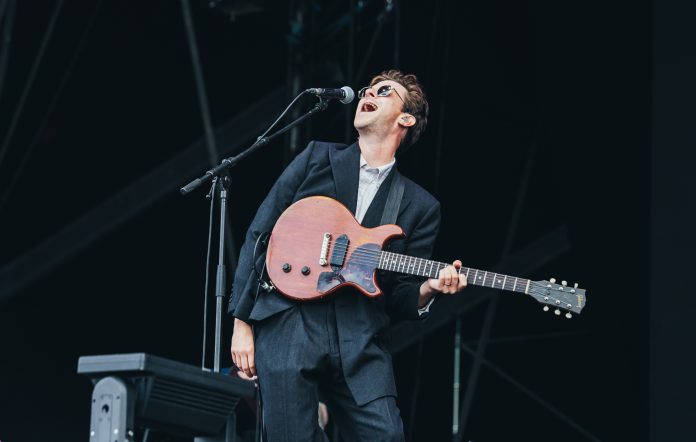
We got an early indication of its live potential at Reading Festival 2026, where Jamie opened the festival with a set lasting exactly 33 minutes and 10 seconds, a wonderfully ridiculous nod to the new single. Playing alongside old favourites including 'If You Got the Money', 'Sticks 'n' Stones' and 'Zombie', the song sounded perfectly at home in his catalogue. Nearly twenty years after 'Panic Prevention', Jamie can still command a festival crowd with the same scruffy charm that made him one of Britain's most exciting young musicians in the first place.

Across his previous five records, Jamie has always understood how to balance rousing anthems with moments of surprising vulnerability. 'Ghosts (100 Days of Morning)' continues that tradition, although the introspective moments feel particularly important this time around. There are plenty of songs here destined for bigger stages, but behind the swagger is somebody working through the complicated business of getting older, accepting mistakes and coming to terms with the past.
'Cocktail', co-written with Damon Albarn, is one of the album's most intriguing moments. Built around an infectious guitar rhythm, Jamie delivers his verses with an almost rapped intensity as the instrumentation grows increasingly restless around him. Albarn's contribution on keyboards adds another dimension to a song that is immediately recognisable as Jamie T while introducing a slightly different musical personality. Beneath its energy, however, is a considerably darker reflection on broken promises and friendships that have fallen apart. It's the sort of contrast Jamie has always handled particularly well, hiding something painfully honest inside a song that makes you want to move.
'Waist 36 Leg 32' continues that momentum with distorted guitars and a rousing chorus, but its subject matter is considerably less celebratory. Jamie considers guilt, masculinity and the pressures of consumerism, acknowledging how difficult it can be to escape the mistakes and expectations that follow us through life. The song's title has the appearance of something completely ordinary, almost throwaway, which makes the emotion underneath it even more effective. As the guitars become increasingly frantic, there's a sense of somebody attempting to shake off the weight of their own history. It's another track that should prove exceptional live.
One of my favourites is 'All I Wanna See Is Now', a song that manages to be deeply affecting while possessing one of the biggest choruses on the entire record. There's something about the way Jamie builds towards its refrain that reminds me of 'The Old Style Raiders' from 'The Theory of Whatever'. Both songs understand the power of a chorus that arrives at precisely the right moment, lifting everything around it without sacrificing the emotion of the verses. The layered vocals give 'All I Wanna See Is Now' a wonderful sense of warmth, and the repeated ending only makes it more memorable. I can already imagine thousands of people singing this back to him. It's a genuine earworm and surely one of the album's future live favourites.
'The Won' offers another change of pace. Against an atmospheric backdrop, Jamie reflects on the uncomfortable realisation that life doesn't always follow the path we imagined for ourselves. His conversational delivery gives the song an intimacy that might have been lost with a more conventional vocal performance, while the drums gradually introduce a greater sense of movement. It's a bittersweet piece of songwriting, the sort of song that could soundtrack the closing moments of a coming-of-age film, when the characters have discovered that growing older doesn't necessarily mean finding all the answers.
'Chelsea Girls' is perhaps the album's most unexpected musical departure. Jamie embraces the electronic sounds of the 1990s, with a driving dance beat and warm synthesiser arrangements that recall Underworld, Leftfield and The Chemical Brothers. His half-sung, half-spoken delivery moves across the instrumentation almost like a stream of consciousness, piecing together references to British popular culture, celebrity and the tabloid obsession that dominated the era. There's even a connection to 'Keying Lamborghinis' from his previous record, continuing his fascination with the absurdities of fame and modern British life.
It's a fascinating direction for Jamie, particularly because the electronic production feels so natural alongside his voice. He has always drawn from musical styles beyond conventional indie rock, incorporating elements of hip-hop, punk, reggae and dance music throughout his career. 'Chelsea Girls' takes that curiosity somewhere different, and the result is one of the most distinctive songs on the record. I'd happily hear him explore this sound further.
One of the songs I was most intrigued to hear was his interpretation of The Jam's 'Ghosts', originally released on their 1982 album 'The Gift'. Jamie discovered the song while immersing himself in Paul Weller's live material during a particularly difficult period before Finsbury Park. Its message clearly struck something within him, eventually providing the inspiration for the album's title and much of its wider narrative.
Covering Paul Weller is hardly a straightforward undertaking, especially when the song carries such personal significance. However, Jamie makes 'Ghosts' feel entirely his own. He increases the tempo, introduces a more contemporary arrangement and brings his distinctive vocal delivery to Weller's words without losing their vulnerability. There's a genuine sense of hope running through the recording, an acknowledgement that we cannot always escape the things that haunt us, but we can learn to live alongside them. It sits so comfortably within the album that, without knowing its origins, you might mistake it for something Jamie had written himself.
'Crimson & Clover' is another immediate highlight, possessing the kind of enormous chorus that Jamie has made his speciality. Backed by a wonderful synthesiser arrangement, the song gradually opens into something far more expansive, balancing his familiar vocal style with a warm, almost nostalgic atmosphere. It's classic Jamie T in the best possible sense, with a melody that stays with you long after the song has finished. Alongside 'All I Wanna See Is Now', it gives the second half of the record another moment of genuine uplift.
'Crucible' takes a more atmospheric approach, with dreamy textures and an arrangement that develops gradually before becoming considerably more dramatic. Its shifting dynamics create a sense of unease, as though the song is caught between wanting to retreat into the past and finding the confidence to move forward. That contrast between the more immediate anthems and these quieter experiments is one of the record's strengths. Jamie doesn't attempt to sustain the same level of intensity throughout, allowing the songs enough room to reveal themselves.
The emotional weight becomes particularly apparent on 'Caught Cheating', one of the most delicate songs on the album. Built around fingerpicked guitar melodies and an increasingly impassioned vocal performance, Jamie reflects on a relationship that has deteriorated beyond repair. There's a sense of regret running through every part of the arrangement, as though he's still attempting to understand precisely where everything went wrong.
It reminds me of the vulnerability found in 'St. George Wharf Tower' and 'Emily's Heart', songs that demonstrated Jamie's ability to move beyond the chaotic storytelling of his earlier records and confront something far more personal. 'Caught Cheating' belongs in that company. It's a beautiful, heartbreaking piece of music that becomes more affecting as the arrangement grows, and a reminder that some of his finest songwriting has always emerged when he allows himself to be completely exposed.
The album concludes with ‘Tallahassee’, perhaps the most revealing song on the entire record. Written on the morning of his landmark Finsbury Park performance in June 2023, it captures Jamie in a particularly conflicted state of mind. He was preparing for the biggest headline show of his career, surrounded by thousands of people who had followed his music for nearly two decades, yet rather than celebrating the achievement, he was questioning his own identity and whether he deserved to be standing on that stage.
Built around a sample of Canadian songwriter Leif Vollebekk's song of the same name, 'Tallahassee' finds Jamie delivering an almost conversational account of his place within British popular culture. Lily Allen, Tracey Emin, Paul Heaton and The Prodigy's Liam Howlett all receive mentions as he measures himself against musicians and artists whose work he admires. There's humour in these comparisons, particularly the typically British references, but also an unmistakable sense of insecurity.
At one point, he declares himself the soundtrack to a generation's university years, something that will undoubtedly resonate with anybody who grew up listening to 'Sheila', 'If You Got the Money' or 'Sticks 'n' Stones'. Yet almost immediately, he begins questioning his achievements, describing himself as a plagiarist and seemingly struggling to accept his own importance. It's a remarkable contradiction, particularly when you consider that he wrote these words just hours before thousands of people gathered to celebrate everything he had accomplished.
For me, 'Tallahassee' brings the record full circle. The young musician who burst onto the scene in 2007 with stories of London nightlife, teenage relationships and the characters he encountered along the way is now looking back at his own life with a mixture of affection, regret and disbelief. The humour remains, as does his ability to turn the most ordinary observations into something memorable, but there's a greater willingness to acknowledge uncertainty. It's an appropriate way to end an album concerned with the complicated relationship between who we were and who we've become.
'Ghosts (100 Days of Morning)' isn't an attempt to recreate 'Panic Prevention', nor does it need to be. Jamie T is forty now, with six albums and nearly two decades of experience behind him. He's still capable of writing songs that will have thousands of people bouncing around festival fields, but there's a greater sense of reflection running through his songwriting. Where 'The Theory of Whatever' felt like the triumphant return of an old favourite, this record finds Jamie coming to terms with everything that has happened along the way, from the friendships and relationships he's lost to the experiences that have shaped him.
It's the sound of an artist looking back at his past without allowing himself to be defined by it, acknowledging the ghosts that have followed him while finding the confidence to move forward.
There was a possibility that Finsbury Park in 2023 might have marked the end of Jamie T's recording career. Instead, it appears to have given him the opportunity to work out what he wanted to say next. By returning to forgotten ideas and confronting the memories attached to them, he's emerged with a record that sounds familiar without simply repeating the past. Nearly twenty years after 'Panic Prevention', Jamie T is still writing songs that feel like they belong in our lives. Long may that continue.