Song Stories: Johnny Marr: Beyond the Rain
On 20 November 2025, Johnny Marr was preparing to record 'Beyond the Rain', a song destined for his fifth solo album, 'The Age of Everything', when his phone rang. It was Noel Gallagher, who was away with Oasis on the South American leg of their reunion tour. The band had performed in Chile the previous evening and were preparing for their final two concerts in Brazil.
Marr rarely answered his phone during recording sessions, but Noel usually communicated through text messages. Seeing his name appear on the screen was unusual enough to make him pick up. Their friend Gary 'Mani' Mounfield, the much-loved bassist of The Stone Roses and Primal Scream, had died.
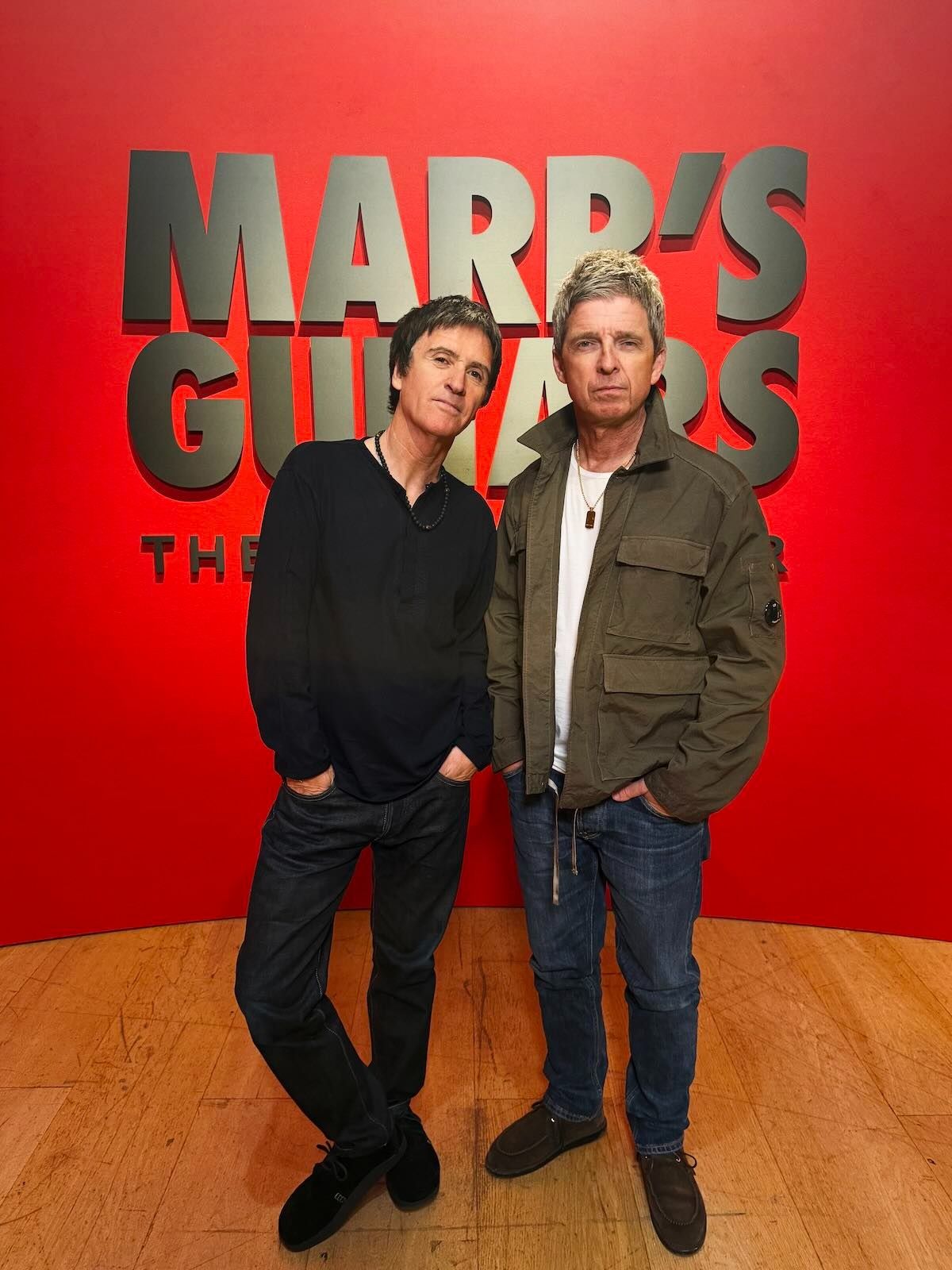
Marr and his band were devastated. They questioned whether to abandon the session altogether, but Marr imagined Mani encouraging them to carry on making music. They managed two takes before deciding to stop for the day. When Marr returned the following morning, he revised a couple of lyrics, including one that would give the song a deeply personal connection to his friend.
I've been listening to 'The Age of Everything' a great deal recently, and discovering the story behind 'Beyond the Rain' has made me appreciate the song in a completely different way.
A Northern Son
Speaking to Radio X's John Kennedy in October 2026, Marr recalled that everybody was already wearing their headphones when Noel called at around eleven in the morning. After hearing the news, he wondered whether continuing to record would be disrespectful. However, he could almost hear Mani telling him to stop worrying and get on with playing.
From everything I've read about him, that sounds entirely believable. Mani loved being around musicians, whether he was playing bass himself or watching somebody else perform, and I can't imagine he'd have wanted his friends packing up their instruments and going home on his account. Marr later admitted that the second take had been particularly difficult, and the musicians couldn't bring themselves to attempt a third.
The following morning, Marr returned to record the vocals and altered a couple of lines, including one about sunshine. He revised it to "I shine like a northern son", deliberately spelling the final word son rather than sun. The song hadn't originally been written about Mani, but Marr now had his friend in mind when he sang it.
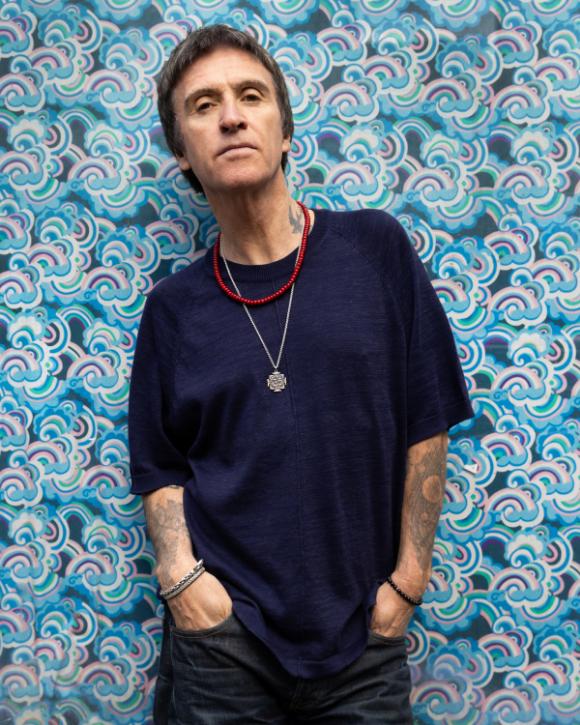
The distinction is impossible to recognise simply by listening to the record, but knowing the circumstances makes the lyric considerably more affecting. Mani was a proud Mancunian whose basslines helped transform British guitar music, and a man remembered by seemingly everybody who met him for his humour, loyalty and enthusiasm.
Marr and Mani's friendship stretched across an extraordinary period of Manchester's musical history. The Smiths and The Stone Roses belonged to different generations of the city's music scene, but their members moved in overlapping circles, sharing friendships and influences. Both bands helped establish Manchester as one of the most important places in British music, even if they approached guitar music in completely different ways.
When Mani died, I wrote about his extraordinary career with The Stone Roses and Primal Scream, and what his music had meant to me. Without The Stone Roses, I genuinely don't think Beyond the Grooves would exist. Their debut remains one of the most important albums I've discovered, and Mani's bass playing was a huge part of what made it so special.
I was particularly struck by the stories people shared about meeting him at gigs, in pubs and at Manchester United matches. There were plenty of tributes to his extraordinary playing, but just as many concerned how he treated people. For all the musical achievements attached to his name, he seemed to have left an equally strong impression on those who knew him personally.
Only two days after his death, Oasis took to the stage in São Paulo and dedicated 'Live Forever' to their friend. Marr's tribute was considerably more private, although I think Mani would have appreciated both. One was performed in front of tens of thousands of people, while the other emerged from a recording session that had almost been abandoned altogether.
What Does 'Beyond the Rain' Mean?
Before Mani's death, Marr had already written 'Beyond the Rain' as a song about hope and the possibility of finding something better after a difficult period. He described the music as having a yearning quality, which eventually led him towards the title. The verses were an attempt to express optimism, although Marr admitted that he felt slightly awkward making such a straightforwardly hopeful statement.
Musically, 'Beyond the Rain' is one of the most enjoyable songs on 'The Age of Everything'. The verses are relatively restrained, with Marr's guitar adding little melodies around the vocal before everything opens up during the chorus. He's spent more than forty years finding ways to make a guitar sound uplifting without necessarily playing anything particularly complicated, and there's plenty of that familiar invention here. The guitars move around the rhythm rather than dominating it, allowing the melody to do much of the work.
I particularly like the difference between Marr's delivery in the verses and the chorus. At first, there's a slight uncertainty, as though he's trying to convince himself that things might improve. Then the guitars become brighter, the rhythm opens up and he sounds considerably more assured. It's the sort of chorus I can imagine sounding fantastic during his live shows, particularly once everybody knows the words.
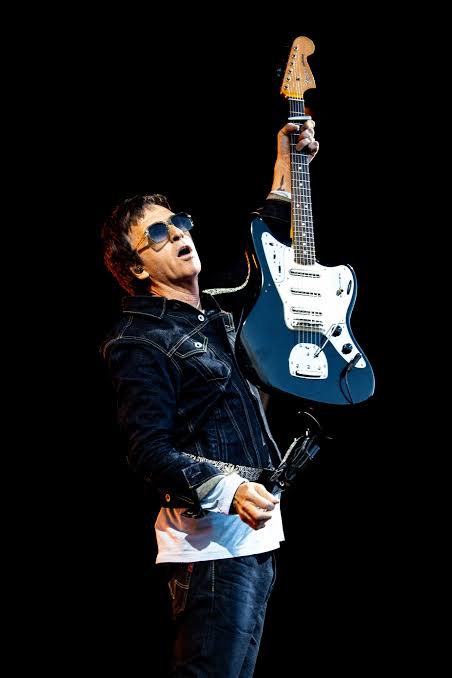
There's also something appealing about how straightforward the song is. Marr doesn't try to disguise the optimism behind complicated imagery or an unnecessarily elaborate arrangement. The idea of sunshine arriving after the rain is hardly new, but the music gives it an infectious quality. Even before I knew anything about the circumstances surrounding its recording, I found myself returning to the chorus.
The song's original message remains intact despite everything that happened in the studio. Marr was already writing about the possibility of better days, but the death of somebody he'd known for decades gave those words another dimension. He'd written the song with one meaning in mind and returned to the microphone with another.
Finding Hope in 'The Age of Everything'
Released on 2 October 2026, 'The Age of Everything' is Johnny Marr's fifth solo album and one of his strongest. Across ten songs, he explores the frustrations of modern life, from our dependence on technology and the influence of greed to the increasingly difficult business of understanding one another. Marr has described it as his most cathartic record, although you'd be forgiven for missing some of that frustration beneath the enormous choruses and wonderful guitar playing.
'Spin' opens the album in exhilarating fashion. Marr's trademark guitar sound is immediately recognisable, while Iwan Gronow's bass and Jack Mitchell's drums push the song forward at an almost relentless pace. There's barely an opportunity to catch your breath, which seems appropriate for a song concerned with the speed of modern life and the constant demands on our attention. I've always loved Marr's ability to make several guitar parts work together without any of them getting in the way, and 'Spin' is another example of how good he remains at it.
'Beyond the Rain' follows, offering a more hopeful perspective before 'It's Time' arrives with one of the finest guitar riffs Marr has written in years. It's an enormous pop song, complete with a wordless refrain that sounds destined for festival crowds, although the lyrics are considerably less cheerful. Marr takes aim at greed, corruption, environmental damage and our increasingly contradictory relationship with technology.
We complain about social media but continue using it, criticise enormous corporations while buying their products and worry about the environment without always changing our behaviour. Marr recognises that he's caught up in those contradictions himself, which makes 'It's Time' considerably more convincing than another musician telling everybody else how to live. The guitars sound fantastic, the chorus is impossible to resist, and I reckon it's among the finest singles of his solo career.
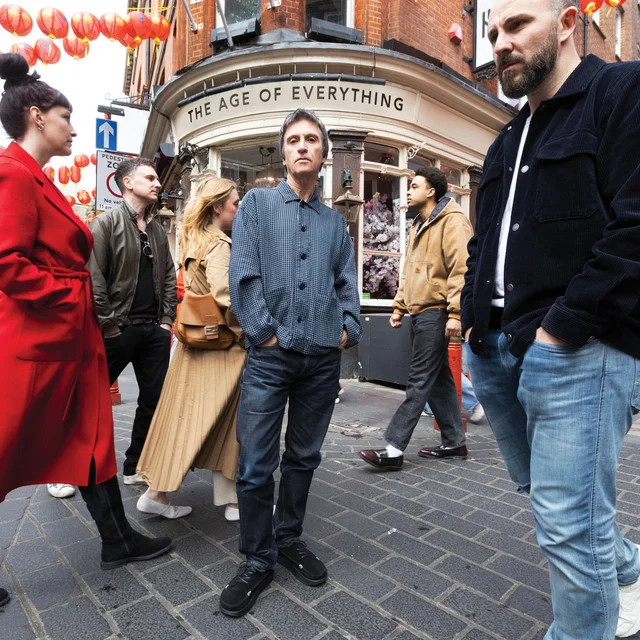
Elsewhere, 'How Come' offers a quieter moment, while 'Fire With Fire' brings some of Marr's post-punk influences to the surface. There are touches of The Cure in the guitars, something Marr has never been particularly embarrassed about acknowledging. Throughout the record, his band sound completely comfortable with one another, benefiting from the decision to perform much of the material live before recording it in Manchester.
However, the other song I keep returning to is 'All In A Life', which closes the album. Inspired partly by Marr's experiences of people-watching in London, it considers the lives of strangers and how little we know about the people we encounter every day. The music is darker, with echoing guitars, electronics and heavy drums creating an atmosphere quite different from the brightness of 'It's Time'.
Marr sounds fascinated by the possibility that somebody sitting opposite him on a train might be experiencing something extraordinary, wonderful or absolutely devastating, and he'd have no way of knowing. We have access to more information than any previous generation, yet can remain completely unaware of what somebody standing a few feet away might be going through. It's an interesting subject for an album so concerned with the contradictions of modern life.
In my review of 'The Age of Everything', I picked 'It's Time' and 'All In A Life' as the album's two standout tracks, and I haven't changed my mind. 'Spin' isn't far behind either, and all three demonstrate how much Marr has developed the solo sound he first introduced on 'The Messenger' in 2013.
What I've come to appreciate more recently is how 'Beyond the Rain' fits among them. Much of the album is concerned with things that frustrate Marr, but he never seems prepared to accept that the world cannot improve. The record's title reflects the exhausting experience of living in a society where information, opinions and technology compete constantly for our attention, although Marr also recognises the opportunities that come with having access to so much.
'Beyond the Rain' offers some relief from those concerns. Where 'Spin' captures the frantic pace of modern life and 'It's Time' confronts some of the attitudes responsible for its problems, Marr allows himself a moment of uncomplicated optimism. The chorus was already hopeful when he wrote it, although the circumstances surrounding Mani's death made that optimism considerably more personal.
A Song That Changed Meaning
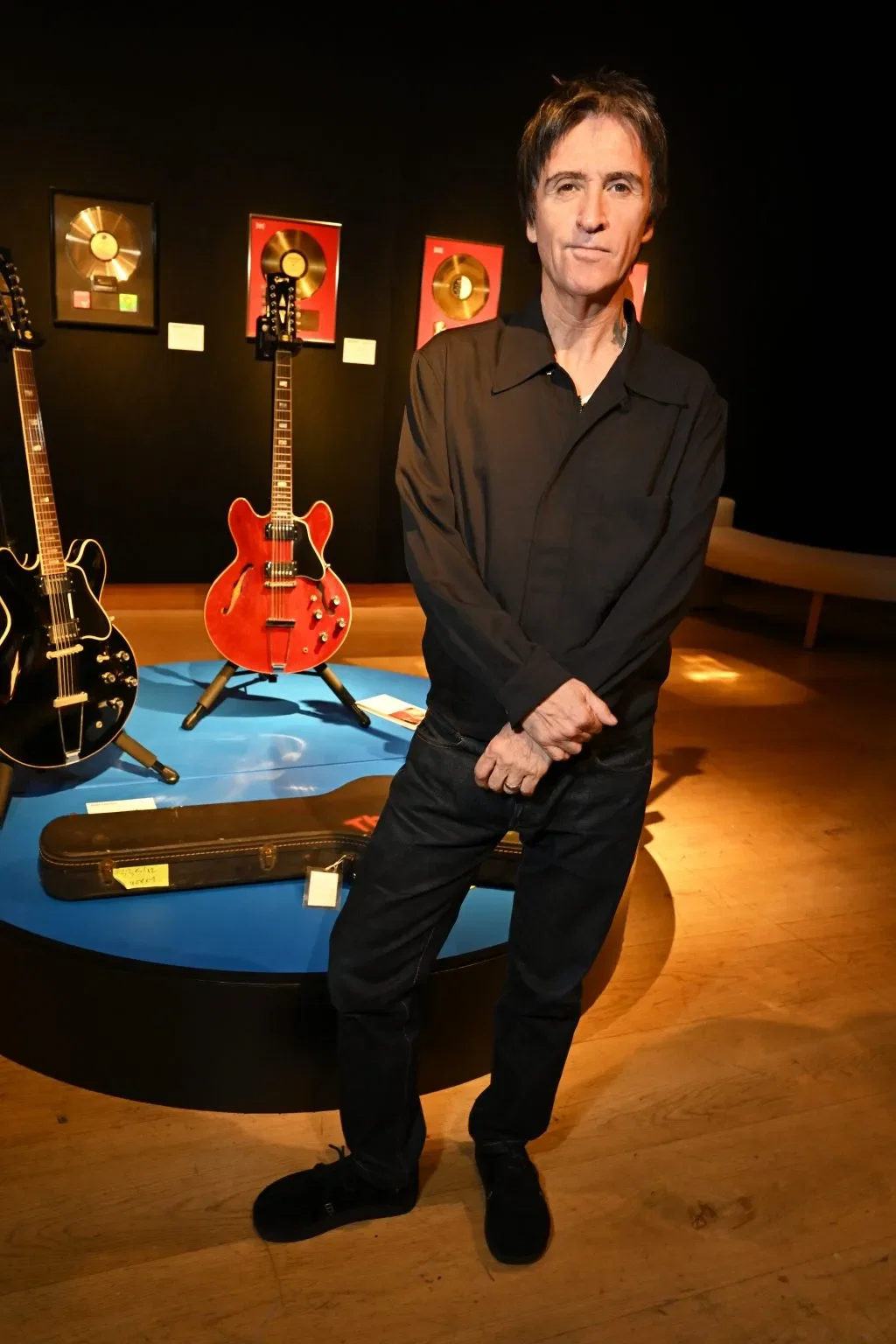
Only weeks before 'The Age of Everything' arrived, Marr had sold 111 lots from his extraordinary guitar collection at Christie's, raising more than £3.6 million. Instruments associated with The Smiths, Electronic, The The and Modest Mouse were finding new homes, while Marr was preparing to release another ten songs. Among them was 'Beyond the Rain', a recording that had acquired an unexpected connection to one of his oldest friends
What I find particularly affecting about 'Beyond the Rain' is that Marr had already written a hopeful song before Mani died. He hadn't intended to record a tribute, and the news didn't lead him to abandon what he'd written. The music remained the same, but when he returned to the microphone the following morning, he was thinking about somebody who was no longer there.
The Stone Roses have been part of my life for years, and I've spent countless hours listening to Mani's basslines on 'I Wanna Be Adored', 'She Bangs the Drums' and 'I Am the Resurrection'. Since his death, I've read so many stories about his generosity, humour and enthusiasm for music that I can almost imagine him telling Marr to stop worrying and get on with the recording. Hearing his name connected to a new Johnny Marr song certainly wasn't something I expected when 'The Age of Everything' arrived.
Now, whenever I listen to 'Beyond the Rain', I'll think about that morning in the studio and the friendship behind the recording. Marr had already written a song about finding sunshine after difficult times, but he couldn't have anticipated what those words would mean when he came to sing them. The difference between 'sun' and 'son' is impossible to distinguish by ear, yet knowing why he chose that spelling changes the lyric completely.
A northern son.