Queen: Live in Budapest 1986
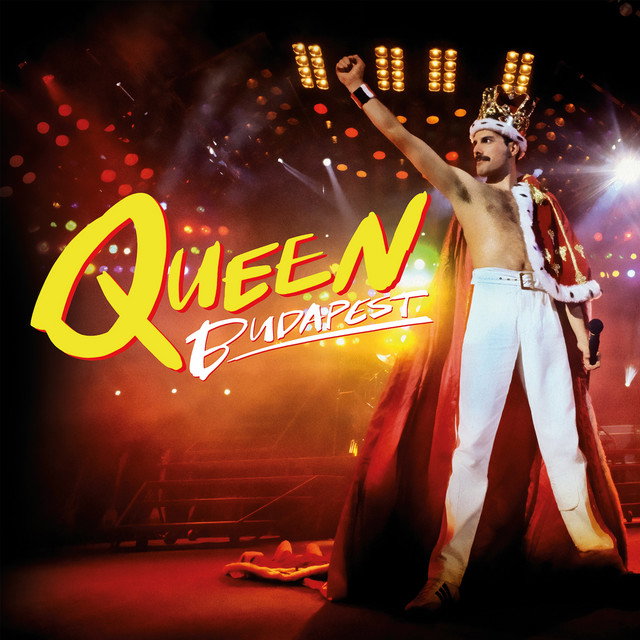
Forty years since a concert that made history and 35 years since we lost the greatest frontman of them all. Freddie Mercury.
There are certain musicians I'd have loved to have been there to see. David Bowie and the Beatles spring to mind immediately, but I'm not sure there's any artist I'd have wanted to have seen more than Freddie Mercury with Queen.
Freddie died on 24th November 1991 at the age of 45 as a result of AIDS complications. 35 years on, his music is still a huge part of popular culture. You still hear his voice at football matches, weddings, festivals and parties all over the place, and it's not uncommon for people who weren't even born when he died to be singing his songs. There aren't many musicians whose work has quite travelled so seamlessly across the generations.
A lot of the discussion about Queen as a live band naturally revolves around their 20-minute Live Aid performance in July 1985. It's one of the greatest live performances in the history of popular music, but it was merely a small taste of what they were capable of. A year later in Budapest, they had a lot more time and were able to show the world exactly what they could do. They made history in the process.
To mark the 40th anniversary of the concert, 'Queen Budapest' has been released with newly mixed audio from the original multitracks and a 4K restoration of the film. It's out on double CD, digitally and for the first time on vinyl (three vinyl records). It's one of the final performances by the original four.
With Nov 2026 also being the 35th anniversary of Freddie's death, there couldn't be a better opportunity to look again at one of the most extraordinary performances of his career.
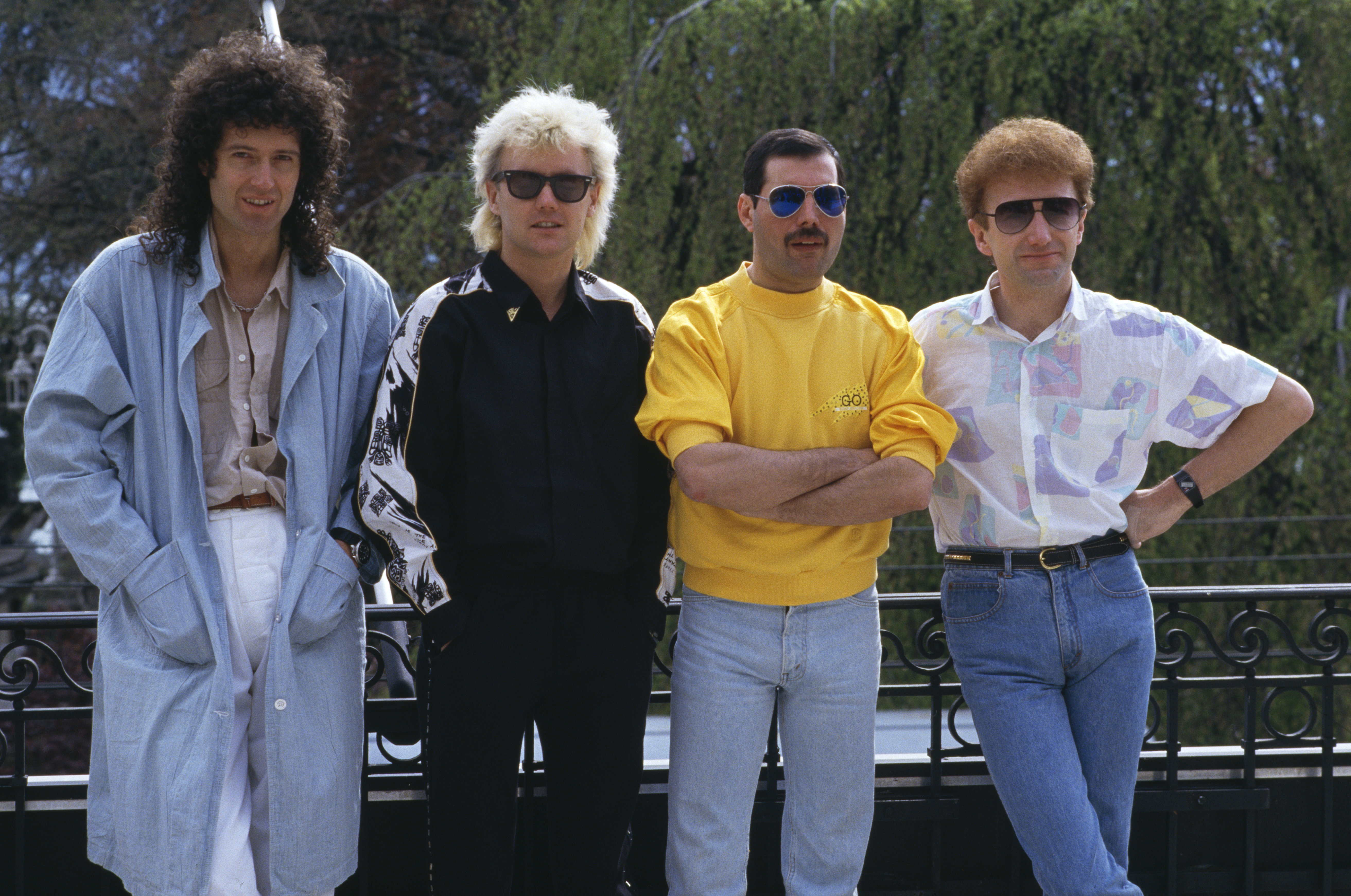
On 27th July 1986, Queen played at the Népstadion in Budapest. That was a far more important concert than the other sold-out stadium gig on the 'Magic Tour'. It was a night which really did something to the Iron Curtain.
To really get a sense of what the concert meant, we have to put it in the context of the world at that time. The Berlin Wall was still up, the USSR was still intact, Hungary was still a communist country, and the Cold War was still very much going on. Western pop culture had filtered through into Eastern Europe, but the opportunity to experience it on such a scale was extremely rare.
Artists as diverse as Elton John, Dire Straits and Iron Maiden had all played in Hungary before, but Queen were the first major Western rock band to stage a full-scale stadium concert of the kind on offer in the Magic Tour behind the Iron Curtain. They brought the full Magic Tour spectacle to Budapest, the same production which their Wembley Stadium audience had just enjoyed a fortnight earlier.
All 80,000 tickets were sold, and it's estimated that a further 45,000 people were listening in outside the stadium. Fans came in from as far afield as Poland and East Germany to be able to see Queen. For many of those there it was something they could have scarcely imagined a few years previously.
The occasion was so important that the Hungarian government went so far as to authorise the filming of the concert. The best Hungarian film-makers were brought in to document it, and the production was massive in scale, using 17 cameras and some 25 miles of 35mm film (effectively all the equipment of that type that was available in Hungary). The film was directed by János Zsombolyai and went on to be shown in Poland, East Germany, Czechoslovakia and China.
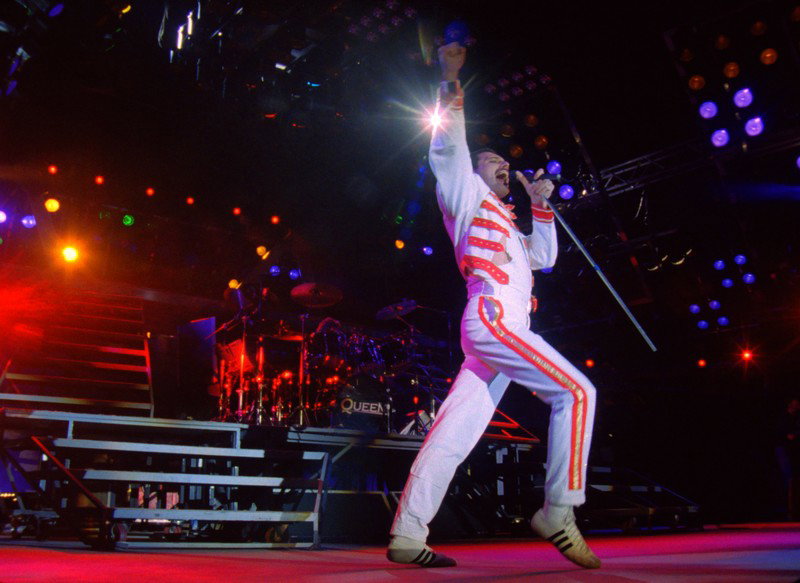
Looking at the footage today and listening to the album that accompanies it, it's pretty staggering to think about the political climate in which the concert was taking place. There's absolutely nothing to set the Budapest audience apart from those who'd been at Wembley to see Queen. They're singing the same songs, they're clapping along to 'Radio Ga Ga' in perfect unison, and they're reacting to Freddie Mercury in the same way. All the while, the various governments had been at the very heart of the business of dividing the continent, and the people on either side of that division clearly had a lot in common.
Queen didn't bring down the Berlin Wall, and the four British musicians weren't the reason that communism collapsed in Eastern Europe. Their appearance in Budapest was a very clear indication of the changes that were already underway and a significant contribution to the erosion of cultural barriers. Just over three years later, the Berlin Wall came down, and the face of Europe was completely transformed.
The band had turned up in Hungary to do a rock 'n' roll show and, in so doing, had become part of European history.
The concert was part of Queen's Magic Tour following the release of their 12th studio album 'A Kind Of Magic'. Their performance at Live Aid had, of course, reminded everyone just how good they were as a live act, but no one in Budapest at the time knew that Queen would play just five more concerts with Freddie Mercury, the last of which would be at Knebworth Park on 9th August 1986.
Queen's catalogue already has a few excellent live albums in it (Live Killers, Queen Rock Montreal, Live at Wembley '86 to name but three). Budapest is very much in the same ballpark as Live at Wembley '86 in terms of setlist, but the feel of the gig, the individual performances and the interaction between the band and the audience are quite distinct.
Opening with 'One Vision' and 'Tie Your Mother Down ', you immediately know what a good rock band Queen were. The atmospheric build to 'One Vision' is a magnificent way to open a stadium show, and the sheer aggression of Brian May's riff and Roger Taylor's drums on 'Tie Your Mother Down' is a perfect illustration of just how heavy Queen could be.
One of the early standouts is 'In the Lap of the Gods... Revisited'. That was originally the final track on 'Sheer Heart Attack' '74, and the massive chorus is absolutely perfect for a stadium, having been written long before Queen ever played in one. The 'Seven Seas of Rhye'/'Tear It Up' medley keeps the energy going, though I would have liked to have heard 'Seven Seas of Rhye' in full.
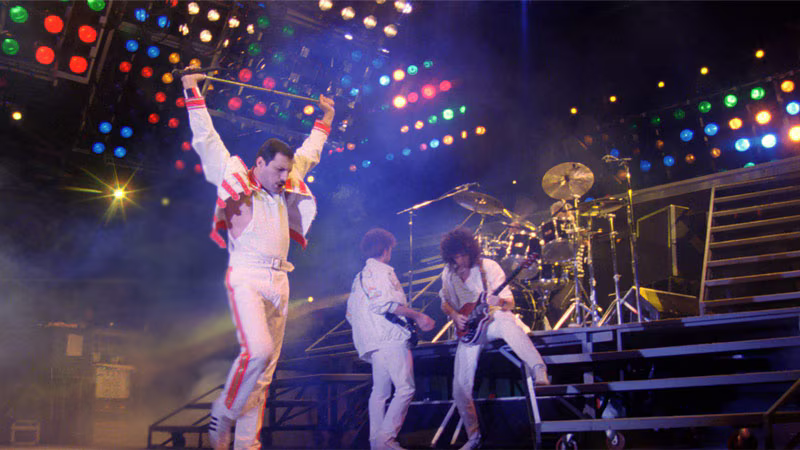
As amazing as Freddie was, Queen wouldn't have been Queen without the other three. All four of them were songwriters, and if you listen to the album without the footage, it's quite easy to hear the individual contributions of each. 'A Kind of Magic' is one of the best performances on the record, really. The length of the piece gives Brian May a lot more space to work in, and it's a great example of Queen being prepared to go to the extreme with their songs. 'Under Pressure' is just as good; Roger's vocals in that one do a great job of filling in for David Bowie, and John Deacon's bassline is absolutely there.
Deacon is just as good on 'Another One Bites the Dust'. There's a real swagger to that performance, down to the way he works with Taylor. You'd be forgiven for thinking that Deacon was the least celebrated member of the band, given the sheer amount of work he did as a musician and songwriter. The range of the band is absolutely staggering. 'Seven Seas Of Rhye', 'A Kind Of Magic', 'Under Pressure' and 'Another One Bites The Dust' don't in the slightest sound as though they could be from the same artist, and yet Queen are absolutely fluent in the transition between heavy rock, pop, funk and disco. You have to give credit to Spike Edney too, whose keyboards, guitar and backing vocals were a massive help in bringing their increasingly complex arrangements to life.
There have been a number of brilliant frontmen in the history of rock music, and there was absolutely no shortage of them. What was so special about Freddie Mercury, though, was that he didn't need much at all. A mic, the wreckage of a mic stand and a big stage were pretty much all he required. The live album is absolutely astonishing in the amount of charisma you get from just the vocal performance. The way he interacted with the audience was absolutely hilarious. He was in a country where English wasn't his first language, and yet he could be utterly extravagant, camp, confrontational, tender and funny all in the space of a single song.
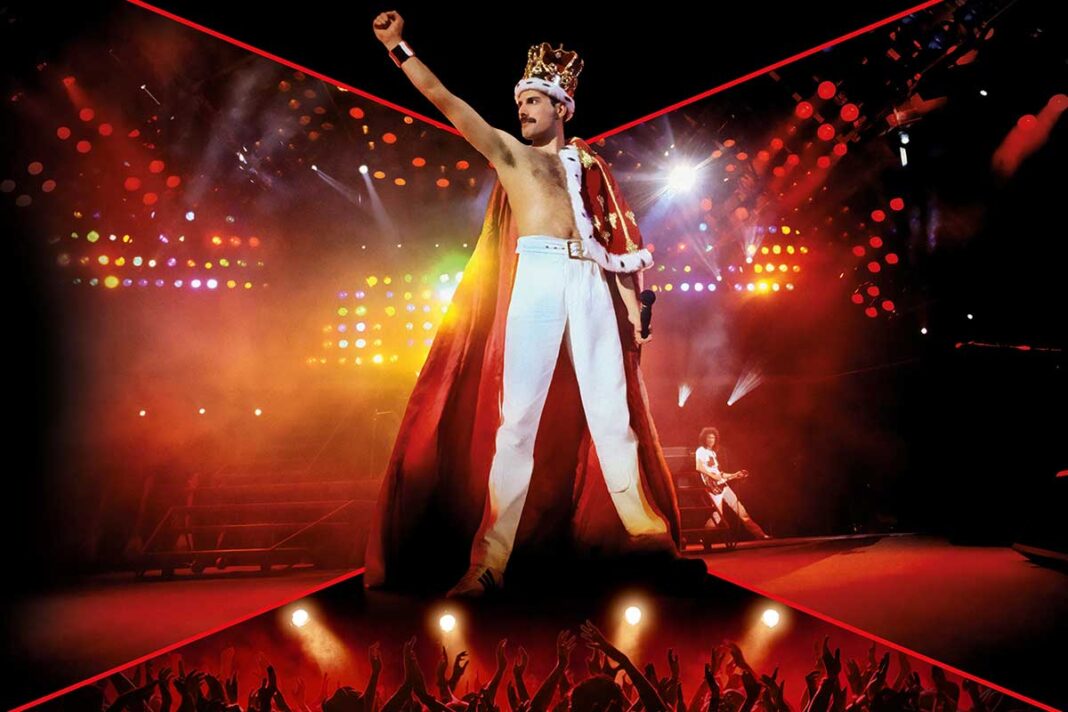
He wasn't really all that fussed about recreating his studio performances. He would change the melodic lines, approach the notes in a different way and allow Roger to take some of the higher vocal parts. I'd rather hear a musician reacting to the occasion than hear them reproducing something that they've already heard hundreds of times. You get the distinct feeling that Freddie could have entertained those 80,000 people without a single Queen song. The good thing is he had some of the greatest songs in the world to draw on.
Two of the songs on the album have a massive amount of extra significance when you listen to the recording in 2026. 'Who Wants to Live Forever' was written by Brian May for the film 'Highlander' and, of course, has a very different connotation now that Freddie has passed away. It's still a very moving performance, though. Freddie's tenderness is just as impressive as his power, and May's guitar work is absolutely beautiful as the arrangement builds. It's one of the most moving performances on the album.
It's followed by 'I Want to Break Free', which could hardly have been more appropriate for the situation. John Deacon hadn't written it as a song about political oppression per se, but to hear Freddie singing about freedom in front of thousands of people living under a communist regime absolutely gives it a whole new dimension.
It's another musical highlight, especially when May's guitar takes over from the synth solo on the original. Less than four years later, Hungary would have its first free parliamentary elections after the end of communism.
Some of the best bits on 'Queen Budapest' are the bits in between the hits. 'Looks Like It's Gonna Be A Good Night' is a perfect example of the rapport the band had after 15 years of playing together. Brian's long guitar solo is a masterclass in the use of delay, and it leads straight into one of my absolute favourite tracks on the album 'Now I'm Here'. The guitar riff from Brian is massive, Taylor's drums are absolutely driving, and Freddie is absolutely into it. That's another great example of Queen at their heaviest, along with 'Tie Your Mother Down' and 'Hammer to Fall'.
The inclusion of the rock 'n' roll covers '(You're So Square) Baby I Don't Care', 'Hello Mary Lou (Goodbye Heart)' and 'Tutti Frutti' is just as much fun. The same musicians who were so obviously having the time of their lives playing the absolutely intricate 'Bohemian Rhapsody' were clearly having a ball playing a Little Richard song. That's what gives the album its character, which a simple greatest hits album could never have.
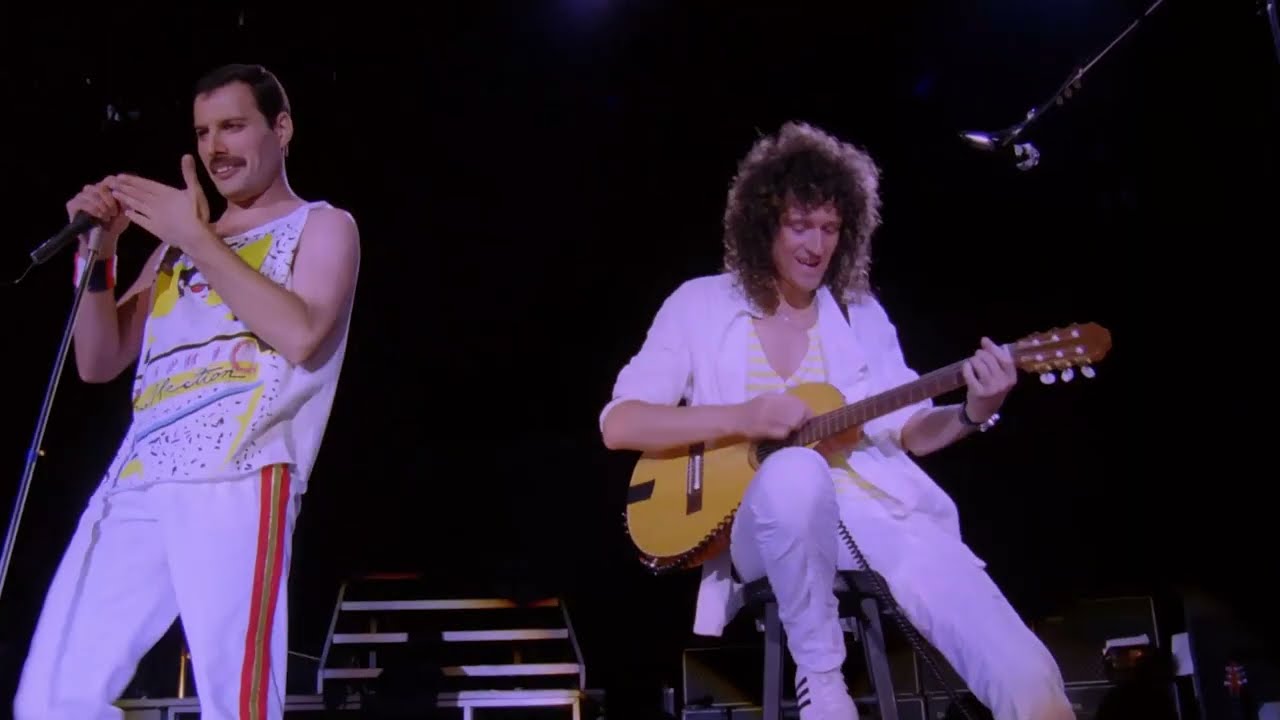
Perhaps the most remarkable moment of the whole evening isn't one of Queen's own catalogue. During their acoustic set, Freddie and Brian May do 'Tavaszi Szél Vizet Áraszt' (a traditional Hungarian folk song), and Freddie has the words written on his hand to help him remember them. The audience reaction is absolutely lovely. They immediately pick up what he's singing and very quickly they're singing it back to him. Having spent so much of the evening encouraging the audience to sing in his language, Freddie seized the opportunity to sing in theirs.
There's something absolutely wonderful about a chap born in Zanzibar to a Parsi family, educated in India and hailed as the frontman of a British rock band, performing in a stadium in communist Hungary singing a Hungarian folk song. Both 'Love of My Life' and 'Is This the World We Created?' are equally moving. The former is a perfect illustration of just how far Queen's music had travelled with thousands of people singing Freddie's words back at him. The latter is a very simple, very understated piece of music about suffering, poverty and inequality.
Queen had arrived in Budapest with a massive stage, a very elaborate lighting rig and some of the most incredible rock songs ever written. One of their greatest achievements that night, though, was actually pretty simple, really: just Freddie Mercury, Brian May and an acoustic guitar.
The quality of the songs Queen still had left to play in the latter stages of the concert is frankly ludicrous. 'Bohemian Rhapsody', 'Hammer to Fall', 'Crazy Little Thing Called Love' and 'Radio Ga Ga' come through one after the other. There are whole bands out there who could make a career out of having written just one of those.
'Bohemian Rhapsody' is still spectacular, with the recorded operatic section giving way to a fantastic return from the band. As good as that is, 'Hammer to Fall' might actually be even better. Taylor and Deacon are absolutely driving the song on, and May is delivering some of his very best guitar work of the night. The whole thing with the references to growing up in the nuclear shadow is very much the right thing to be saying given the context of the concert.
'Crazy Little Thing Called Love' shows another facet of Freddie's songwriting, before 'Radio Ga Ga' becomes one of the defining moments of the recording. The audience is clapping in time with the song, and it's precisely the same reaction that Queen had got at Wembley two weeks previously. The Iron Curtain had divided Europe for decades, and a song written by Roger Taylor was able to bring people on either side of it together.
The 'We Will Rock You'/ 'Friends Will Be Friends'/ 'We Are the Champions' close is a perfect illustration of just how well Queen knew stadiums. 'Friends Will Be Friends' is the ideal inclusion, and Freddie's version of 'We Are the Champions' is a lovely reminder of the fragility underneath that massive chorus.
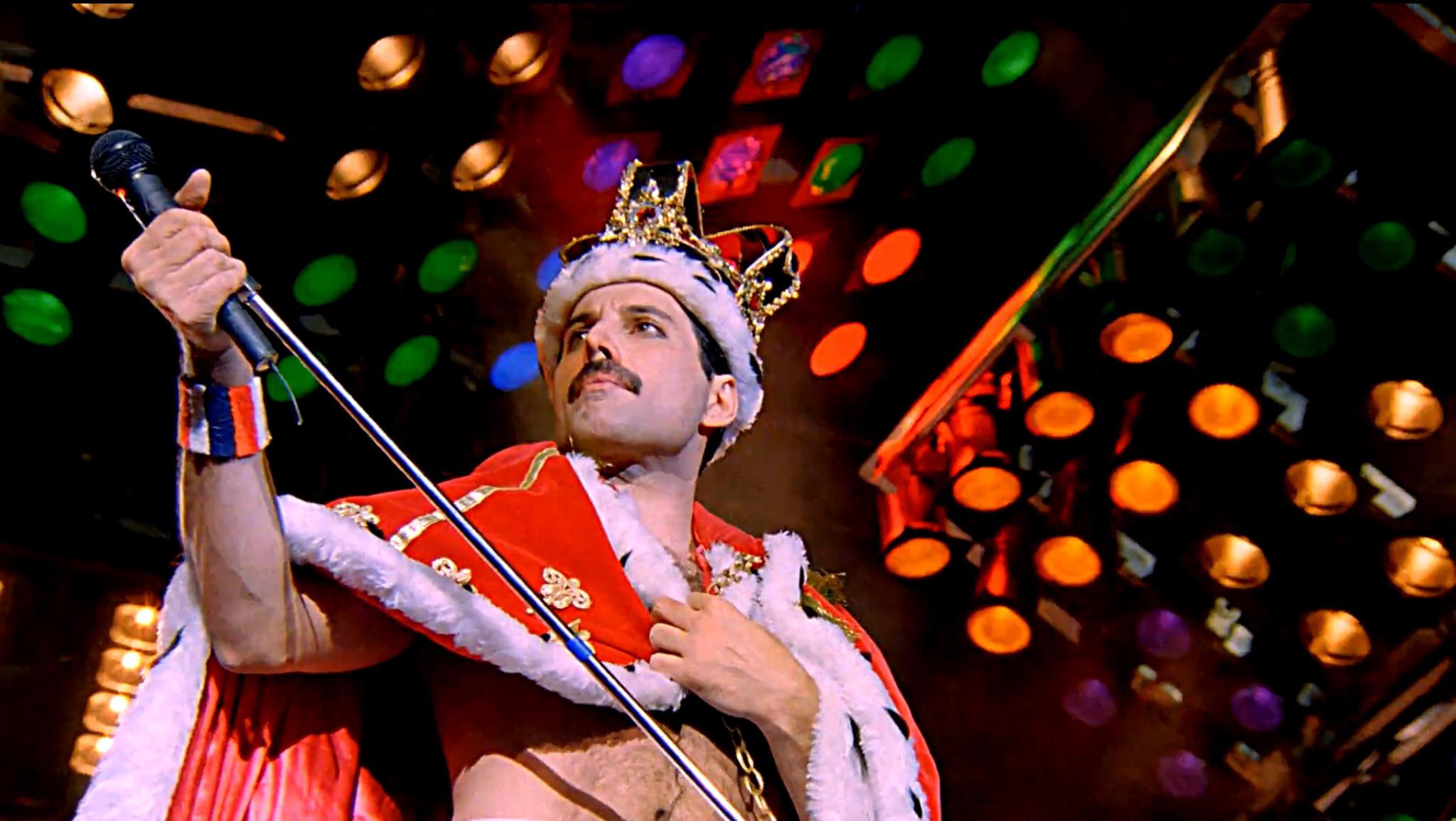
The album ends with Brian May's version of 'God Save the Queen', and the film shows Freddie in his crown and full royal regalia. From anyone else, it would have looked absolutely ridiculous. Freddie somehow made it work, and he looked absolutely the part of the rockstar.
Given that there's already a 'Live at Wembley '86' and the Budapest show was released in 2012, is another release really needed? The new mix of the original multitrack tapes and the fact that it's now available on vinyl for the first time makes it a very welcome release in the Queen catalogue.
The 'One Vision', 'A Kind of Magic', 'Under Pressure', 'Now I'm Here' and 'Hammer to Fall' performances are some of my absolute favourites and the improvisations, the covers and the acoustic versions really do make the album a lot more interesting than yet another 'greatest hits' collection.
The historical importance of the concert would be sufficient in itself to warrant a revisit, but the performances are of a quality that would in themselves be enough to justify the existence of the album.
The 4K restoration that's accompanying this release was made using the original 35mm film, and that in itself is a very significant preservation of a very important piece of European history. The Beatles on 'The Ed Sullivan Show', Jimi Hendrix at Woodstock, David Bowie in West Berlin in '87 and Queen at Live Aid all have their place in the history books. Queen in Budapest has its place in that history too.
It's easy to listen to the Budapest concert with a certain degree of sadness. There was so much more Queen music still to come (The Miracle, Innuendo and the posthumous Made in Heaven). I've often thought about what it would have been like to have heard 'The Show Must Go On' or 'These Are the Days of Our Lives' performed by the original four in a stadium.
There's far too much joy in this recording for sadness to be the dominant emotion. Freddie is absolutely at ease on stage, laughing with the audience, having a great time with his band and obviously relishing the chance to entertain. It would be a real pity if the circumstances of his death were to eclipse all the wonderful things he did in his life.
His legacy is of course much wider than music alone. The Freddie Mercury Tribute Concert at Wembley Stadium in April 1992 and the work of the Mercury Phoenix Trust that followed have been instrumental in raising awareness of HIV and AIDS and in combating the stigma and misinformation that has so long surrounded the condition.
Thirty-five years on and people are still discovering Queen. Kids are learning Brian May's guitar solos, budding singers are trying to get their heads around Freddie's vocals and people who weren't even alive when the band played their last gig are still singing their songs.
Of all the rather extraordinary things that happened on 'Queen Budapest', I keep coming back to that performance of a Hungarian folk song. Freddie had an audience of 80,000 people; he had the whole Queen catalogue at his fingertips, and he had one of the greatest voices in the world. His greatest contribution that night, though, was to take the time to learn a song that wasn't his.
I never got the chance to see Freddie Mercury perform. For us who didn't, records like this are absolutely invaluable. Turn the volume right up and for a moment you can actually get a sense of what it must have been like to be in that crowd of thousands singing those songs with him.
Queen went to Budapest in '86 and did a hell of a lot to dent the Iron Curtain. Forty years on and the political map of Europe is completely unrecognisable, but the music is just as potent as it was that night.
Thirty-five years since we lost Freddie Mercury, and we're still singing with him.
I can't think of a better legacy than that.