Keo: Put A Smile On For Me
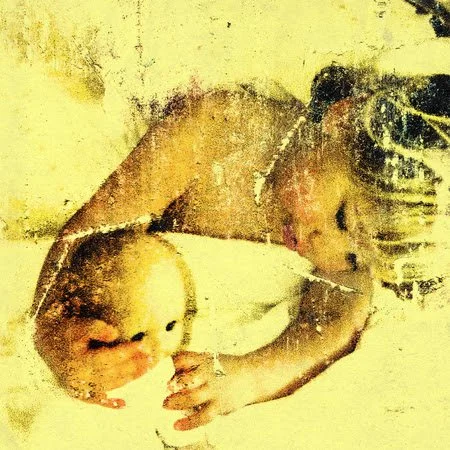
The 1990s are back; we've had the Britpop reunions, anniversaries, Oasis stadium shows, and another generation discovering bucket hats. British musicians have been discovering the 90s too- the darker: grunge, distortion, quiet-loud dynamics, guitars that sound slightly damaged and songs written from the uncomfortable places most people would rather keep hidden.
Nirvana, Radiohead, Oasis and Elliott Smith all sit somewhere in the DNA of ‘Put A Smile On For Me’, and Keo do not make much effort to disguise it. The important thing is that they never disappear underneath those influences. Across their debut album, the London four-piece sound both accomplished and unfinished in the best possible way: a band who already understand what makes them compelling, but who still leave enough roughness around the edges for the songs to feel volatile.
Written and recorded in just ten days, ‘Put A Smile On For Me’ could easily have sounded rushed. Instead, that speed seems fundamental to it. Finn Keogh and guitarist Jimmy Lanwern resisted polishing the record into something cleaner than the band themselves, preserving the bleed between instruments, imperfections in performances and the sense that four people are actually playing together.
Keo’s music lives in the gap between intimacy and scale. These are songs about shame, failed relationships, guilt, self-disgust and trying to recognise the worst parts of yourself, yet they keep exploding into choruses designed for increasingly enormous rooms.

That contradiction begins immediately with ‘Be Happy’. It has the sort of title that another band might turn into an uncomplicated anthem, but Keo do almost the opposite. Against sailing guitars and crashing cymbals, Keogh admits that happiness is something he can see in other people but cannot quite locate in himself. By the end, any optimism contained in the title has collapsed, with the repeated “never mind” sounding less like a shrug than an attempt to shut down the thought entirely.
It is one of my favourite songs on the album and a perfect opener because it establishes almost everything that follows: vulnerability delivered at enormous volume, melody fighting its way through distortion and a frontman capable of making deeply private emotions feel communal. ‘That’s Me’ follows and condenses the same self-examination into barely more than two minutes. It is short, snappy and brutally direct, with Keogh identifying himself as the person causing damage rather than searching elsewhere for somebody to blame, before the band crash into a chorus far bigger than a song this compact should reasonably contain.
That ability to enlarge something uncomfortable becomes one of the record’s defining strengths. ‘Fly’ is less immediately destructive and gives Keogh’s voice more room, with a gorgeous melody underneath the abrasion that allows the honey within the gravel of his delivery to come through. ‘Bird on the Wire’ takes that restraint even further. Built around acoustic guitar, it carries a more melancholic atmosphere and gradually grows rather than immediately detonating. The scale is still there, but Keo reach it without reaching for maximum distortion from the opening seconds.
Then comes ‘Pistol’, still my favourite of the singles. It takes the raucous energy of early Keo and pushes everything outward. Monstrous drums drive it forward while snarling guitars evoke the heavier end of 1990s alternative rock. Against them, Keogh sounds almost wistful, his delivery initially sitting at odds with everything happening around him. When the chorus arrives, that tension finally breaks and everything crashes together into a massive crescendo.
The power of ‘Pistol’ does not come simply from turning the guitars up. It comes from how long Keo make you wait for the release. The influences are obvious, as they are across much of ‘Put A Smile On For Me’, but Keo sound like Keo. That distinction becomes increasingly important as the album unfolds.
There is nothing particularly revolutionary about a young British band loving Nirvana, early Radiohead or Elliott Smith in 2026. Plenty do. Even the comparison with Wunderhorse is understandable, with both bands finding young audiences through dirt, dynamics and emotional intensity at a point when guitar music could easily have continued becoming cleaner and safer. But reducing Keo to another band following Jacob Slater and company eventually feels like a cheap comparison. Wunderhorse might be part of the environment in which Keo have emerged, but ‘Put A Smile On For Me’ has too much personality to exist simply in somebody else’s shadow.
The song that proves that most convincingly, and ultimately my favourite on the album, is ‘Loser’.
It begins in painfully direct self-loathing, Keogh barely attempting to soften the way he sees himself, before the band gradually turn that feeling into something far bigger. What initially feels inward and defeated keeps expanding until ‘Loser’ becomes something approaching a nihilistic symphony, the emotional ugliness at its centre suddenly carried by one of the album’s biggest musical releases.
Keogh does not dress the feeling up in abstraction or search for somebody else to blame. There is an ugliness to the way he writes about himself throughout the record, particularly when dealing with a relationship that appears doomed long before either person is willing to admit it. On ‘Loser’, those feelings reach their clearest and most affecting form. For me, it is the song where everything on ‘Put A Smile On For Me’ comes together: the self-disgust, the melody buried inside the noise, the enormous dynamics and the sense that something deeply private is being pushed into a shape thousands of people could eventually shout back. ‘Pistol’ might have been the song that first convinced me, but ‘Loser’ is the one that stayed with me most once the full album arrived.
Across 11 songs, that level of emotional exposure could easily become exhausting, but Keo keep changing the surroundings. ‘Black Dress’ twists and buckles in ways that recall the more abrasive end of Pixies, while ‘Blue Song’ stretches from something resembling a trauma ballad into a much more expansive, almost existential piece. ‘Thorn’ pulls frustration, anger and longing into the same space without resolving any of them neatly. Keo understand that confusion is sometimes more truthful than resolution.
What I like most about the album is its refusal to manufacture an easy way out. There is no sudden moment where Keogh announces that he has learned from everything, become a better person and emerged smiling on the other side. The title increasingly feels ironic because ‘Put A Smile On For Me’ is filled with people who cannot quite make one another happy, people recognising their own destructive behaviour and people trying unsuccessfully to move beyond experiences that continue following them around.
Yet the music continually expands, and that is the real trick Keo pull off: turning deeply personal and intimate material into something capable of filling enormous spaces. It reaches its natural conclusion on ‘Spent On You’, which feels less interested in providing an answer than exhausting whatever remains. The song gradually opens out until the distinction between melody, noise and release begins to blur, finishing an album that has spent much of its running time trying to find beauty inside discomfort. Alongside ‘Be Happy’, ‘Pistol’ and particularly ‘Loser’, it is one of the record’s major highlights.
By the time it ends, the speed of Keo’s rise makes considerably more sense. They already have choruses capable of surviving larger rooms, but that alone would not make them particularly interesting. What separates them is the willingness to make those choruses carry emotions this messy.
There are moments when ‘Put A Smile On For Me’ openly resembles the records Keo grew up loving. Nirvana are here. Radiohead are here. Elliott Smith is here. Oasis occasionally appear in the instinct to make a chorus as large as physically possible. But influence is not the same as imitation, and the best debut albums often catch bands before they have learned to second-guess the qualities that made people care about them.
‘Put A Smile On For Me’ has that feeling. The performances are not immaculate, the production deliberately leaves dirt underneath its fingernails, and some of Keogh’s lyrics are almost uncomfortably exposed. Cleaning any of that up would probably make it a worse record.
Keo sound like a band who know exactly what they are doing while simultaneously sounding as though they are only beginning to discover what they might become. That is a very exciting place for a debut album to leave them, and ‘Put A Smile On For Me’ makes it difficult to imagine them staying small for much longer.