Gurriers: Nobody's Coming To Save You
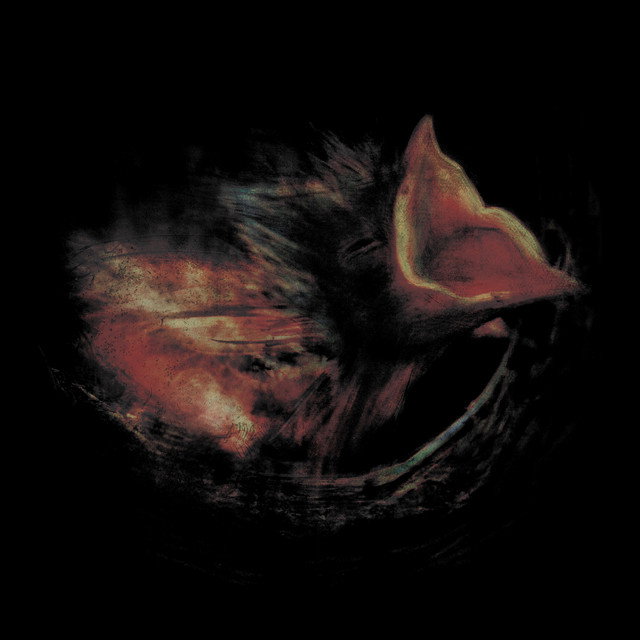
There is something in the Guinness. We probably need to seriously study whatever is happening in Ireland right now because the conveyor belt of remarkable new music is becoming ridiculous. Fontaines D.C. have gone from Dublin post-punk outsiders to one of the biggest guitar bands in Europe; NewDad have pushed shoegaze and dream-pop into increasingly larger rooms; Inhaler have carried a more polished strain of alternative pop and guitar music onto arena stages; Sprints have made abrasion and vulnerability feel inseparable; Kneecap have bulldozed through every boundary placed in front of them, while Gilla Band remain an important influence on the noisier end of the current Irish scene.
Gurriers belong firmly within that increasingly fertile landscape. Their 2024 debut ‘Come and See’ established five lads from Dublin with plenty of ambition and even more to say, taking aim at digital anxiety, political frustration and the uglier corners of modern life through a record that sounded designed for cramped rooms, low ceilings and bodies colliding three feet from the stage.
Two years later, those rooms have changed, and ‘Nobody’s Coming To Save You’ changes with them. Gurriers have moved onto larger festival stages and arena support slots, and the band have openly acknowledged that this affects the way they think about songwriting. When you are playing 250-capacity rooms, you write for that environment. When the stages get wider, and the crowds stretch further back, the songs inevitably begin to demand more space.
That does not mean Gurriers have cleaned themselves up. If anything, ‘Nobody’s Coming To Save You’ sounds even more dangerous than its predecessor. The difference is that the chaos now has architecture around it. The guitars still collide, the drums still race, and Dan Hoff continues to deliver much of the record as though every line has been dragged out of him, but there is far more control over when the band tighten the pressure and when they finally allow it to break.
They have brought in some serious help to make that leap. Mark Bowen of IDLES and Loren Humphrey, whose work includes Geese, produce the record, with Chris Fullard engineering and John Congleton handling the mix. It is an impressive team for a second album, but crucially none of them smooth away what made Gurriers interesting in the first place. Instead, they help the band sound enormous without losing the sense that something could still fall apart at any moment.

The title track makes that clear almost immediately. ‘Nobody’s Coming To Save You’ begins with tension rather than outright violence, gradually ratcheting up the pressure before bursting into one of the biggest choruses Gurriers have written. For me, it is one of the choruses of the year so far, and the title itself initially sounds far more hopeless than the song actually feels.
It is not really arguing that everything is doomed. Its point is closer to the opposite. If nobody is coming to save you, then waiting around becomes another form of surrender. Responsibility has to sit somewhere, whether that means confronting political systems, social problems or something much closer to home. Gurriers remain furious, but the anger increasingly feels purposeful rather than indiscriminate.
‘Party Lines’ is perhaps the clearest example. Within its opening seconds, Hoff attacks the language surrounding supposedly poor nations, beginning with the observation that “the third world is not poor” before pointing towards the money extracted from those countries by wealthier powers. The song barely needs any time to tell you where it stands.
What makes it even better is how surprisingly danceable it is. There is a percussive funk underneath the guitars, something closer to the nervous groove of Gang of Four than the straight-ahead punk attack people might expect. Gurriers understand that protest music does not always have to stand still with its fists permanently clenched. Sometimes anger becomes more effective when the rhythm makes your body move before your brain has caught up.
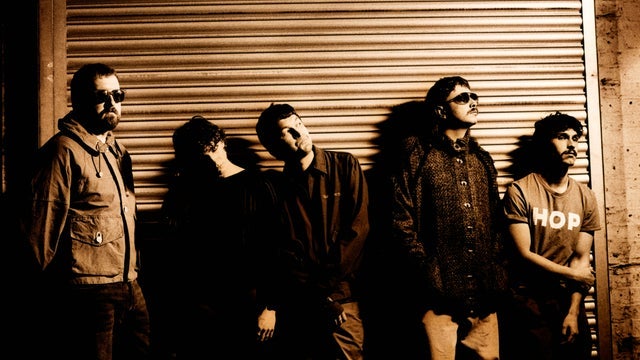
There are obvious reference points. Gilla Band can be heard in the willingness to treat guitars as sources of texture and violence rather than merely riffs, while Sprints provide another useful comparison in the way anxiety and confrontation become something physically overwhelming. But ‘Nobody’s Coming To Save You’ increasingly sounds too broad to remain contained by those comparisons.
‘Pins’ proves it. Rather than hitting immediately, the song loosens everything into a grungier, almost trip-hop atmosphere while allowing Hoff to sound more exposed than usual. There is swagger here as well as aggression, evidence that Gurriers are becoming confident enough to understand that heaviness does not always require maximum volume.
That development runs throughout the album. ‘Shades’ throws angular, industrial guitars into a hardcore chorus, while ‘Drones’ takes the opposite route, slowly building pressure until the eventual release feels far more violent because the band have made you wait for it. ‘Nothing Happens Twice’ combines both instincts, retaining the force of their live shows while giving the chorus enough room to expand beyond the basement venues that shaped their debut.
Some bands spend years trying to capture what makes them dangerous on stage and never quite manage it. Gurriers seem to have found a way remarkably early. ‘Nothing Happens Twice’ and ‘Party Lines’ kick like a mule because Bowen and Humphrey understand that the solution is not simply to make everything louder. The rhythm section, guitars and Hoff’s vocal are given enough separation to make every collision matter.
The obvious comparison hanging over almost any ambitious young Irish guitar band right now is Fontaines D.C., particularly because Gurriers are beginning to talk openly about writing for bigger stages at roughly the point where their ambitions are widening dramatically. But trying to turn them into “the next Fontaines” does neither band many favours.
Their shared quality is not really sound. It is scale of ambition. Fontaines have spent their career moving through poetry, dub, hip-hop, shoegaze, electronic textures and increasingly cinematic songwriting. Gurriers currently feel more interested in pressure: political frustration, private instability and the sensation of something being compressed until it has no option but to burst.
That is why this second record feels so important. ‘Come and See’ often sounded as though every song had arrived already at boiling point. ‘Nobody’s Coming To Save You’ understands that turning the temperature down occasionally makes the next explosion land harder. The restraint on ‘Pins’, the slow build of ‘Drones’ and the groove underneath ‘Party Lines’ make the violent moments elsewhere feel more extreme.
Hoff’s voice benefits from that extra space too. For all the confrontation surrounding Gurriers, some of the strongest moments arrive when he sounds bruised rather than furious. ‘I Wish I Was’ edges towards something approaching a power ballad without ever becoming conventional, while the closer ‘Crybaby’ gives his more melodic side room to emerge and leaves the record sounding exhausted rather than victorious.
That variation matters because ten tracks of permanent confrontation would eventually flatten into one emotion. Instead, ‘Nobody’s Coming To Save You’ keeps finding different shapes for its anger. Sometimes it dances, sometimes it broods, sometimes it explodes and sometimes the band allow a melody to stretch far beyond what their debut suggested they were interested in doing.
There is very little about Gurriers that feels restrained, but there is considerably more control here. That distinction is what makes this such an impressive second record.
They have not abandoned the qualities that made ‘Come and See’ exciting. They have worked out how to enlarge them.
The sweaty basement is still buried somewhere inside these songs. You can hear it in Pierce Callaghan’s drums, in the abrasion of the guitars, in the moments when Hoff sounds close to shredding his voice, and in the way individual parts occasionally seem to fight one another for space. Now, however, there is a festival field beyond it.
Their plan to make a bigger record has paid off. The title track, ‘Party Lines’, ‘Pins’ and ‘Nothing Happens Twice’ all suggest different routes Gurriers could follow from here, while the quieter and stranger moments prevent the record from becoming merely a louder version of its predecessor.
That is ultimately what you want from a second album: not reinvention for its own sake and not the debut again with a larger recording budget, but growth. ‘Nobody’s Coming To Save You’ contains plenty of it while doubling down on the intensity that made Gurriers exciting in the first place.
Ireland currently has an absurd number of artists making music that feels urgent, distinctive and capable of travelling far beyond the country that produced it. Gurriers are not simply benefiting from that moment. On ‘Nobody’s Coming To Save You’, they sound increasingly capable of becoming one of the bands that defines it.