Bloc Party: Silent Alarm
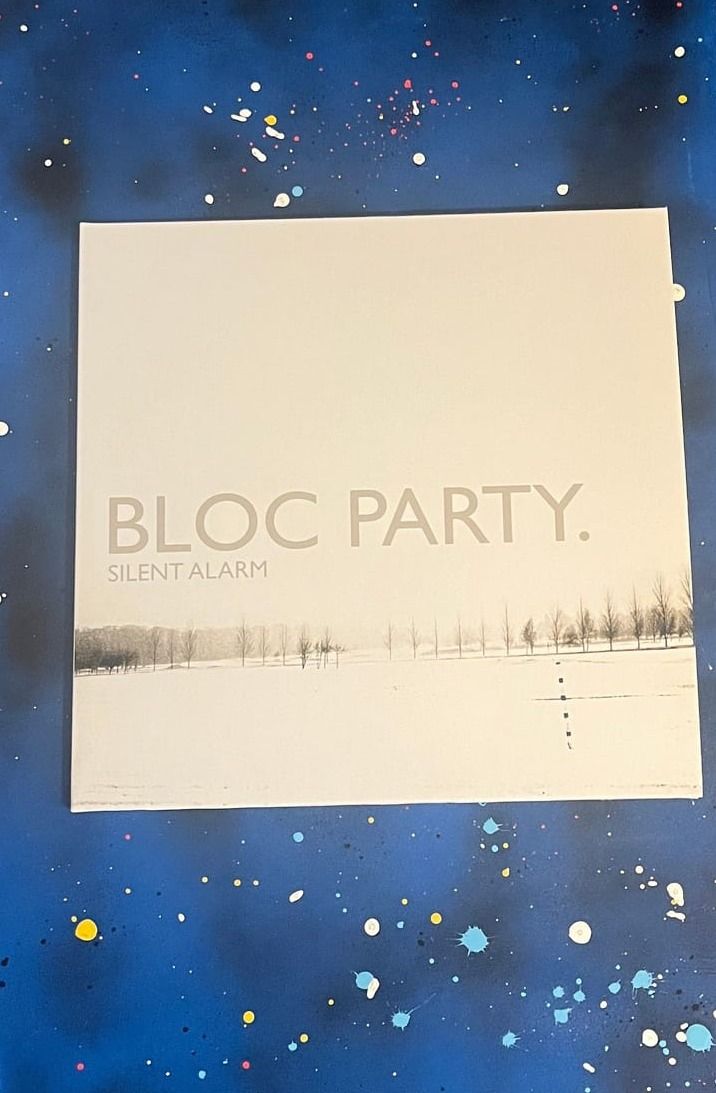
The mid-2000s were a golden age for British guitar music. In 2004, Franz Ferdinand catapulted into the mainstream with the art-school strut of their self-titled debut. By 2006, Arctic Monkeys had rewritten the rulebook with the fastest-selling debut in British history. The party, of course, had already been kick-started by the shambolic, Union-Jack-draped romanticism of The Libertines back in 2002.
But while those bands focused on "Montagues and Capulets" or the "boys in the band," Bloc Party arrived in 2005 with something sharper, colder, and infinitely more urgent. Their thrilling debut, 'Silent Alarm', left a permanent mark by balancing experimental, jagged soundscapes with bona fide indie-pop bangers. Lyrically and rhythmically, they weren't just playing the game; they were operating on a different plane of existence.
Bloc Party were no overnight sensation. Formed in 1999, the London four-piece spent years in the wilderness before their 2003 breakthrough, when frontman Kele Okereke handed a demo of 'She’s Hearing Voices' to Franz Ferdinand’s Alex Kapranos and Radio 1 legend Steve Lamacq. The reaction was instantaneous: Kapranos offered a support slot, Lamacq booked a session, and the indie hype machine went into overdrive. After signing with Wichita Recordings, the band decamped to Copenhagen in the summer of 2004 with producer Paul Epworth. What emerged was not just an album, but a generational touchstone.
The band had no interest in the "retro-rock" revivalism of Oasis or even The Strokes. 'Silent Alarm' set a different intention: a crystalline mix of propulsive beats, emotional vulnerability, and angular guitar work. This was music as architecture. Every member, frontman Kele Okereke, guitarist Russell Lissack, bassist Gordon Moakes, and drumming virtuoso Matt Tong, competed for the lead. Lissack and Okereke’s guitars didn't just strum; they interlocked like clockwork gears, while Tong’s drumming provided a frantic, hyper-kinetic heart rate that few of their peers could match.
'Silent Alarm' sounds both timeless and hauntingly specific to its era. It arrived while George W. Bush was bumbling through a "War on Terror" that felt increasingly senseless, and Tony Blair maintained a "Cheshire Cat" smile that appeared increasingly complicit. By the time the 7/7 bombings hit London, the sun-drenched optimism of the New Labour era had curdled into a climate of fear and paranoia.
Bloc Party didn't just soundtrack this era; they mapped the collective loneliness of 21st-century Britain. The moment the needle hits the record, we are met with the shivering admission of 'Like Eating Glass': “It’s so cold in this house.” It wasn't just a comment on a drafty London flat; it was a metaphor for a national atmosphere that had turned inhospitable. Matt Tong’s relentless, rapid-fire hi-hats create a breathless urgency, forcing the listener into the same claustrophobic headspace as Kele’s lyrics.
That tension is the album's heartbeat. 'Price of Gasoline' brilliantly tackles public apathy toward the Iraq War by framing it through the lens of Western consumerism. Over a militaristic, marching beat, Kele interrogates the suburban conscience:
"I've been driving a mid-sized car / I never hurt anyone / Is that a fact?"
The song suggests the true "price" isn't found at the fuel pump, but in the lives of thousands of servicemen and civilians an ocean away. It remains a scathing indictment of how Western comfort was built on the back of foreign conflict.
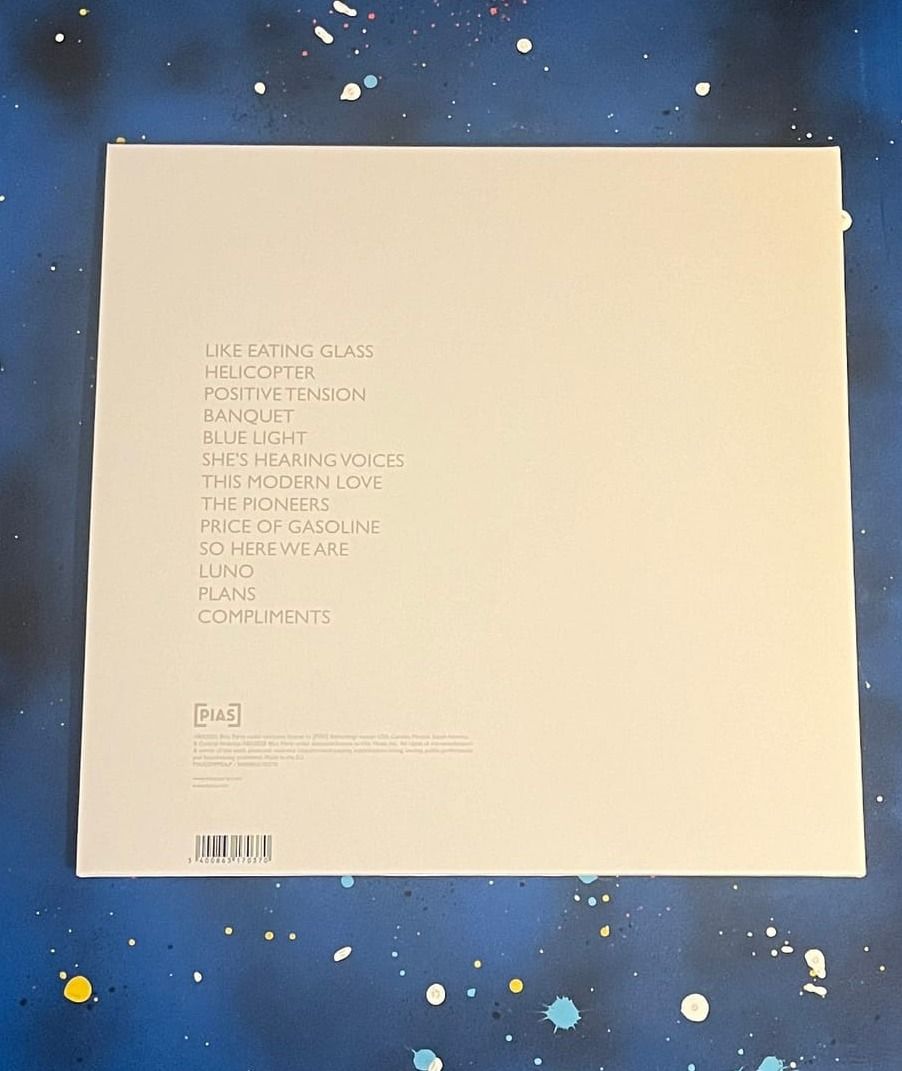
'Helicopter' follows as a jagged, high-velocity attack on American hegemony and the "McDonaldization" of culture. Capturing the dizzying speed of the 24-hour news cycle, the line "just like his dad, the same mistakes" struck a direct blow against the Bush legacy and the repetitive nature of Western intervention. Musically, it is a masterclass in controlled chaos; Russell Lissack’s guitars sound like air-raid sirens, while Matt Tong’s drumming provides a frantic, mechanical turbulence that mirrors the song's title.
It’s a track that famously mocks the empty rhetoric of political leaders, asking "Are you hoping for a miracle?" with a sneer that defined the cynical, disenfranchised mood of the mid-2000s. By the time Kele bellows "North to South, white to black," the song has shifted from a mere indie anthem into a globalised cry for something, anything, more authentic than the pre-packaged "miracles" being sold on the evening news.
Even the non-political tracks feel heavy with a distinct, modern anxiety. In 'Positive Tension', the band captures the restless boredom of a generation waiting for a spark, building from Gordon Moakes’ simmering, skeletal bassline into the frenetic explosion of "Something had to give!" It wasn't just a lyric; it was the mood of the decade, a collective itch for a breakthrough that only music this sharp could scratch. The track’s shift from a slow, menacing creep to a frantic "disco-punk" sprint remains one of the most exhilarating transitions in the British indie canon.
Despite these heavy themes, the album is a relentless adrenaline shot. 'Banquet' remains perhaps the definitive indie single of the 2000s, a masterclass in "disco-punk" energy that sounds as vital today as it did in 2005. Its interlocking guitar riffs, which seem to bite and snap at one another, created a blueprint that dozens of bands would try (and fail) to replicate. Yet, the album’s true genius lies in its ability to pivot toward profound beauty.
'So Here We Are' offers a moment of shimmering clarity, its delay-soaked guitars ringing out like a sunrise over a concrete skyline. It is followed by the breathtaking 'The Pioneers', which showcases their experimental side through glitchy, bit-crushed effects and a driving, motorik rhythm that feels both futuristic and deeply rooted in the post-punk tradition of Gang of Four.
The record also operates on a deeply intimate level, making themes of mental illness and addiction feel strangely anthemic. On 'She’s Hearing Voices', the band channels a twitchy, paranoid energy to depict a descent into psychosis; the guitars here sound like frayed wires, sparking with a nervous tension that mirrors the lyrical subject’s detachment from reality. It was a bold move for a debut, proving that Bloc Party were willing to look into the darker corners of the human psyche while their contemporaries were still singing about nights out in Sheffield or London.
Nowhere is this emotional depth more evident than on 'This Modern Love', a track that is nothing short of a masterpiece. It captures the frantic, clumsy vulnerability of 21st-century romance, the kind found in late-night texts and whispered apologies. The song builds with a sweeping, cinematic grace, anchored by one of the most devastating lines of the era: “You told me you wanted to eat up my sadness / Well jump on, enjoy, you can gorge away.” It’s a song that understands how love in the modern age can feel both like a rescue mission and a slow-motion car crash.
Twenty years on, 'Silent Alarm' remains a towering achievement. It wasn't just a collection of songs; it was a nervous system set to music. Anxious, intelligent, and fiercely independent, it stands as one of the most essential British debuts ever recorded—a jagged, beautiful snapshot of a generation trying to find its pulse.
As the NME put it so perfectly back in 2005:
"Bloc Party are to be believed in because they are a band for the whites, the blacks, the straights, the hip-hop kids, the freaks, the geeks... Back in 2002, Pete’n’Carl said it was ‘Time For Heroes’. Well, now it’s the anti-heroes’ time."
Two decades later, the 'Silent Alarm' is still ringing.
Thank you for reading,
Jack