Top 10 Courteeners Songs
A band I once declared Britain's biggest underground band. A band who have soundtracked mine and countless others' teenage years and early 20s. One of Britain's best live acts, a bunch of friends who took on being in a band and its trials and tribulations in their own way, on their own terms, in their own time, without ever asking for permission. An underground band that, if you listen to certain critics and radio stations, has one good song. Yet somehow manage to shift 50,000 tickets in minutes. A band that the mainstream never quite claimed, but never needed to.
A band that got dropped by a major label, bounced between imprints, and was written off more times than any of us can count. A band that the industry gave up on, but whose fans never did. They kept turning up. They kept buying the records. They kept singing every word back louder than before.
A band that doesn't do things by the book, a band that has a genuine and sincere bond with those on the other side of the stage barrier. A band that has turned Manchester into their own personal cathedral, show after show, year after year. Three times at Heaton Park: June 2015, June 2019, June 2023. Twice at Old Trafford Cricket Ground: May 2017 and September 2021. And now Wythenshawe Park in August 2026, a new landmark, a new pilgrimage, a new chapter. Each one sold out.
A bunch of hometown heroes, who mean it as much now as they did all the way back in 2006. And they're not slowing down; their newest single, 'The Luckiest Man Alive,' is a reminder that the fire is still very much burning, a fresh shot of everything that makes this band so special to so many. With the band also announcing 'God Bless the Band', a best-of record to celebrate twenty years, and a huge arena tour in the winter, it feels like a proper moment of reckoning for one of Britain's most fiercely loved bands. It's the perfect time to run through my favourite Courteeners songs.
For those of us who get it, they are ours. For those of you who don't, well...
This list isn't for you.
10. First Name Terms
'Pink Cactus Cafe' is one of the band's most vibrant and accessible records to date. This record stretches far beyond their Manchester roots. An album that saw Liam Fray and co collaborate more than ever before. From the soul voice of Brooke Combe on 'Sweet Surrender' to the indie disco supergroup they formed with DMA's on 'The Beginning of the End'.
It's the collaboration with Pixey on 'First Name Terms' that makes this list, though. The band's most political affair to date, a song that hints at the current state of Britain, and hits back at the ruling class, who tell us to get on with it. Pixey's voice lifts the track into something genuinely special, warm and cutting in equal measure, the perfect counterpoint to Fray's world-weariness. Together, they sound like two people who've had enough, but are still sharp enough to put it into words.
It's worth saying something about Pixey here, because the choice of collaborator matters. She's one of the most exciting artists to emerge from the British indie scene in recent years, all fizzing energy and effortless cool. But on this track, she strips that back. There's a restraint to her performance that makes it hit harder. She's not showing off. She's just saying what needs to be said. And that's exactly the spirit of the song.
The song's opening line, “lie back and think of England, but when does England ever think of you?” is one of the most profound things that Fray has ever written. It lands like a gut punch and stays with you. A lyric that could have been written for any generation in this country, but feels more urgent right now than ever. Showcasing Liam's ability as a lyricist, with some cutting lines hitting back at a ruling class who “look away from you and me”, finding “another way to shake the fucking tree”.
There's a looseness to the track too; it doesn't feel laboured or preachy. It feels lived in. Like a conversation you'd have in a pub after your third pint, when someone finally says the thing everyone's been thinking. That's always been the Courteeners' gift: making the personal feel universal.
Musically, it's a departure, and a confident one. The production on 'First Name Terms' is airier, more spacious than the guitar-forward sound most people associate with Courteeners. There's a lightness to it that sneaks up on you. You're nodding along before you've clocked just how sharp the words are. It's the kind of song that sounds like a summer afternoon and reads like a manifesto. That tension is what makes it work.
It also signals something important about where the band are headed. Twenty years in, and Liam Fray is still curious. Still willing to try something new, to let someone else into the room, to see what happens when you stop doing what's expected. 'First Name Terms' feels like a door being opened. Here's hoping they walk through it again.
A highlight from a really good record, and a testament to just how well Courteeners can sum up modern life. I hope they explore that sound more, and I definitely hope they collaborate more.
9. Are You In Love With A Notion
I nearly didn't put this on the list, and then the 26-year-old Jack had a word with the 18/19 year old Jack. The opener to the band's show, pretty much since its release. Musically and lyrically, it doesn't reinvent the wheel. It's a classic indie pop song, with a catchy hook and a huge chorus. And sometimes that's exactly what a song needs to be.
It comes from 'Anna', the band's third album, the record they made after being cut loose by Polydor, the one where they had everything to prove, and nobody in the industry was particularly watching. That context matters. Because 'Are You In Love With A Notion' doesn't sound like a band under pressure. It sounds like a band who've found something. A looseness. A joy. A reminder to themselves, and to everyone listening, that this is what it's all about.
However, when played live, preferably outside, this song brings a huge amount of energy. I've seen it enough times. Thousands of people collectively lose themselves. Mosh pits open, friends link arms and flares are lit. It's more than a song; it's a communal moment. There's something almost ritualistic about it, the way the crowd knows it's coming, the way the opening notes land like a starting pistol. Everyone present understands what's about to happen. And everyone surrenders to it.
Despite not containing some of Fray's best lyrics, it's instantly relatable, written for a generation of dreamers, with lines about the mundane working life, holidays, and romance. “You're going to quit Debenhams / Elope and get married in the sun.” It's a lyric that's dated in the best possible way. Debenhams is gone now, just like a lot of the world that song was written for. But somehow that makes it feel more precious, not less. A snapshot of a specific moment in British life, wrapped up in two minutes of indie pop.
What's easy to overlook is how well the song is constructed. It doesn't outstay its welcome. It doesn't try to be clever. It arrives, does exactly what it promises, and leaves you wanting more. That's harder to pull off than it sounds. Most bands would have loaded it with an extra chorus or a key change. Courteeners had the confidence to leave it exactly as it was.
And there's something in the title worth sitting with, too. 'Are You In Love With A Notion'? Not a person, not a place, but an idea. A feeling. The romantic notion of a life that's bigger and freer than the one you're currently living. It's a question Fray has been asking in different ways his whole career. This is just one of the best times he's asked it.
For those shared moments I've had to this song, in those muddy fields and sweaty arenas, arms around strangers, voices cracking on the chorus, it had to make the list. Some songs you listen to. This one you live in.
8. Better Man
Released as the second single from 'More. Again. Forever', it's one of the most autobiographical things Fray has ever written. The whole album was born out of the "worst years of his life" and a journey of self-improvement and rediscovery after excess, addiction and an existential funk. That backstory matters because you can hear every bit of it in this song. It doesn't sound like a performance. It sounds like a confession.
Its lyrics are poignant and direct, and tackle his struggles: “I’m trying to be a better man, whatever that is. It's slightly disconcerting. No direction, no set plan”
It showcased a songwriting style that we'd never seen before, full of vulnerability, with a song more reminiscent of R.E.M. than Razorlight. A testament to a band that can write a great song. They're often unfairly thrown into a lad culture bracket, yet the substance on display shows deep artistry.
There's a reason that bracket has always felt reductive. Liam Fray has never really been a lad's lad in the way the caricature suggests. He's always been a reader, a painter, a thinker. 'Better Man' is the moment that came fully to the surface, when the wit and the swagger were set aside, and something rawer took their place. It's the sound of someone genuinely reckoning with who they are and who they want to be.
Released in December 2019, the song had been around for at least a year, with the band debuting it on their 2018 Winter Tour. During a headline slot in Heaton at their biggest show to date, 'Better Man' slotted into the setlist alongside two more new songs, and the 50,000-strong crowd already knew the words.
That detail says everything. A song about rock bottom, about trying and failing and trying again, and 50,000 people singing it back word for word before it had even been officially released. That's not just fandom. That's recognition. Those people weren't just singing along to a tune; they were singing about themselves. About their own worst years, their own attempts to be something better. Fray had written something personal, and it had become communal.
Musically, it sits apart from a lot of the Courteeners catalogue. The restraint in the production gives it room to breathe. There's no rush to the big moment, no attempt to dress it up. Just Fray's voice, the weight of the words, and a melody that lodges itself somewhere deep and refuses to leave. It's not the flashiest song on this list. It might be the most important.
7. Hanging Off Your Cloud
There’s a strong case to be made that this is Liam Fray’s most accomplished piece of songwriting. A tender, acoustic-led ballad underpinned by a sparse piano motif, it stands as one of the most affecting love songs of recent years. Melodic and heartfelt, it captures a modern-day kitchen-sink romance with striking intimacy. Fray pines, “like a roaming vagabond / In my hometown and beyond / I don’t know what corner you’re gonna be around…”. The strings rise and fall with a cinematic sweep, while the lyrics cut deep into songwriting at its most powerful.
What makes it so striking is how unheroic it is. There’s no grand gesture, no sweeping declaration. Just the quiet, restless ache of someone who can’t stop thinking about another person. It’s love as anxiety. Love as obsession. Love is the thing that follows you around, whether you want it to or not. Fray captures that feeling with a precision that most songwriters spend a career chasing.
The production deserves its own moment of recognition. Where so much of the Courteeners' catalogue leans into the electric, the anthemic, the chest-out, this song does the opposite. It breathes. It holds back. The piano sits underneath everything like a heartbeat, and when the strings eventually arrive, they don’t announce themselves; they just appear, as if they were always there. It’s one of the most beautifully arranged things the band have ever recorded.
I first heard it live in a Liverpool arena, stripped back to just Fray and an acoustic guitar. Even in that vast space, it felt disarmingly personal, and it was clear this was something special. It marked a leap forward from the band’s work on 'Mapping the Rendezvous', a moment of real artistic growth. No surprise, then, that it quickly became a fan favourite, earning its permanent spot in the setlist.
There’s something almost contradictory about how well it works live. A song this intimate, this small in its construction, shouldn’t be able to hold tens of thousands of people in the palm of its hand. And yet it does, every time. You watch a crowd of 50,000 go completely still for it. People who’ve been bouncing off each other all night suddenly standing quiet, phones in the air, mouthing every word. It’s one of those rare songs that creates silence rather than noise, and that silence says more than any roar could.
It also says something about the range of this band that’s too often ignored. The same group that opens shows with a wall of guitars and sends crowds into a frenzy can turn around and do this, a song that asks you to be still, to feel something, to sit with it.
The song comes from ‘More. Again. Forever.’, the album Fray made when he was putting himself back together. And maybe that’s why it lands the way it does. It wasn’t written from a place of comfort or confidence. It was written from the middle of something. You can hear the searching in it. The not-quite-knowing. And that honesty is what elevates it from a great song into something that genuinely stays with you.
Emotive, raw, and quietly anthemic. It distils everything that makes Courteeners great, and then some.
6. Not Nineteen Forever.
The song everyone knows. If you ask the radio DJs or some critics, it's the only good song the band has ever written. Ask a Courteeners fan, and it's the penultimate song of one of the best gigs you've ever been to, the moment before the moment, the one that tells you the night is nearly over, and you'd better make it count. For me, it's the song that sums up my late teens and early twenties more completely than anything else I can think of.
It came out in 2008, the second single from 'St. Jude', and it hit number 19 in the charts. Not a smash by any mainstream measure. But it didn't need to be. It found its people, and its people never let it go. Sixteen years on, it sounds just as urgent, just as alive. Some songs age. This one just accumulates.
A song about growing up, transitioning from youthful excess and recklessness to the realities of adulthood. Something we all go through. Life doesn't pause for any of us. There's a sense of frustration but also acceptance. It's a heady mix of nostalgia and forward momentum, as much about celebrating youth as it is about understanding that it's fleeting.
What Fray understood, even at that age, was that the most universal feeling in the world is the one nobody wants to admit to, that you're running out of time to be the person you thought you'd be. That the gap between who you are and who you imagined yourself becoming is quietly widening. It's not a comfortable feeling. But it's an honest one. And honesty, done right, is what turns a good song into a great one.
“You’re not nineteen forever, pull yourself together.” It’s a line that’s both a reminder and a challenge, urging the listener to take stock of their life while acknowledging the allure of youthful abandon. It’s a message that’s just as relevant to someone leaving their teenage years behind as it is to those well into their twenties or beyond.
The genius of it is that it works in both directions. When you’re nineteen, it sounds like a warning from your future self. When you’re thirty, it sounds like a letter from the person you used to be. The lyric shifts meaning depending on where you’re standing when you hear it.
And Fray delivers it with exactly the right tone, not preachy, not mournful, but with the kind of knowing half-smile of someone who’s been there. He’s not lecturing. He’s just telling the truth. The opening line, “she tried to peel me off the pavement,” sets the scene immediately. You know exactly where this person has been. You’ve probably been there yourself.
The song, like 'Are You In Love With A Notion', has taken on a new lease of life when played live. It's become the soundtrack to countless indie nights, football stadiums, and festivals, capturing a sense of Northern pride and working-class ethos. There's something about the way it lands in a crowd that feels different to almost any other song. It's not just a singalong. It's a reckoning. Thousands of people, all at different stages of their lives, all hearing something slightly different in the same words. That collective experience is what separates the merely popular from the genuinely iconic.
Music has always been woven into my most cherished memories, and gigs are a big part of that. I've seen the Courteeners six times: four in Manchester, once in Liverpool, and at a festival. Hearing this song live sends shivers down my spine every time.
I remember when Blossoms used to play it before stepping on stage; it would light up the room, getting everyone bouncing, even before the band appeared. Some of my best nights at uni were soundtracked by this song, whether in my halls' kitchen, at Shit Indie Disco, or dancing at Heebie Jeebies.
This song fills me with happiness, and the memories attached to it are ones I'll hold onto forever. It brings back the faces of certain people I've shared those moments with, reminding me of the power music has to transport us back in time. It takes me back to a time that has since passed and to a person who is no longer with us, making it even more special.
That's the thing about 'Not Nineteen Forever'. It doesn't just soundtrack a moment in your life; it becomes the moment. The song and the memory fuse together until you can't separate them. You don't just remember where you were when you heard it. You remember who you were. The version of yourself that existed then, in that room, in that field, with those people. Music doesn't get more powerful than that.
5. Cavorting
The band's first single, released way back in August 2007. A statement of intent, and a bit of an attack on the scene that had birthed them. Painting a vivid picture of Manchester's indie nightlife and the characters that the band would encounter on these nights.
Think about what it means to open your account as a band with a song like this. Not a love song, not a crowd-pleaser designed to get radio play, but a sharp-elbowed broadside aimed directly at the people around them. That takes confidence. Or arrogance. Or both. And in Courteeners' case, it turned out to be entirely justified.
But rather than celebrating the indie scene, Fray criticises those who think they're too big for their boots within it. It's a song that bites the hand that feeds, written by a band that hadn't yet been fed. That's a bold move. And it set the tone for everything that followed.
Speaking to Radio X's John Kennedy about the song, Liam Fray explained it was written from the point of view of an "outsider" in the Manchester music scene and taking a "pot shot" at other bands. That word, outsider, is important. Because that's what Courteeners always were, even when they were selling out Heaton Park. They were never fully embraced by the tastemakers, never quite the critics' darling, never the band the NME put on the cover and told everyone to love. They came from Middleton, not the Northern Quarter. They didn't have the right postcode or the right connections. They just had the songs.
“Cavorting is actually us taking a pot shot at the guys that we knew that were in bands in Manchester that were strutting around thinking they were the dogs.
"They were perhaps treating people [...] like they could just do what they wanted cos they were in a band.
“The song was us kind of going Who do you think you are, you know that's not right? A lot of the songs are us probably being a bit more sensitive without people knowing it.”
That last line is one of the most revealing things Fray has ever said in an interview. A bit more sensitive without people knowing it. The swagger was always a shell. Underneath it was a kid from Middleton who cared desperately, who felt things deeply, and who used sharpness and wit as a kind of armour. Cavorting is that armour on full display. It sounds like bravado. It is bravado. But it's also something more fragile than it lets on.
Musically, it announced exactly who they were going to be. The riff is direct and purposeful, the rhythm section driving everything forward with a kind of restless energy that barely pauses for breath. It's a song in a hurry. A band with something to prove, playing like they know it. And that urgency never quite left them, even as the songs got bigger and the stages got wider.
There's also something worth noting about the timing. 2007. The tail end of the British indie boom. Arctic Monkeys had already redefined what a guitar band from the North could be. The Kooks, The Fratellis, Razorlight, the scene was crowded, and the window was closing. 'Cavorting' arrived into that world and didn't try to fit in. It tried to stand out. And it did.
Despite the band no longer being the small indie upstarts from Manchester, the song has remained a constant within the setlist, usually sitting second, as most people are still getting up off the floor after 'Are You In Love With A Notion'. It's such a well-received track and is comfortably one of their best.
There's something brilliant about the fact that a song written as a dig at posturing indie chancers is now played to 50,000 people in a park. The targets of that original potshot are long forgotten. The song outlasted all of them. And every time Fray sings it now, there's a quiet irony in the room, or the field, that only the people who've been paying attention will catch.
4. Take Over The World
The second single from the band's second album 'Falcon', it's a far cry from the angst that had been present for most of 'St Jude', a much more sensitive and melancholic affair. 'Falcon' as a whole was a step sideways, slower, more considered, less interested in throwing elbows. Some people didn't know what to make of it at the time. The critics who'd already filed Courteeners under “lad indie” weren't sure where to put a record that felt this tender. But the fans understood. They always do.
It's also one of Fray's best-ever love songs. Deceptively simple in construction, the kind of song that sounds like it was always there waiting to be written. It doesn't overcomplicate itself. It doesn't need to. With a huge chorus built around a simple, beautiful refrain:
"I think it's time for me and you to take over the world"
The album didn't receive as much hype or radio play as their debut, but its songs have remained mainstays of the band's live set. Frontman and songwriter Liam Fray told The Scottish News of the World that it is his favourite track on 'Falcon'. "I knew it as soon as I wrote it," he said. "I just played it on the acoustic and knew it was going to be massive."
That instinct was right, even if the charts didn't reflect it at the time. There's something about the song that bypasses the usual mechanisms of success. It didn't need radio. It didn't need a push. It just needed to be heard by the right people, and those people did the rest. Word of mouth, shared playlists, sung across fields and arenas. That's how this song travelled. That's how most of the best Courteeners songs travel.
It may not have been massive in a chart sense, but the song has been played at most Courteeners shows since its release and has been echoed back to the band by huge audiences for fifteen years.
What it does live is something else entirely. The chorus, which already feels enormous on record, becomes something genuinely staggering when 50,000 people sing it back. There’s a reason Fray has kept it in the set for fifteen-plus years. Some songs earn their place through nostalgia. This one earns it every single night on its own merits.
Lyrically, it sits in a particular tradition of great British love songs, the ones that don’t deal in roses and candlelight, but in something more grounded and more real. “I think it’s time for me and you to take over the world” isn’t a grand romantic gesture. It’s a quiet declaration between two people who’ve decided they’re enough. There’s an intimacy in that simplicity. A confidence. It’s the kind of thing you’d say to someone in a kitchen at two in the morning, not from a stage. And yet somehow it works on both scales.
It also marks a turning point in Fray as a writer. The sharp wit of 'Cavorting' and the sardonic edge of a lot of 'St. Jude' are still there on 'Falcon', but 'Take Over The World' shows something new coming through, a willingness to be soft, to be open, to write a love song without any armour on. That vulnerability would define some of his best work in the years that followed. You can draw a direct line from this song to 'Better Man', to 'Hanging Off Your Cloud'. The thread starts here.
One of the most romantic things the band have ever written, but also one of the most anthemic. A song that proves those two things don’t have to be in conflict. In the right hands, the most personal feeling in the world can fill the biggest space imaginable. Courteeners have always known that. 'Take Over The World' is the proof
3. The Opener
If 'Take Over The World' is Fray pining for a girl, 'The Opener' is a love letter to his hometown. Written as the band started touring more, and with Fray and co missing home, the song follows a traditional love-song structure but redirects all that longing toward Manchester itself. It's a bold conceit that could easily tip into sentimentality, but it doesn't. It earns every note.
The genius of it is in the framing. By writing about a city the way you'd write about a person, with tenderness, with yearning, with the specific detail of someone who knows every corner of a place, Fray taps into something that goes beyond geography. This isn't just a song about Manchester. It's a song about belonging. About the pull of the place that made you, and the strange ache of being away from it.
"I've been away, I've been working
But now I'm back,
I need to know if you're still there
And I need to know if you still care
Of course you do, of course you do
You were made for me, and I was made for you"
There's an innocence of youth that Fray associates with his hometown, full of nostalgic memories of his childhood and teens, and this is what he misses. The details are what make it. Not grand landmarks or famous streets, but eyelashes and wet pavements and borrowing someone else's clothes. The small, unglamorous, irreplaceable stuff. The stuff you only remember when you're far enough away.
"I miss your eyelashes and the streets where I grew tall
I miss getting piss wet through
Getting to yours and getting warm
I miss stopping over and borrowing someone else's clothes
It's so nice to be home, you'd never have known
That I've even been away"
Backed up by a bridge where the band don't play a note or sing a word, that's the job of the thousands in attendance. A simple refrain of "Oohh Ahh" that provides the assist into the verses, and then we are away.
That moment deserves more than a passing mention. It's one of the most quietly extraordinary things that happens at a Courteeners show. The band drops out completely and hands the song to the crowd. And the crowd takes it. Every time. Without hesitation. It's a moment of pure trust between a band and their audience, Fray stepping back and letting the people who've made this band what it is carry the weight for a few seconds.
This song is comfortably one of the highlights of a Courteeners gig. I've heard it performed live in Manchester on countless occasions, most notably at the re-opening of the Manchester Arena in 2017, a night that already carried enormous emotional weight for the city, and a night where a song about coming home landed with a power that's almost impossible to put into words.
There's something about the relationship between this song and Manchester, specifically, that sets it apart from almost anything else in the Courteeners' catalogue. Other songs travel. Other songs work anywhere. 'The Opener' belongs here. It was written here, it's about here, and when it's played here, you can feel it. The city is singing a song about itself back to the man who wrote it.
Fray didn't try to write a song that would connect with everyone. He wrote a song about Middleton, about Manchester, about the particular feeling of pulling back into a familiar place after weeks on the road. And in doing so, he wrote a song that anyone who's ever left somewhere and missed it can feel in their chest.
2. Small Bones
I said earlier in this post that ‘Take Over The World’ is one of the best love songs the band has ever written. But ‘Small Bones’ is the best. It’s an indie love anthem: sharp-witted lyrics, a story grounded in real romance, and an ode to how breathtaking falling in love can be. It has one of the strongest bridges of recent memory, a bridge that unites thousands of indie kids in one moment of unity.
It comes from ‘Concrete Love’, the band’s fourth album, released in 2014. By this point Courteeners had navigated the loss of their major label deal, rebuilt on their own terms, and were playing to bigger crowds than ever. There’s a confidence to that record that you can hear in every track. But 'Small Bones' is where that confidence becomes something more intimate. It’s the sound of a band completely at ease with themselves, writing a love song because they feel like it, without any agenda beyond getting it right.
“I've seen you in my dreams, honey
I've watched you in my sleep
We were drinking in the bars, darlin'
’Dancing down the street”
It’s in the verses where Liam Fray’s songwriting really shines. He takes the experience of a long-distance romance and makes it instantly relatable. There are nods to Virgin Pendolino trains and a talent for finding the extraordinary in the everyday. Instead of leaning on overblown gestures that would never happen in real life, ‘Small Bones’ is about late nights out, playing hard to get, and being completely smitten by someone.
That detail about the Pendolino is worth pausing on. It’s such a specific, unglamorous, recognisably British image, a train between Manchester and London, the kind of journey you make when someone is worth the ticket price. Fray doesn’t reach for something poetic. He reaches for something true. And that’s what makes it land. Anyone who’s ever been in that situation, counting the miles between themselves and someone they can’t stop thinking about, feels it immediately.
The title itself is quietly brilliant. 'Small Bones'. It’s tender without being soft. Intimate without being saccharine. It suggests something fragile, something worth handling carefully.
This track is untouchable in their live setlist. No matter the tour, ‘Small Bones’ is always there. A highlight of ‘Concrete Love’, it’s also become a live staple. In shows where thousands of indie kids light flares, dive into mosh pits, and jump like their lives depend on it, ‘Small Bones’ provides a rare moment of collective stillness. It’s the point where strangers put arms around each other, new friendships spark, and for a few minutes, the chaos subsides into one simple act: singing together.
That shift in energy is one of the most remarkable things about seeing it live. You’ve just been in the middle of something loud and physical and overwhelming, and then this song starts, and the whole field changes. Shoulders drop. Voices soften. People lean into each other. It’s not a slow song in the traditional sense, it still has pace, still has a pulse, but it creates a different kind of space. A gentler one.
The bridge is the moment everyone talks about, and rightly so. It arrives like a reward for everything that came before it, a release of everything that’s been building. When it hits live, the crowd doesn’t just sing it, they give themselves over to it completely. Arms around strangers. Eyes closed. For a few seconds, nobody is thinking about anything else.
It’s also one of those songs that sounds different depending on where you are in your life when you hear it. When you’re in the middle of falling for someone, it sounds like a mirror. When that person is gone, it sounds like a window into somewhere you can’t quite get back to. A truly exceptional love song.
Honourable Mention: What Took You So Long
This one was really unlucky not to make the list. The band's third single, their first in the UK Top 40, and the closing song to every Courteeners gig. It's the song they end on. Every time. Without exception. And if you've ever been at a Courteeners show, you know exactly what that means, it's the moment that you start of the next chapter of the evening.
In a Twitter listening party to celebrate St. Jude's 15th anniversary, Fray described the song as "a song about skiving. I took ages going to the post office one day at work. Manager asked me. What took me so long?... you know the rest." It's a wonderfully ordinary origin story for a song that has become one of the most beloved closing tracks in British indie. A song born from a lunchbreak that outlasted everything around it.
As with most of St. Jude, Fray wrote the song while working for Fred Perry on Police Street in Manchester. There's something quietly poetic about that, one of the great Manchester songs written by someone who was, at the time, just trying to get through the working week. The mundane and the magnificent, side by side. That's always been the Courteeners' territory
The song itself is a slow-burning epic by Courteeners' standards. It builds with a patience that most of their catalogue doesn't have, taking its time before arriving at a chorus that feels genuinely earned. By the time it reaches its peak live, the crowd is already somewhere else entirely. There's a reason it closes the show. Nothing that comes after it could possibly follow.
One of the great live details is the way the band weave in 'Tomorrow' by James, that unmistakable Manchester anthem, threading it into the song as it builds toward its finale. It's a nod to the city, a hat-tip to a band who came before them, and a moment that feels completely natural every time it happens. Two Manchester songs becoming one, in a field full of people who know every word to both.
And then there's the Morrissey line. In the original recording, Fray sings a reference to Morrissey — a nod to one of Manchester's most iconic and complicated figures, the kind of name-drop that felt entirely fitting for a band steeped in the city's musical history. But in more recent years, live, Fray has quietly swapped Morrissey's name for Johnny Marr. No announcement, no fanfare. Just a small, telling change that speaks volumes. Marr, the other half of The Smiths, the one who stayed beloved, the one who supported Courteeners at Old Trafford, getting the nod instead. The crowd notices. The crowd always notices. And it lands every single time.
It just missed the top ten, but on another day, in another mood, it could sit anywhere in it. A brilliant song, a perfect closer, and one of the great live moments in British music.
1. International
This may be an unexpected one for people, a song only played live by the band four times. Twice in Liverpool and twice in Leeds. Yet I believe it's the best thing the band have ever done, and the best song Liam Fray has ever written. He lays himself bare.
That rarity matters. In a catalogue full of songs designed to fill fields and arenas, 'International' is the one that was never built for that. It wasn't written to be sung back. It wasn't written to be a moment. It was written because it had to be. And that need, that unavoidable, uncomfortable need to get something out, is exactly what you can hear in every second of.
Describing himself as an "international worrier" describing the "ghosts of doubt", and "the shutters of his private hell" with "no sign of slowing down". It's a heartfelt exposure of the man behind the band.
Those phrases land differently when you know the context, when you understand that this was written during the period Fray has described as the worst of his life. The anxiety isn't performed. The doubt isn't a lyrical device. It's a document. A record of what it actually felt like to be inside his own head at a particular point in time. That kind of honesty in a song is extraordinarily rare and extraordinarily difficult to sit with.
In an interview with Louder than War, he spoke about the song with a candour that’s rare even by his standards. “It’s not an easy song to write,” he explains, “it’s not an easy song to sing, and it’s not an easy song to talk about, sat here.”
The lyrics are so candid and dark in places, but there's a hope throughout the song. That tension, between the darkness and the reaching toward something, is what gives it its shape. It's not a song of despair. It's a song of someone in the middle of despair, looking for a way through. And that distinction is everything.
One line always sticks with me: "Without you, where would I be? / Lost for words / Lost at sea." It's simple. Almost startlingly so. But simplicity like that, earned through everything that surrounds it, hits harder than any amount of clever wordplay could. It's the sound of someone stripped back to the most basic truth, that without the people who hold you together, you don't know who you are.
It's one of the most poignant moments of the band's career, and a line that has stayed with me for a long time.
Musically, the song matches the weight of the words. There's no bombast, no attempt to dress it up in production. It's sparse, careful, patient. The space in the arrangement is part of the meaning; it gives the words room to breathe and room to land. In a catalogue that contains some of the most anthemic guitar music of its generation, International sounds like all of that has been stripped away to reveal what's underneath.
The four times it's been played live must have been extraordinary to witness. There's something about knowing a song this private, this exposed, is being performed in a room full of people that must feel almost unbearable, for the audience as much as for Fray. The kind of silence it would create. The weight of it. Not the silence of a crowd waiting for the next song, but the silence of people who've just heard something that got too close to the bone.
I go back to this song when I'm having a particularly bad time. Not because it makes things better, but because it makes things true. Because it reminds you that someone else has stood in the same dark place and found words for it, and that finding words for it is its own kind of survival. That's what the best songs do. That's what 'International' does.
It's the number one on this list not because it's the most fun, or the most anthemic, or the most singalong. It's here because it's the truest. And sometimes that's the only thing that matters.
Thank you for reading
Final Thoughts
Every list like this is a tall order. Ten songs from a catalogue this rich means leaving behind things that deserve their own essays. So before we close, a few that didn't make the cut but absolutely could have
Bide Your Time' is one of the most underrated songs in the entire Courteeners back catalogue, and one of the highlights of 'St. Jude'. Quiet, unhurried, and aching with a kind of wistful patience that feels completely at odds with the band's more bombastic reputation. Lyrically, it's one of the finest things Fray has ever written. Where a lot of the debut album operates with swagger and sharpness, 'Bide Your Time' does something different. It's patient. It's observational. It watches the world from a slight remove and reports back with a clarity that's almost uncomfortable. It's a masterclass in storytelling through song.
Please Don't' is 'St. Jude' at its most raw and pleading. Where a lot of that album operates with a certain swagger, this one drops all of it. It's just Fray asking someone not to go. Simple, direct, and devastating. The version recorded with Blossoms during lockdown gave it a second life and introduced it to a whole new generation of listeners, which feels entirely right for a song this good.
'Here Come The Young Men' is the sound of a band announcing themselves. There's a restlessness to it, an energy that feels barely contained. It appeared on the Japanese mini-album early in the band's career and became a word-of-mouth favourite long before most people had heard of Courteeners. For a certain generation of fans, it's the song that started everything.
'The 17th' was the first release on Ignition Records, the opening statement of a new chapter. After everything, the label changes, the critical indifference, the years of proving themselves to an industry that wasn't paying attention, this was Courteeners saying: “we're still here, and we're still doing it our way.” It's a song with a context that makes it hit harder than it might otherwise.
'Modern Love' is one of the most immediate things they've ever recorded. It grabs you in the first ten seconds and doesn't let go. There's a directness to it that feels almost confrontational, a band with nothing left to prove writing with the freedom that comes from that. A song that deserved far more attention than it received.
Twenty years in, the question isn't whether Courteeners matter. The question is how we've managed to spend so long arguing about it.
Here is what the evidence shows. A band from Middleton, Greater Manchester, who started with nothing, got signed, got dropped, rebuilt, and kept going. A band that has never had a mainstream radio hit in the traditional sense, and has sold out three nights at Heaton Park, two at Old Trafford Cricket Ground and are about to headline Wythenshawe Park. A band whose debut album finally hit number one fifteen years after it was released, not because of a nostalgia campaign or a streaming algorithm, but because the people who loved it never stopped loving it.
That fanbase is the story. There are super fans, and then there are Courteeners fans. The ones who have the lyrics tattooed. The ones who've been to every tour, every city, every outdoor show in the rain. The ones who introduced the band to their younger siblings and watched it happen all over again. The ones who feel a genuine, unironic, slightly embarrassing amount about a band that the NME never quite got around to properly celebrating. That relationship, between the band and the people who turned up, one of the most remarkable things in British music over the last twenty years.
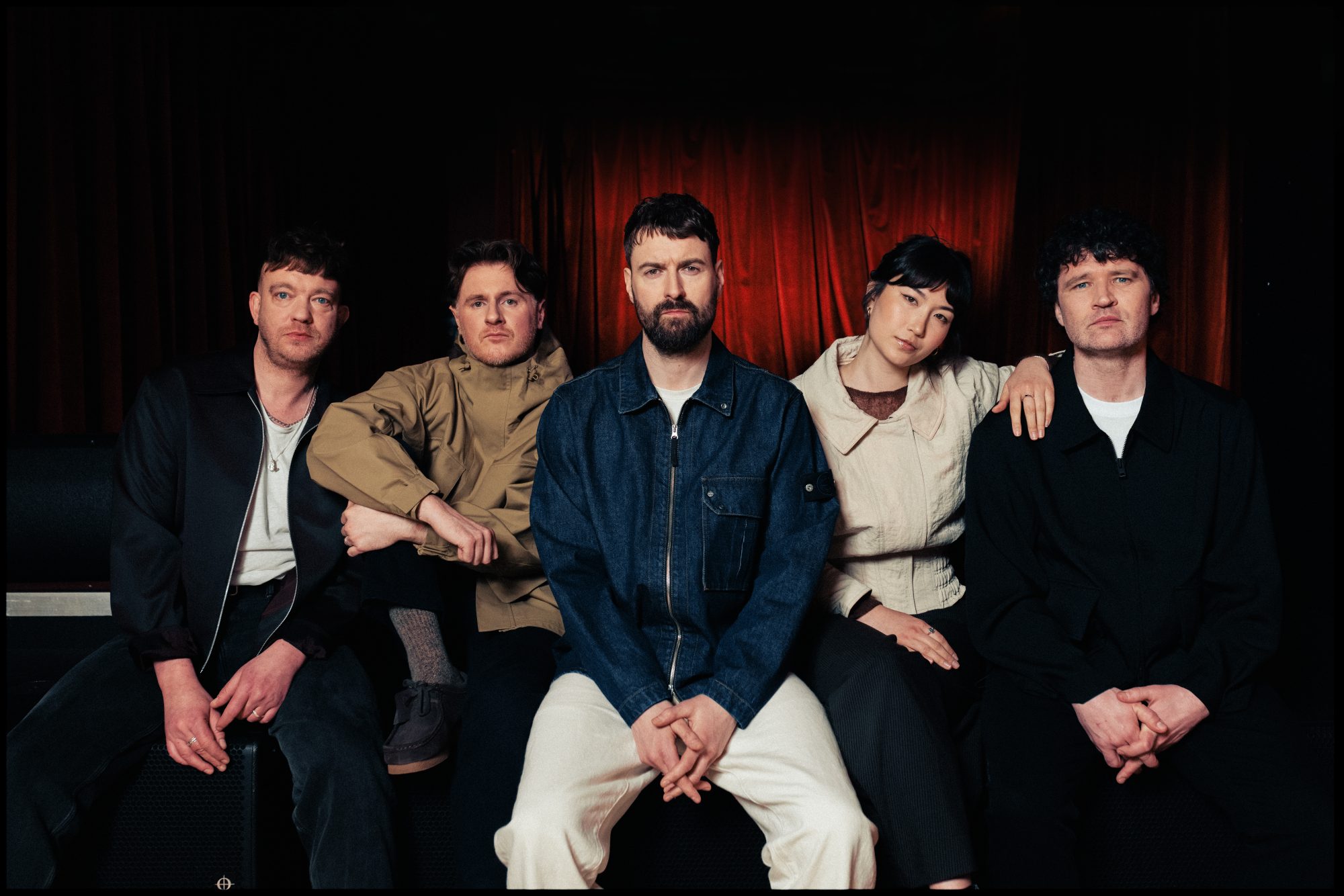
And the songs hold up. That's the thing that gets lost in the conversation about their live shows and their fanbase and their Manchester mythology. The actual songs. The craft. The way Fray has developed as a writer from the sharp-elbowed kid who wrote 'Cavorting' to the man who sat alone and wrote 'International'. The range across seven albums, from anthems to ballads, from political broadsides to kitchen-sink love songs, from the euphoric to the barely-holding-together.
The critics who wrote them off as lad indie got it wrong. The radio stations that played ‘Not Nineteen Forever’ and nothing else got it wrong. The industry that dropped them and moved on got it wrong. The fans knew. They always knew.
With ‘God Bless The Band’ arriving to mark twenty years, and ‘The Luckiest Man Alive’ showing a band still with something to say, and Wythenshawe Park on the horizon, this feels like a moment of proper reckoning. Not a victory lap. Something more earned than that. A band that did it their way, on their terms, without compromise, and arrived somewhere extraordinary.
Good things come to those who wait. God bless the band.
Jack x