Song Stories: The Strokes: Ode to the Mets
On 5 October 2016, Julian Casablancas watched his beloved New York Mets lose 3-0 to the San Francisco Giants at Citi Field, ending their postseason campaign. The National League Wild Card Game had remained scoreless until the ninth inning, when Conor Gillaspie hit a three-run home run to send the Giants through. Afterwards, The Strokes frontman made his way to the nearby Mets–Willets Point subway station, where he began writing a song while waiting for the number 7 train.
Four years later, that idea became 'Ode to the Mets', the closing track from The Strokes' sixth album, 'The New Abnormal'. Despite its title, there isn't a single reference to baseball in the lyrics. Instead, Casablancas reflects on broken relationships, disappointment and a past he can't quite leave behind.
I've been listening to 'Ode to the Mets' a great deal recently, and I'm increasingly convinced it's among the finest songs The Strokes have recorded. At almost six minutes, it's a long way from the frantic excitement of 'Last Nite' or 'Hard to Explain', although there are moments when the band sound closer to their younger selves than they have in years. The difference is that they no longer seem particularly interested in pretending they're still those people.
A Defeat in Queens
Casablancas had supported the Mets since childhood, growing up with memories of their 1986 World Series victory and players such as Darryl Strawberry and Mike Piazza. Supporting them hadn't always been particularly enjoyable, although he later admitted that the 2016 defeat hadn't upset him as much as you might expect.
Speaking to Sports Illustrated, Casablancas explained that he'd already expected the Mets to lose. Despite beginning the song while waiting for the subway, he wasn't consciously thinking about the game, and the baseball connection only became permanent when drummer Fabrizio Moretti persuaded him to keep the title.
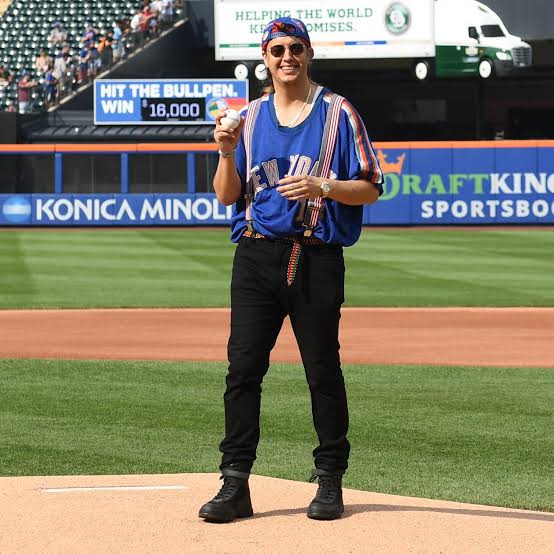
Casablancas had originally intended to call it simply 'Ode', but Moretti liked the idea of the song representing unconditional loyalty to somebody or something that repeatedly lets you down.
I rather like that the explanation is so ordinary. You can spend hours interpreting the lyrics of 'Ode to the Mets', looking for references to childhood, broken relationships and the band's own history, only to discover that the title came from somebody waiting for a train after watching another disappointing baseball game.
Of course, that doesn't make Moretti's interpretation any less convincing. Anybody who has supported a football team through years of disappointment will understand the strange logic of continuing to care about something that gives you so many reasons not to. Casablancas even joked that the Mets should play the song after every defeat, which would at least give their supporters something enjoyable to listen to on the way home.
What Does 'Ode to the Mets' Mean?
The lyrics drift between resentment, resignation and memories of a past that cannot be recovered. There are suggestions of damaged relationships, broken trust and somebody recognising that their expectations have not been met. Sometimes Casablancas sounds angry; elsewhere, he seems too exhausted to bother arguing.
Moretti's explanation about unconditional attachment provides a useful way into the song, but I don't think the lyrics need to belong to one particular relationship. There are moments when they could be addressing a former partner, somebody who has let Casablancas down or even his younger self. References to childhood and innocence have also encouraged interpretations involving his family and upbringing, although Casablancas has never presented the song as a definitive account of those experiences.
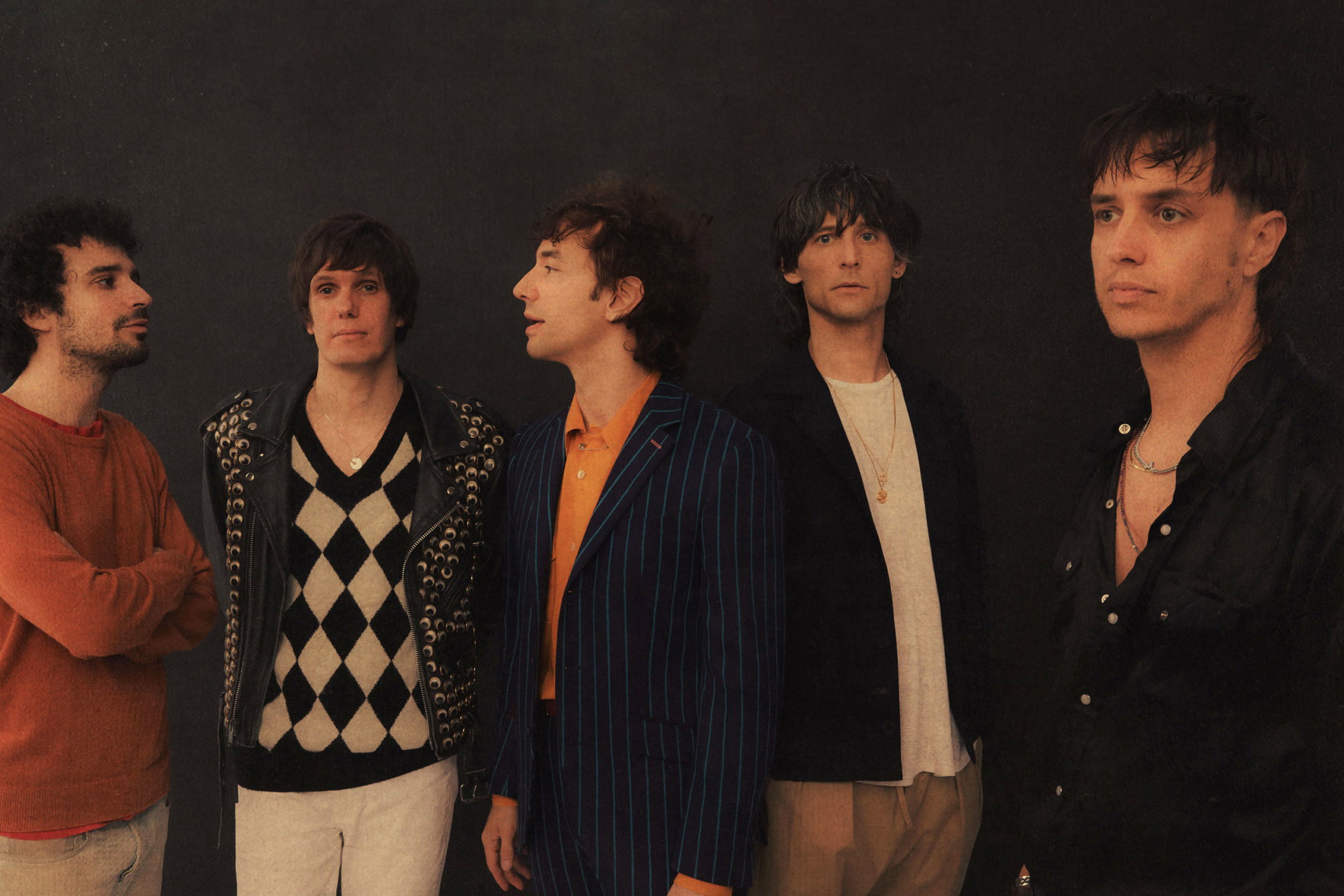
You can hear something of The Strokes themselves in the song too. When 'Is This It' arrived in 2001, the band were immediately burdened with expectations that would have been difficult for anybody to satisfy. Five young New Yorkers had apparently rescued guitar music, restored the city's reputation as the centre of rock 'n' roll and inspired an entire generation of bands, all before some of them had turned twenty-five.
The years that followed were not always particularly straightforward. Albums divided opinion, relationships within the band became strained, and the musicians gradually pursued their own interests. By the time 'The New Abnormal' arrived in April 2020, seven years had passed since their previous studio album, 'Comedown Machine'.
Hearing Casablancas reflect on disappointment and the passing of time inevitably brings some of it to mind. The Strokes had spent much of their career being compared with five younger versions of themselves, as though every new record was another opportunity to prove they deserved the excitement that surrounded them in 2001.
There is an interesting connection to 'Someday', one of the defining songs from their debut. Back then, Casablancas was already writing about people looking back on their younger years, despite being barely old enough to have much of a past himself.
By 2020, those feelings had acquired another twenty years of experiences, successes and disagreements. On 'Someday', nostalgia felt like an excuse to enjoy yourself while you still could. 'Ode to the Mets' is less interested in escaping the past, and Casablancas sounds considerably less certain about what to do with it.
Drums Please, Fab
Musically, 'Ode to the Mets' is magnificent. The opening guitar melody sounds almost exhausted, repeating over a gentle keyboard texture before Casablancas delivers three words that have become a favourite among Strokes fans: "Drums please, Fab."
I love how casually he says it, almost as though they're running through the song for the first time and he's reminding Fabrizio Moretti to join in. It's the sort of thing most bands would probably remove from the finished recording, but I'm glad they kept it. When Moretti enters, the song settles into a steady rhythm, with Albert Hammond Jr. and Nick Valensi's guitars circling around one another while Nikolai Fraiture holds everything together on bass.
When Moretti enters, the song begins moving with a steady, unhurried rhythm. There is none of the urgency that once defined The Strokes. Albert Hammond Jr. and Nick Valensi allow their guitar parts to circle around one another, while Nikolai Fraiture's bass gives the arrangement enough movement to prevent it from becoming static.
Rick Rubin's production leaves room for everything to develop. Rather than rushing towards another chorus, the band seem content to let the melody unfold, allowing the repeated guitar figures and Casablancas' increasingly strained delivery to carry the tension.
His singing is particularly impressive. Casablancas has always possessed an extraordinary ability to sound completely uninterested while delivering something deeply emotional, a quality that served him wonderfully on the early records. Here, however, his voice gradually loses that familiar detachment. By the final section, the restraint has almost disappeared.
For me, the extended outro is among the finest passages of music The Strokes have recorded. Casablancas' voice rises above the guitars as the arrangement becomes increasingly overwhelming, while the lyrics turn towards childhood, absence and the things that time has taken away. There is an almost desperate quality to his delivery, as though the thoughts he's been trying to contain throughout the song have finally become impossible to ignore.
Perhaps that explains why The Strokes have increasingly turned to 'Ode to the Mets' to close their concerts. Traditionally, the band would finish with something frantic, such as 'Take It or Leave It', 'Juicebox' or 'Last Nite', sending audiences home after one final burst of guitar-driven chaos. 'Ode to the Mets' does almost the opposite, gradually building towards an enormous emotional release before allowing everything to fall away.
During their October 2026 concerts at London's O2 Arena, The Strokes finished both nights with the song. They had also closed their homecoming concert at Flushing Meadows Corona Park in Queens on 2 October with it, just a short distance from Citi Field, where Casablancas had watched the Mets lose almost exactly ten years earlier. After playing through songs from across their career, the band finished with 'Ode to the Mets' as fireworks lit up the park. I wonder whether Casablancas thought about that evening in 2016, waiting for the number 7 train with the beginnings of a song that would eventually bring him back to the same part of New York.
I can understand why some fans would prefer to finish a Strokes concert bouncing around to 'Last Nite', but I love the idea of them ending with 'Ode to the Mets'. The band have always been associated with the excitement of being young in New York, but this is five musicians approaching their late forties, performing a song that couldn't have been written by the people they were in 2001.
I've always thought some of The Strokes' best songs contain a sadness that their melodies initially disguise. 'Someday', 'Under Control' and 'The End Has No End' all explore that contrast in different ways. 'Ode to the Mets' takes it further, allowing the sadness to gradually overwhelm the music rather than hiding it underneath something more immediately enjoyable.
'The New Abnormal': A Return to Form
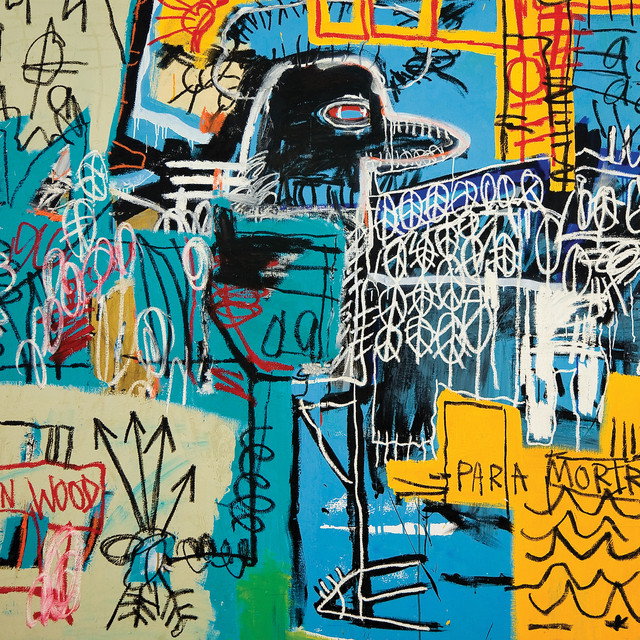
Produced by Rick Rubin, 'The New Abnormal' arrived seven years after 'Comedown Machine' and was a much-needed return to form for The Strokes. Casablancas sounded more interested, the guitars had rediscovered some of their old urgency, and the band had developed an affection for eighties synth-pop. It was unmistakably The Strokes, although they weren't particularly interested in making another 'Is This It'.
'The Adults Are Talking' opens the record with Hammond Jr. and Valensi's guitars weaving around one another, supported by Moretti's typically tight drumming and Fraiture's bass. Casablancas switches between his familiar drawl and falsetto, delivering lyrics that take aim at authority and the people who think they know what's best for everybody else. It's one of their finest singles, and a reminder of just how good these five musicians can be together.
'Brooklyn Bridge to Chorus' might be the best song The Human League never wrote. It's a synth-laden dance track with cheesy eighties production, killer guitar hooks and an irresistible groove. Underneath it all, Casablancas is wondering what happened to his old friends, somehow making loneliness sound like a night out in a nightclub. It's one of my favourite songs on the album, and I'd happily listen to The Strokes explore this sound further.
'Bad Decisions' brings back The Strokes' great tradition of stealing from other people's records and making something thoroughly entertaining. This time, they've borrowed from Billy Idol's 'Dancing with Myself', just as 'Last Nite' famously borrowed from Tom Petty's 'American Girl'. Idol and Tony James even receive songwriting credits. The guitars crash together, the chorus is enormous, and for a few minutes it's 2001 again.
'Eternal Summer' is considerably stranger. Casablancas moves between a dreamy falsetto and something approaching a scream, while the music drifts between psychedelic pop, reggae influences and The Psychedelic Furs. Beneath the sunshine, he's singing about climate change and political indifference. It's an oddly unsettling song, particularly when Casablancas starts screaming over music that sounded so inviting a few moments earlier
The album arrived on 10 April 2020, when much of the world had entered lockdown. Its title suddenly seemed remarkably appropriate, as did its preoccupation with isolation, uncertainty and friendships that had fallen apart. The record had been written before the pandemic, but hearing Casablancas question his relationships while the world sat indoors gave some of those lyrics an entirely different context.
After all the synthesizers, enormous choruses and borrowed guitar riffs, 'Ode to the Mets' brings the record to a close. Where 'The Adults Are Talking' reminds us why The Strokes became famous, the final track belongs to musicians who have spent the best part of twenty years dealing with everything that followed. It's a terrific ending to what I consider one of their finest albums.
New York, Nostalgia and the Years in Between
'Ode to the Mets' also received one of the band's most ambitious music videos. Directed by longtime collaborator Warren Fu, the July 2020 release features eight animated chapters, each created by a different animator, taking viewers through prehistoric landscapes, abandoned buildings and eventually a submerged New York.
Fu developed the concept after discussing the opening sequence of the American sitcom 'Cheers' with Casablancas. The video contains references to the Mets, including their 1969 World Series victory, alongside an early photograph of The Strokes from Nick Valensi's personal collection.
Six years later, 'Ode to the Mets' remains one of my favourite Strokes songs. The band have since returned with 'Reality Awaits', an album that pushes further into electronic textures and processed vocals, with mixed results. However, their recent concerts have demonstrated how important 'The New Abnormal' has become to their audience. For younger fans, 'The Adults Are Talking' and 'Ode to the Mets' are just as important as 'Last Nite' or 'Someday'.
I still love 'Is This It'. There are days when nothing sounds better than 'The Modern Age', and I don't think I'll ever tire of hearing 'Reptilia'. But I wouldn't want The Strokes to spend the rest of their career trying to recreate those records. 'Ode to the Mets' is one of the finest things they've done since, and I can understand why they've started closing concerts with it.
After nearly six minutes of Casablancas looking backwards, the guitars finally fall away and the song comes to an end. I can't think of a better way for The Strokes to finish.