Song Stories: The Stranglers: Golden Brown
A harpsichord waltz, about the joys of heroin, performed by so-called 70s punks. Whatever happened to all of the heroes?
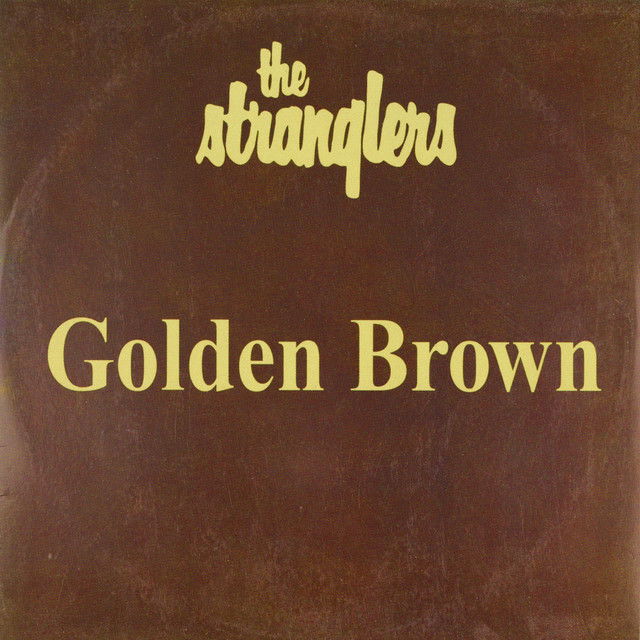
‘Golden Brown’ is one of the most unlikely songs ever to chart so highly in the UK. It is emphatically not a stereotypical hit single. Originally released in 1981 as the second single from ‘La Folie’, it climbed to number two on the UK Singles Chart, held off the top spot only by ‘Town Called Malice’ by The Jam.
Part of what makes that success so surprising is that The Stranglers were never a conventional punk band to begin with. Formed in 1974, they predated the punk explosion and cut their teeth on the London pub circuit, playing live for several years before releasing their debut album ‘Rattus Norvegicus’. Jean-Jacques Burnel’s melodic, forceful basslines anchored their early sound, but just as distinctive was the prominence given to Dave Greenfield’s keyboards, an unusual feature in punk-adjacent music. Hugh Cornwell and Burnel’s growling, often misanthropic vocals further set the band apart from their peers.
By the time punk erupted in 1976 and 1977, the band were also conspicuously older than the movement’s figureheads. John Lydon was 21 when the Sex Pistols detonated; Burnel was already 25, Greenfield and Cornwell were in their late twenties, and drummer Jet Black was nearing 40. By their own admission, they were never truly punks. Their musical ability, instincts, and temperament dictated otherwise, setting them apart from the raw minimalism of the Sex Pistols or the overt political fervour of The Clash.
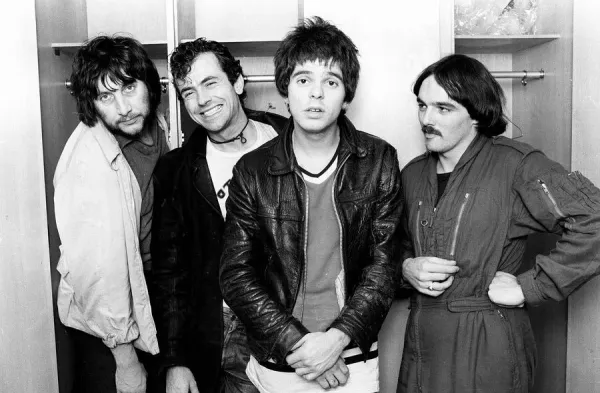
“None of us were really punk,” Cornwell later admitted in an interview with Classic Rock. “But it was an opportunity. Who cares what they call us? This is our chance to get in through the door. The necessity of adopting a pose appealed to our provocative nature.” Punk, for The Stranglers, was less an ideology than a moment to exploit for their own gain.
During the height of the punk era, The Stranglers released three albums that, on the surface, aligned with contemporary trends. Yet beneath the aggression and speed were compositional complexities and Greenfield’s increasingly distinctive keyboard lines.
In hindsight, these records helped set the template for post-punk and new wave in the UK. Given their reach and longevity, it is no exaggeration to describe The Stranglers as one of the most influential bands to emerge from that period.
By the time of ‘La Folie’, the band were pushing even further away from punk’s limitations. ‘Golden Brown’ became the clearest evidence that The Stranglers were capable of far more than the movement had ever allowed them to show.
'Golden Brown’ sits in an unconventional 6/8 time signature, closer in feel to a waltz than to anything typically associated with post-punk, and it emerged through an unusually organic, collective writing process. Rather than being built around a finished lyric or a conventional guitar riff, the song gradually took shape through shared experimentation in the rehearsal room. Dave Greenfield’s harpsichord motif became the foundation, its circular, baroque feel immediately setting the track apart, while the rest of the band worked around it, refining the rhythm, structure, and dynamics together.
Burnel and Jet Black locked into a restrained, almost stately groove that emphasised swing over drive, leaving Cornwell space to develop a vocal melody that felt detached, hypnotic, and oddly serene. Officially credited to all four members of the band’s classic lineup, ‘Golden Brown’ stands as one of the clearest examples of The Stranglers functioning as a true unit.
The melody and harmony of Golden Brown are surprisingly straightforward, given its exotic feel. Cornwell’s vocal melody drifts elegantly over the waltz pulse; critics call it “wet with atmosphere and rich in sonic experience”. The harmony cycles through relatively simple minor-key progressions (the song spends time around B♭ minor, with brief shifts to D♯ minor), and in fact, music-analysis tools rate its chord and melodic complexity as below average for pop.
This simplicity is intentional: it lets the unusual metre and colour of the harmonies stand out. Rather than big key changes or elaborate bridges, the coherence comes from repetition and slight variations. The same four or so chord patterns are reused with only modest shifts, which gives the piece a hypnotic consistency.
Golden Brown “doesn’t feature a chorus, instead leading with well-structured verses and the refrain, ‘Never a frown with golden brown’”. The refrain line does not dramatically change melody, but its recurrence (at the end of each verse) provides a recurring motif. Between verses, the harpsichord and other instruments take up the main theme, so the song flows continuously. Each verse builds subtly – sometimes adding piano, strings or a fuller vocal tone, so the texture slowly thickens even without a classic pop-chorus climax. In this way, the arrangement and Cornwell’s tranquil vocal keep the listener engaged, despite the lack of a big singalong hook.
Within The Stranglers’ own catalogue, Golden Brown is equally anomalous. Early singles like “No More Heroes,” “Peaches,” or “Something Better Change” are driven by aggressive bass/guitar riffs, power chords, and shouted choruses, typical of the band’s punk/post-punk roots. By contrast, Golden Brown is “a total change of direction
Despite its melodic accessibility, the band’s label EMI spectacularly misjudged the song’s potential. After hearing the recording, the label raised several objections and initially resisted its release altogether. “We had to insist on it being released,” Burnel later recalled. “We’d been taken over by EMI, and they thought we were awful, and they hated ‘Golden Brown’. They said, ‘This song, you can’t dance to it, you’re finished.’” EMI correctly sensed that the track defied prevailing pop formulas, but failed to recognise that this very refusal to conform was its greatest strength.
While one could imagine a goth waltzing morbidly towards the edge of a cliff to its stately rhythm, ‘Golden Brown’ also subverts pop convention structurally. It dispenses with a traditional chorus, unfolding instead through carefully balanced verses anchored by the recurring refrain, “Never a frown with golden brown.” To the label, this sounded weak and commercially doomed. “They thought it’s gonna die, it’s gonna drown in the tsunami of Christmas shit,” Burnel said with characteristic bluntness. “But it didn’t. It developed legs of its own. It became a worldwide hit.”
Released in January 1982, ‘Golden Brown’ reached number two on the UK Singles Chart within a month and performed strongly across Europe, cementing its status as one of the band’s defining songs. Resistance to it extended beyond EMI, however, due to its romanticised depiction of heroin. As Cornwell later explained, the song was deliberately ambiguous. “‘Golden Brown’ works on two levels. It’s about heroin and also about a girl. Essentially, the lyrics describe how both provided me with pleasurable times.” That duality, seductive, unsettling, and artfully concealed, remains central to the song’s enduring mystique.
Over time, ‘Golden Brown’ has become The Stranglers’ most famous song, earning sustained critical and popular acclaim. In a 2012 BBC Radio 2 listener poll of the nation’s favourite singles to have peaked at number two, it ranked fifth. In January 2014, NME placed it at number 488 on its list of ‘The 500 Greatest Songs of All Time’, confirming its unlikely journey from harpsichord oddity to cultural classic.
Thank you for reading.
For Archie.
Jack