Song Stories: The Smiths: How Soon Is Now
After the news this week, and the statements by both Morrissey and Marr, I felt as if we should talk about The Smiths. However, let’s not dwell on the friction between the two frontmen, or even the messy breakup in 1987. In a world where headlines are dominated by legal disputes and social media spats, it’s easy to lose sight of the art that started it all. Instead, let’s talk about what actually makes them great. Let's talk about the songs, and in my opinion, this one is their absolute finest, a track that represents the perfect, brief alignment of two very different creative geniuses.
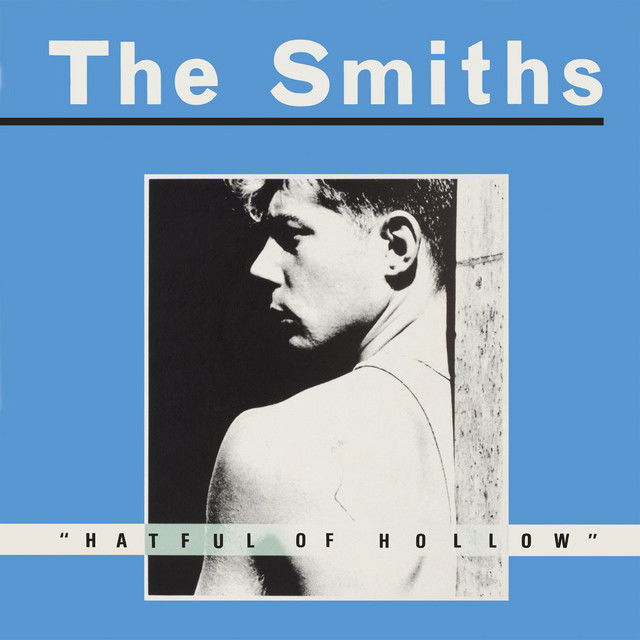
‘How Soon Is Now?’ stands out for its sonic ambition, emotional honesty, and philosophical depth. It’s a track that not only defined The Smiths’ sound but also transcended its time, becoming one of the most iconic songs of the post-punk era. It’s remarkable to think that such an enduring anthem first appeared as a mere B-side to ‘William, It Was Really Nothing’ before later finding its rightful place on the compilation album ‘Hatful of Hollow’. At the time, their label, Rough Trade, didn't quite know what to do with a six-minute epic that didn't fit the three-minute "jangle-pop" mould they had come to expect.
What was once almost an afterthought quickly became a cornerstone of alternative music, a track so massive it threatened to overshadow everything else they had recorded. It was the moment The Smiths stopped being just a "Manchester band" and became a global phenomenon. It proved that they weren't just capable of writing clever, catchy indie hits, but were actually architects of a new kind of sound—one that was dark, expansive, and entirely singular.
A Sonic Architecture
From the very first note, Johnny Marr’s hypnotic, oscillating guitar riff creates a soundscape that feels both otherworldly and deeply human. To achieve that legendary "swampy" sound, Marr and producer John Porter engaged in a bit of studio wizardry, running the guitar signal through four Fender Twin Reverb amplifiers with their tremolo settings synced up. It was a painstaking process that required the duo to record the track in short, ten-second bursts, as the analogue tremolo units on the amps would inevitably drift out of time. They had to manually realign the "throb" of the amps constantly, a feat of patience and precision that makes the final, seamless pulse of the record even more staggering.
Using vibrato, slide guitar, and layered reverb, Marr achieved a shimmering, pulsating effect that was lightyears ahead of its time, a sonic texture that still sounds futuristic decades later. The guitar doesn’t just carry the song; it envelops it, creating an atmosphere of longing and detachment that perfectly mirrors Morrissey’s introspective vocals. It was a departure from Marr’s usual jangle, proving he could master the "wall of sound" just as effectively as his signature crystalline melodies.
This wasn't just a technical experiment; it was a deliberate attempt to capture the "swamp-rock" spirit of Bo Diddley while filtering it through the grey, rainy lens of 1980s Manchester. By the time the slide guitar wails like a siren over that relentless, breathing rhythm, Marr had created a piece of music that felt less like a standard pop song and more like a living, breathing environment. It is the sound of a musician at the absolute height of his powers, pushing the physical limits of his gear to find a sound that matched the depth of the lyrics.
The Anthem of the Outsider
At its core, ‘How Soon Is Now?’ is a song about loneliness, alienation, and the desperate yearning to belong. Morrissey’s lyrics distil this ache with piercing simplicity: “I am human, and I need to be loved / Just like everybody else does.” It’s one of his most direct and painfully honest confessions, a universal sentiment expressed with startling clarity. The opening lines, “I am the son and the heir / Of a shyness that is criminally vulgar,” even find their roots in George Eliot’s Middlemarch, showing how Morrissey could take high-brow Victorian literature and weaponise it for the bedroom-bound teenagers of the 80s.
The song captures a raw depiction of isolation, particularly in the lines describing someone who "goes to the club and stands on their own," leaving "on their own" and going home to cry. It’s a scene anyone who has ever felt like an outsider can relate to, the crushing disappointment of seeking connection in a crowd and finding only more solitude. There is a brutal honesty in that specific club imagery; while the music surrounding the lyrics is designed to be played in those very same nightclubs, the words are a reminder of the people lingering at the edges, too paralysed by their own "criminally vulgar" shyness to ever make a move.
While The Smiths often balanced wit with biting irony, here Morrissey abandons the jokes altogether, offering a vulnerability that is entirely without disguise. He isn't just singing about being sad; he is asking a question that feels like a ticking clock: “When you say it's gonna happen now / Well, when exactly do you mean?” It’s the sound of someone whose patience with the world has finally run out, turning a private existential crisis into a public, shimmering anthem.
A Lasting Blueprint
‘How Soon Is Now?’ pushed beyond the boundaries of post-punk and indie, venturing into something almost cinematic. Its slow, enveloping rhythm and dense layering would go on to influence entire genres, from the hazy, distorted textures of shoegaze and dream-pop to the darker, more industrial corners of goth and the stadium-sized ambitions of Britpop. It’s the sound of a band daring to be expansive, emotional, and experimental all at once. By slowing down the frantic energy of 1984, The Smiths created a space where the listener could actually breathe within the music, a sonic architecture that felt as vast as a cathedral and as intimate as a locked bedroom.
Today, the track is widely regarded as The Smiths’ defining masterpiece, a high-water mark that perfectly captures the emotional intensity and technical innovation of 1980s British music. Its influence continues to echo through generations of artists, from Radiohead to Oasis, who see it as a blueprint for how pop music can be both deeply personal and sonically groundbreaking. It doesn’t just describe alienation; it wraps the listener in it, turning a private feeling of being "lost" or "unseen" into a shared, spiritual experience for thousands. It is the definitive proof that you don't need a fast tempo to create high energy; sometimes, the most powerful thing you can do is hold a single, vibrating note until the world stops to listen.
A timeless anthem for anyone who has ever felt out of place or invisible in a crowded room, ‘How Soon Is Now?’ remains one of the greatest songs of all time. It stands as a monumental achievement by a band that, despite their legendary differences and eventual fractures, once captured lightning in a bottle. It is the ghost in the machine of British indie music, a song that was born as a B-side but grew to become the very soul of a movement.
Thank you for reading
Jack