Song Stories: Radiohead: Let Down
When we talk about 'OK Computer', the conversation often centres on the jagged paranoia of 'Paranoid Android' or the sweeping, cinematic dread of 'Exit Music (For a Film)'. But tucked into the middle of the record is a song that many fans consider the true emotional core of the album. 'Let Down' is a shimmering, mathematical masterpiece that captures the exact moment where human emotion meets the cold, sterile efficiency of the modern world.
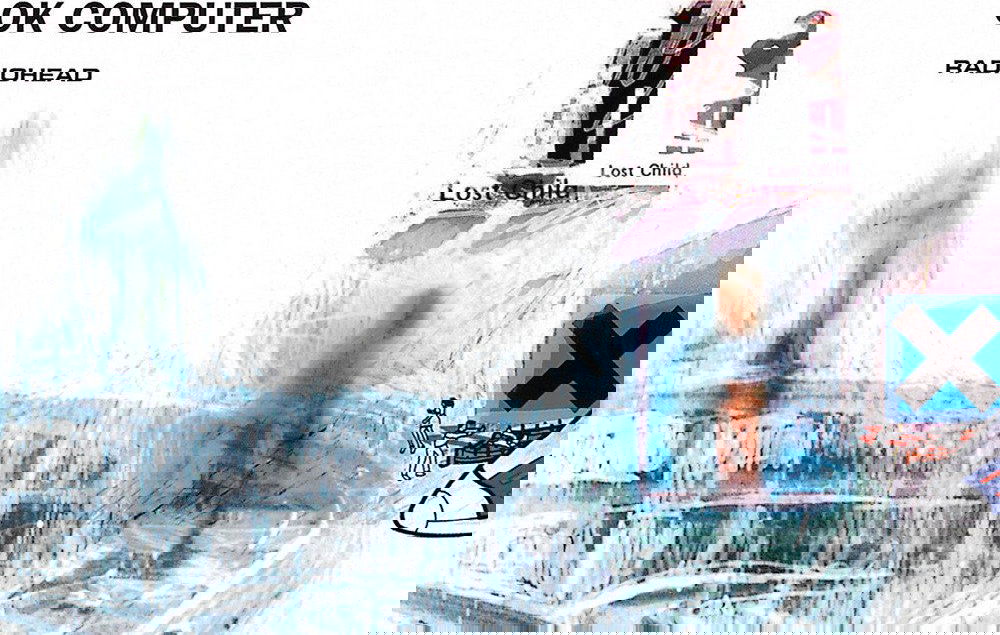
A Pre-Millennial Fever Dream: 'OK Computer'
Released in 1997, 'OK Computer' was the moment Radiohead moved from being an "alt-rock" band to becoming the architects of a new, digital anxiety. Following the guitar-heavy success of 'The Bends', the band retreated to St Catherine’s Court, a historic mansion in Bath, to record an album that felt like a pre-millennial fever dream.
The record is a masterpiece of track sequencing, with 'Let Down' sitting as the bridge between the heavy-hitting singles. It follows the crushing intensity of 'Exit Music (For a Film)' and is immediately chased by 'Karma Police', acting as a moment of floating suspension before the "justice" of the following track kicks in.
A Masterpiece in Real-Time
At the time of its release, 'OK Computer' was received with a level of critical awe that is rare in music history. While their label, EMI, initially feared the album was "uncommercial" and "difficult," it debuted at number one in the UK and catapulted the band into a different stratosphere. Critics hailed it as a "21st-century blueprint," noting that while Britpop was celebrating a nostalgic version of the past, Radiohead were the only ones accurately capturing the terrifying, fast-moving future.
In the decades since, its reputation has only solidified. It is consistently ranked by fans and publications alike as one of the, if not the, greatest albums of the 1990s. It stands as a defining record because it managed to be both a technical marvel and a deeply human scream against the "fitter, happier" drudgery of modern life.
The Mathematics of Disconnect: 'Let Down'
'Let Down' is a masterclass in musical layering and rhythmic complexity. The song is famous for its use of "polyrhythms", specifically, Jonny Greenwood plays his guitar part in a time signature of 5/4, while the rest of the band plays in 4/4. This creates a shimmering, "out-of-sync" feeling that mirrors the lyrical theme of being disconnected from your surroundings.
Lyrically, Thom Yorke captures the crushing weight of transit and the hollowness of modern travel. He sings of "transport, motorways and tramlines" and the sensation of being "crushed like a bug in the ground." This theme of suburban, capitalist dread reaches its absolute zenith later in the album with 'No Surprises'. While 'Let Down' is the frantic, shimmering anxiety of the journey, 'No Surprises' is the exhausted, final surrender. Together, they form the two most vulnerable pillars of the record.
The 1997 Glastonbury Moment
If you want to understand the "presence" and "magnetism" of the band during this era, you have to look at their headline slot at Glastonbury 1997. Often cited as the greatest headline performance in the festival's history, it was a "form of hell" for the band. Plagued by equipment failure and blinding lights, they played with their backs against the wall, debuting 'Karma Police' to an audience still processing the new album.
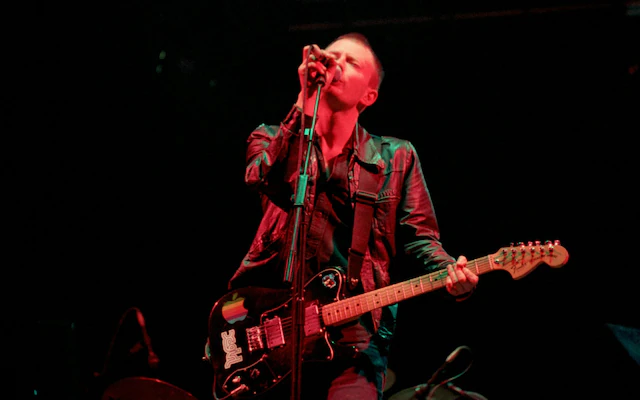
The conditions were legendary for all the wrong reasons: torrential rain had turned Worthy Farm into a swamp, and on stage, Thom Yorke was essentially "blinded" by the floor lights, unable to see the audience or hear himself through his failing monitors. At one point, he nearly walked off, turning to Ed O'Brien to say, "I'm off mate, see you later." It was O'Brien who famously talked him out of it, and the resulting set was charged with a frantic, survivalist energy. It was the moment Radiohead effectively ended the Britpop era, replacing the "lad-rock" bravado of the mid-90s with something much deeper, darker, and more lasting.
The Modern Resurgence
For years, 'Let Down' was the "holy grail" for fans because it was so rarely played live. However, the song has recently undergone a massive cultural resurgence, fueled by its inclusion in The Bear and a viral explosion on TikTok. This newfound popularity reached a fever pitch during Radiohead’s 2025 European tour.
After a seven-year hiatus, the band made 'Let Down' a centrepoint of their setlists, proving that its relevance hasn't faded. In a world that feels increasingly "crushed" and "disconnected," the song’s return to the stage felt less like a nostalgia trip and more like a necessary survival guide.
'Let Down' remains a fan favorite because it is the most "human" song on a record about machines. It acknowledges the sadness of being "let down" by the world, but the music itself is so beautiful that it offers a strange kind of hope.