Song Stories: Pulp: The Fear
When listening to 'Different Class' and 'This is Hardcore' back-to-back. Keen-eared listeners will note that 'The Fear' opens with the final notes of 'Bar Italia', the closest Pulp comes to a musical or thematic overlap between their two albums. It is a deliberate handshake between two very different worlds. Cool Britannia had come and gone in the gap between releases, and a band less sure of themselves might have rushed something out to meet the moment.
It would have been a messy, dated album. So many of their Britpop contemporaries found themselves staggering toward darker tones or doubling down on the era's cheap thrills. Those who leaned into the former, as Blur did with their self-titled record and then '13', have lasted longer than those who didn’t. Pulp took their time, and 'This is Hardcore' was the result.
'The Fear’ opens that album, and it opens a whole new sound for the band. It is as strong, if not stronger, than almost anything they had made before. From its first notes, the song refuses comfort. The whining, creeping instrumental, all distortion and unease, backs Jarvis Cocker as he lays out the terms of engagement with characteristic bluntness:
"This is our music from the bachelor’s den
The sound of loneliness turned up to ten
A horror soundtrack from a stagnant waterbed
And it sounds just like this"
Pulp are not ones for subtlety here, and they are not trying to be. Cocker’s wordplay remains sharp and precise, but the tone has shifted entirely. Where ‘Different Class’ was fizzing with energy and class-conscious wit, ‘The Fear’ is something slower and more unsettling: a song that earns its title. The anxiety is not vague. It is specific, physical, almost comic in its extremity:
"A monkey’s built a house on your back
You can’t get anyone to come in the sack
And here comes another panic attack"
Cocker himself has spoken about the deliberate decision to pile it on. “The liberating thing for me in ‘The Fear’ was to really go over the top and lay it on very thick with all these bad things,” he said. “I find it funny, because it’s so over the top: your sex life is gone, there’s not just a monkey on your back, but it’s built a house there.” The humour is there, but it is gallows humour, and beneath it is something rawer. He was unhappy when he wrote it, genuinely unsure whether another album was worth making at all. ‘Different Class’ had felt, to him, like a complete statement. ‘The Fear’ was the sound of a man confronting the silence that follows.
“I wasn’t happy at the time I wrote it,” Cocker admitted, “and I was thinking more than I ought to about whether it was worth doing another album at all, because I felt like ‘Different Class’ had said it all. It frightened me to think that might be ‘it’.” Rather than look away from that fear, he walked straight into it. “Instead of ‘avert your eyes’ and saying ‘this isn’t happening, I’m alright, I’m gonna be fine’, to actually say: OK, I feel shit. Once you’ve used it and made it into a song, then it wasn’t scary anymore.”
That honesty is what makes ‘The Fear’ work. Without it, the song would be an impressive piece of atmosphere, the haunting strings, the slow build, the astonishing guitar solo (those wanting more should seek out the ‘Complete and Utter Breakdown’ version, which is the superior take), but it would not hit as hard as it does. ‘The Fear’ can summarise ‘This is Hardcore’ as a whole: a burnt-out band straining at their instruments, trying to find a new route through familiar territory. They do it brilliantly, but it is the kind of through-the-looking-glass songwriting that can collapse a band not ready to be that honest.
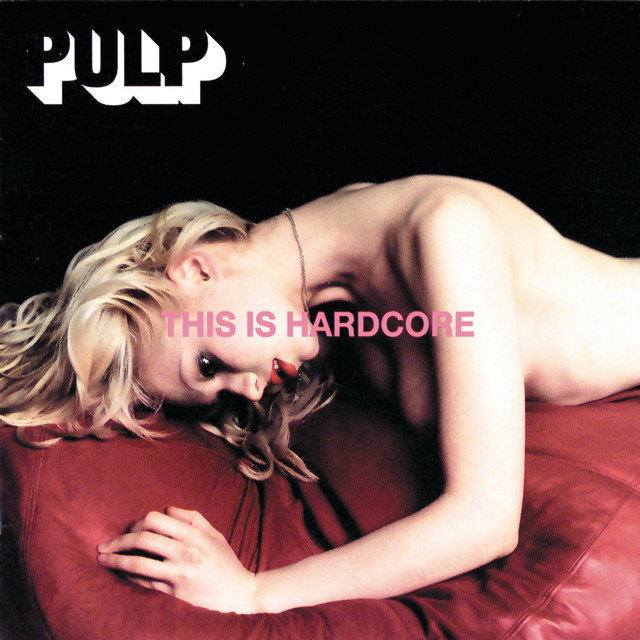
The album that surrounds it is no easier. ‘This is Hardcore’ was, as one critic put it, Pulp’s “masterly ploy to lose fans and alienate the Britpop cattle.” It was too much to swallow for many who had been won over by ‘Different Class’: darker, uglier, seedier, more experimental.
The title track in particular has none of the cheeky romance of old. Where ‘Different Class’ smuggled its class commentary inside three-minute pop songs, ‘This is Hardcore’ wears its disillusionment openly. The parallel between the grotty reality of pornography and Cocker’s own exhaustion with pop stardom and public persona is not subtle, and it is not meant to be. The album is, arguably, the first pop record devoted entirely to the subject of the long, slow fade: a bold move, because it breaks one of rock’s oldest taboos. Even the Beatles treated ageing as a lark. Pulp dive straight in.
‘The Fear’ sits at the centre of all of this. As a setlist staple today, it takes on a different weight. It is no longer only a portrait of one man’s anxiety in the late 1990s; it reads now as something broader, a document of a world on a slippery slope, the dread of an undefined future pressing in from all sides. ‘Until the end’ lands differently now than it did in 1998. Any song worth its salt can bear the projection of a new meaning, and ‘The Fear’ carries it without effort:
"When you’re no longer searching for beauty or love
Just some kind of life with the edges taken off
When you can’t even define what it is that you are frightened of
This song will be here"
Few songs from this era, the post-Britpop comedown, the Cool Britannia hangover, whatever you want to call it, have captured the mood quite so precisely. Blur came close with ‘Death of a Party’, that slow, defeated waltz through the wreckage of the same moment, but where that song watches the lights go out from a distance, ‘The Fear’ is standing in the dark.
The hopeful days on the streets of Soho are over. The party has stopped, and someone has to get home. ‘The Fear’ is a dark turn from a band whose underdog status had always been a driving force, and there is something quietly devastating about hearing what happens when the underdog finally wins. The cliché of coming down from the top turns out to be true. Pulp lived it, and then they made it into one of their very best songs.
That is what Pulp do, consistently. It is not enough to capture the spirit of the times; it has to be an honest reflection of them. Where listeners might fall for the more palatable alternatives of the late 1990s, there were few songs filled with the same truth, power, and open-eyed clarity as ‘The Fear’. It is a lightning-in-a-bottle moment for a band whose biggest hits will always cast a long shadow. But there is a brilliance here, and a strange beauty too, in the anxieties on display. The distortion and feedback that close the track set a tone that only strengthens everything that follows on ‘This is Hardcore’. It is the sound of a band not just losing the plot, but being brave enough to say so.