Song Stories: Peter Gabriel: Intruder
By 1980, Peter Gabriel had spent five years carving out a solo identity distinct from his progressive rock roots in Genesis. His third self-titled album, famously known as 'Melt' due to its iconic Hipgnosis cover art, marked a seismic shift in popular music. The opening track, 'Intruder', wasn't just a song; it was the delivery system for a gated reverb drum sound that would define the sonic landscape of the 1980s.
The "Happy Accident" at The Townhouse
The track's menacing atmosphere was built around a technical breakthrough at London’s Townhouse Studios. While working with producer Hugh Padgham and drummer Phil Collins, the team utilised a new SSL console. A reverse talkback microphone, intended only for the drummer to speak to the control room, was accidentally left on while Collins played. The heavy compression and noise gates on that channel crushed the drum sound, cutting the reverb off abruptly and creating a massive, explosive thud.
Gabriel, ever the innovator, realised this was the future. He pivoted the entire production of 'Intruder' to highlight this sound. To ensure the drums remained the focal point, he made a radical request: he instructed Phil Collins to remove every cymbal from his kit. This forced Collins to play with a stark, rhythmic intensity, occasionally striking the air where his cymbals used to be before Gabriel replaced those empty spaces with more drums.
From 'Marguerita' to Menace
In its infancy, the song was a demo titled 'Marguerita', centred on a drum machine and intended to feature a saxophone part by David Jackson. However, as the track evolved, the saxophone was scrapped in favour of a more mechanical, unsettling arrangement.
The final version of 'Intruder' is a masterclass in tension:
- The Instrumentation: David Rhodes created the signature creaking sounds by scraping the strings of an acoustic guitar through a Roland Jazz Chorus amp.
- The Composition: Gabriel utilised flattened fifths on the piano to evoke a sense of voyeuristic dread.
- The Perspective: The lyrics are chillingly told from the point of view of a burglar, turning the listener into an unwilling accomplice to a home invasion.
A Landmark Album: The 'Melt' Tracks
'Intruder' set the stage for arguably the finest collection of songs Gabriel ever compiled, an album that balanced political and social commentary with personal psychological exploration. Gabriel had truly shed his prog-rock skin, trading long-form whimsy for a stark, minimalist intensity that felt both futuristic and primal.
By stripping away the safety nets of traditional rock, most notably the cymbals, he created a vacuum that was filled by jagged rhythms and eerie, processed textures. This less-is-more philosophy allowed the album to pivot seamlessly from the chilling, voyeuristic dread of 'Intruder' to the stadium-sized empathy of 'Biko'. It wasn't just a change in style; it was a reinvention of how a rock record could sound, and the beginning of how music would sound in the decade going forward.
Peter Gabriel was many things in the 1980s; one thing he definitely was was ahead of his time. The things he was doing would become adopted by virtually every big rock/pop star in the future. He also wasn't afraid to collaborate with artists he thought were great, including those from his former band.
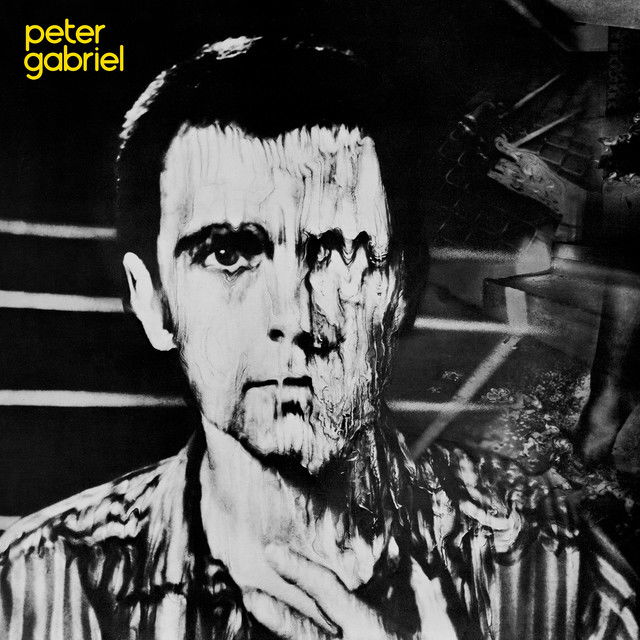
The tracks on 'Melt' remain some of the most enduring of his career:
'Games Without Frontiers': Featuring haunting, childlike backing vocals by Kate Bush, this track used the imagery of schoolyard games and the international TV show 'Jeux Sans Frontières' as a biting metaphor for the absurdity of nationalism and war. The song’s signature whistle hook and staccato rhythm mask a darker critique of how world leaders play with human lives like toys. It became Gabriel’s first solo top-10 hit in the UK, signalling that his experimental nature could still produce a massive pop success.
'Biko': A cornerstone of the global protest music movement, this tribute to anti-apartheid activist Stephen Biko is the emotional anchor of the record. Gabriel incorporated recordings of South African funeral chants, 'Senzeni Na?' and 'Ngoku we-Bheka', layering them over a massive, rolling drum beat that feels both funerary and defiant. By ending the album with this track, Gabriel transitioned from the internal psychological dread of the earlier songs to a powerful, outward-facing call for social justice.
'And Through the Wire': This high-energy track features the raw, urgent guitar work of Paul Weller, who was recording with The Jam in a nearby studio at the time. Gabriel felt Weller’s intense guitar style was the perfect match for the song’s exploration of communication barriers and the struggle to connect through technological and social wires. The result is a track with a distinct punk-adjacent friction that contrasts sharply with the album's more atmospheric moments.
'I Don't Remember': This jagged, post-punk track features the distinctive "stick" work of Tony Levin, creating a metallic, percussive bassline that perfectly mirrors the song's theme of memory loss and identity crisis. The track captures the feeling of a fractured psyche, using distorted vocals and a relentless, grinding pace to evoke the frustration of someone unable to connect with their own past or surroundings. A far cry from 'The Lamb Lies Down on Broadway' or 'Suppers Ready'.
Legacy
The influence of 'Intruder' cannot be overstated. The "gated drum" effect pioneered here by Padgham and Collins was perfected on Collins' own 'In the Air Tonight' a year later and eventually migrated to records like David Bowie’s 'Let's Dance'. By the mid-80s, the big drum sound was everywhere, but it all began with Peter Gabriel.
This wasn't just a technical achievement; it was a psychological one. By removing the cymbals, Gabriel eliminated the high-frequency wash that usually fills the space in a rock song, leaving a vacuum that made the silence between the drum beats feel heavy and threatening. This sonic architecture became the blueprint for the 1980s aesthetic.
Furthermore, the collaboration between Gabriel and Collins on this track effectively bridged the gap between 70s art-rock and 80s pop-futurism. While Collins would go on to turn this sound into a global chart-topping phenomenon, it was Gabriel’s insistence on "no cymbals" that forced the innovation in the first place. The 'Melt' album proved that experimentalism didn't have to be inaccessible; it could be visceral, rhythmic, and, as 'Intruder' so perfectly demonstrated, deeply cinematic.