Song Stories: Oasis: Wonderwall
'Wonderwall' is more than just an Oasis song; it’s become part of the UK’s national identity. You’ll hear it at weddings, funerals, house parties, indie discos, football stadiums, and countless pubs. The lyrics are familiar to almost everyone, and the chords have inspired many people to pick up a guitar for the first time. The song connects generations, blending mid-nineties Britpop nostalgia with what it means to be British today. What began as a late-night idea from Noel Gallagher has turned into a modern anthem, a song that feels like it belongs to everyone, not just the band. Whether it’s sung by friends late at night or in huge stadiums, its emotional power hasn’t faded.
The story of how the song was written starts after an Oasis concert in Glasgow . After the show, Noel Gallagher met a fan who gave him a small object and said, "That’s your wishing stone," telling him it would help his dreams come true. Noel thought the moment was poetic. Later, back in his hotel room with a borrowed guitar capo, the phrase inspired him. Using a simple acoustic guitar, he came up with the chord progression and melody, initially calling the song 'Wishing Stone'.
'Wishing Stone' was the name for a while, but Noel later thought the name sounded too clichéd and gentle for a rock band. The real inspiration came when he was back home in London, where he had a poster for the 1968 film Wonderwall, starring Jane Birkin. As a big record collector, Noel already loved the movie’s soundtrack, 'Wonderwall Music,' which was written by Beatles guitarist George Harrison and was the first solo album by any of the Beatles.
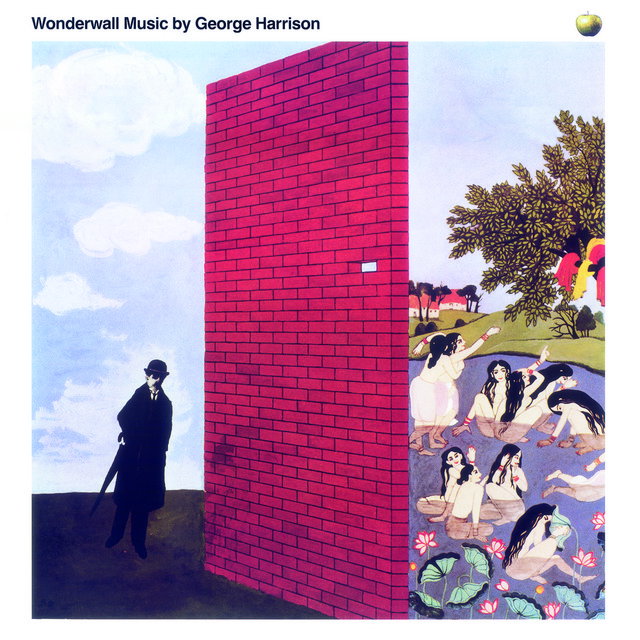
One afternoon, as Noel was humming the melody of his unfinished track while walking down his stairs, his eyes caught the word "Wonderwall" on the wall. In a flash of inspiration, he realised it perfectly fit the cadence of his lyricism and thought it gave the band a brilliant, subtle Beatles connection. He immediately swapped 'Wishing Stone' for 'Wonderwall'.
For years, the media guessed that Noel wrote the final lyrics for his girlfriend at the time, Meg Matthews. Later, Noel explained that changing the title to 'Wonderwall' changed the meaning completely. The song became about an imaginary friend who comes to save you from yourself.
In May 1995, while recording at Rockfield Studios in Wales, Noel wanted the song to sound natural and free of echoes. He talked co-producer Owen Morris into letting him record the acoustic parts outside. Noel sat on a real stone wall at the studio, playing his guitar in front of some confused sheep. Recording outdoors turned out to be difficult, so they moved back inside. Still, they kept the start of that outdoor recording: the soft acoustic strumming with faint clicks and natural sounds that you hear before the main part of the song on the album '(What's the Story) Morning Glory?'. At first, Noel planned to sing the song himself, but he let Liam choose between 'Wonderwall' and 'Don't Look Back in Anger.' Liam picked 'Wonderwall,' so Noel took the other song.
Thirty years later, 'Wonderwall' became the main anthem for England's national football team at the 2026 FIFA World Cup in North America. With Thomas Tuchel as manager, the team chose the 1995 Britpop song for their official tournament soundtrack. They wanted a new identity and to avoid using 'Sweet Caroline' like other countries. The song reached iconic status after England's exciting 4-2 win over Croatia at Dallas Stadium, where thousands of fans sang along in the stands. Midfielder Declan Rice called it a "special" moment and said nothing compared to hearing it across Texas. Soon, the tradition spread to games in Massachusetts and Mexico City. Noel Gallagher was surprised by the trend, saying the song "belongs to the people" and that he was "staggered" that young stars like Jude Bellingham knew every word.
The emotional connection between the players and the travelling support has only deepened as the tournament has progressed into the high-stakes knockout rounds. Following a gritty win over the DR Congo and a breathless, chaotic 3-2 Round of 16 victory against Mexico in the cauldron of the Azteca Stadium, where a ten-man England squad fought against the altitude and a hostile home crowd, the stadium speakers blasted the track once again. The entire squad stood on the pitch to join the fans in a full-throated, viral rendition, leaving captain Harry Kane so deeply immersed in the celebration that he literally lost his voice.
This viral explosion on the world stage has triggered a massive musical revival back home, completely usurping traditional terrace staples like 'Three Lions' or 'World In Motion'. The track has officially re-entered the UK singles charts as the undisputed song of the summer, establishing a beautiful, circular cultural moment.
Away from football stadiums, the track remains the undisputed universal gateway for anyone picking up an acoustic guitar. Its status as the premier beginner song results from a highly specific mechanical trick Noel used when writing it. By anchoring the ring and pinky fingers firmly on the third frets of the high E and B strings, a player can cycle through the Em7, G, Dsus4, and A7sus4 progression with minimal hand movement. This layout offers maximum sonic richness with low physical difficulty, allowing beginners to master a complete, globally recognised anthem with only a basic rhythmic strumming pattern.
Because the chord progression is so incredibly straightforward yet inherently anthemic, the song has become the absolute lifeblood of street buskers and the definitive soundtrack for young people at house parties. For buskers, it functions as a reliable, instant crowd-pleaser that guarantees a singalong. Meanwhile, in crowded living rooms and student kitchens across the country, it remains the ultimate social catalyst; a teenager can pick up a guitar and instantly unite an entire room of peers in a booming, euphoric chorus with very little technical skill.
The track's cross-generational appeal has peaked dramatically during the Oasis Live '25 reunion tour. Marking the first time the Gallagher brothers have performed together in 16 years, the massive stadium tour features a highly calculated, bangers-only 22-song setlist. Rather than taking up space in the main set, 'Wonderwall' has been deliberately saved for the massive four-song encore, nestled directly between 'The Masterplan', 'Don't Look Back in Anger', and the final curtain-caller, 'Champagne Supernova'. Played to absolutely packed crowds at venues like Cardiff's Principality Stadium, Manchester's Heaton Park, and Wembley Stadium, the moment Noel strikes the opening acoustic chords has consistently generated the loudest crowd roars of the night, with the brothers' vocals completely overpowered by thousands of fans singing along in unison.
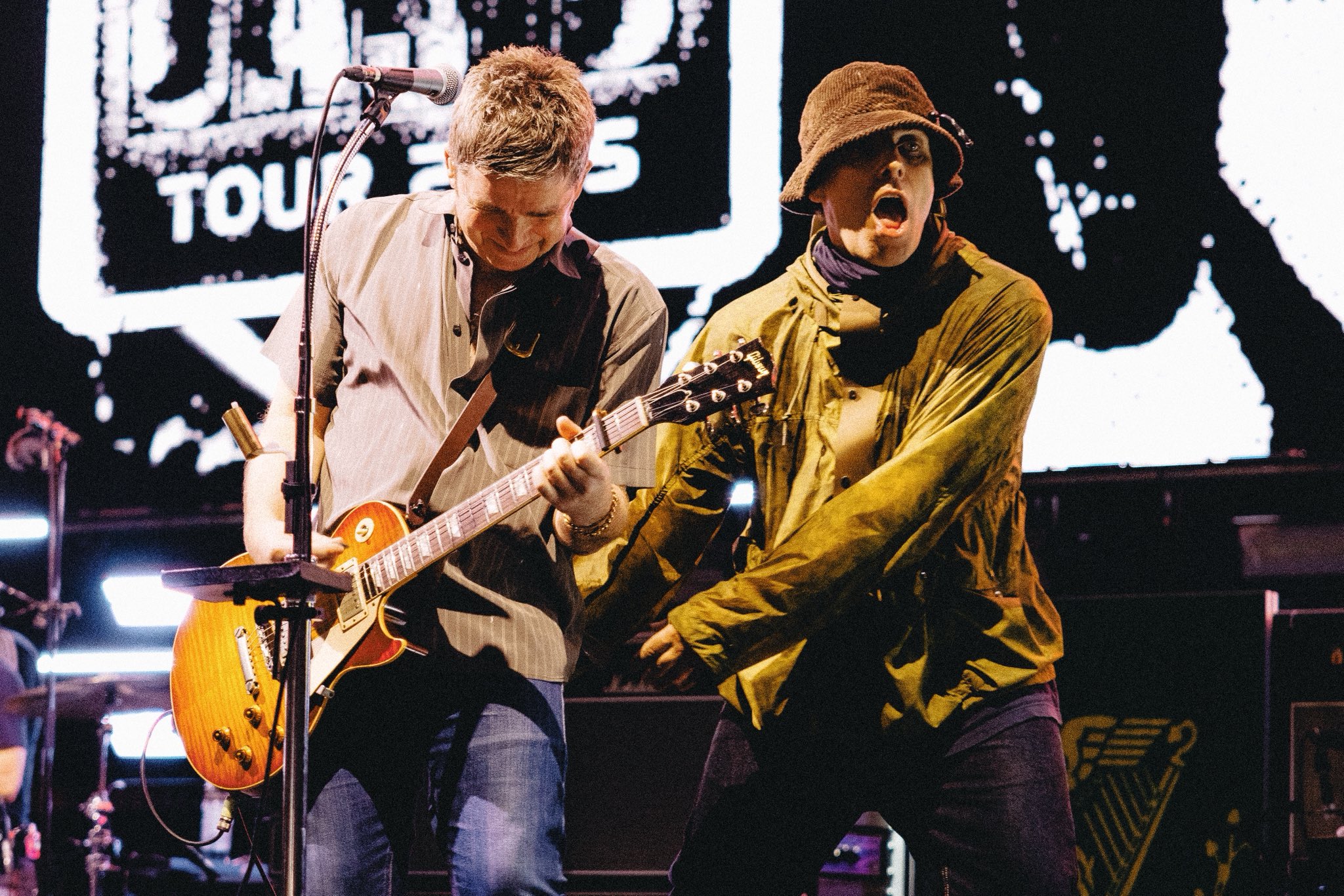
The visual spectacle at these historic venues has been nothing short of biblical. In their home city at Heaton Park, a literal sea of humanity, over a hundred thousand strong per night, marched through the streets of Manchester, singing the lyrics hours before the gates even opened. Once inside, the atmosphere transformed into a religious experience; as 'Wonderwall' cued, fields of bucket hats bobbed frantically, and beers were tossed to the sky in celebration. At Wembley Stadium, the sheer volume of 80,000 people screaming the chorus left attendees' ears ringing, creating a thunderous wall of sound that felt more like a championship-winning sporting event than a standard rock concert. Even from the nosebleed seats, the emotional gravity was palpable as the legendary, decades-old sibling rivalry melted away under the stadium spotlights.
The tour, which spans 41 history-making dates across 13 countries, has proven that the track's emotional weight has only intensified with time. It acts as the ultimate bridge between the older generation who lived through the original Britpop explosion and a completely new wave of younger fans who are experiencing the Gallagher brothers live for the very first time. For the veterans, it is a euphoric trip back to 1995; for the youth, it is a legendary piece of rock folklore finally brought to life
Ultimately, 'Wonderwall' has transcended the boundaries of a standard rock track to become a permanent pillar of modern British culture. What began as a spontaneous, late-night hotel room melody under the name 'Wishing Stone' has transformed into a universal language. It is a song that needs no introduction, carrying a rare, unifying magic that is just as potent when whispered by a solitary busker on a rainy street corner as it is when roared by eighty thousand people under the stadium lights of Wembley or the 2026 World Cup venues. It requires no permission to be sung, existing as a shared public property passed down through generations like folklore.
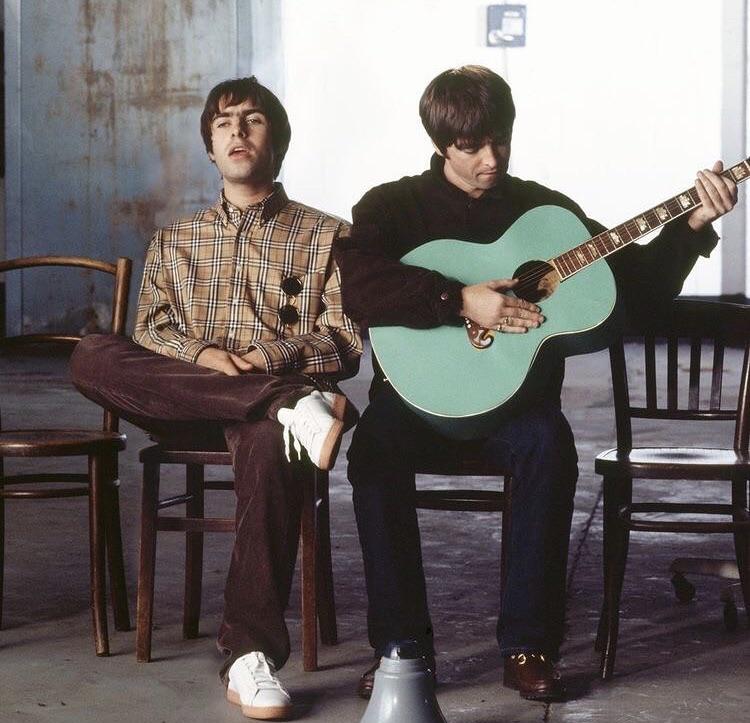
Thirty years on from its chaotic outdoor birth at Rockfield Studios, the song continues to prove entirely bulletproof. Whether it is launching the musical journeys of teenage bedroom guitarists, soundtracking England's defining footballing moments on the global stage, or providing the emotional peak to the most anticipated rock reunion of the century, 'Wonderwall' stands undefeated. It remains the ultimate reminder of music's unique power to bind people together, ensuring that as long as there are acoustic guitars to strum and choruses to scream, those iconic chords will never truly fade away.