Song Stories: Oasis: Live Forever
Released as the third single from ‘Definitely Maybe’, ‘Live Forever’ proved that Oasis was far more than a flash-in-the-pan indie band. In just over four minutes, they had crafted a cultural anthem. A song bursting with unshakeable ambition, youthful idealism, and the raw, unfiltered confidence that would soon catapult the Manchester five-piece into Britpop superstardom. Over the years, ‘Live Forever’ has transcended its era to become something greater: an emotional landmark that captures the spirit of a generation and the timeless hunger to live, dream, and endure.
Oasis emerged in the early 1990s, a time when popular music was dominated by grunge’s dark introspection and existential despair. Nirvana’s ‘Nevermind’ had set the tone for a world steeped in angst and alienation. Yet Noel Gallagher, Oasis’s principal songwriter, wanted to offer something different. Rather than wallow in the nihilism of the times, he sought to write music that inspired songs that spoke of resilience, hope, and the sheer thrill of being alive, even in the face of hardship.
As Noel once explained:
“At the time it was written, in the middle of grunge and all that, I remember Nirvana had a tune called ‘I Hate Myself and Want to Die’. Which I was like, well, I’m not fucking having that. As much as I fucking like him and all that shit, I’m not having that. People like that coming over here, on smack, saying they hate themselves and want to die. Seemed to me like a guy who had everything and was miserable about it, and we had fuck all, and I still thought that getting up in the morning was the greatest fucking thing ever because you didn’t know where you’d end up at night. We didn’t have a pot to piss in, but it was fucking great.”
That philosophy sits at the heart of ‘Live Forever’. The song’s lyrics are deceptively simple yet profoundly affecting. With lines like “Maybe I just want to fly / Want to live, I don't want to die,” Noel distilled the universal yearning for meaning and connection into an anthem that resonated across class, culture, and time.
The chorus, “You and I are gonna live forever”, became one of rock’s most iconic declarations. It rejects fear, cynicism, and the ticking clock of mortality, celebrating instead the idea of eternal youth, at least in spirit. For many, the song embodies the dream of immortality through love, music, or shared experience, a belief that some moments, and some people, really can last forever.
When ‘Definitely Maybe’ topped the UK charts in 1994, it wasn’t just a victory for Oasis; it was the arrival of a new British cultural confidence. ‘Live Forever’ became the defining anthem of the Britpop era, a rallying cry for a generation growing up in post-Thatcherite Britain, hungry for hope, identity, and swagger. While American grunge looked inward, Oasis looked upward and outward.
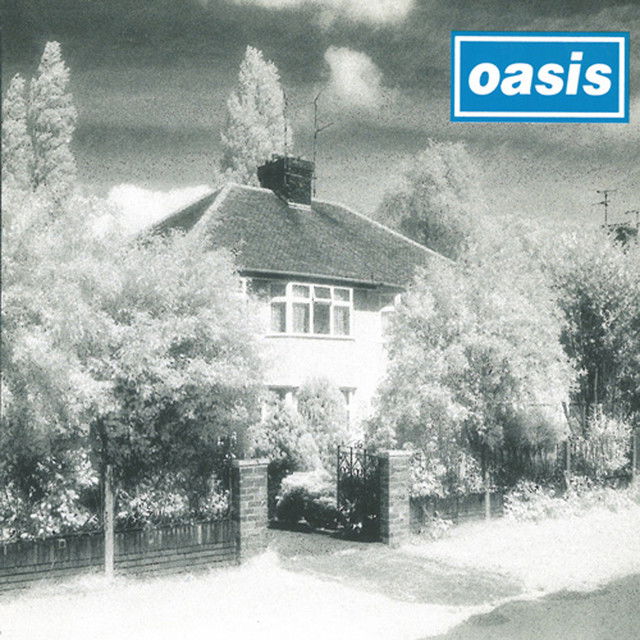
The song’s cover art, designed by Brian Cannon and photographed by Michael Spencer Jones, nods directly to the band’s Beatles obsession. It features John Lennon’s childhood home at 251 Menlove Avenue in Liverpool, a subtle nod to The Beatles, probably Oasis's biggest musical influence.
‘Live Forever’ was released as the third single from the band’s debut record, following ‘Supersonic’ and ‘Shakermaker’, two tracks that, while catchy and full of attitude, didn’t carry the same emotional weight or introspective edge. Those early singles were playful snapshots of youthful rebellion, full of surreal imagery about children’s toys, yellow submarines, and traffic lights.
But ‘Live Forever’ was different. It was the moment that made music fans and critics alike sit up and listen, a song that hinted at something deeper beneath the swagger. It wasn’t just another indie tune; it was a statement of intent.
Within ‘Definitely Maybe’, it stood shoulder to shoulder with other teenage anthems like ‘Rock ’n’ Roll Star’ and ‘Cigarettes & Alcohol’, but where those songs roared with defiance and hedonism, ‘Live Forever’ soared with belief. Together, they formed a blueprint for the Oasis ethos, a celebration of youth, ambition, and the conviction that ordinary lives could be extraordinary.
Like punk did fifteen years earlier, ‘Live Forever’ gave a voice to the disaffected youth, but where punk shouted with anarchy, Oasis sang in belief. The song wasn’t about tearing down the world; it was about owning it.
On stage, ‘Live Forever’ became the emotional centrepiece of Oasis’s live shows. Liam Gallagher’s soaring vocals and Noel’s euphoric guitar solo turned every performance into a communal experience. Critics have long hailed ‘Live Forever’ as one of the greatest rock songs ever written, not just for its melody or swagger, but for its heart. It’s the sound of a working-class band believing, against all odds, that they could touch the sky.
‘Live Forever’ isn’t just a song. It’s a declaration, a manifesto for youth, optimism, and endurance. It marked the beginning of Oasis’s seismic journey: from signing off the dole to headlining two of the biggest concerts in British history at Knebworth, just two and a half years later.
Thanks for reading
Jack