Song Stories: Jeff Buckley: Grace
The story of Jeff Buckley is one of the most profound tragedies in modern music. His passing on May 29, 1997, remains a poignant "what if" that haunts the industry. At just 30 years old, Buckley drowned in the Wolf River, a tributary of the Mississippi in Memphis, Tennessee. On the evening of his death, he was in the city preparing to record 'My Sweetheart the Drunk', the intended follow-up to his debut masterpiece.
The Impact of 'Grace'
Before his untimely death, Buckley released what is widely considered one of the definitive albums of the 1990s: 1994’s 'Grace'. The title track, 'Grace', is a hauntingly beautiful exploration of love, loss, and longing. With its evocative lyrics, soaring vocals, and intricate guitar work, the song stands as a testament to Buckley’s ability to transmute raw human emotion into something celestial.
While 'Grace' was a critical darling upon arrival, it was initially underappreciated commercially, peaking at only #149 on the Billboard 200. In an era dominated by the gritty, distorted angst of post-grunge, Buckley’s brand of romantic, multi-octave maximalism felt like it arrived from a different dimension. However, in the decades since, it has transcended its "cult classic" status to become a foundational text for alternative rock.
The album’s DNA can be found in the DNA of nearly every major melodic rock act that followed; Thom Yorke famously cited Buckley’s vocal performance at a London show as the inspiration for his own delivery on 'The Bends', and artists ranging from Chris Cornell to Lana Del Rey have pointed to 'Grace' as a North Star for emotional vulnerability. David Bowie famously considered it the greatest album ever written.
What began as a quiet ripple in 1994 has grown into a tidal wave of influence, cementing the record not just as a '90s relic, but as a timeless standard for artistic courage.
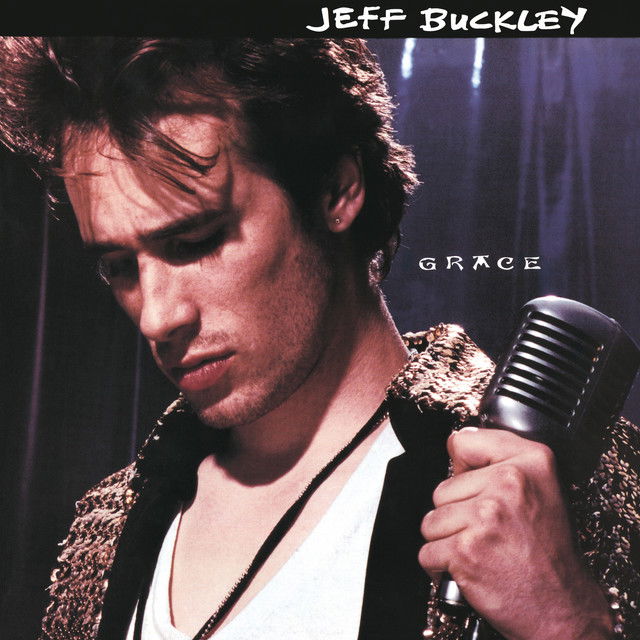
A Masterclass in Composition
The musical arrangement of 'Grace' is a delicate tightrope walk between the ethereal and the explosive. It opens with Gary Lucas’s chiming, otherworldly guitar riff, a sound that feels simultaneously grounded in folk and suspended in the heavens. The track is built on a complex, shifting harmonic structure that avoids the standard pop formulas of the era, instead opting for a restless energy that mirrors a racing heartbeat. As the track swells, Buckley’s voice takes centre stage, effortlessly shifting from a tender, intimate falsetto to an impassioned, visceral wail.
At its core, 'Grace' is a meditation on the fleeting nature of existence. The lyrics are deeply poetic, particularly the lines:
“And the rain is falling and I believe / My time has come.”
In hindsight, these words carry a heavy, prophetic weight. They convey a sense of surrender, as if Buckley were grappling with the transient beauty of life. The recurring imagery of water and rain suggests a duality of cleansing and drowning, a theme that became eerily literal following the events in Memphis. The refrain, “It’s my time coming, I’m not afraid to die,” resonates with an existential acceptance that feels more like spiritual transcendence than earthly fear. It is a song that doesn't just describe a feeling; it creates a physical atmosphere of longing.
The Voice and the Vision
What truly sets the track 'Grace' apart is Buckley’s voice, a multi-octave instrument of pure vulnerability. He didn't just sing the lyrics; he channelled them, using his voice as a lead instrument that could rival any guitar solo in complexity. This intensity is mirrored throughout the album, providing a perfect counterpoint to more sombre moments, such as his cover of Leonard Cohen’s 'Hallelujah'. While Cohen's original was a cynical meditation on the holiness of the mundane, Buckley turned it into an intimate, definitive masterpiece of eroticized spirituality.
The album 'Grace' provides a snapshot of a genius in his prime. Buckley poured every ounce of his spirit into these recordings, blending influences from Nina Simone to Led Zeppelin into a sound that defied categorisation. It has become a touchstone for countless artists, from Radiohead (whose song 'Fake Plastic Trees' was famously inspired by a Buckley performance) to Adele, serving as a reminder of music’s power to connect us to the divine.
A Final Glimpse
Following his death, the demos for his second album were released as 'Sketches for My Sweetheart the Drunk'. While they offer a fascinating look at an artist in transition, willing to experiment with grittier, more avant-garde sounds and darker, punk-edged energy, they remain rough and unfinished. Tracks like 'Everybody Here Wants You' show a burgeoning soul influence, hinting at a direction that would have further cemented his versatility.
However, 'Grace' remains the only complete artistic statement we have from Buckley exactly as he intended it. It is a flawless record that captures a lightning-bolt talent, reminding fans and newcomers alike that the world lost a truly incomparable soul. It stands as a lighthouse for any artist brave enough to be truly vulnerable.