Song Stories: Harry Styles: Aperture
The anticipation surrounding Harry Styles’ return has reached a fever pitch, and the wait finally ends with the release of 'Aperture'. As the lead single and first outing from his highly anticipated fourth album, 'Kiss All The Time. Disco Occasionally.'
The track marks is striking statement for his new creative direction. Moving away from the cosy interiors of 'Harry's House', this new era finds Styles navigating the neon-lit intersection of dancefloor euphoria and late-night introspection, setting a high bar for what is being described as his most ambitious project to date.
'Aperture' marks a bold departure from the warm textures of 'Harry’s House', which saw Styles embrace Joni Mitchell, The Beatles, and 80s pop hooks. Lead single 'As It Was' took the hook from A-Ha's 'Take On Me'. This first outing from album four is very different, arriving instead as a sprawling, five-minute alternative-pop odyssey.
What starts as a skeletal, LCD Soundsystem-lite throb, reminiscent of the jittery rhythmic tension found in James Murphy’s finest work, soon accumulates dense, flickering layers. There isn't a softly stroked acoustic guitar in sight. Instead, electronic textures bleed in from the track's edges, evoking the experimental glitch-pop of 'Notes on a Conditional Form'-era The 1975. In particular, the track shares a sonic DNA with 'Bagsy Not in Net'.
A New Sonic Pallette
The influence of Styles’ recent listening habits is written all over the production. You can hear:
- Charli XCX: In the aggressive, metallic sheen of the synths.
- Radiohead: In the claustrophobic, anxious percussion of the opening verses.
- Tame Impala: Specifically, the sun-drenched, psychedelic yearning of 'End of Summer', which seems to inform the track's hazy, nostalgic glow.
Adding a layer of indie credibility and ethereal texture is Ellie Rowsell of Wolf Alice, who provides backing vocals. Rowsell’s voice weaves through the electronic production, particularly during the soaring harmonies of the "let's the light in" refrain, grounding the track’s synthetic edges with a familiar, human warmth.
From the Stage to the Studio
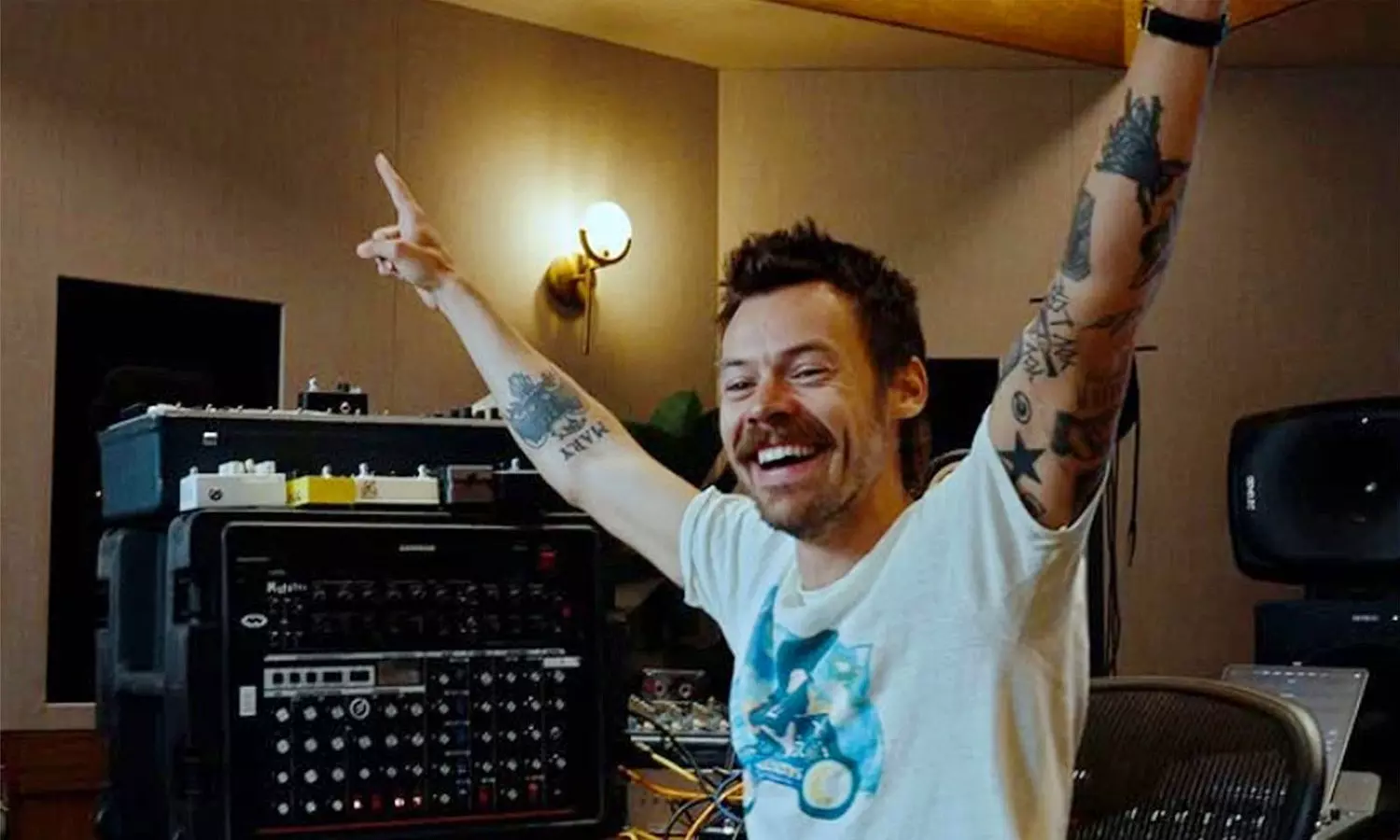
Talking about the forthcoming album 'Kiss All The Time. Disco Occasionally.' on Radio 2, Styles noted that he used his downtime to go out clubbing more, to be in a crowd rather than just playing to one. At times, 'Aperture' carries a Berlin aesthetic; the lyrics paint a picture of peak-time euphoria where people are elevating, others are "going on clean," and the strobe lights turn every stranger into a best friend.
Beyond the sonic experimentation, the lyrical depth suggests a man reconciling his public persona with his private reality. The metaphor of the title, the opening of a lens that regulates light, acts as a commentary on fame itself. Styles seems to be asking: how much of myself do I let you see? And at what point does the light become blinding?
It took me a few listens to really appreciate this song; the initial glitchy complexity is a lot to process after the smooth radio-friendliness of his last record. But I'm going to say this: this is one of the finest choruses Harry has ever written. It is a towering, communal chant of "We belong together" that feels both intimate and infinite. It is a quintessential Styles call for unity, and there is no doubt it will echo around arenas and stadiums this summer, transforming massive crowds into a single, breathing pulse.
Vulnerability in the Machine
The second verse offers a rare, granular glimpse into his world. He sings about "counting the heartbeats in the green room" and the "hollow echo of the hotel hallway," contrasting the deafening roar of the 'Love On Tour' era with the silence that follows. It’s here that the 'Notes on a Conditional Form' influence feels most poignant; it’s a stream-of-consciousness style that feels less like a polished pop song and more like a late-night voice note.
This sense of displacement is further anchored by the production’s shifting geography. While the verses feel cold and industrial, nodding to those Berlin club influences, the transition into the chorus feels like a sudden flight back to the California coast. It is a jarring, brilliant juxtaposition: the lonely individual lost in the machinery of the city, suddenly finding salvation in a melody that feels like a sunset.
Finding a Place to Land
But there is a grounded, endearing vulnerability beneath the pulsating beat. By the song’s excellent bridge, as house-inflected piano chords begin to swell, Styles suddenly sounds strikingly small. "I wanna know what safe is," he sings, his voice cracking slightly over the electronic production, "I don’t know these spaces." It’s a reminder that even in the middle of a career-defining banger, Harry Styles is still searching for a place to land.
As the track reaches its final minute, the 'Aperture' of the title feels literal, a narrowing focus that strips away the club-ready artifice. The drums drop out, leaving only a shimmering, Brian Eno-esque ambient wash and Styles’ harmonised vocals. He repeats the title like a mantra, a plea for clarity amidst the strobe-lit chaos.
If 'Harry’s House' was the sound of an artist settling into domestic bliss, 'Aperture' is the sound of him stepping back out into the night, vulnerable but curious. It serves as the perfect mission statement for his new era: a record that embraces the friction of the dancefloor while maintaining the soul of a songwriter who, despite his global ubiquity, is still just looking for a way to let the light in.
It signals a move away from the safety of the nostalgic past and toward a future where the music is as unpredictable as a night out in a strange city. Harry isn't just inviting us into his home anymore; he’s inviting us to get lost with him.