Song Stories: Happy Mondays: Wrote For Luck
The late 1980s in Manchester were a period of tectonic cultural shifts. The city’s industrial gloom was being dismantled by a neon-soaked upheaval, fueled by the sweat-drenched walls of underground clubs and the euphoric, rhythmic haze of acid house. This wasn’t just a change in tempo; it was a new chemistry. At the heart of this chaos were Happy Mondays, a band that didn't just play music; they lived the transition from post-punk grit to the hypnotic, MDMA-laced grooves of the dancefloor.
The Slurring Brilliance of 'Bummed'
'Wrote for Luck' didn’t just appear; it erupted from the band’s 1988 sophomore album, 'Bummed'. If their debut was a tentative introduction, 'Bummed' was the full-throttle realisation of the Mondays’ chemically-enhanced vision. The album served as the definitive bridge between the jagged post-punk of the early 80s and the baggy, dance-infused revolution that was about to swallow the UK whole.
The record was helmed by the legendary Martin Hannett, the sonic architect behind Joy Division. By 1988, Hannett’s own "chaotic brilliance" was the perfect, albeit volatile, match for the Mondays' unravelling discipline. During the recording sessions at Slaughterhouse Studios, Hannett pushed the band into a murky, psychedelic headspace. He captured their messy, unpredictable energy on 'Bummed' by layering deep, funk-infused basslines with jittery, nervous guitar riffs that sounded like they were vibrating off the tape.
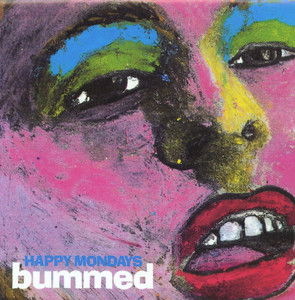
On an album filled with grit and grime, 'Wrote for Luck' stood out as the crown jewel. It benefited from the overall sonic atmosphere of 'Bummed', a record that felt damp, dark, and dangerously danceable. The result was a track that didn't just sit there; it swaggered with the same loose-limbed, arrogant confidence that defined the entire 'Bummed' era. It was the sound of a band finding its groove in the middle of a beautiful collapse.
The Pulse of the Hacienda
Happy Mondays weren’t just a band; they were a total vibe, a living embodiment of a city in the throes of a chemical and musical awakening. 'Wrote for Luck' quickly ascended to become the unofficial anthem of The Hacienda, the legendary Manchester nightclub that served as the epicentre of this new movement. It was within those industrial walls that a historic collision occurred: the "indie kids" in their oversized parkas and the "ravers" in their neon gear finally realised they were at the same party. This wasn't just a coincidence; it was a revolution fueled by the arrival of ecstasy, a drug that dissolved the traditional barriers between guitar music and the dancefloor.
As 'Bummed' echoed through the club’s sound system, the track served as the perfect sonic handoff between the band’s post-punk rock origins and the relentless, four-to-the-floor beats of the emerging acid house scene. The ecstasy-fueled atmosphere of the era demanded music that was repetitive, hypnotic, and physically commanding, yet the Mondays kept it grounded in a raw, northern grit. They provided a bridge that allowed the traditional rock audience to step away from the stage and into the strobe lights, trading the mosh pit for a collective, rhythmic trance.

Central to this appeal was the relentless groove that practically demanded movement, anchored by Shaun Ryder’s nonchalant, street-level delivery. His half-spoken vocals offered a sense of "lad-on-the-corner" realism that resonated deeply with a generation looking to both lose and find themselves in the haze of the night. 'Wrote for Luck' became the essential soundtrack for this newfound euphoria, capturing the precise moment when Manchester’s grey streets were transformed into a vibrant, 24-hour playground of sound and sensation.
Street Poetry and Surrealism
Shaun Ryder’s lyrics have always occupied the unique, murky space between gutter-press realism and surrealist poetry. In 'Wrote for Luck', his words serve as a fever dream of Northern nightlife and substance-fueled misadventure. The iconic refrain, "I wrote for luck, they sent me you", is quintessential Ryder: a line that feels like a backhanded compliment, serving as equal parts celebration and cynical lament. It captures the unpredictable nature of the relationships formed in the chemical haze of the dancefloor, where destiny and accident are often indistinguishable.
There is a defiant, slurred humour to the song; a blatant refusal to take anything, including the band’s own meteoric rise, too seriously. Ryder’s vocal performance is famously off-kilter and delightfully "rough around the edges," lending the track an authenticity that polished pop could never hope to replicate. On the 'Bummed' version of the track, his delivery feels like a raw, unfiltered conversation overheard in a dark, humid corner of a club at 4:00 AM—half-lucid, half-lost, but entirely compelling.
Legacy of the '24 Hour Party People'
Ultimately, 'Wrote for Luck' is far more than a club hit; it is a vital cultural artefact. It freezes a specific moment in British history when traditional social boundaries were dissolving, and subcultures were merging into something entirely new and inclusive. Happy Mondays were the unlikely generals at the forefront of this movement, and this track, backed by the experimental weight of the 'Bummed' album, solidified their place in the pantheon of musical innovators.
The DNA of this track, and the fearless, genre-blind experimentation found throughout 'Bummed', can be heard in the work of countless artists who have since dared to defy categorisation. The "Baggy" scene, the psychedelic explorations of The Stone Roses, the rock-dance fusion of Primal Scream on 'Screamadelica', and later, the swagger of the entire Britpop movement, all owe a massive debt to the Mondays. They were the ones who proved that you didn't have to choose a side; you could be a rock star and a raver.