Song Stories: Declan McKenna: Brazil
Declan McKenna emerged out of virtually nowhere in the mid-2010s, bridging the gap between catchy pop hooks and biting social commentary. Emerging as a teenager with a collection of brilliant songs and a remarkably sharp view of the world, he bypassed the usual "coming-of-age" tropes to tackle global politics, corruption, addiction, and suicide with a confidence and swagger that belied his age.
While older songwriters shied away from the subjects McKenna was turning into indie bangers, he was living it and wasn't scared to talk about it, all before he was even old enough to vote.
The Spark 'Brazil'
McKenna's fortune changed with 'Brazil' a song he wrote aged just fifteen, an indie pop banger. Buit on a glittering lo fi guitar riff and buoyant festival ready anthem. However, the lyrics tell a different story.
Written to criticise FIFA and the 2014 World Cup, McKenna used the track to highlight the devastating contrast between the glamour of the international event and the systemic poverty and displacement of the Brazilian people. While the world's media focused on the luxury of the new stadiums, McKenna directed his lens toward the favelas and the people being pushed aside in the name of profit.
McKenna used the track to highlight the devastating contrast between the glamour of the international event and the systemic poverty of the Brazilian people. He sings of the environmental and social cost: "I heard you sold the Amazon / To show the country that you're from / Is where the world should want to be." While the world focused on the "beautiful game," McKenna looked at the corruption behind the curtain, noting, "I'm faithless now / Though we win every time, and I don't know how."
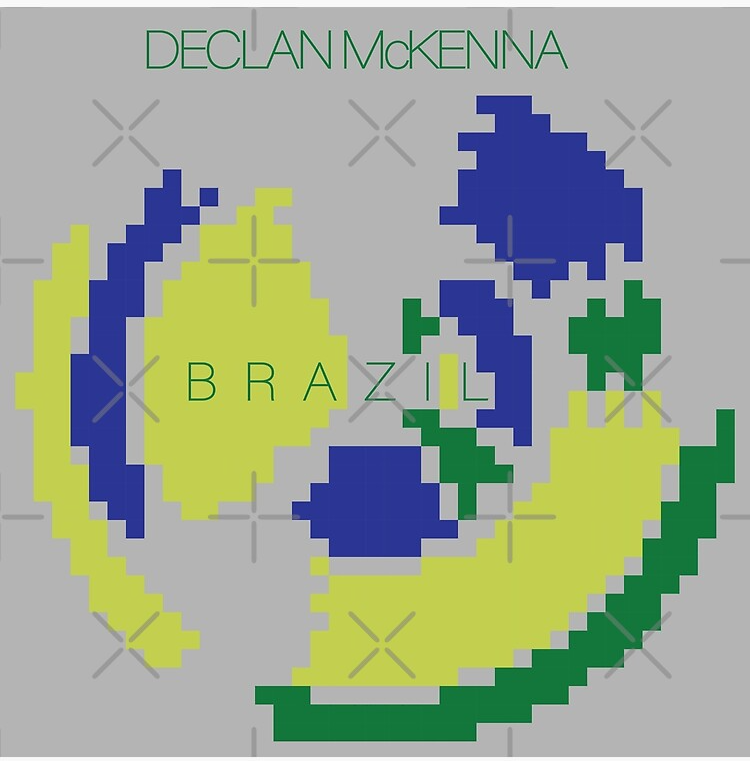
The lyrics capture the absurdity of corporate greed and the hunger for fame at any cost: "I haven't bought you and I haven't sold me / But the people are dyin' to, to get on TV." By the time the song reaches its anthemic chorus, "I play the beautiful game while I'm in Brazil", the irony is thick. It was a bold move that proved he was a songwriter with a conscience, showing that you could dance to a "banger" while demanding social justice and holding the powerful to account. This juxtaposition of a joyful melody with a painful reality became the blueprint for his career.
The Debut: 'What Do You Think About the Car?'
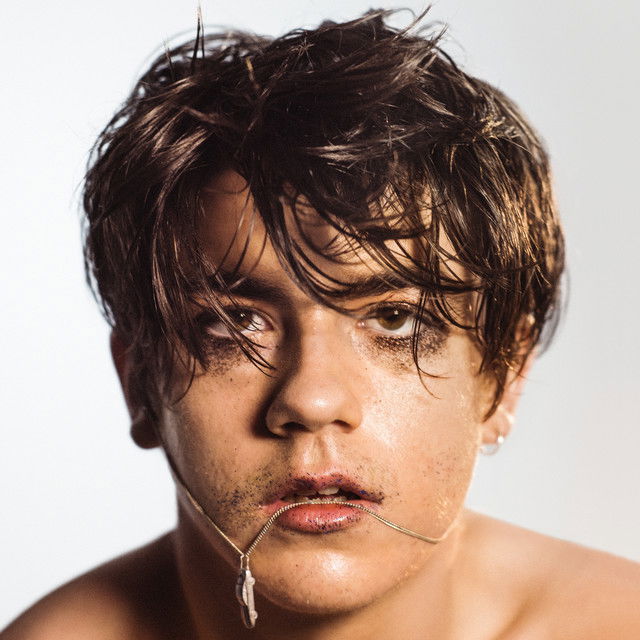
His 2017 debut album, 'What Do You Think About the Car?', arrived as a technicolor explosion of indie-rock and glam-pop. The record is an 11-track "aural fizz bomb" that channels McKenna's love for David Bowie and ABBA through an indie-pop template. The title itself—taken from a home video of a four-year-old Declan, serves as a reminder of his youth while he tackles themes of immense maturity.
The album was produced largely by James Ford, a man whose CV reads like a "Who's Who" of modern British music. Before working with McKenna, Ford had already established himself as a titan of the genre, shaping the sound of indie royalty. He was the architect behind the career-defining sounds of Arctic Monkeys (from 'Favourite Worst Nightmare' onwards), the dance-punk energy of Foals (on 'Antidotes'), and the sleek indie-pop of The Last Shadow Puppets. His work with Florence + The Machine and Mumford & Sons proved he knew how to manage grand, anthemic scales, a skill he used to perfect McKenna’s expansive debut.
'The Kids Don't Wanna Come Home'
Arguably the album’s anthem for the ages, 'The Kids Don't Wanna Come Home' was inspired by the tragic events in Paris in November 2015. McKenna was actually in the city during the attacks, and the experience transformed the track from a general observation into a lived-in reality. Over five foot-stomping minutes of anthemic indie-rock, he packs in the anger, fear, and alienation of Gen Z, while still maintaining a slight glimmer of hope.
The song specifically challenges the assumption that young people are self-obsessed and merely "glued to their phones." Instead, McKenna paints a picture of a generation excluded from political discussions and at risk from those in power. He directly calls out the older generation's failures: "Haven't you any shame? / Have you got no morals? / Teaching them how to aim / No sadness and no sorrow." The lyrics reflect a deep-seated frustration with being handed a broken world and then being blamed for not knowing how to fix it:
"I don't know what I want, if I'm completely honest / I guess I could start a war, I guess I could sleep on it."
It’s a "call to arms" that offers a euphoric sense of solidarity, proving that the youth aren't just watching, they’re waiting for change. This sincerity is perfectly bookended by the track's studio outro, which features a chaotic, playful exchange between McKenna and some children in the studio. The dialogue, "What did you just write that song about?" / "About the kids don't wanna go home", serves as a meta-commentary on the album's title and the youthful energy that fuels McKenna's art. It reminds us that while the themes are heavy, the spirit of the record is one of irrepressible life.
'Listen to Your Friends'
The album closes with 'Listen to Your Friends', a polemical masterpiece that stands as the only track on the record co-written and produced by Rostam Batmanglij (formerly of Vampire Weekend). Recorded in Los Angeles, it is a deceptively soft, mid-tempo ballad that packs a massive punch through its woozy, dream-pop choruses and a sharp, spoken-word poetic breakdown.
The song acts as a final attack on government apathy and the absurdity of modern laws. McKenna uses the title to call out the insular nature of those in power—the idea that leaders only listen to their own inner circles and advisors rather than the citizens they represent: "I bet you only listen to your friends / I'm talking like I can pretend." The heart of the track is a biting verse where McKenna lists the societal problems frequently scapegoated by the elite. He mocks the "research" and disconnected "logic" used to blame the vulnerable:
"The problem is poor kids who want holidays in term time / The problem is poor kids who can't afford the train fare / So we up the train fare and charge them for not paying the train fare."
He further critiques the hypocrisy of the "psychoactive substance ban," noting how prohibition often just pushes people toward more dangerous alternatives while the wealthy suggest these laws over a "lunchtime snack." By repeating the desperate plea "please trust in me" at the end, McKenna shifts the perspective back to the youth and the unrepresented, begging for the same trust that is so freely given to the "friends" in high places. It is a sophisticated, experimental finale that solidifies his role as a vital voice for a generation tired of being ignored.
Legacy
Declan McKenna didn't just introduce a new sound; he validated the frustrations of a generation. By redirecting the pop template to serve as a mirror to society’s flaws, tackling everything from religion in 'Bethlehem' to transgender suicide in 'Paracetamol', he proved that music could be both a summer festival headliner and a vital political tool. From the viral protest of 'Brazil' to the expansive storytelling of his debut, McKenna remains a vital architect of modern British indie.