Song Stories: Gorillaz: Dirty Harry
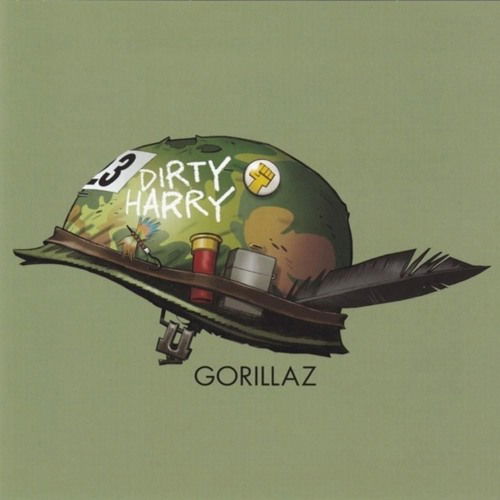
When Gorillaz released their second studio album, ‘Demon Days’, in 2005, the world felt like it was in a state of spiritual and political collapse. While their debut was a playful experiment in "cartoon pop," ‘Demon Days’ was a dark, cinematic journey through the anxieties of the 21st century. At the heart of this record lies ‘Dirty Harry’, a song that uses an infectious groove to mask a biting critique of war and leadership.
The Man with No Name
The song is named after the 1971 classic film Dirty Harry, starring Clint Eastwood. This isn't the first time the band referenced the legendary actor; their debut smash ‘Clint Eastwood’ remains their most famous track. However, while the first song used the name as a stylistic nod to "cool," ‘Dirty Harry’ uses the reference with much more teeth.
The words "Dirty Harry" never actually appear in the lyrics. Instead, the title serves as a metaphor. By invoking Eastwood’s gun-toting, vigilante character, Gorillaz implied that this was how much of the world viewed then-American President George W. Bush: a leader acting as a law unto himself, "cowboy" on the global stage.
A Pawn in the Desert
Musically, ‘Dirty Harry’ is a masterpiece of contrast. It features a soulful, sun-drenched vocal from a children’s choir, but the lyrics they sing are chilling: "I need a gun to keep myself from harm / The poor people are burning in the sun."
The track takes a sharp, aggressive turn with a rap verse from Bootie Brown of The Pharcyde. The lyrics are a direct attack on the handling of the Iraq War and the perceived indifference of the US administration toward the soldiers on the ground:
"The war is over, so said the speaker, / With a flight suit on, maybe to him I'm just a pawn"
This is a specific reference to Bush’s infamous "Mission Accomplished" speech delivered on an aircraft carrier while wearing a flight suit. The song strips away the political pageantry, suggesting that to those in power, the soldiers and civilians caught in the crossfire are nothing more than expendable pieces on a chessboard.
The World of ‘Demon Days’
‘Dirty Harry’ acts as a pillar for the wider themes of ‘Demon Days’. Produced by Danger Mouse, the album is a masterpiece of "dark pop" that explores a world losing its way. The tracklist is a series of modern anthems that each tackle a different "demon":
- ‘Feel Good Inc.’: The album's massive lead single, exploring the empty pursuit of pleasure and the "inc." of mass media. Interestingly, Damon Albarn’s vocal performance on the chorus—specifically the lines "Windmill, windmill for the land / Turn forever hand in hand"—carries a distinct melodic DNA that feels like a spiritual successor to Blur. The acoustic-driven, melancholic folk-pop of that bridge recalls the more introspective moments of albums like ‘13’ or ‘Think Tank’, providing a human heart inside the digital machinery of the track.
- ‘DARE’: A bright, disco-infused moment that provided a rare glimmer of dancefloor escapism. The song features Shaun Ryder of 'Happy Mondays' and serves as an ode to the 1980s Manchester electronic club scene. Famous for its "happy accident" origin story, the signature hook "It’s coming up, it’s coming up... it’s DARE" was actually born when Ryder was in the recording booth simply asking the engineers to turn the volume up in his headphones. His thick Mancunian accent made "It’s there" sound like "It’s dare," and Damon Albarn loved the mistake so much he kept it as the song's title.
- ‘Kids with Guns’: A stark, haunting track inspired by a child bringing a weapon to school, reflecting the desensitisation of youth to violence in a media-saturated world.
- ‘El Mañana’: A melancholic piece that mourned the loss of innocence and the environmental toll of the modern world, often cited as one of the band's most emotional compositions.
Legacy and Impact
‘Dirty Harry’ remains one of the most successful examples of a "protest song" that managed to dominate the dancefloor. It proved that Damon Albarn and Jamie Hewlett weren't just creating a virtual band for a laugh; they were using Gorillaz as a vehicle to speak truth to power.
Even today, the song’s themes of militarism and the "pawn" status of the working class remain hauntingly relevant. It’s a track that asks us to look past the "flight suits" and the slogans to see the human cost of the "cowboy" mentality.