Sam Fender Promises Changes to 2027 Stadium Tour Ticket Prices After Backlash

Sam Fender has promised to change the ticket prices for his 2027 ‘Proper Massive Stadium Tour’ after criticism around the cost of attending his forthcoming concerts. The North Shields musician has also confirmed that plans to divide standing areas into separate price categories will be scrapped, having admitted that he was unaware of the arrangement.
The controversy emerged after Gavin Leigh Davis shared details of the proposed ticket prices on Instagram and X. His posts highlighted the cost of attending Fender's concerts, with some front-standing tickets exceeding £130. Fender subsequently responded directly to Davis on Instagram, explaining that the prices had risen considerably beyond what he had originally expected.
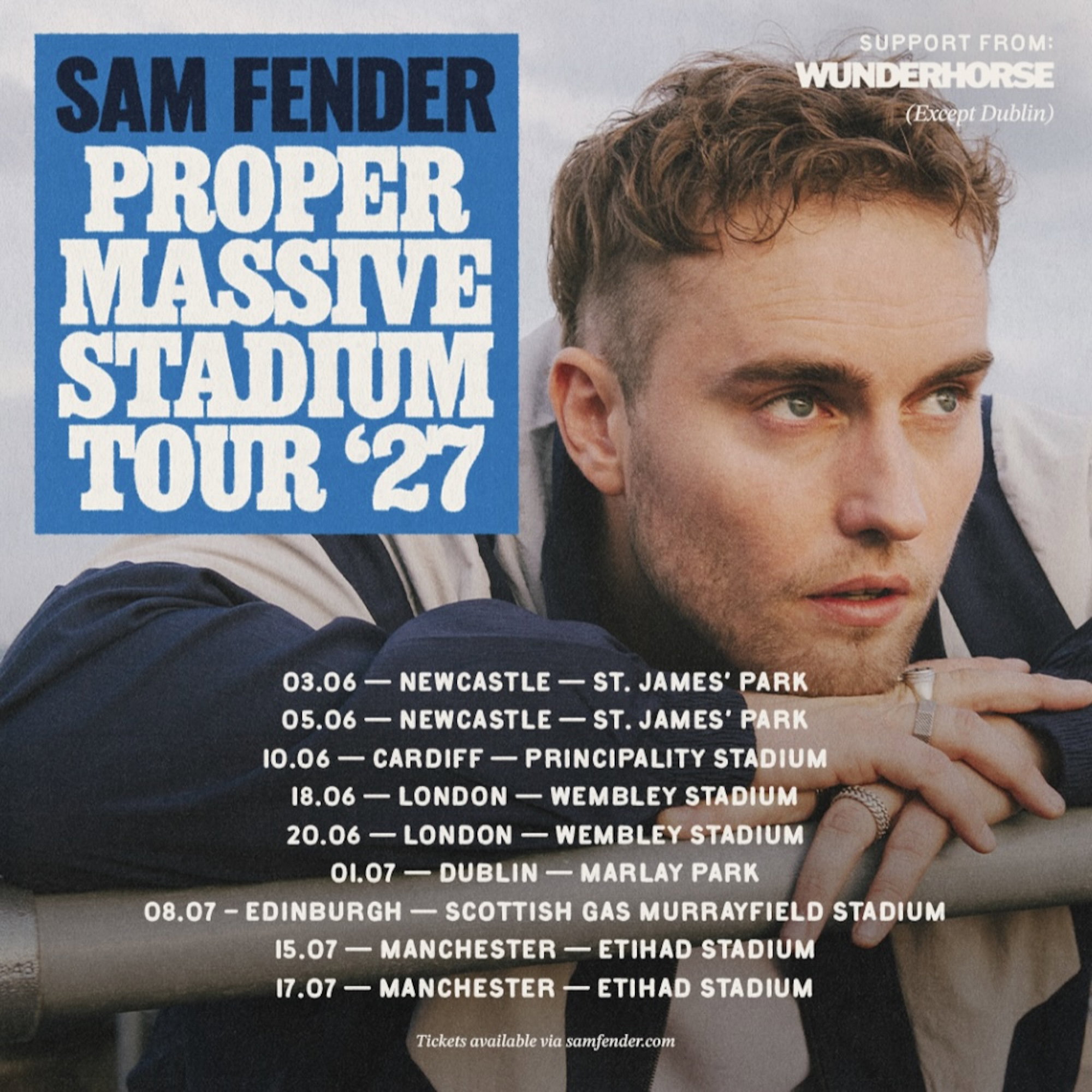
The criticism comes just days after Fender announced nine stadium and outdoor concerts across Britain and Ireland, including two nights at Wembley Stadium, another Newcastle homecoming and two concerts at Manchester's Etihad Stadium.
Gavin Leigh Davis regularly shares information about forthcoming tours and concert announcements, often before the details have been officially confirmed. Following Fender's stadium announcement, he published the proposed ticket prices on Instagram and X, attracting considerable attention from fans concerned about the increases.
Standing tickets for Fender's two Newcastle concerts were reportedly priced at £98.60, with seated tickets ranging from £86.50 to £112.90. Wembley was more expensive, with front-standing tickets initially reported at £130.75 compared with £98.85 for general admission.
The prices were also listed on Ticketmaster, where front-standing tickets for Wembley were advertised at £131.95 including fees, compared with £100.05 for general standing. Cardiff, Edinburgh and Manchester had similar arrangements, with front-standing tickets costing approximately £120.
The decision to divide standing areas into separate sections attracted particular criticism. Rather than offering one general admission area, fans faced paying an additional £20 to £30 to stand closer to the stage.
For comparison, tickets for Fender's previous stadium concerts in 2025 were reported to have ranged between approximately £65 and £88. Although stadium productions have become increasingly expensive, the proposed prices represented a considerable increase for fans hoping to see him next summer.
Fender Responds to the Criticism
Responding directly to Gavin Leigh Davis's Instagram post, Fender made his frustration clear.
"I'm not happy with these prices, they're getting changed."
He explained that the figures had increased considerably beyond what he had originally envisaged, arguing that any increases should reflect the additional costs involved in staging concerts of this size.
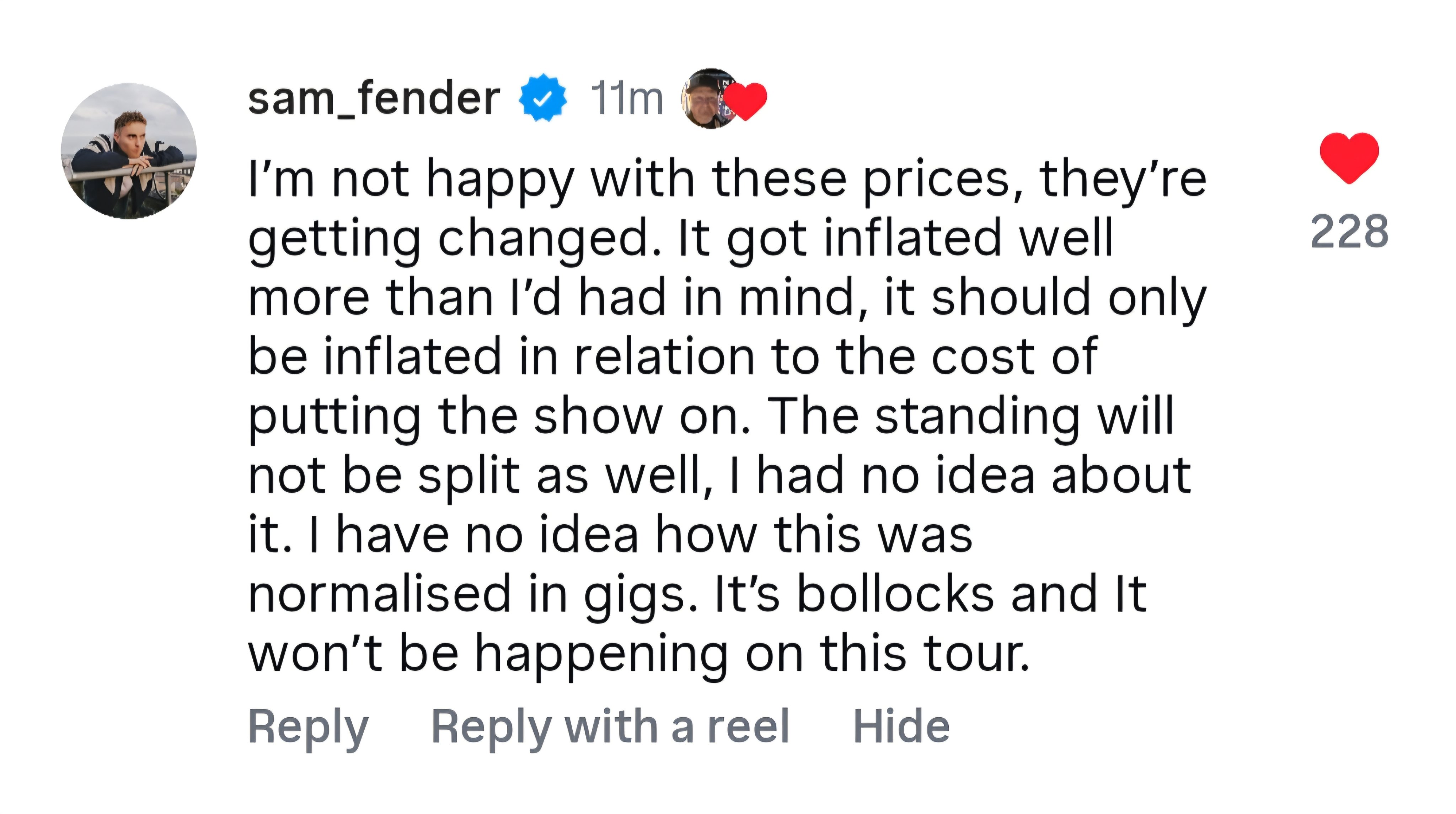
Fender was particularly critical of the decision to divide standing areas into front and general admission sections. He explained that he had not known about the arrangement and questioned how the practice had become so widely accepted at concerts.
"It's bollocks and it won't be happening on this tour."
It's an encouraging response, particularly as the prices were being discussed before the presale had even begun. Fender has made his opposition clear, although the revised prices have yet to be confirmed. There is also a distinction worth making between removing the separate standing sections and reducing ticket prices across the entire tour. Fender has indicated that both will be addressed, but fans will understandably want to see the final figures before celebrating too much.
The Increasing Cost of Seeing Live Music
Ticket prices have become one of the most frustrating aspects of attending concerts. It is increasingly common to see arena tickets approaching £100, while stadium shows can cost considerably more, particularly when premium standing areas and expensive seating categories are introduced.
There are understandable reasons why concerts have become more expensive. Touring crews, transport, equipment, venue hire and production costs have all increased. Putting on two nights at Wembley Stadium is an enormous undertaking, and the people responsible for making those concerts happen deserve to be paid properly.
However, there is a difference between covering those costs and charging fans considerably more for access to the front of a standing crowd.
I've never particularly liked the idea of dividing standing audiences into separate price categories. For years, part of the experience was arriving early, getting into the venue and finding your place among everyone else. Whether you ended up against the barrier or somewhere further back depended largely on how early you arrived and how determined you were to get near the front.
Increasingly, that opportunity has become another part of the concert experience that promoters can sell for a premium. Fans who might already be spending hundreds of pounds on travel, accommodation and tickets are being asked to pay even more for a better position.
Fender has frequently written about working-class life, financial pressures and the people he grew up around in North Shields. Songs such as ‘Seventeen Going Under’, ‘The Borders’ and ‘People Watching’ have explored subjects that are rarely given this much attention by artists performing in stadiums.
That doesn't mean he should be expected to keep ticket prices at the same level forever, but it does help explain why the proposed increases attracted such a strong reaction.
Fender's Previous Support for Music Fans and Grassroots Venues
This isn't the first time Fender has spoken about the financial difficulties facing the live music industry. During his 2024 arena tour, a £1 contribution from tickets helped raise more than £100,000 for the Music Venue Trust, providing support for 38 grassroots venues across Britain. He subsequently donated the entire £25,000 prize from his 2025 Mercury Prize victory, awarded for ‘People Watching’, to the same organisation.
That support reflects his own beginnings playing smaller venues around Newcastle and the North East. Without those opportunities, Fender's eventual rise to headlining stadiums would have been considerably more difficult. His forthcoming 2027 concerts will also contribute £1 from every ticket sold to the LIVE Trust, which supports grassroots music across the UK.
Fender has previously joined other musicians calling for restrictions on tickets being resold at vastly inflated prices. The current controversy concerns the original prices rather than resale, but both issues raise similar questions about how accessible live music is becoming. The fact that he has publicly challenged the proposed prices is welcome. However, the bigger test will be whether the revised figures make a meaningful difference to the people hoping to attend.
When Do Sam Fender's 2027 Tickets Go on Sale?
The presale for Fender's ‘Proper Massive Stadium Tour’ begins at 9.30am on Wednesday 28 October, with general sale following at 9.30am on Friday 30 October.
Fans hoping to access the album presale must register through Fender's official store before 9am on Monday 26 October. They can either pre-order his forthcoming fourth album or use the no-purchase-necessary registration option. Presale codes will be distributed by email on Tuesday 27 October.
The tour begins with two concerts at St James' Park on 3 and 5 June, before visiting Cardiff, London, Dublin, Edinburgh and Manchester. Wunderhorse will support at all eight UK stadium shows, with the Dublin concert featuring a different bill.
Full dates, support information and album details can be found in our original announcement of the ‘Proper Massive Stadium Tour’.
For now, the revised prices remain unconfirmed. Fender has promised to remove the premium standing arrangement and address the increases, leaving fans hoping the final figures will be considerably more reasonable.
Stadium concerts have never been cheap, but seeing your favourite musician shouldn't become something only those with the deepest pockets can afford. Fender has an opportunity to challenge a practice that has become increasingly common across the live music industry. Hopefully, the eventual ticket prices reflect his comments.