Oasis: Don't Look Back In Anger: Documentary Review
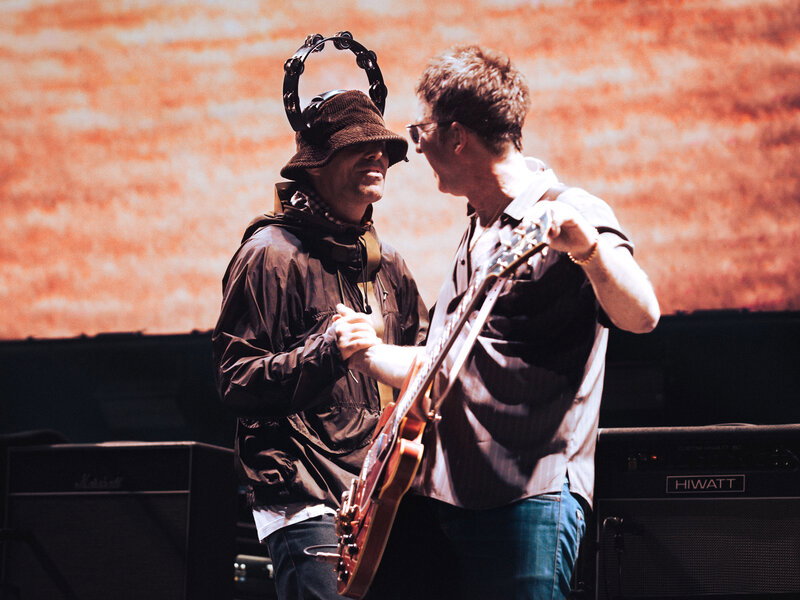
I’ve warned you once, but I’ll warn you again: this review contains spoilers. If you haven't watched the film yet and plan to, I strongly advise coming back to this afterwards.
Ready?
Many of us have been waiting for this documentary for a long time. Most Oasis fans knew cameras were following the band on tour, and once the people involved were revealed, my excitement only grew.
Steven Knight wrote the film, which immediately gave it serious pedigree. The man behind ‘Peaky Blinders’, ‘House of Guinness’ and ‘SAS: Rogue Heroes’ certainly knows how to tell a compelling story, and there could hardly be a better one to work with than the return of Oasis.
Behind the camera were Will Lovelace and Dylan Southern, a directing partnership with plenty of experience documenting music and the people surrounding it. Their previous work includes Blur’s ‘No Distance Left to Run’, the brilliant LCD Soundsystem film ‘Shut Up and Play the Hits’, and ‘Meet Me in the Bathroom’, their adaptation of Lizzy Goodman’s book about the New York rock scene that produced The Strokes, Yeah Yeah Yeahs, LCD Soundsystem and Interpol.
That CV matters because this was never going to be just another concert film. Oasis returning after sixteen years apart was already one of the biggest music stories imaginable. The more interesting question was how much of that story the cameras had actually captured.
Let's address the elephant in the room: the film does not address the elephant in the room. The film opens with a history lesson, a short tale of how Oasis became the biggest band in the world and how it all fell apart. Including some amateur video footage from Rock en Seine in 2009, with Liam saying The way it finished. Unacceptable. It didn't sit right with me, man," and Noel saying, “I was born with one fatal flaw in my character. I cannot forgive people.”
That immediately raises the question the film never completely answers. What changed?
Was it money? Was it simply that the timing finally suited both brothers? Did the balance of power shift because Liam's solo career had made him the one with greater momentum? Did a family event or private conversation soften things? We never really find out and I don't think we ever will.
Before watching the documentary, I had wondered whether the Gallagher children might have played some part in bringing their fathers closer together. Noel says in the film that his sons first met Liam's sons during the tour, although Anais Gallagher had already been filmed with Gene and Lennon in Manchester in 2024. That does not prove anything, of course, but it makes me suspect there is still more to the reconciliation than the version we are given here.
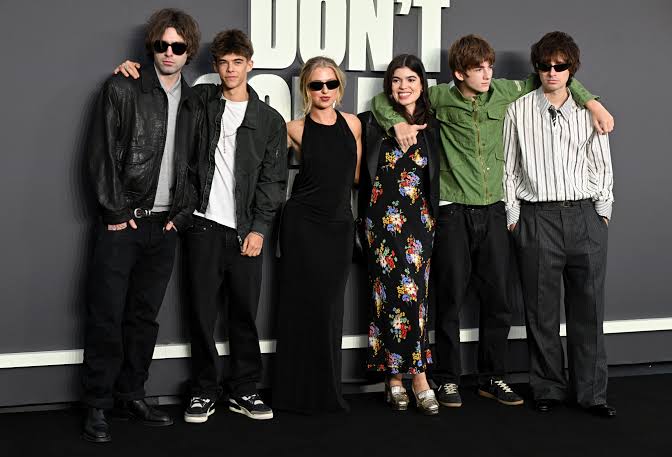
Perhaps understandably, the film does not show us the brothers' actual first meeting either. Their reunion began before the cameras take us into rehearsals, including the 2024 photoshoot that produced the first official images of Liam and Noel together again. Instead, the documentary drops us into a rehearsal room where the relationship still looks almost comically awkward. The brothers barely make eye contact, never mind have the emotional reconciliation some viewers might expect.
That awkwardness is one of the most interesting things about the early footage. There is no dramatic hug and no conversation about the previous sixteen years. They simply start working.
Even that process was hardly straightforward. We later learn that Noel missed two of the six weeks of rehearsal because of a bad back, while Liam missed the final rehearsal on the night before the opening show in Cardiff. Considering the scale of what was about to happen, Oasis appear to have prepared for their first concerts in sixteen years in an appropriately Oasis fashion.
The rehearsal footage also gives us a glimpse of one that got away. At one point, the band, minus Liam, can be seen working through ‘Columbia’. It never made the Live '25 setlist, but hearing even a fragment of it inevitably leaves you wondering how close it came.
When Liam does arrive at the rehearsal space, however, there is a strange sense that normal service has resumed. Around the Gallaghers is a blended version of Oasis, connecting different periods of the band's history. Gem Archer and Andy Bell return from the later years, Paul ‘Bonehead’ Arthurs restores a link to the original line-up, while Joey Waronker comes in as the one genuinely new face behind the drum kit.
One of my frustrations with the documentary is that we do not hear enough from them. Bonehead, in particular, could have offered a fascinating perspective on returning to Oasis after so many years and finding himself back between Liam and Noel.
Gem and Andy were both there when the band disintegrated in Paris, so hearing more about what it felt like to walk back into that environment sixteen years later would have added another dimension. Waronker had the opposite perspective: he entered Oasis without carrying any of that history and could have offered an outsider's view of one of Britain's most mythologised bands.
Instead, the film keeps most of its attention where you would expect it: on Liam and Noel.
That decision becomes more rewarding as the tour progresses because, almost without anybody acknowledging it, you begin watching the brothers become brothers again. It happens through tiny changes rather than one grand reconciliation scene. The distance visible in those first rehearsals gradually disappears, while Noel also seems to rediscover the extraordinary power Oasis still possesses.
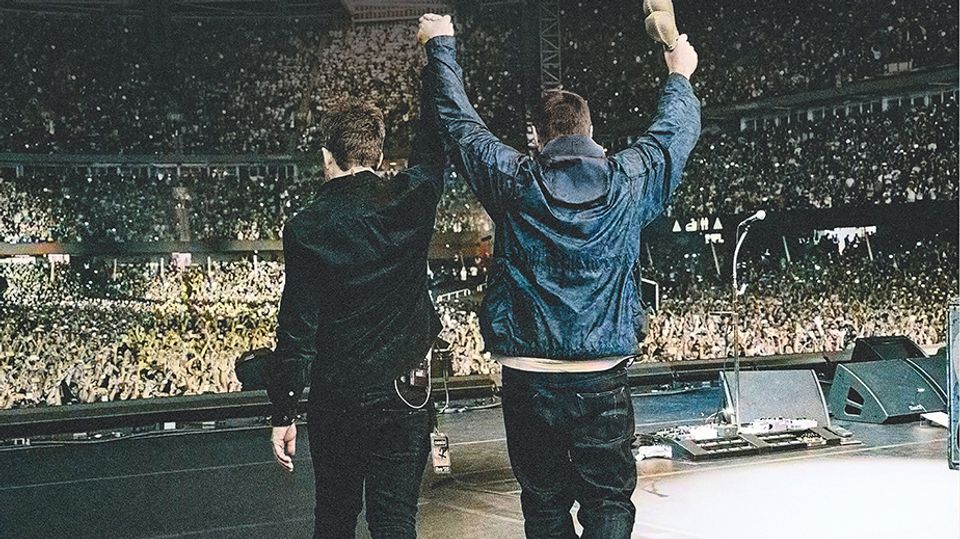
The first real sign comes in Cardiff. Walking onto the stage for the opening night of the tour, Liam reaches across, takes his older brother's hand and raises it above their heads. Noel goes along with it, although the expression on his face suggests that he is doing so very much under duress. It is funny because it looks so unnatural: two men who have spent sixteen years apart suddenly being presented to an enormous stadium as reunited brothers.
As the shows pass, though, the gesture changes. What initially looks like Liam forcing Noel into a public display of unity becomes something they both appear increasingly comfortable with. Before long, they are walking onto stages hand-in-hand without the same hesitation, and by the end of the documentary they are sitting together for an interview.
“We’re in contact way, way more than we ever were,” Noel says before reaching for a word he admits he would never previously have used to describe his brother: “Delightful.”
That transformation is much more interesting than any staged reconciliation could have been. The film never properly tells us what brought Oasis back together, but it does show us what happened once Liam and Noel were put back into the same room. At first they look like two people fulfilling an agreement. By the end, they look like brothers again.
And Cardiff is where that process has to survive its first real test.
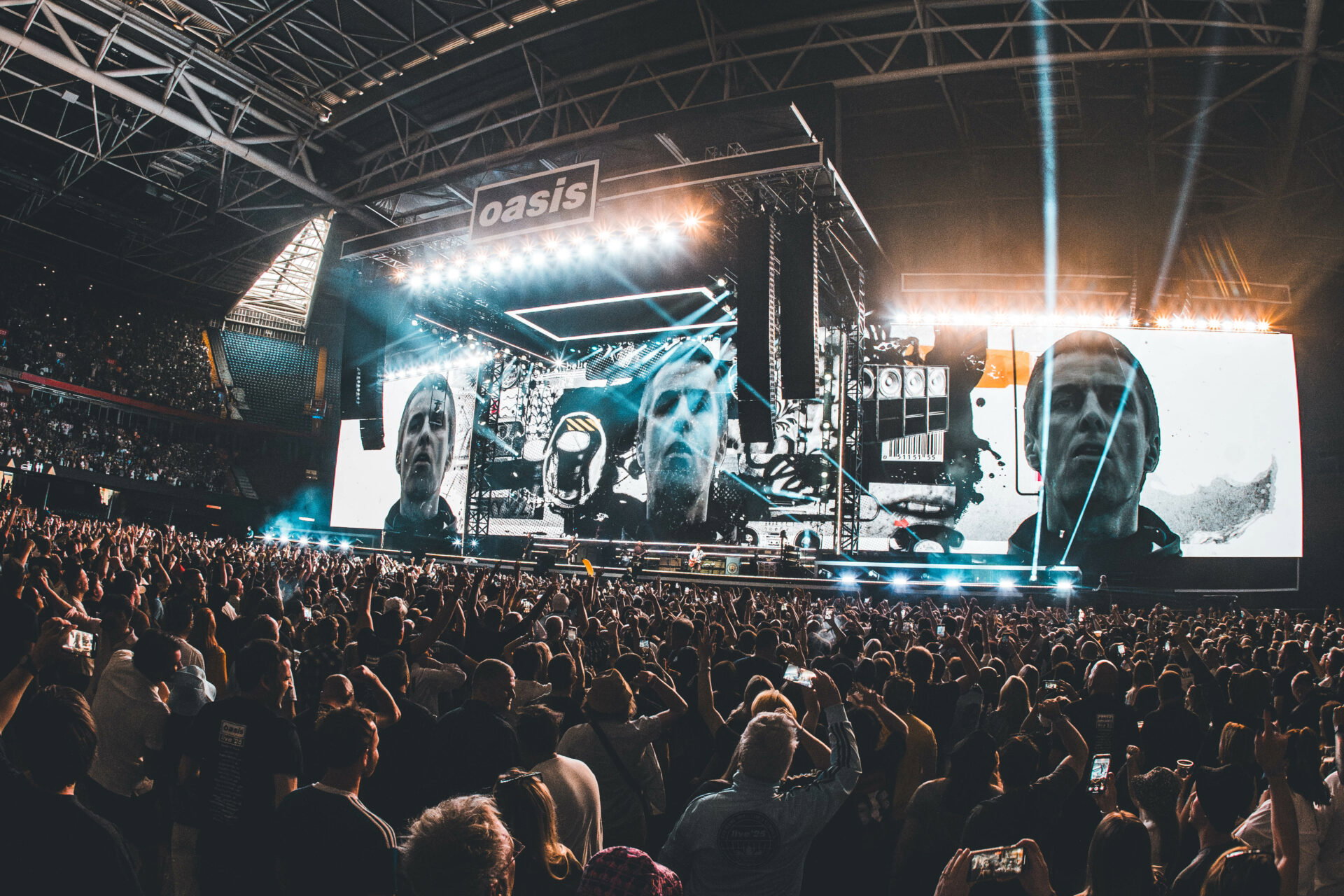
The footage of the live shows is brilliant, and Cardiff carries a tension that none of the later dates can quite reproduce. Oasis had not played together for sixteen years, the brothers had only just made it through rehearsals, and a significant part of the Principality Stadium crowd belonged to a generation who had never had the chance to see them before.
That disbelief comes through in the film. For many younger fans, Oasis had existed through records, old footage, stories from parents and increasingly unlikely reunion rumours. Then ‘Fuckin’ in the Bushes’ starts, Liam and Noel walk out together and ‘Hello’ begins. Even knowing it was happening did not make the sight of them on the same stage feel any less strange.
Noel admits he effectively blacked out for the first forty minutes. You can understand why. For sixteen years, an Oasis reunion had existed somewhere between running joke and impossible fantasy. Suddenly he was inside it, playing those songs with his brother while tens of thousands of people screamed every word back.
By Manchester, much of that uncertainty has disappeared. Heaton Park is not simply another tour stop but a homecoming, and one of the best illustrations of Oasis' relationship with the city happens outside the gates. Thousands of people without tickets gather on what becomes known as ‘Gallagher Hill’, barely able to see anything but determined to be close enough to hear the songs. It becomes an event in itself, another reminder that the reunion is bigger than the people who managed to get through Ticketmaster and its dynamic pricing, which, incidentally, the documentary does not address either.
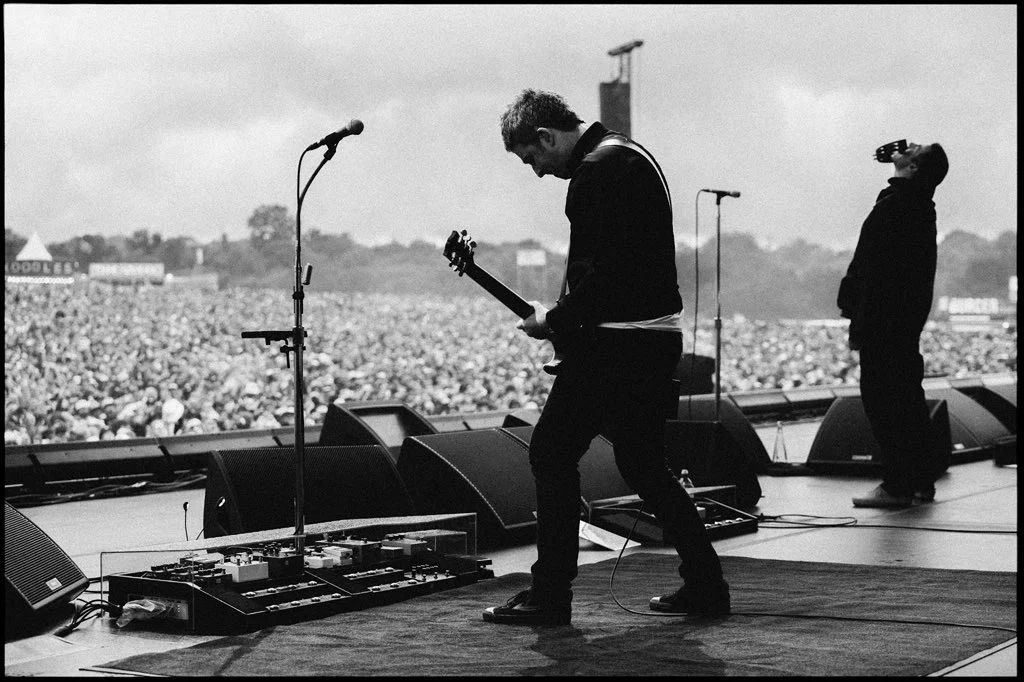
The film understands that Oasis cannot be explained purely through Liam, Noel and the musicians behind them. As Liam points out, the band has never only been about the band themselves. The fans are part of the story, and the documentary repeatedly steps away from the tour to show what these songs have meant during the sixteen years Oasis were gone.
That becomes particularly powerful in Dublin. Liam and Noel were born and raised in Manchester, but their Irish heritage has always been central to who they are. The brothers talk about the mixture of melancholy and optimism in Irish music, and Noel connects that feeling to ‘Some Might Say’: a song full of rain, disappointment and uncertainty that somehow still insists better days are coming.
At Croke Park, the connection becomes real. Before Oasis go onstage, Luke Kelly's version of ‘The Auld Triangle’ plays around the stadium, with tens of thousands singing along. Noel reveals that he and Bonehead were in tears backstage. It says more about the importance of the night than another sweeping shot of a packed stadium could: two men raised in Manchester in Irish families, waiting to walk onto the stage at Croke Park while Luke Kelly's voice echoes around them.
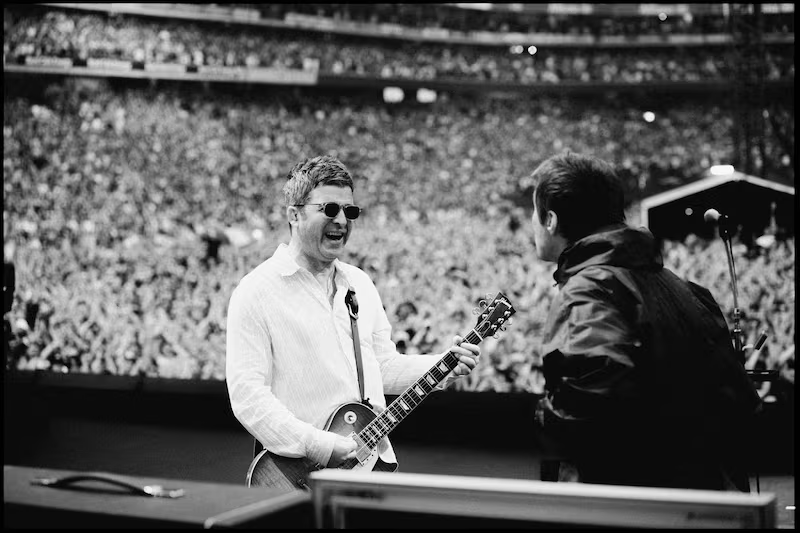
Bonehead matters throughout the film. Noel describes him as fundamental to the original Oasis sound, admitting that after he left they spent years trying to replace something that had disappeared with him. His return therefore means more than nostalgia. When those guitars crash together again, Oasis sound connected to their earliest incarnation.
That makes Bonehead's temporary absence in South Korea and Japan, while undergoing cancer treatment, unexpectedly moving. The band keep him present through a life-sized cardboard cut-out onstage, which is both ridiculous and strangely touching. By then, the reunion no longer feels like a business arrangement between Liam and Noel. It feels like a band again.
North America gives Oasis the chance to settle some unfinished business. They had always been successful there, but compared with Britain, Ireland, Europe, Japan and South America, America was the place they never completely conquered. The Gallaghers joke about the historically “lukewarm” response, but Live '25 changes that picture. Toronto, Chicago, New Jersey and the Rose Bowl show a band no longer trying to prove itself to America; the crowds have come to them. As Liam puts it, “We finally woke America up.”
By South America, nobody needs waking. Argentina has always understood Oasis. Buenos Aires crowds sing not only the lyrics but guitar parts and melodies, turning the songs into something communal in a way few audiences can match. The River Plate footage shows how far the reunion has travelled from Cardiff: what began with everyone wondering whether Liam and Noel could survive the first show has become tens of thousands of people on the other side of the world losing their minds to songs written in Manchester three decades earlier.
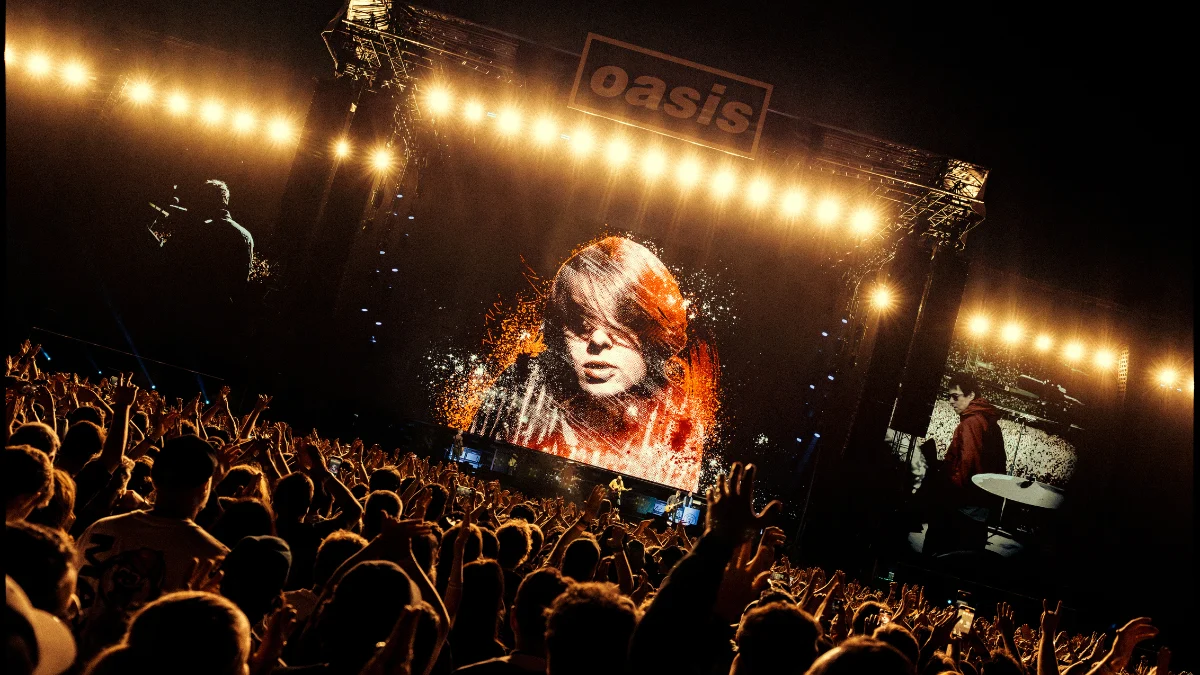
Then comes São Paulo, where the tour ends under sadder circumstances. Gary ‘Mani’ Mounfield had died only days earlier. To Liam, Noel and Bonehead, Mani was more than the bassist in The Stone Roses; he was a friend, a hero and part of the Manchester generation that helped make Oasis imaginable in the first place.
Liam dedicates ‘Live Forever’ to “our dear friend” and “our hero” as Mani's face appears behind the band, with ‘Rock ‘n’ Roll Star’ dedicated to him too. It is poignant because Oasis are reaching the end of something extraordinary while mourning somebody who helped inspire it.
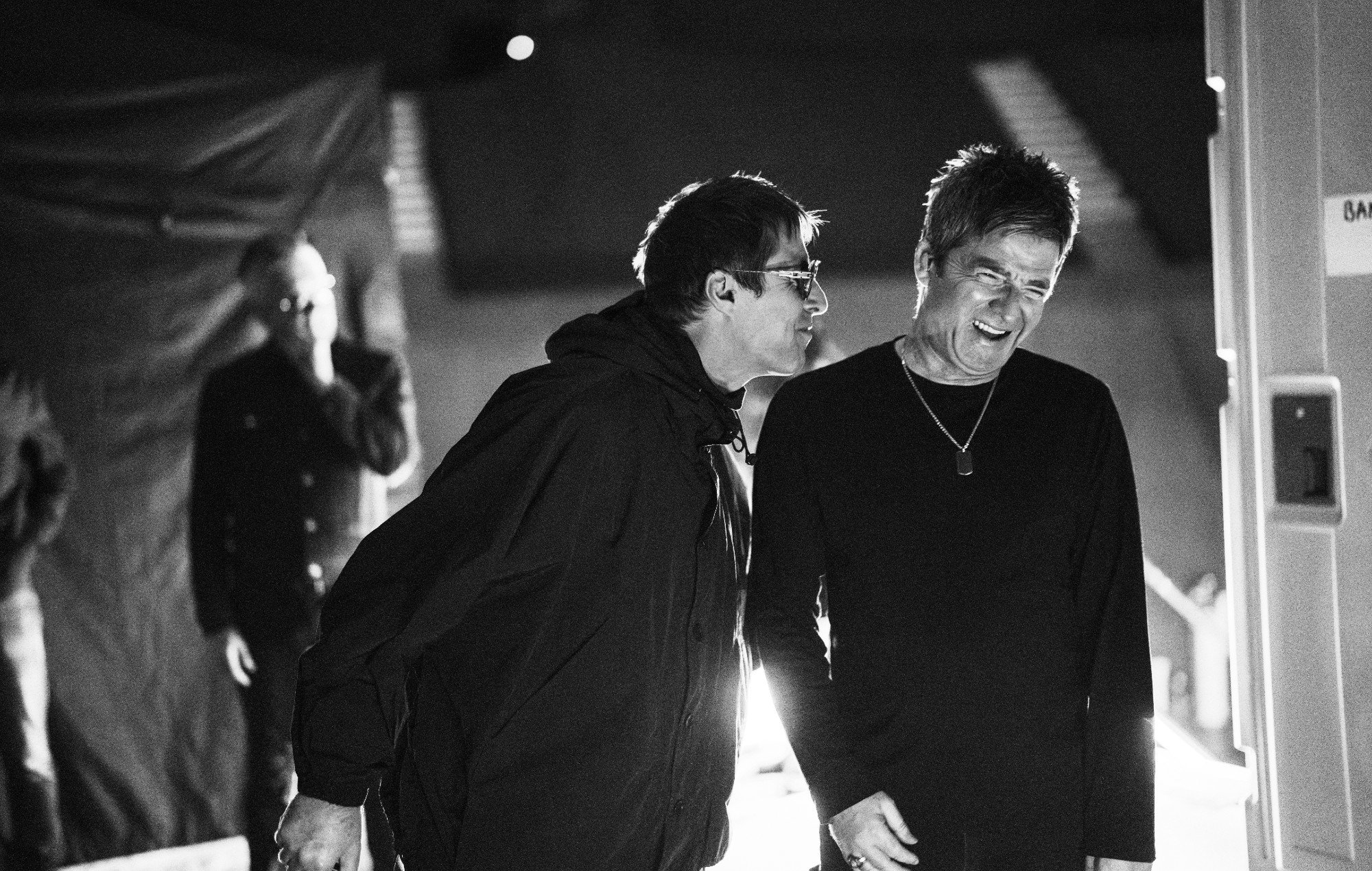
There is no great reconciliation scene and no lengthy conversation in which sixteen years of resentment are carefully unpacked. As Noel puts it, “It was all forgiven without saying a word.” It is one of the documentary's most revealing lines, even if I am not entirely sure I believe it. Sixteen years of bitterness and public insults do not simply disappear without something happening in between, and the film never gives us that missing piece.
By the end, though, it almost stops mattering. We have watched Liam and Noel move from barely acknowledging one another in rehearsals to laughing together, walking onstage hand-in-hand and sitting side by side for interviews. Whatever was said, or left unsaid, they reached a point where the past no longer mattered enough to keep Oasis apart.
“It’s not a power struggle anymore,” Noel says near the end. Thirty years ago, a petty grievance could threaten an entire tour. Now he seems able to recognise that some of the qualities that drive him mad about Liam are also what make him such an extraordinary frontman.
Noel recalls the opening line of ‘Supersonic’: “I need to be myself.” Liam has spent thirty years treating it as an instruction. His own explanation is typically blunt: “It takes a lot of caring to not give a fuck.” Noel finally seems able to appreciate that rather than fight it, while Liam acknowledges that the songs came from his brother and that Noel deserves to be there playing them. Neither has fundamentally changed personality; they have simply stopped expecting the other one to.
That same sense of time changing relationships runs through the fan stories. Oasis did not return to the audience they left in 2009. Some fans had grown up with them; others had inherited the band from parents, siblings or friends. Noel notices how young many of the crowds are, proof that the songs kept moving even while Oasis did not.
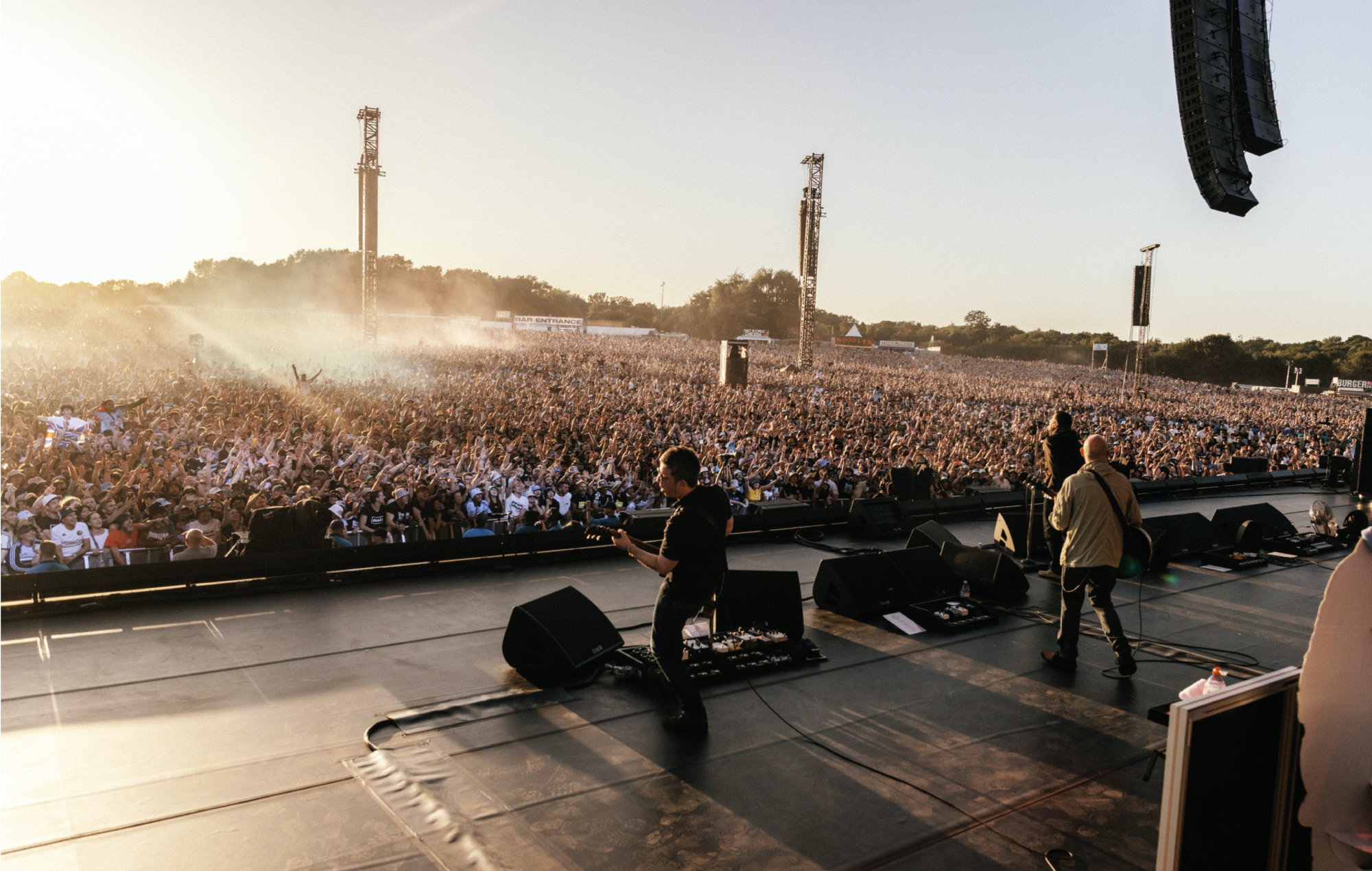
The best fan stories make that point beautifully. Gallagher Hill turns people without tickets into part of the Manchester shows anyway. A young woman who survived the 2017 Manchester Arena attack explains what ‘Don't Look Back in Anger’ came to mean in the city's response. Most moving is the mother whose non-verbal son found a way to ask her to play ‘Talk Tonight’. That is what the film gets right: sometimes Oasis' importance has nothing to do with Knebworth, Britpop or the Gallagher feud. Sometimes it is simply one person finding a way to connect with another through a song.
A South Korean fan summarises the appeal particularly well: “Oasis falls down with you.” That might be a better explanation of their longevity than much of the mythology around them. Oasis songs are hopeful, but rarely because everything is going well. ‘Live Forever’, ‘Some Might Say’, ‘Slide Away’ and ‘Don't Look Back in Anger’ acknowledge disappointment before trying to move beyond it. They do not always promise everything will be fine; sometimes they simply tell you to keep going.
Not every fan diversion works as well. The South Korean haenyeo divers using ‘Acquiesce’ to get through their working day are visually interesting, but the film never develops the story enough. The woman who named her dog Bonehead is funny and wholesome, although it feels more like a charming extra than something essential. The Manchester priest comparing Liam and Noel's relationship to a biblical story feels even more forced, as though the filmmakers are constructing a metaphor the stronger fan stories never needed.
That unevenness occasionally interrupts the documentary's momentum, but when the idea works, it really works. By the final stages, the question that dominated the opening has almost disappeared. Could Liam and Noel actually do this? They did, across forty-one shows and five continents. Cardiff gave a generation its first Oasis show, Manchester reclaimed its band, Dublin connected the Gallaghers to their Irish roots, America finally responded with the scale they had always wanted, Argentina reminded them that some places had never stopped treating Oasis like the biggest band in the world, and São Paulo ended the tour with celebration and grief intertwined.
Somewhere along the way, two brothers who had spent sixteen years defined by the fact that they could not stand each other learned how to share a stage again. That is why the film's final message feels earned. In its closing moments, Liam reduces everything to two words: “Oasis saves.”
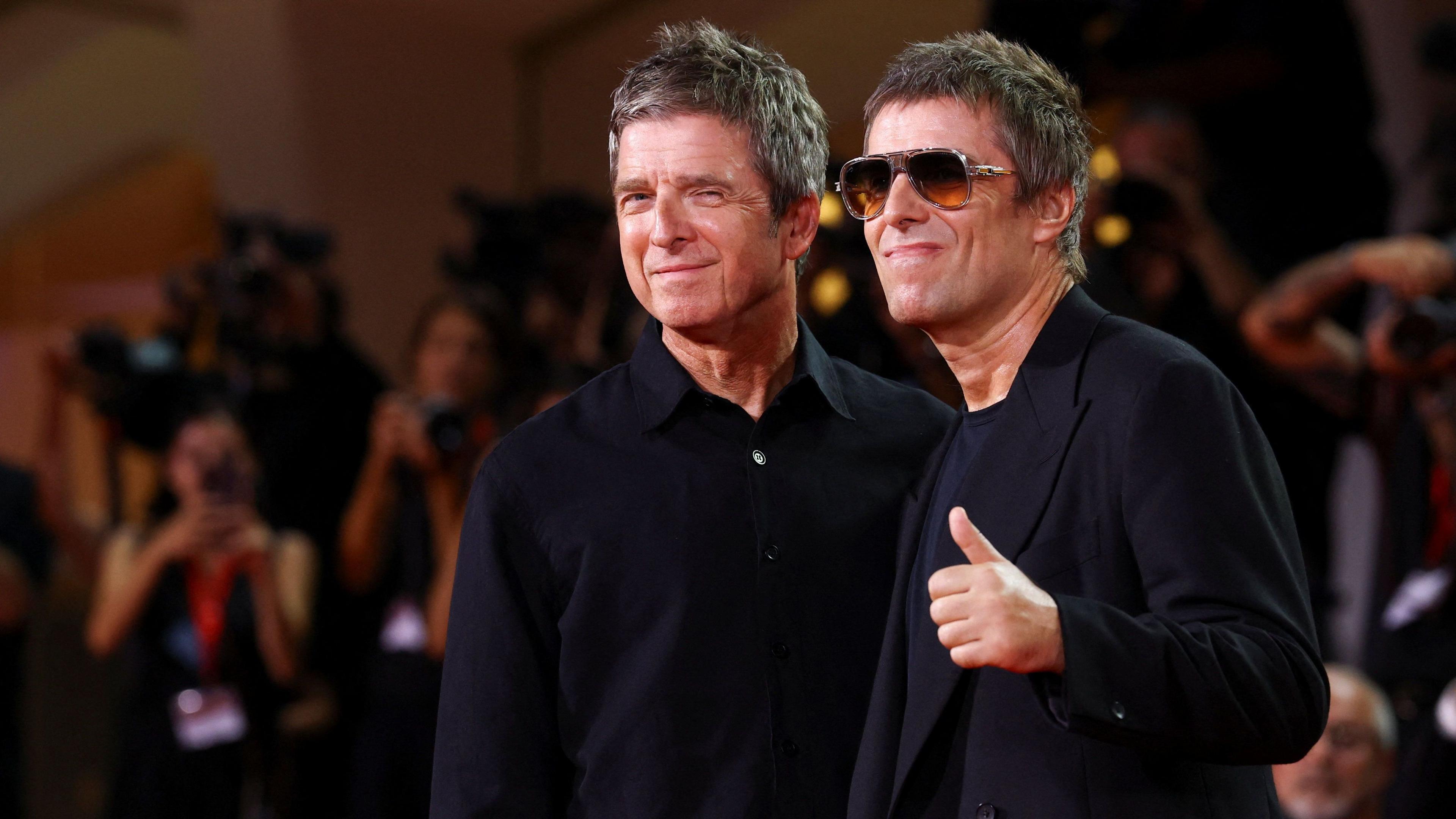
It sounds absurdly grandiose, but after everything that comes before it, you believe he means it. Maybe Oasis do not literally save anybody. What music can do is become attached to the moments when people need something outside themselves: grief, survival, growing up, raising children, going to work, standing on a hill because you could not get a ticket, or hugging somebody when a song you have known for twenty years suddenly begins.
‘Don't Look Back in Anger’ does not rewrite Oasis history. The arguments happened, the band collapsed and sixteen years passed. What it does is change the final image. For years, Oasis ended in Paris in 2009 with a dressing-room argument, a plum, a smashed guitar a cancelled tour and Noel Gallagher walking away.
Now it can end differently: Cardiff erupting when ‘Hello’ begins, Gallagher Hill, Noel and Bonehead crying while Luke Kelly echoes around Croke Park, a cardboard Bonehead standing onstage in Asia, the Rose Bowl, River Plate and the band facing Mani's image during ‘Live Forever’ in São Paulo. More importantly, it can end with Liam and Noel talking about each other with an affection neither would have admitted to possessing sixteen years earlier.
That feels like a much better ending, and by the time the credits arrive, you will be itching to do the whole thing again. Judging by some of the clues Oasis have been leaving behind, maybe we might.