How New Order Put Football in Motion
In 1990, English football was a world away from the polished, global spectacle we see today. These were the wilderness years, a dark era defined by the looming shadow of the Hillsborough disaster just a year prior, and the tragedies of the Bradford Fire and Heysel five years before that. The beautiful game felt broken, plagued by crumbling infrastructure and a reputation for hooliganism that had turned stadiums into cages. To the casual observer, football wasn't a pastime; it was a social problem that needed solving.
The three tragedies of the mid-to-late 1980s did more than just stain the reputation of the sport; they physically and psychologically broke it. The horror of crumbling, neglected infrastructure became undeniable on 11 May 1985 at Valley Parade. During a celebratory final match of the season, a discarded cigarette slipped through the gaps of a wooden stand, igniting decades of accumulated rubbish underneath. Within four minutes, the entire main stand was swallowed by an unstoppable inferno. Fifty-six fans lost their lives, and hundreds more were severely injured. Many died trying to escape through the back of the stand, only to find the exit doors locked to prevent people from sneaking into the grounds without paying. It was a harrowing indictment of a game that prioritised basic security over the lives of its supporters. Football Stadiums were death traps.
Just eighteen days after the Bradford tragedy, on 29 May 1985, English football's hooligan crisis turned into an international horror story. Before the European Cup Final between Liverpool and Juventus at the Heysel Stadium in Brussels, a large group of Liverpool fans breached a flimsy wire fence separating them from a neutral section filled mostly with Italian supporters. As the panicked Juventus fans retreated from the charge, they were pressed against a dilapidated concrete perimeter wall. Under the immense pressure, the wall collapsed. Thirty-nine people were crushed to death, and hundreds were injured.
The darkest hour arrived on 15 April 1989 at Sheffield Wednesday's Hillsborough stadium during an FA Cup semi-final between Liverpool and Nottingham Forest. Driven by catastrophic police mismanagement, a massive bottleneck formed outside the Leppings Lane turnstiles. To ease the lethal congestion outside, police ordered a large exit gate to be opened. Thousands of fans rushed through, funnelling straight into already overcrowded, fenced central pens behind the goal. The resulting crush killed 97 Liverpool supporters and injured hundreds more.
The horror was compounded by an immediate, decades-long cover-up that aligned closely with Margaret Thatcher’s government and its deep-seated hostility toward football culture. Eager to shield themselves from blame and reinforce the narrative that football supporters were inherently lawless, the police, government officials, and the establishment fabricated a web of lies. Police officers systematically altered hundreds of their own written statements to erase evidence of institutional incompetence and blame the fans instead.
This toxic rhetoric was eagerly weaponised by sections of the press. No outlet was more malicious than The Sun, which published an infamous front-page headline boldly titled "The Truth" the day after the disaster. The newspaper falsely claimed that Liverpool fans had picked the pockets of the dead, urinated on police officers, and beaten up emergency workers trying to save lives. It was a vicious fabrication designed to demonise a grieving community.
The lies ran so deep that they caused permanent cultural damage. To this day, the city of Liverpool maintains a fierce, widespread boycott of The Sun, with newsagents refusing to stock it and citizens refusing to buy it, transforming a collective trauma into an enduring act of defiance against institutional corruption. Thatcher’s administration readily accepted the initial police narrative, utilising the tragedy to justify even harsher crowd control measures rather than addressing the institutional failures. It took decades of tireless campaigning by the families to expose the systemic police failures, political collusion, and structural defects that actually caused the tragedy.
The toxic reputation of English fans, widely dubbed the "English Disease," had grown so severe that the 1990 World Cup was approached not as a sporting festival, but as a high-stakes geopolitical security crisis. Fearing widespread riots, Italian authorities deliberately quarantined England's group games on the island of Sardinia. The city of Cagliari was placed under a massive, tense military-style police presence, treating arriving supporters as hostile invaders rather than tourists. The Football Association (FA) was bluntly warned that a single major outbreak of fan violence would result in England being instantly expelled from the tournament and sent home in disgrace.
Back home, the political climate was openly hostile. Margaret Thatcher’s government viewed football subculture with deep contempt, treating domestic fans like an enemy within. The government had spent the late 1980s aggressively pushing a controversial, mandatory national membership scheme, effectively forcing law-abiding fans to carry identity cards just to enter a football ground.
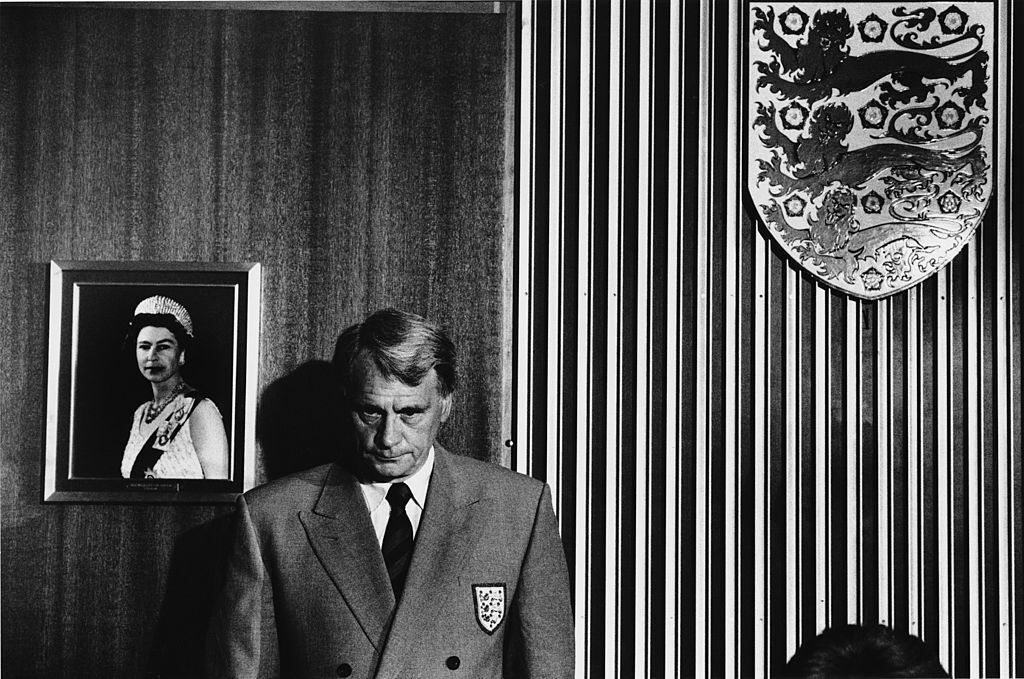
English clubs remained completely banned from European competitions because of the 1985 Heysel tragedy. This tactical starvation meant English players had spent five years locked in a domestic vacuum, entirely disconnected from the rapidly evolving, sophisticated tactical trends of mainland Europe. English football was in a bleak place, and confidence in the national team had hit an all-time low. The "Long Ball" era had left the squad looking tactically stagnant compared to their European counterparts. Before a ball was even kicked at Italia ’90, Bobby Robson announced he would be resigning as England manager after the tournament to join PSV Eindhoven. The timing was seen as a betrayal by the FA and a gift to the tabloid media.
An Unlikely Alliance
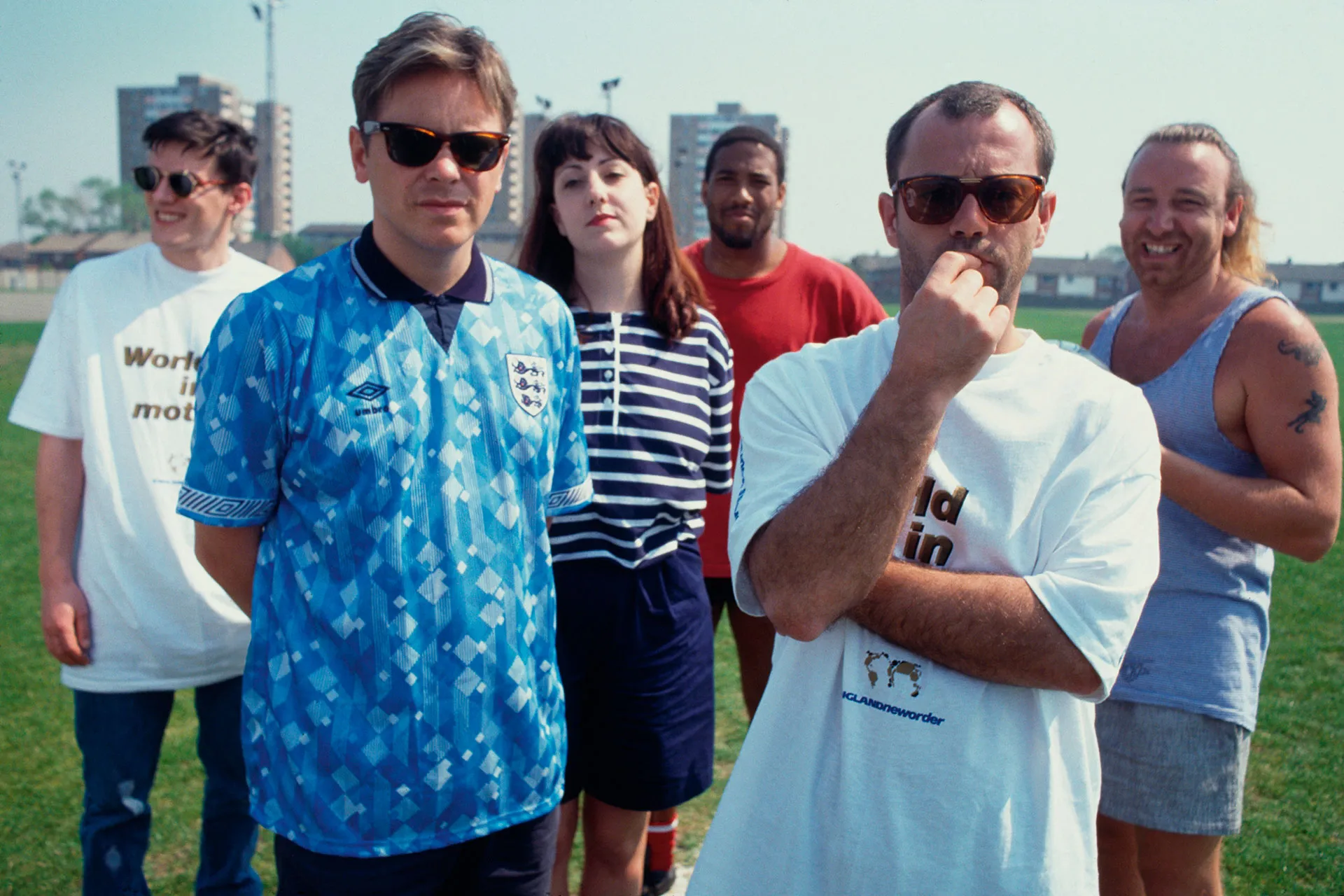
Looking for a culture shift, the FA decided the team needed an anthem. With the help of Factory Records boss Tony Wilson, they drafted in New Order. It was a radical, almost surreal choice; the band had far more in common with the strobe-lit nightclubs of the Balearics than the rain-soaked terraces of Barnsley. While the FA likely wanted a traditional, chest-thumping march, Wilson and the band had something far more subversive in mind. They wanted to bring the "Second Summer of Love" to the pitch.
The selection of New Order was a gamble that terrified traditionalists. The FA press officer, David Bloomfield, had specifically sought out Tony Wilson to find a group that could resonate with modern youth culture and scrub away the sport's thuggish image. New Order agreed, but strictly on their own creative terms, refusing to write a standard, clunky football chant. They viewed it as a legitimate musical project rather than a corporate marketing gimmick, instantly elevating the expectations of what a sporting anthem could be.
The core of the music itself was born out of internal band dynamics and side projects. As Bernard Sumner and Peter Hook began exploring external collaborations, keyboardist Gillian Gilbert and drummer Stephen Morris were building electronic instrumentals under their own newly formed side project, The Other Two. The backing track that became 'World in Motion' was not written from scratch for the FA; it was an adaptation of an instrumental theme tune Gilbert and Morris had already recorded for the BBC current-affairs youth show Reportage. Repurposing this synth-pop blueprint, they brought the pulsating dance rhythm of their side project directly into the main band, injecting pure underground club energy straight into the heart of the football establishment
The recording sessions at The Sol Mill studio in Berkshire were famously chaotic, a literal collision of two different worlds. New Order were essentially the poster boys of the rave generation, who operated on a schedule of late nights and Ibiza-inspired decadence, while the England players were disciplined athletes used to early mornings and rigid routines. There is a legendary story of the band staggering into the studio, bleary-eyed, just as the players were getting ready to leave.
Only a handful of squad members actually showed up for the session, including John Barnes, Paul Gascoigne, Peter Beardsley, Chris Waddle, Des Walker, and Steve McMahon. The atmosphere was a bizarre mix of awkwardness and substance-fueled energy. While the band members were downing champagne and beers, the footballers stood around in their tracksuits, deeply unsure of what to make of the electronic drum machines and sequencing equipment.
The friction did not stop at the schedule. The band originally wanted to call the song "E for England," a title so heavily coded with the burgeoning rave culture of the time that the FA, perhaps realising the ecstasy reference just in time, flatly rejected it. The FA press officer, David Bloomfield, immediately stepped in to veto the title, terrified of the public relations disaster that would follow if the national team became associated with the illicit substances flooding Britain's illegal warehouse raves.
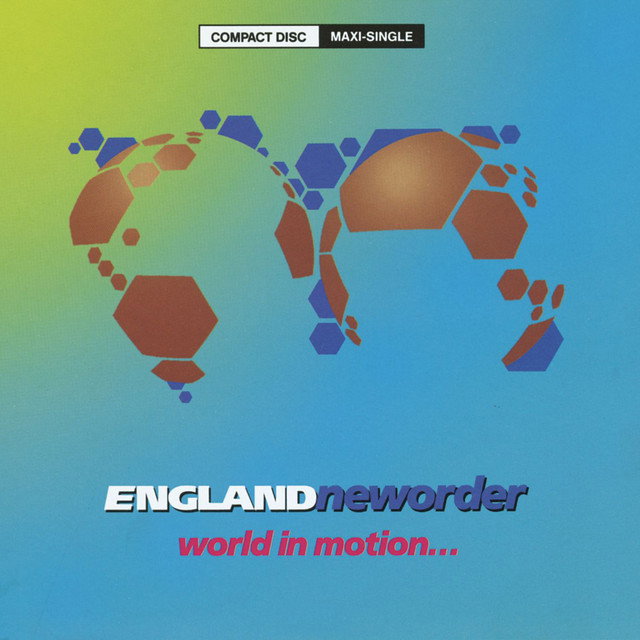
The compromise was 'World In Motion,' but the DNA of the Haçienda remained baked into the track anyway. Even with a safer title, New Order smuggled the sonic palette of the Acid House movement directly into the mainstream. The track retained its squelching basslines, euphoric electronic chord progressions, and an optimistic dancefloor energy that was entirely revolutionary for a sports anthem.
The Barnes Factor
While most football anthems try too hard to be "football songs," 'World In Motion' succeeded because it was a great track in its own right. It was a New Order song first and foremost, built on shimmering synths, crisp drum machines, and one of the band’s most infectious choruses. It didn’t rely on the usual clichés of terrace chants or military drums; instead, it offered a sleek, futuristic soundscape that felt like the start of a new decade. Production duties were handled by Stephen Hague alongside the band, ensuring the track carried the same pristine, premium audio fidelity as their major studio albums rather than sounding like a rushed novelty item. The band treated the music with absolute seriousness, utilising the same advanced sequencer technology that defined their club anthems. They crafted a driving, club-ready bassline that could fill the dancefloor of the Haçienda just as easily as it could fill a football stadium.
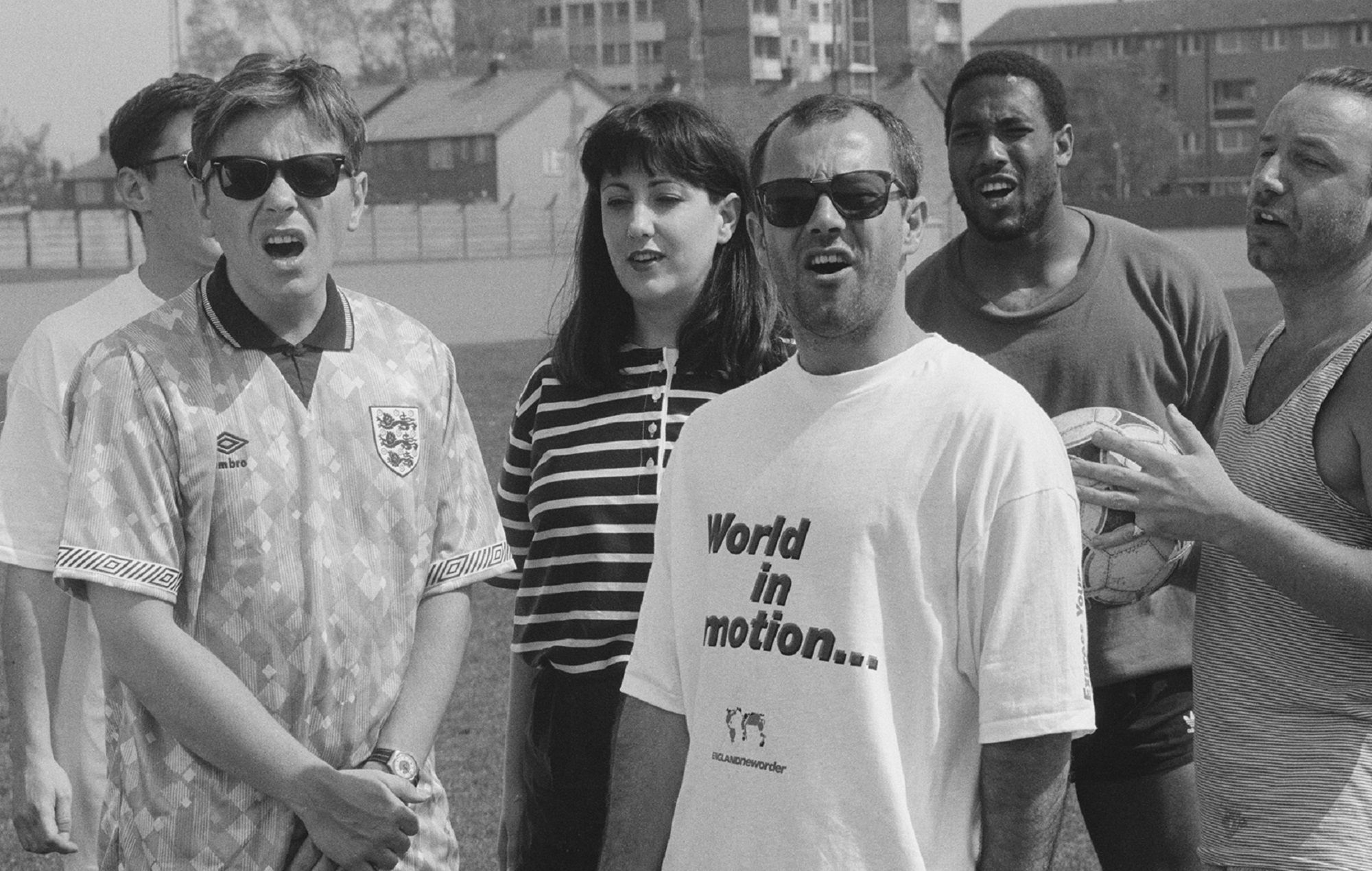
Then, of course, there was the rap. The idea of a footballer rapping was, on paper, a recipe for a cringe-inducing disaster. Yet, after a legendary "rap-off" in the studio between several players, including a spirited but ultimately unsuitable Paul Gascoigne and a struggling Peter Beardsley, John Barnes stepped up. The competition had been entirely impromptu, fuelled by a few drinks and Keith Allen's aggressive search for someone who could actually hold a rhythm. Gascoigne’s attempt was too chaotic, and Beardsley was far too self-conscious, but Barnes had an innate musicality. He reportedly nailed the verse in just a few takes, having memorised the lyrics written by Keith Allen in mere minutes on the back of a cigarette packet. To settle any nerves, Barnes was given a little extra liquid courage, downing a swift double Pernod and blackcurrant just before stepping up to the microphone to deliver his iconic lines.
It wasn't just a gimmick; Barnes had genuine flow and an effortless charisma that anchored the entire track. By delivering lines like "You've got to hold and give but do it at the right time," with poise and rhythm, he broke the fourth wall of the "unreachable" professional athlete. At a time when the media painted players as either wooden media-trained robots or violent troublemakers, Barnes offered something entirely different: a black British sporting icon exuding pure, modern coolness on a global stage. His flawless delivery and relaxed, rhythmic cadence commanded respect rather than ridicule, instantly bridging the gap between underground urban music and the mainstream sports world. It humanised the players and gave Britain's youth a reason to lean in; suddenly, the England team was cool
The song didn't just climb the charts; it sprinted. It eventually earned the group their first and only Number One single, cementing the 'Barnes Rap' as a piece of British folklore. Released in May 1990, it quickly captured the optimism of a changing nation, soundtracking everything from high-street radio to late-night club dancefloors. It held the top spot for two weeks just as the tournament was kicking off, providing the perfect sonic backdrop to the unfolding drama in Italy.
The record's success was global, too, crossing over to international charts and proving that the track's appeal extended far beyond traditional football fans. It became a permanent fixture on British television, with the BBC frequently utilising it for their transition cues and match roundups, deeply embedding the melody into the collective subconscious of the summer.
Even now, decades later, you can start that verse in any pub in the country and the entire room will join in. It has been voted the greatest football song of all time in numerous public polls, outlasting the very tournament it was built to promote. It was the moment football and pop culture finally learned to speak the same language.
From Post-Punk to Pop: The Road to the World in Motion
For some purists, 'World In Motion' was the final straw. New Order had risen from the ashes of Joy Division a decade earlier, following the tragic suicide of frontman Ian Curtis in 1980. The remaining members, Bernard Sumner, Peter Hook, and Stephen Morris, along with keyboardist Gillian Gilbert who joined shortly after, had to reinvent themselves under a cloud of immense grief. They began the 80s as the torchbearers of industrial gloom, but they ended the decade as the architects of the dancefloor. This transition was fiercely contested by older fans who preferred the stark, guitar-driven melancholy of their early work, viewing any pivot toward electronic dance pop as a commercial betrayal of their post-punk roots.
The journey from the haunting, monochromatic sounds of 'Transmission' and 'Atmosphere' to the neon-lit 'World In Motion' wasn't overnight, but it was revolutionary. In 1983, they released 'Blue Monday', a track that changed the landscape of electronic music forever. With its thundering Oberheim DMX drum beat and pulsating Moog bassline, it became the best-selling 12-inch single of all time and proved that a rock band could conquer the club scene. The track acted as a bridge, demonstrating that mechanical, sequenced rhythms could carry the same emotional weight and tension as traditional live instruments.
Following the seismic impact of 'Blue Monday', the mid-1980s became a period of intense sonic experimentation and global breakthrough. The band released the albums Power, Corruption & Lies in 1983 and Low-Life in 1985, masterfully fusing Hook’s melodic, high-register basslines with increasingly sophisticated synthesisers. Tracks like 'The Perfect Kiss' and 'Bizarre Love Triangle' showed a band shedding their post-punk skin and embracing the bright, propulsive world of American club culture. They were heavily influenced by New York's pioneering electro and hip-hop scenes, spending long nights at the Funhouse club and collaborating with legendary producer Arthur Baker. This cross-Atlantic exchange injected a vibrant, rhythmic swagger into their music, proving that British indie musicians could create heavy, authentic dance grooves
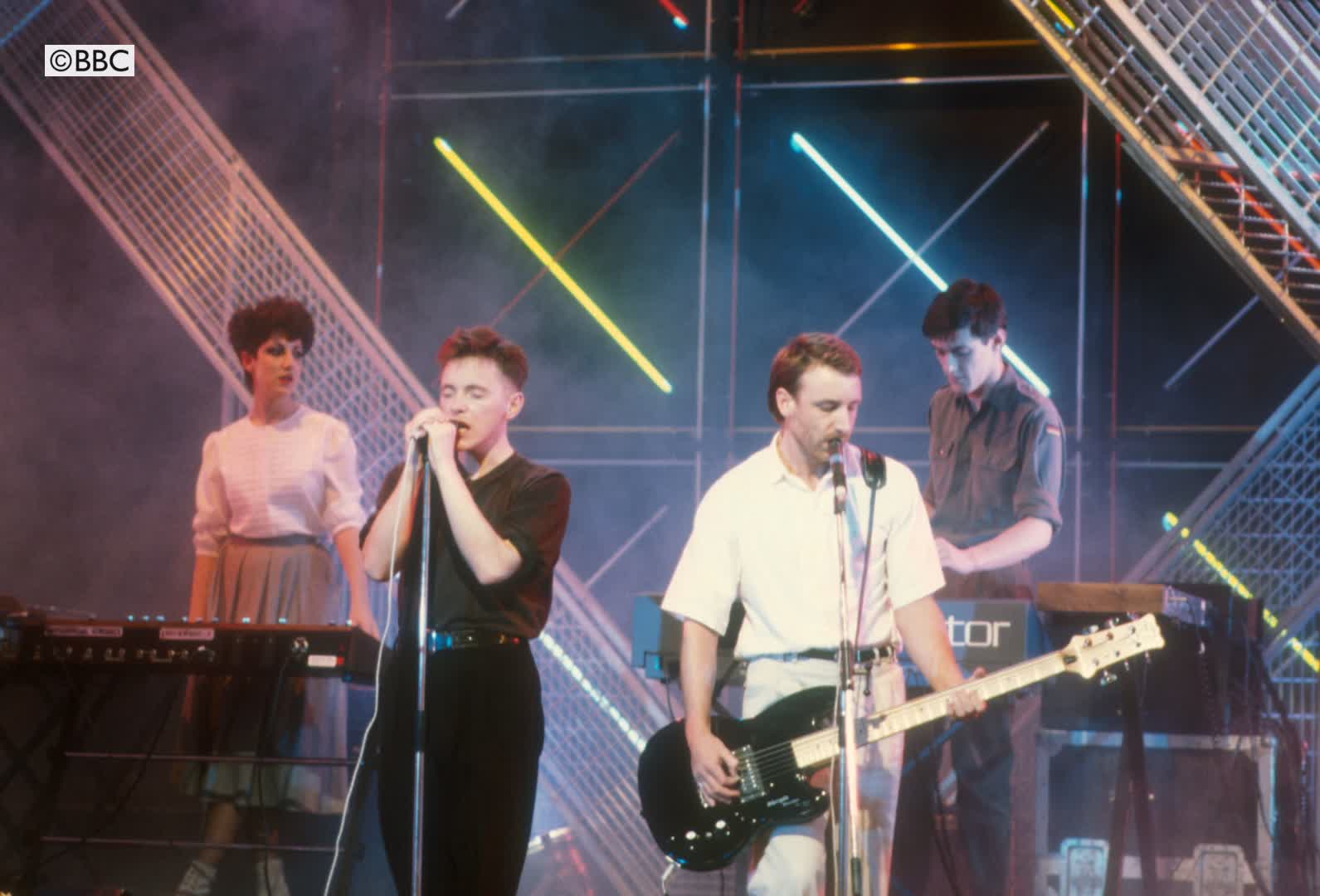
By 1987, they reached a peak of synth-pop perfection with 'True Faith'. Produced by Stephen Hague, the track featured soaring melodies and a polished, cinematic sound that brought them massive international success. Yet, it was their 1989 album 'Technique' that truly paved the way for their football anthem. Recorded in Ibiza at the height of the island's legendary hedonism, 'Technique' leaned heavily into the burgeoning Acid House movement. Tracks like 'Fine Time' embraced the squelching 303 basslines and euphoric energy of the "Second Summer of Love." The album successfully captured the sun-drenched, ecstasy-fueled atmosphere of the Mediterranean and transported it back to the rainy streets of northern England.
By the time the FA called, New Order were no longer just a "cult band" from Manchester; they were the sound of the British underground crossing over into the mainstream. It remains fascinating that the same musicians behind the stark 'Unknown Pleasures' were now soundtracking a John Barnes rap. Tony Wilson famously remarked that New Order were the only band capable of making the working-class football terraces and the avant-garde art school crowds dance to the exact same beat. It was the moment they finally stepped out from the long shadow of the past, leaving the ghosts of Joy Division behind to become the definitive sound of 1990.
One Night in Turin: Italia 90
England defied the critics and enjoyed a legendary tournament. It didn't start perfectly. A sluggish 1-1 draw against the Republic of Ireland and a scoreless draw against the Netherlands suggested the media’s deep pessimism might be entirely justified. When the tournament opened with that turgid draw against Ireland, the media fury back home peaked, with tabloids demanding immediate tactical changes.
Realising that the traditional, rigid 4-4-2 system was failing, Robson and his senior players made a radical decision to execute a tactical pivot. Mark Wright was dropped deep into a 5-3-2 formation to operate as a sweeper. This system matched the tactical flexibility of the elite continental sides and successfully unlocked England's flair. The change gave Bobby Robson's midfield mavericks, particularly a young Paul Gascoigne and the creative Chris Waddle, the absolute freedom to dictate play in the heart of midfield.
A narrow 1-0 win over Egypt finally secured progression, and as the sun beat down on Italy, the team found a fluid rhythm that matched the upbeat pulse of their anthem. What followed was not the expected disaster, but the great redemption of Italia '90, a drama that gripped a captive nation. Grinding through the group stage, England found immense momentum in the knockout rounds.
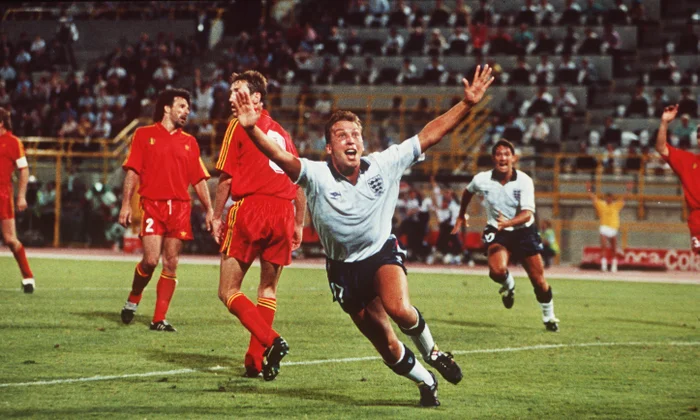
The knockout stages quickly became the stuff of folklore. In the Round of 16 against Belgium, a moment of pure magic from David Platt, a dramatic 119th-minute swivel and volley, sent the nation into a frenzy. Then came the quarter-final against Cameroon, a heart-stopping 3-2 comeback victory that relied on Lineker's coolness under immense pressure to convert two crucial, clinical penalties to survive a thrilling scare.
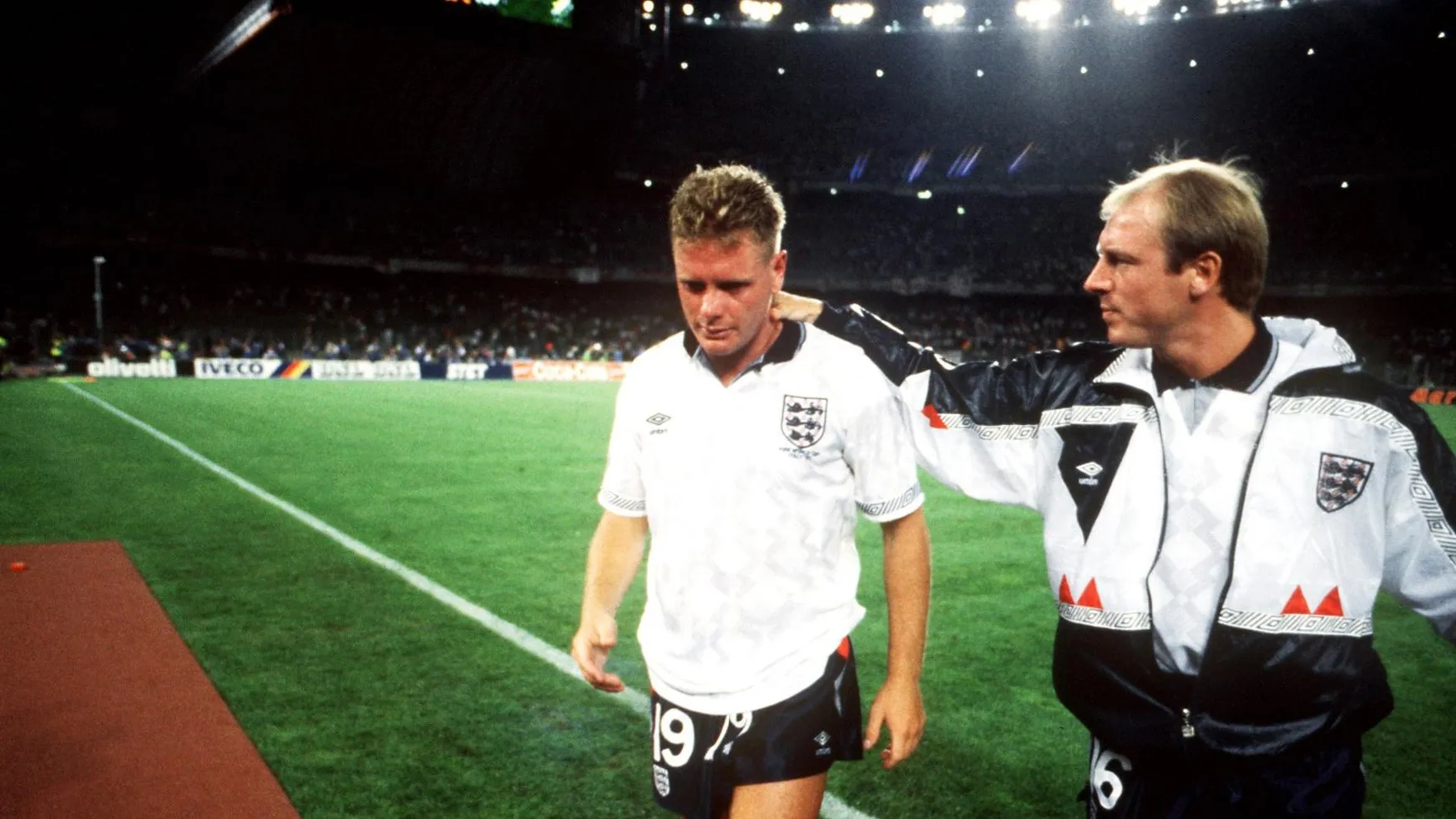
By the time England faced West Germany in the semi-final in Turin, the mood back home had completely flipped. Dubbed 'One Night in Turin', the match was an epic of technical skill and raw emotion. The defining moment of the summer arrived when a young, precocious Paul Gascoigne lunged into a tackle on Thomas Berthold and received a yellow card. Realising the booking meant he would be suspended for the final, Gazza’s bottom lip trembled and he burst into tears.
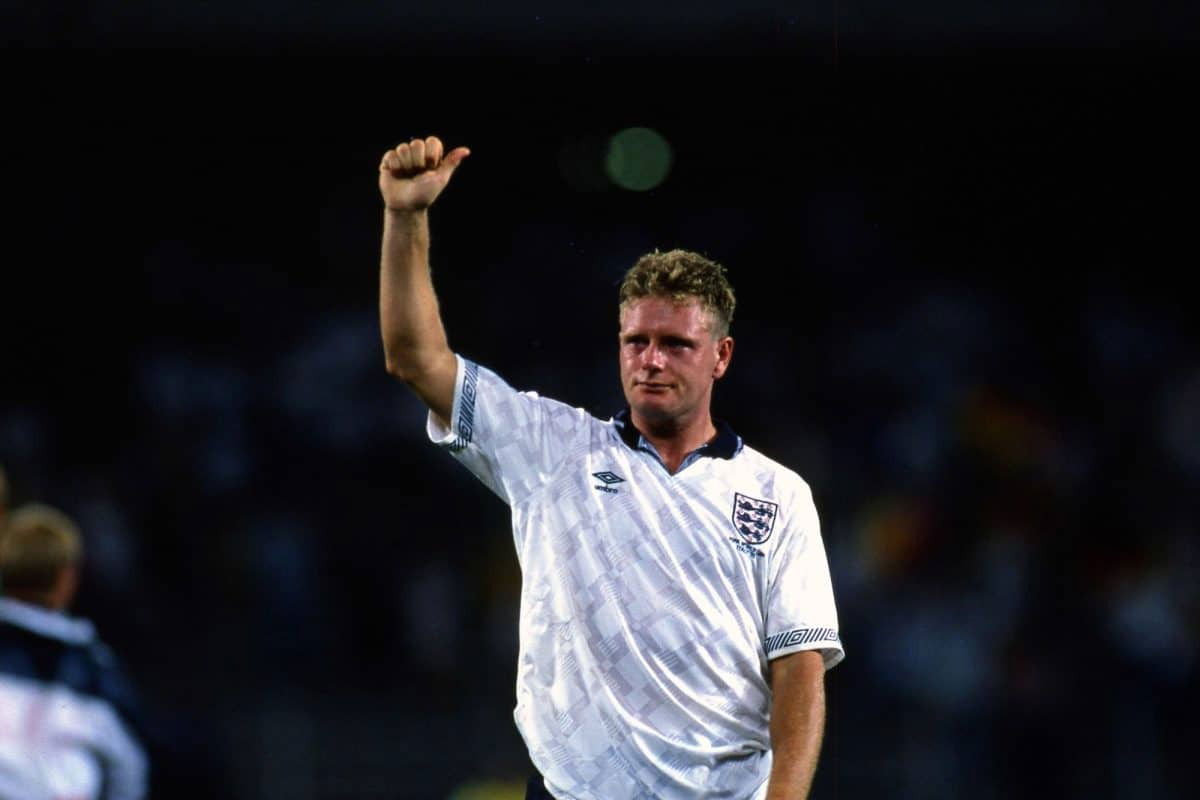
Gary Lineker famously looked over to the bench, tapped his temple, and mouthed to Bobby Robson, "keep an eye on him," realising that their star playmaker had mentally unravelled on the world stage. It was a moment of agonising heartbreak, coming in a match already fraught with unbearable tension after Chris Waddle’s spectacular long-range effort struck the inside of the post, and David Platt had a dramatic extra-time goal ruled out for offside.
When the match ultimately dissolved into a penalty shootout, the misery was compounded. Stuart Pearce saw his powerful penalty blocked by Bodo Illgner, and Chris Waddle famously blazed his decisive spot-kick high over the crossbar into the Turin night sky.
West Germany progressed to the final, leaving the England players devastated on the turf, but the raw, unshielded vulnerability of Gazza’s tears did something unprecedented. It completely transformed the public’s perception of professional footballers, instantly shattering the myth of the unfeeling, thuggish athlete and replacing it with a profound, tragic humanity that captured the heart of the entire nation.
Gazza's crying was a remarkable moment, confirming everything the country had come to realise over the course of that month: he truly was as good as people say. He exuded a level of raw, creative genius that made him arguably the finest English player to ever step onto a pitch. Yet, what the received wisdom often ignores is that those tears fell during the final scenes of a memorable narrative played out not merely in Italian stadiums, but in living rooms, pubs, and streets around the country. More than 30 million Britons watched the semi-final on TV, huddled together as a country that was actively falling back in love with football.
This massive television audience broke broadcasting records and created a unified, nationwide experience. Streets were completely deserted during kickoff, as the entire population sat transfixed by the unfolding drama. This collective viewing habit bridged generational divides, drawing families, casual viewers, and hardcore supporters into the same emotional space. The shared grief of the penalty shootout defeat did not spark anger or violence; instead, it produced a profound, collective pride that effectively transformed football from a reviled subculture into the central pillar of British national identity. During the month of that tournament, England seemed to change. The collective trauma of the 1980s dissolved into a shared cultural awakening, soundtracked by a tournament that provided unforgettable drama at every turn.
On the pitch, the world's imagination was captured by iconic stories from every corner of the globe. There was the 38-year-old Cameroonian striker Roger Milla, who emerged from retirement to score four spectacular goals. Every time he scored, he famously ran to the corner flag to perform an exuberant, joyful dance that shattered the stuffy, rigid traditions of the old game. Milla's heroics helped Cameroon shock the world, starting with a stunning 1-0 opening-match defeat of Diego Maradona’s reigning world champions, Argentina. The "Indomitable Lions" finished the game with just nine men, but they became the first African nation to reach the quarter-finals, notably capitalising on Colombia's eccentric goalkeeper René Higuita, whose risky habit of sweeping far outside his box backfired spectacularly when Milla tackled him near the halfway line to roll the ball into an empty net.
The host nation provided its own theatre. Salvatore "Totò" Schillaci started the summer on the Italian bench but ended it as a national hero, winning the Golden Boot with six goals. His wide-eyed, ecstatic celebrations became the defining visual identity of the Italian summer. Meanwhile, a young Roberto Baggio announced his genius to the world against Czechoslovakia, embarking on a mesmerising slalom run from the halfway line to score one of the greatest World Cup goals of the century.
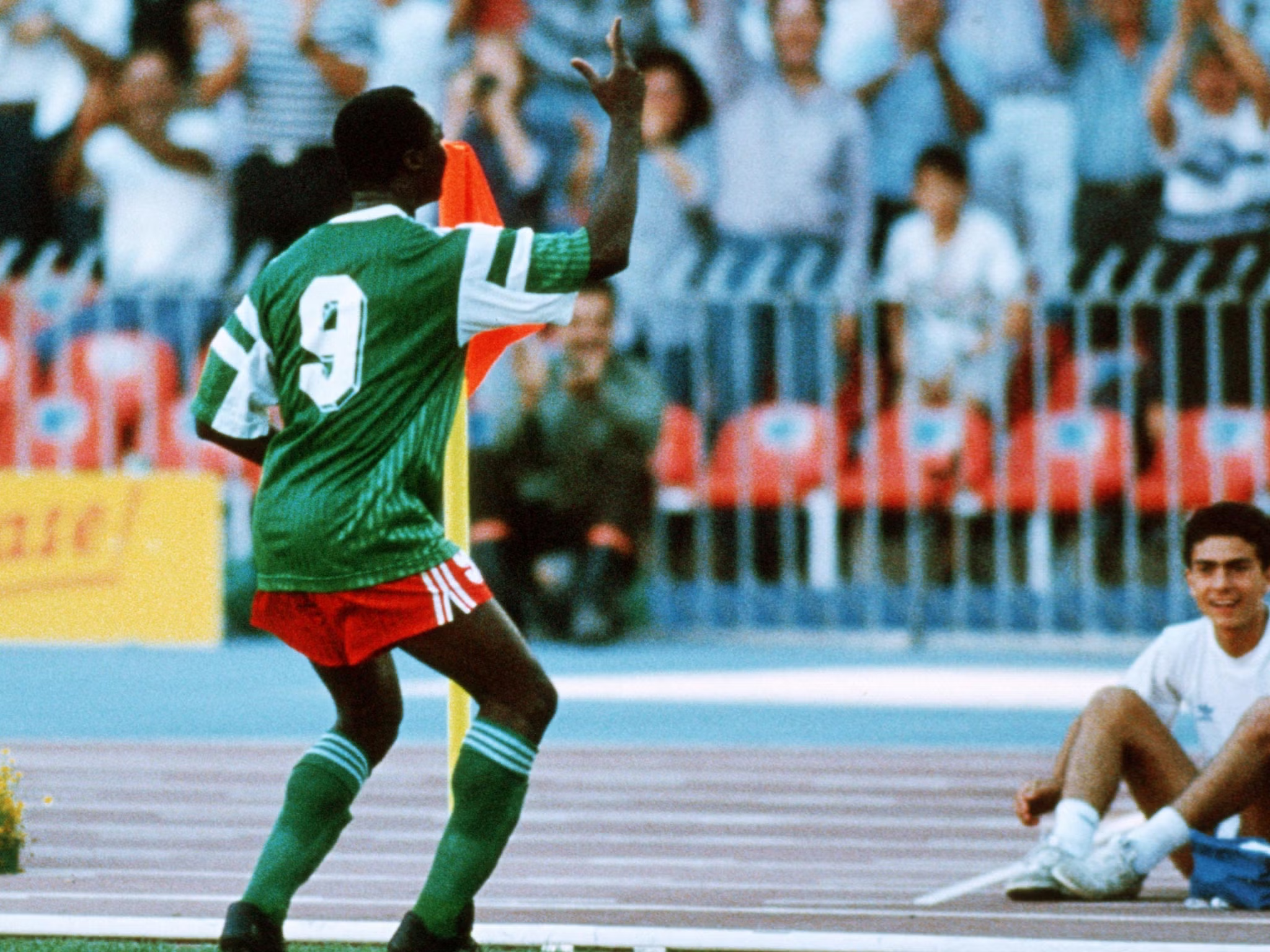
The tournament was equally defined by its fierce, unyielding intensity and controversy. In a fiery Round of 16 clash, Dutch midfielder Frank Rijkaard and West Germany's Rudi Völler were both sent off after a heated confrontation, culminating in the infamous image of Rijkaard spitting into Völler’s hair. Italy’s formidable defence, which had not conceded a single goal all tournament, was finally breached in the semi-finals when Argentina's Claudio Caniggia headed home an equaliser. Argentina went on to eliminate the hosts in a devastating penalty shootout in Naples, setting up a bad-tempered, low-scoring final against West Germany. That final made its own history when Argentina's Pedro Monzón became the first player ever to be sent off in a World Cup Final, followed later by a second red card for teammate Gustavo Dezotti as the Germans ground out a 1-0 victory.
More broadly, Italia '90 is arguably the very first modern World Cup, acting as the bridge between the old world of football and the multi-billion-pound global industry we know today. It was a tournament of sweeping cinematic presentation and dramatic human emotion that turned athletes into overnight pop-culture celebrities. The spectacle proved to television executives and advertisers that football was no longer a toxic social disease, but a highly lucrative, primetime entertainment product. It fundamentally altered how the sport was packaged, broadcast, and consumed, creating the exact cultural and commercial landscape that allowed modern football to thrive
The Blueprint for the Beautiful Game: How 1990 Rebuilt British Football
The momentum continued off the pitch long after the dust settled in Italy. In November 1990, English clubs were finally readmitted to European competitions following the five-year ban triggered by Heysel. The success of the tournament proved there was a massive, untapped market for "cleaner," more televised football, but the physical environment of the game was also on the cusp of a total overhaul.
The Taylor Report, commissioned following the Hillsborough disaster, would mark a change in British football forever. One of its final recommendations mandated that all major stadiums in the top two divisions become all-seater. This marked the end of the traditional, often dangerous standing terraces and the beginning of the modern stadium experience. Football Stadiums would no longer be death traps; they'd be great cathedrals where all types of fans could enjoy the beautiful game.
Crucially, Lord Justice Taylor’s findings completely dismantled the oppressive infrastructure that had defined the sport for a generation. The spike-topped perimeter cages and lateral fences, which had effectively trapped supporters like animals and directly caused the crush at Hillsborough, were ordered to be torn down immediately. To accelerate this transformation, the government allocated £31 million of public money, funding a massive wave of redevelopment that forced clubs to modernise or face closure.
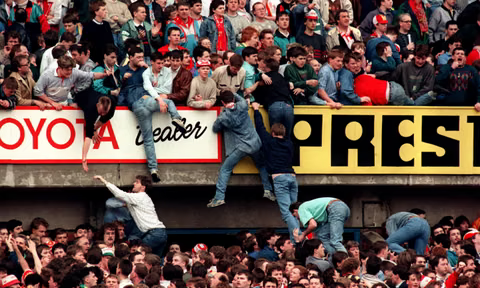
Legendary but crumbling terraces across the country were systematically demolished to make way for high-tech stands. Manchester United's Stretford End and Arsenal's North Bank were flattened in the summer of 1992, closely followed by Aston Villa's Holte End and Liverpool's iconic Spion Kop in 1994. Ground security was entirely overhauled, with the introduction of comprehensive closed-circuit television (CCTV) systems, strict alcohol bans within sight of the pitch, and the creation of the Football Licensing Authority to oversee rigorous safety audits.
This was a calculated, top-down change of the sport. By transforming hazardous, open terraces into heavily policed, seated areas, the Taylor Report stripped away the volatile, male-dominated edge of the 1980s matchday. It repositioned football fans not as a hostile, criminal threat to public order, but as consumers, paving a safe and incredibly lucrative path for families and corporate sponsors to finally return to the game.
The newfound swagger in British football, which had been spearheaded by Italia 90 and 'World in Motion', paved the way for a commercial revolution. In 1992, the "Big Five" clubs broke away to form the Premier League, backed by Sky Sports' unprecedented millions. The goal was to pivot away from the "slum sport" image of the past. Suddenly, those crumbling terraces were being replaced by shiny, all-seater stadiums, and the sport was marketed to a whole new international audience.
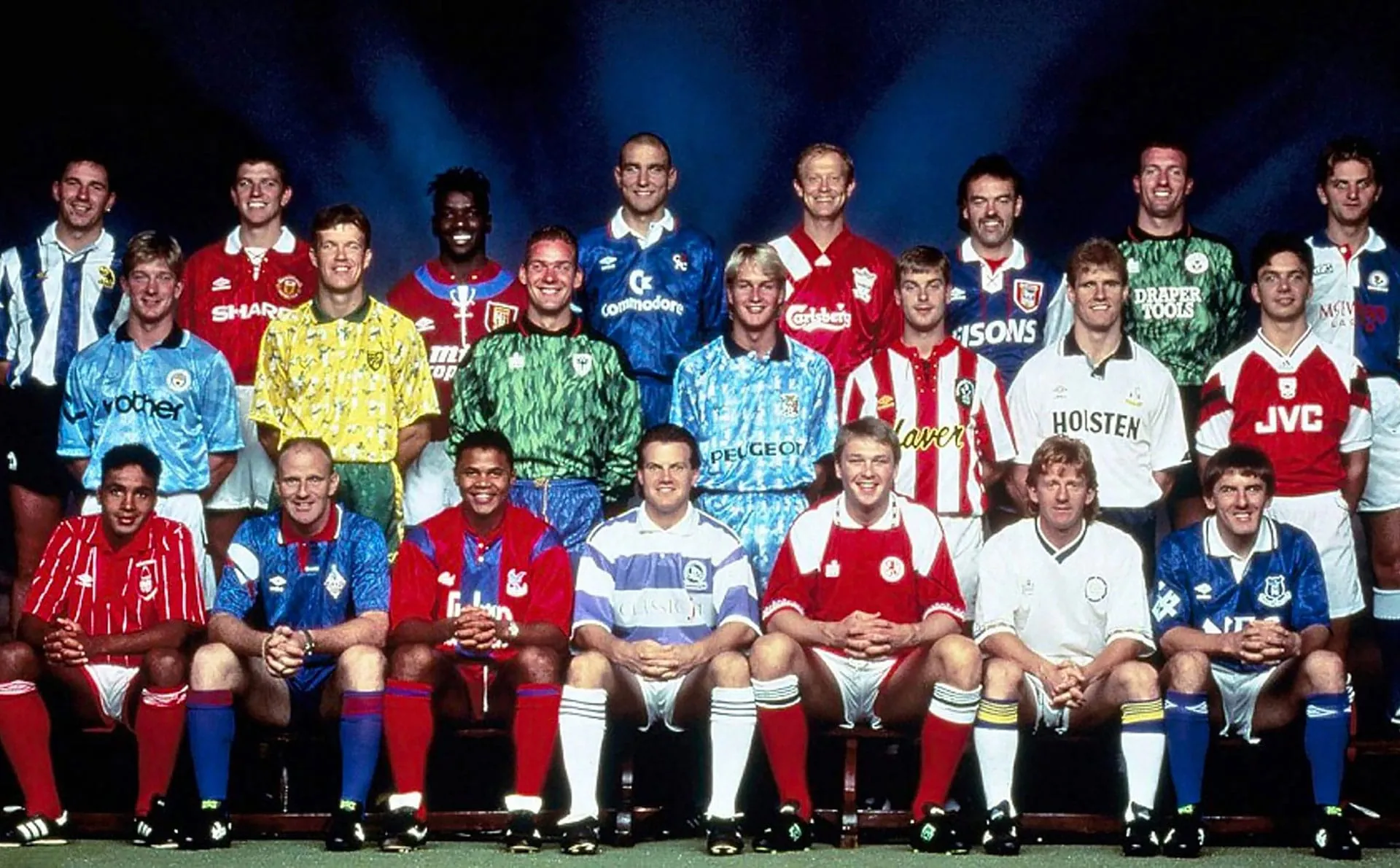
Rupert Murdoch’s Sky television network used the newly formed league as a battering ram to drive satellite dish subscriptions, introducing high-gloss pre-match entertainment, multiple camera angles, and a heavily engineered showbiz atmosphere. Sky’s revolutionary £304 million broadcast deal completely shattered the old television landscape. They introduced "Monday Night Football," using theatrical studio lights, cheerleaders, and rock music to package the game not just as a 90-minute tactical battle, but as a must-see, entertainment spectacle.
Footballers were no longer just local sporting figures; they became glossy, highly paid celebrities, models, and brand ambassadors. Players like Eric Cantona, David Beckham, and Jamie Redknapp crossed over into fashion magazines, pop music videos, and lucrative advertising campaigns, mirroring the lifestyle of Hollywood movie stars. This massive injection of television money allowed clubs to look beyond the British Isles for talent, triggering an influx of high-profile foreign signings like Jürgen Klinsmann, Ruud Gullit, and Gianfranco Zola, who injected continental flair and sophistication into the domestic game.
Corporate hospitality boxes replaced regular terrace spots, ticket prices soared, and the demographic of the stadium crowd shifted fundamentally toward a wealthier, middle-class audience. This structural shift transformed the entire economics of the sport. Clubs transformed from community-focused sporting institutions into aggressively managed global brands and public limited companies, commercialising everything from replica kit designs to stadium naming rights, and laying the groundwork for the multi-billion-pound global empire that the Premier League is today.
Euro ’96 would eventually serve as the Britpop sequel to Italia ’90, featuring a similar cocktail of national hope and penalty heartbreak. Hosted on home soil under the banner of "Football Comes Home," the tournament acted as a month-long celebration of a fully modernised, safe, and culturally dominant English game. By the mid-90s, the "cool" had shifted from the underground warehouse raves of Manchester to the guitar-heavy anthems of Camden and beyond. The "Second Summer of Love" had evolved into Cool Britannia, a cultural explosion where bands like Oasis, Blur, and Pulp weren't just on the radio; they were the frontline of British identity.
While New Order had brought the sophisticated, electronic "Madchester" sound to the pitch, the mid-90s were about the swagger of the Gallagher brothers and the suburban storytelling of Jarvis Cocker and Damon Albarn. This intersection of football and music reached its absolute zenith with the creation of 'Three Lions' by comedians David Baddiel and Frank Skinner alongside indie band The Lightning Seeds.The song was directly inspired by the creative liberation of 'World In Motion'. New Order had broken the old template of the embarrassing, chest-thumping corporate squad march, proving that a football anthem could be a credible, beautifully produced piece of pop music. 'Three Lions' took that exact artistic permission but twisted the emotional narrative. Where New Order looked forward with Balearic, utopian optimism, 'Three Lions' looked inward, trading synth-pop beats for a guitar-driven, melancholy singalong that captured the true psychology of being an English fan. It rejected blind arrogance to famously confront "30 years of hurt," celebrating the cyclical agony and defiant hope of English football culture.
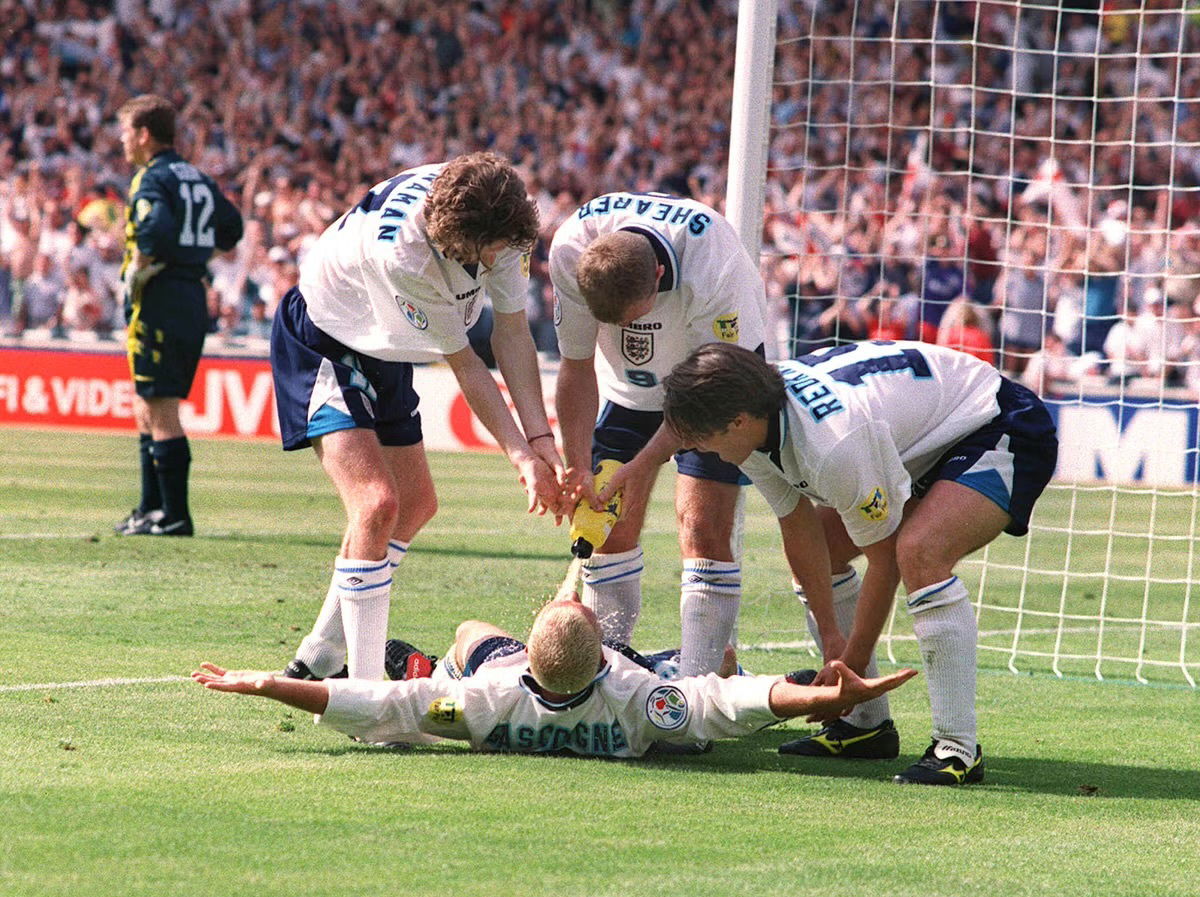
On the pitch, England's performance during Euro '96 perfectly mirrored the emotional highs and lows of the song. Managed by Terry Venables, the team initially struggled with media scrutiny after a pre-tournament drinking scandal in Hong Kong—the infamous "dentist's chair" incident—which the players later turned into an iconic goal celebration. Once the tournament began, a sluggish 1-1 draw against Switzerland threatened to derail expectations, but momentum exploded with a 2-0 victory over Scotland, punctuated by Paul Gascoigne’s magnificent solo goal and volley.
The peak of the summer arrived in a dazzling 4-1 demolition of a formidable Netherlands side, a performance of breathtaking tactical fluidity that convinced the entire country that glory was within reach. After edging past Spain on penalties in the quarter-finals, England faced their familiar rivals, Germany, in an epic semi-final at a sun-drenched Wembley. The match was defined by agonising near-misses, none more heartbreaking than Gascoigne stretching his lunging frame in extra time, only to finish millimetres away from tapping the ball into an open net. History repeated itself with cruel precision when the game dissolved into a sudden-death penalty shootout. Gareth Southgate saw his spot-kick blocked, and Andreas Möller smashed home the winner, ending the dream in a flood of national grief.
The tournament itself was a masterclass in cultural synergy, with Euro '96 matches broadcast alongside music videos and art exhibitions, turning every game into a festival of British creativity. Yet, while 'Three Lions' remains a sentimental anthem about the beautiful agony of fan heritage, 'World In Motion' stands as the original blueprint for how football and music can collide to create something genuinely avant-garde. It didn't rely on nostalgia; it was the sound of the future.
Thirty-four years later, it hasn't aged a day. While many tournament songs feel dated within months, the production quality of 'World In Motion' ensures it still sounds at home in a modern club set. It remains a staggering anomaly: a track recorded by a band who weren't obsessed with the sport, performed by an England team the press had already written off, and featuring a rap by a winger that had no right to be that good. It didn't just soundtrack a tournament; it redefined what English football could be.
The Cost of Creative Freedom: The Fall of Factory Records
The circumstances of Italia '90 suggested a disaster, yet it produced a massive cultural milestone. While it set English football on an upward trajectory toward the global powerhouse it is today, it sadly marked the beginning of the end for Factory Records. Despite the massive success of 'World In Motion' and the band's back catalogue, the label would collapse in 1992 due to its infamously unique and often chaotic style of management.
Tony Wilson famously ran the label on a philosophy of artistic freedom over financial pragmatism, relying on verbal agreements and handshakes rather than formal legal contracts. This lack of corporate structure meant that even a massive, chart-topping hit like 'World in Motion' could not plug the massive, systemic leaks in Factory’s finances. In a move that perfectly illustrated the label's beautiful financial suicide, Factory's famously over-designed record sleeves, such as Peter Saville's intricate design for New Order's 'Blue Monday', actually cost more to print than the wholesale price of the record, meaning the label famously lost money on every single copy sold of the best-selling 12-inch single of all time.
The roots of this financial imbalance ran deep, stretching back to the label's foundation. Factory was built on the tragic legacy of Joy Division, whose stark post-punk genius laid the creative and financial bedrock of the entire enterprise. When frontman Ian Curtis died in 1980, the surviving members became New Order, and their global success effectively funded Wilson's grandest experiment. Rather than hoarding profits, Factory funnelled its wealth back into an avant-garde roster of artists who shaped the post-punk landscape. Pioneer acts like The Durutti Column, with Vini Reilly's intricate, atmospheric guitar work, alongside experimental outfits like Section 25, the synth-pop sounds of Quando Quango, and the sharp post-punk of Stockholm Monsters, all enjoyed total creative liberty without ever achieving the commercial returns needed to sustain a label

Yet, Factory's influence rippled far beyond its own roster, acting as the ultimate catalyst for the broader Manchester music scene. In February 1983, Tony Wilson booked a young, unsigned band named The Smiths to support Factory group 52nd Street at the Ritz, providing Johnny Marr and Morrissey with a critical early platform. Factory's openness created an ecosystem where independence thrived, turning the city into a global musical beacon.
Nowhere was this chaos and cultural cross-pollination more evident than in the Haçienda (FAC 51). The legendary Manchester nightclub was the spiritual home of the "Second Summer of Love" and the very place that inspired the electronic pulse of the 'Technique' album. But while it was making cultural history, it was losing a fortune. The club was the definitive launchpad for the modern DJ and clubbing culture, launching and sustaining the careers of era-defining resident DJs like Mike Pickering, Graeme Park, and Dave Haslam, who imported the underground sounds of Detroit techno and Chicago house directly to the rainy streets of the North.
The Haçienda quickly became an essential hub for other pioneering Manchester acts. The Stone Roses played seminal early gigs there, refining the psychedelic, groove-heavy "Madchester" aesthetic that would soon conquer the charts. The venue was a living, breathing laboratory for British guitar music; a young, unknown Noel Gallagher was a regular punter, soaking up the hedonistic energy and wall-of-sound production values from the dancefloor years before he would ever pick up a guitar to form Oasis.
Crucially, Gallagher absorbed the intense, unifying community spirit of the Acid House movement and subtly translated it directly into his rock songwriting. The Haçienda dancefloor was a place where class, football, and social barriers dissolved completely into a collective euphoria, and Noel realised that this craving for communal connection could be replicated through massive, singalong guitar anthems.
By the late 1980s, the Haçienda's unruly energy had found its perfect human manifestation in the Happy Mondays. If New Order provided the high-tech soundtrack, the Mondays brought the raw, chaotic attitude of the streets. Led by the charismatic lyricist Shaun Ryder and the erratic, maraca-shaking dancer Bez, the band seamlessly fused indie rock with dancefloor rhythms. Their journey began with raw, scratching funk and post-punk experimentation on earlier records like their 1987 debut album 'Squirrel and G-Man Twenty Four Hour Party People Plastic Face Carnt Smile (White Out)' and 1988's 'Bummed', featuring tracks like 'Wrote For Luck' that laid the groovy, drug-infused foundations for the entire scene.
Their seminal 1990 album, 'Pills 'n' Thrills and Bellyaches', produced by Paul Oakenfold, became the definitive high-water mark of the Madchester movement, spawning massive hits like 'Step On' and 'Kinky Afro'. Yet, much like the Haçienda itself, the Happy Mondays were as destructive as they were brilliant. Factory sank vast fortunes into funding the band's notorious lifestyle, culminating in the recording sessions for their 1992 album 'Yes Please!' in Barbados.
This disastrous project was the final straw that broke the camel's back for the label's fragile finances. Shipped to the Caribbean to get them away from Manchester's heroin epidemic, the band famously traded the studio equipment, furniture, and even the recording tapes for crack cocaine. Shaun Ryder completely refused to write lyrics, Bez broke his arm in a hired jeep crash, and the exorbitant, out-of-control bills forced Factory to look for an emergency buyout that ultimately exposed their total lack of legal contracts.
High running costs, constant building modifications, and escalating security issues related to Manchester's gang underbelly further strained the venue's books, eventually forcing the club to install expensive metal detectors and employ vast security teams just to keep the doors open. By the time the label officially went into receivership in November 1992, a failed buyout attempt by London Records exposed the ultimate tragedy of Factory's ledger: because Wilson had refused to bind his artists to legal contracts, the label did not actually own the master rights to New Order’s or Happy Mondays’ back catalogues, it became painfully clear that New Order had effectively been subsidising the club's losses for years using their own personal royalties, watching their hard-earned wealth vanish into the Haçienda's concrete floors. It was a bittersweet ending: the band had helped save the soul of English football and defined the sound of a generation, but the "creative freedom" of Factory Records proved to be a beautiful, completely unsustainable dream.
You can read more about the rise and fall of Factory Records and how they prioritised making history over making money in this post here.
Thank you for reading!