Kneecap Release 'Fenian'
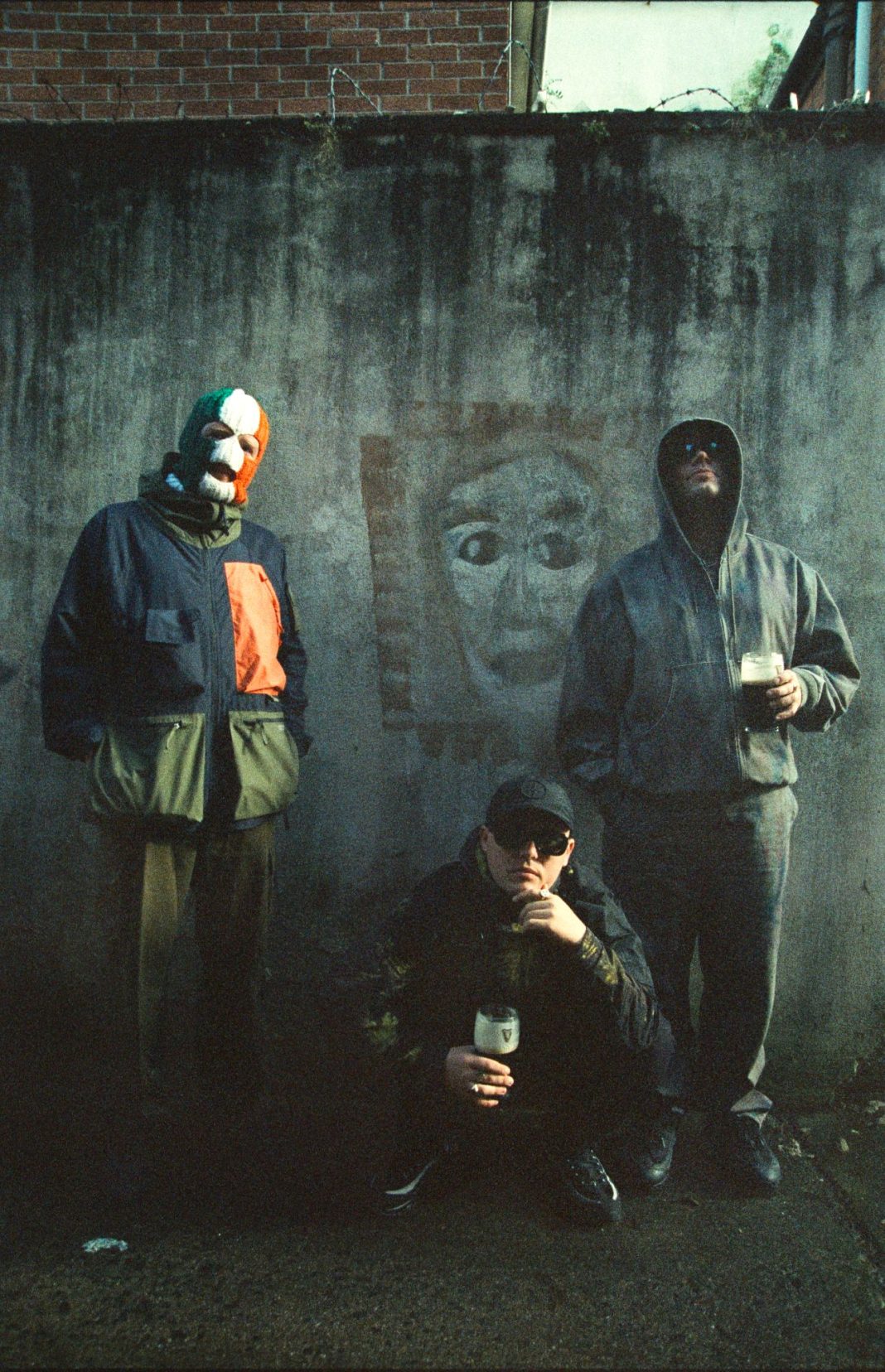
The difficult second album is not easy for any artist. One can only imagine it doesn't get any easier when the British Government declare you a terrorist and an enemy of the state. How would Kneecap sail through this? The past 18 months have seen the band play their biggest shows to date, be vilified by the Prime Minister and be accused of committing terrorism offences, by catching a flag.
Making an album in those circumstances could have broken the band; they also had a brilliant debut to follow. 2024's 'Fine Art' was full of drunken, drug-filled madness, a concept album based around "the snug of a dimly-lit, shit, run-down pub". Yet that record also saw the band embrace their past, and the past of their home 'Parful' quotes the 90s documentary 'Dancing On Narrow Ground', which tells the story of how dance music helped bridge the divide between Catholics and Protestants in 1990s Belfast. The whole record was brilliant, funny, potent and completely original.
While 'Fine Art' revelled in the chaos and raw energy of party culture, with riotous beats and sardonic lyricism, 'Fenian' marks an evolution. On the new album, the musical palette broadens. There are richer electronic textures, deeper forays into trip-hop and atmospheric production, and an even more fearless approach to blending Irish language and international styles.
Thematically, too, Kneecap move from the local antics and tongue-in-cheek social commentary of their debut to tackling global issues and personal struggles with greater poignancy and complexity. This growth makes 'Fenian' not just a reaction to external pressures, but a showcase of the band pushing their artistry to new heights.
Yet the controversy that arose after Mo Chara was alleged to have displayed a Hezbollah flag on stage at a London gig in November 2024 overshadowed 'Fine Art'. He was later charged with terror offences, which he denied. Kneecap said they have never supported Hezbollah and "condemn all attacks on civilians, always", and the case was ultimately thrown out of court. In the interim, there were cancelled gigs and tours, a ban from entering Canada and Hungary (decisions Kneecap strongly opposed), and calls from both Keir Starmer and Kemi Badenoch for Kneecap's 2025 Glastonbury set to be dropped. Badenoch had already quarrelled with them over their lurid republicanism when she was business secretary, trying to cancel a grant they'd been given – and Kneecap won in that case, too.
When their backs are against the wall, Kneecap often prevail, and prevail they have on 'Fenian'.
The hysteria and attention on this record are addressed, "PR done on our behalf – as soon as you're outraged we've won," snaps Móglaí Bap on a track from Fenian called 'Big Bad Mo'. Yet this record has so much more than comments against those who have an opinion on the band, who, for the most part, haven't heard them.
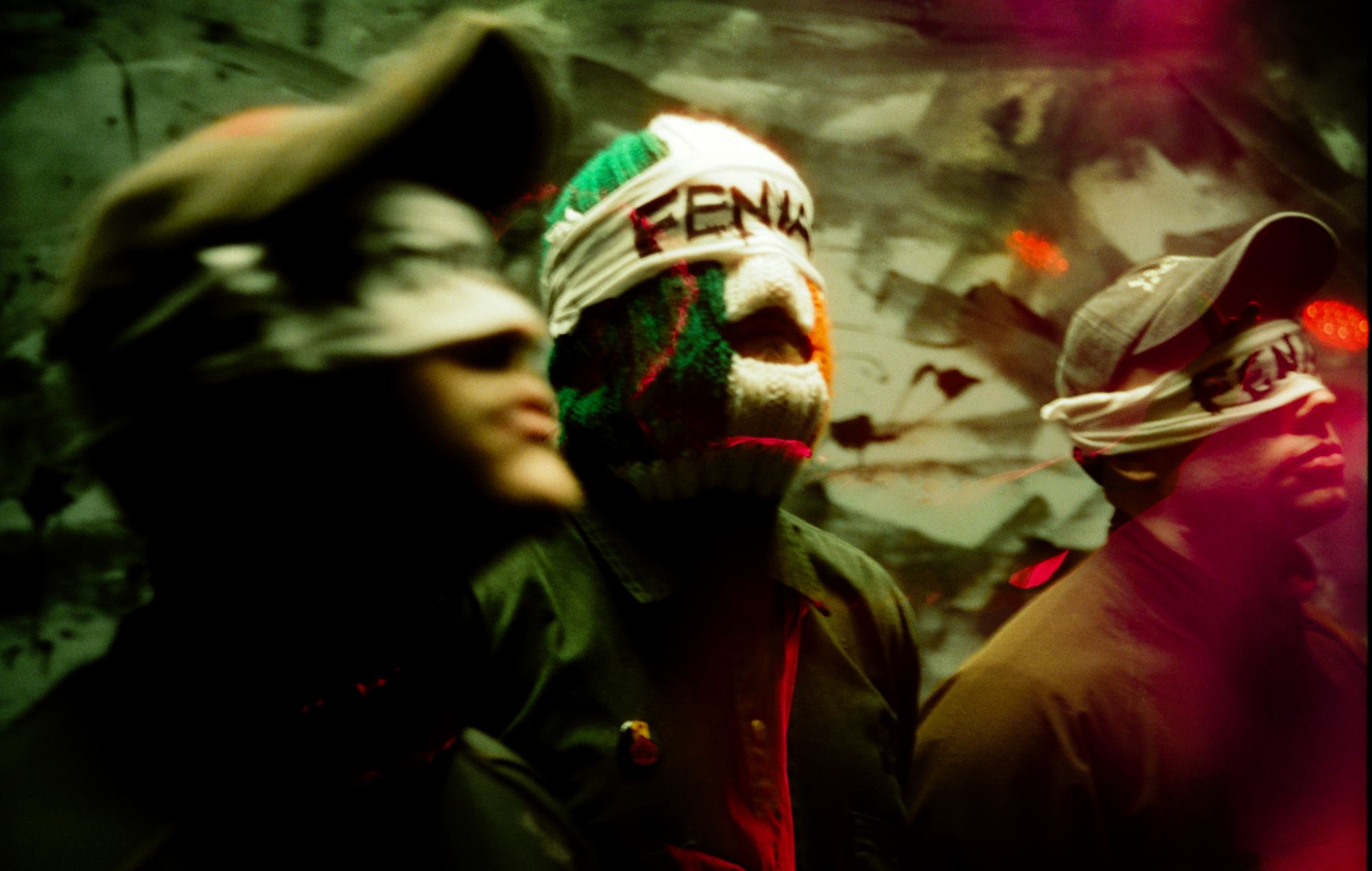
On lead single, the industrial banger 'Liars Tale', they tear down "Netanyahu's bitch and genocide armer", Prime Minister Keir Starmer, asking why they are "doing the politicians' jobs that they're trying to avoid". They plant the focus back on Gaza with the album's real triumph 'Palestine': a collab with Ramallah-based rapper Fawzi, delivered with a heartfelt and direct candour that "we won't stop until everyone is free".
'Carnival' is a real album highlight tackling "double standard of the highest degree" of Mo Chara being rolled out in court and the band becoming a distraction ("every day in the news, me and Kneecap are not the story, a genocide is happening"). Lyrically, 'Carnival' is one of the best things the band has written; the chorus is huge.
"There's a carnival coming to a town near you
Kneecap vs the Crown, so come here, you!
Step up!
And view their new attraction, circus of distractions
Away from their actions is where they will steer you"
It's heavily inspired by Massive Attack, which sees the band in a reflective mood, talking about the attempts that the Government made to prosecute Mo Chara, as well as using Kneecap to distract from their involvement in Israel's genocide of Gaza.
It opens with the voice of an English judge calling Mo Chara to the stand. The judge pronouncing Mo Chara's name incorrectly is a nice and necessary dig at the Brits' dismissal of the Irish Language, while the sound of protestors chanting "Free Mo Chara, free, free Mo Chara" between verses adds to the intensity of the track.
It ends with the most brutal line on the record, "history will remember you pieces of shit, and you'll never be forgiven".
'Smuglars & Scholars' is the band talking about what Ireland is perceived as by the rest of the world, and what it's actually like. In an NME interview, Mo Chara said, "It's this idea that Americans have of Ireland that it's all poetry and clovers, and the line is that it's actually raincoats and police Land Rovers. That's the idea that we had of Ireland growing up in an urban setting."
It sheds a poignant light on the Troubles, and the unity of the Irish people during those times, coming together to fight for a better future "Now all the boys in black at the shops / with petrol bombs and their favourite rocks…Seo Fenian gluaiseacht (this is a Fenian movement)."
'Occupied Six' gives us a proper history lesson on the Troubles, though. There are two common themes here: violence and the trauma it leaves behind.
"Petrol bombs in the dark of night
Ra songs and car bombs and bars alight"
"International laws they were abusing
MI5-death squads collusion
But at least the Irish football team
Wasn't always losing!
Midday shootings, midnight looting
Paramilitary recruitment
Another soldier not charged
Apparently evidence was not conclusive"
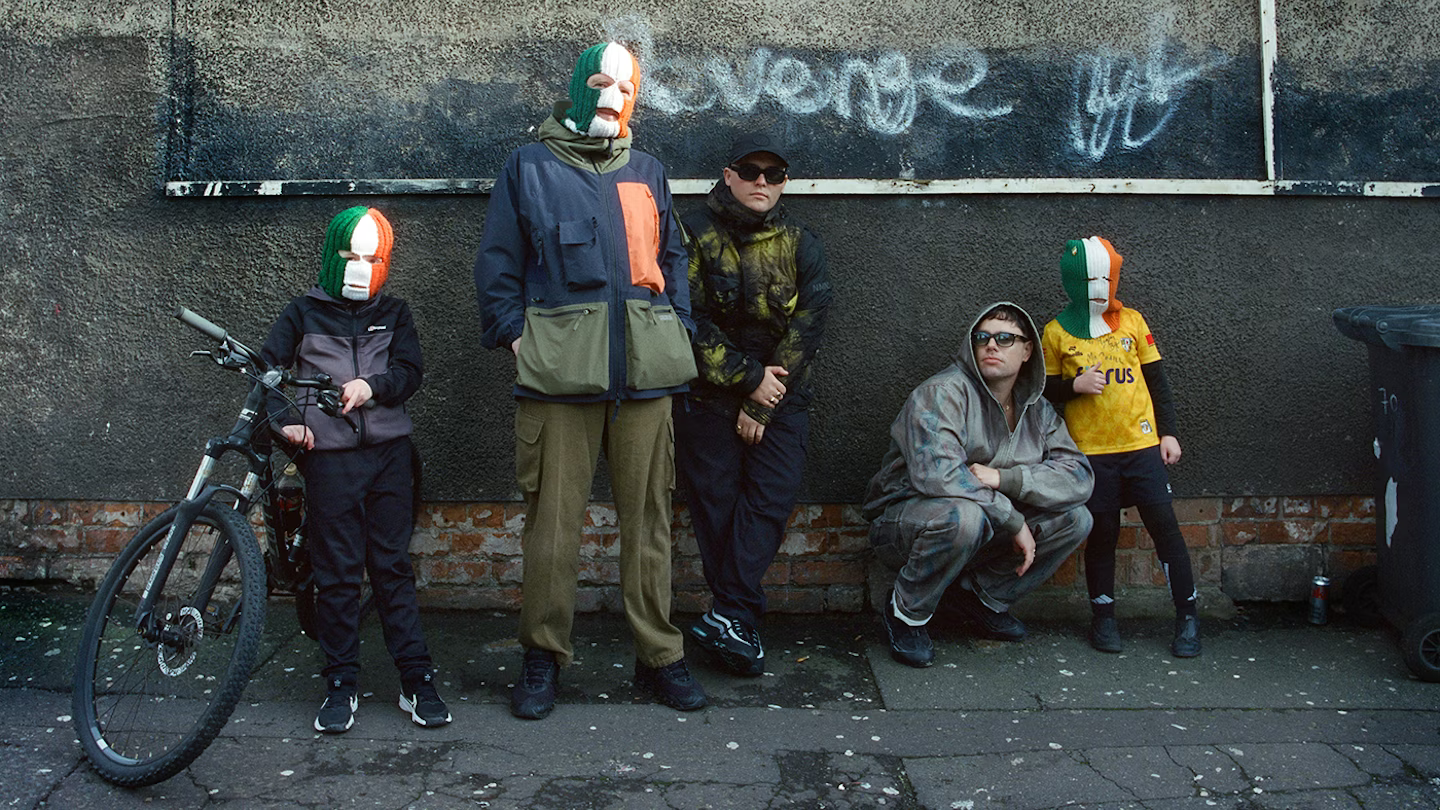
An Ra' might be my favourite track on the record, despite its title, it's not what you think. It's a blistering piece of satire that aims at the Ríocht Aontaithe (United Kingdom). Kneecap don't hold back, firing punches left, right and centre at the Brits, focusing on their history of colonialism, far-right leadership and toxic capitalism "fish & chips / TV license / UKIP / mental health crisis / good shit / high rent prices." It's a fierce, almost venomous, diss-track disguised as a pure bop.
Mo Chara said in an interview with the NME, "If you translate the UK into Irish, it's 'RA', which looks like the 'RA, so it's a play on words for The IRA. We're expecting people who don't speak Irish to become outraged, thinking it's a song about the IRA, when we can actually explain to them that it's actually a love letter for the United Kingdom. We thought you'd like that!"
They also lean further into their use of the Irish language, starting with ethereal opener, 'Éire go Deo' (' Ireland Forever'), where they sound like a trip-hop Enya. Throughout, it is almost chant-like. It's a rallying cry for the Irish language, its importance, and the need to keep it alive, which is, among many others, one of Kneecap's primary goals.
It's a deeply personal album, too. The DnB rush of 'Headcase' warns of the perfect storm of booze, addiction, pressure and no opportunities back home, the trip-hop and early Gorillaz sigh of 'Cocaine Hill' dreamily drifts through Mo Chara's drug-fuelled insomnia, and the '90s rap bounce of 'Cold At The Top' asks what you're really left with when the bag is done.
Ending the record is the Kae Tempest-assisted 'Irish Goodbye', a devastating reflection on depression and courage. Written about Móglaí Bap's mother's depression and taking her own life, it's a heartfelt moment on an album full of scathing attacks, and it leaves fans with a heartfelt question. "How come it's always the best of us that can't bear to be?"
The sound on this record is a step up from the Toddla T-produced 'Fine Art'; Dan Carey is in the producer's chair this time, and with a CV that contains Fontaines D.C., Black Midi, Squid, Black Country New Road and Wet Leg, he was the perfect producer to take Kneecap to new sonic heights. There's Massive Attack, Prodigy-style rave, Young Fathers synths, atmospheric elements of Burial-style nocturnal dubstep, and even nods to early Gorillaz.
There are also cheeky little references: using interpolation rather than sampling, 'Liars Tale' nods to T-Rex's' Children of the Revolution' in the bassline, and 'Occupied Six' references The Undertones by asserting that growing up there "wasn't all about Teenage Kicks." My favourite, though, is Kneecap's take on 'Rule Britannia' at the start of 'An Ra', which ends with the trumpet sounding like a wet fart.
This record keeps the momentum from 'Fine Art' and sees Kneecap embrace their place in the world, where more people are talking about them than listening to them. A dangerous place for a band. This record seems to blend genres; it retains their knack for a good time and portrays the times in which we live. Put the controversy and headlines to one side; you are left with a progressive, fearless record from a band who once wrote a song called 'Your Sniffer Dogs Are Shite' and, on their previous record, wrote a song about taking enough ket to put a rhino to sleep.
Quite simply, 'Fenian' is a triumph; Kneecap aren't going away anytime soon