Dispatches from the Goldfish Bowl: A Tribute to Stereophonics 'Word Gets Around’
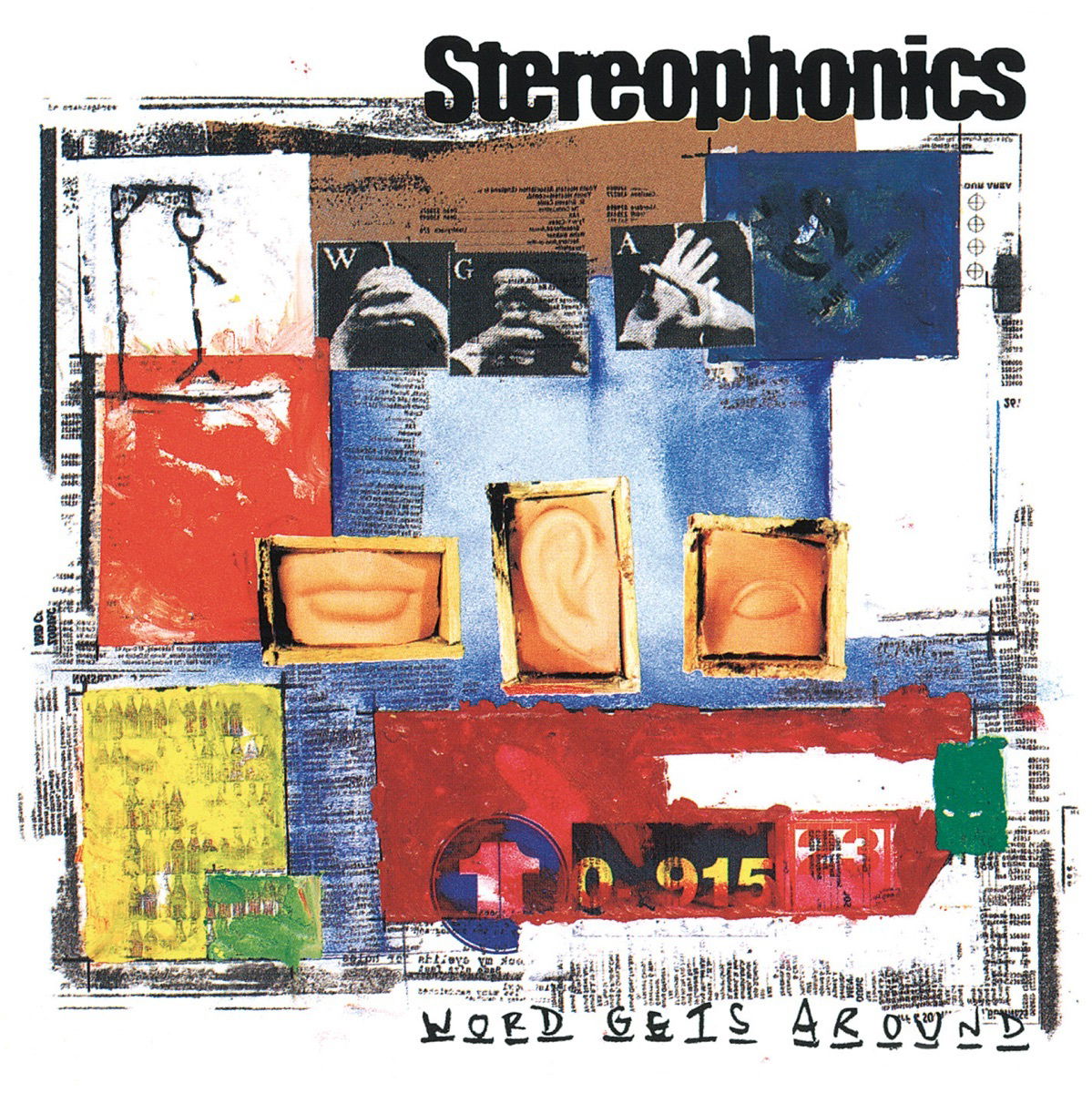
When Stereophonics released their debut album, ‘Word Gets Around’, on August 25, 1997, the sun was setting on the Britpop empire. But this wasn’t an album concerned with the "Champagne Supernovas" of London or the high-gloss "Cocaine Socialism" of the media elite. This was the sound of a pint in a smoky working-class pub in a town the rest of the world had looked past. It wasn’t just music; it was a kitchen-sink drama set to a distorted Telecaster, a working-class manifesto delivered from the heart of the Welsh Valleys.
To understand what made it remarkable, it helps to understand what it was not. Oasis sold a mythology of working-class swagger repackaged as rock-and-roll destiny. Blur were conducting an anthropological study of the English everyman from a comfortable artistic distance.
Even the Manic Street Preachers, fellow Welsh sons of post-industrial decline, had by this point retreated into the grand, abstract politics of ‘Everything Must Go’. Stereophonics had no interest in mythology, anthropology, or abstraction. They had something far more dangerous: specificity. Real names, real streets, real people. Where their contemporaries were reaching for the universal, Jones was drilling into the particular; and paradoxically, that is precisely what made ‘Word Gets Around’ resonate far beyond the valleys it was born in.
A Gallery of the Forgotten
The record is a revolving door of vivid, breathing characters. From the seedy football coach brought down by his own shadows to the elderly widow watching her history float away in a flooded house, Kelly Jones wrote with a cinematic eye. This isn't surprising given his background in film studies; he treats the lyric sheet like a storyboard, choosing to show rather than just tell. He doesn't just describe a town; he directs a series of short films set to music.
The touchstones are unmistakable: the social realism of Ken Loach, the bleak kitchen-sink poetry of Alan Clarke, the unsparing intimacy of Mike Leigh. Jones absorbed the grammar of those films, the unflinching close-up, the refusal of sentimentality, the insistence that ordinary lives deserve the full weight of the frame, and translated it directly into song.
Where Loach's camera lingers on the hands of a worker, Jones' pen lingers on the smell of the changing seasons or the specific weight of a Tuesday afternoon. It is auteur songwriting in the truest sense: a singular vision, a consistent moral compass, and an obsessive fidelity to the truth of a place.
While it serves as a gritty celebration of the band’s home in Cwmaman, it also acts as a universal snapshot of working-class life. It speaks for the millions living in villages and small towns tucked away in valleys and coastal bends, places that face the same fate: being forgotten by the cultural zeitgeist.
With this debut, the band ensured these stories weren't just told, but immortalised in all their heartbreaking, hyper-realistic detail. They turned the people of a one-street town into the protagonists of an epic rock and roll saga.
The Rumour Mill and the Goldfish Bowl
Stereophonics' 'Word Gets Around' landed in the turbulent heyday of 90s Britpop, when bands like Oasis, Blur, and Pulp were dominating the UK charts with swagger, hooks, and tales of British life. But where many of their peers cast their gaze toward urban nightlife or London cool, Stereophonics rooted their debut firmly in the gritty routines of a Welsh small town. The album captures the claustrophobia of a small town perfectly, oscillating between the sharp sting of public scandal and the dull ache of private boredom.
In ‘A Thousand Trees’, we see the devastating velocity of the local rumour mill. The song isn't just about a fallen figure; it’s about the spectators who find entertainment in the wreckage. Kelly Jones’ lyrics serve as a haunting warning on how, like a single match that can destroy a forest, one whisper can ignite the downfall of a person's reputation:
"It only takes one tree to make a thousand matches; it only takes one match to burn a thousand trees."
It suggests that a lifetime of character-building can be reduced to ash in a single afternoon of whispered conversations. In a town where everyone knows your name, they also think they know your secrets, and ‘A Thousand Trees’ captures that terrifying moment when the town turns its collective back.
If ‘A Thousand Trees’ is about the noise of a town, ‘Goldfish Bowl’ is about its deafening silence, the crushing weight of mundanity. The song uses the 'goldfish bowl' as a metaphor for a small-town life where everyone can see you as if you are in a fish tank, always visible, but not truly known. It describes the repetitive cycle of the "same people, same places" with a dizzying, rhythmic spiral that feels like a panic attack in slow motion:
"I’m drinking, sinking, swimming. I’m drowning, working, smirking, learning... I'm burning, sleeping, thieving, cheating, beating. I'm eating. I'm deep in a goldfish bowl; it’s sink or swim."
The song uses the metaphor of the "Goldfish Bowl" to illustrate a world in which you are constantly exposed, always visible to others, but never truly understood, just like a fish in a bowl. It emphasises the repetitive, unchanging nature of life in a small town, where people go through the same motions day after day, trapped in a cycle they cannot escape.
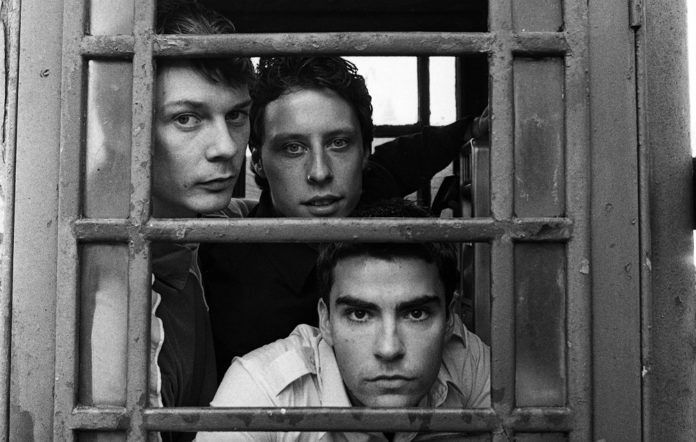
It’s the sound of a Tuesday afternoon where the only thing to do is watch the rain hit the window of the same pub you’ve sat in for a decade.
When things finally do change in these towns: when a shop closes, a friend leaves, or a tragedy strikes, the characters are often left paralysed. They have been conditioned by the loop for so long that they are unsure how to exist outside of it. The "sink or swim" mentality of the song perfectly summarises the desperation of the working class in the late 90s: you either find a way to thrive within the glass walls, or you drown in the repetition.
The View from the Window
While much of ‘Word Gets Around’ feels like it’s filmed in the narrow, steep streets of a valley, ‘Traffic’ offers a rare moment of outward reflection. It marks the transition from the "Goldfish Bowl" to the wider world, literally and figuratively. The song’s origins are as grounded as the rest of the record: the band was stuck in a motorway jam, and Kelly Jones, ever the observer, began peering into the stationary cars surrounding their van. This deeply observational style is the hallmark of Jones’ lyric-writing approach.
Drawing inspiration from everyday encounters and unvarnished details of life, Jones is known for scribbling down snippets of overheard conversation and fragments of dialogue in a battered notebook he carries almost everywhere. He often cites traditional British storytellers like Ray Davies and John Lennon as influences, but his own process is intensely personal: blending real memories with imaginative speculation to layer scenes from his childhood in Cwmaman over the realities he witnesses now. The result is a songwriting style that reads like reportage, with a quietly cinematic sweep that allows even the most ordinary lives to shine.
What follows is a lyrical masterclass in "people watching," as Jones weaves complex, often dark, backstories for strangers he will only ever see for a fleeting moment.
"She paints her lip greasy and thick / Another mirror stare, and she's going where? / Another office affair, to kill an unborn scare?"
The song highlights our desperate human need to find meaning in strangers' faces and the startling speed with which we project our own prejudices and curiosities onto them. Jones fixates on one woman in particular, his mind spiralling through a dozen different lives she could be leading. Is she a victim of debt? A secret criminal? A high-society "uptown snob"?
"She got a body in the boot, or just bags full of food? / Those are models' legs, but are they women's or are they men's?"
These lines illustrate how boredom can lead to speculative, sometimes unfair, judgments about others. The chorus, "Is anyone going anywhere? Everyone’s got to be somewhere", uses the traffic jam as a metaphor for life itself, just as drivers are trapped and unable to move, people are often stuck in routines and personal struggles, each heading to an uncertain destination.
The song’s brilliance lies in its final admission: "But have I got you wrong? One look and you were gone." In that moment, Jones acknowledges the thinness of his own observations. It’s a sophisticated realisation for a young songwriter that the stories we tell about others are usually just reflections of our own imagination.
Even nearly 30 years later, ‘Traffic’ remains one of the band’s most enduring tracks because it captures a universal truth: we are all just passing through, staring at one another through the glass.
The Ghost on the Tracks: ‘Local Boy in the Photograph’
If ‘Word Gets Around’ is a gallery of small-town life, then ‘Local Boy in the Photograph’ may just be its most haunting centrepiece. Released as the band’s debut single, it served as the world’s introduction to Kelly Jones’ gravelly soul and his uncanny ability to find the profound in the tragic.
The song immortalises the story of Paul David Boggiss, a local lad and talented footballer who played alongside Kelly. He was the kind of person who seemed to have it all, which made the news of his taking his own life in front of a train all the more devastating. The title itself comes from the local newspaper’s tribute, which featured a grainy photo of Paul casually smoking a joint.
For a songwriter barely out of his teens, the track shows an incredible maturity. Rather than leaning into the macabre, Kelly focuses on the sensory details of grief and the community's response. He captures the specific "smell" of the changing seasons and the eerie disruption of the morning commute:
"The clocks go back, railway track / Something blocks the line again / And the train runs late for the first time"
There is a chilling irony in that line; the only time the town’s rigid, repetitive schedule is broken is by a tragedy that ensures one of its residents will never move forward again. As Kelly noted in 2011, he was writing from a place of youthful naivety, simply recording the world as he saw it. This "descriptive writing" became the band's hallmark, transforming a police report into living history.
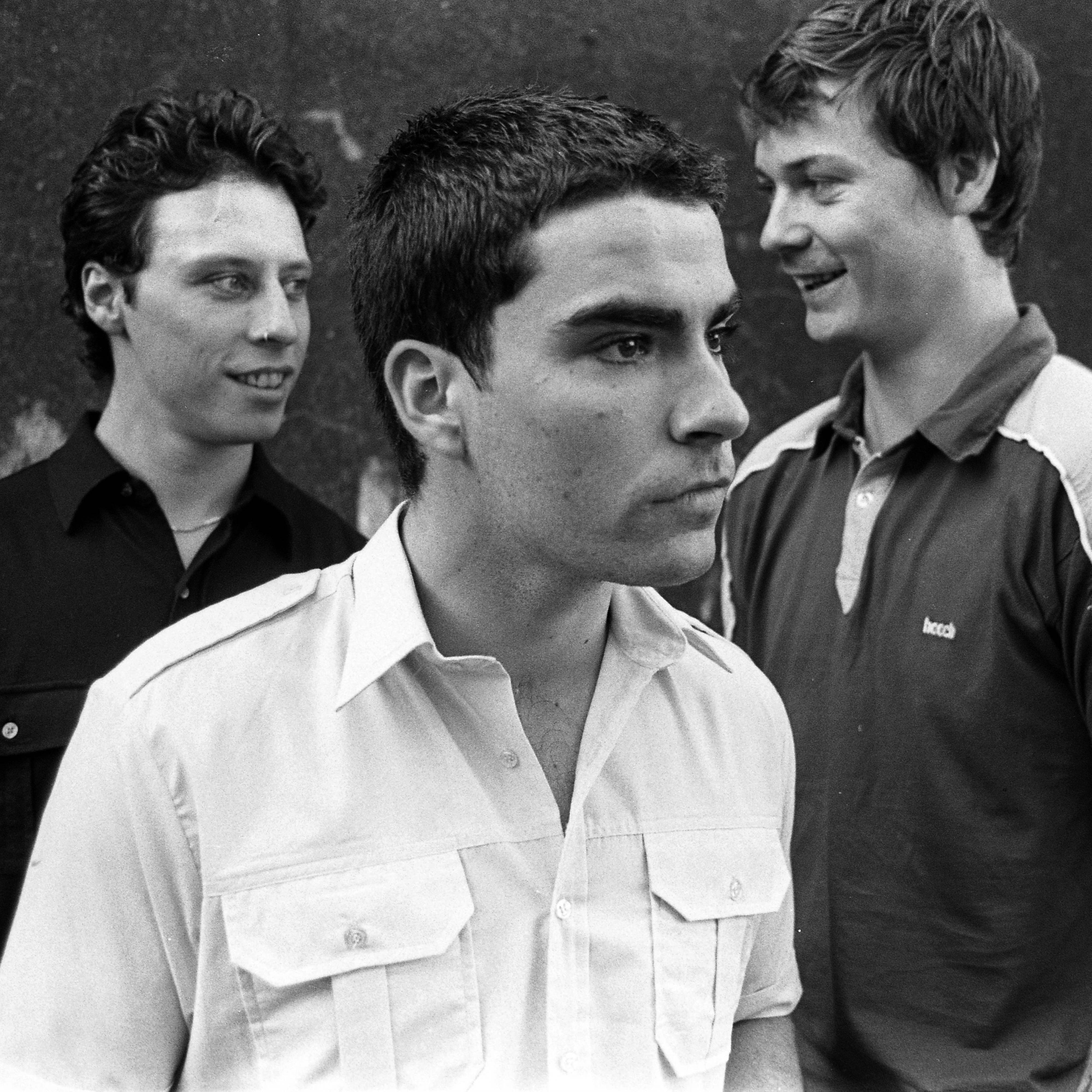
Despite the heavy subject matter, the song isn’t a dirge. It’s an "uplifting" affair that focuses on the wake's ritual. It paints a picture of the town rallying together, sitting on the tracks' banks and drinking for hours, sharing memories of the boy they knew.
"And all the friends lay down the flowers / Sit on the banks and drink for hours / Talk of the way they saw him last"
The most heartbreaking realisation comes in the song's bridge:
"He’ll always be twenty-three / Yet the train runs on and on."
It’s a stark reminder that the world keeps moving, the trains keep running, and the town continues its cycle, while the boy in the photograph remains frozen in time.
Within the album, 'Local Boy in the Photograph' introduces the darkest form of escapism. While others in the record dream of driving away in 'Traffic' or complain about monotony in 'More Life in a Tramp's Vest', the "local boy" saw no alternative to his life. And 'More Life in a Tramp's Vest' is worth pausing on, because it is, in its own way, one of the album's most joyfully defiant moments. It's a breathless sprint through the indignities of market-day life: the haggling, the hollering, the sheer absurdity of the whole enterprise, delivered with the energy of a man who can't decide whether to laugh or scream.
The title itself is pure valley vernacular, a phrase only possible in a community where wit is survival. Alongside it, 'Not Up To You' offers a quieter but equally stubborn form of resistance: refusing to be defined by circumstance. Together, they form the album's defiant heart: the reminder that even in a goldfish bowl, some still throw elbows.
He became the ultimate symbol of the small-town struggle: the desperate need to leave, even if it meant leaving everything behind forever.
The Final Bridge: ‘Billy Davey’s Daughter’
The album ends with ‘Billy Davey’s Daughter’, a song that also addresses a life lost to tragedy, this time through the story of a girl who drowned after jumping from a bridge. The recurring "goldfish bowl" metaphor is referenced again with the line: "Another goldfish to drown." Here, the bowl represents not just boredom, but the suffocating, enclosing environment of the town, a transparent barrier that allows its inhabitants to be seen by all but restricts their ability to escape or thrive.
When Kelly Jones sings of "well I just passed the bridge/ That parts us from them", he captures the ultimate, fractured divide of the working-class experience. It begs the question: who are "them"? Are they the lucky few on the other side of the valley, living mirror-image lives of quiet desperation? Or does "them" represent the wider world, the success, the travel, and the boundless freedom that seemed light-years out of reach for three boys from Cwmaman in the early 90s?
This song leaves listeners with a powerful image of being stuck between two worlds, one familiar but stifling, the other out of reach. The bridge serves as a metaphor for the thin line separating life and death, or possibility and limitation. In an album often focused on mortality, the bridge becomes a symbol for the division between those who continue on and those who are lost to the valley.
‘Same Size Feet’: Paranoia in the Valley
While the album doesn't shy away from death, it is also a living, breathing document of a town that is vibrantly, chaotically alive. To understand the sadness of the record, you have to understand the frantic, jagged energy of the life that surrounds it.
‘Same Size Feet’ provides a sharp, paranoid jolt to the system. It’s a high-velocity track that feels like a chase through a dark alleyway after the pubs have shut. The song tells a gritty story of an illicit affair where a man keeps his mistress waiting with false promises, "Lying and denying so nobody knows."
The narrative takes a dark, Hitchcockian turn when a body is eventually pulled from the lake. The description is agonisingly vague: "Same colour, same weight, same size feet." It leaves the mistress and the listener in a state of suspended grief. It’s the "not knowing" that kills you.
Sonically, the track is the equivalent of a heart rate spiking; it’s a reminder that living in a small town isn't just boring, it can be dangerous. It captures that specific brand of valley claustrophobia where secrets are impossible to keep, and the "word getting around" can have fatal consequences.
Cwmaman: A Drinking Town with a Mining Problem
The leap from the scandalous secrets of ‘Same Size Feet’ to the hardcore drinking culture of the Valleys is a short one. In a place where the pits have closed but the thirst remains, ‘Last of the Big Time Drinkers’ serves as the ultimate drinking anthem where the pub is a source of escape and the hub of the community.
"Ten minutes flat after that day at the factory / I'm drinking like a dog in the sun."
This isn't just a song about a night out; it’s one of the most explicit comments on the grind of capitalism found on ‘Word Gets Around’. The narrator isn't looking for a career ladder or a legacy; he is looking for a pint and a temporary escape from the grey. The line "I don’t live to work, I work to live, and live at the weekend" is the unofficial motto of the British working class.
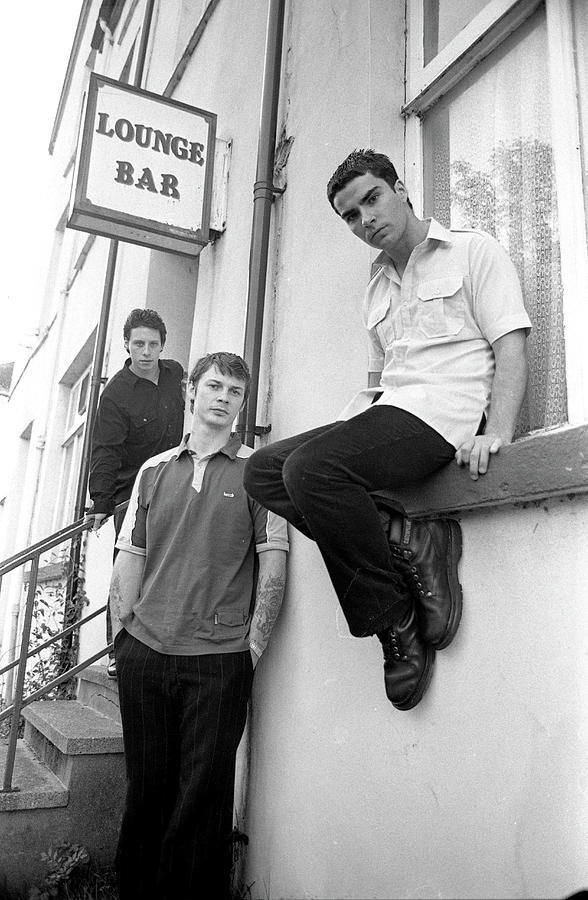
It’s raw, honest, and completely devoid of "Champagne Supernova" pretension. Whether it’s the humour of coming home, "wetting the bed," and "throwing the sheets out the window," or the quiet pride of having your name painted on your own glass, it’s a celebration of finding dignity in the pub when the factory gates close. It suggests that in a town defined by what it used to mine, the people now mine for moments of joy at the bottom of a glass.
Dispatches from the Goldfish Bowl
From the barmaid to the "blue-rinsed hairs" in ‘Too Many Sandwiches’, every character on this album feels like someone you’ve sat next to on a bus or stood behind in a chippy queue. Whether it’s ‘Chaplin’, ‘Cliff Chips’, or ‘Caramel Crisp’, Kelly Jones paints the minutiae of valley life in unapologetically grim and unglamorous strokes. These dramas don't unfold in grand arenas; they inhabit pool halls, market stalls, and working men’s clubs. Between the lines, the ale-soaked sticky carpets and the decades-old stench of stale cigarettes are almost tangible.
The former junior boxer writing those lines never pulls a punch, but just as importantly, he never punches down. There is a disciplined grit to the storytelling, the eye of someone who has spent time in the ring and knows how to spot a weakness without exploiting it for a cheap laugh. He never lets himself or his narrators off the hook, either. There’s a biting self-awareness in the observations of ‘Goldfish Bowl’, an admission that he is just as trapped in the loop as everyone else:
"I'm drinking, sinking, swimming… thieving, cheating, beating… I'm deep in a goldfish bowl. It's sink or swim.
He is a product of this environment, and like the cast of hometown heroes he chronicles, he’s doing all he knows to survive. In service to these stories, the music remains taut and economic. Even at the quieter end of the scale on tracks like ‘Traffic’ or ‘Not Up To You’, the Bird & Bush production aims sky-high, lending a cinematic grandeur to the smallest moments. But the sound of ‘Word Gets Around’ is more than just a backdrop: it is an argument.
For listeners who key in on the specifics, the record is packed with standout musical moments, hooks and riffs that stick long after the fade. The opening bars of ‘A Thousand Trees’ hit with a jagged guitar riff that sets the whole restless mood of the album, while the sharp, ringing chords on ‘More Life in a Tramp’s Vest’ feel like they could slice through fog. The rolling, insistent bass line in ‘Traffic’ almost mimics the slow crawl of cars and sets up the song’s hypnotic sense of limbo. Elsewhere, the syncopated groove and chiming lead line of ‘Local Boy in the Photograph’ give the song its emotional drive, letting the melody carry the heaviness of the subject matter. Even the frenetic solo on ‘Same Size Feet’ is played not for show but for tension; it sounds as if the guitar itself is sweating through the story.
Stuart Cable’s drumming is not flashy; it is foundational, the kind of playing that feels like boots on wet tarmac, purposeful and unadorned. Richard Jones’ bass locks in beneath Kelly’s Telecaster with the quiet reliability of a man who shows up every day and does the work without asking for credit. The guitars themselves are raw and slightly ragged at the edges, recorded with a directness that refuses the polish of the era’s more aspirational rock productions. There are no string sections here, no stadium-sized reverbs borrowed from Britpop’s more grandiose ambitions. The production is honest in the same way the lyrics are honest: it sounds like the place it came from. Gritty, warm, and occasionally rough around the edges; not despite its imperfections, but because of them.
If you didn’t pay close attention, you could be forgiven for thinking the whole thing is quite upbeat, an energetic rock record perfect for a Friday night drinking session in the pub, and in many ways it is.
Of course, that surface energy belies the swinging tonal extremes of self-loathing and unshakeable local pride. For Stereophonics, there is an unspoken understanding: Yes, some of these people might be bastards, but they’re our bastards. Woe betide anyone else who’d dare speak ill of them.
That is the world 'Word Gets Around' is mired in. It is a record where frustration and disenfranchisement abound, where infidelity and sexual murkiness are never far from the scene, and where the small-town rumour mill is the only industry still working overtime. The authenticity of the band's lived experience is never in question. These are dispatches from the dying embers of once-proud and united communities, now tearing at the seams and coming undone. It isn't just an album; it's a mirror. It took the messy, the forgotten, and the mundane, and it made them monumental.
Nearly thirty years on, that mirror has not cracked. Upon its release, 'Word Gets Around' received a warm welcome from fans, who instantly connected with its honesty and sense of place, even as critics offered a more mixed response, admiring the storytelling but sometimes overlooking its musical power. Over time, those initial doubts faded, and appreciation deepened as the record began to loom larger in the story of British rock. The album went platinum in the UK, launched a band that would go on to fill arenas, and announced Kelly Jones as one of the most distinctive lyrical voices of his generation. But its legacy is quieter and more lasting than chart positions suggest.
It proved that a debut record could be made about the most unglamorous of places, no posturing, no mythology, no borrowed cool, and still achieve something timeless. It gave a name and a voice to a kind of life that rock and roll had always romanticised but rarely actually depicted. It sits, still, in a lineage of great British working-class art: alongside Shelagh Delaney, Barry Hines, and Alan Sillitoe, writers who understood that the extraordinary lives in the ordinary, if only you bother to look. The trains still run. The goldfish still circle. And somewhere, on a loop, a boy who will always be twenty-three is still smoking in a photograph. 'Word Gets Around' made sure of that.
Thank you for reading x