'The Sound' of a Generation: Celebrating 10 Years of 'I Like It When You Sleep...'
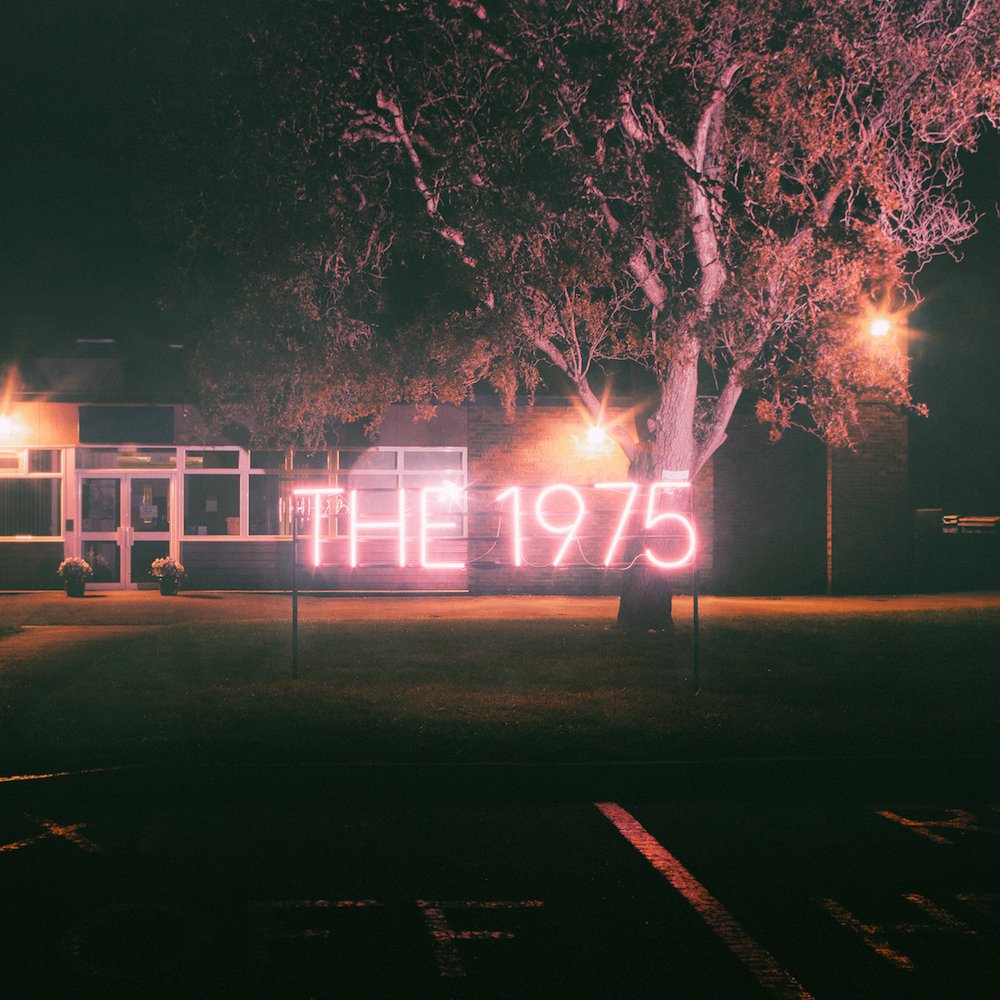
Ten years ago, The 1975 didn’t just release an album; they built a neon-pink cathedral to pop-rock ambition. When the band announced their sophomore effort with the delightfully unwieldy title, 'I Like It When You Sleep, for You Are So Beautiful yet So Unaware of It', the music world held its breath.
Could the boys from Manchester move beyond the monochrome indie-cool of their debut?
The answer was a resounding, shimmering, yes.
The Shift: From Black-and-White to Technicolour
While their debut featured "nods" to the 80s, the lead single 'Love Me' lived there entirely. Retaining producer Mike Crossey, the band traded the emo-inflected indie of their past for high-gloss, 80s-inspired maximalism. With its staccato vocals, funky cowbells, and jagged guitar solo, the track served as a biting "commentary on the commentators" as the band navigated the dizzying vacuum of rising fame.
The chorus was blunt, direct, and a perfect summary of their new trajectory. Its central plea, "Love me / If that’s what you wanna do", felt like a self-fulfilling prophecy. For many fans, myself included, the choice was easy. I did love them then, and ten years later, I still do.
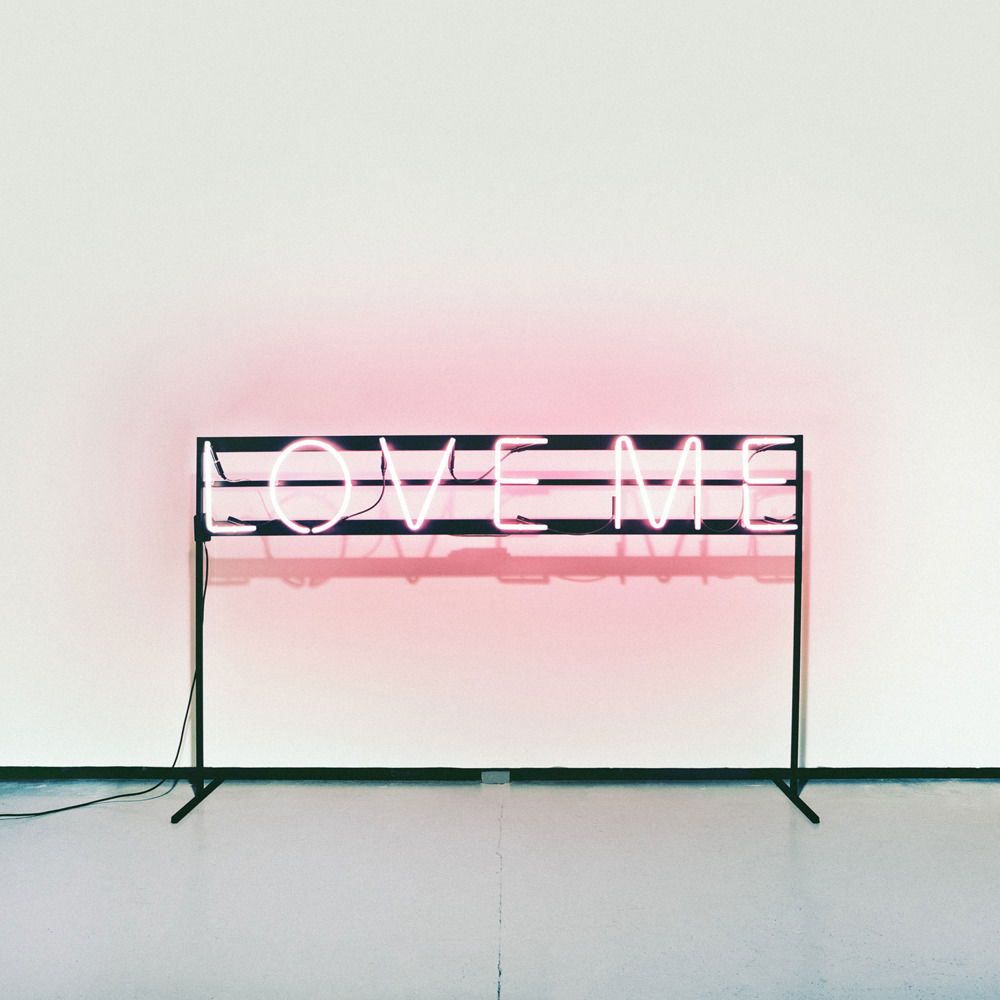
This sonic pivot was a calculated risk that paid off. By leaning into the "ridiculous," the band found a way to exist simultaneously as a massive pop act and a high-concept art project. The production was dense and expensive-sounding, swapping the rainy streets of Manchester for the sun-drenched, palm-tree-lined boulevards of a neon-soaked Los Angeles. It wasn't just a change in style; it was a total reimagining of what a "rock band" could look and sound like in the digital age.
The Sonic Breadth
The singles and deep cuts showcased a staggering versatility that few bands of their generation could match.
'The Sound', originally offered to One Direction, this house-pop masterpiece became a four-on-the-floor disco anthem, complete with syncopated synths and a triumphant electric guitar solo. It’s the ultimate pop moment of the record, masking a story of a hollow, intellectualised relationship behind a massive, radio-ready hook. It famously challenged its critics head-on during the music video, flashing negative reviews across the screen while the band leaned into the very pretentious label they’d been given. Not only were they writing some of the finest songs of that era, but they were also having fun with it.
UGH!', a twitchy, R&B-infused track influenced by INXS and Peter Gabriel. It found Healy at his most candid, detailing the "ugly" realism of addiction. While rock stars historically depicted drug use in grandiose, poetic terms, Noel Gallagher once famously asked, "What tongueless ghost of sin crept through my curtains?" when talking about coming off cocaine. Healy remains refreshingly, brutally mundane. He trades the "ghosts of sin" for the pathetic reality of a comedown, and the idea that you are never really listening, instead just waiting for your moment to speak.

'Somebody Else': If the album has a definitive heartbeat, it’s 'Somebody Else'. While most breakup songs lean into sadness, this track dives headfirst into the specific, ugly jealousy of seeing an ex move on. It captures that contradictory gut-punch of the digital age: "I don't want your body, but I hate to think about you with somebody else." The production is spacious and cold, mirroring the feeling of wandering through a city alone at night while your mind plays back memories in neon. It’s a masterclass in honesty, admitting to the possessive, irrational nature of loss, where the pain isn't just that the relationship is over, but that the space you once occupied has been filled by someone new
'A Change of Heart' serves as a brutal self-diagnosis and an equally scathing assessment of a partner. Healy dismantles the romance by zeroing in on the moments where the facade slips, dryly informing his companion: "And you were coming across as clever / Then you lit the wrong end of your cigarette." He then pivots to the specific, petty grievances of the modern era, following up with: "You said I'm full of diseases / Your eyes were full of regret / And then you took a picture of your salad / And put it on the internet." It captures that exact, hollow moment when a person you once idolised becomes someone you can no longer even stand to watch across a dinner table.
'Loving Someone': This track became a manifesto for the band's inclusive ethos, balancing a biting critique of celebrity culture, "celebrities lacking in integrity holding up the status quo". with a desperate plea for genuine human connection. Healy's dense, spoken-word delivery explored the "duality of art and reality," arguing that our cultural language has become a "simple interface rendered feeble and listless" when tested against true divinity. He dives deep into social commentary, addressing the refugee crisis and the exploitation of the vulnerable, noting: "We shouldn't have people afloat / If it was safer on the ground, we wouldn't be on a boat." Lyrically, it is perhaps the most "Healy" moment on the record, self-aware, academic, and deeply sceptical.
He references French theorist Guy Debord while poking fun at his own verbose reputation, admitting: "Even Guy Debord needed spectacles, you see / I’m the Greek economy of cashing intellectual cheques." It’s a song about trying to progress beyond the industry standard of "selling sex" to find something more substantial, ultimately landing on the soulful, repetitive mantra that in a world designed to keep us "perplexed," the only revolutionary act left is simply loving someone.
A Sprawling Diary of Modern Life
At 17 tracks and 74 minutes, the record was an eclectic diary. It found room for everything:
The Personal: The heart-wrenching 'Nana' stands as a tender, acoustic tribute to Healy’s late grandmother. It’s a song that captures the small, painful details of grief—from the "clutter" in her house to the desire to tell her about his success. Healy’s voice breaks as he admits, "I’m bereft you see / I think you can tell," before questioning the afterlife with a desperate hope.
This is followed by the devastatingly raw closer 'She Lays Down'. This acoustic finale explored his mother’s struggle with postnatal depression, capturing a quiet, harrowing vulnerability that stood in stark contrast to the album's glossier moments. It stripped away the synths to reveal a son grappling with his mother’s pain, noting how she "prayed that the ground would just swallow her whole" because she "felt nothing at all."
The Sonic Polish: 'She’s American' harkened back to the rhythmic, guitar-driven pop of their debut but with a more sophisticated, funk-fueled polish. Lyrically, it poked fun at the cultural friction of a British rock star navigating an American romance, balancing clever social observations about "fixing your teeth" with infectious, shimmering hooks. It served as a bridge between the band’s indie roots and their new, high-gloss identity.
The Cinematic: 'Paris' served as a drug-hazed vignette of Soho and Bethnal Green. Despite the romantic title, the lyrics paint a bleaker picture of "romanticising heroin" and the plea to "Mr Serotonin Man" to lend a gram, all set against a dream-pop backdrop. It captures a specific London ennui, where characters are described as a "walking overdose in a great coat," trying to find beauty in a grim reality. The track is a masterclass in the unreliable narrator, as Healy details "hyperpoliticized sexual trysts" and a boyfriend who's a "nihilist," all while the shimmering, jangly guitars suggest a much more hopeful scenery. It’s a song about wanting to escape, to go to Paris again, while being firmly stuck in the messy racket of the present.
The Spiritual: 'If I Believe You', a gospel-tinged exploration of faith and vulnerability. It found Healy asking, "If I'm lost, then how can I find myself?" while backed by a soaring choir and a trumpet solo, blending jazz sensibilities with a profound existential crisis.
The Psychological: 'The Ballad of Me and My Brain', a frantic, self-analytical search for sanity. Healy leaned into the absurdity of fame, desperately asking if anyone had seen his mind: "I jumped on a bus, declared my name, asked if anybody had seen my brain." It’s a frantic search where he jokes about his brain "flirting with the girls" in a Sainsbury's while he tries to keep up, eventually resigning to the madness: "Forget my brain, remember my name."
The track captures the dizzying experience of losing one's identity to the public eye, where a stranger adores your art but thinks "you're shit" in person. With its soaring, gospel-inflected vocals and manic energy, it dramatises the internal collapse that often hides behind a high-gloss pop persona.
Visualising the Sound: The Neon Aesthetic
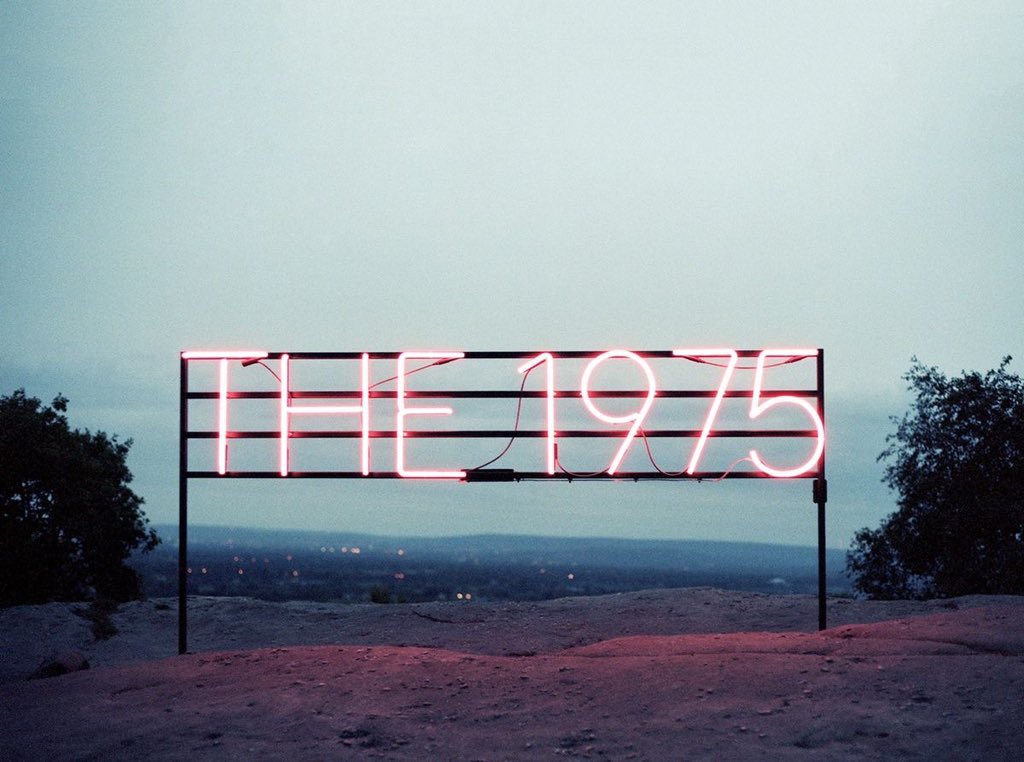
The album’s legacy is inseparable from its iconic visual identity. The artwork and design, created by Samuel Burgess-Johnson and photographed by David Drake, defined an entire era.
For each song on the album, a custom pink neon sign was created and placed in various lonely, evocative locations. These weren't just cool photos; Burgess-Johnson worked closely with Healy to ensure the placement of each sign captured the specific nostalgia, thematic complexity, and atmosphere of the track it represented. From the cold concrete of urban spaces to the quiet stillness of the desert, the visuals mirrored the record's blend of artificial pop gloss and raw human emotion.
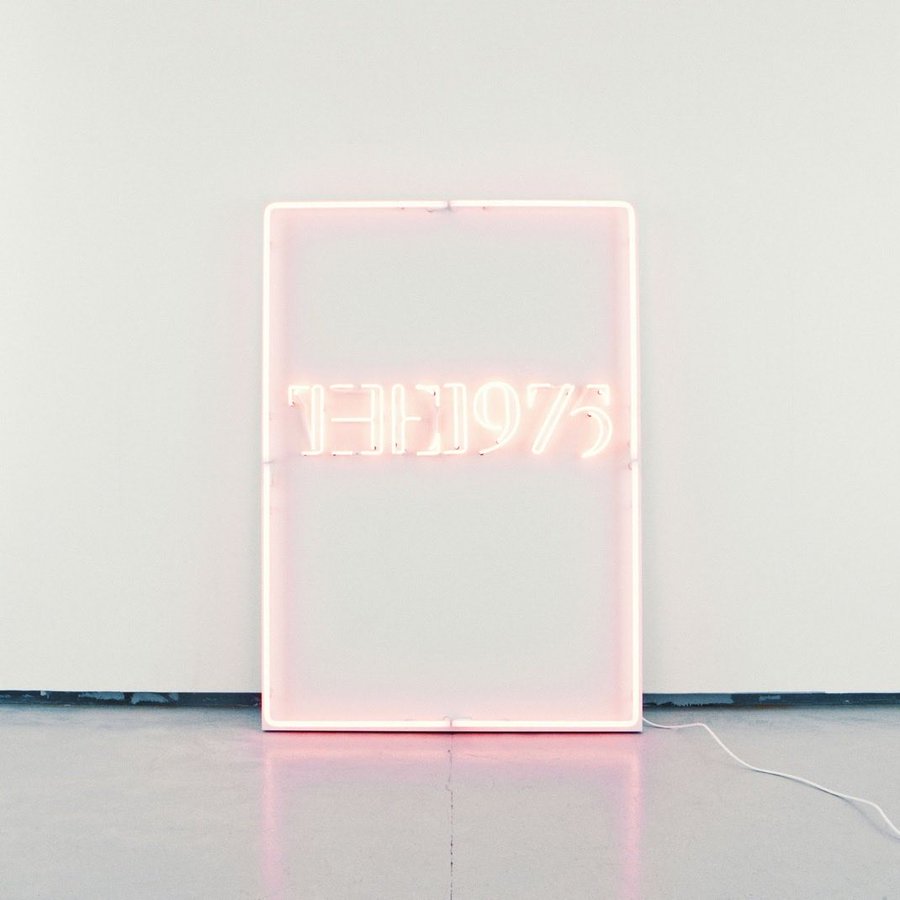
This commitment to a total aesthetic experience extended to their live show, which transformed the stage into a series of glowing, monolithic light boxes. It wasn't just a concert; it was an immersive dive into the pink-hued world of the record, cementing The 1975 as a band that understood the power of the image as much as the power of the song.
The Legacy
The album was met with universal acclaim, even winning over vocal sceptics like NME, who branded it essential. By refusing to edit themselves down, The 1975 created a portrait of modern life that felt both chaotic and meticulously crafted.
Healy’s lyrical style set him apart from the "tortured rock star" cliché. He swapped the grandiose metaphors of the past for a refreshingly mundane honesty. It was this blend of high-concept art and "ugly" realism that defined the second part of their trilogy, bridging the gap between a stylised pop persona and the messy reality of addiction. It proved that a band could be deeply self-indulgent and universally relatable at the same time.
Ten years later, 'I Like It When You Sleep, for You Are So Beautiful yet So Unaware of It' remains a fascinating reflection of a band at their most egomaniacal yet introverted, populist yet unapologetically pretentious. It stands as a time capsule of the mid-2010s, an era of digital saturation, neon nostalgia, and the beginning of a band’s journey into becoming the defining voice of their generation. As Healy once told NME, “The world needs this album.”
A decade on, it’s clear he was right.