Stereophonics: Morfa Stadium
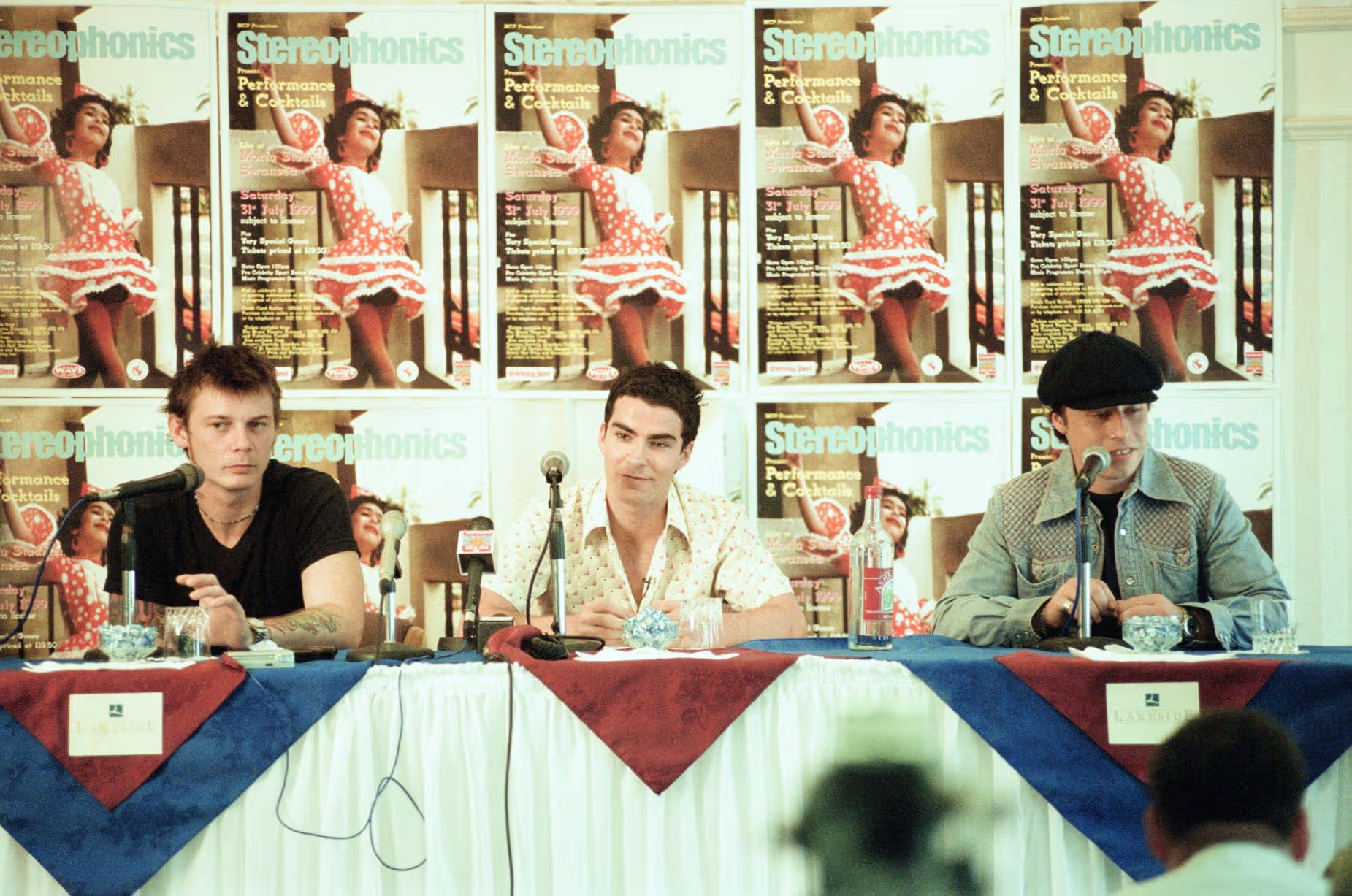
Stereophonics are a Welsh rock band formed in 1992 in the village of Cwmaman in the Cynon Valley, Wales, a tight-knit community whose working-class identity would come to define the band’s songwriting voice. By the summer of 1999, they were one of the biggest bands in Britain. Their debut album, ‘Word Gets Around’, had earned them a BRIT Award for Best New Group and gone gold in the UK, propelled by the single ‘Local Boy in the Photograph’. Their sophomore album, ‘Performance and Cocktails’, topped the UK Albums Chart in March 1999; the album was driven by three consecutive top-five singles: ‘The Bartender and the Thief’ reaching number three, and both ‘Just Looking’ and ‘Pick a Part That’s New’ reaching number four. At the Kerrang! Awards that year, ‘Performance and Cocktails’ won Best Album and the band took home Best British Band; the album was also nominated for the Mercury Music Prize. It was, by any measure, the defining British rock album of its moment.
Buoyed by their first number one album and flush with the momentum of a sold-out tour, the band announced they would play their biggest ever show at the Morfa Stadium in Swansea; a venue that was, at the time, an athletics track with a single large stand along the home straight, and which would later become the Liberty Stadium, home of Swansea City. The Morfa Stadium show was the crowning moment of the ‘Performance and Cocktails’ Tour: a homecoming on a genuinely enormous scale.
It was one of Swansea’s most famous ever gigs, and it is still talked about by those who were there even now. 31 July 2024 marked 25 years to the day since the Stereophonics played the city’s old Morfa Stadium; a quarter century on, the concert has lost none of its legendary status. Around 50,000 people were lucky enough to have been there to experience a performance which Kelly Jones himself described as a milestone for the band. Kelly told us, when we spoke to him in 2018: “Morfa ‘99 was a key moment for us as a band, a real milestone. I remember the promoter driving us there in his Land Rover and telling us, ‘You could get 50,000 people in here. At which point we just laughed at him; we were like, ‘Aye, okay.’”
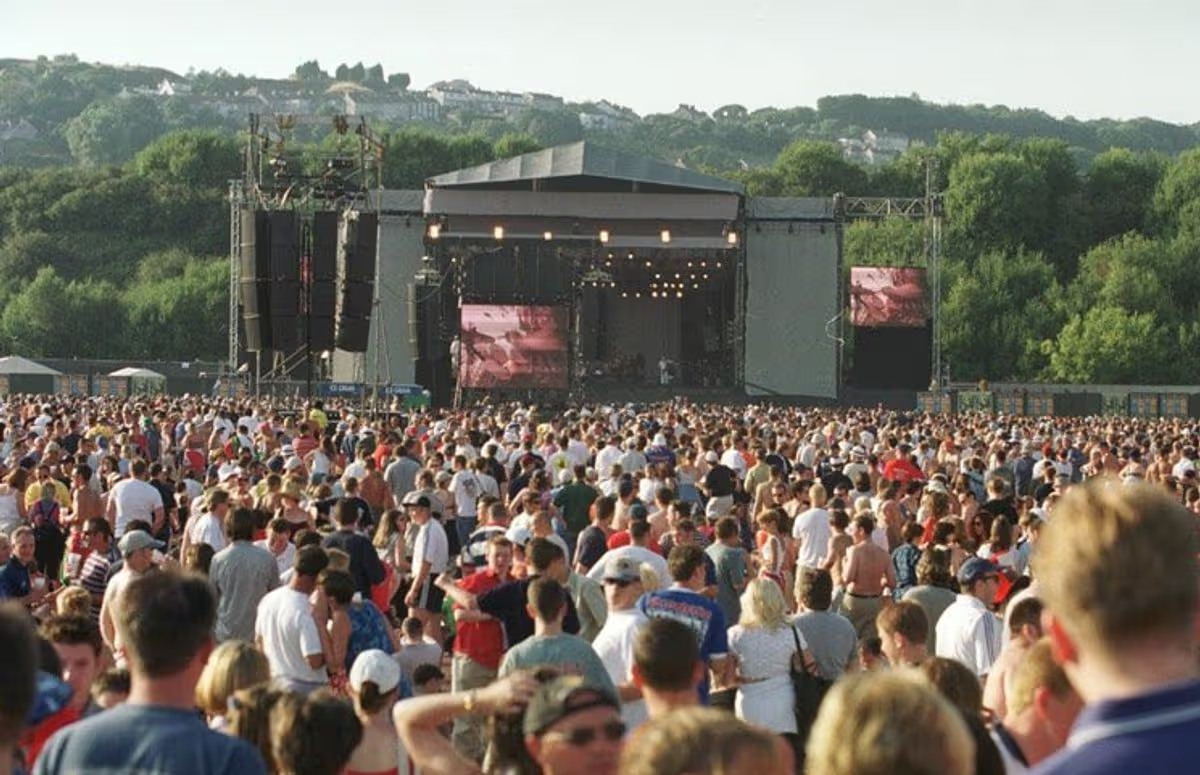
Held on 31 July 1999 at the Morfa Stadium in Swansea, Wales, the show drew a crowd of 50,000 people; an extraordinary achievement for a band still only two albums into their career, and one of the largest outdoor gatherings to take place in Wales at the time. For many attendees, the day started early: fans arrived in the morning, queued, bought merchandise, and spent hours in the summer heat before a note was even played. The Crocketts were a Welsh cowpunk band formed at Aberystwyth University; Gay Dad were a Britpop outfit whose track ‘Joy’ had made them a fixture on the scene, though their set divided the crowd; and Reef, the Somerset-based rock band, closed out the support slot immediately before the main act. During Reef’s set, a violent surge moved through the crowd; a reminder of just how tightly packed and highly charged the atmosphere already was before the headliners had even appeared. Those near the front spent much of the break between sets repositioning themselves, bracing for what was to come.
For Kelly, the day itself was vivid from the very beginning. He recalled: “My memories of the day are still really clear, from the soundcheck at the start; I was trying out some brand new amps, which I still use today; to riding around the site in a golf buggy with Richard and Stuart. I woke up on the big day in this little hotel room in Swansea and watched all the people milling into the ground two by two. It was a beautiful sunny day, and all our families were coming along to watch. There was a real party atmosphere.” It was the era of the big gig; bands like Oasis had played Knebworth just a few years earlier, and Stereophonics were now operating in that same stratosphere. As Kelly put it: “People came from all over the world to Morfa; even from the USA and Japan. We’d done Cardiff Castle the year before, but this was five times the size of that. Surreal.”
When the Stereophonics finally took to the stage, they opened with the slow-burning ‘Hurry Up and Wait’; a deliberate and considered choice. Kelly explained the thinking behind it: “I remember opening up the show with ‘Hurry Up and Wait’; we decided on a mid-tempo number because, had we kicked off with something fast like ‘Bartender and the Thief’, it would’ve all gone off the rails very early on.” The slow build paid off: when ‘The Bartender and the Thief’ did arrive, 50,000 people lost their minds.
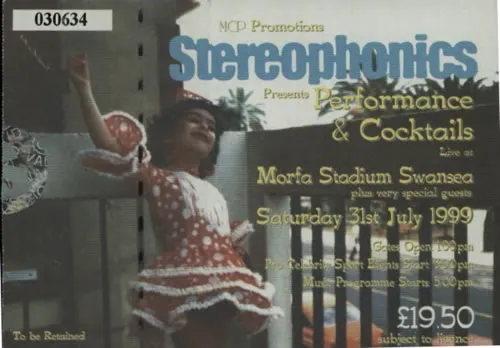
The setlist drew heavily from ‘Performance and Cocktails’, featuring tracks including ‘A Thousand Trees’, ‘Just Looking’, ‘Roll Up and Shine’, ‘T-Shirt Suntan’, and ‘Pick a Part That’s New’, alongside fan favourites from ‘Word Gets Around’ such as ‘Local Boy in the Photograph’, ‘More Life in a Tramps Vest’, and ‘Traffic’. The rocking tracks hit hard; the ballads became enormous, stadium-wide sing-alongs. ‘I Wouldn’t Believe Your Radio’ was also played live that day; the song would later be released as a single in the autumn, with a live version recorded at Morfa appearing on the EP release. The band also performed a cover of ‘Sunny Afternoon’ by the Kinks; a touch that felt entirely in keeping with the celebratory spirit of the day and spoke to the band’s broader musical influences beyond their rock roots.
The show included a rousing run through ‘Land of Our Fathers’ and ‘As Long As We Beat The English’; moments that spoke directly to the Welsh crowd and generated no small amount of noise in the music press afterwards. The Welsh identity of the concert ran throughout: this was not simply a rock show but something closer to a national celebration, with a band from a small valley community playing to their own people on a scale rarely seen in Wales before. Prior to the encore, the band made use of a huge video screen on stage to show a celebration of all things Welsh: footage included Gareth Edwards’ legendary try against the All Blacks in 1973, widely regarded as the greatest try ever scored, alongside a scene from the Rhys Ifans film ‘Twin Town’. Gareth Edwards was actually in attendance that day; Kelly’s father was, by all accounts, in total awe of him for the entire evening.
Kelly noted that ‘Performance and Cocktails’ was also a turning point in the band’s reach: “It was the first time we’d really been played on the radio and on MTV. Our first album, ‘Word Gets Around,’ was much more grassroots; the kind of album you’d hear down the club. The success of the second record eventually helped it turn platinum, though.” The scale of the Morfa show reflected exactly that shift: ‘Word Gets Around’ had built the fanbase from the ground up, and ‘Performance and Cocktails’ had taken them somewhere else entirely. Cardiff Castle, the previous year, had been a landmark in its own right, but Morfa was five times the size and felt like a different world.
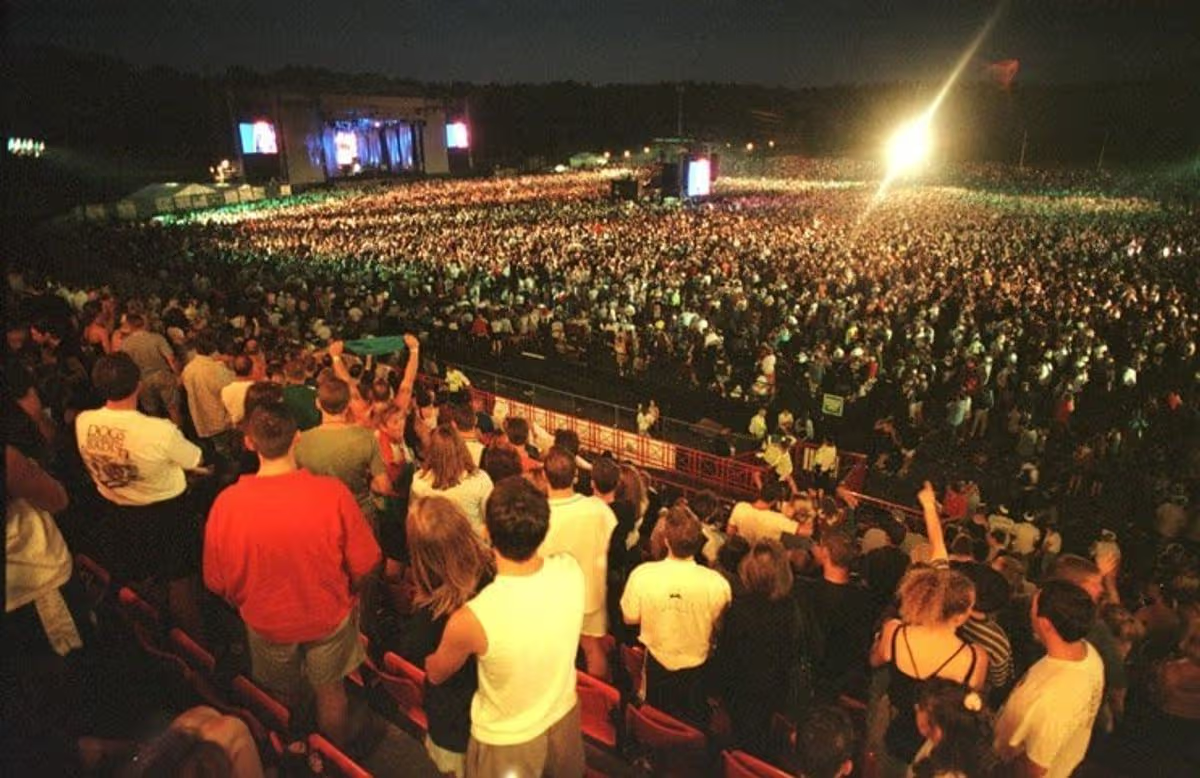
Kelly Jones held the crowd in the palm of his hand from start to finish. Two albums in, the band already had enough material to fill a proper headlining set without sacrificing anything; the songs ranged across tempos and moods without ever losing the crowd’s attention. At one point during the show, Jones told the audience, “We should have a party like this every year” 50,000 people were in total agreement. The crowd also included some notable faces: Gareth Edwards, the Welsh rugby legend, had made the trip to Swansea, and Kelly’s family were among the thousands watching on. As Kelly reflected: “A lot of the people who came to our gigs back then are still turning up now, except they’re bringing their kids with them too. It’s quite possible some of them were conceived the weekend of that Morfa show.”
The concert was filmed and released on 12 November 1999 as ‘Performance and Cocktails: Live at Morfa Stadium’; a DVD directed by Emyr Afan and Peter Fowler, capturing the scale and energy of the event. The release featured performances of ‘A Thousand Trees’, ‘Just Looking’, and ‘The Bartender and the Thief’, among others. Many fans who attended felt the DVD, while a worthy document, could not fully replicate what it had been like to be there; a sentiment that speaks to just how powerful the live experience was.
Just two weeks after the Morfa Stadium show, the band collected the Kerrang! awards for Best British Band and Best Album. They went on to collaborate with Tom Jones on a cover of the Randy Newman song ‘Mama Told Me Not to Come’, which appeared on Jones’s 2000 comeback album ‘Reload’; and from there embarked on a world tour taking in Europe, Australia, and the British Isles. On the back of the Morfa show, two further singles were released: ‘I Wouldn’t Believe Your Radio’ and ‘Hurry Up and Wait’, both of which charted at number eleven in the UK.
For many fans who were there, the Morfa Stadium gig remains one of the defining Welsh rock concerts of its era; a moment when a band from a small village in the Cynon Valley stood in front of 50,000 of their own people and delivered something genuinely historic. Kelly Jones himself put it simply: “Morfa Stadium was where we set ‘Performance and Cocktails’ alight, and it was a one-off day that can never be beaten. It was perfect.”
The original Morfa Stadium no longer exists in its original form; it was redeveloped into the Liberty Stadium. But the memory of that July afternoon in 1999 has never faded for those who were present. It stands as proof of what Stereophonics were at their absolute peak: a band capable of filling any space, however large, and making every single person in it feel like the music was written specifically for them.