Sheep, Drizzle & Rock n Roll. Rockfield Studios
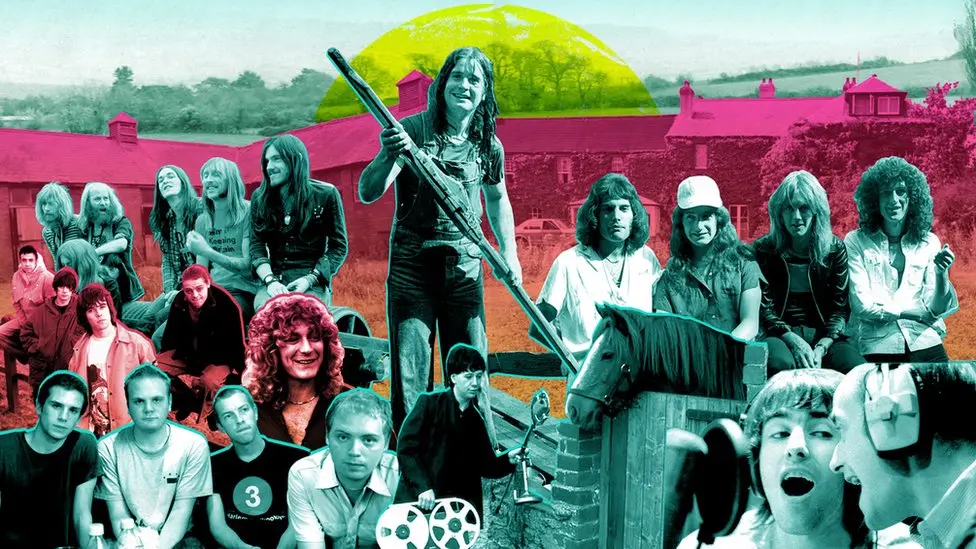
Nestled in the rolling hills of Monmouthshire, South East Wales, lies a landscape famous for the Brecon Beacons, serene fishing spots, and, perhaps surprisingly, a recording studio that has birthed some of the greatest music to ever come out of Britain.
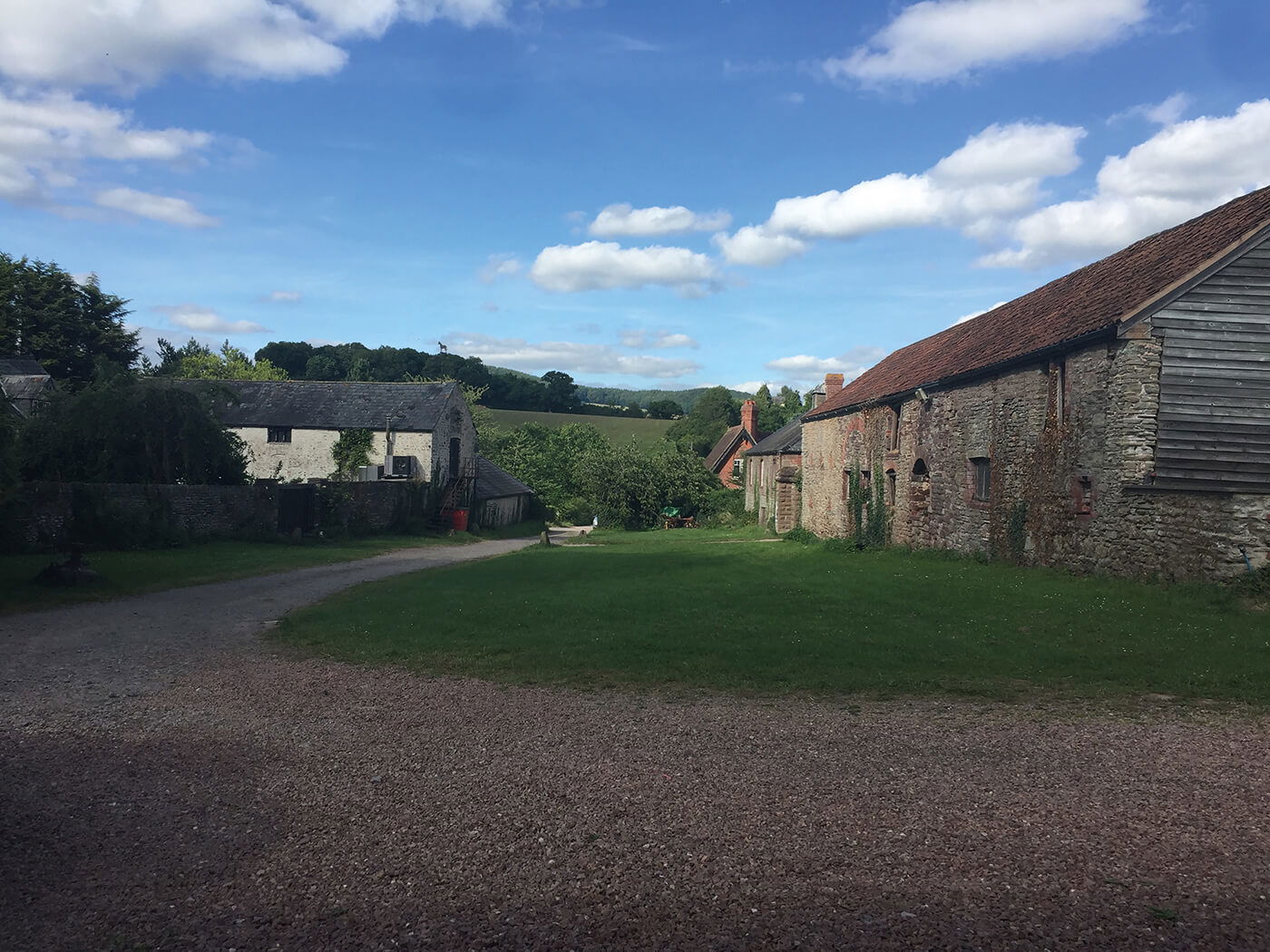
Just outside the town of Monmouth sits Rockfield Farm. To the casual observer, it looks like any other Welsh homestead, but it houses the world’s first and favourite residential recording studio.
For over sixty years, this farm has played host to some of the greatest musicians in history, producing the defining anthems of multiple generations.
From Pig Feed to Platinum Records.
The story didn’t start with high-end mixing desks, but with two brothers, Kingsley and Charles Ward. These were men who knew more about milking cows than mastering tracks, but they had a vision that the music industry then did not have. It was dominated by a scene in London, a scene of corporate studios and producers who saw themselves as lab technicians.
Kingsley and Charles were nothing like their contemporaries. To dampen the sound in their first DIY live room, they didn’t use expensive foam; they used sacks of pig feed. It worked. By 1965, the world’s first residential studio was born. The concept was revolutionary: bands didn't just show up for a shift; they moved in.
This DIY spirit transformed the farm into a unique creative ecosystem. Because the musicians lived on-site, the traditional 9-to-5 studio clock was smashed to pieces. If a lead singer had a moment of inspiration at 3:00 AM, they didn't have to wait for a cab or a studio manager; they simply walked across the yard in their pyjamas and started tracking.
Living the Music
The atmosphere was a far cry from the sterile, fluorescent-lit rooms of London. At Rockfield, the line between work and life didn't just blur; it vanished.
- The Shared Table: The Ward family’s hospitality became legendary. Bands would sit down to home-cooked meals prepared by the family, eating together before heading into the 'Old Dairy' or the 'Coach House' to break sonic boundaries.
- Rural Freedom: Between takes, rock stars would wander the fields, go fishing in the nearby River Wye, or engage in legendary competitive football matches in the farmyard. This sense of freedom allowed artists to decompress, stripping away the ego and pressure of the music industry.
- The Sound of the Stones: The buildings themselves became instruments. The stone walls and high ceilings of the converted barns provided a natural reverb that digital plug-ins still struggle to replicate today.
The farm was still a working farm, so while musicians were working on their next record, the Ward family was working on running the farm. This was something many artists had never experienced before, but it kept them coming back. You couldn't act like a pompous prick when the man who just fixed your guitar amp was heading out to check on the herd.
A Sanctuary for the Rebellious
This environment was exactly what the more rebellious acts of the era craved. When The Edgar Broughton Band or Hawkwind arrived, they weren't just looking for a microphone; they were looking for a sanctuary where they could push the limits of their sound without neighbours' noise complaints.
As the 70s dawned, Rockfield became a magnet for icons. Black Sabbath arrived to record, and the heavy, echoing acoustics of the farm buildings helped define the sound of 'Paranoid'. Ozzy Osbourne has since described the experience as "brilliant," but the cultural shock was immense. The band members had never truly seen the countryside; Rockfield was a far cry from the soot-stained streets of Aston, Birmingham, where they grew up. Coming from an environment of concrete and heavy industry, the silence of the Wye Valley was almost deafening.
Ozzy joked in the documentary Rockfield: The Studio on the Farm “We’d never been on a farm. Everything was new. Seeing a cow in a field! We were from the streets of Aston, the only thing we ever saw was a police horse.”
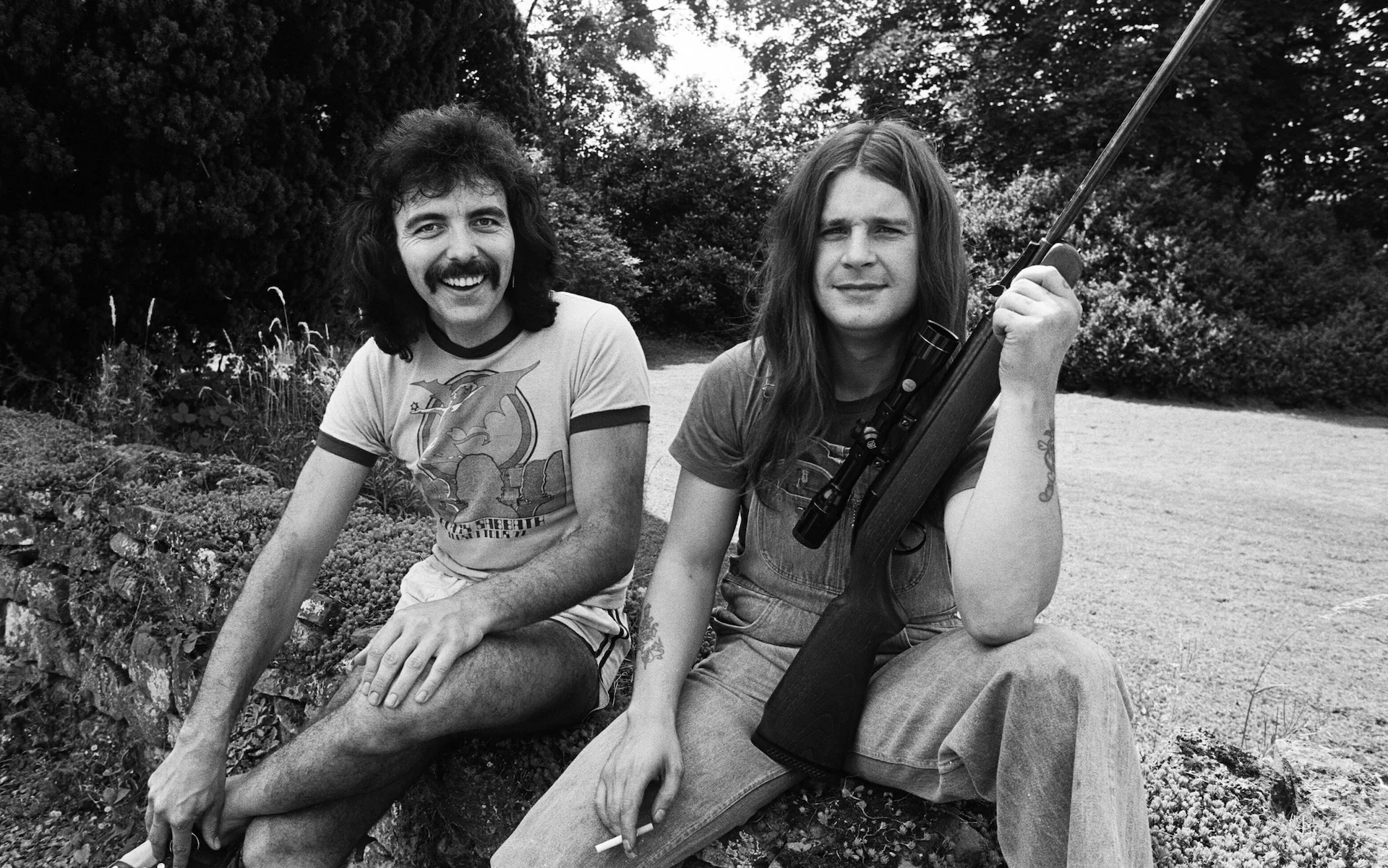
Tony Iommi and the band found that the isolation allowed them to crank their amplifiers to bone-shaking volumes without fear of intervention. The rugged, stone-walled environment of the farm resonated with their dark, heavy riffs, creating a sonic grit that couldn't be manufactured in a polished city studio. It was here, amongst the fields and fresh air, that the blueprints for heavy metal were truly laid down, proving that the heaviest sounds in the world could, ironically, be born in the most peaceful of settings.
For the four lads from Birmingham, the farm wasn't just a place to work; it was a sensory overload. Growing up in the shadow of factories, the band was used to the hum of machinery, not the lowing of cattle. This juxtaposition sparked a unique creative fire. Tony Iommi famously made use of the studio's stone-tiled hallways to capture the crushing, doom-laden echo that would become the band's signature.
The freedom of the farm also led to some legendary, if slightly dangerous, downtime. Between recording sessions for 'Paranoid', the band was known to engage in high-stakes air rifle competitions across the fields and even set off industrial-strength pyrotechnics just to see how loud they would bang in the quiet Welsh night.
This sense of lawless liberty was essential to the music. In London, they were "just another band"; at Rockfield, they were the masters of their own domain. The Ward brothers’ hands-off approach gave Black Sabbath the room to experiment with the dark, occult-tinged themes that would eventually define their career. By the time they finished tracking, they hadn't just recorded an album, they created something eaas era and genre defining.
The Avant-Garde Mystique: Bowie and Iggy
As the 70s progressed, Rockfield’s reputation for total isolation made it the perfect hideout for artists looking to reinvent themselves. Iggy Pop arrived to record 'The Idiot', bringing with him a certain Mr David Bowie, who served as both his producer and creative mentor. This arrival added a layer of avant-garde mystique to the farm that remains legendary to this day.
While working on the album, the pair lived a surprisingly quiet life in the Welsh countryside, a sharp contrast to the high-pressure chaos they had recently fled in Los Angeles. The local reaction to the 'Starman' and the 'Godfather of Punk' was one of polite, Welsh bewilderment. In Monmouth, Bowie wasn’t treated as a celestial icon; he was simply the thin, polite gentleman in the supermarket. He was frequently spotted by villagers casually browsing the aisles of the local shops, blending into the rural pace of life.
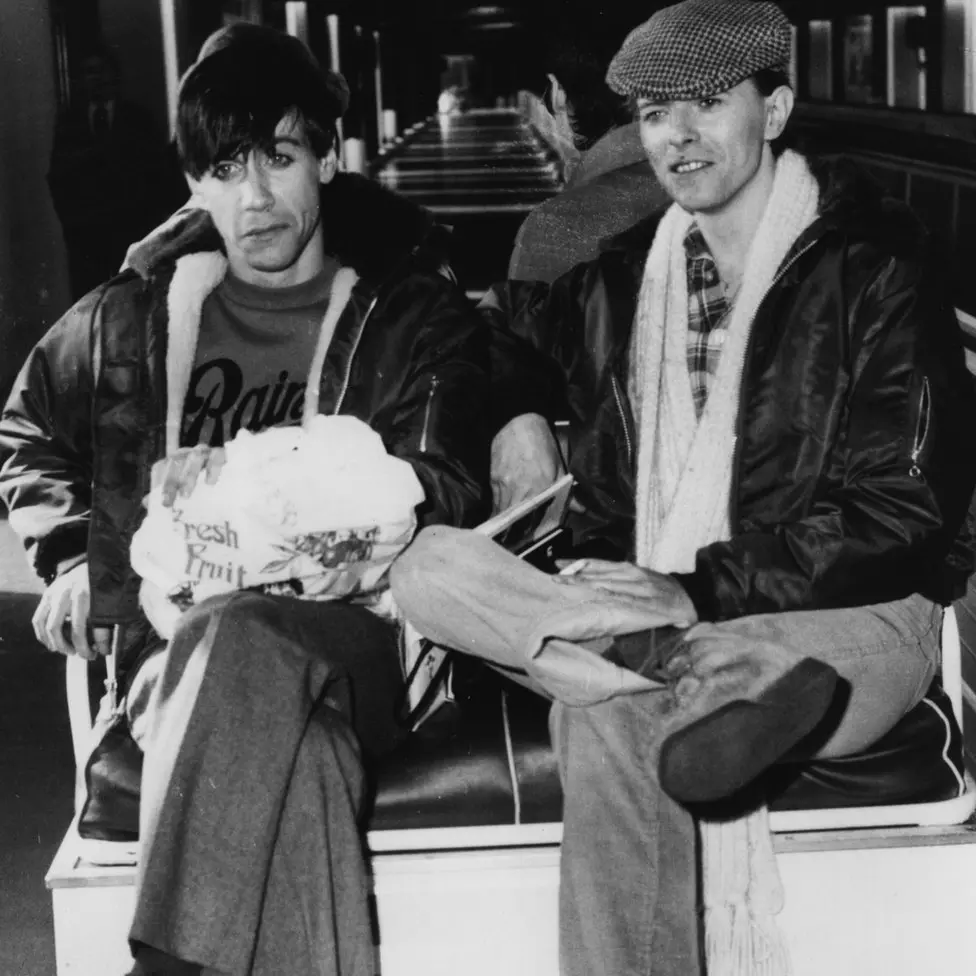
The isolation of Rockfield allowed the duo to dismantle Iggy’s garage-rock past and rebuild it into something darker and more industrial, away from the prying eyes of the paparazzi. Inside the studio walls, the experimentation was relentless. Bowie pushed Iggy to embrace mechanical, cold rhythms, treating the farm’s old buildings like a sonic laboratory. They would often record at odd hours, the heavy beats of tracks like 'Nightclubbing' echoing through the quiet rafters of the barn while the rest of the farm slept. By the time they left Rockfield for Germany, they had created the blueprint for what would become their famous Berlin Era, all born from the unlikely combination of avant-garde genius and a working Welsh farm.
The Birth of a Masterpiece
The band arrived to work on their fourth album, 'A Night at the Opera', and they were looking for a place where they could push the limits of multitracking without being watched by the clock or the public. They took up residence in the 'Coach House', a space that would soon witness the creation of the most ambitious song in pop history: 'Bohemian Rhapsody'.
Freddie Mercury had the entire song, the ballads, the operatic middle section, and the heavy rock finish, mostly mapped out in his head, but it was at Rockfield that it became a reality. The band spent weeks meticulously layering their vocals. In the days before digital recording, this meant singing the same parts over and over until the physical recording tape became so thin you could practically see through it. They were pushing the equipment to its absolute breaking point, all while surrounded by the quiet hum of a working Welsh farm.
The famous piano that Freddie used for those sessions, the very one that played the opening notes of 'Bohemian Rhapsody', remains at the studio today. It is a tangible piece of history that still carries the echoes of those late-night sessions. For Brian May, the farm provided the perfect backdrop for his legendary guitar work; he would often spend hours perfecting the "orchestrated" guitar layers that gave 'A Night at the Opera' its majestic, wall-of-sound quality.
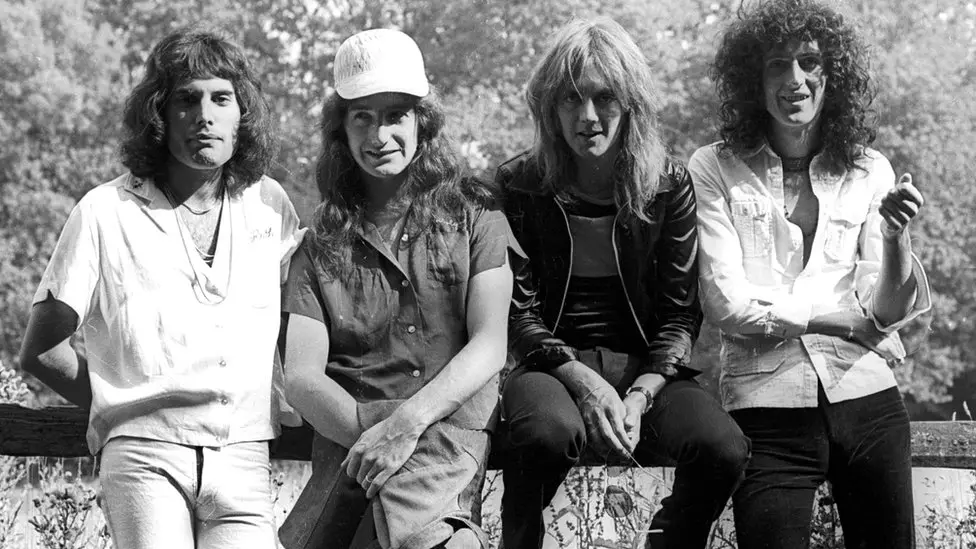
The contrast was surreal. By day, they were four young men navigating the mud and farm life; by night, they were creating a record that would turn them into bona fide superstars. The freedom of the farm allowed them to be as theatrical and "over the top" as they desired. There were no neighbours to complain about the endless vocal takes of "Galileo!" echoing across the fields.
'A Night at the Opera' became one of the first albums to truly put Rockfield on the global map as a hit factory. When 'Bohemian Rhapsody' topped the charts for nine weeks, the world wanted to know where this "operatic" sound had come from. The image of the band in the Welsh countryside became deeply ingrained in the Rockfield story.
It wasn't just a recording session; it was the moment Queen claimed their throne. The farm provided the sanctuary they needed to be brave, to be weird, and to be brilliant. As Kingsley Ward often notes, Queen didn't just record an album there; they helped define what Rockfield was capable of.
Rockfield was now firmly on the map.
The New Wave Frontier
As the industry shifted toward more sophisticated production, Rockfield proved it wasn't just a "rock" barn; it was a world-class facility capable of handling the era's cutting-edge tech. The Teardrop Explodes, led by the eccentric Julian Cope, arrived to record their debut, 'Kilimanjaro'. The farm’s atmosphere helped harness Cope’s psychedelic energy into some of the most iconic pop-rock of the early 80s.
Not long after, Echo & the Bunnymen became regular fixtures at the farm. They recorded much of their seminal work there, including parts of 'Crocodiles' and 'Porcupine'. The band famously used the natural space of the studio to capture their signature "big" drum sound and swirling, atmospheric guitars. Lead singer Ian McCulloch found that the isolation of the Monmouthshire hills suited his brooding, poetic delivery perfectly.
Solo Legends and Synth Pop
The 80s also saw the return of rock royalty in new forms. Robert Plant, following the end of Led Zeppelin, chose Rockfield to launch his solo career. He recorded 'Pictures at Eleven' and 'The Principle of Moments' at the farm, often seen by locals driving his car through the lanes of Monmouth. For Plant, the studio was a safe haven where he could reinvent his sound away from the shadow of his former band.
The decade also played host to:
- Simple Minds: Who brought their stadium-ready synth-pop sound to the farm to record parts of their early work.
- The Pogues: Bringing a completely different energy, Shane MacGowan and the band recorded 'Hell’s Ditch' at the studio, proving the farm could handle anything from high-tech synthesisers to rowdy, accordion-led folk-punk.
- The Damned: The punk legends moved into a more gothic, melodic phase during their time at Rockfield, recording the hit 'Phantasmagoria'.
The Saviours from Manchester
From the endless bookings of the 70s, Kingsley Ward's wife Ann took several bookkeeping jobs to keep Rockfield alive during the late 80s.
A huge recession hit, and the music industry began to cave in on itself. With financial struggles and the emergence of technology, it looked as if Rockfield might fall silent.
Then came The Stone Roses.
The band already had a history with the farm; they had retreated to Rockfield to lay down 'Waterfall' and 'I Am The Resurrection' for their self-titled debut album after their sessions in London had proven to be an uninspiring slog.
When it came time to record the follow-up, the band’s producer, John Leckie, recommended they return to the Welsh countryside. Their new American record company was prepared to throw millions of pounds at the band to do whatever they wanted, and what they wanted was the isolation of Rockfield.
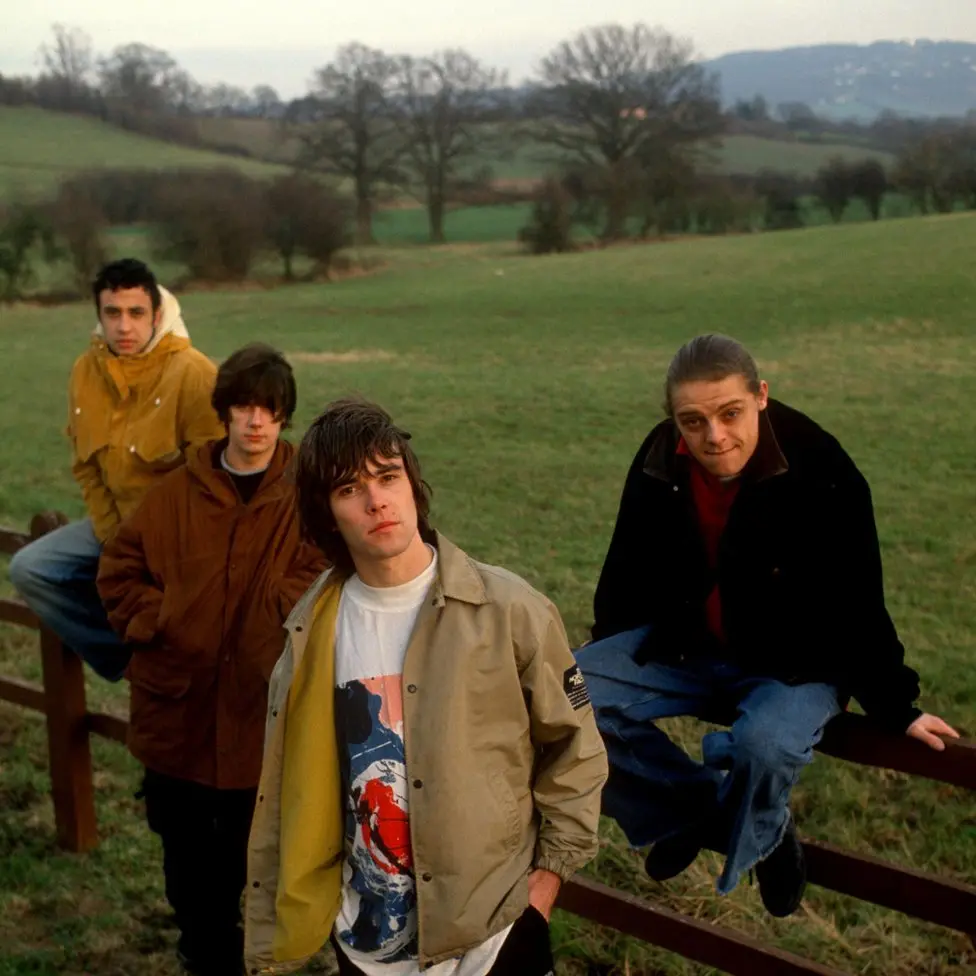
I don't think anyone foresaw what would happen next.
The 13-Month Marathon
The Roses arrived in 1992 to plan what would become 'Second Coming'. "They booked in officially for a couple of weeks," Lisa Ward, Kingsley’s daughter and now office manager, recalls in the film Rockfield: The Studio on the Farm. "But they stayed. It was 13 months in the end. That saved us. The Stone Roses saved Rockfield."
That was music to the Wards' ears. The Roses arrived in 1992 to plan what would become 'Second Coming'. "They booked in officially for a couple of weeks," Lisa Ward, Kingsley’s daughter and now office manager, recalls in the film Rockfield: The Studio on the Farm. "But they stayed. It was 13 months in the end. That saved us. The Stone Roses saved Rockfield."
This legendary residency wasn't just about financial survival; it was a testament to the Ward family’s unwavering patience. Most studios would have grown tired of a stay with no end date, but at Rockfield, the Wards understood that art couldn't be rushed. By allowing the band to live, breathe, and evolve on their own terms, they helped birth a record steeped in the bluesy, organic atmosphere of the valley.
During this time, they crafted the powerhouse single 'Love Spreads'. Recorded at the farm sometime between 1992 and 1994, it was the band’s first new material released in over two-and-a-half years. It became their highest-charting record, reaching No. 2 in November 1994.
The Roses didn't just provide the studio with a paycheck; they restored its "cool" factor. They proved that even in an era of high-tech digital shifts, there was still no substitute for the creative "pressure cooker" of a Welsh barn. Their stay was the ultimate catalyst, clearing the path for the Britpop explosion that was just over the horizon.
The Rise of Oasis: Harvesters and Anthems
Little did Rockfield know at the time that their next musical legacy was staying just over the other side of the valley, recording at Monnow Valley, a studio that was a part of the Rockfield estate. Manchester Britpop heroes Oasis were trying, and failing, to master their debut album 'Definitely Maybe' there.
During their sojourn, the ever-unpredictable frontman Liam Gallagher, alongside guitarist Paul 'Bonehead' Artuhurs, famously pinched the owners' combine harvester and drove it across the fields to spy on The Stone Roses back at Rockfield. It was a moment of pure rock n' roll theatre: a young Liam, on a mission of curiosity and mischief, rumbling across the Welsh landscape to see what his idols were up to.
Leaving the combine harvester in the field, after being invited in by The Stone Roses.
The Stone Roses bass player, Gary 'Mani' Mountfiled tells a similar story where he took the tractor from Rockfield, and drove to Monnow Valley whilst on magic mushrooms, to steal booze and drugs.
While Oasis eventually finished that first album in Cornwall, they were destined to return to Monmouth to record the anthems that would define a generation. In 1995, the band returned to Rockfield to record '(What's The Story) Morning Glory?'.
The sessions were a whirlwind of genius and sibling rivalry. Nick Brine, the studio engineer, recalls the tension during the tracking of their biggest hits:
"There was a little bit of a debate about who was going to sing 'Wonderwall'. Noel was going to sing it, then Liam was going to sing it. Then Noel said, 'Ok, I'll sing 'Don't Look Back in Anger'', then Liam wanted to sing that, too."
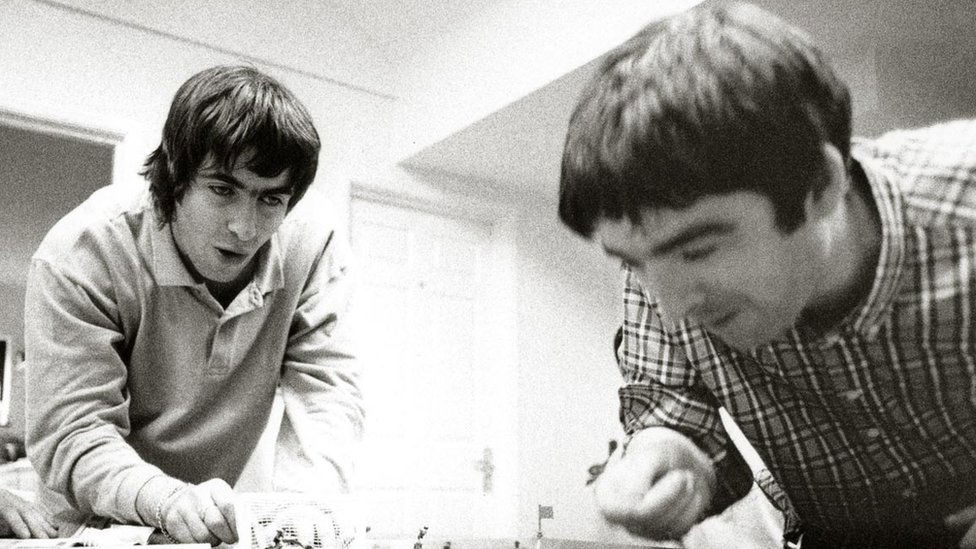
Ultimately, 'Don't Look Back In Anger' became songwriter Noel Gallagher’s first single as lead vocalist, while Liam took the reins on 'Wonderwall'. As Liam reflects in the film, "Everyone wanted to make the songs the best they could. If that bred a bit of competition, then so be it."
However, living at such close quarters 24/7 could spark more than just musical competition. Liam recalls one particular row with Noel that escalated into a full-scale battle involving "cricket bats and air rifles, the lot."
But when tempers cooled, the band got down to business. Working at an extraordinary rate, Noel, Liam, and Bonehead have all stated that during the sessions, they were working on a song a day. The "pressure cooker" of the farm forced a focus that was undeniable. They finished the album that transformed the band and the Gallagher brothers into global sensations, making 'Wonderwall', 'Don't Look Back in Anger', and 'Champagne Supernova' permanent fixtures of British culture.
The impact of '(What's the Story) Morning Glory?' was seismic, and it all traced back to those sessions in the Welsh mud. It didn't just top the charts; it became the second best-selling British album of all time, soundtracking the summer of 1995 and defining the "Cool Britannia" era. At a time when the UK was looking for a new identity, Oasis provided the volume. The record’s massive success turned Rockfield from a legendary industry secret into a household name, proving that a residential farm could produce a polished, stadium-filling sound that could dominate the globe. It wasn't just a collection of songs; it was a cultural shift
The Engine Room of the 90s
As the Britpop movement reached its fever pitch, Rockfield was no longer just a studio; it was a hit factory with an almost supernatural strike rate. The Ward family’s vision of a residential sanctuary had become the blueprint for every major guitar band of the era.
"Both studios were both booked up nine months in advance, back to back," recalls Lisa Ward. "The 1990s were a great time for British guitar bands."
The farm tracks were soon walked by a "who’s who" of 90s royalty. Manic Street Preachers arrived to record their emotional masterpiece 'Everything Must Go', while Stereophonics, Ash, Black Grape, and The Boo Radleys all moved in to track what would become Number One albums. This wasn't just a win for the Ward family; it was a total takeover of the British airwaves. The studio’s dominance was so absolute that Kingsley Ward recalls a staggering moment of pride that remains a record in the industry:
"One time in 1997, out of the top ten albums in the UK, Rockfield had seven."
To have seven out of the top ten albums coming from one farm in Monmouthshire was a feat that even the most high-tech London studios couldn't touch. It proved that the "Rockfield Sound", that raw, organic resonance born from stone walls and open fields, had become the literal heartbeat of the nation.
The Sharp Bend: The Loss of Rob Collins
The studio’s history isn't solely written in gold records and chart-toppers; it is also marked by moments of devastating reality. The lowest point in the farm’s long history came in 1996, during a session for The Charlatans. The band was at the height of their powers, recording their fifth album, 'Tellin' Stories', when the rural peace was shattered
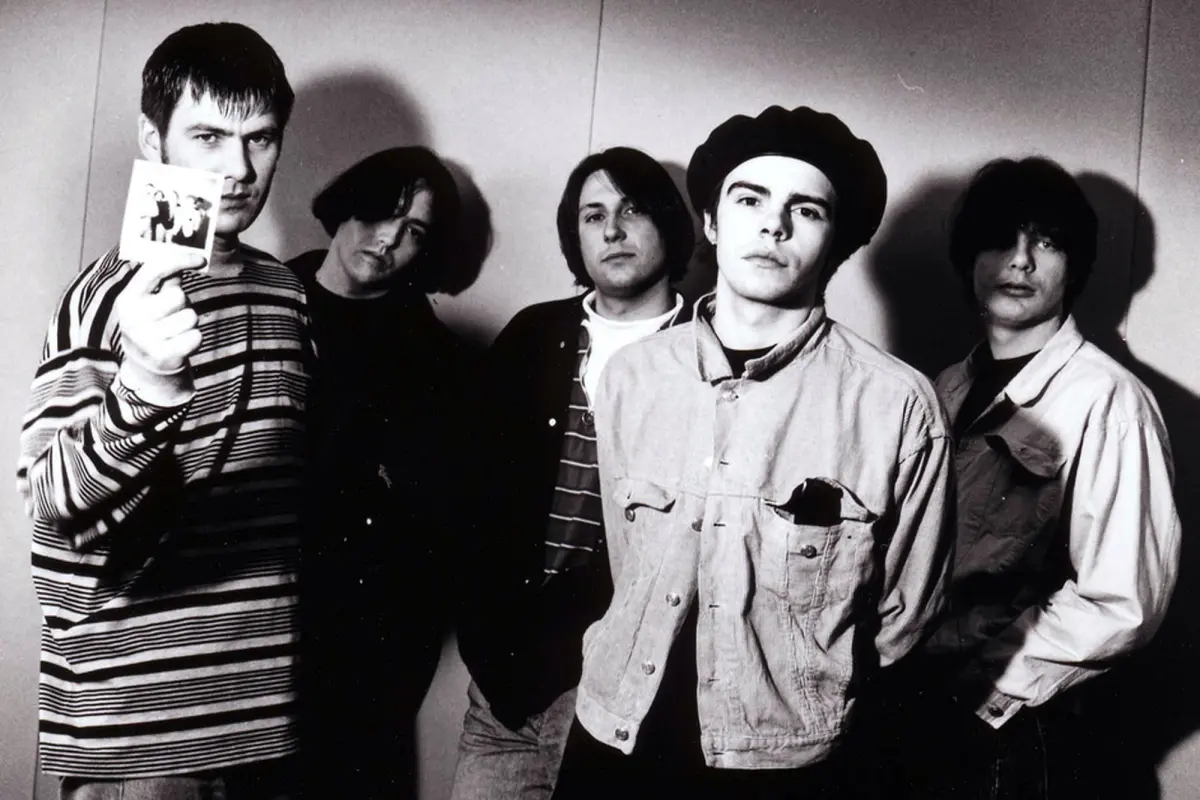
The band’s brilliant keyboard player, Rob Collins, was killed in a car accident while speeding back from a local pub. The proximity of the tragedy to the studio made it an indelible memory for the Ward family. "We could hear the car from our bedroom window," Kingsley recalls. "It was going like the clappers. Then we heard a bang. It’s a very sharp bend.
The loss was a gut-punch to the Britpop community and a sombre reminder of the thin line between the high-octane rock 'n' roll lifestyle and the quiet, unforgiving nature of the countryside. In a show of incredible resilience and a tribute to their friend, the band finished the album, which went on to become a UK Number One. To this day, the echoes of that night remain part of the Rockfield story
Musical Hogwarts: Coldplay and the Stars Above
As the new millennium dawned, the torch was passed to a young, up-and-coming band from London who arrived at the farm under immense weight. Much was expected of Coldplay at the turn of the millennium, but they were under pressure to turn that expectation into something more tangible. For frontman Chris Martin, the trip to Monmouthshire was "a make-or-break session." The band knew they had "one shot" at the big time as they began recording their debut album, 'Parachutes'.
Martin would later affectionately describe the farm as "very much like some sort of musical Hogwarts." It was within this magical, rural atmosphere that immortality was captured in the form of their crowd classic, 'Yellow'.
The Birth of 'Yellow'
The creation of the song was a moment of pure serendipity, triggered by the very environment the Ward brothers had cultivated for decades. "We were recording 'Shiver' and went outside for a breather, and it was so beautiful," Martin recalls. "All four of us were outside and Ken Nelson, our producer, said 'look up there, lads', and he literally said 'look at the stars', which is the first line of that song."
For a band that had spent the previous five years steeped in the smog of London, the clarity of the Welsh night sky was a revelation. "It was mind-blowing... we haven't seen anything beyond smog for a while, so that line was in my head," says Martin. He went back inside, sat behind the mixing desk, and played the first chord. The song's iconic title came from an unlikely source of rural utility: a copy of the Yellow Pages sitting at a 45-degree angle nearby.
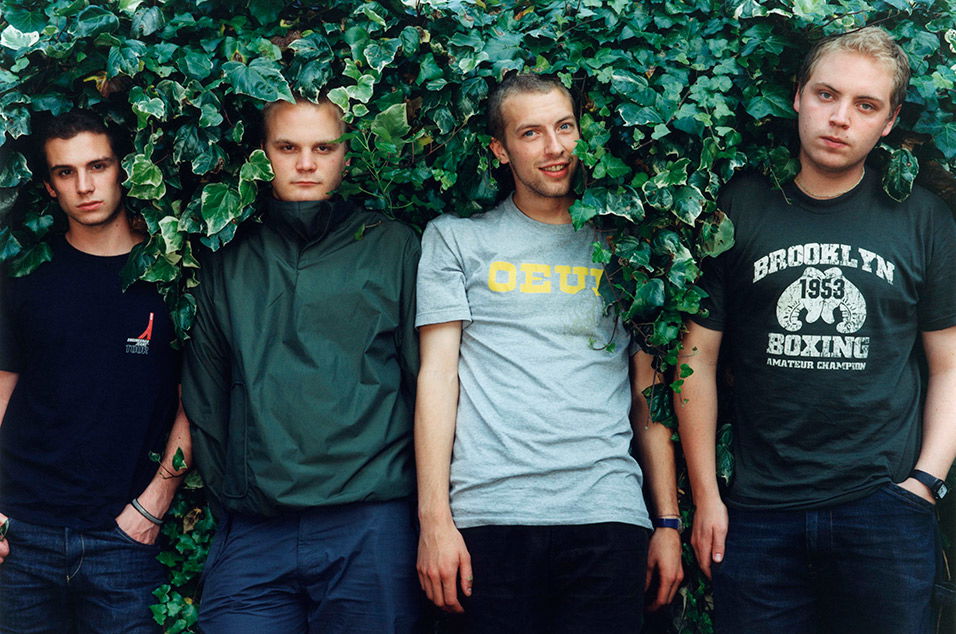
The rest of the piece fell into place with the kind of domestic simplicity that defines the Rockfield experience. The soaring chorus was written in the bathroom of the living room area. That single moment of inspiration, born from a breath of fresh country air, changed everything. As Martin puts it: "That gave us our lives for the last 16 years. From humble beginnings."
'Parachutes' went on to become a global phenomenon, proving that even as musical tastes shifted from the grit of Britpop to the melodic atmosphere of the 2000s, Rockfield remained the ultimate sanctuary for artists to find their voice. The farm hadn't just produced another hit; it had provided the stars that guided one of the world's biggest bands.
The Legacy of the Brothers: A Home for Legends
The enduring magic of Rockfield isn't found in the expensive mixing desks or the state-of-the-art microphones, but in the spirit of the two brothers who built it. It is a beautiful story of how Kingsley and Charles Ward, two young men who once harboured their own dreams of becoming rock stars, ended up helping thousands of others achieve that very dream. By turning their backs on traditional industry rigidity, they created something far more valuable: a home.
A place where some of the finest musicians in the world could create masterpieces. Without the traditional norms.
The "Big Brother" House with Songs
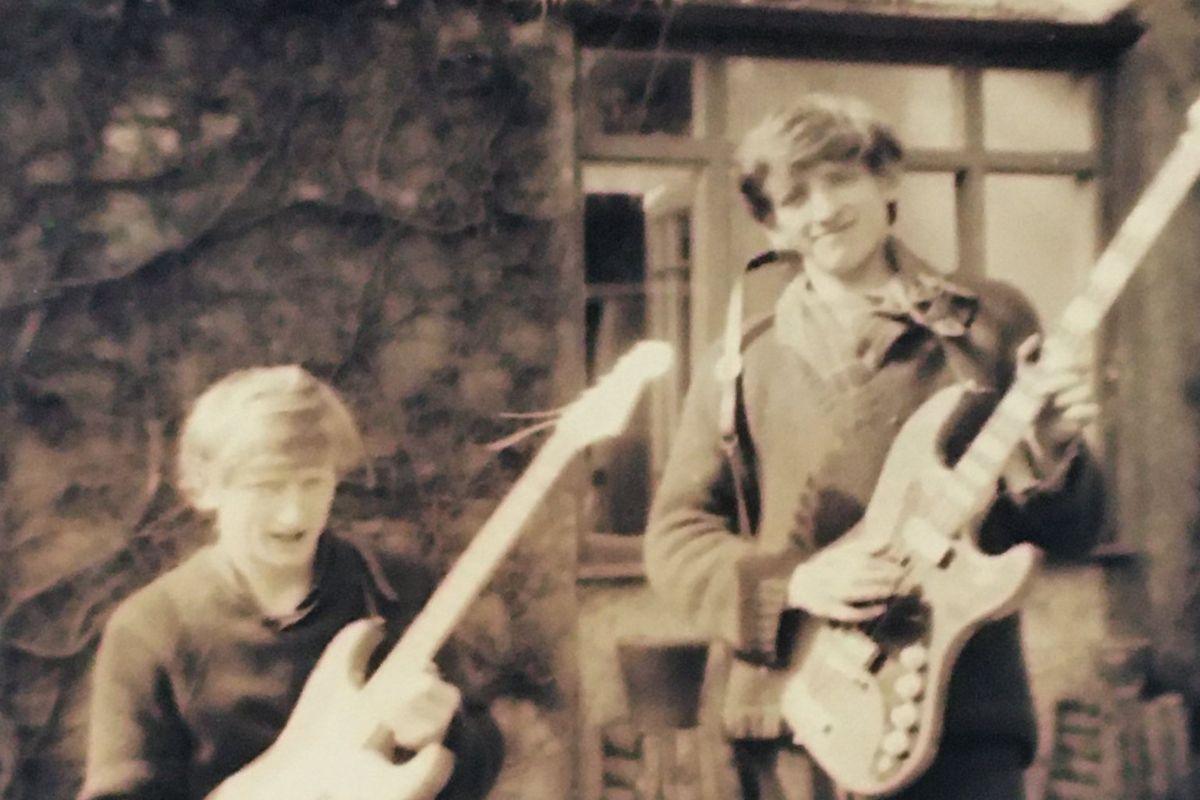
Bands didn't just love Rockfield for the acoustics; they loved it because it allowed them to be themselves. Liam Gallagher perfectly captured the chaos and camaraderie of the experience, famously describing the studio as "the Big Brother house with songs." Despite the occasional battle with cricket bats and air rifles, the Gallaghers clearly felt the charm of the place. Their entry in the Rockfield visitors' book remains a testament to the farm’s grounding influence:
“Would just like to say thanks to Rockfield Studios for the pleasant surroundings in this wonderful rural atmosphere. Yours sincerely, Oasis.”
A Culture of "No Questions Asked
This "wonderful rural atmosphere" was maintained by a family and staff who understood the rock 'n' roll lifestyle better than anyone. There was a legendary level of care and discretion that allowed artists to feel safe in their excesses. The Boo Radleys famously recalled waking up after a particularly heavy night to find that the cleaners had tidied the room around them, even going so far as to neatly line up their drugs on the side.
It was this "no-questions-asked" hospitality, combined with Ann Ward’s cooking and the family’s infinite patience, that turned a working farm into a sanctuary. Whether it was The Stone Roses wandering out to see the newborn calves or Chris Martin gazing at the unpolluted stars, the farm stripped away the pretensions of the music industry and left only the art.
The Power of Ann Ward
When looking back at the history of the farm, the infamous Oasis brawl often takes centre stage, a night of chaos that saw equipment smashed and a huge fight involving a cricket bat. In any other professional environment, a band would have been banned or shunned from the region forever. But at Rockfield, Kingsley simply described them as "naughty schoolboys" and knew exactly how to handle them.
He would send his secret weapon down to the studio: his wife. "I’d always send her down to sort stuff out. They respected her," Kingsley recalls. "They could be a bit excitable, but they always apologised. She’d say, 'Could you please stop throwing things and messing around,' and they all did. They always listened to Ann."
It was that maternal touch and sense of "home" that balanced the rock 'n' roll madness. While some bands were explosive, others were a perfect fit for the quiet country life. "Queen were very gentle, such quiet, brilliant people and very dedicated," Kingsley notes, showing the vast spectrum of legends the farm nurtured.
A Living Monument
Today, Rockfield stands as the world’s first and most storied residential studio. It remains a place where the history of rock is etched into the stone walls and soaked into the very soil. It is a living monument to the Ward brothers' belief that great music needs room to breathe, and that sometimes, the best way to record a masterpiece is to get away from the world and move into a barn.
While many of the grand, high-tech studios of London and New York have long since been converted into luxury flats, the farm continues to thrive. It has survived recessions, industry shifts from tape to digital, and the volatile temperaments of the world’s biggest stars. This is because Rockfield was never just a business; it was an act of faith. It was the belief that a quiet corner of Wales could produce something loud enough to change the world.
And although Charles is no longer with us, Kingsley has stated that he has no plans to sell up. As the music continues to echo through the Monmouthshire hills, the legacy of what the brothers started remains as vibrant as ever. They didn't just witness rock history; they hosted it, helping soundtrack generations of dreams. Rockfield will continue to provide us with great songs, well, until the cows come home.
For Charles Ward