This is History: Oasis Knebworth 30 Years On
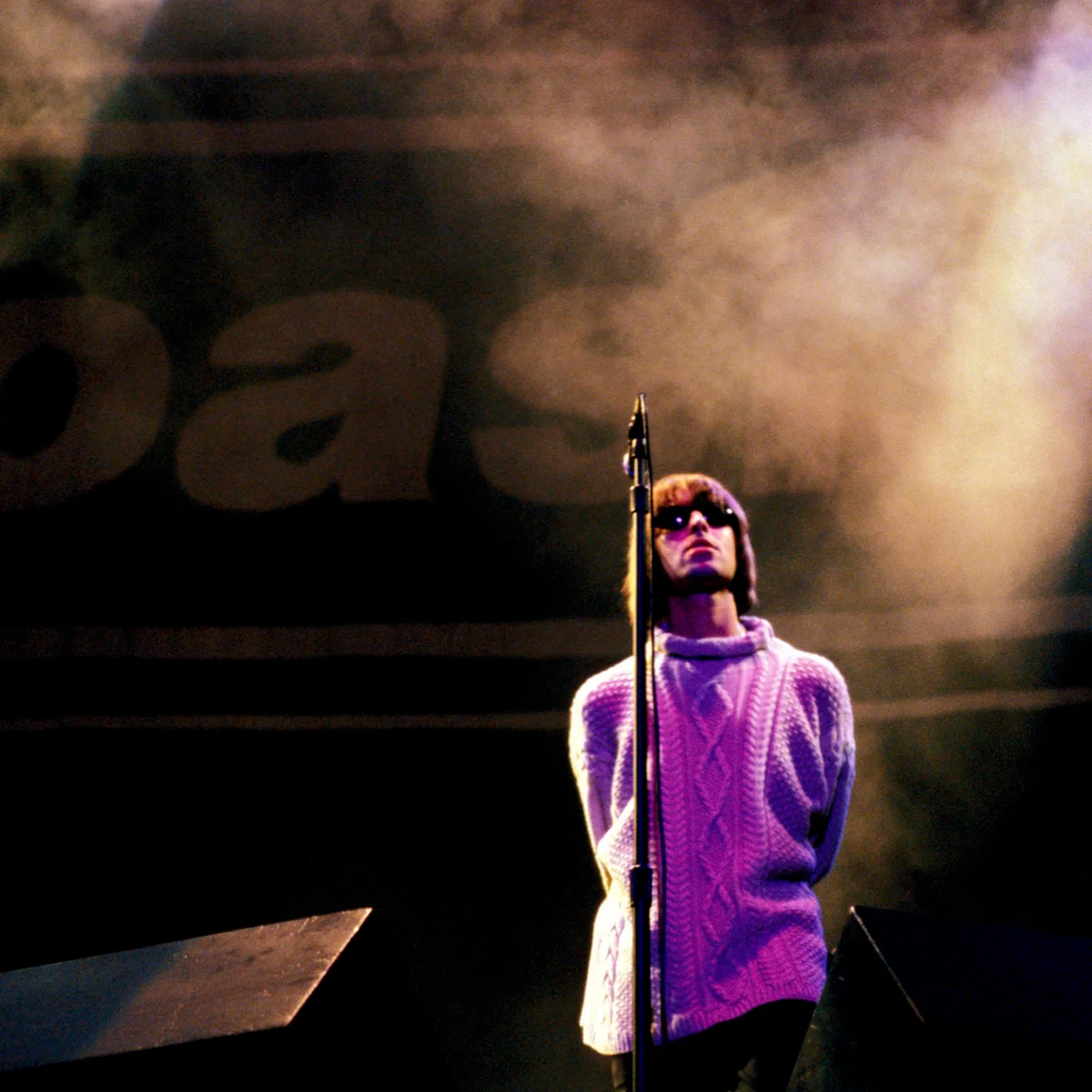
On 10 and 11 August 1996, Oasis played to 250,000 people across two nights at Knebworth Park. Thirty years later, the shows remain the defining image of the band at their peak and one of the greatest gatherings in British music history.
Thirty years ago, Oasis walked onto a stage in the grounds of Knebworth House and entered a form of immortality.
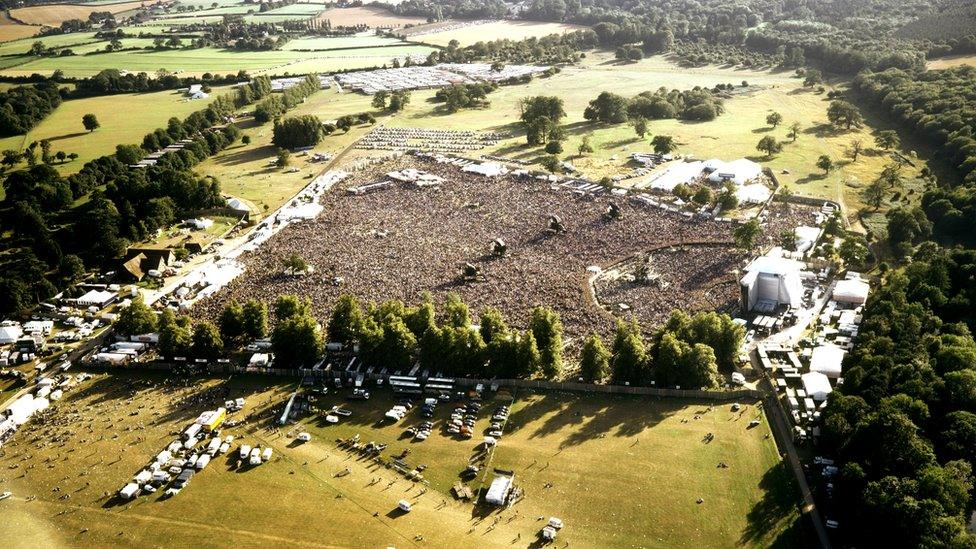
The two concerts on 10 and 11 August 1996 have become so familiar that they can seem less like events that really happened and more like scenes from British musical mythology. There is the ocean of people stretching towards the horizon, Liam Gallagher leaning into his microphone with his hands behind his back, Noel Gallagher carrying his Union Jack guitar, John Squire appearing for the encore and 125,000 voices attempting to turn every song into a national anthem.
Before the second show began, Noel looked at the crowd and announced: "This is history, this is history. Right here, right now. This is history." Liam immediately punctured the grandeur by replying: "I thought it was Knebworth."
The exchange captured Oasis perfectly. Noel understood the scale and symbolism of the moment, while Liam refused to let it become too dignified. Yet Noel was right. Knebworth was history, although its importance came from more than the number of tickets sold. It was the moment when the rise of Oasis, the commercial peak of Britpop and the optimism projected onto mid-1990s Britain appeared to meet in the same field.
The Summer of 96
Knebworth did not arrive without warning. It was the culmination of an extraordinary ascent that had taken Oasis from clubs to the largest stages in the country in little more than two years. 'Definitely Maybe' had been released in August 1994 and became the fastest-selling debut album in British history at the time. Its songs did not sound as though they were asking for admission into the culture. 'Rock 'n' Roll Star', 'Live Forever', 'Supersonic' and 'Cigarettes & Alcohol' behaved as if Oasis already owned it.
The following year, '(What's the Story) Morning Glory?' transformed confidence into mass popularity. 'Some Might Say' gave the band their first UK number one single, while 'Wonderwall', 'Don't Look Back in Anger' and 'Champagne Supernova' travelled far beyond the indie audience that had first embraced them.
By the beginning of 1996, Oasis were no longer merely competing with Blur or leading a guitar movement. They had become one of the biggest bands in Britain. Their concerts at Earls Court in November 1995 had already demonstrated how rapidly the venues were expanding, but the following summer was built around a deliberate sequence of escalation.
The first major landmark came on 27 and 28 April, when Oasis performed at Maine Road, the former home of Manchester City. For Liam and Noel, both lifelong City supporters raised in Burnage, the shows carried an intimacy that their size could not erase. Around 40,000 people entered the stadium each night, but the achievement was personal as much as commercial. Oasis had returned to Manchester not as promising local musicians or even chart stars, but as a band large enough to occupy the ground they had grown up dreaming about.
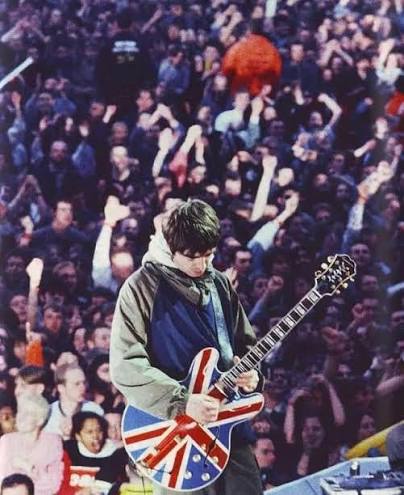
Maine Road established the visual and musical language that Knebworth would expand. Noel played the Union Jack Epiphone Sheraton that became inseparable from the era. Liam stood before a hometown crowd with the authority of a frontman who appeared incapable of doubt. 'Acquiesce', 'Supersonic', 'Morning Glory' and 'Cigarettes & Alcohol' were no longer simply records being reproduced on stage. They had become communal possessions.
Manic Street Preachers and Ocean Colour Scene supported Oasis at Maine Road, connecting the concerts to the wider movement gathering around the band. Three months later, on 3 and 4 August, Oasis travelled to Balloch Castle Country Park on the banks of Loch Lomond and played to around 80,000 people across another two nights. If Maine Road was the homecoming, Loch Lomond proved that the phenomenon belonged to more than Manchester.
Scotland already occupied a special place in the Oasis story. It was at King Tut’s Wah Wah Hut in Glasgow in May 1993 that Alan McGee first saw the band and offered them a deal with Creation Records. Just over three years later, the group that had arrived in Glasgow unknown and uninvited returned to command approximately 40,000 people each night. Loch Lomond therefore felt like a second homecoming, a closing of the circle between the cramped club where the possibility of Oasis first became apparent and the enormous outdoor gatherings that now seemed to follow them wherever they went.
The setting gave the concerts a character of their own. Maine Road had the enclosed intensity of a football stadium, but Loch Lomond opened the spectacle out into the landscape. Tens of thousands of fans poured into Balloch, packing trains from Glasgow and transforming the surrounding park into a vast temporary community. There was something almost surreal about Oasis bringing the volume and attitude of Manchester rock and roll to the banks of the loch, with the hills, water and castle grounds surrounding a crowd that appeared to stretch endlessly into the distance.
Across the weekend, a festival-sized supporting cast included Manic Street Preachers, Ocean Colour Scene, Cast, Black Grape, Heavy Stereo, Dreadzone and The Bootleg Beatles. The mixture was significant. It brought together the melodic guitar bands dominating the charts, the surviving spirit of Madchester and the dance culture that had helped reshape British music. Black Grape supplied the loose, celebratory funk, while the Manic Street Preachers represented something sharper and more confrontational. This was not simply an Oasis concert with a few support acts attached. It was another gathering of the tribes, a snapshot of British music in the middle of an unusually confident and communal moment.
Oasis arrived with a set that was already beginning to resemble the one they would take to Knebworth. 'Columbia' provided the opening surge, followed by 'Acquiesce', 'Supersonic', 'Hello', 'Some Might Say', 'Slide Away' and 'Morning Glory'. 'Wonderwall', 'The Masterplan', 'Don’t Look Back in Anger' and 'Live Forever' gave the second half the quality of an enormous public singalong, before 'Champagne Supernova' and 'I Am the Walrus' brought the nights to their overwhelming conclusions.
Loch Lomond also offered the first glimpse of where Oasis intended to go next. The band introduced 'My Big Mouth' and 'It’s Gettin’ Better (Man!!)', two unreleased songs that would eventually appear on 'Be Here Now'. Both were louder, longer and more excessive than much of what had come before. Even before the next album had been completed, Oasis were already trying to build beyond the scale of '(What’s the Story) Morning Glory?'. At Loch Lomond, that ambition still sounded thrilling rather than burdensome.
The concerts should not be remembered merely as a warm-up for Knebworth. They were monumental events in their own right and remain among the largest and most celebrated outdoor shows ever staged in Scotland. Maine Road demonstrated that Oasis could turn their home ground into a rock and roll cathedral. Loch Lomond proved that the same sense of ownership, community and occasion travelled far beyond Manchester. By the time the band reached Knebworth the following weekend, the concerts felt like the only possible conclusion to a summer in which every previous limit had disappeared.
The Hardest Ticket in Britain
Tickets for Knebworth went on sale at 9am on 11 May 1996, priced at £22.50. It was the same day Manchester United defeated Liverpool in the FA Cup final, adding another curious piece of Manchester history to a weekend already charged with anticipation. Before a single note had been played, Knebworth was becoming part of the culture surrounding Oasis.
This was before online queues, mobile ticketing and social media announcements. There was no digital waiting room, no number on a screen and no progress bar suggesting that a purchase might eventually be possible. Fans learned the details through radio, the music press, mailing lists and word of mouth. Some camped outside record shops and ticket offices overnight, while others spent hours repeatedly calling booking lines from landline telephones. The engaged tone became the soundtrack to a national scramble. Every attempt involved the same uncertainty, with no way of knowing whether the next call would finally connect or whether the tickets would disappear first.
All 250,000 tickets reportedly sold within eight hours, breaking British box-office records. There were said to be 2.6 million people attempting to buy them, the equivalent of approximately 5 per cent of the entire UK population at the time. If that figure is taken literally, fewer than one in ten of those who wanted to attend were successful. The demand was theoretically large enough for Oasis to have filled Knebworth for 20 nights.
Even allowing for the difficulty of measuring demand precisely, the scale was extraordinary. Knebworth was not merely sold out. The ticket sale became an event of its own, measuring how many people wanted to participate in the Oasis story and how many would have to experience it through television reports, newspaper photographs, bootlegs and the stories of those fortunate enough to be there. Possessing a ticket meant more than securing entry to another concert. It meant gaining access to something that already felt historical.
For those who succeeded, the journey became part of the ritual. Fans travelled to Hertfordshire by train, coach and car, transforming the surrounding roads and fields into the approaches to a temporary city. Each daily audience of 125,000 was larger than the population of many British towns. From the back of the field, Oasis were distant figures on a stage, watched through enormous video screens and heard through speaker towers positioned across the grounds. Yet the distance did not reduce the feeling of participation. The very sight of so many people moving, singing and waiting together gave the event its meaning.
Knebworth already carried its own history, having hosted Led Zeppelin, The Rolling Stones, Pink Floyd and Queen. Oasis were not arriving as respectful visitors to a monument built by earlier generations. They were claiming their place within that lineage while bringing an audience whose identity was unmistakably rooted in the 1990s. The clothes, haircuts, bucket hats, football shirts and parkas belonged to the period as completely as the songs. This was not an older version of rock history being recreated. It was a new generation recognising that one of its own bands had become large enough to inherit the field.
The crowd became part of the meaning. These were fans who recognised themselves in the band: in the accents, the clothes, the humour, the defiance and the refusal to treat ambition as something reserved for people from different backgrounds. Oasis made enormous success appear accessible without making it look ordinary. Knebworth offered the fantasy that five people from Manchester could stand in front of a quarter of a million others and still appear to belong among them.
That relationship explains why the size of the concerts did not immediately create distance between the band and their audience. Liam might have been standing on one of the largest stages ever constructed for a British rock concert, but his posture, language and attitude remained recognisable. Noel could declare that the band were making history without sounding as though that history belonged exclusively to him.
The achievement appeared collective. Oasis had written the songs, but the audience had carried them from bedrooms, pubs, record shops and football terraces into this enormous field.
Backstage, however, a different version of Knebworth was unfolding. Around 7,000 people were reportedly included on the guest list, a gathering larger than many bands could attract to their own headline concerts. The backstage area operated as an event within the event, filled with musicians, actors, models, television personalities, record-industry figures and assorted friends of the band. Guests were surrounded by open bars, barbecues and free ice cream while the audience outside attempted to navigate the practical realities of spending an entire day in a field with another 125,000 people.
Alan McGee later estimated that Creation Records’ bar bill exceeded £250,000. Whether every detail of the backstage mythology can be verified hardly seems to matter, because the stories capture the atmosphere of excess that had formed around Oasis by the summer of 1996. Creation had begun as an independent label devoted to outsiders and unlikely pop stars. At Knebworth, the celebration surrounding its greatest success had become so large that the guest list resembled a festival audience and the drinks bill cost more than many albums required to record.
That contrast was central to Knebworth. Out in the field was a vast public gathering built upon loyalty, aspiration and the shared ownership of songs. Behind the stage was the celebrity world that Britpop had helped create, where musicians mixed with models, actors, broadcasters and the people now attempting to attach themselves to the defining cultural moment of the decade. Knebworth was communal and exclusive at the same time, representing both the ordinary fans who had carried Oasis there and the machinery of fame that had assembled around them.
The excess did not yet feel like a warning. In August 1996, it appeared to be evidence that every previous boundary had been broken. The ticket queues, the record-breaking demand, the temporary city in front of the stage and the enormous party behind it all pointed towards the same conclusion: Oasis had become too large to be contained by the normal dimensions of a rock band.
A Support Bill that Defined the Decade
The support bills at Maine Road and Loch Lomond had already demonstrated that the summer was about more than Oasis alone. Manic Street Preachers and Ocean Colour Scene had shared the stage with them at Maine Road, while Loch Lomond widened the gathering to include Cast, Black Grape, Heavy Stereo, Dreadzone and The Bootleg Beatles. These were not randomly selected opening acts. Together, they connected Oasis to the wider movement unfolding around them, bringing together Britpop, Madchester, Merseyside melody, Welsh alternative rock, mod revivalism, dub and electronic music.
Knebworth gathered those threads into two festival-sized bills. Several of the acts from Maine Road and Loch Lomond returned, but the scale and variety increased again. The support bands were not treated as background entertainment while the audience waited for Oasis. Many were enjoying important moments in their own careers, and several possessed enough material and momentum to headline substantial concerts themselves. By the time Oasis appeared, the crowd had already spent an entire afternoon moving between different versions of British music in 1996.
Saturday began with The Bootleg Beatles, whose presence acknowledged the musical inheritance running through Noel Gallagher’s songwriting. Their set reportedly concluded with 'Hey Jude', creating an enormous communal chorus long before Oasis reached the stage. The refrain continued after the group had finished and lingered into the beginning of The Chemical Brothers’ performance, bringing two generations of British music into direct collision. The familiar melodies of the 1960s gave way to the repetitive force, samples and electronic rhythms of the 1990s.
The Chemical Brothers ensured that Knebworth would not become a straightforward guitar festival. Their appearance reflected how closely alternative rock and club culture had become connected during the decade. By 1996, tracks such as 'Chemical Beats', 'Leave Home' and 'Life Is Sweet' had helped the duo carry the physical force of a nightclub into larger live spaces. Their position on the bill acknowledged the influence of acid house and rave upon the generation standing in the field, many of whom felt equally at home with distorted guitars and electronic beats.
Ocean Colour Scene followed, completing a remarkable sequence of appearances alongside Oasis at Maine Road, Loch Lomond and Knebworth. The Birmingham band were experiencing their own breakthrough following the release of 'Moseley Shoals'. 'The Riverboat Song', 'You’ve Got It Bad' and 'The Day We Caught the Train' had moved them into the mainstream, while Steve Cradock’s relationship with Paul Weller connected the group to an older tradition of mod, soul and British guitar music. Their songs were nostalgic without sounding entirely trapped by nostalgia, making them a natural part of a bill shaped by the past but consumed by the confidence of the present.
Manic Street Preachers performed on both days, making them the spine running through the Knebworth weekend. They had also appeared at Maine Road and Loch Lomond, meaning that their own journey through the summer developed alongside Oasis. Yet the Manics arrived at these concerts carrying a very different emotional history. Following the disappearance of Richey Edwards, the remaining members had been forced to decide whether the band could continue. 'Everything Must Go' provided the answer.
Songs including 'A Design for Life', 'Everything Must Go', 'Kevin Carter' and 'No Surface All Feeling' transformed grief, working-class identity and uncertainty into music capable of filling an enormous field. The Manics shared Oasis’s belief in the possibilities of the anthem, but their songs carried a sharper political and intellectual tension. Playing 'A Design for Life' to an audience of 125,000 gave Knebworth one of its most important statements. The weekend was presented as a celebration of success, but the Manics reminded the crowd that class, power and exclusion had not disappeared simply because British guitar music had reached the centre of popular culture.
The final support act on Saturday was The Prodigy. Their appearance prevented the concert from being remembered as an exclusively Britpop event and captured the point at which rave, punk and electronic music became capable of occupying the same enormous stages as the country’s biggest rock bands. 'Firestarter' had reached number one earlier that year, while Keith Flint’s transformation into a confrontational frontman gave the group a visual identity as immediate as their music. They did not approach Knebworth like a conventional support band. They attacked it as though the field had been turned into an illegal rave.
Liam Howlett later described the experience as a “big fucking rave” and remembered it as a beautiful event belonging to a particular moment in time. That description reveals something essential about Knebworth. The mythology often concentrates upon parkas, guitars and Liam Gallagher’s stance at the microphone, but the audience had also been shaped by warehouse parties, acid house, ecstasy and the communal release of dance music. The Prodigy brought that culture directly onto the main stage. For part of the afternoon, Knebworth stopped resembling a traditional rock concert and became a rave attended by 125,000 people.
Sunday opened with Kula Shaker, one of the newest bands on either bill. 'Tattva' had already become a hit, while 'Hey Dude' and their debut album 'K' were about to push them further into the mainstream. Their psychedelic sound showed how rapidly Britpop had expanded beyond its original boundaries, absorbing 1960s influences, Indian instrumentation and increasingly elaborate ideas. At Knebworth, they represented the next wave of groups being carried upwards by the demand for British guitar music.
Dreadzone followed, bringing dub, reggae, sampling and electronic rhythm into the second day. As with The Chemical Brothers and The Prodigy on Saturday, their inclusion prevented the bill from becoming a procession of similar guitar bands. 'Little Britain' had become their defining track, combining a sense of landscape and national identity with music designed for movement. Their appearance strengthened Knebworth’s connection to club culture and to the festival tradition in which genres could meet without needing to be separated into different audiences.
Cast brought the focus back towards melody. John Power’s history with The La’s connected the band to one of Noel Gallagher’s most important influences, while Cast had developed their own close relationship with Oasis by supporting them during their rise. Their debut album, 'All Change', contained songs such as 'Alright', 'Sandstorm', 'Finetime' and 'Walkaway', giving them a set filled with choruses already familiar to much of the audience. They represented the Liverpool side of the guitar revival, built around direct songwriting, chiming guitars and the belief that a simple melody could become something enormous when sung by thousands of people.
The most emotionally significant support performance came from The Charlatans. Keyboard player Rob Collins had died in a car accident on 22 July, less than three weeks before Knebworth. The band cancelled their planned appearance at Loch Lomond, and their future appeared uncertain. With Primal Scream keyboardist Martin Duffy helping them perform Collins’ parts, The Charlatans decided to return at Knebworth.
Their performance became an act of survival. The band played in front of the largest audience of their career while still attempting to understand the loss of somebody central to their sound and identity. They also introduced 'One to Another' and 'North Country Boy', songs that would later appear on 'Tellin’ Stories', the album Collins had been working on before his death. The new material suggested that The Charlatans still had a future, even when continuing must have felt almost impossible.
“We brought people down to their knees, down to tears!” Tim Burgess later recalled. He believed that a poor performance might have ended the band, but Knebworth instead became one of the pivotal moments in their history. The courage required to stand on that stage gave their set a meaning that extended far beyond its position on the running order. For a weekend often associated with triumph, confidence and excess, The Charlatans introduced grief, vulnerability and the determination to continue.
Taken together, the two support bills created a broader portrait of British music than the label Britpop usually allows. The Bootleg Beatles represented the foundations. Ocean Colour Scene and Cast carried forward traditions of mod, soul and melodic guitar pop. The Manic Street Preachers brought politics, intelligence and emotional weight. The Charlatans connected the event to Madchester while demonstrating the resilience required to survive tragedy. Kula Shaker captured the industry’s appetite for the next guitar band, while Dreadzone, The Chemical Brothers and The Prodigy ensured that rave, dub and club culture remained central to the gathering.
That variety explains why Knebworth felt like more than two Oasis concerts. The support acts transformed each day into a festival and made the weekend resemble a gathering of the different communities that had shaped British music during the first half of the decade.
Oasis stood at the top of the bill, but the music beneath them showed the culture from which they had emerged. By the time the opening notes of 'Columbia' arrived, the story of the 1990s had already been unfolding on the stage for hours.
The Peak of their Songwriting Powers
Oasis used the same setlist on both nights, giving each audience the same journey through the songs that had carried the band to Knebworth. 'The Swamp Song' played as the entrance music before Liam, Noel, Bonehead, Guigsy and Alan White emerged and began with 'Columbia'. Its gradual, repetitive force was perfectly suited to the sight of a field waiting to erupt. The song did not offer the immediate release of an obvious hit. Instead, it allowed the tension to build as the guitars accumulated and Liam stood surveying the scale of the crowd in front of him.
Choosing 'Columbia' instead of 'Rock 'n' Roll Star' or one of the enormous singles was a bold but brilliant decision. It placed the hypnotic wall of sound at the centre of the experience and made the scale of the band apparent before familiarity took over. 'Columbia' had always felt less like a conventional song than a state of mind, built from repetition, volume and certainty. At Knebworth, that repetition gave 125,000 people time to recognise that the event they had spent months anticipating had finally begun.
'Acquiesce' followed, allowing Liam and Noel to exchange vocals on a song that had begun life as the B-side to 'Some Might Say' but already felt central to the mythology of Oasis. Liam controlled the verses before Noel answered him in the chorus, creating a conversation between two brothers whose relationship contained rivalry, dependence, admiration and resentment. The song appeared to describe the band even when Noel denied that it had been written about Liam. At Knebworth, the exchange also seemed to extend beyond the stage. Oasis needed the audience to transform their ambition into something real, while the audience needed Oasis to articulate feelings of escape, confidence and belonging.
'Supersonic', 'Hello', 'Some Might Say' and 'Roll With It' made the opening section feel almost unreasonable in its concentration of recognisable songs. 'Supersonic' returned the band to the declaration of identity contained within their debut single. 'Hello' sounded designed to welcome an enormous audience, even if its confidence was undercut by the knowledge that Oasis were borrowing from Gary Glitter. 'Some Might Say' brought the band’s first UK number one single into the sequence, while 'Roll With It' carried the memory of the chart battle with Blur from the previous summer. What had been presented as a contest between two bands now seemed almost irrelevant.
Oasis were no longer fighting for one week at the top of the singles chart. They were standing in front of the largest audience of their career.
'Slide Away' then supplied the emotional release. Where the earlier songs relied upon attitude and propulsion, 'Slide Away' exposed the romantic longing beneath the aggression. Liam’s voice stretched across the field while Noel’s guitar gave the song a sense of movement and desperation. It demonstrated why Oasis could communicate with an audience of that size without becoming entirely impersonal. Their songs were enormous, but the emotions inside them remained direct. 'Morning Glory' restored the aggression immediately afterwards, its repeated questions and compressed guitars pushing the concert back towards confrontation.
The set moved between the rawer force of 'Definitely Maybe' and the wider melodic reach of '(What’s the Story) Morning Glory?' without presenting them as two separate versions of Oasis. The first album supplied the hunger, frustration and belief that escape was possible. The second showed what happened when that belief was rewarded on an unimaginable scale. At Knebworth, the two records appeared to describe consecutive stages of the same journey.
The inclusion of 'Round Are Way', 'Whatever' and 'The Masterplan' demonstrated the depth surrounding those albums. Other bands would have protected songs of that quality for their main records. Oasis had scattered them across standalone singles and B-sides, creating a catalogue that already extended beyond the albums known by millions. 'Round Are Way', originally released alongside 'Wonderwall', brought brass, harmonica and a loose sense of celebration into the set before incorporating part of 'Up in the Sky'. The transition connected the communal optimism of the B-side to one of the more restless songs from 'Definitely Maybe'.
'Cigarettes & Alcohol' followed. Its stolen T. Rex riff, physical weight and rejection of unrewarding work had helped establish Oasis as a band capable of describing frustration without allowing themselves to be defeated by it. There was an obvious contradiction in hearing a song about boredom, limited opportunity and immediate escape performed by musicians who had become extremely wealthy. Yet the song still belonged to the audience. Oasis had changed, but the lives and frustrations that first gave 'Cigarettes & Alcohol' its power had not disappeared.
The arrival of Noel’s acoustic guitar marked a change in the shape of the concert. 'Whatever' grew to match the surroundings through strings, brass and the voices of the crowd. On Saturday, it moved into part of Mott the Hoople’s 'All the Young Dudes'; on Sunday, Noel incorporated The Beatles’ 'Octopus’s Garden'. Those changing codas demonstrated that an identical running order did not require the performances to become exact copies. The songs remained flexible enough to absorb fragments of the music that had influenced Oasis.
'Cast No Shadow' brought a moment of reflection after the force of the opening hour. Noel had written and dedicated the song to Richard Ashcroft, one of his closest musical friends, whose group The Verve had split for the first time the previous year. Oasis had supported The Verve before releasing 'Supersonic', when Ashcroft’s band appeared far closer to the future Noel wanted. By Knebworth, their positions had been reversed. The quiet melancholy of 'Cast No Shadow' acknowledged the emotional and personal costs that could accompany ambition, even in the middle of Oasis’s greatest public triumph.
'Wonderwall' followed, and by this point the song no longer required an introduction. Its scale came not from the arrangement but from the number of people who knew every word. The performance demonstrated how quickly a relatively intimate acoustic song had become a form of public property. For a few minutes, the distinction between performer and audience almost disappeared beneath a single massed voice.
'The Masterplan' was an even greater demonstration of the quality hidden within the band’s B-sides. Released only months earlier beneath 'Wonderwall', it possessed the melody, arrangement and emotional weight expected from an album’s centrepiece. At Knebworth, the strings and Noel’s vocal transformed it into one of the most majestic moments of the set. Its position directly after 'Wonderwall' placed one of the world’s most recognisable songs beside a B-side and allowed them to appear equal.
Noel remained at the microphone for 'Don’t Look Back in Anger'. Released in February 1996, it had become the first Oasis single on which he sang lead and had already developed into an anthem. Knebworth accelerated that transformation. The opening piano figure produced immediate recognition before 125,000 people carried the chorus across the field. The song has since accumulated further meanings through time, tragedy and communal use, but many of the qualities that allowed it to fulfil that role were already audible at Knebworth.
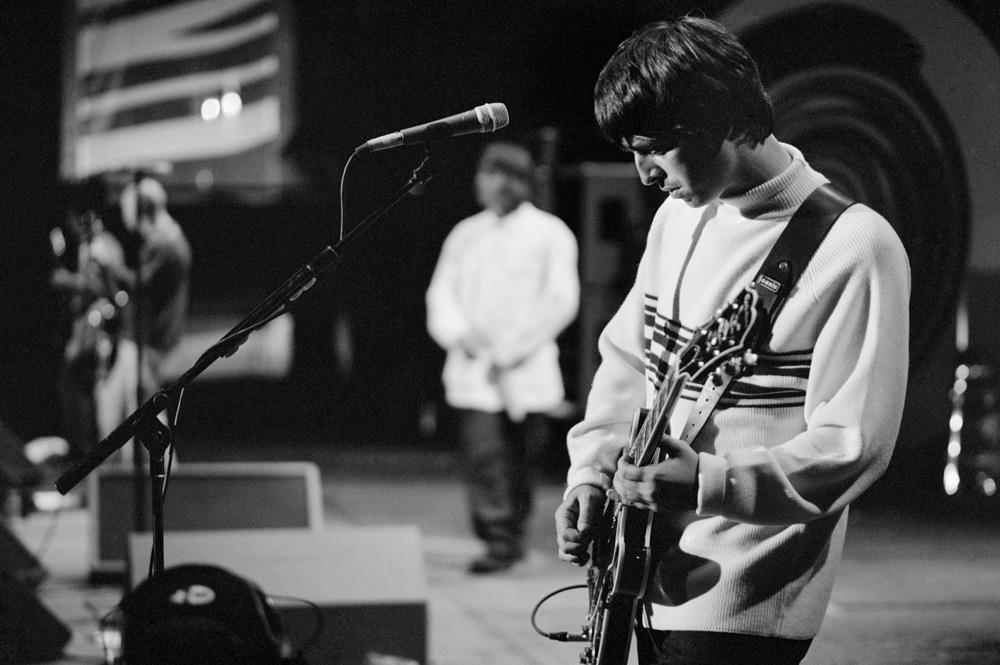
The most audacious choices arrived near the end of the main set. 'My Big Mouth' and 'It’s Gettin’ Better (Man!!)' were still unreleased and would not appear on 'Be Here Now' until the following year. Oasis had introduced both songs at Loch Lomond the previous weekend, meaning the Knebworth audiences were among the first people to hear them. Playing unfamiliar material to a crowd that size should have slowed the concert, but Oasis treated the songs as if everybody already knew them.
Their volume, length, repetition and excess offered an early glimpse of where the band was heading. 'My Big Mouth' buried Liam within layers of guitar, while 'It’s Gettin’ Better (Man!!)' attempted to turn a repeated phrase into an enormous communal chant. At Knebworth, the approach still sounded exciting because the scale of the songs matched the scale of the occasion. The same instincts would become exhausting when extended across much of 'Be Here Now', but during these performances excess appeared to be the natural consequence of a band discovering that nobody was willing to tell them to stop.
Listeners following the Sunday concert through BBC Radio 1 did not hear the two new songs as they happened. The station was reportedly not permitted to broadcast the unreleased material, causing the live transmission to break away after 'Don’t Look Back in Anger'. For the people in the field, 'My Big Mouth' and 'It’s Gettin’ Better (Man!!)' offered access to the future. For those listening at home, the songs became another part of the mystery surrounding Knebworth, surviving through audience recordings, bootlegs and descriptions until official versions became available.
'Live Forever' closed the main set. No other song could have occupied that position as convincingly. The song had always contained an argument against limitation, resignation and disappearance, but at Knebworth it sounded briefly as though Oasis had defeated all three. A song written before the band possessed fame or security was now being sung at the summit of British popular music. Yet it retained the emotional clarity that had made people believe in Oasis before the record sales, tabloid coverage and enormous concerts arrived.
The only obvious surprise was the absence of 'Rock 'n' Roll Star'. Noel has since admitted that he cannot believe they did not play it. As the opening song on 'Definitely Maybe', it contained the prediction that the previous two years had fulfilled, which should have made Knebworth its natural destination. Yet the omission also says something about the strength of Oasis in 1996. They could leave out one of their defining songs, perform two unreleased tracks and still produce a set in which almost every other moment appeared essential.
Alongside the core five members, Oasis used 11 additional musicians, including Jeanette Mason on keyboards, Mark Feltham on harmonica, a string quartet and a five-piece horn section. Their presence allowed the quieter and more arranged material to occupy the same space as the wall of guitars. 'Whatever' gained the sweep of an orchestral pop song, 'The Masterplan' acquired greater emotional weight, and the encore could expand beyond the normal dimensions of an Oasis performance. Importantly, the additional musicians did not soften the band. They made the songs wider.
When Oasis returned for the encore, they were joined by John Squire. The former Stone Roses guitarist had left his band earlier in 1996, bringing one of the most important partnerships in Manchester music to an end. The Stone Roses had provided an essential example for Oasis, demonstrating that a guitar band with Manchester accents, working-class identities and enormous self-belief could create its own world. By the summer of 1996, Oasis had moved beyond the scale The Stone Roses had reached, but their debt remained obvious.
Squire played lead guitar on 'Champagne Supernova', extending the song through a winding solo alongside Noel. The sight of the two guitarists together immediately acquired symbolic meaning. Nicky Wire later described it as a coming together of the “great Mancunian mafia”. It could be interpreted as the passing of something between generations, although Oasis no longer required anybody to hand them permission. They had already claimed the position for themselves. What Squire’s appearance provided was recognition, connecting the band who had inspired the dream to the band now living through its most exaggerated realisation.
'Champagne Supernova' was perfectly suited to the moment. Its questions were deliberately impossible to answer, while its movement from reflection into overwhelming noise mirrored the scale of Knebworth itself. Squire’s guitar allowed the ending to stretch further, turning the song into something suspended between an anthem and a psychedelic jam. The field, the lights, the additional musicians and the mass of voices made its imagery appear temporarily real.
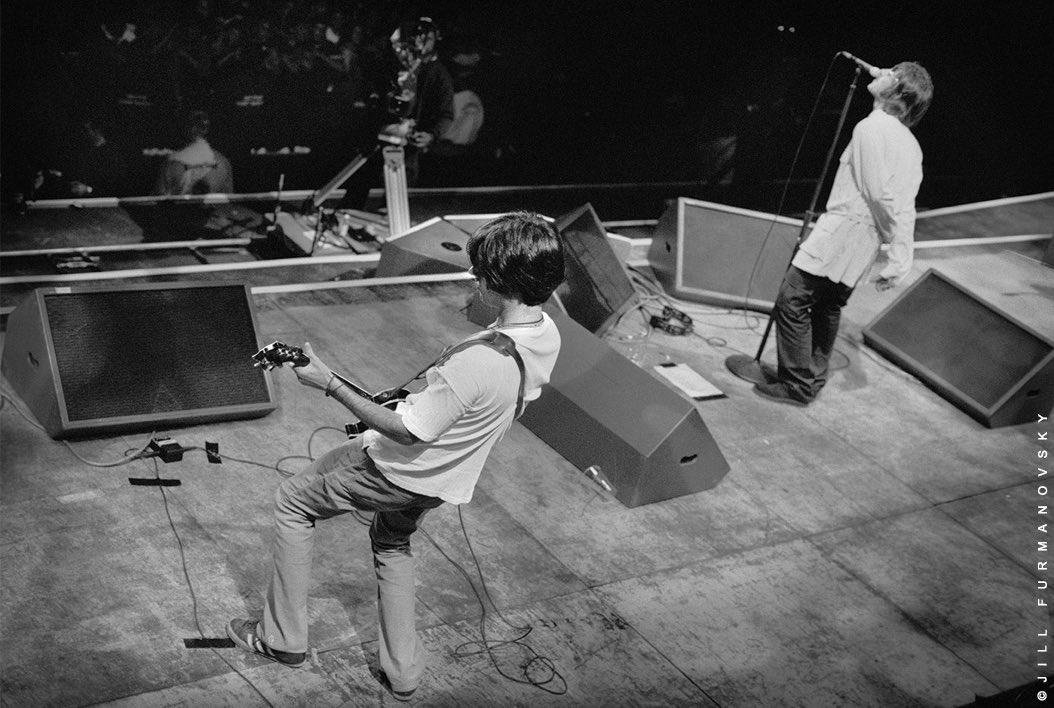
Squire remained for 'I Am the Walrus'. Ending the concerts with a Beatles cover might have appeared strange for a band with so many defining songs of its own, but Oasis had been performing it since their earliest years. It had formed part of the short set at King Tut’s Wah Wah Hut in 1993, the night Alan McGee first saw them. Three years later, the same song closed the largest concerts of their career. The distance between those two performances measured the entire rise of Oasis.
With strings, horns, two lead guitarists and the full band pushing against one another, 'I Am the Walrus' became deliberately chaotic. Oasis did not attempt to reproduce The Beatles with restraint. They inflated the song until it belonged to the scale of the field, bringing the weekend to a conclusion through feedback, noise and fireworks. The final song therefore returned Oasis to their foundations while showing how far those influences had carried them. Knebworth ended not with a prediction of what the band might become, but with the sound of everything they had already absorbed exploding around them.
The Peak and the Warning
Knebworth is usually described as the summit of Oasis’s career and the high-water mark of Britpop. Both descriptions are convincing, but they risk making the weekend sound like a conclusion everybody recognised at the time. It did not feel like an ending. Oasis believed they were still climbing, and almost everybody surrounding them appeared to agree.
That belief is what makes the concerts so exhilarating. The band were not performing a retrospective celebration of two famous albums. They included songs from the record they were preparing to make next and treated Knebworth as another beginning. If Maine Road had confirmed that Oasis belonged in stadiums, Loch Lomond had demonstrated that the phenomenon extended beyond Manchester, and Knebworth appeared to prove that no further limit existed. The future seemed capable of becoming even larger.
History gives the footage a different tension. Just 12 days after the second Knebworth concert, Liam withdrew from Oasis’s 'MTV Unplugged' performance at the Royal Festival Hall, citing a sore throat, before watching from a balcony and heckling Noel as he sang the set. Four days later, Liam initially refused to travel for the opening of an American tour, forcing Noel to take over the lead vocals. Liam returned, but the tensions continued until Noel abandoned the tour and flew home. The band reconciled, but the sense of complete unity projected at Knebworth had already begun to fracture.
'Be Here Now' arrived in 1997 amid extraordinary anticipation and sold with record-breaking speed. For a brief period, it appeared to confirm that Oasis had continued their ascent. Over time, however, its length, volume and overloaded production came to represent the point at which Britpop’s confidence became excess. The instincts previewed by 'My Big Mouth' and 'It’s Gettin’ Better (Man!!)' at Loch Lomond and Knebworth were stretched across an entire album, with nobody around the band possessing either the authority or the desire to suggest restraint.
It would be too simple to treat everything after Knebworth as decline. Oasis produced important songs, filled more stadiums and remained a defining presence in British music until 2009. 'Stand by Me', 'Don’t Go Away', 'The Importance of Being Idle', 'Stop Crying Your Heart Out' and 'Little by Little' all became lasting parts of their catalogue. The band survived changing fashions, altered line-ups and the increasingly unstable relationship between Liam and Noel. What they never recovered was the particular combination of youth, momentum, danger and possibility that existed during the summer of 1996. At Knebworth, success had not yet become a weight they were required to carry.
The weekend also changed expectations for British guitar bands. Large outdoor shows existed long before Oasis, including at Knebworth itself, but these concerts gave a new generation its own reference point. Every British band that subsequently attempted the jump from arenas to parks, stadiums or major festival headline slots had to confront the image of that crowd. Knebworth became less a venue than a unit of ambition, a word used to describe the point at which popularity became something larger and more culturally significant.
Thirty Years Later
The 2021 documentary and live album allowed the concerts to be reconsidered through restored footage, improved sound and the memories of the fans who attended. That emphasis matters because the story does not belong only to Oasis. It also belongs to the people who queued outside record shops, fought with permanently engaged telephone lines, travelled across the country, became separated from their friends in the crowd and sang with strangers for two hours. The documentary did not simply make Knebworth look clearer. It restored the human stories hidden inside the aerial photographs.
The reunion of Oasis in 2025 added another layer to the anniversary. During the 16 years in which Liam and Noel refused to share a stage, Knebworth represented a version of the band that appeared impossible to recover. Watching them perform together again did not recreate 1996, because neither the musicians nor the country surrounding them could become young again. That was not the point. The reunion instead demonstrated that the songs had survived the arguments, separation and passing of time.
Standing at the final Manchester show at Heaton Park in 2025, I was struck by how much of Knebworth’s emotional language remained intact. 'Acquiesce', 'Supersonic', 'Some Might Say', 'Slide Away', 'Live Forever', 'Don’t Look Back in Anger' and 'Champagne Supernova' still moved through an enormous crowd as though they belonged equally to the band and the people singing them. The faces and circumstances had changed, but the exchange remained recognisable. Many of the people around me had not been old enough to attend Knebworth. Some, including me, had not even been born.
That generational shift is central to the survival of Oasis. Knebworth is no longer remembered only by the people who stood in the field. It has been inherited by listeners who discovered the band through parents, older siblings, streaming services, documentaries, bootlegs and reunion rumours. The concerts have therefore moved beyond personal memory and into shared mythology. They can feel familiar even to somebody who experienced them years later through a screen or pair of headphones.
The possibility of another Oasis appearance at Knebworth has inevitably become part of the 30th-anniversary conversation. SJM Concerts, the promoter behind the 'Live ’25' tour, has secured a licence allowing events of up to 125,000 people at the site, while reports have suggested that Oasis could return in 2027 alongside another series of Manchester concerts. A licence is not a booking, and Oasis have not officially confirmed any Knebworth dates. Nevertheless, the prospect feels more realistic than it has for years.
If Oasis do return, the concerts will not and cannot reproduce 1996. The band would arrive as reunited legends rather than five musicians still attempting to discover how large their future might become. Many people would film the opening moments on their phones, tickets would be bought through digital queues and every song would appear online before the crowd had left the field. A return could create new memories, but it would also take place beneath the enormous shadow of the original weekend.
Those shows remain among the most significant concerts ever staged. Noel Gallagher later described Knebworth as “the last great gathering of the people before the birth of the internet”, a phrase that helps explain why the footage feels so different from almost every large concert that followed. The internet already existed in 1996, but it had not yet reorganised the way people discovered, attended and remembered live music. There were no smartphones held permanently above the crowd, no social feeds documenting every song and no immediate expectation that the experience should be converted into content for everybody elsewhere.
The audience did not witness Knebworth through personal screens. They could take photographs, buy merchandise and tell their stories afterwards, but most of the experience disappeared as it happened. What remained was memory, often incomplete and exaggerated through repetition. That impermanence contributed to the mystique. To understand Knebworth, people had to listen to those who had been there, search for bootleg recordings and study the limited footage that found its way into circulation.
As a music fan, Knebworth always carried that particular mystery. Long before the official documentary and live album, the concerts survived through grainy videos, bootleg recordings, photographs and stories repeated by the musicians and those fortunate enough to attend. Every retelling seemed to make the field larger, the guitars louder and the crowd more overwhelming. Watching the restored footage and hearing the official recordings did not remove that mystery. If anything, they confirmed that the reality had somehow matched the mythology.
Knebworth was far more than another band playing an enormous venue. Across the two days, the support bills connected British guitar music to rave, acid house, dub, psychedelia, Madchester and the traditions of the 1960s. The Chemical Brothers could treat the field like a club, while The Prodigy turned it into a “big fucking rave”. Manic Street Preachers and The Charlatans brought survival and emotional weight, while John Squire’s appearance connected Oasis directly to The Stone Roses and the generation of Manchester music that had made their rise imaginable.
That mixture is one reason Knebworth has endured. It did not represent guitar music retreating into its own world. It captured guitar music at the centre of British culture while remaining open to dance music, rave culture, pop, psychedelia and the musical history that had preceded it. The event could contain the confrontational energy of The Prodigy, the emotional seriousness of the Manics, the communal melancholy of 'Live Forever' and the mass release of 'Don’t Look Back in Anger' without those elements appearing to contradict one another.
The weekend contained all the optimism and confidence associated with the era, but it also marked the point at which that confidence was in danger of becoming excess. Oasis were still looking forward, convinced that Knebworth represented another platform from which to climb. History would remember it differently. The warning signs came afterwards, but the height from which the band descended had been established in that field.
Knebworth therefore represents more than the size of Oasis in 1996. It preserves a moment when one musical event could feel simultaneously national and deeply personal, uniting 125,000 people each night without the constant mediation that now surrounds live music. The band, the songs and the audience appeared to become part of the same force. That feeling may be impossible to reproduce, which is why the concerts have never lost their mystique. Knebworth was not simply a landmark Oasis performance. For two days, it felt as though the entire decade had gathered in one field. Noel called it history before the first note had been played. Thirty years later, it is difficult to argue with him.