Moseley Shoals at 30
For many, 1996 was the peak of Britpop. It was the summer after the Battle of Britpop, when Oasis and Blur had gone head to head in the charts and the whole country had taken sides. Oasis played two sold-out shows at Knebworth to a quarter of a million people. England made the semi-finals of the European Championships. The Spice Girls launched Girl Power with 'Wannabe'. It felt, briefly, like everything was possible. This was before Blair and Downing Street, before New Labour, before Blur went to America, before Pulp killed the movement with 'This is Hardcore', and before five lads from Oxford changed alternative music forever with 'Ok Computer'.
Into this landscape stepped Ocean Colour Scene with 'Moseley Shoals', released on 8th April 1996. The album would reach Number Two in the charts, spending 92 weeks on the chart and eventually going three times platinum. Their self-titled debut, 'Ocean Colour Scene', released in 1992, had sunk virtually without a trace; the band were dropped by Fontana, disowned the record themselves, and were left skint and directionless.
The story of how they got there is one of the great tales of perseverance in British music. After the debut album debacle, the band found themselves banned from playing live by record-company red tape, unable to gig, record, or move forward. The weekly music press, which had briefly courted them as Melody Maker cover stars during the baggy era, moved on without a backward glance. Dole money was keeping the lights on. Housing benefit was, as one account put it, a musician's development grant. Cradock and Minchella eventually took jobs in Paul Weller's touring band just to pay the rent, while Fowler stayed in Birmingham, writing songs alone into a cassette recorder in a damp flat in Moseley. It was, by any measure, a desperate situation. And yet, rather than dissolve or compromise, the band used the time to strip back everything that had been imposed on them and figure out what they actually were. The hellscape of making the first album, as Fowler later put it, had sucked all the life out of what they wanted to do. Now, with nothing left to lose, they simply decided to be themselves.
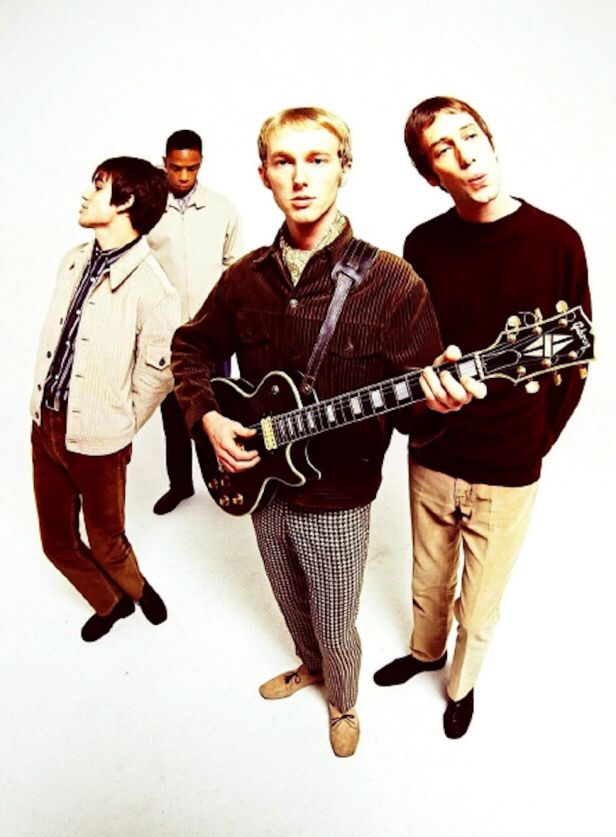
The songs written at this time would become the basis for Moseley Shoals. The album was recorded using the money Cradock and Minchella had earned from touring with Weller, in the band's own studio of the same name in Birmingham. Lynch had first crossed paths with OCS during the 'Wild Wood' sessions in London, where they had cut a demo together called 'Hello Monday', and the connection had stuck. When he heard what the band were now writing, he volunteered his services.
The approach Lynch brought to the sessions was instinctive and uncluttered. The album was recorded and mixed onto half-inch tape, a deliberate choice that gave it the warm, breathing quality that separates it from so many of its contemporaries. Most tracks were captured live in three or four takes: drums, bass, guitar and vocal together in the room, with overdubs kept to a minimum. Many of Fowler's guide vocals were kept in their original form, which says everything about the naturalness of his delivery and his indifference to the kind of vocal manufacturing that was already creeping into mainstream pop. Cradock, who has admitted to being intimidated by computers, was entirely at home in this environment. The band had a vibe, a manifesto about the kind of band and the kind of people they wanted to be. Lynch understood it and knew when to get out of the way.
The album's name, 'Moseley Shoals', is itself a neat piece of wordplay. Moseley is a suburb of south Birmingham where the band formed in 1989, but the album title as a whole is a punning nod to Muscle Shoals, Alabama, home to the legendary FAME Studios and Muscle Shoals Sound Studio in nearby Sheffield, Alabama, where so much classic 1960s soul was recorded. Fittingly, the band named their Birmingham recording studio Moseley Shoals in homage; it was there that they recorded the album.
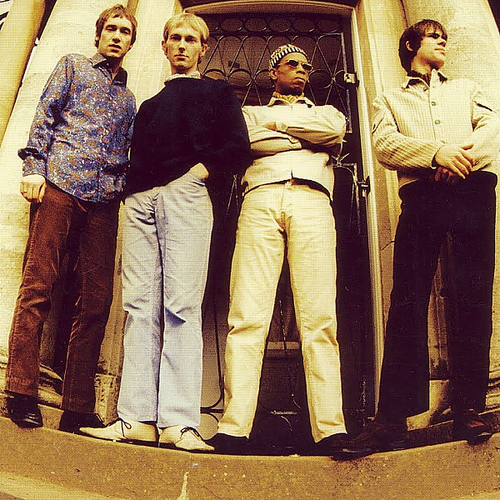
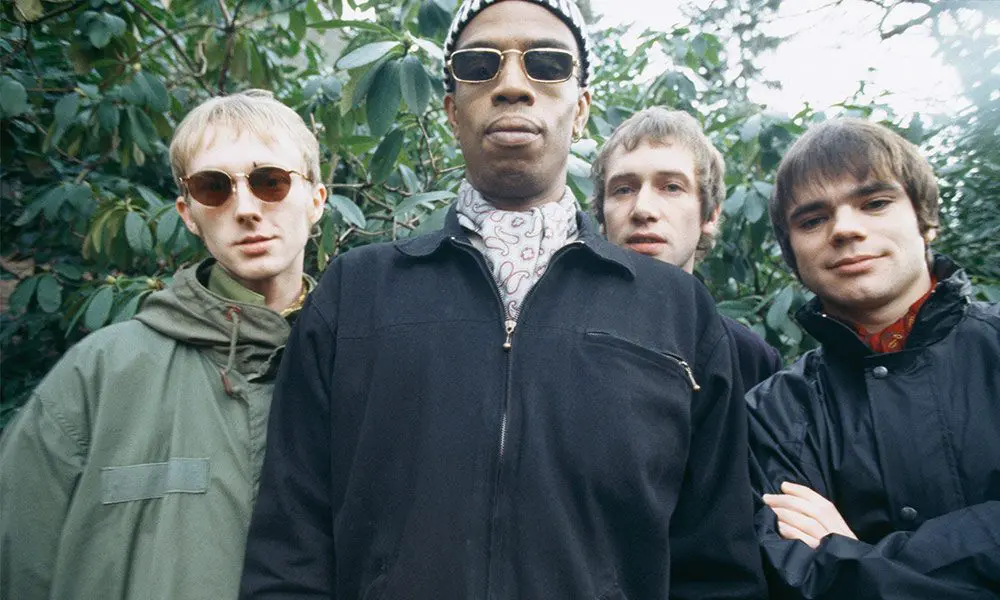
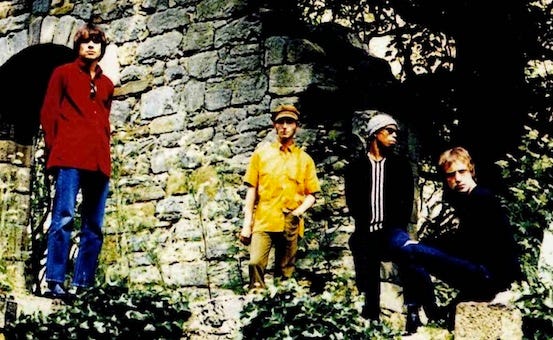
The cover image is one of the most iconic of the Britpop era: the band photographed in front of the Jephson Memorial in the Jephson Gardens, Leamington Spa. Any fan worth their salt will at some point have made the pilgrimage to recreate the shot.
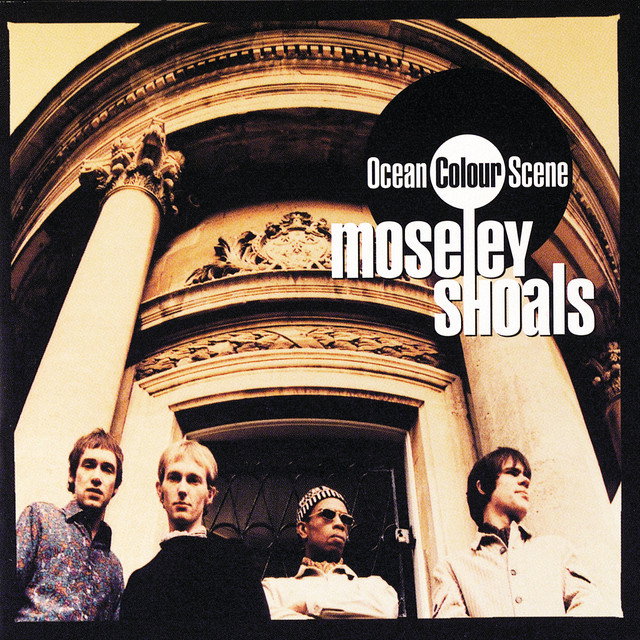
Released on 8th April 1996, 'Moseley Shoals' entered the charts at Number Two, kept off the top spot by Take That’s 'Greatest Hits', but pushed '(What’s the Story) Morning Glory?' into third. It would spend 92 weeks on the chart, eventually going three times platinum.
A huge part of the story is TFI Friday, and it would be wrong to gloss over it. Chris Evans had already fallen in love with ‘The Riverboat Song’ and was playing it relentlessly on his Radio 1 Breakfast Show. He then invited the band to play it on the very first episode of his new Channel 4 show, TFI Friday, and the song became the walk-on music for every guest throughout the show’s long run. That is an extraordinary amount of exposure, more than any record label’s PR department could realistically dream of achieving.
But Evans wasn’t the only music heavyweight in OCS’s corner. Paul Weller and Noel Gallagher were both vocal champions of the band. Weller’s involvement goes deeper than a mere endorsement: during the lean years between the debut and 'Moseley Shoals', he employed Steve Cradock and Damon Minchella in his touring band, a lifeline that kept the band afloat financially. Cradock has remained in that role ever since, making him Weller’s longest-serving lieutenant. Weller also used Simon Fowler as a support act on his 'Wild Wood' and 'Stanley Road' era tours, and Fowler sings backing vocals on the 'Wild Wood' album.
The follow-up album, Marchin’ Already, knocked Oasis’s ‘Be Here Now’ off the top spot, prompting Noel Gallagher to send the band a plaque inscribed “To The Second Best Band In Britain”, to which the dry Brummie wit of OCS retorted that it was a huge honour to be second only to The Beatles.
So: a band backed by two of the biggest acts of the 90s, championed by the country’s most listened-to radio DJ on both his breakfast show and his prime-time TV programme, with the talent, the work ethic, and most importantly, the songs to be massive. What could go wrong? The music press seemed to have it in for OCS from the moment they returned from their post-debut exile. Early gigs received poor reviews in the NME and Melody Maker, singles were ignored or dismissed, and when Moseley Shoals was released, Ted Kessler of the NME awarded it 5/10, calling it dated and unfashionable.
The Melody Maker went one further and didn't bother to review it at all. A look at the end-of-year Top 50 albums lists in both papers for 1996 shows no place for it; the band were regarded as mere passengers on a bandwagon with Oasis's logo painted on it. But this tells you more about the dialectic prevalent in the music press at the time, the assumption that if you liked guitar music you were a dadrocker and if you liked dance music you couldn't abide guitars, than it does about the qualitative merits of Moseley Shoals. OCS have had the last laugh.
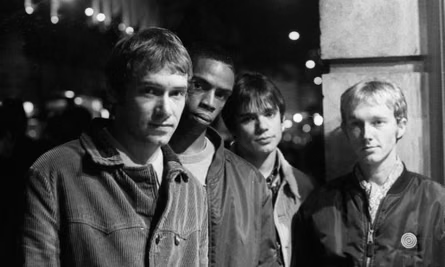
The band are easily the finest musicians of the Britpop era, each of the four a master of their chosen instrument. Cradock is frequently cited as one of the best guitarists of his generation; his searing riff on 'The Riverboat Song' and melodic, nimble work on 'One for the Road' demonstrate his versatility and technical command. Oscar Harrison, the quiet man at the back, is a drummer of exceptional and sadly overlooked talent. Prior to joining Ocean Colour Scene, he had spent years in a Birmingham reggae band, Echo Base, and before that learned to play by aping the Jamaican syncopations of Steel Pulse; you can hear all of it in his deft offbeat fills and the subtle, complex groove he brings to 'The Circle'. Damon Minchella's bass lines are as vital as any vocal: listen to how he underpins the shifting moods of 'It's My Shadow' with fluid, melodic runs, or how his playing propels 'You've Got It Bad' with driving force. Add the remarkable vocal range of Simon Fowler, and you have a band that took the musicianship of Britpop to an entirely different level.
Musically, Moseley Shoals still prompts an all-out assault on nearby drummable surfaces. ‘The Riverboat Song’s scalding riff, “It came from me being really pissed off one day,” says Cradock, is one of the great album openers of the era. Along with The Stone Roses’ ‘Love Spreads’, it was pretty much the only single by a band of that generation to assimilate the influence of Led Zeppelin and remember that it was their rhythmic irresistibility as much as the heaviness that distinguished them. It picks up from Zeppelin’s ‘Four Sticks’, deploying the same 6/8 swing time with an uptight intensity that suggests something has to give. When the release comes, it’s thanks in part to Harrison halving the tempo on the chorus, one of a series of excellent decisions he makes throughout the song: a delayed landing on the snare and cymbal here, a string of deft half-fills to accentuate key lines there. Play it loud. You could listen to his drum track alone and still feel your heart racing.
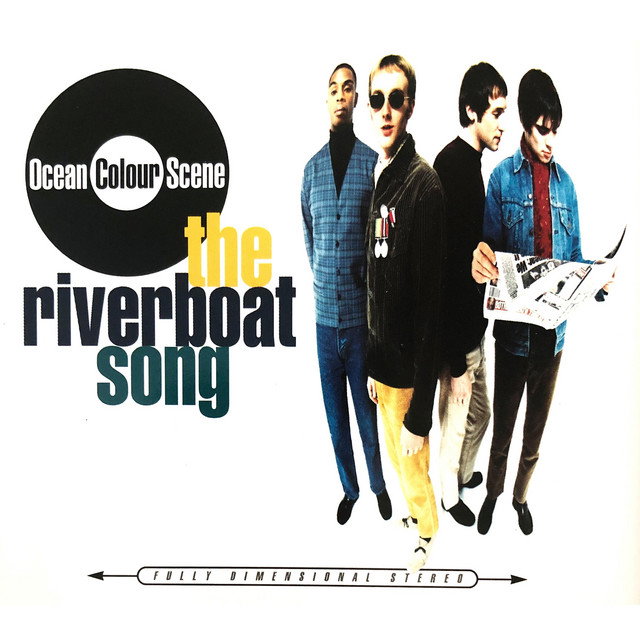
And yet even on ‘The Riverboat Song’, the song which had detractors quickest to dismiss the band as retro-fetishists, there are flourishes from Brendan Lynch which don’t really belong in any recognisable era: the delicious scaling down of the arrangement before the second verse; the staccato bursts of interference at the start of the instrumental break; the way Cradock’s lead guitar does something entirely different in each section, culminating in extended notes at 3:50 and then, subsequently, nothing at all, leaving the entire space open for just the occasional organ stab. Nuances of Brian Auger and Graham Bond are detectable alongside the obvious Zeppelin nod. Everything is deliberate and immaculately executed, right down to the final surge of feedback that dissipates to reveal the first strummed chords of the song that follows.
‘The Day We Caught the Train’ sat in the top ten for much of the summer of 1996, peaking at number four, and achieving platinum status in its own right. The circumstances of its creation are telling: Fowler wrote it in Cradock’s flat while Cradock was away in Japan on tour with Weller. “I based it on two things,” Fowler recalled, “Jimmy on the ‘5:15’ by The Who, but really I based it on Jimmy Miller on our train with us.” Jimmy Miller, the Rolling Stones’ legendary producer, had been a significant figure in the band’s early story. So when Fowler sings “Like Jimmy heard the day he caught the train,” it’s a private joke, a nod to a connection from a past golden era.
The song was also the only track on Moseley Shoals taken directly from the band’s 1994 demo, with Fowler’s guide vocal kept almost entirely intact, a testament to the naturalness of the performance. Stranger still, the crowd-pulling “Oh oh la la” singalong that became one of the defining moments of the Britpop era doesn’t appear in the song’s original form at all.
It pulls off the same illusion that ‘Come On Eileen’ and ‘Our House’ managed in the previous decade, creating a vicarious longing for the events it describes. Its almost immediate emotional pull distracts you from the unconventional manner in which it goes about its work: the sudden descent from those angelic opening lines into murky memories of half-forgotten plans, and then, before you can properly get your bearings, a brief ascent into the light, “Stepping through the door like a troubadour...”, before the moment when the song really reveals its hand. “You and I should ride the coast / And wind up in our favourite coats just miles away...” It’s moving because you suspect the person being addressed doesn’t feel the same way. It’s moving because the sudden shift into those lines suggests the protagonist has just decided to blurt out the thing he’d been too shy to say all along. It’s moving because when Cradock lands onto Em on the word “miles”, you realise this is just one more forlorn daydream on an album that’s actually full of them. And it’s somehow really moving when Fowler vents his inner Marriott on “Roll a number...” and finally succumbs to unguarded longing for a more carefree time.
At Knebworth in August 1996, over two nights in front of half a million people, OCS played ‘The Day We Caught the Train’ in the mid-afternoon sun as a support act to Oasis. The song that Fowler had written alone in a borrowed flat had become an anthem for an entire generation’s summer. A Spanish fan wrote to the band requesting to use the lyrics on the gravestone of their brother, who had recently died in a car crash. Fowler was deeply touched, but true to the band’s dry wit, he deflected with a levelling Dylan impression: “I write gravestones, man.”
'Moseley Shoals' is studded with remorseful reveries, and perhaps none more bereft of hope than ‘The Downstream’. It’s one of those songs that, in another era, when soul singers used to cherry-pick and reinterpret the best of what sat outside their immediate genre, Otis Redding, Solomon Burke or The Dells could have absolutely turned into a standard. Over a smoulderingly empathetic accompaniment from the rest of the band, Fowler cuts a solitary presence: “Sell me a river / And I’ll skate away / To the downstream / Where I did play / So easy minded / Like a hill on the skyline / Tripped up and blinded / Getting lost on the sidelines.
‘Fleeting Mind’ sees Fowler presenting himself like a man struggling to engage in a crowded room, his sense of remove accentuated by a nimble arrangement that mirrors that uncertainty. ‘It’s My Shadow’ is like a dispatch several hours further into the same evening, from a protagonist willing the daylight to deliver him from the darkness of his thoughts, and perhaps Fowler’s most affecting vocal performance, in particular at 2:40 when his multi-tracked harmony takes you from “like a willow to my stream / Casting heaven round my feet” and finally into the bittersweet resolution of the extended coda: “When you find that things are getting wild is that / The hardest smile that you can ever feel.”
‘One for the Road’ is the only song that exists specifically to remember those who didn’t survive into adulthood: “She was just eighteen, she collapsed / And they took her away / She didn’t make it for more than an hour.” More than anything else around it, the song finds Fowler take real succour in survival, its becalmed sentiments framed by the most straightforwardly pretty melody on 'Moseley Shoals'.
‘The Circle’ is a broken epilogue to the triumphal optimism of ‘Sway’. This is what happens when you cast your gaze around the streets where you grew up and realise that everyone left town or got proper jobs. Cradock had landed a job in Paul Weller’s touring band, and soon after, Minchella followed suit. The song was written in a squalid, box-room living room in one of the damp-ridden Moseley flats that Fowler and Cradock shared during those lean years, flats that sat at odds with their leafy view from cracked first and second-floor windows. Fowler says ‘The Circle’ was the quickest song he ever wrote; most of the words spilt out spontaneously after he turned on the tape recorder. “That’s probably one of the best songs I’ve ever written,” he has said, “ninety per cent of it ended up straight off like that, as you hear it.” It was also the last song recorded for Moseley Shoals, and one of the more difficult grooves to capture on tape. It became the album’s fourth consecutive chart hit, reaching number six.
Crucially, ‘The Circle’ features Paul Weller on lead guitar, perhaps the most tangible expression of how deep the bond between Weller and OCS ran: not merely a patron lending his name, but a musician giving his best work to someone else’s song. His guitar is all over it, and it lifts an already extraordinary piece of writing into something genuinely timeless.
“If I walk by the trees / I’ll catch the falling leaves / If the wind blows / But I know all this means / Is whiling on the hours / Watching side-shows / And I feel like I’m on the outside of a circle.”
The only glimmer of hope comes shortly after the middle eight, where Fowler sings, “Will I turn my coat in the rain / I don’t know / But I’m going somewhere / I can warm my bones.” And even here, the sense of resolution isn’t in the words but in the ascent from sadness to anger in the way Fowler delivers “I won’t feel like I’m on the outside” for the final time.
The B-side of the single features a live recording of the band performing the Beatles’ ‘Day Tripper’ with Noel and Liam Gallagher joining them on stage, a moment that neatly encapsulates where OCS stood in the autumn of 1996: at the centre of British music, flanked by its two most powerful forces.
The album closes with ‘Get Away’, a semi-improvised firestorm of regret in which Fowler concedes, “Well, it comes down to the fact that I’m now different from the past,” before the rest of the band steps forward in earnest as though uncertain if they’ll ever get to do so again. It doesn’t sound like a play for commercial glory. As the writer Pete Paphides put it, “It sounds like the end of something: a sprinkling of ash onto the last embers of childhood.” There is no better description of what Moseley Shoals actually is.
The lyrics, too, deserve a word. Thanks to Fowler's method of improvising into a cassette player, they can be cryptic, to say the least. "Like a king who stalks the wings and shoots a dove and frees an eagle instead," he sings on 'The Riverboat Song'. Quite. When the lines do make sense, they tend to reach for the imagery of ordinary life, and that is precisely the point. Where Blur were dissecting suburban alienation, and Pulp were cataloguing class anxiety with arch precision, 'Moseley Shoals' is content to describe the world as Fowler actually experienced it: damp flats, missed trains, old friends gone, the slow fade of youth. Fowler's aching, tuneful croon carries all of it effortlessly; less laddy than Liam, less hammy than Damon, more genuine than Jarvis. It doesn't make a grand statement. It doesn't need to. The feeling is already there in the music.
The whole package of 'Moseley Shoals' was close to perfection. Tony Briggs’s photographs in the inlay are beautifully shot black-and-white portraits. The cover is one of the most iconic images of the era. The music videos were all exceptional, cool as you like, with plenty of nods to the past. ‘The Riverboat Song’ and ‘You’ve Got It Bad’ both look like Mod and Northern Soul homages. ‘The Day We Caught the Train’ has the band in Ben Sherman's and bucket hats. ‘The Circle’, with its scooter ride-out, is in obvious debt to Quadrophenia, and features Oscar Harrison looking every inch a reggae superstar.
It owes its very existence to the loyalty of Cradock and Minchella, who used the money accrued from touring with Weller to come back and finish what they started with Fowler when they formed the band years previously. That loyalty runs through the album itself. These are not songs written by a band chasing a trend or angling for a deal; they are songs written by people who had already been through the machine, been spat out the other side, and decided to make the record they actually wanted to make, with no guarantee that anyone would ever hear it. That is a rare thing in any era, and you can feel it in every track.
Beyond its success and the era in which it was released, Moseley Shoals found its audience because it deserved to. Ex-ravers were going to Oasis gigs; indie kids were packing out Prodigy gigs. In a world where the old tribal battle lines between guitar music and dance music were already dissolving, Moseley Shoals slipped through every category and simply connected with people. Months previously, someone else had made a record called 'The Great Escape', but this was far more deserving of the title.
Thirty years on, 'Moseley Shoals' still sounds like a summer that never quite ended. In 1998, Q magazine readers voted it the 33rd greatest album of all time. Pitchfork placed it at number 42 on their list of the 50 best Britpop albums in 2017. The band are heading out on an arena tour later this year to celebrate the anniversary, supported by The Enemy, and the venues are not getting any smaller. That, in the end, is the most eloquent response to every bad review, every dismissal, every end-of-year list that left them out. The audience found them anyway. They always do.