Manchester's Mercurial Music Maverick
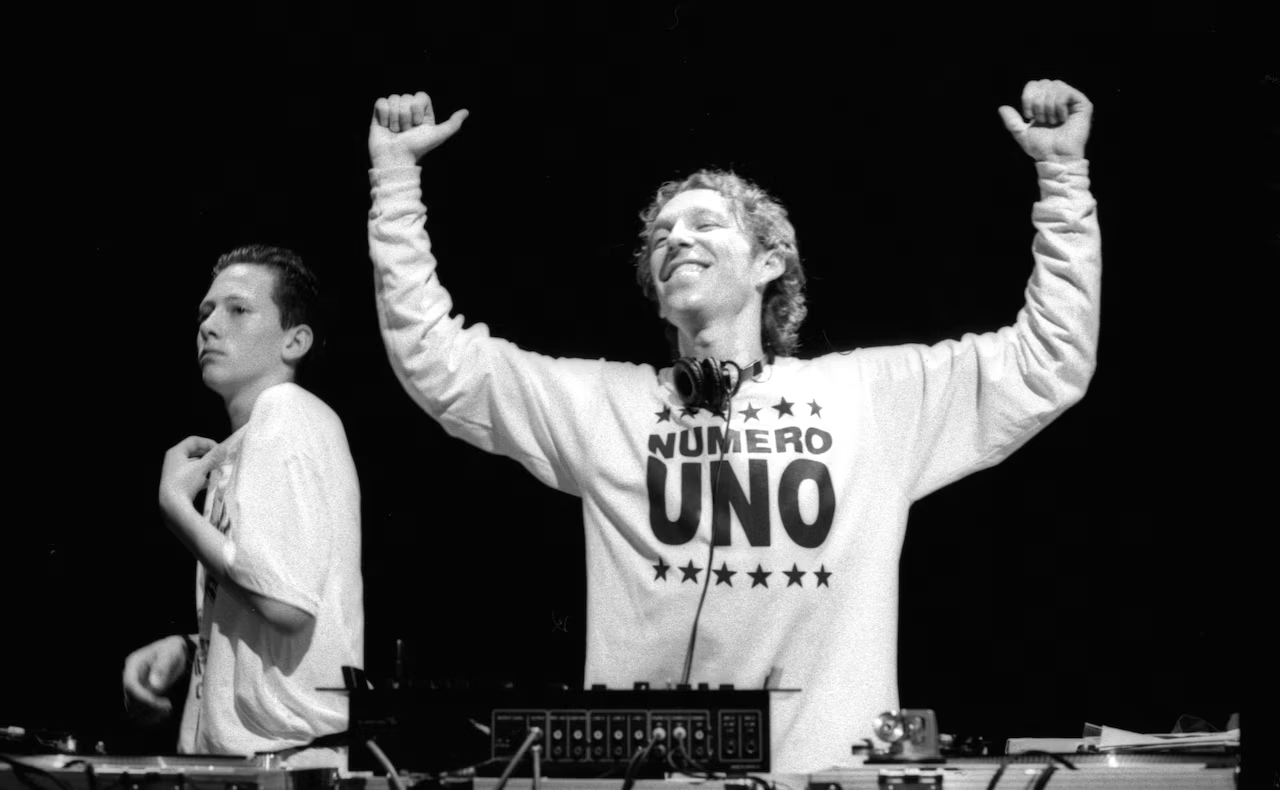
Manchester's music scene boasts many famous names, and its list of iconic figures is long. Audiences worldwide know Morrissey, Johnny Marr, Ian Curtis, Bernard Sumner, Peter Hook, the Gallagher brothers, The Stone Roses, Shaun Ryder, Bez, and Tony Wilson. We have all heard their stories, watched their documentaries, and read their biographies countless times before. Yet behind these towering icons were a few others who quietly helped turn Manchester from a declining post-industrial city into the centre of the musical universe.
These behind-the-scenes pioneers gave indie kids the chance to have their records heard, launched a massive Acid House revolution to inspire the next generation just as punk had inspired them, reinvented nightclub culture, and changed British music forever. Mike Pickering stood at the centre of that movement, working alongside foundational figures like his close friend Rob Gretton, the visionary manager of Joy Division and New Order. Together with Factory Records co-founder Tony Wilson, Haçienda co-residents Graeme Park and Dave Haslam, and influential peers like Jon Dasilva, they formed a tight-knit collective of local mavericks. Their efforts were closely mirrored down south by London innovators Paul Oakenfold and Danny Rampling, establishing a cross-country dialogue that defined the era.
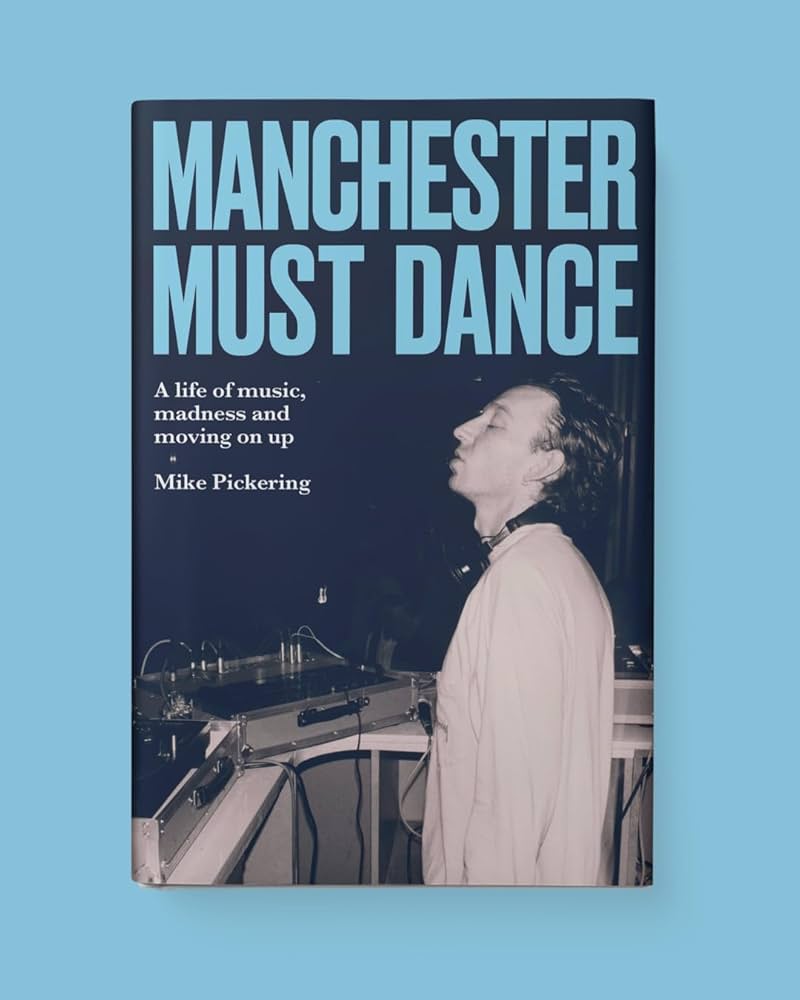
I have been reading Mike Pickering's autobiography, Manchester Must Dance, and it rewrites the classic narrative of the city's musical history by shifting the focus from the usual headline makers to the hidden figures who built its cultural foundation. Co-authored with music writer Paul Morley, this memoir serves as a vital reference point for understanding six decades of clubs, gigs, football, and politics. It details Pickering's journey from a 1950s childhood to becoming an influential DJ, a visionary A&R executive, and the architect of a multi-million-selling musical empire.
The historical details revealed throughout Manchester Must Dance are astonishing. Many music fans already knew Pickering's name through casual mentions by Noel Gallagher or from his documented involvement with Factory Records and The Haçienda. However, his relatively quiet, humble, and reserved personality meant the true depth of his cultural impact remained largely understated until now.
The book establishes his importance through forewords by a diverse cross-section of figures in British music history. Noel Gallagher declares that Pickering "should be awarded a knighthood for services to clubbing," while delivering a broader testament to the venue's core collective: "you cannot overestimate how much this group of mavericks had this idea, and saw it through. They really were doing for the city and the people." Johnny Marr recalls meeting Pickering in a clothes shop, a chance encounter that led directly to Pickering booking The Smiths for their earliest and most crucial live gigs at the venue. Martin Fry, the lead singer of ABC, remains one of Pickering's oldest and closest lifelong friends, and global electronic superstar Calvin Harris also contributes to the book, crediting Pickering's sharp A&R ear for launching his international career.
Music remains the definitive thread throughout Pickering’s life, running alongside his lifelong devotion to Manchester City FC. His journey began on 20 November 1963, when he attended his first live gig, seeing The Beatles at Manchester's ABC Cinema in Ardwick with his mother. The sight and sound of the Fab Four at the absolute peak of Beatlemania, performing iconic hits like 'She Loves You' and completely soundtracked by roaring, screaming girls, seems to have permanently altered the wiring in his brain. The sheer, overwhelming scale of that mass adoration planted a lifelong fascination with how music could fundamentally unite a crowd.
This early awakening was followed by another foundational milestone when he witnessed David Bowie live during the 'Ziggy Stardust' era, a performance that blew his mind and introduced him to the power of theatricality, fluid identity, and sonic rebellion. Watching Bowie break down traditional gender barriers and societal expectations in a blaze of alien chic gave Pickering a profound blueprint for subverting the norm. He realised that music wasn't just about the sound; it was an immersive, visual, and transformative culture.
Thereafter, a conventional life was never going to be for him. Much to the regret of his conformist father, he ingratiated himself amongst the Factory crowd, tagging along with his great pal Rob Gretton, who managed Joy Division and subsequently New Order. From this vantage point, he wryly observed the antics of visionary oddball Tony Wilson, who famously introduced Manchester to the Sex Pistols.
Punk liberated Pickering, shattering any lingering notions of societal conformity, and although he eventually seemed allergic to typical guitar groups, there was no turning back. Nine-to-five jobs were off the agenda. Travel to Holland and Greece beckoned, and when he discovered the raw, hypnotic pulse of dance music and electronics, the musical revolution of his life took hold. It was the moment everything he had absorbed, from the mass hysteria of the Fab Four and the bold alien chic of Bowie to the DIY independence of punk, coalesced into a new life that was finally within his grasp.
In the late 1970s, he immersed himself in the Rotterdam underground scene, squatting in disused industrial spaces and launching a club night called Rotterdam Must Dance. The nights were held inside a massive, abandoned waterworks facility on the banks of the River Maas, a space shared entirely by a collective of local artists. It was here that Pickering hosted his close friends from Sheffield—the band Vice Versa, who were actively morphing into the seminal pop group ABC, fusing their shared love for early American funk and imported European electronic music. Behind the decks, Pickering pioneered an eclectic sonic template, spinning American imports from Chic and Stacy Lattisaw alongside cutting-edge New York No Wave records. This vital period honed his business skills in electronic music and directly inspired the title of his autobiography.
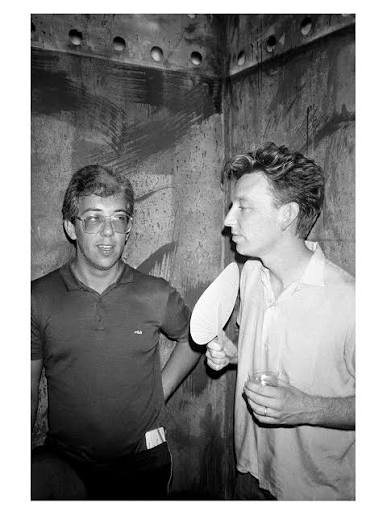
During this Rotterdam adventure, Pickering put on a show for New Order (their first European gig following Ian Curtis's death), which was held inside a repurposed municipal water tower. The legendary gig caught the attention of Joy Division and New Order manager Rob Gretton. Blown away by how Pickering had cleared out the rubble to construct a thriving underground sanctuary, Gretton told Pickering that he was planning to build a massive new club back in England. Gretton insisted that Pickering return to the UK to mastermind the bookings, directly planting the seeds for what would eventually become the cultural phenomenon of FAC 51 The Haçienda.
Much of his book focuses on the chaotic inner workings of Factory Records and The Haçienda, offering a vivid insight into the highly idiosyncratic way Tony Wilson ran his shop and how those who worked for him reacted to his erratic decisions. While the history of Factory Records has been told many times before, Pickering introduces fresh, ground-level perspectives by highlighting the people who worked far away from the main cast of characters. His timeline of the club is also pivotal for correcting modern misconceptions. People often forget that The Haçienda opened its doors in 1982, but Acid House did not truly take off until late 1987 and early 1988. Pickering chronicles that challenging, five-year interim period where the club, the record label, the staff, and the punters were completely lost, trying to find an identity, dodging financial ruin, and simply struggling to survive.
During his time booking bands for the venue, he secured early performances from major acts like Culture Club, The Alarm, Thomas Dolby, and even a then-unknown American singer named Madonna, who made her historic UK live debut on the Haçienda stage. Crucially, Pickering was also responsible for scheduling the defining sounds of the local guitar scene; he booked early gigs for hometown icons like The Smiths, captured the rise of the pre-Madchester movement by bringing on The Stone Roses, and consistently championed the boundary-pushing energy of the Happy Mondays. Crucially, Pickering’s ears were also attuned to the talent in his own backyard. Operating as a roving A&R scout for Factory Records, he was the specific person who discovered and officially signed both the Happy Mondays and James to the iconic label.
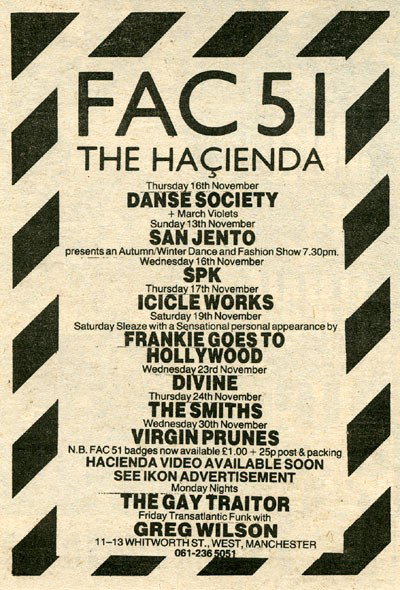
His booking sheets read like a blueprint for a musical generation, welcoming local legends James long before their mainstream breakout, alongside trailblazers such as Echo & the Bunnymen, Orchestral Manoeuvres in the Dark (OMD), and A Certain Ratio to a stage that was reinventing British youth culture night after night. He details the variety of his schedule, routinely booking global figures like soul pioneer Curtis Mayfield, gothic rock icons Nick Cave and the Bad Seeds, the post-punk energy of the Eurythmics, and synth-pop royalty Erasure. He had a knack for securing artists right before they blew up, often resulting in bands playing the venue's small stage the same week they climbed the national charts or made their first milestone television appearances.
Despite the club being a musical breeding ground, it was a financial disaster, and was losing money hand over fist; something had to change.
To spearhead a turnaround, Pickering stepped behind the turntables himself. In 1986, he launched the fabled Friday night residency, 'Nude', which became historically vital as one of the very first UK club nights to commit seriously to spinning imported Chicago and New York House records. Sourcing fresh, underground tracks directly from legendary import shops like Manchester's Spin Inn, Pickering introduced the city to the revolutionary sounds of Frankie Knuckles, Marshall Jefferson, and the Trax Records catalogue. The success of 'Nude' single-handedly transformed the venue's financial fortunes by early 1987, turning an empty concrete shell into a roadblock destination every weekend. This was quickly followed in the summer of 1988 by 'Hot', an Ibiza-inspired night he co-ran with DJ Jon Dasilva. Characterised by harmonic mixing, sweeping sound effects, and Balearic beats, 'Hot' is widely cited by music historians as the exact moment UK Acid House found its permanent northern home.
The arrival of Acid House and Ecstasy transformed the venue from a struggling live room into a utopian, almost lawless "secret society" where traditional British social barriers dissolved overnight. In 'Manchester Must Dance', Pickering describes how MDMA acted as a collective wave of "loving grace," passed among friends rather than sold by corporate dealers, uniting fierce football hooligans, working-class bricklayers, and high-fashion designers on the same sweat-drenched dance floor.
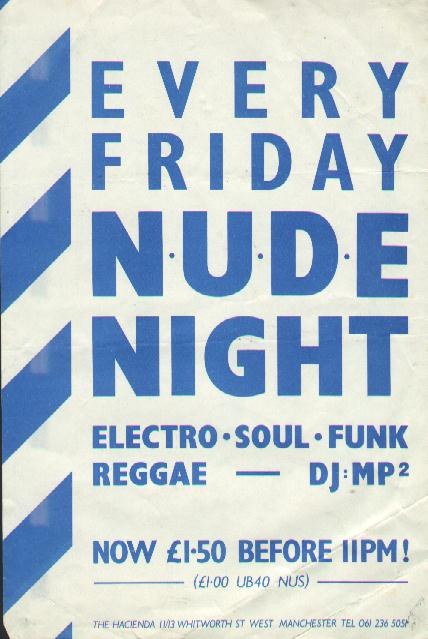
This idyllic era exploded in 1988 with the Second Summer of Love, cementing a DJ partnership with Graeme Park. Together, they went on to pioneer the club's Saturday night residency, 'Nude Night', mirror-decking to perfection and eventually taking their sonic synergy to global festival stages like Glastonbury. While Pickering and Dave Haslam soundtracked this Northern revolution from within the venue's industrial walls, the movement was running parallel to a lifestyle shift in London. The cross-country connection was personal; it was Paul Oakenfold who handed Pickering his first Ecstasy tablet during a trip to Barcelona. Oakenfold and Danny Rampling had just returned from their seminal 1987 Ibiza trip to launch club nights such as 'Future' and 'Shoom', establishing a creative dialogue between London's sunny, Balearic style and Manchester's raw, hypnotic house energy that altered British youth culture forever.
As the fabled resident DJ of The Haçienda, Mike Pickering acted as a primary catalyst for ushering underground club culture directly into the public consciousness. Beyond the DJ booth, he was a pivotal, behind-the-scenes structural player in orchestrating the legendary November 1989 Top of the Pops broadcast, breaking the guitar-dance crossover onto prime-time national television by securing joint debut performances for both The Stone Roses and the Happy Mondays.
Pickering had signed the Happy Mondays to Factory Records, and The Stone Roses were punters at Pickering's nights in the club. He was a virtually invisible and yet incredibly pivotal figure in "Madchester", and that single broadcast is widely cited as the definitive moment the "Madchester" era exploded into the mainstream. It completely shattered the wall between traditional indie guitar music and dancefloor rhythm on a national scale. For the millions of teenagers watching at home, it transformed Manchester from a rainy, post-industrial city into the undisputed centre of the musical universe.
He was also a massive catalyst, ushering underground club culture directly into the public consciousness. He would single-handedly introduce the entire nation to electronic dance music after discovering an import record that changed British chart history. During a DJ trip to Italy, Pickering was handed a raw test pressing copy of 'Ride on Time' by Black Box. While the track initially flopped in conventional European clubs and struggled to sell its first pressing, Pickering immediately recognised its explosive potential, bringing the white-label straight back to Manchester and signing Black Box to his record label, Deconstruction.
Originally built around a heavily bootlegged, uncleared vocal sample of Loleatta Holloway’s 1980 disco classic 'Love Sensation', that track evolved into a global juggernaut, skyrocketing to the top of the UK charts, where it spent six consecutive weeks at number one to become the highest-selling single of 1989. However, its explosive commercial success triggered absolute panic behind the scenes when Holloway’s legal team threatened immediate, multi-million-pound copyright litigation.
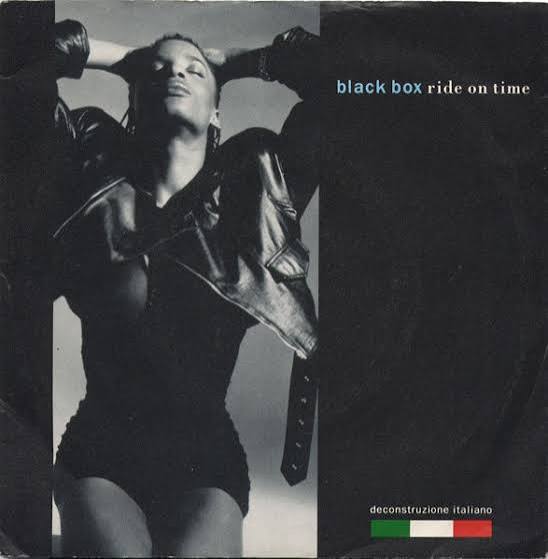
To salvage the record and prevent it from being completely pulled from production plants, BMG desperately rushed a then-unknown teenage vocalist named Heather Small into the studio to completely re-record the powerhouse vocal tracks. Small was strictly instructed to deliver a near-identical, note-for-note impersonation of the original lines to maintain the track's raw energy. Because the record label was desperate to keep the emergency studio rescue a total secret, the Italian producers famously hired a French model, Katrin Quinol, to lip-sync along to Small's studio vocals during high-profile television appearances on Top of the Pops. While the industry's attempt at a cover-up initially worked on the general public, it completely failed with Pickering. Hearing that exact, uniquely rich, and booming timbre on a random demo tape a year later, the connection was instantly obvious to his sharp A&R ear.
In the Haçienda's DJ booth, he would witness both the raw energy of these tracks and the rapid evolution of the culture. Pickering lived through the full, unfiltered spectrum of the era. He witnessed the pure joy of dancing and the heavy lure of ecstasy. Still, he also saw the dark gangland violence that accompanied the scene and the incredibly ham-fisted approach of Manchester’s police force. It all makes for grim, albeit riveting, reading, not least the terrifying consequences when his growing fame as a superstar DJ led to his name being falsely used by unscrupulous promoters to advertise massive, dangerous 'illegal' raves of which he was completely unaware. Standing on the floor, absorbing the magic of those legendary, transformative nights, was a young Noel Gallagher, a regular fixture in the crowd, soaking up the very revolutionary energy that would soon fuel his own stadium-sized ambitions.
The story of Manchester’s late-night defiance spilt far beyond the legal operating hours of FAC 51, and nowhere embodied this raw, lawless underworld quite like The Kitchen in Hulme. Because The Haçienda famously closed its doors at 2:00 am in those early days, the crowd's insatiable energy naturally bled into a legendary network of illegal after-parties. Hidden deep within the desolate, brutalist concrete expanses of the Hulme Crescents, The Kitchen was a notorious, pitch-black, and mind-bendingly loud after-hours spot created by knocking together two abandoned council flats.
The Kitchen was a real community, within a working-class area; this was the time of Thatcherism, and the working class was being forgotten. In the Kitchen, members of the Happy Mondays, New Order, or the Stone Roses would turn up. Public Enemy spent a night there. Haçienda DJs, including Pickering, would play sets there; it was the perfect symbol of working-class Manchester and how these mavericks were changing the world forever. Read more about The Kitchen here.
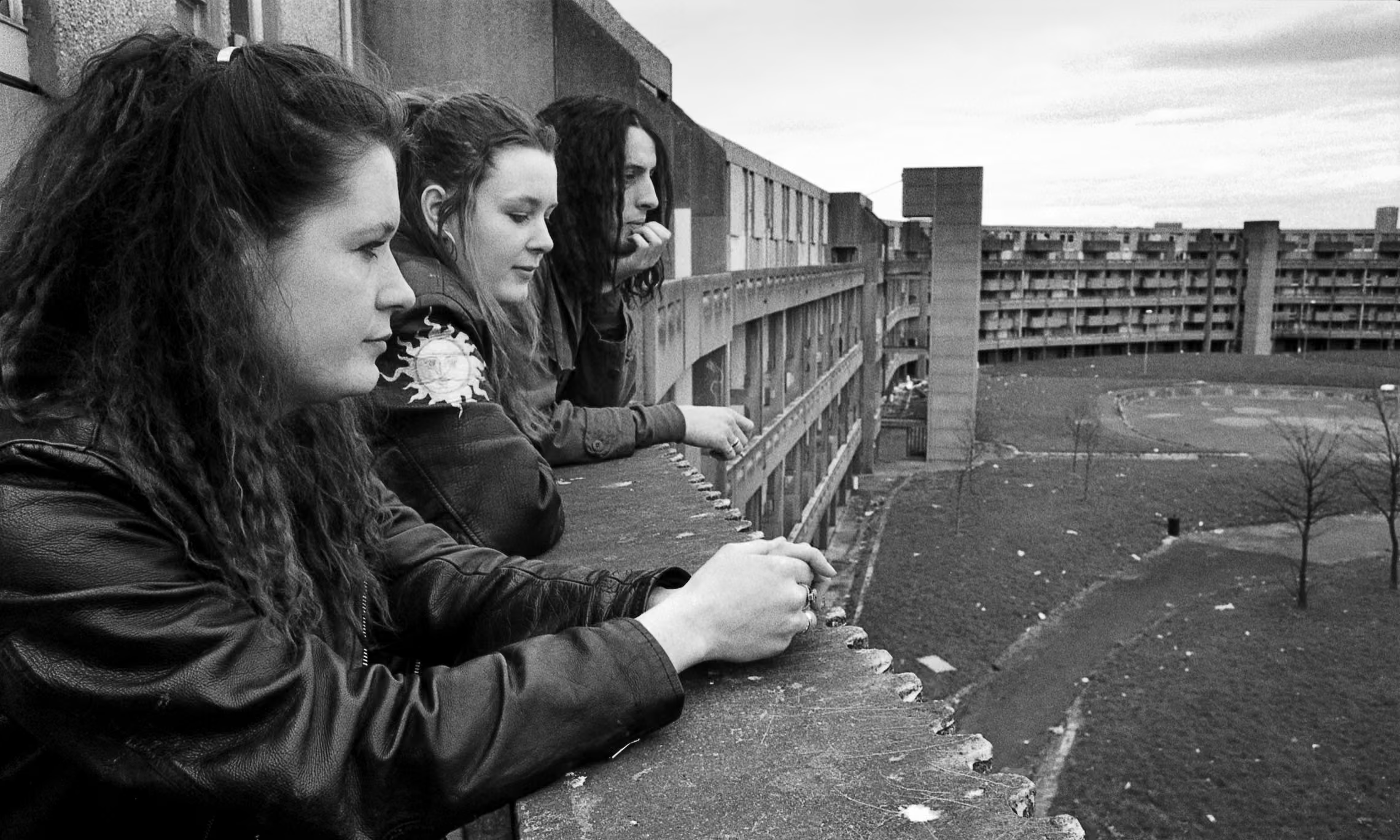
In Manchester Must Dance, Pickering reflects on the sheer unreality of navigating this urban wilderness. He vividly recalls walking through the freezing, neglected streets of Hulme with international guests like pioneering New York DJ Mark Kamins, looking up at the night sky to see nothing but thick, rolling clouds of steam pouring from a residential apartment building. Inside, the walls were stripped back, the sound system was pushed to its absolute limits, and the space had been entirely converted into a lawless, hedonistic sanctuary where the party never stopped.
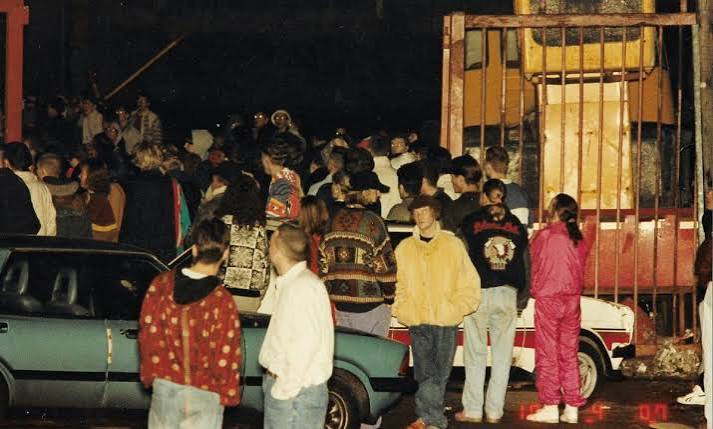
This raw, intimate subculture quickly scaled up, serving as the direct blueprint for the massive, convoy-driven Blackpool raves and the monumental Blackburn warehouse parties that followed. What started as a localised after-hours secret in the council flats of Hulme exploded into a regional phenomenon that completely outgrew the confines of traditional nightclubs.
Thousands of clubbers would carefully coordinate via pirate radio stations, code words, and motorway service station payphones, utilising an ingenious convoy system to outmanoeuvre law enforcement. They bypassed heavy police blockades to occupy vast, abandoned Lancashire textile mills, transforming these cold, derelict monuments of the industrial revolution into booming, laser-lit cathedrals of bass. For Pickering, these events created an intense, risk-fueled dialogue between the city's formal, curated club residencies and the wild, untamed frontier of the underground network. It was a logistical and cultural battleground where the youth successfully reclaimed abandoned spaces, proving that city council borders, legal operating hours, or state opposition could not contain the insatiable desire to dance.
Woven tightly throughout the book is Pickering’s long, close, and occasionally combative relationship with fellow Manchester City fan Rob Gretton. This deep bond makes chapter 47, titled 'A Rob By Any Other Name', a beautiful tribute to his great pal that genuinely tugs at the heartstrings. Their shared histories were forged just as much on the terraces of Maine Road as they were in the smoky offices of Factory Records, creating an unbreakable connection rooted in a distinct Mancunian grit. Gretton and Pickering were far more than musical musos, or business partners they were mates, throughout the story, Gretton is there. Pickering describes his job at Factory Records in two words: "Rob's mate."
Pickering's passion for dance music often put him at odds with the rock-centric ethos of Factory Records, leading to a legendary clash with his flamboyant boss, Tony Wilson. Wilson famously dismissed the rising underground electronic movement with the short-sighted declaration, "dance music doesn't sell, darling." Proving Wilson completely wrong, Pickering went on to co-found Deconstruction Records alongside Keith Blackhurst and Pete Hadfield, which became one of the UK’s very first mainstream dance music record labels. Deconstruction utterly dominated the global charts throughout the 1990s, unleashing a relentless string of massive hits by iconic acts like Black Box, Guru Josh, K Klass, Felix, and even pop royalty Kylie Minogue, whose self-titled 1994 album marked a major artistic reinvention under the label. Crucially, many of these groundbreaking, era-defining tracks were first tested on real crowds from the safety of the Haçienda DJ booth before ever hitting the pressing plants. The book captures the incredible thrill of this era, showcasing how a label born out of Manchester's underground resistance completely reshaped the landscape of commercial pop.
The final chapter of The Haçienda was a grim descent into lawlessness, in which the venue effectively became a war zone caught between a hyper-violent criminal underworld and an aggressively defensive state apparatus. Pickering fully agrees with a stark assessment later made by regular crowd fixture Noel Gallagher, who noted that the venue was the absolute centre of the universe until New Year’s Eve 1989. In an instant, the cultural bubble burst; as the clock struck midnight and 1990 rolled in, the atmosphere fundamentally shifted. The collective, empathetic high faded as people stopped taking Ecstasy and turned toward the aggressive, paranoid energy of crack and cocaine. By 1990, drug use had rapidly increased from a communal experience into a destructive, systemic crisis.
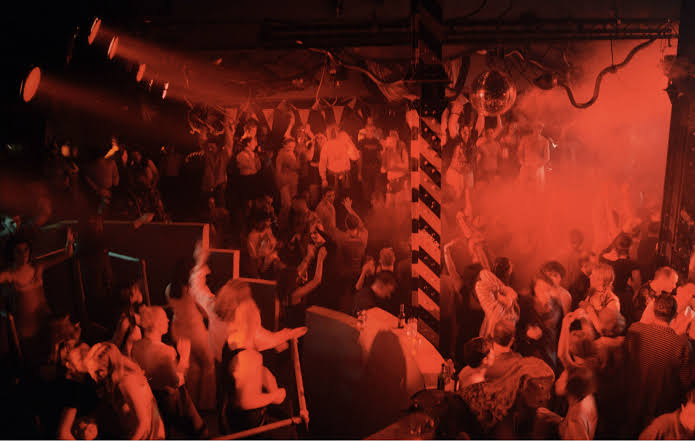
In Manchester Must Dance, Pickering lays bare how the club's utopian dream was completely dismantled from within by the arrival of rival Salford and Cheetham Hill gangs. The sanctuary evaporated as the venue transformed into an open, high-stakes drug marketplace. These crews were no longer interested in the "loving grace" of the early dancefloor; they were fighting over a wildly lucrative narcotics monopoly, extorting management, and physically executing rivals right outside the venue's doors.
The cultural panic had been brewing since July 1989, when the UK recorded its very first Ecstasy-related death, an event that occurred inside the club's walls. The victim was Clare Leighton, a 16-year-old dancer from Cannock, Staffordshire, who collapsed on the dance floor and tragically passed away 36 hours later after suffering a rare, violent internal reaction to a single tablet.
Through sensationalised headlines, the press painted a target on the venue's back. Virtually overnight, the Haçienda went from being celebrated as the most culturally important British club since The Cavern Club in the 1960s to being demonised as a lawless hotbed of crime and heavy drugs. From his vantage point in the DJ booth, Pickering watched the atmosphere curdle from pure joy to icy paranoia as bouncers were shot, doormen were threatened with hand grenades, and patrons were held up inside the toilets.
The response from authorities only added fuel to the fire, characterised by a completely ham-fisted, out-of-touch approach from Greater Manchester Police. Rather than aggressively targeting the highly organised syndicates operating in the shadows, the police took a heavy-handed, reactive approach that penalised the music culture itself. The club faced relentless, aggressive licensing battles, undercover stings, and massive tactical raids that treated ordinary teenagers looking to dance as high-level criminals. This escalating pressure culminated in the venue being temporarily stripped of its license, and by July 1997, the financial strain of the security crisis and the state's suffocating restrictions forced the club to close its doors permanently. Pickering chronicles this collapse not just as the death of a building, but as a tragic corporate and civic failure. At this moment, Manchester's most visionary collective was utterly abandoned to the wolves of gang warfare and bureaucratic indifference.
Exhausted by the constant threat of violence and the scene's decay, Pickering reached his breaking point; he wanted out.
As his time at the Haçienda wound down and the local scene fractured, Pickering’s reputation as a masterful selector took him across the Mersey. In 'Manchester Must Dance', he reflects with immense fondness on his regular guest slots at Cream, the iconic weekly nightclub hosted inside the legendary Nation venue in Liverpool. The club became one of Britain's first superclubs, and Pickering’s sets at Cream became the stuff of folklore. He routinely blessed the decks with ninety-minute masterclasses of gorgeous, flowing, and deeply soulful house music that drove the Liverpool dance floor into an absolute frenzy.
Driven by his evolving creative vision, Mike also stepped out of the DJ booth to form his own group, M People, in 1990 alongside Paul Heard and former Hot House vocalist Heather Small. The project allowed Pickering to bring his career full circle; having previously uncovered Black Box’s secret studio replacement sessions with Heather Small on the Haçienda decks, he built a global powerhouse around her unmistakable, booming vocals. The band went on to achieve astonishing global success, selling over 14 million albums worldwide, touring the globe, and winning two prestigious Brit Awards. Their seminal second album, 'Elegant Slumming', became a juggernaut of 1990s dance-pop, fueled by a relentless string of four consecutive UK Top 10 singles. The house-infused nu-disco groove of 'Moving On Up' peaked at number two on the UK charts and topped the US Billboard Dance charts, propelled by its defiant lyrics about breaking free from a toxic relationship. This was paired with the euphoric 'One Night in Heaven', built around a driving Moog bassline and sequenced brass bottle synthesisers, alongside their soulful top-ten cover of Dennis Edwards' 'Don’t Look Any Further' and the club anthem 'Renaissance'.
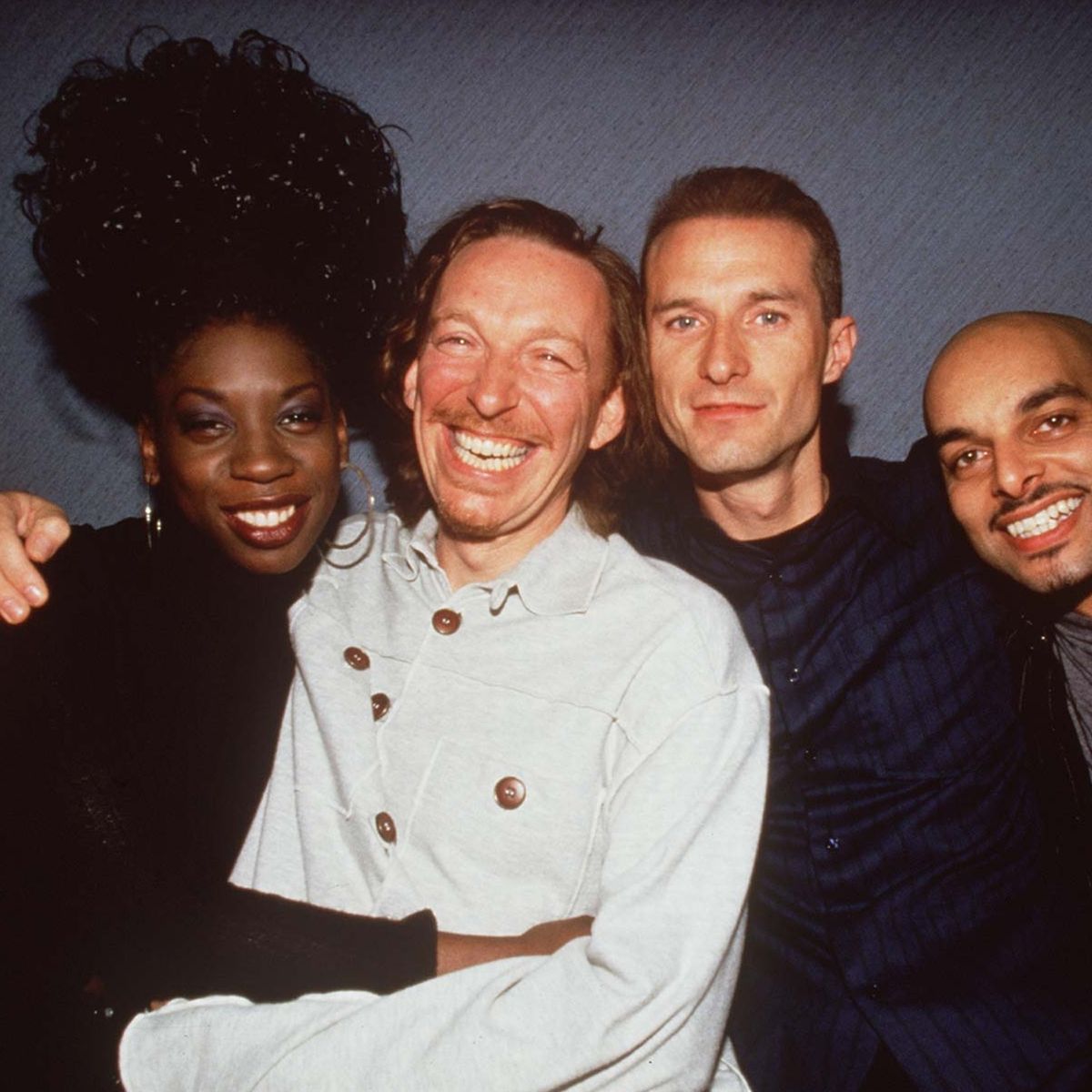
The crowning achievement of the record came when it famously scooped the 1994 Mercury Music Prize, sending shockwaves through the British music press. In the absolute peak year of the Britpop explosion, a feel-good house and soul record completely defied the odds. The judging panel split right down the middle, forcing the chairman to cast a dramatic deciding vote that saw M People beat out heavy favourites Blur for 'Parklife' and Pulp for 'His 'n' Hers'. In winning the award, Pickering and his band also defeated a staggering shortlist of legendary UK talent, including The Prodigy for 'Music for the Jilted Generation', Paul Weller for 'Wild Wood', Primal Scream for 'Give Out But Don't Give Up', Take That for 'Everything Changes', Therapy? for 'Troublegum', Shara Nelson for 'What Silence Knows', Ian McNabb for 'Head Like a Rock', and Michael Nyman for 'The Piano Concerto and MGV'.In 'Manchester Must Dance', Pickering reflects with great amusement on the sheer indignation and elitist backlash the win caused among rock-centric indie journalists. However, the industry was forced to take them entirely seriously, laying the groundwork for their massive follow-up album, 'Bizarre Fruit', which was released later that same year.
This third studio album continued their chart dominance, spawning massive club anthems like 'Sight for Sore Eyes' and 'Open Your Heart'. Crucially, the record also featured their acclaimed, soulful electronic cover of the 1960s track 'Itchycoo Park' by Small Faces, which became another major international top-ten hit for the band. It was a triumphant moment of creative validation; the book details the immense satisfaction Pickering felt in proving that a house music collective could conquer the mainstream charts entirely on their own terms. By elevating the underground club sounds of The Haçienda into a global pop phenomenon, Pickering definitively demonstrated that UK club culture could compete at the highest commercial echelons of the music industry on its own terms, forcing rigid major labels to finally respect house music as a dominant, long-term album format without ever losing its underground soul, sensibility, or respect.
Following the massive success of M People, Pickering transitioned into a highly influential twenty-year tenure as a senior A&R executive at Columbia Records within Sony. His extraordinary ear for raw, left-field talent shaped the modern musical landscape, a role for which he was singularly well qualified, even if he was never truly comfortable working within the rigid corporate confines of a major record label.
He famously signed the stadium-rock powerhouse Kasabian to Columbia Records, guiding them toward massive commercial success. When he first encountered the Leicester four-piece, the music industry was heavily saturated with what Pickering described as absolute turgid indie bands playing rubbish music. In Kasabian, he recognised a band that possessed an explosive, swaggering fusion of electronic rhythms and rock-and-roll attitude, reminiscent of the genre-blurring energy he had championed during the Madchester era. He mentored the band through their self-titled debut and their chart-topping follow-up records, protecting their raw, unpolished edge from being smoothed over by corporate boardrooms. His sharp instincts also led him to sign the American indie-rock trio Gossip, propelling Beth Ditto to global stardom, alongside masterminding the chart-topping indie-pop success of the Salford-based duo The Ting Tings.
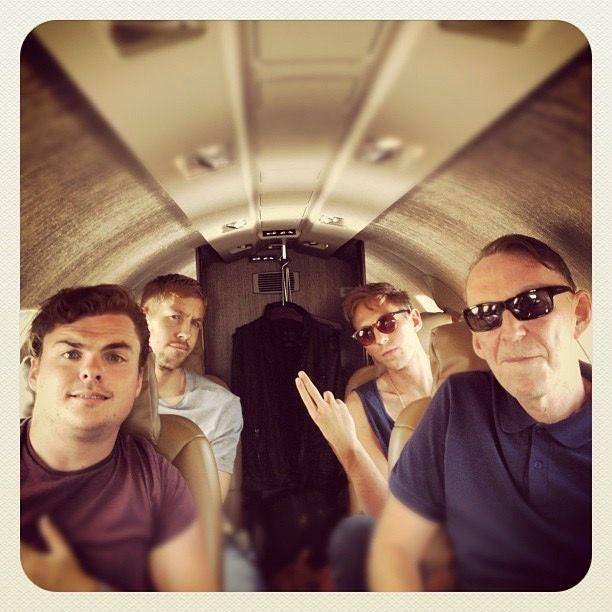
Later, he discovered a completely unknown Scottish producer named Calvin Harris. The mid-2000s discovery happened completely by chance. While on a phone call with a music publisher, Pickering completely zoned out of the conversation when he heard a revolutionary track playing in the background. It was Harris's unreleased song, 'The Girls'. Intrigued by the distinct, synth-heavy production, Pickering demanded that the publisher eject the CD and give him the artist's phone number. Upon calling, Harris's manager revealed that they were on a train to London to sign a record contract with the independent label Gut Records. Pickering ordered them not to sign anything and demanded a brief twenty-five-minute meeting at a Costa Coffee inside Victoria Station.
When they met, Pickering encountered a very tall, gangly, geeky kid named Adam Wiles, who looked absolutely nothing like the global superstar he is today. Harris looked him dead in the eye and stated that if Pickering wanted to do a deal, it had to happen immediately because he was completely sick of stacking shelves at a Marks & Spencer in Dumfries. Clicking instantly with their shared musical vision, Pickering signed him to Columbia. Initially navigating the industry with a five-piece live band from Dumfries, Harris went on to launch one of the most successful solo electronic careers in music history, famously breaking Michael Jackson's long-standing record for the most UK Top 10 hits from a single studio album with his record '18 Months'. Their professional bond evolved into a deep lifelong friendship; Harris still regularly sends Pickering raw demo tracks for feedback, and he even contributed an entire chapter and a dedicated foreword to Pickering's autobiography.
Navigating these corporate boardrooms as a roving A&R man often felt a world away from the DIY ethic of his youth, and the book captures that uneasy tension of trying to protect raw artistry within a strict corporate machine. This time, Pickering had physically left Manchester behind, but his heart still fully belonged there. Today, Mike's musical legacy continues to come full circle; he still regularly DJs and has even taken the legendary sounds of his youth to the ultimate stage, performing to massive crowds on the Pyramid Stage at Glastonbury as part of the critically acclaimed Haçienda Classical shows.
Quite simply, Mike Pickering is one of the most important faces in British music ever. He is a true cultural pioneer whose quiet genius bridged the gap between raw underground subcultures and the highest pinnacles of mainstream chart dominance. By acting as the operational and musical heartbeat of FAC 51 The Haçienda, co-founding the massively influential Deconstruction Records, and conquering global airwaves with M People, he didn't just witness the evolution of modern sound, he directly engineered it. His legendary A&R instincts essentially laid the foundation for the stadium-sized anthems of the 1990s, 2000s, and beyond, leaving a massive, indelible blueprint that connects the jangle-pop of the post-punk era to today's global electronic phenomenon. Pickering remains a rare breed of visionary: an uncompromising champion of the dancefloor who altered the trajectory of commercial music forever, all while keeping his soul and his feet firmly rooted in the city he loves.