Manchester: A City, United
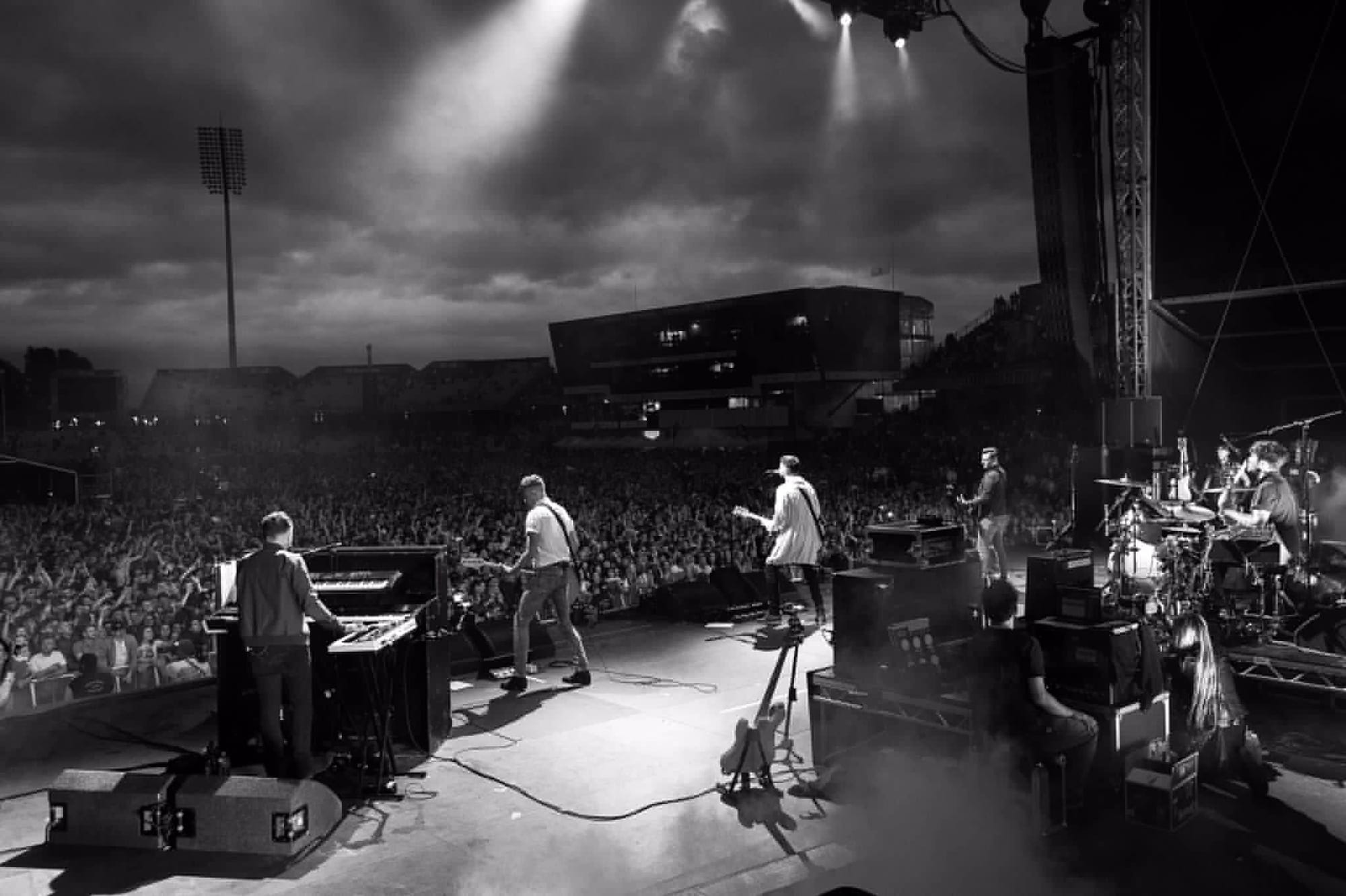
On the 27th May 2017, Courteeners stepped on stage at Old Trafford Cricket Ground, for quite possibly the most important gig of their career.
Proving them Wrong
The concert was more than just a show; it was the most ambitious announcement of the band’s career. Two years prior, a sold-out Heaton Park had seen them leap to a massive outdoor audience of 25,000. Stepping up to nearly double that at Old Trafford Cricket Ground was a bold statement. This was a stage usually reserved for global titans like Oasis, Radiohead, and the Arctic Monkeys. Yet, the band silenced every sceptic by selling out the 50,000-capacity venue in record time, proving that Manchester finally had a new heavyweight champion to rally behind.
History was in the air that day. The gig took place on May 27th, 2017, exactly 27 years to the day since The Stone Roses played their legendary Spike Island show in 1990. For a Manchester band that had grown up in the shadow of the 'Madchester' legends, the date was a symbolic passing of the torch. While Spike Island was often remembered for its logistical chaos, Old Trafford was a flawless triumph. During his acoustic set, Liam Fray even leaned into the heritage, weaving a snippet of 'Standing Here' into 'Please Don’t' as a nod to the Roses' enduring influence.
Liam Fray and the band saw the concert as an opportunity to do more than just promote 'Mapping the Rendezvous'. They wanted to showcase that the Manchester guitar scene wasn't just a museum piece; it was a living, breathing movement. They achieved this through a carefully curated lineup of support acts
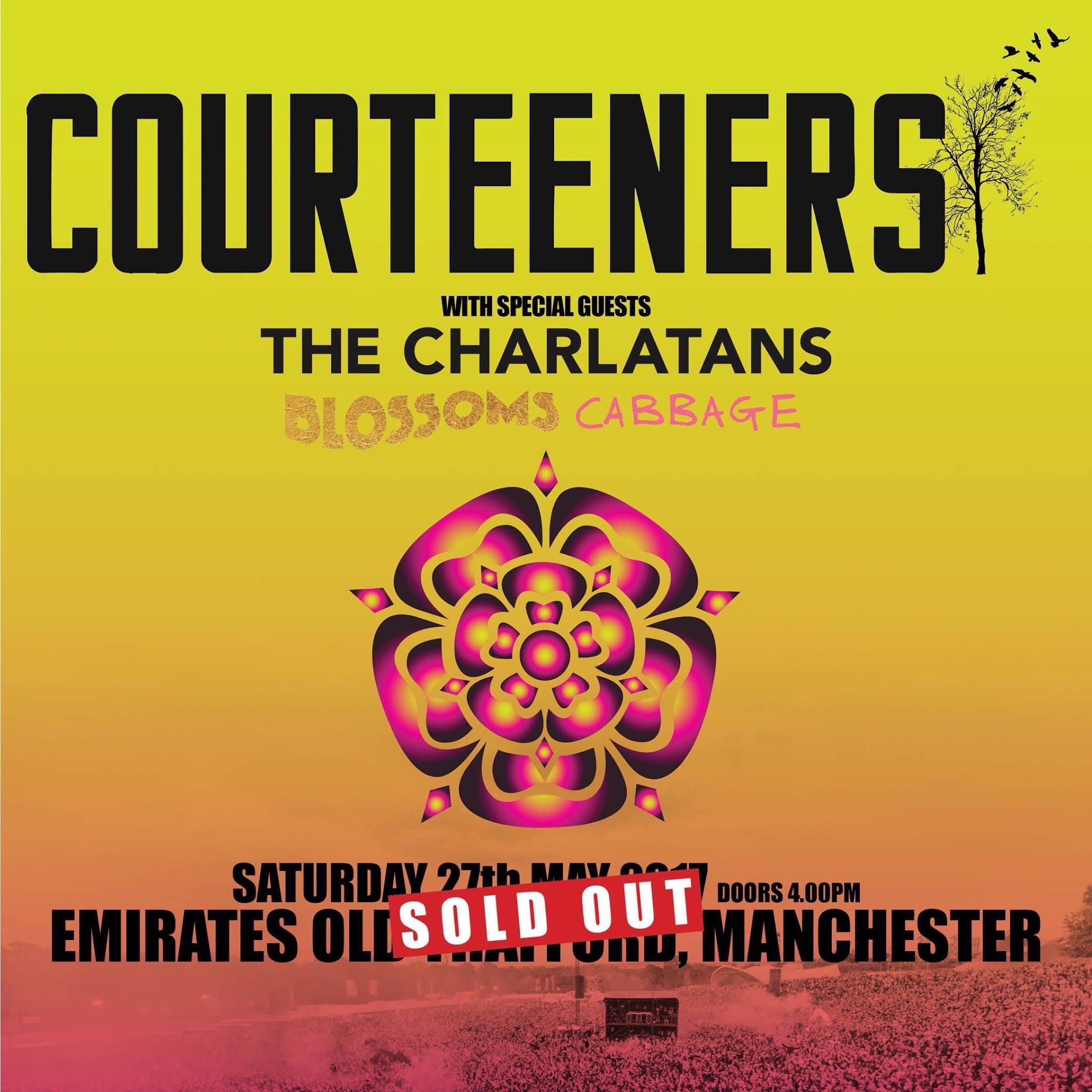
The Charlatans: Their presence on the bill was a masterstroke of continuity. As elder statesmen of the scene, Tim Burgess and company proved they were far from a nostalgia act. Coming off the back of their critically acclaimed album 'Different Days', they showed that the veterans of the North West were still vital, creative, and capable of commanding a stadium-sized crowd. Their set acted as the perfect bridge, linking the baggy-era grooves of the early 90s to the modern indie-rock anthems of the present. It was a nod of respect from Fray to the icons who had paved the way.
Blossoms & Cabbage: If The Charlatans represented the foundation, these two bands were the scaffolding of the future. They served as definitive proof that Manchester’s "conveyor belt" of talent hadn't slowed down.
Cabbage brought a raw, post-punk grit and political edge that reminded everyone of the city’s storied history of rebellion and DIY ethics.
Blossoms, meanwhile, were already on a meteoric rise following their self-titled debut album 'Blossoms'. Their synth-pop-infused melodies provided a soaring, melodic contrast to the day’s heavier guitar sounds. They used the Old Trafford stage as a springboard, gaining the experience needed to eventually follow Courteeners' path and become a massive headline act in their own right, eventually selling out their own massive shows at Wythenshawe Park and Stockport County's Edgeley Park.
A City Under Shadow
Five days before the concert, on May 22nd, 2017, a suicide bomber detonated an explosive in the foyer of the Manchester Arena, killing 22 music fans at an Ariana Grande concert. Men, women, and children were lost in an act of senseless violence that brought the world to a standstill.
This wasn't just a tragedy; it was a targeted attack on the very concept of youth, joy, and the shared experience of live music. It shook Manchester to its core, leaving a city in mourning, cradling the families of the victims and the hundreds left with life-changing injuries. In the immediate aftermath, the city stood still, trying to piece together the unthinkable while beginning the long, painful process of healing.
The silence that fell over Manchester in those following days was heavy. The streets, usually alive with the hum of northern grit and musical energy, were replaced by vigils and floral tributes. St Ann’s Square became a sea of flowers, handwritten notes, and soft toys, a quiet testament to the "22 bees" who would never return home. For a city that defines itself through its nights out, its crowded venues, and its lyrical heritage, the attack felt like an attempt to tear the very heart out of Manchester’s cultural identity.
Music had always been the city's greatest export and its most reliable source of comfort, but for those first few days, the records stopped spinning. There was a profound sense of "before" and "after." The question hanging in the air wasn't just about security or logistics, but whether the city could ever truly sing again with the same carefree spirit. The grief was communal; every person in Greater Manchester felt the weight of those 22 lives, and the collective trauma threatened to overshadow everything, including the biggest musical celebration the city had been looking forward to for years.
The Weight of the Decision
In the wake of such a catastrophe, many assumed that the pulse of Manchester music would stop, if only for a moment, out of respect and fear. The air was heavy with uncertainty. It was, therefore, a monumental moment when the Courteeners announced that the show would go on.
Just five days after the attack, 50,000 people were being asked to gather in a stadium. It was a decision laden with responsibility; the band, the promoters, and the emergency services were navigating uncharted emotional and logistical territory. Yet, it quickly became clear that the gig had transformed into something far greater than a career milestone. It was now a stand of defiance, a display of Northern resilience, and a vital sign of solidarity.
As the sun rose on the morning of May 27th, the usual pre-gig nerves were replaced by a profound sense of purpose. Fans who had contemplated staying home decided to travel to Old Trafford Cricket Ground anyway, many wearing the Manchester Bee emblem or draped in 'St. Jude' flags. There was a quiet, mutual understanding among the 50,000 in attendance: by simply showing up, they were refusing to let fear dictate the city’s future. The heightened security presence served as a sobering reminder of the week's events, but rather than stifling the mood, it seemed to bind the crowd closer together.
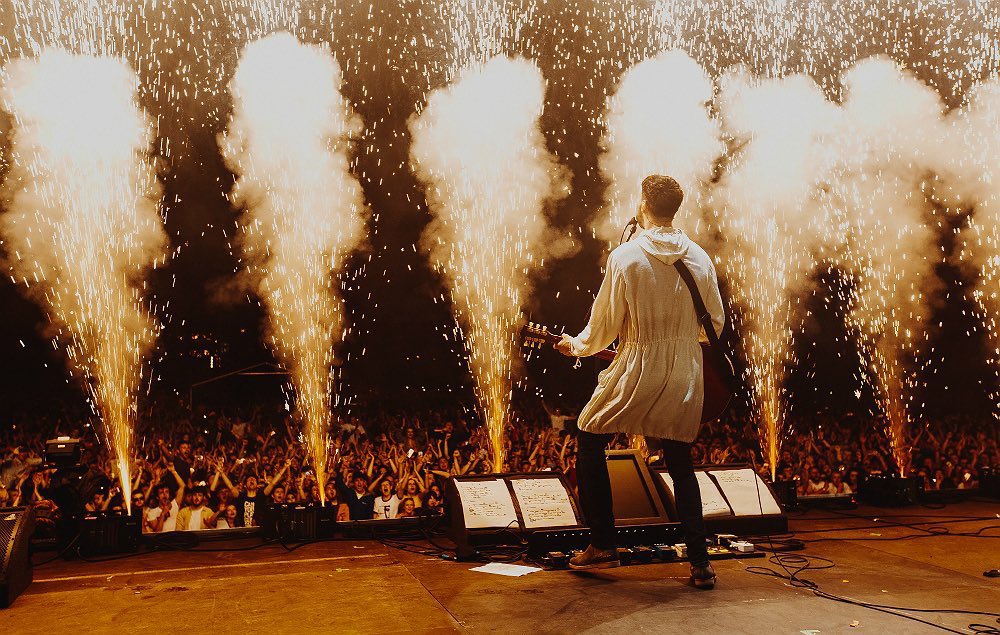
Liam Fray wasn't just performing for a crowd that night; he was speaking to a grieving family. When he stepped out, the roar that greeted him wasn't just the sound of indie-rock fandomit was a cathartic release for a city that had been holding its breath for five days. The decision to play proved that Manchester’s musical heritage wasn't just about the past; it was a living, breathing armour. By choosing not to cancel, the band provided the first major space for the city to begin its collective grieving and, eventually, its celebration of life. The gig didn't just go on; it became the moment Manchester started to find its voice again.
This is Manchester, Our Manchester
On the day of the show, the city centre was abuzz. In a moving display of unity, fans stopped for selfies with police officers and gathered on street corners to howl the anthems of Oasis, The Stone Roses, and The Smiths. Down at Old Trafford, the atmosphere was one of defiant joy; the crowd laughed, danced, fell, and immediately picked each other back up. Despite requests from the organisers, the grey Manchester sky was frequently pierced by the glow of red flares, a traditional, if rebellious, sign that the indie spirit was alive and well.
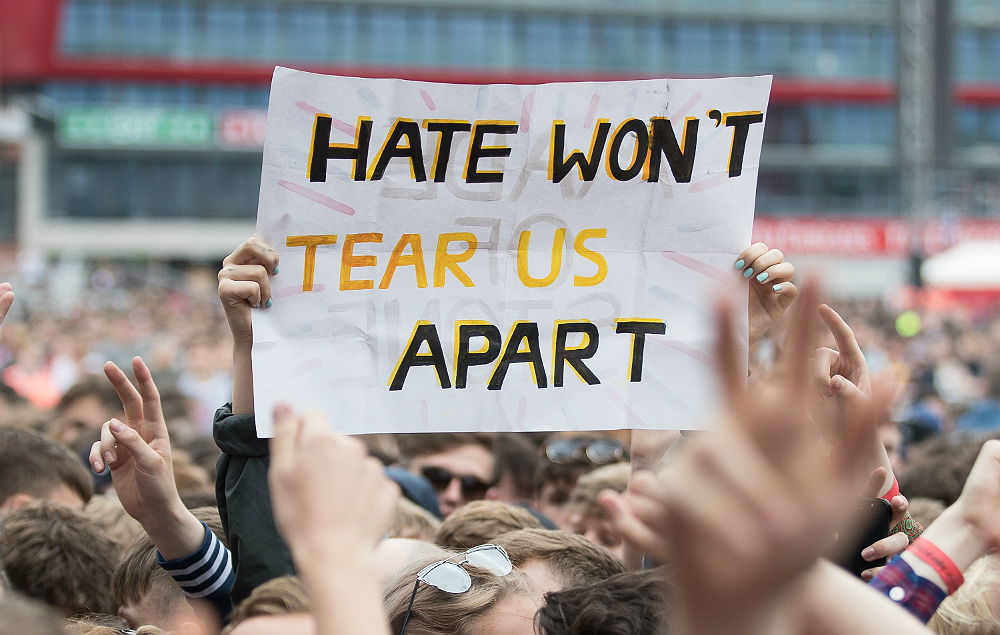
Manchester was determined to celebrate the lives of those lost and prove to the world that nothing could divide them. In the wake of the attack, while parts of the UK grappled with a rise in divisive rhetoric and a spike in hate crimes, Manchester chose a different path. The city rallied, looking after its own and using music as the ultimate glue to mend a broken heart.
Before the band took to the stage, the screens went dark, and Liam Fray stepped out to read a poem by Ryan Williams. The verses, which spoke of how "The Bees Still Buzz," perfectly captured the city’s industrious, unbreakable soul. It was the silence before the storm, a moment of collective reflection that transitioned into an absolute indie rock masterclass.
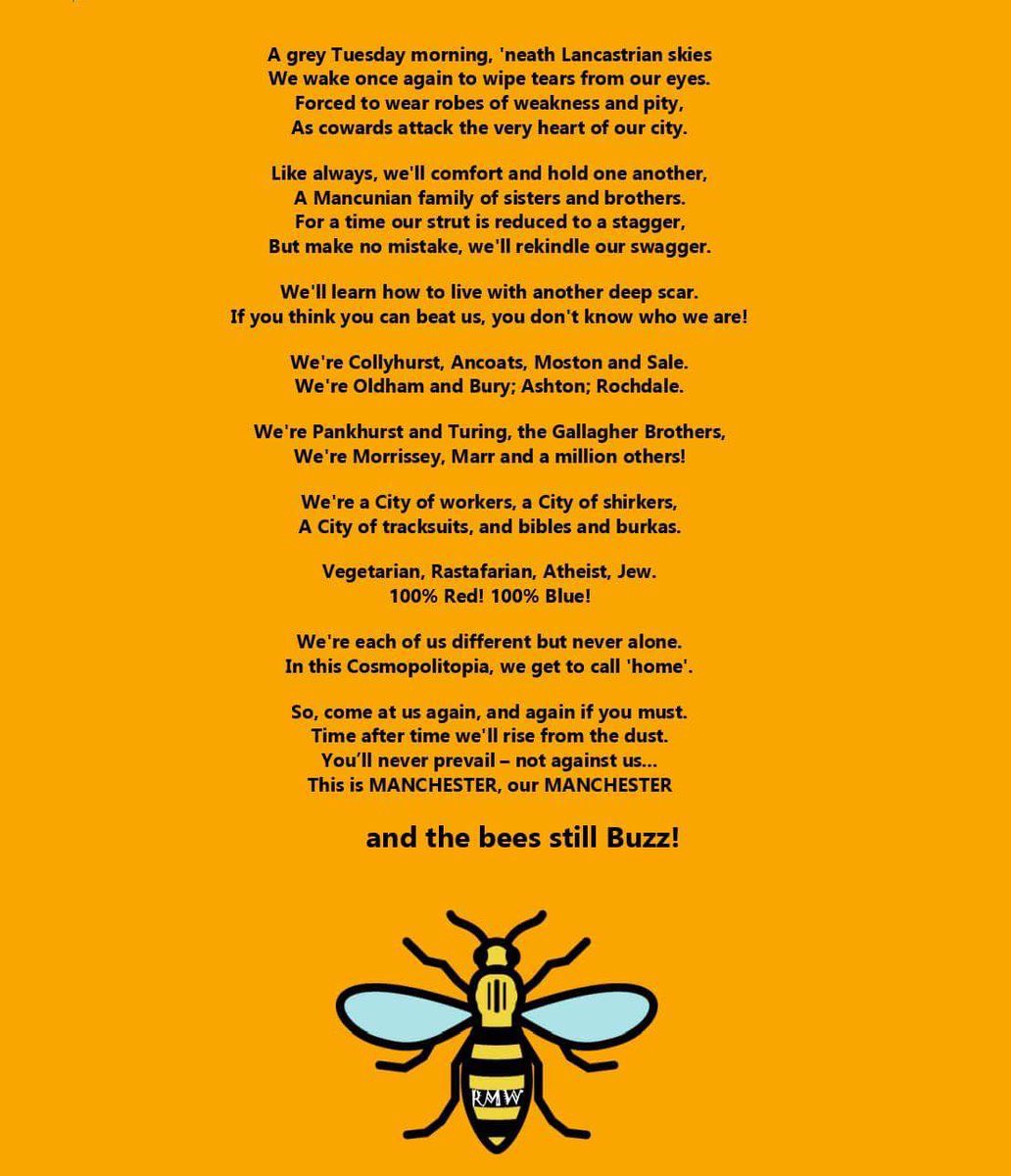
The 20-song set was a journey through an eclectic catalog of anthems. From the opening charge of 'Are You In Love With A Notion?' and the raw energy of 'Cavorting', through to the soaring 'Small Bones' and 'Take Over The World', it was a definitive showcase. By the time they reached the generation-defining 'Not Nineteen Forever', the band had proven to the world, that Manchester's next great band were stood in front of them.
Sixteen songs into the set, the energy shifted. The high-octane rock 'n' roll paused, leaving Liam Fray alone on the stage with nothing but an acoustic guitar. As the first familiar chords of 'Don’t Look Back in Anger' rang out across the cricket ground, the atmosphere transformed from a gig into a vigil.
In the days following the Arena attack, the 'Oasis' classic had spontaneously evolved. It was no longer just a Britpop staple; it had become the secular hymn of Manchester’s "bounce-back." At Old Trafford, 50,000 voices took over the chorus, a collective roar that reached far beyond the stadium walls. It couldn't have been better received if the Gallaghers themselves had walked out. This was a watershed moment for the band, their own 'Maine Road', occurring on the 27th anniversary of 'Spike Island'. It felt as though the stars had finally aligned over Manchester, turning a moment of pop culture into a historical landmark.
A Shared Catharsis
The significance of the cover lay in its humility. By choosing to play a song that didn't belong to them, the Courteeners surrendered the spotlight to the city itself. Fray stepped back from being the frontman and became a facilitator for a much-needed emotional release. As the crowd sang "At least not today," the lyrics took on a literal, heavy meaning, a promise that the city’s spirit would not be defeated.
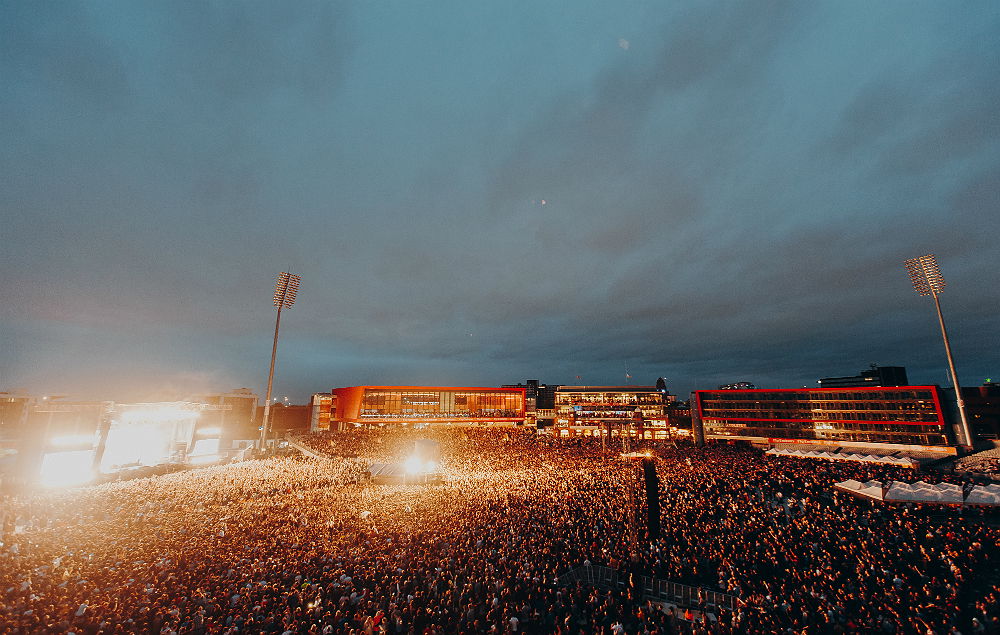
This performance bridged the gap between the legends of the past and the reality of the present. While the 27th anniversary of 'Spike Island' was a nod to the city’s musical greatness, this acoustic set was about its human greatness. It was the sound of a city refusing to look back in anger, choosing instead to look forward with a stubborn, northern hope. For the band, it cemented their place not just in the charts, but in the very fabric of Manchester’s soul.
A Legacy of Resilience
The gig had transcended the boundaries of a standard concert. While I wasn't there that evening, friends who were described an atmosphere that was nothing short of spiritual, a rare moment where 50,000 strangers became a single, defiant family. I would later experience that same indescribable feeling four months later, on September 9th, 2017, when I saw Courteeners help re-open the Manchester Arena for the 'We Are Manchester' benefit. To be in that room was to witness the true meaning of the city's soul. It is a truly special place, filled with truly special people who refuse to let the music stop.
My own journey with the band continued to mirror their meteoric rise. Two years later, in 2019, I stood among the 50,000-strong crowd at Heaton Park. By then, the band weren't just "proving" they could do it; they were commanding the field as established icons. Under the Manchester sun, the field became a sea of bucket hats and flares, a celebration of how far they had come since the early days of 'St. Jude'. It felt like a massive, open-air homecoming, reaffirming that the Courteeners were, and always will be, the people’s band.
Then came the return to Old Trafford Cricket Ground in 2021. If the 2017 show was about defiance and healing, "Round 2" in 2021 was a celebration of survival and the return of live music after the world had been forced into silence by the pandemic. The energy was electric, a release of two years of pent-up emotion. Walking back into that stadium felt like returning to a sacred site.
From that first historic night in May 2017 to the mud and glory of Heaton Park and back to the Cricket Ground, the story of the Courteeners has become inseparable from the story of Manchester itself. Through tragedy and triumph, they have provided the soundtrack to our resilience. As long as there are stories to tell and songs to sing, the "God bless the band" mantra will continue to ring out across the city.
Thank you for reading x