Oasis: Live 25
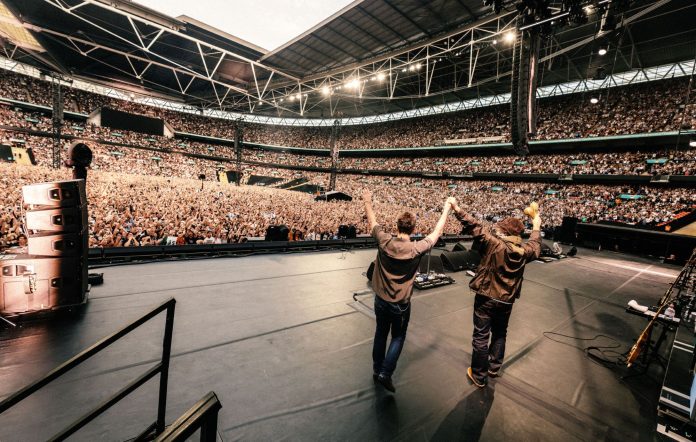
So the Oasis Live 25 came to an end just under a month ago, and I think it's safe to say that it's been one of the most culturally significant music tours in a long time. The shows were all sell-outs, it led to controversy with ticket providers, hotel companies, and sparked collaborations with Adidas.
It also led to a new generation who had seen the band through the eyes of the brothers' solo careers and the brilliant 2016 documentary 'Supersonic'.
Despite worries from Journalists including The Guardian's Simon Price, who called Oasis "the most damaging pop-cultural force in recent British history" and Barbara Ellen from the same newspaper said that the band "castigated for everything from bad haircuts and 'football crowds' of middle aged fans in parkas and bucket hats who walk funny, to boorishness, sexism, the demise of 90s music culture, and spreading laddism like a virus". She described the tour as "the most controversial band reunion since the Sex Pistols' 1996 Filthy Lucre Tour"
I was at one of the shows, and I'll portray my own thoughts and opinions later in the post. However, the show I was at, and from the bits I saw of other shows. The crowds were not full of drunken football hooligans; it was dads and sons, mums and daughters, families, those who'd been there first time round, and those in their late teens and early to mid twenties who were children when Oasis broke up. The shows were inclusive and for everyone. Despite certain elements of the media not understanding this. The band certainly did, on the show's opening night in Cardiff. Noel Gallagher said this: "This song is for all the people in their twenties who have never seen us before and kept this going for 20 years," before introducing the opening encore track 'The Masterplan'.
Initial Announcement
The rumour mill around Oasis reunions had been forever turning. Virtually since the band's break-up in 2009. There had been some near misses. Many thought something was bound to happen in 2017, at the One Love Concert in Manchester. Following the attack at the Manchester Arena. In the years following, there had always been talk of a reunion, but nothing concrete.
In 2024, around the time of the 30th anniversary of the band's debut album 'Definitely Maybe', there was speculation that something would happen. Liam Gallagher had announced a tour to celebrate the anniversary, which saw him play the debut album in full, including a collection of B-sides. Most notably, 'Half the World Away', a song sung by his brother, Noel.
Before the tour, Liam had announced to the world that Noel had been asked if he wanted to be a part of the tour. Answering a fan question with the simple line "He's been asked, and he's refused."
Liam completed the tour without his brother Noel, and as the anniversary of the album got closer and closer. Fans expected another reissue and remaster of the record. However, more and more news began to come out. Through leaks and supposed official sources.
On August 22nd 2024. The Oasis YouTube channel released a video of Noel being interviewed by John Robb in Sifters Records. Noel talked about the reissue of the album and shared some stories of the Oasis early days and the recording of 'Definitely Maybe'
In this video, he also speaks very fondly of his brother Liam. There are quite a few lines that stick out.
"What he did was inspire the kids at the front to do something, and he's still doing it now."
"If songs were drinks, Liam's is a shot of tequila, and mine's half a Guinness on a Tuesday. Liam's is ten shots of tequila on Friday."
Fans began to spot Noel speaking fondly of his brother, for the first time in a long time, but away from the chat about the past. Noel ended the video by saying this. "It was the perfect mix of my influences, Liam's attitude, and the solidity of the band. Sony didn't decide Oasis would still be going after 30 years, Creation didn't decide, I didn't decide, neither did Liam, the fucking people decided."
Looking back, he told us something was coming in that line.
Speculation grew, and more and more fans suspected something would happen. The first post I remember seeing was by The Rock Revival, which was posted the day before the interview with Noel was released.
Then things took off, and more and more sources came to release things. The Times and Sunday Times said that the band would be playing huge shows in London and Manchester in 2025.
Posts trickled through various sources. However, we'd heard things like this before. Nothing seemed concrete.
August 25th 2024, is when things really changed. Liam Gallagher was playing at Reading Festival, his final festival performance on his 'Definitely Maybe 30' tour. After dedicating 'Half the World Away' to Noel Gallagher, throughout the rest of the tour, he'd dedicated the song to his brother, who was playing hard to get.
He walked off stage, and fans were greeted with the following screen and a song being played over the PA. That song was the O'Jays 'Give the People What They Want'.
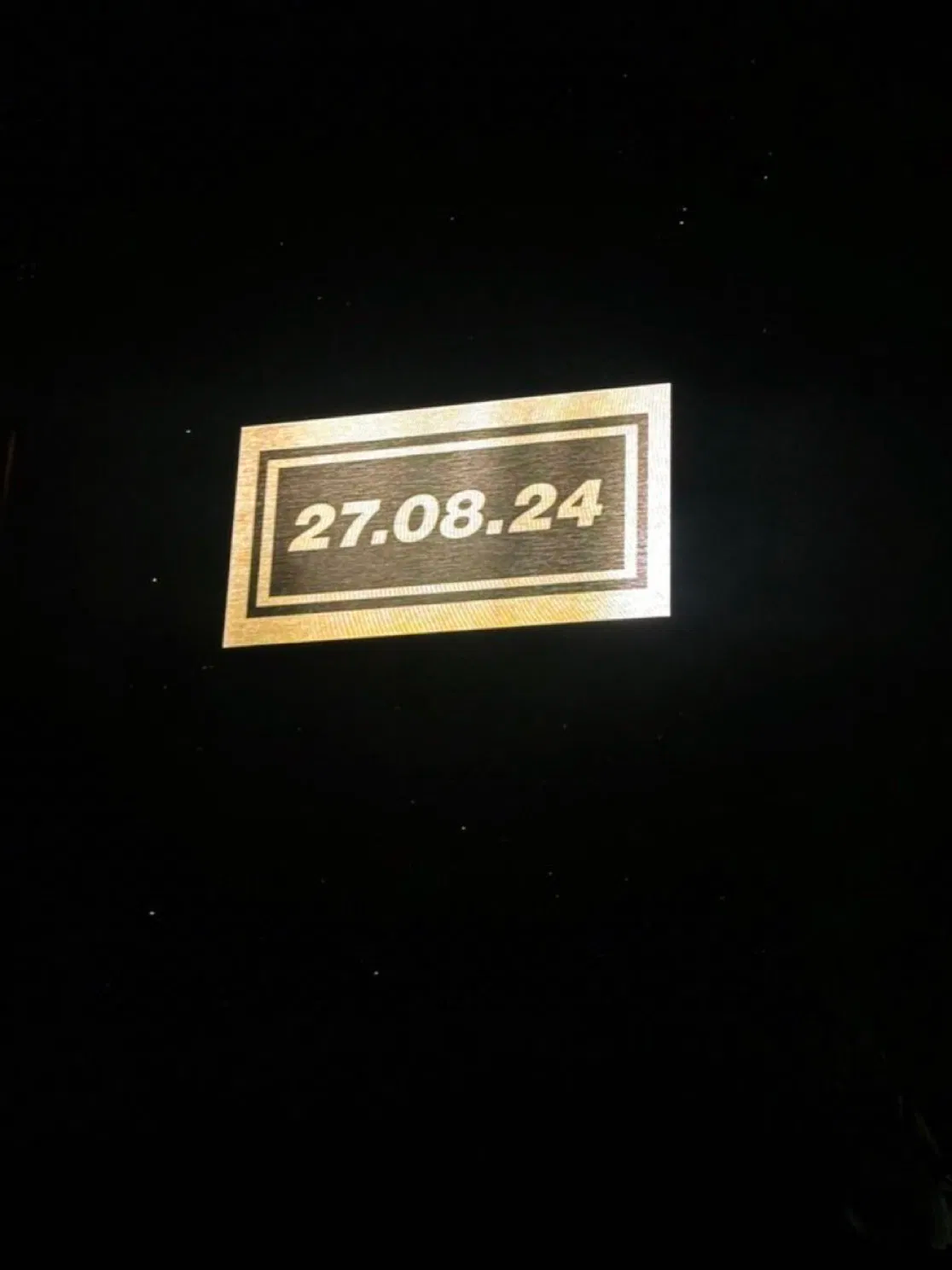
The screen was also shown in Manchester, at the Blossoms show in Wythenshawe Park. As fans turned to leave the venue, this was presented on the screen. It can't have been on for more than twenty seconds, but that was more than enough. Most of us already knew what it meant.
Following the gigs, social media blew up. Media publications began to report on the videos. It wouldn't take long for more news to come out of the Oasis camp, though.
The video played in Reading and Wythenshawe that had been shared unofficially by those who stood in the fields. Got an official release. Through three different channels. Oasis, and both the brothers Gallagher.
August 27th 2024. News that for years seemed impossible. After 15 years away, Oasis were back. 30 years since the release of their debut album ‘Definitely Maybe’ and 15 years since that famous night in Paris. A tour for 2025 was announced. Following the release of a picture. Noel and Liam stood together.
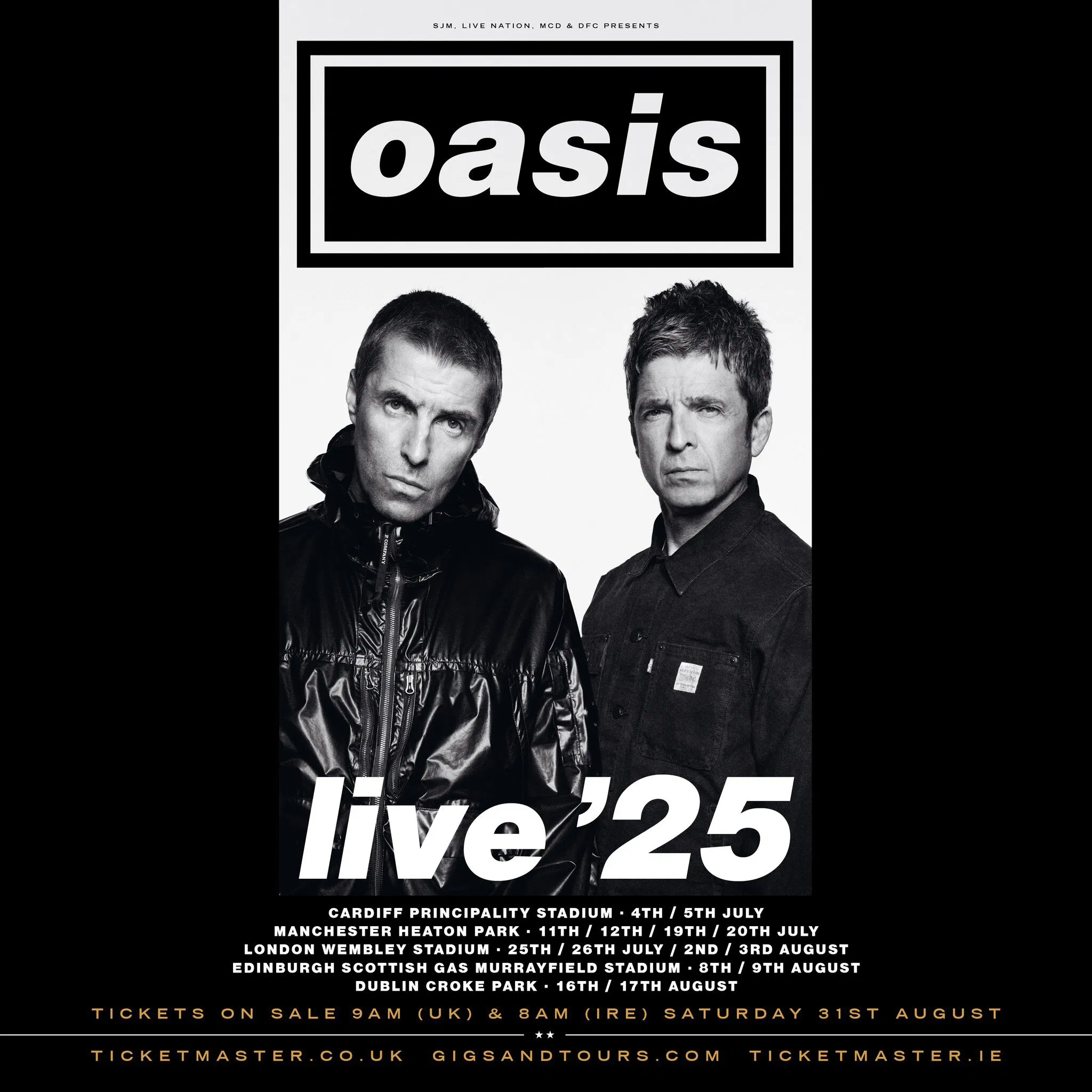
The first dates for the UK & Ireland were announced, but fans expected more. Oasis would announce further shows for North America, South America, Asia, and Australia through the coming months.
A few more announcements would come, announcing support bands for shows and the addition of a few extra dates. However, it was virtually radio silence from the two brothers.
Ticket Scandal
There was some scandal when the band announced tickets, with ticket-selling companies like Ticketmaster and Live Nation, but also with companies selling accommodation. The Maldron Hotel chain in Manchester was accused of cancelling bookings in order to resell rooms at inflated prices, prompting them to state that the rooms were overbooked.
Around 14 million people are said to have joined the scramble for 1.4 million tickets for only 17 shows announced at the time across the UK and Ireland. Between 19:00 and 22:00 on 30 August 2024, select tickets were released during a pre-sale, with seats selling for between £73 and £205, standing tickets for around £150, and premium packages costing up to £506.
These tickets went on sale via a ballot, with fans asked how many times they had seen the band and required to identify the name of the band's original drummer, Tony McCarroll. All of the presale codes had been allocated by 14:30 that day.
I thankfully managed to get my tickets during this sale period. So I missed out on what was to follow.
Within minutes of these tickets being released, presale websites were selling them for several thousand pounds; tickets for their 26 July show were being sold for £6,000, prompting responses from the band and the resale company Viagogo.
General sale tickets for the Ireland gigs were released at 08:00 BST on 31 August 2024, while sales for the gigs in Great Britain opened an hour later. Sales were handled by Ticketmaster, Gigs and Tours, and See Tickets, while resales were handled by Ticketmaster and Twickets.
Some users reported having over one million people ahead of them in the queue, and others reported waiting in a "queue for the queue". Other users additionally reported 503 error messages and being mistaken for bots. Ticketmaster attracted criticism for selling "In Demand" and "Official Platinum" tickets for inflated dynamic pricing, a practice they defended. The Guardian's Josh Halliday reported having only ninety seconds to make his purchasing decision.
As a result of users complaining about their experiences, "#shambles" started trending on X, and several hundred fans complained to the Advertising Standards Authority. Twickets also received criticism for their high reselling fees, prompting its founder to announce that they would cap their fees at the lower of "10% + a 1% transactional fee" or £25. On 1 September, Loudersound reported that two nosebleed seats for their 26 July gig were available on Viagogo for £23,603 each.
Three days later, the band announced two additional dates at Wembley Stadium that would have an invitation-only ticket sale and the day after that, the Competition and Markets Authority launched its own investigation as to whether Ticketmaster broke the law. In late October, the band's promoters announced that they would cancel over 50,000 tickets and put them back on sale at face value via Ticketmaster. In March 2025, the Competition and Markets Authority completed its investigation and said that Ticketmaster "may have misled Oasis fans" with unclear pricing when it put tickets on sale.
On 26 September, NME revealed plans to extend the tour to cities in the Americas, Asia and Oceania. The North American dates were confirmed four days later, while the Australian dates were confirmed on 8 October. Alongside the announcement of the North American dates, the band's management also confirmed in a statement that they would not be implementing Ticketmaster's dynamic pricing system for those shows in an attempt to avoid a repeat of what happened with the UK and Ireland shows.
The Build Up
Oasis drip-fed some information to fans. Noel did a brief interview on TalkSport, and Liam posted a few little bits on X.
However, for the most part, they kept things under wraps. In hindsight, I can see why. They didn't need to promote the tour, and every question from journalists would have been the same.
Why now? Is it for the money? etc. It was an extra worry that they didn't need.
One thing Oasis fans had been promised was an advert for Adidas featuring both brothers. On June 19th, the advert premiered on Channel 4 and on the Adidas Originals YouTube channel. It was the first time we had seen both brothers together since the initial announcement in August 2024.
The advert refers to various Oasis concerts, and even a couple of their music videos, including 'Cigarettes and Alcohol'
The two brothers appear together at the very end of the video. Oasis and Adidas partnered together to release merchandise for the Live 25 tour, including t-shirts, jackets, and bucket hats. Alongside the Adidas collaboration, the band launched a series of pop-up stores across the UK and Ireland ahead of the tour in Manchester, Cardiff, London, Edinburgh, Dublin and Birmingham.
These stores allowed fans to get their hands on exclusive merchandise, including special vinyl releases. Oasis was giving fans more and more before the store started, and it all started to feel more real.
We hadn't seen them on stage yet, though.
The Opening Night
The first show of the Live 25 tour was in Cardiff on the 4th July 2025. The first time the brothers Gallagher had performed with each other since the show V Festival in 2009.
"THIS IS NOT A DRILL" are the first words Oasis fans are greeted with in Cardiff. After 16 years apart, very public spats and even the odd vegetable-based jibe.
'Fuckin the Bushes' blares out over the PA, and fans are told “, The guns have fallen silent. The stars have aligned. The great wait is over.” This really is happening. Ever since that night in Paris, where Noel called it quits, the idea of seeing the brothers again on stage seemed like a long-lost memory or a distant fantasy.
What happened next, I doubt even the most hardcore Oasis fan would have expected. Both brothers walked out arm in arm.
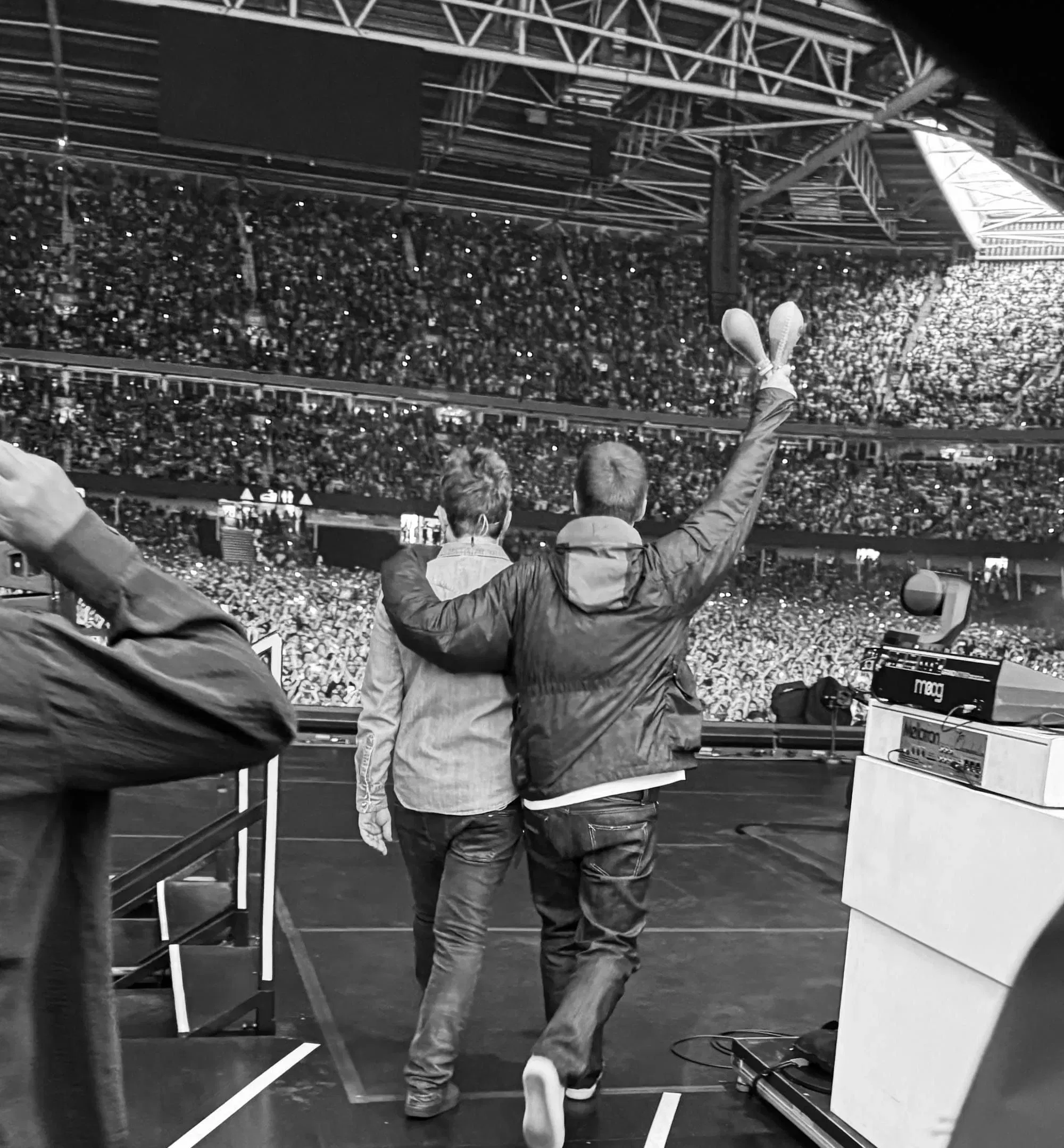
The band knew what they needed to do, and with a semi-new lineup. Joey Waronker on drums, Andy Bell on bass, and Gem Archer and Bonehead sharing guitar duties.
A 23-song setlist that featured just one song post-2000: ‘Little by Little,’ sung by Noel. With no new album to promote and no obligation to play anything recent, the songs they chose were timeless. These weren’t just tracks, they’ve become woven into everyday life: echoing from football terraces, spinning at wedding discos, soundtracking quiet funerals, and ringing out in the final moments of all-nighters.
They kicked off with ‘Hello’ and charged straight into ‘Acquiesce.’“Because we need each other, we believe in one another,” Noel sang back to Liam, and it had been far too long.
The momentum never dipped: ‘Morning Glory,’ ‘Some Might Say,’ ‘Bring It On Down,’ ‘Cigarettes & Alcohol,’ ‘Fade Away,’ ‘Supersonic’ all delivered at pace, hit after hit.
This is exactly what we needed. The band sounded sharp, the songs still immense, and watching the footage back, it’s clear: they wanted to be there. Noel had his moment too, delivering three absolute classics: ‘Talk Tonight,’ ‘Half the World Away,’ and ‘Little by Little, ’ each landing with as much weight as the night’s other high points, even without Liam’s signature rock’n’roll sledgehammer of a voice.
A majestic, Bowie-honouring ‘Stand By Me,’ adorned with visuals of family snapshots, stood out as a real highlight. ‘Cast No Shadow’ quickly followed, regaining sublime ground with both brothers sharing vocal duties. The song, written in 1995 and dedicated to then-Verve frontman Richard Ashcroft, gained an extra layer of poignancy, especially since Ashcroft was supporting the band that night.
From there, it was a historic closing run: a thunderous ‘Slide Away,’ the crowd soaring with the orchestral refrain of ‘Whatever.’ These songs still resonate powerfully, many of them written by a young, disillusioned Noel Gallagher in Manchester, giving voice to the frustrations of a working-class generation under Tory rule. Sound familiar?
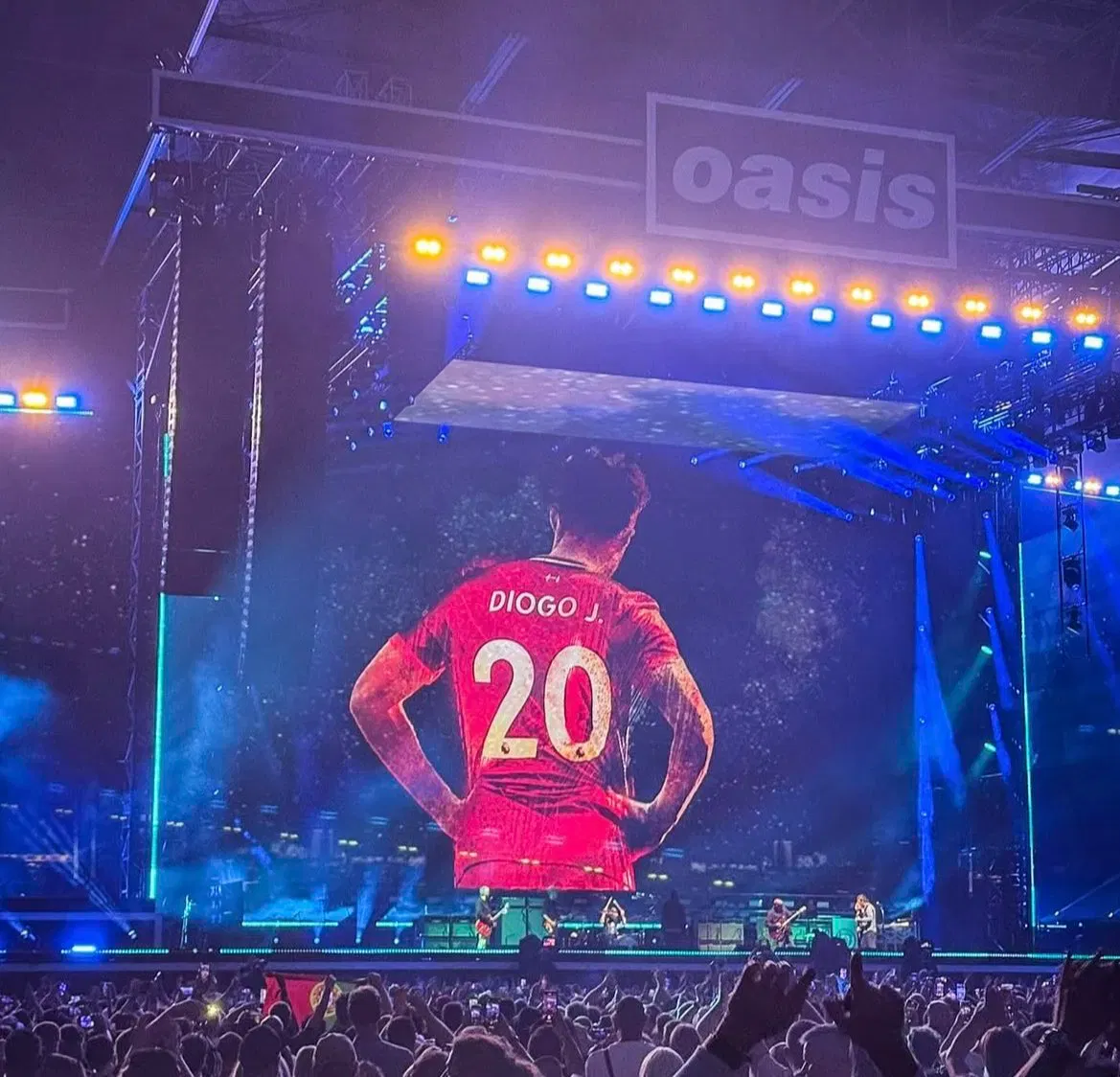
‘Live Forever’ became the night’s most emotional moment. The band paid tribute to Diogo Jota, who tragically passed away in a car accident alongside his brother André earlier in the week. As the song ended, Jota’s shirt appeared on the screen, a moving, heartfelt gesture that felt like the band’s most significant moment in years. It was a beautiful tribute to a brilliant footballer and, as countless tributes have made clear in the days since, a much-loved husband, father, brother, and son.
The band knew exactly who they were playing to. Noel dedicated fan-favourite 'The Masterplan' to “all the people in their twenties who’ve never seen us before and have kept this shit going for 20 years.” They understood the weight of the moment and just how much these songs have transcended time.
The show closed with the holy trinity of songs that are now part of life’s soundtrack: 'Wonderwall', Noel’s defiant anthem 'Don’t Look Back in Anger', and the swirling, glorious epic 'Champagne Supernova'. They’re back, and they’re the best they’ve been since the late ‘90s.
Despite pre-show nerves, and having not shared the stage for fifteen years. This was an example of just how good Oasis were. Cardiff proved to be the perfect acid test.
A second night proved to be better than the first. One of my friends went to the Cardiff shows, and she said it's comfortably the best gig she's ever been to.
Manchester So Much to Answer For
The five shows in Manchester deserve their own section. Beginning six days after the Cardiff Leg on the 11th July, it saw the band play to 370,000 ticketed fans across five nights. However, thousands more would watch from a grassy incline outside of the Heaton Park perimeter, affectionately named 'Gallagher Hill'.
Across five nights, fans in their thousands crowded on the hill to sit and listen to the show. Despite various attempts to stop access, the people of Manchester defied the odds and would not be stopped.
During the gigs, Liam would dedicate 'Bring It On Down', the most punk effort from Oasis, to those fans on the hill. The final night of the Manchester leg, Oasis also got a thousand 'Gallagher Hill' t-shirts made up, and handed them out to those on the hill.
The setlist across the shows in Manchester remained the same. Oasis would not change the setlist at all across the 41 shows, but they didn't need to. It had everything that it needed.
For many fans, the Manchester shows were where the tour really began. Cardiff kicked things off, and it was the perfect acid test for Oasis, but the shows on home soil were an extra level above. The pre-show nerves were gon,e and the band hit the stage each night with confidence and nothing left to prove. The Manchester crowd undoubtedly played a huge role in that.
I was there for the final night, and both Noel and Liam addressed the crowd separately, each expressing how proud they were. Liam offered his thanks early in the set, saying:
“It’s been amazing being here the last fucking ten days. You’ve actually blown whatever brain cells I had left; they’re well and truly gone.”
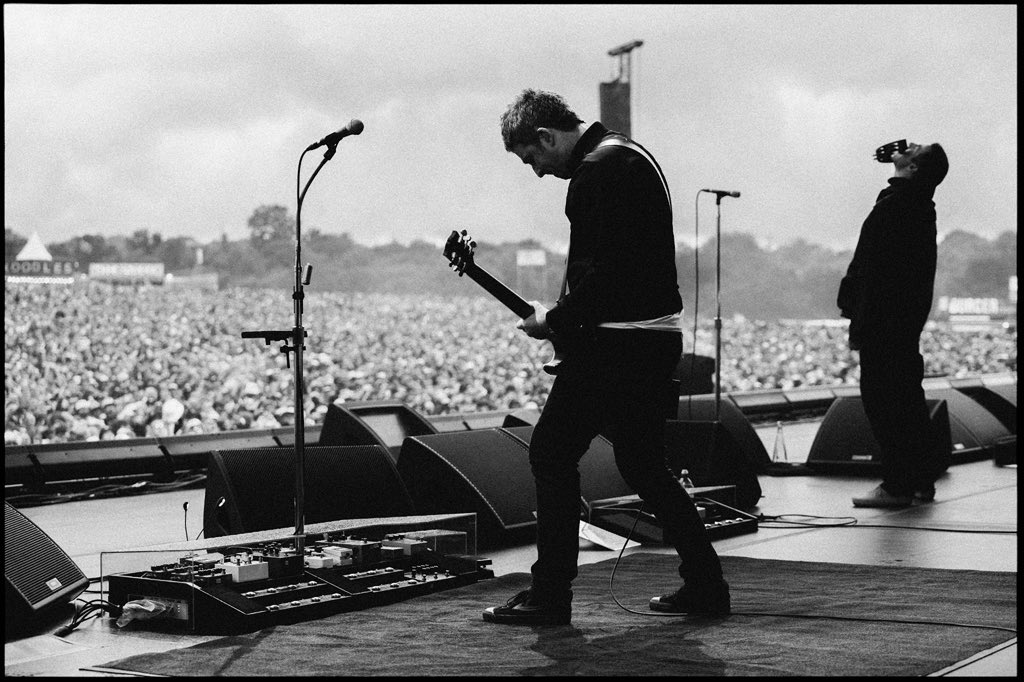
Noel addressed the crowd just before launching into 'Don't Look Back in Anger':
“For the last ten days, the eyes of the world have been on this city of Manchester, and I just want to say to all Mancunians, you’ve done yourself fucking proud. We’ve got people coming in from all over the world… what I can say from staying in the city is you’ve still fucking got it, Manchester.”
All five nights were exceptional, but they were always going to be. Oasis performing live again for the first time in sixteen years was already a culturally significant event. Add to that a run of hometown gigs, the atmosphere on Gallagher Hill, and the countless events happening across the city, and the whole thing felt like a perfect storm.
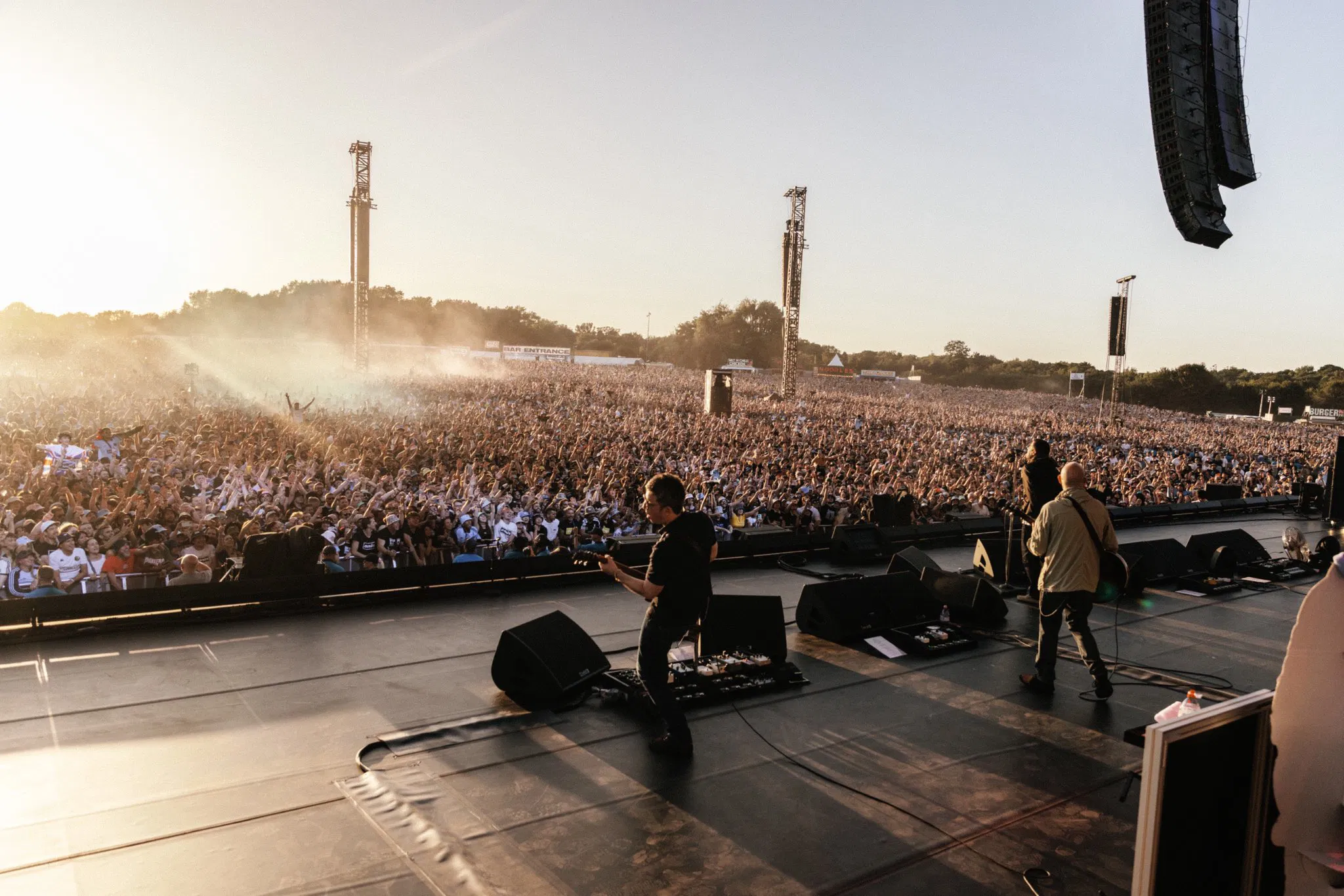
The brothers, along with the rest of the band, were in top form, delivering all the classics alongside deeper album cuts and B-sides, reminding everyone just how great they were, and still are. Only a band as incomprehensibly popular as Oasis could return after two decades away, compile a setlist, and still leave out five No.1 singles.
Being in the crowd for that final Manchester show was surreal. Seeing Liam and Noel share the stage again was one thing, but turning to look at the crowd was just as powerful. The demographic was all over the place: people of all ages and backgrounds, young and old, teenagers, twenty-somethings, mums, dads, aunties, uncles, grandparents. It wasn’t just a gig, it was a genuine celebration of the music and what it means to people.
Oasis knew how important these shows would be. It wasn’t just a homecoming; it was a moment to prove themselves once again to the city that first believed in them back in the early ’90s. The same city that gave us Joy Division, New Order, The Smiths, and The Stone Roses before giving us the Gallagher brothers.
Manchester received a lot of love throughout the run. The brothers’ beloved Manchester City were honoured during 'Cigarettes & Alcohol', with players Rodri, Jack Grealish, and Phil Foden all getting dedications, as well as manager Pep Guardiola. 'Fade Away' was dedicated to the people of Manchester, and 'Half the World Away' to the beloved sitcom The Royle Family.
They were all absolutely astonishing shows.
UK & Ireland
Following the shows in Manchester and Cardiff. The band played the first five of seven shows in London at Wembley Stadium.
The shows at Wembley drew the biggest crowds of the tour. Five sold-out crowds of 90,000 people. Following the Manchester shows. Oasis were in fine form. The setlist was down to tea, and the band were no longer falling back to rehearsals before the first show at Wembley. Oasis had played to over half a million people, and once these shows had finished, it was near enough a million.
The shows showcased what the media didn't want people to believe, either. There was a huge sense of community at these Oasis gigs, young, old, men, women, no matter colour, creed, or class, united in the power of some exceptional music. Tens of thousands of people were having the time of their lives.
Heaton Park and Wembley really highlighted the spectacle of these Oasis shows. Not just in the size of the crowds but also in the brilliant stage design, the videos, and the power of the music.
It also showed something more important: the brothers' enthusiasm for the shows had not waned. In fact, both of them looked happier and more jovial on stage, sharing laughs and jokes between songs. Live 25 could well have been a cash grab to help Noel through his divorce with Sara MacDonald, but one thing is for certain: they did not show that on stage.
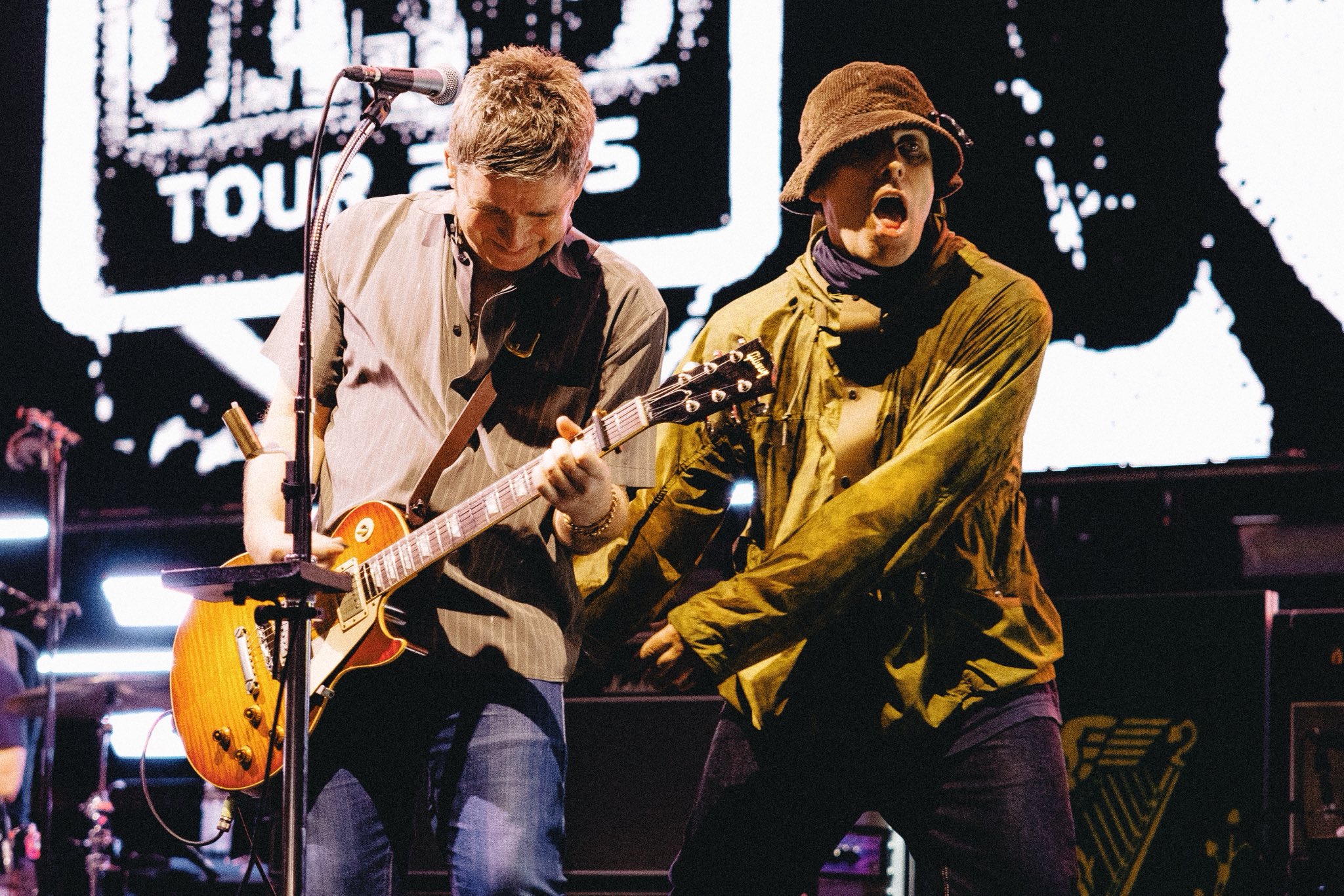
Edinburgh came next: three nights in the Scottish capital. Oasis timed the shows to coincide with the famous Edinburgh Fringe Festival, which was already drawing thousands of visitors into the city. Against that backdrop, the scale of these concerts felt nothing short of exceptional.
The Edinburgh dates also produced one of the funniest and most pointed moments of the entire tour. In the build-up to the shows, Edinburgh City Council had made public comments expressing concern about the band’s concerts. Liam, never one to let such things slide, responded at the first show by branding the council a “bunch of snakes.” By the second night, he doubled down. Addressing the crowd, he effectively accused the council of corruption. “We’re bringing £2m into the city in the next couple of days,” Liam said, “and you’ll see none of it because they’re splitting it with their mates.” Right on cue, the band launched into 'Bring It On Down' a song steeped in frustration with the British class system and the powers that be. The moment was perfectly judged, blurring the line between provocation and performance.
I think the biggest compliment that I can give the Edinburgh shows was the fact that Oasis still performed at the highest level, despite the fact that there wasn't as much at stake. Cardiff were the first two shows of the tour, Manchester they came home, and London had the biggest crowds. Edinburgh, let Oasis do what they do best: play an exceptional show.
Bringing the UK & Ireland leg to a close were two shows in Dublin, dates that felt like a second homecoming for the band’s three original members. Noel, Liam, and Bonehead are all of Irish descent, with each of their parents hailing from Ireland, and that shared background lent the shows an atmosphere that was markedly different from anything earlier on the tour. There was a sense of familiarity in the air, as though the band were not just visiting a city, but returning to a place woven into their own family histories.
Noel, in particular, has often spoken openly about the importance of his Irish roots in interviews, citing them as a quiet but constant influence on his songwriting and outlook. Making the occasion even more special, this marked the first time Peggy Noel and Liam’s mother could watch the band on tour. Her presence added an unspoken emotional undercurrent to the nights, grounding the spectacle in something far more personal.
North America
Following the UK & Ireland leg of the tour, Oasis headed to North America. Starting in Toronto, the band would play a total of nine shows across three countries. Canada, the U.S., and Mexico.
It was business as usual for the band. Nothing had changed following the UK shows; the setlist was the same. There was a bit of a myth that Oasis were never big in America, and that's just not true.
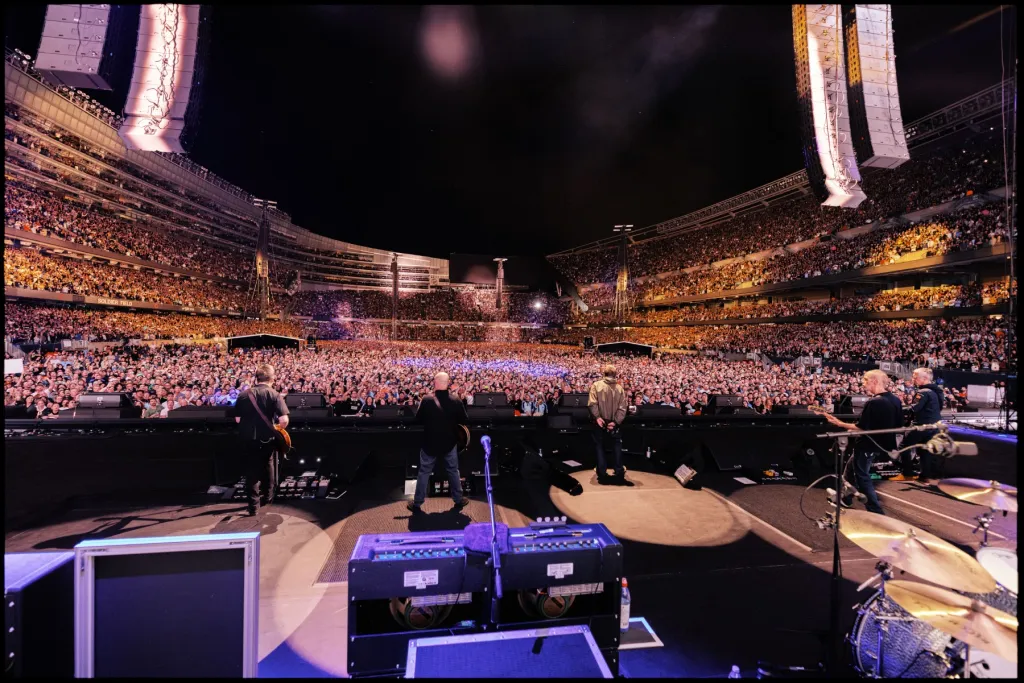
'Don't Look Back in Anger' and 'Wonderwall' both charted and charted well. However, the crowds knew more than just the hits. They responded well to the whole collection of songs. Oasis sometimes struggled with North America, it had been where they'd faced some problems. Noel would leave the band in 1994, after a famous show at Los Angeles Whisky a Go Go, and then again in 1996 following a fallout with brother Liam.
Live 25 would help right some of those wrongs.
Asia & Australia
Following on from two extra shows at Wembley, Oasis headed to South Korea, Japan, and Australia.
Oasis have always had a good rapport with their Asian fans, particularly in Japan. In the Supersonic documentary, both Noel and Liam highlighted just how amazed they were by the reaction they received there. For a band that had only recently exploded in the UK, the scale and intensity of the Japanese response felt almost surreal sold-out shows, meticulous fan dedication, and an audience that sang along word-for-word despite the language barrier.
That love has not disappeared. Both Japan and South Korea came out in full force for Oasis.
The band rewarded this support with a two-hour setlist, the same that had been played in the UK, Ireland and across North America. This was a nostalgia fest, but in the best possible way. With all of the songs that a generation of fans fell in love with 31 years ago, and two new generations have subsequently fallen in love with.
These shows, however, marked a change in lineup. Paul 'Bonehead' Arthurs would miss this leg of the tour, following his prostate cancer diagnosis and on the advice of doctors to rest up. Mike Moore, who had previously played in Liam Gallagher's solo band, stepped up to fill in.
Many people were starting to feel the same thing; more and more shows were proving the healing power of time, and the brothers' relationship was growing stronger rather than weaker. A stunning reversal from the fractured memory of the band’s final months in 2009. As Oasis put it best in their set opener, 'Hello': it’s good to be back.
Melbourne and Sydney followed. Three nights in Melbourne, and two in Sydney. It was more of the same both brothers in good form. Mike Moore stepping in perfectly and 23 great songs across 2 hours.
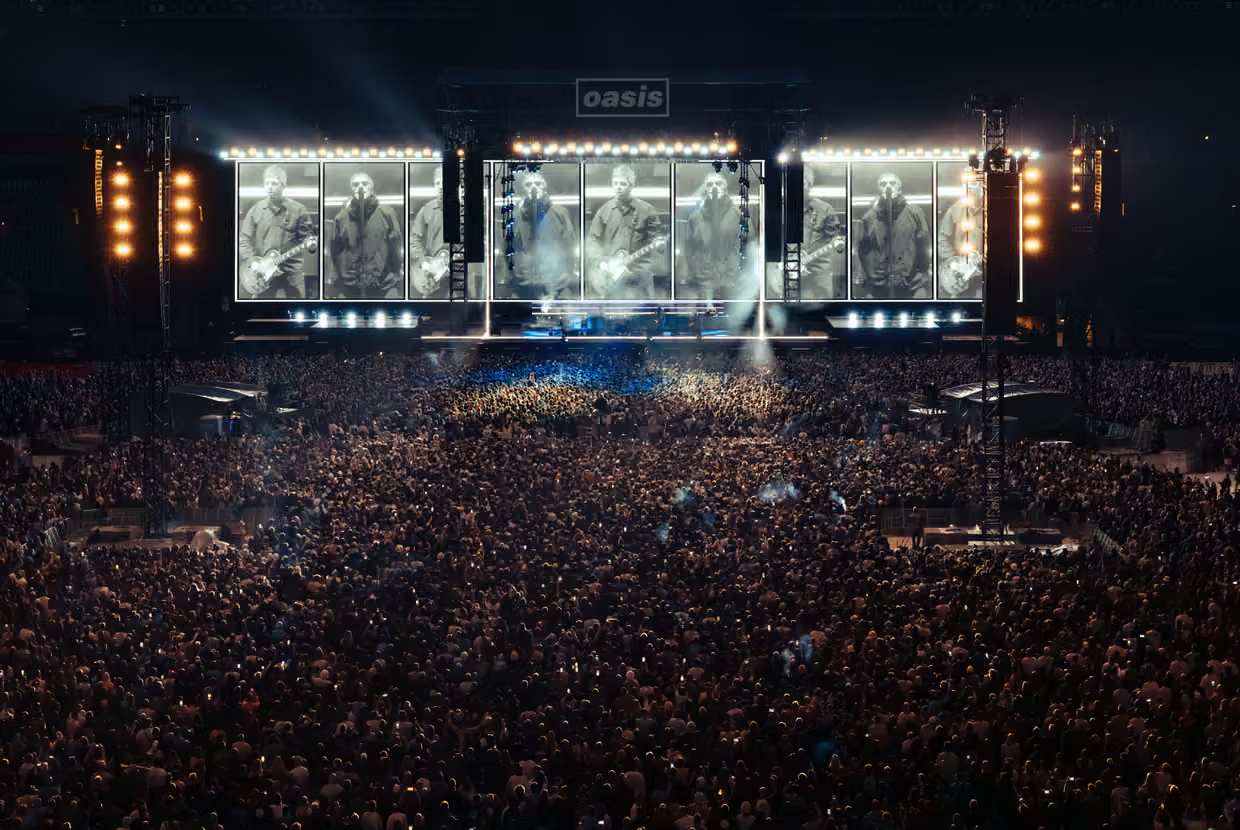
As with North America, Oasis has a history with Australia. The first time Oasis played in Australia, in 1998, the controversies piled up to the point that some journalists speculated it was a media strategy. Liam was slapped with a lifetime ban from Cathay Pacific due to the band’s alleged bad behaviour on the flight over. (The ban was sealed when Liam told an Australian reporter, “I don’t give a flying fuck … I’d rather walk.”) Noel got in hot water for comments he made about Princess Diana, then Liam was hauled in front of the Brisbane magistrates' court, charged with assault after allegedly head-butting a fan who wanted a photo. The fan dropped the charges, though Liam later called the alleged head-butt “justice”, adding: “The geezer put a camera in my face and I told him not to.”
All of that was forgotten; the country got on board with the band's show. This wasn't the Oasis of 1998, it was the Oasis of 2025, and the band are so much better because of it.
Argentina and Brazil
South America was always going to be a part of the Live 25 tour. Brazil, where the tour would end, and Argentina in particular, have always had a lot of love for the brothers Gallagher.
Noel commented before a note had even been played that he was most looking forward to the Buenos Aires gig, and after watching some of the footage, it's easy to see why. This may come across as a bit biased and subjective. I kept tabs on the Oasis tour, watching the footage from all 41 shows. The UK and Ireland dates, in my opinion, comfortably had the best crowds. Oasis means so much to us; those songs are not just songs, they're part of the furniture, cornerstones of society.
Then I watched how Buenos Aires reacted, and well, I understood why Noel was excited to play there.
The band would end the tour in Brazil, following the loss of a close friend and musical hero, Gary 'Mani' Mountfield from The Stone Roses
At the end of the show, there was a heartwarming moment where Liam gave Noel his tambourine and maracas and shared a hug to close out the tour.
That was that, the tour came to an end. No fanfare, no fights and at the moment no official plans for the future. However, I think we all know that the Oasis story isn't over.
Aftermath
The last official post from Oasis about Live 25 was as follows.
There are rumours of Knebworth, more Manchester dates, and, of course, Live 25 missed out mainland Europe entirely. Surely there have to be plans for more shows. Whether that's next year or in 2027, who knows?
I cannot think of a tour by another band that has had the impact that Live 25 has had. From the announcement to the final note, there has been so much. Things that none of us thought of, collaborations with Adidas, Gallagher Hill, the loss of some icons, Mani and Ozzy Osborne in particular, the sheer size of it.
Richard Ashcroft, the lead support for most of the tour, has said in interviews that the shows were “a real catalyst” for young fans. Inspiring them to pick up instruments and start their own musical journeys."
He framed the tour not simply as a nostalgic revival, but as an active bridge across generations. “It’s been a full-circle moment,” he said, pointing out that many longtime fans brought their children to see the Gallagher's, introducing a new cohort to the band’s legacy.
As well as the reconciliation between the two brothers. It allowed Bonehead to step back into his role. The Oasis story centres around the two brothers; however, Bonehead is the founding member of Oasis. Liam joined his band, and Noel joined them a couple of years later. Seeing him on stage after what he's been through was truly special.
It's given a platform to those on the tour; I've not seen anyone really mention this. The photographs and videos taken across the tour, some of which I've used in this post, are exceptional pieces of media. I have never seen a concert shot like that before.
A documentary about Live 25 is currently in the works, and those who were there will get to relive it again. Those who weren't will be blown away by just how good it was.
Final Thoughts
By coming back, Oasis have somehow become the biggest band in the world again. They've achieved what The Beatles never did, reforming and, in doing so, writing a new chapter that somehow makes the myth even bigger.
Thank you for reading
Jack x