Boys in the Better Land

In April 2019, five young musicians from Dublin released a debut album filled with stories about the city they had grown up in. There were taxi drivers, changing neighbourhoods, working-class frustrations and young people convinced that something better existed elsewhere. Grian Chatten sang in an unmistakable Irish accent, while the guitars sounded as though they might fall apart at any moment. The album was called 'Dogrel', and the band were Fontaines D.C.
Seven years later, those same musicians are preparing to release their fifth studio album, 'Dopamine Chamber', having already booked two nights at Slane Castle and some of the biggest outdoor concerts ever announced by an Irish guitar band. Along the way, they have topped album charts, headlined Reading & Leeds, played sold-out arenas and transformed their music beyond almost anything suggested by those early Dublin recordings.
Few bands have changed quite so dramatically in such a short period. 'Dogrel' was steeped in the streets and characters of Dublin, 'A Hero's Death' examined the psychological cost of their sudden success, and 'Skinty Fia' explored what being Irish meant after leaving Ireland. Then came 'Romance', a record that abandoned many of the musical expectations surrounding Fontaines D.C. without losing the lyrical concerns that had made them so compelling in the first place.
What makes their story particularly interesting is that these changes have never felt like calculated attempts to reach a bigger audience. Fontaines D.C. have consistently made records that challenge the expectations created by their predecessors. The audience has grown around them, rather than the other way around.
Formation & Early Years
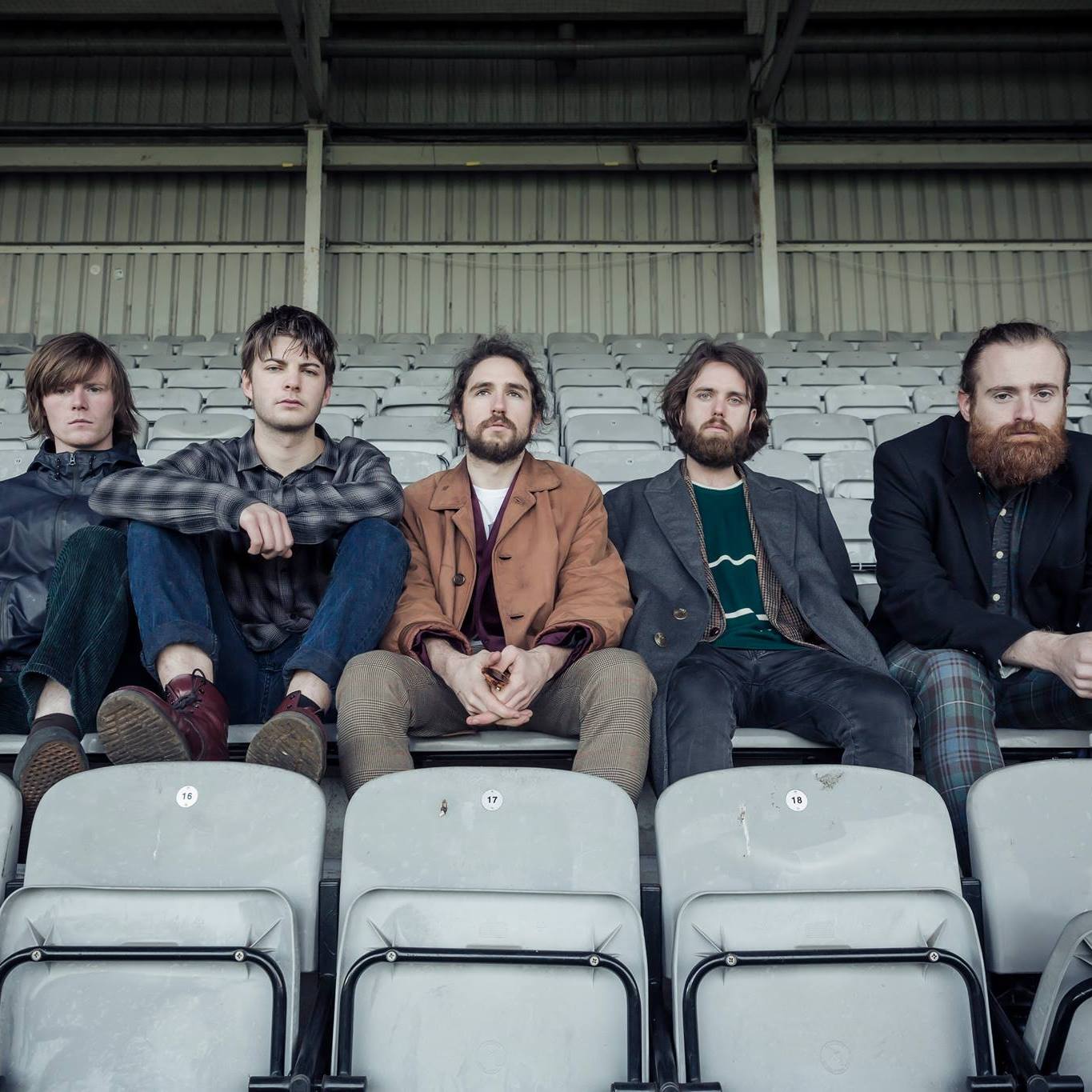
Fontaines D.C. began at the British and Irish Modern Music Institute (BIMM) in Dublin, where Grian Chatten, Carlos O'Connell, Conor Curley, Conor Deegan and Tom Coll met while studying music. Although they had arrived from different backgrounds, the five musicians discovered a shared fascination with poetry, literature and the possibilities of combining spoken language with guitar music.
Their influences extended beyond the usual collection of punk and post-punk bands. Irish writers including James Joyce, Patrick Kavanagh and W. B. Yeats were particularly important, alongside the Beat Generation writers Jack Kerouac and Allen Ginsberg. The band even published collections of poetry during their formative years, developing a collective interest in language before they had established themselves as recording artists.
Their interest in poetry was more than an unusual detail in the biography of a young guitar band. During their time together in Dublin, the musicians produced two collections titled 'Vroom' and 'Winding', drawing inspiration from the Beat Generation and Ireland's literary history respectively. It was an important period in developing their approach to songwriting, particularly Chatten's interest in ordinary conversations, local characters and the rhythms of spoken language. Rather than treating lyrics as something to fit around a guitar melody, Fontaines were becoming interested in how the words themselves could determine the direction of the music.
Dublin provided plenty of inspiration. The city's literary reputation stretched from James Joyce and Samuel Beckett to Brendan Behan and the poetry of Patrick Kavanagh, but Fontaines were equally interested in what was happening around them. Conversations overheard in pubs, arguments on the street and the increasingly visible consequences of the housing crisis became part of their early songwriting. Their approach recalled some of the observational writing that had made bands such as The Smiths and Arctic Monkeys so distinctive, although Fontaines approached those everyday experiences through an unmistakably Irish perspective.
Chatten was born in Barrow-in-Furness in Cumbria before growing up in Skerries, a coastal town north of Dublin. O'Connell spent much of his childhood in Madrid, while the other members came from different parts of Ireland. Their varied backgrounds would eventually become increasingly important to the music, particularly as questions of identity and belonging began to dominate their songwriting.
The group's original name, The Fontaines, came from Johnny Fontane, the fictional singer in 'The Godfather'. After discovering another band was already using the name, they added D.C. for Dublin City. It was an appropriate decision considering how closely their early music would become associated with the Irish capital.
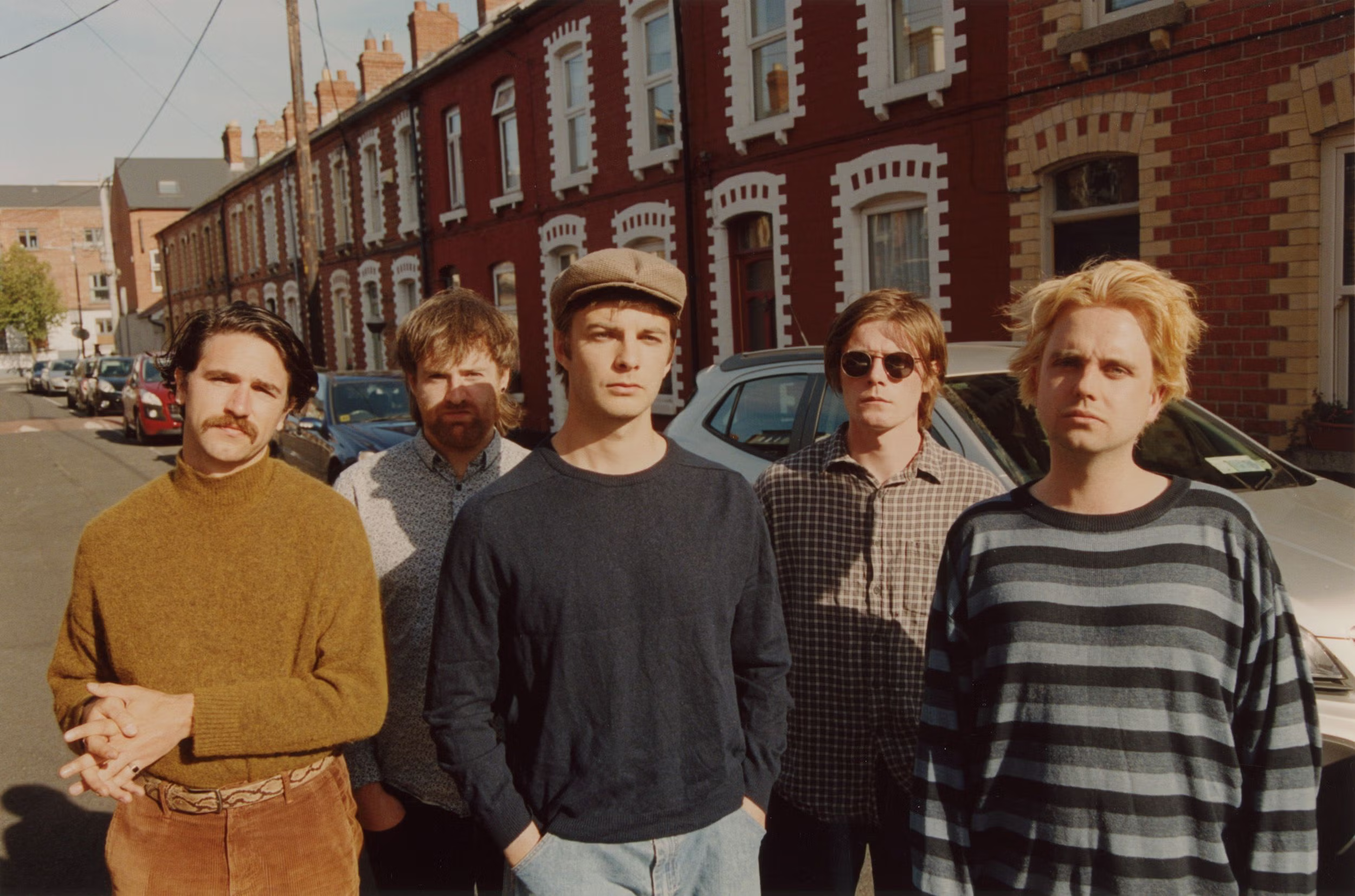
Dublin itself was changing. Rising rents, gentrification and an increasingly difficult housing market were transforming neighbourhoods that had previously provided affordable places for young people to live, work and socialise. Fontaines D.C. were experiencing these changes while developing their musical identity, and the city's tensions quickly found their way into their songs.
Their first official single, 'Liberty Belle', arrived in May 2017. Named after a pub on Francis Street, the song captured the characters and atmosphere of The Liberties, the historic Dublin neighbourhood where several members of the band had spent time living. Chatten's observations were blunt and frequently uncomfortable, documenting people and circumstances that were often overlooked by outsiders.
The release was accompanied by a concert at Dublin's Workman's Club on 27 May 2017, with admission costing just €8. A limited seven-inch edition of 'Liberty Belle' had also been made available through Tower Records in Dublin. These were modest beginnings, but the band were already developing a reputation through their live performances, with the combination of Chatten's confrontational delivery and the musicians' tightly connected playing attracting attention within the city's independent music scene. The Workman's Club became particularly important during those formative years, providing a regular meeting place for a group of musicians who were still finding their feet.
Fontaines were also emerging alongside another Dublin band, The Murder Capital, whose similarly intense guitar music would soon attract attention beyond Ireland. Members of the two groups knew one another from the city's venues and social circles, sharing an ambition to build careers outside the local scene. Although their music would develop in different directions, the simultaneous emergence of both bands helped draw renewed attention towards Dublin's guitar music. The success of Fontaines was not happening in isolation, even if their particular combination of poetry, Irish identity and restless post-punk would ultimately give them a different trajectory.
'Hurricane Laughter' and 'Winter in the Sun' followed, introducing the driving rhythm section, sharp guitars and conversational vocal delivery that would characterise their earliest releases. There was already something distinctive about the way Chatten approached his lyrics. Rather than disguising his accent or attempting to imitate British and American influences, he allowed the language to retain its unmistakably Irish character.
By 2018, Fontaines D.C. had begun attracting attention outside Ireland. 'Chequeless Reckless' offered a furious rejection of commercial hypocrisy, but it was 'Boys in the Better Land' that provided their clearest breakthrough. Built around relentless guitars and a wonderfully restless vocal, the song explored the aspirations, frustrations and contradictions of young people searching for somewhere better.
The characters inhabiting the song are looking beyond the immediate circumstances of their lives, although the destination remains uncertain. The better land might be another city, another country or simply an imagined place where everything finally makes sense. It captured the frustration of wanting to escape without knowing exactly what you were escaping towards.
That sense of possibility would prove remarkably appropriate for what happened next.
'Dogrel': I'm Gonna Be Big
Released on 12 April 2019 through Partisan Records, 'Dogrel' announced Fontaines D.C. as one of the most exciting new guitar bands of the period. Produced by Dan Carey, the album took its name from doggerel, a form of rough, often humorous verse associated with everyday language and working-class Irish culture. It was an appropriate title for a record concerned with the streets, characters and conversations of Dublin, a city experiencing considerable social and cultural change.
By the late 2010s, rising rents, gentrification and a worsening housing crisis were transforming neighbourhoods that had been home to generations of working-class Dubliners. The Liberties, where members of Fontaines D.C. had spent much of their time, became particularly important to their early songwriting. 'Liberty Belle' drew inspiration from a local pub and its surrounding characters, while 'The Lotts' reflected the poverty, homelessness and social divisions visible elsewhere in the city. There was affection in their writing, but also frustration at what Dublin was becoming.
The recording process was designed to preserve the energy of their live performances. Working with Carey, the band recorded much of 'Dogrel' on tape, frequently performing songs together rather than constructing each track separately. The approach discouraged excessive polishing and captured the chemistry they had developed through years of rehearsals and concerts. The resulting album sounded urgent and occasionally untidy, with sharp guitars and relentless rhythms competing for space around Grian Chatten's unmistakable vocals.
The making of 'Dogrel' was subsequently documented in 'Sold for Parts', a short film produced by Collective Dublin Films that followed Fontaines during the recording sessions and the months surrounding the album's release. Featuring interviews with the band and Dan Carey, the documentary offered a glimpse of five musicians adjusting to the possibility that their music might reach an audience far beyond Ireland. There is something particularly interesting about watching them during this period, before the constant touring, major awards and expectations that would accompany their success. Their ambitions were obvious, but much of the friendship and enthusiasm that had brought them together remained relatively untouched by the music industry.

Carey's involvement was important in preserving that character. Rather than attempting to transform Fontaines into a more polished version of themselves, he understood the importance of their performances as a collective. Much of the debut's appeal came from the interaction between the two guitars, Conor Deegan's bass and Tom Coll's urgent drumming, with Chatten's vocals occupying their own space in the arrangements. There was little attempt to disguise the rough edges, which helped distinguish 'Dogrel' from the cleaner, more carefully produced guitar music that had dominated much of the preceding decade.
'Big' opened the record with a declaration of ambition, its frantic guitars accompanying Chatten's determination to escape the limitations of his surroundings. 'Too Real', 'Hurricane Laughter' and 'Chequeless Reckless' continued that confrontational energy, while 'Roy's Tune' and 'Television Screen' revealed a more reflective side to their songwriting. At the centre was 'Boys in the Better Land', a relentless portrait of youthful ambition and disillusionment, inspired by the characters and conversations Chatten encountered around Dublin. Beneath its infectious rhythm was the frustration of a generation searching for opportunities beyond its immediate surroundings.
Chatten's refusal to disguise his Irish accent distinguished Fontaines D.C. from many of their contemporaries. Alongside the influence of writers such as James Joyce and Patrick Kavanagh, his delivery gave the album an unmistakable identity, combining everyday observations with a fascination for language and storytelling. That connection to Irish tradition was particularly evident on the closing 'Dublin City Sky', a sweeping ballad that recalled The Pogues and offered a more affectionate, melancholic portrait of the band's hometown.
The contrast between 'Big' and 'Dublin City Sky' captured one of the album's central contradictions. Fontaines D.C. were ambitious young musicians determined to explore the world, yet their attachment to Dublin remained fundamental to their identity. The city frustrated them, inspired them and provided the experiences that filled their songs. Leaving offered opportunities, but it also meant putting distance between themselves and the place responsible for their music.
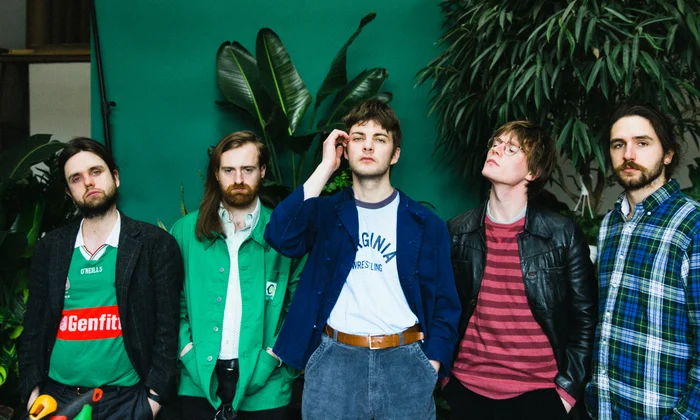
Upon release, 'Dogrel' received widespread critical acclaim, reaching Number Nine on the UK Albums Chart and earning a nomination for the 2019 Mercury Prize. Comparisons with The Fall, The Pogues and early Arctic Monkeys were inevitable. Like 'Whatever People Say I Am, That's What I'm Not', the album had a remarkable sense of place, capturing a particular generation through its everyday characters and experiences. However, Fontaines D.C.'s literary influences, Irish identity and abrasive performances gave them a distinctive voice within the emerging post-punk scene alongside bands such as IDLES, Shame and black midi.
The recognition extended beyond the Mercury Prize. 'Dogrel' was named Album of the Year by BBC Radio 6 Music and Rough Trade, while appearances at major festivals introduced Fontaines to audiences who had previously known very little about the Dublin group. Their Glastonbury debut in 2019 was another important milestone, arriving only a few months after the album's release. It was during this period that songs such as 'Too Real' and 'Boys in the Better Land' began to develop into the confrontational live favourites that would remain part of their performances long after the band's musical direction had changed.
What distinguished the album from many of the other guitar records being released around the same time was its attachment to a particular place. I have always enjoyed records that document the people, conversations and experiences of the areas in which they were written, whether that is Arctic Monkeys capturing Sheffield on 'Whatever People Say I Am, That's What I'm Not' or The Smiths drawing on the experiences of working-class Manchester. 'Dogrel' belongs in that tradition, although its relationship with Dublin was complicated by the band's growing desire to leave. The city was responsible for much of what made their music interesting, even as its changing circumstances encouraged them to imagine a future somewhere else.
Success transformed their lives almost immediately. Throughout 2019, the band toured extensively across Europe and North America, supported IDLES in the United States and developed a reputation as a formidable live act. By December, they were playing sold-out homecoming concerts at Dublin's Vicar Street, a considerable step up from the pubs and independent venues where they had developed their sound. Songs written about their hometown were now being sung back at them by audiences who recognised the people and places being described.
However, the speed of their breakthrough came at a cost. Constant touring, interviews and unfamiliar surroundings left the musicians with little opportunity to process what was happening. The excitement that had driven 'Dogrel' gradually gave way to exhaustion, isolation and uncertainty about their future. Having spent years wanting to escape Dublin and establish themselves beyond Ireland, Fontaines D.C. were discovering that success brought difficulties they had never anticipated. Those experiences would shape 'A Hero's Death', a considerably darker record that questioned much of the ambition and optimism surrounding their debut.
We're All in the Running for 'A Hero's Death'
Fontaines D.C. could easily have followed 'Dogrel' with another collection of furious guitar songs about Dublin. Instead, their second album found them in a very different state of mind. Released on 31 July 2020 through Partisan Records, 'A Hero's Death' was colder, slower and considerably more introspective than its predecessor. The optimism and defiance associated with 'Big' had largely disappeared, replaced by exhaustion, isolation and uncertainty about what success had brought them.
The change reflected the band's experiences during the relentless touring that followed their debut. Having spent much of 2019 travelling between Europe and North America, the five musicians were struggling with the demands of their newfound popularity. Chatten subsequently spoke about unhealthy routines, excessive drinking and the disorientating experience of moving between unfamiliar cities without sufficient rest. Relationships within the group had become strained, while the pressure to follow such a critically acclaimed debut only added to their difficulties. They had achieved much of what they once wanted, but the reality was proving considerably less enjoyable than they had imagined.
Recording the album was not straightforward either. In October 2019, Fontaines D.C. travelled to Los Angeles to begin sessions at the famous Sunset Sound studios. However, the results failed to capture the emotional intensity of the songs, with the band feeling increasingly disconnected from the material. They eventually abandoned those recordings and returned to London in January 2020, reuniting with 'Dogrel' producer Dan Carey at his studio in Streatham. The familiar surroundings helped them recover some of the chemistry that had been lost during the previous year's exhausting schedule.
The original sessions had taken place with producer Nick Launay, whose previous work included records by Public Image Ltd, Gang of Four and Killing Joke. On paper, it appeared an ideal opportunity for Fontaines to develop their sound, particularly after the international attention surrounding 'Dogrel'. However, the recordings became increasingly removed from the emotions that had inspired the songs. Carlos O'Connell later explained that the polished surroundings of Los Angeles made it difficult to connect with the material, much of which had been written during an exhausting period of touring. The band eventually decided that none of the recordings captured what they wanted, abandoning weeks of work rather than releasing an album they were unhappy with.
Their return to Dan Carey provided some much-needed familiarity, although the producer noticed how much the musicians had changed. During the recording of 'Dogrel', the five members had spent much of their time together, but by January 2020 they were increasingly inclined to go their separate ways during breaks. The constant touring had affected their relationships, and the pressure of success was beginning to influence their approach to recording. The difficult atmosphere surrounding 'A Hero's Death' was therefore not simply something the band had invented for the album. It reflected a period in which they were struggling to maintain the friendships and enthusiasm that had brought them together in Dublin.
The disillusionment of the band shaped the music on 'A Hero's Death'. 'I Don't Belong' opened the album with a declaration that stood in direct opposition to the ambition of 'Big'. Where their debut had been concerned with claiming a place in the world, its successor questioned the expectations and responsibilities that came with finding one. The guitars were more restrained, Chatten's delivery more distant, and the restless excitement of their earlier recordings had given way to something considerably darker.
Musically, Fontaines D.C. were beginning to explore influences beyond the punk and post-punk that had defined their debut. The Beach Boys, Pixies, Suicide and the darker work of Nick Cave's early bands informed a collection of songs built around repetition, atmosphere and unsettling guitar arrangements. 'Televised Mind' captured the suffocating pressure of conformity, while 'A Lucid Dream' and 'Living in America' reflected the disorientation of their experiences on the road. Elsewhere, 'Oh Such a Spring' and 'Sunny' demonstrated a more vulnerable side to Chatten's songwriting, allowing quieter moments to emerge from the album's oppressive atmosphere.
The title track offered a particularly interesting contrast. Built around an insistent rhythm and Beach Boys-inspired backing vocals, 'A Hero's Death' sounded almost uplifting despite the uncertainty surrounding it. Its repeated advice to approach life with sincerity and self-belief came from a songwriter who was struggling to follow those principles himself. The accompanying video featured Irish actor Aidan Gillen as a sinister television presenter, reinforcing the uneasy relationship between public appearances and private difficulties that ran throughout the record.
Interestingly, the idea behind 'A Hero's Death' had begun developing before 'Dogrel' was even released. During a listening session for the debut's final master at Dublin's Workman's Club, Chatten began pacing around the room while the other musicians concentrated on the recordings. Conor Deegan initially thought the singer was not paying attention, only to discover that he had been writing the lyrics to another song. It was an early indication that Chatten was already considering what might come after their debut, even before anybody knew how successful 'Dogrel' would become.
The album's artwork also maintained a connection with Irish history. Its cover featured Oliver Sheppard's sculpture of Cúchulainn, the mythological Irish warrior whose death became associated with sacrifice and defiance. The statue, displayed in Dublin's General Post Office, depicts the wounded hero tying himself to a stone so that he can die standing. For Chatten, the image raised questions about heroism, stubbornness and the expectations people place upon themselves. Those concerns suited an album written by musicians who had achieved their early ambitions but were beginning to question what success actually meant.

The closing 'No' provided a fitting conclusion. After an album dominated by frustration, loneliness and emotional exhaustion, it offered a moment of tenderness without pretending that the band's problems had disappeared. Chatten subsequently described the song as representing a decision to begin moving towards something better, rather than having already reached that destination. It was a small but important distinction, particularly for a group who had spent much of the previous year questioning whether they could continue working together.
The timing of the album's release brought further complications. With the COVID-19 pandemic preventing conventional touring, Fontaines D.C. were unable to perform their new material before the audiences they had spent years building. Nevertheless, 'A Hero's Death' received widespread critical acclaim and reached Number Two on the UK Albums Chart, narrowly missing the top spot behind Taylor Swift's 'Folklore'. It also topped the physical albums chart and subsequently earned a nomination for Best Rock Album at the 2021 Grammy Awards, confirming that their success extended well beyond Ireland and Britain.
Perhaps more importantly, the album established that 'Dogrel' was never intended to become a formula. Fontaines D.C. had moved from documenting the people and streets around them to examining their own experiences, producing a record that was less immediate but considerably more psychologically complex. The exhaustion surrounding its creation had forced them to reconsider how they approached their music and their lives, while their willingness to experiment opened possibilities that would become increasingly important to their subsequent work.
As the world gradually reopened, the band began looking towards their third album. Several members had relocated to London, introducing new questions about nationality, identity and what it meant to be Irish while living elsewhere. Those experiences would form the foundations of 'Skinty Fia', a record that brought their relationship with Ireland back to the forefront, this time from a very different perspective.
'Skinty Fia': I Love You
By the time Fontaines D.C. began working on their third album, their relationship with Ireland had changed considerably. Several members had relocated to London, creating a new perspective on the country that had dominated their earliest music. Rather than documenting Dublin from within, they were now examining Irish identity from a distance, confronting feelings of homesickness, cultural displacement and uncertainty about what leaving Ireland meant for their sense of belonging.
Life in England had also exposed the band to attitudes they had rarely encountered at home. Chatten spoke about experiencing anti-Irish stereotypes, including references to the IRA and people mocking his accent. These encounters made him increasingly conscious of his nationality, particularly the difficulties of maintaining a cultural identity in a country where that identity was sometimes misunderstood or reduced to stereotypes. The experience became central to their songwriting, giving the band's third album a distinctly different perspective from the Dublin-centred observations of 'Dogrel'.

Released on 22 April 2022 through Partisan Records, 'Skinty Fia' brought those complicated emotions together in their most ambitious recording to date. Its title came from an old Irish expression used by drummer Tom Coll's great-aunt, roughly translating as 'the damnation of the deer'. The phrase also inspired the album's striking artwork, featuring an Irish elk, a species that had been extinct for thousands of years. For Fontaines D.C., the animal represented something lost from Ireland's past, reflecting their growing concerns about cultural identity, displacement and the relationship between tradition and modern life.
Once again working with producer Dan Carey, the band recorded at a residential studio in Oxfordshire, deliberately seeking a larger sound than their previous records. Musically, they had begun exploring influences beyond conventional post-punk, drawing inspiration from Primal Scream, electronic music and drum and bass. Guitarists Carlos O'Connell and Conor Curley experimented with creating electronic textures using their instruments, while the rhythm section became increasingly important to the atmosphere of the songs. The result was darker and more expansive, with elements of gothic rock, trip-hop and traditional Irish music sitting alongside their familiar guitar arrangements.
The decision to record in a larger residential studio also affected how the musicians approached their instruments. Where 'Dogrel' had been built around the immediacy of five people playing together, 'Skinty Fia' allowed greater room for experimentation. Carlos O'Connell and Conor Curley became interested in using their guitars to create sounds normally associated with synthesisers, while Tom Coll and Conor Deegan explored rhythms that owed as much to electronic music as conventional post-punk. The influence of Primal Scream's 'Screamadelica' could be heard in the increasingly prominent basslines and dance-influenced percussion, particularly on the title track.
There was also a greater emphasis on allowing the arrangements to develop gradually. The opening 'In ár gCroíthe go deo' builds around repetition and overlapping vocals, creating an atmosphere that would have been difficult to imagine on the band's debut. The same willingness to experiment runs through 'How Cold Love Is' and 'Bloomsday', which bring a more subdued, almost dreamlike quality to the record. Although the guitars remain central to the music, they are frequently used to create atmosphere rather than drive the songs forward. It was an important development, introducing elements that would become even more prominent on 'Romance' two years later.
'Jackie Down the Line' provided the album's first introduction, its infectious guitar melody contrasting with Chatten's increasingly unsettling lyrics. The song demonstrated how much the band's songwriting had developed since 'Dogrel', combining the immediacy of their earliest recordings with a greater interest in atmosphere and melody. Yet it was 'I Love You' that became the record's emotional centre, and arguably the most extraordinary song of their career to that point.
Beginning with a comparatively restrained arrangement, 'I Love You' gradually developed into a furious examination of Ireland's politics, historical abuses, housing crisis and treatment of its young people. Chatten approached the subject from the perspective of somebody who had left the country but remained deeply invested in its future. It was a complicated expression of patriotism, combining affection for Ireland with frustration at those responsible for its problems. The intensity of the closing verses, delivered over increasingly aggressive instrumentation, made it one of the band's most powerful recordings.

Elsewhere, 'In ár gCroíthe go deo' took inspiration from the story of Margaret Keane, an Irishwoman whose family faced objections when they attempted to place an Irish-language inscription on her gravestone in Coventry. The phrase, meaning 'in our hearts forever', was initially considered potentially political without an English translation, before the decision was overturned following an appeal. The incident captured the difficulties of expressing Irish identity abroad, becoming an appropriate starting point for an album concerned with cultural belonging.
The story had a particular resonance for the band because it illustrated how something as personal as a family's choice of language could become a source of controversy. Fontaines subsequently met Margaret Keane's family at her graveside, bringing them closer to the people whose experiences had inspired the recording. The song also acquired another significance when performed in England. During their 2022 tour, Conor Deegan recalled the emotional impact of playing it before thousands of people at London's Hammersmith Apollo, where an audience responded enthusiastically to a recording whose very title had originated in a dispute over the public use of Irish.
It was an interesting reversal of the circumstances that had inspired the album. Fontaines had written much of 'Skinty Fia' while considering the difficulties of expressing their nationality abroad, yet their performances were introducing Irish-language lyrics and stories to increasingly substantial audiences outside Ireland. There was something powerful about hearing those songs performed in English venues, particularly given the experiences of discrimination and cultural misunderstanding that had influenced their creation. The band were finding ways to celebrate their identity without presenting an idealised version of the country they had left.
'Roman Holiday' continued exploring displacement and relationships, while 'The Couple Across the Way' drew on Chatten's observations of an elderly couple arguing in the apartment opposite his own. Its accordion-led arrangement demonstrated the band's growing interest in traditional instrumentation, something that had developed after Chatten received an accordion from his mother. The closing 'Nabokov', meanwhile, returned to a much heavier sound, bringing the album to an emotionally exhausting conclusion.
'Skinty Fia' became Fontaines D.C.'s first Number One album in both Britain and Ireland, confirming their growing popularity beyond the post-punk scene in which they had initially emerged. The record also demonstrated a remarkable progression across their first three albums. Where 'Dogrel' had documented Dublin and 'A Hero's Death' explored the exhaustion of sudden success, 'Skinty Fia' examined what happened when the people responsible for those records began questioning their relationship with home.

The subsequent tour introduced Fontaines D.C. to increasingly substantial audiences. Their performance on Glastonbury's Other Stage in June 2022, incorporating orchestral arrangements, demonstrated how effectively their music could translate into larger settings. Two months later, a seventeen-year-old fan named Dexter joined the band onstage at Reading Festival to play guitar during 'Boys in the Better Land', producing one of the weekend's most memorable moments. The band's UK and Irish tour also introduced many concertgoers to Wunderhorse, who joined them following the release of their debut album, 'Cub'. It was an important period for both groups, with each subsequently becoming increasingly prominent within British and Irish guitar music.
In February 2023, Fontaines D.C. won International Group at the BRIT Awards, beating competition that included Blackpink and First Aid Kit. It was another significant achievement for a band that had released its debut only four years earlier. That summer brought Grian Chatten's first solo album, 'Chaos for the Fly', recorded with Dan Carey and released in June. Songs such as 'The Score' and 'Fairlies' revealed a quieter, more intimate side to his songwriting, drawing on folk influences and traditional storytelling while allowing him to explore ideas beyond the band's established sound.
Fontaines D.C. also joined Arctic Monkeys on their North American tour in August and September 2023, performing at arenas and amphitheatres across the United States and Canada. The shows placed them before another substantial audience and strengthened their growing relationship with one of Britain's most successful contemporary guitar bands. By the end of the year, Fontaines D.C. had established themselves among the most significant British and Irish acts of their generation, but their next album would introduce an entirely different approach to songwriting, production and presentation. The arrival of 'Romance' in 2024 would change almost everything people thought they knew about the band.
'Romance': 'You Were My 'Favourite' for a Long Time
When Fontaines D.C. returned in April 2024, they looked and sounded like a different band. The five musicians who had emerged from Dublin's post-punk scene were now embracing a colourful, theatrical appearance, while their music had become increasingly difficult to categorise. Having spent the previous year supporting Arctic Monkeys across North America and exploring different musical directions individually, they were preparing to release an album that would transform their popularity and introduce them to an entirely new audience.
Their fourth studio album, 'Romance', marked several important changes. After recording their first three records with Dan Carey, the band began working with James Ford, whose production credits included Arctic Monkeys, Blur and Depeche Mode. They also moved from Partisan Records to XL Recordings, joining a label associated with Radiohead, The xx and Adele. Having established a distinctive sound across 'Dogrel', 'A Hero's Death' and 'Skinty Fia', Fontaines were interested in discovering how another producer might approach their music, particularly as their influences continued to expand beyond conventional guitar bands.
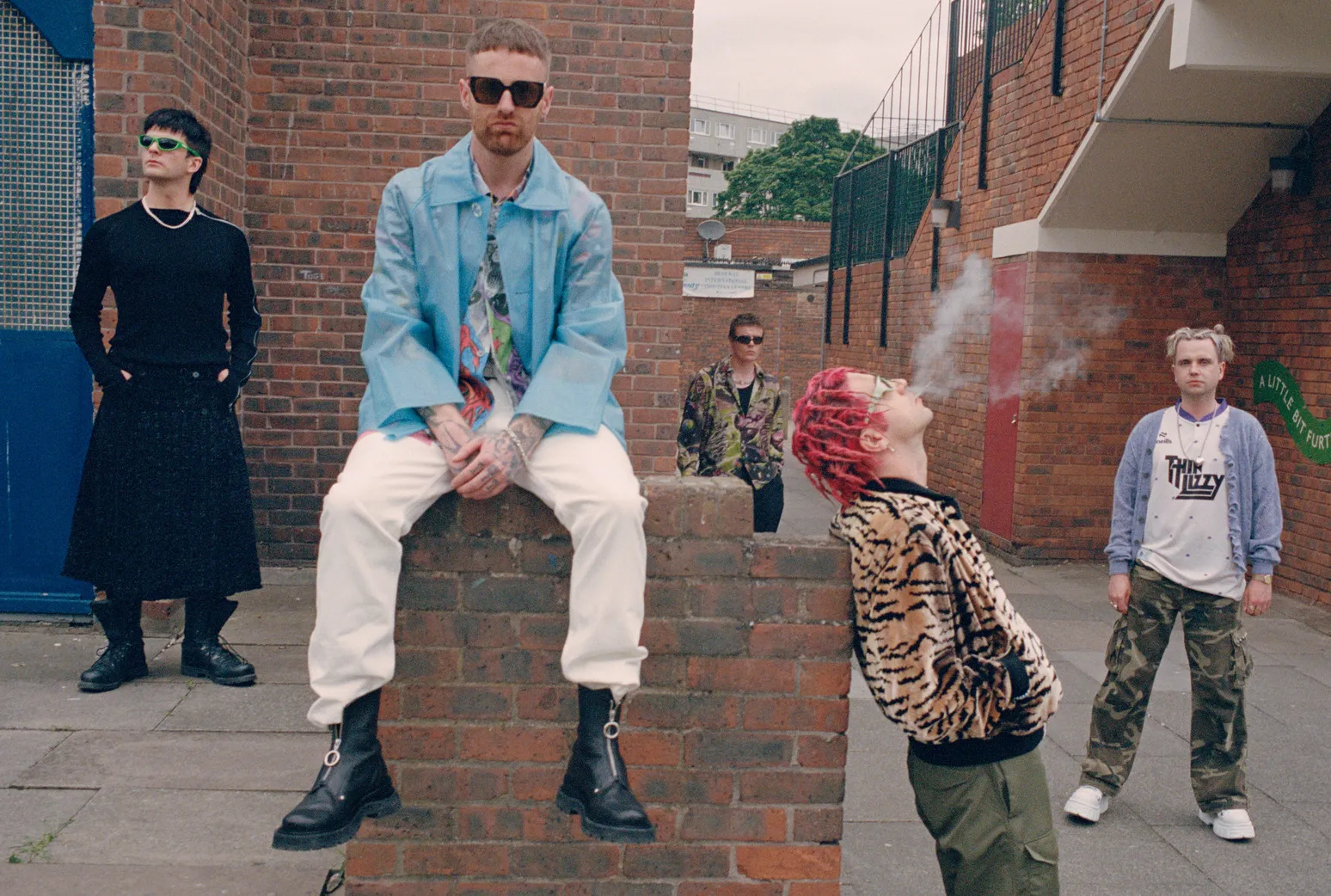
The decision to work with Ford had actually begun before their tour with Arctic Monkeys. The band recorded an early version of 'Motorcycle Boy' at London's Church Studios to see how the collaboration might develop, and the experience convinced them to continue working together. Recording sessions eventually took place at La Frette, a residential studio near Paris that had previously hosted artists including Nick Cave and Arctic Monkeys. Unlike the relatively straightforward recording process behind their earliest albums, the musicians spent several weeks developing arrangements, experimenting with production and considering how individual songs might fit together.
Much of the material had begun taking shape during their North American tour in 2023. Supporting Arctic Monkeys provided Fontaines with considerably more time between performances than they were accustomed to during their own headline tours. Rather than spending those hours travelling or preparing for another concert, the musicians found themselves together backstage with acoustic guitars, exchanging melodies and developing ideas that would eventually become part of 'Romance'. It was a more relaxed approach to songwriting, allowing them to explore different musical possibilities without immediately considering whether the results sounded like Fontaines D.C.
By the time they entered the studio, the band had accumulated approximately thirty-five potential songs, ranging from short recordings captured on mobile phones to almost completed arrangements. Carlos O'Connell explained that they used a large whiteboard to organise the material, gradually filling it with song titles, ideas and possible directions for the record. Some of the unreleased recordings reportedly moved towards considerably more conventional pop music, including one influenced by the electronic arrangements associated with Dua Lipa. The eleven songs eventually selected for 'Romance' represented only part of what the band had been experimenting with.
Their ambitions had also changed following their experiences performing in much larger venues. Chatten had watched Blur headline Wembley Stadium in 2023 before joining Arctic Monkeys on their American tour, and both experiences demonstrated how music could connect with tens of thousands of people simultaneously. Having spent much of his early career writing intensely personal lyrics, he became interested in creating something capable of communicating those emotions on a much larger scale. He wanted Fontaines to explore the grandeur of stadium performances without abandoning the darker qualities that had defined their songwriting.
The concept behind 'Romance' developed from the band's growing interest in escapism and the possibility of finding beauty within an increasingly uncertain world. Where their earliest records had been rooted in Dublin and 'Skinty Fia' had examined Irish identity from abroad, the new material occupied a less recognisable environment. Chatten began imagining romance as somewhere people could retreat from the difficulties of everyday life, a place shaped by memory, desire and the hope that something better might exist beyond their immediate surroundings.
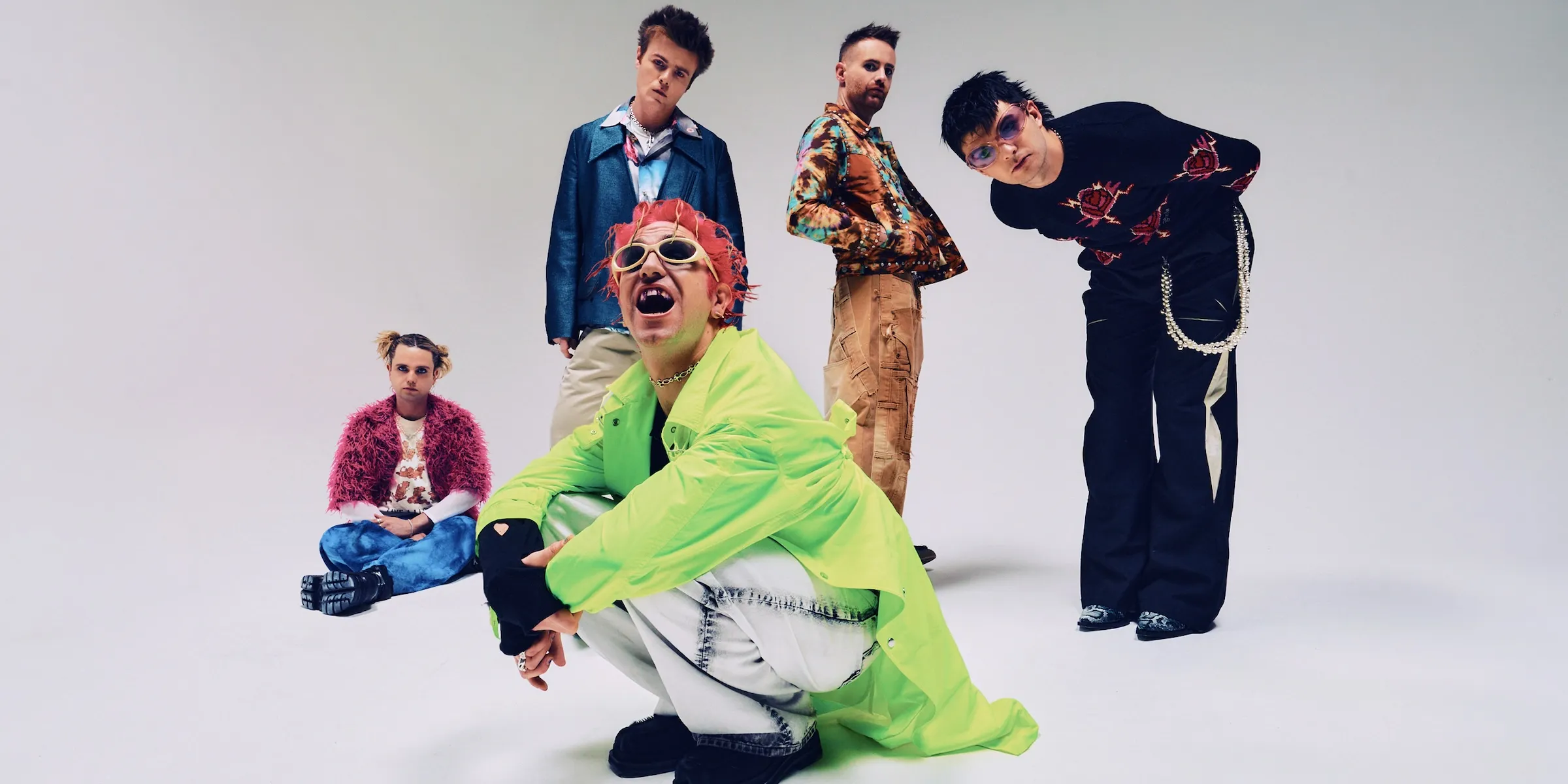
Their influences reflected that change. Japanese animation, particularly 'Akira' and 'Cowboy Bebop', became increasingly important, alongside Italian cinema, electronic music, hip-hop and the alternative rock of the 1990s. Chatten was fascinated by the futuristic environments of 'Akira', where technological development existed alongside violence, loneliness and social collapse. The contrast between those unsettling surroundings and the possibility of meaningful human relationships helped shape the record's themes. Rather than presenting romance simply as love between two people, Fontaines became interested in how people preserve their hopes and emotional connections when the world around them appears increasingly hostile.
The first indication of this new direction arrived on 17 April 2024 with 'Starburster', inspired by a panic attack Chatten had experienced at London's St Pancras station. Built around a relentless hip-hop-influenced rhythm, distorted instrumentation and sudden gasps for breath, the song sounded unlike anything Fontaines had previously released. Chatten delivered its stream-of-consciousness lyrics with extraordinary urgency, moving between fragmented observations and moments of barely controlled aggression. The breathing became part of the arrangement itself, recreating the physical discomfort of a panic attack without relying on a conventional musical structure.
It was a remarkable choice for a lead single. Where 'Jackie Down the Line' had introduced 'Skinty Fia' through a relatively familiar guitar arrangement, 'Starburster' immediately demonstrated that Fontaines were moving somewhere different. Its mixture of hip-hop, electronic music and abrasive guitars pushed against the expectations surrounding the band, while its unconventional structure made it difficult to compare with their previous singles. Yet there was still something recognisable about Chatten's performance, particularly his fascination with language and his ability to turn unsettling experiences into extraordinary songwriting.
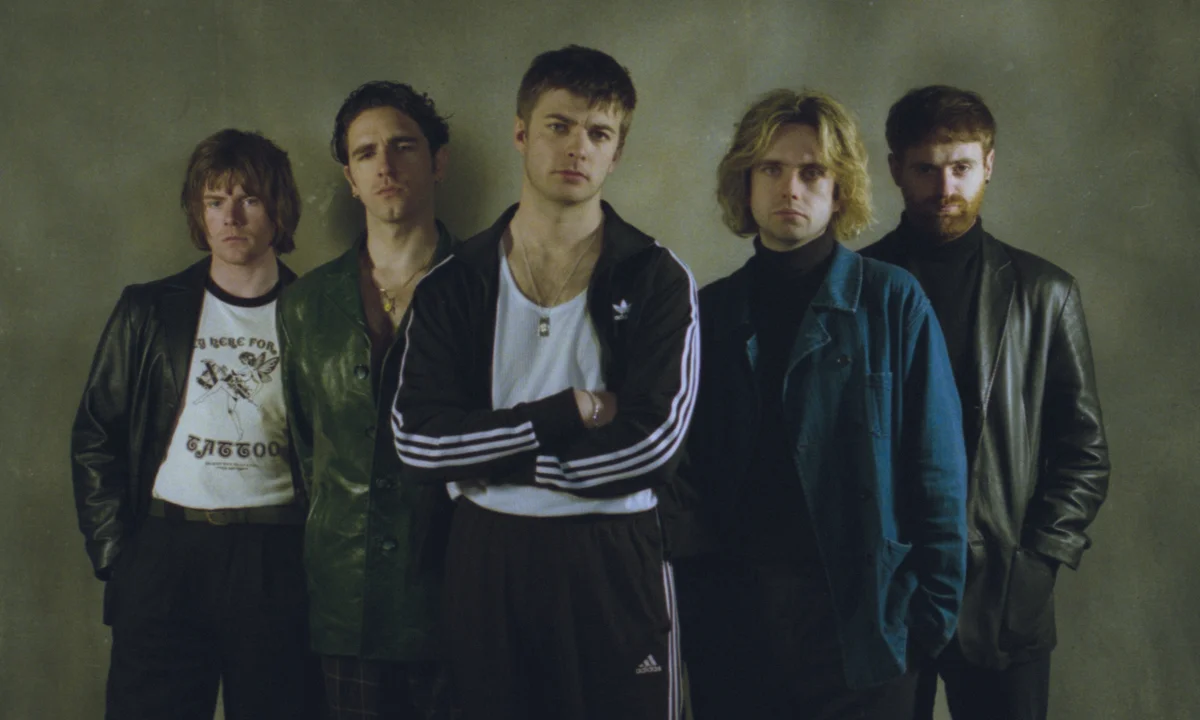
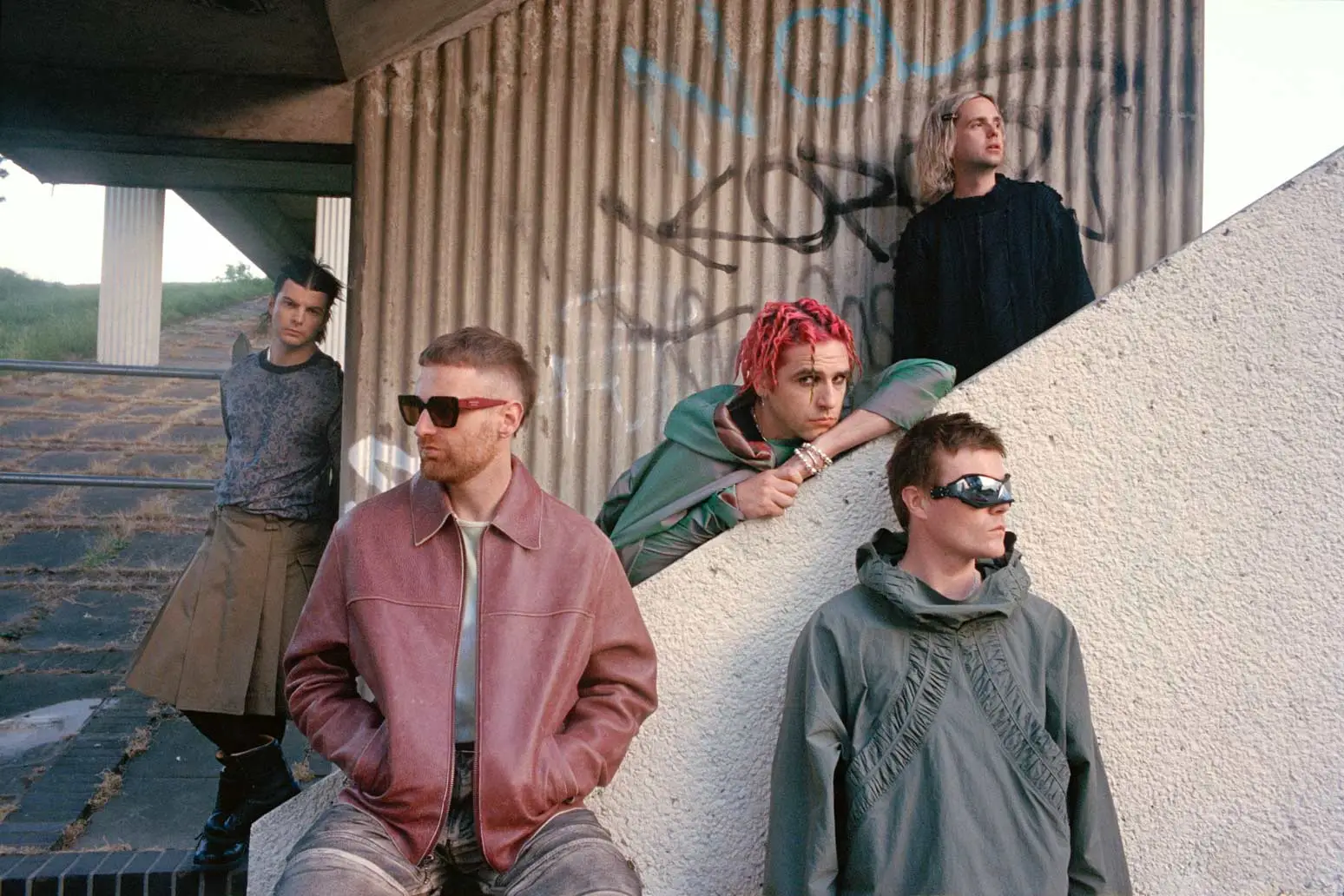
The accompanying music video introduced the surreal imagery that would become central to the album's visual identity. Its distorted characters, exaggerated performances and uncomfortable changes of appearance reflected the strange environment the band were attempting to create. Their own appearance changed alongside the music. Gone were the comparatively understated clothes associated with 'Dogrel' and 'A Hero's Death', replaced by brightly coloured outfits, dyed hair and a more theatrical presentation. O'Connell's vivid hairstyles became particularly recognisable, while the wider visual campaign embraced an unusual combination of neon colours, distorted figures and unsettling romantic imagery.
O'Connell played an important role in developing that identity. During the band's earliest years, he had been responsible for much of their artwork simply because he was the only member who knew how to use Photoshop. Their first promotional materials took inspiration from old Ramones concert posters and boxing advertisements, with song titles occasionally written onto printed photographs before being scanned again. As Fontaines became more established, their approach grew increasingly ambitious, although O'Connell remained closely involved in shaping how their music was presented.
Working with XL Recordings and Taiwanese illustrator Lulu Lin, the band developed the striking artwork that would become synonymous with 'Romance'. Its distorted, crying heart combined familiar romantic imagery with something considerably more disturbing, while the neon greens, blues and pinks were unlike anything associated with their previous records. The musicians had become interested in challenging the relatively conventional appearance of modern guitar bands, treating artwork, clothing and music videos as an extension of the record itself. Although their transformation initially attracted considerable attention, it was part of a more deliberate attempt to create a complete visual identity around their music.
Then came 'Favourite', released on 18 June 2024, offering an extraordinary contrast to the aggression and anxiety of 'Starburster'. Its shimmering guitars recalled The Cure, while Chatten reflected on childhood, friendship and the uncomfortable realisation that time was moving faster than he wanted. There was a warmth to the recording that had rarely appeared so openly in Fontaines' earlier work, with its uplifting melody concealing a distinctly melancholic perspective on growing older. It was immediately one of the strongest songs they had written, demonstrating that their musical development did not always require increasingly elaborate arrangements.
The song's origins stretched back to the 'Skinty Fia' period, when Chatten and O'Connell began developing its melody while working at the BBC's Maida Vale Studios. Rather than constructing the music around a particular lyrical idea, they allowed the melody to develop naturally before exploring what the finished song might become. That approach became increasingly important during the making of 'Romance', with the musicians becoming more comfortable writing relatively straightforward melodies before experimenting with their arrangements. The result was a recording that sounded considerably more accessible than much of their previous work without losing the emotional complexity that made their songwriting so compelling.
The accompanying video made those ideas even more affecting. Combining childhood footage of the five musicians with scenes filmed during a visit to Madrid, where Carlos O'Connell had grown up and the band had based themselves during their first tour, it offered an unusually personal glimpse into their friendship. The images of the musicians as children, interspersed with footage of them exploring the Spanish capital as adults, captured the passing of time more effectively than an elaborate narrative could have managed. There was something especially touching about seeing the five musicians before they knew one another, then watching them together years later, having experienced so much of their adult lives as part of the same band.
For me, 'Favourite' remains the finest song Fontaines D.C. have released. There is something deeply moving about the way it captures the passage of time without becoming overwhelmed by sentimentality. It reminds me of childhood friendships, places that have changed and moments you would happily experience again, even if only briefly. The guitars are wonderful, the chorus is immediately memorable, and Chatten's delivery carries an affection that feels particularly genuine. It is both uplifting and melancholic, a song that somehow makes looking backwards feel comforting and heartbreaking at the same time.
I also love how 'Favourite' brings together several qualities that have made Fontaines such an interesting band to follow. The lyrics are personal without becoming unnecessarily complicated, the guitars have a wonderful sense of movement, and the melody is among the finest they have written. There are elements of The Cure and the jangle-pop bands of the 1980s, but the song never feels like an attempt to recreate another artist's work. It was my favourite song released in 2024, and hearing it develop into one of the band's defining live moments has only strengthened my affection for it.

Released on 23 August 2024, 'Romance' demonstrated how extensively Fontaines had developed their songwriting. The opening title track introduced its strange atmosphere through ominous synthesisers and mechanical percussion, establishing a world considerably removed from the streets of Dublin. Originally conceived by Chatten as something closer to an old-fashioned romantic ballad, the song was transformed during rehearsals when Tom Coll introduced a more unsettling rhythm and O'Connell began experimenting with keyboards and Mellotron. Its eventual arrangement helped establish the atmosphere that would connect the rest of the album.
'Here's the Thing' embraced the heavy guitars associated with nu-metal and alternative rock, while 'Desire' combined distorted instrumentation with a more melodic vocal performance from Chatten. The influence of bands such as Deftones could be heard in the contrast between aggressive guitars and dreamlike atmospheres, although Fontaines approached those sounds with their own distinctive style. Elsewhere, 'Bug' demonstrated their continuing ability to write direct, infectious guitar music, while 'Death Kink' brought the aggression of their earliest recordings into a considerably more abrasive arrangement.
One of the album's finest moments arrived with 'In the Modern World', a sweeping, melancholic recording influenced by Lana Del Rey and cinematic orchestration. Chatten had been attempting to write a song in that style for several years, eventually developing its string arrangement on his laptop at home. The finished recording brought together the grandeur he had been searching for with the emotional vulnerability that had become increasingly prominent in his songwriting. Its restrained vocals and atmospheric production were far removed from the frantic delivery of 'Big', yet the sense of uncertainty running through the lyrics connected it to much of Fontaines' earlier material.
Other songs demonstrated how comfortable the musicians had become experimenting with different arrangements. 'Motorcycle Boy' explored vulnerability and relationships through a slower, more expansive sound, while 'Sundowner', featuring lead vocals from guitarist Conor Curley, drew on shoegaze and dream-pop. 'Horseness Is the Whatness' returned to the band's literary interests, taking its title from James Joyce's 'Ulysses', although its unsettling arrangement belonged firmly within the strange world they had created for 'Romance'. The album moved between different influences without settling into one particular genre, allowing individual songs to develop according to their own musical demands.
What I find particularly impressive about 'Romance' is that the experimentation never comes at the expense of the songwriting. 'Starburster' remains one of the strangest singles to emerge from a major British or Irish guitar band in recent years, yet it sits on the same album as the relatively straightforward beauty of 'Favourite'. The two recordings have very little in common musically, but both sound unmistakably like Fontaines D.C. The same applies to 'In the Modern World', whose orchestral arrangement and restrained vocals are considerably removed from the shouting and distorted guitars of 'Dogrel'. Rather than establishing one particular sound for the album, Fontaines allowed themselves to explore several different directions while retaining the lyrical concerns that had always connected their work.
There were also important developments in Chatten's performances. His unmistakable spoken delivery remained part of the music, but he was increasingly comfortable moving between conventional singing, falsetto and more expressive vocal arrangements. This was particularly apparent on 'In the Modern World', 'Desire' and 'Favourite', where his performances carried a tenderness that had rarely appeared so openly on their earliest records. The change gave the band more musical possibilities, allowing them to build songs around melodies that would once have seemed difficult to accommodate within their guitar-driven approach.
I think 'Romance' was also an important record for contemporary British and Irish guitar music more generally. There had been no shortage of interesting bands emerging during the previous decade, particularly with the success of IDLES, The Murder Capital, Shame and black midi. Fontaines, however, had begun demonstrating how far a group associated with that scene could develop without losing the audience that had followed them from the beginning. They were incorporating hip-hop rhythms, electronic music, alternative metal and orchestral arrangements while continuing to attract larger audiences. Their willingness to experiment challenged the idea that a successful guitar band needed to remain within the sound that had initially brought it recognition.
The album reached Number Two on the UK Albums Chart, narrowly missing the top spot to Sabrina Carpenter's 'Short n' Sweet'. Although 'Skinty Fia' had previously reached Number One, 'Romance' became a considerably bigger commercial success, introducing the band to listeners who had never connected with the abrasive post-punk of 'Dogrel'. It also became one of the biggest-selling vinyl albums of 2024, reflecting the growing popularity of a group whose audience now extended far beyond the independent music scene.
Critical recognition followed. 'Romance' earned a nomination for Best Rock Album at the 2025 Grammy Awards, while 'Starburster' was nominated for Best Alternative Music Performance. In March 2025, Fontaines also collected International Group at the BRIT Awards, their second victory in the category after winning in 2023. These achievements confirmed their growing reputation internationally, particularly in the United States, where the tour with Arctic Monkeys had introduced them to substantial audiences and their increasingly varied sound was attracting attention beyond conventional guitar music.
The success of 'Romance' also transformed their live performances. Songs from the first three albums had relied heavily on the interaction between guitars, bass and drums, but the new material introduced electronic rhythms, additional instrumentation and considerably more elaborate arrangements. The band recruited Chilli Jesson as an additional touring musician, allowing them to recreate some of the more complicated recordings without losing the intensity of their earlier performances. Their concerts could now move between the aggression of 'Boys in the Better Land' and 'I Love You', the unsettling rhythms of 'Starburster' and the emotional release of 'Favourite'.
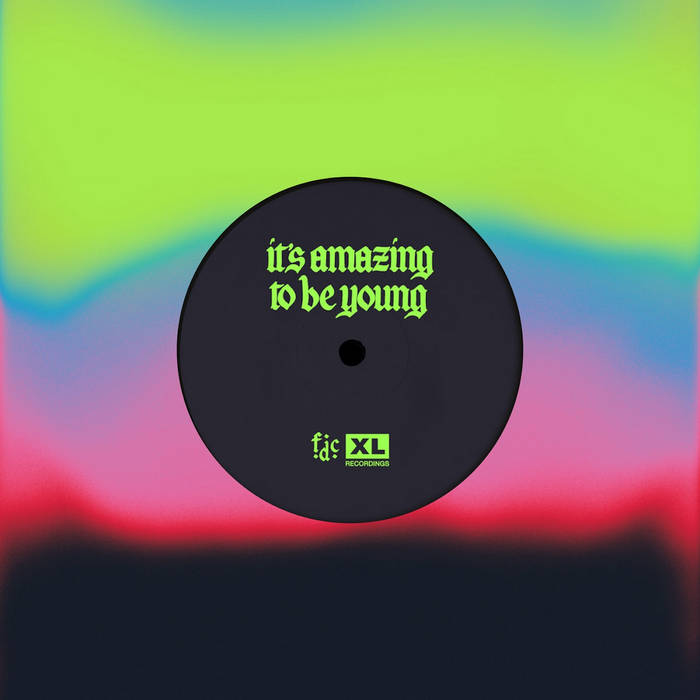
In February 2025, the band continued the 'Romance' era with 'It's Amazing to Be Young', a song inspired by the arrival of Carlos O'Connell's daughter. Written while the musicians were spending time with his newborn child, it explored the possibilities of youth and the hope that accompanies bringing somebody into the world. The recording offered an unusually optimistic perspective from a band whose music had so often been associated with frustration, anxiety and disillusionment. Its central message was simple, but there was something particularly affecting about hearing Fontaines celebrate the possibilities of life rather than concentrating on its difficulties.
The accompanying video, directed by Luna Carmoon, continued the interconnected visual narrative established during the album campaign, bringing back characters and imagery from earlier releases. The band's decision to develop a connected collection of music videos was another indication of how carefully they had considered the world surrounding 'Romance'. There was a consistency between the artwork, clothing, films and musical arrangements that gave the entire period a recognisable identity, while the songs themselves remained varied enough to appeal to audiences with considerably different musical tastes.
April brought an expanded edition of 'Romance', featuring 'It's Amazing to Be Young', the previously unreleased 'Before You I Just Forget' and a stripped-back performance of 'Starburster' incorporating 'In Heaven', a song from David Lynch's 'Eraserhead'. Initially developed by Conor Curley, 'Before You I Just Forget' combined distorted instrumentation with shifting arrangements and an elaborate string section, providing another example of the experimentation taking place during the sessions. The inclusion of the Lynch recording was equally appropriate given the band's growing fascination with surreal cinema and the unsettling imagery that had influenced their latest material.
By the summer of 2025, Fontaines D.C. were preparing for their biggest British headline performances to date. 'Romance' had changed their reputation considerably, taking them from a band celebrated primarily within alternative music circles to one capable of attracting enormous audiences without abandoning their appetite for experimentation. The musicians who had first attracted attention through furious songs about Dublin were now writing some of the most beautiful and adventurous music of their career, with 'Starburster', 'In the Modern World' and 'Favourite' joining the established favourites in their live performances.
Six years after 'Dogrel', Fontaines had developed a catalogue that could move between the urgency of their earliest recordings and the more elaborate arrangements of 'Romance'. Their next challenge was to bring those songs to the largest audiences they had ever headlined. With outdoor concerts planned at Cardiff Castle, Manchester's Wythenshawe Park and London's Finsbury Park, the summer of 2025 would demonstrate how far the band's popularity had grown since their earliest appearances in Dublin.
From Dublin Clubs to Finsbury Park
By the summer of 2025, Fontaines D.C. had established themselves as one of the most important British and Irish guitar bands of their generation. The success of 'Romance' had introduced them to an entirely new audience, while their increasingly ambitious live performances demonstrated how effectively their music could translate into larger venues. Having spent much of the previous year touring across Europe, North America and Australia, the band returned to Britain and Ireland for a series of outdoor concerts that would become the biggest headline performances of their career.
Their extraordinary rise was perhaps best illustrated by what happened in London on 5 July 2025. Eight years earlier, Fontaines had played their first concert in the capital at The Finsbury, a small pub venue near Manor House, performing to approximately thirty people. In July 2022, they returned to the area to support Sam Fender during his enormous headline show at Finsbury Park, playing alongside Declan McKenna, Nilüfer Yanya and Rachel Chinouriri. Three years later, Fontaines were returning as headliners, with 45,000 people expected to fill the park for a sold-out concert celebrating their fourth album.
It was a remarkable achievement for five musicians who had released 'Dogrel' only six years earlier. The journey from Dublin's independent venues to one of London's biggest outdoor concert spaces had involved four critically acclaimed albums, relentless touring and a musical development that few could have anticipated when 'Liberty Belle' first appeared in 2017. Their popularity had grown considerably following 'Romance', but the audience now gathering at Finsbury Park included listeners who had followed them since their earliest releases alongside those introduced to the band through 'Starburster', 'Favourite' and 'In the Modern World'.
The supporting line-up was equally impressive. Australian punk band Amyl and the Sniffers joined Belfast hip-hop trio Kneecap, while Blondshell, Been Stellar and Cork band Cardinals completed a bill that reflected the different musical worlds Fontaines had become associated with. There were connections to the contemporary Irish music scene, the alternative rock of New York and the confrontational punk that had influenced the band's earliest recordings. Rather than filling the afternoon with commercially established names, Fontaines had brought together musicians whose work they admired and whose different approaches complemented their own increasingly varied sound.
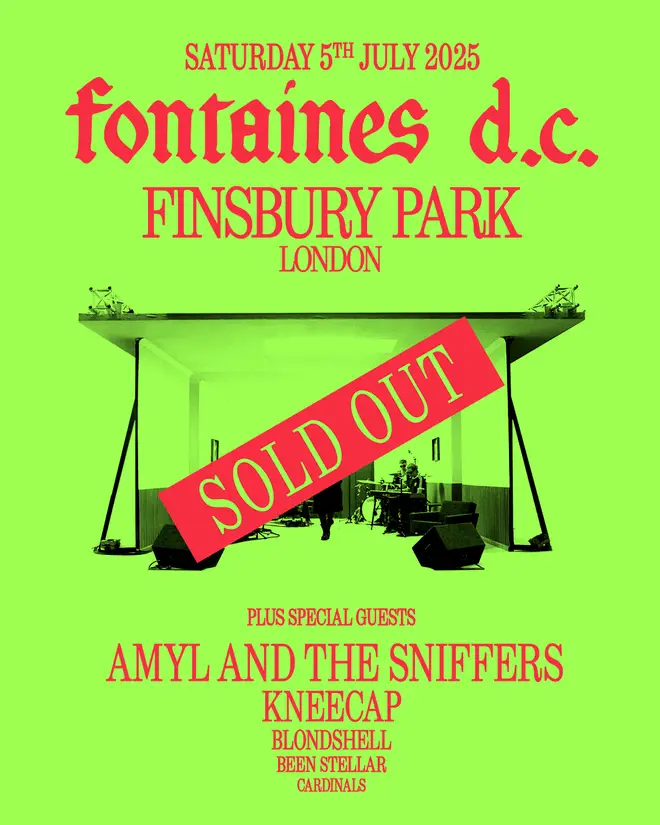
Kneecap's appearance carried particular significance. The Belfast trio had become one of the most discussed acts in British and Irish music, combining Irish-language hip-hop with outspoken commentary on politics, identity and the relationship between Britain and Ireland. Their rise had attracted considerable controversy, particularly following their statements about Palestine and the legal proceedings involving member Mo Chara. Fontaines had supported the group throughout that period, with Chatten having previously appeared on their 2023 single 'Better Way to Live'. The collaboration brought together two groups whose music sounded very different but whose interest in Irish culture and contemporary politics had created a strong connection.
During Kneecap's afternoon performance, Chatten joined the trio onstage for 'Better Way to Live', receiving an enthusiastic response from the enormous audience. The appearance was particularly appropriate given the relationship between the two groups and the increasingly prominent role of Irish musicians within contemporary British music. Kneecap's performance was followed by Amyl and the Sniffers, whose ferocious punk music provided another reminder of the aggression that had helped Fontaines establish their earliest reputation. By the time the Dublin five-piece appeared, the concert had already brought together several generations and different approaches to politically engaged alternative music.
Fontaines opened their headline performance with 'Here's the Thing', immediately introducing the heavier guitars and unsettling atmosphere of 'Romance'. The setlist drew extensively from all four albums, with 'Jackie Down the Line', 'Boys in the Better Land' and 'Televised Mind' appearing early in the performance. What had once been songs performed in small rooms across Dublin were now being sung back by tens of thousands of people, while the more experimental material demonstrated how much their music had developed. The band moved between the intensity of their earliest recordings and the expansive arrangements of 'Romance' without either feeling out of place.

The visual presentation had changed considerably too. The brightly coloured clothing, distorted imagery and surreal artwork associated with 'Romance' were now incorporated into a substantial stage production, with screens displaying unsettling footage and the album's distinctive imagery. Their entrance was accompanied by a combination of 'Starburster' and 'In Heaven', the haunting song associated with David Lynch's 'Eraserhead'. It was an appropriate choice for an album influenced by surreal cinema and the relationship between beauty and discomfort. The production was considerably more elaborate than anything associated with Fontaines' earliest concerts, but the performances still depended upon the interaction between the five musicians.
There was also a strong political element to the evening. During 'I Love You', messages supporting Palestine appeared across the screens, connecting the song's anger towards political injustice with the humanitarian crisis unfolding in Gaza. Fontaines had never been particularly interested in separating their music from the issues that concerned them, especially considering the subjects explored on 'Dogrel' and 'Skinty Fia'. However, the size of the audience gave those statements considerably greater visibility. Alongside Kneecap and Amyl and the Sniffers, they had assembled a concert where political expression was an important part of the performances rather than something confined to interviews and social media.

The closing stages demonstrated how impressive their catalogue had become. 'Favourite' provided an emotional contrast to the aggression of 'Big', 'Hurricane Laughter' and 'Nabokov', while 'In the Modern World' showed how effectively the orchestral melancholy of 'Romance' could translate to an enormous outdoor audience. 'I Love You' remained one of the band's most intense live performances, with Chatten's increasingly furious delivery bringing its examination of Ireland's political and social problems to a conclusion. The night ended with 'Starburster', whose frantic rhythms and sudden gasps for breath had become an unlikely anthem for one of Britain's biggest contemporary guitar bands.
Finsbury Park represented an important achievement, but the summer was far from over. A week later, on 12 July, Fontaines returned to Glasgow Green for TRNSMT Festival, performing on the main stage immediately before Biffy Clyro. Their set demonstrated how rapidly their popularity had grown in Scotland, with songs from 'Romance' receiving particularly enthusiastic responses alongside established favourites from the previous records. Chatten dedicated 'Favourite' to Glasgow, describing the city as a home away from home. It was another indication of the connection Fontaines had developed with audiences outside Ireland, particularly in cities with their own strong musical identities.
The next major British headline appearance took place at Cardiff Castle on 30 July. Supported by Kae Tempest and High Vis, Fontaines performed to a sold-out audience of approximately 10,000 people as part of the castle's summer concert series. The historic surroundings provided a considerably different setting from Finsbury Park, with the stage positioned against the castle walls and the performance continuing into the evening. It was another impressive supporting bill, bringing together High Vis's working-class punk and Kae Tempest's combination of poetry, spoken word and electronic music.
Tempest's involvement was particularly interesting given Fontaines' own literary beginnings. Before they had established themselves as a recording band, Chatten and his bandmates had published poetry and developed a shared interest in the possibilities of spoken language. Although their music had changed considerably since those early years, that fascination with words remained an important part of their identity. Tempest approached poetry and music from a different perspective, yet the combination made considerable sense alongside a group whose frontman had built his reputation through an equally distinctive use of language.
By the time Fontaines appeared, Cardiff Castle had become another setting for the increasingly theatrical world of 'Romance'. The new songs brought a mixture of electronic rhythms, distorted guitars and melancholic arrangements to the performance, while 'Boys in the Better Land', 'Jackie Down the Line' and 'Televised Mind' retained the urgency that had characterised their earliest concerts. The contrast between the older material and the more adventurous recordings from 'Romance' demonstrated the range of their songwriting, particularly given how effectively the audience responded to both.
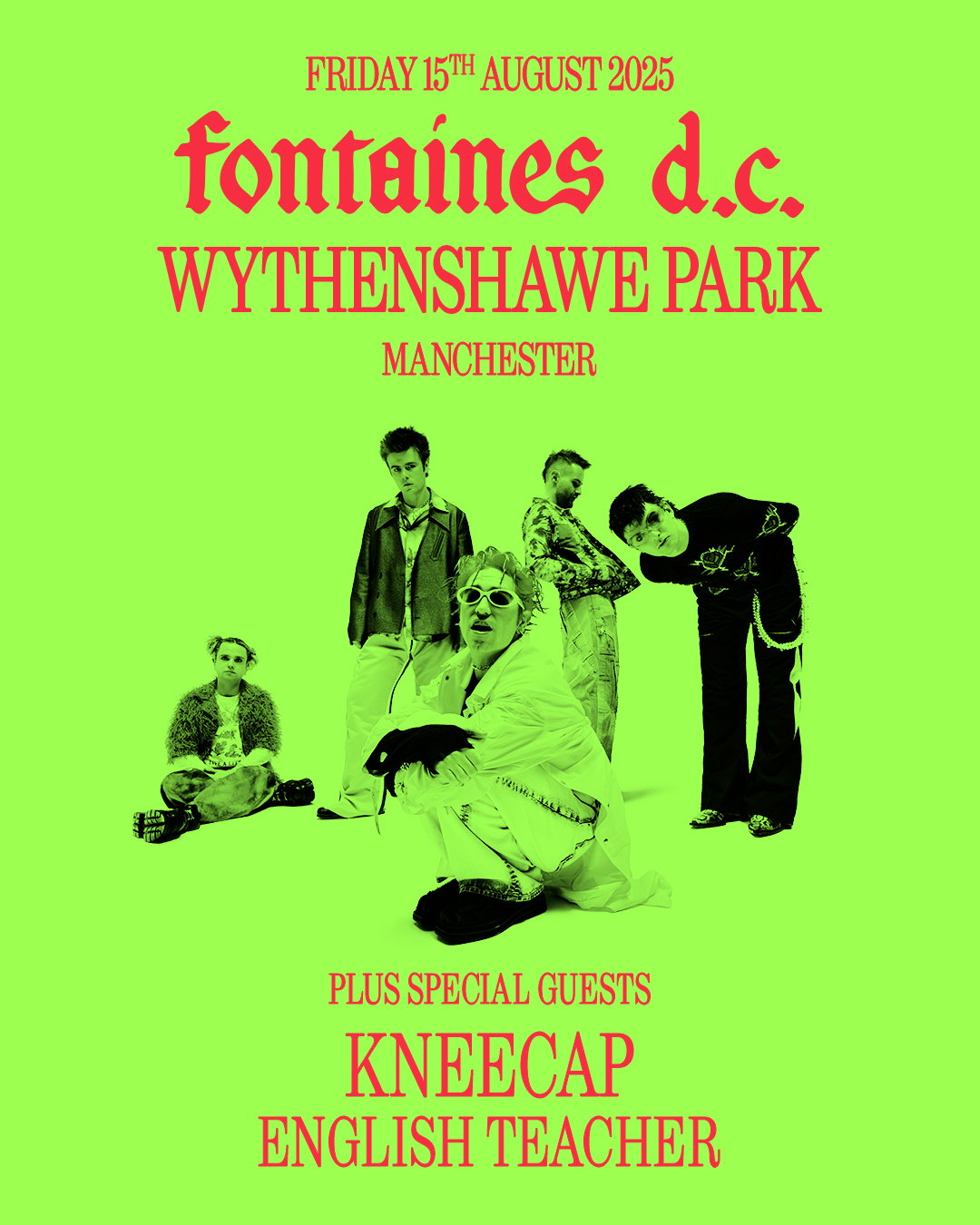
Manchester followed on 15 August, when Fontaines headlined Wythenshawe Park before approximately 35,000 people. It was their biggest concert in the city to date, with a supporting bill featuring Kneecap, English Teacher and fellow Dublin band The Murder Capital. The latter's inclusion was especially appropriate. Fontaines and The Murder Capital had emerged from Dublin's guitar music scene during the same period, developing different approaches to post-punk while attracting attention beyond Ireland. Having once performed in many of the same small venues, the two groups were now sharing a stage at one of Manchester's largest outdoor concert events.
English Teacher represented another important development in contemporary British guitar music. The Leeds band had won the 2024 Mercury Prize for their debut album 'This Could Be Texas', bringing renewed attention to a younger generation of artists interested in experimenting beyond traditional indie rock. Their combination of complex arrangements, spoken vocals and literary influences made them an appropriate addition to the line-up. With The Murder Capital, English Teacher and Kneecap appearing before Fontaines, Wythenshawe Park brought together some of the most exciting artists to emerge from Britain and Ireland during the previous decade.
Kneecap once again attracted considerable attention, with Chatten joining them for another performance of 'Better Way to Live'. Their appearance had been the subject of controversy beforehand, following discussions over whether they should be permitted to perform at the event. Ultimately, the group remained on the bill, receiving an enthusiastic response from the Manchester audience. The political concerns that had accompanied Finsbury Park were again prominent, particularly through statements supporting Palestine from several performers.
For Fontaines, Manchester carried another interesting connection. Their early music had frequently drawn comparisons with The Fall and other groups associated with the city's post-punk history, while the electronic influences introduced on 'Skinty Fia' and 'Romance' recalled aspects of New Order's development during the 1980s. Chatten appeared wearing an Oasis 'Live Forever' T-shirt, a particularly appropriate choice during the summer of the Gallagher brothers' reunion. It was a small detail, but one that connected the Dublin band's performance to a city whose musical history had influenced several generations of British and Irish musicians.
The show itself demonstrated how confidently Fontaines had settled into performing for such substantial audiences. The band moved between 'Here's the Thing', 'Jackie Down the Line' and 'Boys in the Better Land' before exploring the more atmospheric arrangements of 'Roman Holiday' and 'It's Amazing to Be Young'. The latter had become an important addition to their performances following its release earlier in the year, providing a moment of genuine optimism within a catalogue frequently concerned with anxiety and disillusionment. Elsewhere, 'Death Kink', 'A Hero's Death' and 'Nabokov' maintained the aggression of their earlier material, while 'Favourite' was already provoking some of the biggest singalongs of the evening.
By this stage, the encore had developed into a particularly impressive conclusion to the band's concerts. 'Romance' introduced an unsettling atmosphere through its mechanical rhythms and distorted arrangements, before 'In the Modern World' provided a more reflective moment. 'I Love You' then brought the performance towards its emotional peak, with Chatten delivering its furious examination of Ireland over increasingly aggressive instrumentation. The final 'Starburster' offered a completely different kind of intensity, ending the evening with one of the most unconventional songs to have become a major live favourite in recent years.
The scale of the Manchester concert would have seemed difficult to imagine during the band's earliest years. Fontaines had arrived in Britain as a relatively unknown Irish group playing small independent venues, gradually building their reputation through relentless touring. By 2025, they were headlining Wythenshawe Park with three other prominent British and Irish acts supporting them, performing songs that had become familiar to audiences far beyond the alternative music scene. Their success was no longer restricted to individual cities or particular audiences. They had developed a following capable of filling substantial outdoor venues across the country.
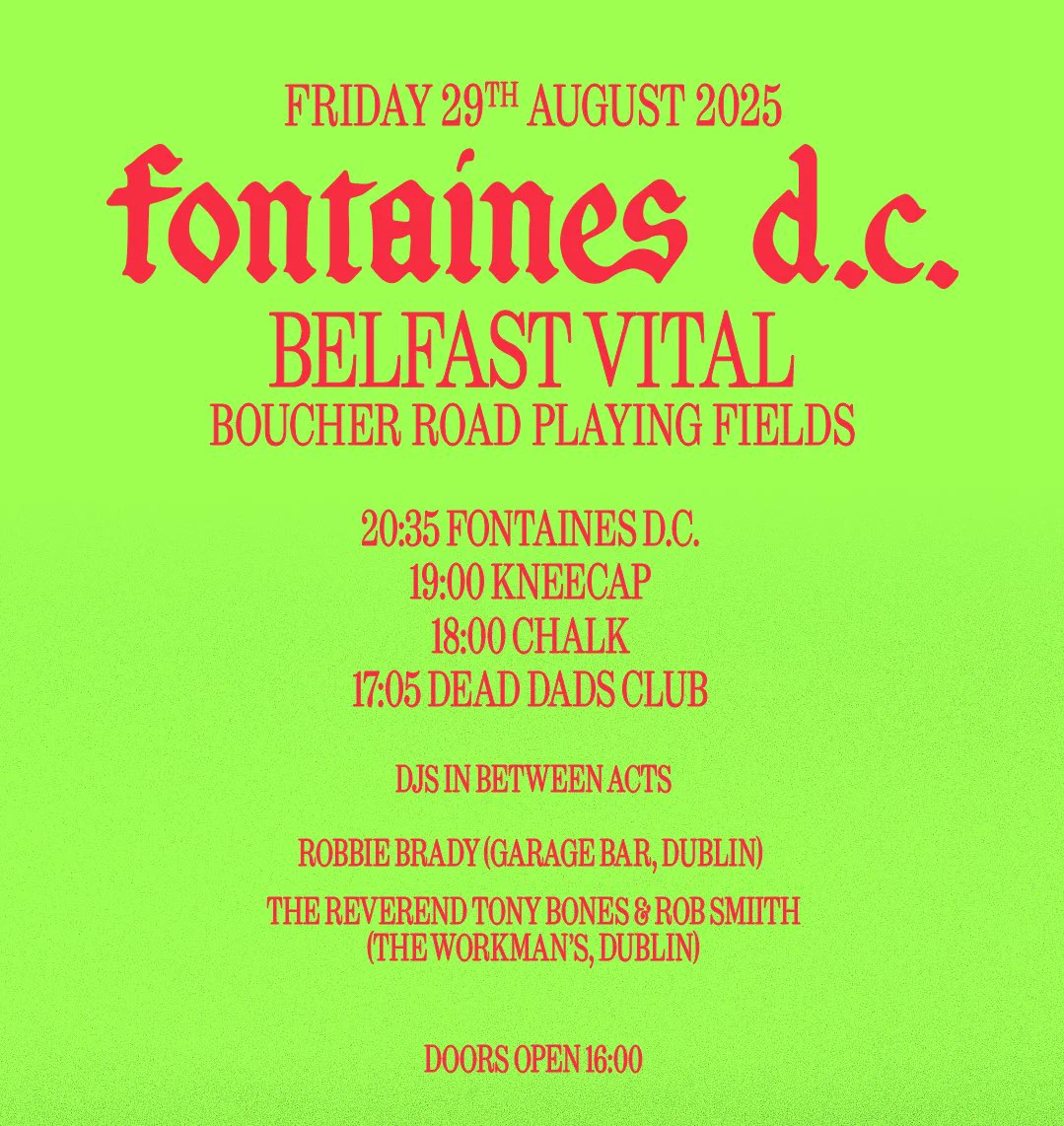
The 'Romance' tour eventually concluded on 29 August with a headline performance at Belfast Vital, held at Boucher Road Playing Fields. Approximately 40,000 people attended the concert, with Kneecap once again providing support alongside Chalk and Dead Dads Club. The Belfast trio's appearance was especially significant, coming after months of political controversy and legal proceedings that had attracted international attention. Performing before an enormous audience in their hometown, they received an enthusiastic welcome, with Chatten joining them once again for 'Better Way to Live'.
Belfast provided an appropriate location for the final concert of the tour. Fontaines had spent much of their career examining Irish identity and the complicated relationship between their homeland and the outside world, while Kneecap had approached similar concerns through Irish-language hip-hop and confrontational political commentary. The two groups had developed a close relationship despite their different musical backgrounds, and their shared performances throughout the summer demonstrated the increasingly prominent position Irish artists occupied within contemporary popular music.
It was also an emotional occasion for Fontaines themselves. The concert marked the conclusion of approximately 165 performances during the 'Romance' touring cycle, with Chatten thanking the band's crew for their work throughout an exhausting period of international touring. The setlist brought together material from all four albums, including 'Big', 'Liberty Belle', 'A Hero's Death', 'I Love You' and much of 'Romance'. Chatten dedicated 'Favourite' to Kneecap, another acknowledgement of the friendship between the two groups and the experiences they had shared throughout the summer.
The final encore brought the tour to a familiar conclusion. 'Romance' and 'In the Modern World' demonstrated the increasingly atmospheric direction of the band's music, while 'I Love You' returned to the anger and complicated patriotism that had characterised 'Skinty Fia'. 'Starburster' provided the final song, ending a remarkable period in which Fontaines had transformed from one of the most acclaimed guitar bands in independent music into an act capable of headlining major outdoor concerts across Britain and Ireland.
There was something appropriate about concluding the tour in Belfast, surrounded by an audience that understood many of the experiences and cultural references running through their earliest music. Having travelled across Europe, North America and beyond, Fontaines were finishing one of the most important chapters of their career on the island where they had first come together. Their music had changed considerably, but their connection to Ireland remained an essential part of who they were.
The summer of 2025 confirmed what the success of 'Romance' had already suggested. Fontaines D.C. had become one of the biggest contemporary guitar bands in Britain and Ireland, building an audience capable of following them through several different musical directions. Finsbury Park, Cardiff Castle, Wythenshawe Park and Belfast Vital were important milestones, but the band's continued experimentation suggested they had little interest in allowing those achievements to determine what happened next.
With the 'Romance' tour finally complete, Fontaines could turn their attention towards the music that would follow. Their fourth album had introduced new sounds, a more elaborate visual identity and a level of popularity that would once have appeared unimaginable. Rather than repeating that approach, they were already working towards another substantial change in direction. The result would be 'Dopamine Chamber', their fifth studio album, and the beginning of another extraordinary chapter in their career.
Inside the 'Dopamine Chamber'
By the summer of 2026, Fontaines D.C. were preparing to release their fifth studio album, with expectations considerably higher than at any previous point in their career. 'Romance' had transformed their popularity, but rather than attempting to recreate its success, the band had been working on material that took their experimentation further. Once again collaborating with producer James Ford, they recorded across London and the English countryside, with Grian Chatten later completing vocals in Palermo, Sicily. During those sessions, Chatten and Ford constructed a makeshift recording booth from mattresses and cushions, an unusually modest setting for a band now preparing to headline some of Europe's biggest venues.
The sessions had produced approximately forty songs, with the band gradually narrowing them down to the eleven that would appear on 'Dopamine Chamber'. One of the recordings they initially considered leaving behind was 'Marianne', a sweeping orchestral ballad that would eventually become the album's lead single. Their longtime manager Trevor Dietz had heard the material at his home in Brighton and encouraged them to reconsider the song's exclusion, recognising something that the musicians themselves had overlooked. His intervention proved particularly important, although the circumstances surrounding the album's eventual release would make his contribution considerably more poignant.
Tragically, Dietz would never see the finished record released. He died unexpectedly on 7 June 2026, aged forty-seven, leaving Fontaines without somebody who had been instrumental in their development from the beginning. Having initially helped the group secure concerts while they were still students in Dublin, he became their manager in 2016 and remained alongside them throughout their rise. The band frequently described him as their sixth member, reflecting how closely he had become involved in their lives beyond the music. From the small rooms where they first developed their reputation to their emergence as international headliners, Dietz had been a constant presence.
Their return was confirmed on 18 August with the release of 'Marianne', alongside the announcement that 'Dopamine Chamber' would arrive through XL Recordings on 16 October. Built around sweeping strings, pulsing synthesisers and Chatten's increasingly expressive vocals, the single introduced a colder, more cinematic atmosphere than much of 'Romance'. The guitars remained, but they were surrounded by arrangements that suggested the band's fascination with electronic music and orchestration had become an even greater part of their songwriting. Knowing that Dietz had been responsible for keeping 'Marianne' on the record gave its release an additional significance, particularly as the album was dedicated to his memory.
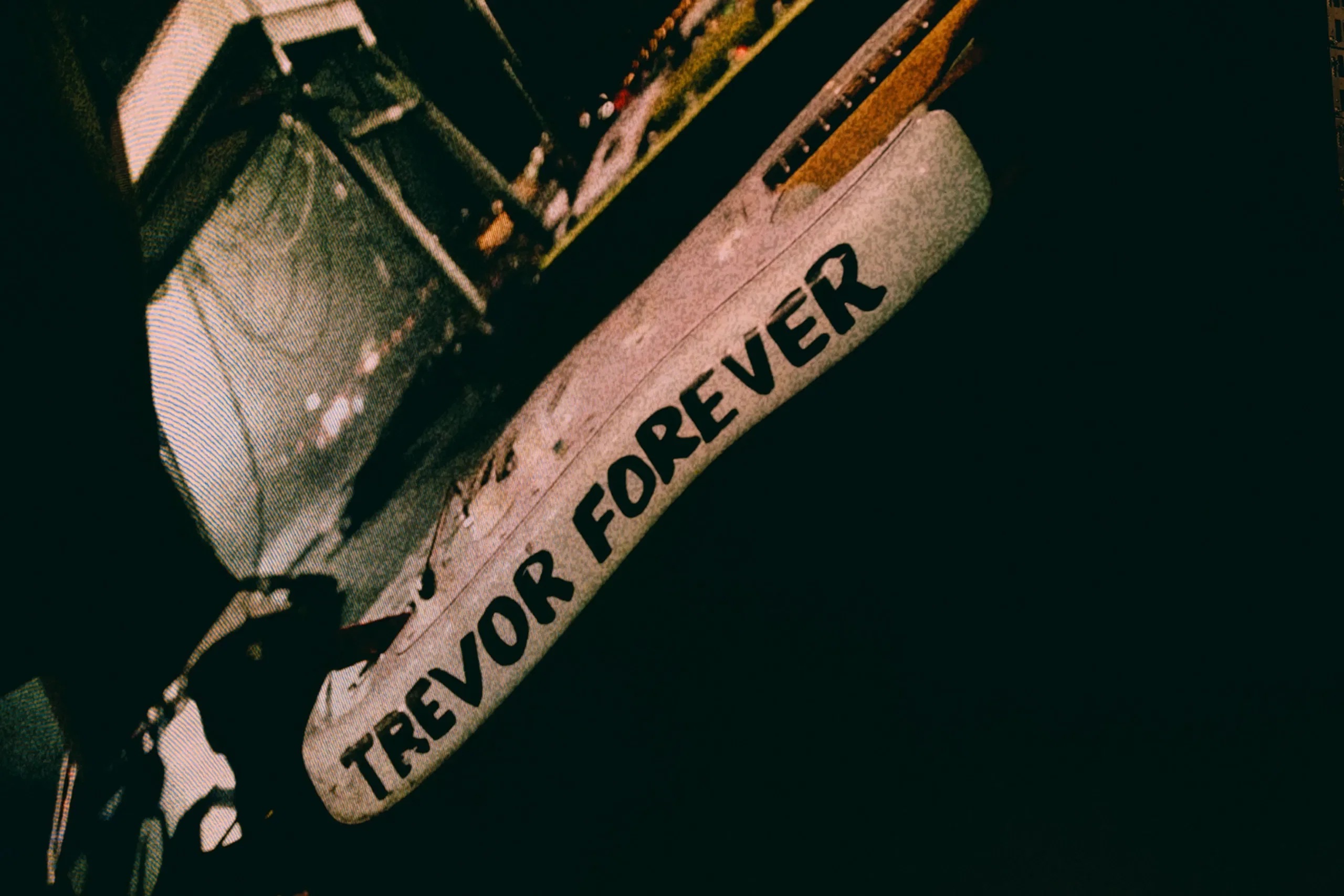
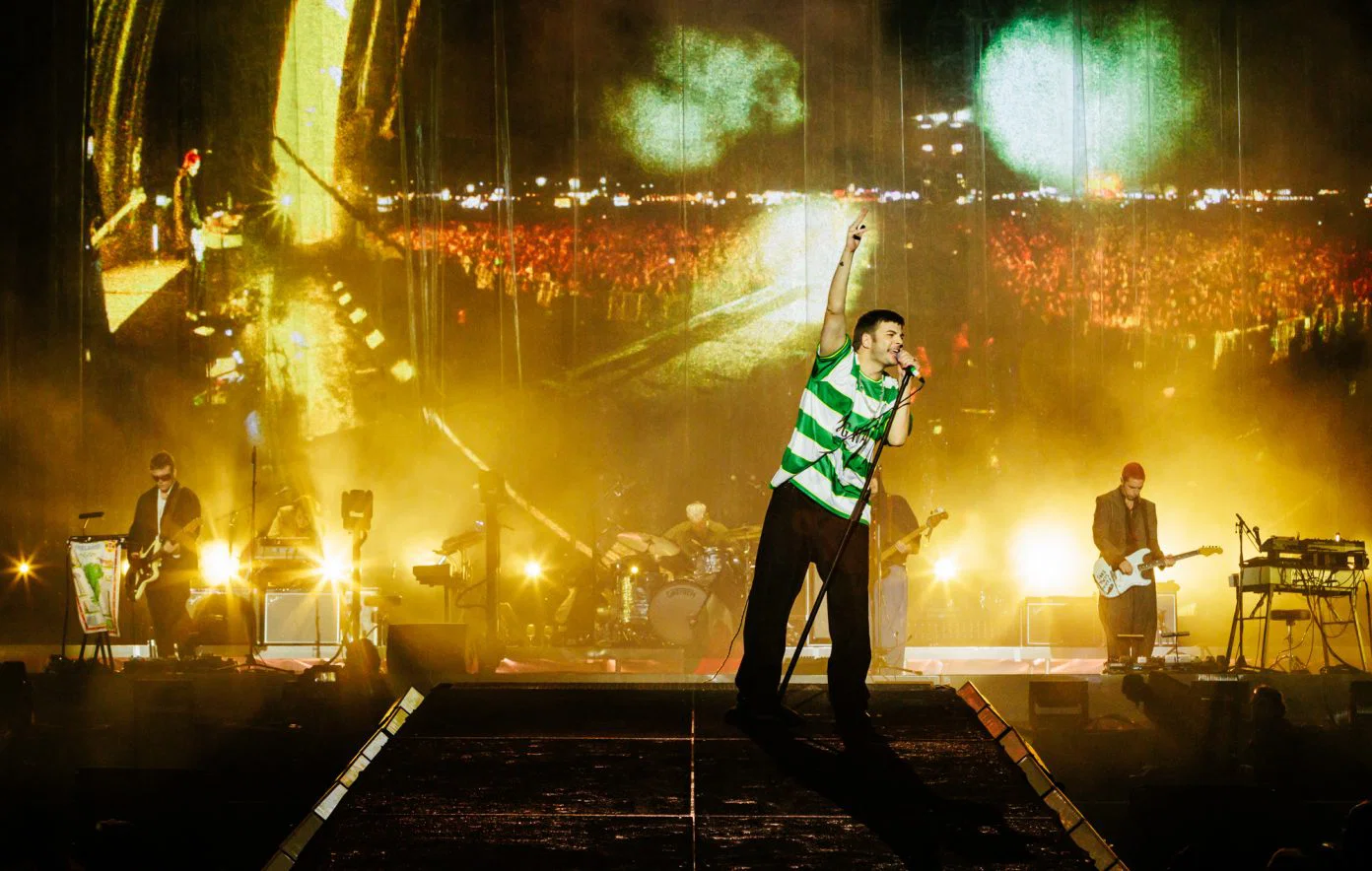
His absence was particularly noticeable when Fontaines headlined Reading & Leeds Festival for the first time later that August. Their Reading performance was delayed by approximately half an hour because of technical and logistical difficulties, forcing the removal of 'Big', 'Hurricane Laughter' and the planned live debut of 'Happy For You'. Nevertheless, it became one of the weekend's most emotional performances. Chatten had Dietz's name tattooed across his knuckles, while one of the guitars carried the words 'Trev Forever'. During 'Favourite', already a song concerned with memory, friendship and the passing of time, the band's tribute to their late manager brought an additional poignancy to a recording that had become one of their most beloved.
The following evening at Leeds, Fontaines finally performed 'Happy For You', a bittersweet song about accepting that a relationship has ended. The performances also demonstrated how varied their music had become, with the electronic unease of 'Six Shot Morning' sitting alongside older favourites including 'Boys in the Better Land', 'I Love You' and 'Starburster'. The presence of those early songs was particularly appropriate. Fontaines had first appeared at Reading in 2019, when 'Dogrel' was only a few months old, and seven years later they were closing the festival's main stage. You can read more about the weekend in our review of Fontaines D.C.'s emotional Reading Festival headline performance.
Further new material followed in September when the band debuted 'Tongue' during a performance at Brooklyn's Kings Theatre, before unveiling 'Where Is Gone?' with Rosalía on 12 October. The latter marked the first time Fontaines had invited another artist to feature on one of their studio albums, bringing together Chatten's distinctive delivery and the Spanish singer's expressive vocals. For guitarist Carlos O'Connell, who grew up in Madrid, the collaboration also connected his Irish and Spanish backgrounds. Both artists have drawn heavily from their respective musical traditions while continually experimenting beyond them, making their partnership particularly interesting. The resulting song was far removed from the conventional pop collaboration some might have expected, drawing instead on Ennio Morricone and the dramatic orchestration of classic James Bond themes.
Released on 16 October, 'Dopamine Chamber' continued the transformation that had begun with 'Skinty Fia' and accelerated considerably on 'Romance'. Across eleven tracks, Fontaines examine pleasure, anxiety, technological dependence, environmental destruction and the growing difficulty of maintaining meaningful human connections. Where 'Dogrel' had documented the changing streets of Dublin and 'Skinty Fia' explored the complications of Irish identity from abroad, their fifth album looks towards a world increasingly influenced by artificial intelligence, social media and the pursuit of temporary satisfaction. The geographical and musical distance from their debut is considerable, although their interest in the frustrations and anxieties of modern life remains familiar.
The title came from Chatten's idea of music as an environment capable of influencing the listener's emotions. A record can provide comfort, excitement, nostalgia or distraction, allowing somebody to escape their surroundings for a relatively short period. Fontaines became interested in how that same principle operates across contemporary society, particularly through the technology we increasingly depend upon. Social media offers a constant stream of entertainment and stimulation, often appearing alongside images of political violence, environmental destruction and human suffering. There is something deeply unsettling about how comfortably those different experiences coexist, with one moment of genuine horror quickly replaced by something designed to make us laugh or momentarily forget what we have just witnessed.
Some of those concerns developed while Chatten was travelling through Venice, Vienna and Sicily, becoming fascinated by the contrast between their extraordinary cultural histories and signs of contemporary decline. The experiences encouraged him to think about how secure any civilisation could really be, and whether societies recognise their own deterioration while it is happening. These ideas also reflect the growing environmental and political uncertainty that runs throughout the album. Rather than attempting to explain the problems facing the world, Chatten concentrates on how it feels to live through them, particularly the exhaustion and helplessness that can accompany a constant awareness of events far beyond our control.
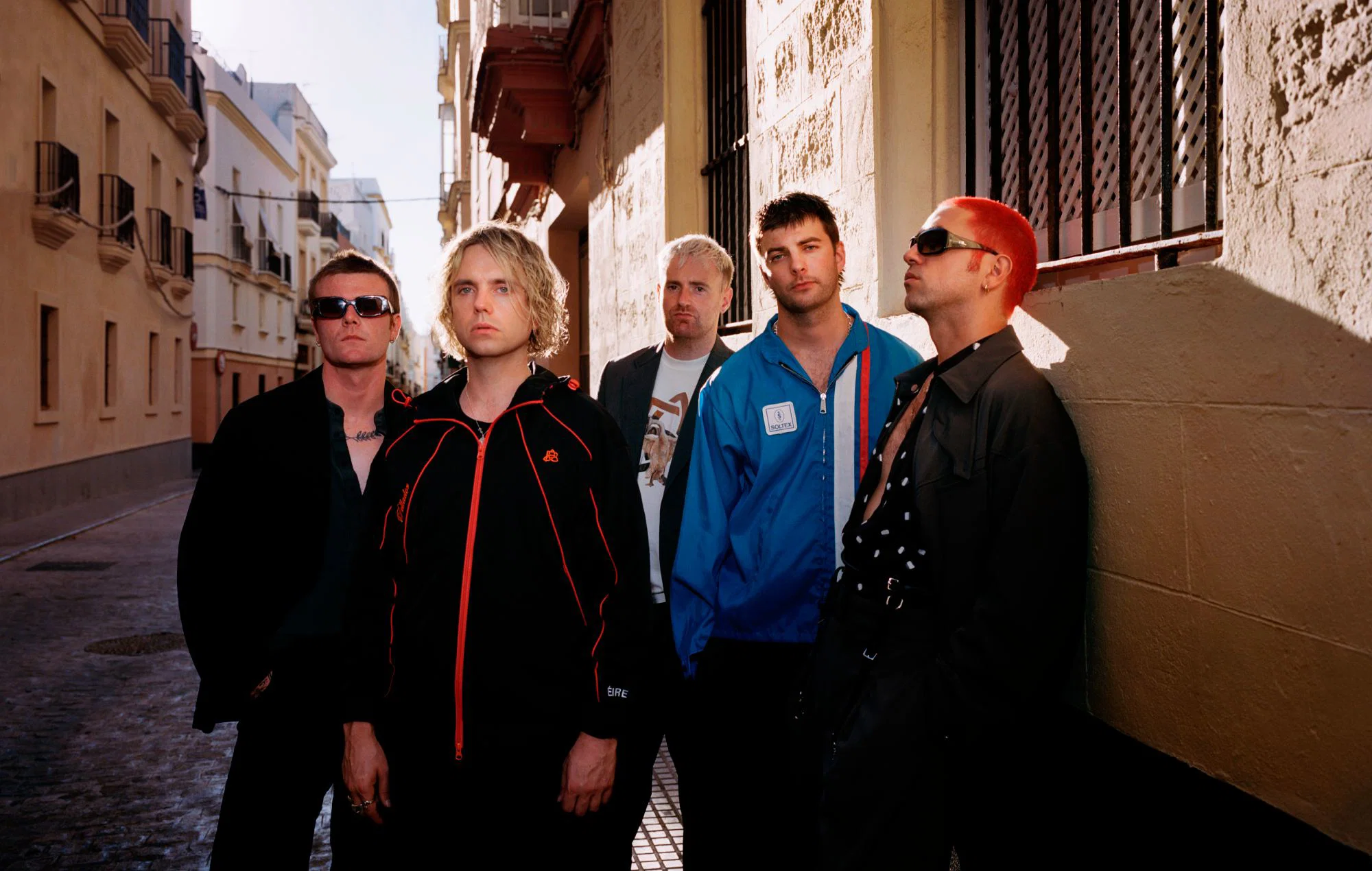
Working again with James Ford, Fontaines draw on a much wider collection of influences than the guitar-driven post-punk that initially brought them to prominence. There are elements of Depeche Mode, The Cure and Massive Attack, alongside the electronic experimentation of New Order and the grandeur of orchestral pop. The opening 'Six Shot Morning' introduces an atmosphere of technological anxiety through ominous synthesisers and mechanical rhythms, while 'Mimesis' draws on the period when New Order were beginning to combine post-punk with electronic dance music. Its Peter Hook-inspired bassline and melancholy melodies demonstrate how far Fontaines have moved from their earliest recordings without entirely abandoning the influences that helped shape them.
There is still plenty of aggression. 'Demolition' brings distorted guitars and industrial rock into the picture, while 'Tongue' combines trip-hop rhythms with increasingly unpredictable instrumentation. Both songs retain the sense of menace that made Fontaines so compelling during their earliest years, even if the arrangements are considerably more elaborate. It is remarkable to consider that the musicians who recorded the relatively straightforward guitar attack of 'Big' and 'Liberty Belle' are now producing material that moves so comfortably between synthesiser-driven pop, orchestral arrangements and some of the heaviest music of their career.
What I find particularly impressive about 'Dopamine Chamber', however, is how beautiful much of the music sounds despite the darkness of its subject matter. 'Happy For You' combines the melancholy of The Cure with one of the finest choruses Fontaines have written, while 'One Man' explores the overwhelming nature of contemporary life through delicate acoustic guitars and sweeping strings. The latter includes vocals recorded during those makeshift sessions in Palermo, where the ordinary sounds of life outside the building found their way into the finished recording. It is an interesting detail for an album so concerned with the increasingly artificial environments people inhabit.
Elsewhere, 'You Miss Me' introduces an unexpected melodic nod towards ABBA, while the acoustic guitars of 'Japan' recall some of Noel Gallagher's songwriting around '(What's the Story) Morning Glory?'. These moments demonstrate that Fontaines remain capable of writing relatively simple, memorable melodies, even as their arrangements become more adventurous. 'Where Is Gone?' is perhaps the finest example of that ambition. Rosalía's vocals complement Chatten's performance beautifully, with the orchestral arrangement transforming the song into something closer to a cinematic ballad than anything associated with the band's early post-punk recordings. I explored the collaboration in greater detail in our feature on 'Where Is Gone?' and Rosalía.
The album concludes with 'Intimate', returning to the unsettling electronics and images of societal decline that have appeared throughout the record. There is little sense of resolution, and certainly nothing resembling the emotional reassurance offered by 'Favourite' at the end of 'Romance'. Instead, Fontaines leave the listener with many of the same uncertainties that inspired the album in the first place. It is an appropriate conclusion to a record that repeatedly questions whether the temporary distractions surrounding us can provide any meaningful escape from the world outside.
Across five albums, Fontaines have moved from Dublin's streets through questions of nationality, displacement and memory to the influence of technology on everyday life. The settings have changed, and the arrangements have grown considerably more elaborate, but the songwriting remains concerned with how people understand themselves and their place in an increasingly complicated world. Each record has represented another stage in the band's development, with the success of one album allowing them to experiment further on the next. I explored the songs, influences and themes in considerably greater detail in my full review of 'Dopamine Chamber'.
The Better Land: What Comes Next in 2027?
If 2026 was the year Fontaines D.C. established themselves as festival headliners and released their most ambitious album, 2027 looks set to take them into another category of live performance. Following their sold-out arena tour, the band announced their biggest outdoor concerts to date, including two nights at Slane Castle in Ireland on 26 and 27 June. They will become only the third Irish act to headline the legendary venue, following Thin Lizzy and U2, joining a remarkable history that also includes performances by Oasis, David Bowie, The Rolling Stones and Bruce Springsteen.
The significance of Slane should not be underestimated. When Fontaines released 'Dogrel' in 2019, they were still closely associated with Dublin's smaller venues, its literary traditions and the frustrations of a generation struggling to find its place in a rapidly changing city. Eight years later, they will return to Ireland to headline one of the country's most celebrated concert venues on two consecutive nights. Support from Hayley Williams, Damien Dempsey and Madra Salach brings together a varied collection of artists, while the occasion itself represents another remarkable development in the band's relationship with their home country.
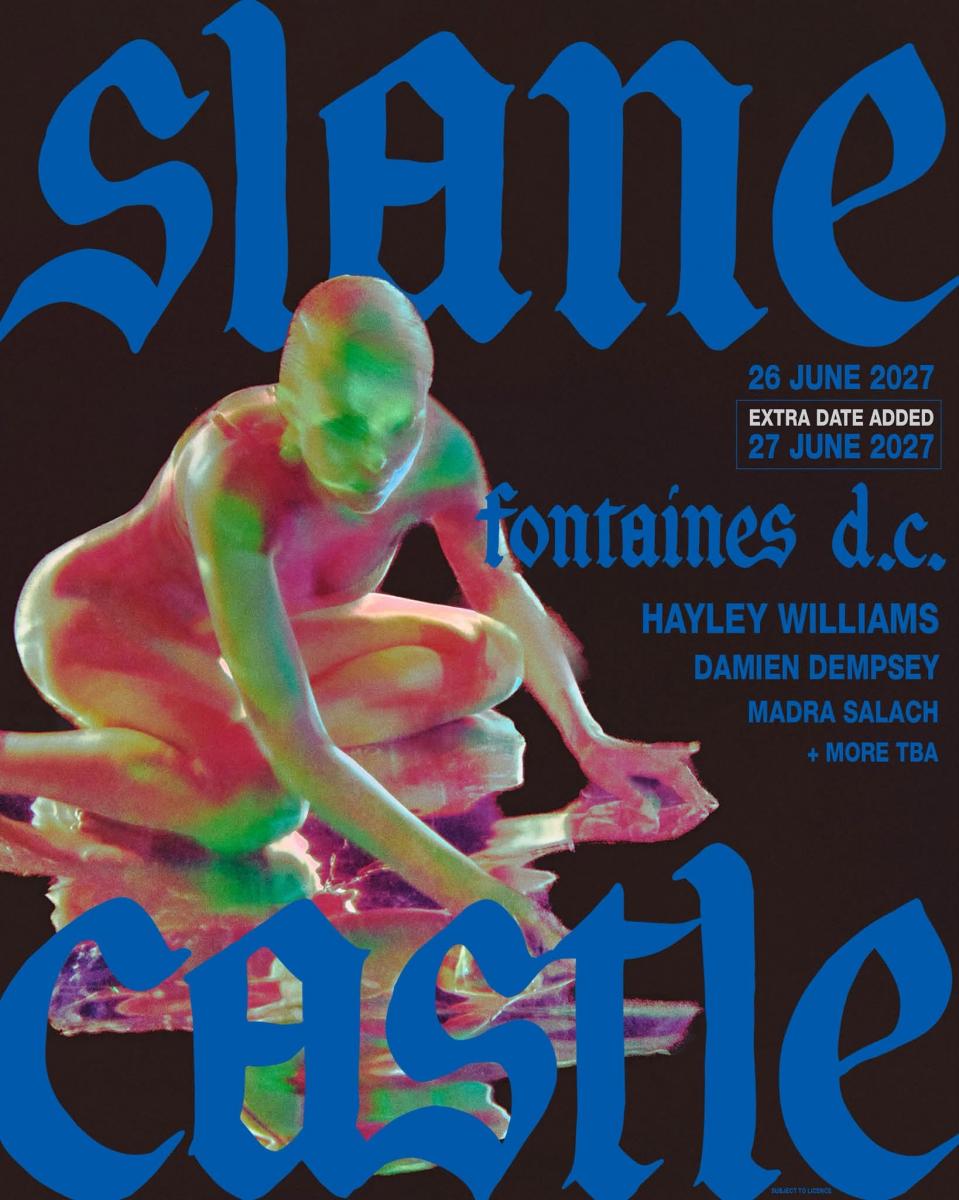
The British dates are equally impressive. Fontaines will headline Cardiff's Blackweir Fields on 29 June, Newcastle's St James' Park on 1 July, Manchester's Heaton Park on 3 and 4 July, Glasgow Green on 6 July and the London Stadium on 9 July. With Little Simz and Viagra Boys providing support, the shows will bring together artists from different musical backgrounds, reflecting the increasingly varied influences that have shaped Fontaines' own records. These are venues normally associated with established stadium acts, yet Fontaines will arrive having released five albums in just eight years.
Their live performances have developed considerably alongside those records. Early concerts relied on the frantic guitar attack of 'Big', 'Too Real' and 'Boys in the Better Land', while subsequent tours introduced the brooding intensity of 'I Love You', the overwhelming anxiety of 'Starburster' and the emotional release of 'Favourite'. 'Dopamine Chamber' provides another collection of songs capable of changing the atmosphere of those performances, particularly the electronic rhythms of 'Six Shot Morning', the aggression of 'Demolition' and the soaring chorus of 'Happy For You'. How the band accommodate so many different arrangements within a single performance will be fascinating to see, particularly as their audiences continue to grow.
There is also the question of what happens beyond these concerts. Having produced five albums in seven years, Fontaines have developed one of the most consistently interesting catalogues in contemporary guitar music. 'Romance' could easily have provided a formula for further commercial success, yet 'Dopamine Chamber' moved them towards something colder, more electronic and considerably less conventional. It is difficult to imagine what their sixth album might sound like, particularly when the musical distance between 'Dogrel' and their latest material is already so substantial.
I have considered Fontaines D.C. the greatest band of their generation for some time, and their development since 'Dogrel' has only strengthened that belief. There are plenty of excellent contemporary guitar bands, but very few have managed to produce five records of this quality while developing such a distinctive musical identity. Their popularity has grown considerably without the songwriting becoming predictable, and the decision to keep experimenting has produced some of the strongest material of their career.
When 'Dogrel' arrived in April 2019, its opening track 'Big' began with Grian Chatten declaring his ambitions for the band. At the time, it sounded like the confidence of five young musicians determined to make something of themselves. Almost eight years later, Fontaines D.C. are preparing to headline Slane Castle, Heaton Park and the London Stadium, having grown from Dublin's small venues into one of the biggest bands of their generation.
Trevor Dietz should have been there to witness those performances, having supported the band from their earliest days. His absence will undoubtedly be felt as Fontaines enter another remarkable chapter of their career. They have already achieved the ambitions Chatten outlined on 'Big', although their continued musical development suggests they have little intention of stopping there. The question now is just how much further they can go.