About the Young Idea
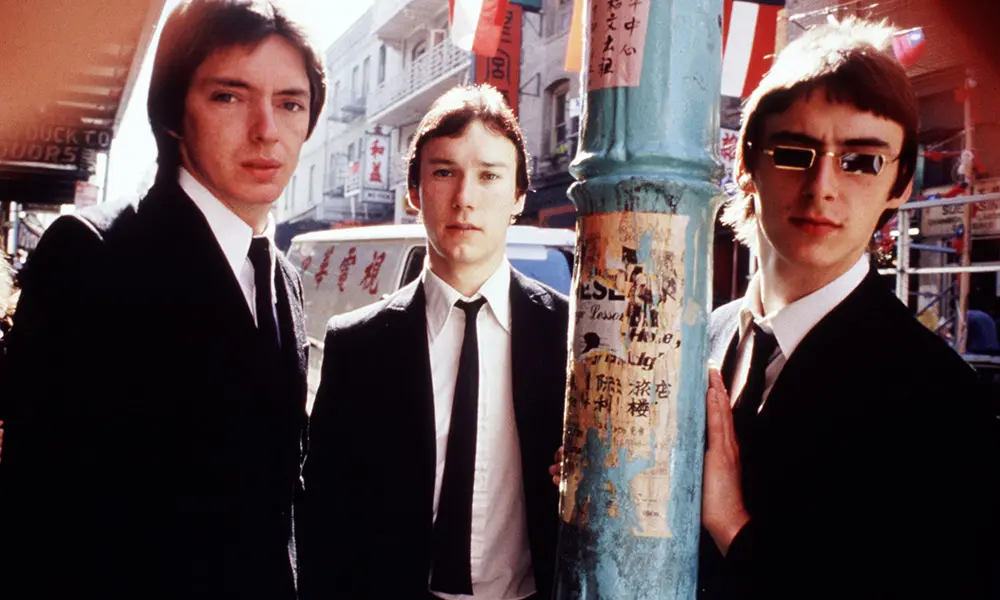
In the late 1970s, while the rest of the UK punk scene was busy tearing the playbook to shreds, three young men from Woking were busy tailoring it. Led by the sharp-tongued Paul Weller, The Jam arrived with a uniquely British fire, blending the raw aggression of the era with a sophisticated nod to 1960s Mod culture and the soulful melodies of Motown.
They weren't just a band; they were a cultural phenomenon that captured the frustration and aspiration of a generation. From the frantic energy of their debut album, 'In the City', to the chart-topping brilliance of songs like 'Going Underground' and 'Town Called Malice', the trio maintained a relentless standard of excellence until their abrupt split at the very height of their powers.
Decades later, their influence still echoes through the streets of London and the DNA of every guitar band that followed. But beyond the Rickenbacker riffs and the impeccably pressed suits, we have to look at the legacy they left behind.
Just how important were The Jam?
Youth Explosion!
When The Jam exploded onto the scene in 1977, the UK was in the throes of a cultural scorched-earth policy. But while their contemporaries were busy burning bridges, this trio from Woking was building a sanctuary for the disaffected. To label them simply as a "punk band" is a disservice to their complexity; they were the "Modern World" incarnate, filtered through a vintage lens.
Unlike the nihilism of the Sex Pistols or the global politicking of The Clash, The Jam looked backwards to move forward. All three members were disciples of the 1960s, obsessed with the kinetic energy of The Who, the melodic precision of The Beatles, and the rhythmic soul of Motown. While their sound was raw and visceral, it was clear from the jump that Paul Weller possessed a songwriting craft that far outstripped the "three-chord" limitations of the era.
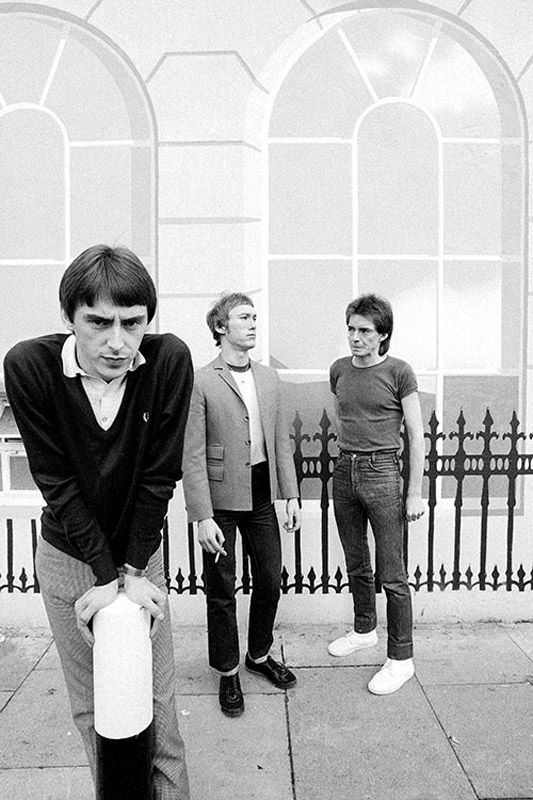
The band’s debut single, 'In the City', didn't just break into the Top 40; it ignited a movement. While it carried the frantic velocity of the 1977 scene, the influence of Pete Townshend was unmistakable in the Rickenbacker crunch and the sharp, tailored aesthetic.
The debut album, also titled 'In the City', officially put them on the map. It resonated because it wasn't a caricature of teenage angst; it was a dispatches-from-the-front-line report written by a young person actually living it. Tracks like 'Away from the Numbers' and 'Art School' showcased a level of introspection and musicality that began to distance them from the punk crowd.
The momentum was undeniable. Their follow-up single, 'All Around the World', nearly cracked the Top 10, fueled by an intensely loyal following that treated the band less like celebrities and more like leaders. However, the pressure of the industry machine soon loomed large.
Under pressure from Polydor to capitalise on their rising heat, the band rushed out their second album, 'This is the Modern World', in late 1977. To many critics and fans, the record felt like a stutter. It lacked the jagged cutting edge of their debut and, at times, felt like a band struggling to find its footing under the weight of "sophomore slump" expectations. This era was also a period of internal experimentation, with bassist Bruce Foxton stepping into songwriting duties on several tracks as the band searched for a new direction.
Yet, even in this transitional phase, there were flashes of brilliance that hinted at the greatness to come. One of the most overlooked gems of this period is 'Life from a Window'. It is a beautifully constructed, underrated track that perfectly captures the songwriting prowess of a young Paul Weller, the observer looking out at a world they don't quite feel a part of. It showed a burgeoning melodic sensibility and a lyrical depth that moved beyond the frantic shouting of the London punk scene.
However, the general lukewarm reception of the album served as a vital turning point. It was quickly realised that for the band to survive and evolve, they needed a singular, sharpened vision. From that point on, Paul Weller assumed the mantle of chief songwriter, a move that would eventually lead them toward the masterpiece 'All Mod Cons' and their inevitable crowning as the biggest band in Britain.
News of the World
Following the lukewarm reception of 'This is the Modern World', The Jam found themselves at a terrifying crossroads. In the fickle climate of the late 70s, the "sophomore slump" wasn't just a cliché; it was often a career-killer. The pressure was mounting for a definitive comeback, but there was a significant problem: Paul Weller, the band’s creative engine, was suffering from a debilitating bout of writer’s block.
In March 1978, the band released 'News of the World'. Interestingly, this non-album single was both written and sung by bassist Bruce Foxton. It reached Number 27, their second-biggest hit at the time, but behind the scenes, the foundation was shaky. When the band presented their next batch of demos to their producers, the material (largely penned by Foxton in Weller’s absence) was deemed subpar. The spark was fading, and for the first time, it looked like The Jam were in genuine trouble.
The musical goalposts were shifting rapidly. The initial explosion of 1977 had cooled, and the UK scene was being reshaped by the artful, polished sounds of New Wave. With American imports like Talking Heads and Blondie dominating the airwaves, The Jam’s brand of high-octane R&B-infused punk was at risk of sounding like a relic.
Recognising that the chaos of London and the pressures of the industry were stifling his creativity, Weller made a pivotal decision. He retreated to his childhood home in Woking. It was a literal and figurative return to his roots, a chance to reconnect with the suburban frustrations and observations that had fueled 'In the City'.
Away from the noise, the dam finally broke. Weller began churning out songs that moved away from the frantic pace of punk and toward a more melodic, lyrically rich storytelling style. This period of isolation would ultimately birth a collection of arguably Weller's greatest ever songs.
'Please Don't Forget Me, Or Any of my Kind'
The fruits of Weller’s Woking retreat arrived with a defiant roar. The first offering was a double A-side that perfectly bridged the gap between their influences and their future: a high-energy cover of The Kinks' 'David Watts' paired with the scathing 'A' Bomb in Wardour Street'. The latter was a direct assault on the mindless thuggery that had begun to infect the punk scene, signalling that The Jam were no longer interested in being part of a movement that had lost its way.
However, it was the second single that truly changed everything. 'Down in the Tube Station at Midnight' is arguably the finest piece of songwriting Paul Weller ever produced for the band. It’s a vivid, cinematic narrative following an unnamed man entering a London Underground station, simply trying to get home to his wife. Instead, he is ambushed by a gang who "smell like pubs, and Wormwood Scrubs, and too many right-wing meetings."
Lyrically, the track is a masterpiece of social realism. It provides a haunting snapshot of late-70s Britain, a landscape of urban decay, rising unemployment, and the terrifying shadow of far-right violence. Weller’s genius lies in the juxtaposition of this brutal reality against the domestic warmth of a suburban home and a "curry for two." It remains staggering to think that Weller was only 19 or 20 years old when he penned such a sophisticated critique of the British social fabric.
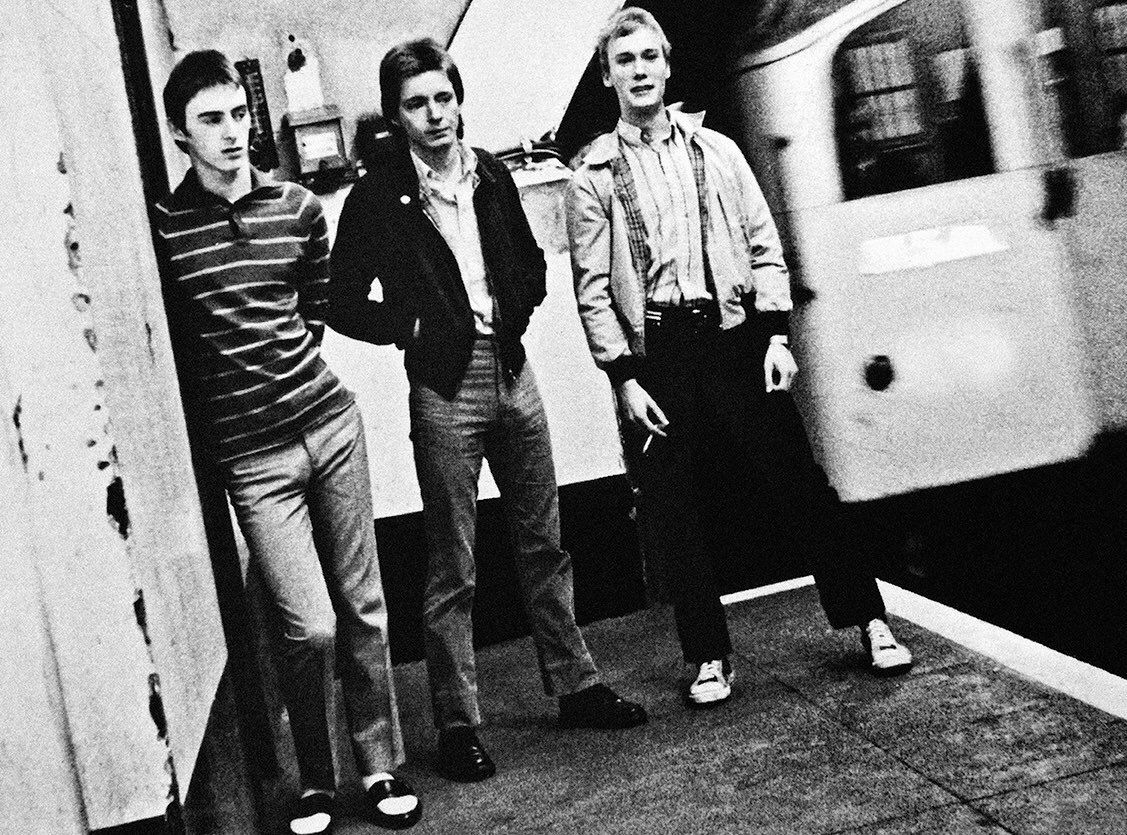
Despite, or perhaps because of, its raw honesty, the song faced a BBC airplay ban due to its "disturbing nature." It didn't stop the track from becoming the band’s second UK Top 20 hit, but it did spark a war of words. Radio 1 DJ Tony Blackburn famously complained, "It's disgusting the way punks sing about violence. Why can't they sing about trees and flowers?"
History has not been kind to Blackburn’s take. Far from glorifying violence, 'Down in the Tube Station at Midnight' was a warning, a mirror held up to a country that was becoming increasingly fractured. The "Swinging London" Weller had admired as a child was gone, replaced by something much darker and more sinister.
By 1978, Britain was a powder keg of social unrest. The country was crippled by industrial strikes, record unemployment, and a decaying infrastructure that made the "Winter of Discontent" feel like an inevitability. Amidst this bleak backdrop, the far-right National Front was gaining a terrifying foothold, exploiting the economic misery to incite racial hatred and street-level thuggery.
Weller’s lyrics weren't just fiction; they were a confrontation with the reality of bovver boys and the extremist political meetings that were becoming common in working-class areas particualry in London. To sing about "trees and flowers" would have been a lie. Instead, The Jam chose to document the cold, damp tiles of an underground station where the threat of a steel-capped boot was more real than the promise of a peaceful future.
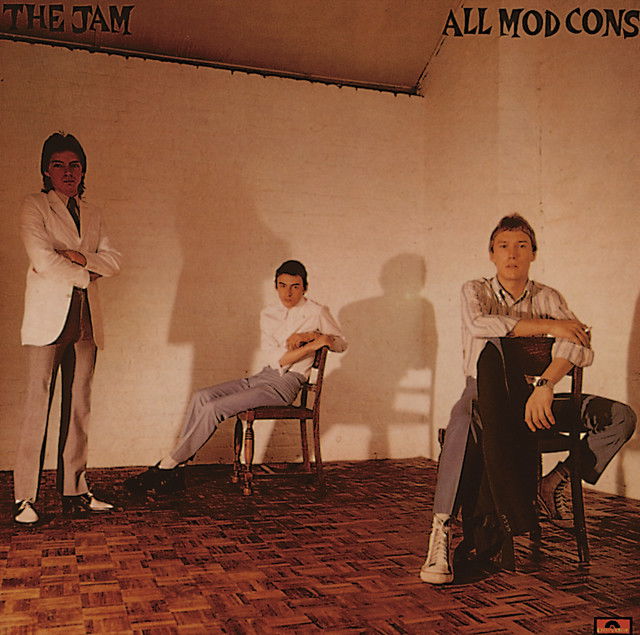
With the momentum of these singles, the band released their third album, 'All Mod Cons', in 1978. For many fans and critics alike, this remains the band’s definitive work, a record that successfully bridged the gap between the speed of the 1977 punk explosion and the melodic depth of the 1960s beat groups. Alongside the hit singles, the record boasted tracks like 'To Be Someone (Didn't We Have a Nice Time?)' and 'Billy Hunt', showing a band that had finally mastered the balance of aggression and melody.
The album title itself was a clever play on words; while 'All Mod Cons' usually referred to "all modern conveniences" in housing advertisements, for Weller, it was a nod to the "Modernists" and the contradictions of a scene that was becoming increasingly commodified.
Perhaps most surprising was 'English Rose', a tender, acoustic love song so personal that Weller initially didn't want the lyrics printed on the sleeve. It proved he was unafraid of vulnerability, moving beyond the "angry young man" trope to embrace a more poetic, pastoral songwriting style. The "Woking punks" had officially grown up. Paul Weller, Bruce Foxton, and Rick Buckler were no longer just a local curiosity; they were becoming one of the most vital voices in British music, speaking for a demographic that felt ignored by both the high-art elite and the nihilistic fringe of the punk movement.
They were now the voice of the suburbs, the high street, and the morning commute.
We're No Longer as Thick as Thieves
After the release of 'All Mod Cons', the band maintained a blistering pace, releasing two of their most poignant singles: 'Strange Town' and 'When You're Young'. By this point, Weller was maturing into a formidable songwriter, capturing the alienation of suburban life and the fleeting nature of youth with surgical precision.
In 'Strange Town', he articulated the disorientation of the individual lost in the faceless sprawl of urban life, while 'When You're Young' served as a stinging reminder of how quickly the fire of youth can be extinguished by the world’s expectations. These weren't just pop songs; they were sociological studies.
Even the B-sides from this era have ascended to legendary status; tracks like the haunting 'The Butterfly Collector' and the orchestral 'Smithers-Jones' are arguably as essential as any A-side in their catalogue. The themes in The Jam's music were becoming increasingly sharp as the band refused to shy away from the reality of the streets, tackling unemployment, youth disenfranchisement, and the widening class divide.
This social commentary reached a boiling point with the lead single for their fourth album, 'Setting Sons'. The track, 'The Eton Rifles', was the most explicitly political song the band had ever recorded. It was inspired by a real-life skirmish between unemployed protesters on a "Right to Work" march and the jeering students of Eton College, the UK's most exclusive private school and a breeding ground for the political elite. The song was a scathing attack on the British class system, mocking the "bravery" of the privileged from behind their school gates. It was a wake-up call that resonated so deeply it became their first Top 10 hit.
The album 'Setting Sons' was originally conceived as an ambitious concept record. Weller intended to detail the lives of three boyhood friends who reunite as adults after an unspecified war, only to discover that time, ideology, and the world have driven them irrevocably apart. While the full concept was never strictly completed, its DNA is woven throughout the record in tracks like 'Thick as Thieves' and 'Little Boy Soldiers'. These songs shifted the focus from the immediate punch of punk to a more expansive, literary style of storytelling, exploring how the innocence of childhood is inevitably sacrificed to the machinery of the state and the cynicism of adulthood.
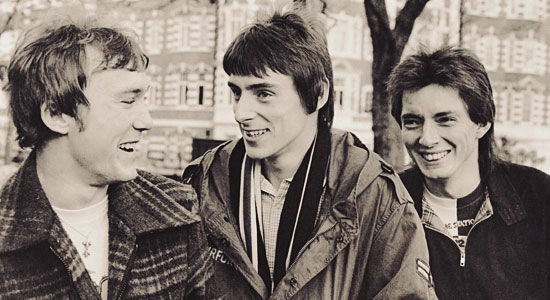
The album also featured a re-recorded, more cinematic version of 'Smithers-Jones', which poignantly addressed the crushing reality of Bruce Foxton's father losing his job after years of loyal service, a direct hit on the "work hard and you'll be fine" myth of the era. By adding a string arrangement, the band transformed a sharp B-side into a tragic anthem for the middle-aged "Organisation Man" discarded by a changing economy.
While 'Setting Sons' was forged under the white heat of immense time pressure and arguably contains a lacklustre cover of the Motown classic 'Heatwave', it remains an undeniable powerhouse of British rock. It captured a band in the middle of a vital metamorphosis, shedding the raw pub-rock energy of their youth to become a sophisticated, socially conscious force.
The record is littered with gems that proved Weller’s pen was sharper than ever. 'Saturday's Kids' stands as a definitive anthem for Britain's working-class youth, documenting the mundane rituals of chip shops, discos, and dead-end dreams with a mix of affection and despair. Meanwhile, 'Burning Sky' offers a brilliant, cynical tale of modern consumerism; it explores how the aspirational trap of "making it" ultimately erodes the soul of the working class, trading genuine connection for cold, material gain.
The production was denser and more muscular, reflecting the growing tension of a Britain entering the 1980s under a new and divisive political landscape. From the brooding atmosphere of 'Private Hell' to the epic, sweeping narrative of my personal favourite, 'Thick as Thieves', the record proved that The Jam had outgrown their peers.
They were no longer just a band from Woking; they were the conscience of a nation in flux, articulating the fears of a generation that saw the "Modern World" becoming increasingly cold and transactional.
Anti-Establishment Hits Number One
As the 1980s dawned, The Jam didn't just enter a new decade; they seized it. 1980 would prove to be their most triumphant year to date, beginning with a release that has since become a cornerstone of British music history.
In a twist of fate, the band’s first single of the decade was originally intended to be 'The Dreams of Children', a psychedelic-tinged track exploring the bittersweet loss of childhood optimism. However, due to a fortuitous labelling error at the pressing plant, the intended B-side, 'Going Underground', was flipped. It immediately captured the public's imagination, receiving the lion's share of airplay. Officially listed as a double A-side, it didn't just climb the chart; it debuted at Number 1, holding the top spot for three weeks and giving the band their first-ever chart-topper.
Despite its infectious, driving energy, 'Going Underground' was no hollow pop song. Lyrically, it was a blistering critique of Margaret Thatcher’s newly elected Conservative government and a society Weller felt was losing its way. He aimed the public's growing obsession with military might, famously predicting a future where we would see "kidney machines replaced by rockets and guns."
Weller argued that these nationalist pursuits came at the cost of basic human empathy, mocking the "show of strength" and the willingness to buy "nuclear textbooks for atomic crimes." The song captured a profound sense of alienation from the mainstream; while the "braying sheep" on the TV screen dominated the airwaves, Weller countered with a fierce independence, declaring, "the public gets what the public wants, but I want nothing this society's got."
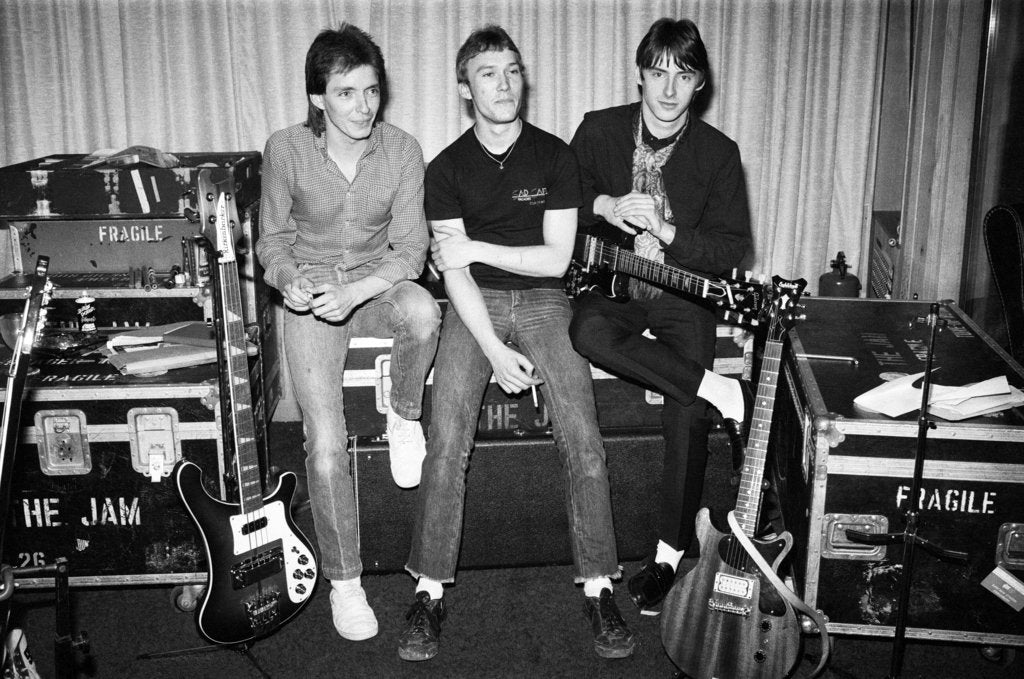
It was a call to retreat from a toxic political landscape, to go "underground", rather than watch as "lies wash you down and promises rust." The track transformed from a simple punk anthem into a sophisticated warning about the dangers of placing blind trust in leaders who prioritised industry and armament over people. Even as the brass bands played and the feet started to pound, The Jam were looking for a different kind of tomorrow.
The Jam had officially become one of the biggest bands in Britain, and they were doing it on their own terms. They were churning out anthem after anthem, yet each one arrived with a message that cut through the noise. They were opening the public's eyes to the political climate in a language that was accessible and undeniably powerful. It was a remarkable sight: thousands of young people in packed venues, dancing and chanting along to some of the most fiercely political lyrics ever to grace the Top 40.
A Pneumatic Drill and Ripped Up Concrete
The Jam’s creative peak arguably arrived in late 1980 with the release of 'Sound Affects'. Paul Weller famously described the album’s DNA as a cross between The Beatles’ 'Revolver' and Michael Jackson’s 'Off the Wall'. While the 'Revolver' influence is woven into the very fabric of the record, the Jackson influence, though perhaps more subtle, is manifested in the tight, syncopated rhythms and the punchy, melodic basslines provided by Bruce Foxton.
The album’s lead single, 'Start!', was an unapologetic homage to the 'Taxman' bassline, but its sleek, modern energy resonated so strongly with the public that it shot straight to Number 1. Yet, beneath the pop success, 'Sound Affects' saw Weller deepening his artistry. He dipped into psychedelia with the swirling, atmospheric 'Monday' and 'Dream Time', all while keeping his razor-sharp social commentary fully intact.
'Sound Affects' features two of Weller’s most enduring observations of British life: 'That's Entertainment' and 'Man in the Corner Shop'. Legend has it that Weller penned 'That's Entertainment' in just 15 minutes, scrawling the lyrics after a few too many pints at the pub. What emerged was a bitter, beautiful slice-of-life masterpiece. Set against a simple, driving acoustic melody, the song uses normal small-town imagery, pneumatic drills, ripped-up concrete, a baby crying, police car sirens and the sound of an amateur band to document the gritty drudgery and hidden beauty of working-class existence.
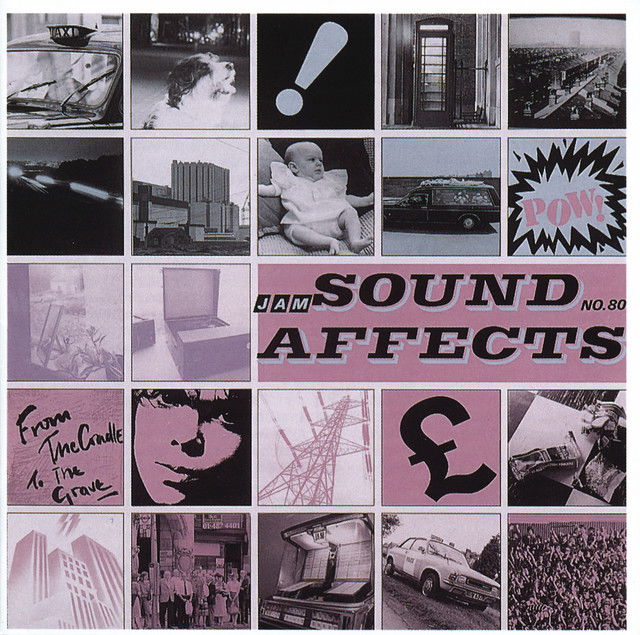
In 'Man in the Corner Shop', Weller turned his gaze toward the intricacies of the British class system and the perpetual cycle of envy. He captures the friction between the factory worker, the shop owner, and the "boss," noting that despite their different rungs on the ladder, they are all bound together by the same mundane reality. As Weller put it, the worker is jealous of the shop owner’s supposed wealth, while the shop owner is struggling just to get by, and the factory boss is still just another customer at the counter.
Weller's ability to document working-class life reinforced him as the greatest songwriter of a generation and showcased just how good and popular The Jam were. Everyone loved them because they provided a mirror of working-class life in a pop song.
Stop Dreaming of the Quiet Life
The momentum didn't slow as the band transitioned into 1981, releasing 'Funeral Pyre' and 'Absolute Beginners'. The latter reached Number 4 in the UK, showcasing a more melodic, brass-infused sound that hinted at the soulful direction Weller was beginning to crave. However, it was 'Funeral Pyre' that stood out as a dark, percussive rarity in their catalogue. It remains one of the few tracks to feature a collective songwriting credit for all three members, alongside 'Music for the Last Couple' from 'Sound Affects'.
The track was built around Rick Buckler’s tribal, driving drum patterns and Bruce Foxton’s aggressive, melodic bass, proving that while Weller was the pen, the band was a single, breathing engine. It was a sign of a trio that was musically telepathic, yet increasingly restless. This period felt like a pressure cooker; the band was moving away from the Mod tag that had defined them, experimenting with darker atmospheres and more complex rhythms that would eventually lead them to their final studio evolution.
1982 brought the band’s final studio statement, 'The Gift'. This record saw them pivot sharply toward the soul, funk, and R&B influences that Weller had always championed. The album hit the top spot in the UK and finally made a dent in the US Billboard Hot 100.
Its lead single, 'Town Called Malice', featured a stomping bassline reminiscent of The Supremes' 'You Can't Hurry Love', but the lyrics were pure 1980s Britain. It became their third Number 1 single and remains their most iconic track—a defiant, soulful protest against the economic stagnation of the Thatcher era. It was the sound of a band dancing through the gloom, finding a rhythmic defiance in the face of national decline.
The track perfectly captured the duality of The Jam: the music invited you to the dancefloor, but the lyrics forced you to face the reality of the street. Weller paints a bleak, vivid picture of domestic struggle, where a "whole street's belief in Sunday's roast beef gets dashed against the Co-op." He highlights the impossible choices facing working-class families, noting how parents had to decide whether "to either cut down on beer or the kids' new gear" in a town where the atmosphere was a "fine blend of ice."
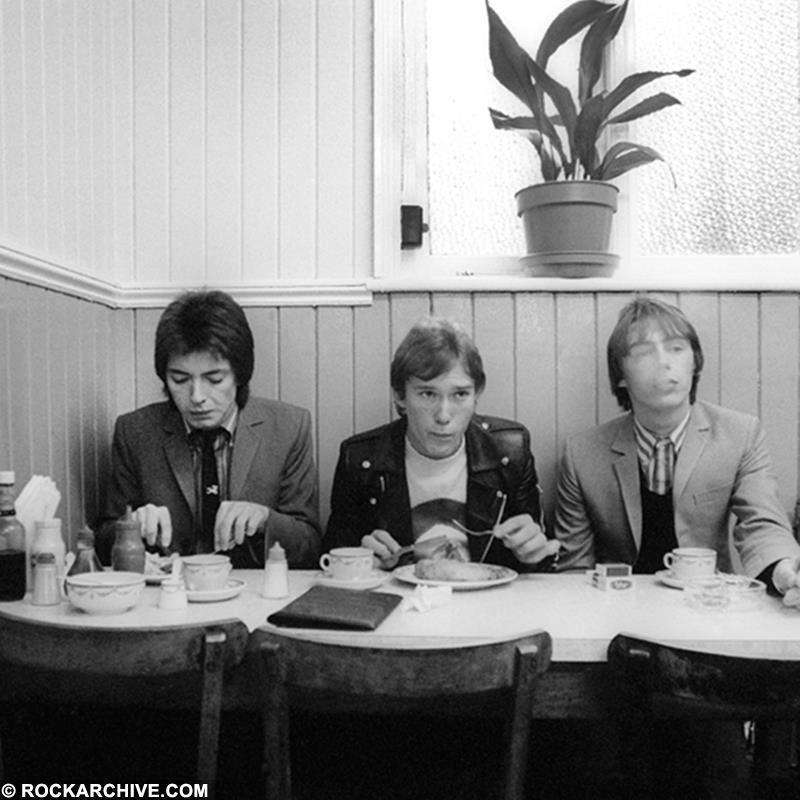
By merging the Northern Soul influence with imagery of "rows and rows of disused milk floats" and the "ghost of a steam train" echoing down a track bound for nowhere, the band created a universal anthem. It was a call to arms for their audience to "stop apologising for the things you've never done" and to realise that while "life is cruel," the power to change their environment rested with them. It wasn't just a hit; it was a cultural lifeline that provided a way to "put some joy back in" a reality that felt increasingly cold.
'The Gift' was far from a one-hit wonder. It featured the funk-heavy 'Precious' as a double A-side, showcasing a band confident enough to embrace long, groove-based arrangements. This was followed by the poignant 'Just Who Is the 5 O'Clock Hero?'. This track marked a fascinating evolution in Weller’s perspective; the 9-to-5 workers he had once ridiculed in early tracks like 'Mr. Clean' were now portrayed as the "real heroes" of Britain. He was no longer looking down on the suburban commute; he was empathising with the quiet dignity of the people who kept the country running.
The album tracks further proved their creative peak, offering some of the most sophisticated material of their career. 'Running on the Spot' captured the frantic, breathless pace of modern life, while the hauntingly beautiful 'Ghosts' encouraged fans to "shake off the spirits" of the past and embrace their own potential. Then there was the dark, lyrical complexity of 'Carnation', a song about the cruelty and vanity of human nature that remains one of Weller's most poetic achievements.
By the time 'Town Called Malice' reached the summit, The Jam were so dominant they were invited to perform both sides of the single on Top of the Pops—a distinction previously held only by The Beatles. It was a symbolic crowning; they had officially moved beyond the constraints of a three-piece rock band to become a soulful, brass-driven powerhouse that sat alone at the top of the British musical mountain.
The Bitterest Pill (I Ever Had to Swallow)
By late 1982, The Jam were arguably the most vital band in the country. Their penultimate single, 'The Bitterest Pill (I Ever Had to Swallow)', reached Number 2, and their final studio offering, 'Beat Surrender', marched straight to the Number 1 spot. They were at the absolute zenith of their power, seemingly incapable of missing the Top 10. They had evolved from three Woking punks into a sophisticated soul-rock machine that dictated the fashion, the politics, and the playlists of a generation.
Then, on October 30, 1982, Paul Weller delivered a shock to the system that devastated their loyal following. During a televised interview on the show World in Action, he announced the end:
"At the end of this year, The Jam will be officially splitting up, as I feel we have achieved all we can together as a group. I mean this both musically and commercially. I want all we have achieved to count for something, and most of all I’d hate us to end up old and embarrassing as so many other groups do."
The announcement triggered a frenzy of grief and disbelief across the UK. For a fanbase that lived and breathed the band's every move, it felt like the end of a social movement. A final tour was announced, seeing the band play five consecutive nights at Wembley Arena, every seat snatched up within twenty minutes.
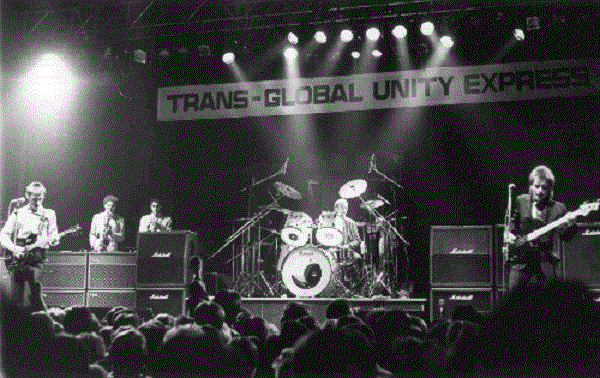
While the tour was originally meant to end in their backyard at the Guildford Civic Hall on December 9, the demand was so overwhelming that a final, final date was added. On December 11, 1982, at the Brighton Conference Centre, The Jam played their last notes together. The set was a high-octane celebration, ending with a sweat-soaked rendition of 'The Gift'.
They left the stage at the very height of their powers, refusing to fade away or descend into the nostalgia circuit. They left behind a legacy that was as brief as it was brilliant,t a perfect, untarnished discography that still resonates in the hearts of those who were there and the countless musicians who have picked up a guitar since.
A Lasting Legacy: The Architects of British Guitar Music
The impact of The Jam cannot be understated. In a lightning-fast career spanning just five years, they secured 18 consecutive Top 40 singles in the United Kingdom, from their debut in 1977 to their calculated dissolution in December 1982. That output rivals almost any other British band in history; in terms of consistency and cultural density, they sit comfortably alongside The Beatles.
The music remains startlingly relevant because it was never manufactured; it was written and performed by a young band in the heat of the moment. These weren't just pop songs; they were dispatches from the front line of youth. Because Weller wrote from the perspective of someone living through the shifts of the late 70s and early 80s, the songs still resonate with every new generation that feels the same suburban claustrophobia or political frustration.
The Jam’s influence is the thread running through virtually all British guitar music that followed. You can hear Weller’s sharp, observational storytelling in Blur's 'Modern Life is Rubbish' and 'Parklife'. You can see the fascination with the British class system mirrored in Pulp’s 'Common People'.
Noel Gallagher has never made a secret of his devotion;n, he often refers to watching The Jam on the Old Grey Whistle Test as being a formative memory.
The raw, visceral energy of 'In the City' and the melodic punch of 'All Mod Cons' are baked into the very foundation of Oasis. Moving into the 21st century, the torch was carried by The Libertines and the Arctic Monkeys, who crafted their own modern tales of Britain based on the blueprint The Jam drew up decades prior. From the frantic riffs of The Enemy to the poetic grit of Sam Fender, the sound of The Jam can be traced through every great British guitar record. I promise it’s in there somewhere.
In hindsight, Paul Weller was right. By 1982, they had scaled the mountain. To break up at the absolute summit, commercially and creatively, is a feat very few have achieved. You can count them on one hand: ABBA, The Smiths, and The Jam. It is a rarity that preserves a band’s legend in amber, untainted by comeback tours or embarrassing late-career albums.
While some fans may still hold out hope for a reunion, I’m not one of them. The Jam reuniting now would contradict everything that made them vital. These are anthems of youth; they are highly charged, political pop songs that belong to the fire of the early twenties. To see them perform as a nostalgia act would strip them of their power.
In the pantheon of British culture, they aren't just a footnote in the punk era; they are a permanent musical footprint. They didn't just change the sound of the late seventies; they laid the cornerstone upon which every great British guitar band has since built its foundation.
Alongside The Beatles and The Smiths, they represent the absolute gold standard of what a British band can be: impeccably stylish, intellectually substantive, and fiercely connected to the world outside their window. They proved that you could top the charts without selling your soul, and that the most powerful music often comes from looking at your own street with a critical, yet hopeful, eye. They were the voice of a generation, but their echo remains loud enough to lead the next one.