A Song for a City: How Manchester Found Its Voice

On May 22nd, 2017, twenty-two music fans walked into the Manchester Arena to watch Ariana Grande. They were there to escape the trials of daily life; to let their hair down, to sing, to dance, and to hug. They would never return home.
It was a calculated attack on youth and the sanctuary of live music. The tragedy shook Manchester and the United Kingdom to their very core. In the immediate aftermath, as the scale of the horror became clear, it felt as though the "powers that be" were powerless to offer comfort. The grief was too heavy for a press release or a political speech to lift.
Yet, in the darkness, Manchester united in a way that was nothing short of beautiful. The city refused to let the music stop, choosing instead to turn up the volume. Just five days after the attack, The Courteeners took to the stage at Old Trafford Cricket Ground for their biggest headline show to date.
The air that evening was heavy, not just with the typical Manchester drizzle, but with a palpable sense of defiance. Armed police patrolled the perimeter, and security was tighter than ever before, but the 50,000 fans inside weren't looking over their shoulders. They were looking at each other.
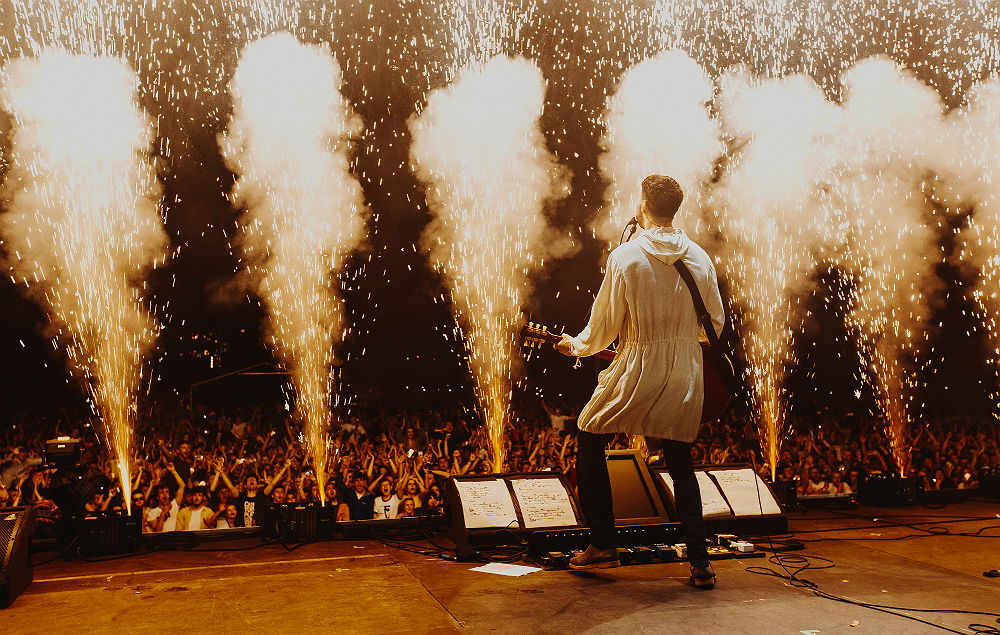
Before a single note was played, the crowd fell into a perfectly still silence for the victims, a silence eventually broken by a lone voice starting a chant of "Manchester! Manchester!" that roared across the cricket green. When Liam Fray stepped out, he didn't just lead a gig; he led a wake that turned into a celebration. As the band tore through 'St. Jude', the yellow flares and flying pints weren't just concert tropes, they were symbols of a city standing its ground.
The atmosphere was thick with a "we will not be moved" spirit, but even amidst the bravado, the city was still searching for a way to process its pain. It needed a moment of collective grace to match the grit.
The Birth of a Modern Hymn
When Manchester needed a prayer, it didn't find one in a book. It found one in a song written twenty-two years earlier by one of its most famous sons, Noel Gallagher.
'Don’t Look Back in Anger', the standout anthem from Oasis’s second album, 'What’s the Story Morning Glory?', was originally penned in a Paris hotel room in 1995. With its opening piano chords nodding to John Lennon’s 'Imagine' and lyrics steeped in Noel’s own childhood memories, it was a hit from the moment it arrived. It was a mainstay of the Britpop era, a chorus designed to be roared by thousands in stadiums across the globe, with arms draped over shoulders, sitting comfortably alongside the likes of 'Hey Jude' or 'Heroes'.
For decades, it was simply the ultimate "singalong." It was a song of nostalgia, of youth, and of the swagger of the 90s. But in May 2017, the song’s DNA shifted forever. It ceased to be a rock-and-roll hit and became a manifesto of resilience, an anthem of defiance.
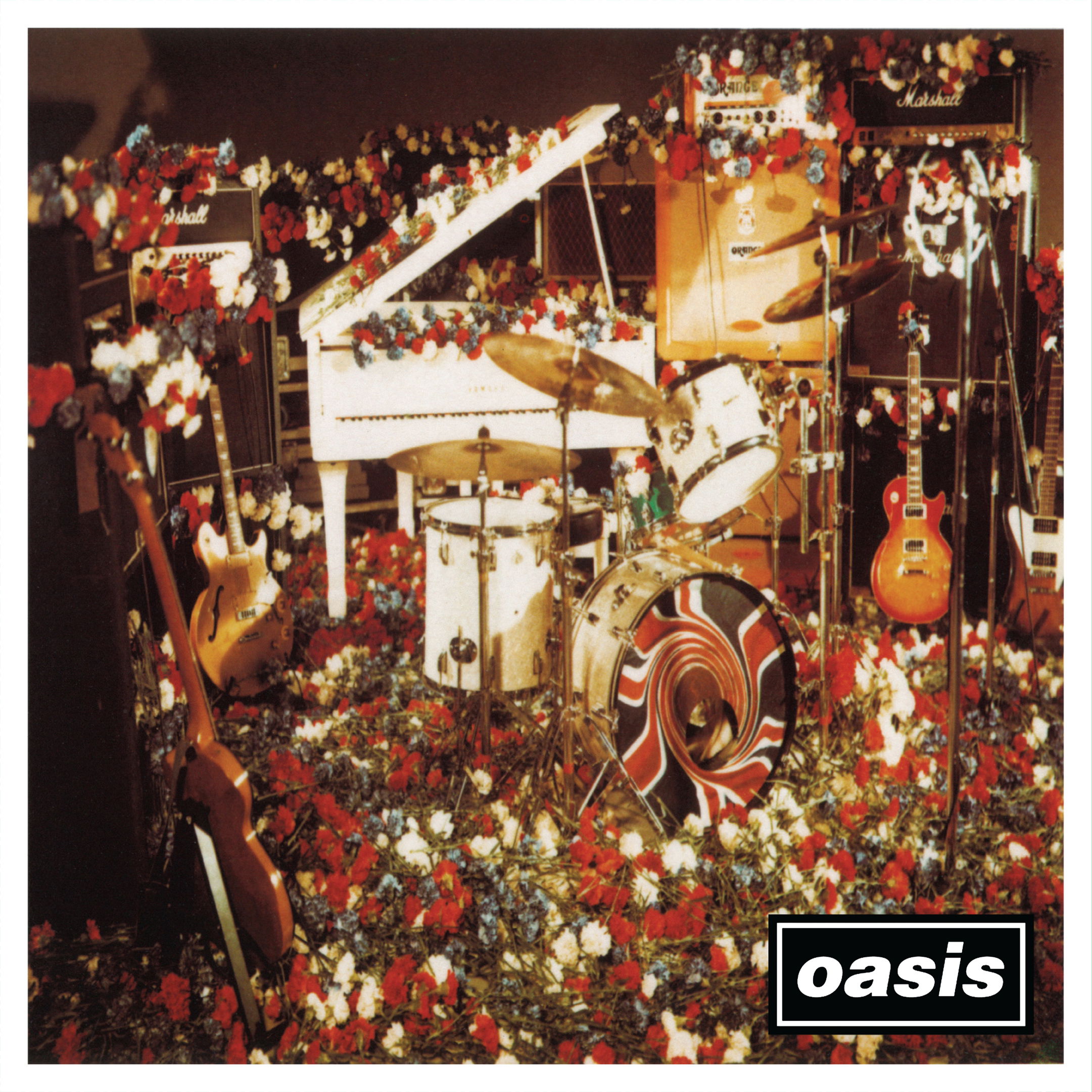
The title itself, 'Don’t Look Back in Anger', stopped being a catchy hook and started being a set of instructions for a city. It was a plea for the people of Manchester not let the horror of that night turn into a cycle of hate. It was a reminder that while the tragedy was part of the city’s story now, it didn't have to define its future. The song provided a bridge from the raw, immediate pain of the attack to a place of collective healing, proving that a great melody can sometimes do what a thousand speeches cannot.
A Moment of Silence Broken by Song
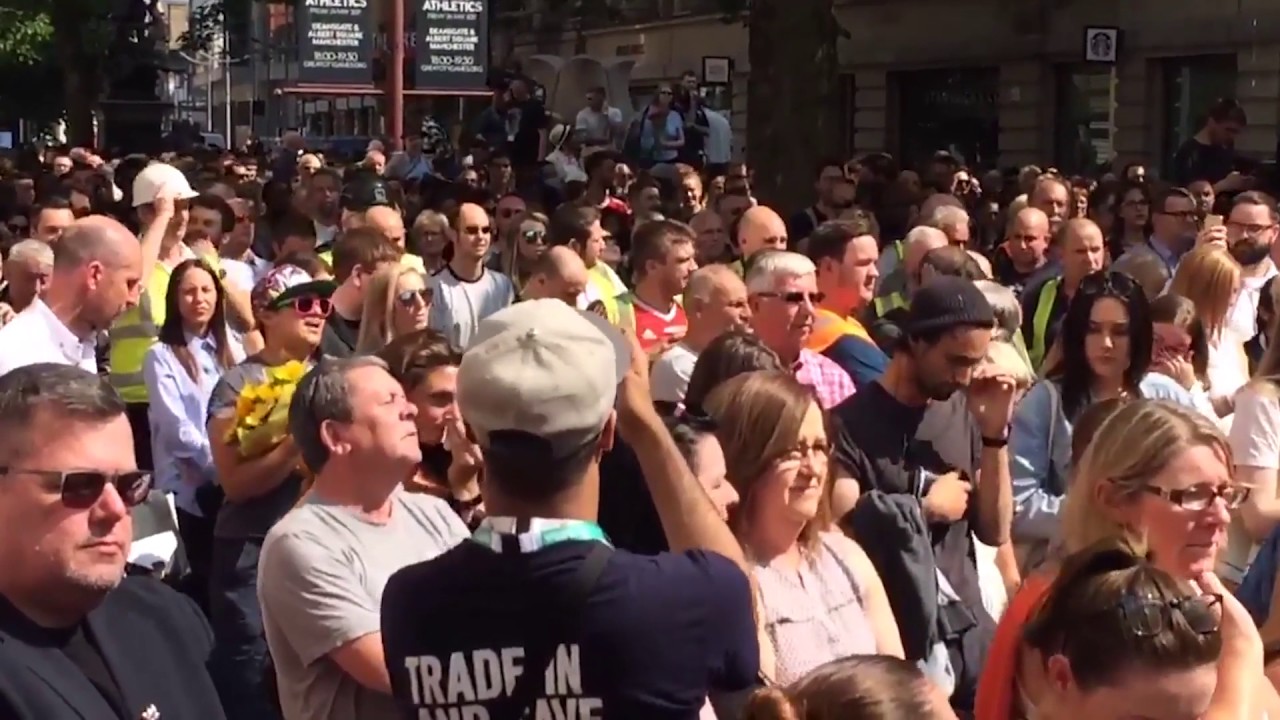
The turning point came during a vigil in St Ann’s Square. In the heavy, suffocating silence that follows a tragedy, one extraordinary woman, Lydia Bernsmeier-Rullow, began to sing those familiar opening lines. It wasn't a performance; it was a reflex. As she finished the first verse, the hush of the square didn't just break; it blossomed.
One by one, the people gathered joined in, their voices shaky at first but gaining strength with every note. In that moment of profound grief, Manchester didn't scream in rage or retreat into bitterness; it sang in unison. It was a spontaneous act of communal therapy that bypassed the mind and went straight to the heart. You could see it on the faces in the crowd—the tension leaving shoulders, the tears finally flowing freely.
The words of politicians and the Royal Family provided the formal structure of mourning, the necessary black-tie protocol of a grieving nation. But 'Don’t Look Back in Anger' provided the soul. It was the Mancunian Prayer. While the speeches offered condolences, the song offered a way to breathe again.
Noel Gallagher himself was visibly moved by the footage, later reflecting on how the song had been adopted by his home city:
"Our people rallied around that song... the politicians' words, the Queen’s words mean nothing. That girl decided to bring everyone together by singing that song. I have very mixed emotions about it. I felt proud that I was connected to it somehow, and then so sad that it was happening at all."
He realised then what the city was feeling: that a piece of music written in a hotel room decades ago had become the strongest armour the city had against the darkness. It wasn't just a chorus anymore; it was a shield.
An Eternal Legacy
The song has become an anthem of defiance, uplifting yet melancholic. It evolved from a track about a girl named Sally looking back on her life without regret, into a song about a city looking forward without hate. What was once a Britpop staple has been recalibrated into a modern hymn for the broken-hearted but unbowed.
I stood in the crowd when Noel Gallagher headlined the reopening of the Manchester Arena in September 2017. The atmosphere was heavy with the ghosts of May, but as the first four chords of that familiar piano intro rang out, the collective intake of breath was audible. Hearing those words echoed back by thousands in that specific room, the very place where the silence had been so cruelly forced, is a moment that will stay with me forever.
There was no stadium bravado that night; there was only a shared, tearful strength. It was the closing of a circle. As the crowd took over the chorus, Noel stopped singing and simply stood back, letting the city reclaim its voice. From the fans who bought 'What’s the Story Morning Glory?' on CD in '95 to the teenagers discovering Oasis on streaming today, the song has become a bridge between generations and a shield against despair.
In that moment, the lyrics weren't just a hook; they were a promise. 'Don’t Look Back in Anger' became the sound of a city refusing to let bitterness take root where love once lived.
Music is often dismissed as mere entertainment, a luxury for the good times. But in Manchester, it proved itself to be essential. It is the air we breathe when the world feels suffocating. Its impact cannot be understated. It is the glue that holds a community together when everything else falls apart, reminding us that even in our darkest hour, we are never truly singing alone.
In Memory
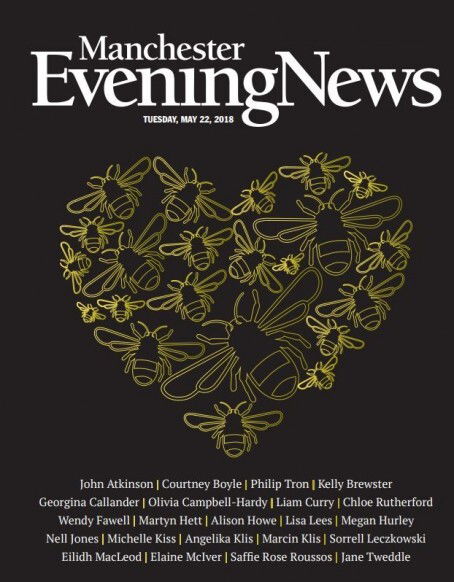
John Atkinson, Courtney Boyle, Phillip Tron, Kelly Brewster, Georgina Callander, Olivia Campbell-Hardy, Liam Curry, Chloe Rutherford, Wendy Fawell, Martyn Hett, Alison Howe, Lisa Lees, Megan Hurley, Nell Jones, Michelle Kiss, Angelika Kiss, Marcin Klis, Sorrell Leczkowski, Eilidh MacLeod, Elaine McIver, Saffie Rose Roussos, Jane Tweedle.