Peter Gabriel’s ‘So’ at 40'
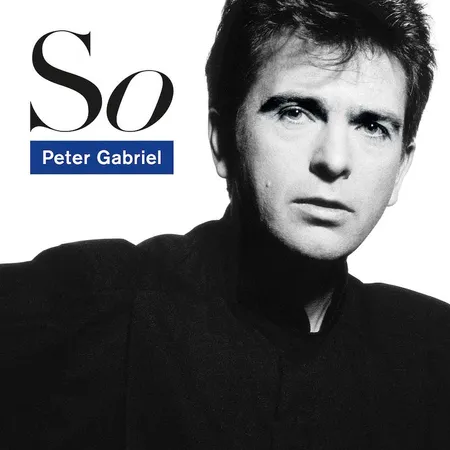
Peter Gabriel's fifth solo album turned him into a superstar. Through relentless experimentation, spiritual anguish, and globe-spanning collaborations, he crafted one of the 80s most interesting and influential records. A record that only he could make, this is the story of how he made it.
Genesis
Peter Gabriel started bands when he was at school; he'd been writing songs from around the age of 12. The first serious band he formed was at Charterhouse School, one of the most prestigious public schools in England. The band named Garden Wall was formed with Tony Banks on piano, Johnny Trapman on trumpet, and Chris Stewart on drums. Banks and Gabriel, in particular, were close bonding over a shared love of music and songwriting.
Garden Wall were a short-lived outfit. At the band's final concert before they broke up, Gabriel wore a kaftan and beads and showered the audience with petals he had picked from neighbouring gardens. Gabriel's eccentricity was already showing. It didn't take long for their next project to start. Banks and Gabriel were invited by their Charterhouse schoolmates, Anthony Phillips and Mike Rutherford, who were in their own school band, Anon, until it split up the previous year, to work on a demo tape of songs together.
Gabriel and Banks contributed 'She Is Beautiful', their first song together. This was sent to Charterhouse alumnus Johnathan King, who signed the group, mainly off the back of Gabriel's vocals. The group needed a name. King suggested that their name be "Gabriel's Angels," but this was unpopular with the other members, and they soon settled on his alternative suggestion, "Genesis."
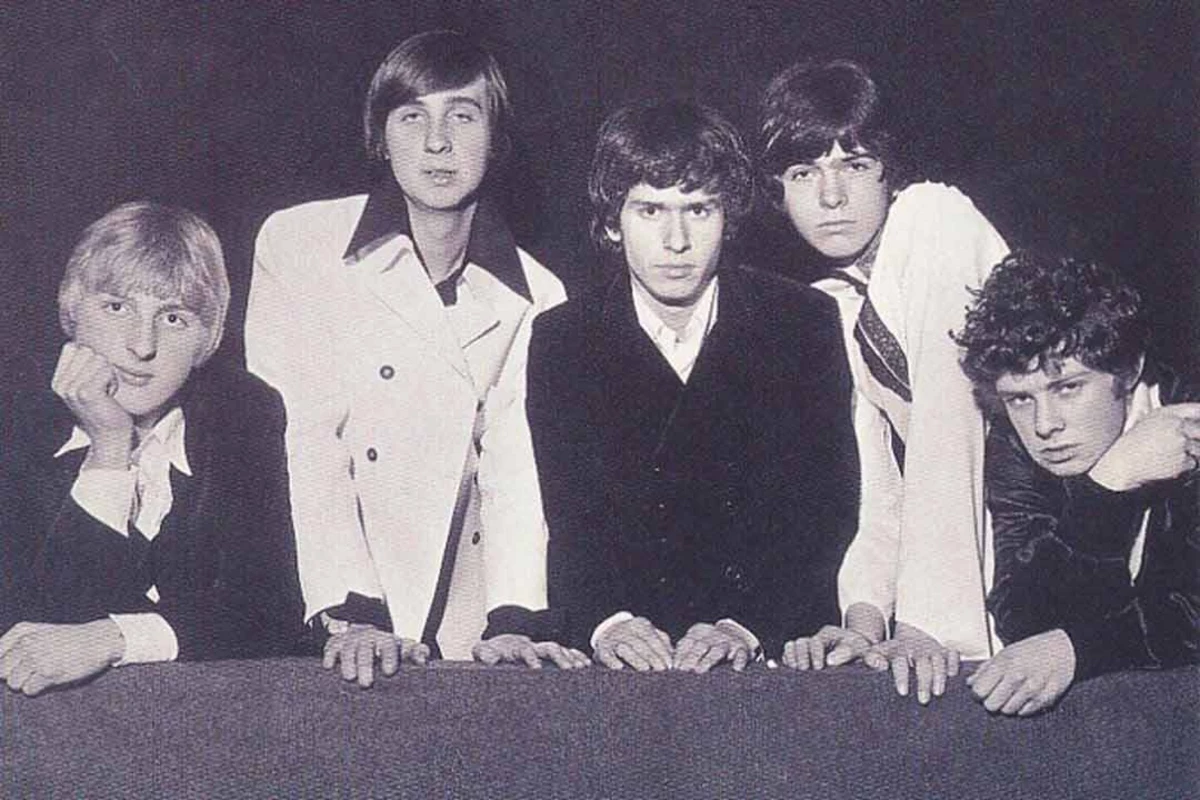
They quickly got to work, and a debut album 'From Genesis to Revelation' was released in 1968, but after making virtually no headway, the band moved on. Gabriel continued his studies at Charterhouse.
In September 1969, Gabriel, Banks, Rutherford, and Phillips decided to drop their plans and make Genesis a full-time band. In early 1970, Gabriel played the flute on Cat Stevens's 'Mona Bone Jakon'. The second studio album by Genesis, 'Trespass' (1970), marked Gabriel's expansion of his musical output with the flute, accordion, tambourine, and bass drum, and incorporated his soul music influences. Gabriel explained that he was driven to play these instruments because he was uncomfortable with doing nothing during instrumental sections.
The album sold few copies, and at one point Gabriel secured a place to study at the London School of Film Technique because the band "seemed to be dying".
Genesis soon recruited guitarist Steve Hackett and drummer Phil Collins. Gabriel began growing in confidence as a frontman; during an encore performance of 'The Knife' on 19 June 1971, he took a running jump into the audience and expected them to catch him, only for them to instead move out of the way and leave him to land on the floor and break his ankle. He consequently had to perform Genesis' next several shows with a wheelchair and crutches.
Also during the Trespass tour, he started reciting stories to introduce songs, to fill the silence while the band tuned their instruments or fixed technical faults. Gabriel was making a name for himself as a frontman; he was far more than a singer.
These stories were all improvised on the spot and evolved as the tour went along. The opener of their next studio album, Nursery Cryme (1971), 'The Musical Box', was their first song in which Gabriel incorporated a story and characters into the lyrics, as the lyrics to previous story-based Genesis songs such as 'White Mountain' and 'One-Eyed Hound' were all written by other members of the group.
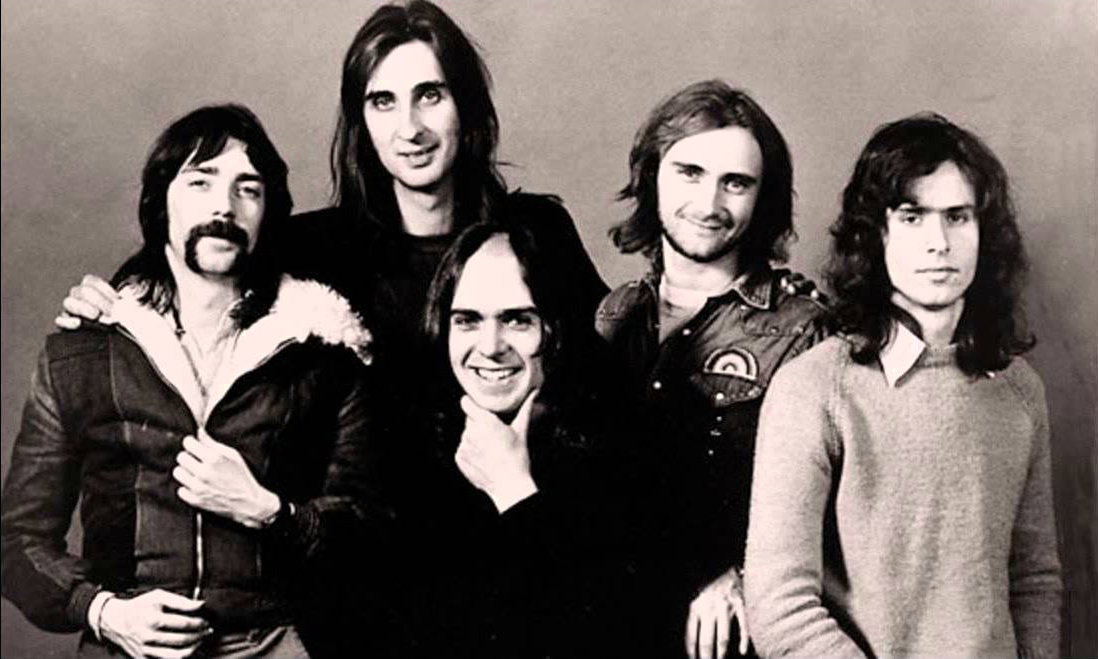
The shows featuring 'Foxtrot' (1972) marked a key development in Gabriel's stage performance. During a show in Dublin in September 1972, he disappeared from the set during the instrumental section of 'The Musical Box' and reappeared in his wife's red dress and a fox's head, mimicking the album's cover.
Gabriel said he consulted the rest of Genesis about the fox costume, but grew tired of arguing about it. The other members all maintained that nothing was said about it beforehand and that when Gabriel came out in costume, they initially mistook him for a fan invading the stage. The incident received front-page coverage in Melody Maker, giving them national exposure and allowing the group to double their performance fee.
One of Gabriel's stories was printed on the liner notes of their live album, Genesis Live (1973). By late 1973, following the success of 'Selling England by the Pound' (1973), which centred on English themes and literary and materialistic references, a typical Genesis show had Gabriel wear fluorescent make-up, a cape, and bat wings for 'Watcher of the Skies', a helmet, chest plate, and a shield for 'Dancing with the Moonlit Knight', a crown of thorns and a flower mask for 'Supper's Ready', and an old man mask for 'The Musical Box'.
'The Lamb Lies Down on Broadway' (1974) was Gabriel's final studio album with Genesis. He devised the story of Rael's spiritual journey, a Puerto Rican youth living in New York City, and insisted on writing all the lyrics himself. In contrast, on previous albums the lyrics had been divided among all the members of Genesis. Tensions increased during this period, and Gabriel split with the band to pursue a film project with William Friedkin, only to rejoin a week later.
Matters were further complicated by the difficult birth of Gabriel's first daughter, resulting in periods away from the band. The other members complained that Gabriel was showing a lack of commitment to the band. Gabriel saw this as a "really unsympathetic handling of my dealing with a family crisis" and said it caused a breakdown in his relationships with the rest of Genesis; Rutherford later admitted that they had been overly fixated on their music and were very unhelpful in what must have been a difficult time for Gabriel.
During a stop in Cleveland, Ohio, early in the album's tour, Gabriel informed the band of his intention to leave at the tour's conclusion. Rutherford recalled that they all "could see it coming". Music critics often focused their reviews on Gabriel's theatrics and took the band's musical performance as secondary, which irritated the rest of the band.
The tour ended in May 1975, after which Gabriel wrote a piece for the press on 15 August, entitled "Out, Angels Out", about his departure, his disillusion with the business, and his desire to spend time with his family. The news stunned the group's fans and left commentators wondering whether the band could survive without him.
The critics' reactions annoyed Gabriel as well; he wanted to be seen as a songwriter first and foremost, but critics were more concerned with what he was wearing or his on-stage theatrics. Musically, he felt he'd done what he could with Genesis, in the prog genre, where the band's operation was proving restrictive for Gabriel.
'Car' & 'Scratch'
Gabriel took a break from the music industry entirely, describing it as a learning period. He spent his time with his young family and taking piano and music lessons. With some rough demos arriving, these would be recorded in late 1975. An album would arrive two years later in February 1977.
'Peter Gabriel' (a.k.a. 'Peter Gabriel 1: Car') reached No. 7 in the UK and No. 38 in the US. Its lead single was 'Solsbury Hill', an enigmatic, partly autobiographical statement that marked a new chapter in Gabriel's life. Written in an imperfect time signature, the 7/4 stomp of 'Solsbury Hill' is one of its indelible and striking features: that feeling of a beat missing in every measure gives the song a constant sense of struggle, and, subsequently, of endurance. Wrapped around a gorgeous acoustic guitar riff, theta creates its spider web structure; it all builds from the drum thump, but those guitars anchor the voice.
Gabriel takes some of his former band into the record, with a flute hook, something that wouldn't have sounded out of place on a Genesis record. Lyrically, the song does something that Gabriel hadn't done much in Genesis; there are no grandiose epics here. The scene is set in the first few lines: Climbing up on Solsbury Hill/ I could see the city light/ Wind was blowing, time stood still/ Eagle flew out of the night.” The song title is never mentioned again, and even if you live thousands of miles from the Somerset hill, the image is burnt into your mind.
The song was written about Gabriel's departure from Genesis, but it's universally about personal epiphany, hard decision-making, and breaking free. The singer-songwriter has explained, “It’s about being prepared to lose what you have for what you might get, or what you are for what you might be. It’s about letting go.” It makes sense, and it certainly enriches the song to know just why Gabriel was worried about his friends thinking he “was a nut,” for making the risky choice to leave his best-selling group to go his own way.
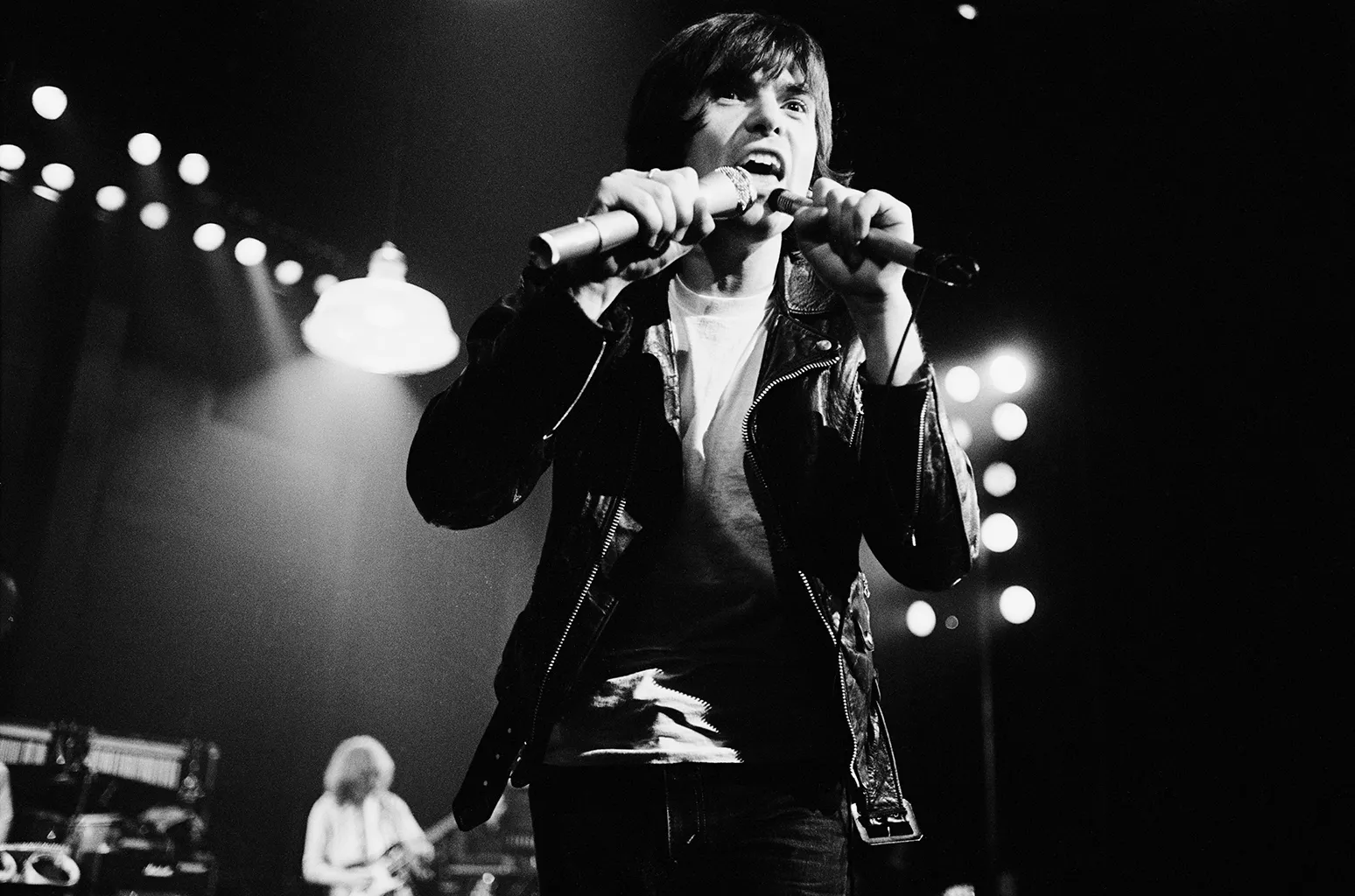
Also included on that album was 'Here Comes the Flood. Written soon after his Genesis departure. He recalled that the song was written on a warm summer evening while he was on the hillside above his cottage. As an experiment, Gabriel made a habit of running down the hillside one hundred paces with his eyes closed. During one of those excursions, Gabriel recalled that he felt "an energy point on the hillside and after a burst of meditation, stormed down the hill to write.
The song centred on a fictional character conceived by Gabriel, known as Mozo, loosely based on Moses and the alchemical treatise Aurora consurgens. Gabriel. Gabriel’s interest in shortwave radio served as a catalyst for the creation of 'Here Comes the Flood' He observed that radio signals were stronger as daylight faded and believed that this correlated with an increase in psychic energy at night. In one of his dreams, Gabriel envisioned a scenario in which the psychic barriers that safeguard one's thoughts would erode, thereby manifesting in a collective consciousness.
The eccentric theatre kid who had left Genesis was now a different man; he'd gone on a personal journey and proved he could do it on his own. More importantly for himself, though, he proved he was a very talented songwriter and didn't need 20-minute epics to convey what he wanted to say.
In late 1977, Gabriel started recording the second 'Peter Gabriel' studio album (a.k.a. 'Peter Gabriel 2: Scratch') in the Netherlands.
In my opinion, out of the four of his self-titled solo efforts, this is the weakest. The lead single 'D.I.Y' is classic Gabriel, taking what he'd learnt on the first record to create something great.
In a 1980 interview with Smash Hits, Gabriel stated that he failed to attain the results he desired on his second solo release in part because of his creative differences with Fripp. Gabriel believed that Fripp lacked an understanding of how to effectively record synthesisers and said that the two "spent too much time on theoretical arguments.
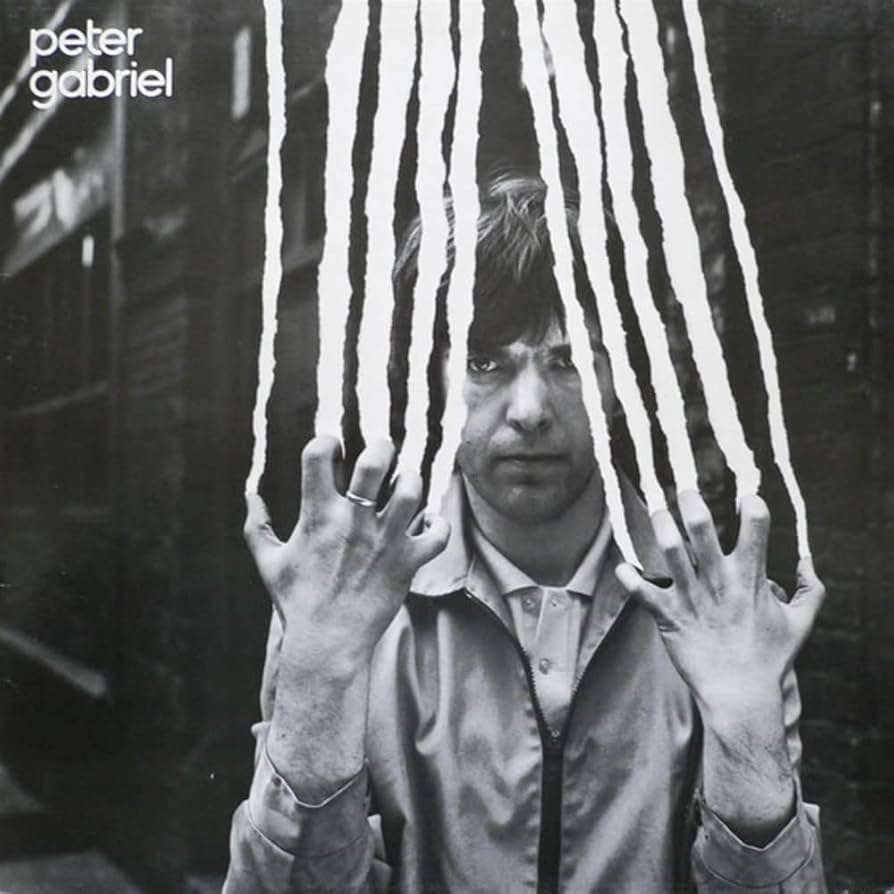
Many believed the album lacked a follow-up to 'Solsbury Hill', but they were impressed by Gabriel's ability to blend different styles with ease. Billboard labelled the album as "another eclectic art rock effort" from Gabriel and felt that the music was "closer to the edge than what is coming out of Genesis".
The record he'd make next would eclipse the first two, in more ways than one. His third solo record would prove Gabriel as far more than a good songwriter; it would see him become a musical pioneer and create a sound that would define the next decade.
'Melt' and 'Security'
Gabriel recorded the third 'Peter Gabriel' studio album (a.k.a. 'Peter Gabriel 3: Melt') in England in 1979. He had developed a newfound interest in African music, drum machines and post-punk. This album blended the sounds of his previous two records with his newfound interests and more political songwriting.
When writing the album, Gabriel developed a "rhythm first" approach, demoing songs on an 8-track system. Synthesiser player Larry Fast introduced him to the PAiA "Programmable Drum Set", which offered full programmability, allowing Gabriel to program his own drum rhythms to build songs around during the writing process.
He later bought a Roland CR-78 drum machine for the album as well; he felt the CR-78 sounded better but was less programmable than the PAiA drum machine. For live drums, he hired his former bandmate Genesis drummer Phil Collins for the recording sessions, along with another drummer, Jerry Marotta. He gave them one specific demand. "Artists given complete freedom die a horrible death", he explained to Mark Blake. "So, when you tell them what they can't do, they get creative and say, 'Oh yes, I can,' which is why I banned cymbals.
Phil was cool about it. [Marotta] did object, and it took him a while to settle in. It's like being right-handed and having to learn to write with your left." Collins played on several of the album's tracks. 'Intruder' has been cited as the first prominent use of a gated reverb sound, which would soundtrack many of the 1980s most iconic songs including 'In the Air Tonight' by Collins, 'Let's Dance' by David Bowie, 'Born in the U.S.A' by Bruce Springsteen, Prince used it twice on 'Purple Rain' and 'Kiss' and Dire Straits used it on their megahit 'Money for Nothing'. Gabriel did it first, though.
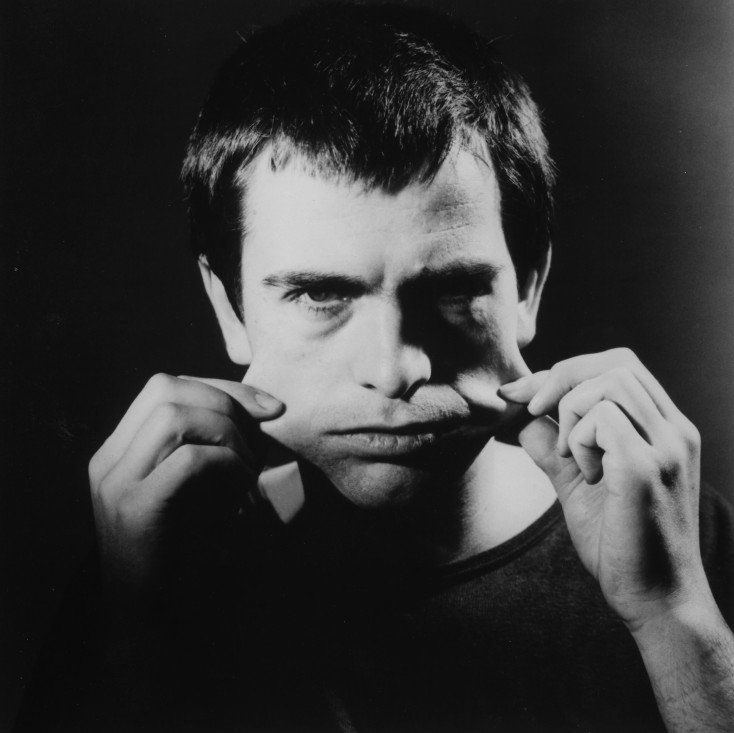
'I Don't Remember' was a track some fans were already familiar with, having been performed on Gabriel's 1978 tour in support of his second studio album, but it was subsequently reworked for 'Melt'.
Paul Weller, who was recording with his band the Jam in a nearby studio, contributed guitar to "And Through the Wire". Gabriel had previously said of the Jam, "I like them a lot. They're one of the new groups who have written the best songs. They're really very good." He believed Weller's intense guitar style was ideal for the track. This wouldn't be the last time Gabriel would ask the world of music for help. On this record alone, Kate Bush provides backing vocals on 'No Self Control' and 'Games Without Frontiers', Phil Collins plays drums on 'Intruder', 'No Self Control', and 'Family Snapshot', and Robert Fripp plays guitar on various tracks.
This album also gave Gabriel two of his first hits. 'Games Without Frontiers' became his first Top 10 hit in the UK, peaking at Number 4. Gabriel said that "Games Without Frontiers" "seemed to have several layers to it.". The song's title refers to Jeux sans frontières, a long-running TV show broadcast in several European countries. Teams representing a town or city in one of the participating countries would compete in games of skill, often while dressed in bizarre costumes.
Larry Fast, who played synthesisers on the song, explained that many of the competing countries, which had also fought in World War 2, viewed these competitions as a source of national pride. Gabriel identified that the television show possessed themes of "nationalism, territorialism, competitiveness that underlies all that assembly of jolly people."
The song also takes some inspiration from Michael Herr's book 'Dispatches', which recounted Herr's experiences and observations from the Vietnam War, including one story of an American urinating on a dead Vietnamese soldier. This scene, which Fast believed was a reflection of the actions that American soldiers found permissible and excusable, inspired the line "pissing on goons in the jungle".
‘Games Without Frontiers’ was a breakthrough for Gabriel, becoming his first major hit as a solo artist in the UK and reaching audiences who may not have been ready for the more abrasive corners of ‘Melt’. Gabriel’s use of surrealism, satire, and art-rock helped transform a catchy, radio-friendly song into a layered critique of world affairs. He managed to tackle some hard-hitting themes in such a clever, well-layered pop song. A song that still resonates all these years later.
Also on 'Melt' was 'Biko'. Written in response to the death of South African anti-apartheid activist Steven Biko, who died in police custody on 12 September 1977
Musically, ‘Biko’ is both stark and unforgettable. Built on a hypnotic, unrelenting rhythm, the track incorporates African-inspired drumming patterns, heavy toms and booming bass. Layered on top are mournful synthesisers and, unexpectedly, bagpipes, whose droning, keening sound adds a funereal and universal dimension to the arrangement. The blend of African rhythm and European instrumentation underscores Gabriel’s vision of a global, borderless sound that speaks to shared human struggle.
The song's structure is deliberately minimal; Gabriel wants you to sit and listen to the lyrics, because they vividly paint a picture of what happened to Steven Biko, as well as the world's reaction to it. The song's lyrics include phrases in Xhosa, describe Biko's death and the violence under the apartheid government.
The song is book-ended with recordings of songs sung at Biko's funeral: the album version begins with "Ngomhla sibuyayo" and ends with "Senzeni Na?". In contrast, the single versions end with "Nkosi Sikelel' iAfrika".
More than any other song in Gabriel’s catalogue, ‘Biko’ transcended music to become a force for awareness and change. It brought global attention to apartheid, introduced audiences to Steve Biko’s story, and became an anthem of resistance at benefit concerts worldwide.
The song has been credited with creating a "political awakening" both in terms of awareness of the brutalities of apartheid and of Steve Biko as a person. It greatly raised Biko's profile, making his name known to millions of people who had not previously heard of him.
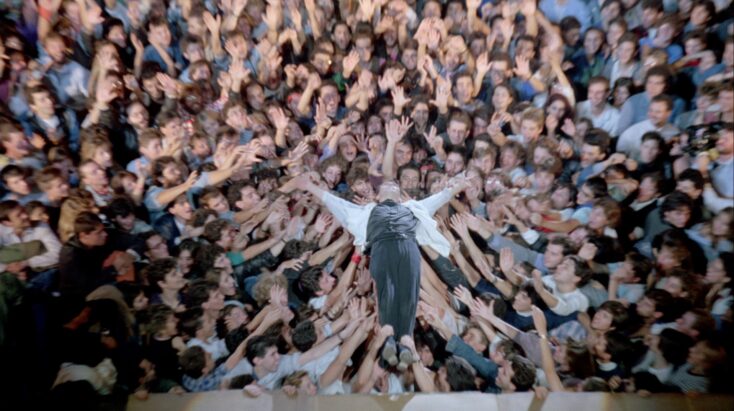
After a handful of shows in 1979, Gabriel toured in support of the album from February to October 1980. The tour marked Gabriel's first successful crowd-surfing attempt (following his failed June 1971 attempt while touring with Genesis), as he fell back into the audience in a crucifix position. The stunt became a staple of his live shows.
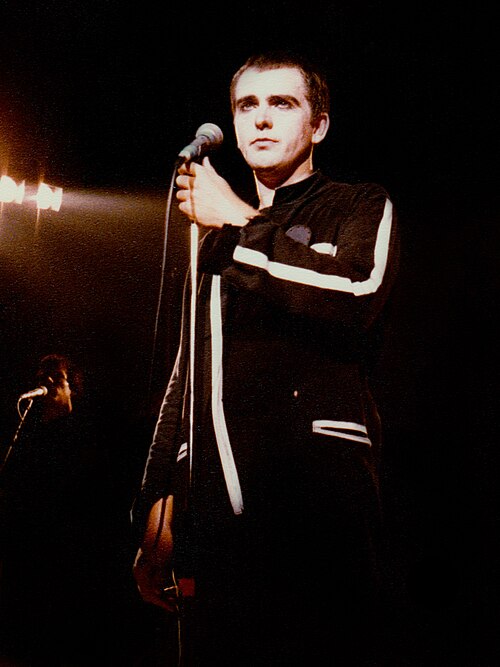
On 'Peter Gabriel four' (a.k.a. 'Peter Gabriel 4: Security'), Gabriel took on greater responsibility over the production than before. He recorded it in 1981 and 1982, solely on digital tape, with a mobile studio parked at his home, Ashcombe House, in Somerset. The album itself was released in September 1982 and reached No. 6 in the UK and No. 28 in the US.
The album saw Gabriel expanding on the post-punk and world music influences from his 1980 eponymous studio album, and earned him his first US top 40 single with Shock the Monkey'.
The songs on this album cover a wide range of subjects. 'The Rhythm of the Heat' is based on Swiss psychiatrist, psychotherapist, and psychologist Carl Jung's experience watching a group of drummers and dancers in Kenya, during which he became overwhelmed and worried that the music and dancing would subsume him. 'San Jacinto' reflects on the fear and pain experienced by an Indigenous American man who sees his culture overwhelmed by modern white society, based on a story told to Gabriel by an Apache man. 'Shock the Monkey' is a meditation on jealousy and uses the monkey to highlight personal anxieties, where have I heard that before! Robbie Williams, I'm looking at you.
'Lay Your Hands on Me' was written about "trust, healing and sacrifice". He felt music critics misinterpreted the message that he was a messiah figure akin to Jesus, an assessment he disagreed with. This track would become a live staple in Gabriel's setlist after debuting at the 1982 World of Music, Arts and Dance festival, as documented on Gabriel's 'Live at WOMAD 1982' album.
During the early live renditions of the song, Gabriel would interact with the audience at the end by leaving the stage and walking through the aisles. For later performances, he would instead step to the side of the stage, fall into the audience, and crowd-surf through parts of the venue. During his first experiments with falling into the audience, Gabriel would dive face down, but he later changed this to a trust fall, explaining that "falling backwards is a real show of faith".
Again, the album received critical acclaim; Gabriel's experimentation had continued, and it had virtually picked up where 'Melt' had left off. This record challenged the listener with its themes and saw Gabriel's uncompromised approach to experimenting with electronics alongside rhythms from around the world.
To handle American distribution, Gabriel signed with Geffen Records, which, initially unbeknownst to Gabriel, titled the album 'Security' to differentiate it from the first three. Gabriel's 1982 tour lasted a year and became his first to make a profit. Recordings from the tour were released on Gabriel's debut live release, 'Plays Live' (1983).
Gabriel produced versions of the third and fourth 'Peter Gabriel' albums with German lyrics. The third consisted of the studio recordings, overdubbed with new vocals. The fourth was remixed, with several tracks extended or altered.
In 1983, Gabriel developed the soundtrack for Alan Parker's drama film 'Birdy' (1984), co-produced with Daniel Lanois. This consisted of new material, without lyrics, as well as remixed instrumentals from his previous studio album. After finishing the soundtrack to 'Birdy', Gabriel shifted his musical focus from the rhythm and texture heard on 'Peter Gabriel four' and 'Birdy' towards more straightforward songs.
'So'
Although 'Birdy' had led Gabriel to embrace different ideas and wanted to write different music, it was producer Daniel Lanois who was invited to remain at Gabriel's Somerset home during 1985 to work on his next solo project. Initial sessions for So consisted of Gabriel, Lanois, and guitarist David Rhodes, although these grew to include several percussionists. The number of people who helped Gabriel on this record is eyewatering: Nile Rodgers, Laurie Anderson, Kate Bush, Stewart Copeland, Jerry Marotta, Tony Levin, David Rhodes, Youssou N'Dour and Jim Kerr, just to name a few.
Although deemed less experimental than previous sessions, Gabriel drew on various musical influences, fusing pop, soul, and art rock with elements of traditional world music, particularly African and Brazilian styles. It is Gabriel's first non-eponymous album, 'So', which represents an "anti-title" resulting from label pressure to "properly" market his music.
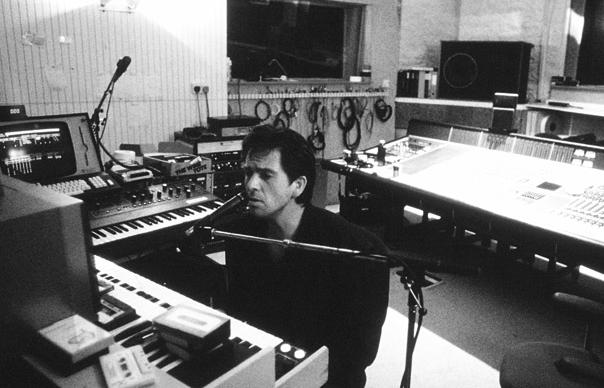
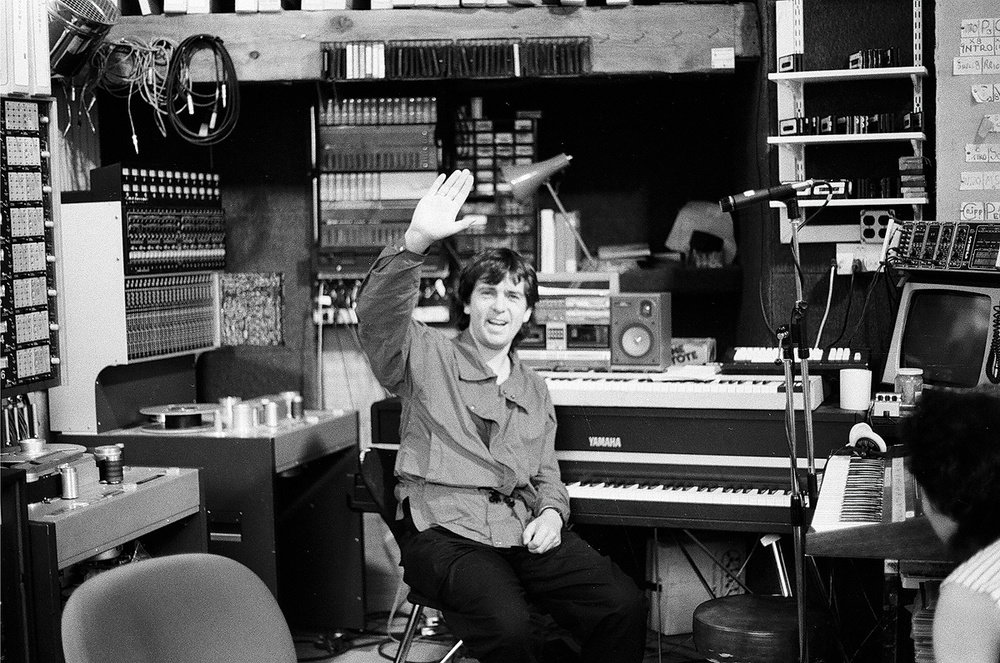
Since 1978, Gabriel had composed his music at Ashcombe House, including his album 'Security' (1982) and the 'Birdy' soundtrack (1984). He had an inexpensive studio in the adjacent barn, consisting of two rooms: one where Gabriel would record his vocals and work on lyrics, and another where the music would be assembled. Work on the record began in February 1985 and would run for a year. The first six months would be spent writing and developing song sketches, usually with Gabriel, Lanois, and guitarist David Rhodes playing together to a drum machine, based on an idea or chord structure that Gabriel had. Lanois recalled they had "a nice starting point.
This approach led Gabriel to create some of his most pivotal works. As mentioned previously, this record has been deemed less experimental than previous efforts, but that by no means means that Gabriel had lost his confidence. Opening 'So' was 'Red Rain', a song with a chorus so huge, it sounds like Gabriel is parting the sea to sing it, the grandest song about a post-apocalyptic world since 'Gimme Shelter', written at the height of the Cold War, the AIDs Crisis and the Miners Strike, looming over Gabriel the way Vietnam and race riots haunted the Rolling Stones. Nearly six minutes long, filled with shimmering, glissando piano chords, hushed, unnerving synths, and a bridge where Gabriel shouts himself hoarse, 'Red Rain' is maximalist pop perfection.
Sonically, this record takes things up a level. Gabriel was one of the earliest adopters of synths and samplers with names that looked like math equations, but he was never beholden to them. The record perfectly mixes synthetic elements with the human touch. With his rolodex of collaborators, he created something that still sounds unique even forty years later. These sounds help create a world around the song; the first thing we hear on 'So' is splattering hi-hats, and throughout, the percussion replicates thunderstorms, shattering glass, and church bells. 'Red Rain' has been introduced.
'Sledgehammer' gave Gabriel a pop hit. Written as the final song when recording, it took inspiration from a variety of sources. Including Otis Redding, Gabriel sought out Wayne Jackson, whom he had seen on tour with Redding in the 1960s, to record horns for the track. As with other songs in his discography, it featured a variety of instruments, including a shakuhachi bamboo flute and various brass instruments.
The lyrics of the song are abundant with sexual euphemisms and references to Motown, with its vocal pinching from 'Ain't No Mountain High Enough' and the call and response outro. Gabriel's got a swagger on this record, a swagger where he knows just how good he is. He embraces it as well. What else is “this is the new stuff / I go dancing in,” other than earned swagger? By the end of the song, with Katché ripping the bridge in half with an avalanching fill, Gabriel has no use for words; instead, hollering a celebratory “yeah yeah yeah yeah!!!”
It's a brilliant piece of music, and it would chart well, matching 'Games Without Frontiers' hitting Number Four in the UK. In the US, it did better, though, reaching Number One on the Billboard Hot 100.
For a man who changed popular music forever as one of the great sonic explorers, he was an early adopter of art-rock theatricality, massive drum-sound reverberations, and the introduction of world music into popular culture. He promoted worthy political causes and gave a platform to exceptional musicians. Yet his only Number One single was a janky white soul song about his dick.
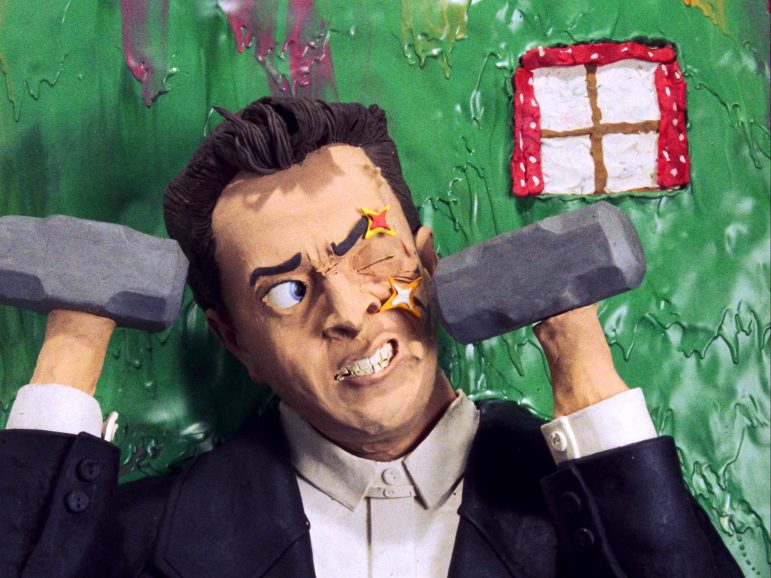
The song's massive success was driven in large part by its now-iconic music video, which became the most-played video in MTV history. Directed by Stephen R. Johnson, the visual masterpiece remains a landmark achievement that shattered the boundaries of frame-by-frame filmmaking.
The production was famously gruelling. Gabriel spent sixteen hours lying perfectly still under a sheet of glass while animators painstakingly adjusted props and backgrounds around him, one single frame at a time. This dedication was paired with a powerhouse lineup of collaborative animators. Industry legends like Nick Park, who went on to create Wallace and Gromit, sculpted the video’s memorable dancing chickens, while the surrealist Brothers Quay provided the avant-garde set design.
This ambitious fusion of pixilation, stop-motion, and claymation paid off historically. The video went on to sweep the 1987 MTV Video Music Awards, winning a record-shattering nine awards, including Video of the Year, a record that still stands today.
'Don't Give Up' sees Gabriel team up with Kate Bush again to create the album's political moment. The song directly follows 'Sledgehammer' and is meant to make fans stop and think. Interlinking the crushing policies of Thatcherism with the Great Depression and Dust Bowls, he smartly avoids specifics and creates a universal anthem.
“In this proud land / We grew up strong / We were wanted all along / I was taught to fight, taught to win.” It could be Chobham, Boston, Rio, or Lusaka. The story of men taught that work is the only thing that makes them worthy is brutally universal. Kate Bush appears in each chorus like a guardian angel, singing the title and revealing that her empathy is her greatest strength.
From the introspection of 'Running Up That Hill (Deal with God)' to the high Russian drama of 'Babooshka,' every character Bush inhabited or created was granted a full, human, flawed set of values and histories. In 'Don’t Give Up,' she uses that power to become a ray of light, the first glimmering of the sun through absolute darkness. When Gabriel joins her, he’s not as sure as she is, but he realises he must shake himself from malaise. He brilliantly cuts his final verse in half. Nothing is solved, but he is attempting to be comfortable in the dusk and allowing Bush, her kindness, to have the last words.
'That Voice Again' features Gabriel's best vocals, with a muddy meaning. Co-written with his long-time guitarist David Rhodes, it tackles the "internal voice", the harsh, judgmental conscience or critical inner thoughts that hold people back from empathy and love. Gabriel explores how this "voice" replaces instinct with parental or societal judgments.
The track is notable as the final chapter of Gabriel's unfinished Mozo narrative. Mozo was a recurring, nomadic character who popped into people's lives to alter their courses. Elements of this overarching story appeared in previous songs like 'On the Air', 'Here Comes the Flood', and 'Down the Dolce Vita'.
'Big Time' stands as a brilliant, danceable caricature of 1980s excess, capturing the era's hyper-materialism through a masterful blend of funk-pop and biting satire. Sonically reminiscent of David Bowie’s 'Let’s Dance'. It leans into the corporate funk of the decade, made popular and virtually inescapable by his former Genesis bandmate Phil Collins, to critique the very culture that created its success.
Gabriel adopts the persona of a small-town striver who migrates to the city, only to be entirely consumed by the "Greed is Good" ethos. By utilising slap-bass grooves and a celebratory rhythm, Gabriel cleverly tricks the corporate world into dancing to a song where they are the ultimate punchline.
Beneath the infectious beat lies a sharp dissertation on how unbridled ambition warps the human ego, illustrated through a comedic escalation of physical scale. As the character's status climbs, his world swells absurdly, moving from a house made like a mountain range to a "big fat head" resting on a "snow-white pillow", a subtle nod to the rampant cocaine culture of the 1980s elite.
Gabriel seamlessly weaves consumerism with spiritual entitlement, mocking the era's prosperity gospel as the narrator brags about kneeling in a big church and walking straight through the front door of a big heaven. Ultimately, the song exposes the hollow nature of hyper-consumerism, tracking a man whose bank account, house, and "bulge" grow exponentially, even as his genuine human connections shrink to nothing more than a list of big names used to validate his bloated self-worth.
'We Do What We’re Told (Milgram’s 37)' provides a chilling, minimalist reprieve from 'So’s' otherwise vibrant maximalism. Acting as an eerie, proto-trip-hop interlude, the track is nearly instrumental and threaded with a hypnotic keyboard line that directly foreshadows the dark loops of bands like Massive Attack. The song’s haunting repetition is based on Stanley Milgram's infamous 1961 psychological experiments, which examined how easily ordinary human beings would obey authority figures, even when ordered to inflict severe pain on others. The "37" in the title specifically references the 37 out of 40 participants who complied fully with the experiment's lethal demands. Gabriel reflects this horrifying submission through the track's cyclical structure; the lyric "one by one" is delivered like a sombre roll call of the complicit, while the rhythm mimics a rigid, mechanical march. By strip-mining the music of melody and warmth, Gabriel perfectly mirrors the cold, unthinking conformity of the human psyche under pressure.
In stark contrast, 'Mercy Street' radiates a soft, hushed kindness that feels like a spiritual sanctuary. Deeply rooted in the confessional poetry of Anne Sexton, who tragically took her own life in 1974, the song paints oblivion not as a frightening void, but as a welcome escape from the trials of a tumultuous life, offering a long-sought rest finally granted. Brazilian percussionist Djalma Corrêa’s delicate, chiming work fills the arrangement with mist and fluttering spirits that hover just at the edge of earshot. At the same time, Larry Klein's swelling bassline moves like a slow, rhythmic tide.
Gabriel’s decision to double-track his vocals, singing one part an octave lower than his natural register, gives the track an intimate, internal-monologue quality, as if he were speaking directly to Sexton's ghost. “Anne, with her father, is out in the boat / Riding the water, riding the waves on the sea,” Gabriel sings to close the song, transforming Sexton's lifelong struggle with mental illness into a peaceful voyage, with Avalon finally on the horizon.
The original version of 'So' in 1986 closed with 'This is the Picture (Excellent Birds)', a song written with Laurie Anderson, not written directly for 'So', instead written for a 1984 global satellite television broadcast 'Good Morning, Mr Orwell'. A song that feels somewhat out of place on the record, it has a very different feel. Gabriel provides backing vocals, and it feels more like a Laurie Anderson song featuring Peter Gabriel.
When Peter Gabriel’s landmark album 'So' was remastered in 2002, the track listing was finally updated to move 'In Your Eyes' to the very end of the record. Gabriel had always intended for the track to serve as the album's grand finale. However, the original 1986 release was constrained by a mechanical limitation inherent to vinyl records known as inner-groove distortion. As a playback stylus approaches the centre of a spinning record, the physical space available to carve the grooves shrinks, compressing the audio waveform. Because 'In Your Eyes' features a massive, prominent bassline driven by bassist Tony Levin, placing it at the end of a vinyl side would have severely degraded the sound quality, distorted the low frequencies, and caused the needle to skip. Moving it to the end was only possible once the digital CD format became the dominant medium.'
'In Your Eyes' is arguably Gabriel's greatest musical achievement, and it is undeniably his definitive love song. Initially inspired by a visit to the Sagrada Família cathedral and its architect, Antoni Gaudí, Gabriel sings of feeling complete only when looking into his lover's eyes. The track serves as a brilliant showcase for Gabriel’s mastery of world music, drawing heavily on African folk traditions, in which love songs deliberately blur the lines between romantic devotion and a spiritual connection to God.
He explained this lyrical philosophy to biographer Armando Gallo in a 1986 interview: "There is a tradition in Africa that intrigued me; that of writing love songs so they can be heard as love for God or the love between men and women. No one seems to do that in Western lyrics, so I thought I would try mixing images. The eyes are clearly a focus point for the soul." Co-producer Daniel Lanois echoed this sentiment, noting that Gabriel "had this idea that by looking into someone's eyes, you would see, quite specifically in the lyric, the doorway to a thousand churches... You can stand in a church, and it might have a gilded ceiling and statues, but you might speak to God by looking at someone's eyes who loves you, or you love them."
Positioning this track as the album closer is vital because it transforms the existential and spiritual wrangling found on the record's earlier songs into a moment of pure, loving rapture. On 'Don’t Give Up,' Gabriel’s despondent protagonist could never quite rouse the hope offered by Kate Bush’s comforting guest vocals. Later, on 'That Voice Again,' Gabriel briefly found a fragile solace in limbo, singing, "It’s only in uncertainty / That we’re naked and alive." But on 'In Your Eyes,' all hesitation vanishes as Gabriel fully steps into the light.
Musically, Tony Levin and drummer Manu Katché provide the song's unstoppable bedrock. Katché’s highly melodic, polyrhythmic drumming creates a swirling tapestry of rhythmic hooks so rich that almost any section of the song could be sampled to create a standalone stadium anthem. “All my instincts, they return / The grand façade, so soon will burn,” Gabriel sings as Levin’s propulsive bassline pulls the arrangement forward. In the eyes of his lover, his God, and his collaborators, he is ultimately challenged to shed his ego and better himself. Finally, Senegalese superstar Youssou N’Dour carries the song to its elated, triumphant climax. By singing the final, soaring guest vocals in his native Wolof language, N'Dour helps realise Gabriel’s ultimate vision: turning a personal love song into a universal, global anthem of human connection.
Legacy
'So' is regarded by many as Gabriel's best solo album and one of the best albums of the 1980s. It transformed him from a cult artist acclaimed for his cerebral, experimental solo work into a mainstream, internationally known star. The songs are masterpieces, but they are masterpieces that only Gabriel could have written and recorded. He took everything he'd learned on the previous four records, along with an absurd collection of brilliant musicians and created something that was universal yet obscure.
Away from the music, 'Sledgehammer' changed what a music video could be; they became just as important as the songs. The massive financial success of 'So' directly funded Gabriel's creation of Real World Studios and his Real World Records label. This provided a high-tech recording haven and a global platform for alternative, indigenous, and world music artists.
The influence of 'So' extended well beyond Gabriel's own career. Its innovative production techniques and seamless blending of pop, rock, and world music set a template for countless artists who followed. The album inspired musicians across genres to experiment with new sounds and to embrace a more global perspective in their work. Many contemporary artists and producers have cited 'So' as a key influence on their approach to songwriting and studio recording, particularly its use of layered textures and emotional storytelling.
'So' also played a role in popularising the integration of world music elements into mainstream Western pop, paving the way for greater appreciation and collaboration between artists of different cultural backgrounds. The album's success demonstrated that sophisticated, emotionally resonant music could achieve both critical and commercial acclaim, challenging the boundaries of what pop music could be. Its legacy endures not only in the sounds of later artists but also in musicians' willingness to take creative risks and use their platforms to spotlight diverse voices and global issues. The album's wide-ranging impact continues to resonate in modern music, making it a touchstone for creativity and boundary-pushing artistry.
In simple terms, it's one of the most important albums ever made.